

Diagnostic accuracy of biomarkers to detect acute mesenteric ischaemia in adult patients: a systematic review and meta-analysis
Open accessPublished version of a preprint
The DOI matches its Crossref record; 102 of the 104 references it cites were found in a registry or an index, and 2 are not checked yet; 23 of the 40 sources its claims cite were checked for support.
Abstract
Systematic review and meta-analysis assessing biomarkers for diagnosis of AMI in adults.
Verified 2026-11-22 · 2 references not checked yet
Overview
CoChat Summary
## TL;DR
This systematic review and meta-analysis found that no single biomarker had sufficient diagnostic accuracy to diagnose acute mesenteric ischaemia (AMI) in adults. Some biomarkers, especially inflammatory markers and I-FABP, showed moderate predictive value, but the evidence was highly heterogeneous and at high risk of bias.
## Key findings
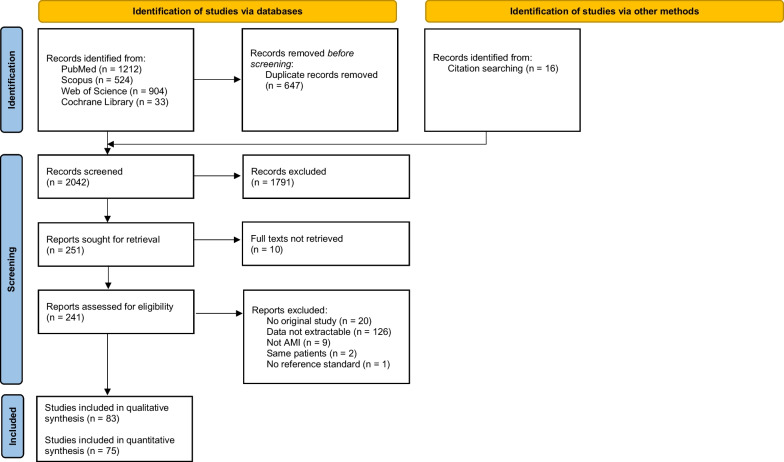
- 75 studies with 9,914 patients were included in quantitative analyses, and 18 biomarkers in serum/plasma plus 1 urine biomarker were meta-analyzed.
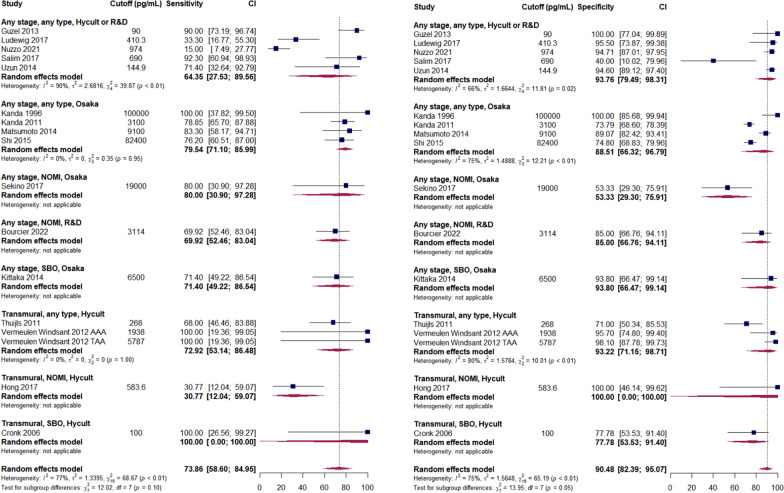
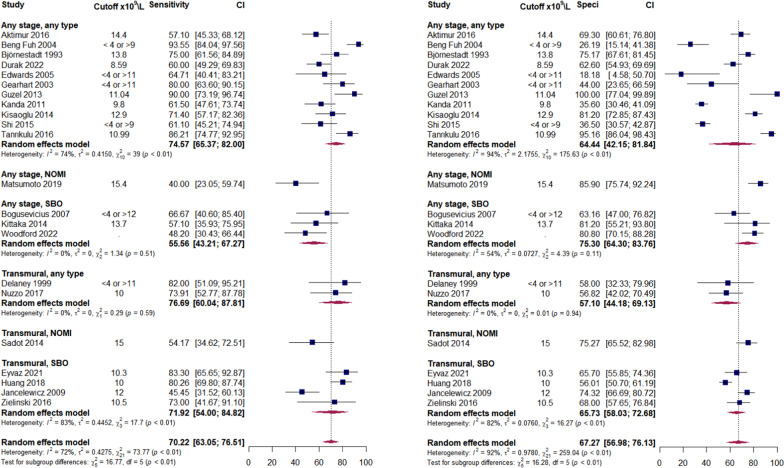
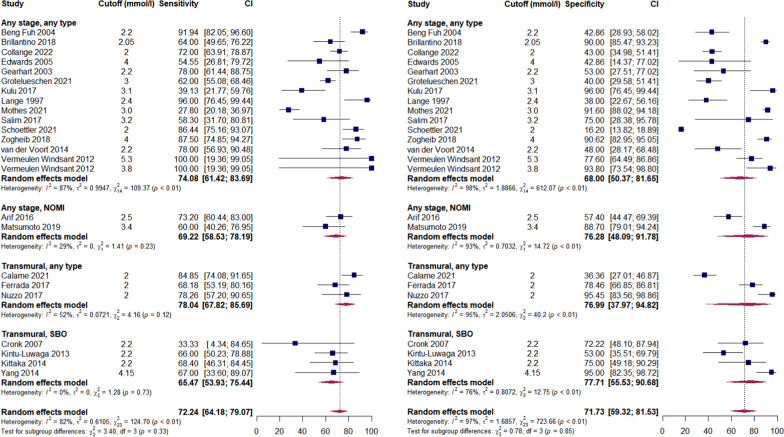
- None of the biomarkers reached a “conclusive level” for accurate prediction; the best overall results were reported for ischaemia-modified albumin (2 studies, sensitivity 94.7%, specificity 90.5%), interleukin-6 (n = 4, 96.3% and 82.6%), procalcitonin (n = 6, 80.1% and 86.7%), and serum I-FABP (n = 16, 73.9% and 90.5%) or urinary I-FABP (n = 4, 87.9% and 78.9%).
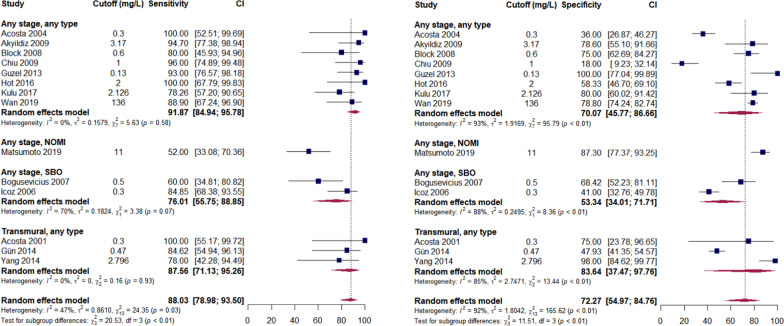
- For transmural mesenteric ischaemia, urinary I-FABP (n = 2, 92.3% and 85.2%) and D-dimer (n = 3, 87.6% and 83.6%) showed moderate predictive value.
- The overall risk of bias was high, mainly because of selected study populations and unclear timing of biomarker measurement after symptom onset.
## Methods
- Systematic review and meta-analysis following PRISMA, registered in PROSPERO (CRD42022379341); searches were run on 19 Dec 2022 in PubMed, Cochrane Library, Web of Science, and Scopus, with no date or language restriction.
- Included adult patients (>18 years) with suspected AMI; studies had to include at least 10 adult patients and report diagnostic accuracy data for biomarkers measured in blood/serum/plasma or urine, with AMI confirmed by surgery, CT-angiography, angiography, endoscopy, or histopathology/autopsy.
- Two reviewers independently screened, extracted data, and assessed quality with QUADAS-2; random-effects meta-analyses pooled sensitivity, specificity, and likelihood ratios, with predefined subgroups by AMI type, stage (any stage vs transmural), and biomarker timing.
## Limitations
- Stated by the paper: included studies were heterogeneous in patient populations, AMI types, laboratory methods, biomarker cut-offs, and often did not report timing from symptom onset to biomarker measurement; all studies were judged at some risk of bias and/or with concerns about applicability.
- Stated by the paper: the authors could not clearly separate non-transmural from transmural AMI, or vascular AMI from SBO, in their analyses.
- Evident from the text: many biomarkers had only one eligible study, and combinations of biomarkers were rarely studied, so several analyses could not be meta-analyzed.
Model-written summary. Check it against the paper before relying on it.
Integrity signals
Registry
Cites
Statistics
Figures
Verification
Claims the paper makes
15 Valid · 0 Not valid · 12 Not checked · 36 Own results and interpretations
Every source the paper cites for this claim was checked and supports it.
In the paper
“I-FABP (Fig. 2), the most studied novel biomarker, reached moderate diagnostic accuracy, although several recent studies showed rather disappointing results [56, 64].”
§ Diagnostic accuracy of biomarkers to detect acute mesenteric ischaemia in adult patients: a systematic review and meta-analysis > Results > Diagnostic accuracy of the biomarkers
What the sources say
- Supportedcites [56] Ludewig S Jarbouh R Ardelt M Mothes H Rauchfuß F Fahrner R Zanow J Settmacher U Bowel ischemia in ICU patients: diagnostic value of I-FABP depends on the interval to the triggering event Gastroenterol Res Pract 2017 2017 2795176 10.1155/2017/2795176 28630622 PMC5467337 source
The Abstract Results report an AUC of 0.694 for urine I-FABP in ICU patients, consistent with moderate diagnostic accuracy. Accuracy varied by sample and timing: serum AUC was 0.565 overall, while both measures exceeded 0.85 when taken 12–48 hours after the triggering event. (LLM, conf=0.88)
- Supportedcites [64] Nuzzo A Guedj K Curac S Hercend C Bendavid C Gault N Tran-Dinh A Ronot M Nicoletti A Bouhnik Y Castier Y Corcos O Peoc'h K SURVI (Structure d’URgences Vasculaires Intestinales) Research Group (French Intestinal Stroke Center). Accuracy of citrulline, I-FABP and D-lactate in the diagnosis of acute mesenteric ischemia Sci Rep 2021 11 1 18929 10.1038/s41598-021-98012-w 34556697 PMC8460675 source
The citation is attached to the qualification that recent studies found disappointing results, not to the preceding moderate-accuracy characterization. This paper’s Results > Main results (page unavailable) report an I-FABP AUROC of 0.401, and its Discussion says its diagnostic performance for acute mesenteric ischemia was not confirmed. (LLM, conf=0.90)
plainstates an association- Asserted: passes — The authors put it forward as true.
- Checkable: passes — It can be checked against evidence.
- Load-bearing: passes — The paper’s conclusions depend on it.
- Based: passes — The paper gives a reason why it holds.
- Supported
Every source the paper cites for this claim was checked and supports it.
In the paper
“Stromal cell-derived factor-1 (SDF-1) (sensitivity and specificity 91 and 95%, respectively) [86].”
§ Diagnostic accuracy of biomarkers to detect acute mesenteric ischaemia in adult patients: a systematic review and meta-analysis > Results > Diagnostic accuracy of the biomarkers
What the sources say
- Supportedcites [86] Kim KY Lee HK Kim H Kim Y Kim Y Choi HH Kim SW Kim HK Chae HS Stromal cell-derived factor-1 as a serologic biomarker for the diagnosis of colon ischemia with chronic cardiovascular disease Medicine (Baltimore) 2020 99 23 e20539 10.1097/MD.0000000000020539 32502013 PMC7306348 source
The Results section (‘Ability of SDF-1 level to predict CI with chronic CVD’) reports sensitivity of 91.3% and specificity of 95% at a 0.5 pg/mL cutoff. The citing sentence rounds the sensitivity to 91%; these figures apply to distinguishing colon ischemia with chronic cardiovascular disease from cardiovascular disease without colon ischemia. (LLM, conf=0.94)
plainstates an association- Asserted: passes — The authors put it forward as true.
- Checkable: passes — It can be checked against evidence.
- Load-bearing: unclear — It is unclear whether the paper’s conclusions depend on it.
- Based: passes — The paper gives a reason why it holds.
- Supported
Every source the paper cites for this claim was checked and supports it.
In the paper
“I-FABP (Fig. 2), the most studied novel biomarker, reached moderate diagnostic accuracy, although several recent studies showed rather disappointing results [56, 64].”
§ Diagnostic accuracy of biomarkers to detect acute mesenteric ischaemia in adult patients: a systematic review and meta-analysis > Results > Diagnostic accuracy of the biomarkers
What the sources say
- Supportedcites [56] Ludewig S Jarbouh R Ardelt M Mothes H Rauchfuß F Fahrner R Zanow J Settmacher U Bowel ischemia in ICU patients: diagnostic value of I-FABP depends on the interval to the triggering event Gastroenterol Res Pract 2017 2017 2795176 10.1155/2017/2795176 28630622 PMC5467337 source
The Conclusions (p. unavailable) state that a single I-FABP measurement in ICU patients failed to reliably detect or exclude mesenteric ischemia, though testing 12–48 hours after the triggering event had higher diagnostic value. The Introduction (p. unavailable) also reports low diagnostic value in an earlier ICU study. Together, these support the citing sentence’s characterization of disappointing results in some studies. (LLM, conf=0.87)
- Supportedcites [64] Nuzzo A Guedj K Curac S Hercend C Bendavid C Gault N Tran-Dinh A Ronot M Nicoletti A Bouhnik Y Castier Y Corcos O Peoc'h K SURVI (Structure d’URgences Vasculaires Intestinales) Research Group (French Intestinal Stroke Center). Accuracy of citrulline, I-FABP and D-lactate in the diagnosis of acute mesenteric ischemia Sci Rep 2021 11 1 18929 10.1038/s41598-021-98012-w 34556697 PMC8460675 source
The Discussion reports that I-FABP had low diagnostic accuracy and that its ability to distinguish acute mesenteric ischemia was not confirmed. This study therefore supports its cited role as an example of disappointing recent results; the claim does not require this paper alone to contain several studies. (LLM, conf=0.91)
plain- Asserted: passes — The authors put it forward as true.
- Checkable: passes — It can be checked against evidence.
- Load-bearing: unclear — It is unclear whether the paper’s conclusions depend on it.
- Based: passes — The paper gives a reason why it holds.
- Supported
Every source the paper cites for this claim was checked and supports it.
In the paper
“No breakthrough in defining a reliable biomarker with acceptable sensitivity and specificity was observed however [5, 6].”
§ Diagnostic accuracy of biomarkers to detect acute mesenteric ischaemia in adult patients: a systematic review and meta-analysis > Discussion
What the sources say
- Supportedcites [5] Treskes N Persoon AM van Zanten ARH Diagnostic accuracy of novel serological biomarkers to detect acute mesenteric ischemia: a systematic review and meta-analysis Intern Emerg Med 2017 12 6 821 836 10.1007/s11739-017-1668-y 28478489 PMC5559578 source
The Discussion (General strengths and limitations; page unavailable) concludes that, despite promising results for some biomarkers, their predictive values are not optimal and it is too early for them to replace other diagnostic methods. This supports the claim that the review found no sufficiently reliable biomarker for diagnosing acute mesenteric ischemia. (LLM, conf=0.88)
- Supportedcites [6] Khan SM Emile SH Wang Z Agha MA Diagnostic accuracy of hematological parameters in Acute mesenteric ischemia-A systematic review Int J Surg 2019 66 18 27 10.1016/j.ijsu.2019.04.005 30999055 source
The Conclusion (section 9; page not provided) states that no gold-standard hematological test is currently available for diagnosing acute mesenteric ischemia. This supports the claim that a reliable biomarker with adequate diagnostic accuracy has not been established. (LLM, conf=0.90)
plain- Asserted: passes — The authors put it forward as true.
- Checkable: passes — It can be checked against evidence.
- Load-bearing: passes — The paper’s conclusions depend on it.
- Based: passes — The paper gives a reason why it holds.
- Supported
The cited sources support only part of this claim — read each source’s verdict below.
In the paper
“Serum creatinine with a cut-off of 200 micromol/L (58 and 97%) [90].”
§ Diagnostic accuracy of biomarkers to detect acute mesenteric ischaemia in adult patients: a systematic review and meta-analysis > Results > Diagnostic accuracy of the biomarkers
What the sources say
- Partly supportedcites [90] Nilsson J Hansson E Andersson B Intestinal ischemia after cardiac surgery: analysis of a large registry J Cardiothorac Surg 2013 8 156 10.1186/1749-8090-8-156 23777600 PMC3688391 sourceExperimental — accuracy not yet measured
The Methods define postoperative renal failure as serum creatinine above 200 μmol/L, and Results Table 5 identifies that threshold as a risk factor for intestinal ischemia after cardiac surgery. The paper reports an odds ratio, not the claimed 58% sensitivity and 97% specificity; searches for those performance figures found no supporting passage. (LLM, conf=0.84)
plainstates an association- Asserted: passes — The authors put it forward as true.
- Checkable: passes — It can be checked against evidence.
- Load-bearing: unclear — It is unclear whether the paper’s conclusions depend on it.
- Based: passes — The paper gives a reason why it holds.
- Partly supported
39 more claims · 4 with their cited sources checked
Create a free account to see all 63 claims and every source verdict.
- It may state two separate claims as one. 14
- The quote only partly states this claim. 5
Claims other papers make about this one
Each is checked against this paper’s own text: does it say what the citing paper says it does?
The cited source doesn’t support the claim as written.
In the citing paper
“IFABP 73.6% (95% CI 56.6 e 85.6%) and 89.8% (95% CI 79.1 e 95.3%);”
From Editor's Choice - European Society for Vascular Surgery (ESVS) 2025 Clinical Practice Guidelines on the Management of Diseases of the Mesenteric and Renal Arteries and Veins. (2025) · cites this paper as [126]
Checked by a reasoning model — may be wrong.
Experimental — accuracy not yet measuredThe cited source doesn’t support the claim as written.
In the citing paper
“and procalcitonin 79.1% (95% CI 65.6 e 88.2%) and 89.1% (95% CI 81.5 e 93.8%). 126”
From Editor's Choice - European Society for Vascular Surgery (ESVS) 2025 Clinical Practice Guidelines on the Management of Diseases of the Mesenteric and Renal Arteries and Veins. (2025) · cites this paper as [126]
Checked by a reasoning model — may be wrong.
Experimental — accuracy not yet measuredThe source backs part of the claim, not all of it — or backs it for a different population, condition or comparison.
In the citing paper
“In a recent systematic review on biomarkers of AMI, the majority of studies investigating AMI included patients with SBO, complicating interpretation of results [19].”
From Incidence, diagnosis, management and outcome of acute mesenteric ischaemia: a prospective, multicentre observational study (AMESI Study) (2024) · cites this paper as [19]
Experimental — accuracy not yet measuredThe source backs part of the claim, not all of it — or backs it for a different population, condition or comparison.
In the citing paper
“in existing literature SBO (with the extent of gangrene commonly not specified) is often bundled as AMI.”
From Incidence, diagnosis, management and outcome of acute mesenteric ischaemia: a prospective, multicentre observational study (AMESI Study) (2024) · cites this paper as [19]
Experimental — accuracy not yet measuredThe source backs part of the claim, not all of it — or backs it for a different population, condition or comparison.
In the citing paper
“interleukin-6 100% (95% CI 0 e 100%) and 82% (95% CI 31.7 e 97.9%);”
From Editor's Choice - European Society for Vascular Surgery (ESVS) 2025 Clinical Practice Guidelines on the Management of Diseases of the Mesenteric and Renal Arteries and Veins. (2025) · cites this paper as [126]
Experimental — accuracy not yet measured
5 more claims about this paper
Create a free account to see every claim other papers make about this one.
Citations
Cites
(2011) · Hepatogastroenterology · doi:10.5754/hge11453 · Cited by 1,254
Clinical use of lactate monitoring in critically ill patients
Bakker, J., Nijsten, M. W., & Jansen, T. C. (2013) · Annals of Intensive Care · doi:10.1186/2110-5820-3-12 · Cited by 473 · cited 1×
“Increased metabolism may cover increased production, whereas decreased metabolism may lead to elevated values without a relevant increase in production [101, 102].”
BackgroundAcute mesenteric ischemia: updated guidelines of the World Society of Emergency Surgery.
Bala, M., Catena, F., Kashuk, J., De Simone, B., Gomes, C. A., Weber, D., Sartelli, M., Coccolini, F., Kluger, Y., Abu-Zidan, F. M., et al. (2022) · World Journal of Emergency Surgery · doi:10.1186/s13017-022-00443-x · Cited by 380 · cited 1×
“However, elevated lactate should still call for our attention and maybe trigger further investigation in patients with suspected AMI [103].”
BackgroundKanda, T., Fujii, H., Tani, T., Murakami, H., Suda, T., Sakai, Y., Ono, T., & Hatakeyama, K. (1996) · Gastroenterology · doi:10.1053/gast.1996.v110.pm8566578 · Cited by 284
Nuzzo, A., Maggiori, L., Ronot, M., Becq, A., Plessier, A., Gault, N., Joly, F., Castier, Y., Vilgrain, V., Paugam, C., et al. (2017) · American Journal of Gastroenterology · doi:10.1038/ajg.2017.38 · Cited by 233
Serum D(−)-lactate levels as an aid to diagnosing acute intestinal ischemia
Murray, M. J., Gonze, M. D., Nowak, L. R., & Cobb, C. F. (1994) · The American Journal of Surgery · doi:10.1016/0002-9610(94)90101-5 · Cited by 229
Small Bowel Obstruction—Who Needs an Operation? A Multivariate Prediction Model
Zielinski, M. D., Eiken, P. W., Bannon, M. P., Heller, S. F., Lohse, C. M., Huebner, M., & Sarr, M. G. (2010) · World Journal of Surgery · doi:10.1007/s00268-010-0479-3 · Cited by 229
Early Diagnosis of Intestinal Ischemia Using Urinary and Plasma Fatty Acid Binding Proteins
Thuijls, G., Wijck, K. V., Grootjans, J., Derikx, J. P. M., van Bijnen, A. A., Heineman, E., Dejong, C. H. C., Buurman, W. A., & Poeze, M. (2011) · Annals of Surgery · doi:10.1097/sla.0b013e318207a767 · Cited by 217 · cited 2×
“[75].”
We should not pool diagnostic likelihood ratios in systematic reviews
Zwinderman, A. H., & Bossuyt, P. M. (2008) · Statistics in Medicine · doi:10.1002/sim.2992 · Cited by 205 · cited 1×
“It applies a sampling-based approach proposed by Zwinderman and Bossuyt that uses the parameters of a fit to the bivariate model to generate samples for observed sensitivities and false-positive rates [8].”
MethodDiagnostic test accuracy: application and practice using R software
Shim, S. R., Kim, S.-J., & Lee, J. (2019) · Epidemiology and Health · doi:10.4178/epih.e2019007 · Cited by 198
Diagnostic accuracy of plasma biomarkers for intestinal ischaemia
Block, T., Nilsson, T. K., Björck, M., & Acosta, S. (2008) · Scandinavian Journal of Clinical and Laboratory Investigation · doi:10.1080/00365510701646264 · Cited by 172
Self-citationCurrent status on plasma biomarkers for acute mesenteric ischemia
Acosta, S., & Nilsson, T. (2012) · Journal of Thrombosis and Thrombolysis · doi:10.1007/s11239-011-0660-z · Cited by 157
Predicting Strangulated Small Bowel Obstruction: An Old Problem Revisited
Jancelewicz, T., Vu, L., Shawo, A., Yeh, B. C., Gasper, W. J., & Harris, H. W. (2008) · Journal of Gastrointestinal Surgery · doi:10.1007/s11605-008-0610-z · Cited by 149
Ischemia-modified albumin in the diagnosis of acute mesenteric ischemia: a preliminary study
Gündüz, A., Türedi, S., Menteşe, A., Karahan, S. C., Hoş, G., Tatlı, Ö., Turan, İ., Uçar, U., Russell, R. M., & Topbaş, M. (2008) · The American Journal of Emergency Medicine · doi:10.1016/j.ajem.2007.04.030 · Cited by 147
Treskes, N., Persoon, A. M., & van Zanten, A. R. H. (2017) · Internal and Emergency Medicine · doi:10.1007/s11739-017-1668-y · Cited by 135
Diagnostic performance of plasma biomarkers in patients with acute intestinal ischaemia
Matsumoto, S., Sekine, K., Funaoka, H., Yamazaki, M., Shimizu, M., Hayashida, K., & Kitano, M. (2014) · British Journal of Surgery · doi:10.1002/bjs.9331 · Cited by 135
Cronk, D. R., Houseworth, T. P., Cuadrado, D. G., Herbert, G. S., McNutt, P. M., & Azarow, K. S. (2006) · Current Surgery · doi:10.1016/j.cursur.2006.05.006 · Cited by 122
Acosta, S., Nilsson, T. K., & Björck, M. (2004) · British Journal of Surgery · doi:10.1002/bjs.4645 · Cited by 116
Self-citationKanda, T., Tsukahara, A., Kyo, U. E. K. I., Sakai, Y., Tani, T., Nishimura, A., Yamazaki, T., Tamiya, Y., Tada, T., Hirota, M., et al. (2011) · Journal of Gastroenterology · doi:10.1007/s00535-011-0373-2 · Cited by 115
Incidence and outcomes of acute mesenteric ischaemia: a systematic review and meta-analysis
Tamme, K., Reintam Blaser, A., Laisaar, K.-T., Mändul, M., Kals, J., Forbes, A., Kiss, O., Acosta, S., Bjørck, M., & Starkopf, J. (2022) · BMJ Open · doi:10.1136/bmjopen-2022-062846 · Cited by 112
Self-citationBiochemical markers of acute intestinal ischemia: Possibilities and limitations
Montagnana, M., Danese, E., & Lippi, G. (2018) · Annals of Translational Medicine · doi:10.21037/atm.2018.07.22 · Cited by 108 · cited 1×
“Accordingly, a moderate diagnostic accuracy may be considered disappointing for I-FABP, as the hope was that I-FABP was specific and would provide good diagnostic accuracy [5, 95–97].”
BackgroundShi, H., Wu, B., Wan, J., Liu, W., & Su, B. (2015) · Clinics and Research in Hepatology and Gastroenterology · doi:10.1016/j.clinre.2014.12.005 · Cited by 107
d-lactate as an early marker of intestinal ischaemia after ruptured abdominal aortic aneurysm repair
Poeze, M., Froon, A. H. M., Greve, J. W. M., & Ramsay, G. (1998) · Journal of British Surgery · doi:10.1046/j.1365-2168.1998.00837.x · Cited by 105
DuBose, J. J., Lissauer, M., Maung, A. A., Piper, G. L., O’Callaghan, T. A., Luo-Owen, X., Inaba, K., Okoye, O., Shestopalov, A., Fielder, W. D., et al. (2013) · Journal of Trauma and Acute Care Surgery · doi:10.1097/ta.0b013e318298486e · Cited by 96
Predictive value of procalcitonin for bowel ischemia and necrosis in bowel obstruction
Markogiannakis, H., Memos, N. A., Messaris, E., Dardamanis, D., Larentzakis, A. V., Papanikolaou, D., Zografos, G., & Manouras, A. (2010) · Surgery · doi:10.1016/j.surg.2010.08.007 · Cited by 95
Preliminary study of D-dimer as a possible marker of acute bowel ischaemia
Acosta, S., Nilsson, T. K., & Björck, M. (2001) · Journal of British Surgery · doi:10.1046/j.1365-2168.2001.01711.x · Cited by 93
Self-citationSun, D.-L., Cen, Y.-Y., Li, S.-M., Li, W.-M., Lu, Q.-P., & Xu, P.-Y. (2016) · Scientific Reports · doi:10.1038/srep34371 · Cited by 88
Akyildiz, H. Y., Akçan, A., Öztürk, A., Sözüer, E. M., Küçük, C., & Karahan, İ. (2009) · The American Journal of Surgery · doi:10.1016/j.amjsurg.2008.02.011 · Cited by 88
Aktimur, R., Çetinkünar, S., Yıldırım, K., Aktimur, S. H., Uğurlucan, M., & Özlem, N. (2015) · European Journal of Trauma and Emergency Surgery · doi:10.1007/s00068-015-0546-4 · Cited by 87 · cited 1×
“Any stage [13, 17, 18, 20, 31, 32, 35, 39, 46, 49, 50, 59, 72, 74, 81] 15 (9) 642/2107 < 4 or > 15 × 10(9)/L 69.”
Cossé, C., Regimbeau, J. M., Fuks, D., Mauvais, F., & Scotté, M. (2013) · Journal of the American College of Surgeons · doi:10.1016/j.jamcollsurg.2012.12.051 · Cited by 80
d-Dimer in patients with suspected acute mesenteric ischemia
Chiu, Y., Huang, M., How, C., Hsu, T., Chen, J., Chern, C.-H., Yen, D. H.-T., & Huang, C. (2009) · The American Journal of Emergency Medicine · doi:10.1016/j.ajem.2009.06.006 · Cited by 75
Sekino, M., Funaoka, H., Sato, S., Okada, K., Inoue, H., Yano, R., Matsumoto, S., Ichinomiya, T., Higashijima, U., Matsumoto, S., et al. (2017) · Journal of Critical Care · doi:10.1016/j.jcrc.2017.07.012 · Cited by 72
Delaney, C. P., O'Neill, S., Manning, F., Fitzpatrick, J. M., & Gorey, T. F. (1999) · Journal of British Surgery · doi:10.1046/j.1365-2168.1999.01245.x · Cited by 69
The value of the serum I-FABP level for diagnosing acute mesenteric ischemia
Güzel, M., Sözüer, E. M., Salt, Ö., Ikızcelı, İ., Akdur, O., & Yazıcı, C. (2013) · Surgery Today · doi:10.1007/s00595-013-0810-3 · Cited by 69
Accuracy of citrulline, I-FABP and d-lactate in the diagnosis of acute mesenteric ischemia
Nuzzo, A., Guedj, K., Curac, S., Hercend, C., Bendavid, C., Gault, N., Tran-Dinh, A., Ronot, M., Nicoletti, A., Bouhnik, Y., et al. (2021) · Scientific Reports · doi:10.1038/s41598-021-98012-w · Cited by 67
Diagnostic pitfalls at admission in patients with acute superior mesenteric artery occlusion
Acosta, S., Block, T., Björnsson, S., Resch, T., Björck, M., & Nilsson, T. (2012) · The Journal of Emergency Medicine · doi:10.1016/j.jemermed.2011.03.036 · Cited by 65 · cited 1×
“Lactate is often used in clinical practice today; however, it clearly should not be used for exclusion of AMI [100].”
Self-citationIntestinal ischemia after cardiac surgery: analysis of a large registry
Nilsson, J., Hansson, E., & Andersson, B. (2013) · Journal of Cardiothoracic Surgery · doi:10.1186/1749-8090-8-156 · Cited by 60 · cited 1×
“[90].”
Vermeulen Windsant, I. C., Hellenthal, F. A., Derikx, J. P. M., Prins, M. H., Buurman, W. A., Jacobs, M. J., & Schurink, G. W. H. (2012) · Annals of Surgery · doi:10.1097/sla.0b013e31824b1e16 · Cited by 60
PREVENTION OF SYSTEMIC HYPERLACTATEMIA DURING SPLANCHNIC ISCHEMIA
Jakob, S. M., Merasto-Minkkinen, M., Tenhunen, J. J., Heino, A., Alhava, E., & Takala, J. (2000) · Shock · doi:10.1097/00024382-200014020-00008 · Cited by 60 · cited 1×
“Increased metabolism may cover increased production, whereas decreased metabolism may lead to elevated values without a relevant increase in production [101, 102].”
Backgroundvan der Voort, P. H., Westra, B., Wester, J. P., Bosman, R. J., van Stijn, I., Haagen, I.-A., Loupatty, F. J., & Rijkenberg, S. (2014) · BMC Anesthesiology · doi:10.1186/1471-2253-14-111 · Cited by 59
Gearhart, S. L., Delaney, C. P., Senagore, A. J., Banbury, M. K., Remzi, F. H., Kiran, R. P., & Fazio, V. W. (2003) · PubMed · Cited by 59
Kittaka, H., Akimoto, H., Takeshita, H., Funaoka, H., Hazui, H., Okamoto, M., Kobata, H., & Ohishi, Y. (2014) · PLoS ONE · doi:10.1371/journal.pone.0099915 · Cited by 53
Diagnostic accuracy of hematological parameters in Acute mesenteric ischemia-A systematic review
Khan, S. M., Emile, S. H., Wang, Z., & Agha, M. A. (2019) · International Journal of Surgery · doi:10.1016/j.ijsu.2019.04.005 · Cited by 51
Ferrada, P. A., Callcut, R. A., Bauzá, G., O’Bosky, K. R., Luo‐Owen, X., Mansfield, N. J., Inaba, K., Pasley, J. D., Bugaev, N., PEREIRA, B. M. T., et al. (2016) · The Journal of Trauma: Injury, Infection, and Critical Care · doi:10.1097/ta.0000000000001360 · Cited by 51
Brillantino, A., Iacobellis, F., Renzi, A., Nasti, R., Saldamarco, L., Grillo, M., Romano, L., Castriconi, M., Cittadini, A., Palma, M. D., et al. (2017) · European Journal of Trauma and Emergency Surgery · doi:10.1007/s00068-017-0805-7 · Cited by 49
Urine intestinal fatty acid-binding protein predicts acute mesenteric ischemia in patients
Salim, S. Y., Young, P. Y., Churchill, T. A., & Khadaroo, R. G. (2017) · Journal of Surgical Research · doi:10.1016/j.jss.2016.07.017 · Cited by 48 · cited 1×
“Newer studies assessing I-FABP have been published, but do not confirm the initial enthusiasm [21, 40, 56, 64, 68].”
BackgroundIs D‐dimer a Predictor of Strangulated Intestinal Hernia?
Icoz, G., Makay, O., Sozbilen, M., Gurcu, B., Caliskan, C., Firat, O., Kurt, Z., & Ersin, S. (2006) · World Journal of Surgery · doi:10.1007/s00268-006-0138-x · Cited by 47
Clinical Utility of the Cobalt-Albumin Binding Assay in the Diagnosis of Intestinal Ischemia
Polk, J. D., Rael, L. T., Craun, M. L., Mains, C. W., Davis-Merritt, D., & Bar-Or, D. (2008) · Journal of Trauma: Injury, Infection & Critical Care · doi:10.1097/ta.0b013e31815b846a · Cited by 47
Gearhart, S. L., Delaney, C. P., Senagore, A. J., Banbury, M. K., Remzi, F. H., Kiran, R. P., & Fazio, V. W. (2003) · The American Surgeon · doi:10.1177/000313480306900409 · Cited by 47
Tolonen, M., Lemma, A., Vikatmaa, P., Peltola, E., Mentula, P., Björkman, P., Leppäniemi, A., & Sallinen, V. (2021) · Journal of Trauma and Acute Care Surgery · doi:10.1097/ta.0000000000003305 · Cited by 46
A Prediction Model for Recognizing Strangulated Small Bowel Obstruction
Huang, X., Fang, G., Lin, J., Xu, K., Shi, H., & Zhuang, L. (2018) · Gastroenterology Research and Practice · doi:10.1155/2018/7164648 · Cited by 45 · cited 1×
“Scores/combinations of biomarkers were assessed in only 5 studies [23, 35, 42, 85, 94], mainly combining laboratory biomarkers with radiological or clinical markers and thus not permitting any meta-analysis.”
MethodElevated Procalcitonin in Patients After Cardiac Surgery: A Hint to Nonocclusive Mesenteric Ischemia
Klingele, M., Bomberg, H., Poppleton, A., Minko, P., Speer, T., Schäfers, H., & Groesdonk, H. V. (2015) · The Annals of Thoracic Surgery · doi:10.1016/j.athoracsur.2014.10.064 · Cited by 44
Risk factors for bowel necrosis in patients with hepatic portal venous gas
Koami, H., Isa, T., Ishimine, T., Kameyama, S., Matsumura, T., Yamada, K. C., & Sakamoto, Y. (2014) · Surgery Today · doi:10.1007/s00595-014-0941-1 · Cited by 43
Tanrıkulu, Y. (2015) · Turkish Journal of Trauma and Emergency Surgery · doi:10.5505/tjtes.2015.28235 · Cited by 41
D-Dimer as an Early Marker of Severity in Patients With Acute Superior Mesenteric Venous Thrombosis
Yang, S., Fan, X., Ding, W., Liu, B., Meng, J., Wang, K., Wu, X., & Li, J. (2014) · Medicine · doi:10.1097/md.0000000000000270 · Cited by 40
Najdawi, M., Garzelli, L., Nuzzo, A., Huguet, A., Raynaud, L., Paulatto, L., Panis, Y., Ben Abdallah, I., Castier, Y., Sibert, A., et al. (2022) · European Radiology · doi:10.1007/s00330-022-08660-3 · Cited by 38
Bourcier, S., Ulmann, G., Jamme, M., Savary, G., Paul, M., Benghanem, S., Lavillegrand, J.-R., Schmidt, M., Luyt, C.-E., Maury, E., et al. (2022) · Annals of Intensive Care · doi:10.1186/s13613-022-01092-8 · Cited by 37 · cited 1×
“Newer studies assessing I-FABP have been published, but do not confirm the initial enthusiasm [21, 40, 56, 64, 68].”
BackgroundCreatine kinase isoenzymes in the diagnosis of intestinal infarction
Fried, M. W., Murthy, U. K., Hassig, S. R., Woo, J., & Oates, R. P. (1991) · Digestive Diseases and Sciences · doi:10.1007/bf01296402 · Cited by 36 · cited 1×
“[88].”
Management of acute mesenteric ischaemia: Results of a worldwide survey
Hess, B., Cahenzli, M., Forbes, A., Burgos, R., Coccolini, F., Corcos, O., Holst, M., Irtun, Ø., Klek, S., Pironi, L., et al. (2023) · Clinical Nutrition ESPEN · doi:10.1016/j.clnesp.2022.12.022 · Cited by 35
Self-citationCalame, P., Winiszewski, H., Doussot, A., Malakhia, A., Grillet, F., Verdot, P., Vuitton, L., Ronot, M., Pili-Floury, S., Heyd, B., et al. (2021) · American Journal of Gastroenterology · doi:10.14309/ajg.0000000000001274 · Cited by 34 · cited 1×
“Scores/combinations of biomarkers were assessed in only 5 studies [23, 35, 42, 85, 94], mainly combining laboratory biomarkers with radiological or clinical markers and thus not permitting any meta-analysis.”
MethodElevated endothelin-1 level is a risk factor for nonocclusive mesenteric ischemia
Groesdonk, H. V., Raffel, M., Speer, T., Bomberg, H., Schmied, W., Klingele, M., & Schäfers, H.-J. (2015) · The Journal of Thoracic and Cardiovascular Surgery · doi:10.1016/j.jtcvs.2014.12.019 · Cited by 33 · cited 1×
“[92].”
[Warning signals in acute abdominal disorders. Lactate is the best marker of mesenteric ischemia].
Lange, H., & Toivola, A. (1997) · PubMed · Cited by 33
Arnalich, F., Maldifassi, M. C., Ciria, E., Quesada, A., Codoceo, R., Herruzo, R., Garcia-Cerrada, C., Montoya, F., Vazquez, J. J., López-Collazo, E., et al. (2010) · Clinica Chimica Acta · doi:10.1016/j.cca.2010.05.017 · Cited by 31 · cited 1×
“[93].”
Zogheib, E., Cosse, C., Sabbagh, C., Marx, S., Caus, T., Henry, M., Nader, J., Fumery, M., Bernasinski, M., Besserve, P., et al. (2018) · Annals of Intensive Care · doi:10.1186/s13613-018-0395-5 · Cited by 30 · cited 1×
“Scores/combinations of biomarkers were assessed in only 5 studies [23, 35, 42, 85, 94], mainly combining laboratory biomarkers with radiological or clinical markers and thus not permitting any meta-analysis.”
MethodThe role of D-dimer in the diagnosis of strangulated small-bowel obstruction
Boguševičius, A., Grinkevičius, A., Maleckas, A., & Pundzius, J. (2007) · Medicina · doi:10.3390/medicina43110109 · Cited by 30
Li, H., Dian, S., Duocheng, S., Xiao, Z., Zhuang, J., & Yuan, C. (2021) · Surgical Laparoscopy Endoscopy & Percutaneous Techniques · doi:10.1097/sle.0000000000000982 · Cited by 28
Kisaoglu, A., Bayramoglu, A., Ozogul, B., Atac, K., Emet, M., & Atamanalp, S. S. (2014) · World Journal of Surgery · doi:10.1007/s00268-014-2706-9 · Cited by 27
Plasma citrulline measurement in the diagnosis of acute mesenteric ischaemia
Kulu, R., Akyildiz, H., Akcan, A., Oztürk, A., & Sozuer, E. (2017) · ANZ Journal of Surgery · doi:10.1111/ans.13524 · Cited by 27
Nonocclusive mesenteric infarction after cardiac surgery: potential biomarkers
Hong, J., Gilder, E., Blenkiron, C., Jiang, Y., Evennett, N. J., Petrov, M. S., Phillips, A. R. J., Windsor, J. A., & Gillham, M. (2017) · Journal of Surgical Research · doi:10.1016/j.jss.2016.12.001 · Cited by 27 · cited 2×
“Newer studies assessing I-FABP have been published, but do not confirm the initial enthusiasm [21, 40, 56, 64, 68].”
BackgroundNon-occlusive mesenteric ischemia in critically ill patients
Yu, B., Ko, R.-E., Yoo, K., Gil, E., Choi, K.-J., & Park, C.-M. (2022) · PLOS ONE · doi:10.1371/journal.pone.0279196 · Cited by 27 · cited 1×
“Additionally, it is difficult to interpret inflammatory markers in patients with NOMI who usually have an active inflammatory state due to their severe underlying illness and its treatment (e.g. ICU patients) [98, 99].”
BackgroundNagata, J., Kobayashi, M., Nishikimi, N., & Komori, K. (2008) · European Journal of Vascular and Endovascular Surgery · doi:10.1016/j.ejvs.2007.11.014 · Cited by 26
Ludewig, S., Jarbouh, R., Ardelt, M., Mothes, H., Rauchfuß, F., Fahrner, R., Zanow, J., & Settmacher, U. (2017) · Gastroenterology Research and Practice · doi:10.1155/2017/2795176 · Cited by 25 · cited 3×
“Newer studies assessing I-FABP have been published, but do not confirm the initial enthusiasm [21, 40, 56, 64, 68].”
BackgroundResultYamamoto, T., Umegae, S., Kitagawa, T., & Matsumoto, K. (2005) · Diseases of the Colon & Rectum · doi:10.1007/s10350-005-0019-7 · Cited by 25
Elevated serum interleukin 6 levels in patients with acute intestinal ischemia.
Sutherland, F. R., Cunningham, H., Pontikes, L., Parsons, L., & Klassen, J. (2003) · PubMed · Cited by 25
Kintu-Luwaga, R., Galukande, M., & Owori, F. N. (2013) · International Journal of Emergency Medicine · doi:10.1186/1865-1380-6-44 · Cited by 24
Matsumoto, S., Shiraishi, A., Kojima, M., Funaoka, H., Funabiki, T., Saida, T., & Kitano, M. (2018) · The Journal of Trauma: Injury, Infection, and Critical Care · doi:10.1097/ta.0000000000002100 · Cited by 24
Uzun, Ö. Ü., Türkmen, S., Eryiğit, U., Menteşe, A., Türkyılmaz, S., Türedi, S., Karahan, S. C., & Gündüz, A. (2014) · Turkish Journal of Emergency Medicine · doi:10.5505/1304.7361.2014.15679 · Cited by 24
Chen, Z., Liu, X., Shou, C., Yang, W., & Yu, J. (2023) · PeerJ · doi:10.7717/peerj.15307 · Cited by 23 · cited 1×
“Additionally, it is difficult to interpret inflammatory markers in patients with NOMI who usually have an active inflammatory state due to their severe underlying illness and its treatment (e.g. ICU patients) [98, 99].”
BackgroundKaradeniz, E., Bayramoğlu, A., & Atamanalp, S. S. (2019) · Journal of Investigative Surgery · doi:10.1080/08941939.2019.1566418 · Cited by 22
Diagnosis and Outcome from Suspected Mesenteric Ischaemia following Cardiac Surgery
Edwards, M. F., Sidebotham, D. A., Smith, M., Leemput, J. V., & Anderson, B. (2005) · Anaesthesia and Intensive Care · doi:10.1177/0310057x0503300209 · Cited by 22
Serum Lactate and Acute Mesenteric Ischemia: An Observational, Controlled Multicenter Study
Collange, O., Lopez, M., Lejay, A., Pessaux, P., Ouattara, A., Dewitte, A., Rimmele, T. R., Girardot, T., Arnaudovski, D., Augustin, P., et al. (2021) · Anaesthesia Critical Care & Pain Medicine · doi:10.1016/j.accpm.2022.101141 · Cited by 22
Mean Platelet Volume: Is It a Predictive Parameter in Diagnosis of Acute Mesenteric Ischemia?
Türkoğlu, A., Gül, M., Oğuz, A., Bozdağ, Z., Ülger, B. V., Yılmaz, A., & Aldemir, M. (2015) · International Surgery · doi:10.9738/intsurg-d-14-00268.1 · Cited by 21
Woodford, E., Woodford, H., Hort, A., Pang, T., Lam, V. W. T., & Nahm, C. B. (2022) · ANZ Journal of Surgery · doi:10.1111/ans.18073 · Cited by 21
Ischemic Colitis after Cardiac Surgery: Can We Foresee the Threat?
Arif, R., Farag, M. B., Zaradzki, M., Reißfelder, C., Pianka, F., Bruckner, T. M., Kremer, J., Franz, M., Ruhparwar, A., Szabo, G. B., et al. (2016) · PLoS ONE · doi:10.1371/journal.pone.0167601 · Cited by 20
Mothes, H. K., Wickel, J., Sponholz, C., Lehmann, T., Kaluza, M., Zanow, J., & Doenst, T. (2021) · Journal of Cardiothoracic and Vascular Anesthesia · doi:10.1053/j.jvca.2021.02.007 · Cited by 19
Gün, B., Yolcu, S., Değerli, V., Elçin, G., Tomruk, O., Erdur, B., & Parlak, İ. (2014) · Turkish Journal of Trauma and Emergency Surgery · doi:10.5505/tjtes.2014.57639 · Cited by 19
DURAK, D., Turhan, V. B., Alkurt, E. G., Tutan, M. B., & Şahiner, İ. T. (2022) · PubMed · doi:10.26355/eurrev_202206_29060 · Cited by 18
Degerli, V., Ergin, I., Duran, F. Y., Ustuner, M. A., & Duran, O. (2016) · BioMed Research International · doi:10.1155/2016/9810280 · Cited by 17
Stroeder, J., Bomberg, H., Wagenpfeil, S., Buecker, A., Schaefers, H.-J., Katoh, M., Groesdonk, H. V., & Minko, P. (2018) · Critical Care Medicine · doi:10.1097/ccm.0000000000003091 · Cited by 17 · cited 1×
“[89].”
Zhuang, X., Chen, F., Zhou, Q., Zhu, Y., & Yang, X. (2021) · BMC Gastroenterology · doi:10.1186/s12876-021-01746-0 · Cited by 15
Nonocclusive Ischemic Colitis: Analysis of Risk Factors for Severity
Sadot, E., Telem, D. A., Cohen, L. E., Arora, M., & Divino, C. M. (2014) · The American Surgeon · doi:10.1177/000313481408000515 · Cited by 15
Sgourakis, G., Papapanagiotou, A., Kontovounisios, C., Karamouzis, M. V., Lanitis, S., Konstantinou, C., Karaliotas, C., & Papavassiliou, A. G. (2013) · Experimental Biology and Medicine · doi:10.1177/1535370213494663 · Cited by 14
The role of adropin, HIF-1α and apelin biomarkers in the diagnosis of acute mesentaric ischemia
Kurt, E., Tekin, E., Kurt, N., & Bayramoglu, A. (2022) · The American Journal of Emergency Medicine · doi:10.1016/j.ajem.2021.10.058 · Cited by 13 · cited 1×
“[91].”
Cossé, C., Sabbagh, C., Fuméry, M., Zogheib, E. H., Mauvais, F., Browet, F., Rebibo, L., & Regimbeau, J. (2016) · Digestive and Liver Disease · doi:10.1016/j.dld.2016.12.003 · Cited by 13
Eyvaz, K., Dincer, O. I., Kazan, M. K., Dincer, A., Aslaner, A., Acar, A., & Cakir, T. (2021) · Northern Clinics of Istanbul · doi:10.14744/nci.2021.26878 · Cited by 13
Grotelueschen, R., Miller, V., Heidelmann, L. M., Melling, N., Ghadban, T., Grupp, K., Reeh, M., Welte, M.-N., Uzunoglu, F. G., Izbicki, J. R., et al. (2021) · Digestive Surgery · doi:10.1159/000512779 · Cited by 12
Maintaining oxygen delivery is crucial to prevent intestinal ischemia in critical ill patients
Schoettler, J. J., Kirschning, T., Hagmann, M., Hahn, B., Fairley, A.-M., Centner, F.-S., Schneider‐Lindner, V., Herrle, F., Tzatzarakis, E., Thiel, M., et al. (2021) · PLoS ONE · doi:10.1371/journal.pone.0254352 · Cited by 8
Kim, K. Y., Lee, H. K., Kim, H., Kim, Y., Kim, Y., Choi, H. H., Kim, S. W., Kim, H. K., & Chae, H. S. (2020) · Medicine · doi:10.1097/md.0000000000020539 · Cited by 7 · cited 1×
“These biomarkers were: Stromal cell-derived factor-1 (SDF-1) (sensitivity and specificity 91 and 95%, respectively) [86].”
BackgroundTHE DIAGNOSTIC POTENTIAL OF SOME ROUTINE LABORATORY TESTS
Bjørnestad, E., Lie, R., & Janssen, C. W. (1993) · International Journal of Clinical Practice · doi:10.1111/j.1742-1241.1993.tb09685.x · Cited by 6
(2018) · Europe PMC (PubMed Central) · doi:10.3969/j.issn.1673-4254.2018.07.16 · Cited by 5 · cited 1×
“[87].”
Hot, S., Duraker, N., Sarı, A., & Çetin, K. (2016) · Dicle Medical Journal / Dicle Tip Dergisi · doi:10.5798/diclemedj.0921.2016.01.0644 · Cited by 4
The diagnostic potential of some routine laboratory tests. off.
Bjørnestad, E., Lie, R., & Cw, J. (1994) · PubMed · Cited by 3
Bandea, D., Hălmaciu, I., Suciu, B. A., Bandea, N., Tilinca, M. C., Godja, D., Brînzaniuc, K., & Voidăzan, S. T. (2020) · The Medical-Surgical Journal · Cited by 1
Wan, J., Yang, Y., Li, S.-S., Li, G.-J., Ma, Z.-H., Yang, G.-K., & Du, L.-J. (2019) · Journal of Vascular Surgery · doi:10.1016/j.jvs.2019.08.161
Research works printed but not linked: 1
- Beng Fuh R Eisele R Acute disturbance of the mesenterial circulation. What is the diagnostic value of easily performed preoperative tests? Chirurgische Praxis 2004 63 4 573 583
Cited by
Koelemay, M. J., Geelkerken, R. H., Kärkkäinen, J., Leone, N., Antoniou, G. A., de Bruin, J. L., Gombert, A., Gottsätter, A., Iborra, E., Ronchey, S., et al. (2025) · European Journal of Vascular and Endovascular Surgery · doi:10.1016/j.ejvs.2025.06.010 · Cited by 123
Self-citationReintam Blaser, A., Mändul, M., Björck, M., Acosta, S., Bala, M., Bodnar, Z., Casian, D., Demetrashvili, Z., D’Oria, M., Durán Muñoz-Cruzado, V., et al. (2024) · Critical Care · doi:10.1186/s13054-024-04807-4 · Cited by 75
Self-citationRevascularization Strategies for Acute and Chronic Mesenteric Ischemia: A Narrative Review
Gries, J. J., Sakamoto, T., Chen, B., Virk, H. U. H., Alam, M., & Krittanawong, C. (2024) · Journal of Clinical Medicine · doi:10.3390/jcm13051217 · Cited by 19
Blaser, A. R., Koitmäe, M., Laisaar, K.-T., Forbes, A., Kase, K., Kiisk, E., Murruste, M., Reim, M., Starkopf, J., & Tamme, K. (2025) · Scientific Reports · doi:10.1038/s41598-025-94846-w · Cited by 28
“This confirms that inclusion/exclusion of SBO is a factor causing confusion in comparisons of studies 97 .”
Self-citationGastrointestinal function and nutritional interventions in septic shock
Bachmann, K. F., Cotoia, A., & Reintam Blaser, A. (2025) · Current Opinion in Critical Care · doi:10.1097/mcc.0000000000001302 · Cited by 13
Self-citation
Metadata
- Authors
- Reintam Blaser, A., Starkopf, J., Björck, M., Forbes, A., Kase, K., Kiisk, E., Laisaar, K.-T., Mihnovits, V., Murruste, M., Mändul, M., Voomets, A.-L., & Tamme, K.
- Affiliations
- Tartu University Hospital (EE)
- Uppsala University (SE)
- University of Tartu (EE)
- ORCID
- Venue
- World Journal of Emergency Surgery
- Published
- 2023-09-01
- Volume
- 18
- Issue
- 1
- Pages
- 44-44
- ISSN
- 1749-7922 (ISSN-L)
- PMC
- PMC10474684
- OpenAlex
- W4386378232
- Cited by
- 67
- References
- 102
- Citations by year
- 2026: 20 · 2025: 25 · 2024: 22
- FWCI
- 4.39
- Type
- journal article
- Language
- en
- Open access
- gold
- doi.org
- Licence
- cc-by
- creativecommons.org/licenses/by/4.0 (tdm)
- creativecommons.org/licenses/by/4.0 (vor)
- Locations
- World Journal of Emergency Surgery (publishedVersion, cc-by)
- Research Square (acceptedVersion, cc-by)
- PubMed Central (publishedVersion, cc-by)
- PubMed (publishedVersion)
- KTH Publication Database DiVA (KTH Royal Institute of Technology) (submittedVersion, other-oa)
- DOAJ (DOAJ: Directory of Open Access Journals) (submittedVersion, cc-by-sa)
- Funders
- Eesti Teadusagentuur (PRG1255)
- Topics
- Health Sciences › Medicine › Surgery › Abdominal vascular conditions and treatments
- Health Sciences › Medicine › Critical Care and Intensive Care Medicine › Sepsis Diagnosis and Treatment
- Health Sciences › Medicine › Emergency Medicine › Appendicitis Diagnosis and Management
- Keywords
- acute mesenteric ischemia, diagnostic biomarkers, diagnostic accuracy, ischemia-modified albumin, interleukin-6, procalcitonin, intestinal fatty acid binding protein, D-dimer, serum biomarkers, urinary biomarkers, sensitivity and specificity, likelihood ratios, adult patients, combined biomarker detection, risk of bias
- MeSH terms
- Adult, Humans, Necrosis, Serum Albumin, Biomarkers, Interleukin-6, Mesenteric Ischemia
About these checks
Registry, retraction, Cites and statistics results are computed, not judged, with one exception: a printed reference that no index lists is read once by a model before it counts as a citation error. Claims are extracted by a model and kept only when their quote appears verbatim in the text; each cited source is then checked, with a model’s help, for whether it says what the claim relies on. Those verdicts can be wrong — read the claim’s quote and the cited source before relying on one.
The claim verdicts this report counts are experimental: their accuracy is not yet measured.
A language model drew the claims from the paper on 2026-10-07, under version 3 of the claim definition (model deepseek-v4.1-flash, prompt extract-v3).
A second model labelled each claim on 2026-10-07 (model jev-1.13-20260917, definition revision gold-guideline-v0.2).
Cited sources are checked with a language model’s help (gpt-6-sol).
Statistics and arithmetic are recomputed, not judged.
Confidence bands are shown only for fields calibrated on our annotated test set. None is calibrated yet, so no band is shown.
What counts as a claim ›How we measure confidence ›How we check this ›
Are you an author, or do you see a problem with this page? Request a review
Data sources
Bibliographic data: Semantic Scholar, OpenAlex, Crossref.
Contains information from the Semantic Scholar Academic Graph Datasets, made available under the ODC Attribution License (ODC-BY 1.0).
Semantic Scholar’s data is described in: Kinney, R., et al. (2023). The Semantic Scholar Open Data Platform. arXiv:2301.10140.
