

Financial literacy and the need for financial education: evidence and implications
Open accessThe DOI matches its Crossref record; 47 of the 47 references it cites were found in a registry or an index; 13 of the 58 sources its claims cite were checked for support.
Abstract
This paper represents a summary of the keynote address I gave to the 2018 Annual Meeting of the Swiss Society of Economics and Statistics. I would like to thank Monika Butler, Rafael Lalive, anonymous reviewers
Overview
CoChat Summary
TL;DR
This keynote-style paper argues that financial literacy is low across countries and population groups, and that the “Big Three” questions are a practical way to measure it. It synthesizes evidence showing that financial literacy is linked to better saving, retirement planning, debt behavior, and resilience, and calls for large-scale, targeted financial education.
Key findings
- In the U.S. 2004 HRS, only about half of older Americans answered the two basic interest/inflation questions correctly, and only one third answered all three “Big Three” questions correctly.
- In the FLat World project (15 countries), the average share answering all three questions correctly was about 30%, and only around 50% in most countries answered the interest-rate and inflation questions correctly.
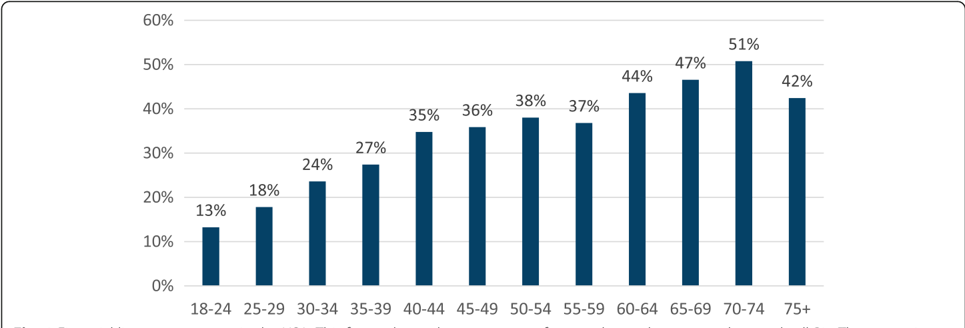
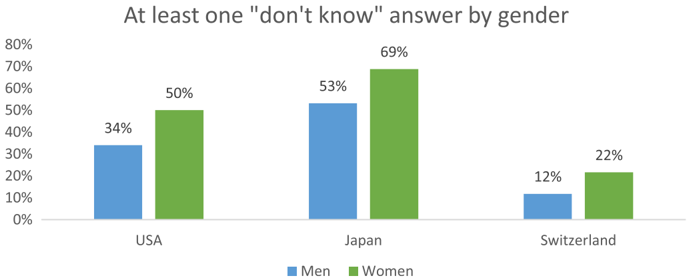
- Financial literacy is especially low among vulnerable groups: in the USA, less than 30% of respondents answered the Big Three correctly by age 40; in Switzerland, only 45% of those aged 35 or younger did so. Women were less likely than men to answer correctly across countries, and were more likely to respond “do not know.”
- The paper reports several associations: one additional correct financial literacy answer is associated with a 3–4 percentage point higher probability of retirement planning in Germany, the USA, Japan, and Sweden, and a 10 percentage point higher probability in the Netherlands; planning is associated with two to three times more wealth near retirement. The paper also states that 30–40% of U.S. retirement wealth inequality can be accounted for by differences in financial knowledge.
Methods
- This is a synthesis/keynote paper, not a new empirical study; it reviews prior survey and experimental evidence on financial literacy and financial behavior.
- It centers on the “Big Three” financial literacy measure: questions on interest compounding, inflation, and risk diversification, fielded in many surveys including the HRS, NFCS, SCF, SHED, and the FLat World project.
- Main analysis is comparative/descriptive: cross-country tables and survey results are used to compare literacy levels, identify vulnerable subgroups, and summarize associations between literacy and financial outcomes.
Limitations
- The paper explicitly notes that there are “few evaluations” of the effectiveness of financial education initiatives and says more research is urgently needed.
- The text makes evident that much of the evidence summarized is correlational rather than causal; it even notes that financial literacy “could be the result of choice and not an exogenous variable” (paper text).
- As a keynote summary, the paper does not present a single unified dataset or a new identification strategy; it aggregates evidence from many sources rather than testing one original hypothesis.
Model-written summary. Check it against the paper before relying on it.
Integrity signals
Registry
Cites
Statistics
Figures
Verification
Claims the paper makes
10 Valid · 6 Not valid · 44 Not checked · 30 Own results and interpretations
The cited sources support only part of this claim — read each source’s verdict below.
In the paper
“On average, about one third of the global population has familiarity with the basic concepts that underlie everyday financial decisions (Lusardi and Mitchell, 2011c).”
What the sources say
- Partly supportedcites Lusardi and Mitchell, 2011c matched to “Financial literacy around the world: an overview” (2011) sourceExperimental — accuracy not yet measured
The Measuring financial literacy section examines basic concepts relevant to everyday financial decisions, and the Concluding remarks report low financial literacy across eight countries. Neither section gives an estimate that about one third of the global population knows those concepts. The one-third figure in Financial literacy around the world refers instead to U.S. respondents who said they did not know how to answer a risk-diversification question. (LLM, conf=0.87)
plain- Asserted: passes — The authors put it forward as true.
- Checkable: passes — It can be checked against evidence.
- Load-bearing: passes — The paper’s conclusions depend on it.
- Based: passes — The paper gives a reason why it holds.
- Partly supported
Every source the paper cites for this claim was checked and supports it.
In the paper
“And just one third demonstrated understanding of these two concepts and answered the third question, measuring understanding of risk diversification, correctly.”
What the sources say
- Supportedcites Lusardi and Mitchell, 2011b matched to “The Outlook for Financial Literacy” (2011) source
The “Financial Literacy and Financial Decision-Making” section reports that only one-third of respondents in a survey of older Americans answered the interest-compounding, inflation, and risk-diversification questions correctly. (LLM, conf=0.94)
boosted- Asserted: passes — The authors put it forward as true.
- Checkable: passes — It can be checked against evidence.
- Load-bearing: passes — The paper’s conclusions depend on it.
- Based: passes — The paper gives a reason why it holds.
- Supported
Every source the paper cites for this claim was checked and supports it.
In the paper
“only half of older Americans -who presumably had made many financial decisions in their lives -could answer the two basic questions measuring understanding of interest rates and inflation (Lusardi and Mitchell, 2011b).”
What the sources say
- Supportedcites Lusardi and Mitchell, 2011b matched to “The Outlook for Financial Literacy” (2011) source
The “Financial Literacy and Financial Decision-Making” section (page not provided) describes a survey of older Americans and reports that only half of respondents correctly answered both questions on interest compounding and inflation. (LLM, conf=0.94)
plain- Asserted: passes — The authors put it forward as true.
- Checkable: passes — It can be checked against evidence.
- Load-bearing: passes — The paper’s conclusions depend on it.
- Based: passes — The paper gives a reason why it holds.
- Supported
Every source the paper cites for this claim was checked and supports it.
In the paper
“Financial literacy is low even in advanced economies with well-developed financial markets.”
What the sources say
- Supportedcites Lusardi and Mitchell, 2011c matched to “Financial literacy around the world: an overview” (2011) source
The Concluding remarks state that financial literacy is very low around the world regardless of financial-market development. The paper also reports widespread financial illiteracy in countries with well-developed financial markets, directly supporting the claim. (LLM, conf=0.94)
plain- Asserted: passes — The authors put it forward as true.
- Checkable: passes — It can be checked against evidence.
- Load-bearing: passes — The paper’s conclusions depend on it.
- Based: passes — The paper gives a reason why it holds.
- Supported
Every source the paper cites for this claim was checked and supports it.
In the paper
“Financial literacy is found to have the strongest impact in the Netherlands, where knowing the right answer to one additional financial literacy question is associated with a 10 percentage point higher probability of planning (Mitchell and Lusardi, 2015).”
What the sources say
- Supportedcites Mitchell and Lusardi, 2015 matched to “Financial Literacy and Economic Outcomes: Evidence and Policy Implications” (2015) source
The “Why Financial Literacy Matters” section (page not provided) states that financial literacy has its strongest impact in the Netherlands and gives the same 10-percentage-point association for one additional correct answer. (LLM, conf=0.95)
plainstates an association- Asserted: passes — The authors put it forward as true.
- Checkable: passes — It can be checked against evidence.
- Load-bearing: passes — The paper’s conclusions depend on it.
- Based: passes — The paper gives a reason why it holds.
- Supported
51 more claims · 7 with their cited sources checked
Create a free account to see all 90 claims and to verify the 2 references still open.
- It may state two separate claims as one. 24
- Probably not a substantial claim. 12
- Borderline: one of the tests for a substantial claim is unclear. 1
Claims other papers make about this one
Each is checked against this paper’s own text: does it say what the citing paper says it does?
The cited source doesn’t support the claim as written.
In the citing paper
“Previous research conducted by [33,34] shows a positive correlation between financial literacy and Fintech adoption.”
From Fintech Adoption Drivers for Innovation for SMEs in Indonesia (2022) · cites this paper as [33]
Checked by a reasoning model — may be wrong.
Experimental — accuracy not yet measuredThe cited source says what the claim attributes to it.
In the citing paper
“Understanding finance is crucial in making informed financial decisions and exhibiting sound financial behavior, as stated by Lusardi (2019).”
From Financial Literacy Among the Senior High School Students: Basis for Financial Stewardship Plan (2024) · cites this paper as Lusardi, 2019
Citations
Cites
The Economic Importance of Financial Literacy: Theory and Evidence
Lusardi, A., & Mitchell, O. S. (2014) · Journal of Economic Literature · doi:10.1257/jel.52.1.5 · Cited by 4,698 · cited 4×
“Four principles informed the design of these questions, as described in detail by Lusardi and Mitchell (2014).”
InfluentialSelf-citationFinancial literacy around the world: an overview
LUSARDI, A., & MITCHELL, O. S. (2011) · Journal of Pension Economics and Finance · doi:10.1017/s1474747211000448 · Cited by 2,000 · cited 5×
“Those interested in learning more about the differences in financial literacy across demographics and other characteristics can consult Lusardi and Mitchell (2011c, 2014).”
InfluentialSelf-citationPlanning and Financial Literacy: How Do Women Fare?
Lusardi, A., & Mitchell, O. S. (2008) · American Economic Review · doi:10.1257/aer.98.2.413 · Cited by 1,512 · cited 7×
“Empirically, planning is a very strong predictor of wealth; those who plan arrive close to retirement with two to three times the amount of wealth as those who do not plan (Lusardi and Mitchell, 2011b). Financial literacy is also associated with higher returns on investments and investment in more complex assets, such…”
BackgroundInfluentialSelf-citationDebt literacy, financial experiences, and overindebtedness
LUSARDI, A., & TUFANO, P. (2015) · Journal of Pension Economics and Finance · doi:10.1017/s1474747215000232 · Cited by 1,412 · cited 2×
“With regard to debt behavior, those who are more financially literate are less likely to have credit card debt and more likely to pay the full balance of their credit card each month rather than just paying the minimum due (Lusardi and Tufano, 2009, 2015).”
BackgroundSelf-citationFinancial Literacy and Planning: Implications for Retirement Wellbeing
Lusardi, A., & Mitchell, O. (2011) · National Bureau of Economic Research · doi:10.3386/w17078 · Cited by 1,253
Self-citationThe Economic Importance of Financial Literacy: Theory and Evidence
Lusardi, A., & Mitchell, O. (2013) · National Bureau of Economic Research · doi:10.3386/w18952 · Cited by 821
Self-citationOptimal Financial Knowledge and Wealth Inequality
Lusardi, A., Michaud, P.-C., & Mitchell, O. S. (2017) · Journal of Political Economy · doi:10.1086/690950 · Cited by 690 · cited 2×
“Programs devoted to teaching risk via, for example, visual tools have shown great promise (Lusardi et al., 2017).”
BackgroundMethodSelf-citationFinancial literacy and retirement planning in the Netherlands
van Rooij, M. C. J., Lusardi, A., & Alessie, R. J. M. (2011) · Journal of Economic Psychology · doi:10.1016/j.joep.2011.02.004 · Cited by 643
Self-citationFinancial literacy and retirement planning in Germany
BUCHER-KOENEN, T., & LUSARDI, A. (2011) · Journal of Pension Economics and Finance · doi:10.1017/s1474747211000485 · Cited by 513
Self-citationFinancial Literacy and Planning: Implications for Retirement Well-being
Lusardi, A., & Mitchell, O. S. (2011) · Financial Literacy: Implications for Retirement Security and the Financial Marketplace · doi:10.1093/acprof:oso/9780199696819.003.0002 · Cited by 505
Self-citation
Research works printed but not linked: 3
- Lusardi, A., de Bassa Scheresberg, C., and Avery, M. 2018. Millennial mobile payment users: a look into their personal finances and financial behaviors. GFLEC working paper.
- Lusardi, A., de Bassa Scheresberg, C., & Oggero, N. (2016). Student loan debt in the US: an analysis of the 2015 NFCS Data, GFLEC Policy Brief, November .
- Lusardi, A., & Tufano, P. (2009). Teach workers about the peril of debt. Harvard Business Review , 22 -24.
Cited by
Financial literacy: A systematic review and bibliometric analysis
Goyal, K., & Kumar, S. (2021) · International Journal of Consumer Studies · doi:10.1111/ijcs.12605 · Cited by 1,142
“Customized education could be a possible way out (Lusardi, 2019 RQ 12 What is digital financial literacy, how can it be measured and how digital financial education can be provided?”
InfluentialFinancial Education Affects Financial Knowledge and Downstream Behaviors
Kaiser, T., Lusardi, A., Menkhoff, L., & Urban, C. (2022) · Journal of Financial Economics · doi:10.1016/j.jfineco.2021.09.022 · Cited by 508
Self-citationKumar, P., Pillai, R., Kumar, N., & Tabash, M. I. (2023) · Borsa Istanbul Review · doi:10.1016/j.bir.2022.09.012 · Cited by 280
User Innovativeness and Fintech Adoption in Indonesia
Setiawan, B., Nugraha, D. P., Irawan, A., Nathan, R. J., & Zoltan, Z. (2021) · Journal of Open Innovation: Technology, Market, and Complexity · doi:10.3390/joitmc7030188 · Cited by 267
“Besides that, brand image [29,37], perceived usefulness [41,61,62], financial literacy [25,47,48], and user innovativeness [29,51,52,63] had a significant direct impact on Fintech user adoption.”
BackgroundInfluentialFintech Adoption Drivers for Innovation for SMEs in Indonesia
Nugraha, D. P., Setiawan, B., Nathan, R. J., & Fekete-Farkas, M. (2022) · Journal of Open Innovation: Technology, Market, and Complexity · doi:10.3390/joitmc8040208 · Cited by 188
“Previous research conducted by [33,34] shows a positive correlation between financial literacy and Fintech adoption.”
Alkhwaldi, A. F., Alharasis, E. E., Shehadeh, M., Abu-AlSondos, I. A., Oudat, M. S., & Bani Atta, A. A. (2022) · Sustainability · doi:10.3390/su141912616 · Cited by 142
The Current Digital Financial Literacy and Financial Behavior in Indonesian Millennial Generation
Rahayu, R., Ali, S., Aulia, A., & Hidayah, R. (2022) · Journal of Accounting and Investment · doi:10.18196/jai.v23i1.13205 · Cited by 316
Financial Literacy and its Influence on Consumers’ Internet Banking Behaviour
Andreou, P. C., & Anyfantaki, S. (2019) · European Management Journal · doi:10.1016/j.emj.2020.12.001 · Cited by 197
Financial literacy, money management skill and credit card repayments
Hamid, F. S., & Loke, Y. J. (2020) · International Journal of Consumer Studies · doi:10.1111/ijcs.12614 · Cited by 163
Fintech and Financial Health in Vietnam during the COVID-19 Pandemic: In-Depth Descriptive Analysis
Nathan, R. J., Setiawan, B., & Quynh, M. N. (2022) · Journal of Risk and Financial Management · doi:10.3390/jrfm15030125 · Cited by 103
“Fin ncial litera y is a basic knowledge of finance that covers several aspects of finance such as numeracy, compound interest, inflation, and risk diversification (Lusardi 2019).”
BackgroundDigital Financial Literacy and Its Impact on Financial Decision-Making of Women: Evidence from India
Mishra, D., Agarwal, N., Sharahiley, S. M., & Kandpal, V. (2024) · Journal of risk and financial management · doi:10.3390/jrfm17100468 · Cited by 246
Nguyen, H. V., Ha, G. H., Nguyen, D. N., Doan, H. A., & Thanh, H. P. (2022) · Heliyon · doi:10.1016/j.heliyon.2022.e09638 · Cited by 154
“In general, financial literacy is not only a survival tool (Jacob, 2000) but plays a crucial role in preserving and increasing money (Lusardi, 2019).”
BackgroundAlomari, A. S. A., & Abdullah, N. L. (2023) · Cogent Business & Management · doi:10.1080/23311975.2023.2178092 · Cited by 138
“It was identified that high financial literacy strengthens individuals’ decisions regarding financial alternatives such as cryptocurrency usage (Lusardi, 2019) while low financial literacy weakens individuals’ decisions to use cryptocurrency (Grohmann et al., 2018).”
BackgroundSetiawan, B., Phan, T. D., Medina, J., Wieriks, M., Nathan, R. J., & Fekete‐Farkas, M. (2023) · Journal of Financial Services Marketing · doi:10.1057/s41264-023-00217-9 · Cited by 156
“This study refers to Lusardi (2019) to measure financial literacy by asking about compound interest, inflation, and risk diversification.”
BackgroundDeterminants of financial literacy: a systematic review and future research directions
Rehman, K., & Mia, M. A. (2024) · Future Business Journal · doi:10.1186/s43093-024-00365-x · Cited by 224
Toward a new conceptualization of financial well‐being
Mahendru, M., Sharma, G. D., & Hawkins, M. (2020) · Journal of Public Affairs · doi:10.1002/pa.2505 · Cited by 131
The medium is the message: Learning channels, financial literacy, and stock market participation
Hermansson, C., Jönsson, S., & Liu, L. (2021) · International Review of Financial Analysis · doi:10.1016/j.irfa.2021.101996 · Cited by 97
Amari, M., Salhi, B., & Jarboui, A. (2020) · International Journal of Sociology and Social Policy · doi:10.1108/ijssp-03-2020-0048 · Cited by 101
Mahendru, M., Sharma, G. D., Pereira, V. E., Gupta, M., & Mundi, H. S. (2022) · Journal of Business Research · doi:10.1016/j.jbusres.2022.06.034 · Cited by 77
Financial literacy and FinTech market growth around the world
Alsuwaidi, R., & Mertzanis, C. (2024) · International Review of Financial Analysis · doi:10.1016/j.irfa.2024.103481 · Cited by 107
Kumar, P., Islam, M. A., Pillai, R., & Sharif, T. (2023) · Heliyon · doi:10.1016/j.heliyon.2023.e13085 · Cited by 132
“Moreover, as a pioneering study to decipher a new empirical model to comprehend the FDM process, we claim to fill some voids in the extant literature given that prior studies [94,95] only examined the individual influence of the FDM factors and missed to check their total impact on FDM.”
BackgroundDigital financial inclusion, traditional finance system and household entrepreneurship
Mao, F., Wang, Y., & Zhu, M. (2023) · Pacific-Basin Finance Journal · doi:10.1016/j.pacfin.2023.102076 · Cited by 82
Consumer financial education and risky financial asset holding in China
Zhu, T., & Xiao, J. J. (2021) · International Journal of Consumer Studies · doi:10.1111/ijcs.12643 · Cited by 88
“…and Risky Financial Asset Holding Benefits of financial education for consumers are documented in previous research (Asarta, Hill & Meszaros 2014; Brown et al., 2016; Clark, Lusardi & Mitchell, 2017; Kaiser & Menkhoff, 2019; Kim & Xiao, 2020; Lusardi, 2019; Miller et al., 2015; Urban et al. 2020).”
BackgroundDoes mobile payment use lead to overspending? The moderating role of financial knowledge
Ahn, S. Y., & Nam, Y. (2022) · Computers in Human Behavior · doi:10.1016/j.chb.2022.107319 · Cited by 124
Mahdzan, N. S., Sabri, M. F., Rahim, H. A., Magli, A. S., & Chowdhury, N. T. (2022) · International Journal of Bank Marketing · doi:10.1108/ijbm-06-2022-0226 · Cited by 103
Robo-advisors and the financialization of lay investors
Tan, G. K. S. (2020) · Geoforum · doi:10.1016/j.geoforum.2020.09.004 · Cited by 74
“The digitalization of retail financial services under fintech is not an antidote to poor financial literacy; it may even promote certain risky financial behaviors like overspending (Lusardi, 2019).”
Sun, S., Chen, Y., Ansong, D., Huang, J. X., & Sherraden, M. S. (2022) · Journal of Family and Economic Issues · doi:10.1007/s10834-022-09816-5 · Cited by 100
“Notwithstanding the limitations of intervention studies, the conceptual pathway from financial socialization and financial education to financial literacy is compelling and supported by data (Lusardi, 2019; Xiao & O’Neill, 2016).”
Does Financial Literacy Affect Household Financial Behavior? The Role of Limited Attention
Xu, S., Yang, Z., Ali, S. T., Li, Y., & Cui, J. (2022) · Frontiers in Psychology · doi:10.3389/fpsyg.2022.906153 · Cited by 118
“Given the connection between financial literacy and financial behavior and well-being, some research has focused on financial education programs with the overarching goal of increasing individuals’ financial literacy (Lusardi, 2019; Kaiser et al., 2021).”
BackgroundYouth, money, and behavior: the impact of financial literacy programs
Mancone, S., Tosti, B., Corrado, S., Spica, G., Zanon, A., & Diotaiuti, P. (2024) · Frontiers in Education · doi:10.3389/feduc.2024.1397060 · Cited by 185
“Studies consistently report low levels of financial literacy in the USA (Lusardi, 2019), India (Kim and Chawla, 2022), South Africa (Nanziri and Leibbrandt, 2018), Japan (Watanapongvanich et al., 2022), and Finland (Silinskas et al., 2021, 2023; Zhu, 2019).”
Alkhwaldi, A. F. (2024) · International Journal of Law and Management · doi:10.1108/ijlma-11-2023-0249 · Cited by 94
Uthaileang, W., & Kiattisin, S. (2023) · Heliyon · doi:10.1016/j.heliyon.2023.e21961 · Cited by 100
“The OECD Survey of Adult Skills measures proficiency in problem-solving in a technology-rich environment as the level of skills needed to use digital technology, communication tools, and networks to acquire and evaluate information, communicate with others, and perform practical tasks [68,70,71].”
BackgroundWomen's financial literacy: A bibliometric study on current research and future directions
Sundarasen, S., Rajagopalan, U., Kanapathy, M., & Kamaludin, K. (2023) · Heliyon · doi:10.1016/j.heliyon.2023.e21379 · Cited by 90
“Financial literacy refers to the diverse knowledge and skills on financial matters, such as managing money, setting budgets, and investing [1,2].”
BackgroundFinancial literacy and awareness of investment scams among university students
Padil, H. M., Kasim, E. S., Muda, S., Ismail, N., & Zin, N. M. (2021) · Journal of Financial Crime · doi:10.1108/jfc-01-2021-0012 · Cited by 80
Putri, R. E., Goso, G., Hamid, R. S., et al. (2022) · Owner · doi:10.33395/owner.v6i2.790 · Cited by 45
Golden, W., & Cordie, L. (2022) · ADULT LITERACY EDUCATION THE INTERNATIONAL JOURNAL OF LITERACY LANGUAGE AND NUMERACY · doi:10.35847/wgolden.lcordie.4.3.20 · Cited by 44
“The challenge for developing financial competency using fintech is twofold: 1. generally there is an overall lack of financial literacy among adults (Lusardi, 2019) and 2. fintech requires some technological shrewdness (Senyo & Osabutey, 2020).”
Lu, Z., Li, H., & Wu, J. (2024) · Borsa Istanbul Review · doi:10.1016/j.bir.2024.01.006 · Cited by 70
Zhang, Y., & Fan, L. (2024) · International Journal of Bank Marketing · doi:10.1108/ijbm-09-2023-0531 · Cited by 76
Showkat, M., Nagina, R., Baba, M. A., & Yahya, A. T. (2024) · Cogent Economics & Finance · doi:10.1080/23322039.2024.2440444 · Cited by 106
“It is increasingly understood not just as a skill set for personal financial management but as a cornerstone for broader economic empowerment and societal change (Lusardi, 2019).”
National culture and financial literacy: international evidence
Ahunov, M., & Hove, L. V. (2019) · Applied Economics · doi:10.1080/00036846.2019.1688241 · Cited by 63
“As Field (2009, 224) explains, a VIF ‘indicates whether a predictor has a strong linear relationship with the other predictor(s). Although there are no hard and fast rules about what value of the VIF should cause concern, Myers (1990) suggests that a value of 10 is a good value at which to worry.”
BackgroundThe racial/ethnic gap in financial literacy in the population and by income
Angrisani, M., Barrera, S., Blanco, L. R., & Contreras, S. A. (2020) · Contemporary Economic Policy · doi:10.1111/coep.12507 · Cited by 63
Adil, M., Singh, Y., Subhan, M., Al‐Faryan, M. A. S., & Ansari, M. S. (2023) · Cogent Economics & Finance · doi:10.1080/23322039.2023.2169998 · Cited by 80
“According to Lusardi (2019), individuals with high financial literacy make better investment decisions.”
BackgroundTechnology-mediated financial education in developing countries: a systematic literature review
Menberu, A. W. (2024) · Cogent Business & Management · doi:10.1080/23311975.2023.2294879 · Cited by 85
“…to poverty alleviation, enhancement of financial well-being, prevention of wasteful expenditure, instilling the significance of financial literacy, fostering accessibility to financial resources and facilitating effective financial planning (kefela, 2010; kokkizi et al., 2017; lusardi, 2019).”
Financial Literacy of Entrepreneurs and Companies’ Performance
Culebro-Martínez, R., Moreno-García, E., & Hernández-Mejía, S. (2024) · Journal of risk and financial management · doi:10.3390/jrfm17020063 · Cited by 115
“…and risks but also the skills, motivation, and confidence to apply such knowledge and understanding in order to make effective decisions across a range of financial contexts, to improve the financial well-being of individuals and society, and to enable participation in economic life (Lusardi 2019).”
BackgroundThe Role of Financial Capability and Culture in Financial Satisfaction
Çera, G., Khan, K. A., Belás, J., & Ribeiro, H. (2020) · Economic Papers A journal of applied economics and policy · doi:10.1111/1759-3441.12299 · Cited by 56
“For better planning and financial decision making, financial knowledge is quite essential (Lusardi, 2019).”
BackgroundResultSwiss trade during the COVID-19 pandemic: an early appraisal
Büchel, K., Legge, S., Pochon, V., & Wegmueller, P. (2020) · Zeitschrift für schweizerische Statistik und Volkswirtschaft/Schweizerische Zeitschrift für Volkswirtschaft und Statistik/Swiss journal of economics and statistics · doi:10.1186/s41937-020-00069-3 · Cited by 45
Generational theory of behavioral biases in investment behavior
Altaf, H., & Jan, A. (2023) · Borsa Istanbul Review · doi:10.1016/j.bir.2023.02.002 · Cited by 76
Measuring financial satisfaction of Indonesian young adults: a SEM-PLS analysis
Nabila, F. S., Fakhri, M., Pradana, M., Kartawinata, B. R., & Silvianita, A. (2023) · Journal of Innovation and Entrepreneurship · doi:10.1186/s13731-023-00281-4 · Cited by 84
“Due to the impact of a person’s desire to meet their requirements through income, financial management is necessary (Lusardi, 2019) (Fig.”
BackgroundOppong, C., Atchulo, A. S., Akwaa‐Sekyi, E. K., Grant, D. D., & Kpegba, S. A. (2023) · Cogent Business & Management · doi:10.1080/23311975.2023.2229106 · Cited by 125
Çoşkun, A., & Dalziel, N. (2020) · International Journal of Research in Business and Social Science (2147-4478) · doi:10.20525/ijrbs.v9i2.647 · Cited by 74
“Lusardi (2019) expresses three reasons why financial education should be given in schools.”
BackgroundHashmi, F., Aftab, H., Martins, J. M., Mata, M. N., Qureshi, H. A., Abreu, A. J. P. D. C. F., & Mata, P. N. (2021) · PLoS ONE · doi:10.1371/journal.pone.0256649 · Cited by 92
Financial Distress and Psychological Well-Being During the COVID-19 Pandemic
Borrescio-Higa, F., Droller, F., & Valenzuela, P. (2022) · International Journal of Public Health · doi:10.3389/ijph.2022.1604591 · Cited by 54
Jena, R. K. (2025) · Journal of risk and financial management · doi:10.3390/jrfm18030150 · Cited by 101
The Role of Peer-to-Peer Lending Platforms in Expanding Financial Inclusion
Al-Afeef, M. A., Alsmadi, A. A., Al‐Okaily, M., & Al-Sartawi, A. M. A. M. (2024) · Studies in systems, decision and control · doi:10.1007/978-3-031-56586-1_10 · Cited by 39
Strauß, N., Krakow, J., & Chesney, M. (2023) · Journal of Sustainable Finance & Investment · doi:10.1080/20430795.2023.2226792 · Cited by 43
Cultivating Self-Control in FinTech: Evidence from a Field Experiment on Online Consumer Borrowing
Bu, D., Hanspal, T., Liao, Y., & Liu, Y. (2021) · Journal of Financial and Quantitative Analysis · doi:10.1017/s0022109021000314 · Cited by 49
“Although research and policy often highlight the need to integrate financial literacy into training and curriculum across the general population (Lusardi (2019), Organisation for Economic Co-operation and Development (OECD) (2019)), our results suggest that self-control and budgeting skills may be…”
Influentialde Almeida, F., Ferreira, M. B., Soro, J. C., & Silva, C. S. (2021) · Frontiers in Psychology · doi:10.3389/fpsyg.2021.566594 · Cited by 59
“…(e.g., unemployment; Canner et al., 1991; Niemi-Kiesiläinen, 2009), lack of acquired skills, such as financial literacy (Norvilitis et al., 2006; Robb, 2011; Lusardi, 2012, 2019; Lusardi and Tufano, 2015) often coupled with judgment biases stemming from heuristics (e.g., Thaler and Sunstein, 2008).”
BackgroundMotivations for personal financial management: A Self-Determination Theory perspective
Domenico, S. I. D., Ryan, R. M., Bradshaw, E. L., & Duineveld, J. J. (2022) · Frontiers in Psychology · doi:10.3389/fpsyg.2022.977818 · Cited by 70
“Given the pervasiveness and importance of financial decision-making, it is not surprising that policy advisors promote financial literacy (e.g., OECD, 2005; Lusardi and Mitchell, 2014; Lusardi, 2019).”
BackgroundKumari, D. A. T., M, F. A. S., & Khalidah, S. (2020) · Asian Social Science · doi:10.5539/ass.v16n2p31 · Cited by 65
“Therefore, financial satisfaction is an individual’s subjective perception of his or her contentedness with financial resources (Lusardi, 2019).”
BackgroundPercepciones y habilidades financieras en estudiantes universitarios
Avendaño, W. R., Vera, G. R., & Burgos, B. M. V. (2021) · Formación universitaria · doi:10.4067/s0718-50062021000300095 · Cited by 54
Naeem, M. H., Subhan, M., Alam, M. S., Al‐Faryan, M. A. S., & Yameen, M. (2023) · Cogent Economics & Finance · doi:10.1080/23322039.2023.2170000 · Cited by 45
“When the financial system develops, The economy benefits because it makes it easier to accumulate wealth and encourage saving while also offering a variety of options in the form of new and improved financial products that are more useful and less expensive (Lusardi, 2019).”
BackgroundAisa, N. N. (2021) · Journal of Accounting and Investment · doi:10.18196/jai.v23i1.12517 · Cited by 82
“Journal of Accounting and Investment, 2022 | 52 financial literacy with intention and behavior have been conducted in developed and developing countries across the world, such as USA, Netherlands, UEA, Bahrain, India and Vietnam (Abdeldayem, 2016; Lusardi, 2019; Lusardi & Mitchell, 2014; Mishra, 2018; Nguyen & Nguyen,…”
BackgroundResultInfluentialMandal, A., Saxena, A., & Mittal, P. (2022) · International Conference on Advanced Computing and Communication Systems (ICACCS) · doi:10.1109/icaccs54159.2022.9784962 · Cited by 41
Business sustainability: Functions of financial behavior, technology, and knowledge
Widagdo, B. W., & Sa’diyah, C. (2023) · Problems and Perspectives in Management · doi:10.21511/ppm.21(1).2023.11 · Cited by 57
An impact analysis of macroeconomic factors on South Asia’s renewable energy output
Khan, I., & Gunwant, D. F. (2023) · International Journal of Energy Sector Management · doi:10.1108/ijesm-01-2023-0013 · Cited by 30
Dash, A., & Mohanta, G. (2024) · Journal of Cleaner Production · doi:10.1016/j.jclepro.2024.141731 · Cited by 61
Yu, S.-J., Kuo, C.-T., & Tseng, Y.-C. (2022) · Journal of Applied Gerontology · doi:10.1177/07334648221121775 · Cited by 34
“(Lusardi, 2019).”
BackgroundThe COVID-19 Pandemic: Lessons for Financially Fragile and Aging Societies
van Dalen, H. P., & Henkens, K. (2020) · Work Aging and Retirement · doi:10.1093/workar/waaa011 · Cited by 32
“It is well established in the literature how pervasive financial fragility is among households in the United States (Hasler, Lusardi, & Oggero, 2018; Lusardi, 2019; Munnell, Sanzenbacher, & Walters, 2020) and in Europe (Ampudia, van Vlokhoven, & Żochowski, 2016).”
BackgroundFinancial Planning for Retirement: The Mediating Role of Culture
Ghadwan, A. S., Ahmad, W. M. W., & Hanifa, M. H. (2022) · Risks · doi:10.3390/risks10050104 · Cited by 59
“As a result, it is more important than ever to determine individuals’ level of financial literacy and how it affects retirement planning (Lusardi 2019).”
BackgroundWidyastuti, M., & Hermanto, Y. B. (2022) · Cogent Economics & Finance · doi:10.1080/23322039.2022.2087647 · Cited by 28
“Financial literacy is being widely used to deliver information related to financial services marketing strategies (Lusardi, 2019).”
BackgroundShan, L. H., Lee, K. C. S., & Leong, S. (2023) · SAGE Open · doi:10.1177/21582440231188308 · Cited by 78
“From recent studies, the subject of financial education has indicated that providing financial education to young individuals can yield favorable outcomes in terms of their financial behavior (Lusardi (2019).”
BackgroundResultActitud financiera, comportamiento financiero y conocimiento financiero en México
Mata, O. G., del Castillo, A. L. Z., García, A. B., & Herrera, E. A. (2021) · Cuadernos de Economía · doi:10.15446/cuad.econ.v40n83.83247 · Cited by 59
Abdullah, W. M. Z. B. W., Zainudin, W. N. R. A. B., Ismail, S. B., & Zia‐ul‐haq, H. M. (2022) · International Journal of Sustainable Development and Planning · doi:10.18280/ijsdp.170634 · Cited by 48
“Likewise, various researchers view financial literacy as an important factor in determining a household's socioeconomic status [37, 40].”
BackgroundFarmers' awareness of digital credit: Does financial literacy matter?
Sarfo, Y., Mußhoff, O., & Weber, R. (2023) · Journal of International Development · doi:10.1002/jid.3774 · Cited by 49
Financial literacy in predicting investment decisions: do attitude and overconfidence influence?
Maheshwari, H., Samantaray, A. K., Panigrahi, R. R., & Jena, L. K. (2024) · International Journal of Social Economics · doi:10.1108/ijse-05-2023-0370 · Cited by 67
Akhtar, M. N., Salman, A., Ghafoor, K. A., & Kamran, M. (2024) · Heliyon · doi:10.1016/j.heliyon.2024.e39521 · Cited by 54
“The existing literature established that individuals with greater financial knowledge can use digital financial platforms more efficiently, manage their fi-nances, and make guided financial decisions [16].”
Levantesi, S., & Zacchia, G. (2021) · Journal of risk and financial management · doi:10.3390/jrfm14030120 · Cited by 43
“On average, only about one-third of the global population has a familiarity with the basic concepts that underlie everyday financial decisions (Lusardi and Mitchell 2011; Lusardi 2019).”
BackgroundAgarwal, A., Rao, N. V. M., & Nogueira, M. C. (2025) · Journal of risk and financial management · doi:10.3390/jrfm18060322 · Cited by 76
FinTech and FinTech ecosystem: A review of literature
Siddiqui, Z., & Rivera, C. A. (2022) · Risk Governance and Control Financial Markets & Institutions · doi:10.22495/rgcv12i1p5 · Cited by 48
Garrett, C. C., Doonan, R. L., Pyle, C. W., & Azimov, M. B. (2022) · Medical Education Online · doi:10.1080/10872981.2022.2075303 · Cited by 34
“Residents are rarely provided with formal financial training yet report interest in education on topics including debt management and retirement plannin [10–12] Improving one’s financial literacy through education in the training and work environment can positively influence financial planning behaviors and decisions…”
BackgroundOsman, I., Alwi, S. F. S., Rehman, M. A., Muda, R., Hassan, F. H., Hassan, R., & Abdullah, H. (2023) · Journal of Islamic marketing · doi:10.1108/jima-09-2021-0283 · Cited by 76
The role of financial literacy in ensuring financial inclusion of the population
Didenko, I., Petrenko, K., & Pudło, T. (2023) · Financial Markets Institutions and Risks · doi:10.21272/fmir.7(2).72-79.2023 · Cited by 36
Patnaik, A., Kudal, P., Dawar, S., Inamdar, V., & Dawar, P. (2023) · International Journal of Sustainable Development and Planning · doi:10.18280/ijsdp.180831 · Cited by 55
“These results compliments the observations [56, 57] which found that financial literacy amongst youth is on a lower side of 40% and they are weak in comprehending the risk associated with financial investment avenues.”
Muhammad, H., Yahya, F., & Waqas, M. (2021) · Future Business Journal · doi:10.1186/s43093-021-00090-9 · Cited by 42
Financial literacy environment scan in Mozambique
Cossa, A. J., Madaleno, M., & Mota, J. (2022) · Asia Pacific Management Review · doi:10.1016/j.apmrv.2021.09.004 · Cited by 45
Financial Literacy: The Case of China
He, Y., & Ahunov, M. (2022) · China & World Economy · doi:10.1111/cwe.12438 · Cited by 26
Autistic adults’ experiences of financial wellbeing: Part II
Pellicano, E., Hall, G., & Ying Cai, R. (2024) · Autism · doi:10.1177/13623613231191594 · Cited by 24
“While there are increasing efforts to promote the financial literacy of non-autistic people, especially in workplaces (Lusardi, 2019), such efforts need to be inclusive of autistic people.”
BackgroundAn assessment of energy poverty in sub-Saharan Africa: the role of financial inclusion and education
Wang, H., Zafar, M. W., Abbas, S., et al. (2023) · Economic Change and Restructuring · doi:10.1007/s10644-023-09568-8 · Cited by 24
“It has been observed that financial inclusion concerning health seems to cushion the effect of health-related challenges and make them easier to cope with, particularly in later life (Lusardi 2019).”
Sustainable Financial Education and Consumer Life Satisfaction
Chen, F., Lu, J., Li, J., Wang, W., & Bissielou, H. (2020) · Sustainability · doi:10.3390/su12031150 · Cited by 32
Financial literacy, education and risk aversion: a survey of French students
Fur, E. L., & Outreville, J. F. (2022) · Managerial Finance · doi:10.1108/mf-10-2021-0509 · Cited by 49
RETRACTED: Exploring the moderating role of religious orientation on Islamic Fintech adoption
Alsmadi, A. A. (2024) · International Journal of Islamic and Middle Eastern Finance and Management · doi:10.1108/imefm-09-2023-0315 · Cited by 44
RetractedHow does financial literacy affect households’ financial fragility? The role of insurance awareness
Chen, C., Tan, Z., & Liu, S. (2024) · International Review of Economics & Finance · doi:10.1016/j.iref.2024.103518 · Cited by 32
A systematic review on behavioral biases affecting individual investment decisions
Badola, S., Sahu, A. K., & Adlakha, A. (2023) · Qualitative Research in Financial Markets · doi:10.1108/qrfm-05-2022-0095 · Cited by 49
LITERASI KEUANGAN PELAKU USAHA MIKRO, KECIL DAN MENENGAH (UMKM) KOTA PALEMBANG
Setiawan, B., & Saputra, T. S. (2021) · Jurnal Abdimas Mandiri · doi:10.36982/jam.v4i2.1258 · Cited by 22
THE IMPACT OF BEHAVIORAL BIASES ON INVESTMENT PERFORMANCE: DOES FINANCIAL LITERACY MATTER?
Lebdaoui, H., Chetioui, Y., & Guechi, E. (2021) · International Journal of Economics and Financial Issues · doi:10.32479/ijefi.11318 · Cited by 36
“A more financially literate investor would not only limit their portfolio to the basic financial instruments such as stocks or bonds, but instead will compose their portfolio of various complex assets, such as interest rate derivatives, options, and so on (Lusardi, 2019).”
BackgroundTaxonomy and tendencies in sustainable finance: A comprehensive literature analysis
Rodriguez-Rojas, M. D. P., Clemente‐Almendros, J. A., Zein, S., & Seguí, L. (2022) · Frontiers in Environmental Science · doi:10.3389/fenvs.2022.940526 · Cited by 35
“Nevertheless, it is also important to address financial concerns (Lusardi, 2019) for investors and stockholders.”
BackgroundAssessing numerical reasoning provides insight into financial literacy
Sunderaraman, P., Barker, M. S., Chapman, S., & Cosentino, S. (2020) · Applied Neuropsychology Adult · doi:10.1080/23279095.2020.1805745 · Cited by 28
“…that has been conceptualized as a form of crystallized knowledge that improves with experience or age (Eberhardt et al., 2019; Li et al., 2015; Lusardi, 2019), relates more closely to math achievement, a construct associated with another form of crystallized knowledge, i.e., vocabulary…”
BackgroundInfluentialAnanda, S., Kumar, R. P., & Dalwai, T. A. R. (2024) · Journal of Financial Services Marketing · doi:10.1057/s41264-023-00265-1 · Cited by 38
“Three such concepts are (1) numer-acy as it relates to the ability to calculate interest rates and understand interest compounding, (2) inflation understanding, and (3) risk diversification understanding (Lusardi.”
Business school education, motivation, and young adults' stock market participation☆
Dong, T., Eugster, F., & Nilsson, H. (2022) · Journal of Accounting and Public Policy · doi:10.1016/j.jaccpubpol.2022.106958 · Cited by 29
Having Trouble Making Ends Meet? Financial Literacy Makes the Difference
Sconti, A. (2022) · Italian Economic Journal · doi:10.1007/s40797-022-00212-4 · Cited by 30
“…monthly income serves as a limit in satisfying the needs and aspirations among the 8 million households in Italy, a lack of basic financial knowledge (D’Alessio et al. 2020) and the failure among a large segment of those households to address unexpected expenses (Lusardi 2019) are also contributors.”
InfluentialDigital Financial Literacy and Financial Well-Being
Bushra, B., & Mir, M. A. (2024) · Advances in finance, accounting, and economics book series · doi:10.4018/979-8-3693-1750-1.ch003 · Cited by 35
Metadata
- Authors
- Lusardi, A.
- Affiliations
- George Washington University (US)
- Corresponding author
- Lusardi, Annamaria
- ORCID
- Lusardi, Annamaria
- Venue
- Swiss Journal of Economics and Statistics
- Published
- 2019-01-24
- Volume
- 155
- Issue
- 1
- ISSN
- 0303-9692 (ISSN-L)
- 2235-6282
- OpenAlex
- W2911554037
- Cited by
- 1,135
- References
- 39
- Citations by year
- 2026: 142 · 2025: 218 · 2024: 233 · 2023: 245 · 2022: 147 · 2021: 75 · 2020: 64 · 2019: 9
- FWCI
- 187.87
- Type
- journal article
- Language
- en
- Open access
- diamond
- doi.org
- Licence
- cc-by
- creativecommons.org/licenses/by/4.0 (tdm)
- Locations
- Zeitschrift für schweizerische Statistik und Volkswirtschaft/Schweizerische Zeitschrift für Volkswirtschaft und Statistik/Swiss journal of economics and statistics (publishedVersion, cc-by)
- RePEc: Research Papers in Economics (submittedVersion)
- DOAJ (DOAJ: Directory of Open Access Journals) (submittedVersion)
- Econstor (Econstor) (submittedVersion, cc-by)
- Topics
- Social Sciences › Economics, Econometrics and Finance › Finance › Financial Literacy, Pension, Retirement Analysis
- Social Sciences › Business, Management and Accounting › Accounting › Financial Literacy and Behavior
- Social Sciences › Decision Sciences › General Decision Sciences › Decision-Making and Behavioral Economics
- Keywords
- financial literacy, financial education
About these checks
Registry, retraction, Cites and statistics results are computed, not judged, with one exception: a printed reference that no index lists is read once by a model before it counts as a citation error. Claims are extracted by a model and kept only when their quote appears verbatim in the text; each cited source is then checked, with a model’s help, for whether it says what the claim relies on. Those verdicts can be wrong — read the claim’s quote and the cited source before relying on one.
The claim verdicts this report counts are experimental: their accuracy is not yet measured.
A language model drew the claims from the paper on 2026-10-10, under version 3 of the claim definition (model deepseek-v4.1-flash, prompt extract-v3).
A second model labelled each claim on 2026-10-10 (model jev-1.13-20260917, definition revision gold-guideline-v0.2).
Cited sources are checked with a language model’s help (gpt-6-sol).
Statistics and arithmetic are recomputed, not judged.
Confidence bands are shown only for fields calibrated on our annotated test set. None is calibrated yet, so no band is shown.
What counts as a claim ›How we measure confidence ›How we check this ›
Are you an author, or do you see a problem with this page? Request a review
Data sources
Bibliographic data: Semantic Scholar, OpenAlex, Crossref.
Contains information from the Semantic Scholar Academic Graph Datasets, made available under the ODC Attribution License (ODC-BY 1.0).
Semantic Scholar’s data is described in: Kinney, R., et al. (2023). The Semantic Scholar Open Data Platform. arXiv:2301.10140.
