

Financial literacy and the need for financial education: evidence and implications
Open accessThe DOI matches its Crossref record; 47 of the 47 references it cites were found in a registry or an index; 13 of the 58 sources its claims cite were checked for support.
Abstract
This paper represents a summary of the keynote address I gave to the 2018 Annual Meeting of the Swiss Society of Economics and Statistics. I would like to thank Monika Butler, Rafael Lalive, anonymous reviewers
Overview
CoChat Summary
TL;DR
This keynote-style paper argues that financial literacy is low across countries and population groups, and that the “Big Three” questions are a practical way to measure it. It synthesizes evidence showing that financial literacy is linked to better saving, retirement planning, debt behavior, and resilience, and calls for large-scale, targeted financial education.
Key findings
- In the U.S. 2004 HRS, only about half of older Americans answered the two basic interest/inflation questions correctly, and only one third answered all three “Big Three” questions correctly.
- In the FLat World project (15 countries), the average share answering all three questions correctly was about 30%, and only around 50% in most countries answered the interest-rate and inflation questions correctly.
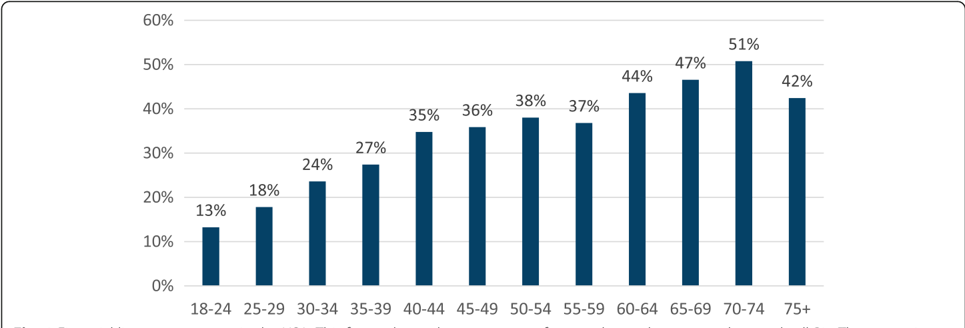
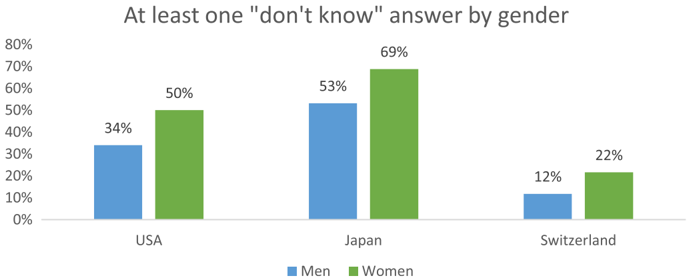
- Financial literacy is especially low among vulnerable groups: in the USA, less than 30% of respondents answered the Big Three correctly by age 40; in Switzerland, only 45% of those aged 35 or younger did so. Women were less likely than men to answer correctly across countries, and were more likely to respond “do not know.”
- The paper reports several associations: one additional correct financial literacy answer is associated with a 3–4 percentage point higher probability of retirement planning in Germany, the USA, Japan, and Sweden, and a 10 percentage point higher probability in the Netherlands; planning is associated with two to three times more wealth near retirement. The paper also states that 30–40% of U.S. retirement wealth inequality can be accounted for by differences in financial knowledge.
Methods
- This is a synthesis/keynote paper, not a new empirical study; it reviews prior survey and experimental evidence on financial literacy and financial behavior.
- It centers on the “Big Three” financial literacy measure: questions on interest compounding, inflation, and risk diversification, fielded in many surveys including the HRS, NFCS, SCF, SHED, and the FLat World project.
- Main analysis is comparative/descriptive: cross-country tables and survey results are used to compare literacy levels, identify vulnerable subgroups, and summarize associations between literacy and financial outcomes.
Limitations
- The paper explicitly notes that there are “few evaluations” of the effectiveness of financial education initiatives and says more research is urgently needed.
- The text makes evident that much of the evidence summarized is correlational rather than causal; it even notes that financial literacy “could be the result of choice and not an exogenous variable” (paper text).
- As a keynote summary, the paper does not present a single unified dataset or a new identification strategy; it aggregates evidence from many sources rather than testing one original hypothesis.
Model-written summary. Check it against the paper before relying on it.
Integrity signals
Registry
Cites
Statistics
Figures
Verification
Claims the paper makes
10 Valid · 6 Not valid · 44 Not checked · 30 Own results and interpretations
The cited sources support only part of this claim — read each source’s verdict below.
In the paper
“On average, about one third of the global population has familiarity with the basic concepts that underlie everyday financial decisions (Lusardi and Mitchell, 2011c).”
What the sources say
- Partly supportedcites Lusardi and Mitchell, 2011c matched to “Financial literacy around the world: an overview” (2011) sourceExperimental — accuracy not yet measured
The Measuring financial literacy section examines basic concepts relevant to everyday financial decisions, and the Concluding remarks report low financial literacy across eight countries. Neither section gives an estimate that about one third of the global population knows those concepts. The one-third figure in Financial literacy around the world refers instead to U.S. respondents who said they did not know how to answer a risk-diversification question. (LLM, conf=0.87)
plain- Asserted: passes — The authors put it forward as true.
- Checkable: passes — It can be checked against evidence.
- Load-bearing: passes — The paper’s conclusions depend on it.
- Based: passes — The paper gives a reason why it holds.
- Partly supported
Every source the paper cites for this claim was checked and supports it.
In the paper
“And just one third demonstrated understanding of these two concepts and answered the third question, measuring understanding of risk diversification, correctly.”
What the sources say
- Supportedcites Lusardi and Mitchell, 2011b matched to “The Outlook for Financial Literacy” (2011) source
The “Financial Literacy and Financial Decision-Making” section reports that only one-third of respondents in a survey of older Americans answered the interest-compounding, inflation, and risk-diversification questions correctly. (LLM, conf=0.94)
boosted- Asserted: passes — The authors put it forward as true.
- Checkable: passes — It can be checked against evidence.
- Load-bearing: passes — The paper’s conclusions depend on it.
- Based: passes — The paper gives a reason why it holds.
- Supported
Every source the paper cites for this claim was checked and supports it.
In the paper
“only half of older Americans -who presumably had made many financial decisions in their lives -could answer the two basic questions measuring understanding of interest rates and inflation (Lusardi and Mitchell, 2011b).”
What the sources say
- Supportedcites Lusardi and Mitchell, 2011b matched to “The Outlook for Financial Literacy” (2011) source
The “Financial Literacy and Financial Decision-Making” section (page not provided) describes a survey of older Americans and reports that only half of respondents correctly answered both questions on interest compounding and inflation. (LLM, conf=0.94)
plain- Asserted: passes — The authors put it forward as true.
- Checkable: passes — It can be checked against evidence.
- Load-bearing: passes — The paper’s conclusions depend on it.
- Based: passes — The paper gives a reason why it holds.
- Supported
Every source the paper cites for this claim was checked and supports it.
In the paper
“Financial literacy is low even in advanced economies with well-developed financial markets.”
What the sources say
- Supportedcites Lusardi and Mitchell, 2011c matched to “Financial literacy around the world: an overview” (2011) source
The Concluding remarks state that financial literacy is very low around the world regardless of financial-market development. The paper also reports widespread financial illiteracy in countries with well-developed financial markets, directly supporting the claim. (LLM, conf=0.94)
plain- Asserted: passes — The authors put it forward as true.
- Checkable: passes — It can be checked against evidence.
- Load-bearing: passes — The paper’s conclusions depend on it.
- Based: passes — The paper gives a reason why it holds.
- Supported
Every source the paper cites for this claim was checked and supports it.
In the paper
“Financial literacy is found to have the strongest impact in the Netherlands, where knowing the right answer to one additional financial literacy question is associated with a 10 percentage point higher probability of planning (Mitchell and Lusardi, 2015).”
What the sources say
- Supportedcites Mitchell and Lusardi, 2015 matched to “Financial Literacy and Economic Outcomes: Evidence and Policy Implications” (2015) source
The “Why Financial Literacy Matters” section (page not provided) states that financial literacy has its strongest impact in the Netherlands and gives the same 10-percentage-point association for one additional correct answer. (LLM, conf=0.95)
plainstates an association- Asserted: passes — The authors put it forward as true.
- Checkable: passes — It can be checked against evidence.
- Load-bearing: passes — The paper’s conclusions depend on it.
- Based: passes — The paper gives a reason why it holds.
- Supported
51 more claims · 7 with their cited sources checked
Create a free account to see all 90 claims and to verify the 3 references still open.
- It may state two separate claims as one. 24
- Probably not a substantial claim. 12
- Borderline: one of the tests for a substantial claim is unclear. 1
Claims other papers make about this one
Each is checked against this paper’s own text: does it say what the citing paper says it does?
The cited source doesn’t support the claim as written.
In the citing paper
“Previous research conducted by [33,34] shows a positive correlation between financial literacy and Fintech adoption.”
From Fintech Adoption Drivers for Innovation for SMEs in Indonesia (2022) · cites this paper as [33]
Checked by a reasoning model — may be wrong.
Experimental — accuracy not yet measuredThe cited source says what the claim attributes to it.
In the citing paper
“Understanding finance is crucial in making informed financial decisions and exhibiting sound financial behavior, as stated by Lusardi (2019).”
From Financial Literacy Among the Senior High School Students: Basis for Financial Stewardship Plan (2024) · cites this paper as Lusardi, 2019
Citations
Cites
The Economic Importance of Financial Literacy: Theory and Evidence
Lusardi, A., & Mitchell, O. S. (2014) · Journal of Economic Literature · doi:10.1257/jel.52.1.5 · Cited by 4,698 · cited 4×
“Four principles informed the design of these questions, as described in detail by Lusardi and Mitchell (2014).”
InfluentialSelf-citationFinancial literacy around the world: an overview
LUSARDI, A., & MITCHELL, O. S. (2011) · Journal of Pension Economics and Finance · doi:10.1017/s1474747211000448 · Cited by 2,000 · cited 5×
“Those interested in learning more about the differences in financial literacy across demographics and other characteristics can consult Lusardi and Mitchell (2011c, 2014).”
InfluentialSelf-citationPlanning and Financial Literacy: How Do Women Fare?
Lusardi, A., & Mitchell, O. S. (2008) · American Economic Review · doi:10.1257/aer.98.2.413 · Cited by 1,512 · cited 7×
“Empirically, planning is a very strong predictor of wealth; those who plan arrive close to retirement with two to three times the amount of wealth as those who do not plan (Lusardi and Mitchell, 2011b). Financial literacy is also associated with higher returns on investments and investment in more complex assets, such…”
BackgroundInfluentialSelf-citationDebt literacy, financial experiences, and overindebtedness
LUSARDI, A., & TUFANO, P. (2015) · Journal of Pension Economics and Finance · doi:10.1017/s1474747215000232 · Cited by 1,412 · cited 2×
“With regard to debt behavior, those who are more financially literate are less likely to have credit card debt and more likely to pay the full balance of their credit card each month rather than just paying the minimum due (Lusardi and Tufano, 2009, 2015).”
BackgroundSelf-citationFinancial Literacy and Planning: Implications for Retirement Wellbeing
Lusardi, A., & Mitchell, O. (2011) · National Bureau of Economic Research · doi:10.3386/w17078 · Cited by 1,253
Self-citationThe Economic Importance of Financial Literacy: Theory and Evidence
Lusardi, A., & Mitchell, O. (2013) · National Bureau of Economic Research · doi:10.3386/w18952 · Cited by 821
Self-citationOptimal Financial Knowledge and Wealth Inequality
Lusardi, A., Michaud, P.-C., & Mitchell, O. S. (2017) · Journal of Political Economy · doi:10.1086/690950 · Cited by 690 · cited 2×
“Programs devoted to teaching risk via, for example, visual tools have shown great promise (Lusardi et al., 2017).”
BackgroundMethodSelf-citationFinancial literacy and retirement planning in the Netherlands
van Rooij, M. C. J., Lusardi, A., & Alessie, R. J. M. (2011) · Journal of Economic Psychology · doi:10.1016/j.joep.2011.02.004 · Cited by 643
Self-citationFinancial literacy and retirement planning in Germany
BUCHER-KOENEN, T., & LUSARDI, A. (2011) · Journal of Pension Economics and Finance · doi:10.1017/s1474747211000485 · Cited by 513
Self-citationFinancial Literacy and Planning: Implications for Retirement Well-being
Lusardi, A., & Mitchell, O. S. (2011) · Financial Literacy: Implications for Retirement Security and the Financial Marketplace · doi:10.1093/acprof:oso/9780199696819.003.0002 · Cited by 505
Self-citation
Research works printed but not linked: 3
- Lusardi, A., de Bassa Scheresberg, C., and Avery, M. 2018. Millennial mobile payment users: a look into their personal finances and financial behaviors. GFLEC working paper.
- Lusardi, A., de Bassa Scheresberg, C., & Oggero, N. (2016). Student loan debt in the US: an analysis of the 2015 NFCS Data, GFLEC Policy Brief, November .
- Lusardi, A., & Tufano, P. (2009). Teach workers about the peril of debt. Harvard Business Review , 22 -24.
Cited by
Items 801–900 of 1,126
Mohanta, G. (2023) · Business Perspectives and Research · doi:10.1177/22785337221148595 · Cited by 3
“Additionally, research demonstrates that people’s socioeconomic status and demographic traits affect their level of financial literacy (Jacob, 2009; Lusardi, 2019; Venkatesan & Jacob, 2019).”
BackgroundPelatihan Perencanaan Keuangan Syariah Sebagai Strategi Pengelolaan Keuangan Untuk Generasi Z
Aisah, N., Hermansyah, D., & Ismawar, B. (2023) · Adi Widya Jurnal Pengabdian Masyarakat · doi:10.33061/awpm.v7i1.8726
Financial Sustainable of Bumiputera SMEs: Food Processing Industry Perspectives
Rahman, F. B. A., Akbarruddin, M. N. A., Osman, S., Ismail, F. H., Mahmut, I. B., & Musa, R. B. (2023) · International Journal of Academic Research in Business and Social Sciences · doi:10.6007/ijarbss/v13-i5/17014 · Cited by 2
A Tool to Aid Households in Investments Decision
Bonanno, C., Prakash, V., & Garg, L. (2023) · Lecture notes in networks and systems · doi:10.1007/978-3-031-31153-6_33
Comparative Study of Financial Literacy and Socio-demographic Factors in Sibu, Sarawak
Ling, S. S. (2023) · Asian Journal of Research in Business and Management · doi:10.55057/ajrbm.2023.5.2.1 · Cited by 2
Maurya, R., & Shunmugasundaram, V. (2023) · MUDRA Journal of Finance and Accounting · doi:10.17492/jpi.mudra.v10i1.1012301
Khan, F., & Farooqui, A. (2023) · doi:10.2196/preprints.50779
Azzahra, T. T., & Afgani, K. F. (2023) · Journal Integration of Management Studies · doi:10.58229/jims.v1i1.32 · Cited by 3
“As the economic environment changes, financial instruments such as pawnshops and payday loans become more prevalent and significant (Lusardi, 2019).”
BackgroundÖzel Eğitim Öğretmenlerinin Finansal Okuryazarlık Becerilerinin Öğretimine İlişkin Deneyimleri
Oğur, Ç., ATALAY, F., & Olçay, S. (2023) · Bayburt Eğitim Fakültesi Dergisi · doi:10.35675/befdergi.1269679
Using Gamification to Overcome Common Behavioral Biases and Increase Financial Well-BeingPreprint
Bartmann, N., & Rayburn-Reeves, R. M. (2023) · SocArXiv (OSF Preprints) · doi:10.31235/osf.io/vkexr
Evaluating Financial Literacy Among Working Women in Pune: A Gender-Sensitive Approach
Agrawal, V., & Agarwal, M. (2023) · Springer eBooks · doi:10.1007/978-981-99-2909-2_24 · Cited by 5
Towo, T., Jonas, K., & Chitombo, E. (2023) · INTERNATIONAL JOURNAL OF RESEARCH IN SOCIAL SCIENCE AND HUMANITIES · doi:10.47505/ijrss.2023.v4.7.2
Sönmez, E. D., & Gökmenoğlu, T. (2023) · Psycho-Educational Research Reviews · doi:10.52963/perr_biruni_v12.n2.06
“Financial management skill, which involves creating alternative financial resources, is challenging to acquire and needs to be supported by professional development opportunities (Lusardi, 2019).”
BackgroundDigital credit for smallholder farmers: Evidence from Madagascar
Sarfo, Y. (2023) · eDiss (Georg-August-Universität Göttingen) · doi:10.53846/goediss-10059
-, J. V. (2023) · International Journal For Multidisciplinary Research · doi:10.36948/ijfmr.2023.v05i05.6462
“The process of ensuring vulnerable groups, such as weaker individuals and low-income groups, have access to financial services and timely and sufficient financing where needed at a reasonable cost is known as financial inclusion (FI)..[20-23]”
BackgroundABORDAGENS EPISTEMOLÓGICAS EM PUBLICAÇÕES SOBRE ALFABETIZAÇÃO FINANCEIRA
Pontes, M. D. M. (2023) · Caderno de Administração · doi:10.4025/cadadm.v31i1.61240 · Cited by 3
Yohanna, L., Sondari, E., & Syahid, S. (2023) · Advances in economics, business and management research/Advances in Economics, Business and Management Research · doi:10.2991/978-94-6463-234-7_16 · Cited by 3
The Financial Autonomy in Virginia Woolf’s “A Room of One’s Own”
Tayeb, G. D. (2023) · Academic Journal of Nawroz University · doi:10.25007/ajnu.v12n4a1771
“Woolf reflects on how women are left behind or discouraged from taking any step in a maledominated society (Lusardi, 2019), where men are the sole writers and financial decision-makers.”
BackgroundEffect of Financial Literacy on Financial Well-Being in Georgia
Mercan, M., Kitesashvili, D., & Aslantas, M. (2023) · Journal of Business · doi:10.31578/job.v12i2.240 · Cited by 2
Gerzon, R. A., & Lopena, G. L. (2023) · Philippine Social Science Journal · doi:10.52006/main.v6i2.752 · Cited by 1
Thanasas, G. L. (2023) · Risk Governance and Control Financial Markets & Institutions · doi:10.22495/rgcv13i3p6
AVALIAÇÃO DO ÍNDICE DE CONHECIMENTO FINANCEIRO (ICF) DE ALUNOS DE ENGENHARIA DE PRODUÇÃO
Medeiros, A. L., FARIA, T. M., Vassallo, M. D., et al. (2023) · Anais ... Encontro Nacional de Engenharia de Produção/Anais do Encontro Nacional de Engenharia de Produção · doi:10.14488/enegep2023_tn_st_408_2008_45577
Sheruly, I., & Koentary, A. S. S. (2023) · Tazkiya Journal of Psychology · doi:10.15408/tazkiya.v11i2.31281 · Cited by 12
“With financial literacy, individuals become more capable of making sound financial decisions (Lusardi, 2019).”
BackgroundMoney Management Behavior among Adults in Indonesia
Saad, A. M., Jonathan, G., Kassim, A. A. M., et al. (2023) · Information Management and Business Review · doi:10.22610/imbr.v15i4(si)i.3586
“The importance of being financially literate consistent with the previous study conducted by Md Kassim et al. (2022), Hamid and Loke (2021), Waranyasathid and Htin (2020), and Lusardi (2019).”
BackgroundResultAbiodun, A. R., Kenayathulla, H. B., & Radzi, N. M. (2023) · International Journal of Academic Research in Progressive Education and Development · doi:10.6007/ijarped/v12-i3/19153
“It is an essential soft skill that improves society and individuals’ financial well -being to engage significantly in economic life (Lusardi, 2019).”
BackgroundMottola, G. R., Skimmyhorn, W., & Valdes, O. M. (2023) · SSRN Electronic Journal · doi:10.2139/ssrn.4620087
A Quasi-Experiment Of Improved Financial Literacy Business On The Young Entrepreneur
Purnamasari, I., Sugiharti, H., & Fauziyah, A. (2023) · Jurnal ASET (Akuntansi Riset) · doi:10.17509/jaset.v15i1.56643
Ali, H. J., Hasan, R., Sultana, M., Yousufi, N. A. S., Salsabil, R., & Hanif, M. B. (2023) · SSRN Electronic Journal · doi:10.2139/ssrn.4637041
Barns förståelse av pengar och ekonomi – tematisk analys av intervjuer med barn i åldrarna 8–9 år
Hernwall, P., & Söderberg, I. (2023) · Barn – forskning om barn og barndom i Norden · doi:10.23865/barn.v41.5291 · Cited by 1
“I forskning om individers relation till pengar och ekonomi är betoningen på kvantitativ räkneförmåga och begreppskunskap samt hur dessa faktorer avgör hur delaktiga hushåll och individer är i samhället (Klapper & Lusardi, 2020; Lusardi, 2019; van Rooij et al., 2011).”
BackgroundMohammad, E. A., & Salhy, B. B. (2023) · Koya University Journal of Humanities and Social Sciences · doi:10.14500/kujhss.v6n1y2023.pp88-94 · Cited by 7
“In his research, Lusardi (2019) found the reasons behind which the investors behave in herds in the stock market.”
BackgroundAn Overview Of Financial Literacy Initiatives In India
Memon, C. S., & Sakhalkar, C. M. R. (2023) · The Management Accountant Journal · doi:10.33516/maj.v58i8.81-86p
Malepe, J. S. (2023) · International Journal of Research in Business and Social Science (2147-4478) · doi:10.20525/ijrbs.v12i10.3095
“Individuals need to learn basics on how to read and write financially especially those growing up in financially challenged society or complex financial landscape (Lusardi, 2019; OECD, 2020).”
BackgroundANALISIS LITERASI FINANSIAL, SIKAP FINANSIAL DAN PERILAKU FINANSIAL PADA MILENIAL DAN GENERASI Z
Kristianti, I. P., & Kristiana, D. R. (2023) · Jurnal Riset Akuntansi Mercu Buana · doi:10.26486/jramb.v9i1.3275
Financial Literacy and its Determinants: A Case of Professionals in Colombo District Sri Lanka
Madhushani, P. W. G., & Rajapakse, R. P. C. R. (2023) · International Journal of Accounting and Business Finance · doi:10.4038/ijabf.v9i2.142 · Cited by 5
Household Financial Literacy: The Case of Nonperforming Consumer Credit in Kenya
Othuon, V. O., & Othuon, C. (2023) · Research Journal of Finance and Accounting · doi:10.7176/rjfa/14-20-05 · Cited by 1
Edukasi Literasi Keuangan Digital pada Masyarakat Desa Tanah Miring Kecamatan Aru Tengah
Lambyombar, Y., Temalagi, S., Warkula, Y. Z., et al. (2024) · Wikrama Parahita Jurnal Pengabdian Masyarakat · doi:10.30656/jpmwp.v8i1.7174
“Literasi keuang-an adalah pengetahuan dan keterampilan masyarakat terkait finansial agar mampu mengelola dan memanfaatkan keuangan secara maksimal (Lusardi, 2019).”
BackgroundThe Possible Impact of Chess on Financial LiteracyPreprint
Das, V. (2024) · SSRN Electronic Journal · doi:10.2139/ssrn.4651589
Analisa Literasi Finansial, Sikap Finansial, dan Perilaku Finansial pada Milenial dan Generasi Z
Kristianti, I., & Kristiana, D. R. (2023) · Journal of Culture Accounting and Auditing · doi:10.30587/jcaa.v2i2.6865 · Cited by 4
“…perubahan yang sangat cepat dan perkembangan dalam sektor keuangan dan skala ekonomi yang semakin luas, sangatlah penting bagi individu untuk memiliki navigasi yang efektif yang dapat menuntun mereka dalam membuat keputusan-keputusan finansial yang harus mereka buat setiap harinya (Lusardi, 2019).”
BackgroundInfluentialGovernment Welfare Grant and Low-Income Households Investment Behaviour in South Africa
Abiola, B. A., & Obokoh, L. O. (2024) · Springer proceedings in business and economics · doi:10.1007/978-3-031-46177-4_36
Incidencia de los factores socioeconómicos en la alfabetización financiera
Antonio-Anderson, C., Fuentes, E., & Cárdenas, M. C. P. (2023) · Revista Mexicana de Economía y Finanzas · doi:10.21919/remef.v19i1.961 · Cited by 8
“Por otra parte, Lusardi (2019) hizo una revisión sobre conocimientos y comportamientos financieros a partir de datos de 15 países como parte del proyecto Flat World del Global Financial Literacy Excellence Center (GFLEC).”
Access to Credit and Fintech, a Lexicon-Based Sentiment Analysis Application on Twitter DataPreprint
Palma, P., Bredice, M., Formisano, A. V., & Kullafi, S. (2024) · SSRN Electronic Journal · doi:10.2139/ssrn.4699101
“Si Kemal”: Video Animasi Literasi Keuangan untuk Anak Prasekolah
Suzanti, L., Fitriasari, N. S., Widjayatri, R. D., et al. (2023) · Jurnal Obsesi Jurnal Pendidikan Anak Usia Dini · doi:10.31004/obsesi.v7i6.5718
“Pemahaman pengetahuan keuangan dan sejauhmana pengetahuan mereka tentang keuangan dapat mempengaruhi pengambilan keputusan keuangan mereka (Lusardi, 2019).”
BackgroundFinancial Literacy To Create A Bright Future
Peter, P., Hadianto, B., Raihin, Y. O., et al. (2024) · Prima Abdika Jurnal Pengabdian Masyarakat · doi:10.37478/abdika.v4i1.3343
Equipping Our Students for Future Financial Success
Hamilton, S. R. (2024) · ASEE Annual Conference & Exposition · doi:10.18260/1-2--43398
Pengaruh Latar Belakang Keuangan terhadap Keputusan Investasi Generasi Y di Kota Palembang
Firda, N., Andriana, I., & Mu'izzudin, M. (2024) · Al-Kharaj Jurnal Ekonomi Keuangan & Bisnis Syariah · doi:10.47467/alkharaj.v6i4.983
Fejezetek az idősödő társadalmak nyugdíjtudatosságáról
Vaskövi, Á. (2024) · CUB Ph.D. Dissertations (Corvinus University of Budapest) · doi:10.14267/phd.2024003 · Cited by 1
Husamah, H., Syah, W. A. A., Chamisijatin, L., & Luzyawati, L. (2024) · Journal of Mangifera Edu · doi:10.31943/mangiferaedu.v8i2.177 · Cited by 2
“…literacy are less able to solve problems in situations that usually occur to them, while students with more developed literacy skills tend to be more able to solve problems in situations that are less familiar and tend to be difficult (Lodge et al., 2018; Lusardi, 2019; Protheroe et al., 2009).”
BackgroundA Study Of The Relationship Between The Financial Literacy And Financial Decision Of Gen Y
Pawar, J., Gaikwad, M. A., & Fernandes, M. (2024) · Journal Of Advanced Zoology · doi:10.53555/jaz.v45is4.4237
Village Government Supporting Agency Model With School Committee in Supporting Education Funding
Saman, A. M., Mahmudah, F. N., & Suyatno, S. (2024) · Munaddhomah Jurnal Manajemen Pendidikan Islam · doi:10.31538/munaddhomah.v5i2.658
EDUCAÇÃO FINANCEIRA E INVESTIMENTOS NO MERCADO DE CAPITAIS
Pereira, J. D. P., & Ribeiro, H. C. M. (2023) · Revista de Administração e Negócios da Amazônia · doi:10.18361/2176-8366/rara.v14n1p1-27
The Impact of Education Financing on Teacher Performance in Madrasa Tsnawiyah
Eva, S., Fakhri, J., & Septuri, S. (2023) · Jurnal Penelitian Pendidikan/Jurnal penelitian pendidikan · doi:10.15294/jpp.v40i1.44666
Portuguese Youth Saving Determinants of Financial Literacy
Leitão, A. L., Silva, M. A., Abreu, M., Fitas, F., & Ricardo, T. (2023) · ERBE- European Review of Business Economics · doi:10.26619/erbe-2023.3.1.5 · Cited by 1
Can We Predict Recurrence of pT1-2 Renal Cell Carcinoma?
Üçer, O., Müezzi̇noğlu, T., Aslan, G., et al. (2024) · Bulletin of Urooncology · doi:10.4274/uob.galenos.2024.2023.11.1
Murtaza, S., Abdin, S. Z. U., & Saleem, H. M. N. (2023) · Journal of Accounting and Finance in Emerging Economies · doi:10.26710/jafee.v9i4.2804
“Nowadays, individuals have a major responsibility for managing their finances (Lusardi, 2019).”
BackgroundPutuhena, H., Fauzan, M. R., & Zalni, Z. (2023) · Current Jurnal Kajian Akuntansi dan Bisnis Terkini · doi:10.31258/current.4.3.574-582
Sulastri, T., & Gantino, R. (2024) · Journal of Economics Finance and Accounting Studies · doi:10.32996/jefas.2024.6.2.6
“Similar to the previous statement, Lusardi (2019), Pangestu & Karnadi (2020) also revealed that with Financial Literacy For the good, individuals can make smarter financial decisions and minimize the impact of behavioral bias on financial decision making.”
ResultThe Impact of Financial Education on Stress Among Orthopaedic Surgeons
Higginbotham, D. O., Nham, F. H., Cavazos, D. R., et al. (2024) · Cureus · doi:10.7759/cureus.58093
Values and Value: Culturally Responsive Financial Literacy Programming in Higher Education
Phillips, T. J. (2024) · Journal of Higher Education Policy And Leadership Studies · doi:10.61186/johepal.5.1.146 · Cited by 3
The RiskTole Model for Future Financial Inclusion-Literacy?
Wai, K. T. (2024) · International Journal of Advanced Research in Economics and Finance · doi:10.55057/ijaref.2024.6.1.4
Factors Influencing Tangerang City MSMEs' Financial Literacy
Netalissa, U., Kadarwati, N., & Gunawan, D. S. (2024) · KnE Social Sciences · doi:10.18502/kss.v9i14.16099
“Financial literacy refers to both knowledge and financial behavior [8].”
BackgroundHow to Control Children's Consumption Behavior?
Sa’adah, S. R., & Najib, M. T. A. (2024) · Journal of Economics Education and Entrepreneurship · doi:10.20527/jee.v5i1.9169
“Children's finances include pocket money given by parents (Lusardi, 2019) .”
BackgroundRaza, H. (2023) · Journalism, politics and society. · doi:10.63067/nnfvzv15
(2024) · Journal of System and Management Sciences · doi:10.33168/jsms.2024.0504 · Cited by 1
Stepnova, O. V., Starchikova, I. Y., & Курашова, С. А. (2024) · Perspectives of science and education · doi:10.32744/pse.2024.2.5 · Cited by 4
Use of Technology to Develop a More Financially Inclusive World
Law, S. W. (2024) · Springer eBooks · doi:10.1007/978-981-97-1127-7_1
Financial inclusion and mutual funds investment decision
Mutamimah, M., Saputri, P. L., & Indriastuti, M. (2023) · Diponegoro International Journal of Business · doi:10.14710/dijb.6.2.2023.114-127 · Cited by 4
“These results do not in line with the results of Sabri and Afiqah (2016), Ahmad and Shah (2022), Hassan Al ‐ Tamimi and Anood Bin Kalli (2009), Jariwala (2015a), Lusardi (2019), and Nicolescu and Tudorache (2021) who found that financial literacy had a positive effect on investment decisions.”
BackgroundResultRahmawati, Y. H., Wardoyo, D. T. W., & Khamidi, A. (2023) · EDUKASIA Jurnal Pendidikan dan Pembelajaran · doi:10.62775/edukasia.v4i2.383
Financially Sustainable Future, Are Tertiary Students Ready?
Ali, N., Mat Rahim, N., Yanto, H., & Baroroh, N. (2024) · Asia-Pacific Management Accounting Journal · doi:10.24191/apmaj.v19i1-03 · Cited by 1
-, M. B., & Deka, G. (2024) · International Journal For Multidisciplinary Research · doi:10.36948/ijfmr.2024.v06i03.20905
“Lack of financial literacy, even in some of the world’s most well-developed financial markets, is of acute concern and needs immediate attention (Lusardi, 2019).”
BackgroundFinancial literacy and sociodemographic characteristics of the Mexican Petroleum Company employees
Moreno-García, E., Escalera-Chávez, M. E., & Flores, M. B. D. Á. (2024) · Journal of Infrastructure Policy and Development · doi:10.24294/jipd.v8i6.4522
“…other hand, having a good level of personal financial management that includes knowledge of fundamental concepts, arithmetic skills, interest rate calculation, understanding of the inflation effect and risk diversification allows to improve an individual’s financial decision-making (Lusardi, 2019).”
Background(2023) · Wroclaw University of Economics and Business eBooks · doi:10.15611/2023.25.3
Asdar, A. S., Hasbiah, S., & Mulyadi, A. R. (2024) · Pinisi Journal of Entrepreneurship Review · doi:10.62794/pjer.v2i1.2471 · Cited by 16
Amante, J. J. (2024) · International Journal of Multidisciplinary Applied Business and Education Research · doi:10.11594/ijmaber.05.05.20 · Cited by 1
Rahmayani, D., Jannah, R., Budiantoro, R. A., et al. (2024) · Surya Abdimas · doi:10.37729/abdimas.v8i2.3998
Learning financial literacy amongst adult Mauritians.
Ramjeet, A. K. (2023) · ResearchSpace (University of KwaZulu-Natal) · doi:10.29086/10413/23112
Razalan, D. C. (2024) · International Journal of Research Publications · doi:10.47119/ijrp1001511620246821
The Urgency of Financial Literacy in Hajj Funds Management for Indonesian Muslims
Sarka, S. I., Osman, A. Z., & Annuar, H. A. (2024) · Journal of Islamic Economics and Finance Studies · doi:10.47700/jiefes.v5i1.7302 · Cited by 6
“In summary, there is a widespread lack of financial literacy worldwide, and it is important to note that higher national income levels do not necessarily correspond to a population that is more knowledgeable about financial matters (Lusardi, 2019).”
BackgroundKohärenz zwischen ESG, CSR, SDG und finanzieller Bildung
Helmold, M., Treu, J., Fritz, J., & Hummel, F. (2024) · Springer eBooks · doi:10.1007/978-3-658-44579-9_13
Young Adults and the Housing ChallengePreprint
Sheedy, E. A., Shah, S., & Pan, Z. (2024) · Social Science Research Network · doi:10.2139/ssrn.4884772
UPAYA PENINGKATAN LITERASI KEUANGAN BAGI ISTRI NELAYAN KOTA TIDORE KEPULAUAN
Bailusy, M. N., Darma, P. E., & Buamonabot, I. (2024) · Jurnal Widya Laksmi Jurnal Pengabdian Kepada Masyarakat · doi:10.59458/jwl.v4i2.84
“Berdasarkan hasil survei tingkat literasi keuangan terhadap pelaku UMKM bahwa secara rata-rata hanya 37 persen responden yang bisa menjawab dengan benar pertanyaan seputar keuangan dasar seperti inflasi, tingkat bunga, diversifikasi risiko dan bunga majemuk (Lusardi, 2019).”
BackgroundKontribusi Akademik dalam Pengembangan Literasi Keuangan Digital
Judijanto, L., Rasidun, L. O., & Aris, N. (2024) · Jurnal Ekonomi dan Kewirausahaan West Science · doi:10.58812/jekws.v2i03.1432 · Cited by 1
Exploring The Nexus: Gender Equitable Attitudes & Financial Perceptions of Mexican AdolescentsPreprint
Kartha, R., Vyas, A. N., & Nagaraj, N. C. (2024) · Research Square · doi:10.21203/rs.3.rs-4708005/v1
Promoting Financial Literacy with the SimEmp Application
Alves, J., Lisboa, D., Moutinho, N., et al. (2024) · Journal of Technologies Information and Communication · doi:10.55267/rtic/15009
Financial Literacy and How It Affects the Global Economy
Wójcik-Czerniawska, A. J. (2024) · Eurasian studies in business and economics · doi:10.1007/978-3-031-62719-4_14 · Cited by 3
Laygan, R. M., Teves, M. R., Abing, M. J. J., et al. (2024) · E3S Web of Conferences · doi:10.1051/e3sconf/202457003011
“Existing literature such as in Lusardi (2019), Bottazzi and Lusardi (2021), and Sholevar and Harris (2020) indicated that women have lower financial literacy than men [3,7,8].”
Paul, O. O., Tibbs, C. Y., & Alala, O. B. (2024) · Sustainable Business and Society in Emerging Economies · doi:10.26710/sbsee.v6i2.3043
Crowdfunding and Entrepreneurial Drive: A New Paradigm in the Sharing Economy
Borozan, T., Tomić, A. Đ., & Stanimirović, P. (2024) · International Conference on Sharing Economy and Contemporary Business Models: Theory and Practice · doi:10.62863/asap7604 · Cited by 1
Paul, O. O., Tibbs, C. Y., & Alala, O. B. (2024) · Journal of Business and Social Review in Emerging Economies · doi:10.26710/jbsee.v10i2.3067
A Rapid Assessment of the Interplay Between Gender, Financial Literacy and Peacemaking
Maobe, A. (2024) · Advances in African economic, social and political development · doi:10.1007/978-3-031-52905-4_18
Understanding and Enhancing Financial Literacy Among Migrant Women Labourers in Bangalore
Sebastian, R. T., & Thomas, A. A. (2024) · Studies in systems, decision and control · doi:10.1007/978-3-031-67890-5_52
The impact of financial literacy on SMEs lending conditions
Pontes, M. D. M., Peñaloza, V., Monteiro, D. L. C., & Cavalcante, L. T. (2024) · Caderno Pedagógico · doi:10.54033/cadpedv21n10-355 · Cited by 2
THE ROLE OF EDUCATION IN INFLUENCING CAPITAL MARKETS' LIQUIDITY IN THE CEE COUNTRIES
Pușcașu, E.-A. (2024) · Journal of Financial Studies · doi:10.55654/jfs.2024.9.sp.13
Mvunabandi, J. D. (2024) · Journal of Financial Studies · doi:10.55654/jfs.2024.9.sp.19
“Nevertheless, more studies argue in favour of financial literacy and the link with decision making and behaviour (Fong et al., 2021; Lusardi, 2019; Ozili, 2021).”
InfluentialExploring the Influence of Emotional Intelligence on Financial Literacy Amongst Gen Z
Kausar, A., & Pooja, P. (2024) · Advances in systems analysis, software engineering, and high performance computing book series · doi:10.4018/979-8-3693-5563-3.ch013
The Role of Dependency Culture in the Investment Model in Iran's Financial MarketsPreprint
Pesyan, V. N., زاده, ی. م., Rezazadeh, A., & Samani, H. A. (2024) · SSRN Electronic Journal · doi:10.2139/ssrn.5036852 · Cited by 1
Blum, A. K. (2024) · SSRN Electronic Journal · doi:10.2139/ssrn.5038127
Ngwenya, C. T. S., & Chetty, T. (2024) · International Journal of Business Ecosystem and Strategy (2687-2293) · doi:10.36096/ijbes.v6i4.645
“An Ecosystem of Financial Wellness Lusardi (2019) elucidated that financial well-being amongst individuals comprises a duality of dimensions such as the subjective and objective rudiments, with the former rudiments comprising disposable income, expenditure, spending patterns and investments or savings.”
TRAINING FUTURE TEACHERS OF MATHEMATICS TO DEVELOP FINANCIAL LITERACY OF SCHOOL STUDENTS
Ardabayeva, A., & Tuyakov, Y. (2024) · Habaršy. Fizika-matematikalyķ ġylymdary seriâsy · doi:10.51889/2959-5894.2024.87.3.006
Freitas, C., Santos, A., Bala, P., Campos, P., & Dionísio, M. (2024) · Lecture notes in computer science · doi:10.1007/978-3-031-78450-7_3
Metadata
- Authors
- Lusardi, A.
- Affiliations
- George Washington University (US)
- Corresponding author
- Lusardi, Annamaria
- ORCID
- Lusardi, Annamaria
- Venue
- Swiss Journal of Economics and Statistics
- Published
- 2019-01-24
- Volume
- 155
- Issue
- 1
- ISSN
- 0303-9692 (ISSN-L)
- 2235-6282
- OpenAlex
- W2911554037
- Semantic Scholar
- 045054f8e699ce8552fb34c500cb52d9b8d31d5f
- Cited by
- 1,135
- References
- 39
- Citations by year
- 2026: 142 · 2025: 218 · 2024: 233 · 2023: 245 · 2022: 147 · 2021: 75 · 2020: 64 · 2019: 9
- FWCI
- 187.87
- Type
- journal article
- Language
- en
- Open access
- diamond
- doi.org
- Licence
- cc-by
- creativecommons.org/licenses/by/4.0 (tdm)
- Locations
- Zeitschrift für schweizerische Statistik und Volkswirtschaft/Schweizerische Zeitschrift für Volkswirtschaft und Statistik/Swiss journal of economics and statistics (publishedVersion, cc-by)
- RePEc: Research Papers in Economics (submittedVersion)
- DOAJ (DOAJ: Directory of Open Access Journals) (submittedVersion)
- Econstor (Econstor) (submittedVersion, cc-by)
- Topics
- Social Sciences › Economics, Econometrics and Finance › Finance › Financial Literacy, Pension, Retirement Analysis
- Social Sciences › Business, Management and Accounting › Accounting › Financial Literacy and Behavior
- Social Sciences › Decision Sciences › General Decision Sciences › Decision-Making and Behavioral Economics
- Keywords
- financial literacy, financial education
About these checks
Registry, retraction, Cites and statistics results are computed, not judged, with one exception: a printed reference that no index lists is read once by a model before it counts as a citation error. Claims are extracted by a model and kept only when their quote appears verbatim in the text; each cited source is then checked, with a model’s help, for whether it says what the claim relies on. Those verdicts can be wrong — read the claim’s quote and the cited source before relying on one.
The claim verdicts this report counts are experimental: their accuracy is not yet measured.
A language model drew the claims from the paper on 2026-10-10, under version 3 of the claim definition (model deepseek-v4.1-flash, prompt extract-v3).
A second model labelled each claim on 2026-10-10 (model jev-1.13-20260917, definition revision gold-guideline-v0.2).
Cited sources are checked with a language model’s help (gpt-6-sol).
Statistics and arithmetic are recomputed, not judged.
Confidence bands are shown only for fields calibrated on our annotated test set. None is calibrated yet, so no band is shown.
What counts as a claim ›How we measure confidence ›How we check this ›
Are you an author, or do you see a problem with this page? Request a review
Data sources
Bibliographic data: Semantic Scholar, OpenAlex, Crossref.
Contains information from the Semantic Scholar Academic Graph Datasets, made available under the ODC Attribution License (ODC-BY 1.0).
Semantic Scholar’s data is described in: Kinney, R., et al. (2023). The Semantic Scholar Open Data Platform. arXiv:2301.10140.
