

Financial literacy and the need for financial education: evidence and implications
Open accessThe DOI matches its Crossref record; 47 of the 47 references it cites were found in a registry or an index; 13 of the 58 sources its claims cite were checked for support.
Abstract
This paper represents a summary of the keynote address I gave to the 2018 Annual Meeting of the Swiss Society of Economics and Statistics. I would like to thank Monika Butler, Rafael Lalive, anonymous reviewers
Overview
CoChat Summary
TL;DR
This keynote-style paper argues that financial literacy is low across countries and population groups, and that the “Big Three” questions are a practical way to measure it. It synthesizes evidence showing that financial literacy is linked to better saving, retirement planning, debt behavior, and resilience, and calls for large-scale, targeted financial education.
Key findings
- In the U.S. 2004 HRS, only about half of older Americans answered the two basic interest/inflation questions correctly, and only one third answered all three “Big Three” questions correctly.
- In the FLat World project (15 countries), the average share answering all three questions correctly was about 30%, and only around 50% in most countries answered the interest-rate and inflation questions correctly.
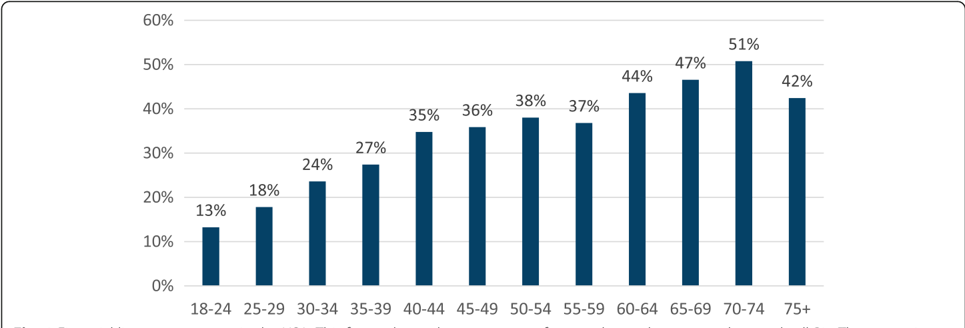
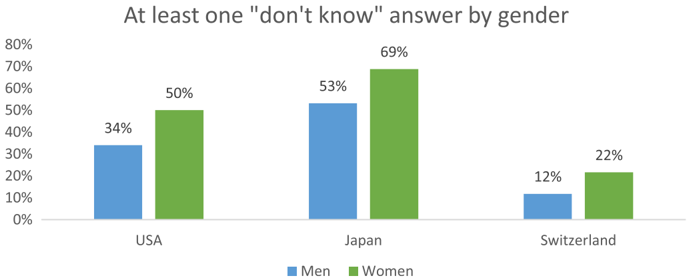
- Financial literacy is especially low among vulnerable groups: in the USA, less than 30% of respondents answered the Big Three correctly by age 40; in Switzerland, only 45% of those aged 35 or younger did so. Women were less likely than men to answer correctly across countries, and were more likely to respond “do not know.”
- The paper reports several associations: one additional correct financial literacy answer is associated with a 3–4 percentage point higher probability of retirement planning in Germany, the USA, Japan, and Sweden, and a 10 percentage point higher probability in the Netherlands; planning is associated with two to three times more wealth near retirement. The paper also states that 30–40% of U.S. retirement wealth inequality can be accounted for by differences in financial knowledge.
Methods
- This is a synthesis/keynote paper, not a new empirical study; it reviews prior survey and experimental evidence on financial literacy and financial behavior.
- It centers on the “Big Three” financial literacy measure: questions on interest compounding, inflation, and risk diversification, fielded in many surveys including the HRS, NFCS, SCF, SHED, and the FLat World project.
- Main analysis is comparative/descriptive: cross-country tables and survey results are used to compare literacy levels, identify vulnerable subgroups, and summarize associations between literacy and financial outcomes.
Limitations
- The paper explicitly notes that there are “few evaluations” of the effectiveness of financial education initiatives and says more research is urgently needed.
- The text makes evident that much of the evidence summarized is correlational rather than causal; it even notes that financial literacy “could be the result of choice and not an exogenous variable” (paper text).
- As a keynote summary, the paper does not present a single unified dataset or a new identification strategy; it aggregates evidence from many sources rather than testing one original hypothesis.
Model-written summary. Check it against the paper before relying on it.
Integrity signals
Registry
Cites
Statistics
Figures
Verification
Claims the paper makes
10 Valid · 6 Not valid · 44 Not checked · 30 Own results and interpretations
The cited sources support only part of this claim — read each source’s verdict below.
In the paper
“On average, about one third of the global population has familiarity with the basic concepts that underlie everyday financial decisions (Lusardi and Mitchell, 2011c).”
What the sources say
- Partly supportedcites Lusardi and Mitchell, 2011c matched to “Financial literacy around the world: an overview” (2011) sourceExperimental — accuracy not yet measured
The Measuring financial literacy section examines basic concepts relevant to everyday financial decisions, and the Concluding remarks report low financial literacy across eight countries. Neither section gives an estimate that about one third of the global population knows those concepts. The one-third figure in Financial literacy around the world refers instead to U.S. respondents who said they did not know how to answer a risk-diversification question. (LLM, conf=0.87)
plain- Asserted: passes — The authors put it forward as true.
- Checkable: passes — It can be checked against evidence.
- Load-bearing: passes — The paper’s conclusions depend on it.
- Based: passes — The paper gives a reason why it holds.
- Partly supported
Every source the paper cites for this claim was checked and supports it.
In the paper
“And just one third demonstrated understanding of these two concepts and answered the third question, measuring understanding of risk diversification, correctly.”
What the sources say
- Supportedcites Lusardi and Mitchell, 2011b matched to “The Outlook for Financial Literacy” (2011) source
The “Financial Literacy and Financial Decision-Making” section reports that only one-third of respondents in a survey of older Americans answered the interest-compounding, inflation, and risk-diversification questions correctly. (LLM, conf=0.94)
boosted- Asserted: passes — The authors put it forward as true.
- Checkable: passes — It can be checked against evidence.
- Load-bearing: passes — The paper’s conclusions depend on it.
- Based: passes — The paper gives a reason why it holds.
- Supported
Every source the paper cites for this claim was checked and supports it.
In the paper
“only half of older Americans -who presumably had made many financial decisions in their lives -could answer the two basic questions measuring understanding of interest rates and inflation (Lusardi and Mitchell, 2011b).”
What the sources say
- Supportedcites Lusardi and Mitchell, 2011b matched to “The Outlook for Financial Literacy” (2011) source
The “Financial Literacy and Financial Decision-Making” section (page not provided) describes a survey of older Americans and reports that only half of respondents correctly answered both questions on interest compounding and inflation. (LLM, conf=0.94)
plain- Asserted: passes — The authors put it forward as true.
- Checkable: passes — It can be checked against evidence.
- Load-bearing: passes — The paper’s conclusions depend on it.
- Based: passes — The paper gives a reason why it holds.
- Supported
Every source the paper cites for this claim was checked and supports it.
In the paper
“Financial literacy is low even in advanced economies with well-developed financial markets.”
What the sources say
- Supportedcites Lusardi and Mitchell, 2011c matched to “Financial literacy around the world: an overview” (2011) source
The Concluding remarks state that financial literacy is very low around the world regardless of financial-market development. The paper also reports widespread financial illiteracy in countries with well-developed financial markets, directly supporting the claim. (LLM, conf=0.94)
plain- Asserted: passes — The authors put it forward as true.
- Checkable: passes — It can be checked against evidence.
- Load-bearing: passes — The paper’s conclusions depend on it.
- Based: passes — The paper gives a reason why it holds.
- Supported
Every source the paper cites for this claim was checked and supports it.
In the paper
“Financial literacy is found to have the strongest impact in the Netherlands, where knowing the right answer to one additional financial literacy question is associated with a 10 percentage point higher probability of planning (Mitchell and Lusardi, 2015).”
What the sources say
- Supportedcites Mitchell and Lusardi, 2015 matched to “Financial Literacy and Economic Outcomes: Evidence and Policy Implications” (2015) source
The “Why Financial Literacy Matters” section (page not provided) states that financial literacy has its strongest impact in the Netherlands and gives the same 10-percentage-point association for one additional correct answer. (LLM, conf=0.95)
plainstates an association- Asserted: passes — The authors put it forward as true.
- Checkable: passes — It can be checked against evidence.
- Load-bearing: passes — The paper’s conclusions depend on it.
- Based: passes — The paper gives a reason why it holds.
- Supported
51 more claims · 7 with their cited sources checked
Create a free account to see all 90 claims and to verify the 2 references still open.
- It may state two separate claims as one. 24
- Probably not a substantial claim. 12
- Borderline: one of the tests for a substantial claim is unclear. 1
Claims other papers make about this one
Each is checked against this paper’s own text: does it say what the citing paper says it does?
The cited source doesn’t support the claim as written.
In the citing paper
“Previous research conducted by [33,34] shows a positive correlation between financial literacy and Fintech adoption.”
From Fintech Adoption Drivers for Innovation for SMEs in Indonesia (2022) · cites this paper as [33]
Checked by a reasoning model — may be wrong.
Experimental — accuracy not yet measuredThe cited source says what the claim attributes to it.
In the citing paper
“Understanding finance is crucial in making informed financial decisions and exhibiting sound financial behavior, as stated by Lusardi (2019).”
From Financial Literacy Among the Senior High School Students: Basis for Financial Stewardship Plan (2024) · cites this paper as Lusardi, 2019
Citations
Cites
The Economic Importance of Financial Literacy: Theory and Evidence
Lusardi, A., & Mitchell, O. S. (2014) · Journal of Economic Literature · doi:10.1257/jel.52.1.5 · Cited by 4,698 · cited 4×
“Four principles informed the design of these questions, as described in detail by Lusardi and Mitchell (2014).”
InfluentialSelf-citationFinancial literacy around the world: an overview
LUSARDI, A., & MITCHELL, O. S. (2011) · Journal of Pension Economics and Finance · doi:10.1017/s1474747211000448 · Cited by 2,000 · cited 5×
“Those interested in learning more about the differences in financial literacy across demographics and other characteristics can consult Lusardi and Mitchell (2011c, 2014).”
InfluentialSelf-citationPlanning and Financial Literacy: How Do Women Fare?
Lusardi, A., & Mitchell, O. S. (2008) · American Economic Review · doi:10.1257/aer.98.2.413 · Cited by 1,512 · cited 7×
“Empirically, planning is a very strong predictor of wealth; those who plan arrive close to retirement with two to three times the amount of wealth as those who do not plan (Lusardi and Mitchell, 2011b). Financial literacy is also associated with higher returns on investments and investment in more complex assets, such…”
BackgroundInfluentialSelf-citationDebt literacy, financial experiences, and overindebtedness
LUSARDI, A., & TUFANO, P. (2015) · Journal of Pension Economics and Finance · doi:10.1017/s1474747215000232 · Cited by 1,412 · cited 2×
“With regard to debt behavior, those who are more financially literate are less likely to have credit card debt and more likely to pay the full balance of their credit card each month rather than just paying the minimum due (Lusardi and Tufano, 2009, 2015).”
BackgroundSelf-citationFinancial Literacy and Planning: Implications for Retirement Wellbeing
Lusardi, A., & Mitchell, O. (2011) · National Bureau of Economic Research · doi:10.3386/w17078 · Cited by 1,253
Self-citationThe Economic Importance of Financial Literacy: Theory and Evidence
Lusardi, A., & Mitchell, O. (2013) · National Bureau of Economic Research · doi:10.3386/w18952 · Cited by 821
Self-citationOptimal Financial Knowledge and Wealth Inequality
Lusardi, A., Michaud, P.-C., & Mitchell, O. S. (2017) · Journal of Political Economy · doi:10.1086/690950 · Cited by 690 · cited 2×
“Programs devoted to teaching risk via, for example, visual tools have shown great promise (Lusardi et al., 2017).”
BackgroundMethodSelf-citationFinancial literacy and retirement planning in the Netherlands
van Rooij, M. C. J., Lusardi, A., & Alessie, R. J. M. (2011) · Journal of Economic Psychology · doi:10.1016/j.joep.2011.02.004 · Cited by 643
Self-citationFinancial literacy and retirement planning in Germany
BUCHER-KOENEN, T., & LUSARDI, A. (2011) · Journal of Pension Economics and Finance · doi:10.1017/s1474747211000485 · Cited by 513
Self-citationFinancial Literacy and Planning: Implications for Retirement Well-being
Lusardi, A., & Mitchell, O. S. (2011) · Financial Literacy: Implications for Retirement Security and the Financial Marketplace · doi:10.1093/acprof:oso/9780199696819.003.0002 · Cited by 505
Self-citation
Research works printed but not linked: 3
- Lusardi, A., de Bassa Scheresberg, C., and Avery, M. 2018. Millennial mobile payment users: a look into their personal finances and financial behaviors. GFLEC working paper.
- Lusardi, A., de Bassa Scheresberg, C., & Oggero, N. (2016). Student loan debt in the US: an analysis of the 2015 NFCS Data, GFLEC Policy Brief, November .
- Lusardi, A., & Tufano, P. (2009). Teach workers about the peril of debt. Harvard Business Review , 22 -24.
Cited by
Items 401–500 of 1,126
Finanzas personales y su relación con el estrés laboral
Chung, C. K. K., & Brítez, M. Á. A. (2023) · Quipukamayoc · doi:10.15381/quipu.v31i65.24989 · Cited by 4
Market Impact Analysis of Financial Literacy among A-Share Market Investors: An Agent-Based Model
Zhou, R., Xiong, X., Llacay, B., & Peffer, G. (2023) · Entropy · doi:10.3390/e25121602 · Cited by 9
“For example, in a study by Lusardi (2019) [5], individuals with higher levels of fi nancial literacy were found to be more likely to participate in the stock market.”
BackgroundFinancial Literacy, Financial Technology Literacy, and Capital Market Participation
Sasikirono, N., Meidiaswati, H., Rachman, N. M., & Madyan, M. (2023) · Jurnal Manajemen Teori dan Terapan | Journal of Theory and Applied Management · doi:10.20473/jmtt.v16i3.49550 · Cited by 16
“Financial literacy is the level of financial knowledge that indicates that an individual understands financial issues and can manage matters related to their finances for optimal financial decision-making (Lusardi, 2019).”
BackgroundMicrocredit Clients’ Financial Literacy Towards Financial Inclusion and Sustainability
Rahim, A., Tanggamani, V., Bani, H., et al. (2024) · Information Management and Business Review · doi:10.22610/imbr.v16i1(i).3717 · Cited by 4
“Low levels of financial literacy across countries are associated with successful spending and financial planning, as well as costly borrowing and debt management (Lusardi, 2019).”
BackgroundThiel, D. V., Elliott, K., Goedee, J., & Leenders, R. (2024) · European Journal of Finance · doi:10.1080/1351847x.2024.2357569 · Cited by 12
“We concluded that consumers’ ability to make informed financial decisions translates into enhanced personal financial behaviours (Klapper and Lusardi 2020; Lusardi 2019; Lusardi, Hasler, and Yakoboski 2021).”
Ogbolu, A. N., & Sukidjo, S. (2020) · Journal of Physics Conference Series · doi:10.1088/1742-6596/1446/1/012073 · Cited by 4
FINANCIAL LITERACY OF THE MANAGEMENT STUDENTS – CZECH AND SLOVAK EXPERIENCE
Kozubík, A. (2021) · MEST Journal · doi:10.12709/mest.09.09.01.10 · Cited by 4
FINANCIAL LITERACY OF STUDENTS – THE CASE STUDY OF UITM IN RZESZÓW, POLAND
Palimąka, K. (2021) · Financial Internet Quarterly · doi:10.2478/fiqf-2020-0021 · Cited by 4
“In his opinion there are three universal concepts that people should know – numeracy (including the ability to do interest rate calculations), and understanding of inflation and risk diversification (Lusardi, 2019, p. 1).”
BackgroundInfluentialFinancial Behaviour and Retirement Planning in Kenya, Assessing the Role of Self-Control Bias
Waga, C. S., Memba, F., & Muriithi, J. (2021) · European Scientific Journal ESJ · doi:10.19044/esj.2021.v17n23p348 · Cited by 11
Determinants of Money Management Behavior among Malaysian Private Universities Students
Kassim, A. A. M., Nejad, M. Y., Othman, J. B., Mamat, S., Saad, A. M., & Izwan, I. D. M. (2022) · International Journal of Business and Applied Social Science · doi:10.33642/ijbass.v8n8p2 · Cited by 6
PENGARUH KINERJA UMKM TERHADAP KESEJAHTERAAN UMKM DI BANDAR LAMPUNG
Alansori, A., & Listyaningsih, E. (2022) · AdBispreneur · doi:10.24198/adbispreneur.v7i1.37930 · Cited by 4
FINANCIAL HELP SEEKING BEHAVIOR PADA MAHASISWA DI SURABAYA
Geraldo, S., & Evelyn, E. (2020) · MIX JURNAL ILMIAH MANAJEMEN · doi:10.22441/mix.2020.v10i1.003 · Cited by 4
Cultivating Self-Control in FinTech: Evidence from a Field Experiment on Online Consumer BorrowingPreprint
Bu, D., Hanspal, T., Liao, Y., et al. (2019) · SSRN Electronic Journal · doi:10.2139/ssrn.3469571 · Cited by 4
Rodrigues, C. G., & Gopalakrishna, B. V. (2023) · Managerial Finance · doi:10.1108/mf-03-2023-0177 · Cited by 14
Ein Plädoyer für finanzielle Bildung als Voraussetzung für nachhaltige Finanzen und Nachhaltigkeit
Treu, J. (2024) · Zeitschrift für Wirtschaftspolitik · doi:10.1515/zfwp-2024-2015 · Cited by 3
Teachers’ Financial Literacy, Concerns, and Well-Being: A Basis for Financial Program Design
Zerna, E. (2024) · Journal of interdisciplinary perspectives · doi:10.69569/jip.2024.0464 · Cited by 6
Aristei, D., Bacci, S., Gallo, M., & Iannario, M. (2024) · Journal of the Royal Statistical Society Series A (Statistics in Society) · doi:10.1093/jrsssa/qnae133 · Cited by 3
Heo, W., Liu, Y., & Park, H. (2025) · Applied Research in Quality of Life · doi:10.1007/s11482-025-10431-3 · Cited by 6
“The three questions were called the Big Three (Lusardi, 2019 ), which ask about the basics of interest rate and investment.”
The Buy Now Pay Later Paradox: Financially Literate Yet Impulsive?
Ainy, R. N., Ariesanti, A., Fachrudin, K. A., Sa'dani, O. S., & Diati, Z. S. I. (2025) · Revista de Gestão Social e Ambiental · doi:10.24857/rgsa.v19n5-080 · Cited by 19
Morris, T., Kamano, L., & Therrien, V. (2025) · Journal of Consumer Affairs · doi:10.1111/joca.70025 · Cited by 12
Mustafa, J. A. (2025) · Investment Management and Financial Innovations · doi:10.21511/imfi.22(4).2025.04 · Cited by 4
“Further, the macroeconomic indicators regression results affirmed the study’s third hypothesis, that macroeconomic indicators affect PCE and the achievement of sustainable economic development, by exhibiting unstable growth with the positive impact of per capita GDP (insignificant effect) and WAG (significant effect).”
InfluentialFactors and patterns in mobile banking and payment services use in the United States
Sinha, G. R., Mehta, R. C., Kaittila, A., & Viitasalo, K. (2025) · Journal of Financial Services Marketing · doi:10.1057/s41264-025-00319-6 · Cited by 10
“Individuals with higher levels of financial literacy are better at navigating the complexities of financial decision-making (Lusardi 2019) and use of a wider range of financial products and services such as savings accounts, investments, insurance, and a range of Fintech products (Sinha et al.…”
Agasisti, T., D’Ignazio, A., Iannotta, G., Romagnoli, A., & Tonello, M. (2025) · Economics of Education Review · doi:10.1016/j.econedurev.2025.102731 · Cited by 25
Nuraisyiah, Azis, M., & Hasan, M. (2025) · Administrative Sciences · doi:10.3390/admsci16010011 · Cited by 6
“However, among women entrepreneurs, these three dimensions are not neutral; they are shaped by social context, cultural values, and gender relations (Mindra & Moya, 2017; Lusardi, 2019; Andriamahery & Qamruzzaman, 2022).”
Effectiveness of warning signal and overconfident investors
Inghelbrecht, K., & Tedde, M. (2026) · Journal of Banking & Finance · doi:10.1016/j.jbankfin.2025.107617 · Cited by 3
Innovation, Ethics, and Consumer Protection: The Context of Fintech Gamification in Quebec
Tep, S. P., Cachecho, M., & Jean-Bouchard, É. (2021) · Advances in human and social aspects of technology book series · doi:10.4018/978-1-7998-7844-5.ch010 · Cited by 4
Numeracy and Financial Wellbeing During the COVID-19 Pandemic
Wikoff, N. (2022) · Numeracy · doi:10.5038/1936-4660.15.1.1399 · Cited by 3
Concept Model Research of Financial Psychology to SME Business Sustainability
Oktariswan, D., Manurung, A. H., Ulupui, I. G. K. A., & Buchdadi, A. D. (2022) · Interdisciplinary Social Studies · doi:10.55324/iss.v1i8.191 · Cited by 4
Eriandani, R., Andono, F. A., Koan, D. F., Girindratama, M. W., & Rinawiyanti, E. D. (2023) · International Journal of Community Service Learning · doi:10.23887/ijcsl.v7i1.54662 · Cited by 9
Comparison of Retirement Financial Preparation Based on Demographic Factors: A Study of Teachers
Karim, R. A., Hussin, M., & Sahid, S. (2023) · International Journal of Academic Research in Business and Social Sciences · doi:10.6007/ijarbss/v13-i4/16745 · Cited by 4
Educação financeira e vieses cognitivos: Análise considerando variáveis sociodemográficas
Silva, N. E. F., & Lucena, W. G. L. (2022) · Revista Pensamento Contemporâneo em Administração · doi:10.12712/rpca.v16i4.56249 · Cited by 11
Namawejje, H., & Yawe, B. L. (2024) · Cogent Economics & Finance · doi:10.1080/23322039.2024.2387242 · Cited by 3
“The semi-structured questionnaire was based on already existing financial literacy questionnaires used by Kempson (2009), Lusardi (2019), Namawejje et al. (2022), OECD (2011, 2020), Santos and Tavares (2020) among others and it was modified to meet the study ’ s objectives stated in the…”
Bridging the Financial Knowledge Gap: Innovative Approaches to Financial Literacy in Africa
Amana, S., & Tamunomiegbam, A. (2024) · American Journal of Finance · doi:10.47672/ajf.2280 · Cited by 7
“Moreover, financial literacy is associated with better financial outcomes, such as higher returns on investments and a greater ability to manage emergency expenses (Lusardi & Mitchell, 2019).”
BackgroundVariacion, E. J. Y., Pontillas, P. V., & Comon, J. D. (2024) · European Modern Studies Journal · doi:10.59573/emsj.8(4).2024.12 · Cited by 4
Financial literacy education and inclusion for migrants: A logistic regression model exploration
Adu-Ntim, J. K., Ofosu‐Ampong, K., Ashietey, A. A., & Dzimah, D. A. (2024) · Forum for Economic and Financial Studies · doi:10.59400/fefs2033 · Cited by 4
Miccoli, M. R., Shevchenko, Y., Iannello, P., & Reips, U. (2025) · PLoS ONE · doi:10.1371/journal.pone.0320725 · Cited by 13
Navigating Finances in the Social Media Era: Age-Based Perspectives on Investment Decisions
Mathews, S., Shetty, A., Shetty, A., & Pande, S. (2025) · Advancement in Management and Technology. · doi:10.46977/amt.2025.v06i01.001 · Cited by 6
Heddy, S., Ouyang, C., & Zhang, Y. (2025) · Journal of risk and financial management · doi:10.3390/jrfm18070387 · Cited by 5
Nicolini, G., & Haupt, M. (2025) · Education Sciences · doi:10.3390/educsci15081053 · Cited by 7
FINANCIAL MANAGEMENT MODEL FOR FORMAL WORKERS IN INDONESIA
Indrawati, N. K., Widjaja, S. U. M., Wahjoedi, ., et al. (2020) · Humanities & Social Sciences Reviews · doi:10.18510/hssr.2020.8238 · Cited by 3
“Factors others that contribute to this behavior are the financial literacy of formal sector workers the government (Lusardi, 2019).”
BackgroundStudy of the Serious Games Capacity in Promoting Financial Literacy
Hoseiny, S., & Niknafs, A. (2020) · International Serious Games Symposium (ISGS) · doi:10.1109/isgs51981.2020.9375426 · Cited by 10
Gender Bias in Financial Planning for Retirement
Hiremath, K., Afza, N., & Kumar, D. (2022) · SDMIMD Journal of Management · doi:10.18311/sdmimd/2022/29707 · Cited by 5
Effect of Financial Literacy on Investment Decision Among Economics Students
Obeng-Manu, F. (2022) · Journal of Finance & Economic Research · doi:10.20547/jfer2207102 · Cited by 18
The Conceptual Framework of SMEs Financial Success in Sultanate of Oman
Hilal, B., Rahim, N. F. A., & Iranmanesh, M. (2020) · Journal of Governance and Integrity · doi:10.15282/5307 · Cited by 2
“Indeed, scholars have increased their efforts in examining the relationship between financial literacy with financial decision-making and its financial outcomes (Banks, O'Dea, & Oldfield 2010; Christelis, Jappelli, & Padula 2010; Lusardi & Mitchell 2011; Yoong, 2011; Adomako, Danso & Damoah, 2015 ). Moreover, Lusardi…”
BackgroundInfluentialThe Economic and Social Value of Financial Literacy
Santos, J. M. S. (2021) · IGI Global eBooks · doi:10.4018/978-1-7998-8049-3.ch023 · Cited by 4
What Matters in the Annuitization Decision?
Daya, M. H. A., & Bernard, C. (2020) · Zeitschrift für schweizerische Statistik und Volkswirtschaft/Schweizerische Zeitschrift für Volkswirtschaft und Statistik/Swiss journal of economics and statistics · doi:10.1186/s41937-022-00094-4 · Cited by 4
“The literature provided evidence that people with poor financial literacy were less likely to plan their retirement or accumulate retirement wealth (Lusardi & Mitchell, 2007, 2011), and most households exhibited poor financial literacy (Lusardi, 2019; Lusardi & Mitchell, 2014).”
BackgroundMeeting People Where They're at: A Systematic Review of Financial Counseling for Indigenous Peoples
Daniels, C., McCalman, J., & Bainbridge, R. G. (2021) · Journal of Financial Counseling and Planning · doi:10.1891/jfcp-19-00065 · Cited by 3
An empirical study on the relationship between financial literacy and emotional biases
Dureha, S., & Vaishali, J. (2022) · Cardiometry · doi:10.18137/cardiometry.2022.23.413422 · Cited by 3
Alves, C. F. F. (2022) · Studies in Economics and Finance · doi:10.1108/sef-04-2022-0215 · Cited by 3
Unlock Financial Knowledge in Managers Through Games
Reuter, J., Dias, M. F., de Souza, M. J., Soobhany, A. R., & Hendi, A. (2022) · European Conference on Games Based Learning · doi:10.34190/ecgbl.16.1.842 · Cited by 7
“Lusardi (2019), also considers that an individual's financial knowledge should be delineated as an intrinsic choice variable, similar to investment in human capital.”
BackgroundMethodNamawejje, H., Bruno, Y. L., Wadada, R., Antonites, A. J., & Ssekamatte, D. (2023) · International Journal of Social Science and Economic Research · doi:10.46609/ijsser.2023.v08i01.001 · Cited by 3
Syathiri, A., Asngari, I., Putri, Y. H., Widyanata, F., & Wahyudi, H. (2023) · BEGAWI Jurnal Pengabdian Kepada Masyarakat · doi:10.23960/begawi.v1i1.4 · Cited by 8
Quetua, K. N., Juan, M. C. J., Katipunan, G. R. M., et al. (2023) · MEC-J (Management and Economics Journal) · doi:10.18860/mec-j.v7i1.19272 · Cited by 3
“(Lusardi, 2019).”
Contribution of the Social and Financial Leadership Education Program to Students and Teachers
Avcı, S., Demir, D., Candır, A., & Güven, E. (2023) · Interchange · doi:10.1007/s10780-023-09496-6 · Cited by 6
“As a result of these studies and comparisons made among the countries, it is seen that there are significant differences in the financial literacy of citizens (Klapper et al., 2015; Lusardi, 2019).”
ResultDigitalisation: The Effectiveness of e-Learning in Capital Market Education
Arif, S. M., & Tarmizi, M. F. A. (2023) · International journal of institutions and economies/Institutions and economies · doi:10.22452/ijie.vol15no3.5 · Cited by 4
“Additionally, inadequate financial knowledge is associated with inefficient spending and financial management, as well as costly borrowing and debt management (Lusardi, 2019).”
BackgroundThe silent diversion of knowledge: Examining inequality of financial knowledge
Lee, S. T., & Nam, Y. (2023) · International Journal of Consumer Studies · doi:10.1111/ijcs.12998 · Cited by 3
A bibliometric analysis VOSviewer of publication on financial literacy and investment decision
Damayanti, S., Rahmawati, A., & Wihandaru (2023) · Multidisciplinary Reviews · doi:10.31893/multirev.2023043 · Cited by 9
“Because if an individual is not smart in choosing expenses, what will happen is a deficit where the financial condition can be said to be unhealthy (Lusardi, 2019).”
BackgroundMoney Management and Difficulties among Laboratory High School Students
Labbutan, A. L., & Carbonel, L. G. (2022) · International Journal of English Literature and Social Sciences · doi:10.22161/ijels.76.56 · Cited by 3
“This has led to the realization that improved knowledge and understanding of financial concepts and risks could improve financial decision-making among adults and young people (Lusardi, 2019).”
BackgroundGENDER IN FINANCIAL LITERACY: AN ANALYSIS OF ECONOMIC EMPOWERMENT
Adiandari, A. M. (2023) · Journal of Social and Economics Research · doi:10.54783/jser.v5i1.118 · Cited by 3
“Women, on average, tend to score lower on financial literacy assessments than their male counterparts (Lusardi, 2019).”
BackgroundMandal, A., Kovid, R. K., & Saxena, A. (2023) · MUDRA Journal of Finance and Accounting · doi:10.17492/jpi.mudra.v10i2.1022307 · Cited by 3
Fernando, G. C., & Arrieta, G. S. (2023) · International Journal of Social Learning (IJSL) · doi:10.47134/ijsl.v4i1.226 · Cited by 3
“Without it, individuals and societies cannot reach their full potential (Lusardi, 2019).”
BackgroundFinancial Literacy and Retirement Readiness for Oil and Gas Indonesian Expatriates in Saudi Arabia
Arsyadanie, R., & Rahadi, R. A. (2024) · European Journal of Business Management and Research · doi:10.24018/ejbmr.2024.9.1.2104 · Cited by 4
“…risks but also the skills, motivation, and confidence to apply such knowledge and understanding in order to make effective decisions across a range of financial contexts, to improve the financial well-being of individuals and society, and to enable participation in economic life (Lusardi, 2019).”
BackgroundA Literature Review of the Level of Financial Literacy in South Africa
Oke, O. O., & Benedict, O. H. (2024) · Springer proceedings in business and economics · doi:10.1007/978-3-031-46177-4_25 · Cited by 3
Arivalagan, D., & Ilangko, P. (2024) · International Business Research · doi:10.5539/ibr.v17n1p19 · Cited by 3
“Youths who acquire financial literacy are perceived to understand the value of managing money (Lusardi, 2019) and to make informed decisions on financial management in the future (Clement et al., 2023); besides leading a financially secure lifestyle (Riitsalu et al., 2023).”
BackgroundMendorong Jiwa Entrepreneurship Pelajar SMK Melalui Seminar Kewirausahaan
Amelia, R., Rizkan, M., & Mulya, K. S. (2023) · SEWAGATI Jurnal Pengabdian kepada Masyarakat · doi:10.61461/sjpm.v2i1.24 · Cited by 3
Essential components of teacher professional development for financial literacy: A literature review
Louis, S. J. M., Siswandari, S., & Noviani, L. (2024) · Journal of Education and Learning (EduLearn) · doi:10.11591/edulearn.v18i2.21274 · Cited by 12
“It is also important to underscore the significance of financial literacy as not only an individual responsibility but also a societal obligation [15], [16].”
Literacia em saúde: perspectivas e desafios, uma revisão de literatura
da Silva, L. C., Malta, A. D. M. M., Marques, C. M., de Lima, F., Abuhid, M. D., Santos, P. R., & Raupp, W. D. A. (2024) · Caderno Pedagógico · doi:10.54033/cadpedv21n3-220 · Cited by 3
Do demographic characteristics influence the financial literacy of microentrepreneurs?
Goyal, M., Aggarwal, R., & Bhagat, S. (2024) · Global Business and Organizational Excellence · doi:10.1002/joe.22265 · Cited by 7
Pertiwi, D., Kusumawardhani, A., Pratama, J. T. K., & Paul, T. I. S. (2024) · Petra International Journal of Business Studies · doi:10.9744/petraijbs.7.1.19-27 · Cited by 10
Fatima, R., & Carè, R. (2024) · Advances in finance, accounting, and economics book series · doi:10.4018/979-8-3693-3346-4.ch014 · Cited by 6
Pan, H., Lin, G.-Y., & Lin, K.-H. (2024) · Lecture notes in computer science · doi:10.1007/978-3-031-65881-5_30 · Cited by 4
Saini, S., Sharma, T., & Parayitam, S. (2024) · South Asian Journal of Business Studies · doi:10.1108/sajbs-02-2023-0039 · Cited by 3
Subedi, D. P., & Bhandari, D. R. (2024) · Investment Management and Financial Innovations · doi:10.21511/imfi.21(3).2024.26 · Cited by 7
As’ad, S., Mawardi, I., & Anshori, M. (2025) · Journal of Islamic accounting and business research · doi:10.1108/jiabr-09-2023-0296 · Cited by 22
Sanyal, U., Uddin, F., Razi-ur-Rahim, M., Islam, A., Kuriyodath, R., & Hossain, M. B. (2026) · Analytics · doi:10.3390/analytics5030026 · Cited by 13
Descriptive Analysis of Financial Literacy: Evidence from Public and Private University Students
Setiawan, B. (2020) · SRIWIJAYA INTERNATIONAL JOURNAL OF DYNAMIC ECONOMICS AND BUSINESS · doi:10.29259/sijdeb.v4i1.73-86 · Cited by 6
“Research conducted by Lusardi (2019) explains that financial literacy is at a crisis level.”
BackgroundMändmaa, S. (2021) · International Journal of Educational Technology and Learning · doi:10.20448/2003.101.8.25 · Cited by 3
“Comparing the scores of the Finnish university students with those of a USA study (published by Lusardi (2019)), the difference in the correct answers provided to the question of the interest rate was 17% (82% and 65%).”
ResultRueda, S. N. N., García, L. A. P., & Vargas-Daza, M. D. P. (2021) · Revista Boletín Redipe · doi:10.36260/rbr.v10i9.1433 · Cited by 3
“En este contexto, proporcionar las herramientas para una mejor toma de decisiones es elemental, pero no a partir de lo que la gente sabe o necesita saber, sino a partir de la evaluación entre la brecha de estas dos cosas (Lusardi, 2019).”
BackgroundFinancial culture in European education
Kovács, L., & Pásztor, S. (2022) · Economy & finance · doi:10.33908/ef.2022.1.3 · Cited by 3
THE EFFECT OF FINANCIAL LITERACY ON HOUSEHOLD FINANCIAL DECISION MAKING IN ZIMBABWE
Gumbo, L., Mveku, B., Simon, C., Mutero, T. T. T., & Cornick, C. E. (2022) · International Journal of Research Publications · doi:10.47119/ijrp1001031620223420 · Cited by 10
The Importance Of Wise-Consumption Internalization For Elementary School Children
Sa’adah, S. R., Soetjipto, B. E., & Rudijanto, E. T. D. (2022) · International Journal Of Humanities Education and Social Sciences (IJHESS) · doi:10.55227/ijhess.v1i6.166 · Cited by 3
“4) Teaching the children about financial management from an early age (Lusardi, 2019) (Rapih, 2016).”
BackgroundHabil, Á. C.-K., & Varga, J. (2022) · PEOPLE International Journal of Social Sciences · doi:10.20319/pijss.2022.83.5466 · Cited by 4
Fitriaty, F., Amin, S., & Saputra, M. H. (1970) · Edukasi Jurnal Pendidikan dan Pengajaran · doi:10.19109/ejpp.v10i1.15868 · Cited by 3
Social insurance knowledge: implications for education
Walczak, D., Pieńkowska-Kamieniecka, S., & Schnabel, R. (2021) · Ubezpieczenia Społeczne Teoria i praktyka · doi:10.5604/01.3001.0015.0494 · Cited by 4
(Mis)understanding adult literacy
Jacobson, E. D. (2022) · Elsevier eBooks · doi:10.1016/b978-0-12-818630-5.07003-2 · Cited by 3
Financial Literacy among Investors
Ahmad, N. A., Zahid, E. S. M., Halim, I. B. A., Lateh, A. T. A., & Ghutai, G. (2022) · International Journal of Academic Research in Business and Social Sciences · doi:10.6007/ijarbss/v12-i4/13120 · Cited by 13
“Financial literacy is an important indicator of an individual’s ability to make personal financial decisions (Gui et al., 2020; Lusardi, 2019; Huang, 2016; Tan et al., 2011).”
BackgroundFinancial Literacy Practices on the Investment Decisions of Accounting Professionals in Makati City
(2024) · Canadian Journal of Business and Information Studies · doi:10.34104/cjbis.024.0910105 · Cited by 2
“In contrast, communities with low levels of financial knowledge often struggle with poverty, lots of debt (Lusardi, 2019), and unstable economies (Matey, 2021).”
Olasiuk, H., Kumar, S., Singh, S., Nagpal, A., & Ganushchak, T. (2023) · International Conference on Smart Technologies in Computing, Electrical and Electronics (ICSTCEE) · doi:10.1109/icstcee60504.2023.10584988 · Cited by 4
“Moreover, the popularity of cryptocur-rencies and alternative financial instruments underscores the need for a deep understanding of these technologies to make beteer well-informed investment choices and mitigate risks [7].”
BackgroundMethodEkasari, A., Meutia, M., Uzliawati, L., & Mulyasari, W. (2024) · Journal of Infrastructure Policy and Development · doi:10.24294/jipd.v8i8.5686 · Cited by 10
“The opposite situation, low financial literacy can result in them not knowing the existence of quality official financial intermediation, so they fall into expensive unofficial financial institutions (loan sharks) (Lusardi, 2019).”
BackgroundAdhana, H. N. (2024) · International Journal of Accounting Finance and Risk Management · doi:10.11648/j.ijafrm.20240902.12 · Cited by 2
Beyond age: Decoding the investment DNA of generations Z and Y in Indonesia
Ovami, D. C., Lubis, H. Z., Setiana, E., et al. (2024) · Investment Management and Financial Innovations · doi:10.21511/imfi.21(3).2024.31 · Cited by 2
Gamification as an Educational Tool for Retirement Planning
Grobbelaar, C., & Alsemgeest, L. (2024) · Adult Learning · doi:10.1177/10451595241286913 · Cited by 5
“Research concluded that fi nancial education programmes should start at a young age, focus on speci fi c target groups that are linked with their speci fi c needs, avoid one-time seminars and workshops, simplify fi nancial decision-making, avoid complex jargon and advanced communication, and provide individuals with basic…”
InfluentialArjun, T. P., & Subramanian, R. (2025) · International Journal of Social Economics · doi:10.1108/ijse-10-2023-0843 · Cited by 6
Espiritu, M. J. (2025) · Journal of interdisciplinary perspectives · doi:10.69569/jip.2025.063a · Cited by 5
Hidayah, H. S., Suryani, E., & Rahayu, N. (2025) · East Asian Journal of Multidisciplinary Research · doi:10.55927/eajmr.v4i3.15 · Cited by 2
“Lusardi, (2019) It is suggested that the concept of financial literacy is made up of six core components: grasping the fundamentals of personal finance, managing money, saving strategies, awareness of financial products, investment knowledge, and managing financial risks.”
La educación financiera en el bachillerato y su influencia en el desarrollo integral del estudiante.
Jimenez, A. G. E., Perdomo, N. K. T., Guambuguete, A. O. Y., et al. (2025) · Prospherus · doi:10.63535/ndjhwy86 · Cited by 2
Templa, E., Andea, R., Bagahansol, J. D., Carreon, R., Comendador, L., Labrador, J., Miscreola, D. J., Tapay, A. J., & Uson, P. G. R. (2025) · Psychology and Education A Multidisciplinary Journal · doi:10.70838/pemj.380810 · Cited by 8
From classroom to cash: exploring financial literacy in Indonesian students
Yasin, H. (2025) · Asian Education and Development Studies · doi:10.1108/aeds-03-2025-0111 · Cited by 7
The Financial Literacy Paradox in Gambling Disorder: Why Knowing Isn’t Doing
Hamurcu, Ç., Mutlu, E. A., Hamurcu, H. D., Öz, T., & Ataşlar, E. Y. (2025) · Society · doi:10.1007/s12115-025-01123-7 · Cited by 2
Metadata
- Authors
- Lusardi, A.
- Affiliations
- George Washington University (US)
- Corresponding author
- Lusardi, Annamaria
- ORCID
- Lusardi, Annamaria
- Venue
- Swiss Journal of Economics and Statistics
- Published
- 2019-01-24
- Volume
- 155
- Issue
- 1
- ISSN
- 0303-9692 (ISSN-L)
- 2235-6282
- OpenAlex
- W2911554037
- Cited by
- 1,135
- References
- 39
- Citations by year
- 2026: 142 · 2025: 218 · 2024: 233 · 2023: 245 · 2022: 147 · 2021: 75 · 2020: 64 · 2019: 9
- FWCI
- 187.87
- Type
- journal article
- Language
- en
- Open access
- diamond
- doi.org
- Licence
- cc-by
- creativecommons.org/licenses/by/4.0 (tdm)
- Locations
- Zeitschrift für schweizerische Statistik und Volkswirtschaft/Schweizerische Zeitschrift für Volkswirtschaft und Statistik/Swiss journal of economics and statistics (publishedVersion, cc-by)
- RePEc: Research Papers in Economics (submittedVersion)
- DOAJ (DOAJ: Directory of Open Access Journals) (submittedVersion)
- Econstor (Econstor) (submittedVersion, cc-by)
- Topics
- Social Sciences › Economics, Econometrics and Finance › Finance › Financial Literacy, Pension, Retirement Analysis
- Social Sciences › Business, Management and Accounting › Accounting › Financial Literacy and Behavior
- Social Sciences › Decision Sciences › General Decision Sciences › Decision-Making and Behavioral Economics
- Keywords
- financial literacy, financial education
About these checks
Registry, retraction, Cites and statistics results are computed, not judged, with one exception: a printed reference that no index lists is read once by a model before it counts as a citation error. Claims are extracted by a model and kept only when their quote appears verbatim in the text; each cited source is then checked, with a model’s help, for whether it says what the claim relies on. Those verdicts can be wrong — read the claim’s quote and the cited source before relying on one.
The claim verdicts this report counts are experimental: their accuracy is not yet measured.
A language model drew the claims from the paper on 2026-10-10, under version 3 of the claim definition (model deepseek-v4.1-flash, prompt extract-v3).
A second model labelled each claim on 2026-10-10 (model jev-1.13-20260917, definition revision gold-guideline-v0.2).
Cited sources are checked with a language model’s help (gpt-6-sol).
Statistics and arithmetic are recomputed, not judged.
Confidence bands are shown only for fields calibrated on our annotated test set. None is calibrated yet, so no band is shown.
What counts as a claim ›How we measure confidence ›How we check this ›
Are you an author, or do you see a problem with this page? Request a review
Data sources
Bibliographic data: Semantic Scholar, OpenAlex, Crossref.
Contains information from the Semantic Scholar Academic Graph Datasets, made available under the ODC Attribution License (ODC-BY 1.0).
Semantic Scholar’s data is described in: Kinney, R., et al. (2023). The Semantic Scholar Open Data Platform. arXiv:2301.10140.
