

Financial literacy and the need for financial education: evidence and implications
Open accessThe DOI matches its Crossref record; 47 of the 47 references it cites were found in a registry or an index; 13 of the 58 sources its claims cite were checked for support.
Abstract
This paper represents a summary of the keynote address I gave to the 2018 Annual Meeting of the Swiss Society of Economics and Statistics. I would like to thank Monika Butler, Rafael Lalive, anonymous reviewers
Overview
CoChat Summary
TL;DR
This keynote-style paper argues that financial literacy is low across countries and population groups, and that the “Big Three” questions are a practical way to measure it. It synthesizes evidence showing that financial literacy is linked to better saving, retirement planning, debt behavior, and resilience, and calls for large-scale, targeted financial education.
Key findings
- In the U.S. 2004 HRS, only about half of older Americans answered the two basic interest/inflation questions correctly, and only one third answered all three “Big Three” questions correctly.
- In the FLat World project (15 countries), the average share answering all three questions correctly was about 30%, and only around 50% in most countries answered the interest-rate and inflation questions correctly.
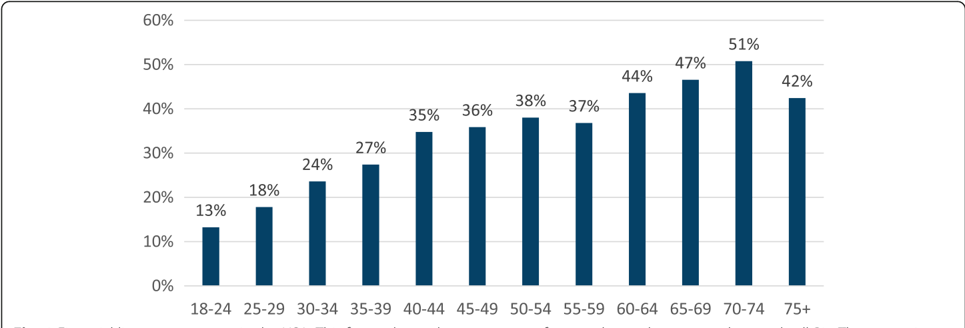
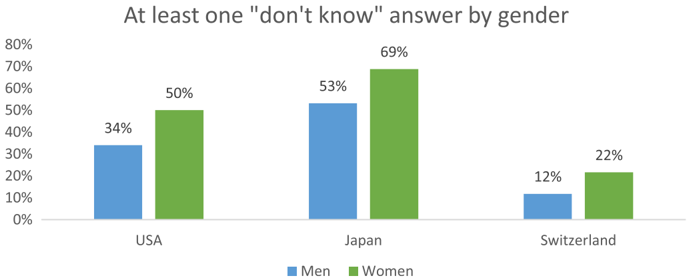
- Financial literacy is especially low among vulnerable groups: in the USA, less than 30% of respondents answered the Big Three correctly by age 40; in Switzerland, only 45% of those aged 35 or younger did so. Women were less likely than men to answer correctly across countries, and were more likely to respond “do not know.”
- The paper reports several associations: one additional correct financial literacy answer is associated with a 3–4 percentage point higher probability of retirement planning in Germany, the USA, Japan, and Sweden, and a 10 percentage point higher probability in the Netherlands; planning is associated with two to three times more wealth near retirement. The paper also states that 30–40% of U.S. retirement wealth inequality can be accounted for by differences in financial knowledge.
Methods
- This is a synthesis/keynote paper, not a new empirical study; it reviews prior survey and experimental evidence on financial literacy and financial behavior.
- It centers on the “Big Three” financial literacy measure: questions on interest compounding, inflation, and risk diversification, fielded in many surveys including the HRS, NFCS, SCF, SHED, and the FLat World project.
- Main analysis is comparative/descriptive: cross-country tables and survey results are used to compare literacy levels, identify vulnerable subgroups, and summarize associations between literacy and financial outcomes.
Limitations
- The paper explicitly notes that there are “few evaluations” of the effectiveness of financial education initiatives and says more research is urgently needed.
- The text makes evident that much of the evidence summarized is correlational rather than causal; it even notes that financial literacy “could be the result of choice and not an exogenous variable” (paper text).
- As a keynote summary, the paper does not present a single unified dataset or a new identification strategy; it aggregates evidence from many sources rather than testing one original hypothesis.
Model-written summary. Check it against the paper before relying on it.
Integrity signals
Registry
Cites
Statistics
Figures
Verification
Claims the paper makes
10 Valid · 6 Not valid · 44 Not checked · 30 Own results and interpretations
The cited sources support only part of this claim — read each source’s verdict below.
In the paper
“On average, about one third of the global population has familiarity with the basic concepts that underlie everyday financial decisions (Lusardi and Mitchell, 2011c).”
What the sources say
- Partly supportedcites Lusardi and Mitchell, 2011c matched to “Financial literacy around the world: an overview” (2011) sourceExperimental — accuracy not yet measured
The Measuring financial literacy section examines basic concepts relevant to everyday financial decisions, and the Concluding remarks report low financial literacy across eight countries. Neither section gives an estimate that about one third of the global population knows those concepts. The one-third figure in Financial literacy around the world refers instead to U.S. respondents who said they did not know how to answer a risk-diversification question. (LLM, conf=0.87)
plain- Asserted: passes — The authors put it forward as true.
- Checkable: passes — It can be checked against evidence.
- Load-bearing: passes — The paper’s conclusions depend on it.
- Based: passes — The paper gives a reason why it holds.
- Partly supported
Every source the paper cites for this claim was checked and supports it.
In the paper
“And just one third demonstrated understanding of these two concepts and answered the third question, measuring understanding of risk diversification, correctly.”
What the sources say
- Supportedcites Lusardi and Mitchell, 2011b matched to “The Outlook for Financial Literacy” (2011) source
The “Financial Literacy and Financial Decision-Making” section reports that only one-third of respondents in a survey of older Americans answered the interest-compounding, inflation, and risk-diversification questions correctly. (LLM, conf=0.94)
boosted- Asserted: passes — The authors put it forward as true.
- Checkable: passes — It can be checked against evidence.
- Load-bearing: passes — The paper’s conclusions depend on it.
- Based: passes — The paper gives a reason why it holds.
- Supported
Every source the paper cites for this claim was checked and supports it.
In the paper
“only half of older Americans -who presumably had made many financial decisions in their lives -could answer the two basic questions measuring understanding of interest rates and inflation (Lusardi and Mitchell, 2011b).”
What the sources say
- Supportedcites Lusardi and Mitchell, 2011b matched to “The Outlook for Financial Literacy” (2011) source
The “Financial Literacy and Financial Decision-Making” section (page not provided) describes a survey of older Americans and reports that only half of respondents correctly answered both questions on interest compounding and inflation. (LLM, conf=0.94)
plain- Asserted: passes — The authors put it forward as true.
- Checkable: passes — It can be checked against evidence.
- Load-bearing: passes — The paper’s conclusions depend on it.
- Based: passes — The paper gives a reason why it holds.
- Supported
Every source the paper cites for this claim was checked and supports it.
In the paper
“Financial literacy is low even in advanced economies with well-developed financial markets.”
What the sources say
- Supportedcites Lusardi and Mitchell, 2011c matched to “Financial literacy around the world: an overview” (2011) source
The Concluding remarks state that financial literacy is very low around the world regardless of financial-market development. The paper also reports widespread financial illiteracy in countries with well-developed financial markets, directly supporting the claim. (LLM, conf=0.94)
plain- Asserted: passes — The authors put it forward as true.
- Checkable: passes — It can be checked against evidence.
- Load-bearing: passes — The paper’s conclusions depend on it.
- Based: passes — The paper gives a reason why it holds.
- Supported
Every source the paper cites for this claim was checked and supports it.
In the paper
“Financial literacy is found to have the strongest impact in the Netherlands, where knowing the right answer to one additional financial literacy question is associated with a 10 percentage point higher probability of planning (Mitchell and Lusardi, 2015).”
What the sources say
- Supportedcites Mitchell and Lusardi, 2015 matched to “Financial Literacy and Economic Outcomes: Evidence and Policy Implications” (2015) source
The “Why Financial Literacy Matters” section (page not provided) states that financial literacy has its strongest impact in the Netherlands and gives the same 10-percentage-point association for one additional correct answer. (LLM, conf=0.95)
plainstates an association- Asserted: passes — The authors put it forward as true.
- Checkable: passes — It can be checked against evidence.
- Load-bearing: passes — The paper’s conclusions depend on it.
- Based: passes — The paper gives a reason why it holds.
- Supported
51 more claims · 7 with their cited sources checked
Create a free account to see all 90 claims and to verify the 3 references still open.
- It may state two separate claims as one. 24
- Probably not a substantial claim. 12
- Borderline: one of the tests for a substantial claim is unclear. 1
Claims other papers make about this one
Each is checked against this paper’s own text: does it say what the citing paper says it does?
The cited source doesn’t support the claim as written.
In the citing paper
“Previous research conducted by [33,34] shows a positive correlation between financial literacy and Fintech adoption.”
From Fintech Adoption Drivers for Innovation for SMEs in Indonesia (2022) · cites this paper as [33]
Checked by a reasoning model — may be wrong.
Experimental — accuracy not yet measuredThe cited source says what the claim attributes to it.
In the citing paper
“Understanding finance is crucial in making informed financial decisions and exhibiting sound financial behavior, as stated by Lusardi (2019).”
From Financial Literacy Among the Senior High School Students: Basis for Financial Stewardship Plan (2024) · cites this paper as Lusardi, 2019
Citations
Cites
The Economic Importance of Financial Literacy: Theory and Evidence
Lusardi, A., & Mitchell, O. S. (2014) · Journal of Economic Literature · doi:10.1257/jel.52.1.5 · Cited by 4,698 · cited 4×
“Four principles informed the design of these questions, as described in detail by Lusardi and Mitchell (2014).”
InfluentialSelf-citationFinancial literacy around the world: an overview
LUSARDI, A., & MITCHELL, O. S. (2011) · Journal of Pension Economics and Finance · doi:10.1017/s1474747211000448 · Cited by 2,000 · cited 5×
“Those interested in learning more about the differences in financial literacy across demographics and other characteristics can consult Lusardi and Mitchell (2011c, 2014).”
InfluentialSelf-citationPlanning and Financial Literacy: How Do Women Fare?
Lusardi, A., & Mitchell, O. S. (2008) · American Economic Review · doi:10.1257/aer.98.2.413 · Cited by 1,512 · cited 7×
“Empirically, planning is a very strong predictor of wealth; those who plan arrive close to retirement with two to three times the amount of wealth as those who do not plan (Lusardi and Mitchell, 2011b). Financial literacy is also associated with higher returns on investments and investment in more complex assets, such…”
BackgroundInfluentialSelf-citationDebt literacy, financial experiences, and overindebtedness
LUSARDI, A., & TUFANO, P. (2015) · Journal of Pension Economics and Finance · doi:10.1017/s1474747215000232 · Cited by 1,412 · cited 2×
“With regard to debt behavior, those who are more financially literate are less likely to have credit card debt and more likely to pay the full balance of their credit card each month rather than just paying the minimum due (Lusardi and Tufano, 2009, 2015).”
BackgroundSelf-citationFinancial Literacy and Planning: Implications for Retirement Wellbeing
Lusardi, A., & Mitchell, O. (2011) · National Bureau of Economic Research · doi:10.3386/w17078 · Cited by 1,253
Self-citationThe Economic Importance of Financial Literacy: Theory and Evidence
Lusardi, A., & Mitchell, O. (2013) · National Bureau of Economic Research · doi:10.3386/w18952 · Cited by 821
Self-citationOptimal Financial Knowledge and Wealth Inequality
Lusardi, A., Michaud, P.-C., & Mitchell, O. S. (2017) · Journal of Political Economy · doi:10.1086/690950 · Cited by 690 · cited 2×
“Programs devoted to teaching risk via, for example, visual tools have shown great promise (Lusardi et al., 2017).”
BackgroundMethodSelf-citationFinancial literacy and retirement planning in the Netherlands
van Rooij, M. C. J., Lusardi, A., & Alessie, R. J. M. (2011) · Journal of Economic Psychology · doi:10.1016/j.joep.2011.02.004 · Cited by 643
Self-citationFinancial literacy and retirement planning in Germany
BUCHER-KOENEN, T., & LUSARDI, A. (2011) · Journal of Pension Economics and Finance · doi:10.1017/s1474747211000485 · Cited by 513
Self-citationFinancial Literacy and Planning: Implications for Retirement Well-being
Lusardi, A., & Mitchell, O. S. (2011) · Financial Literacy: Implications for Retirement Security and the Financial Marketplace · doi:10.1093/acprof:oso/9780199696819.003.0002 · Cited by 505
Self-citation
Research works printed but not linked: 3
- Lusardi, A., de Bassa Scheresberg, C., and Avery, M. 2018. Millennial mobile payment users: a look into their personal finances and financial behaviors. GFLEC working paper.
- Lusardi, A., de Bassa Scheresberg, C., & Oggero, N. (2016). Student loan debt in the US: an analysis of the 2015 NFCS Data, GFLEC Policy Brief, November .
- Lusardi, A., & Tufano, P. (2009). Teach workers about the peril of debt. Harvard Business Review , 22 -24.
Cited by
Items 901–1,000 of 1,126
Sari, E., & Wulandari, I. (2024) · Jurnal Ilmiah Manajemen Ekonomi & Akuntansi (MEA) · doi:10.31955/mea.v8i3.4837
How Technology Use Moderates Financial Literacy and Impulsivity Effects on Revisit Intention
AHMETOĞULLARI, K., & Boz, N. (2024) · Sosyoekonomi · doi:10.17233/sosyoekonomi.2025.01.03 · Cited by 2
History of Financial Management
(2024) · Advances in finance, accounting, and economics book series · doi:10.4018/979-8-3693-9415-1.ch002
Effective and Key Financial Management Solutions for Entrepreneurs and Business Owners
(2024) · Advances in finance, accounting, and economics book series · doi:10.4018/979-8-3693-9415-1.ch010
Do Financial Well-Being and Quality of Life Affect per Capita Productivity?
Roy, D. (2025) · Advances in human resources management and organizational development book series · doi:10.4018/979-8-3693-2939-9.ch004
Enhancing accuracy and modelling in financial mathematics education through CSCL
Vučićević, N., & Milenković, A. (2024) · Journal of Educational Studies in Mathematics and Computer Science · doi:10.5937/jesmac2402063v
Alfabetización financiera en niños. Un análisis con redes neuronales.
Escalera-Chávez, M. E., Vázquez-Sosa, C. M., & Moreno-García, E. (2025) · Vinculatégica EFAN · doi:10.29105/vtga11.1-1024
Roth, S. (2025) · SSRN Electronic Journal · doi:10.2139/ssrn.5075773
Bongomin, G. O. C., Semukono, F., Lubega, J. B. Y., & Yourougou, P. (2025) · Asian Journal of Economics and Banking · doi:10.1108/ajeb-01-2024-0008 · Cited by 1
Wan, T. (2025) · Applied Mathematics and Nonlinear Sciences · doi:10.2478/amns-2025-0435
Abadi, F., & Wicaksono, M. A. (2024) · Journal of Islamic Economics Lariba · doi:10.20885/jielariba.vol10.iss2.art28 · Cited by 3
“Previous studies also highlight that financial literacy enhances the ability to assess the ethical implications of investment choices (Lusardi, 2019; Stolper & Walter, 2017), fostering alignment with personal and religious values (Akaka & Schau, 2019; Astrachan et al., 2020).”
Política previdenciária e equidade de gênero no Brasil: propostas para uma maior efetividade
Sidone, O. J. G., & Giambiagi, F. (2025) · Brazilian Journal of Political Economy · doi:10.1590/0101-31572025-3747
Sianosa, J., & Decendario, D. J. C. (2025) · Psychology and Education A Multidisciplinary Journal · doi:10.70838/pemj.340301
Financial literacy among anaesthetists in an academic department in Johannesburg
Mohamed, A. N., & Jooma, Z. (2025) · Journal of the Colleges of Medicine of South Africa · doi:10.4102/jcmsa.v3i1.111
Bridging The Knowledge Gap -The Need For Financial Literacy In SchoolsPreprint
Devmurari, R. (2025) · SSRN Electronic Journal · doi:10.2139/ssrn.5199106 · Cited by 2
Closing the Financial Literacy Gap: The State of Financial Education in the U.S. and a Path Forward
Molchan, S. (2025) · Research in Social Sciences · doi:10.53935/26415305.v8i2.327
“Additionally, individuals with lower financial literacy are more likely to resort to high-cost borrowing methods, such as payday loans, pawn shops, and auto title loans, further compounding their financial challenges (Lusardi, 2019).”
InfluentialRisk Perceptions and Financial Decision MakingPreprint
Togan, A., Tiniç, M., & Giray, T. C. (2025) · SSRN Electronic Journal · doi:10.2139/ssrn.5193408
Keyes, S., Falla, J. T., Gardner, A. K., et al. (2025) · Medical Science Educator · doi:10.1007/s40670-025-02368-x
Unlocking Financial Potential: The Dynamic Relationship Between Markets and Mobile Applications
Majeed, M., Yomboi, J., Fatawu, A., Nangpiire, C., & Manu, V. (2025) · Emerald Group Publishing Limited eBooks · doi:10.1108/978-1-83549-418-920251002 · Cited by 1
Freitas, C., Santos, A., Campos, P., Bala, P., & Dionísio, M. (2025) · CHI Conference Extended Abstracts on Human Factors in Computing Systems (CHI EA) · doi:10.1145/3706599.3719934
“[17, 18, 20].”
(2025) · Journal of Research Innovation and Implications in Education · doi:10.59765/jgpw92
Mishra, R., & Varshney, D. (2025) · Studies in big data · doi:10.1007/978-3-031-83915-3_36
Financial Literacy and its Impact on Investment Decision in Nepalese Share Market
Sharma, B. M. (2025) · Journal of Janta Multiple Campus(JJMC). · doi:10.3126/jjmc.v4i1.77992
The Effect of Financial Literacy and Financial Technology on Msme Business Performance in Sidoarjo
Fatmawati, A. A., & Hariyati, H. (2025) · Jurnal Sosial Teknologi · doi:10.59188/jurnalsostech.v5i4.32089
Self-Control, Financial Literacy, and Behavior among Employees in Higher Education Institution
Colastre, S. M., Espina, E., & Prado, N. I. (2025) · Psychology and Education A Multidisciplinary Journal · doi:10.70838/pemj.360610
Rana, V., Singh, V., Singh, A. R., et al. (2025) · Architectural Engineering and Design Management · doi:10.1080/17452007.2025.2499560
“Without a solid foundation in financial literacy, AEC professionals may struggle to engage meaningfully with real estate investments, which can impede their ability to contribute to the financial and strategic dimensions of projects (Lusardi, 2019; Ye & Kulathunga, 2019).”
As Soon as Possible: The Effectiveness of a Financial Education Program in Italian SchoolsPreprint
Agasisti, T., D’Ignazio, A., Iannotta, G., et al. (2025) · SSRN Electronic Journal · doi:10.2139/ssrn.5241666
Rodríguez, E. U. (2025) · SSRN Electronic Journal · doi:10.2139/ssrn.5219951
Financial Literacy and Decision Making among UndergraduatesPreprint
Meghana, M., & Prajwala, R. Y. (2025) · SSRN Electronic Journal · doi:10.2139/ssrn.5219661
Livermore, T., & Major, M. (2025) · Australian Economic Papers · doi:10.1111/1467-8454.12402
Attri, S., Gupta, S., & Singh, S. (2025) · IGI Global eBooks · doi:10.4018/979-8-3693-5986-0.ch009 · Cited by 1
Financial Literacy, Risk Tolerance, and Asset Allocation: Evidence from PortugualPreprint
Gaspar, R. M., & Lopes, I. R. (2025) · SSRN Electronic Journal · doi:10.2139/ssrn.5265172
An Efficacy Study of the Open Hands Financial Education Program
Coggin, W., & Foubert, J. D. (2025) · Christian Higher Education · doi:10.1080/15363759.2025.2490945
“If American society is going to fill the educational void, financial education programs must be created and tested for effectiveness (Lusardi, 2019).”
InfluentialDeterminant of financial literacy in laying hens farmers
Asnawi, A., Ridwan, M., Tenrisanna, V., et al. (2025) · BIO Web of Conferences · doi:10.1051/bioconf/202517701009
“Research also says this [8–10] that education influences financial literacy.”
Training Needs Assessment of Key Women Leaders of Purok Women Associations in Iligan City
Laygan, R. M., Abing, M. J. J., Capulong, C. M., Teves, M. R., Babanto, G. A., Bokingo, J. W., Manala-O, S. D., Medina, E. J., & Dingding, G. (2024) · Kurukod Journal of Education and Social Science · doi:10.63798/kjess.2024.v2n1.0012 · Cited by 2
Knowledge and Challenges of Grade 11 Students in Learning Basic Business Math
Jacosalem, H. M., & Futalan, M. C. (2025) · Journal of interdisciplinary perspectives · doi:10.69569/jip.2025.249 · Cited by 1
Generational theory of behavioral biases in investment behaviorPreprint
Jan, A. (2025) · SSRN Electronic Journal · doi:10.2139/ssrn.5271858 · Cited by 1
Akhileshwari, A. (2025) · INTERANTIONAL JOURNAL OF SCIENTIFIC RESEARCH IN ENGINEERING AND MANAGEMENT · doi:10.55041/ijsrem48940
The Work-Habit Premium: How Daily Routines Predict CEO Remuneration in the S&P 500Preprint
Kendzia, M. J., de la Rosa, C. D., & Cruz, J. (2025) · SSRN Electronic Journal · doi:10.2139/ssrn.5275068
Shehu, E., Xhind, T., & Meka, E. S. (2025) · WSEAS TRANSACTIONS ON BUSINESS AND ECONOMICS · doi:10.37394/23207.2025.22.91
Análise cienciométrica da literacia financeira e saúde de pessoas idosas
Cruz, M. S., Osório, N. B., Pereira, L. C., Garcia, K. R., de Oliveira, A. G., & Karnikowski, M. G. D. O. (2025) · Revista Brasileira de Geriatria e Gerontologia · doi:10.1590/1981-22562025028.240237.pt
Scientometric analysis of financial literacy and health of older adults
Cruz, M. S., Osório, N. B., Pereira, L. C., Garcia, K. R., de Oliveira, A. G., & Karnikowski, M. G. D. O. (2025) · Revista Brasileira de Geriatria e Gerontologia · doi:10.1590/1981-22562025028.240237.en
Venkatesh, S. A., & Padmanabha, C. H. (2025) · i-manager’s Journal on Management · doi:10.26634/jmgt.19.4.21539
Young Rural Consumers’ Perspectives on Debt: Insights from a Focus Group Study in Michigan, USA
Ho, H. W. L., & Squires, S. (2025) · Journal of rural and community development · doi:10.63315/jrcd.v20i2.2716
Factors Influencing the Consumptive Behavior of University Students in Bali
Dewi, P. A. C., Gan, S. S. A., & Abdullah, N. (2024) · Proceeding of Saizu International Conference on Transdisciplinary Religious Studies · doi:10.24090/icontrees.2024.1160
Slamet, A., Salam, S., Hasyim, B., et al. (2025) · BIO Web of Conferences · doi:10.1051/bioconf/202518002003
Impact of Financial Planning on Risk Appetite: A Mediation Effect of Financial Literacy
Luthra, Y. (2025) · International Journal of Economics and Management Studies · doi:10.14445/23939125/ijems-v12i5p102
Saad, A., Aziz, M. R. A., Hashim, N. M. H. N., et al. (2025) · Environment-Behaviour Proceedings Journal · doi:10.21834/e-bpj.v10isi28.6942
Rethinking College for Filipinos
Ralar, T. J. T. (2025) · EDUCATION AND INDUSTRY REVIEW · doi:10.62596/eir.375ymn13
Alexeeva-Alexeev, I., Kaminska, A., Pérez-Oleaga, C. M., & Anton, S. G. (2025) · e-mentor · doi:10.15219/em109.1708
Dahal, R., & Uprety, P. (2025) · Journal of Business and Social Sciences Research · doi:10.3126/jbssr.v10i1.80280 · Cited by 6
Exploring the relationship between financial education and personal finance management in Lima, Peru
Burga-Morales, J. A., & Córdova-Buiza, F. (2025) · Knowledge and Performance Management · doi:10.21511/kpm.09(2).2025.02
TIME VALUE OF MONEY IN THE LITHUANIAN CREDIT MARKET: A PRACTICAL ANALYSIS OF CONSUMER LOAN OFFERS
Pryšmantaitė, M., Markauskas, A., & Kartašova, J. (2025) · AGORA INTERNATIONAL JOURNAL OF ECONOMICAL SCIENCES · doi:10.15837/aijes.v19i1.7168
A Critical Approach to Debt Financing in a Muslim Society: The Case of Qatar
Basak, M. A., & Khateeb, S. H. (2025) · Dicle Üniversitesi Sosyal Bilimler Enstitüsü Dergisi · doi:10.15182/diclesosbed.1388030
Леваєва, Л. Ю., & Ovsiienko, A. (2025) · Экономический вестник университета. Сборник научных трудов ученых и аспирантов · doi:10.69587/ueb/1.2025.19
“As noted by A. Lusardi (2019) in his work, the economic context is characterised by a sequence of situations in which facts and phenomena affecting the current company at all levels occur with unprecedented speed and depth in history.”
Spending and saving behaviors of gen Z: A review-based comparison between urban and rural youth
Horo, A. (2025) · International Journal of Research in Finance and Management · doi:10.33545/26175754.2025.v8.i2a.526
ODUMADE, A. S., & Simon Iruoghene, I. M. O. H. (2025) · SSRN Electronic Journal · doi:10.2139/ssrn.5340577
Weidlich, F., & Zureck, A. (2025) · FOM-Edition · doi:10.1007/978-3-658-46235-2_15
Isaga, N. M. (2025) · Research Square · doi:10.21203/rs.3.rs-6954532/v1 · Cited by 1
Avent, H., & Vojnovic, J. (2025) · SSRN Electronic Journal · doi:10.2139/ssrn.5375313
Dwiyanti, A. (2025) · SSRN Electronic Journal · doi:10.2139/ssrn.5341178
Women's Education and Health Behaviors: The Mediating Role of Time and Risk PreferencesPreprint
Liem, O. A., & Sahadewo, G. A. (2025) · SSRN Electronic Journal · doi:10.2139/ssrn.5368689
Lestary, L., Nugraha, N., Sari, M. K., Disman, D., & Erik, S. A. (2025) · Journal Evaluation in Education (JEE) · doi:10.37251/jee.v6i3.2022
Préférence temporelle : évaluation, stabilité et malléabilité sur le cycle de vie
Arrondel, L., & Masson, A. (2025) · Revue française d économie · doi:10.3917/rfe.253.0019
Data-Driven Exploration of Financial Literacy: A Multifactorial Approach
Shalini, S., & Mahesh, R. (2025) · International Conference on Computing for Sustainable Global Development · doi:10.23919/indiacom66777.2025.11115810
“It is a vital decision-making tool; individuals make numerous financial decisions, and many are interconnected; indeed, providing people with some essential tools is required [3] .”
Virtual Reality Meets Finance: How to Enhance Our Understanding of Risk Diversification
Fürstenau, B., Hornuf, L., Meiler, M., Nitsch, J., & Schmidt, J. M.-C. (2025) · Lecture notes in computer science · doi:10.1007/978-3-031-97763-3_18 · Cited by 1
Promoting Financial Literacy Among Young Adults: A Narrative-Driven Serious Game Approach
Wang, S.-M., Lan, V. H., & Linh, D. M. (2025) · IEEE Gaming, Entertainment, and Media Conference (GEM) · doi:10.1109/gem66882.2025.11155335
“Knowledge is critical for responsible financial habits, such as budgeting and saving [2], but remains low worldwide [3], [4].”
Financial Literacy Mediates the Effect Between Migration Experience and Subjective Well-beingPreprint
Liu, R., Lou, S., & Hongxiao, Z. H. O. U. (2025) · SSRN Electronic Journal · doi:10.2139/ssrn.5493058
Financial Literacy Mediates the Effect Between Migration Experience and Subjective Well-beingPreprint
Liu, R., Lou, S., & Hongxiao, Z. H. O. U. (2025) · SSRN Electronic Journal · doi:10.2139/ssrn.5493060
Sarmiento, A. G., Rivera, L. M., & Cortez, W. T. (2025) · Journal of interdisciplinary perspectives · doi:10.69569/jip.2025.630 · Cited by 1
Leveraging Technology for Financial Education and Empowerment in Africa
Inusah, F., Iddrisu, I., & Salifu, M. (2025) · Sustainable development goals series · doi:10.1007/978-3-031-96716-0_9
Akın, A., & Bozçelik, E. E. (2025) · Sosyal Politika Çalışmaları Dergisi · doi:10.21560/spcd.vi.1675398 · Cited by 1
Financial Planning Among University Students: The Untold Story
Salleh, M. Z. M., Abdullah, A., Zakaria, M. N., et al. (2025) · Studies in systems, decision and control · doi:10.1007/978-3-031-91424-9_62
Financial Planning Literacy Among Government Employees on Retirement
Salleh, M. Z. M., Abdullah, A., Zakaria, M. N., et al. (2025) · Studies in systems, decision and control · doi:10.1007/978-3-031-91424-9_59
Thamoung, N. R., & Bora, J. (2025) · Prajnan Journal of Banking and Financial Management · doi:10.1177/09708448251371915
“Additionally, Lusardi (2019) find that employed individuals tend to possess higher financial literacy due to workplace experience and income, and assets balance is also identified as a significant contributor to financial literacy by Alessie et al. (2013).”
Johan, I. R., Azzahra, S. N., Simanjuntak, M., et al. (2025) · FIKRI Jurnal Kajian Agama Sosial dan Budaya · doi:10.25217/jf.v10i2.6621
Devi, S. (2025) · International Journal of Research -GRANTHAALAYAH · doi:10.29121/granthaalayah.v13.i9.2025.6381 · Cited by 1
Financialisation and the (De‐)Unionisation of Workers in Portugal
Barradas, R. (2025) · Industrial Relations Journal · doi:10.1111/irj.70014 · Cited by 1
Effective Financial Planning for Retirement
štautaitė, B., Alcaide, T. C. H., Laguía, A., & Topa, G. (2025) · Oxford University Press eBooks · doi:10.1093/9780197699584.003.0028
Ergün, K. (2025) · Uluslararası İktisadi ve İdari İncelemeler Dergisi · doi:10.18092/ulikidince.1740330
“…as well as debt management and borrowing practices, it is crucial to provide financial education to students and young adults, equipping them with the necessary tools to make informed financial decisions as they transition into adulthood and become financially responsible (Lusardi, 2019).”
Omar, A. M., Noor, J. A. M., & Asser, J. H. (2025) · South Sahara Multidisciplinary Journal · doi:10.61250/ssmj/v1.i3.5
“…analysis highlighted the significance of focused financial literacy interventions catered to the particular requirements of Youth Entrepreneurs, especially when it comes to negotiating difficult Investment Decisions and handling pressures related to money, including debt management (Lusardi, 2019).”
Tian, X., Niu, Y., & Xiao, H. (2025) · Lecture notes on data engineering and communications technologies · doi:10.1007/978-981-95-1595-0_11 · Cited by 2
Implications of Financial Literacy on Pawnshop Usage
Vargas-Hernández, J. G., Czipf, C., Salmerón-Zapata, A. J., Castañeda-Burciaga, S., & Guirette-Barbosa, O. A. (2025) · IGI Global eBooks · doi:10.4018/979-8-3373-3725-8.ch015 · Cited by 1
Financial Literacy and Buy Now, Pay Later Use under Financial StressPreprint
Wang, M., & Wong, M. C. S. (2025) · SSRN Electronic Journal · doi:10.2139/ssrn.5744625
Urmila, M. S., & Rajasekharan Pillai, K. (2025) · Educational Gerontology · doi:10.1080/03601277.2025.2582572
George-Reyes, C. E., Fernández, M. B., Bustamante-Ruiz, S. P., & Caicedo–Quiroz, R. (2025) · Journal of Latinos and Education · doi:10.1080/15348431.2025.2585826 · Cited by 4
“…of people to interpret and use the information and data they have at their disposal before deciding on the consumption or investment of money (Lusardi, 2019); that is, it is the way to manage personal economic resources to have favorable economic health in the medium and long term (Adams,…”
Németh, E., Malatyinszki, S., & Kálmán, B. (2025) · Risks · doi:10.3390/risks13120229
“Moreover, perceived financial stability is a core component of economic resilience, enabling adaptive responses to unexpected financial shocks, enhancing future-oriented decision-making, and supporting long-term financial planning (Lusardi 2019).”
The challenge of explicit learning in life skill education
Piehlmaier, D., & Warmath, D. (2025) · npj Science of Learning · doi:10.1038/s41539-025-00375-6 · Cited by 1
Socio-demographics, behaviour and spending habits of accounting students
Dlamini, N., & Ngalawa, H. P. E. (2025) · International Journal of Research in Business and Social Science (2147-4478) · doi:10.20525/ijrbs.v14i8.4468 · Cited by 1
“Lusardi (2019) defines financial literacy as the capacity to apply knowledge and abilities to successfully manage one's finances and advance one's financial well-being throughout a lifetime.”
Robles, E. J. M., Echivarre, J. B., & Galay-Limos, J. A. (2025) · International Journal of Research Studies in Management · doi:10.5861/ijrsm.2025.25527
User innovativeness and its impact on FinTech adoption in India
Bhaduria, A. K. S., & Parmar, S. (2025) · Technology Analysis and Strategic Management · doi:10.1080/09537325.2025.2599445
Financial Systems, Financial Frictions, and Macroeconomic Models
Agénor, P. (2025) · Springer eBooks · doi:10.1007/978-3-032-01673-7_1
The Influence of Financial Education on the Financial Behavior of Business Administration Students
Sudaria, K. C., Sumonda, R., Teofilo, R., & Becaro-Lapiz, J. M. (2025) · Journal of interdisciplinary perspectives · doi:10.69569/jip.2025.726 · Cited by 1
Chamberland, C., de Hemptinne, D., & Tremblay, S. (2025) · SSRN Electronic Journal · doi:10.2139/ssrn.5924122
Chan, G. M. L., Maglinte, B. P., & Locayon, R. J. (2024) · Philippine Journal of Internal Medicine · doi:10.65564/pjim.a6bf38ce89
Araújo, S. R., Portugal, N. D. S., Guedes, L. C. V., et al. (2025) · Revista Foco · doi:10.54751/revistafoco.v18n12-182
Andrade, E., Martinez, A. L., Sorte, N. B., et al. (2025) · International Journal of Health Care Quality Assurance · doi:10.1108/ijhcqa-04-2025-0058
Yuan, Y., Jamil, A. H., & Ghani, N. A. B. (2025) · Advances in computational intelligence and robotics book series · doi:10.4018/979-8-3373-6587-9.ch007 · Cited by 2
Metadata
- Authors
- Lusardi, A.
- Affiliations
- George Washington University (US)
- Corresponding author
- Lusardi, Annamaria
- ORCID
- Lusardi, Annamaria
- Venue
- Swiss Journal of Economics and Statistics
- Published
- 2019-01-24
- Volume
- 155
- Issue
- 1
- ISSN
- 0303-9692 (ISSN-L)
- 2235-6282
- OpenAlex
- W2911554037
- Semantic Scholar
- 045054f8e699ce8552fb34c500cb52d9b8d31d5f
- Cited by
- 1,135
- References
- 39
- Citations by year
- 2026: 142 · 2025: 218 · 2024: 233 · 2023: 245 · 2022: 147 · 2021: 75 · 2020: 64 · 2019: 9
- FWCI
- 187.87
- Type
- journal article
- Language
- en
- Open access
- diamond
- doi.org
- Licence
- cc-by
- creativecommons.org/licenses/by/4.0 (tdm)
- Locations
- Zeitschrift für schweizerische Statistik und Volkswirtschaft/Schweizerische Zeitschrift für Volkswirtschaft und Statistik/Swiss journal of economics and statistics (publishedVersion, cc-by)
- RePEc: Research Papers in Economics (submittedVersion)
- DOAJ (DOAJ: Directory of Open Access Journals) (submittedVersion)
- Econstor (Econstor) (submittedVersion, cc-by)
- Topics
- Social Sciences › Economics, Econometrics and Finance › Finance › Financial Literacy, Pension, Retirement Analysis
- Social Sciences › Business, Management and Accounting › Accounting › Financial Literacy and Behavior
- Social Sciences › Decision Sciences › General Decision Sciences › Decision-Making and Behavioral Economics
- Keywords
- financial literacy, financial education
About these checks
Registry, retraction, Cites and statistics results are computed, not judged, with one exception: a printed reference that no index lists is read once by a model before it counts as a citation error. Claims are extracted by a model and kept only when their quote appears verbatim in the text; each cited source is then checked, with a model’s help, for whether it says what the claim relies on. Those verdicts can be wrong — read the claim’s quote and the cited source before relying on one.
The claim verdicts this report counts are experimental: their accuracy is not yet measured.
A language model drew the claims from the paper on 2026-10-10, under version 3 of the claim definition (model deepseek-v4.1-flash, prompt extract-v3).
A second model labelled each claim on 2026-10-10 (model jev-1.13-20260917, definition revision gold-guideline-v0.2).
Cited sources are checked with a language model’s help (gpt-6-sol).
Statistics and arithmetic are recomputed, not judged.
Confidence bands are shown only for fields calibrated on our annotated test set. None is calibrated yet, so no band is shown.
What counts as a claim ›How we measure confidence ›How we check this ›
Are you an author, or do you see a problem with this page? Request a review
Data sources
Bibliographic data: Semantic Scholar, OpenAlex, Crossref.
Contains information from the Semantic Scholar Academic Graph Datasets, made available under the ODC Attribution License (ODC-BY 1.0).
Semantic Scholar’s data is described in: Kinney, R., et al. (2023). The Semantic Scholar Open Data Platform. arXiv:2301.10140.
