

Financial literacy and the need for financial education: evidence and implications
Open accessThe DOI matches its Crossref record; 47 of the 47 references it cites were found in a registry or an index; 13 of the 58 sources its claims cite were checked for support.
Abstract
This paper represents a summary of the keynote address I gave to the 2018 Annual Meeting of the Swiss Society of Economics and Statistics. I would like to thank Monika Butler, Rafael Lalive, anonymous reviewers
Overview
CoChat Summary
TL;DR
This keynote-style paper argues that financial literacy is low across countries and population groups, and that the “Big Three” questions are a practical way to measure it. It synthesizes evidence showing that financial literacy is linked to better saving, retirement planning, debt behavior, and resilience, and calls for large-scale, targeted financial education.
Key findings
- In the U.S. 2004 HRS, only about half of older Americans answered the two basic interest/inflation questions correctly, and only one third answered all three “Big Three” questions correctly.
- In the FLat World project (15 countries), the average share answering all three questions correctly was about 30%, and only around 50% in most countries answered the interest-rate and inflation questions correctly.
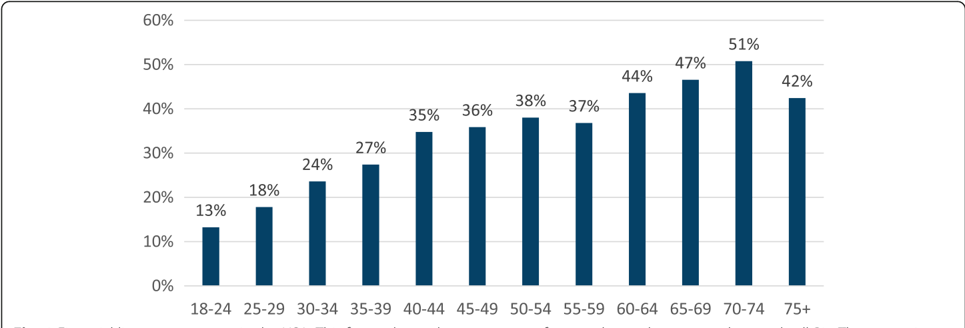
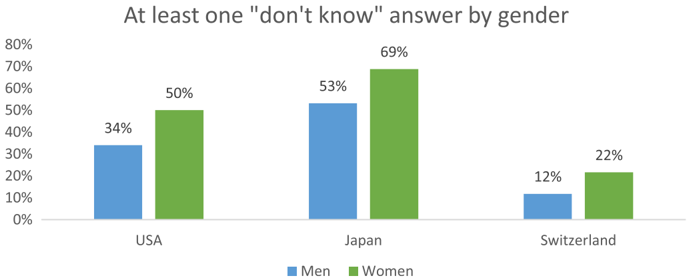
- Financial literacy is especially low among vulnerable groups: in the USA, less than 30% of respondents answered the Big Three correctly by age 40; in Switzerland, only 45% of those aged 35 or younger did so. Women were less likely than men to answer correctly across countries, and were more likely to respond “do not know.”
- The paper reports several associations: one additional correct financial literacy answer is associated with a 3–4 percentage point higher probability of retirement planning in Germany, the USA, Japan, and Sweden, and a 10 percentage point higher probability in the Netherlands; planning is associated with two to three times more wealth near retirement. The paper also states that 30–40% of U.S. retirement wealth inequality can be accounted for by differences in financial knowledge.
Methods
- This is a synthesis/keynote paper, not a new empirical study; it reviews prior survey and experimental evidence on financial literacy and financial behavior.
- It centers on the “Big Three” financial literacy measure: questions on interest compounding, inflation, and risk diversification, fielded in many surveys including the HRS, NFCS, SCF, SHED, and the FLat World project.
- Main analysis is comparative/descriptive: cross-country tables and survey results are used to compare literacy levels, identify vulnerable subgroups, and summarize associations between literacy and financial outcomes.
Limitations
- The paper explicitly notes that there are “few evaluations” of the effectiveness of financial education initiatives and says more research is urgently needed.
- The text makes evident that much of the evidence summarized is correlational rather than causal; it even notes that financial literacy “could be the result of choice and not an exogenous variable” (paper text).
- As a keynote summary, the paper does not present a single unified dataset or a new identification strategy; it aggregates evidence from many sources rather than testing one original hypothesis.
Model-written summary. Check it against the paper before relying on it.
Integrity signals
Registry
Cites
Statistics
Figures
Verification
Claims the paper makes
10 Valid · 6 Not valid · 44 Not checked · 30 Own results and interpretations
The cited sources support only part of this claim — read each source’s verdict below.
In the paper
“On average, about one third of the global population has familiarity with the basic concepts that underlie everyday financial decisions (Lusardi and Mitchell, 2011c).”
What the sources say
- Partly supportedcites Lusardi and Mitchell, 2011c matched to “Financial literacy around the world: an overview” (2011) sourceExperimental — accuracy not yet measured
The Measuring financial literacy section examines basic concepts relevant to everyday financial decisions, and the Concluding remarks report low financial literacy across eight countries. Neither section gives an estimate that about one third of the global population knows those concepts. The one-third figure in Financial literacy around the world refers instead to U.S. respondents who said they did not know how to answer a risk-diversification question. (LLM, conf=0.87)
plain- Asserted: passes — The authors put it forward as true.
- Checkable: passes — It can be checked against evidence.
- Load-bearing: passes — The paper’s conclusions depend on it.
- Based: passes — The paper gives a reason why it holds.
- Partly supported
Every source the paper cites for this claim was checked and supports it.
In the paper
“And just one third demonstrated understanding of these two concepts and answered the third question, measuring understanding of risk diversification, correctly.”
What the sources say
- Supportedcites Lusardi and Mitchell, 2011b matched to “The Outlook for Financial Literacy” (2011) source
The “Financial Literacy and Financial Decision-Making” section reports that only one-third of respondents in a survey of older Americans answered the interest-compounding, inflation, and risk-diversification questions correctly. (LLM, conf=0.94)
boosted- Asserted: passes — The authors put it forward as true.
- Checkable: passes — It can be checked against evidence.
- Load-bearing: passes — The paper’s conclusions depend on it.
- Based: passes — The paper gives a reason why it holds.
- Supported
Every source the paper cites for this claim was checked and supports it.
In the paper
“only half of older Americans -who presumably had made many financial decisions in their lives -could answer the two basic questions measuring understanding of interest rates and inflation (Lusardi and Mitchell, 2011b).”
What the sources say
- Supportedcites Lusardi and Mitchell, 2011b matched to “The Outlook for Financial Literacy” (2011) source
The “Financial Literacy and Financial Decision-Making” section (page not provided) describes a survey of older Americans and reports that only half of respondents correctly answered both questions on interest compounding and inflation. (LLM, conf=0.94)
plain- Asserted: passes — The authors put it forward as true.
- Checkable: passes — It can be checked against evidence.
- Load-bearing: passes — The paper’s conclusions depend on it.
- Based: passes — The paper gives a reason why it holds.
- Supported
Every source the paper cites for this claim was checked and supports it.
In the paper
“Financial literacy is low even in advanced economies with well-developed financial markets.”
What the sources say
- Supportedcites Lusardi and Mitchell, 2011c matched to “Financial literacy around the world: an overview” (2011) source
The Concluding remarks state that financial literacy is very low around the world regardless of financial-market development. The paper also reports widespread financial illiteracy in countries with well-developed financial markets, directly supporting the claim. (LLM, conf=0.94)
plain- Asserted: passes — The authors put it forward as true.
- Checkable: passes — It can be checked against evidence.
- Load-bearing: passes — The paper’s conclusions depend on it.
- Based: passes — The paper gives a reason why it holds.
- Supported
Every source the paper cites for this claim was checked and supports it.
In the paper
“Financial literacy is found to have the strongest impact in the Netherlands, where knowing the right answer to one additional financial literacy question is associated with a 10 percentage point higher probability of planning (Mitchell and Lusardi, 2015).”
What the sources say
- Supportedcites Mitchell and Lusardi, 2015 matched to “Financial Literacy and Economic Outcomes: Evidence and Policy Implications” (2015) source
The “Why Financial Literacy Matters” section (page not provided) states that financial literacy has its strongest impact in the Netherlands and gives the same 10-percentage-point association for one additional correct answer. (LLM, conf=0.95)
plainstates an association- Asserted: passes — The authors put it forward as true.
- Checkable: passes — It can be checked against evidence.
- Load-bearing: passes — The paper’s conclusions depend on it.
- Based: passes — The paper gives a reason why it holds.
- Supported
51 more claims · 7 with their cited sources checked
Create a free account to see all 90 claims and to verify the 3 references still open.
- It may state two separate claims as one. 24
- Probably not a substantial claim. 12
- Borderline: one of the tests for a substantial claim is unclear. 1
Claims other papers make about this one
Each is checked against this paper’s own text: does it say what the citing paper says it does?
The cited source doesn’t support the claim as written.
In the citing paper
“Previous research conducted by [33,34] shows a positive correlation between financial literacy and Fintech adoption.”
From Fintech Adoption Drivers for Innovation for SMEs in Indonesia (2022) · cites this paper as [33]
Checked by a reasoning model — may be wrong.
Experimental — accuracy not yet measuredThe cited source says what the claim attributes to it.
In the citing paper
“Understanding finance is crucial in making informed financial decisions and exhibiting sound financial behavior, as stated by Lusardi (2019).”
From Financial Literacy Among the Senior High School Students: Basis for Financial Stewardship Plan (2024) · cites this paper as Lusardi, 2019
Citations
Cites
The Economic Importance of Financial Literacy: Theory and Evidence
Lusardi, A., & Mitchell, O. S. (2014) · Journal of Economic Literature · doi:10.1257/jel.52.1.5 · Cited by 4,698 · cited 4×
“Four principles informed the design of these questions, as described in detail by Lusardi and Mitchell (2014).”
InfluentialSelf-citationFinancial literacy around the world: an overview
LUSARDI, A., & MITCHELL, O. S. (2011) · Journal of Pension Economics and Finance · doi:10.1017/s1474747211000448 · Cited by 2,000 · cited 5×
“Those interested in learning more about the differences in financial literacy across demographics and other characteristics can consult Lusardi and Mitchell (2011c, 2014).”
InfluentialSelf-citationPlanning and Financial Literacy: How Do Women Fare?
Lusardi, A., & Mitchell, O. S. (2008) · American Economic Review · doi:10.1257/aer.98.2.413 · Cited by 1,512 · cited 7×
“Empirically, planning is a very strong predictor of wealth; those who plan arrive close to retirement with two to three times the amount of wealth as those who do not plan (Lusardi and Mitchell, 2011b). Financial literacy is also associated with higher returns on investments and investment in more complex assets, such…”
BackgroundInfluentialSelf-citationDebt literacy, financial experiences, and overindebtedness
LUSARDI, A., & TUFANO, P. (2015) · Journal of Pension Economics and Finance · doi:10.1017/s1474747215000232 · Cited by 1,412 · cited 2×
“With regard to debt behavior, those who are more financially literate are less likely to have credit card debt and more likely to pay the full balance of their credit card each month rather than just paying the minimum due (Lusardi and Tufano, 2009, 2015).”
BackgroundSelf-citationFinancial Literacy and Planning: Implications for Retirement Wellbeing
Lusardi, A., & Mitchell, O. (2011) · National Bureau of Economic Research · doi:10.3386/w17078 · Cited by 1,253
Self-citationThe Economic Importance of Financial Literacy: Theory and Evidence
Lusardi, A., & Mitchell, O. (2013) · National Bureau of Economic Research · doi:10.3386/w18952 · Cited by 821
Self-citationOptimal Financial Knowledge and Wealth Inequality
Lusardi, A., Michaud, P.-C., & Mitchell, O. S. (2017) · Journal of Political Economy · doi:10.1086/690950 · Cited by 690 · cited 2×
“Programs devoted to teaching risk via, for example, visual tools have shown great promise (Lusardi et al., 2017).”
BackgroundMethodSelf-citationFinancial literacy and retirement planning in the Netherlands
van Rooij, M. C. J., Lusardi, A., & Alessie, R. J. M. (2011) · Journal of Economic Psychology · doi:10.1016/j.joep.2011.02.004 · Cited by 643
Self-citationFinancial literacy and retirement planning in Germany
BUCHER-KOENEN, T., & LUSARDI, A. (2011) · Journal of Pension Economics and Finance · doi:10.1017/s1474747211000485 · Cited by 513
Self-citationFinancial Literacy and Planning: Implications for Retirement Well-being
Lusardi, A., & Mitchell, O. S. (2011) · Financial Literacy: Implications for Retirement Security and the Financial Marketplace · doi:10.1093/acprof:oso/9780199696819.003.0002 · Cited by 505
Self-citation
Research works printed but not linked: 3
- Lusardi, A., de Bassa Scheresberg, C., and Avery, M. 2018. Millennial mobile payment users: a look into their personal finances and financial behaviors. GFLEC working paper.
- Lusardi, A., de Bassa Scheresberg, C., & Oggero, N. (2016). Student loan debt in the US: an analysis of the 2015 NFCS Data, GFLEC Policy Brief, November .
- Lusardi, A., & Tufano, P. (2009). Teach workers about the peril of debt. Harvard Business Review , 22 -24.
Cited by
Items 1,001–1,100 of 1,126
Evidências dos impactos de um maior nível de Educação Financeira na vida das pessoas
Soares, F. P., Garcia, M. S. R., & Costa, C. E. F. (2024) · Revista Educação Matemática em Foco/Educação Matemática em Foco · doi:10.18391/rem.v12i3.2660
Ismayilov, H. (2024) · InterConf · doi:10.51582/interconf.19-20.08.2025.002
“This gap underscores the need for educational reform to better prepare students for a technology-driven financial landscape [3-6].”
Agarwal, P., Rahul, A., Tiwari, S., Kumar, N., & Dhillon, L. K. (2025) · Springer proceedings in business and economics · doi:10.1007/978-981-97-7030-4_4 · Cited by 1
Financial Literacy and Gender Dynamics in Shaping Inclusive Finance
Faizan, M., Ahmad, I., & Urooj, J. (2025) · UW Journal of Management Sciences · doi:10.56220/uwjms.v9i2.292
Csiszárik-Kocsír, Á., & Varga, J. (2025) · IEEE International Symposium on Computational Intelligence and Informatics (CINTI) · doi:10.1109/cinti67731.2025.11311743
FINANCIAL LITERACY AND WELLBEING ACROSS GENERATIONS: EVIDENCE FROM PATHUM THANI, THAILAND
Suwanna, T., Thakolsri, S., Kongkaew, T., et al. (2025) · Financial and credit activity problems of theory and practice · doi:10.55643/fcaptp.6.65.2025.4937
“The necessity for developing systematic tools to measure financial literacy levels became particularly evident following the Subprime crisis in 2008, which led to severe impacts on housing credit, rising household debt, and increased bankruptcy rates (Lusardi, 2019).”
Baschieri, G., & Carosi, A. (2025) · Springer eBooks · doi:10.1007/978-3-032-07046-3_17 · Cited by 1
Alfabetización financiera como competencia clave en la formación universitaria
Barragán-Perea, E. A., & Tarango, J. (2025) · Revista Innova Educación · doi:10.35622/j.rie.2025.03.001 · Cited by 1
To, P. L. (2026) · Lecture notes in computer science · doi:10.1007/978-3-032-13164-5_5 · Cited by 1
“As the economic environment is changing at breakneck speed, personal financial management has become more critical than ever [1].”
InfluentialHuang, W., Abdullah, M. H. S. B., Yaacob, M. H., & Yao, C. (2026) · Crime Law and Social Change · doi:10.1007/s10611-025-10262-1 · Cited by 1
“…it can be inferred that financially vulnerable households often have lower educational attainment and limited access to financial training or services, resulting in reduced financial literacy and a diminished likelihood of actively engaging in investment-related activities (Lusardi, 2019 ).”
Empowering Women’s Financial Security Through ESG- SDG Alignment
Singh, T., Jain, N., Malik, F. A., & Mangal, S. (2026) · World sustainability series · doi:10.1007/978-3-032-01715-4_12
Conhecimento e comportamento financeiro
Araújo, S. R., Portugal, N. D. S., Alves, A. F., et al. (2026) · Revista Catarinense da Ciência Contábil · doi:10.16930/2237-766220263619
Lim, S., & Jung, H. (2025) · International Review of Financial Consumers · doi:10.2478/irfc-2025-0008
“Discovering Finance”: Insights from a Financial Education Initiative in Italy’s Primary Schools
Bettin, G. (2026) · Italian Economic Journal · doi:10.1007/s40797-025-00363-0
Los Perfiles de comportamiento financiero en universitarios de dos países latinoamericanos
Castillo, R., López, A. C., & MIRANDA, A. C. (2026) · Vertice Universitario/Vértice universitario · doi:10.36792/rvu.v28i97.513
Impact of Mobile FinTech Applications on Financial Awareness and Behaviour of Young Female Adults
Thatte, P. K. A. D. A. (2026) · International Journal of Advanced Research in Science Communication and Technology · doi:10.48175/ijarsct-30936
Financial Inclusion and Sustainable Development: Empowering Through Education and Digital Learning
Deb, R., & (Chowdhury), A. B. (2026) · Emerald Group Publishing Limited eBooks · doi:10.1108/978-1-80592-681-820261010
Nadeem, M. A., Akhter, W., & Hoàng, T. H. V. (2026) · Management and Organization Review · doi:10.1017/mor.2025.10112 · Cited by 2
“Therefore, this item allows us to measure their ability to interact with digital finance and to avoid financial losses (Seldal & Nyhus, 2022; Koskelainen et al., 2023; Lusardi, 2019).”
Jung, H.-O., Jeong, S.-H., & Han, S.-W. (2026) · Journal of Psychosocial Nursing and Mental Health Services · doi:10.3928/02793695-20260114-01
Psychologische Einflussfaktoren auf das Finanzverhalten – Eine systematische Literaturanalyse
Rosenthal, P., & Liening, A. (2026) · Springer eBooks · doi:10.1007/978-3-658-50476-2_18
Jamil, A. H., & Basri, M. F. (2025) · Advanced International Journal of Business Entrepreneurship and SMEs · doi:10.35631/aijbes.726005
İleri Yetişkinlikte Finansal Okuryazarlığın Tüketim Harcamaları ve Finansal Refaha Etkisi
Temel, E., Köroğlu, Ç., & Anbarcı, M. (2026) · Sosyoekonomi · doi:10.17233/sosyoekonomi.2026.01.25
Disposition Effect and Overconfident InvestorsPreprint
Tedde, M. (2026) · SSRN Electronic Journal · doi:10.2139/ssrn.6183777
Migrant Adaptation Strategies: Economics and Socio-cultural Responses During the Pandemic
Katherina, L. K., Syafi’i, I., Noviani, A., et al. (2026) · International perspectives on migration · doi:10.1007/978-981-95-4554-4_5
Alokley, S. A., Albarrak, M. S., & Ansari, Y. (2026) · Journal of Governance and Regulation · doi:10.22495/jgrv15i2art1
Oliveira, N. A. D., Bressan, A. A., & Vieira, K. M. (2026) · SSRN Electronic Journal · doi:10.2139/ssrn.6281271
Tangi, V. E., Pradnyani, N. L. P. S. P., & Suryantari, E. P. (2025) · International Journal of Pertapsi · doi:10.9744/ijp.3.1.23-32
“Financial literacy is knowledge and understanding of fundamental financial ideas as well as the capacity to work with numbers in financial settings (Lusardi, 2019).”
Levinsson, H., Samuelsson, E., Nehlin, A. B., & Erlandsson, S. P. (2026) · Behavioral Sciences · doi:10.3390/bs16030318 · Cited by 2
“Many young adults lack basic financial skills, and low financial literacy can lead to adverse outcomes, including over-indebtedness (Lusardi, 2019), which in turn has been linked to mental ill-health (Drentea, 2000; Östergren et al., 2022).”
InfluentialPetzer, V., & van Zyl, S. (2026) · NWU self-directed learning series · doi:10.4102/aosis.2025.bk545.04
Self-directed entrepreneurial learning
du Toit, A., van Zyl, S., Golightly, A., Morris, T. H., Kruger, D., Tselepis, T., Schachtebeck, C., Nieuwenhuizen, C., McCarthy-Kettledas, F., TONDER, D. V., et al. (2026) · NWU self-directed learning series · doi:10.4102/aosis.2025.bk545
Kertati, I., Pratomo, S., & Karningsih, K. (2026) · Journal of Governance and Regulation · doi:10.22495/jgrv15i2art3
“The improvement of social welfare does not solely depend on government assistance but also involves other crucial elements such as financial literacy and entrepreneurship development (Lusardi, 2019; Subkhan & Hutajulu, 2023).”
Does Confidence Matter? the Good Side of (Over)confidencePreprint
Tedde, M. (2026) · SSRN Electronic Journal · doi:10.2139/ssrn.6335965
Liang, Z., Yang, J.-W., & Zheng, B. (2026) · Finance research letters · doi:10.1016/j.frl.2026.109744
Beyond the Playing Field: Financial Literacy Competencies for Professional Athletes in Team Sports
Moolman, J. (2026) · International Journal of Financial Studies · doi:10.3390/ijfs14030068
Fakhriyyah, D. D., Djatmika, E. T., Wardoyo, C., & Restuningdiah, N. (2026) · Multidisciplinary Reviews · doi:10.31893/multirev.2026428 · Cited by 1
“According to Lusardi (2019), individuals' financial actions and knowledge are included in financial literacy.”
Edukasi Literasi Keuangan bagi Generasi Z di SMK Suradewa Larantuka
Arumsari, Y. K., Utama, B. I., Giantari, A. R., et al. (2026) · Kontribusi Jurnal Penelitian dan Pengabdian Kepada Masyarakat · doi:10.53624/kontribusi.v5i1.877
Empowering Educational Communities Through Financial Literacy in Mathematics Education
Utami, N. W., Sagita, L., & Dwipa, N. M. S. (2026) · IGI Global eBooks · doi:10.4018/979-8-3373-6122-2.ch007 · Cited by 1
Financial citizenship and capital market participation in Brazil: A macro-level regional analysis
Damas, D. D. S., Lima, G. B. A., & Rêgo, R. B. (2026) · Finance research letters · doi:10.1016/j.frl.2026.109817
Baxin, G. O. (2026) · Acreditas · doi:10.61752/acd.i18.274
Garneau, J., & Parent‐Lamarche, A. (2026) · Discover Psychology · doi:10.1007/s44202-026-00670-2 · Cited by 1
The Use of Alternative Financial Services (AFS): A Social Cognitive Approach
Pandey, I., Olajide, O., & Pandey, S. (2026) · Financial Planning Research Journal · doi:10.2478/fprj-2026-0002 · Cited by 1
“…et al. 2019; Lusardi & Mitchell 2017), employed individuals (Bharucha 2017; Potrich et al. 2015; Rehman & Mia 2024), and individuals with higher incomes and education levels (Damayanti et al. 2018; He & Ahunov 2022; Lusardi 2019) have consistently been shown to be more financially literate.”
Arango, P. Z., Grajales, J. C., Soto, E. M. E., & Martinez, M. B. (2026) · SSRN Electronic Journal · doi:10.2139/ssrn.6485055
NGUYEN, T. M. H., Hoai-Thu Thi, D. O., & Dinh, D. H. (2025) · Foundations of Management · doi:10.2478/fman-2025-0029 · Cited by 1
“For the context of sports lecturers in Vietnam, we simplify the construct by selecting the Big Three questions about compound interest, inflation, and risk diversification as proposed by Lusardi (2019) and Lusardi and Mitchell (2014).”
InfluentialHeo, W., & Park, H. J. (2026) · Springer eBooks · doi:10.1007/978-3-032-11276-7_2
Does Financial Literacy Lead to Better Financial Decisions? Insights from India’s Female Workforce
Kumar, V. (2026) · Metamorphosis · doi:10.1177/09726225261436107
Reis, M., Miguel, T., Sarabando, P., & Matias, R. (2026) · Computers · doi:10.3390/computers15040245
Chaukiyal, A., Gera, S., & Gambhir, S. (2026) · ShodhKosh Journal of Visual and Performing Arts · doi:10.29121/shodhkosh.v7.i7s.2026.7783
“Lusardi (2019) examined the financial importance of financial literacy for retirement planning and wealth creation.”
Yusuf, N., Ayed, T. L., & Mohammed, A. H. (2026) · SN Business & Economics · doi:10.1007/s43546-026-01160-2
“Research indicates that how households and individuals manage their financial assets and income has a strong impact on their well-being, financial health, and quality of life (Goncalves et al. 2021; Lusardi 2019 ).”
Financial literacy and propensity for risk-taking in financial investments: is there a link?
Cho, S. (2026) · Eurasian economic review : · doi:10.1007/s40821-026-00356-8
Rokhimah, Triyonowati, T., & Suhermin (2026) · Knowledge and Performance Management · doi:10.21511/kpm.10(2).2026.02
Harnessing AI for Citizen Financial Literacy to Strengthen Oman's Stock Market
Asim, Z. (2026) · Advances in computational intelligence and robotics book series · doi:10.4018/979-8-2600-1603-9.ch008
Munir, K., Momany, M. T., & Ali, B. J. A. (2025) · International Conference on Decision Aid Sciences and Applications (DASA) · doi:10.1109/dasa68193.2025.11499101
Personal values, family security, and financial risk-taking: A survey of UK households
Kim, A., Vanheusden, F. J., & Rashid, M. (2026) · European Research on Management and Business Economics · doi:10.1016/j.iedeen.2026.100317 · Cited by 1
Time horizon: a new focus for enhancing financial stability
Sargent, C. S., Lambert, C. A., & Bowler, B. D. (2026) · Review of Behavioral Economics · doi:10.1108/rbe-04-2025-0251
Exploring the Mediating Effect of Trust on FinTech Adoption in Palestinian SMEs
Ajouz, M., & Shehadeh, M. (2026) · Studies in computational intelligence · doi:10.1007/978-3-032-23897-9_43
Fintech and Financial Well-Being: A Narrative Review of Generation Z’s Digital Financial Behaviors
Gunawan, C., & Tandiono, R. (2026) · Studies in systems, decision and control · doi:10.1007/978-3-032-13119-5_35
Exploring the Drivers of FinTech Adoption in Palestinian SMEs
Ajouz, M., Shehadeh, M., jaraiseh, J., Zahdeh, D., & Al-Mu’ani, L. (2026) · Studies in computational intelligence · doi:10.1007/978-3-032-23897-9_42
Possibilities to Increase Demand for Property Insurance by Improving Financial Literacy
Dudele, J., Čaplinska, A., & Konovalova, N. (2026) · Lecture notes in networks and systems · doi:10.1007/978-3-032-19245-5_49
Stoian, A. M., Vintilă, N., Iorgulescu, F., Cepoi, C.-O., & Manolache, A. E. D. (2026) · Eastern European Economics · doi:10.1080/00128775.2026.2670341 · Cited by 3
Rahma, H. N., Safitri, R. N., Arfandy, R. R. P., Hutagalung, M., & Pamungkas, E. (2026) · Journal of Pedagogy and Education Science · doi:10.56741/iistr.jpes.001402
“The increasingly complex economic conditions with various styles of financial products, multiple options available, and technology that continues to progress, make understanding financial literacy a key factor in making informed financial decisions [5].”
Kumar, V. (2026) · Vision The Journal of Business Perspective · doi:10.1177/09722629261450731 · Cited by 1
Analysis of Digital Financial Literacy Factors of Students at SMA Negeri 4 Jakarta
Sitorus, R., Suparno, & Saptono, A. (2026) · Sinergi International Journal of Communication Sciences · doi:10.61194/ijcs.v4i2.940 · Cited by 2
“Therefore, a good understanding of finance is key to making wise financial decisions, which is reflected in responsible financial behavior (Lusardi, 2019).”
Tudose, M. B., Rusu, V. D., Roman, A., & Avasilcăi, S. (2026) · Administrative Sciences · doi:10.3390/admsci16060259
“Furthermore, financial education improves access for underrepresented groups, supporting the reduction in costs associated with literacy (Lusardi, 2019).”
Analysis of Tax Compliance Through the Tax Literacy Model(TaxLM): The Case of Türkiye
Gerçek, A., Benk, S., Gerger, G. Ç., et al. (2026) · Journal of Economy Culture and Society · doi:10.26650/jecs2026-1847843
Rahman, M. M. (2026) · Research Ideas and Outcomes · doi:10.3897/rio.12.e187936
Bermeo, M. P. G., Andrade, A. J. V., Fernández, N. A. V., & Pérez, O. M. (2026) · Revista Científica Multidisciplinar G-nerando · doi:10.66473/rcmg.v7i1.1152
Social Media Makeover: Transforming Small Businesses through Branding and Customer Engagement
Palma, A. P. D. M. R. (2026) · International Journal of Latest Technology in Engineering Management & Applied Science · doi:10.51583/ijltemas.2026.150500187
Understanding the gender gap in economic literacy: Evidence from Germany
Haag, L., Oberrauch, L., Brahm, T., & Biewen, M. (2026) · The Journal of Economic Education · doi:10.1080/00220485.2026.2675277
The role of household balance sheet components on wealth inequality in South Africa
Mohatonyane, L. E., Gwatidzo, T., & Ntuli, M. (2026) · Scientific African · doi:10.1016/j.sciaf.2026.e03467
Gudelosao, E., Cafe, A. J., Liray, K., et al. (2026) · Journal of interdisciplinary perspectives · doi:10.69569/jip.2026.060
Цифровые технологии в системе формирования финансовой грамотности населения
Даринская, В. В. (2026) · Innovative Economy Information Analytics Forecasts · doi:10.47576/2949-1894.2026.7.7.028
Birsan, D. (2026) · International Journal of Finance and Banking Research · doi:10.11648/j.ijfbr.20261202.12
Baby, A., Thomas, N. R., Kalyani, V., et al. (2026) · Rajagiri Management Journal · doi:10.1108/ramj-02-2026-0029
Raut, R., Rao, S., Kumar, C., Deshpande, A., & Kaul, N. (2026) · Frontiers in Behavioral Economics · doi:10.3389/frbhe.2026.1826273
Chalil, T. M., & Zidane, C. (2026) · International Journal of Housing Markets and Analysis · doi:10.1108/ijhma-03-2026-0086
Kar, D., & Patro, B. (2026) · Vision The Journal of Business Perspective · doi:10.1177/09722629261458602 · Cited by 1
Disposition effect and overconfident investors
Tedde, M. (2026) · Journal of Behavioral and Experimental Finance · doi:10.1016/j.jbef.2026.101206
Anang, S. A., Asare, R., Aryeh-Adjei, A. A., Mensah, N. O., Nakuja, T., Udimal, T. B., & Aidoo-Mensah, D. (2026) · Discover Global Society · doi:10.1007/s44282-026-00487-3
“Financial literacy is pointed to be one of the economic drivers in relation to financial inclusion [40].”
Scale development and validation of digital financial literacy in Indonesia: a PLS-SEM approach
Putri, A. M., Wiryono, S. K., Damayanti, S. M., & Rahadi, R. A. (2026) · Cogent Business & Management · doi:10.1080/23311975.2026.2692227
Empowering Minds, Easing Burdens: The Role of Financial Literacy in Alleviating Financial Stress
Ms. Ramya, R., & Vasudevan, M. S. (2024) · Vidhyayana · doi:10.58213/5zy4ke34
A Novice AI-Integrated Chatbot for Personalized Financial Training and Literacy
Kamra, V., Kaushal, S., Sharma, D., Adhikari, M. S., Verma, P., & Singh, I. (2026) · IEEE International Conference on Computing, Power and Communication Technologies (IC2PCT) · doi:10.1109/ic2pct68894.2026.11584439
“In Figure 1, the increases in financial literacy are driven by AI [4].”
Santos, M. R., Ramirez, G. F., Silva, Y. H. D., et al. (2026) · Verslas teorija ir praktika · doi:10.3846/btp.2026.26012
“Evidence also shows that its im - pact transcends the economic: it influences how risks are assessed, decisions are projected, and complex situations are faced (Lusardi, 2021; Lusardi & Mitchell, 2022; The Or - ganisation for Economic Co-operation and Development [OECD], 2023).”
Lai, T. T. T. (2026) · Multidisciplinary Reviews · doi:10.31893/multirev.2026609
Bedoya-Guerrero, A., Rosales, F. O., Mediavilla, K. M. J., Arias-Espinoza, J.-R., & Tapia, D. E. C. (2026) · Frontiers in Education · doi:10.3389/feduc.2026.1820051 · Cited by 1
Treu, J. (2026) · Springer eBooks · doi:10.1007/978-3-658-50855-5_2
The Role of Financial Literacy in Investor Behavior: A Review of Decision-Making Biases
Kozol, E. (2026) · IGI Global eBooks · doi:10.4018/979-8-3373-8302-6.ch008
Public policies and consumer mobile money adoption
Gruber, M., & Roa, M. J. (2026) · China Finance Review International · doi:10.1108/cfri-07-2025-0490
Exploring Perceptions of Robo-advisors for Personal Investing
Cooney, O., Leonard, S. J., Peña, P. R., Hannah, J., & Cowan, B. R. (2026) · ACM Conference on Conversational User Interfaces (CUI) · doi:10.1145/3816046.3816211 · Cited by 2
“Indeed, financial literacy is a global issue with levels low on average across the world, even in countries with well-developed financial markets [43].”
Financial Literacy in Brunei: A Socio-Cultural Analysis
Naseem M., G. F. (2026) · Journal of finance and investment analysis · doi:10.47260/jfia/1531
Sonhar, gastar ou guardar? O que crianças revelam ao imaginar cem reais em suas mãos?
Vieira, G. D. S., & Pessoa, C. A. D. S. (2026) · Revista Baiana de Educação Matemática · doi:10.47207/rbem.v7i1.27743
Chiappini, H., Jalal, R. N., & Vento, G. A. (2026) · International Journal of Bank Marketing · doi:10.1108/ijbm-07-2025-0570
Sawaya, C., Aoun, D., Maalouf, N. J. A., Khoury, G. E., Balouza, M., & Elia, J. (2026) · International Review of Economics & Finance · doi:10.1016/j.iref.2026.105708 · Cited by 4
Adam, L., Soekarni, M., Suryanto, J., Sarana, J., Ermawati, T., Saptia, Y., Adityawati, S., Sujianto, S., Thoha, M., Puryandani, S., et al. (2026) · Social Sciences & Humanities Open · doi:10.1016/j.ssaho.2026.103316
Hariani, S., Omar, R., Malik, H. A. S., et al. (2026) · Multidisciplinary Reviews · doi:10.31893/multirev.2027011
“Lecturers with limited financial resources due to low salaries tend to be more conservative in taking risks, which ultimately affects investment opportunities and long-term financial planning (Grable & Lytton, 1999; Lusardi, 2019).”
Feldman, R., & Benoliel, P. S. (2026) · Social Indicators Research · doi:10.1007/s11205-026-03921-w · Cited by 1
“Limited financial literacy is associated with suboptimal financial decisions and long-term vulnerability (Lusardi, 2019 ).”
Modelling the drivers of financial anxiety: a Bayesian network approach
Graziano, E. A., Musella, F., & Petroccione, G. (2026) · International Journal of Bank Marketing · doi:10.1108/ijbm-09-2025-0722
Financial Socialization in Childhood: Lessons from Japan’s Kids’ Banking Ecosystem
Stiefenhofer, P., & Deniz, C. (2026) · Sustainable finance · doi:10.1007/978-3-032-29188-2_22
Financial Literacy and AI: An Integrated Framework Grounded in Catholic Social Teaching
Calef, A., & Roncella, A. (2026) · Sustainable finance · doi:10.1007/978-3-032-29188-2_5
Why Income Is Not Enough: Financial Literacy Drives Household Saving in Demak
Sumastuti, E., & Pradityatama, M. (2026) · Jurnal Manajemen · doi:10.24912/jm.v30i2.4041
“This finding supports Lusardi (2019), Li et al. (2020), Liu et al. (2024), and Sun et al. (2022), who emphasise the importance of financial literacy and financial capability in improving household financial behaviour and resilience.”
Influential
Metadata
- Authors
- Lusardi, A.
- Affiliations
- George Washington University (US)
- Corresponding author
- Lusardi, Annamaria
- ORCID
- Lusardi, Annamaria
- Venue
- Swiss Journal of Economics and Statistics
- Published
- 2019-01-24
- Volume
- 155
- Issue
- 1
- ISSN
- 0303-9692 (ISSN-L)
- 2235-6282
- OpenAlex
- W2911554037
- Semantic Scholar
- 045054f8e699ce8552fb34c500cb52d9b8d31d5f
- Cited by
- 1,135
- References
- 39
- Citations by year
- 2026: 142 · 2025: 218 · 2024: 233 · 2023: 245 · 2022: 147 · 2021: 75 · 2020: 64 · 2019: 9
- FWCI
- 187.87
- Type
- journal article
- Language
- en
- Open access
- diamond
- doi.org
- Licence
- cc-by
- creativecommons.org/licenses/by/4.0 (tdm)
- Locations
- Zeitschrift für schweizerische Statistik und Volkswirtschaft/Schweizerische Zeitschrift für Volkswirtschaft und Statistik/Swiss journal of economics and statistics (publishedVersion, cc-by)
- RePEc: Research Papers in Economics (submittedVersion)
- DOAJ (DOAJ: Directory of Open Access Journals) (submittedVersion)
- Econstor (Econstor) (submittedVersion, cc-by)
- Topics
- Social Sciences › Economics, Econometrics and Finance › Finance › Financial Literacy, Pension, Retirement Analysis
- Social Sciences › Business, Management and Accounting › Accounting › Financial Literacy and Behavior
- Social Sciences › Decision Sciences › General Decision Sciences › Decision-Making and Behavioral Economics
- Keywords
- financial literacy, financial education
About these checks
Registry, retraction, Cites and statistics results are computed, not judged, with one exception: a printed reference that no index lists is read once by a model before it counts as a citation error. Claims are extracted by a model and kept only when their quote appears verbatim in the text; each cited source is then checked, with a model’s help, for whether it says what the claim relies on. Those verdicts can be wrong — read the claim’s quote and the cited source before relying on one.
The claim verdicts this report counts are experimental: their accuracy is not yet measured.
A language model drew the claims from the paper on 2026-10-10, under version 3 of the claim definition (model deepseek-v4.1-flash, prompt extract-v3).
A second model labelled each claim on 2026-10-10 (model jev-1.13-20260917, definition revision gold-guideline-v0.2).
Cited sources are checked with a language model’s help (gpt-6-sol).
Statistics and arithmetic are recomputed, not judged.
Confidence bands are shown only for fields calibrated on our annotated test set. None is calibrated yet, so no band is shown.
What counts as a claim ›How we measure confidence ›How we check this ›
Are you an author, or do you see a problem with this page? Request a review
Data sources
Bibliographic data: Semantic Scholar, OpenAlex, Crossref.
Contains information from the Semantic Scholar Academic Graph Datasets, made available under the ODC Attribution License (ODC-BY 1.0).
Semantic Scholar’s data is described in: Kinney, R., et al. (2023). The Semantic Scholar Open Data Platform. arXiv:2301.10140.
