

Financial literacy and the need for financial education: evidence and implications
Open accessThe DOI matches its Crossref record; 47 of the 47 references it cites were found in a registry or an index; 13 of the 58 sources its claims cite were checked for support.
Abstract
This paper represents a summary of the keynote address I gave to the 2018 Annual Meeting of the Swiss Society of Economics and Statistics. I would like to thank Monika Butler, Rafael Lalive, anonymous reviewers
Overview
CoChat Summary
TL;DR
This keynote-style paper argues that financial literacy is low across countries and population groups, and that the “Big Three” questions are a practical way to measure it. It synthesizes evidence showing that financial literacy is linked to better saving, retirement planning, debt behavior, and resilience, and calls for large-scale, targeted financial education.
Key findings
- In the U.S. 2004 HRS, only about half of older Americans answered the two basic interest/inflation questions correctly, and only one third answered all three “Big Three” questions correctly.
- In the FLat World project (15 countries), the average share answering all three questions correctly was about 30%, and only around 50% in most countries answered the interest-rate and inflation questions correctly.
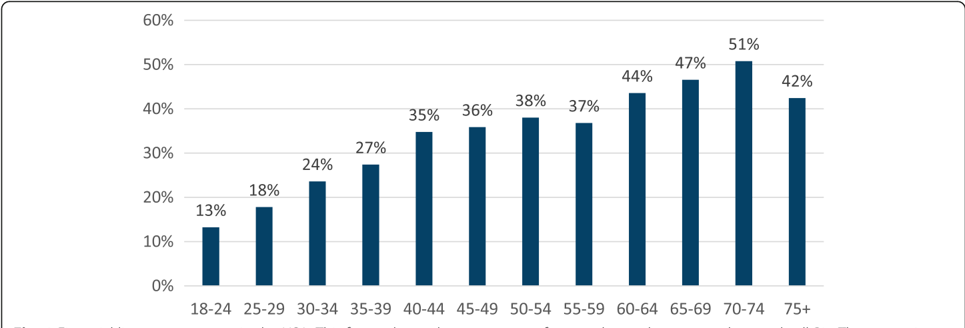
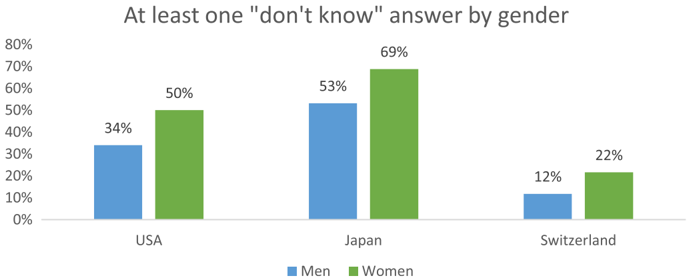
- Financial literacy is especially low among vulnerable groups: in the USA, less than 30% of respondents answered the Big Three correctly by age 40; in Switzerland, only 45% of those aged 35 or younger did so. Women were less likely than men to answer correctly across countries, and were more likely to respond “do not know.”
- The paper reports several associations: one additional correct financial literacy answer is associated with a 3–4 percentage point higher probability of retirement planning in Germany, the USA, Japan, and Sweden, and a 10 percentage point higher probability in the Netherlands; planning is associated with two to three times more wealth near retirement. The paper also states that 30–40% of U.S. retirement wealth inequality can be accounted for by differences in financial knowledge.
Methods
- This is a synthesis/keynote paper, not a new empirical study; it reviews prior survey and experimental evidence on financial literacy and financial behavior.
- It centers on the “Big Three” financial literacy measure: questions on interest compounding, inflation, and risk diversification, fielded in many surveys including the HRS, NFCS, SCF, SHED, and the FLat World project.
- Main analysis is comparative/descriptive: cross-country tables and survey results are used to compare literacy levels, identify vulnerable subgroups, and summarize associations between literacy and financial outcomes.
Limitations
- The paper explicitly notes that there are “few evaluations” of the effectiveness of financial education initiatives and says more research is urgently needed.
- The text makes evident that much of the evidence summarized is correlational rather than causal; it even notes that financial literacy “could be the result of choice and not an exogenous variable” (paper text).
- As a keynote summary, the paper does not present a single unified dataset or a new identification strategy; it aggregates evidence from many sources rather than testing one original hypothesis.
Model-written summary. Check it against the paper before relying on it.
Integrity signals
Registry
Cites
Statistics
Figures
Verification
Claims the paper makes
10 Valid · 6 Not valid · 44 Not checked · 30 Own results and interpretations
The cited sources support only part of this claim — read each source’s verdict below.
In the paper
“On average, about one third of the global population has familiarity with the basic concepts that underlie everyday financial decisions (Lusardi and Mitchell, 2011c).”
What the sources say
- Partly supportedcites Lusardi and Mitchell, 2011c matched to “Financial literacy around the world: an overview” (2011) sourceExperimental — accuracy not yet measured
The Measuring financial literacy section examines basic concepts relevant to everyday financial decisions, and the Concluding remarks report low financial literacy across eight countries. Neither section gives an estimate that about one third of the global population knows those concepts. The one-third figure in Financial literacy around the world refers instead to U.S. respondents who said they did not know how to answer a risk-diversification question. (LLM, conf=0.87)
plain- Asserted: passes — The authors put it forward as true.
- Checkable: passes — It can be checked against evidence.
- Load-bearing: passes — The paper’s conclusions depend on it.
- Based: passes — The paper gives a reason why it holds.
- Partly supported
Every source the paper cites for this claim was checked and supports it.
In the paper
“And just one third demonstrated understanding of these two concepts and answered the third question, measuring understanding of risk diversification, correctly.”
What the sources say
- Supportedcites Lusardi and Mitchell, 2011b matched to “The Outlook for Financial Literacy” (2011) source
The “Financial Literacy and Financial Decision-Making” section reports that only one-third of respondents in a survey of older Americans answered the interest-compounding, inflation, and risk-diversification questions correctly. (LLM, conf=0.94)
boosted- Asserted: passes — The authors put it forward as true.
- Checkable: passes — It can be checked against evidence.
- Load-bearing: passes — The paper’s conclusions depend on it.
- Based: passes — The paper gives a reason why it holds.
- Supported
Every source the paper cites for this claim was checked and supports it.
In the paper
“only half of older Americans -who presumably had made many financial decisions in their lives -could answer the two basic questions measuring understanding of interest rates and inflation (Lusardi and Mitchell, 2011b).”
What the sources say
- Supportedcites Lusardi and Mitchell, 2011b matched to “The Outlook for Financial Literacy” (2011) source
The “Financial Literacy and Financial Decision-Making” section (page not provided) describes a survey of older Americans and reports that only half of respondents correctly answered both questions on interest compounding and inflation. (LLM, conf=0.94)
plain- Asserted: passes — The authors put it forward as true.
- Checkable: passes — It can be checked against evidence.
- Load-bearing: passes — The paper’s conclusions depend on it.
- Based: passes — The paper gives a reason why it holds.
- Supported
Every source the paper cites for this claim was checked and supports it.
In the paper
“Financial literacy is low even in advanced economies with well-developed financial markets.”
What the sources say
- Supportedcites Lusardi and Mitchell, 2011c matched to “Financial literacy around the world: an overview” (2011) source
The Concluding remarks state that financial literacy is very low around the world regardless of financial-market development. The paper also reports widespread financial illiteracy in countries with well-developed financial markets, directly supporting the claim. (LLM, conf=0.94)
plain- Asserted: passes — The authors put it forward as true.
- Checkable: passes — It can be checked against evidence.
- Load-bearing: passes — The paper’s conclusions depend on it.
- Based: passes — The paper gives a reason why it holds.
- Supported
Every source the paper cites for this claim was checked and supports it.
In the paper
“Financial literacy is found to have the strongest impact in the Netherlands, where knowing the right answer to one additional financial literacy question is associated with a 10 percentage point higher probability of planning (Mitchell and Lusardi, 2015).”
What the sources say
- Supportedcites Mitchell and Lusardi, 2015 matched to “Financial Literacy and Economic Outcomes: Evidence and Policy Implications” (2015) source
The “Why Financial Literacy Matters” section (page not provided) states that financial literacy has its strongest impact in the Netherlands and gives the same 10-percentage-point association for one additional correct answer. (LLM, conf=0.95)
plainstates an association- Asserted: passes — The authors put it forward as true.
- Checkable: passes — It can be checked against evidence.
- Load-bearing: passes — The paper’s conclusions depend on it.
- Based: passes — The paper gives a reason why it holds.
- Supported
51 more claims · 7 with their cited sources checked
Create a free account to see all 90 claims and to verify the 3 references still open.
- It may state two separate claims as one. 24
- Probably not a substantial claim. 12
- Borderline: one of the tests for a substantial claim is unclear. 1
Claims other papers make about this one
Each is checked against this paper’s own text: does it say what the citing paper says it does?
The cited source doesn’t support the claim as written.
In the citing paper
“Previous research conducted by [33,34] shows a positive correlation between financial literacy and Fintech adoption.”
From Fintech Adoption Drivers for Innovation for SMEs in Indonesia (2022) · cites this paper as [33]
Checked by a reasoning model — may be wrong.
Experimental — accuracy not yet measuredThe cited source says what the claim attributes to it.
In the citing paper
“Understanding finance is crucial in making informed financial decisions and exhibiting sound financial behavior, as stated by Lusardi (2019).”
From Financial Literacy Among the Senior High School Students: Basis for Financial Stewardship Plan (2024) · cites this paper as Lusardi, 2019
Citations
Cites
The Economic Importance of Financial Literacy: Theory and Evidence
Lusardi, A., & Mitchell, O. S. (2014) · Journal of Economic Literature · doi:10.1257/jel.52.1.5 · Cited by 4,698 · cited 4×
“Four principles informed the design of these questions, as described in detail by Lusardi and Mitchell (2014).”
InfluentialSelf-citationFinancial literacy around the world: an overview
LUSARDI, A., & MITCHELL, O. S. (2011) · Journal of Pension Economics and Finance · doi:10.1017/s1474747211000448 · Cited by 2,000 · cited 5×
“Those interested in learning more about the differences in financial literacy across demographics and other characteristics can consult Lusardi and Mitchell (2011c, 2014).”
InfluentialSelf-citationPlanning and Financial Literacy: How Do Women Fare?
Lusardi, A., & Mitchell, O. S. (2008) · American Economic Review · doi:10.1257/aer.98.2.413 · Cited by 1,512 · cited 7×
“Empirically, planning is a very strong predictor of wealth; those who plan arrive close to retirement with two to three times the amount of wealth as those who do not plan (Lusardi and Mitchell, 2011b). Financial literacy is also associated with higher returns on investments and investment in more complex assets, such…”
BackgroundInfluentialSelf-citationDebt literacy, financial experiences, and overindebtedness
LUSARDI, A., & TUFANO, P. (2015) · Journal of Pension Economics and Finance · doi:10.1017/s1474747215000232 · Cited by 1,412 · cited 2×
“With regard to debt behavior, those who are more financially literate are less likely to have credit card debt and more likely to pay the full balance of their credit card each month rather than just paying the minimum due (Lusardi and Tufano, 2009, 2015).”
BackgroundSelf-citationFinancial Literacy and Planning: Implications for Retirement Wellbeing
Lusardi, A., & Mitchell, O. (2011) · National Bureau of Economic Research · doi:10.3386/w17078 · Cited by 1,253
Self-citationThe Economic Importance of Financial Literacy: Theory and Evidence
Lusardi, A., & Mitchell, O. (2013) · National Bureau of Economic Research · doi:10.3386/w18952 · Cited by 821
Self-citationOptimal Financial Knowledge and Wealth Inequality
Lusardi, A., Michaud, P.-C., & Mitchell, O. S. (2017) · Journal of Political Economy · doi:10.1086/690950 · Cited by 690 · cited 2×
“Programs devoted to teaching risk via, for example, visual tools have shown great promise (Lusardi et al., 2017).”
BackgroundMethodSelf-citationFinancial literacy and retirement planning in the Netherlands
van Rooij, M. C. J., Lusardi, A., & Alessie, R. J. M. (2011) · Journal of Economic Psychology · doi:10.1016/j.joep.2011.02.004 · Cited by 643
Self-citationFinancial literacy and retirement planning in Germany
BUCHER-KOENEN, T., & LUSARDI, A. (2011) · Journal of Pension Economics and Finance · doi:10.1017/s1474747211000485 · Cited by 513
Self-citationFinancial Literacy and Planning: Implications for Retirement Well-being
Lusardi, A., & Mitchell, O. S. (2011) · Financial Literacy: Implications for Retirement Security and the Financial Marketplace · doi:10.1093/acprof:oso/9780199696819.003.0002 · Cited by 505
Self-citation
Research works printed but not linked: 3
- Lusardi, A., de Bassa Scheresberg, C., and Avery, M. 2018. Millennial mobile payment users: a look into their personal finances and financial behaviors. GFLEC working paper.
- Lusardi, A., de Bassa Scheresberg, C., & Oggero, N. (2016). Student loan debt in the US: an analysis of the 2015 NFCS Data, GFLEC Policy Brief, November .
- Lusardi, A., & Tufano, P. (2009). Teach workers about the peril of debt. Harvard Business Review , 22 -24.
Cited by
Items 601–700 of 1,126
Retirement Saving Behaviour: the moderating effect of socio-demographics
الخواجة, س., & البيتي, م. (2024) · University of Sharjah (UoS) Journal of Humanities and Social Sciences · doi:10.36394/jhss/21/3/2 · Cited by 1
Empowering Informed Life Insurance Decisions: The Impact of Financial Literacy on Framing Effects
Bhatia, R., Bhat, A., & Tikoria, J. (2024) · Services Marketing Quarterly · doi:10.1080/15332969.2024.2415759 · Cited by 4
“…literacy is globally acknowledged as a vital life skill in the twenty first century, crucial for empowering individuals and enhancing the financial well-being of both individuals and societies while also enabling active participation in the economy (Lusardi, 2019; Lusardi & Mitchell, 2014).”
Women’s Financial Literacy and Financial Inclusion Post-pandemic
Patnaik, B., Patnaik, D. S., & Pradhan, B. B. (2024) · Sustainable finance · doi:10.1007/978-3-031-67523-2_16 · Cited by 1
Financial Literacy, Access to Microfinance, and Sustainable Development
Hasan, M., & Hoque, A. (2024) · Sustainable development goals series · doi:10.1007/978-3-031-68803-4_9 · Cited by 1
Fransiska, H., Nikensari, S. I., & Berutu, M. B. (2024) · Journal of Social Knowledge Education (JSKE) · doi:10.37251/jske.v5i4.1198 · Cited by 1
Sofiyani, P., Saraswati, H., Hillalliyati, N., et al. (2024) · FINANSIA Jurnal Akuntansi dan Perbankan Syariah · doi:10.32332/finansia.v7i2.8951 · Cited by 1
Peguinho, C., Estima, A. C. F. T., & Vieira, E. F. S. (2024) · Information systems engineering and management · doi:10.1007/978-3-031-77531-4_25 · Cited by 2
Insights into the State of Financial Literacy in Germany: First Results of a Nationwide Survey
Treu, J., & Elss, V. I. (2025) · Applied Economics and Finance · doi:10.11114/aef.v12i1.7242 · Cited by 2
“…this context, financial literacy is said to be based on three central areas of knowledge that serve as fundamental pillars for financial decisions (Lusardi, 2019; Lusardi & Mitchell, 2014): (i) Calculation skills concerning understanding and carrying out interest calculations and compound…”
Baraz, E. H., & DİKBAŞ, T. (2025) · Uluslararası Yönetim Akademisi Dergisi · doi:10.33712/mana.1586746 · Cited by 3
Empowerment Unleashed: How Financial Inclusion, Fintech, and Women’s Financial Wellbeing Intersect
Gill, P., & Chand, S. (2025) · SDMIMD Journal of Management · doi:10.18311/sdmimd/2025/43806 · Cited by 5
Financial Literacy and Financial Well-being of Public Sector Employees: A Correlational Study
Calizo, M. C. (2025) · International Journal For Multidisciplinary Research · doi:10.36948/ijfmr.2025.v07i02.41301 · Cited by 2
From Budgeting to Day Trading: A Content Analysis of Financial Advice on TikTok
Gibson, D. J., Tung, A., Chen, K., Hoffman, M., & Castaneda, L. (2025) · Journal of Financial Counseling and Planning · doi:10.1891/jfcp-2023-0132 · Cited by 1
Altaf, S., & Batool, S. A. (2025) · Journal of Political Stability Archive · doi:10.63468/jpsa.3.1.56 · Cited by 1
Sharma, S., Gola, K. R., Ujjawal, N., & Bagar, V. K. (2025) · MUDRA Journal of Finance and Accounting · doi:10.17492/jpi.mudra.v12i1.1212508 · Cited by 3
Financial Literacy and Teaching Performance of Teachers in Palimbang District I
Hernanie, N., & Martin, R. (2025) · Psychology and Education A Multidisciplinary Journal · doi:10.70838/pemj.390608 · Cited by 1
Suganya, M., Jayaraj, R., Ismail, A. S., et al. (2025) · doi:10.1109/icdsbs63635.2025.11031897 · Cited by 1
Tahu, G. P. (2025) · Jurnal Manajemen · doi:10.24912/jm.v29i2.2544 · Cited by 5
The Future of Personal Finance: Artificial Intelligence, Machine Learning, and Big Data
Khan, K. A. (2025) · IGI Global eBooks · doi:10.4018/979-8-3693-7160-2.ch009 · Cited by 1
Online Shopping and Financial Literacy Among the Elderly
Xu, C., Xiao, J. J., & Wang, J. (2025) · Journal of Consumer Affairs · doi:10.1111/joca.70023 · Cited by 2
Kim, A., Vanheusden, F. J., & Rashid, M. (2025) · International Review of Economics & Finance · doi:10.1016/j.iref.2025.104567 · Cited by 2
AI-Driven Financial Guidance: Bridging the Gender Gap in Economic Empowerment
Chand, K. L. K. M. P., Monesh, V. S., & Lekshmi, R. R. (2025) · International Conference on Circuit, Systems and Communication (ICCSC) · doi:10.1109/iccsc66714.2025.11135375 · Cited by 1
“This underlines the worldwide critical requirement to provide women with openings to uplift their financial awareness that can have a huge influence on their financial inclusion, empowerment and planning [8, 9].”
Parvin, S. M. R., Panakaje, N., & Raj, K. (2025) · Studies in systems, decision and control · doi:10.1007/978-3-031-85898-7_38 · Cited by 1
Women’s empowerment through financial literacy in a developed country
Bello, P., Cristini, A., Manzoni, E., Origo, F., Puca, M., & Sturaro, C. (2025) · Journal of Behavioral and Experimental Finance · doi:10.1016/j.jbef.2025.101115 · Cited by 4
Sailing Through Setbacks—What Makes Personal Financial Resilience?
Shah, S. I. U., Sheedy, E. A., & Wood, R. E. (2025) · Accounting and Finance · doi:10.1111/acfi.70121 · Cited by 2
Financial well-being in the IT sector: investigating the role of financial behaviour and planning
Mitra, A., Mohanty, S., & Priyadarshini, S. (2025) · Journal of Financial Services Marketing · doi:10.1057/s41264-025-00320-z · Cited by 8
“Hence, it can be understood that RPB serves as a bridge between FL and FWB (Lusardi 2019).”
Kim, K. T., Han, J., & Cho, H. (2025) · International Journal of Bank Marketing · doi:10.1108/ijbm-01-2025-0033 · Cited by 2
Am-una, A. (2025) · Journal of interdisciplinary perspectives · doi:10.69569/jip.2025.715 · Cited by 2
Nyanhete, A. I., & Yeates, N. (2025) · Journal of International and Comparative Social Policy · doi:10.1017/ics.2025.10081 · Cited by 1
“There is a strong association between financial literacy and levels of savings in both developed (Lusardi, 2019) and developing countries (Cole et al., 2011; from Doi et al., 2014, p.40) workshops on remittance behaviours of participants, motivated by questions of whether financial capability…”
Almazroui, K. M. (2025) · Citizenship Social and Economics Education · doi:10.1177/14788047251396441 · Cited by 1
“At the macro level, national policies, cultural norms, and economic conditions provide the enabling or constraining environment (Lusardi, 2019; OECD, 2015).”
Optimistic and pessimistic biases on intention to use open banking: the effects of mating cues
Ladeira, W. J., Jafar, S. H., Akhtar, S., Santini, F. D. O., & Dissiuta, S. I. (2025) · International Journal of Bank Marketing · doi:10.1108/ijbm-03-2025-0239 · Cited by 1
Behavioral determinants of long-term care insurance acceptance in Malaysia
Seow, A. N., Yusof, N. A. M., Anthonysamy, L., et al. (2025) · BMC Health Services Research · doi:10.1186/s12913-025-13762-x · Cited by 1
Simone, R., & Coppola, M. (2025) · Annals of Operations Research · doi:10.1007/s10479-025-06970-5 · Cited by 1
“As pointed out in Lusardi (2019), financial literacy is an essential indicator of people’s ability to make financial decisions.”
AI-induced privacy concerns: examining the moderating effect of AI fear on customer data sharing
de Matos, C. A., Rohden, S. F., & Azevedo, A. B. L. (2025) · International Journal of Bank Marketing · doi:10.1108/ijbm-05-2025-0403 · Cited by 10
Suprapto, Y., Joycelyn, & Yuwono, W. (2025) · JMD Jurnal Riset Manajemen & Bisnis Dewantara · doi:10.26533/jmd.v8i2.1445 · Cited by 1
Khan, K. A., Akhtar, M. A., Hassan, Y., & Vychytilová, J. (2025) · Management & Sustainability An Arab Review · doi:10.1108/msar-02-2025-0075 · Cited by 5
Economic Behaviors and Budgeting Practices of College Students: A Correlational Study
Cortez, W. T., Sarmiento, A. G., & Fuente, L. M. D. L. (2025) · Psychology and Education A Multidisciplinary Journal · doi:10.70838/pemj.500902 · Cited by 1
Agrawal, R., Wagholikar, S., Chandani, A., Ubarhande, P., & Pathak, M. (2025) · Financial Internet Quarterly · doi:10.2478/fiqf-2025-0024 · Cited by 1
“Financial knowledge considerably upgrades the ability to use technology in finance, access loans, and make decisions on availing various loans for managing personal financ-es (Lusardi, 2019).”
Güney, G., & KARAASLAN, İ. (2025) · İnsan ve Toplum Bilimleri Araştırmaları Dergisi · doi:10.15869/itobiad.1757463 · Cited by 3
Derbyshire, L. E. (2025) · Cogent Business & Management · doi:10.1080/23311975.2025.2603019 · Cited by 3
Financial literacy may not directly drive investment participation or retirement planning in Japan
Jiang, Y., & Shimizu, S. (2026) · Frontiers in Behavioral Economics · doi:10.3389/frbhe.2025.1725333 · Cited by 17
“These variables are essential, as prior studies have shown that both income and asset levels are closely associated with financial literacy (Sekita, 2011; Lusardi, 2019).”
Kulshrestha, N., Vohra, P., Wadhwa, J., & Dudeja, T. (2026) · Emerald Group Publishing Limited eBooks · doi:10.1108/978-1-83708-822-520261006 · Cited by 1
Dote-Pardo, J. (2026) · Academia Revista Latinoamericana de Administración · doi:10.1108/arla-04-2025-0116 · Cited by 10
Andreatti, G., & Morselli, D. (2026) · Sustainability · doi:10.3390/su18031545 · Cited by 5
Digital finance and the African carbon divide: A geospatial analysis of oil vs. non-oil economies
Raza, K., & Huang, H. (2026) · Geoscience Frontiers · doi:10.1016/j.gsf.2026.102285 · Cited by 2
Angulo, M. G., Gómez‐Caicedo, M. I., Lambertine, E., Pérez, J., Bedoya, C. A. T., & Acuña, P. V. R. (2026) · Frontiers in Education · doi:10.3389/feduc.2026.1731327 · Cited by 4
The burden of debt: How over-indebtedness undermines need satisfaction
Wałęga, G., & Wałęga, A. (2026) · Journal of Behavioral and Experimental Finance · doi:10.1016/j.jbef.2026.101165 · Cited by 2
Raghuveer, P., & Patil, H. (2026) · International Journal of Research -GRANTHAALAYAH · doi:10.29121/granthaalayah.v14.i3.2026.6827 · Cited by 2
Financial development, fiscal capacity, and public expenditure in East Africa: A panel ARDL approach
Damasa, A. D., Demissie, W. M., & Jayamohan, M. K. (2026) · Social Sciences & Humanities Open · doi:10.1016/j.ssaho.2026.102910 · Cited by 1
How sustainable investment behaviour can be improved: an empirical insight
Kaur, J., Srivastava, S., Bhadauria, A., & Vatyani, Y. (2026) · South Asian Journal of Business Studies · doi:10.1108/sajbs-01-2025-0009 · Cited by 1
Brazilians’ financial literacy: Where are the differences?
Costa, A. C. C., Vieira, K. M., Matheis, T. K., Dutra, V. R., Potrich, A. C. G., & Paraboni, A. L. (2026) · Social Sciences & Humanities Open · doi:10.1016/j.ssaho.2026.103137 · Cited by 1
Educación financiera y bienestar financiero en México: evidencia de efectos diferenciados por género
Culebro-Martínez, R. (2026) · Economicus Journal of Business and Economics Insights · doi:10.54167/ejbei.v3i2.2305 · Cited by 1
“…educación y alfabetización financiera tienden a adoptar comportamientos financieros más prudentes, como el ahorro y la diversificación de riesgos, permitiéndoles tomar decisiones informadas, lo que se traduce en mayor bienestar financiero (Lusardi, 2019; Lusardi & Streeter, 2023; Chu et al., 2017).”
Debi, H., Chakraborty, B., & Debnath, P. (2026) · Abhigyan · doi:10.1177/09702385261461899 · Cited by 4
“This includes creating household budgets, saving plans, managing debt, planning for life cycle needs and dealing with unexpected emergencies without incurring unnecessary debts (Lusardi & Mitchell, 2011; Lusardi, 2019).”
From worker to spender to survivor: Work identity disruption and reconstruction after sudden wealth
van der Merwe, E. P., Sekaja, L., & Mabitsela, T. (2026) · SA Journal of Industrial Psychology · doi:10.4102/sajip.v52i0.2408 · Cited by 1
Knowledge and Application toward Financial Topics in High School Students: A Parametric Study
García-Santıllán, A. (2020) · European Journal of Educational Research · doi:10.12973/eu-jer.9.3.905 · Cited by 17
Marciano, V. G., & Medeiros, A. L. (2022) · Ágora revista de divulgação científica · doi:10.24302/agora.v27.3978 · Cited by 1
“Cient., v. 27, p. 69-94, 2022 (ISSNe 2237-9010) proporcionar o acesso à Educação Financeira, com intuito de melhorar seu entendimento do mercado, de serviços e de conceitos financeiros (LUSARDI, 2019).”
BackgroundTETİK, N., & Kanat, E. (2022) · Advances in electronic government, digital divide, and regional development book series · doi:10.4018/978-1-6684-3380-5.ch006 · Cited by 1
Agabalinda, C., & Isoh, A. V. N. (2020) · Advances in public policy and administration (APPA) book series · doi:10.4018/978-1-7998-2731-3.ch012 · Cited by 1
Rhu, N. X., Yian, C. T., Zainol, N. R., Abi, T., Mamun, A. A., & Salameh, A. A. M. (2022) · Lecture notes in networks and systems · doi:10.1007/978-3-031-08090-6_60 · Cited by 3
Setyawan, I. R., Ramli, I., & Listyarti, I. (2022) · International Journal of Research -GRANTHAALAYAH · doi:10.29121/granthaalayah.v10.i7.2022.4678 · Cited by 1
“Experience from the study of women's empowerment in entrepreneurship and finance by Lusardi (2019) states that better financial decision making will be shown by the extent to which women have financial literacy.”
BackgroundVardari, L., Abdullahu, D., & Kurteshi, R. (2022) · Emerald Group Publishing Limited eBooks · doi:10.1108/s1569-37592022000109b005 · Cited by 1
Herdiani, A., Hermawan, A., Rahmawati, S. A., Palil, M. R., & Havies, R. (2022) · Routledge eBooks · doi:10.1201/9781003303336 · Cited by 6
The Implementation of the Balanced Scorecard for Improving Quality of Education
Dariyo, A., Uwes, S., & Tumanggor, R. O. (2022) · Nidhomul Haq Jurnal Manajemen Pendidikan Islam · doi:10.31538/ndh.v7i3.2625 · Cited by 1
(2022) · Quality - Access to Success · doi:10.47750/qas/23.189.39 · Cited by 1
Timbula, M. A., & Marvadi, C. R. (2022) · JIMS8M The Journal of Indian Management & Strategy · doi:10.5958/0973-9343.2022.00031.x · Cited by 1
DETERMINANTS OF FINANCIAL LITERACY LEVELS AMONG RURAL WOMEN IN UGANDA
Namawejje, H., Bruno, Y. L., Wadada, R., Antonites, A. J., & Ssekamatte, D. (2022) · International Journal of Social Science and Economic Research · doi:10.46609/ijsser.2022.v07i12.019 · Cited by 2
Bosea, V. K., Basuah, P. K., Asare, E. T., & Barimah, R. T. (2023) · International Journal of Academic Research in Accounting Finance and Management Sciences · doi:10.6007/ijarafms/v13-i1/16303 · Cited by 2
The Role of Asta Brata Leadership on MSME Performance During Pandemic, Financial Literacy Moderating
Purwaningrat, P. A., Muliati, N. K., & Oktarini, L. N. (2023) · Jurnal Ekonomi dan Bisnis Jagaditha · doi:10.22225/jj.10.1.2023.25-36 · Cited by 5
The Influence of the Consumer Society on the Education System
Korneeva, E. N., Grebennikov, O. V., Ignatovich, V. K., & Averina, L. (2023) · Springer proceedings in business and economics · doi:10.1007/978-3-031-27785-6_16 · Cited by 2
CONSTRUCTION OF A STRUCTURAL MODEL OF PRE-SERVICE TEACHER CONSUMPTION BEHAVIOR
Kurniawan, T., Farizhi, M. R., & Setiawan, A. (2023) · Soedirman Economics Education Journal · doi:10.32424/seej.v5i1.8317 · Cited by 2
The Role of Financial Technology Education Application on Financial Investment Decisions
Jayadi, R. R. T., & Noerlina, N. (2023) · International Conference on Industrial Engineering and Operations Management (IEOM) · doi:10.46254/ap03.20220585 · Cited by 3
Teachers’ Financial Literacy and Capability
Nalasa-Costuna, J. U., & Tantiado, R. C. (2023) · International Journal of Research Publications · doi:10.47119/ijrp1001251520234904 · Cited by 1
Öztürk, Ş., Kireç, B., & Erol, M. (2023) · European Journal of Alternative Education Studies · doi:10.46827/ejae.v8i2.4805 · Cited by 1
Fawwaz, M., & Pratikto, H. (2023) · Transekonomika Akuntansi Bisnis dan Keuangan · doi:10.55047/transekonomika.v3i3.425 · Cited by 5
Assessing the Authors and Source Impact of Financial Literacy: A Bibliometric Analysis Using R
Ansar, R., Chekima, B., Lada, S., Lim, M. F., Bouteraa, M., Jimainal, M. N. H., & Adha, M. A. (2023) · Business and Management Horizons · doi:10.5296/bmh.v11i1.20761 · Cited by 2
Siregar, W. M., Yulianda, R., & Mursyidin, M. (2023) · International Journal of Advances in Social Sciences and Humanities · doi:10.56225/ijassh.v2i2.202 · Cited by 2
“On average, low financial literacy is exacerbated by vulnerability patterns among specific population sub-groups (Lusardi, 2019).”
Araújo, J. V. B. D., Brito, J. D. A. D. A., dos Santos, G. B., et al. (2023) · Revista de Gestão e Secretariado (Management and Administrative Professional Review) · doi:10.7769/gesec.v14i8.2541 · Cited by 1
Financial Literacy During a Crisis: Financial Lessons Learned from COVID-19
Goyal, K. (2023) · Management Dynamics · doi:10.57198/2583-4932.1322 · Cited by 6
The Role of Reading Economic News in Germany and the UK
Strauß, N., Knowles, S., & Cinceoglu, V. (2023) · IntechOpen eBooks · doi:10.5772/intechopen.1002495 · Cited by 1
Application of GRA-RF Combination Algorithm in Early Warning Mechanism of Financial Business Cycle
Feng, L. (2023) · International Conference on Data Science and Network Security (ICDSNS) · doi:10.1109/icdsns58469.2023.10245636 · Cited by 1
FINANCIAL LITERACY TECHNOLOGY ADOPTION IN INDONESIAN SHARIA BANKING: A PRELIMINARY ANALYSIS
Silitonga, R. M., Jou, Y., Sukwadi, R., et al. (2023) · International Journal of Application on Economics and Business · doi:10.24912/ijaeb.v1i3.911-920 · Cited by 1
Can Financial Literacy Education Reduce the Use of Medicaid and SNAP?
Al-Bahrani, A. A., Patel, D. P., & Weathers, J. (2020) · Financial Services Review · doi:10.61190/fsr.v28i4.3434 · Cited by 1
“The NFCS survey data includes the “Big Five” measure of financial literacy, which is in heavy rotation by researchers in this field (e.g. Lusardi, 2019; Harvey, 2019; Al-Bahrani, Weathers, and Patel, 2019).”
An Empirical Study on Predicting Financial Planning for Retirement
(2023) · Journal of System and Management Sciences · doi:10.33168/jsms.2023.0609 · Cited by 1
Biased Behavior And Stock Investment Decisions Of Investors In Bali, Indonesia
Gama, A. W. S., Astiti, N. P. Y., & Mitariani, N. W. E. (2025) · Matrik Jurnal Manajemen Strategi Bisnis dan Kewirausahaan · doi:10.24843/matrik:jmbk.2023.v17.i02.p02 · Cited by 11
Faramida, H. N., Sabandi, M., & Octoria, D. (2023) · Economic Education Analysis Journal · doi:10.15294/eeaj.v12i3.74210 · Cited by 21
Wahidahwati, W., Agustin, Y., Handayani, N., et al. (2023) · El Dinar Jurnal Keuangan dan Perbankan Syariah · doi:10.18860/ed.v11i2.22444 · Cited by 1
“Sharia pawnshops currently have quite a lot of customers in almost every region (Khoiriyah et al., 2019; Lusardi, 2019; Mohd Thas Thaker et al., 2020; Shabbir, 2020).”
BackgroundThe influence of Social Environment and Economic Rationality on Student Financial Literacy Literacy
Siliwangi, U., Dewi, A. S. S., Suherti, H., et al. (2023) · Economic Education and Entrepreneurship Journal · doi:10.23960/e3j/v6i2.162-167 · Cited by 1
Edukacja finansowa w Polsce na tle rozwiązań europejskich
Suska, M. (2023) · Studia i Prace Kolegium Zarządzania i Finansów / Szkoła Główna Handlowa · doi:10.33119/sip.2023.192.3 · Cited by 6
The acceptance and commitment therapy (ACT) reduce stress in patients with type 2 diabetes mellitus
Bistara, D. N., Susanti, S., Pranata, S., & Mustamu, A. C. (2023) · Scripta Medica · doi:10.5937/scriptamed54-45794 · Cited by 5
Financial Literacy and Money Management
Hinduan, Z. R., & Agia, M. I. (2024) · Emerald Group Publishing Limited eBooks · doi:10.1108/978-1-83797-092-620241011 · Cited by 1
Hà, T. L. T., Thế, A. K., Đức, D. N., Quốc, C. P. K., & Diệu, L. L. (2024) · Tạp chí Kinh tế và Phát triển · doi:10.33301/jed.vi.1589 · Cited by 3
The role of financial literacy when informal caregivers make complex financial decisions
Cutler, H., Bilgrami, A., Gu, M., Gu, Y., & Aghdaee, M. (2024) · Applied Economics · doi:10.1080/00036846.2024.2312959 · Cited by 2
“Our study found that financial literacy is potentially a concave function across adult life, peaking in middle age, which aligns with other studies across multiple countries (Kalmi and Ruuskanen 2018; Lusardi 2019; Lusardi and Mitchell 2014; Stolper and Walter 2017).”
Socioeconomic Factors and Financial Inclusion in the Department of Ancash, Peru, 2015 and 2021
Ramírez-Asís, H., Castillo-Picón, J., Miranda, J. V., et al. (2024) · Emerald Group Publishing Limited eBooks · doi:10.1108/978-1-83753-106-620241017 · Cited by 1
Literacy, Resilience, and Financial Well-Being in Higher Education Students
Dias, P., Borges, A. P., & Vieira, E. (2024) · Advances in educational marketing, administration, and leadership book series · doi:10.4018/979-8-3693-1777-8.ch008 · Cited by 1
Gumbo, L., Marimuthu, F., & Vengesai, E. (2024) · IJEBD (International Journal Of Entrepreneurship And Business Development) · doi:10.29138/ijebd.v7i1.2427 · Cited by 1
Investment Challenges Faced By Working Women In Kerala: A Structural Equation Modelling Analysis
S, D. K., & Kalpana, G. (2024) · doi:10.53555/kuey.v30i5.4420 · Cited by 1
INFORMATION AS A CONSUMER PROTECTION INSTRUMENT ON THE CONSUMER CREDIT MARKET
Czechowska, I. D., Paduszyńska, M., Jędrzejczak, R., & Sadowski, A. (2024) · Technological and Economic Development of Economy · doi:10.3846/tede.2024.21496 · Cited by 7
Hidayat, A. N., & Diana, D. (2024) · Airlangga Journal of Innovation Management · doi:10.20473/ajim.v5i2.57707 · Cited by 1
An Evaluation of Technology’s Effect on Drivers of Investor’s Preferences for the Debt and Equity
Dhillon, L. K., & Kour, B. (2024) · doi:10.48001/978-81-966500-3-2-10 · Cited by 3
Emerging Technology, Environment and Social Justice- A Sustainable Approach
Tiwari, S. (2024) · doi:10.48001/978-81-966500-3-2 · Cited by 5
Financial Literacy Among Women Agrientrepreneurs
Vaiappuri, S. K. N., Zakaria, S. H. H., & Ali, M. S. (2024) · Advances in environmental engineering and green technologies book series · doi:10.4018/979-8-3693-3037-1.ch006 · Cited by 1
Metadata
- Authors
- Lusardi, A.
- Affiliations
- George Washington University (US)
- Corresponding author
- Lusardi, Annamaria
- ORCID
- Lusardi, Annamaria
- Venue
- Swiss Journal of Economics and Statistics
- Published
- 2019-01-24
- Volume
- 155
- Issue
- 1
- ISSN
- 0303-9692 (ISSN-L)
- 2235-6282
- OpenAlex
- W2911554037
- Semantic Scholar
- 045054f8e699ce8552fb34c500cb52d9b8d31d5f
- Cited by
- 1,135
- References
- 39
- Citations by year
- 2026: 142 · 2025: 218 · 2024: 233 · 2023: 245 · 2022: 147 · 2021: 75 · 2020: 64 · 2019: 9
- FWCI
- 187.87
- Type
- journal article
- Language
- en
- Open access
- diamond
- doi.org
- Licence
- cc-by
- creativecommons.org/licenses/by/4.0 (tdm)
- Locations
- Zeitschrift für schweizerische Statistik und Volkswirtschaft/Schweizerische Zeitschrift für Volkswirtschaft und Statistik/Swiss journal of economics and statistics (publishedVersion, cc-by)
- RePEc: Research Papers in Economics (submittedVersion)
- DOAJ (DOAJ: Directory of Open Access Journals) (submittedVersion)
- Econstor (Econstor) (submittedVersion, cc-by)
- Topics
- Social Sciences › Economics, Econometrics and Finance › Finance › Financial Literacy, Pension, Retirement Analysis
- Social Sciences › Business, Management and Accounting › Accounting › Financial Literacy and Behavior
- Social Sciences › Decision Sciences › General Decision Sciences › Decision-Making and Behavioral Economics
- Keywords
- financial literacy, financial education
About these checks
Registry, retraction, Cites and statistics results are computed, not judged, with one exception: a printed reference that no index lists is read once by a model before it counts as a citation error. Claims are extracted by a model and kept only when their quote appears verbatim in the text; each cited source is then checked, with a model’s help, for whether it says what the claim relies on. Those verdicts can be wrong — read the claim’s quote and the cited source before relying on one.
The claim verdicts this report counts are experimental: their accuracy is not yet measured.
A language model drew the claims from the paper on 2026-10-10, under version 3 of the claim definition (model deepseek-v4.1-flash, prompt extract-v3).
A second model labelled each claim on 2026-10-10 (model jev-1.13-20260917, definition revision gold-guideline-v0.2).
Cited sources are checked with a language model’s help (gpt-6-sol).
Statistics and arithmetic are recomputed, not judged.
Confidence bands are shown only for fields calibrated on our annotated test set. None is calibrated yet, so no band is shown.
What counts as a claim ›How we measure confidence ›How we check this ›
Are you an author, or do you see a problem with this page? Request a review
Data sources
Bibliographic data: Semantic Scholar, OpenAlex, Crossref.
Contains information from the Semantic Scholar Academic Graph Datasets, made available under the ODC Attribution License (ODC-BY 1.0).
Semantic Scholar’s data is described in: Kinney, R., et al. (2023). The Semantic Scholar Open Data Platform. arXiv:2301.10140.
