

Financial literacy and the need for financial education: evidence and implications
Open accessThe DOI matches its Crossref record; 47 of the 47 references it cites were found in a registry or an index; 13 of the 58 sources its claims cite were checked for support.
Abstract
This paper represents a summary of the keynote address I gave to the 2018 Annual Meeting of the Swiss Society of Economics and Statistics. I would like to thank Monika Butler, Rafael Lalive, anonymous reviewers
Overview
CoChat Summary
TL;DR
This keynote-style paper argues that financial literacy is low across countries and population groups, and that the “Big Three” questions are a practical way to measure it. It synthesizes evidence showing that financial literacy is linked to better saving, retirement planning, debt behavior, and resilience, and calls for large-scale, targeted financial education.
Key findings
- In the U.S. 2004 HRS, only about half of older Americans answered the two basic interest/inflation questions correctly, and only one third answered all three “Big Three” questions correctly.
- In the FLat World project (15 countries), the average share answering all three questions correctly was about 30%, and only around 50% in most countries answered the interest-rate and inflation questions correctly.
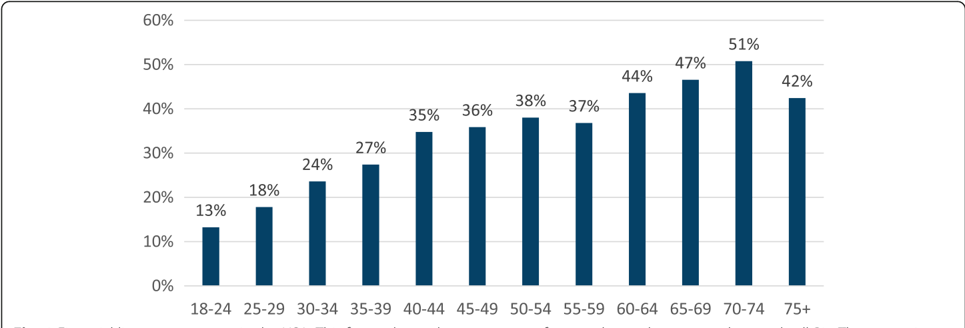
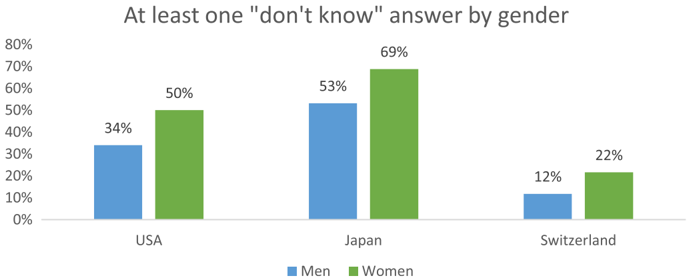
- Financial literacy is especially low among vulnerable groups: in the USA, less than 30% of respondents answered the Big Three correctly by age 40; in Switzerland, only 45% of those aged 35 or younger did so. Women were less likely than men to answer correctly across countries, and were more likely to respond “do not know.”
- The paper reports several associations: one additional correct financial literacy answer is associated with a 3–4 percentage point higher probability of retirement planning in Germany, the USA, Japan, and Sweden, and a 10 percentage point higher probability in the Netherlands; planning is associated with two to three times more wealth near retirement. The paper also states that 30–40% of U.S. retirement wealth inequality can be accounted for by differences in financial knowledge.
Methods
- This is a synthesis/keynote paper, not a new empirical study; it reviews prior survey and experimental evidence on financial literacy and financial behavior.
- It centers on the “Big Three” financial literacy measure: questions on interest compounding, inflation, and risk diversification, fielded in many surveys including the HRS, NFCS, SCF, SHED, and the FLat World project.
- Main analysis is comparative/descriptive: cross-country tables and survey results are used to compare literacy levels, identify vulnerable subgroups, and summarize associations between literacy and financial outcomes.
Limitations
- The paper explicitly notes that there are “few evaluations” of the effectiveness of financial education initiatives and says more research is urgently needed.
- The text makes evident that much of the evidence summarized is correlational rather than causal; it even notes that financial literacy “could be the result of choice and not an exogenous variable” (paper text).
- As a keynote summary, the paper does not present a single unified dataset or a new identification strategy; it aggregates evidence from many sources rather than testing one original hypothesis.
Model-written summary. Check it against the paper before relying on it.
Integrity signals
Registry
Cites
Statistics
Figures
Verification
Claims the paper makes
10 Valid · 6 Not valid · 44 Not checked · 30 Own results and interpretations
The cited sources support only part of this claim — read each source’s verdict below.
In the paper
“On average, about one third of the global population has familiarity with the basic concepts that underlie everyday financial decisions (Lusardi and Mitchell, 2011c).”
What the sources say
- Partly supportedcites Lusardi and Mitchell, 2011c matched to “Financial literacy around the world: an overview” (2011) sourceExperimental — accuracy not yet measured
The Measuring financial literacy section examines basic concepts relevant to everyday financial decisions, and the Concluding remarks report low financial literacy across eight countries. Neither section gives an estimate that about one third of the global population knows those concepts. The one-third figure in Financial literacy around the world refers instead to U.S. respondents who said they did not know how to answer a risk-diversification question. (LLM, conf=0.87)
plain- Asserted: passes — The authors put it forward as true.
- Checkable: passes — It can be checked against evidence.
- Load-bearing: passes — The paper’s conclusions depend on it.
- Based: passes — The paper gives a reason why it holds.
- Partly supported
Every source the paper cites for this claim was checked and supports it.
In the paper
“And just one third demonstrated understanding of these two concepts and answered the third question, measuring understanding of risk diversification, correctly.”
What the sources say
- Supportedcites Lusardi and Mitchell, 2011b matched to “The Outlook for Financial Literacy” (2011) source
The “Financial Literacy and Financial Decision-Making” section reports that only one-third of respondents in a survey of older Americans answered the interest-compounding, inflation, and risk-diversification questions correctly. (LLM, conf=0.94)
boosted- Asserted: passes — The authors put it forward as true.
- Checkable: passes — It can be checked against evidence.
- Load-bearing: passes — The paper’s conclusions depend on it.
- Based: passes — The paper gives a reason why it holds.
- Supported
Every source the paper cites for this claim was checked and supports it.
In the paper
“only half of older Americans -who presumably had made many financial decisions in their lives -could answer the two basic questions measuring understanding of interest rates and inflation (Lusardi and Mitchell, 2011b).”
What the sources say
- Supportedcites Lusardi and Mitchell, 2011b matched to “The Outlook for Financial Literacy” (2011) source
The “Financial Literacy and Financial Decision-Making” section (page not provided) describes a survey of older Americans and reports that only half of respondents correctly answered both questions on interest compounding and inflation. (LLM, conf=0.94)
plain- Asserted: passes — The authors put it forward as true.
- Checkable: passes — It can be checked against evidence.
- Load-bearing: passes — The paper’s conclusions depend on it.
- Based: passes — The paper gives a reason why it holds.
- Supported
Every source the paper cites for this claim was checked and supports it.
In the paper
“Financial literacy is low even in advanced economies with well-developed financial markets.”
What the sources say
- Supportedcites Lusardi and Mitchell, 2011c matched to “Financial literacy around the world: an overview” (2011) source
The Concluding remarks state that financial literacy is very low around the world regardless of financial-market development. The paper also reports widespread financial illiteracy in countries with well-developed financial markets, directly supporting the claim. (LLM, conf=0.94)
plain- Asserted: passes — The authors put it forward as true.
- Checkable: passes — It can be checked against evidence.
- Load-bearing: passes — The paper’s conclusions depend on it.
- Based: passes — The paper gives a reason why it holds.
- Supported
Every source the paper cites for this claim was checked and supports it.
In the paper
“Financial literacy is found to have the strongest impact in the Netherlands, where knowing the right answer to one additional financial literacy question is associated with a 10 percentage point higher probability of planning (Mitchell and Lusardi, 2015).”
What the sources say
- Supportedcites Mitchell and Lusardi, 2015 matched to “Financial Literacy and Economic Outcomes: Evidence and Policy Implications” (2015) source
The “Why Financial Literacy Matters” section (page not provided) states that financial literacy has its strongest impact in the Netherlands and gives the same 10-percentage-point association for one additional correct answer. (LLM, conf=0.95)
plainstates an association- Asserted: passes — The authors put it forward as true.
- Checkable: passes — It can be checked against evidence.
- Load-bearing: passes — The paper’s conclusions depend on it.
- Based: passes — The paper gives a reason why it holds.
- Supported
51 more claims · 7 with their cited sources checked
Create a free account to see all 90 claims and to verify the 3 references still open.
- It may state two separate claims as one. 24
- Probably not a substantial claim. 12
- Borderline: one of the tests for a substantial claim is unclear. 1
Claims other papers make about this one
Each is checked against this paper’s own text: does it say what the citing paper says it does?
The cited source doesn’t support the claim as written.
In the citing paper
“Previous research conducted by [33,34] shows a positive correlation between financial literacy and Fintech adoption.”
From Fintech Adoption Drivers for Innovation for SMEs in Indonesia (2022) · cites this paper as [33]
Checked by a reasoning model — may be wrong.
Experimental — accuracy not yet measuredThe cited source says what the claim attributes to it.
In the citing paper
“Understanding finance is crucial in making informed financial decisions and exhibiting sound financial behavior, as stated by Lusardi (2019).”
From Financial Literacy Among the Senior High School Students: Basis for Financial Stewardship Plan (2024) · cites this paper as Lusardi, 2019
Citations
Cites
The Economic Importance of Financial Literacy: Theory and Evidence
Lusardi, A., & Mitchell, O. S. (2014) · Journal of Economic Literature · doi:10.1257/jel.52.1.5 · Cited by 4,698 · cited 4×
“Four principles informed the design of these questions, as described in detail by Lusardi and Mitchell (2014).”
InfluentialSelf-citationFinancial literacy around the world: an overview
LUSARDI, A., & MITCHELL, O. S. (2011) · Journal of Pension Economics and Finance · doi:10.1017/s1474747211000448 · Cited by 2,000 · cited 5×
“Those interested in learning more about the differences in financial literacy across demographics and other characteristics can consult Lusardi and Mitchell (2011c, 2014).”
InfluentialSelf-citationPlanning and Financial Literacy: How Do Women Fare?
Lusardi, A., & Mitchell, O. S. (2008) · American Economic Review · doi:10.1257/aer.98.2.413 · Cited by 1,512 · cited 7×
“Empirically, planning is a very strong predictor of wealth; those who plan arrive close to retirement with two to three times the amount of wealth as those who do not plan (Lusardi and Mitchell, 2011b). Financial literacy is also associated with higher returns on investments and investment in more complex assets, such…”
BackgroundInfluentialSelf-citationDebt literacy, financial experiences, and overindebtedness
LUSARDI, A., & TUFANO, P. (2015) · Journal of Pension Economics and Finance · doi:10.1017/s1474747215000232 · Cited by 1,412 · cited 2×
“With regard to debt behavior, those who are more financially literate are less likely to have credit card debt and more likely to pay the full balance of their credit card each month rather than just paying the minimum due (Lusardi and Tufano, 2009, 2015).”
BackgroundSelf-citationFinancial Literacy and Planning: Implications for Retirement Wellbeing
Lusardi, A., & Mitchell, O. (2011) · National Bureau of Economic Research · doi:10.3386/w17078 · Cited by 1,253
Self-citationThe Economic Importance of Financial Literacy: Theory and Evidence
Lusardi, A., & Mitchell, O. (2013) · National Bureau of Economic Research · doi:10.3386/w18952 · Cited by 821
Self-citationOptimal Financial Knowledge and Wealth Inequality
Lusardi, A., Michaud, P.-C., & Mitchell, O. S. (2017) · Journal of Political Economy · doi:10.1086/690950 · Cited by 690 · cited 2×
“Programs devoted to teaching risk via, for example, visual tools have shown great promise (Lusardi et al., 2017).”
BackgroundMethodSelf-citationFinancial literacy and retirement planning in the Netherlands
van Rooij, M. C. J., Lusardi, A., & Alessie, R. J. M. (2011) · Journal of Economic Psychology · doi:10.1016/j.joep.2011.02.004 · Cited by 643
Self-citationFinancial literacy and retirement planning in Germany
BUCHER-KOENEN, T., & LUSARDI, A. (2011) · Journal of Pension Economics and Finance · doi:10.1017/s1474747211000485 · Cited by 513
Self-citationFinancial Literacy and Planning: Implications for Retirement Well-being
Lusardi, A., & Mitchell, O. S. (2011) · Financial Literacy: Implications for Retirement Security and the Financial Marketplace · doi:10.1093/acprof:oso/9780199696819.003.0002 · Cited by 505
Self-citation
Research works printed but not linked: 3
- Lusardi, A., de Bassa Scheresberg, C., and Avery, M. 2018. Millennial mobile payment users: a look into their personal finances and financial behaviors. GFLEC working paper.
- Lusardi, A., de Bassa Scheresberg, C., & Oggero, N. (2016). Student loan debt in the US: an analysis of the 2015 NFCS Data, GFLEC Policy Brief, November .
- Lusardi, A., & Tufano, P. (2009). Teach workers about the peril of debt. Harvard Business Review , 22 -24.
Cited by
Items 501–600 of 1,126
Risk perceptions and financial decision making
Eğrican, A. T., Tiniç, M., & Giray, T. C. (2025) · Borsa Istanbul Review · doi:10.1016/j.bir.2025.08.007 · Cited by 11
Berwal, K., Bhall, R., Dalal, S., & Ahmed, H. (2025) · Investment Management and Financial Innovations · doi:10.21511/imfi.22(3).2025.31 · Cited by 3
“Financial knowledge refers to an individual’s understanding of various financial concepts and terms encountered in their daily financial activities (Lusardi, 2019).”
Kuśmierczyk, P., Kurach, R., & Kośny, M. (2025) · DECISION · doi:10.1007/s40622-025-00451-1 · Cited by 4
Förster, M., Hommel, M., Aprea, C., Fürstenau, B., Happ, R., & Wuttke, E. (2025) · Springer briefs in education · doi:10.1007/978-3-031-95690-4_1 · Cited by 2
Jaswal, V., & Naik, V. (2025) · International Journal of Sociology and Social Policy · doi:10.1108/ijssp-01-2025-0066 · Cited by 3
Cryptocurrencies and the Entrepreneurial Mindset: The Role of Financial Literacy in Driving Adoption
Ursu, A., Curșeu, P. L., Trif, S., & Fleştea, A. M. (2025) · Administrative Sciences · doi:10.3390/admsci15100403 · Cited by 4
“…and skills necessary to make informed financial decisions, including understanding investment risks, financial instruments, and market dynamics (Lusardi, 2019; Lusardi & Mitchell, 2014) we expect that financial literacy is a key antecedent for identifying opportunities in relation to the use…”
Financial literacy and financial well-being of rural farmers: Does financial inclusion matter?
Mangudhla, T., Dodoo, R. N. A., Boadi, E. B., Mbona, R. M., & Donkor, M. (2025) · Economics & Sociology · doi:10.14254/2071-789x.2025/18-3/2 · Cited by 8
Knowledge, attitude or risk? What drives the financial literacy gaps of university staff?
Adekunle, I. A., Williams, T. O., Maialeh, R., & Adegbenro, M. A. (2025) · Borsa Istanbul Review · doi:10.1016/j.bir.2025.10.032 · Cited by 6
Purnamasari, E. D., Anggraini, L. D., & Faradillah, F. (2025) · Journal of risk and financial management · doi:10.3390/jrfm18120682 · Cited by 19
“Following (Lusardi, 2019; Morgan & Long, 2020), Q 2 > 0 indicates predictive relevance.”
Straub, L., Zeiß, C., Pehl, J., Greiner, M., Winkelmann, A., & Lechner, U. (2026) · Electronic Markets · doi:10.1007/s12525-025-00863-y · Cited by 2
“The personas developed underscore the diversity of user profiles and emphasize the importance of tailoring learning environments to different levels of experience and motivation (Lusardi, 2019; Men-beru, 2024).”
InfluentialHoque, M. E., Soo-Wah, L., & Haque, M. M. (2026) · Financial Innovation · doi:10.1186/s40854-025-00839-z · Cited by 11
“According to Lusardi (2019), financial literacy includes both people’s knowledge and financial behavior.”
Perdana, A., & Gultom, S. E. (2026) · Management Decision · doi:10.1108/md-02-2025-0455 · Cited by 7
Malik, L., Quddus, A., Watto, W. A., Barakat, H. A., Fahlevi, M., & Aziz, A. L. (2026) · Discover Psychology · doi:10.1007/s44202-026-00669-9 · Cited by 19
EVALUATING THE IMPACT OF FINANCIAL LITERACY AND KEY FACTORS ON SMES’ FINTECH ADOPTION INTENTION
Ahsan, A., Yusuf, D. H. M., Abidin, J. Z., Ghani, M. R. A., Kamaruddin, N. S., & Rozali, A. Z. (2026) · International Journal of Entrepreneurship and Management Practices · doi:10.35631/ijemp.933026 · Cited by 2
Enhancing personal financial management skills through a machine learning-powered business simulator
Antoniuk, D. S., Вакалюк, Т. А., Didkivskyi, V. V., et al. (2025) · International Workshop on Augmented Reality in Education (AREdu) · doi:10.55056/ceur-ws.org/vol-3918/paper018.pdf · Cited by 2
“Lusardi [1] discussed the influence of financial literacy on the well-being of people worldwide and the need to recognise it as a fundamental right and universal need.”
Ndou, A., & Ngwenya, S. (2021) · Eurasian Journal of Economics and Finance · doi:10.15604/ejef.2021.09.01.005 · Cited by 2
Quantitative Data Presentation and Analysis: Descriptive Analysis
Perera, C. H., Nayak, R., & Nguyen, L. T. V. (2022) · Springer eBooks · doi:10.1007/978-981-19-5017-9_5 · Cited by 2
Chen, F., Zhang, J., Xiao, J. J., & Chen, J. (2023) · Discrete Dynamics in Nature and Society · doi:10.1155/2023/7924754 · Cited by 3
Alfabetización financiera de los productores de yuca industrial en Colombia
García, E. D. J. A. (2022) · Panorama Económico · doi:10.32997/pe-2022-4211 · Cited by 2
Karim, R. A., Hussin, M., & Sahid, S. (2023) · International Journal of Academic Research in Economics and Management Sciences · doi:10.6007/ijarems/v12-i2/16744 · Cited by 8
“On the other hand, individuals with a higher income level are more likely to know the basic characteristics of the retirement income system, regardless of their level of financial literacy (Lusardi, 2019).”
InfluentialMunawar, S. (2023) · Pakistan Journal of Humanities and Social Sciences · doi:10.52131/pjhss.2023.1102.0543 · Cited by 8
“Additionally, the purpose of financial literacy goals is to assess how well a person can understand a financial literacy issue and make financial management decisions (Lusardi, 2019).”
BackgroundLambert, M. J. C. M., Jusoh, Z. M., Rahim, H. A., & Zainudin, N. (2023) · International Journal of Academic Research in Business and Social Sciences · doi:10.6007/ijarbss/v13-i16/18727 · Cited by 2
“Economic literacy encompasses not only the knowledge and understanding of financial concepts and risks but also the ability, motivation and confidence to apply that knowledge effectively, as stated by (Lusardi, 2019).”
BackgroundInfluentialUllah, N., & Asghar, U. (2023) · Al-Qamar · doi:10.53762/alqamar.06.03.e05 · Cited by 2
A Financial Playbook for Making Investment Decisions
Musa, M. I., Aslam, A. P., Aswar, N. F., Syahrul, K., & Parawansa, J. M. (2024) · Media Ekonomi dan Manajemen · doi:10.56444/mem.v39i1.4446 · Cited by 16
“In this era, financial literacy is a tool and plays an important role in the storage and development of money (Lusardi, 2019).”
BackgroundHassan, A. O., Onunka, T., Abitoye, O., Oriji, O., & Daraojimba, C. (2023) · Business Organizations and Society · doi:10.26480/bosoc.02.2023.74.81 · Cited by 5
What Multi-Level Solutions Can Enhance the Financial Literacy of Healthcare Professionals in Kenya?
Mtula, F.-H. A., Son, B., & Wambalaba, F. W. (2024) · ATHENS JOURNAL OF HEALTH & MEDICAL SCIENCES · doi:10.30958/ajhms.11-1-1 · Cited by 2
The Determining Factors Influences Student Gold Investing Interest
Muttaqin, A. A., & Putri, A. B. (2024) · Jurnal Dinamika Manajemen dan Bisnis · doi:10.21009/jdmb.07.1.1 · Cited by 2
Awitin, A. M. (2024) · International Journal of Research Publications · doi:10.47119/ijrp1001441320246175 · Cited by 2
Mvunabandi, J. D., & Nomlala, B. C. (2024) · Asian Economic and Financial Review · doi:10.55493/5002.v14i3.5013 · Cited by 2
“Annamaria Lusardi (2019) and Amagtome and Alnajjar (2020) described poor financial decision analysis as the primary root cause of the failure of NGOs.”
BackgroundInfluential., & MELA, S. L. (2024) · Journal of Economics Finance and Management Studies · doi:10.47191/jefms/v7-i3-20 · Cited by 3
Stephen, J. S. (2024) · Springer texts in education · doi:10.1007/978-3-031-54439-2_13 · Cited by 4
What Drive Islamic Financial Inclusion in Banda Aceh City?
Marla, P. G., Musnadi, S., & Majid, M. S. A. (2024) · Al-Muzara ah · doi:10.29244/jam.12.1.87-106 · Cited by 7
“The significance of this research is underscored by the unique socio-economic landscape of Banda Aceh City.”
BackgroundInfluentialImpacto de las variables sociodemográficas en los niveles de alfabetización financiera en México
Morteo, G. M., Núñez, H. F. S., & Moreno-García, E. (2024) · Revista Mexicana de Economía y Finanzas · doi:10.21919/remef.v19i4.1071 · Cited by 3
“Tres de estos conceptos son: la capacidad de realizar cálculos de tasas de interés y comprender la capitalización de intereses; comprensión de la inflación; y comprensión de riesgos (Lusardi, 2019).”
BackgroundInfluentialCho, E. Y.-N. (2024) · Humanities and Social Sciences Communications · doi:10.1057/s41599-024-03605-1 · Cited by 8
“…primary reason for this attention and effort lies in the growing awareness of the generally low levels of fi nancial literacy across the world (e.g., Lusardi, 2019; Lusardi and Mitchell, 2011a) and its impact on fi nancial well-being, which, in turn, in fl uences overall individual and societal…”
EXPLORING TWO DECADES OF PERSONAL FINANCIAL PLANNING: A SYSTEMATIC LITERATURE REVIEW
Pande, S., Mazhar, S. S., Khan, F. S., Khan, B. A., Haque, E., & Mir, M. A. (2024) · Financial and credit activity problems of theory and practice · doi:10.55643/fcaptp.4.57.2024.4470 · Cited by 2
“…therefore, involves the development of a personal financial management plan that enhances understanding of where an individual stands in terms of finance, stating clear financial objectives and goals and making the right decisions on matters of savings, investments, or expenditure (Lusardi, 2019).”
BackgroundFinancial Behaviours, Literacy, and Well-Being Among Youth in India
Chufal, H. S., Singh, R., Danai, L., & Singh, A. K. (2024) · Advances in finance, accounting, and economics book series · doi:10.4018/979-8-3693-6055-2.ch006 · Cited by 3
Gök, N., Yıldırım, T., Gök, S., & Yıldırım, K. (2024) · Ahi Evran Üniversitesi Sosyal Bilimler Enstitüsü Dergisi · doi:10.31592/aeusbed.1512509 · Cited by 3
Rostamkalaei, A., Riding, A., & Saridakis, G. (2024) · Journal of Consumer Affairs · doi:10.1111/joca.12612 · Cited by 7
Determinants of digital financial inclusion in Mexico
Hernández-Mejía, S., Moreno-García, E., & Culebro-Martínez, R. (2024) · Journal of Infrastructure Policy and Development · doi:10.24294/jipd10095 · Cited by 3
“In this research, financial literacy is measured as proposed by Lusardi (2019), based on the understanding of compound interest; inflation and its effect on purchasing power, and the benefit of risk diversification.”
Examining retirement savings building and depleting behavior
Sargent, C. S., Balasubramnian, B., Bowler, B. D., & Lambert, C. A. (2025) · Managerial Finance · doi:10.1108/mf-07-2024-0481 · Cited by 4
Urmila, M. S., Rajasekharan Pillai, K., Mukesh, H. V., & Prabhu, N. K. P. (2025) · Industrial and Commercial Training · doi:10.1108/ict-08-2024-0084 · Cited by 8
Balancing Interests: Economic Incentives in Financial Education for Households and Banks
Bacchiocchi, A., Favaretto, F., & Giombini, G. (2025) · Italian Economic Journal · doi:10.1007/s40797-025-00317-6 · Cited by 3
“In particular, Lusardi (2019) shows how the degree of financial literacy is heterogeneous among developed countries with similar economic and financial structural characteristics.”
The Impact of Microfinance on Society: The State-of-the-Art
Virgilio, G. P. M., Rivera, J. M. D., Díaz, Í. R., et al. (2025) · Forum for Social Economics · doi:10.1080/07360932.2025.2472217 · Cited by 2
Ekayani, N. N. S., Kartana, I. W., Putra, I. M. W., Diviariesty, K., Darma, D. C., & Setini, M. (2024) · Journal of Corporate Finance Research / Корпоративные Финансы · doi:10.17323/j.jcfr.2073-0438.18.4.2024.136-151 · Cited by 17
Noor, A. S. (2025) · International Journal of Business Law and Education · doi:10.56442/ijble.v6i1.1103 · Cited by 5
Zou, X. (2025) · Journal of Electrical Engineering and Technology · doi:10.1007/s42835-025-02287-2 · Cited by 3
Velasco, M. S. (2025) · Economia Politica · doi:10.1007/s40888-025-00368-z · Cited by 10
“The increasing complexity of financial products and services necessitates that 21st-century citizens be financially literate (Lusardi, 2019).”
Silitonga, R. M., Yee, Y. M., Sukwadi, R., & Silalahi, A. (2025) · doi:10.3390/engproc2025103025 · Cited by 2
Measuring Financial Literacy of the Housewife to Generate Marketing Strategies
Eti, S., & Temizel, E. N. (2021) · IGI Global eBooks · doi:10.4018/978-1-7998-8049-3.ch029 · Cited by 2
Saving, Borrowing, and Spending Practices of Managers amidst Covid-19 Pandemic in the City of Tarlac
Vitug, R. D. G. (2022) · The Review of Contemporary Scientific and Academic Studies · doi:10.55454/rcsas.2.5.2022.005 · Cited by 1
Literasi Ekonomi dan Keuangan Syariah bagi Santriwati di Pondok Pesantren Al Falah Puteri Banjarbaru
Anwar, M. K., Ma’mun, M. Y., Malihah, L., et al. (2022) · ABDI MAKARTI · doi:10.52353/abdimakarti.v1i2.358 · Cited by 2
The role of fintech on financial awareness and mutual fund investment Decisions
Dubey, K. K., Gupta, R., & Bhadouria, S. S. (2023) · International Journal of Development Research · doi:10.37118/26178.01.2023 · Cited by 9
What does ‘Big Three’ tell us about retirement planning skills?
Kurach, R., Kośny, M., Kuśmierczyk, P., et al. (2020) · Applied Economics Letters · doi:10.1080/13504851.2020.1851646 · Cited by 2
“One of the most popular financial literacy measurement scales is the battery of questions known as the ‘Big Three’(1) (Mitchell and Lusardi 2011). A cross-country literature review by Lusardi (2019) clearly indicates that financial knowledge of individuals is far from satisfactory. According to the BIG3 scale, even th…”
BackgroundResultInfluentialDesign Development of Financial Citizenship Model for Women in Indonesia
Setyawan, I. R., Ramli, I., & Listyarti, I. (2020) · IOP Conference Series Materials Science and Engineering · doi:10.1088/1757-899x/1007/1/012046 · Cited by 2
“The research instruments were sourced from the Financial Services Authority and the OECD [11] and [12]”
MethodEDUCAÇÃO FINANCEIRA PESSOAL: ESTUDO COM DISCENTES DE CIÊNCIAS CONTÁBEIS
Melo, J. M., & Moreira, C. S. (2021) · RC&C Revista de Contabilidade e Controladoria · doi:10.5380/rcc.v13i2.79043 · Cited by 13
Gusman, N., Soekarno, S., & Mirzanti, I. R. (2021) · Jurnal Keuangan dan Perbankan · doi:10.26905/jkdp.v25i3.5799 · Cited by 9
Financial Literacy of legislators in Africa: An Exploratory Study
Akomea-Frimpong, I., Olaniyan, T. O., & Dwomoh-Okudzeto, Y. (2021) · International Journal of Public Administration · doi:10.1080/01900692.2021.1998906 · Cited by 3
“Application of financial apps and technological gadgets make it easier for financial information and assistance accessed for making meaningful decisions (Lusardi, 2019).”
BackgroundNapitupulu, P. M., Manafe, H. A., Perseveranda, M. E., et al. (2023) · Ideguru Jurnal Karya Ilmiah Guru · doi:10.51169/ideguru.v8i2.517 · Cited by 2
Financial Literacy and How it and Affects an Individual’s Financial Independence
Vyas, A., Ramakanth, H., & Kaur, J. (2023) · Shanlax International Journal of Management · doi:10.34293/management.v10i3.5871 · Cited by 2
Legenzova, R., Leckė, G., & Gaigalienė, A. (2023) · Journal of Governance and Regulation · doi:10.22495/jgrv12i1siart10 · Cited by 3
“The conceptual pathway from financial socialization to financial literacy is compelling and supported by data (Lusardi, 2019).”
BackgroundImpact of financial education on financial literacy and financial inclusion in Namibia
Wealth, E., Svotwa, T. D., & Makanyeza, C. (2023) · Routledge eBooks · doi:10.4324/9781003369400-5 · Cited by 2
Extending the concept of financial literacy: A step toward a sustainable society
Smolo, E., Knezović, E., & Aydın, Š. (2023) · Heritage and Sustainable Development · doi:10.37868/hsd.v5i1.145 · Cited by 9
SOSIALISASI LITERASI KEUANGAN PADA HIMPUNAN MAHASISWA MANAJEMEN UNIVERSITAS NEGERI MAKASSAR
Aslam, A. P., Aswar, N. F., Pratiwi, A. C., Rivanie, S. S., & Parawansa, A. K. (2023) · Jurnal Pemantik · doi:10.56587/pemantik.v2i2.76 · Cited by 2
Malik, A., Fürstenau, B., & Hommel, M. (2023) · Europäische Kulturen in der Wirtschaftskommunikation · doi:10.1007/978-3-658-40705-6_14 · Cited by 3
Rosmiati, R., & Hutabarat, Z. S. (2023) · AL-ISHLAH Jurnal Pendidikan · doi:10.35445/alishlah.v15i2.1707 · Cited by 8
“When it comes to establishing a pattern of responsible consumption behaviour for children, particularly high school students, the economic lesson is quite important (Lusardi, 2019).”
Education Model of Wise-Consumption for Elementary School
Sa’adah, S. R., Widjaja, U., Wahyono, H., Hermawan, A., & Najib, M. T. A. (2023) · Pegem Journal of Education and Instruction · doi:10.47750/pegegog.13.03.08 · Cited by 2
Mhlanga, D., & Ndhlovu, E. (2023) · Advances in African economic, social and political development · doi:10.1007/978-3-031-31431-5_2 · Cited by 4
Artistic Orientation, Financial Literacy, Digital Literacy, and MSME Performance
Rofiqoh, I. (2023) · IJHCM (International Journal of Human Capital Management) · doi:10.21009/ijhcm.07.01.4 · Cited by 12
Inclusive Financial System in India
Malhotra, N. (2023) · Emerald Group Publishing Limited eBooks · doi:10.1108/978-1-83753-826-320231003 · Cited by 2
ANALISIS GAYA HIDUP SEBAGAI VARIABEL MEDIASI PADA PERILAKU KONSUMTIF BELANJA ONLINE
Widiastuti, C. T., Universari, N., & Setiawan, I. N. (2023) · Solusi · doi:10.26623/slsi.v21i4.7497 · Cited by 2
“( Lusardi, 2019; Oggero et al. 2020; Swiecka et al., 2020).”
Kiplangat, M. D., Tuwey, J. K., & Maket, L. (2023) · International Journal of Finance and Accounting · doi:10.37284/ijfa.2.1.1595 · Cited by 6
“Globally, low financial literacy levels are prevalent everywhere, rather than specific to any given country or stage of economic development (Lusardi & Mitchell, 2011; Lusardi, 2019).”
BackgroundAnanda, G. C., Faried, A. I., & Syaula, M. (2023) · International Journal of Management Economic and Accounting · doi:10.61306/ijmea.v1i2.48 · Cited by 2
“Financial Literacy Lusardi (2019), stated that financial literacy affects several factors, one of which is making daily to long-term financial decisions.”
BackgroundInfluentialAnxiety, student loan repayment behaviors, and financial knowledge
Sinha, G. R., Larrison, C. R., Chen, Z., Mowbray, O. P., & Mullen, S. P. (2024) · Academia Mental Health and Well-Being · doi:10.20935/mhealthwellb6250 · Cited by 3
Serido, J., McGee, D., Zhang, Y., et al. (2024) · Journal of Financial Counseling and Planning · doi:10.1891/jfcp-2023-0020 · Cited by 2
Duan, W., Yu, X., Wang, Z., & Chai, X. (2024) · Children and Youth Services Review · doi:10.1016/j.childyouth.2024.107834 · Cited by 4
FINANCIALISATON OF SAVINGS: THE SUBTLE POWER OF NUDGES IN SHAPING PERSONAL FINANCE
Kaur, A., & Gupta, M. (2023) · ShodhKosh Journal of Visual and Performing Arts · doi:10.29121/shodhkosh.v4.i2.2023.2393 · Cited by 2
Was sind Schwachstellen und Alternativen finanzieller Bildung?
Oehler, A., & Horn, M. (2021) · Vierteljahrshefte zur Wirtschaftsforschung · doi:10.3790/vjh.90.1.107 · Cited by 4
Nugraha, D. P. (2021) · Jurnal Ekonomi dan Manajemen · doi:10.30650/jem.v15i1.2171 · Cited by 2
“Along with the increasing financial literacy of society, there will be a behavior change, from saving to investing (Lusardi, 2019).”
BackgroundRahmayani, S. I., Sudarno, S., & Sangka, K. B. (2022) · Jurnal Pendidikan Ekonomi (JUPE) · doi:10.26740/jupe.v10n3.p210-223 · Cited by 10
Evaluation of financial literacy of rural households: a case study of tomato farmers in GhanaPreprint
AIDOO-MENSAH, D., Anang, S. A., & BOTCHWAY, J. (2022) · Research Square · doi:10.21203/rs.3.rs-2093683/v1 · Cited by 3
Bonis, R. D., Guida, M., Romagnoli, A., & Staderini, A. (2023) · SSRN Electronic Journal · doi:10.2139/ssrn.4463021 · Cited by 2
Masciandaro, D., & Guerini, C. (2023) · SSRN Electronic Journal · doi:10.2139/ssrn.4664438 · Cited by 4
Financial Literacy, Stock Market Participation, and Financial Well-Being in GermanyPreprint
Bucher‐Koenen, T., Janssen, B., Knebel, C., et al. (2024) · SSRN Electronic Journal · doi:10.2139/ssrn.4774464 · Cited by 2
Health Shocks and Consumption Smoothing: The Role of Digital Financial InclusionPreprint
Liu, C., Xu, Q., Gong, X., & Ma, X. (2024) · SSRN Electronic Journal · doi:10.2139/ssrn.4815031 · Cited by 2
Formal and Informal Savings Habits and Income Levels: A Case Study in Mexico
Morteo, G. M., Escalera-Chávez, M. E., & Moreno-García, E. (2021) · International Journal of Financial Research · doi:10.5430/ijfr.v12n5p1 · Cited by 4
“…to apply such knowledge and understanding in order to make effective decisions across a range of financial contexts, to improve the financial well-being of individuals (Lusardi, 2019, p. 1) Increasing the level of financial literacy of the population is a challenge for all countries in the world.”
BackgroundRetirement Planning Through Financial Literacy/Knowledge: A Bibliometric Analysis Perspective
Wellfren, A. C., Lajuni, N., Hassan, N. S. B., & Bosi, M. K. (2022) · International Journal of Academic Research in Business and Social Sciences · doi:10.6007/ijarbss/v12-i7/13033 · Cited by 4
“According to Lusardi (2019), only around one-third of the global population understands the fundamental concepts of financial literacy: interest rates, inflation, and risk diversification.”
BackgroundFactors Influencing Working Adults' Awareness of Individual Financial Planning
Xian, T. K., & Poh, R. (2022) · GATR Global Journal of Business Social Sciences Review · doi:10.35609/gjbssr.2022.10.3(4 · Cited by 1
Le, H. A., Do, P. T., Vu, T. H., Nguyen, H. L., Trinh, N. T. A., & Tran, T. B. H. (2022) · Annals of Computer Science and Information Systems · doi:10.15439/2022m3710 · Cited by 2
Unpacking Financial Literacy: A Critical Conceptual Model for the Global South
Khan, F., & Surisetti, S. (2023) · Springer eBooks · doi:10.1007/978-981-99-4074-5_10 · Cited by 4
Tyagi, P., & Jain, A. (2023) · Advances in business information systems and analytics book series · doi:10.4018/978-1-6684-7568-3.ch009 · Cited by 2
Fabbricatore, R., & Palazzo, L. (2023) · Frontiers in Applied Mathematics and Statistics · doi:10.3389/fams.2023.1278146 · Cited by 2
Adetayo, A. J., Oyeniyi, W. O., Salvador, M. Y., & Adekunmisi, S. R. (2023) · Record and Library Journal · doi:10.20473/rlj.v9-i2.2023.216-231 · Cited by 1
A Study on the Perception of Visually Impaired Student in Inclusive Education: The Case of Sahil
Niraula, K. B. (2023) · Kalika Journal of Multidisciplinary Research · doi:10.3126/kjmr.v1i1.61497 · Cited by 1
Financial Skills and Gender Difference on College Students
(2023) · European Journal of Contemporary Education · doi:10.13187/ejced.2023.4.1463 · Cited by 1
Developing a financial literacy scale for Arab context: A case of university students
AlHalaseh, R. H. (2024) · Journal of Governance and Regulation · doi:10.22495/jgrv13i1siart10 · Cited by 3
“Skills that enable people to make rational decisions about financial resources, budget, and goals (e.g., Oteng, 2019; Jain, 2022; Mohammed; 2019; Hung et al., 2009; Dwiastanti, 2015; Kozubik et al., 2017; Thomasa & Subhashree, 2020; OECD, 2019; Van Nguyen et al., 2022).”
BackgroundInfluentialNovita, M., Noprianto, E., Ismail, M. S., et al. (2024) · International Journal of Community Service Learning · doi:10.23887/ijcsl.v8i1.73606 · Cited by 1
“Di dunia dengan kompleksitas keuangan yang semakin meningkat, kebutuhan akan pengetahuan keuangan dasar semakin meningkat (Lusardi, 2019; Saridewi & Suari, 2022).”
BackgroundWibowo, A. E., Abnur, A., Yulianti, M., et al. (2024) · JURNAL AKUNTANSI BARELANG · doi:10.33884/jab.v8i2.8827 · Cited by 1
“Tidak hanya penting bagi individu, tetapi literasi keuangan juga krusial bagi masyarakat secara keseluruhan termasuk mahasiswa (Lusardi, 2019) Individu yang memiliki tingkat literasi keuangan yang tinggi cenderung memiliki stabilitas keuangan yang lebih baik, yang pada gilirannya dapat mengurangi…”
BackgroundInfluentialDjoewita, D., Handayati, P., & Maharani, S. N. (2024) · AKUNTANSI 45 · doi:10.30640/akuntansi45.v5i1.2393 · Cited by 7
The Triple Pillar Of MSMEs Development: Financial Literacy, Inclusion, And Financial Management
Herdiyanti, I., Yuniarti, S., & Apriyanto, G. (2024) · Jurnal Manajemen · doi:10.24912/jm.v28i2.1706 · Cited by 13
“Understanding fundamental financial concepts and being able to do basic calculations are considered financial literacy (Lusardi, 2019).”
BackgroundA pénzügyi tudatosság rejtett magatartásbéli jellemzői a magyar lakosság körében
Csiszárik-Kocsír, Á., Varga, J., & Bagó, P. (2024) · Vezetéstudomány / Budapest Management Review · doi:10.14267/veztud.2024.09.06 · Cited by 1
Metadata
- Authors
- Lusardi, A.
- Affiliations
- George Washington University (US)
- Corresponding author
- Lusardi, Annamaria
- ORCID
- Lusardi, Annamaria
- Venue
- Swiss Journal of Economics and Statistics
- Published
- 2019-01-24
- Volume
- 155
- Issue
- 1
- ISSN
- 0303-9692 (ISSN-L)
- 2235-6282
- OpenAlex
- W2911554037
- Semantic Scholar
- 045054f8e699ce8552fb34c500cb52d9b8d31d5f
- Cited by
- 1,135
- References
- 39
- Citations by year
- 2026: 142 · 2025: 218 · 2024: 233 · 2023: 245 · 2022: 147 · 2021: 75 · 2020: 64 · 2019: 9
- FWCI
- 187.87
- Type
- journal article
- Language
- en
- Open access
- diamond
- doi.org
- Licence
- cc-by
- creativecommons.org/licenses/by/4.0 (tdm)
- Locations
- Zeitschrift für schweizerische Statistik und Volkswirtschaft/Schweizerische Zeitschrift für Volkswirtschaft und Statistik/Swiss journal of economics and statistics (publishedVersion, cc-by)
- RePEc: Research Papers in Economics (submittedVersion)
- DOAJ (DOAJ: Directory of Open Access Journals) (submittedVersion)
- Econstor (Econstor) (submittedVersion, cc-by)
- Topics
- Social Sciences › Economics, Econometrics and Finance › Finance › Financial Literacy, Pension, Retirement Analysis
- Social Sciences › Business, Management and Accounting › Accounting › Financial Literacy and Behavior
- Social Sciences › Decision Sciences › General Decision Sciences › Decision-Making and Behavioral Economics
- Keywords
- financial literacy, financial education
About these checks
Registry, retraction, Cites and statistics results are computed, not judged, with one exception: a printed reference that no index lists is read once by a model before it counts as a citation error. Claims are extracted by a model and kept only when their quote appears verbatim in the text; each cited source is then checked, with a model’s help, for whether it says what the claim relies on. Those verdicts can be wrong — read the claim’s quote and the cited source before relying on one.
The claim verdicts this report counts are experimental: their accuracy is not yet measured.
A language model drew the claims from the paper on 2026-10-10, under version 3 of the claim definition (model deepseek-v4.1-flash, prompt extract-v3).
A second model labelled each claim on 2026-10-10 (model jev-1.13-20260917, definition revision gold-guideline-v0.2).
Cited sources are checked with a language model’s help (gpt-6-sol).
Statistics and arithmetic are recomputed, not judged.
Confidence bands are shown only for fields calibrated on our annotated test set. None is calibrated yet, so no band is shown.
What counts as a claim ›How we measure confidence ›How we check this ›
Are you an author, or do you see a problem with this page? Request a review
Data sources
Bibliographic data: Semantic Scholar, OpenAlex, Crossref.
Contains information from the Semantic Scholar Academic Graph Datasets, made available under the ODC Attribution License (ODC-BY 1.0).
Semantic Scholar’s data is described in: Kinney, R., et al. (2023). The Semantic Scholar Open Data Platform. arXiv:2301.10140.
