

Financial literacy and the need for financial education: evidence and implications
Open accessThe DOI matches its Crossref record; 47 of the 47 references it cites were found in a registry or an index; 13 of the 58 sources its claims cite were checked for support.
Abstract
This paper represents a summary of the keynote address I gave to the 2018 Annual Meeting of the Swiss Society of Economics and Statistics. I would like to thank Monika Butler, Rafael Lalive, anonymous reviewers
Overview
CoChat Summary
TL;DR
This keynote-style paper argues that financial literacy is low across countries and population groups, and that the “Big Three” questions are a practical way to measure it. It synthesizes evidence showing that financial literacy is linked to better saving, retirement planning, debt behavior, and resilience, and calls for large-scale, targeted financial education.
Key findings
- In the U.S. 2004 HRS, only about half of older Americans answered the two basic interest/inflation questions correctly, and only one third answered all three “Big Three” questions correctly.
- In the FLat World project (15 countries), the average share answering all three questions correctly was about 30%, and only around 50% in most countries answered the interest-rate and inflation questions correctly.
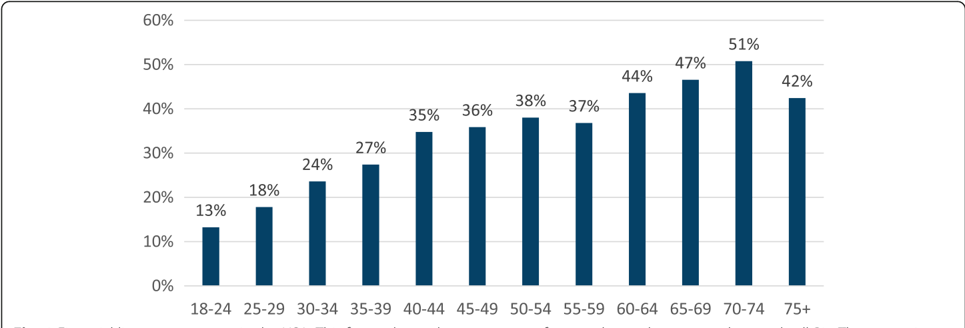
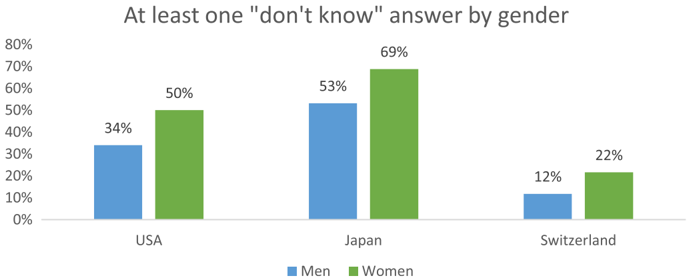
- Financial literacy is especially low among vulnerable groups: in the USA, less than 30% of respondents answered the Big Three correctly by age 40; in Switzerland, only 45% of those aged 35 or younger did so. Women were less likely than men to answer correctly across countries, and were more likely to respond “do not know.”
- The paper reports several associations: one additional correct financial literacy answer is associated with a 3–4 percentage point higher probability of retirement planning in Germany, the USA, Japan, and Sweden, and a 10 percentage point higher probability in the Netherlands; planning is associated with two to three times more wealth near retirement. The paper also states that 30–40% of U.S. retirement wealth inequality can be accounted for by differences in financial knowledge.
Methods
- This is a synthesis/keynote paper, not a new empirical study; it reviews prior survey and experimental evidence on financial literacy and financial behavior.
- It centers on the “Big Three” financial literacy measure: questions on interest compounding, inflation, and risk diversification, fielded in many surveys including the HRS, NFCS, SCF, SHED, and the FLat World project.
- Main analysis is comparative/descriptive: cross-country tables and survey results are used to compare literacy levels, identify vulnerable subgroups, and summarize associations between literacy and financial outcomes.
Limitations
- The paper explicitly notes that there are “few evaluations” of the effectiveness of financial education initiatives and says more research is urgently needed.
- The text makes evident that much of the evidence summarized is correlational rather than causal; it even notes that financial literacy “could be the result of choice and not an exogenous variable” (paper text).
- As a keynote summary, the paper does not present a single unified dataset or a new identification strategy; it aggregates evidence from many sources rather than testing one original hypothesis.
Model-written summary. Check it against the paper before relying on it.
Integrity signals
Registry
Cites
Statistics
Figures
Verification
Claims the paper makes
10 Valid · 6 Not valid · 44 Not checked · 30 Own results and interpretations
The cited sources support only part of this claim — read each source’s verdict below.
In the paper
“On average, about one third of the global population has familiarity with the basic concepts that underlie everyday financial decisions (Lusardi and Mitchell, 2011c).”
What the sources say
- Partly supportedcites Lusardi and Mitchell, 2011c matched to “Financial literacy around the world: an overview” (2011) sourceExperimental — accuracy not yet measured
The Measuring financial literacy section examines basic concepts relevant to everyday financial decisions, and the Concluding remarks report low financial literacy across eight countries. Neither section gives an estimate that about one third of the global population knows those concepts. The one-third figure in Financial literacy around the world refers instead to U.S. respondents who said they did not know how to answer a risk-diversification question. (LLM, conf=0.87)
plain- Asserted: passes — The authors put it forward as true.
- Checkable: passes — It can be checked against evidence.
- Load-bearing: passes — The paper’s conclusions depend on it.
- Based: passes — The paper gives a reason why it holds.
- Partly supported
Every source the paper cites for this claim was checked and supports it.
In the paper
“And just one third demonstrated understanding of these two concepts and answered the third question, measuring understanding of risk diversification, correctly.”
What the sources say
- Supportedcites Lusardi and Mitchell, 2011b matched to “The Outlook for Financial Literacy” (2011) source
The “Financial Literacy and Financial Decision-Making” section reports that only one-third of respondents in a survey of older Americans answered the interest-compounding, inflation, and risk-diversification questions correctly. (LLM, conf=0.94)
boosted- Asserted: passes — The authors put it forward as true.
- Checkable: passes — It can be checked against evidence.
- Load-bearing: passes — The paper’s conclusions depend on it.
- Based: passes — The paper gives a reason why it holds.
- Supported
Every source the paper cites for this claim was checked and supports it.
In the paper
“only half of older Americans -who presumably had made many financial decisions in their lives -could answer the two basic questions measuring understanding of interest rates and inflation (Lusardi and Mitchell, 2011b).”
What the sources say
- Supportedcites Lusardi and Mitchell, 2011b matched to “The Outlook for Financial Literacy” (2011) source
The “Financial Literacy and Financial Decision-Making” section (page not provided) describes a survey of older Americans and reports that only half of respondents correctly answered both questions on interest compounding and inflation. (LLM, conf=0.94)
plain- Asserted: passes — The authors put it forward as true.
- Checkable: passes — It can be checked against evidence.
- Load-bearing: passes — The paper’s conclusions depend on it.
- Based: passes — The paper gives a reason why it holds.
- Supported
Every source the paper cites for this claim was checked and supports it.
In the paper
“Financial literacy is low even in advanced economies with well-developed financial markets.”
What the sources say
- Supportedcites Lusardi and Mitchell, 2011c matched to “Financial literacy around the world: an overview” (2011) source
The Concluding remarks state that financial literacy is very low around the world regardless of financial-market development. The paper also reports widespread financial illiteracy in countries with well-developed financial markets, directly supporting the claim. (LLM, conf=0.94)
plain- Asserted: passes — The authors put it forward as true.
- Checkable: passes — It can be checked against evidence.
- Load-bearing: passes — The paper’s conclusions depend on it.
- Based: passes — The paper gives a reason why it holds.
- Supported
Every source the paper cites for this claim was checked and supports it.
In the paper
“Financial literacy is found to have the strongest impact in the Netherlands, where knowing the right answer to one additional financial literacy question is associated with a 10 percentage point higher probability of planning (Mitchell and Lusardi, 2015).”
What the sources say
- Supportedcites Mitchell and Lusardi, 2015 matched to “Financial Literacy and Economic Outcomes: Evidence and Policy Implications” (2015) source
The “Why Financial Literacy Matters” section (page not provided) states that financial literacy has its strongest impact in the Netherlands and gives the same 10-percentage-point association for one additional correct answer. (LLM, conf=0.95)
plainstates an association- Asserted: passes — The authors put it forward as true.
- Checkable: passes — It can be checked against evidence.
- Load-bearing: passes — The paper’s conclusions depend on it.
- Based: passes — The paper gives a reason why it holds.
- Supported
51 more claims · 7 with their cited sources checked
Create a free account to see all 90 claims and to verify the 3 references still open.
- It may state two separate claims as one. 24
- Probably not a substantial claim. 12
- Borderline: one of the tests for a substantial claim is unclear. 1
Claims other papers make about this one
Each is checked against this paper’s own text: does it say what the citing paper says it does?
The cited source doesn’t support the claim as written.
In the citing paper
“Previous research conducted by [33,34] shows a positive correlation between financial literacy and Fintech adoption.”
From Fintech Adoption Drivers for Innovation for SMEs in Indonesia (2022) · cites this paper as [33]
Checked by a reasoning model — may be wrong.
Experimental — accuracy not yet measuredThe cited source says what the claim attributes to it.
In the citing paper
“Understanding finance is crucial in making informed financial decisions and exhibiting sound financial behavior, as stated by Lusardi (2019).”
From Financial Literacy Among the Senior High School Students: Basis for Financial Stewardship Plan (2024) · cites this paper as Lusardi, 2019
Citations
Cites
The Economic Importance of Financial Literacy: Theory and Evidence
Lusardi, A., & Mitchell, O. S. (2014) · Journal of Economic Literature · doi:10.1257/jel.52.1.5 · Cited by 4,698 · cited 4×
“Four principles informed the design of these questions, as described in detail by Lusardi and Mitchell (2014).”
InfluentialSelf-citationFinancial literacy around the world: an overview
LUSARDI, A., & MITCHELL, O. S. (2011) · Journal of Pension Economics and Finance · doi:10.1017/s1474747211000448 · Cited by 2,000 · cited 5×
“Those interested in learning more about the differences in financial literacy across demographics and other characteristics can consult Lusardi and Mitchell (2011c, 2014).”
InfluentialSelf-citationPlanning and Financial Literacy: How Do Women Fare?
Lusardi, A., & Mitchell, O. S. (2008) · American Economic Review · doi:10.1257/aer.98.2.413 · Cited by 1,512 · cited 7×
“Empirically, planning is a very strong predictor of wealth; those who plan arrive close to retirement with two to three times the amount of wealth as those who do not plan (Lusardi and Mitchell, 2011b). Financial literacy is also associated with higher returns on investments and investment in more complex assets, such…”
BackgroundInfluentialSelf-citationDebt literacy, financial experiences, and overindebtedness
LUSARDI, A., & TUFANO, P. (2015) · Journal of Pension Economics and Finance · doi:10.1017/s1474747215000232 · Cited by 1,412 · cited 2×
“With regard to debt behavior, those who are more financially literate are less likely to have credit card debt and more likely to pay the full balance of their credit card each month rather than just paying the minimum due (Lusardi and Tufano, 2009, 2015).”
BackgroundSelf-citationFinancial Literacy and Planning: Implications for Retirement Wellbeing
Lusardi, A., & Mitchell, O. (2011) · National Bureau of Economic Research · doi:10.3386/w17078 · Cited by 1,253
Self-citationThe Economic Importance of Financial Literacy: Theory and Evidence
Lusardi, A., & Mitchell, O. (2013) · National Bureau of Economic Research · doi:10.3386/w18952 · Cited by 821
Self-citationOptimal Financial Knowledge and Wealth Inequality
Lusardi, A., Michaud, P.-C., & Mitchell, O. S. (2017) · Journal of Political Economy · doi:10.1086/690950 · Cited by 690 · cited 2×
“Programs devoted to teaching risk via, for example, visual tools have shown great promise (Lusardi et al., 2017).”
BackgroundMethodSelf-citationFinancial literacy and retirement planning in the Netherlands
van Rooij, M. C. J., Lusardi, A., & Alessie, R. J. M. (2011) · Journal of Economic Psychology · doi:10.1016/j.joep.2011.02.004 · Cited by 643
Self-citationFinancial literacy and retirement planning in Germany
BUCHER-KOENEN, T., & LUSARDI, A. (2011) · Journal of Pension Economics and Finance · doi:10.1017/s1474747211000485 · Cited by 513
Self-citationFinancial Literacy and Planning: Implications for Retirement Well-being
Lusardi, A., & Mitchell, O. S. (2011) · Financial Literacy: Implications for Retirement Security and the Financial Marketplace · doi:10.1093/acprof:oso/9780199696819.003.0002 · Cited by 505
Self-citation
Research works printed but not linked: 3
- Lusardi, A., de Bassa Scheresberg, C., and Avery, M. 2018. Millennial mobile payment users: a look into their personal finances and financial behaviors. GFLEC working paper.
- Lusardi, A., de Bassa Scheresberg, C., & Oggero, N. (2016). Student loan debt in the US: an analysis of the 2015 NFCS Data, GFLEC Policy Brief, November .
- Lusardi, A., & Tufano, P. (2009). Teach workers about the peril of debt. Harvard Business Review , 22 -24.
Cited by
Items 701–800 of 1,126
Dheepiga, S., & Kumar, N. (2024) · ShodhKosh Journal of Visual and Performing Arts · doi:10.29121/shodhkosh.v5.i1.2024.2203 · Cited by 5
Vieira, K. M., Matheis, T. K., Garcia, G. A., Klein, L. L., & de Vargas, S. G. (2024) · Revista Evidenciação Contábil & Finanças · doi:10.22478/ufpb.2318-1001.2023v11n3.60717 · Cited by 2
Breaking the Herd Leveraging Financial Mindfulness to Combat Investor Herding Behavior
Manjusha, J., & Bhooshetty, L. (2024) · Advances in marketing, customer relationship management, and e-services book series · doi:10.4018/979-8-3693-7827-4.ch003 · Cited by 1
On the mathematical content of financial literacy items
Dorner, C. (2024) · Frontiers in Education · doi:10.3389/feduc.2024.1492289 · Cited by 4
Suyanto, S. (2024) · International Journal of Business and Society · doi:10.33736/ijbs.8356.2024 · Cited by 5
“Financial literacy relates to how the ability and skills of the community in understanding the concept and financial management correctly so that they can make the right decisions related to financial planning based on current and long-term financial needs and conditions (Lusardi, 2019).”
Putri, A. R., Husna, F. K., Ismail, H., et al. (2024) · Tintamas. · doi:10.53088/tintamas.v1i3.1214 · Cited by 1
“…literasi keuangan yang baik akan mudah dalam menetapkan suatu informasi, termasuk dampak kerugian serta hak dan kewajiban dalam memanfaatkan suatu kewajiban Hal ini akan membuat seseorang tersebut lebih mengetahui pengetahuan mengenai layanan jasa keuangan (Nasution, A. W., & Fatira, 2019).”
InfluentialThe Role of Financial Literacy in Promoting Investment Behavior Among Young Adults
-, U. M. (2025) · International Journal For Multidisciplinary Research · doi:10.36948/ijfmr.2025.v07i01.35017 · Cited by 1
“Factors such as socio-economic disparities, inadequate access to financial education, and psychological biases contribute to this gap (Lusardi, 2019).”
Shuhada, N. N. (2024) · The Malaysian Journal of Qualitative Research · doi:10.61211/mjqr100204 · Cited by 7
Cryptocurrencies are here to Stay! Think you aren’t Vulnerable, Think Again
Blue, L. (2025) · International Journal of Criminology and Sociology · doi:10.6000/1929-4409.2025.14.06 · Cited by 1
Predictive Modeling for Identifying Undervalued Stocks Using Machine Learning
Sukma, N., & Namahoot, C. S. (2025) · International Journal of Information Technology & Decision Making · doi:10.1142/s0219622025500336 · Cited by 3
Cultivating Sustainable Growth and Well-Being in Digital Financial Education
Mukherjee, S., Thakur, D., Chandel, P. K., Chandra, S., & Karia, A. (2025) · IGI Global eBooks · doi:10.4018/979-8-3693-6910-4.ch014 · Cited by 1
Littératie financière : le « mauvais » genre ?
Arrondel, L. (2025) · Revue d économie financière · doi:10.3917/ecofi.157.0047 · Cited by 3
Lappay, K. T., Banu, A., Radhakrishna, H., Megha, S., Kumar, M. D., & Krupa, S. (2025) · Studies in systems, decision and control · doi:10.1007/978-3-031-86712-5_9 · Cited by 2
The Role of Positive Framing in the Future of Financial Planning
Lutter, S., Koochel, E. E., Heckman, S. J., & Collins, J. M. (2025) · Financial Planning Research Journal · doi:10.2478/fprj-2025-0005 · Cited by 2
“Thus, financial literacy includes both knowledge and behaviour (Lusardi 2019).”
Financial Literacy for Economic Empowerment: Microfinance Initiatives in Indian SHGs
Santhosh Kumar, K., & Aithal, P. S. (2024) · Poornaprajna International Journal of Teaching & Research Case Studies (PIJTRCS) · doi:10.64818/pijtrcs.3107.8494.0004 · Cited by 14
KOÇ, İ. (2024) · Journal of Finance and Bank Management · doi:10.15640/jfbm.v11p2
Benoit, K. M. (2024) · Journal of Finance and Bank Management · doi:10.15640/jfbm.v11p3
Measuring Financial Literacy of the Housewife to Generate Marketing Strategies
Eti, S., & Temizel, E. N. (2019) · Advances in marketing, customer relationship management, and e-services book series · doi:10.4018/978-1-7998-2559-3.ch001 · Cited by 2
IMPROVING FINANCIAL LITERACY OF THE CHILDREN AND TEENAGERS IN THE RUSSIAN FEDERATION
Tufetulov, A., Shavaleyeva, C. M., Sabitova, N., et al. (2019) · Gênero & Direito · doi:10.22478/ufpb.2179-7137.2019v8n6.49201 · Cited by 1
Świadomość finansowa młodych dorosłych w Polsce jako wrażliwej grupy demograficznej
Lejman-Gąska, A., & Ogórek, M. (2019) · CeON Repository (Centre for Evaluation in Education and Science) · doi:10.32078/join.33.02 · Cited by 8
Financial Literacy and Its Determinants: An Empirical Evidence from Maichew Town of Tigray
Adhana, H. N. (2020) · Cited by 1
IMPROVING FINANCIAL LITERACY OF THE POPULATION: THE YUGRA CASE
Викторовна, М. Д., Дулина, Н. В., & Сергеевна, П. Л. (2020) · Вестник Тюменского государственного университета. Социально-экономические и правовые исследования · doi:10.21684/2411-7897-2020-6-4-71-94 · Cited by 3
Sagayadoro, R. E. P. (2021) · International Journal for Research in Applied Science and Engineering Technology · doi:10.22214/ijraset.2021.32869 · Cited by 3
Financial Literacy Or Lessons For Life
Kassapi, S. (2020) · Journal of the International Academy of Case Studies · Cited by 1
Extrinsic Financial Dimensions
Purnamawati, I. G. A. (2021) · Advances in Social Science, Education and Humanities Research/Advances in social science, education and humanities research · doi:10.2991/assehr.k.210715.008 · Cited by 1
Financial Knowledge and Retirement Planning among Pension Scheme Members in Kenya
Waga, C. S., Memba, F., & Muriithi, J. (2021) · Research Journal of Finance and Accounting · doi:10.7176/rjfa/12-14-03 · Cited by 1
Developing Resilient Financial Wellbeing Among Elderly Citizens in Malaysia
Sapuan, N. M., & Basar, M. N. F. (2022) · Lecture notes in networks and systems · doi:10.1007/978-3-031-08084-5_60 · Cited by 2
Setyawan, I. R., Ramli, I., & Listyarti, I. (2023) · Journal of Economics Finance and Management Studies · doi:10.47191/jefms/v6-i3-22 · Cited by 1
Financial Well-Being of Older Adults
Luk, S. C. Y. (2023) · Springer eBooks · doi:10.1007/978-981-99-0872-1_2 · Cited by 1
Muhammad, T., Ngah, B. B., & Al-Shaghdari, F. M. O. (2022) · International Journal of Islamic Business & Management · doi:10.46281/ijibm.v6i1.1981 · Cited by 2
“Lusardi (2019) indicate that a lack of understanding and awareness of financial services and products are caused by low financial literacy, which also leads to financial exclusion.”
BackgroundTHE FACTORS OF SUBJECTIVE FINANCIAL WELL-BEING OF PUBLIC HEALTH SERVANTS
Nadzri, E. N., & Yaacob, Z. (2020) · Labuan e-Journal of Muamalat and Society (LJMS) · doi:10.51200/ljms.v14i.2864 · Cited by 1
“Thus, an individual’s financial literacy has a significant impact on one’s financial well-being through right decisions on savings, borrowing, investments, and debt management (Lusardi, 2019).”
BackgroundInfluentialEFFECTIVENESS OF GUTTER FUND-BASED BOS FUNDS UTILIZATION AT PUBLIC ELEMENTARY SCHOOL 2 BUDIASIH
Sundari, E. E., Sianturi, R., Husniyyah, S. C., Sudiana, D., & Ul, N. (2023) · Jurnal Cakrawala Pendas · doi:10.31949/jcp.v9i2.4764 · Cited by 2
Permana, A. H., Pohan, E. R., & Ananda, Y. Y. (2022) · Syntax Idea · doi:10.46799/syntax-idea.v4i2.1768 · Cited by 1
Effectiveness Of Utilization Of Gutter Fund-Based Bos Funds At Public Elementary School 2 Budiasih
Sundari, E. E., Sianturi, R., Husniyyah, S. C., et al. (2023) · NATURALISTIC Jurnal Kajian Penelitian Pendidikan dan Pembelajaran · doi:10.35568/naturalistic.v8i1.4091 · Cited by 1
Financial Literacy Operationalization Model For Agribusiness Entrepreneurs In Zimbabwe
Gumbo, L., Marimuthu, F., & Vengesai, E. (2023) · Issues in Social and Environmental Accounting · doi:10.7176/isea/s2-08 · Cited by 1
Peran Koperasi Kredit Indonesia Terhadap Penguatan Literasi Keuangan dan Perbaikan Perilaku Keuangan
Lupiana, F., & Purwanti, A. E. (2023) · Jurnal Ilmiah Manajemen Ekonomi dan Bisnis · doi:10.51903/jimeb.v2i2.602 · Cited by 5
Faison, A. D. (2019) · Arizona State University Library Digital Repository (Arizona State University) · Cited by 7
Women and Finance-Specific Human Capital: Impact of Gender Role AttitudesPreprint
Smith, B., & Finke, M. S. (2021) · SSRN Electronic Journal · doi:10.2139/ssrn.3937669 · Cited by 1
7th ERAZ Conference Proceedings (part of ERAZ conference collection)
(2021) · International Scientific Conference ERAZ. Knowledge Based Sustainable Development · doi:10.31410/eraz.2021 · Cited by 4
Impact of Financial Literacy on Financial Capability: Evidence from Urban Working Women in RajasthanPreprint
Bhargava, M., Mohanty, B., Tak, K., & Aashima, A. (2022) · SSRN Electronic Journal · doi:10.2139/ssrn.4171587 · Cited by 8
Robo-Advice: The Digitalization and Automation of Financial Advice
Torno, A. (2022) · eDiss (Georg-August-Universität Göttingen) · doi:10.53846/goediss-9460 · Cited by 1
Ків, А. Ю., Semerikov, S. O., Соловйов, В. М., & Стрюк, А. М. (2022) · doi:10.31812/123456789/6983 · Cited by 1
Spotlight on Financial Skills for the Youth
Noora, R. F. N., & Leponiemi, L. (2019) · doi:10.58261/fsow9924 · Cited by 1
Improving the Effectiveness of Financial Education Programs. A Targeting ApproachPreprint
D’Ignazio, A., & Buratti, G. (2023) · SSRN Electronic Journal · doi:10.2139/ssrn.4464159 · Cited by 1
Exploring Financial Instability in America through the Lens of Financial EducationPreprint
Mousseau, B. M., Oztanriseven, F., & Kilinc, M. K. (2023) · Research Square · doi:10.21203/rs.3.rs-3011026/v1 · Cited by 2
Financial Literacy of the Residents of Barangay Baclaran, Balayan, BatangasPreprint
Macatangay, L. (2023) · SSRN Electronic Journal · doi:10.2139/ssrn.4477029 · Cited by 1
Financial literacy in Bosnia and Herzegovina
Smolo, E., & Knezović, E. (2023) · Context Journal of Interdisciplinary Studies · doi:10.55425/23036966.2023.10.1.103 · Cited by 1
Job Stability and Household Financial Vulnerability: Evidence from Field Surveys in ChinaPreprint
Wu, K., & Wan, S. (2023) · SSRN Electronic Journal · doi:10.2139/ssrn.4618175 · Cited by 1
Beyond 'Do Not Know': A Fresh Analytical Lens on Gender and Financial LiteracyPreprint
Conte, A., Paiardini, P., & Temperini, J. (2024) · SSRN Electronic Journal · doi:10.2139/ssrn.4706434 · Cited by 1
Naima, U. (2024) · Queensland University of Technology · doi:10.5204/thesis.eprints.247171 · Cited by 6
Financial Skills and Search in the Mortgage MarketPreprint
Cota, M., & Šterc, A. (2024) · SSRN Electronic Journal · doi:10.2139/ssrn.4787496 · Cited by 2
Recommendations for Increased Financial Literacy in American High SchoolsPreprint
Karim, A., Tan, S., Ding, S., Sun, H., Zeng, J., Mukund, V., & Zhou, B. (2024) · SSRN Electronic Journal · doi:10.2139/ssrn.4795120 · Cited by 1
Influence of Financial Literacy on Retail Investment Decision-making in GhanaPreprint
Mensah, M. A., Amponsah, E. B., & Adjei, L. N. (2025) · Research Square · doi:10.21203/rs.3.rs-6997734/v1 · Cited by 2
Análise do Discurso Ecológica (ADE) - 2015
Oliveira, H. G. (2015) · LA Referencia (Red Federada de Repositorios Institucionales de Publicaciones Científicas)
A review of gender differences in retirement income
Huang, Y., & Curtin, J. S. (2019)
Mahphoth, M. H., & Sulaiman, Z. (2021) · Jurisdictie Jurnal Hukum dan Syariah · doi:10.18860/j.v11i2.10864
Majewski, P. (2020) · Ubezpieczenia Społeczne Teoria i praktyka · doi:10.32088/0000_33
Debt and Stress Amongst Orthodontic Residents
Renison, T. (2021) · Scholarship@Western (Western University)
Mahphoth, M. H., Ismail, S. B., Abidin, M. A. Z., Kamis, R., Koe, W.-L., & Dirgantari, P. D. (2021) · International Conference on Economics, Business and Economic Education Science (ICE-BEES) · doi:10.4108/eai.22-7-2020.2307919
“They have the unique opportunity to deliver financial education in a historical context [2], stressing money growth in culture, diverse cultural connections to the money and its role in the formation and dissolution of institutions.”
BackgroundSeshanna, M., Hemanth Kumar, S., Seshanna, S. V., et al. (2021) · Turkish Online Journal of Qualitative Inquiry
Financial Knowledge and Consumer Saving Behaviors: Evidence from the USA
Chen, F., & Meng, L. (2021) · South Asian Journal of Social Studies and Economics · doi:10.9734/sajsse/2021/v12i230301
“Currently, financial knowledge should be viewed as equally important as basic literacy, otherwise, individuals and societies will not reach their full potential [2].”
BackgroundInfluentialTHE INFLUENCE OF FINANCIAL LITERACY ON WOMEN’S WEALTH IN BANDUNG, WEST JAVA
Ayasha, N. A., & Rahadi, R. A. (2021) · Advanced International Journal of Banking Accounting and Finance · doi:10.35631/aijbaf.38002
Jepnyango, G., & Cheboi, S. T. (2021) · European Journal of Education Studies · doi:10.46827/ejes.v8i11.3998
“However, the rising cost of education amid other challenges has affected achievement of education in many societies (Lusardi, 2019).”
BackgroundBridging the Gaps between Financial Learning and Financial Security: A Conceptual Approach
Panda, S., & Mohanty, D. (2021) · Siddhant- A Journal of Decision Making · doi:10.5958/2231-0657.2021.00008.2 · Cited by 1
Improving Youth Financial Literacy: A Profile of Middle School Camp Attendees
Byram, J. L., Grable, J. E., White, K. J., et al. (2021) · Journal of Extension · doi:10.34068/joe.59.04.02
“These same forces can place young people in danger of being taken advantage of through marketplace asymmetry and sophisticated marketing tactics (LeBaron et al., 2020; Lusardi, 2019).”
BackgroundStructural Modeling of Financial Literacy for Women of MSME Pacitan and Tangerang
Setyawan, I. R., Ramli, I., & Listyarti, I. (2021) · Budapest International Research and Critics Institute (BIRCI-Journal): Humanities and Social Sciences · doi:10.33258/birci.v4i4.2721
“(2018) and Lusardi (2019).”
ResultInfluentialJulianti, B. (2021) · International Journal of Current Science Research and Review · doi:10.47191/ijcsrr/v4-i12-09
The Inequality of FinancePreprint
Adams, R. B., & Xu, J. (2022) · SSRN Electronic Journal · doi:10.2139/ssrn.3998218
Das, J. K., & Banik, P. (2020) · Research Bulletin · doi:10.33516/rb.v45i3-4.54-71p
Siskawati, E., YULIA, M., & Zahara, Z. (2022) · International Journal of Environmental Sustainability and Social Science · doi:10.38142/ijesss.v2i3.112
The Financial Education: Part of CSR, of Financial Institutions, and Public Authorities
(2021) · Advances in business strategy and competitive advantage book series · doi:10.4018/978-1-7998-3988-0.ch006
(2020) · International Journal of Community and Cooperative Studies · doi:10.37745/ijccs.vol8.no1.p9-22.2020 · Cited by 6
Horváth, D. (2022) · CUB Ph.D. Dissertations (Corvinus University of Budapest) · doi:10.14267/phd.2022021
Behavioral Barriers to Mortgage: How Satisfied are You with Your Home Loan?Preprint
Kim, I. (2022) · SSRN Electronic Journal · doi:10.2139/ssrn.4071670
Kearifan Lokal dan Finansial Masyarakat Temon Sesudah Pembebasan Lahan YIA
Sedjati, C. T. F., Alimah, Q. L., Hartono, L. G. M., et al. (2021) · Jurnal Pemikiran Sosiologi · doi:10.22146/jps.v8i1.69249
A multi-method approach on sustainability consciousness and discount rates
Pestilho, G. D. S. (2022) · Digital Library of Theses and Dissertations (Universidade de São Paulo) · doi:10.11606/d.96.2022.tde-11052022-085312
“Even though financial education is more widely available than ever before (Lusardi, 2019), we still have to look for individuals with basic financial literacy in order to be able to take the appraised discount rates into account.”
BackgroundProcess of cadets’ economic culture development in higher military educational institutions
Shcherbakova, A. I. (2022) · Vestnik of Samara State Technical University Psychological and Pedagogical Sciences · doi:10.17673/vsgtu-pps.2022.2.4
“Лусарди: по мнению автора, финансовая грамотность — это не только зна ниевая категория, но и категория, характеризующая финансовое поведение, от которой напрямую зависит уровень благосостояния и общества в целом, и каждого гражданина персонально [3]; – экономическая компетенция и экономическая компетентность.”
The Effect of Fast Loans on Financial Resilience-Building Behaviors and Mental Well-Being
Ortiz, J. S., & Hardoon, D. R. (2022) · Springer eBooks · doi:10.1007/978-981-19-5086-5_3 · Cited by 3
Challenge Based Learning in Finance
Lakshmi, G., Quach, H., & Goggin, S. (2022) · Emerald Group Publishing Limited eBooks · doi:10.1108/978-1-80117-490-920221006
Factors that influence Malaysian-based financial literacy model among teenagers
Yin, K. Y., Yusof, R., & Wei, C. Y. (2022) · International Journal of Evaluation and Research in Education (IJERE) · doi:10.11591/ijere.v11i3.22622
Relationship between Attitude and Practices on Pre-Retirement Planning
Galeno, P. P., Galilea, L. C. G., & Divinagracia, L. S. (2022) · Asian Journal of Research in Business and Management · doi:10.55057/ajrbm.2022.4.2.5
Effect of Personality Traits on Investment Intention of People: Kazakhstan Case
Sadykov, O. (2022) · International Journal of Business and Management (IJBM) · doi:10.56879/ijbm.v1i1.2 · Cited by 2
“Moreover, the financial literacy, as well as experience and skills of investors play on of the important role in investment decisions (Lusardi, 2019; Jonsson et al., 2017; Cupak et al., 2018;).”
BackgroundFinancial Literacy: A Bibliometric Analysis for the Period of 1990-2021
Alsmadi, A. A. (2022) · International Journal of New Trends in Social Sciences · doi:10.18844/ijss.v6i1.7469 · Cited by 8
“Van Rooij, Lusardi, and Alessie (2011) Financial literacy and stock market participation Journal of Financial Economics This paper found that the majority of respondents display basic financial knowledge and have some grasp of concepts such as interest compounding, inflation and the time value of money.”
BackgroundMas’ud, R. (2022) · SSRN Electronic Journal · doi:10.2139/ssrn.4196853 · Cited by 1
Legenzova, R., Leckė, G., & Gaigalienė, A. (2022) · Research Square · doi:10.21203/rs.3.rs-2115489/v1
An investigation on the financial literacy of accounting students in Indonesia
Oktaviani, N. L., Herdiani, A., Sulikah, S., & Dellar, G. B. (2022) · Routledge eBooks · doi:10.1201/9781003303336-26
Impact of Economic Variables on Retirement Planning of Salaried Employees
Mittal, G., & Gupta, P. (2022) · Journal of Social Commerce · doi:10.56209/jommerce.v2i4.40 · Cited by 3
Kusumawati, R., Akmalia, A., & Wardana, C. K. (2022) · Journal Of World Science · doi:10.58344/jws.v1i5.31
Financial Literacy in a Buddhist Monastic SettingPreprint
Hecht, A. (2022) · SSRN Electronic Journal · doi:10.2139/ssrn.4228569
Financial Education in School of Business Students: Case Study from Veracruz, Mexico
(2022) · European Journal of Contemporary Education · doi:10.13187/ejced.2022.4.1164
Gender differences in financial literacy and investment in SPSS
(2019) · doi:10.46632/rmc/1/2/11 · Cited by 1
Financial Capability and Financial Well-Being for a Sustainable Society
Kandpal, V., Chandra, D., Dalei, N. N., & Handoo, J. (2023) · Circular economy and sustainability · doi:10.1007/978-3-031-22723-3_5
Zonienė, A., & Židonienė, R. (2023) · Regional Formation and Development Studies · doi:10.15181/rfds.v36i1.2515
Strategy for improving financial literacy in Russia
Ivanova, O. A. (2022) · Drukerovskij vestnik · doi:10.17213/2312-6469-2022-6-23-40
Ambiente Institucional Consumerista-Financeiro no Brasil: o Banco Central e sua relação com o SNDC
Carvalho, R. V. C. D. S. E. (2022) · Revista da Procuradoria-Geral do Banco Central · doi:10.58766/rpgbcb.v16i1.1157
Comparison of Financial Literacy in Different Countries
Adiandari, A. M., & Fitriandari, M. (2023) · International Journal of Scientific Research in Science and Technology · doi:10.32628/ijsrst229687 · Cited by 1
Does Financial Literacy Progress Over Time? An Analysis of Three Surveys in Italy
Bongini, P. A., Cucinelli, D., & Zenga, M. (2023) · Palgrave Macmillan studies in banking and financial institutions · doi:10.1007/978-3-031-24876-4_7
Focus Group Discussion on Finance Literacy of Village- Owned Enterprises
Sujianto, A. E., Sukarji, S., & Zuhri, Z. (2023) · Saudi Journal of Economics and Finance · doi:10.36348/sjef.2023.v07i04.001
Metadata
- Authors
- Lusardi, A.
- Affiliations
- George Washington University (US)
- Corresponding author
- Lusardi, Annamaria
- ORCID
- Lusardi, Annamaria
- Venue
- Swiss Journal of Economics and Statistics
- Published
- 2019-01-24
- Volume
- 155
- Issue
- 1
- ISSN
- 0303-9692 (ISSN-L)
- 2235-6282
- OpenAlex
- W2911554037
- Semantic Scholar
- 045054f8e699ce8552fb34c500cb52d9b8d31d5f
- Cited by
- 1,135
- References
- 39
- Citations by year
- 2026: 142 · 2025: 218 · 2024: 233 · 2023: 245 · 2022: 147 · 2021: 75 · 2020: 64 · 2019: 9
- FWCI
- 187.87
- Type
- journal article
- Language
- en
- Open access
- diamond
- doi.org
- Licence
- cc-by
- creativecommons.org/licenses/by/4.0 (tdm)
- Locations
- Zeitschrift für schweizerische Statistik und Volkswirtschaft/Schweizerische Zeitschrift für Volkswirtschaft und Statistik/Swiss journal of economics and statistics (publishedVersion, cc-by)
- RePEc: Research Papers in Economics (submittedVersion)
- DOAJ (DOAJ: Directory of Open Access Journals) (submittedVersion)
- Econstor (Econstor) (submittedVersion, cc-by)
- Topics
- Social Sciences › Economics, Econometrics and Finance › Finance › Financial Literacy, Pension, Retirement Analysis
- Social Sciences › Business, Management and Accounting › Accounting › Financial Literacy and Behavior
- Social Sciences › Decision Sciences › General Decision Sciences › Decision-Making and Behavioral Economics
- Keywords
- financial literacy, financial education
About these checks
Registry, retraction, Cites and statistics results are computed, not judged, with one exception: a printed reference that no index lists is read once by a model before it counts as a citation error. Claims are extracted by a model and kept only when their quote appears verbatim in the text; each cited source is then checked, with a model’s help, for whether it says what the claim relies on. Those verdicts can be wrong — read the claim’s quote and the cited source before relying on one.
The claim verdicts this report counts are experimental: their accuracy is not yet measured.
A language model drew the claims from the paper on 2026-10-10, under version 3 of the claim definition (model deepseek-v4.1-flash, prompt extract-v3).
A second model labelled each claim on 2026-10-10 (model jev-1.13-20260917, definition revision gold-guideline-v0.2).
Cited sources are checked with a language model’s help (gpt-6-sol).
Statistics and arithmetic are recomputed, not judged.
Confidence bands are shown only for fields calibrated on our annotated test set. None is calibrated yet, so no band is shown.
What counts as a claim ›How we measure confidence ›How we check this ›
Are you an author, or do you see a problem with this page? Request a review
Data sources
Bibliographic data: Semantic Scholar, OpenAlex, Crossref.
Contains information from the Semantic Scholar Academic Graph Datasets, made available under the ODC Attribution License (ODC-BY 1.0).
Semantic Scholar’s data is described in: Kinney, R., et al. (2023). The Semantic Scholar Open Data Platform. arXiv:2301.10140.
