

Financial literacy and the need for financial education: evidence and implications
Open accessThe DOI matches its Crossref record; 47 of the 47 references it cites were found in a registry or an index; 13 of the 58 sources its claims cite were checked for support.
Abstract
This paper represents a summary of the keynote address I gave to the 2018 Annual Meeting of the Swiss Society of Economics and Statistics. I would like to thank Monika Butler, Rafael Lalive, anonymous reviewers
Overview
CoChat Summary
TL;DR
This keynote-style paper argues that financial literacy is low across countries and population groups, and that the “Big Three” questions are a practical way to measure it. It synthesizes evidence showing that financial literacy is linked to better saving, retirement planning, debt behavior, and resilience, and calls for large-scale, targeted financial education.
Key findings
- In the U.S. 2004 HRS, only about half of older Americans answered the two basic interest/inflation questions correctly, and only one third answered all three “Big Three” questions correctly.
- In the FLat World project (15 countries), the average share answering all three questions correctly was about 30%, and only around 50% in most countries answered the interest-rate and inflation questions correctly.
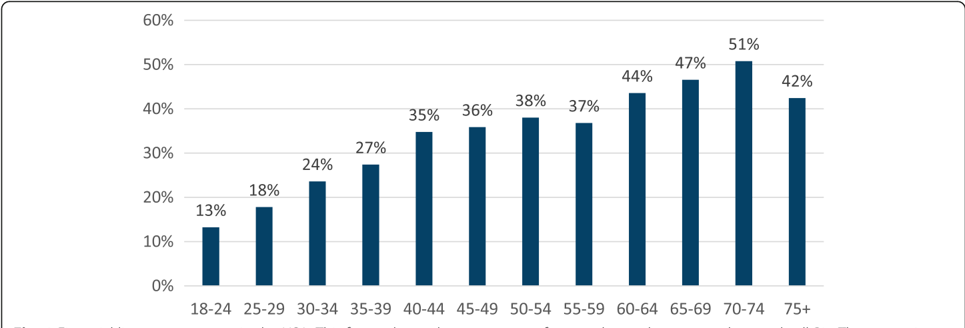
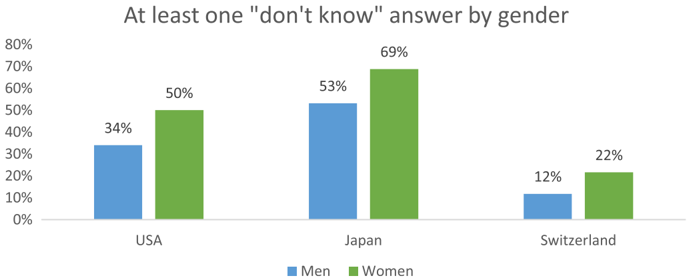
- Financial literacy is especially low among vulnerable groups: in the USA, less than 30% of respondents answered the Big Three correctly by age 40; in Switzerland, only 45% of those aged 35 or younger did so. Women were less likely than men to answer correctly across countries, and were more likely to respond “do not know.”
- The paper reports several associations: one additional correct financial literacy answer is associated with a 3–4 percentage point higher probability of retirement planning in Germany, the USA, Japan, and Sweden, and a 10 percentage point higher probability in the Netherlands; planning is associated with two to three times more wealth near retirement. The paper also states that 30–40% of U.S. retirement wealth inequality can be accounted for by differences in financial knowledge.
Methods
- This is a synthesis/keynote paper, not a new empirical study; it reviews prior survey and experimental evidence on financial literacy and financial behavior.
- It centers on the “Big Three” financial literacy measure: questions on interest compounding, inflation, and risk diversification, fielded in many surveys including the HRS, NFCS, SCF, SHED, and the FLat World project.
- Main analysis is comparative/descriptive: cross-country tables and survey results are used to compare literacy levels, identify vulnerable subgroups, and summarize associations between literacy and financial outcomes.
Limitations
- The paper explicitly notes that there are “few evaluations” of the effectiveness of financial education initiatives and says more research is urgently needed.
- The text makes evident that much of the evidence summarized is correlational rather than causal; it even notes that financial literacy “could be the result of choice and not an exogenous variable” (paper text).
- As a keynote summary, the paper does not present a single unified dataset or a new identification strategy; it aggregates evidence from many sources rather than testing one original hypothesis.
Model-written summary. Check it against the paper before relying on it.
Integrity signals
Registry
Cites
Statistics
Figures
Verification
Claims the paper makes
10 Valid · 6 Not valid · 44 Not checked · 30 Own results and interpretations
The cited sources support only part of this claim — read each source’s verdict below.
In the paper
“On average, about one third of the global population has familiarity with the basic concepts that underlie everyday financial decisions (Lusardi and Mitchell, 2011c).”
What the sources say
- Partly supportedcites Lusardi and Mitchell, 2011c matched to “Financial literacy around the world: an overview” (2011) sourceExperimental — accuracy not yet measured
The Measuring financial literacy section examines basic concepts relevant to everyday financial decisions, and the Concluding remarks report low financial literacy across eight countries. Neither section gives an estimate that about one third of the global population knows those concepts. The one-third figure in Financial literacy around the world refers instead to U.S. respondents who said they did not know how to answer a risk-diversification question. (LLM, conf=0.87)
plain- Asserted: passes — The authors put it forward as true.
- Checkable: passes — It can be checked against evidence.
- Load-bearing: passes — The paper’s conclusions depend on it.
- Based: passes — The paper gives a reason why it holds.
- Partly supported
Every source the paper cites for this claim was checked and supports it.
In the paper
“And just one third demonstrated understanding of these two concepts and answered the third question, measuring understanding of risk diversification, correctly.”
What the sources say
- Supportedcites Lusardi and Mitchell, 2011b matched to “The Outlook for Financial Literacy” (2011) source
The “Financial Literacy and Financial Decision-Making” section reports that only one-third of respondents in a survey of older Americans answered the interest-compounding, inflation, and risk-diversification questions correctly. (LLM, conf=0.94)
boosted- Asserted: passes — The authors put it forward as true.
- Checkable: passes — It can be checked against evidence.
- Load-bearing: passes — The paper’s conclusions depend on it.
- Based: passes — The paper gives a reason why it holds.
- Supported
Every source the paper cites for this claim was checked and supports it.
In the paper
“only half of older Americans -who presumably had made many financial decisions in their lives -could answer the two basic questions measuring understanding of interest rates and inflation (Lusardi and Mitchell, 2011b).”
What the sources say
- Supportedcites Lusardi and Mitchell, 2011b matched to “The Outlook for Financial Literacy” (2011) source
The “Financial Literacy and Financial Decision-Making” section (page not provided) describes a survey of older Americans and reports that only half of respondents correctly answered both questions on interest compounding and inflation. (LLM, conf=0.94)
plain- Asserted: passes — The authors put it forward as true.
- Checkable: passes — It can be checked against evidence.
- Load-bearing: passes — The paper’s conclusions depend on it.
- Based: passes — The paper gives a reason why it holds.
- Supported
Every source the paper cites for this claim was checked and supports it.
In the paper
“Financial literacy is low even in advanced economies with well-developed financial markets.”
What the sources say
- Supportedcites Lusardi and Mitchell, 2011c matched to “Financial literacy around the world: an overview” (2011) source
The Concluding remarks state that financial literacy is very low around the world regardless of financial-market development. The paper also reports widespread financial illiteracy in countries with well-developed financial markets, directly supporting the claim. (LLM, conf=0.94)
plain- Asserted: passes — The authors put it forward as true.
- Checkable: passes — It can be checked against evidence.
- Load-bearing: passes — The paper’s conclusions depend on it.
- Based: passes — The paper gives a reason why it holds.
- Supported
Every source the paper cites for this claim was checked and supports it.
In the paper
“Financial literacy is found to have the strongest impact in the Netherlands, where knowing the right answer to one additional financial literacy question is associated with a 10 percentage point higher probability of planning (Mitchell and Lusardi, 2015).”
What the sources say
- Supportedcites Mitchell and Lusardi, 2015 matched to “Financial Literacy and Economic Outcomes: Evidence and Policy Implications” (2015) source
The “Why Financial Literacy Matters” section (page not provided) states that financial literacy has its strongest impact in the Netherlands and gives the same 10-percentage-point association for one additional correct answer. (LLM, conf=0.95)
plainstates an association- Asserted: passes — The authors put it forward as true.
- Checkable: passes — It can be checked against evidence.
- Load-bearing: passes — The paper’s conclusions depend on it.
- Based: passes — The paper gives a reason why it holds.
- Supported
51 more claims · 7 with their cited sources checked
Create a free account to see all 90 claims and to verify the 3 references still open.
- It may state two separate claims as one. 24
- Probably not a substantial claim. 12
- Borderline: one of the tests for a substantial claim is unclear. 1
Claims other papers make about this one
Each is checked against this paper’s own text: does it say what the citing paper says it does?
The cited source doesn’t support the claim as written.
In the citing paper
“Previous research conducted by [33,34] shows a positive correlation between financial literacy and Fintech adoption.”
From Fintech Adoption Drivers for Innovation for SMEs in Indonesia (2022) · cites this paper as [33]
Checked by a reasoning model — may be wrong.
Experimental — accuracy not yet measuredThe cited source says what the claim attributes to it.
In the citing paper
“Understanding finance is crucial in making informed financial decisions and exhibiting sound financial behavior, as stated by Lusardi (2019).”
From Financial Literacy Among the Senior High School Students: Basis for Financial Stewardship Plan (2024) · cites this paper as Lusardi, 2019
Citations
Cites
The Economic Importance of Financial Literacy: Theory and Evidence
Lusardi, A., & Mitchell, O. S. (2014) · Journal of Economic Literature · doi:10.1257/jel.52.1.5 · Cited by 4,698 · cited 4×
“Four principles informed the design of these questions, as described in detail by Lusardi and Mitchell (2014).”
InfluentialSelf-citationFinancial literacy around the world: an overview
LUSARDI, A., & MITCHELL, O. S. (2011) · Journal of Pension Economics and Finance · doi:10.1017/s1474747211000448 · Cited by 2,000 · cited 5×
“Those interested in learning more about the differences in financial literacy across demographics and other characteristics can consult Lusardi and Mitchell (2011c, 2014).”
InfluentialSelf-citationPlanning and Financial Literacy: How Do Women Fare?
Lusardi, A., & Mitchell, O. S. (2008) · American Economic Review · doi:10.1257/aer.98.2.413 · Cited by 1,512 · cited 7×
“Empirically, planning is a very strong predictor of wealth; those who plan arrive close to retirement with two to three times the amount of wealth as those who do not plan (Lusardi and Mitchell, 2011b). Financial literacy is also associated with higher returns on investments and investment in more complex assets, such…”
BackgroundInfluentialSelf-citationDebt literacy, financial experiences, and overindebtedness
LUSARDI, A., & TUFANO, P. (2015) · Journal of Pension Economics and Finance · doi:10.1017/s1474747215000232 · Cited by 1,412 · cited 2×
“With regard to debt behavior, those who are more financially literate are less likely to have credit card debt and more likely to pay the full balance of their credit card each month rather than just paying the minimum due (Lusardi and Tufano, 2009, 2015).”
BackgroundSelf-citationFinancial Literacy and Planning: Implications for Retirement Wellbeing
Lusardi, A., & Mitchell, O. (2011) · National Bureau of Economic Research · doi:10.3386/w17078 · Cited by 1,253
Self-citationThe Economic Importance of Financial Literacy: Theory and Evidence
Lusardi, A., & Mitchell, O. (2013) · National Bureau of Economic Research · doi:10.3386/w18952 · Cited by 821
Self-citationOptimal Financial Knowledge and Wealth Inequality
Lusardi, A., Michaud, P.-C., & Mitchell, O. S. (2017) · Journal of Political Economy · doi:10.1086/690950 · Cited by 690 · cited 2×
“Programs devoted to teaching risk via, for example, visual tools have shown great promise (Lusardi et al., 2017).”
BackgroundMethodSelf-citationFinancial literacy and retirement planning in the Netherlands
van Rooij, M. C. J., Lusardi, A., & Alessie, R. J. M. (2011) · Journal of Economic Psychology · doi:10.1016/j.joep.2011.02.004 · Cited by 643
Self-citationFinancial literacy and retirement planning in Germany
BUCHER-KOENEN, T., & LUSARDI, A. (2011) · Journal of Pension Economics and Finance · doi:10.1017/s1474747211000485 · Cited by 513
Self-citationFinancial Literacy and Planning: Implications for Retirement Well-being
Lusardi, A., & Mitchell, O. S. (2011) · Financial Literacy: Implications for Retirement Security and the Financial Marketplace · doi:10.1093/acprof:oso/9780199696819.003.0002 · Cited by 505
Self-citation
Research works printed but not linked: 3
- Lusardi, A., de Bassa Scheresberg, C., and Avery, M. 2018. Millennial mobile payment users: a look into their personal finances and financial behaviors. GFLEC working paper.
- Lusardi, A., de Bassa Scheresberg, C., & Oggero, N. (2016). Student loan debt in the US: an analysis of the 2015 NFCS Data, GFLEC Policy Brief, November .
- Lusardi, A., & Tufano, P. (2009). Teach workers about the peril of debt. Harvard Business Review , 22 -24.
Cited by
Items 201–300 of 1,126
Brahmana, R. K., & Kontesa, M. (2025) · Information Technology and People · doi:10.1108/itp-05-2023-0445 · Cited by 10
Platz, L., & Zauner, M. (2025) · Education Sciences · doi:10.3390/educsci15020227 · Cited by 24
Goswami, D., Verma, B., Sinha, S. K., & Mittal, A. (2025) · Journal of Internet Commerce · doi:10.1080/15332861.2025.2546494 · Cited by 15
“This study used a single cross-sectional research design to collect data from young investors in India, selected due to their relatively inexperienced dates in financial decision-making (Lusardi 2019).”
Investment behaviour in mutual funds: is it a knowledge-based decision?
Nicolescu, L., & Tudorache, F. G. (2020) · Kybernetes · doi:10.1108/k-03-2020-0124 · Cited by 18
Financial Literacy among the Youth in Switzerland
Kendzia, M. J., & Borrero, Y. S. (2022) · Journal of Financial Risk Management · doi:10.4236/jfrm.2022.112017 · Cited by 16
“Source: Hasler & Lusardi (2017). Note: With kind permission for publication from the author Annamaria Lusardi.”
BackgroundInfluentialAbitoye, O., Onunka, T., Oriji, O., et al. (2023) · International Journal of Management & Entrepreneurship Research · doi:10.51594/ijmer.v5i12.623 · Cited by 10
Chidembo, R., Francis, J., & Kativhu, S. (2023) · Social Sciences & Humanities Open · doi:10.1016/j.ssaho.2023.100754 · Cited by 19
Cryptocurrencies: Who is vulnerable and what are the vulnerabilities?
Blue, L., Xing, C., & Phạm, T. T. (2024) · Australian Journal of Social Issues · doi:10.1002/ajs4.351 · Cited by 10
Factors Influencing Stock Market Participation: A Review
Parvin, S. M. R., & Panakaje, N. (2022) · International Journal of Case Studies in Business IT and Education · doi:10.47992/ijcsbe.2581.6942.0236 · Cited by 22
Saed, H., Manzli, Y. S., Jeribi, A., & Alnafisah, H. (2025) · Scientific Reports · doi:10.1038/s41598-025-12608-0 · Cited by 12
“Similarly 81 , found that individuals with high cryptocurrency literacy make more informed decisions regarding usage, while 79 reported that limited literacy leads to weaker decision-making in this area.”
Cash or m-Payment? The Dilemma of Payment Behaviour During the COVID-19 Pandemic
Graziano, E. A., Leonelli, L., Petroccione, G., & Stella, G. P. (2023) · Global Business Review · doi:10.1177/09721509231209111 · Cited by 11
Bongomin, G. O. C., Yourougou, P., Balinda, R., & Lubega, J. B. Y. (2024) · Journal of Financial Regulation and Compliance · doi:10.1108/jfrc-07-2023-0109 · Cited by 13
Improving the effectiveness of financial education programs. A targeting approach
Buratti, G., & D’Ignazio, A. (2024) · Journal of Consumer Affairs · doi:10.1111/joca.12577 · Cited by 14
Financial Literacy: A Case Study for Portugal
Almeida, L., Chanoca, J., & Tavares, F. O. (2024) · Journal of risk and financial management · doi:10.3390/jrfm17050215 · Cited by 23
“The authors concluded that fi nancial knowledge was not dependent on the area of study, corroborating the evidence found by Lusardi (2019) that increasing fi nancial knowledge is only achieved through systematic and methodical fi nancial education.”
BackgroundMethodResultInfluentialYordudom, T., Imjai, N., Usman, B., & Aujirapongpan, S. (2024) · Social Sciences & Humanities Open · doi:10.1016/j.ssaho.2024.101012 · Cited by 14
Financial Literacy for the Future: Preparing Individuals for Economic Success
Amirtha, R. (2024) · Recent Research Reviews Journal · doi:10.36548/rrrj.2024.2.006 · Cited by 27
Investment scams: the effect of bias-induced gullibility on victimization propensity
Ahmad, Z. (2025) · Crime Law and Social Change · doi:10.1007/s10611-024-10187-1 · Cited by 22
“Financial literacy has been widely recognized as a vital indicator of an individual’s ability to make personal financial decisions (Gui et al., 2021; Lusardi, 2019; Huang, 2016; Tan et al., 2011).”
García-Santıllán, A., Zamora-Lobato, T., Tejada-Peña, E., & Valencia-Márquez, L. (2025) · Journal of risk and financial management · doi:10.3390/jrfm18030151 · Cited by 37
Modeling Investment Decisions Through Decision Tree Regression—A Behavioral Finance Theory Approach
Rad, D., Cuc, L. D., Croitoru, G., Gomoi, B. C., Mazuru, L. I., Bilți, R. S., Rusu, S., Sinaci, M., & Barbu, F. S. (2025) · Electronics · doi:10.3390/electronics14081505 · Cited by 22
The FinTech adoption in rural areas of Pakistan: an application of SEM and ANN approach
Hidayat-ur-Rehman, I., Alam, M. N., Bhuiyan, A. B., & Zulkifli, N. (2025) · Asia-Pacific Journal of Business Administration · doi:10.1108/apjba-02-2024-0111 · Cited by 29
Mohanta, G., & Dash, A. (2022) · Cogent Economics & Finance · doi:10.1080/23322039.2022.2131230 · Cited by 12
“…(2011) in India, Miriam et al. (2013) in Brazil, Mahdzan and Tabiani (2013) in Malaysia, Tullio and Padula (2013) in 11 countries of Europe, Lusardi (2019) in the USA, Conrad and Mutsonziwa (2017) in Zimbabwe, and Morgan and Long (2020) in Laos have studied the impact of financial literacy…”
BackgroundKraitzek, A., & Förster, M. (2023) · Journal of risk and financial management · doi:10.3390/jrfm16040223 · Cited by 22
FINANCIAL EDUCATION AS A TOOL FOR FINANCIAL DEVELOPMENT
NICOLĂESCU, V. G., & Toderaşcu, C. (2023) · Journal of Public Administration Finance and Law · doi:10.47743/jopafl-2023-27-24 · Cited by 9
Andriani, W., Ananto, R. P., Zahara, Z., et al. (2023) · Ilomata International Journal of Tax and Accounting · doi:10.52728/ijtc.v4i4.928 · Cited by 9
“Based on the POJK, financial literacy is defined as knowledge, skills and beliefs that influence attitudes and behaviour to improve the quality of decision-making and financial management to achieve prosperity (2019).”
BackgroundMethodGumbo, L., Marimuthu, F., & Vengesai, E. (2023) · The Southern African Journal of Entrepreneurship and Small Business Management · doi:10.4102/sajesbm.v15i1.612 · Cited by 16
Obenza, B. N., Cuaresma, N. B. G., Carandang, Y. G. D., Dalugdug, L. J. S., Resus, K. S. M., Jumamoy, B. C. A., Mamon, P. A. T., & Ken Chester, Y. (2024) · American Journal of Economics and Business Innovation · doi:10.54536/ajebi.v3i1.2313 · Cited by 25
“Furthermore, people are compelled to take on more responsibility and make difficult financial decisions to safeguard their financial well-being due to sophisticated financial products and structural reforms in social safety and pension schemes (van Rooij et al ., 2011; Lusardi, 2019).”
BackgroundTambun, S., Sitorus, R. R., & Nurwanti, F. (2022) · Jurnal Keuangan dan Perbankan · doi:10.26905/jkdp.v26i2.7387 · Cited by 25
A facet measure of money madness: A preliminary analyses of a new questionnaire
Furnham, A. F., & Horne, G. (2021) · Financial Planning Review · doi:10.1002/cfp2.1131 · Cited by 12
Jou, Y., Shiang, W.-J., Silitonga, R. M., Adilah, M., & Halim, A. Z. A. (2023) · Behavioral Sciences · doi:10.3390/bs13020094 · Cited by 25
“Financial literacy influences all day-to-day and long-term financial decisions and has implications for individuals and society [1].”
Sukardi, B., Wijayanti, N. R., & Fachrurazi, F. (2023) · Qualitative Research in Financial Markets · doi:10.1108/qrfm-12-2021-0205 · Cited by 23
Monetary Policy and Macroprudential Regulation with Financial Frictions
Agénor, P. (2020) · The MIT Press eBooks · doi:10.7551/mitpress/11929.001.0001 · Cited by 10
A pénzügyi kultúra az európai oktatásban
Kovács, L., & Pásztor, S. (2022) · Gazdaság és Pénzügy · doi:10.33926/gp.2022.1.3 · Cited by 10
Kraitzek, A., Förster, M., & Walstad, W. B. (2022) · Research in Comparative and International Education · doi:10.1177/17454999221081333 · Cited by 11
“Assessments of financial literacy are also conducted with just three brief items that have come to be known as the “Big Three” and as such covering the topics of interest rates and compounding, inflation and risk diversification (Lusardi, 2019; Lusardi and Mitchell, 2014).”
MethodFinancial Literacy and Its Influence on Consumers’ Internet Banking BehaviourPreprint
Andreou, P. C., & Anyfantaki, S. (2019) · SSRN Electronic Journal · doi:10.2139/ssrn.3499104 · Cited by 17
Finance, Advertising, and RacePreprint
Célérier, C., & Tak, P. (2021) · SSRN Electronic Journal · doi:10.2139/ssrn.3825143 · Cited by 9
Impact of financial literacy on household stock profit level in China
Luo, Z., Azam, S. M. F., & Wang, L. (2023) · PLoS ONE · doi:10.1371/journal.pone.0296100 · Cited by 18
Fitriah, N., Degeng, M. D. K., Degeng, I. N. S., & Praherdhiono, H. (2023) · Golden Age Jurnal Ilmiah Tumbuh Kembang Anak Usia Dini · doi:10.14421/jga.2023.83-06 · Cited by 22
“Financial literacy research in early childhood still focuses on providing instructional resources, including learning media (Haron & Kenayathulla, 2022; Lusardi, 2019; Singh, 2018).”
BackgroundZhu, A. Y. F. (2024) · Technology in Society · doi:10.1016/j.techsoc.2024.102599 · Cited by 13
AKBAŞ, M. Ç., & Seedsman, T. A. (2024) · Economics · doi:10.1515/econ-2022-0097 · Cited by 14
The impact of board games on the financial literacy of public-school students
Silva, R. C. R. D., Becker, K. L., & Vieira, K. M. (2024) · Journal of Behavioral and Experimental Economics · doi:10.1016/j.socec.2024.102331 · Cited by 23
Valdes, O. M., Mottola, G. R., Lin, J., & Bumcrot, C. (2024) · Journal of Financial Literacy and Wellbeing · doi:10.1017/flw.2024.22 · Cited by 13
“On average, those without a college degree and with lower income tend to have lower financial literacy (Lusardi 2019).”
Pinasti, U. S., & Achiria, S. (2024) · Journal of Islamic Economics Lariba · doi:10.20885/jielariba.vol10.iss2.art20 · Cited by 19
“Existing literature points to a combination of low financial literacy (Lusardi, 2019; Lusardi & Mitchelli, 2007; van Rooij et al., 2011) and limited financial capability (Chen & Volpe, 1998; Hastings et al., 2013; Remund, 2010) as primary barriers to participation.”
Pendidikan Keuangan Keluarga, Kesadaran Keuangan dan Tingkat Personal Finance
Pahlevi, R. W., & Nashrullah, L. (2021) · AFRE (Accounting and Financial Review) · doi:10.26905/afr.v3i2.5840 · Cited by 24
Sharma, A., Hewege, C., & Perera, C. R. (2023) · International Journal of Bank Marketing · doi:10.1108/ijbm-09-2022-0408 · Cited by 20
Cahyawati, N. E., Nantungga, K. H., & Tumewang, Y. K. (2023) · Journal of Contemporary Accounting · doi:10.20885/jca.vol5.iss2.art2 · Cited by 8
“Understanding fundamental financial concepts and having the capacity to work with numbers in financial contexts are both components of financial literacy (Lusardi, 2019).”
Jamil, A. R. M., Law, S. H., Sabri, M. F., & SENAN, M. K. A. M. (2023) · Malaysian Journal of Economic Studies · doi:10.22452/mjes.vol60no2.3 · Cited by 9
Mitra, A., & De, A. (2024) · Journal of Workplace Behavioral Health · doi:10.1080/15555240.2024.2406494 · Cited by 14
“…for individuals to take charge of their money and make wise financial decisions that align with their goals and needs (Mahesha, 2023); thus playing a key role in achieving financial stability and overall life satisfaction (Lusardi, 2019; President’s Advisory Council on Financial Literacy, 2008).”
Financial Sustainability Through Literacy and Retirement Preparedness
Sundarasen, S., Rajagopalan, U., & Ibrahim, I. (2024) · Sustainability · doi:10.3390/su162310692 · Cited by 31
Abdullah, M. F., Hoque, M. N., Rahman, M. H., & Said, J. (2022) · SAGE Open · doi:10.1177/21582440221134898 · Cited by 8
“Financial literacy has become essential in the modern world for achieving financial well-being (Biplob & Abdullah, 2019; Karakurum-Ozdemir et al., 2019; Lusardi, 2019; Philippas & Avdoulas, 2020).”
BackgroundIMPACT OF FINANCIAL LITERACY ON FINANCE AND ECONOMY: A LITERATURE REVIEW
Bunyamin, M., & Wahab, N. A. (2022) · Labuan Bulletin of International Business and Finance (LBIBF) · doi:10.51200/lbibf.v20i2.3677 · Cited by 16
Saini, S., Sharma, T., & Parayitam, S. (2023) · Asia-Pacific Financial Markets · doi:10.1007/s10690-023-09408-9 · Cited by 8
Factors Affecting Financial Well-being of Millennials: A Systematic Review
Lambert, M. J. C. M., Jusoh, Z. M., Rahim, H. A., & Zainudin, N. (2023) · Information Management and Business Review · doi:10.22610/imbr.v15i2(i)si.3424 · Cited by 12
“Life Stage Attributes: Millennials are a well-educated, ethnically diverse generation who are now the largest living adult generation (Lusardi, 2019).”
BackgroundInfluentialJiang, W., Zhang, H., Nakonieczny, J., & Jamaani, F. (2023) · Venture Capital · doi:10.1080/13691066.2023.2238901 · Cited by 12
“Lusardi (2019) found that financial literacy was influenced by various factors, including education, income, and gender.”
Financial Literacy and Investment Decisions in Nepalese Share Market
Subedi, D. P. (2023) · Management Dynamics · doi:10.3126/md.v26i1.59147 · Cited by 22
“Financial literacy has recently drawn the attention of researchers, policymakers, investors, and financial institutions (Lusardi, 2019; Kumari, 2020).”
BackgroundThe Road to Financial Resilient: Testing Digital Financial Literacy and Saving Behavior
Rahayu, S., Worokinasih, S., Damayanti, C. R., et al. (2024) · Finance: Theory and Practice · doi:10.26794/2587-5671-2024-28-3-218-230 · Cited by 7
Financial Literacy and Entrepreneurial Decision-Making Among Informal Traders in Zambia
Chibesa, K. C., & Mwange, A. M. (2024) · East African Finance Journal · doi:10.59413/eafj/v3.i2.11 · Cited by 7
Hasan, M., Asriani, A., Ahmad, M. I. S., Supatminingsih, T., Dinar, M., Sangkala, M., Rahim, A., Hasyim, S. H., & Idris, H. (2025) · Cogent Education · doi:10.1080/2331186x.2025.2510067 · Cited by 33
“According to previous researchers, Lusardi (2019) stated that the development of financial literacy can be done through families, schools, communities, and others.”
Dash, A., & Mohanta, G. (2025) · Cleaner and Responsible Consumption · doi:10.1016/j.clrc.2025.100306 · Cited by 21
Financial literacy and sustainable planning assessment among Filipino millennials
Dimaunahan, D. S. F., Santiago, A. F. B., Eusebio, M. C. C., Loteriña, S. M. M., Ong, A. K. S., & Chavez, J. X. S. (2025) · Acta Psychologica · doi:10.1016/j.actpsy.2025.105334 · Cited by 24
Financial Literacy and Gambling Behaviour: A Systematic Review
O’Connor, F., & Ivory, N. J. (2025) · Journal of Gambling Studies · doi:10.1007/s10899-025-10426-7 · Cited by 16
“The Big 3 and the Big 5 were designed to be a brief and simple approximation of financial literacy.”
InfluentialSyarkani, Y., & Tristanto, T. A. (2022) · International Journal of Research in Business and Social Science (2147-4478) · doi:10.20525/ijrbs.v11i6.1940 · Cited by 29
An Islamic Debt and Wealth Management Framework in the Context of Malaysia
Biplob, H., Abdullah, M. F., & Hossain, G. M. S. (2022) · The Journal of Muamalat and Islamic Finance Research · doi:10.33102/jmifr.v19i2.460 · Cited by 7
Steen, A., Graves, C., D'Alessandro, S. P., & Shi, H. X. (2023) · Australian Journal of Management · doi:10.1177/03128962231157005 · Cited by 15
“Echoing existing studies on financial literacy education (Kaiser and Menkhoff, 2017; Kaiser et al., 2020; Lusardi, 2019; West and Mitchell, 2022), our work suggests that financial literacy educators need to place a specific focus on lifting the knowledge of females as well as those who are poorer,…”
Derbyshire, L. E., Fouché, J., & McChlery, S. (2023) · South African Journal of Business Management · doi:10.4102/sajbm.v54i1.3903 · Cited by 20
“A financially literate enterprise owner has knowledge and understanding of financial and related concepts (Lusardi, 2019; OECD, 2018), possesses basic skills such as literacy (Lusardi, 2015), numeracy (Samkin et al., 2014), communication (Hellriegel et al., 2018), and decision-making (Siekei et…”
BackgroundRadio financial education in rural areas of Colombia
Ávila, B. S. V., Celis, D. N. V., Vargas, C., Menjura, K. N. B., Gómez, L. A. V., & Chacón, J. N. R. (2024) · Región Científica · doi:10.58763/rc2024207 · Cited by 13
Role of Financial Literacy and Saving Habits on Fintech Adoption post Covid-19
Nugraha, D. P., Setiawan, B., Emilda, E., Masyhuri, M., Quynh, M. N., Nathan, R. J., Fekete‐Farkas, M., & Hágen, I. Z. (2024) · ETIKONOMI · doi:10.15408/etk.v23i1.37856 · Cited by 29
“…trust (Meyliana et al., 2019; Singh & Sinha, 2020), personal innovativeness (Ciftci et al., 2021; Zhang et al., 2018), government support (Goo & Heo, 2020; Nathan et al., 2022), saving habits (Anand & Mishra, 2022), financial literacy (Lusardi, 2019), and behavioral intention (Islam et al., 2022).”
BackgroundPitthan, F., & Witte, K. D. (2024) · Finance research letters · doi:10.1016/j.frl.2024.105854 · Cited by 11
Financial Literacy Gender Gap: A Meta-Analysis
Sarıgül, H. (2024) · Sosyoekonomi · doi:10.17233/sosyoekonomi.2024.03.06 · Cited by 13
“Behaviour: Lusardi (2019) emphasises that FinLit differs from financial knowledge and includes the capability to perform desirable financial behaviours.”
BackgroundKuutol, P. K., Mbonigaba, J., & Garidzirai, R. (2024) · Sustainability · doi:10.3390/su16198380 · Cited by 22
Barnard, C. R., Billing, J., Brotherston, D., Jeffery, T., Mansell, P., & Wright, J. (2021) · British Actuarial Journal · doi:10.1017/s1357321721000039 · Cited by 11
“…research indicates that financial literacy and capability interventions can have a positive impact both generally (Kaiser & Menkhoff, 2017; Lusardi, 2019) and in specific areas including increasing savings propensity and promoting financial skills such as record keeping (Miller et al. ,…”
Perspectives on financial literacy in undergraduate students
Almeida, F. L., & Costa, O. (2021) · Journal of Education for Business · doi:10.1080/08832323.2021.2005513 · Cited by 12
“The results of this study are consistent with the conclusions obtained by Lusardi (2019) and RamosHernand ez, Garc ıa-Santill an, and Molchanova (2020) in which these areas are recognized as the most vulnerable.”
BackgroundResultDeterminants of Financial Literacy in the MIMAROPA Region
Bangco, R. A., Dimatulac, P. A., Sanchez, J. F., & Cabauatan, R. R. (2022) · Journal of Economics Finance and Accounting Studies · doi:10.32996/jefas.2022.4.1.15 · Cited by 16
Knowledge and Application toward Financial Topics in High School Students: A Parametric Study
García-Santıllán, A. (2020) · European Journal of Educational Research · doi:10.12973/eu-jer.9.2.905 · Cited by 7
Educación financiera en los trabajadores del sector alimenticio en México
García-Santıllán, A. (2022) · Revista Mexicana de Economía y Finanzas · doi:10.21919/remef.v18i1.804 · Cited by 7
Financial education as political education: a framework for targeting systems as sites of change
Friedline, T. L., Wood, A. K., & Morrow, S. (2022) · Journal of Community Practice · doi:10.1080/10705422.2022.2140737 · Cited by 9
“Scholars define financial education in the literature as, “a critical foundation for raising financial literacy,” or the knowledge and behavior that shape people’s financial decision-making (Lusardi, 2019, p. 6).”
BackgroundLiterasi Finansial, Kesadaran Digital, Posisi Manajerial: Sebuah Bukti dari Riset Keuangan
Ismail, M., Sudjiman, L. S., & Ferinia, R. (2023) · Coopetition Jurnal Ilmiah Manajemen · doi:10.32670/coopetition.v14i1.2906 · Cited by 7
Magbitang, J. P., Caballero, M., & Bool, N. C. (2023) · American Journal of Economics and Business Innovation · doi:10.54536/ajebi.v2i1.1213 · Cited by 7
“Financial literacy is the application of financial knowledge, skills, motivations, and confidence to make appropriate decisions to improve financial well-being (Lusardi, 2019).”
BackgroundJohn, O. I. (2022) · The International Journal of Business & Management · doi:10.24940/theijbm/2022/v10/i10/bm2210-026 · Cited by 13
Understanding the Determinants of Aspirations in Rural Tanzania: Does Financial Literacy Matter?
Melesse, M. B., Tirra, A. N., Walle, Y. M., & Hauser, M. (2023) · European Journal of Development Research · doi:10.1057/s41287-023-00582-0 · Cited by 10
“…literacy entails not only the knowledge and understanding of financial concepts and risks but also the skills, motivation and confidence to aptly use such knowledge and understanding to make informed decisions about wealth accumulation, investments and consumption (Lusardi 2019; OECD 2019).”
BackgroundMillennials’ financial literacy and risk behavior: evidence from India
Mohta, A., & Shunmugasundaram, V. (2023) · International Review of Economics · doi:10.1007/s12232-023-00425-8 · Cited by 13
“Many prior studies document the economic importance of financial literacy including the positive effect it has on investment behavior as it enables an individual to make balanced financial decisions (Samsuri et al. 2019; Lusardi 2019).”
BackgroundFinancial literacy and retirement planning in Mexico
Hernández-Mejía, S., & Moreno-García, E. (2023) · Economics & Sociology · doi:10.14254/2071-789x.2023/16-3/4 · Cited by 11
Early childhood financial literacy: A systematic literature review
Pramitasari, M., Syarah, E. S., Risnawati, E., & Tanjung, K. S. (2023) · Aṭfālunā Journal of Islamic Early Childhood Education · doi:10.32505/atfaluna.v6i1.5724 · Cited by 16
Jardaly, M., Antoun, J., Sakr, R., Doumiati, H., & Shaarani, I. (2024) · INQUIRY The Journal of Health Care Organization Provision and Financing · doi:10.1177/00469580241294135 · Cited by 11
Financial Literacy and French Behaviour on the Stock Market
Arrondel, L. (2020) · Numeracy · doi:10.5038/1936-4660.14.1.1356 · Cited by 11
“…8,80% 66,18% 16,13% 9,36% 31,29% 42,50% 37,23% Kalmi & Ruuskanen (2017) Finland 1 477 2014 58,10% 6,10% 76,50% 6,40% 65,80% 10,25% 35,60% 14,00% Source: Lusardi (2019) Interpretation: 44,80% of Dutch individuals answered the Big Three questions…”
BackgroundInfluentialA new proposal to define insurance literacy: Paving the path ahead
Allodi, E., Cervellati, E. M., & Stella, G. P. (2020) · Risk Governance and Control Financial Markets & Institutions · doi:10.22495/rgcv10i4p2 · Cited by 15
The Intention of Investing Sharia Stocks on Millennials: The Role of Sharia Financial Literacy
Addury, M. M., Nugroho, A. P., & Khalid, S. (2020) · Ihtifaz Journal of Islamic Economics Finance and Banking · doi:10.12928/ijiefb.v3i2.3170 · Cited by 26
“Lusardi and Mitchell said that financial literacy is a level of understanding of finance and ability to apply it (Lusardi, 2019).”
BackgroundEnhancing Financial Literacy in Young Adults: An Android-Based Personal Finance Management Tool
Imawan, R., Putra, W. P., Alqahtani, R., Milakis, E. D., & Dumchykov, M. (2025) · Journal of Hypermedia & Technology-Enhanced Learning · doi:10.58536/j-hytel.166 · Cited by 7
“Effective personal financial management hinges on strategically allocating income across expenses, savings, and investments [15].”
What Drives Individuals to Adopt Fintech: Extended TAM Model with Gender as Moderating Variable
Setiawan, B., Pandu, N. D., Ahmed, A. M., Emilda, E., & Nathan, R. J. (2023) · JURNAL MINDS Manajemen Ide dan Inspirasi · doi:10.24252/minds.v10i1.35081 · Cited by 23
Blanco, L. R., Garcia, C., Gulbins, B., & Gutierrez, R. (2024) · Journal of Financial Literacy and Wellbeing · doi:10.1017/flw.2024.10 · Cited by 11
“Most studies included here used the Big Three or Big Five questions noted by Lusardi (2019) or other questions of this nature.”
Fundamental principles to design an ethical payment system
Bugár, G., & Somogyvári, M. (2025) · Humanities and Social Sciences Communications · doi:10.1057/s41599-025-04603-7 · Cited by 12
“The standard measurement of fi nancial literacy aims capabilities like calculating interest rate, understanding compound interest, in fl ation and risk diversi fi cation (Lusardi, 2019).”
Financial literacy and educational level in Ecuadorian students: a structural analysis
Bastidas-Guerrón, J. L., Cárdenas-Fierro, G. M., Mora-Lucero, A. C., et al. (2025) · Frontiers in Education · doi:10.3389/feduc.2025.1596635 · Cited by 6
“…that financial literacy constitutes an essential competency for the economic and social development of individuals, particularly in con-texts where access to financial services has expanded rapidly without adequate education to support their responsible use (Grohmann et al., 2018; Lusardi, 2019).”
Saleem, S., Zeb, S., Ullah, S., Rashid, A., & Magazzino, C. (2026) · The Japanese Political Economy · doi:10.1080/2329194x.2026.2614065 · Cited by 11
“This modest moderation may result because developed economies generally have well-established financial infrastructures, widespread access to traditional banking services, and higher overall levels of baseline DFL (Chen, Yang, and Ma 2022; Klapper and Lusardi 2020; Lusardi 2019).”
FINANCIAL LITERACY AND CONSUMER PROTECTION: A ROAD MAP TO DIGITAL FINANCIAL ACCESS BY SMEs IN KENYA
Musau, S., Muathe, S. M., & Mwangi, L. W. (2022) · The journal of entrepreneurial finance · doi:10.57229/2373-1761.1412 · Cited by 6
Owoeye, A. B. (2023) · Central European Management Journal · doi:10.57030/23364890.cemj.31.1.64 · Cited by 13
ECONOMIC BEHAVIOR AND ECONOMIC SECURITY OF AN INDIVIDUAL IN THE CONDITIONS OF WAR RISKS
Зачосова, Н. В. (2023) · ECONOMICS FINANCE AND MANAGEMENT REVIEW · doi:10.36690/2674-5208-2023-1-13 · Cited by 7
“Research on the issue of financial literacy covers a number of publications by modern scientists [24-26].”
BackgroundMaalouf, N. J. A., Elia, J., & Sawaya, C. (2023) · International Journal of Membrane Science and Technology · doi:10.15379/ijmst.v10i3.1604 · Cited by 17
Financial literacy: different indicator, different insights?
Hove, L. V., & Ahunov, M. (2024) · Cogent Economics & Finance · doi:10.1080/23322039.2024.2437005 · Cited by 12
“As Lusardi (2019, p. 2) explains, between 2009 and 2014, the Big Three questions were added to national surveys in 15 countries; see column (7) of Table A2.”
InfluentialSegmenting female students' perceptions about Fintech using Explainable AI
Adam, C. (2024) · Frontiers in Artificial Intelligence · doi:10.3389/frai.2024.1504963 · Cited by 7
How does financial development affect labour productivity in China? The role of fintech investment
Lin, L., & Wye, C. (2025) · Studies in Economics and Econometrics · doi:10.1080/03796205.2024.2439091 · Cited by 7
“…skilled labour benefits from rapid development of financial investment and the diversification of lending channels makes it easier to obtain loans to invest in high-skilled education (Lusardi, 2019), it is defined as the main channel for developing a knowledge-intensive, highly skilled workforce.”
Dominance-Based Decision Rules for Pension Fund Selection under Different Distributional Assumptions
Kabašinskas, A., Šutienė, K., Kopa, M., Lukšys, K., & Bagdonas, K. (2020) · Mathematics · doi:10.3390/math8050719 · Cited by 8
“First, due to a lack of financial literacy and understanding, a participant might select an inappropriate fund for their pension savings [4,5].”
Background
Metadata
- Authors
- Lusardi, A.
- Affiliations
- George Washington University (US)
- Corresponding author
- Lusardi, Annamaria
- ORCID
- Lusardi, Annamaria
- Venue
- Swiss Journal of Economics and Statistics
- Published
- 2019-01-24
- Volume
- 155
- Issue
- 1
- ISSN
- 0303-9692 (ISSN-L)
- 2235-6282
- OpenAlex
- W2911554037
- Semantic Scholar
- 045054f8e699ce8552fb34c500cb52d9b8d31d5f
- Cited by
- 1,135
- References
- 39
- Citations by year
- 2026: 142 · 2025: 218 · 2024: 233 · 2023: 245 · 2022: 147 · 2021: 75 · 2020: 64 · 2019: 9
- FWCI
- 187.87
- Type
- journal article
- Language
- en
- Open access
- diamond
- doi.org
- Licence
- cc-by
- creativecommons.org/licenses/by/4.0 (tdm)
- Locations
- Zeitschrift für schweizerische Statistik und Volkswirtschaft/Schweizerische Zeitschrift für Volkswirtschaft und Statistik/Swiss journal of economics and statistics (publishedVersion, cc-by)
- RePEc: Research Papers in Economics (submittedVersion)
- DOAJ (DOAJ: Directory of Open Access Journals) (submittedVersion)
- Econstor (Econstor) (submittedVersion, cc-by)
- Topics
- Social Sciences › Economics, Econometrics and Finance › Finance › Financial Literacy, Pension, Retirement Analysis
- Social Sciences › Business, Management and Accounting › Accounting › Financial Literacy and Behavior
- Social Sciences › Decision Sciences › General Decision Sciences › Decision-Making and Behavioral Economics
- Keywords
- financial literacy, financial education
About these checks
Registry, retraction, Cites and statistics results are computed, not judged, with one exception: a printed reference that no index lists is read once by a model before it counts as a citation error. Claims are extracted by a model and kept only when their quote appears verbatim in the text; each cited source is then checked, with a model’s help, for whether it says what the claim relies on. Those verdicts can be wrong — read the claim’s quote and the cited source before relying on one.
The claim verdicts this report counts are experimental: their accuracy is not yet measured.
A language model drew the claims from the paper on 2026-10-10, under version 3 of the claim definition (model deepseek-v4.1-flash, prompt extract-v3).
A second model labelled each claim on 2026-10-10 (model jev-1.13-20260917, definition revision gold-guideline-v0.2).
Cited sources are checked with a language model’s help (gpt-6-sol).
Statistics and arithmetic are recomputed, not judged.
Confidence bands are shown only for fields calibrated on our annotated test set. None is calibrated yet, so no band is shown.
What counts as a claim ›How we measure confidence ›How we check this ›
Are you an author, or do you see a problem with this page? Request a review
Data sources
Bibliographic data: Semantic Scholar, OpenAlex, Crossref.
Contains information from the Semantic Scholar Academic Graph Datasets, made available under the ODC Attribution License (ODC-BY 1.0).
Semantic Scholar’s data is described in: Kinney, R., et al. (2023). The Semantic Scholar Open Data Platform. arXiv:2301.10140.
