

Financial literacy and the need for financial education: evidence and implications
Open accessThe DOI matches its Crossref record; 47 of the 47 references it cites were found in a registry or an index; 13 of the 58 sources its claims cite were checked for support.
Abstract
This paper represents a summary of the keynote address I gave to the 2018 Annual Meeting of the Swiss Society of Economics and Statistics. I would like to thank Monika Butler, Rafael Lalive, anonymous reviewers
Overview
CoChat Summary
TL;DR
This keynote-style paper argues that financial literacy is low across countries and population groups, and that the “Big Three” questions are a practical way to measure it. It synthesizes evidence showing that financial literacy is linked to better saving, retirement planning, debt behavior, and resilience, and calls for large-scale, targeted financial education.
Key findings
- In the U.S. 2004 HRS, only about half of older Americans answered the two basic interest/inflation questions correctly, and only one third answered all three “Big Three” questions correctly.
- In the FLat World project (15 countries), the average share answering all three questions correctly was about 30%, and only around 50% in most countries answered the interest-rate and inflation questions correctly.
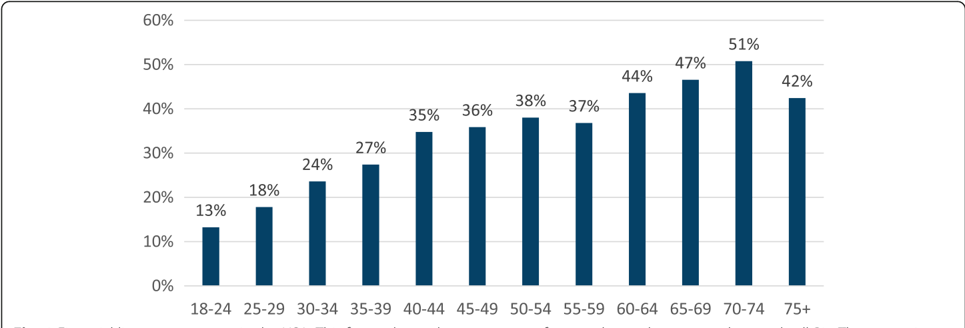
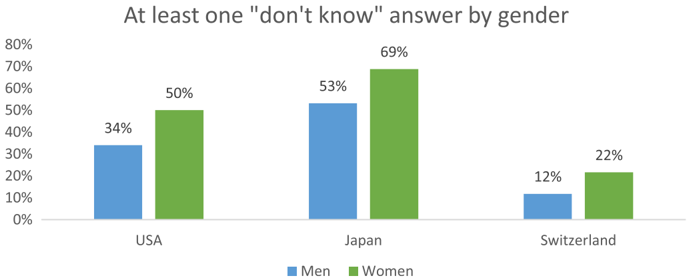
- Financial literacy is especially low among vulnerable groups: in the USA, less than 30% of respondents answered the Big Three correctly by age 40; in Switzerland, only 45% of those aged 35 or younger did so. Women were less likely than men to answer correctly across countries, and were more likely to respond “do not know.”
- The paper reports several associations: one additional correct financial literacy answer is associated with a 3–4 percentage point higher probability of retirement planning in Germany, the USA, Japan, and Sweden, and a 10 percentage point higher probability in the Netherlands; planning is associated with two to three times more wealth near retirement. The paper also states that 30–40% of U.S. retirement wealth inequality can be accounted for by differences in financial knowledge.
Methods
- This is a synthesis/keynote paper, not a new empirical study; it reviews prior survey and experimental evidence on financial literacy and financial behavior.
- It centers on the “Big Three” financial literacy measure: questions on interest compounding, inflation, and risk diversification, fielded in many surveys including the HRS, NFCS, SCF, SHED, and the FLat World project.
- Main analysis is comparative/descriptive: cross-country tables and survey results are used to compare literacy levels, identify vulnerable subgroups, and summarize associations between literacy and financial outcomes.
Limitations
- The paper explicitly notes that there are “few evaluations” of the effectiveness of financial education initiatives and says more research is urgently needed.
- The text makes evident that much of the evidence summarized is correlational rather than causal; it even notes that financial literacy “could be the result of choice and not an exogenous variable” (paper text).
- As a keynote summary, the paper does not present a single unified dataset or a new identification strategy; it aggregates evidence from many sources rather than testing one original hypothesis.
Model-written summary. Check it against the paper before relying on it.
Integrity signals
Registry
Cites
Statistics
Figures
Verification
Claims the paper makes
10 Valid · 6 Not valid · 44 Not checked · 30 Own results and interpretations
The cited sources support only part of this claim — read each source’s verdict below.
In the paper
“On average, about one third of the global population has familiarity with the basic concepts that underlie everyday financial decisions (Lusardi and Mitchell, 2011c).”
What the sources say
- Partly supportedcites Lusardi and Mitchell, 2011c matched to “Financial literacy around the world: an overview” (2011) sourceExperimental — accuracy not yet measured
The Measuring financial literacy section examines basic concepts relevant to everyday financial decisions, and the Concluding remarks report low financial literacy across eight countries. Neither section gives an estimate that about one third of the global population knows those concepts. The one-third figure in Financial literacy around the world refers instead to U.S. respondents who said they did not know how to answer a risk-diversification question. (LLM, conf=0.87)
plain- Asserted: passes — The authors put it forward as true.
- Checkable: passes — It can be checked against evidence.
- Load-bearing: passes — The paper’s conclusions depend on it.
- Based: passes — The paper gives a reason why it holds.
- Partly supported
Every source the paper cites for this claim was checked and supports it.
In the paper
“And just one third demonstrated understanding of these two concepts and answered the third question, measuring understanding of risk diversification, correctly.”
What the sources say
- Supportedcites Lusardi and Mitchell, 2011b matched to “The Outlook for Financial Literacy” (2011) source
The “Financial Literacy and Financial Decision-Making” section reports that only one-third of respondents in a survey of older Americans answered the interest-compounding, inflation, and risk-diversification questions correctly. (LLM, conf=0.94)
boosted- Asserted: passes — The authors put it forward as true.
- Checkable: passes — It can be checked against evidence.
- Load-bearing: passes — The paper’s conclusions depend on it.
- Based: passes — The paper gives a reason why it holds.
- Supported
Every source the paper cites for this claim was checked and supports it.
In the paper
“only half of older Americans -who presumably had made many financial decisions in their lives -could answer the two basic questions measuring understanding of interest rates and inflation (Lusardi and Mitchell, 2011b).”
What the sources say
- Supportedcites Lusardi and Mitchell, 2011b matched to “The Outlook for Financial Literacy” (2011) source
The “Financial Literacy and Financial Decision-Making” section (page not provided) describes a survey of older Americans and reports that only half of respondents correctly answered both questions on interest compounding and inflation. (LLM, conf=0.94)
plain- Asserted: passes — The authors put it forward as true.
- Checkable: passes — It can be checked against evidence.
- Load-bearing: passes — The paper’s conclusions depend on it.
- Based: passes — The paper gives a reason why it holds.
- Supported
Every source the paper cites for this claim was checked and supports it.
In the paper
“Financial literacy is low even in advanced economies with well-developed financial markets.”
What the sources say
- Supportedcites Lusardi and Mitchell, 2011c matched to “Financial literacy around the world: an overview” (2011) source
The Concluding remarks state that financial literacy is very low around the world regardless of financial-market development. The paper also reports widespread financial illiteracy in countries with well-developed financial markets, directly supporting the claim. (LLM, conf=0.94)
plain- Asserted: passes — The authors put it forward as true.
- Checkable: passes — It can be checked against evidence.
- Load-bearing: passes — The paper’s conclusions depend on it.
- Based: passes — The paper gives a reason why it holds.
- Supported
Every source the paper cites for this claim was checked and supports it.
In the paper
“Financial literacy is found to have the strongest impact in the Netherlands, where knowing the right answer to one additional financial literacy question is associated with a 10 percentage point higher probability of planning (Mitchell and Lusardi, 2015).”
What the sources say
- Supportedcites Mitchell and Lusardi, 2015 matched to “Financial Literacy and Economic Outcomes: Evidence and Policy Implications” (2015) source
The “Why Financial Literacy Matters” section (page not provided) states that financial literacy has its strongest impact in the Netherlands and gives the same 10-percentage-point association for one additional correct answer. (LLM, conf=0.95)
plainstates an association- Asserted: passes — The authors put it forward as true.
- Checkable: passes — It can be checked against evidence.
- Load-bearing: passes — The paper’s conclusions depend on it.
- Based: passes — The paper gives a reason why it holds.
- Supported
51 more claims · 7 with their cited sources checked
Create a free account to see all 90 claims and to verify the 3 references still open.
- It may state two separate claims as one. 24
- Probably not a substantial claim. 12
- Borderline: one of the tests for a substantial claim is unclear. 1
Claims other papers make about this one
Each is checked against this paper’s own text: does it say what the citing paper says it does?
The cited source doesn’t support the claim as written.
In the citing paper
“Previous research conducted by [33,34] shows a positive correlation between financial literacy and Fintech adoption.”
From Fintech Adoption Drivers for Innovation for SMEs in Indonesia (2022) · cites this paper as [33]
Checked by a reasoning model — may be wrong.
Experimental — accuracy not yet measuredThe cited source says what the claim attributes to it.
In the citing paper
“Understanding finance is crucial in making informed financial decisions and exhibiting sound financial behavior, as stated by Lusardi (2019).”
From Financial Literacy Among the Senior High School Students: Basis for Financial Stewardship Plan (2024) · cites this paper as Lusardi, 2019
Citations
Cites
The Economic Importance of Financial Literacy: Theory and Evidence
Lusardi, A., & Mitchell, O. S. (2014) · Journal of Economic Literature · doi:10.1257/jel.52.1.5 · Cited by 4,698 · cited 4×
“Four principles informed the design of these questions, as described in detail by Lusardi and Mitchell (2014).”
InfluentialSelf-citationFinancial literacy around the world: an overview
LUSARDI, A., & MITCHELL, O. S. (2011) · Journal of Pension Economics and Finance · doi:10.1017/s1474747211000448 · Cited by 2,000 · cited 5×
“Those interested in learning more about the differences in financial literacy across demographics and other characteristics can consult Lusardi and Mitchell (2011c, 2014).”
InfluentialSelf-citationPlanning and Financial Literacy: How Do Women Fare?
Lusardi, A., & Mitchell, O. S. (2008) · American Economic Review · doi:10.1257/aer.98.2.413 · Cited by 1,512 · cited 7×
“Empirically, planning is a very strong predictor of wealth; those who plan arrive close to retirement with two to three times the amount of wealth as those who do not plan (Lusardi and Mitchell, 2011b). Financial literacy is also associated with higher returns on investments and investment in more complex assets, such…”
BackgroundInfluentialSelf-citationDebt literacy, financial experiences, and overindebtedness
LUSARDI, A., & TUFANO, P. (2015) · Journal of Pension Economics and Finance · doi:10.1017/s1474747215000232 · Cited by 1,412 · cited 2×
“With regard to debt behavior, those who are more financially literate are less likely to have credit card debt and more likely to pay the full balance of their credit card each month rather than just paying the minimum due (Lusardi and Tufano, 2009, 2015).”
BackgroundSelf-citationFinancial Literacy and Planning: Implications for Retirement Wellbeing
Lusardi, A., & Mitchell, O. (2011) · National Bureau of Economic Research · doi:10.3386/w17078 · Cited by 1,253
Self-citationThe Economic Importance of Financial Literacy: Theory and Evidence
Lusardi, A., & Mitchell, O. (2013) · National Bureau of Economic Research · doi:10.3386/w18952 · Cited by 821
Self-citationOptimal Financial Knowledge and Wealth Inequality
Lusardi, A., Michaud, P.-C., & Mitchell, O. S. (2017) · Journal of Political Economy · doi:10.1086/690950 · Cited by 690 · cited 2×
“Programs devoted to teaching risk via, for example, visual tools have shown great promise (Lusardi et al., 2017).”
BackgroundMethodSelf-citationFinancial literacy and retirement planning in the Netherlands
van Rooij, M. C. J., Lusardi, A., & Alessie, R. J. M. (2011) · Journal of Economic Psychology · doi:10.1016/j.joep.2011.02.004 · Cited by 643
Self-citationFinancial literacy and retirement planning in Germany
BUCHER-KOENEN, T., & LUSARDI, A. (2011) · Journal of Pension Economics and Finance · doi:10.1017/s1474747211000485 · Cited by 513
Self-citationFinancial Literacy and Planning: Implications for Retirement Well-being
Lusardi, A., & Mitchell, O. S. (2011) · Financial Literacy: Implications for Retirement Security and the Financial Marketplace · doi:10.1093/acprof:oso/9780199696819.003.0002 · Cited by 505
Self-citation
Research works printed but not linked: 3
- Lusardi, A., de Bassa Scheresberg, C., and Avery, M. 2018. Millennial mobile payment users: a look into their personal finances and financial behaviors. GFLEC working paper.
- Lusardi, A., de Bassa Scheresberg, C., & Oggero, N. (2016). Student loan debt in the US: an analysis of the 2015 NFCS Data, GFLEC Policy Brief, November .
- Lusardi, A., & Tufano, P. (2009). Teach workers about the peril of debt. Harvard Business Review , 22 -24.
Cited by
Items 101–200 of 1,126
Factors Contributing to the Financial Self-Efficacy of Student Loan Borrowers
Brady, S., Miller, J. B., Balmuth, A., D’Ambrosio, L. A., & Coughlin, J. F. (2021) · Journal of Financial Counseling and Planning · doi:10.1891/jfcp-19-00067 · Cited by 29
Gignac, G. E., & Stevens, E. M. (2024) · Intelligence · doi:10.1016/j.intell.2024.101808 · Cited by 30
Performance risk analysis on mutual funds versus stock exchanges in young financial markets
Nicolescu, L., Tudorache, F. G., & Androniceanu, A. (2020) · JOURNAL OF INTERNATIONAL STUDIES · doi:10.14254/2071-8330.2020/13-1/18 · Cited by 28
“, 2020), a less developed system of private pensions (that usually encourage the development of mutual funds), the lack of investment culture and experience (Lusardi, 2019), the need for higher levels of knowledge based development.”
BackgroundPeter, S., Geetha, E., & Gupta, A. (2024) · Cogent Business & Management · doi:10.1080/23311975.2023.2296570 · Cited by 42
“Nevertheless, extant research emphasizes financial literacy (Burchi et al., 2021; Lusardi, 2019) and underscores the inter-play of budgeting, analytics, and financial acumen as a practical approach that establishes a platform for financial behavior.”
Shanmugam, K., Vijayabanu, C., & Parayitam, S. (2022) · IIM Kozhikode Society & Management Review · doi:10.1177/22779752221095282 · Cited by 36
“Sometimes financial literacy and financial education are used synonymously, but these are different constructs (Harrison & Chudry, 2011; Lusardi, 2019).”
BackgroundReconciling sustainability preferences and behavior — The case of mutual fund investments
Löfgren, Å., & Nordblom, K. (2023) · Journal of Behavioral and Experimental Finance · doi:10.1016/j.jbef.2023.100880 · Cited by 26
“Hence, these results are consistent with those of Lusardi (2019), who finds that women and young people have the lowest financial literacy (and should therefore find the investment decision more difficult).”
ResultAssessment of Financial Literacy Formation Methods in Mathematics Education: Financial Computation
Abylkassymova, A. E., Mubarakov, A., Yerkisheva, Z., Turganbayeva, Z., & Baysalov, Z. (2020) · International Journal of Emerging Technologies in Learning (iJET) · doi:10.3991/ijet.v15i16.14587 · Cited by 41
“Lusardi noted in his article that in the modern world financial literacy should be considered as important as basic literacy, without it people and societies cannot fully develop their potential [9].”
BackgroundFinancial literacy and decision-making: The impact of knowledge gaps on financial outcomes
Merter, A. K., & Balcıoğlu, Y. S. (2025) · Borsa Istanbul Review · doi:10.1016/j.bir.2025.07.010 · Cited by 67
First results on financial literacy in Oman
Mirzaei, M., & Buer, T. (2022) · Managerial Finance · doi:10.1108/mf-09-2021-0456 · Cited by 30
Financial literacy and its determinants among the schedule tribes: evidences from India
Singh, B., & Singh, M. (2023) · International Journal of Social Economics · doi:10.1108/ijse-01-2023-0008 · Cited by 25
Job stability and household financial vulnerability: Evidence from field surveys in China
Wu, K., & Wan, S. (2023) · Finance research letters · doi:10.1016/j.frl.2023.104554 · Cited by 18
Mitra, A., & De, A. (2024) · Journal of Indian Business Research · doi:10.1108/jibr-05-2023-0134 · Cited by 29
Fan, L., & Henager, R. (2025) · International Journal of Consumer Studies · doi:10.1111/ijcs.70011 · Cited by 36
Medina-Vidal, A., Alonso-Galicia, P. E., González-Mendoza, M., & Soledad, M. (2025) · Journal of Innovation and Entrepreneurship · doi:10.1186/s13731-025-00463-2 · Cited by 32
“Most of the time, these women are in households where their members have inefficient savings strategies and lack accurate information about the products and services of formal financial institutions and how to access them (Lusardi, 2019; Zhang and Xiong, 2020; Lyons et al., 2020; Yang et al., 2022).”
Sagita, L., Putri, R. I. I., Zulkardi, Z., & Prahmana, R. C. I. (2023) · Journal on Mathematics Education · doi:10.22342/jme.v13i4.pp753-772 · Cited by 42
“Cognitive processes in financial literacy are divided into four activities: identifying financial information, analyzing financial information and situations, evaluating financial problems, and applying financial knowledge and understanding (OECD, 2019; Lusardi, 2019).”
BackgroundFinancial literacy and cash holdings in Türkiye
Bilici, M. R., & ÇEVİK, S. (2023) · Central Bank Review · doi:10.1016/j.cbrev.2023.100129 · Cited by 26
“Lusardi (2019) also presents question specific results of fifteen countries.”
Financial literacy, stock market participation, and financial wellbeing in Germany
Bucher‐Koenen, T., Janssen, B., Knebel, C., & Tzamourani, P. (2023) · Journal of Financial Literacy and Wellbeing · doi:10.1017/flw.2024.5 · Cited by 37
Digital financial literacy, saving and investment behaviour in India
Yadav, M., & Banerji, P. (2024) · Journal of Social and Economic Development · doi:10.1007/s40847-024-00367-z · Cited by 38
“Lastly, as Lusardi (2019) stated, financial literacy could be linked with retirement planning, so in addition to influencing Saving and Shopping Behaviour, the level of Digital Financial Literacy is also expected to affect a person’s Investment Behaviour.”
Darmawan, A., & Pratiwi, F. A. (2020) · Fokus Bisnis Media Pengkajian Manajemen dan Akuntansi · doi:10.32639/fokusbisnis.v19i1.499 · Cited by 17
Financial literacy and the use of credit cards in Mexico
Hernández-Mejía, S., García-Santıllán, A., & Moreno-García, E. (2021) · JOURNAL OF INTERNATIONAL STUDIES · doi:10.14254/2071-8330.2021/14-4/7 · Cited by 23
Financial literacy and its relationship with sociodemographic variables
Hernández-Mejía, S., García-Santıllán, A., & Moreno-García, E. (2022) · Economics & Sociology · doi:10.14254/2071-789x.2022/15-1/3 · Cited by 16
“To measure financial literacy, a dichotomous variable is constructed for each question as suggested by Lusardi and Mitchell (2011a) and Van Rooij, Lusardi, and Alessie (2011).”
BackgroundMethodInfluentialPlatz, L., & Jüttler, M. (2022) · Citizenship Social and Economics Education · doi:10.1177/14788047221135343 · Cited by 44
“Thus, a game about personal financial management seems to be more meaningful for older students, which is also in line with previous research (e.g., Lusardi, 2019).”
ResultChen, F., Xiuli, L., & Wang, W. (2022) · Frontiers in Psychology · doi:10.3389/fpsyg.2022.1042085 · Cited by 34
“However, financial knowledge is low even in developed economies where financial markets are well-developed (Lusardi, 2019).”
BackgroundWhy do academics fail to plan for retirement? Employers' and employees' views
Amani, J., Luvanga, B. G., Kihaga, H., Ndeskoi, T. T., & Gabriel, L. (2023) · Journal of Aging Studies · doi:10.1016/j.jaging.2023.101103 · Cited by 28
Cucinelli, D., & Soana, M. G. (2023) · International Journal of Bank Marketing · doi:10.1108/ijbm-06-2022-0251 · Cited by 23
Blanco, L. R., Hernandez, I., Thames, A. D., Chen, L., & Serido, J. (2023) · Journal of Economic Behavior & Organization · doi:10.1016/j.jebo.2023.05.030 · Cited by 20
Ang, I. Y. H., Wang, Y., Tyagi, S., Koh, G. C., & Cook, A. R. (2023) · npj Digital Medicine · doi:10.1038/s41746-023-00919-3 · Cited by 16
Gender Gaps in Financial Literacy: Evidence from Argentina, Chile, and Paraguay
Espinoza-Delgado, J., & Silber, J. (2023) · Feminist Economics · doi:10.1080/13545701.2023.2278798 · Cited by 27
Harnessing FinTech for sustainable mineral development with innovative financing strategies in China
Niu, J., He, J., & He, Y. (2024) · Resources Policy · doi:10.1016/j.resourpol.2024.104697 · Cited by 18
Cashless payment: behavior changes and gender dynamics during the COVID-19 pandemic
Graziano, E. A., Musella, F., & Petroccione, G. (2024) · EuroMed Journal of Business · doi:10.1108/emjb-11-2023-0299 · Cited by 15
Millennials’ financial behaviour and financial well-being: the moderating role of future orientation
She, L., Ma, L., Sharif, S. P., & Karim, S. (2024) · Journal of Financial Services Marketing · doi:10.1057/s41264-024-00281-9 · Cited by 37
“While acknowl-edging the importance of financial well-being, evidence suggests that a growing number of Millennials are struggling to manage their finances (Friedline & West 2016; Lusardi 2019).”
Gender Differences in Financial Literacy Between and Within Generations
Potrich, A. C. G., Matheis, T. K., & Vieira, K. M. (2024) · Journal of Financial Counseling and Planning · doi:10.1891/jfcp-2023-0058 · Cited by 26
Analysis of the Financial Literacy Behavior Model
Kartini, K. M., Fitri, F., Rabiyah, U., & Anggraeni, D. (2020) · Golden Ratio of Finance Management · doi:10.52970/grfm.v1i2.69 · Cited by 25
“Financial literacy issues continue to develop along with technological developments and advances (Lusardi, 2019).”
BackgroundZámková, M., Rojík, S., Prokop, M., Činčalová, S., & Stolín, R. (2022) · International Journal of Environmental Research and Public Health · doi:10.3390/ijerph192013316 · Cited by 14
“In general, it can be observed that people with higher incomes have attained a higher level of education [39], and people with a higher education usually need more information when making decisions [40].”
BackgroundYeni, F., Mulyani, S. R., & Susriyanti, S. (2023) · Cogent Economics & Finance · doi:10.1080/23322039.2023.2175470 · Cited by 69
“Financial literacy will affect people’s saving behaviour (Lusardi, 2019).”
BackgroundResultUnderstanding finfluencers: Roles and strategic partnerships in retail investor engagement
Mölders, M., Bock, L., Barrantes, E., & Zülch, H. (2025) · Journal of Business Research · doi:10.1016/j.jbusres.2025.115462 · Cited by 31
Financial literacy and its relation to lottery gambling consumption
Cho, S. (2022) · Applied Economics · doi:10.1080/00036846.2022.2035669 · Cited by 16
“Q1, Q2, and Q6 are known as the ‘Big Three’ financial literacy questions and are often used in the literature (Lusardi and Mitchell 2011, 2014; Lusardi 2019).”
BackgroundShanmugam, K., Vijayabanu, C., & Parayitam, S. (2022) · Journal of Sustainable Finance & Investment · doi:10.1080/20430795.2022.2073958 · Cited by 27
Bado, B., Hasan, M., Tahir, T., et al. (2023) · International Journal of Professional Business Review · doi:10.26668/businessreview/2023.v8i5.2001 · Cited by 15
“According to Lusardi (2019), Financial iteration is becoming an important skill in this twenty-first century, where these skills are needed by individuals if they are to thrive economically in society.”
BackgroundBancoro, J. C. (2023) · International Journal of Asian Business and Management · doi:10.55927/ijabm.v2i3.4369 · Cited by 15
“According to Lusardi (2019), the range of financial products that are available to people now is much different from what it was in the past, and decisions made about these financial items have an effect on a person's welfare.”
Perception vs. reality: Analysing the nexus between financial literacy and fintech adoption
Prabhakaran, S., & Mynavathi, L. (2023) · Investment Management and Financial Innovations · doi:10.21511/imfi.20(4).2023.02 · Cited by 29
“Financial literacy has been a focal point of research for decades, owing to its substantial impact on the economic well-being of individuals as well as societies (Lusardi, 2019).”
BackgroundWhat do we really know about “don't know”? Re‐assessing the measurement of financial knowledge
Wilmarth, M. J., Kim, K. T., & Pak, T. (2023) · Journal of Consumer Affairs · doi:10.1111/joca.12563 · Cited by 17
Financial Literacy, Financial Education and Financial Experience: Conceptual Framework
Chabaefe, N. N., & Qutieshat, A. S. (2024) · International Journal of Economics and Financial Issues · doi:10.32479/ijefi.15627 · Cited by 30
Khusaini, K., Mardisentosa, B., Bastian, A. F., Taufik, R., & Widiawati, W. (2022) · Media Ekonomi dan Manajemen · doi:10.24856/mem.v27i01.2385 · Cited by 34
“The provision of financial education in schools, colleges, workplaces, and the larger community has proven to be a solution to improve financial literacy appropriately (Lusardi, 2019).”
BackgroundPrado, S. M. M., Chiluiza, K., Everaert, P. C., & Valcke, M. (2022) · Education Sciences · doi:10.3390/educsci12070460 · Cited by 32
Indrawati, N. K., Muljaningsih, S., Juwita, H. A. J., Jazuli, A. M., Nurmasari, N. D., & Fahlevi, M. (2025) · Cogent Business & Management · doi:10.1080/23311975.2025.2468877 · Cited by 45
“Financial education is a complete waste of time, or is yet another study by lusardi (2019), which suggests that financial education influences financing decisions.”
Digital financial literacy and retirement planning with mediating effect of saving behaviour
Yadav, M., Banerji, P., & Garg, A. (2025) · American Journal of Business · doi:10.1108/ajb-12-2023-0221 · Cited by 16
The Influence of Financial Culture on SME’s Financial Performance
Makdissi, R., Nehme, A., & Chahine, R. (2020) · Journal of Financial Risk Management · doi:10.4236/jfrm.2020.91001 · Cited by 28
“On the other hand, the main goal is to enable everyone to access the fundamental financial tool that is the bank account (Lusardi, 2019).”
BackgroundDoes financial literacy “grease the wheels” of the loans market? A note
Murta, F. S., & Gama, P. M. (2021) · Studies in Economics and Finance · doi:10.1108/sef-05-2021-0216 · Cited by 21
Nam, S. (2022) · Current Psychology · doi:10.1007/s12144-022-03916-z · Cited by 30
“Financial literacy, which has been extensively discussed in previous studies (Lusardi, 2019; Amonhaemanon & Vora-Sitta, 2020; Bakar & Bakar, 2020; Aryanti & Adhariani, 2020), refers to the ability to understand and use financial knowledge (Migliaccio, 2021).”
BackgroundWahyuni, S. F., Radiman, R., Hafiz, M. S., & Jufrizen, J. (2023) · Investment Management and Financial Innovations · doi:10.21511/imfi.20(3).2023.20 · Cited by 41
Montaño, J. L. A., Fernández-Polvillo, C., & Cardoso, S. M. J. (2023) · Journal of Hospitality Leisure Sport & Tourism Education · doi:10.1016/j.jhlste.2023.100474 · Cited by 35
Sumarno, S., Gimin, G., Noviana, E., Dafik, D., Ridlo, Z. R., & Mursyidah, I. L. (2024) · Heliyon · doi:10.1016/j.heliyon.2024.e32382 · Cited by 42
Singh, R. S., Rafat, A., & Srivastava, S. (2024) · Journal of Science and Technology Policy Management · doi:10.1108/jstpm-12-2023-0240 · Cited by 29
Susanto, K. P., Mandagie, W. C., Endri, E., & Wiwaha, A. (2024) · Investment Management and Financial Innovations · doi:10.21511/imfi.22(1).2025.03 · Cited by 33
Combined framing effects on attitudes and behavioral intentions toward mortgage advertisements
Dobson, D. S., & Poels, K. (2020) · International Journal of Bank Marketing · doi:10.1108/ijbm-07-2019-0277 · Cited by 18
Msomi, T. S., Olarewaju, O. M., & Ngcobo, X. M. (2021) · Folia Oeconomica Stetinensia · doi:10.2478/foli-2021-0016 · Cited by 14
Digital transformation, financial access and discrepancies in household wealth accumulation
Sodokin, K., Djafon, J. K., Couchoro, M. K., & Agbodji, A. E. (2023) · Cogent Economics & Finance · doi:10.1080/23322039.2023.2241700 · Cited by 22
Linking Annuity Benefits to the Longevity Experience: A General Framework
Olivieri, A., & Pitacco, E. (2019) · Annals of Actuarial Science · doi:10.1017/s1748499519000137 · Cited by 23
“However, not all individuals are familiar with discounting, as suggested by empirical evidence about financial literacy; see, for example, Lusardi (2019).”
BackgroundFauzi, I. S. N., & Sulistyowati, A. (2022) · Jurnal Kajian Ilmiah · doi:10.31599/jki.v22i2.730 · Cited by 13
Can FinTech Applied to Payments Improve Consumer Financial Satisfaction? Evidence from the USA
Chen, F., Du, X., & Wang, W. (2023) · Mathematics · doi:10.3390/math11020363 · Cited by 24
Juliana, J., Ismail, S. B., Utami, S. A., Rohmana, Y., & Marlina, R. (2024) · ISRA International Journal of Islamic Finance · doi:10.55188/ijif.v16is1.552 · Cited by 42
“A study published by Lusardi (2019) points out that various types of programmes, such as financial education in schools, colleges, workplaces and communities help to promote access by individuals to financial instruments on the market.”
BackgroundA Comparative Study of Loan Approval Prediction Using Machine Learning Methods
Sinap, V. (2024) · Gazi Üniversitesi Fen Bilimleri Dergisi Part C Tasarım ve Teknoloji · doi:10.29109/gujsc.1455978 · Cited by 22
Preparing the Younger Generation for an Aging Society: Strategies, Challenges, and Opportunities
Tohit, N. F. M., & Haque, M. (2024) · Cureus · doi:10.7759/cureus.64121 · Cited by 24
“Young people educated on the importance of financial preparation for old age will likely enter their senior years with better economic security, reducing dependency on social welfare systems and easing fiscal pressures on governments [10,69,72].”
BackgroundJose, J., & Ghosh, N. (2025) · DECISION · doi:10.1007/s40622-025-00426-2 · Cited by 25
Nani, D. A., Ahluwalia, L., & Novita, D. (2021) · Journal of Social Sciences and Technology for Community Service (JSSTCS) · doi:10.33365/jsstcs.v2i2.1313 · Cited by 13
“…(fintech) yang memudahkan orang untuk melakukan pembayaran hingga menentukan investasi kuangan yang cocok dengan dirinya(Suryono et al., 2019), sehingga penting untuk memiliki pengetahuan finansial dan sejauh mana pengetahuan finansial ini mempengaruhi pengambilan keputusan (Lusardi, 2019).”
BackgroundThe impact of financial risk attitude on objective-oriented investment behavior
Shehzad, A., Qureshi, S. F., Saeed, M. Z., & Ali, S. (2022) · International Journal of Financial Engineering · doi:10.1142/s2424786322500220 · Cited by 15
Financial Literacy of Adults in Germany FILSA Study Results
Schuhen, M., Kollmann, S., Seitz, M., Mau, G., & Froitzheim, M. (2022) · Journal of risk and financial management · doi:10.3390/jrfm15110488 · Cited by 19
Financial Inclusion as a Complementary Strategy to Address the SDGs for Society
Valencia, D. C., Calabuig, C., Enciso, E. M. V., & Betancur-Duque, F. A. (2021) · Sustainable development goals series · doi:10.1007/978-3-030-70948-8_6 · Cited by 32
Kamboj, V., & Sharma, D. (2025) · Humanities and Social Sciences Communications · doi:10.1057/s41599-025-05500-9 · Cited by 33
“…online courses, investment platforms for wealth growth, credit management tools for monitoring credit health, and retirement planning using digital calculators and investment options (Lewis and Perry, 2019, Lusardi, 2019, Hastings and Mitchell, 2018, Hikida and Perry, 2020, Van Nguyen et al. 2022).”
Examining the Association Between Financial Education and Financial Risk Tolerance
Tharayil, A. (2023) · The American Economist · doi:10.1177/05694345231186082 · Cited by 15
“Financial education programs have shown to increase fi nancial literacy of participants (Lusardi, 2019).”
BackgroundEducación financiera y la gestión del crédito en los hogares mexicanos
Maza, L. A. C., & Rivera, A. H. (2023) · Estudios económicos · doi:10.52292/j.estudecon.2023.3411 · Cited by 31
“Lusardi (2019) afirma que el comportamiento financiero es complejo, porque existen intereses económicos, lógicas sociales y situaciones psicológicas que determinan la elección.”
BackgroundFurinto, A., Tamara, D., Yenni, & Rahman, N. J. (2023) · E3S Web of Conferences · doi:10.1051/e3sconf/202342602076 · Cited by 29
Mushtaq, R., Murtaza, G., Yahiaoui, D., Ishizaka, A., & Talpur, Q. (2023) · International Studies of Management and Organization · doi:10.1080/00208825.2023.2281207 · Cited by 19
“Furthermore, Lusardi (2019) highlighted the improvement in financial decisions and market engagement due to financial literacy.”
BackgroundTreu, J. (2023) · International Journal of Economics and Finance · doi:10.5539/ijef.v16n2p1 · Cited by 27
“Another approach to measuring financial literacy is known internationally as the “Big Three” (Haupt, 2021; Lusardi, 2019; Lusardi & Mitchell, 2014).”
BackgroundXin, Z., Xiao, B., Wang, L., & Xiao, H. (2024) · Metacognition and Learning · doi:10.1007/s11409-024-09375-0 · Cited by 27
“These tasks often cover fundamental financial knowledge, such as inflation on the value of money, interest rates, and risk diversification (Lusardi, 2019).”
Attributes of Households that Engage in Higher Levels of Family Financial Planning
Wann, C. R., & Burke‐Smalley, L. A. (2021) · Journal of Family and Economic Issues · doi:10.1007/s10834-021-09805-0 · Cited by 20
“Other researchers point out the importance of customizing financial education programs to the needs of the target learner population (Lusardi, 2019).”
BackgroundInfluentialWibowo, A., Narmaditya, B. S., Widhiastuti, R., & Saptono, A. (2023) · Journal of Entrepreneurship Management and Innovation · doi:10.7341/20231916 · Cited by 20
Nugroho, A. P., & Apriliana, R. M. (2022) · KnE Social Sciences · doi:10.18502/kss.v7i10.11370 · Cited by 29
“Financial literacy, according to Lusardi and Mitchell, is a level of financial knowledge and ability to apply it (18) (19).”
BackgroundOECD, & European Commission (2022) · OECD local economic and employment development (LEED) working papers · doi:10.1787/77a15208-en · Cited by 24
Financial Inclusion and the Role of Financial Literacy in the Philippines
Desello, J. M. U., & Agner, M. G. R. (2023) · International Journal of Economics and Finance · doi:10.5539/ijef.v15n6p27 · Cited by 11
Mapping the Financial Technology Industry in Indonesia
Renaldo, N., Junaedi, A. T., Musa, S., Wahid, N., & Cecilia, C. (2024) · Journal of Applied Business and Technology · doi:10.35145/jabt.v5i1.162 · Cited by 18
Ong, A. K. S., Mendoza, M. C. O., Ponce, J. R. R., Bernardo, K. T. A., Tolentino, S. A. M., Diaz, J. F. T., & Young, M. N. (2024) · Physica A Statistical Mechanics and its Applications · doi:10.1016/j.physa.2024.130162 · Cited by 21
Shah, I. A. (2025) · International Review of Applied Economics · doi:10.1080/02692171.2025.2468646 · Cited by 24
Digital empowerment: unraveling the impact of digital literacy on financial mastery
Al-Afeef, M. A., & Alsmadi, A. A. (2025) · Discover Sustainability · doi:10.1007/s43621-025-01137-5 · Cited by 40
“These programs leverage digital literacy to simplify complex financial concepts and present them in an engaging format, thus making financial knowledge more accessible and understandable [28].”
Alfabetismo financiero entre millennials en Ciudad Victoria, Tamaulipas, México
Mata, O. G. (2021) · Estudios Gerenciales · doi:10.18046/j.estger.2021.160.4021 · Cited by 21
“…(2001) lo analizaron en adultos que tomaron cursos de economía del consumo, finanzas personales o similares, durante su formación preuniversitaria; Lusardi (2019) estudió cómo la educación financiera puede incrementar los niveles de ahorro y mejorar la toma de decisiones financieras; Carpena et…”
BackgroundFactors affecting multiple borrowing among microfinance clients: evidences from Bangladesh
Ali, I., Mia, M. A., Azman, A., et al. (2022) · Asia-Pacific Journal of Business Administration · doi:10.1108/apjba-06-2021-0250 · Cited by 11
Financial status and literacy among residents and medical students
Nowotny, D. J. (2022) · The American Surgeon · doi:10.1177/00031348221080428 · Cited by 14
“In response to the Big 3 (interest rate, inflation, and stock risk), medical students and residents answered all 3 correctly 57 and 67%, respectively, compared to about 30% of adults.(6,11) The question that was the most difficult was activity of bond prices.”
BackgroundFinancial Education, Mathematical Confidence, and Financial Behavior
Marley‐Payne, J., Dituri, P., & Davidson, A. (2022) · Journal of Financial Counseling and Planning · doi:10.1891/jfcp-2021-0060 · Cited by 17
“inancial education is a popular proposal for addressing the poor financial outcomes experienced by many adults in the U.S. (CFPB, 2017 ; Lusardi, 2019 ).”
Miko, S., Atmaja, A. W. T., Mawardah, R., et al. (2023) · IAIC Transactions on Sustainable Digital Innovation (ITSDI) · doi:10.34306/itsdi.v5i1.602 · Cited by 11
“Includes knowledge of financial concepts, ability to communicate financial concepts, talent in managing individual finances, (expertise in making the right financial decisions, and confidence in planning effectively for interest in investing [17].”
BackgroundArpana, D., & Swapna, H. R. (2020) · International Journal of Economics and Financial Issues · doi:10.32479/ijefi.10466 · Cited by 11
“Anamaria (2019) has analysed how financial literacy affects our long term financial choices, and the researcher has given implications for both society as well as for the individuals.”
BackgroundRetirement Confidence: Development of an Index
Ghafoori, E., Mata, F., Borg, K., Smith, L. D. G., & Ralston, D. (2021) · INQUIRY The Journal of Health Care Organization Provision and Financing · doi:10.1177/00469580211035732 · Cited by 20
The medium is the message: learning channels, financial literacy, and stock market participationPreprint
Hermansson, C., Jonsson, S., & Liu, L. (2021) · Social Science Research Network · doi:10.2139/ssrn.3802573 · Cited by 71
“The effects of such efforts are, however, not clear (Fernandes, Lynch, and Netemeyer, 2014; Lusardi, 2019; Willis, 2011).”
The Financial Literacy of Micro-entrepreneurs: Evidence from ItalyPreprint
Russo, P. F., Galotto, L., & Rampazzi, C. (2023) · SSRN Electronic Journal · doi:10.2139/ssrn.4463023 · Cited by 15
Cryptocurrency ownership and cognitive biases in perceived financial literacy
Valverde, S. C., Solas, P. J. C., & Fernández, F. R. (2024) · Journal of Behavioral and Experimental Finance · doi:10.1016/j.jbef.2024.101019 · Cited by 28
Croitoru, I. M., Spiridon, P. P., Ignat, N. D., & Jumanca, R. (2025) · FinTech · doi:10.3390/fintech4010004 · Cited by 25
“In this context, digital innovations, including financial technologies, provide new opportunities for enhancing financial literacy by enabling more inclusive and accessible education tools [5].”
Determinants of digital financial literacy from students’ perspective
Adnan, M. F., Rahim, N. M., & Ali, N. (2023) · Corporate Governance and Organizational Behavior Review · doi:10.22495/cgobrv7i2p15 · Cited by 27
“Similarly, Lusardi (2019) claimed that financial education is imminent to improve financial literacy.”
BackgroundLi, Z., Chatterjee, S., & Moorman, D. (2024) · International Journal of Bank Marketing · doi:10.1108/ijbm-02-2024-0106 · Cited by 17
Digital Financial Literacy and Its Impact on Financial Behaviors: A Systematic Review
Jose, J., & Ghosh, N. (2024) · Advances in finance, accounting, and economics book series · doi:10.4018/979-8-3693-0863-9.ch006 · Cited by 19
Annu, A., & Tripathi, R. (2024) · International Journal of Emerging Markets · doi:10.1108/ijoem-07-2024-1110 · Cited by 25
Metadata
- Authors
- Lusardi, A.
- Affiliations
- George Washington University (US)
- Corresponding author
- Lusardi, Annamaria
- ORCID
- Lusardi, Annamaria
- Venue
- Swiss Journal of Economics and Statistics
- Published
- 2019-01-24
- Volume
- 155
- Issue
- 1
- ISSN
- 0303-9692 (ISSN-L)
- 2235-6282
- OpenAlex
- W2911554037
- Semantic Scholar
- 045054f8e699ce8552fb34c500cb52d9b8d31d5f
- Cited by
- 1,135
- References
- 39
- Citations by year
- 2026: 142 · 2025: 218 · 2024: 233 · 2023: 245 · 2022: 147 · 2021: 75 · 2020: 64 · 2019: 9
- FWCI
- 187.87
- Type
- journal article
- Language
- en
- Open access
- diamond
- doi.org
- Licence
- cc-by
- creativecommons.org/licenses/by/4.0 (tdm)
- Locations
- Zeitschrift für schweizerische Statistik und Volkswirtschaft/Schweizerische Zeitschrift für Volkswirtschaft und Statistik/Swiss journal of economics and statistics (publishedVersion, cc-by)
- RePEc: Research Papers in Economics (submittedVersion)
- DOAJ (DOAJ: Directory of Open Access Journals) (submittedVersion)
- Econstor (Econstor) (submittedVersion, cc-by)
- Topics
- Social Sciences › Economics, Econometrics and Finance › Finance › Financial Literacy, Pension, Retirement Analysis
- Social Sciences › Business, Management and Accounting › Accounting › Financial Literacy and Behavior
- Social Sciences › Decision Sciences › General Decision Sciences › Decision-Making and Behavioral Economics
- Keywords
- financial literacy, financial education
About these checks
Registry, retraction, Cites and statistics results are computed, not judged, with one exception: a printed reference that no index lists is read once by a model before it counts as a citation error. Claims are extracted by a model and kept only when their quote appears verbatim in the text; each cited source is then checked, with a model’s help, for whether it says what the claim relies on. Those verdicts can be wrong — read the claim’s quote and the cited source before relying on one.
The claim verdicts this report counts are experimental: their accuracy is not yet measured.
A language model drew the claims from the paper on 2026-10-10, under version 3 of the claim definition (model deepseek-v4.1-flash, prompt extract-v3).
A second model labelled each claim on 2026-10-10 (model jev-1.13-20260917, definition revision gold-guideline-v0.2).
Cited sources are checked with a language model’s help (gpt-6-sol).
Statistics and arithmetic are recomputed, not judged.
Confidence bands are shown only for fields calibrated on our annotated test set. None is calibrated yet, so no band is shown.
What counts as a claim ›How we measure confidence ›How we check this ›
Are you an author, or do you see a problem with this page? Request a review
Data sources
Bibliographic data: Semantic Scholar, OpenAlex, Crossref.
Contains information from the Semantic Scholar Academic Graph Datasets, made available under the ODC Attribution License (ODC-BY 1.0).
Semantic Scholar’s data is described in: Kinney, R., et al. (2023). The Semantic Scholar Open Data Platform. arXiv:2301.10140.
