

Financial literacy and the need for financial education: evidence and implications
Open accessThe DOI matches its Crossref record; 47 of the 47 references it cites were found in a registry or an index; 13 of the 58 sources its claims cite were checked for support.
Abstract
This paper represents a summary of the keynote address I gave to the 2018 Annual Meeting of the Swiss Society of Economics and Statistics. I would like to thank Monika Butler, Rafael Lalive, anonymous reviewers
Overview
CoChat Summary
TL;DR
This keynote-style paper argues that financial literacy is low across countries and population groups, and that the “Big Three” questions are a practical way to measure it. It synthesizes evidence showing that financial literacy is linked to better saving, retirement planning, debt behavior, and resilience, and calls for large-scale, targeted financial education.
Key findings
- In the U.S. 2004 HRS, only about half of older Americans answered the two basic interest/inflation questions correctly, and only one third answered all three “Big Three” questions correctly.
- In the FLat World project (15 countries), the average share answering all three questions correctly was about 30%, and only around 50% in most countries answered the interest-rate and inflation questions correctly.
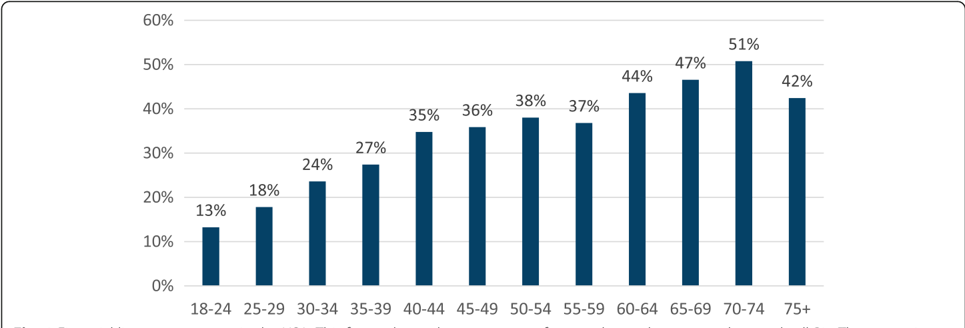
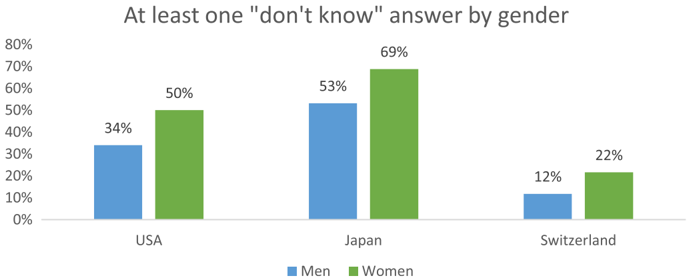
- Financial literacy is especially low among vulnerable groups: in the USA, less than 30% of respondents answered the Big Three correctly by age 40; in Switzerland, only 45% of those aged 35 or younger did so. Women were less likely than men to answer correctly across countries, and were more likely to respond “do not know.”
- The paper reports several associations: one additional correct financial literacy answer is associated with a 3–4 percentage point higher probability of retirement planning in Germany, the USA, Japan, and Sweden, and a 10 percentage point higher probability in the Netherlands; planning is associated with two to three times more wealth near retirement. The paper also states that 30–40% of U.S. retirement wealth inequality can be accounted for by differences in financial knowledge.
Methods
- This is a synthesis/keynote paper, not a new empirical study; it reviews prior survey and experimental evidence on financial literacy and financial behavior.
- It centers on the “Big Three” financial literacy measure: questions on interest compounding, inflation, and risk diversification, fielded in many surveys including the HRS, NFCS, SCF, SHED, and the FLat World project.
- Main analysis is comparative/descriptive: cross-country tables and survey results are used to compare literacy levels, identify vulnerable subgroups, and summarize associations between literacy and financial outcomes.
Limitations
- The paper explicitly notes that there are “few evaluations” of the effectiveness of financial education initiatives and says more research is urgently needed.
- The text makes evident that much of the evidence summarized is correlational rather than causal; it even notes that financial literacy “could be the result of choice and not an exogenous variable” (paper text).
- As a keynote summary, the paper does not present a single unified dataset or a new identification strategy; it aggregates evidence from many sources rather than testing one original hypothesis.
Model-written summary. Check it against the paper before relying on it.
Integrity signals
Registry
Cites
Statistics
Figures
Verification
Claims the paper makes
10 Valid · 6 Not valid · 44 Not checked · 30 Own results and interpretations
The cited sources support only part of this claim — read each source’s verdict below.
In the paper
“On average, about one third of the global population has familiarity with the basic concepts that underlie everyday financial decisions (Lusardi and Mitchell, 2011c).”
What the sources say
- Partly supportedcites Lusardi and Mitchell, 2011c matched to “Financial literacy around the world: an overview” (2011) sourceExperimental — accuracy not yet measured
The Measuring financial literacy section examines basic concepts relevant to everyday financial decisions, and the Concluding remarks report low financial literacy across eight countries. Neither section gives an estimate that about one third of the global population knows those concepts. The one-third figure in Financial literacy around the world refers instead to U.S. respondents who said they did not know how to answer a risk-diversification question. (LLM, conf=0.87)
plain- Asserted: passes — The authors put it forward as true.
- Checkable: passes — It can be checked against evidence.
- Load-bearing: passes — The paper’s conclusions depend on it.
- Based: passes — The paper gives a reason why it holds.
- Partly supported
Every source the paper cites for this claim was checked and supports it.
In the paper
“And just one third demonstrated understanding of these two concepts and answered the third question, measuring understanding of risk diversification, correctly.”
What the sources say
- Supportedcites Lusardi and Mitchell, 2011b matched to “The Outlook for Financial Literacy” (2011) source
The “Financial Literacy and Financial Decision-Making” section reports that only one-third of respondents in a survey of older Americans answered the interest-compounding, inflation, and risk-diversification questions correctly. (LLM, conf=0.94)
boosted- Asserted: passes — The authors put it forward as true.
- Checkable: passes — It can be checked against evidence.
- Load-bearing: passes — The paper’s conclusions depend on it.
- Based: passes — The paper gives a reason why it holds.
- Supported
Every source the paper cites for this claim was checked and supports it.
In the paper
“only half of older Americans -who presumably had made many financial decisions in their lives -could answer the two basic questions measuring understanding of interest rates and inflation (Lusardi and Mitchell, 2011b).”
What the sources say
- Supportedcites Lusardi and Mitchell, 2011b matched to “The Outlook for Financial Literacy” (2011) source
The “Financial Literacy and Financial Decision-Making” section (page not provided) describes a survey of older Americans and reports that only half of respondents correctly answered both questions on interest compounding and inflation. (LLM, conf=0.94)
plain- Asserted: passes — The authors put it forward as true.
- Checkable: passes — It can be checked against evidence.
- Load-bearing: passes — The paper’s conclusions depend on it.
- Based: passes — The paper gives a reason why it holds.
- Supported
Every source the paper cites for this claim was checked and supports it.
In the paper
“Financial literacy is low even in advanced economies with well-developed financial markets.”
What the sources say
- Supportedcites Lusardi and Mitchell, 2011c matched to “Financial literacy around the world: an overview” (2011) source
The Concluding remarks state that financial literacy is very low around the world regardless of financial-market development. The paper also reports widespread financial illiteracy in countries with well-developed financial markets, directly supporting the claim. (LLM, conf=0.94)
plain- Asserted: passes — The authors put it forward as true.
- Checkable: passes — It can be checked against evidence.
- Load-bearing: passes — The paper’s conclusions depend on it.
- Based: passes — The paper gives a reason why it holds.
- Supported
Every source the paper cites for this claim was checked and supports it.
In the paper
“Financial literacy is found to have the strongest impact in the Netherlands, where knowing the right answer to one additional financial literacy question is associated with a 10 percentage point higher probability of planning (Mitchell and Lusardi, 2015).”
What the sources say
- Supportedcites Mitchell and Lusardi, 2015 matched to “Financial Literacy and Economic Outcomes: Evidence and Policy Implications” (2015) source
The “Why Financial Literacy Matters” section (page not provided) states that financial literacy has its strongest impact in the Netherlands and gives the same 10-percentage-point association for one additional correct answer. (LLM, conf=0.95)
plainstates an association- Asserted: passes — The authors put it forward as true.
- Checkable: passes — It can be checked against evidence.
- Load-bearing: passes — The paper’s conclusions depend on it.
- Based: passes — The paper gives a reason why it holds.
- Supported
51 more claims · 7 with their cited sources checked
Create a free account to see all 90 claims and to verify the 3 references still open.
- It may state two separate claims as one. 24
- Probably not a substantial claim. 12
- Borderline: one of the tests for a substantial claim is unclear. 1
Claims other papers make about this one
Each is checked against this paper’s own text: does it say what the citing paper says it does?
The cited source doesn’t support the claim as written.
In the citing paper
“Previous research conducted by [33,34] shows a positive correlation between financial literacy and Fintech adoption.”
From Fintech Adoption Drivers for Innovation for SMEs in Indonesia (2022) · cites this paper as [33]
Checked by a reasoning model — may be wrong.
Experimental — accuracy not yet measuredThe cited source says what the claim attributes to it.
In the citing paper
“Understanding finance is crucial in making informed financial decisions and exhibiting sound financial behavior, as stated by Lusardi (2019).”
From Financial Literacy Among the Senior High School Students: Basis for Financial Stewardship Plan (2024) · cites this paper as Lusardi, 2019
Citations
Cites
The Economic Importance of Financial Literacy: Theory and Evidence
Lusardi, A., & Mitchell, O. S. (2014) · Journal of Economic Literature · doi:10.1257/jel.52.1.5 · Cited by 4,698 · cited 4×
“Four principles informed the design of these questions, as described in detail by Lusardi and Mitchell (2014).”
InfluentialSelf-citationFinancial literacy around the world: an overview
LUSARDI, A., & MITCHELL, O. S. (2011) · Journal of Pension Economics and Finance · doi:10.1017/s1474747211000448 · Cited by 2,000 · cited 5×
“Those interested in learning more about the differences in financial literacy across demographics and other characteristics can consult Lusardi and Mitchell (2011c, 2014).”
InfluentialSelf-citationPlanning and Financial Literacy: How Do Women Fare?
Lusardi, A., & Mitchell, O. S. (2008) · American Economic Review · doi:10.1257/aer.98.2.413 · Cited by 1,512 · cited 7×
“Empirically, planning is a very strong predictor of wealth; those who plan arrive close to retirement with two to three times the amount of wealth as those who do not plan (Lusardi and Mitchell, 2011b). Financial literacy is also associated with higher returns on investments and investment in more complex assets, such…”
BackgroundInfluentialSelf-citationDebt literacy, financial experiences, and overindebtedness
LUSARDI, A., & TUFANO, P. (2015) · Journal of Pension Economics and Finance · doi:10.1017/s1474747215000232 · Cited by 1,412 · cited 2×
“With regard to debt behavior, those who are more financially literate are less likely to have credit card debt and more likely to pay the full balance of their credit card each month rather than just paying the minimum due (Lusardi and Tufano, 2009, 2015).”
BackgroundSelf-citationFinancial Literacy and Planning: Implications for Retirement Wellbeing
Lusardi, A., & Mitchell, O. (2011) · National Bureau of Economic Research · doi:10.3386/w17078 · Cited by 1,253
Self-citationThe Economic Importance of Financial Literacy: Theory and Evidence
Lusardi, A., & Mitchell, O. (2013) · National Bureau of Economic Research · doi:10.3386/w18952 · Cited by 821
Self-citationOptimal Financial Knowledge and Wealth Inequality
Lusardi, A., Michaud, P.-C., & Mitchell, O. S. (2017) · Journal of Political Economy · doi:10.1086/690950 · Cited by 690 · cited 2×
“Programs devoted to teaching risk via, for example, visual tools have shown great promise (Lusardi et al., 2017).”
BackgroundMethodSelf-citationFinancial literacy and retirement planning in the Netherlands
van Rooij, M. C. J., Lusardi, A., & Alessie, R. J. M. (2011) · Journal of Economic Psychology · doi:10.1016/j.joep.2011.02.004 · Cited by 643
Self-citationFinancial literacy and retirement planning in Germany
BUCHER-KOENEN, T., & LUSARDI, A. (2011) · Journal of Pension Economics and Finance · doi:10.1017/s1474747211000485 · Cited by 513
Self-citationFinancial Literacy and Planning: Implications for Retirement Well-being
Lusardi, A., & Mitchell, O. S. (2011) · Financial Literacy: Implications for Retirement Security and the Financial Marketplace · doi:10.1093/acprof:oso/9780199696819.003.0002 · Cited by 505
Self-citation
Research works printed but not linked: 3
- Lusardi, A., de Bassa Scheresberg, C., and Avery, M. 2018. Millennial mobile payment users: a look into their personal finances and financial behaviors. GFLEC working paper.
- Lusardi, A., de Bassa Scheresberg, C., & Oggero, N. (2016). Student loan debt in the US: an analysis of the 2015 NFCS Data, GFLEC Policy Brief, November .
- Lusardi, A., & Tufano, P. (2009). Teach workers about the peril of debt. Harvard Business Review , 22 -24.
Cited by
Items 301–400 of 1,126
The Conceptual Framework of SMEs Financial Success in Sultanate of Oman
Hilal, B., Rahim, N. F. A., & Iranmanesh, M. (2020) · Journal of Governance and Integrity · doi:10.15282/jgi.3.2.2020.5307 · Cited by 11
The overlay between demographic characteristics, spirituality and retirement planning, Kenya expose
Maobe, A. (2020) · Cogent Social Sciences · doi:10.1080/23311886.2020.1831147 · Cited by 6
“Global statistics indicate retirement planning is low (Lusardi, 2019).”
BackgroundResultPerwito, Syamsu, & Gunardi, G. (2020) · Jurnal E-Bis (Ekonomi-Bisnis) · doi:10.37339/e-bis.v4i2.228 · Cited by 6
Financial Elements in Teaching and Learning of Mathematics: A Systematic Review
Saini, N. S. A., & Rosli, R. (2021) · International Research in Education · doi:10.5296/ire.v9i1.18033 · Cited by 16
“There is no one-size-fits-all for providing financial education (De Witte et al., 2020; Lusardi, 2019).”
BackgroundBenefits of Experience and Knowledge for Older Adults’ Monetary Sequence Preferences
Wilson, J. M., Strough, J., & Shook, N. J. (2021) · The International Journal of Aging and Human Development · doi:10.1177/00914150211009464 · Cited by 10
“New rules and developments in financial technology, such as mobile payment services (e.g., Venmo), may increase the complexity of financial decisions (Lusardi, 2019).”
BackgroundRelationship Among Financial Literacy, Attitude and Behaviour
Chaulagain, R. (2021) · Social Inquiry: Journal of Social Science Research · doi:10.3126/sijssr.v3i1.46017 · Cited by 5
“In the reference, Lusardi (2019) asserts that the importance of financial literacy increases with digital finance, financial technology (Fintech) and investment decisions.”
BackgroundInfluentialEmpirical Study on Financial Knowledge among High School Students in Veracruz
Moreno-García, E., García-Santıllán, A., & Navarrete, D. M. (2022) · International Journal of Innovative Research and Scientific Studies · doi:10.53894/ijirss.v5i3.492 · Cited by 7
“There is worldwide evidence that individuals have little knowledge of financial terms [2, 3].”
BackgroundMerry, K. E., Webster, F. R., & Kucharczyk, S. (2022) · Inclusive Practices · doi:10.1177/27324745221128931 · Cited by 10
“Financial literacy refers to both financial knowledge and behavior (Lusardi, 2019).”
BackgroundÁlvarez-Paccha, L. M., Herrera, J. M. O., & Ramírez, J. B. V. (2022) · INNOVA Research Journal · doi:10.33890/innova.v7.n3.1.2022.2111 · Cited by 6
Kurniadi, A. C., Sutrisno, T. F., & Kenang, I. H. (2022) · Matrik Jurnal Manajemen Strategi Bisnis dan Kewirausahaan · doi:10.24843/matrik:jmbk.2022.v16.i02.p11 · Cited by 6
Storozuk, A., & Maloney, E. A. (2023) · Journal of risk and financial management · doi:10.3390/jrfm16040238 · Cited by 21
“People who are financially literate save more money (Lusardi 2019), are more likely to prepare financially for retirement (Boisclair et al. 2017; Mustafa et al. 2023; van Rooij et al. 2011b), and are more likely to take part in financial markets (Chen et al. 2023; van Rooij et al. 2011a) with more…”
BackgroundShrestha, P. M., & Rawat, D. S. (2023) · Researcher CAB A Journal for Research and Development · doi:10.3126/rcab.v2i1.57642 · Cited by 15
“In essence, financial literacy equips individuals with the necessary skills to manage money and financial affairs, such as investments, to achieve personal and family financial goals (Lusardi, 2019).”
Mutual fund knowledge assessment for policy and decision problems
Scholl, B., & Fontes, A. (2022) · Financial Services Review · doi:10.61190/fsr.v30i1.3470 · Cited by 9
“…such as debt management, wealth accumulation, financial vulnerability, and a host of other economic outcomes in the United States and other countries (Lusardi, 2008, 2012, 2019; Lusardi & Mitchell, 2014; Lusardi & Tufano, 2009, 2015; Lusardi, Mitchell, & Curto, 2014; van Rooij, Lusardi, & Alessie,…”
BackgroundHikouatcha, P., Foka, A. G. T., Depesquidoux, F. A., & Asongu, S. A. (2024) · African Journal of Science Technology Innovation and Development · doi:10.1080/20421338.2023.2287818 · Cited by 11
“Summary of empirical literature on the link between Fintech and fi nancial literacy According to Lusardi (2019), who proposes a conceptual framework for the link between Fintech and fi nancial literacy, the existing literature linking these two variables is recent and incomplete, and the results are…”
BackgroundTerbuka, M. M. K. U., Lestari, K. A. N. S., Lestari, E. P., et al. (2024) · International Journal of Applied Business and International Management · doi:10.32535/ijabim.v9i1.2915 · Cited by 6
Tendencias en la educación financiera y su impacto en la toma de decisiones económicas personales
Blacio, J. H. A. (2024) · Revista Científica Ciencia y Método · doi:10.55813/gaea/rcym/v2/n4/48 · Cited by 11
“La edad y el nivel de ingreso también actúan como factores determinantes, pues las personas jóvenes o de bajos ingresos tienden a mostrar mayores carencias en términos de comprensión y aplicación de conceptos financieros básicos (Lusardi, 2019).”
Agabalinda, C., & Isoh, A. V. N. (2020) · International Journal of Applied Behavioral Economics · doi:10.4018/ijabe.2020070102 · Cited by 14
Financial Education and Consumer Financial Planning: Evidence from China
Chen, F., Zhang, T., & Jin'ge, M. (2020) · South Asian Journal of Social Studies and Economics · doi:10.9734/sajsse/2020/v7i230188 · Cited by 7
A FinTech-jelenség hagyományos kereskedelmi bankokra gyakorolt hatásának vizsgálata
Horváth, D. (2020) · Vezetéstudomány / Budapest Management Review · doi:10.14267/veztud.2020.09.02 · Cited by 14
“A FinTech megoldások emellett hozzájárulhatnak a fogyasztók pénzügyi tudatosságának növeléséhez és számos lehetőséget nyújthatnak a fiatalok pénzügyi edukációjának terén is (Lusardi, 2019).”
Fintech as a Mean for Digital and Financial Inclusion
Bähre, H., Buono, G., & Elss, V. I. (2020) · doi:10.18662/lumproc/ibmage2020/15 · Cited by 6
“[9]: 1) numeracy; 2) understanding of inflation; and (3) understanding of risk diversification).”
BackgroundAgabalinda, C., & Steel, W. F. (2021) · Enterprise Development and Microfinance · doi:10.3362/1755-1986.20-00011 · Cited by 7
Mudzingiri, C., & Koumba, U. (2021) · Risks · doi:10.3390/risks9080140 · Cited by 8
“Minimum financial capabilities required by individuals to benefit from financial literacy include numeracy, which makes them understand the concept of interest and compounding interest, implications of inflation on investments and incomes as well as comprehending risk diversification (Lusardi 2019).”
BackgroundAnanda, G. C., Faried, A. I., & Syaula, M. (2023) · International Journal of Management Economic and Accounting · doi:10.61306/ijmea.v1i2.9 · Cited by 6
“Lusardi (2019), stated that financial literacy affects several factors, one of which is making daily to long-term financial decisions.”
BackgroundFinancial literacy is a construct: an ordered logit approximation in Mexico
Núñez, J. C. G., Osorio, F. J. M., & Domínguez, S. (2024) · Cogent Economics & Finance · doi:10.1080/23322039.2024.2391941 · Cited by 13
“…support to adults to facilitate the use of new technology or devices that could potentially help them to improve their interrelationship with it, older people are more resilient to change and have a greater aversion to adopting new technology, which affects their financial literacy (Lusardi, 2019).”
InfluentialCan parental financial literacy enhance children's higher education opportunities?
Lee, J. C., Tan, W., & Zhao, Z. (2024) · International Review of Financial Analysis · doi:10.1016/j.irfa.2024.103798 · Cited by 5
THE EFFECT OF FINANCIAL LITERACY AND INTELLECTUAL CAPITAL ON FINANCIAL PERFORMANCE
Sudewi, N. N. D., & Dewi, S. K. S. (2022) · International journal of business management and economic review · doi:10.35409/ijbmer.2022.3425 · Cited by 11
“Lusardi (2019) defines financial literacy as knowledge and understanding of financial concepts and risks as well as the skills, motivation, and confidence to apply knowledge and understanding in making effective decisions in various financial contexts, to improve the financial well-being of…”
Pension knowledge in Chile and regional development characteristics
Inzunza, A., & Ruiz, J. L. (2023) · Journal of Pensions Economics and Finance · doi:10.1017/s1474747223000124 · Cited by 4
Moreira-Chóez, J. S., Arteaga, K. C. C., Lara, R. M. B., Gutiérrez, M. T. V., Herrera, M. K. G., & de Rodríguez, T. M. L. (2023) · Journal of Educational and Social Research · doi:10.36941/jesr-2023-0164 · Cited by 8
“Financial education, which has been extensively studied, refers to individuals' ability to understand and effectively use knowledge, skills, and attitudes in the financial domain (Lusardi, 2019).”
BackgroundJin, T. T., Singh, J., & Ahmad, N. (2024) · Asian Journal of Research in Education and Social Sciences · doi:10.55057/ajress.2024.6.1.6 · Cited by 5
Umar, S. O., & Dalimunthe, Z. (2024) · Eduvest - Journal Of Universal Studies · doi:10.59188/eduvest.v4i8.1297 · Cited by 5
“The ability of individuals to make personal financial decisions has been recognized as a result of their level of financial literacy) (Gui et al., 2021; Huang, 2016; Lusardi, 2019).”
BackgroundDemographic and Socio-economic Determinants of Financial Literacy : A Literature Review
Nursjanti, F., & Amaliawiati, L. (2024) · Gema Wiralodra · doi:10.31943/gw.v15i3.764 · Cited by 12
Vanian, S., & Pathiyan, H. M. (2025) · Multidisciplinary Reviews · doi:10.31893/multirev.2025276 · Cited by 7
“Therefore, the development and implementation of financial educational programs are pivotal in overcoming this gap(Lusardi, 2019).”
Income-driven fintech adoption and its impact on innovation: evidence from China
Khan, Z., Naz, F., Ahmad, M. I., & Battisti, E. (2025) · Business Process Management Journal · doi:10.1108/bpmj-08-2024-0678 · Cited by 9
EDUKASI LITERASI KEUANGAN BAGI MAHASISWA DI KOTA PALEMBANG
Setiawan, B. (2020) · INTEGRITAS Jurnal Pengabdian · doi:10.36841/integritas.v4i1.563 · Cited by 13
Bagaimana Pengetahuan Kewirausahaan Mempengaruhi Minat Berwirausaha Generasi Z melalui Efikasi Diri?
Hasan, M., Shofa, N., Thaief, I., Ahmad, M. I. S., & Tahir, T. (2021) · Ekuitas Jurnal Pendidikan Ekonomi · doi:10.23887/ekuitas.v9i2.36975 · Cited by 30
Çelikten, L., Doğan, C., & Dişli-Çelikten, M. (2022) · Kalem Uluslararasi Egitim ve Insan Bilimleri Dergisi · doi:10.23863/kalem.2022.226 · Cited by 5
“Ayrıca gençler arasındaki finansal okur-yazarlık oranının dü ş ük olması finansal okuryazarlı ğ ın erken ya ş ta kazanılma-sının önemli dayanaklarından birisidir (Lusardi, 2019).”
Dunn, B. (2023) · The Economic and Labour Relations Review · doi:10.1017/elr.2023.8 · Cited by 5
Rachmadini, F., & Damayanti, S. M. (2023) · International Journal of Current Science Research and Review · doi:10.47191/ijcsrr/v6-i7-119 · Cited by 7
“Recognizing this, public policymakers and regulators have focused on promoting financial literacy to improve market efficiency and social welfare (Lusardi, 2019).”
Antecedents of Islamic welfare: productivity, education, and the financial aspect
Hapsari, M. I., Mahmud, A. H., Herianingrum, S., Fauzi, R. M. Q., Hamid, S. N. A., Prabaswara, A., & Masfiyah, L. M. (2023) · International Journal of Islamic and Middle Eastern Finance and Management · doi:10.1108/imefm-07-2022-0299 · Cited by 18
Hidayat, R., & Moin, A. (2023) · International Journal of Research in Business and Social Science (2147-4478) · doi:10.20525/ijrbs.v12i8.2974 · Cited by 17
“According to Lusardi, (2019) financial literacy has a strong relationship with a person's ability to cope with financial management that has an impact on spending.”
BackgroundFinancial Literacy and Financial Fragility in Mexico
Moreno-García, E., Hernández-Mejía, S., & Núñez, H. F. S. (2023) · Revista Mexicana de Economía y Finanzas · doi:10.21919/remef.v19i1.958 · Cited by 14
“In its operational form, three questions are used to measure financial literacy i) the calculation of interest and understanding the capitalization of interest; ii) inflation and its effect on purchasing power and iii) the benefit of risk diversification (Lusardi, 2019; Cziriak 2022).”
InfluentialHeo, W., Kim, E., Kwak, E. J., & Grable, J. E. (2024) · Mathematics · doi:10.3390/math12020182 · Cited by 7
Nepal, R., Rajopadhyay, P., Rajopadhyay, U., & Bhattarai, U. (2023) · Journal of Business and Social Sciences Research · doi:10.3126/jbssr.v8i2.62133 · Cited by 11
“Several previous studies (Mohta, & Shunmugasundaram, 2023; Lusardi, 2019; Sheedy & Lubojanski, 2018) have demonstrated that financial literacy enhances risk tolerance and facilitates strategic investment planning to lower risks, which resembles the brain’s neuroplasticity.”
BackgroundYang, W., & Loang, O. K. (2024) · Studies in systems, decision and control · doi:10.1007/978-3-031-51997-0_6 · Cited by 5
The Effect of Using Social Media on Financial Literacy: A Focus on the Kingdom of Bahrain
Alshameri, Y., Sanad, Z., & Rizky, M. (2024) · Studies in systems, decision and control · doi:10.1007/978-3-031-56586-1_54 · Cited by 5
Moreno-García, E. (2024) · Journal of risk and financial management · doi:10.3390/jrfm17080330 · Cited by 11
The Economic and Social Value of Financial Literacy
Santos, J. M. S. (2020) · Advances in finance, accounting, and economics book series · doi:10.4018/978-1-7998-2440-4.ch009 · Cited by 6
Rohim, A. M., Haryono, A., & Wardoyo, C. (2022) · Journal of Economics Education and Entrepreneurship · doi:10.20527/jee.v3i1.5131 · Cited by 7
Kusumawati, R., Akmalia, A., & Wardana, C. K. (2022) · Journal Of World Science · doi:10.36418/jws.v1i5.31 · Cited by 5
Hidayat, R. S. A., Wulandari, H., Cahyaning, Y., et al. (2020) · Inspiration Jurnal Teknologi Informasi dan Komunikasi · doi:10.35585/inspir.v10i1.2538 · Cited by 5
Remittances and the financial capabilities of migrant households in the Philippines
Opiniano, J. (2021) · Asian and Pacific migration journal · doi:10.1177/01171968211044573 · Cited by 29
“Onemajor policy and programmatic response toward this end is financial literacy (Lusardi, 2019).”
BackgroundGerakan Literasi Finansial di SMA Kabupaten Kubu Raya Kalimantan Barat
Kuswanti, H., & Ulfah, M. (2021) · Ekuitas Jurnal Pendidikan Ekonomi · doi:10.23887/ekuitas.v9i1.32710 · Cited by 9
Media as a Money Doctor: Evidence from Refinancing DecisionsPreprint
Hu, L., Li, K., Ngo, P. T. H., & Sosyura, D. (2020) · SSRN Electronic Journal · doi:10.2139/ssrn.3679875 · Cited by 6
What Is Driving Participation and Diversity Trends in Economics? A Survey of High School Students
Australia, R. B. O., Livermore, T., Major, M., et al. (2021) · doi:10.47688/rdp2021-06 · Cited by 5
“…( 25th percentile) By location(b) 20142009200419991994 2019 0 20 40 60 80 % 0 20 40 60 80 % Metro Regional 3 While there have been numerous studies of financial literacy relating to an individual’s personal finances (e.g. Lusardi 2019), there is little evidence pertaining to economic literacy.”
BackgroundKNOWCON 2021. Knowledge on Economics and Management: Conference Proceedings
Olomouc, C. R. K. (., Slavíčková, P., & Stoklasa, J. C. 2. /. J. (2021) · doi:10.5507/ff.21.24460321 · Cited by 5
Higher Purpose, the Greater Good and FinancePreprint
Thakor, A. V. (2022) · SSRN Electronic Journal · doi:10.2139/ssrn.4097198 · Cited by 6
Blanco, L. R., Garcia, C., & Gutierrez, R. (2022) · SSRN Electronic Journal · doi:10.2139/ssrn.4145999 · Cited by 6
“Other datasets considered are: the American Life Panel (ALP) by Fonseca et al. (2021), the Study on Collegiate Financial Wellness (SCFW) by Rehr and Regan (2020), the National Longitudinal Survey of Youth (NLSY) by Tang et al. (2015), and the Survey of Consumer Finance (SCF) by Kim et al. (2021).”
BackgroundMethodInfluentialFinancial Literacy Among the Senior High School Students: Basis for Financial Stewardship Plan
V. Gabay, P. J., G. Bagsic, A. E., E. Beri, J. C., J. Lauresta, C., & M. Vetuz, M. (2024) · International Journal of Advanced engineering Management and Science · doi:10.22161/ijaems.103.1 · Cited by 4
“Understanding finance is crucial in making informed financial decisions and exhibiting sound financial behavior, as stated by Lusardi (2019).”
BackgroundTeaching Financial Literacy in Early Childhood Classrooms
Jambunathan, S., Aldemir, J., & Jayaraman, J. D. (2024) · Early Childhood Education Journal · doi:10.1007/s10643-024-01740-7 · Cited by 11
“Furthermore, researchers world - wide posit that financial literacy could potentially have micro and macroeconomic impact on society (Brown et al., 2018 ; Lusardi, 2019 ; Pramitasari et al., 2023 ).”
Educación financiera en estudiantes universitarios
Ramos, F. (2025) · Iberoamerican Business Journal · doi:10.22451/5817.ibj2025.vol8.2.11095 · Cited by 4
Data visualization for improving financial literacy: A systematic review
Du, M., Amor, R., Ma, K., & Wuensche, B. C. (2025) · Visual Informatics · doi:10.1016/j.visinf.2025.100272 · Cited by 22
Petroccione, G., & Graziano, E. A. (2026) · EuroMed Journal of Business · doi:10.1108/emjb-07-2025-0280 · Cited by 5
Yao, X., Wang, W., & Fu, C. (2026) · Emerging Markets Finance and Trade · doi:10.1080/1540496x.2026.2673089 · Cited by 6
Does pension information impact savings?
Mekkaoui, N. E., & Legendre, B. (2022) · Journal of Pensions Economics and Finance · doi:10.1017/s1474747221000470 · Cited by 4
López, I., Mahdzan, N. S. A., & Rahman, M. (2023) · International Journal of Social Economics · doi:10.1108/ijse-05-2023-0340 · Cited by 6
Apuela, J. A. E. (2025) · Revista EDUCA UMCH · doi:10.35756/educaumch.202526.347 · Cited by 4
Andreatti, G., Morselli, D., & Parricchi, M. (2025) · Frontiers in Education · doi:10.3389/feduc.2025.1628635 · Cited by 11
Predictors of fraud victimization among the older adults in China: A machine learning analysis
Xu, L., Xu, J., Tang, Y., Li, H., & Xiang-ming, W. (2025) · Legal and Criminological Psychology · doi:10.1111/lcrp.70008 · Cited by 7
“The remaining two items were basic financial literacy questions (Lusardi, 2019).”
Readability of Korean-Language advertising disclosures moderates knowledge effects
Lee, T., Huhmann, B. A., & Yun, T. (2020) · International Journal of Bank Marketing · doi:10.1108/ijbm-03-2020-0090 · Cited by 4
The Level of Financial Literacy among Muslim Millennial Students
Bayram, K., Olasubomi, S. S., & Thartori, V. (2021) · Al Qasimia University Journal of Islamic Economics · doi:10.52747/aqujie.1.2.69 · Cited by 4
Pelatihan Literasi Keuangan Untuk Peningkatan Kapasitas Usaha pada Pelaku Usaha Mikro
Herlambang, T., & Rusdiyanto, R. (2022) · Jurnal Pengabdian Masyarakat Manage · doi:10.32528/jpmm.v3i1.7379 · Cited by 4
“Lebih jauh, Lusardi (2019) menyatakan bahwa seiring P-ISSN: 2721-6608 | E-ISSN: 2797-8451 50 memulai berinvestasi, dan diduga salah satunya adalah rendahnya literasi keuangan.”
BackgroundMachine Learning Models for Predictive Analytics in Personal Finance
Kalai, R., Ramesh, R., & Sundararajan, K. (2022) · Smart innovation, systems and technologies · doi:10.1007/978-981-19-0836-1_18 · Cited by 4
Financial Literacy And Financial Behaviour: An Overview of Key Drivers
Rahim, N. M., Ismail, N., & Karmawan, K. (2022) · International Conference on Social, Science, and Technology (ICSST) · doi:10.4108/eai.25-11-2021.2319348 · Cited by 11
Financial literacy exchange and its challenges in Post-Soviet Georgia
Surmanidze, N., Tabagari, K., Mushkudiani, Z., & Akhvlediani, M. (2022) · Knowledge and Performance Management · doi:10.21511/kpm.06(1).2022.08 · Cited by 5
“Nevertheless, only some people are interested in financial risks, avoiding unexpected results, future perspectives, planning the budget, providing a source of income, getting loans, and investing (Lusardi, 2019).”
BackgroundFINANCIAL LITERACY/KNOWLEDGE THROUGH FINANCIAL EDUCATION: A BIBLIOMETRIC ANALYSIS
Lajuni, N., Wellfren, A. C., & Samsu, S. H. (2022) · Labuan Bulletin of International Business and Finance (LBIBF) · doi:10.51200/lbibf.v20i2.3570 · Cited by 12
Academic community's investment decision in sharia stock market: The impact of financial literacy
Holle, M. H., Maruapey, M. W., Karanelan, M., Asiyah, B. N., & Syarif, R. A. (2023) · al-Uqud Journal of Islamic Economics · doi:10.26740/aluqud.v7n1.p33-53 · Cited by 9
Assessment of financial literacy: case study of business students
Sarsour, N., Daya, W., & Aldalou, E. (2023) · Uluslararası İktisadi ve İdari İncelemeler Dergisi · doi:10.18092/ulikidince.1185992 · Cited by 6
“More recently Lusardi (2019: 1), asserts on that there is an obvious correlation between having low level of financial literacy and inefficient borrowing and making ineffective spending and financial planning, Additionally, financial literacy varies across particular socio-economic groups (Chen and…”
BackgroundAz időskori szegénység és az öngondoskodás összefüggései Európában
Vaskövi, Á., & Jászfi, E. (2023) · Közgazdasági Szemle · doi:10.18414/ksz.2023.7-8.898 · Cited by 4
The impact of investment and social factors on pension savings in Kazakhstan
Bekbossinova, A., Kireyeva, A. A., Kenzhegulova, G. K., Bekturganova, M., & Imangali, Z. (2023) · Investment Management and Financial Innovations · doi:10.21511/imfi.20(3).2023.09 · Cited by 11
“First, due to the incentives they get as bank loans, commercial credits etc. (Agarwal et al., 2019; Lusardi, 2019).”
Fiscal Management Practices Framework of State Universities and Colleges in Region XII
Mamburao, R. S., & Manubag, E. B. (2023) · International Journal of Scientific Research and Management (IJSRM) · doi:10.18535/ijsrm/v11i10.el02 · Cited by 6
“Top As defined by Lusardi (2019), financial literacy refers to an individual ’s ability to utilize their skills and resources to achieve their goals by understanding and evaluating pertinent financial information for decision making.”
BackgroundGunawan, A., Mukmin, Wahyuni, S. F., et al. (2023) · Investment Management and Financial Innovations · doi:10.21511/imfi.20(4).2023.15 · Cited by 4
“A person’s financial experience can be capitalized in managing financ-es (Lusardi, 2019).”
BackgroundEnongene, G. N., Isoh, A. V. N., Mbarika, V. W. A., Fofanah, S. A., & Itoe, M. M. (2024) · Business Management and Strategy · doi:10.5296/bms.v15i1.21651 · Cited by 9
FINANCIAL LITERACY AND WELL-BEING AS PREDICTORS OF WORK PERFORMANCE OF TEACHERS
Arroyo, D. G., & Bayani, R. T. (2024) · EPRA International Journal of Environmental Economics Commerce and Educational Management · doi:10.36713/epra16423 · Cited by 11
Nikolaus, K. F., Setiawan, A., & Djajadikerta, H. (2024) · INNOVATIVE Journal Of Social Science Research · doi:10.31004/innovative.v4i3.11416 · Cited by 27
Conte, A., Paiardini, P., & Temperini, J. (2024) · International Journal of Financial Studies · doi:10.3390/ijfs12030076 · Cited by 9
“Traditionally assessed through sample surveys, financial literacy is often measured using the “Big Three” questions, a concise tool for evaluating essential financial knowledge (Lusardi 2019; Lusardi and Mitchell 2008).”
MethodMeasuring Financial Well-Being in Generation Z in Indonesia
Siregar, S. R., Zulpahmi, Z., Larasati, M., et al. (2024) · Salud Ciencia y Tecnología - Serie de Conferencias · doi:10.56294/sctconf2024.995 · Cited by 4
Cuadra, J. M., Mandras, Y. S., Raya, M. R., Belardo, H. A. B., Lopez, R. P., & Rodriguez, J. G. E. (2025) · Review of Behavioral Finance · doi:10.1108/rbf-03-2025-0116 · Cited by 9
Sustainable investing through a gendered lens: the role of locus of control and risk perception
Verma, V., Singh, P., Tiwari, R., & Pandey, D. C. (2025) · Journal of Financial Services Marketing · doi:10.1057/s41264-025-00321-y · Cited by 5
“FL is particularly lacking among young people, women, and those with limited education, as indicated by several studies (Lusardi 2019; Garg & Singh 2018).”
Improving financial education strategy for sustainable development
Margvelashvili, I., & Kostava, M. (2020) · Economics ecology socium · doi:10.31520/2616-7107/2020.4.3-1 · Cited by 5
Finanzielle Kompetenzen und Defizite in Deutschland – eine aktuelle Bestandsaufnahme
Bachmann, R., Rulff, C., & Schmidt, C. Μ. (2021) · List Forum für Wirtschafts- und Finanzpolitik · doi:10.1007/s41025-021-00235-2 · Cited by 11
“Die zur Verfügung stehenden Finanzprodukte haben sich im Laufe der Zeit immer weiter verändert und sind teilweise deutlich komplexer geworden (Lusardi 2019; Lusardi und Mitchell 2014).”
BackgroundPermana, A. H., Pohan, E. R., & Ananda, Y. Y. (2022) · Syntax Idea · doi:10.36418/syntax-idea.v4i2.1768 · Cited by 8
Predicting Students’ Financial Knowledge from Attitude towards Finance
Bocchialini, E., Ronchini, B., & Torti, F. (2022) · International Journal of Business and Management · doi:10.5539/ijbm.v17n6p13 · Cited by 6
“Recent evidence suggests that financial literacy tends to remain generally low across the world, regardless of the proliferation of efforts aimed at promoting economic and financial culture (Fernandes et al., 2014; Lusardi, 2019).”
BackgroundSheng, S. Y., Feng, W., & Spohn, D. (2022) · Journal of Applied Business and Economics · doi:10.33423/jabe.v24i3.5193 · Cited by 8
Determinants of Malaysian Financial Literacy: A Financial Socialization Perspective
Rahim, N. M., & Ali, N. (2022) · GATR Accounting and Finance Review · doi:10.35609/afr.2022.7.1(2 · Cited by 4
The Flow of Money Demand in Indonesia: What Drives it?
Wijaya, A., Nurjanana, N., & Erwin Kurniawan, A. (2022) · Asian Journal of Economic Modelling · doi:10.55493/5009.v10i4.4693 · Cited by 4
“Lusardi (2019) and Pawasutipaisit and Townsend (2011) also confirm that wealth owners (individuals) always accurately select the types of assets that achieve the greatest rewards.”
BackgroundRodrigo, T., & Kim, H. (2023) · Journal of Consumer Sciences · doi:10.29244/jcs.8.1.57-76 · Cited by 8
Impact of COVID-19 on the Income of Entrepreneurs Who Borrowed from SHG
Malhotra, N., & Baag, P. K. (2023) · Journal of Human Values · doi:10.1177/09716858231154396 · Cited by 5
Susan, M., Winarto, J., & Gunawan, I. (2023) · International symposia in economic theory and econometrics · doi:10.1108/s1571-038620230000031014 · Cited by 10
Determinantes socioeconómicos de la educación financiera en la provincia Cusco, Perú
Universidad Nacional de San Antonio Abad del Cusco, P., Cahuana, R. E. L., Orosco, D. R. T., et al. (2023) · Semestre Económico · doi:10.26867/se.2023.v12i1.148 · Cited by 4
Susanti, S., Palupi, R. A., & Hamidah, E. N. (2022) · Dinamika Pendidikan · doi:10.15294/dp.v17i2.37926 · Cited by 4
“Financial literacy indicators according to Wise, there are several key elements of ability Lusardi (2019) and knowledge of financial literacy that is usually mentioned in the literature, namely: (1) mathematical knowledge and standard knowledge such as basic numbers and ability to understand; (2) financial understandi…”
Influential
Metadata
- Authors
- Lusardi, A.
- Affiliations
- George Washington University (US)
- Corresponding author
- Lusardi, Annamaria
- ORCID
- Lusardi, Annamaria
- Venue
- Swiss Journal of Economics and Statistics
- Published
- 2019-01-24
- Volume
- 155
- Issue
- 1
- ISSN
- 0303-9692 (ISSN-L)
- 2235-6282
- OpenAlex
- W2911554037
- Semantic Scholar
- 045054f8e699ce8552fb34c500cb52d9b8d31d5f
- Cited by
- 1,135
- References
- 39
- Citations by year
- 2026: 142 · 2025: 218 · 2024: 233 · 2023: 245 · 2022: 147 · 2021: 75 · 2020: 64 · 2019: 9
- FWCI
- 187.87
- Type
- journal article
- Language
- en
- Open access
- diamond
- doi.org
- Licence
- cc-by
- creativecommons.org/licenses/by/4.0 (tdm)
- Locations
- Zeitschrift für schweizerische Statistik und Volkswirtschaft/Schweizerische Zeitschrift für Volkswirtschaft und Statistik/Swiss journal of economics and statistics (publishedVersion, cc-by)
- RePEc: Research Papers in Economics (submittedVersion)
- DOAJ (DOAJ: Directory of Open Access Journals) (submittedVersion)
- Econstor (Econstor) (submittedVersion, cc-by)
- Topics
- Social Sciences › Economics, Econometrics and Finance › Finance › Financial Literacy, Pension, Retirement Analysis
- Social Sciences › Business, Management and Accounting › Accounting › Financial Literacy and Behavior
- Social Sciences › Decision Sciences › General Decision Sciences › Decision-Making and Behavioral Economics
- Keywords
- financial literacy, financial education
About these checks
Registry, retraction, Cites and statistics results are computed, not judged, with one exception: a printed reference that no index lists is read once by a model before it counts as a citation error. Claims are extracted by a model and kept only when their quote appears verbatim in the text; each cited source is then checked, with a model’s help, for whether it says what the claim relies on. Those verdicts can be wrong — read the claim’s quote and the cited source before relying on one.
The claim verdicts this report counts are experimental: their accuracy is not yet measured.
A language model drew the claims from the paper on 2026-10-10, under version 3 of the claim definition (model deepseek-v4.1-flash, prompt extract-v3).
A second model labelled each claim on 2026-10-10 (model jev-1.13-20260917, definition revision gold-guideline-v0.2).
Cited sources are checked with a language model’s help (gpt-6-sol).
Statistics and arithmetic are recomputed, not judged.
Confidence bands are shown only for fields calibrated on our annotated test set. None is calibrated yet, so no band is shown.
What counts as a claim ›How we measure confidence ›How we check this ›
Are you an author, or do you see a problem with this page? Request a review
Data sources
Bibliographic data: Semantic Scholar, OpenAlex, Crossref.
Contains information from the Semantic Scholar Academic Graph Datasets, made available under the ODC Attribution License (ODC-BY 1.0).
Semantic Scholar’s data is described in: Kinney, R., et al. (2023). The Semantic Scholar Open Data Platform. arXiv:2301.10140.
