

Depression in adolescence: a review
Open accessThe DOI matches its Crossref record; 92 of the 92 references it cites were found in a registry or an index.
Abstract
Abstract Background Depression is a common mental health disease, especially in mid to late adolescence that, due to its particularities, is a challenge and requires an effective diagnosis. Primary care providers are often the first line of contact for adolescents, being crucial in identifying and managing this pathology. Besides, several entities also recommend screening for depression on this period. Thus, the main purpose of this article is to review the scientific data regarding screening, diagnosis and management of depression in adolescence, mainly on primary care settings. Main body Comprehension of the pathogenesis of depression in adolescents is a challenging task, with both environmental and genetic factors being associated to its development. Although there are some screening tests and diagnostic criteria, its clinical manifestations are wide, making its diagnosis a huge challenge. Besides, it can be mistakenly diagnosed with other psychiatric disorders, making necessary to roll-out several differential diagnoses. Treatment options can include psychotherapy (cognitive behavioural therapy and interpersonal therapy) and/or pharmacotherapy (mainly fluoxetine), depending on severity, associated risk factors and available resources. In any case, treatment must include psychoeducation, supportive approach and family involvement. Preventive programs play an important role not only in reducing the prevalence of this condition but also in improving the health of populations. Conclusion Depression in adolescence is a relevant condition to the medical community, due to its uncertain clinical course and underdiagnosis worldwide. General practitioners can provide early identification, treatment initiation and referral to mental health specialists when necessary.
Overview
The claims and statistics of this paper haven’t been checked yet.
Free: it reads the open-access text and checks the first 5 claims that cite a source we can check. Create a free account to check every claim.
Integrity signals
Registry
Cites
Statistics
Figures
Verification
Claims the paper makes
The claims and statistics of this paper haven’t been checked yet.
Free: it reads the open-access text and checks the first 5 claims that cite a source we can check. Create a free account to check every claim.
Claims other papers make about this one
Each is checked against this paper’s own text: does it say what the citing paper says it does?
The cited source says what the claim attributes to it.
In the citing paper
“In medical research, depression is often conceptualized as a clinical disorder with a specific set of symptoms that can be identified and treated (4, 5).”
From Anti-stigmatizing: a collaborative autoethnography on recovery from depression (2024) · cites this paper as [4]
Self-check
Percentages, sums and reported differences re-computed from the paper’s own numbers.
The self-check needs the paper’s full text.
Citations
Cites
Diagnostic and Statistical Manual of Mental Disorders
American Psychiatric Association (2013) · doi:10.1176/appi.books.9780890425596 · Cited by 116,369
A psychobiological model of temperament and character
Cloninger, C. R. (1993) · Archives of General Psychiatry · doi:10.1001/archpsyc.1993.01820240059008 · Cited by 5,458 · cited 1×
“According to Cloninger, temperament is responsible for automatic and emotional responses to environmental stimuli and encompasses four dimensions: novelty seeking, exploratory activity, harm avoidance, reward dependence and persistence [22].”
BackgroundThapar, A., Collishaw, S., Pine, D. S., & Thapar, A. K. (2012) · The Lancet · doi:10.1016/s0140-6736(11)60871-4 · Cited by 2,365
(2009) · Cited by 2,013
The social brain in adolescence
Blakemore, S.-J. (2008) · Nature Reviews Neuroscience · doi:10.1038/nrn2353 · Cited by 1,896
Mental Health Surveillance Among Children — United States, 2013–2019
Bitsko, R. H., Claussen, A. H., Lichstein, J., Black, L. I., Jones, S. E., Danielson, M. L., Hoenig, J. M., Davis Jack, S. P., Brody, D. J., Gyawali, S., et al. (2022) · MMWR Supplements · doi:10.15585/mmwr.su7102a1 · Cited by 1,723
Risch, N., Herrell, R., Lehner, T., Liang, K.-Y., Eaves, L., Hoh, J., Griem, A., Kovacs, M., Ott, J., & Merikangas, K. R. (2009) · JAMA · doi:10.1001/jama.2009.878 · Cited by 1,655 · cited 1×
“However, such findings seem to vary not only by genotype but also by age, sex, and severity of symptoms, and are also reliant on good quality measures of adversity and depression [18, 20].”
BackgroundSeedat, S., Scott, K. M., Angermeyer, M. C., Berglund, P., Bromet, E. J., Brugha, T. S., Demyttenaere, K., de Girolamo, G., Haro, J. M., Jin, R., et al. (2009) · Archives of General Psychiatry · doi:10.1001/archgenpsychiatry.2009.36 · Cited by 1,518
Mental Health of Children and Young People in Great Britain, 2004: (557702010-001)
Green, H., McGinnity, A., Meltzer, H., Ford, T., & Goodman, R. (2005) · PsycEXTRA Dataset · doi:10.1037/e557702010-001 · Cited by 1,216
Avenevoli, S., Swendsen, J., He, J.-P., Burstein, M., & Merikangas, K. R. (2015) · Journal of the American Academy of Child & Adolescent Psychiatry · doi:10.1016/j.jaac.2014.10.010 · Cited by 1,202
Hyde, J. S., Mezulis, A. H., & Abramson, L. Y. (2008) · Psychological Review · doi:10.1037/0033-295x.115.2.291 · Cited by 1,146
Costello, E. J., Egger, H., & Angold, A. (2005) · Journal of the American Academy of Child & Adolescent Psychiatry · doi:10.1097/01.chi.0000172552.41596.6f · Cited by 1,134 · cited 1×
“Depression in adolescence is a common mental health disease with a prevalence of 4–5% in mid to late adolescence [1].”
BackgroundBridge, J. A., Iyengar, S., Salary, C. B., Barbe, R. P., Birmaher, B., Pincus, H. A., Ren, L., & Brent, D. A. (2007) · JAMA · doi:10.1001/jama.297.15.1683 · Cited by 1,086
NELSON, E. E., LEIBENLUFT, E., McCLURE, E. B., & PINE, D. S. (2005) · Psychological Medicine · doi:10.1017/s0033291704003915 · Cited by 1,075
Birmaher, B., & Brent, D. (2007) · Journal of the American Academy of Child & Adolescent Psychiatry · doi:10.1097/chi.0b013e318145ae1c · Cited by 1,056 · cited 4×
“Each of them must include psychoeducation, supportive approach and family involvement [39, 40].”
BackgroundInfluentialHuman resources for mental health care: current situation and strategies for action
Kakuma, R., Minas, H., van Ginneken, N., Dal Poz, M. R., Desiraju, K., Morris, J. E., Saxena, S., & Scheffler, R. M. (2011) · The Lancet · doi:10.1016/s0140-6736(11)61093-3 · Cited by 979 · cited 1×
“Prevention is crucial to depression management, consequence of the impact on the population and inequal quality health care access [72].”
BackgroundPrevalence of Celiac Disease among Children in Finland
Mäki, M., Mustalahti, K., Kokkonen, J., Kulmala, P., Haapalahti, M., Karttunen, T., Ilonen, J., Laurila, K., Dahlbom, I., Hansson, T., et al. (2003) · New England Journal of Medicine · doi:10.1056/nejmoa021687 · Cited by 966
Pubertal transitions in health
Patton, G. C., & Viner, R. (2007) · The Lancet · doi:10.1016/s0140-6736(07)60366-3 · Cited by 870
The patient health questionnaire for adolescents
Johnson, J. G., Harris, E. S., Spitzer, R. L., & Williams, J. B. W. (2002) · Journal of Adolescent Health · doi:10.1016/s1054-139x(01)00333-0 · Cited by 810
The prevention of depressive symptoms in children and adolescents: a meta-analytic review
Horowitz, J. L., & Garber, J. (2006) · Journal of Consulting and Clinical Psychology · doi:10.1037/0022-006x.74.3.401 · Cited by 803 · cited 1×
“Comparing different groups of programs, various meta-analyses have found that selective and indicated programs are more effective than universal ones [89, 90].”
BackgroundLEWINSOHN, P. M., KLEIN, D. N., & SEELEY, J. R. (1995) · Journal of the American Academy of Child & Adolescent Psychiatry · doi:10.1097/00004583-199504000-00012 · Cited by 772 · cited 1×
“Consequently, when establishing the diagnosis of depressive disorder in adolescence, it is important to bear in mind that the first symptomatic episode may also represent the beginning of a bipolar disorder [36, 37].”
BackgroundCipriani, A., Zhou, X., Del Giovane, C., Hetrick, S. E., Qin, B., Whittington, C., Coghill, D., Zhang, Y., Hazell, P., Leucht, S., et al. (2016) · The Lancet · doi:10.1016/s0140-6736(16)30385-3 · Cited by 734
Beck, A. T., Guth, D., Steer, R. A., & Ball, R. (1997) · Behaviour Research and Therapy · doi:10.1016/s0005-7967(97)00025-9 · Cited by 732 · cited 1×
“In primary care settings, an adapted version (BDI-PC) is often used, which consists of a 7-item selfreport instrument, with a cut-off of 4 points for major depression [30].”
MethodBrent, D., Emslie, G., Clarke, G., Wagner, K. D., Asarnow, J. R., Keller, M., Vitiello, B., Ritz, L., Iyengar, S., Abebe, K., et al. (2008) · JAMA · doi:10.1001/jama.299.8.901 · Cited by 700 · cited 1×
“significant differences in adverse effects [49].”
Rutter's Child and Adolescent Psychiatry
(2015) · doi:10.1002/9781118381953 · Cited by 639
US Preventive Services Task Force (2010) · Pediatrics · doi:10.1542/peds.2009-2037 · Cited by 617
Handbook of Depression in Children and Adolescents
(1994) · Issues in Clinical Child Psychology · doi:10.1007/978-1-4899-1510-8 · Cited by 602
Handbook of Depression in Children and Adolescents
Fergusson, E. (2009) · Child and Adolescent Mental Health · doi:10.1111/j.1475-3588.2008.00516_8.x · Cited by 602
Pubertal changes in hormone levels and depression in girls
ANGOLD, A., COSTELLO, E. J., ERKANLI, A., & WORTHMAN, C. M. (1999) · Psychological Medicine · doi:10.1017/s0033291799008946 · Cited by 592 · cited 1×
“As such, it is unlikely due to differences in help-seeking or reporting of symptoms and more closely tied to female hormonal changes, which suggests a direct link to hormone-brain relations [15].”
BackgroundFluvoxamine for the Treatment of Anxiety Disorders in Children and Adolescents
Walkup, J. T., Labellarte, M. J., Riddle, M. A., Pine, D. S., Greenhill, L., Klein, R., Davies, M., Sweeney, M., Abikoff, H., Hack, S., et al. (2001) · New England Journal of Medicine · doi:10.1056/nejm200104263441703 · Cited by 588 · cited 1×
“Paroxetine and fluvoxamine are not commonly used due to a lack of efficacy in this age group [65, 66].”
BackgroundStice, E., Shaw, H., Bohon, C., Marti, C. N., & Rohde, P. (2009) · Journal of Consulting and Clinical Psychology · doi:10.1037/a0015168 · Cited by 553 · cited 1×
“Comparing different groups of programs, various meta-analyses have found that selective and indicated programs are more effective than universal ones [89, 90].”
BackgroundA Randomized Effectiveness Trial of Interpersonal Psychotherapy forDepressed Adolescents
Mufson, L., Dorta, K. P., Wickramaratne, P., Nomura, Y., Olfson, M., & Weissman, M. M. (2004) · Archives of General Psychiatry · doi:10.1001/archpsyc.61.6.577 · Cited by 537 · cited 5×
“In this area, Cognitive Behavioural Therapy (CBT) and Interpersonal Therapy (IPT) have shown effectiveness [40, 48].”
ResultInfluentialCigarette smoking and depression: tests of causal linkages using a longitudinal birth cohort
Boden, J. M., Fergusson, D. M., & Horwood, L. J. (2010) · British Journal of Psychiatry · doi:10.1192/bjp.bp.109.065912 · Cited by 477 · cited 1×
“However, it has been proposed that this linkage may arise from the effects of nicotine on neurotransmitter activity in the brain, causing changes to neurotransmitter activity [17].”
BackgroundThe Clinical Course of Unipolar Major Depressive Disorders
Judd, L. L. (1997) · Archives of General Psychiatry · doi:10.1001/archpsyc.1997.01830230015002 · Cited by 460
Preventing the Onset of Depressive Disorders: A Meta-Analytic Review of Psychological Interventions
Cuijpers, P., van Straten, A., Smit, F., Mihalopoulos, C., & Beekman, A. (2008) · American Journal of Psychiatry · doi:10.1176/appi.ajp.2008.07091422 · Cited by 456
Zuckerbrot, R. A., Cheung, A., Jensen, P. S., Stein, R. E. K., Laraque, D., GLAD-PC STEERING GROUP, Levitt, A., Birmaher, B., Campo, J., Clarke, G., et al. (2018) · Pediatrics · doi:10.1542/peds.2017-4081 · Cited by 446 · cited 3×
“The evaluation of patients should be made through interviews, alone and with the patient’s family and/or caregivers and should include an assessment of functional impairment in different domains and other existing psychiatric conditions [4].”
BackgroundInfluentialCostello, E. J., Foley, D. L., & Angold, A. (2006) · Journal of the American Academy of Child & Adolescent Psychiatry · doi:10.1097/01.chi.0000184929.41423.c0 · Cited by 441
The Efficacy of a Universal School-Based Program to Prevent Adolescent Depression
Shochet, I. M., Dadds, M. R., Holland, D., Whitefield, K., Harnett, P. H., & Osgarby, S. M. (2001) · Journal of Clinical Child & Adolescent Psychology · doi:10.1207/s15374424jccp3003_3 · Cited by 374 · cited 1×
“The inclusion of parents to these programs provided no additional advantage [81].”
BackgroundCairns, K. E., Yap, M. B. H., Pilkington, P. D., & Jorm, A. F. (2014) · Journal of Affective Disorders · doi:10.1016/j.jad.2014.08.006 · Cited by 363
Bailey, A. P., Hetrick, S. E., Rosenbaum, S., Purcell, R., & Parker, A. G. (2018) · Psychological Medicine · doi:10.1017/s0033291717002653 · Cited by 338 · cited 1×
“Other strategies such as physical exercise, sleep hygiene and adequate nutrition have been referred as treatment adjuvants [44, 46, 47].”
BackgroundGuidelines for Adolescent Depression in Primary Care (GLAD-PC): II. Treatment and ongoing management
Cheung, A. H., Zuckerbrot, R. A., Jensen, P. S., Ghalib, K., Laraque, D., Stein, R. E. K., & and the GLAD-PC Steering Group (2007) · Pediatrics · doi:10.1542/peds.2006-1395 · Cited by 336
Zhou, X., Hetrick, S. E., Cuijpers, P., Qin, B., Barth, J., Whittington, C. J., Cohen, D., Del Giovane, C., Liu, Y., Michael, K. D., et al. (2015) · World Psychiatry · doi:10.1002/wps.20217 · Cited by 322 · cited 5×
“In this area, Cognitive Behavioural Therapy (CBT) and Interpersonal Therapy (IPT) have shown effectiveness [40, 48].”
BackgroundResultInfluentialOud, M., de Winter, L., Vermeulen-Smit, E., Bodden, D., Nauta, M., Stone, L., van den Heuvel, M., Taher, R. A., de Graaf, I., Kendall, T., et al. (2019) · European Psychiatry · doi:10.1016/j.eurpsy.2018.12.008 · Cited by 319
Neural systems of positive affect: relevance to understanding child and adolescent depression?
FORBES, E. E., & DAHL, R. E. (2005) · Development and Psychopathology · doi:10.1017/s095457940505039x · Cited by 318 · cited 1×
“Both inherited factors and stress-related perturbations seem to contribute to these changes [18, 21].”
BackgroundEfficacy of tricyclic drugs in treating child and adolescent depression: a meta-analysis
Hazell, P., O'Connell, D., Heathcote, D., Robertson, J., & Henry, D. (1995) · BMJ · doi:10.1136/bmj.310.6984.897 · Cited by 308 · cited 1×
“Tricyclic antidepressants do not have any demonstrated benefit in the treatment of depression in adolescents [42, 68, 69].”
BackgroundPsychological and educational interventions for preventing depression in children and adolescents
Merry, S. N., Hetrick, S. E., Cox, G. R., Brudevold-Iversen, T., Bir, J. J., & McDowell, H. (2011) · Cochrane Database of Systematic Reviews · doi:10.1002/14651858.cd003380.pub3 · Cited by 305 · cited 1×
“However, their superiority is not unanimous [91].”
Cheung, A. H., Zuckerbrot, R. A., Jensen, P. S., Laraque, D., Stein, R. E. K., GLAD-PC STEERING GROUP, Levitt, A., Birmaher, B., Campo, J., Clarke, G., et al. (2018) · Pediatrics · doi:10.1542/peds.2017-4082 · Cited by 299
Gillham, J. E., Hamilton, J., Freres, D. R., Patton, K., & Gallop, R. (2006) · Journal of Abnormal Child Psychology · doi:10.1007/s10802-005-9014-7 · Cited by 292
Newer generation antidepressants for depressive disorders in children and adolescents
Hetrick, S. E., McKenzie, J. E., Cox, G. R., Simmons, M. B., & Merry, S. N. (2012) · Cochrane Database of Systematic Reviews · doi:10.1002/14651858.cd004851.pub3 · Cited by 291 · cited 1×
“Paroxetine and fluvoxamine are not commonly used due to a lack of efficacy in this age group [65, 66].”
BackgroundTricyclic drugs for depression in children and adolescents
Hazell, P., & Mirzaie, M. (2013) · Cochrane Database of Systematic Reviews · doi:10.1002/14651858.cd002317.pub2 · Cited by 286 · cited 2×
“Moreover, it is highly lethal in overdose [69].”
BackgroundPreventing adolescent depression: An evaluation of the Problem Solving For Life program.
Spence, S. H., Sheffield, J. K., & Donovan, C. L. (2003) · Journal of Consulting & Clinical Psychology · doi:10.1037//0022-006x.71.1.3 · Cited by 284 · cited 1×
“With regard to universal interventions, the efficacy of prevention programs through therapy for problem solving and overcoming traumatic situations has been demonstrated in multiple studies [79, 80].”
BackgroundDepression: Screening and Diagnosis.
Maurer, D., Raymond, T. J., & Davis, B. N. (2018) · PubMed · Cited by 278
Stockings, E., Degenhardt, L., Lee, Y. Y., Mihalopoulos, C., Liu, A., Hobbs, M., & Patton, G. (2015) · Journal of Affective Disorders · doi:10.1016/j.jad.2014.11.061 · Cited by 267 · cited 1×
“higher scores meaning higher levels of depressive symptoms [29].”
BackgroundYoung, J. F., Mufson, L., & Davies, M. (2006) · Journal of Child Psychology and Psychiatry · doi:10.1111/j.1469-7610.2006.01667.x · Cited by 225 · cited 1×
“Finally, in indicated interventions, psychoeducation and skill development programs to overcome interpersonal issues and role disputes among adolescents have been carried out [87, 88].”
BackgroundSubthreshold depression in children and adolescents – a systematic review
Wesselhoeft, R., Sørensen, M. J., Heiervang, E. R., & Bilenberg, N. (2013) · Journal of Affective Disorders · doi:10.1016/j.jad.2013.06.010 · Cited by 214
Major depressive disorder in children and adolescents
Mullen, S. (2018) · Mental Health Clinician · doi:10.9740/mhc.2018.11.275 · Cited by 213
Selective serotonin reuptake inhibitors (SSRIs) for depressive disorders in children and adolescents
Hetrick, S. E., Merry, S. N., McKenzie, J., Sindahl, P., & Proctor, M. (2007) · Cochrane Database of Systematic Reviews · doi:10.1002/14651858.cd004851.pub2 · Cited by 180 · cited 1×
“Several studies suggest an association between antidepressants and increased suicidal risk [18, 58].”
BackgroundSawyer, M. G., Pfeiffer, S., Spence, S. H., Bond, L., Graetz, B., Kay, D., Patton, G., & Sheffield, J. (2010) · Journal of Child Psychology and Psychiatry · doi:10.1111/j.1469-7610.2009.02136.x · Cited by 178 · cited 1×
“Furthermore, no significant difference between adolescents who received an intervention program and those who did not was found, although improvements in school environment were reported [82].”
BackgroundSearle, L. (2011) · Child and Adolescent Mental Health · doi:10.1111/j.1475-3588.2011.00617_2.x · Cited by 175
Gillham, J. E., Reivich, K. J., Freres, D. R., Lascher, M., Litzinger, S., Shatté, A., & Seligman, M. E. P. (2006) · School Psychology Quarterly · doi:10.1521/scpq.2006.21.3.323 · Cited by 145 · cited 1×
“Concerning selective interventions, interpersonal communication skills and optimistic thinking programs have shown to be effective in decreasing anxiety and depression [83].”
BackgroundLong-Term Outcome of a School-Based, Universal Approach to Prevention of Depression in Adolescents.
Spence, S. H., Sheffield, J. K., & Donovan, C. L. (2005) · Journal of Consulting and Clinical Psychology · doi:10.1037/0022-006x.73.1.160 · Cited by 136 · cited 1×
“With regard to universal interventions, the efficacy of prevention programs through therapy for problem solving and overcoming traumatic situations has been demonstrated in multiple studies [79, 80].”
BackgroundSiu, A. L., & on behalf of the US Preventive Services Task Force (2016) · Pediatrics · doi:10.1542/peds.2015-4467 · Cited by 135
Clinical characteristics of adolescents referred for treatment of depressive disorders
Orchard, F., Pass, L., Marshall, T., & Reynolds, S. (2017) · Child and Adolescent Mental Health · doi:10.1111/camh.12178 · Cited by 131
Treatment of childhood and adolescent depression.
Clark, M. S., Jansen, K. L., & Cloy, J. A. (2012) · PubMed · Cited by 123
Price, R. B., Rosen, D., Siegle, G. J., Ladouceur, C. D., Tang, K., Allen, K. B., Ryan, N. D., Dahl, R. E., Forbes, E. E., & Silk, J. S. (2016) · Journal of Abnormal Psychology · doi:10.1037/abn0000127 · Cited by 114 · cited 1×
“to think or concentrate, lacking decision making skills, restlessness and anhedonia [34, 35].”
BackgroundPreventing Depression In Early Adolescence: The Penn Resiliency Program
Gillham, J. E., Brunwasser, S. M., & Freres, D. R. (2008) · Works - Scholarship, Research, & Creative Expression (Swarthmore College) · Cited by 106
Adolescent depression: clinical features and therapeutic strategies.
Nardi, B., Francesconi, G., Catena-Dell’Osso, M., & Bellantuono, C. (2013) · PubMed · Cited by 105
Kovacs, M. (2003) · Journal of Affective Disorders · doi:10.1016/s0165-0327(02)00429-9 · Cited by 103 · cited 1×
“to think or concentrate, lacking decision making skills, restlessness and anhedonia [34, 35].”
BackgroundForman-Hoffman, V., McClure, E., McKeeman, J., Wood, C. T., Middleton, J. C., Skinner, A. C., Perrin, E. M., & Viswanathan, M. (2016) · Annals of Internal Medicine · doi:10.7326/m15-2259 · Cited by 93 · cited 4×
“The US Preventive Services Task Force (USPSTF) recommends screening adolescents for depressive disorder by the General Practitioners [2, 3].”
BackgroundInfluentialManagement of Treatment-Resistant Depression in Children and Adolescents
DeFilippis, M., & Wagner, K. D. (2014) · Pediatric Drugs · doi:10.1007/s40272-014-0088-y · Cited by 89 · cited 2×
“cause hypertension is a possible side effect, this parameter must be periodically evaluated [41, 64].”
BackgroundThompson, E. A., Eggert, L. L., & Herting, J. R. (2000) · Suicide and Life-Threatening Behavior · doi:10.1111/j.1943-278x.2000.tb00990.x · Cited by 87 · cited 2×
“Finally, in indicated interventions, psychoeducation and skill development programs to overcome interpersonal issues and role disputes among adolescents have been carried out [87, 88].”
BackgroundEvidence for the Management of Adolescent Depression
Lewandowski, R. E., Acri, M. C., Hoagwood, K. E., Olfson, M., Clarke, G., Gardner, W., Scholle, S. H., Byron, S., Kelleher, K., Pincus, H. A., et al. (2013) · Pediatrics · doi:10.1542/peds.2013-0600 · Cited by 81 · cited 2×
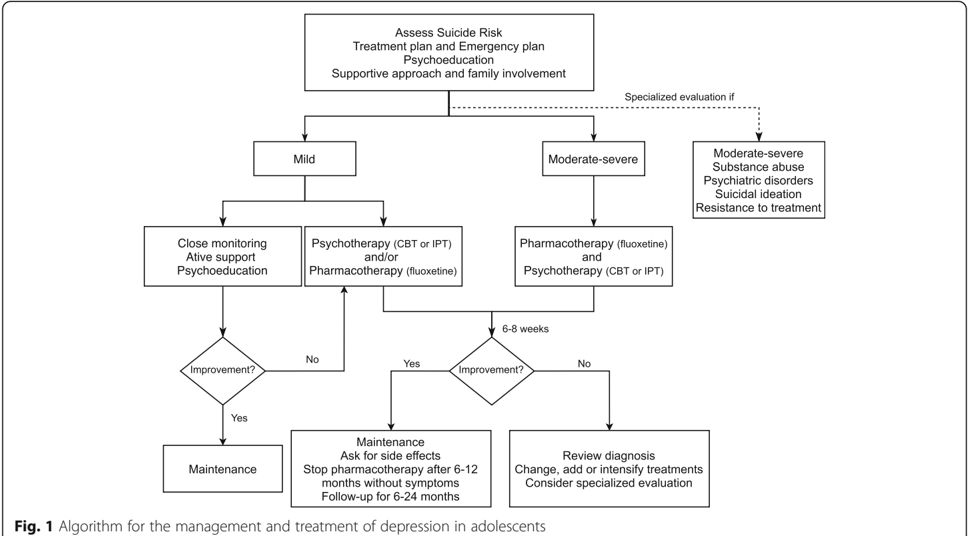
“In adolescents with moderate to severe depression, treatment is based on combined psychotherapy and pharmacotherapy [42, 43].”
BackgroundInterpersonal Psychotherapy for Depressed Adolescents (IPT-A)
Mufson, L. H., & Moreau, D. (1999) · Issues in clinical child psychology · doi:10.1007/978-1-4615-4755-6_13 · Cited by 81
Should we recommend exercise to adolescents with depressive symptoms? A meta‐analysis
Radovic, S., Gordon, M. S., & Melvin, G. A. (2017) · Journal of Paediatrics and Child Health · doi:10.1111/jpc.13426 · Cited by 79 · cited 1×
“Other strategies such as physical exercise, sleep hygiene and adequate nutrition have been referred as treatment adjuvants [44, 46, 47].”
BackgroundChildhood and adolescent depression: The role of primary care providers in diagnosis and treatment
Richardson, L. P., & Katzenellenbogen, R. A. (2004) · Current problems in pediatric and adolescent health care · doi:10.1016/j.cppeds.2004.09.001 · Cited by 77 · cited 3×
“When psychotherapy is not available or cannot be applied, pharmacotherapy can be an alternative [39, 41].”
BackgroundVitiello, B., Brent, D. A., Greenhill, L. L., Emslie, G., Wells, K., Walkup, J. T., Stanley, B., Bukstein, O., Kennard, B. D., Compton, S., et al. (2009) · Journal of the American Academy of Child & Adolescent Psychiatry · doi:10.1097/chi.0b013e3181b5db66 · Cited by 72
(2019) · PubMed · Cited by 72
Pediatric Depression: An Evidence-Based Update on Treatment Interventions
Cheung, A. H., Kozloff, N., & Sacks, D. (2013) · Current Psychiatry Reports · doi:10.1007/s11920-013-0381-4 · Cited by 65 · cited 6×
“CBT is a brief psychotherapy, carried out individually or in groups, based on the relationship between thoughts, feelings and behaviours [40].”
BackgroundMethodInfluentialDepression in Primary Care: Detection, Diagnosis, and Treatment
Panel, D. G. (1994) · Journal of the American Academy of Nurse Practitioners · doi:10.1111/j.1745-7599.1994.tb00946.x · Cited by 59
Findling, R. L., Robb, A., & Bose, A. (2013) · Journal of Child and Adolescent Psychopharmacology · doi:10.1089/cap.2012.0023 · Cited by 57
Thabrew, H., Stasiak, K., Hetrick, S. E., Donkin, L., Huss, J. H., Highlander, A., Wong, S., & Merry, S. N. (2018) · Cochrane Database of Systematic Reviews · doi:10.1002/14651858.cd012488.pub2 · Cited by 53
Seeking an Objective Diagnosis of Depression
Bilello, J. A. (2016) · Biomarkers in Medicine · doi:10.2217/bmm-2016-0076 · Cited by 48 · cited 1×
“The fact that these symptoms are common in other disorders such as hypothyroidism, anaemia, sleep apnoea or other chronic diseases makes the diagnosis more challenging to establish in these subjects [26].”
BackgroundThabrew, H., Stasiak, K., Hetrick, S. E., Wong, S., Huss, J. H., & Merry, S. N. (2017) · Cochrane Database of Systematic Reviews · doi:10.1002/14651858.cd012488 · Cited by 44
Duloxetine Treatment of Pediatric Chronic Pain and Co-Morbid Major Depressive Disorder
Meighen, K. G. (2007) · Journal of Child and Adolescent Psychopharmacology · doi:10.1089/cap.2006.0042 · Cited by 42
Ignaszewski, M. J., & Waslick, B. (2018) · Journal of Child and Adolescent Psychopharmacology · doi:10.1089/cap.2017.0174 · Cited by 37
Zappitelli, M. C., Bordin, I. A., Hatch, J. P., Caetano, S. C., Zunta‐Soares, G. B., Olvera, R. L., & Soares, J. C. (2012) · Comprehensive Psychiatry · doi:10.1016/j.comppsych.2012.10.009 · Cited by 24 · cited 1×
“Studies showed that depressed patients present higher novelty seeking, harm avoidance and lower reward dependence, persistence, selfdirectedness and cooperativeness compared to healthy individuals [23, 24].”
BackgroundCzaja, A. S., Valuck, R. J., & Anderson, H. D. (2013) · Pharmacoepidemiology and Drug Safety · doi:10.1002/pds.3420 · Cited by 23 · cited 1×
“Citalopram must be carefully evaluated as side effects include prolongation of the QT interval, which can lead to arrhythmia [63, 64].”
BackgroundParental threats and adolescent depression: The role of emotion dysregulation
Trent, E. S., Viana, A. G., Raines, E. M., Woodward, E. C., Storch, E. A., & Zvolensky, M. J. (2019) · Psychiatry Research · doi:10.1016/j.psychres.2019.04.009 · Cited by 20 · cited 1×
“A significant interaction was found between exposure to maternal threatening behaviours and deficits in emotional clarity in relation to depressive symptom severity [19].”
BackgroundIdentifying and treating adolescent depression
Tompson, M. C., McNeil, F. M., Rea, M. M., & Asarnow, J. R. (2000) · Western Journal of Medicine · doi:10.1136/ewjm.172.3.172 · Cited by 17 · cited 1×
“Psychotherapy should be considered first line of treatment in adolescents afraid of or with contraindications for medication, with identified stress factors or those with poor response to other approaches [56].”
BackgroundTemperament and character traits in major depressive disorder: a case control study
Nogueira, B. S., Fráguas, R., Benseñor, I. M., Lotufo, P. A., & Brunoni, A. R. (2017) · Sao Paulo Medical Journal · doi:10.1590/1516-3180.2017.0063250517 · Cited by 8 · cited 2×
“Studies showed that depressed patients present higher novelty seeking, harm avoidance and lower reward dependence, persistence, selfdirectedness and cooperativeness compared to healthy individuals [23, 24].”
BackgroundAdolescent mental health initiative
Puspitasari, S., & Rohmah, F. A. (2021) · Community Empowerment · doi:10.31603/ce.5068 · Cited by 6
Research works printed but not linked: 1
- Roberts C, Ballantyne F, Van Der Klift P (2003) Aussie optimism. Curtin University of Technology, Perth, Australia, Social life skills. Teacher resource
Cited by
The Mediterranean Diet and the Western Diet in Adolescent Depression-Current Reports
Zielińska, M., Łuszczki, E., Michońska, I., & Dereń, K. (2022) · Nutrients · doi:10.3390/nu14204390 · Cited by 84
“5% of disability adjusted life years (DALY) in young people [11].”
BackgroundBai, S., Xie, J., Bai, H., Tian, T., Zou, T., & Chen, J.-J. (2021) · Journal of Inflammation Research · doi:10.2147/jir.s324922 · Cited by 51
Maftei, A., Merlici, I.-A., & Dănilă, O. (2023) · Frontiers in Public Health · doi:10.3389/fpubh.2022.1062688 · Cited by 49
Depression, Anxiety, and Suicide Among Adolescents: Sex Differences and Future Perspectives
Toro, G. V. R., Arias, P., de la Torre‐Luque, A., Singer, J. B., & Lagunas, N. (2025) · Journal of Clinical Medicine · doi:10.3390/jcm14103446 · Cited by 51
Calandri, E., Graziano, F., Begotti, T., Cattelino, E., Gattino, S., Rollero, C., & Fedi, A. (2021) · Frontiers in Psychology · doi:10.3389/fpsyg.2021.643088 · Cited by 31
Metadata
- Authors
- Beirão, D., Monte, H., Amaral, M., Longras, A., Matos, C., & Villas-Boas, F.
- Affiliations
- Fernando Pessoa University (PT)
- Corresponding author
- Beirão, Diogo
- Venue
- Middle East Current Psychiatry
- Published
- 2020-10-02
- Volume
- 27
- Issue
- 1
- ISSN
- 2090-5408 (ISSN-L)
- 2090-5416
- OpenAlex
- W3090484732
- Semantic Scholar
- 89826f634989e6010643a2d7ce62b8f71bce81e8
- Cited by
- 70
- References
- 92
- Citations by year
- 2026: 11 · 2025: 13 · 2024: 24 · 2023: 11 · 2022: 8 · 2021: 3
- FWCI
- 2.20
- Type
- journal article
- Language
- en
- Open access
- diamond
- doi.org
- Licence
- cc-by
- creativecommons.org/licenses/by/4.0 (tdm)
- creativecommons.org/licenses/by/4.0 (vor)
- Locations
- Middle East Current Psychiatry (publishedVersion, cc-by)
- DOAJ (DOAJ: Directory of Open Access Journals) (submittedVersion, cc-by-sa)
- Topics
- Social Sciences › Psychology › Clinical Psychology › Child and Adolescent Psychosocial and Emotional Development
- Health Sciences › Medicine › Psychiatry and Mental health › Mental Health Treatment and Access
- Health Sciences › Medicine › Pharmacology (medical) › Treatment of Major Depression
- Keywords
- adolescent depression, depression screening, depression diagnosis, primary care, differential diagnosis, pathogenesis, genetic and environmental risk factors, cognitive behavioral therapy, interpersonal psychotherapy, fluoxetine, psychoeducation, family involvement, depression prevention, general practitioners
About these checks
Registry, retraction, Cites and statistics results are computed, not judged, with one exception: a printed reference that no index lists is read once by a model before it counts as a citation error. Claims are extracted by a model and kept only when their quote appears verbatim in the text; each cited source is then checked, with a model’s help, for whether it says what the claim relies on. Those verdicts can be wrong — read the claim’s quote and the cited source before relying on one.
Statistics and arithmetic are recomputed, not judged.
Confidence bands are shown only for fields calibrated on our annotated test set. None is calibrated yet, so no band is shown.
What counts as a claim ›How we measure confidence ›How we check this ›
Are you an author, or do you see a problem with this page? Request a review
Data sources
Bibliographic data: Semantic Scholar, OpenAlex, Crossref.
Contains information from the Semantic Scholar Academic Graph Datasets, made available under the ODC Attribution License (ODC-BY 1.0).
Semantic Scholar’s data is described in: Kinney, R., et al. (2023). The Semantic Scholar Open Data Platform. arXiv:2301.10140.
