

The Pervasive Effects of an Antibiotic on the Human Gut Microbiota, as Revealed by Deep 16S rRNA Sequencing
Open accessThe DOI matches its Crossref record; 95 of the 95 references it cites were found in a registry or an index.
Abstract
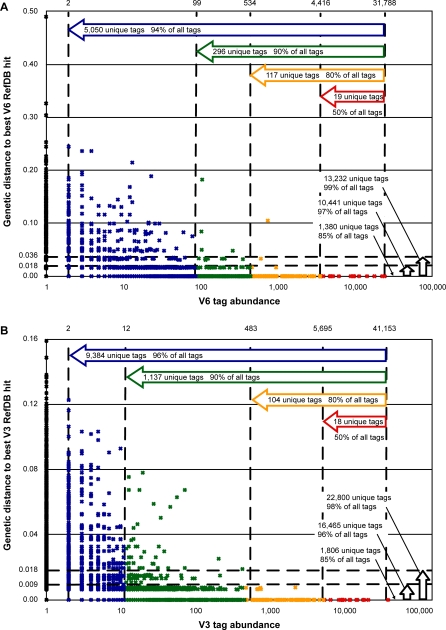
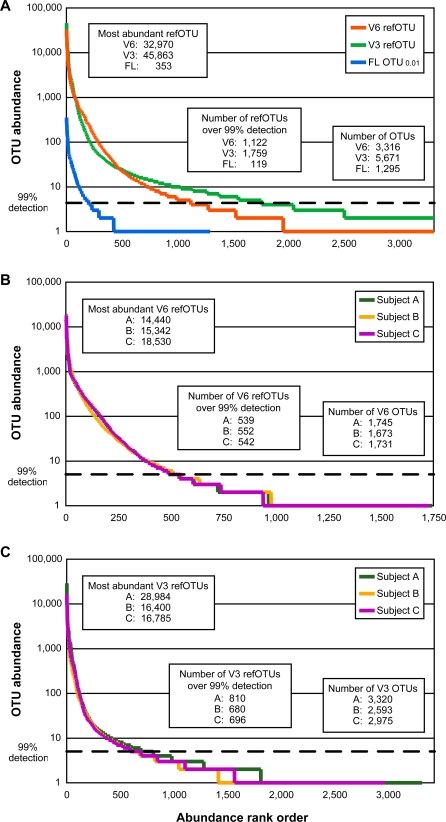
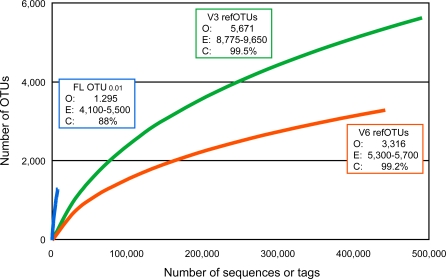
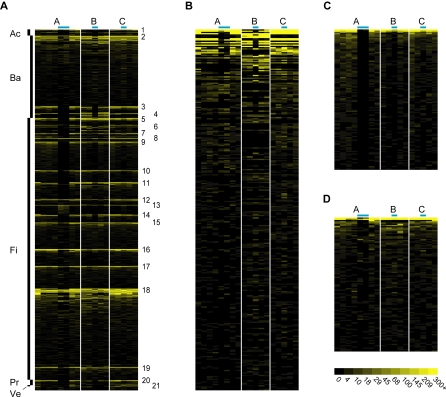
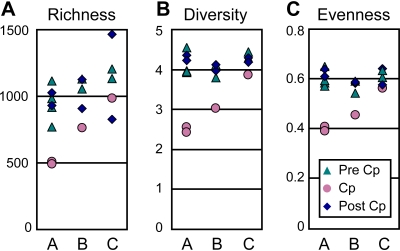
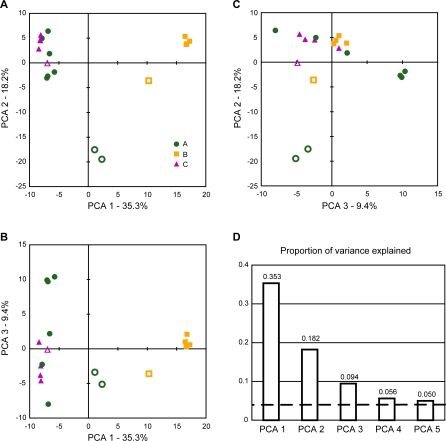
The human intestinal microbiota is essential to the health of the host and plays a role in nutrition, development, metabolism, pathogen resistance, and regulation of immune responses. Antibiotics may disrupt these coevolved interactions, leading to acute or chronic disease in some individuals. Our understanding of antibiotic-associated disturbance of the microbiota has been limited by the poor sensitivity, inadequate resolution, and significant cost of current research methods. The use of pyrosequencing technology to generate large numbers of 16S rDNA sequence tags circumvents these limitations and has been shown to reveal previously unexplored aspects of the "rare biosphere." We investigated the distal gut bacterial communities of three healthy humans before and after treatment with ciprofloxacin, obtaining more than 7,000 full-length rRNA sequences and over 900,000 pyrosequencing reads from two hypervariable regions of the rRNA gene. A companion paper in PLoS Genetics (see Huse et al., doi: 10.1371/journal.pgen.1000255) shows that the taxonomic information obtained with these methods is concordant. Pyrosequencing of the V6 and V3 variable regions identified 3,300-5,700 taxa that collectively accounted for over 99% of the variable region sequence tags that could be obtained from these samples. Ciprofloxacin treatment influenced the abundance of about a third of the bacterial taxa in the gut, decreasing the taxonomic richness, diversity, and evenness of the community. However, the magnitude of this effect varied among individuals, and some taxa showed interindividual variation in the response to ciprofloxacin. While differences of community composition between individuals were the largest source of variability between samples, we found that two unrelated individuals shared a surprising degree of community similarity. In all three individuals, the taxonomic composition of the community closely resembled its pretreatment state by 4 weeks after the end of treatment, but several taxa failed to recover within 6 months. These pervasive effects of ciprofloxacin on community composition contrast with the reports by participants of normal intestinal function and with prior assumptions of only modest effects of ciprofloxacin on the intestinal microbiota. These observations support the hypothesis of functional redundancy in the human gut microbiota. The rapid return to the pretreatment community composition is indicative of factors promoting community resilience, the nature of which deserves future investigation.
Overview
The claims and statistics of this paper haven’t been checked yet.
Free: it reads the open-access text and checks the first 5 claims that cite a source we can check. Create a free account to check every claim.
Integrity signals
Registry
Cites
Statistics
Figures
Verification
Claims the paper makes
The claims and statistics of this paper haven’t been checked yet.
Free: it reads the open-access text and checks the first 5 claims that cite a source we can check. Create a free account to check every claim.
Claims other papers make about this one
Each is checked against this paper’s own text: does it say what the citing paper says it does?
The source backs part of the claim, not all of it — or backs it for a different population, condition or comparison.
In the citing paper
“The greatest risk factor for CDI is the use of antibiotics,46 though only a small proportion of patients on antibiotics develop the infection.”
From Update on Fecal Microbiota Transplantation 2015: Indications, Methodologies, Mechanisms, and Outlook (2015) · cites this paper as [46]
Experimental — accuracy not yet measuredThe source backs part of the claim, not all of it — or backs it for a different population, condition or comparison.
In the citing paper
“The taxonomic composition of the gut microbiota changes throughout the gastrointestinal tract, according to nutrient availability, mucus structure, pH and oxygen availability [1–6].”
From Role of the gut microbiota in nutrient competition and protection against intestinal pathogen colonization (2023) · cites this paper as [6]
Experimental — accuracy not yet measuredThe cited source says what the claim attributes to it.
In the citing paper
“Individual bacterial taxa can show variable responses to antibiotics, which will impact the nutrient niches that are created in the intestine following antibiotic treatment [6].”
From Role of the gut microbiota in nutrient competition and protection against intestinal pathogen colonization (2023) · cites this paper as [6]
Self-check
Percentages, sums and reported differences re-computed from the paper’s own numbers.
The self-check needs the paper’s full text.
Citations
Cites
Naïve Bayesian Classifier for Rapid Assignment of rRNA Sequences into the New Bacterial Taxonomy
Wang, Q., Garrity, G. M., Tiedje, J. M., & Cole, J. R. (2007) · Applied and Environmental Microbiology · doi:10.1128/aem.00062-07 · Cited by 19,885 · cited 5×
“The taxonomic affiliation of fulllength sequences was determined using the Classifier tool of the RDP, with an 80% bootstrap threshold [41].”
BackgroundMethodInfluentialGreengenes, a Chimera-Checked 16S rRNA Gene Database and Workbench Compatible with ARB
DeSantis, T. Z., Hugenholtz, P., Larsen, N., Rojas, M., Brodie, E. L., Keller, K., Huber, T., Dalevi, D., Hu, P., & Andersen, G. L. (2006) · Applied and Environmental Microbiology · doi:10.1128/aem.03006-05 · Cited by 10,891 · cited 1×
“Forward and reverse sequencing reads were assembled using the Phred/Phrap/Consed suite of programs with default parameters [50–52]; assembled sequences were aligned via the NAST algorithm [53] at the Greengenes Website (http:// greengenes.lbl.gov/) [ 54 ].”
MethodHuman gut microbes associated with obesity
Ley, R. E., Turnbaugh, P. J., Klein, S., & Gordon, J. I. (2006) · Nature · doi:10.1038/4441022a · Cited by 8,785 · cited 1×
“A high proportion of tags in the current study have an exact match in the database, due to the substantial sequencing effort that has already been directed to the human gut microbiota [7,30,90].”
BackgroundDiversity of the Human Intestinal Microbial Flora
Eckburg, P. B., Bik, E. M., Bernstein, C. N., Purdom, E., Dethlefsen, L., Sargent, M., Gill, S. R., Nelson, K. E., & Relman, D. A. (2005) · Science · doi:10.1126/science.1110591 · Cited by 7,913 · cited 4×
“A high proportion of tags in the current study have an exact match in the database, due to the substantial sequencing effort that has already been directed to the human gut microbiota [7,30,90].”
BackgroundResultInfluentialSelf-citationGenome sequencing in microfabricated high-density picolitre reactors
Margulies, M., Egholm, M., Altman, W. E., Attiya, S., Bader, J. S., Bemben, L. A., Berka, J., Braverman, M. S., Chen, Y.-J., Chen, Z., et al. (2005) · Nature · doi:10.1038/nature03959 · Cited by 7,693 · cited 2×
“lower than that of capillary dideoxy sequencing, although considerably better than the 96% accuracy initially reported [38].”
BackgroundResultBase-Calling of Automated Sequencer Traces Using Phred. I. Accuracy Assessment
Ewing, B., Hillier, L., Wendl, M. C., & Green, P. (1998) · Genome Research · doi:10.1101/gr.8.3.175 · Cited by 6,967 · cited 1×
“Forward and reverse sequencing reads were assembled using the Phred/Phrap/Consed suite of programs with default parameters [48-50]; assembled sequences were aligned via the NAST algorithm [51] at the Greengenes website (http://greengenes.”
MethodARB: a software environment for sequence data
Ludwig, W. (2004) · Nucleic Acids Research · doi:10.1093/nar/gkh293 · Cited by 6,702 · cited 6×
“Uncultivated Taxon V3_Clostridiales_refOTU_2 The maximum-likelihood phylogenetic tree (calculated via AxML using default parameters in Arb [55]) shows the relationship between a clade containing 174 full-length V3 RefDB 16S rRNA sequences with exact matches to V3_Clostridiales_refOTU_2 and the most closely related seq…”
MethodInfluentialPruesse, E., Quast, C., Knittel, K., Fuchs, B. M., Ludwig, W., Peplies, J., & Glockner, F. O. (2007) · Nucleic Acids Research · doi:10.1093/nar/gkm864 · Cited by 6,668 · cited 1×
“de/)[57] with taxonomic classifications obtained from the RDP Classifier [41] (minimum 80% bootstrap score) as described in [48].”
MethodThe gut microbiota as an environmental factor that regulates fat storage
Bäckhed, F., Ding, H., Wang, T., Hooper, L. V., Koh, G. Y., Nagy, A., Semenkovich, C. F., & Gordon, J. I. (2004) · Proceedings of the National Academy of Sciences · doi:10.1073/pnas.0407076101 · Cited by 6,245
Obesity alters gut microbial ecology
Ley, R. E., Bäckhed, F., Turnbaugh, P., Lozupone, C. A., Knight, R. D., & Gordon, J. I. (2005) · Proceedings of the National Academy of Sciences · doi:10.1073/pnas.0504978102 · Cited by 6,176 · cited 1×
“cations for cancer [18,19] and obesity [20,21], among other”
Background
Research works printed but not linked: 89
- Dethlefsen, 2007, Nature, 449, 811
- Ley, 2006, Cell, 124, 837
- Guarner, 2006, Digestion, 73, 5
- Brook, 2005, Otolaryngol Head Neck Surg, 133, 139
- Servin, 2004, FEMS Microbiol Rev, 28, 405
- Reid, 2006, World J Urol, 24, 28
- Li, 2008, Proc Natl Acad Sci U S A, 105, 2117
- Hooper, 2004, Trends Microbiol, 12, 129
- Mazmanian, 2005, Cell, 122, 107
- Rakoff-Nahoum, 2004, Cell, 118, 229
- Sullivan, 2001, Lancet Infect Dis, 1, 101
- Beaugerie, 2004, Best Pract Res Clin Gastroenterol, 18, 337
- Wilcox, 2003, Best Pract Res Clin Gastroenterol, 17, 475
- Marra, 2006, Chest, 129, 610
- Noverr, 2005, Clin Exp Allergy, 35, 1511
- Prioult, 2005, Immunol Rev, 206, 204
- Nicholson, 2005, Nat Rev Microbiol, 3, 431
- O'Keefe, 2007, J Nutr, 137, 175S
- McGarr, 2005, J Clin Gastroenterol, 39, 98
- Ley, 2005, Proc Natl Acad Sci U S A, 102, 11070
- Bäckhed, 2004, Proc Natl Acad Sci U S A, 101, 15718
- Stewart, 2004, FEMS Microbiol Lett, 230, 1
- Lode, 2001, Scand J Infect Dis, 33, 899
- De La Cochetiere, 2005, J Clin Microbiol, 43, 5588
- Donskey, 2003, J Microbiol Meth, 54, 249
- Jernberg, 2007, Isme J, 1, 56
- Lofmark, 2008, Anaerobe, 14, 157
- Sjolund, 2003, Ann Intern Med, 139, 483
- Bäckhed, 2005, Science, 307, 1915
- Eckburg, 2005, Science, 308, 1635
- Suau, 1999, Appl Environ Microbiol, 65, 4799
- Zoetendal, 2004, J Nutr, 134, 465
- Mai, 2004, J Nutr, 134, 459
- Bartosch, 2004, Appl Environ Microbiol, 70, 3575
- Bartosch, 2005, Clin Infect Dis, 40, 28
- Vanhoutte, 2004, FEMS Microbiol Ecol, 48, 437
- Jernberg, 2005, Appl Environ Microbiol, 71, 501
- Margulies, 2005, Nature, 437, 376
- Sogin, 2006, Proc Natl Acad Sci U S A, 103, 12115
- Liu, 2007, Nucleic Acids Res, 35, e120
- Wang, 2007, Appl Environ Microbiol, 73, 5261
- Huber, 2007, Science, 318, 97
- Huse, 2007, Genome Biol, 8, R143
- Roesch, 2007, Isme J, 1, 283
- Hamady, 2008, Nat Methods, 5, 235
- Sundquist, 2007, BMC Microbiol, 7, 108
- Thompson, 2002, Nucleic Acids Res, 30, 2083
- Ewing, 1998, Genome Res, 8, 186
- Ewing, 1998, Genome Res, 8, 175
- Gordon, 1998, Genome Res, 8, 195
- DeSantis, 2006, Nucleic Acids Res, 34, W394
- DeSantis, 2006, Appl Environ Microbiol, 72, 5069
- Ludwig, 2004, Nucleic Acids Res, 32, 1363
- Schloss, 2005, Appl Environ Microbiol, 71, 1501
- Pruesse, 2007, Nucleic Acids Res, 35, 7188
- Colwell, 2005, EstimateS: Statistical estimation of species richness and shared species from samples. Version 7.5
- Leek, 2006, Bioinformatics, 22, 507
- Hughes, 2001, Appl Environ Microbiol, 67, 4399
- Chao, 1984, Scan J Stat, 11, 265
- Chao, 1992, Biometrics, 48, 201
- Colwell, 1994, Philos Trans R Soc Lond B Biol Sci, 345, 101
- Good, 1953, Biometrika, 40, 237
- Derrien, 2004, Int J Syst Evol Microbiol, 54, 1469
- Jost, 2006, Oikos, 113, 363
- Jost, 2007, Ecology, 88, 2427
- Franks, 1998, Appl Environ Microbiol, 64, 3336
- Matsuki, 2004, Appl Environ Microbiol, 70, 7220
- Hayashi, 2002, Microbiol Immunol, 46, 819
- De La Cochetiere, 2008, Microb Ecol, 56, 395
- Ozaki, 2004, J Med Microbiol, 53, 167
- Flint, 2007, Environ Microbiol, 9, 1101
- Belenguer, 2006, Appl Environ Microbiol, 72, 3593
- Martin, 2007, Mol Syst Biol, 3, 112
- Ridlon, 2006, J Lipid Res, 47, 241
- Pena, 2004, Appl Environ Microbiol, 70, 558
- Servin, 2003, Best Pract Res Clin Gastroenterol, 17, 741
- Sullivan, 2003, J Antimicrob Chemother, 52, 308
- Bedford Russell, 2006, Bjog, 113, 758
- Young, 2004, J Clin Microbiol, 42, 1203
- Duncan, 2004, Appl Environ Microbiol, 70, 5810
- Duncan, 2006, Int J Syst Evol Microbiol, 56, 2437
- Louis, 2004, J Bacteriol, 186, 2099
- Schumacher, 1997, Clin Microbiol Infect, 3, 134
- Jacoby, 2005, Clin Infect Dis 41 Suppl, 2, S120
- Forney, 2004, Curr Opin Microbiol, 7, 210
- von Wintzingerode, 1997, FEMS Microbiol Rev, 21, 213
- Ley, 2006, Nature, 444, 1022
- von Mering, 2007, Science, 315, 1126
- Ashelford, 2006, Appl Environ Microbiol, 72, 5734
Cited by
Items 501–600 of 1,011
Wan, B., Zhang, Q., Ni, J., Li, S., Wen, D., Li, J., Xiao, H., He, P., Ou, H., Tao, J., et al. (2017) · PLoS Pathogens · doi:10.1371/journal.ppat.1006246 · Cited by 146
The microbiome and hepatobiliary-pancreatic cancers
Mima, K., Nakagawa, S., Sawayama, H., Ishimoto, T., Imai, K., Iwatsuki, M., Hashimoto, D., Baba, Y., Yamashita, Y., Yoshida, N., et al. (2017) · Cancer Letters · doi:10.1016/j.canlet.2017.05.001 · Cited by 144
Microbial transmission in the social microbiome and host health and disease
Sarkar, A., McInroy, C. J. A., Harty, S., Raulo, A., Ibata, N. G. O., Valles‐Colomer, M., Johnson, K. V. ‐., Brito, I., Henrich, J., Archie, E. A., et al. (2024) · Cell · doi:10.1016/j.cell.2023.12.014 · Cited by 152
Microbiome Profiles in Periodontitis in Relation to Host and Disease Characteristics
Hong, B.-Y., Furtado Araujo, M. V., Strausbaugh, L. D., Terzi, E., Ioannidou, E., & Diaz, P. I. (2015) · PLOS ONE · doi:10.1371/journal.pone.0127077 · Cited by 128
“A one month antibiotic-free period prior to study enrollment was chosen to increase recruitment in this medically-heterogeneous population and was based on studies on gut communities, which show a rapid recovery of community composition after 4 weeks of antibiotic administration [21].”
BackgroundMethodMayer, B. T., Srinivasan, S., Fiedler, T. L., Marrazzo, J. M., Fredricks, D. N., & Schiffer, J. T. (2015) · Journal of Infectious Diseases · doi:10.1093/infdis/jiv079 · Cited by 131
Berry, D., Kuzyk, O., Rauch, I., Heider, S., Schwab, C., Hainzl, E., Decker, T., Müller, M., Strobl, B., Schleper, C., et al. (2015) · Frontiers in Microbiology · doi:10.3389/fmicb.2015.01408 · Cited by 126
“Considering stressors, a single treatment with antibiotics (amoxicillin or ciprofloxacin) has been shown to induce major changes in the gut microbiota (De La Cochetière et al., 2005; Dethlefsen et al., 2008; Dethlefsen and Relman, 2011).”
BackgroundThe mind-body-microbial continuum
Gonzalez, A., Stombaugh, J., Lozupone, C., Turnbaugh, P. J., Gordon, J. I., & Knight, R. (2011) · Dialogues in Clinical Neuroscience · doi:10.31887/dcns.2011.13.1/agonzalez · Cited by 131
Huang, X.-Z., Gao, P., Song, Y.-X., Xu, Y., Sun, J.-X., Chen, X.-W., Zhao, J.-H., & Wang, Z.-N. (2019) · OncoImmunology · doi:10.1080/2162402x.2019.1665973 · Cited by 132
“This definition may be imprecise because the recovery time can differ greatly depending on the duration, route, and type of ATB used.(34,35) Among the included studies, Derosa et al.”
BackgroundLing, N., Deng, K.-Y., Song, Y., Wu, Y., Jun, Z., Raza, W., Huang, Q., & Shen, Q. (2013) · Microbiological Research · doi:10.1016/j.micres.2013.10.004 · Cited by 144
“PCR amplification of the bacterial 16S rRNA genes from the genomic DNA for 454 pyrosequencing was conducted using a highly conserved universal bacterial primer set as described by Dethlefsen et al. (2008) and Huse et al.”
MethodFinkel, O. M., Burch, A. Y., Elad, T., Huse, S. M., Lindow, S. E., Post, A. F., & Belkin, S. (2012) · Applied and Environmental Microbiology · doi:10.1128/aem.00888-12 · Cited by 132
Self-citationThe future of mucosal immunology: studying an integrated system-wide organ
Gill, N., Wlodarska, M., & Finlay, B. B. (2010) · Nature Immunology · doi:10.1038/ni0710-558 · Cited by 145
Antibiotics, obesity and the link to microbes - what are we doing to our children?
Turta, O., & Rautava, S. (2016) · BMC Medicine · doi:10.1186/s12916-016-0605-7 · Cited by 128
“Given the mechanism of action of antimicrobial agents, it is hardly surprising that antibiotic therapy inflicts a profound impact on intestinal microbial ecology [23, 24].”
Wills, E. S., Jonkers, D. M. A. E., Savelkoul, P. H. M., Masclee, A., Pierik, M. J., & Penders, J. (2014) · PLoS ONE · doi:10.1371/journal.pone.0090981 · Cited by 148
“Amplicon libraries for pyrosequencing of the 16S rDNA V1–V3 regions were generated using a barcoded forward primer consisting of the 454 Titanium platform A linker sequence (59CCATCCCTGCGTGTCTCCGACTCAG-39), a key (barcode) that was unique for each sample, and the 16S rRNA 534R primer sequence 59- ATTACCGCGGCTGCTGG -39…”
MethodThe Bacterial Microbiome and Virome Milestones of Infant Development
Lim, E. S., Wang, D., & Holtz, L. R. (2016) · Trends in Microbiology · doi:10.1016/j.tim.2016.06.001 · Cited by 142
Parkinson’s disease and bacteriophages as its overlooked contributors
Tetz, G., Brown, S. M., Hao, Y., & Tetz, V. (2018) · Scientific Reports · doi:10.1038/s41598-018-29173-4 · Cited by 126
Long-term impact of tylosin on fecal microbiota and fecal bile acids of healthy dogs
Manchester, A. C., Webb, C. B., Blake, A. B., Sarwar, F., Lidbury, J. A., Steiner, J. M., & Suchodolski, J. S. (2019) · Journal of Veterinary Internal Medicine · doi:10.1111/jvim.15635 · Cited by 145
“Microbiota disruption has been documented in healthy dogs and humans receiving PO antibiotics.(7,11,28-30) Alteration of gut microbiota is not necessarily detrimental to the host, and different microbiota compositions can be compatible with health.”
BackgroundResultRodrigues, R. R., Greer, R. L., Dong, X., DSouza, K. N., Gurung, M., Wu, J. Y., Morgun, A., & Shulzhenko, N. (2017) · Frontiers in Microbiology · doi:10.3389/fmicb.2017.02306 · Cited by 129
“Microbiome composition is known to be affected by antibiotics (De La Cochetiere et al., 2005; Jernberg et al., 2007; Dethlefsen et al., 2008; Jakobsson et al., 2010; Dethlefsen and Relman, 2011; Perez-Cobas et al., 2013; Pallav et al., 2014; Panda et al., 2014; Raymond et al., 2016) and involved in…”
BackgroundInfluentialShao-feng, H., Liu, Y., Zhou, Z., He, S., Cao, Y., Shi, P., Yao, B., & Ringø, E. (2010) · Aquaculture Research · doi:10.1111/j.1365-2109.2010.02543.x · Cited by 136
Early microbial contact, the breast milk microbiome and child health
Rautava, S. (2015) · Journal of Developmental Origins of Health and Disease · doi:10.1017/s2040174415001233 · Cited by 144
Lactobacillus casei Abundance Is Associated with Profound Shifts in the Infant Gut Microbiome
Cox, M. J., Huang, Y. J., Fujimura, K. E., Liu, J. T., McKean, M., Boushey, H. A., Segal, M. R., Brodie, E. L., Cabana, M. D., & Lynch, S. V. (2010) · PLoS ONE · doi:10.1371/journal.pone.0008745 · Cited by 125
“This suggests that none of these infants had received antibiotics, (characteristically associated with a rapid, dramatic decline in bacterial community richness [53,54]), proximal to the date of sample collection.”
BackgroundEarly life events influence whole-of-life metabolic health via gut microflora and gut permeability
Kerr, C. A., Grice, D. M., Tran, C. D., Bauer, D. C., Li, D., Hendry, P., & Hannan, G. N. (2015) · Critical Reviews in Microbiology · doi:10.3109/1040841x.2013.837863 · Cited by 126
“(2008) examined the short-term effects of a single dose of the antibiotic (ciprofloxacin) in adults and found that it took four weeks for most of the gut microflora composition to recover to its pre-treatment state (Dethlefsen et al., 2008).”
BackgroundPyrosequencing analysis of the human microbiota of healthy Chinese undergraduates
Ling, Z., Liu, X., Luo, Y., Yuan, L., Nelson, K. E., Wang, Y., Xiang, C., & Li, L. (2013) · BMC Genomics · doi:10.1186/1471-2164-14-390 · Cited by 127
“host genotype [16,39-44].”
Rajagopala, S. V., Yooseph, S., Harkins, D. M., Moncera, K. J., Zabokrtsky, K. B., Torralba, M., Tovchigrechko, A., Highlander, S. K., Pieper, R., Sender, L. S., et al. (2016) · BMC Genomics · doi:10.1186/s12864-016-2965-y · Cited by 136
Novel Insights into the Pathogenesis of Inflammatory Bowel Diseases
Calvez, V., Puca, P., Vincenzo, F. D., GAUDIO, A. D., Bartocci, B., Murgiano, M., Iaccarino, J., Parand, E., Napolitano, D., Pugliese, D., et al. (2025) · Biomedicines · doi:10.3390/biomedicines13020305 · Cited by 137
“Antibiotics reduce both the taxonomic richness and diversity of the microbiome [119,120], impairing its metabolic function [121].”
Association of gut microbiota with post-operative clinical course in Crohn’s disease
Dey, N., Soergel, D. A., Repo, S., & Brenner, S. E. (2013) · BMC Gastroenterology · doi:10.1186/1471-230x-13-131 · Cited by 125
“These subsamples contained 57–245 (95% confidence interval) OTUs, similar to OTU counts at this sequencing depth seen in prior studies [26,29].”
BackgroundMethodResultPANGEA: pipeline for analysis of next generation amplicons
Giongo, A., Crabb, D. B., Davis-Richardson, A. G., Chauliac, D., Mobberley, J. M., Gano, K. A., Mukherjee, N., Casella, G., Roesch, L. F. W., Walts, B., et al. (2010) · The ISME Journal · doi:10.1038/ismej.2010.16 · Cited by 115
“…et al., 2009; Jones et al., 2009; Miller et al., 2009), analysis of rat, human and macaque gut microbiota (Liu et al., 2007; Andersson et al., 2008; Dethlefsen et al., 2008; McKenna et al., 2008; Roesch et al., 2009a, b) and other human microniches (Dowd et al., 2008; Luna et al., 2007; Armougom…”
Galley, J. D., Yu, Z., Kumar, P., Dowd, S. E., Lyte, M., & Bailey, M. T. (2014) · Gut Microbes · doi:10.4161/19490976.2014.972241 · Cited by 117
Improved Detection of Changes in Species Richness in High Diversity Microbial Communities
Willis, A., Bunge, J., & Whitman, T. (2017) · Journal of the Royal Statistical Society Series C: Applied Statistics · doi:10.1111/rssc.12206 · Cited by 119
“…linear regression of the observed richness (denoted ci for sample i) on the covariate, which is the most common method in the literature for evaluating changes in richness (Li et al., 2014; Sun et al., 2011; Lauber et al., 2009; Dethlefsen et al., 2008; Bordes et al., 2011; Gao et al., 2013).”
BackgroundMethodResultInfluentialEl Hage, R., Hernandez-Sanabria, E., Calatayud Arroyo, M., Props, R., & Van de Wiele, T. (2019) · Frontiers in Microbiology · doi:10.3389/fmicb.2019.01206 · Cited by 119
“Microbial fermentation processes in the gut leading to production of short chain fatty acids (SCFA), are the result of metabolic interactions between different gut species (Dethlefsen et al., 2008).”
BackgroundExploring Microbial Diversity Using 16S rRNA High-Throughput Methods
Armougom, F. (2009) · Journal of Computer Science & Systems Biology · doi:10.4172/jcsb.1000019 · Cited by 114
“Age, caloric intake, antibiotic treatment (Dethlefsen et al., 2008) and diet are a few environmental factors that can influence the gut microbiota composition and thus affect human health.”
BackgroundHenn, M. R., O’Brien, E. J., Diao, L., Feagan, B. G., Sandborn, W. J., Huttenhower, C., Wortman, J. R., McGovern, B. H., Wang-Weigand, S., Lichter, D. I., et al. (2021) · Gastroenterology · doi:10.1053/j.gastro.2020.07.048 · Cited by 118
Antimicrobial Stewardship in Veterinary Medicine
Lloyd, D. H., & Page, S. W. (2018) · Microbiology Spectrum · doi:10.1128/microbiolspec.arba-0023-2017 · Cited by 141
Chaston, J. M., & Goodrich‐Blair, H. (2009) · FEMS Microbiology Reviews · doi:10.1111/j.1574-6976.2009.00193.x · Cited by 138
“…by guest on 28 July 2018 Also, their microbial communities are complex and variable, containing 4 5600 taxa in the intestine alone (Hooper et al., 1998; Bäckhed et al., 2005; Dethlefsen et al., 2008), making it challenging to assign specific symbiotic functions to individual organisms.”
Diet Effects in Gut Microbiome and Obesity
Chen, J., He, X., & Huang, J. (2014) · Journal of Food Science · doi:10.1111/1750-3841.12397 · Cited by 114
Is primary prevention of Clostridium difficile infection possible with specific probiotics?
Johnson, S., Maziade, P.-J., McFarland, L. V., Trick, W., Donskey, C., Currie, B., Low, D. E., & Goldstein, E. J. C. (2012) · International Journal of Infectious Diseases · doi:10.1016/j.ijid.2012.06.005 · Cited by 117
Jo, J.-H., Harkins, C. P., Schwardt, N. H., Portillo, J. A., Program, N. C. S., Zimmerman, M. D., Carter, C. L., Hossen, M. A., Peer, C. J., Polley, E. C., et al. (2021) · Science Translational Medicine · doi:10.1126/scitranslmed.abd8077 · Cited by 116
Marathe, N. P., Regina, V. R., Walujkar, S. A., Charan, S. S., Moore, E. R. B., Larsson, D. G. J., & Shouche, Y. S. (2013) · PLoS ONE · doi:10.1371/journal.pone.0077310 · Cited by 115
“In bacterial communities exposed to sufficient selection pressure from exposure to antibiotics, resistance genes may increase radically in abundance within the populations [10–12].”
BackgroundRussell, G., Kaplan, J., Ferraro, M., & Michelow, I. C. (2010) · PEDIATRICS · doi:10.1542/peds.2009-3363 · Cited by 120
The Gut Bacterial Community of Mammals from Marine and Terrestrial Habitats
Nelson, T. M., Rogers, T. L., & Brown, M. V. (2013) · PLoS ONE · doi:10.1371/journal.pone.0083655 · Cited by 129
“Specific dietary items, antibiotic administration and local exposures result in altered gut bacterial communities in captive individuals [15,36,37] and it is likely these factors that are contributing to the observed differences in the wild and captive hosts compared in this study.”
ResultBlaser, M. J., Dominguez-Bello, M. G., Contreras, M., Magris, M., Hidalgo, G., Estrada, I., Gao, Z., Clemente, J. C., Costello, E. K., & Knight, R. (2013) · The ISME Journal · doi:10.1038/ismej.2012.81 · Cited by 120
“Modernization is changing our microecology (Blaser, 2006; Dethlefsen et al., 2008; Blaser and Falkow, 2009).”
BackgroundBohórquez, L. C., Delgado-Serrano, L., López, G., Osorio-Forero, C., Klepac‐Ceraj, V., Kolter, R., Junca, H., Baena, S., & Zambrano, M. M. (2011) · Microbial Ecology · doi:10.1007/s00248-011-9943-3 · Cited by 150
“It has recently been shown that low abundance taxa are harder to classify because they are infrequent and tend to be less represented in databases [66, 67].”
BackgroundBlainey, P. C., Milla, C. E., Cornfield, D. N., & Quake, S. R. (2012) · Science Translational Medicine · doi:10.1126/scitranslmed.3004458 · Cited by 118
Bacteriophages as potential new mammalian pathogens
Tetz, G. V., Ruggles, K. V., Zhou, H., Heguy, A., Tsirigos, A., & Tetz, V. (2017) · Scientific Reports · doi:10.1038/s41598-017-07278-6 · Cited by 119
Shen, Z., Wang, D., Ruan, Y., Xue, C., Zhang, J., Li, R., & Shen, Q. (2014) · PLoS ONE · doi:10.1371/journal.pone.0098420 · Cited by 127
Implications of Diet and The Gut Microbiome in Neuroinflammatory and Neurodegenerative Diseases
Hirschberg, S., Gisevius, B., Duscha, A., & Haghikia, A. (2019) · International Journal of Molecular Sciences · doi:10.3390/ijms20123109 · Cited by 117
Yang, S.-Y., Han, S. M., Lee, J., Kim, K. S., Lee, J. E., & Lee, D. (2025) · Journal of Microbiology and Biotechnology · doi:10.4014/jmb.2412.12001 · Cited by 141
“…multi-omics data with clinical information, particularly in cases of antibiotic-induced microbiome perturbation, have provided critical insights into microbiome resilience and susceptibility, revealing how patient-specific factors influence recovery and long-term microbiome stability [197, 198].”
Chernet, B. T., & Levin, M. (2014) · Oncotarget · doi:10.18632/oncotarget.1935 · Cited by 119
Towards Predictive Models of the Human Gut Microbiome
Bucci, V., & Xavier, J. B. (2014) · Journal of Molecular Biology · doi:10.1016/j.jmb.2014.03.017 · Cited by 113
“[49] as example).”
Review on microbiota and effectiveness of probiotics use in older
Rondanelli, M. (2015) · World Journal of Clinical Cases · doi:10.12998/wjcc.v3.i2.156 · Cited by 115
Impact of Antibiotics on Necrotizing Enterocolitis and Antibiotic-Associated Diarrhea
Silverman, M. A., Konnikova, L., & Gerber, J. S. (2017) · Gastroenterology Clinics of North America · doi:10.1016/j.gtc.2016.09.010 · Cited by 110
Metagenomics of the Human Body
Nelson, K. E. (2010) · Springer eBooks · doi:10.1007/978-1-4419-7089-3 · Cited by 121
Microbiome-health interactions in older people
O’Toole, P. W., & Jeffery, I. B. (2018) · Cellular and Molecular Life Sciences · doi:10.1007/s00018-017-2673-z · Cited by 117
Microbiota, immunoregulatory old friends and psychiatric disorders
Rook, G. A. W., Raison, C. L., & Lowry, C. A. (2014) · Advances in Experimental Medicine and Biology · doi:10.1007/978-1-4939-0897-4_15 · Cited by 117
Ritchie, L. E., Burke, K. F., García-Mazcorro, J. F., Steiner, J. M., & Suchodolski, J. S. (2010) · Veterinary Microbiology · doi:10.1016/j.vetmic.2009.12.045 · Cited by 128
Analyzing Endodontic Infections by Deep Coverage Pyrosequencing
Li, L., Hsiao, W. W. L., Nandakumar, R., Barbuto, S. M., Mongodin, E. F., Paster, B. J., Fraser-Liggett, C. M., & Fouad, A. F. (2010) · Journal of Dental Research · doi:10.1177/0022034510370026 · Cited by 116
“Recent metagenomic studies in the human digestive tract have revealed an overall diversity orders of magnitude higher than previously described (Gill et al., 2006; Andersson et al., 2008; Dethlefsen et al., 2008).”
BackgroundBacteriocins and bacteriophage; a narrow-minded approach to food and gut microbiology
Mills, S., Ross, R. P., & Hill, C. (2017) · FEMS Microbiology Reviews · doi:10.1093/femsre/fux022 · Cited by 128
“Dethlefsen et al. (2008) found that about 30% of the bacterial community was influenced by antibiotic treatment resulting in a decrease in taxonomic richness, diversity and evenness.”
BackgroundVolpe, G. E., Ward, H., Mwamburi, M., Dinh, D., Bhalchandra, S., Wanke, C., & Kane, A. V. (2014) · Journal of Studies on Alcohol and Drugs · doi:10.15288/jsad.2014.75.347 · Cited by 117
“Cocaine use is associated with gastrointestinal symptoms such as anorexia, nausea, vomiting, and diarrhea, which could also perturb the intestinal microbiota, as would use of antibiotics to treat infections associated with drug use (Dethlefsen et al., 2008; Young and Schmidt, 2004).”
BackgroundUltraviolet radiation, both UVA and UVB , influences the composition of the skin microbiome
Burns, E. M., Ahmed, H., Isedeh, P. N., Kohli, I., Van Der Pol, W., Shaheen, A., Muzaffar, A. F., Al‐Sadek, C., Foy, T. M., Abdelgawwad, M. S., et al. (2019) · Experimental Dermatology · doi:10.1111/exd.13854 · Cited by 116
From next-generation sequencing to systematic modeling of the gut microbiome
Ji, B., & Nielsen, J. (2015) · Frontiers in Genetics · doi:10.3389/fgene.2015.00219 · Cited by 114
“…samples clarifies how microbial diversity is associated with host–microbe interactions (Qin et al., 2012), or different environmental factors, such as diet (Carmody et al., 2014; Xu and Knight, 2015), drugs (Dethlefsen et al., 2008; Dethlefsen and Relman, 2011), or probiotics (Wang et al., 2015).”
Gut microbiota disturbance during antibiotic therapy: A multi-omic approach
Ferrer, M., Martins dos Santos, V. A., Ott, S. J., & Moya, A. (2014) · Gut Microbes · doi:10.4161/gmic.27128 · Cited by 110
“A number of investigations have innovatively employed state-of-the-art technologies to explore, primarily, the bi-directional communication between the GIT and human health(13-18) and, second, the way in which external factors such as nutrition and antibiotics modulate this loop.(1,19-32) The use of antibiotics to tre…”
BackgroundAntibiotic and acid-suppression medications during early childhood are associated with obesity
Stark, C. M., Susi, A., Emerick, J., & Nylund, C. M. (2019) · Gut · doi:10.1136/gutjnl-2017-314971 · Cited by 115
Carlson, J. M., Leonard, A. B., Hyde, E. R., Petrosino, J., & Primm, T. P. (2017) · Infection and Drug Resistance · doi:10.2147/idr.s129055 · Cited by 122
Nielsen, L. N., Roager, H. M., Casas, M. E., Frandsen, H. L., Gosewinkel, U., Bester, K., Licht, T. R., Hendriksen, N. B., & Bahl, M. I. (2017) · Environmental Pollution · doi:10.1016/j.envpol.2017.10.016 · Cited by 123
“Sequencing was performed by the DTU in-house facility (DTU Multi-Assay Core (DMAC), Technical University of Denmark on a 318-chip for Ion Torrent sequencing using the Ion OneTouch™ 200 Template Kit v2 DL generating a median length of 180 bp. Sequencing data were imported into and further processed in CLC Genomic Workb…”
MethodInfluentialAntibiotics reduce genetic diversity of core species in the honeybee gut microbiome
Raymann, K., Bobay, L., & Moran, N. A. (2017) · Molecular Ecology · doi:10.1111/mec.14434 · Cited by 125
Newton, R. J., VandeWalle, J. L., Borchardt, M. A., Gorelick, M. H., & McLellan, S. L. (2011) · Applied and Environmental Microbiology · doi:10.1128/aem.05480-11 · Cited by 130
“(13), human Bacteroidales (7, 21), and Lachno2 (this study) in each sample from the human fecal (11, 52), cow fecal (47), and WI sewage (reference 29 and this study) V6 pyrosequencing data sets.”
BackgroundResultVidenska, P., Faldynová, M., Juřicová, H., Babák, V., Šišák, F., Havlíčková, H., & Rychlı́k, I. (2013) · BMC Veterinary Research · doi:10.1186/1746-6148-9-30 · Cited by 114
“The results obtained from humans or mice indicate that the changes induced by antibiotic therapy are quite severe but relatively soon after withdrawal of the therapy, within 2 weeks, the microbiota composition returns back to the state prior to the therapy [9-12].”
BackgroundRichards, P. J., Connerton, P. L., & Connerton, I. F. (2019) · Frontiers in Microbiology · doi:10.3389/fmicb.2019.00476 · Cited by 114
“Therefore it may be anticipated that components of a Campylobacter phage cocktail would retain their specificity and not give rise to dysbiosis – a detrimental microbiota constitution that often arises post broad-spectrum antibiotic therapies (Dethlefsen et al., 2008).”
BackgroundComparative Analysis of Fecal Microbiota in Infants with and without Eczema
Hong, P.-Y., Lee, B. W., Aw, M., Shek, L. P. C., Yap, G. C., Chua, K. Y., & Liu, W.-T. (2010) · PLoS ONE · doi:10.1371/journal.pone.0009964 · Cited by 112
“All except one infant received antibiotics at the latter two time points, but the effect of antibiotic treatment on stool microbiota were kept to a minimum by sampling for feces at least 1 month after antibiotic consumption [22].”
BackgroundSewage reflects the distribution of human faecal L achnospiraceae
McLellan, S. L., Newton, R. J., VandeWalle, J. L., Shanks, O. C., Huse, S. M., Eren, A. M., & Sogin, M. L. (2013) · Environmental Microbiology · doi:10.1111/1462-2920.12092 · Cited by 131
Self-citationProkaryotic and Eukaryotic Diversity of the Human Gut
Marchesi, J. R. (2010) · Advances in applied microbiology · doi:10.1016/s0065-2164(10)72002-5 · Cited by 129
Comparative analysis of gut microbiota in elderly people of urbanized towns and longevity villages
Park, S.-H., Kim, K.-A., Ahn, Y.-T., Jeong, J.-J., Huh, C.-S., & Kim, D.-H. (2015) · BMC Microbiology · doi:10.1186/s12866-015-0386-8 · Cited by 107
“In contrast to the typical viewpoint that healthy intestinal microbiota are relatively stable throughout adulthood, intestinal microbiota are disturbed by exogenous and endogenous factors such as diet, antibiotics, and stress [5,6].”
BackgroundAlmonacid, D. E., Kraal, L., Ossandon, F. J., Budovskaya, Y. V., Cardenas, J. P., Bik, E. M., Goddard, A. D., Richman, J., & Apte, Z. S. (2017) · PLOS ONE · doi:10.1371/journal.pone.0176555 · Cited by 109
Distinctive features of the microbiota associated with different forms of apical periodontitis
Siqueira, J. F., Jr., & Rôças, I. N. (2009) · Journal of Oral Microbiology · doi:10.3402/jom.v1i0.2009 · Cited by 139
Factors That Explain Excretion of Enteric Pathogens by Persons Without Diarrhea
Levine, M. M., & Robins-Browne, R. M. (2012) · Clinical Infectious Diseases · doi:10.1093/cid/cis789 · Cited by 107
“Disruption of the Intestinal Microbiome Oral antibiotic use is promiscuous in developing countries and can alter the normal flora to render a human host susceptible to full-blown clinical infection, whereas in the absence of antibiotics, that host’s unaltered flora might have interrupted the progression to diarrhea [8…”
BackgroundInfection, immunoregulation, and cancer
Rook, G. A. W., & Dalgleish, A. (2011) · Immunological Reviews · doi:10.1111/j.1600-065x.2010.00987.x · Cited by 112
Kanwal, S., Joseph, T. P., Owusu, L., Ren, X., Li, M., & Xin, Y. (2018) · Nutrients · doi:10.3390/nu10081003 · Cited by 115
“Broad-spectrum antibiotics can impact the overall abundance of bacterial composition causing a rapid decline in diversity, evenness, and taxonomic richness [25].”
BackgroundThe microbiota in pneumonia: From protection to predisposition
Thibeault, C., Suttorp, N., & Opitz, B. (2021) · Science Translational Medicine · doi:10.1126/scitranslmed.aba0501 · Cited by 114
“Antibiotics cause severe collateral damage to the microbiota of the upper respiratory and gastrointestinal tracts (87, 88).”
BackgroundGut microbiota dysbiosis and diarrhea in kidney transplant recipients
Lee, J. R., Magruder, M. L., Zhang, L., Westblade, L. F., Satlin, M. J., Robertson, A., Edusei, E., Crawford, C. V., Ling, L., Taur, Y., et al. (2018) · American Journal of Transplantation · doi:10.1111/ajt.14974 · Cited by 119
“Hispanic ethnicity, N (%) 3 (12) 6 (13) .”
MacPherson, C. W., Mathieu, O., Tremblay, J., Champagne, J., Nantel, A., Girard, S.-A., & Tompkins, T. A. (2018) · Scientific Reports · doi:10.1038/s41598-018-29229-5 · Cited by 104
Gut resistome development in healthy twin pairs in the first year of life
Moore, A. M., Ahmadi, S., Patel, S., Gibson, M. K., Wang, B., Ndao, I. M., Deych, E., Shannon, W., Tarr, P. I., Warner, B. B., et al. (2015) · Microbiome · doi:10.1186/s40168-015-0090-9 · Cited by 109
“Prior studies have shown acute antibiotic-induced perturbations in adult gut microbial community concomitant with host antibiotic exposure, followed by partial recovery [24, 25].”
BackgroundPérez-Cobas, A. E., Artacho, A., Ott, S. J., Moya, A., Gosalbes, M. J., & Latorre, A. (2014) · Frontiers in Microbiology · doi:10.3389/fmicb.2014.00335 · Cited by 105
“Previous studies showed great fluctuations and low diversity of the human gut microbiota under the effects of a wide variety of ABs, although patients did not develop CDI (Dethlefsen et al., 2008; Dethlefsen and Relman, 2010; Pérez-Cobas et al., 2013a,b).”
MethodMontagnani, M., Bottalico, L., Potenza, M. A., Charitos, I. A., Topi, S., Colella, M., & Santacroce, L. (2023) · International Journal of Molecular Sciences · doi:10.3390/ijms241210322 · Cited by 120
Bifidobacterial utilization of human milk oligosaccharides
Sela, D. A. (2011) · International Journal of Food Microbiology · doi:10.1016/j.ijfoodmicro.2011.01.025 · Cited by 121
The Microbiota and Allergies/Asthma
Huffnagle, G. B. (2010) · PLoS Pathogens · doi:10.1371/journal.ppat.1000549 · Cited by 103
“Evidence is now accumulating that long-term dietary pressures and repeated antibiotic use can break both the resistance and resilience of a community and result in it re-assembling into another climax community [11,12], although this may be accompanied by detrimental changes in host mucosal immunobiology and physiolog…”
BackgroundMoreno‐Indias, I., Torres, M., Sánchez‐Alcoholado, L., Cardona, F., Almendros, I., Gozal, D., Montserrat, J. M., Queipo‐Ortuño, M. I., & Farré, R. (2016) · SLEEP · doi:10.5665/sleep.6176 · Cited by 112
Staley, C., Kelly, C. R., Brandt, L. J., Khoruts, A., & Sadowsky, M. J. (2016) · mBio · doi:10.1128/mbio.01965-16 · Cited by 105
“However, disruption of the endogenous community, typically following administration of antibiotics (2, 3), allows for the proliferation of enteric pathogens, including Clostridium difficile (4).”
Cieplak, T., Soffer, N., Sulakvelidze, A., & Nielsen, D. S. (2018) · Gut Microbes · doi:10.1080/19490976.2018.1447291 · Cited by 107
Jalanka, J., Mattila, E., Jouhten, H., Hartman, J., de Vos, W. M., Arkkila, P., & Satokari, R. (2016) · BMC Medicine · doi:10.1186/s12916-016-0698-z · Cited by 104
“Antibiotics suppress anaerobic commensals and induce profound changes to microbiota, resulting in loss of colonisation resistance [39, 40].”
Pedrogo, D. A. M., Chen, J., Hillmann, B., Jeraldo, P., Al‐Ghalith, G. A., Taneja, V., Davis, J. M., Knights, D., Nelson, H., Faubion, W. A., et al. (2018) · Inflammatory Bowel Diseases · doi:10.1093/ibd/izy318 · Cited by 113
DNABII proteins play a central role in UPEC biofilm structure
Devaraj, A., Justice, S. S., Bakaletz, L. O., & Goodman, S. D. (2015) · Molecular Microbiology · doi:10.1111/mmi.12994 · Cited by 104
“Also, the high incidence of recurrence of UTIs results in repeated antibiotic treatment that negatively impacts the commensal microbiota and, in turn, can result in secondary infections in the gastrointestinal tract and vagina (MacDonald et al., 1993; Dethlefsen et al., 2008).”
Perinatal Programming of Asthma: The Role of Gut Microbiota
Azad, M. B., & Kozyrskyj, A. L. (2012) · Clinical and Developmental Immunology · doi:10.1155/2012/932072 · Cited by 102
“Disturbance may persist for years [78, 79].”
BackgroundLactobacillus acidophilus modulates the virulence of Clostridium difficile
Yun, B., Oh, S., & Griffiths, M. W. (2014) · Journal of Dairy Science · doi:10.3168/jds.2014-7921 · Cited by 98
“It has been reported that administration of antibiotics could result in change in the gut microbial community (Löfmark et al., 2006; Jernberg et al., 2007; Dethlefsen et al., 2008).”
BackgroundThe dynamics of a family’s gut microbiota reveal variations on a theme
Schloss, P. D., Iverson, K. D., Petrosino, J. F., & Schloss, S. J. (2014) · Microbiome · doi:10.1186/2049-2618-2-25 · Cited by 105
“Several other studies have employed antibiotic perturbations and observed that the structure of the microbiota largely returns to its pre-treatment state after the cessation of the treatment [12-14].”
BackgroundThe bacteriome–mycobiome interaction and antifungal host defense
Oever, J. T., & Netea, M. G. (2014) · European Journal of Immunology · doi:10.1002/eji.201344405 · Cited by 104
Zheng, H., Chen, M., Li, Y., Wang, Y., Lin, W., Liao, Z., Wang, M., Ma, F., Liao, Q., & Xie, Z. (2017) · Frontiers in Microbiology · doi:10.3389/fmicb.2017.01703 · Cited by 113
“Because the precise etiology of IBD still remains unknown, the management of IBD has mainly relied on palliative therapy with several non-specific agents for years, such as corticosteroids (Engel and Neurath, 2010), antibiotics (Dethlefsen et al., 2008), immunosuppressor (Pineton de Chambrun and Sandborn, 2012), synbi…”
BackgroundMicrobiome as a tool and a target in the effort to address antimicrobial resistance
Relman, D. A., & Lipsitch, M. (2018) · Proceedings of the National Academy of Sciences · doi:10.1073/pnas.1717163115 · Cited by 113
Self-citationLang, S., Fairfied, B., Gao, B., Duan, Y., Zhang, X., Fouts, D. E., & Schnabl, B. (2020) · Gut Microbes · doi:10.1080/19490976.2020.1785251 · Cited by 103
“Antibiotic use has also been shown to reduce gut bacterial diversity in healthy human subjects.(19) Also, in our study, antibiotic treatment was associated with a lower bacterial diversity in alcoholic hepatitis patients.”
BackgroundMinkoff, N. Z., Aslam, S., Medina, M., Tanner‐Smith, E. E., Zackular, J. P., Acra, S. A., Nicholson, M. R., & Imdad, A. (2023) · Cochrane Database of Systematic Reviews · doi:10.1002/14651858.cd013871.pub2 · Cited by 207
Control of antiviral immunity by pattern recognition and the microbiome
Pang, I. K., & Iwasaki, A. (2012) · Immunological Reviews · doi:10.1111/j.1600-065x.2011.01073.x · Cited by 102
“Following antibiotic treatment, the density and composition of the intestinal microbiota are dramatically affected in both human and animal studies (72, 73).”
BackgroundGut Microbiome of the Critically Endangered New Zealand Parrot, the Kakapo (Strigops habroptilus)
Waite, D. W., Deines, P., & Taylor, M. W. (2012) · PLoS ONE · doi:10.1371/journal.pone.0035803 · Cited by 119
Metadata
- Authors
- Dethlefsen, L., Huse, S., Sogin, M. L., & Relman, D. A.
- Affiliations
- Stanford University (US)
- Marine Biological Laboratory (US)
- VA Palo Alto Health Care System (US)
- Corresponding author
- Relman, David A
- Venue
- PLoS Biology
- Publisher
- Public Library of Science (PLoS)
- Published
- 2008-11-18
- Volume
- 6
- Issue
- 11
- Pages
- e280
- ISSN
- 1544-9173 (ISSN-L)
- 1545-7885
- PMC
- PMC2586385
- OpenAlex
- W1967821667
- Cited by
- 2,361
- References
- 95
- Citations by year
- 2026: 60 · 2025: 81 · 2024: 89 · 2023: 96 · 2022: 123 · 2021: 142 · 2020: 172 · 2019: 159 · 2018: 155 · 2017: 161 · 2016: 164 · 2015: 174 · 2014: 158 · 2013: 159 · 2012: 138
- FWCI
- 45.07
- Type
- journal article
- Language
- en
- Open access
- gold
- doi.org
- Locations
- PLoS Biology (publishedVersion, cc-by)
- Europe PMC (PubMed Central) (publishedVersion, cc-by)
- PubMed Central (publishedVersion, cc-by)
- PubMed (publishedVersion)
- RePEc: Research Papers in Economics (submittedVersion)
- Open Access Server of the Woods Hole Scientific Community (Woods Hole Scientific Community) (submittedVersion, cc-by)
- DOAJ (DOAJ: Directory of Open Access Journals) (submittedVersion, cc-by-sa)
- Figshare (submittedVersion, cc-by)
- Funders
- National Institutes of Health (DP1OD000964)
- National Institute of Environmental Health Sciences (P50ES012742)
- Topics
- Life Sciences › Biochemistry, Genetics and Molecular Biology › Molecular Biology › Gut microbiota and health
- Physical Sciences › Environmental Science › Ecology › Microbial Community Ecology and Physiology
- Health Sciences › Dentistry › Periodontics › Oral microbiology and periodontitis research
- Keywords
- ciprofloxacin, antibiotic effects on gut microbiota, human gut microbiome, 16S rRNA gene pyrosequencing, rare biosphere, bacterial community diversity, interindividual variability, community recovery, functional redundancy, community resilience
- MeSH terms
- Anti-Bacterial Agents, Bacteria, Base Sequence, Ciprofloxacin, Feces, Humans, Intestines, RNA, Bacterial, RNA, Ribosomal, 16S, Genetic Variation, Principal Component Analysis, Gastrointestinal Tract
About these checks
Registry, retraction, Cites and statistics results are computed, not judged, with one exception: a printed reference that no index lists is read once by a model before it counts as a citation error. Claims are extracted by a model and kept only when their quote appears verbatim in the text; each cited source is then checked, with a model’s help, for whether it says what the claim relies on. Those verdicts can be wrong — read the claim’s quote and the cited source before relying on one.
Statistics and arithmetic are recomputed, not judged.
Confidence bands are shown only for fields calibrated on our annotated test set. None is calibrated yet, so no band is shown.
What counts as a claim ›How we measure confidence ›How we check this ›
Are you an author, or do you see a problem with this page? Request a review
Data sources
Bibliographic data: Semantic Scholar, OpenAlex, Crossref.
Contains information from the Semantic Scholar Academic Graph Datasets, made available under the ODC Attribution License (ODC-BY 1.0).
Semantic Scholar’s data is described in: Kinney, R., et al. (2023). The Semantic Scholar Open Data Platform. arXiv:2301.10140.
