

Systematic Review of the Empirical Evidence of Study Publication Bias and Outcome Reporting Bias
Open accessThe DOI matches its Crossref record; 46 of the 48 references it cites were found in a registry or an index.
Abstract
BACKGROUND: The increased use of meta-analysis in systematic reviews of healthcare interventions has highlighted several types of bias that can arise during the completion of a randomised controlled trial. Study publication bias has been recognised as a potential threat to the validity of meta-analysis and can make the readily available evidence unreliable for decision making. Until recently, outcome reporting bias has received less attention. METHODOLOGY/PRINCIPAL FINDINGS: We review and summarise the evidence from a series of cohort studies that have assessed study publication bias and outcome reporting bias in randomised controlled trials. Sixteen studies were eligible of which only two followed the cohort all the way through from protocol approval to information regarding publication of outcomes. Eleven of the studies investigated study publication bias and five investigated outcome reporting bias. Three studies have found that statistically significant outcomes had a higher odds of being fully reported compared to non-significant outcomes (range of odds ratios: 2.2 to 4.7). In comparing trial publications to protocols, we found that 40-62% of studies had at least one primary outcome that was changed, introduced, or omitted. We decided not to undertake meta-analysis due to the differences between studies. CONCLUSIONS: Recent work provides direct empirical evidence for the existence of study publication bias and outcome reporting bias. There is strong evidence of an association between significant results and publication; studies that report positive or significant results are more likely to be published and outcomes that are statistically significant have higher odds of being fully reported. Publications have been found to be inconsistent with their protocols. Researchers need to be aware of the problems of both types of bias and efforts should be concentrated on improving the reporting of trials.
Overview
The claims and statistics of this paper haven’t been checked yet.
Free: it reads the open-access text and checks the first 5 claims that cite a source we can check. Create a free account to check every claim.
Integrity signals
Registry
Cites
Statistics
Figures
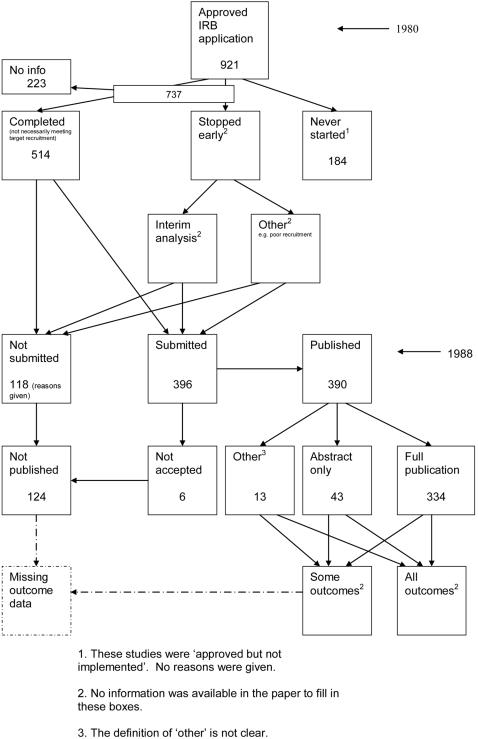
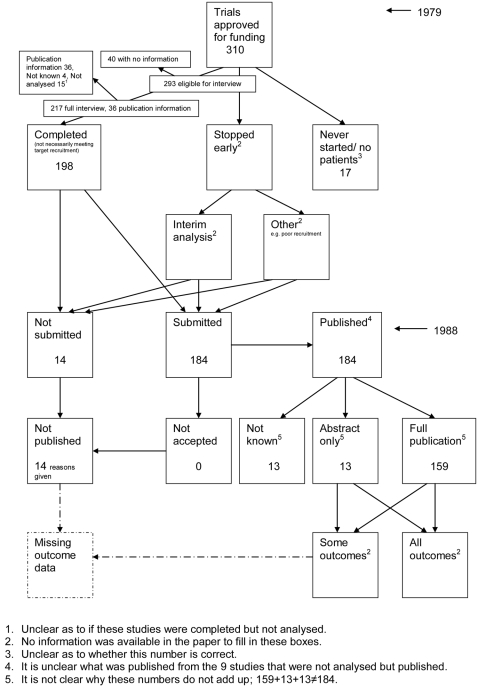
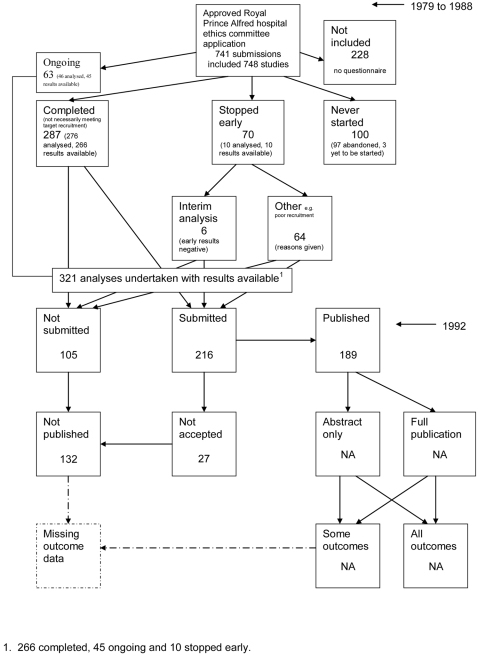
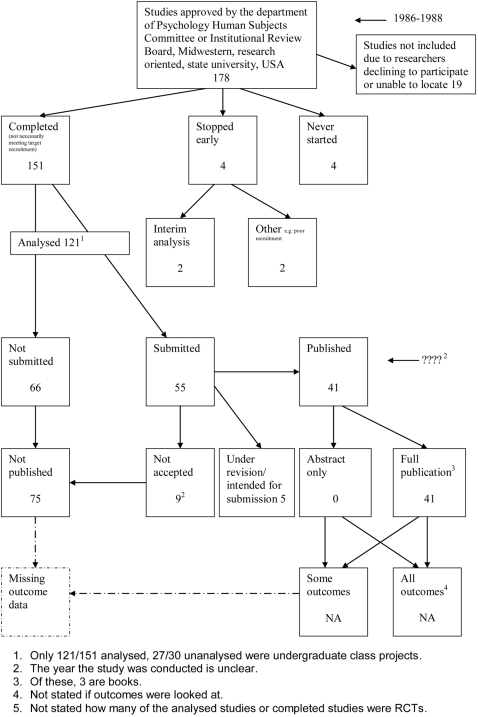
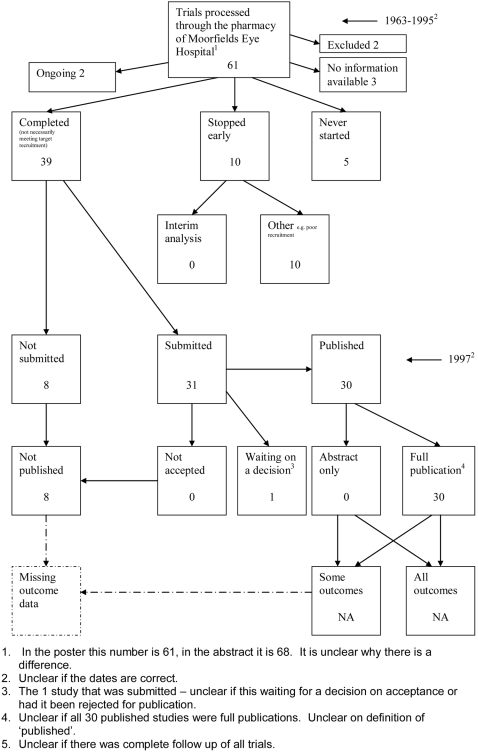
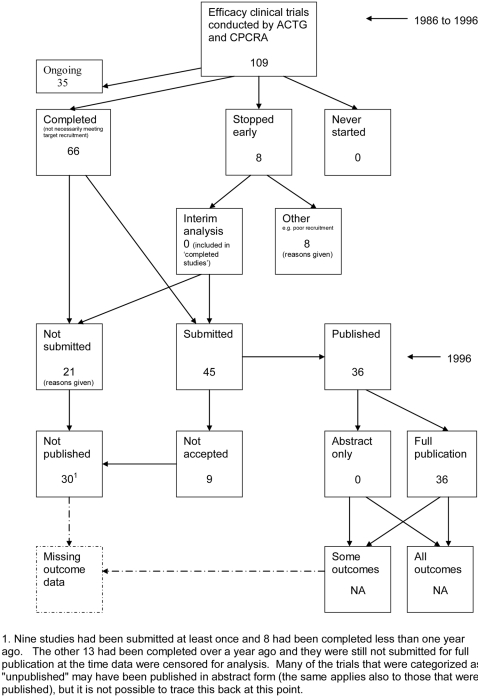
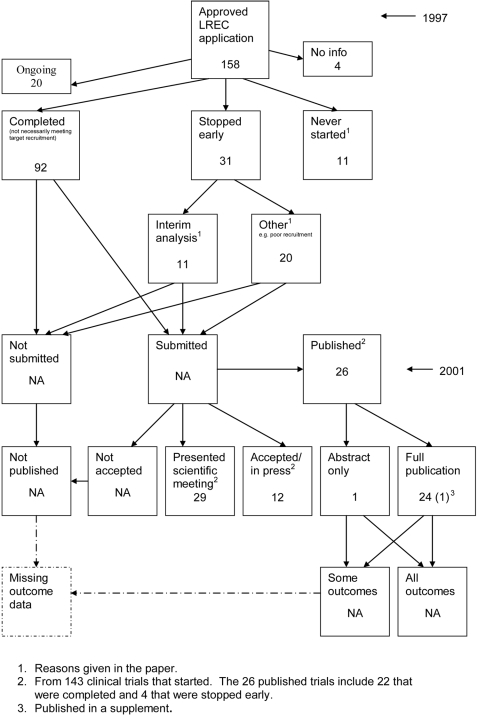
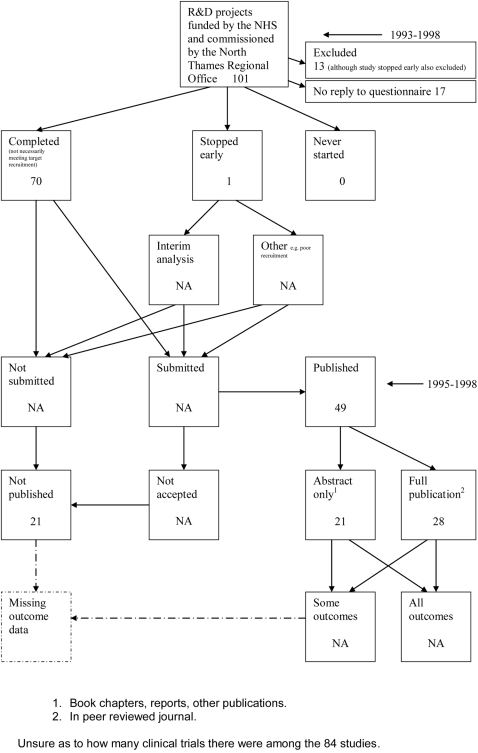
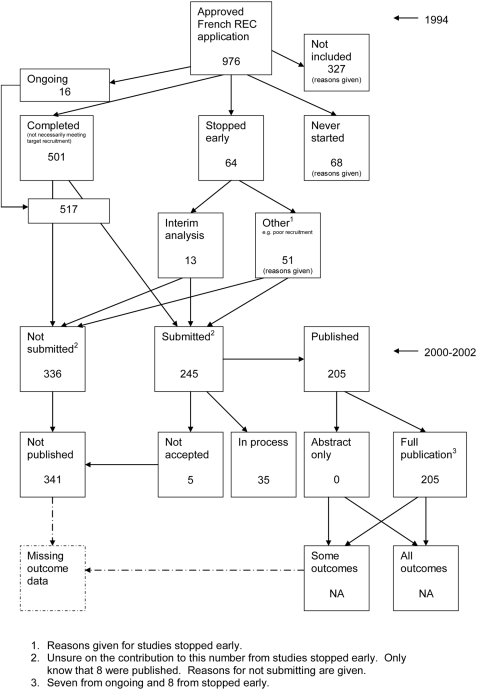
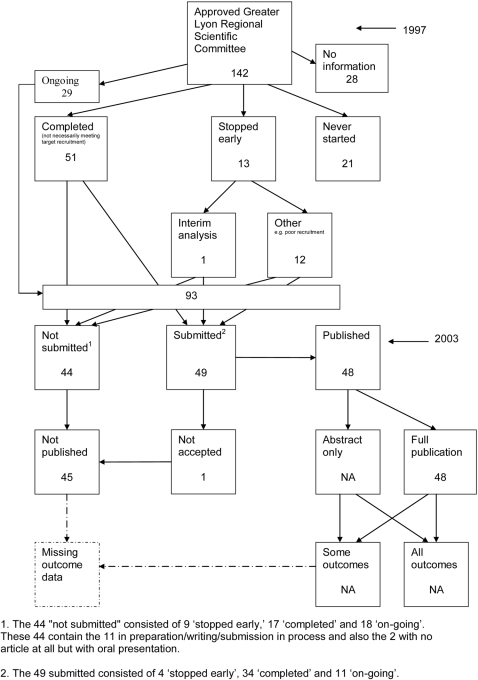
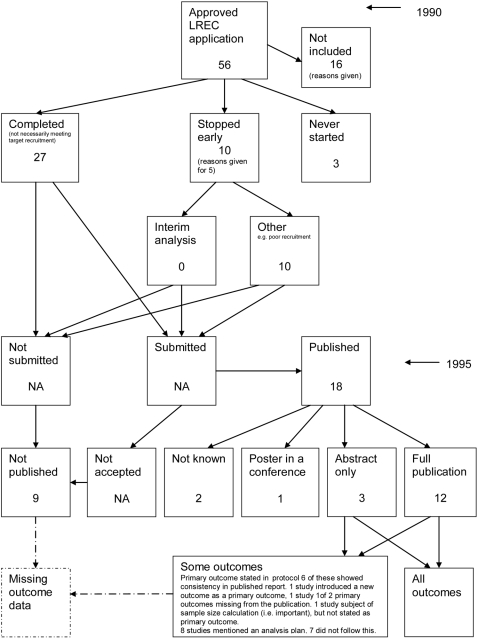
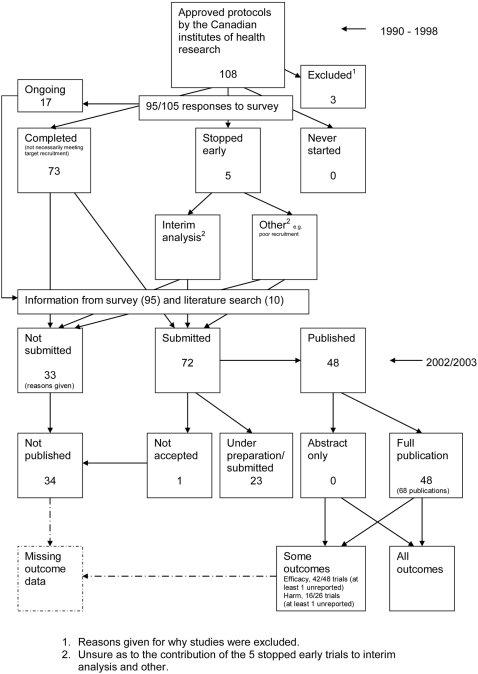
Verification
Claims the paper makes
The claims and statistics of this paper haven’t been checked yet.
Free: it reads the open-access text and checks the first 5 claims that cite a source we can check. Create a free account to check every claim.
Claims other papers make about this one
Each is checked against this paper’s own text: does it say what the citing paper says it does?
The source backs part of the claim, not all of it — or backs it for a different population, condition or comparison.
In the citing paper
“Unfortunately, attempted assessments frequently fail because authors of many trial reports neglect to provide lucid and complete descriptions of that critical information [2-4].”
From CONSORT 2010 Statement: updated guidelines for reporting parallel group randomised trials (2010) · cites this paper as [4]
Experimental — accuracy not yet measuredThe source backs part of the claim, not all of it — or backs it for a different population, condition or comparison.
In the citing paper
“and there are also reasons to believe that publication bias is more likely to affect low powered studies (25).”
From Statistical and Methodological Considerations for the Interpretation of Intranasal Oxytocin Studies (2016) · cites this paper as [25]
Experimental — accuracy not yet measuredThe source backs part of the claim, not all of it — or backs it for a different population, condition or comparison.
In the citing paper
“Empirical evidence suggests that authors often ignore, in the conduct and reporting of their trial, what they stated in the protocol [4,22].”
From CONSORT 2010 statement: updated guidelines for reporting parallel group randomised trials. (2010) · cites this paper as [4]
Experimental — accuracy not yet measuredThe source backs part of the claim, not all of it — or backs it for a different population, condition or comparison.
In the citing paper
“Second, publication bias, selective data analysis and selective reporting of outcomes are more likely to affect low-powered studies.”
From Power failure: why small sample size undermines the reliability of neuroscience (2013) · cites this paper as [17]
Experimental — accuracy not yet measuredThe source backs part of the claim, not all of it — or backs it for a different population, condition or comparison.
In the citing paper
“Empirical evidence suggests that authors often ignore, in the conduct and reporting of their trial, what they stated in the protocol. [4],[22]”
From CONSORT 2010 statement: updated guidelines for reporting parallel group randomised trials (2010) · cites this paper as [4]
Experimental — accuracy not yet measured
14 more claims about this paper
Create a free account to see every claim other papers make about this one.
Self-check
Percentages, sums and reported differences re-computed from the paper’s own numbers.
The self-check needs the paper’s full text.
Citations
Cites
Publication bias in clinical research
Easterbrook, P. J., Gopalan, R., Berlin, J. A., & Matthews, D. R. (1991) · The Lancet · doi:10.1016/0140-6736(91)90201-y · Cited by 3,109 · cited 12×
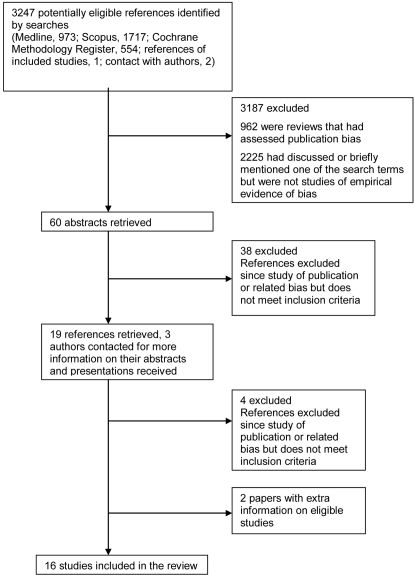
“The HTA report of Song et al [1] led to four potentially eligible empirical studies [3,4,26,27], all of which had been identified previously.”
BackgroundMethodResultInfluentialSelf-citationSystematic Reviews in Health Care : Meta-Analysis in Context
Egger, M., Smith, G. D., & Altman, D. G. (2000) · Cited by 2,412
Self-citationPublication Bias in Meta‐Analysis: Prevention, Assessment and Adjustments
(2005) · doi:10.1002/0470870168 · Cited by 2,368
Chan, A.-W., Hróbjartsson, A., Haahr, M. T., Gøtzsche, P. C., & Altman, D. G. (2004) · JAMA · doi:10.1001/jama.291.20.2457 · Cited by 1,845 · cited 30×
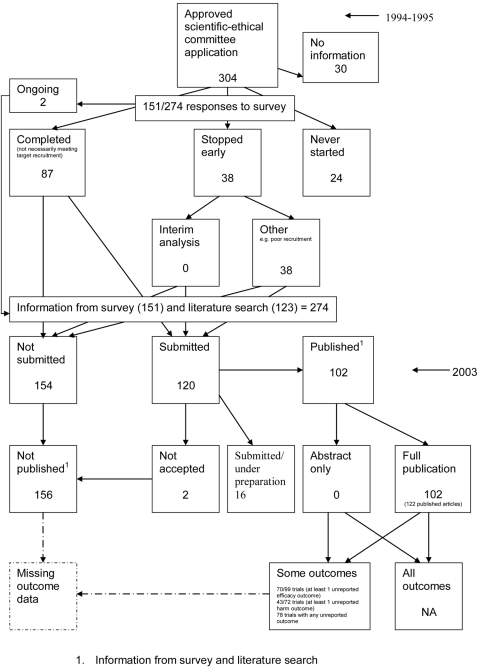
“Status of approved protocols for Chan 2004b study [15].”
BackgroundMethodInfluentialSelf-citationSystematic Reviews in Health Care: Meta‐Analysis in Context
(2001) · doi:10.1002/9780470693926 · Cited by 1,693
Systematic Reviews in Health Care. Meta-analysis in Context.
Kleijnen, J., & Antes, G. (2002) · International Journal of Epidemiology · doi:10.1093/ije/31.3.697 · Cited by 1,363
Full publication of results initially presented in abstracts.
Scherer, R. W., Langenberg, P., & von Elm, E. (2007) · Cochrane Database of Systematic Reviews · doi:10.1002/14651858.mr000005.pub3 · Cited by 997 · cited 1×
“The Cochrane review by Scherer et al [6] investigating the full publication of results initially presented in abstracts found that only 63% of results from abstracts describing randomized or controlled clinical trials are published in full and ‘positive’ results were more frequently published than non ‘positive’ resul…”
BackgroundPublication bias in clinical trials due to statistical significance or direction of trial results
Hopewell, S., Loudon, K., Clarke, M. J., Oxman, A. D., & Dickersin, K. (2009) · Cochrane Database of Systematic Reviews · doi:10.1002/14651858.mr000006.pub3 · Cited by 898
Dickersin, K. (1992) · JAMA · doi:10.1001/jama.1992.03480030052036 · Cited by 854
Publication bias: evidence of delayed publication in a cohort study of clinical research projects
Stern, J. M., & Simes, R. J. (1997) · BMJ · doi:10.1136/bmj.315.7109.640 · Cited by 818 · cited 11×
“Stern et al [4] reported that this finding was even stronger for their subgroup of clinical trials (Hazard Ratio (HR) 3.13 (95% confidence interval (CI) 1.76, 5.58), p = 0.0001) compared to all quantitative studies (HR 2.32 (95% CI 1.47, 3.66), p = 0.0003).”
BackgroundMethodResultInfluential
Research works printed but not linked: 2
- Von Elm E Röllin A Blümle A Huwiler K Witschi M 2008 Selective reporting of outcomes of drug trials; Comparison of study protocols and published articles. Swiss Med Wkly 138 (13–14) 197 203 18389392
- Wormald R Bloom J Evans J Oldfield K 1997 Publication bias in eye trials. In: 2nd International Conference Scientific Basis of Health Services & 5th Annual Cochrane Colloquium, 1997 5–8 October; Amsterdam, The Netherlands
Cited by
Items 101–200 of 1,007
Mayo-Wilson, E., Imdad, A., Herzer, K., Yakoob, M. Y., & Bhutta, Z. A. (2011) · BMJ · doi:10.1136/bmj.d5094 · Cited by 345
“In general, large studies examined effects on mortality while small studies measured illness, vision, and vitamin A serum concentrations. A few studies measured growth, though we did not include this as an outcome. Different outcomes are appropriate for studies with different purposes, but many secondary analyses incl…”
BackgroundStatistical and Methodological Considerations for the Interpretation of Intranasal Oxytocin Studies
Walum, H., Waldman, I. D., & Young, L. J. (2016) · Biological Psychiatry · doi:10.1016/j.biopsych.2015.06.016 · Cited by 347
“Bias of this kind could have serious consequences such as failure to replicate findings (24), and there are also reasons to believe that publication bias is more likely to affect low powered studies (25).”
BackgroundDo Persuasive Technologies Persuade? - A Review of Empirical Studies
Hamari, J., Koivisto, J., & Pakkanen, T. (2014) · Lecture Notes in Computer Science · doi:10.1007/978-3-319-07127-5_11 · Cited by 307
“For example, one analysis, looking mainly at studies in the medical field [18], has indicated that publication and outcome reporting biases are prevalent and affect the published research.”
BackgroundA systematic review of workplace health promotion interventions for increasing physical activity
Malik, S. H., Blake, H., & Suggs, L. S. (2014) · British Journal of Health Psychology · doi:10.1111/bjhp.12052 · Cited by 337
“Second, as with most systematic reviews, there remains a risk of publication bias, as interventions yielding a negative or insignificant outcome are less likely to be published [Dwan et al., 2008].”
BackgroundChoosing Important Health Outcomes for Comparative Effectiveness Research: A Systematic Review
Gargon, E., Gurung, B., Medley, N., Altman, D. G., Blazeby, J. M., Clarke, M., & Williamson, P. R. (2014) · PLoS ONE · doi:10.1371/journal.pone.0099111 · Cited by 337
“This causes bias, because the selectively un-reported results would remain un-accessible to users of the research [5].”
BackgroundSelf-citationE-Cigarette Use and Adult Cigarette Smoking Cessation: A Meta-Analysis
Wang, R. J., Bhadriraju, S., & Glantz, S. A. (2021) · American Journal of Public Health · doi:10.2105/ajph.2020.305999 · Cited by 326
The False-positive to False-negative Ratio in Epidemiologic Studies
Ioannidis, J. P. A., Tarone, R., & McLaughlin, J. K. (2011) · Epidemiology · doi:10.1097/ede.0b013e31821b506e · Cited by 321
“05, despite repeated suggestions to shift to lower thresholds(43) or to Bayesian approaches(44); confounding is difficult to exclude; raw data are usually not shared in public or across teams; and the pursuit of statistical significance leads to strong publication bias and selective analyses and outcome reporting.(27,…”
BackgroundSelf-citationWorkplace interventions to prevent work disability in workers on sick leave
van Vilsteren, M., van Oostrom, S. H., de Vet, H. C., Franche, R.-L., Boot, C. R., & Anema, J. R. (2015) · Cochrane Database of Systematic Reviews · doi:10.1002/14651858.cd006955.pub3 · Cited by 291
Ampatzoglou, A., Bibi, S., Avgeriou, P., Verbeek, M., & Chatzigeorgiou, A. (2019) · Information and Software Technology · doi:10.1016/j.infsof.2018.10.006 · Cited by 305
Excess Significance Bias in the Literature on Brain Volume Abnormalities
Ioannidis, J. P. A. (2011) · Archives of General Psychiatry · doi:10.1001/archgenpsychiatry.2011.28 · Cited by 299
“Another possibility is that reporting bias is operatingintheliterature.(16,17) Reportingbiascould includethefollowingmechanisms:(1)study publicationbias, inwhichtheresultsofnonstatistically significant (“negative”) studies are left unpublished; (2) selective outcome reportingbias, inwhichresultsofoutcomes (in this cas…”
BackgroundSelf-citationPrayle, A. P., Hurley, M. N., & Smyth, A. R. (2012) · BMJ · doi:10.1136/bmj.d7373 · Cited by 290
Page, M. J., Sterne, J. A. C., Higgins, J. P. T., & Egger, M. (2021) · Research Synthesis Methods · doi:10.1002/jrsm.1468 · Cited by 294
Driving up the Quality and Relevance of Research Through the Use of Agreed Core Outcomes
Williamson, P., Altman, D., Blazeby, J., Clarke, M., & Gargon, E. (2012) · Journal of Health Services Research & Policy · doi:10.1258/jhsrp.2011.011131 · Cited by 288
Self-citationPatel, C. J., Burford, B., & Ioannidis, J. P. A. (2015) · Journal of Clinical Epidemiology · doi:10.1016/j.jclinepi.2015.05.029 · Cited by 274
“Flexibility in defining outcomes may result in outcome reporting bias with further instability in the results [52, 53].”
Self-citationDetecting Selection Bias in Meta-Analyses with Multiple Outcomes: A Simulation Study
Fernández-Castilla, B., Declercq, L., Jamshidi, L., Beretvas, S. N., Onghena, P., & Van den Noortgate, W. (2021) · The Journal of Experimental Education · doi:10.1080/00220973.2019.1582470 · Cited by 285
Social inequalities in early childhood health and development: a European-wide systematic review
Pillas, D., Marmot, M., Naicker, K., Goldblatt, P., Morrison, J., & Pikhart, H. (2014) · Pediatric Research · doi:10.1038/pr.2014.122 · Cited by 261
Clocks, cancer, and chronochemotherapy
Sancar, A., & Van Gelder, R. N. (2021) · Science · doi:10.1126/science.abb0738 · Cited by 277
“Publication biases toward positive results may contribute to this (31).”
BackgroundHigher number of items associated with significantly lower response rates in COS Delphi surveys
Gargon, E., Crew, R., Burnside, G., & Williamson, P. R. (2019) · Journal of Clinical Epidemiology · doi:10.1016/j.jclinepi.2018.12.010 · Cited by 224
Self-citationPage, M. J., McKenzie, J. E., Kirkham, J., Dwan, K., Kramer, S., Green, S., & Forbes, A. (2014) · Cochrane Database of Systematic Reviews · doi:10.1002/14651858.mr000035.pub2 · Cited by 281
Self-citationType 2 Diabetes and Cancer: An Umbrella Review of Observational and Mendelian Randomization Studies
Pearson-Stuttard, J., Papadimitriou, N., Markozannes, G., Cividini, S., Kakourou, A., Gill, D., Rizos, E. C., Monori, G., Ward, H. A., Kyrgiou, M., et al. (2021) · Cancer Epidemiology, Biomarkers & Prevention · doi:10.1158/1055-9965.epi-20-1245 · Cited by 267
“Observational research into the association between type 2 diabetes and cancer has been extensive but is vulnerable to several biases, including residual confounding, reporting bias (9), and type 2 diabetes classification bias.”
Background(2021) · Research Design in Clinical Psychology · doi:10.1017/9781108993647.010 · Cited by 276
Spielmans, G. I., Berman, M. I., Linardatos, E., Rosenlicht, N. Z., Perry, A., & Tsai, A. C. (2013) · PLoS Medicine · doi:10.1371/journal.pmed.1001403 · Cited by 275
“In any systematic review, publication bias is a potentially serious problem [10,80].”
BackgroundNo raw data, no science: another possible source of the reproducibility crisis
Miyakawa, T. (2020) · Molecular Brain · doi:10.1186/s13041-020-0552-2 · Cited by 268
Invited review: Use of meta-analysis in animal health and reproduction: Methods and applications
Lean, I. J., Rabiee, A. R., Duffield, T. F., & Dohoo, I. R. (2009) · Journal of Dairy Science · doi:10.3168/jds.2009-2140 · Cited by 257
“Chan et al. (2004) and Dwan et al. (2008) have discussed the significance of missing trials to the interpretation of intervention studies in medicine.”
BackgroundIoannidis, J. P. A. (2011) · JAMA · doi:10.1001/jama.2011.713 · Cited by 252
Self-citationEffect of reporting bias on meta-analyses of drug trials: reanalysis of meta-analyses
Hart, B., Lundh, A., & Bero, L. (2012) · BMJ · doi:10.1136/bmj.d7202 · Cited by 255
Acuna, D. E., Allesina, S., & Kording, K. P. (2012) · Nature · doi:10.1038/489201a · Cited by 249
Schulz, K. (2010) · Journal of Chinese Integrative Medicine · doi:10.3736/jcim20100702 · Cited by 248
“Empirical evidence suggests that authors often ignore, in the conduct and reporting of their trial, what they stated in the protocol [4,22].”
Pinto, A., Faiz, O., Davis, R., Almoudaris, A., & Vincent, C. (2016) · BMJ Open · doi:10.1136/bmjopen-2014-007224 · Cited by 235
Improving the odds of drug development success through human genomics: modelling study
Hingorani, A. D., Kuan, V., Finan, C., Kruger, F. A., Gaulton, A., Chopade, S., Sofat, R., MacAllister, R. J., Overington, J. P., Hemingway, H., et al. (2019) · Scientific Reports · doi:10.1038/s41598-019-54849-w · Cited by 247
An umbrella review of the evidence associating diet and cancer risk at 11 anatomical sites
Papadimitriou, N., Markozannes, G., Kanellopoulou, A., Critselis, E., Alhardan, S., Karafousia, V., Kasimis, J. C., Katsaraki, C., Papadopoulou, A., Zografou, M., et al. (2021) · Nature Communications · doi:10.1038/s41467-021-24861-8 · Cited by 234
Virtual reality exposure therapy for posttraumatic stress disorder (PTSD): a meta-analysis
Kothgassner, O. D., Goreis, A., Kafka, J. X., Van Eickels, R. L., Plener, P. L., & Felnhofer, A. (2019) · European Journal of Psychotraumatology · doi:10.1080/20008198.2019.1654782 · Cited by 246
The Chrysalis Effect: How Ugly Initial Results Metamorphosize Into Beautiful Articles
O’Boyle, E. H., Banks, G. C., & Gonzalez-Mulé, E. (2017) · Journal of Management · doi:10.1177/0149206314527133 · Cited by 246
“…and protocols against published journal articles for evidence of engagement in QRPs (e.g., Chan, Hrobjartsson, Jorgensen, Gotzsche, & Altman, 2008; Dwan et al., 2008, 2011; Huic, Marusic, & Marusic, 2011; Mathieu, Boutron, Moher, Altman, & Ravaud, 2009; Turner, Knoepflmacher, & Shapley, 2012).”
Testing for the Presence of Positive-Outcome Bias in Peer Review: A Randomized Controlled Trial
Emerson, G. B., Warme, W. J., Wolf, F. M., Heckman, J. D., Brand, R. A., & Leopold, S. S. (2010) · Archives of Internal Medicine · doi:10.1001/archinternmed.2010.406 · Cited by 245
Comparison of protocols and registry entries to published reports for randomised controlled trials
Dwan, K., Altman, D. G., Cresswell, L., Blundell, M., Gamble, C. L., & Williamson, P. R. (2011) · Cochrane Database of Systematic Reviews · doi:10.1002/14651858.mr000031.pub2 · Cited by 243
Self-citationResearch Design in Clinical Psychology
Kazdin, A. E. (2021) · doi:10.1017/9781108993647 · Cited by 240
How evidence‐based medicine is failing due to biased trials and selective publication
Every‐Palmer, S., & Howick, J. (2014) · Journal of Evaluation in Clinical Practice · doi:10.1111/jep.12147 · Cited by 223
“There is a large body of evidence including several systematic reviews that all show strong evidence of publication bias [36,52,56,57].”
BackgroundJohnson, B. T., & Hennessy, E. A. (2019) · Social Science & Medicine · doi:10.1016/j.socscimed.2019.05.035 · Cited by 201
Viergever, R. F., & Li, K. (2015) · BMJ Open · doi:10.1136/bmjopen-2015-008932 · Cited by 228
Scarapicchia, T. M. F., Amireault, S., Faulkner, G., & Sabiston, C. M. (2017) · International Review of Sport and Exercise Psychology · doi:10.1080/1750984x.2016.1183222 · Cited by 235
“weaker when there is wide flexibility in analytical design in a specific field (Dwan et al., 2008).”
BackgroundEstimating the Difference Between Published and Unpublished Effect Sizes: A Meta-Review
Polanin, J. R., Tanner-Smith, E. E., & Hennessy, E. A. (2016) · Review of Educational Research · doi:10.3102/0034654315582067 · Cited by 234
“Dwan et al. (2008) examined systematic reviews of medical interventions and found that 40% to 62% of studies “had at least one primary outcome that was changed, introduced, or omitted” (p. 1).”
BackgroundMeta‐research: The art of getting it wrong
Ioannidis, J. P. A. (2010) · Research Synthesis Methods · doi:10.1002/jrsm.19 · Cited by 227
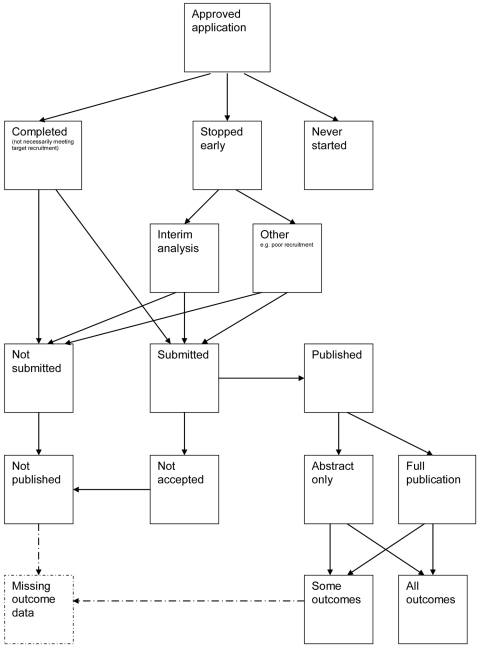
“They include publication bias, selective outcome reporting bias, selective analysis reporting bias, and fabrication bias (Figure 1) (Dwan et al., 2008).”
BackgroundSelf-citationvan Aar, J., Leijten, P., Orobio de Castro, B., & Overbeek, G. (2017) · Clinical Psychology Review · doi:10.1016/j.cpr.2016.11.006 · Cited by 208
“Trim-and-fill procedureswere used to examine sustained, fade-out or sleeper effects when publication bias, as standard defined in meta-analysis (Dwan et al., 2008), was removed from the dataset.”
BackgroundMethodLander, N., Eather, N., Morgan, P. J., Salmon, J., & Barnett, L. M. (2017) · Sports Medicine · doi:10.1007/s40279-016-0561-6 · Cited by 191
Continuous Patient Engagement in Comparative Effectiveness Research
Abdulhalim, A. M. (2012) · JAMA · doi:10.1001/jama.2012.442 · Cited by 223
Frequency and reasons for outcome reporting bias in clinical trials: interviews with trialists
Smyth, R. M. D., Kirkham, J. J., Jacoby, A., Altman, D. G., Gamble, C., & Williamson, P. R. (2011) · BMJ · doi:10.1136/bmj.c7153 · Cited by 220
Self-citationDunn, A. G., Coiera, E., Mandl, K. D., & Bourgeois, F. T. (2016) · Research Integrity and Peer Review · doi:10.1186/s41073-016-0006-7 · Cited by 208
Haasova, M., Warren, F. C., Ussher, M., Janse Van Rensburg, K., Faulkner, G., Cropley, M., Byron‐Daniel, J., Everson‐Hock, E. S., Oh, H., & Taylor, A. H. (2013) · Addiction · doi:10.1111/j.1360-0443.2012.04034.x · Cited by 200
“The issue of publication bias (and outcome reporting bias) is well acknowledged (19, 20); on average, published trials show a 9% larger intervention effect than grey literature trials (20).”
BackgroundShipley, N. J., & van Riper, C. J. (2022) · Journal of Environmental Psychology · doi:10.1016/j.jenvp.2021.101753 · Cited by 183
Piccoli, G. B., Minelli, F., Versino, E., Cabiddu, G., Attini, R., Vigotti, F. N., Rolfo, A., Giuffrida, D., Colombi, N., Pani, A., et al. (2016) · Nephrology Dialysis Transplantation · doi:10.1093/ndt/gfv395 · Cited by 205
Abdin, S., Welch, R. K., Byron-Daniel, J., & Meyrick, J. (2018) · Public Health · doi:10.1016/j.puhe.2018.03.029 · Cited by 185
CONSORT 2025 explanation and elaboration: updated guideline for reporting randomised trials
Hopewell, S., Chan, A.-W., Collins, G. S., Hróbjartsson, A., Moher, D., Schulz, K. F., Tunn, R., Aggarwal, R., Berkwits, M., Berlin, J. A., et al. (2025) · BMJ · doi:10.1136/bmj-2024-081124 · Cited by 205
Self-citationSchubert, E. (2013) · Frontiers in Psychology · doi:10.3389/fpsyg.2013.00837 · Cited by 181
Chan, A.-W., Hrobjartsson, A., Jorgensen, K. J., Gotzsche, P. C., & Altman, D. G. (2008) · BMJ · doi:10.1136/bmj.a2299 · Cited by 202
Self-citationIs everything we eat associated with cancer? A systematic cookbook review
Schoenfeld, J. D., & Ioannidis, J. P. (2013) · The American Journal of Clinical Nutrition · doi:10.3945/ajcn.112.047142 · Cited by 198
Self-citationReynaud, E., Vecchierini, M., Heude, B., Charles, M., & Plancoulaine, S. (2018) · Journal of Sleep Research · doi:10.1111/jsr.12636 · Cited by 154
“The growing literature regarding publication bias and selective reporting bias suggests they are widespread (Dwan et al., 2008).”
BackgroundPublication of Tumor Marker Research Results: The Necessity for Complete and Transparent Reporting
McShane, L. M., & Hayes, D. F. (2012) · Journal of Clinical Oncology · doi:10.1200/jco.2012.42.6858 · Cited by 185
Kirkham, J. J., Gargon, E., Clarke, M., & Williamson, P. R. (2013) · Trials · doi:10.1186/1745-6215-14-21 · Cited by 183
“Recent research has shown that outcome reporting bias (ORB), that is, results-based selection for publication of a subset of the original outcome variables, is also a major problem in randomized trials [2].”
BackgroundSelf-citationThe use of qualitative methods to inform Delphi surveys in core outcome set development
Keeley, T., Williamson, P., Callery, P., Jones, L. L., Mathers, J., Jones, J., Young, B., & Calvert, M. (2016) · Trials · doi:10.1186/s13063-016-1356-7 · Cited by 174
“based on the significance of the findings [7–9].”
BackgroundSelf-citationWhy all randomised controlled trials produce biased results
Krauss, A. (2018) · Annals of Medicine · doi:10.1080/07853890.2018.1453233 · Cited by 175
Evaluating the Impact of Database Heterogeneity on Observational Study Results
Madigan, D., Ryan, P. B., Schuemie, M., Stang, P. E., Overhage, J. M., Hartzema, A. G., Suchard, M. A., DuMouchel, W., & Berlin, J. A. (2013) · American Journal of Epidemiology · doi:10.1093/aje/kwt010 · Cited by 181
A systematic review of AI-driven intelligent tutoring systems (ITS) in K-12 education
Létourneau, A., Deslandes Martineau, M., Charland, P., Karran, J. A., Boasen, J., & Léger, P. M. (2025) · npj Science of Learning · doi:10.1038/s41539-025-00320-7 · Cited by 185
Moreno, S. G., Sutton, A. J., Turner, E. H., Abrams, K. R., Cooper, N. J., Palmer, T. M., & Ades, A. E. (2009) · BMJ · doi:10.1136/bmj.b2981 · Cited by 184
The role of neuroscience within psychology: A call for inclusiveness over exclusiveness.
Schwartz, S. J., Lilienfeld, S. O., Meca, A., & Sauvigné, K. C. (2016) · American Psychologist · doi:10.1037/a0039678 · Cited by 180
Macefield, R. C., Jacobs, M., Korfage, I. J., Nicklin, J., Whistance, R. N., Brookes, S. T., Sprangers, M. A., & Blazeby, J. M. (2014) · Trials · doi:10.1186/1745-6215-15-49 · Cited by 179
“reporting of outcomes puts trials at risk of outcome reporting bias and can mean treatment effects are exaggerated [2].”
BackgroundSplinting for carpal tunnel syndrome
Page, M. J., Massy-Westropp, N., O'Connor, D., & Pitt, V. (2012) · Cochrane Database of Systematic Reviews · doi:10.1002/14651858.cd010003 · Cited by 173
Ahn, R., Woodbridge, A., Abraham, A., Saba, S., Korenstein, D., Madden, E., Boscardin, W. J., & Keyhani, S. (2017) · BMJ · doi:10.1136/bmj.i6770 · Cited by 171
Outcome measures in rheumatoid arthritis randomised trials over the last 50 years
Kirkham, J. J., Boers, M., Tugwell, P., Clarke, M., & Williamson, P. R. (2013) · Trials · doi:10.1186/1745-6215-14-324 · Cited by 171
“Research has shown that outcome reporting bias, that is, resultsbased selection for publication of a subset of the original outcome variables, is also a major problem in randomised trials [1].”
BackgroundSelf-citationScoping Reviews, Systematic Reviews, and Meta-Analysis: Applications in Veterinary Medicine
Sargeant, J. M., & O'Connor, A. M. C. (2020) · Frontiers in Veterinary Science · doi:10.3389/fvets.2020.00011 · Cited by 200
“Small study effects, one explanation for which is publication bias, can be assessed using a funnel plot, which plots the effect size from individual studies on the x-axis and some measure of variability (inverse variance, standard error, inverse of the standard error, or sample size) on the y-axis (63, 66, 67).”
MethodSong, F., Parekh-Bhurke, S., Hooper, L., Loke, Y. K., Ryder, J. J., Sutton, A. J., Hing, C. B., & Harvey, I. (2009) · BMC Medical Research Methodology · doi:10.1186/1471-2288-9-79 · Cited by 175
Estarli, M., Barrera, E. S. A., Martínez-Rodríguez, R., Baladía, E., Durán‐Agüero, S., Camacho‐López, S., Kristian Buhring, B., Herrero-López, A., & Gil‐González, D. (2016) · Revista Española de Nutrición Humana y Dietética · doi:10.14306/renhyd.20.2.223 · Cited by 208
The impact of Covid-19 on student achievement: Evidence from a recent meta-analysis
Di Pietro, G. (2023) · Educational Research Review · doi:10.1016/j.edurev.2023.100530 · Cited by 173
“Publication bias has long been identified as a major problem in meta-analysis (Dwan et al., 2008).”
Ramsey, W. A., Heidelberg, R. E., Gilbert, A. M., Heneghan, M. B., Badawy, S. M., & Alberts, N. M. (2020) · Psycho-Oncology · doi:10.1002/pon.5280 · Cited by 172
A historical review of publication bias
Marks‐Anglin, A., & Chen, Y. (2020) · Research Synthesis Methods · doi:10.1002/jrsm.1452 · Cited by 165
Bias Due to Changes in Specified Outcomes during the Systematic Review Process
Kirkham, J. J., Altman, D. G., & Williamson, P. R. (2010) · PLoS ONE · doi:10.1371/journal.pone.0009810 · Cited by 164
“. A systematic review of the empirical evidence of outcome reporting bias in trial primary outcomes found that 40–62% of studies have at least one primary outcome that was changed, introduced, or omitted and that outcomes that are statistically significant have higher odds of being fully reported (range of odds ratios…”
BackgroundSelf-citationIndustry sponsorship and research outcome: systematic review with meta-analysis
Lundh, A., Lexchin, J., Mintzes, B., Schroll, J. B., & Bero, L. (2018) · Intensive Care Medicine · doi:10.1007/s00134-018-5293-7 · Cited by 162
Exercise and mobilisation interventions for carpal tunnel syndrome
Page, M. J., O'Connor, D., Pitt, V., & Massy-Westropp, N. (2012) · Cochrane Database of Systematic Reviews · doi:10.1002/14651858.cd009899 · Cited by 161
A systematic review and meta‐regression analysis of prophylactic gabapentin for postoperative pain
Doleman, B., Heinink, T. P., Read, D. J., Faleiro, R. J., Lund, J. N., & Williams, J. P. (2015) · Anaesthesia · doi:10.1111/anae.13179 · Cited by 159
“Few meta-analyses of postoperative pain have formally analysed the independent association of analgesic effect with type of surgery and only 8% assessed small study effects [12, 14-16].”
BackgroundMattes, R. D., Shikany, J. M., Kaiser, K. A., & Allison, D. B. (2011) · Obesity Reviews · doi:10.1111/j.1467-789x.2010.00755.x · Cited by 160
Disaggregating the evidence linking biodiversity and ecosystem services
Ricketts, T. H., Watson, K. B., Koh, I., Ellis, A. M., Nicholson, C. C., Posner, S., Richardson, L. L., & Sonter, L. J. (2016) · Nature Communications · doi:10.1038/ncomms13106 · Cited by 149
Total disc replacement versus anterior cervical discectomy and fusion
Findlay, C., Ayis, S. A., & Demetriades, A. K. (2018) · The Bone & Joint Journal · doi:10.1302/0301-620x.100b8.bjj-2018-0120.r1 · Cited by 160
Pain prevalence and its determinants after spinal cord injury: A systematic review
van Gorp, S., Kessels, A. G., Joosten, E. A., van Kleef, M., & Patijn, J. (2015) · European Journal of Pain · doi:10.1002/ejp.522 · Cited by 151
“Higher prevalence rates reported by SCI pain studies could be due to, for example, (1) a lower interest in patients without pain to participate in pain studies (selection bias), (2) high pain prevalence being more newsworthy (publication bias), or (3) pain studies use better, less unequivocal and/or more sensitive pai…”
BackgroundRetirement Adjustment Predictors—A Systematic Review
Barbosa, L. M., Monteiro, B., & Murta, S. G. (2016) · Work Aging and Retirement · doi:10.1093/workar/waw008 · Cited by 173
TP53 codon 72 polymorphism and cervical cancer: a pooled analysis of individual data from 49 studies
Klug, S. J., Ressing, M., Koenig, J., Abba, M. C., Agorastos, T., Brenna, S. M., Ciotti, M., Das, B., Del Mistro, A., Dybikowska, A., et al. (2009) · The Lancet Oncology · doi:10.1016/s1470-2045(09)70187-1 · Cited by 158
The challenges that challenge: Engaging with agile practitioners’ concerns
Gregory, P., Barroca, L., Sharp, H., Deshpande, A., & Taylor, K. (2016) · Information and Software Technology · doi:10.1016/j.infsof.2016.04.006 · Cited by 205
“This problem is not specific to the agile area, and has been noted in other disciplines [17].”
BackgroundLeijten, P., Gardner, F., Landau, S., Harris, V., Mann, J., Hutchings, J., Beecham, J., Bonin, E., & Scott, S. (2018) · Journal of Child Psychology and Psychiatry · doi:10.1111/jcpp.12781 · Cited by 135
CNODES: the Canadian Network for Observational Drug Effect Studies.
Suissa, S., Henry, D. A., Caetano, P. A., Dormuth, C. R., Ernst, P., Hemmelgarn, B. R., LeLorier, J., Levy, A. R., Martens, P. J., Paterson, J. M., et al. (2012) · Europe PMC (PubMed Central) · Cited by 190
Gluud, L. L., Vilstrup, H., & Morgan, M. Y. (2016) · Cochrane Database of Systematic Reviews · doi:10.1002/14651858.cd003044.pub4 · Cited by 150
Dimairo, M., Pallmann, P., Wason, J., Todd, S., Jaki, T., Julious, S. A., Mander, A. P., Weir, C. J., Koenig, F., Walton, M. K., et al. (2020) · BMJ · doi:10.1136/bmj.m115 · Cited by 149
Self-citationThe Quality of Registration of Clinical Trials
Viergever, R. F., & Ghersi, D. (2011) · PLoS ONE · doi:10.1371/journal.pone.0014701 · Cited by 150
“of achieving research transparency, including the ability to adequately address publication bias and selective reporting, and reducing the amount of wasted research [37–39].”
BackgroundSelf-citationGibbs, A., Jacobson, J., & Wilson, A. K. (2017) · Global Health Action · doi:10.1080/16549716.2017.1290427 · Cited by 161
“There is a widely known publication bias whereby positive results are much more likely to be published [90], which while somewhat mitigated by the inclusion of grey material, is unlikely to have been totally overcome.”
Dickersin, K., & Chalmers, I. (2011) · Journal of the Royal Society of Medicine · doi:10.1258/jrsm.2011.11k042 · Cited by 167
Patel, C. J., Cullen, M. R., Ioannidis, J. P. A., & Butte, A. J. (2012) · International Journal of Epidemiology · doi:10.1093/ije/dys003 · Cited by 154
Self-citationCobos-Carbó, A., & Augustovski, F. (2011) · Medicina Clínica · doi:10.1016/j.medcli.2010.09.034 · Cited by 234
Tegethoff, M., Pryce, C., & Meinlschmidt, G. (2009) · Endocrine Reviews · doi:10.1210/er.2008-0014 · Cited by 140
“Sample size has been shown to be negatively associated with publication bias (205, 206).”
BackgroundWilliamson, P., & Clarke, M. (2012) · Cochrane Database of Systematic Reviews · doi:10.1002/14651858.ed000041 · Cited by 144
Self-citationPrevalence and Localization of Pulmonary Embolism in Unexplained Acute Exacerbations of COPD
Aleva, F. E., Voets, L. W. L. M., Simons, S. O., de Mast, Q., van der Ven, A. J. A. M., & Heijdra, Y. F. (2016) · CHEST Journal · doi:10.1016/j.chest.2016.07.034 · Cited by 164
Bias, Spin, and Misreporting: Time for Full Access to Trial Protocols and Results
Chan, A.-W. (2008) · PLoS Medicine · doi:10.1371/journal.pmed.0050230 · Cited by 144
“While most publicized cases have involved pharmaceutical industry trials, accumulating empiric evidence has shown that selective reporting of results is a systemic problem afflicting all types of trials, including those with no commercial input [6].”
BackgroundSelf-citationKirkham, J. J., Altman, D. G., Chan, A.-W., Gamble, C., Dwan, K. M., & Williamson, P. R. (2018) · BMJ · doi:10.1136/bmj.k3802 · Cited by 144
Self-citationWells, G. A., Shea, B., Higgins, J. P., Sterne, J., Tugwell, P., & Reeves, B. C. (2013) · Research Synthesis Methods · doi:10.1002/jrsm.1077 · Cited by 141
“Similar to publication bias in relation to whole studies [Dwan et al., 2008], selective outcome reporting may cause outcome reporting bias (exaggerated effect estimate at the review level) by virtue of the absence of data from a primary study for inclusion in the review (i.e. the exclusion of data…”
Result
Metadata
- Authors
- Dwan, K., Altman, D. G., Arnaiz, J. A., Bloom, J., Chan, A.-W., Cronin, E., Decullier, E., Easterbrook, P. J., Von Elm, E., Gamble, C., Ghersi, D., Ioannidis, J. P. A., Simes, J., & Williamson, P. R.
- Affiliations
- University of Liverpool (GB)
- University of Oxford (GB)
- Hospital Clínic de Barcelona (ES)
- Moorfields Eye Hospital (GB)
- Canadian Institutes of Health Research (CA)
- King's College London (GB)
- University of Bern (CH)
- National Health and Medical Research Council (AU)
- Tufts University (US)
- The University of Sydney (AU)
- Corresponding author
- Dwan, Kerry
- ORCID
- Venue
- PLoS ONE
- Publisher
- Public Library of Science (PLoS)
- Published
- 2008-08-28
- Volume
- 3
- Issue
- 8
- Pages
- e3081
- ISSN
- 1932-6203 (ISSN-L)
- PMC
- PMC2518111
- OpenAlex
- W2091959199
- Cited by
- 1,546
- References
- 48
- Citations by year
- 2026: 45 · 2025: 51 · 2024: 67 · 2023: 51 · 2022: 76 · 2021: 118 · 2020: 90 · 2019: 72 · 2018: 96 · 2017: 90 · 2016: 129 · 2015: 121 · 2014: 109 · 2013: 131 · 2012: 103
- FWCI
- 20.77
- Type
- journal article
- Language
- en
- Open access
- gold
- doi.org
- Locations
- PLoS ONE (publishedVersion, cc-by)
- PubMed Central (publishedVersion, cc-by)
- PubMed (publishedVersion)
- Dipòsit Digital de la Universitat de Barcelona (Universitat de Barcelona) (publishedVersion, cc-by)
- RePEc: Research Papers in Economics (submittedVersion)
- Bern Open Repository and Information System (University of Bern) (submittedVersion, cc-by)
- DOAJ (DOAJ: Directory of Open Access Journals) (submittedVersion, cc-by-sa)
- Figshare (submittedVersion, cc-by)
- Research Portal (King's College London) (submittedVersion)
- RECERCAT (Consorci de Serveis Universitaris de Catalunya) (submittedVersion, cc-by)
- Funders
- Cancer Research UK
- Topics
- Social Sciences › Decision Sciences › Statistics, Probability and Uncertainty › Meta-analysis and systematic reviews
- Social Sciences › Library and Information Sciences › Academic Publishing and Open Access
- Health Sciences › Nursing › Issues, ethics and legal aspects › Pharmaceutical industry and healthcare
- Keywords
- publication bias, selective reporting, randomized controlled trials, outcome reporting, meta-analysis validity, clinical trial registration
- MeSH terms
- Clinical Trials as Topic, Humans, Publishing, Cohort Studies, Randomized Controlled Trials as Topic, Treatment Outcome, Publication Bias, Patient Selection
About these checks
Registry, retraction, Cites and statistics results are computed, not judged, with one exception: a printed reference that no index lists is read once by a model before it counts as a citation error. Claims are extracted by a model and kept only when their quote appears verbatim in the text; each cited source is then checked, with a model’s help, for whether it says what the claim relies on. Those verdicts can be wrong — read the claim’s quote and the cited source before relying on one.
Statistics and arithmetic are recomputed, not judged.
Confidence bands are shown only for fields calibrated on our annotated test set. None is calibrated yet, so no band is shown.
What counts as a claim ›How we measure confidence ›How we check this ›
Are you an author, or do you see a problem with this page? Request a review
Data sources
Bibliographic data: Semantic Scholar, OpenAlex, Crossref.
Contains information from the Semantic Scholar Academic Graph Datasets, made available under the ODC Attribution License (ODC-BY 1.0).
Semantic Scholar’s data is described in: Kinney, R., et al. (2023). The Semantic Scholar Open Data Platform. arXiv:2301.10140.
