

Systematic Review of the Empirical Evidence of Study Publication Bias and Outcome Reporting Bias
Open accessThe DOI matches its Crossref record; 46 of the 48 references it cites were found in a registry or an index.
Abstract
BACKGROUND: The increased use of meta-analysis in systematic reviews of healthcare interventions has highlighted several types of bias that can arise during the completion of a randomised controlled trial. Study publication bias has been recognised as a potential threat to the validity of meta-analysis and can make the readily available evidence unreliable for decision making. Until recently, outcome reporting bias has received less attention. METHODOLOGY/PRINCIPAL FINDINGS: We review and summarise the evidence from a series of cohort studies that have assessed study publication bias and outcome reporting bias in randomised controlled trials. Sixteen studies were eligible of which only two followed the cohort all the way through from protocol approval to information regarding publication of outcomes. Eleven of the studies investigated study publication bias and five investigated outcome reporting bias. Three studies have found that statistically significant outcomes had a higher odds of being fully reported compared to non-significant outcomes (range of odds ratios: 2.2 to 4.7). In comparing trial publications to protocols, we found that 40-62% of studies had at least one primary outcome that was changed, introduced, or omitted. We decided not to undertake meta-analysis due to the differences between studies. CONCLUSIONS: Recent work provides direct empirical evidence for the existence of study publication bias and outcome reporting bias. There is strong evidence of an association between significant results and publication; studies that report positive or significant results are more likely to be published and outcomes that are statistically significant have higher odds of being fully reported. Publications have been found to be inconsistent with their protocols. Researchers need to be aware of the problems of both types of bias and efforts should be concentrated on improving the reporting of trials.
Overview
The claims and statistics of this paper haven’t been checked yet.
Free: it reads the open-access text and checks the first 5 claims that cite a source we can check. Create a free account to check every claim.
Integrity signals
Registry
Cites
Statistics
Figures
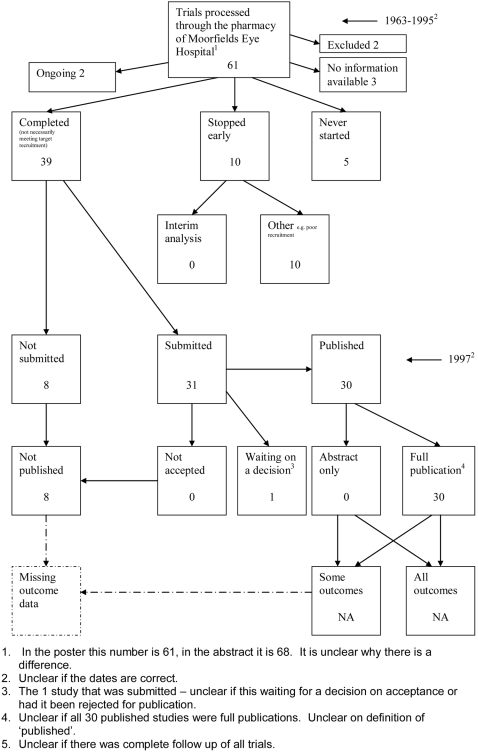
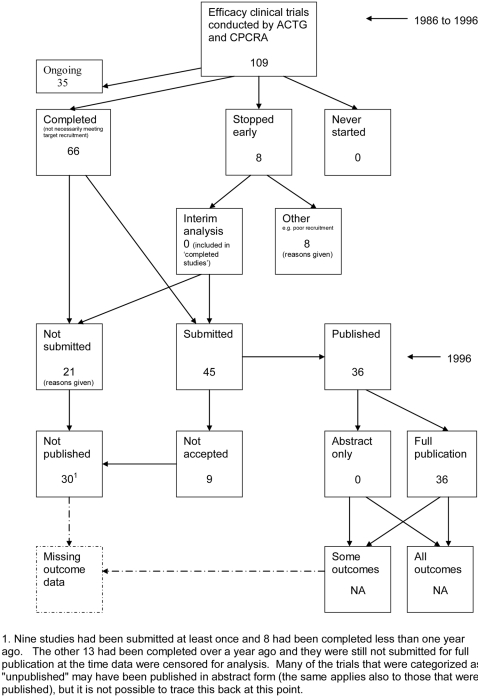
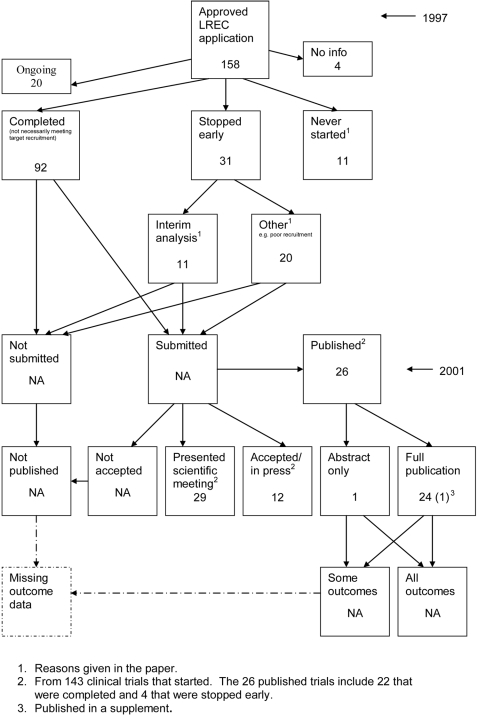
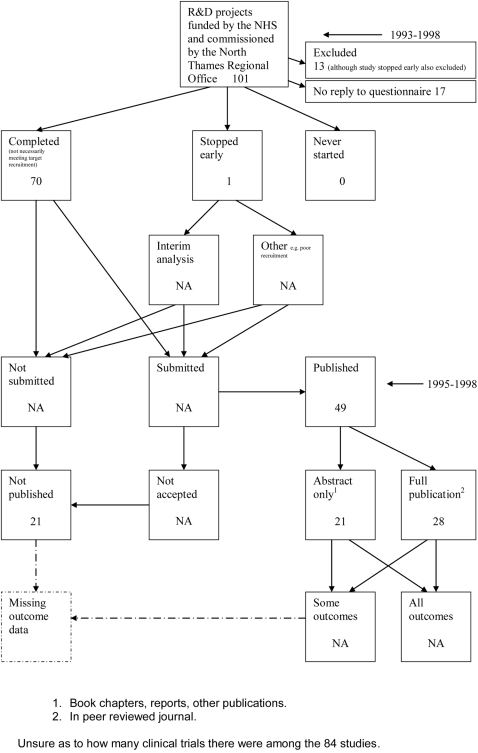
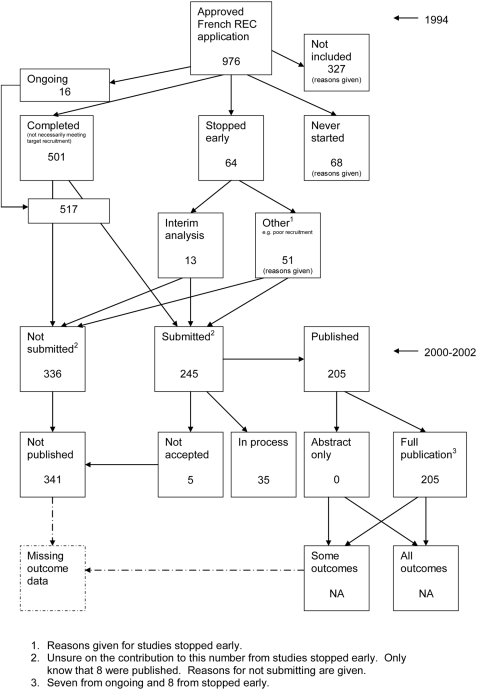
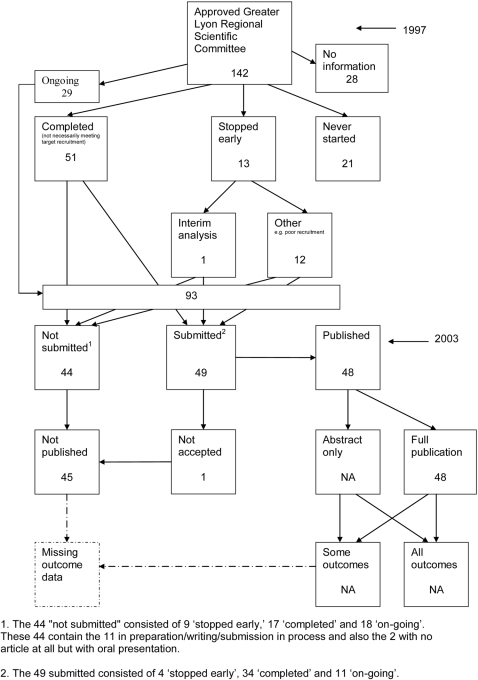
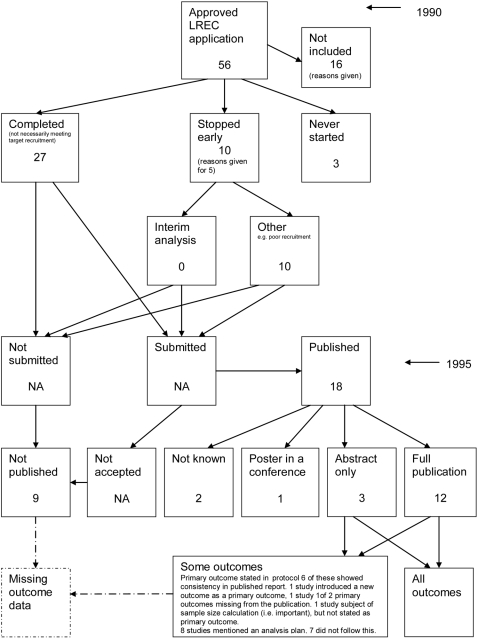
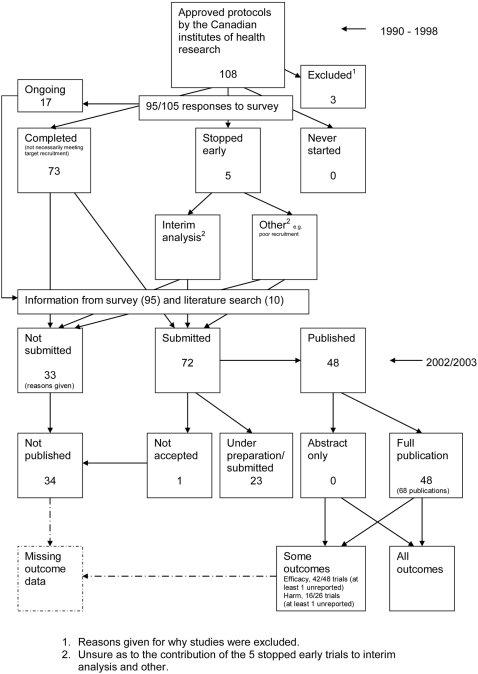
Verification
Claims the paper makes
The claims and statistics of this paper haven’t been checked yet.
Free: it reads the open-access text and checks the first 5 claims that cite a source we can check. Create a free account to check every claim.
Claims other papers make about this one
Each is checked against this paper’s own text: does it say what the citing paper says it does?
The source backs part of the claim, not all of it — or backs it for a different population, condition or comparison.
In the citing paper
“Unfortunately, attempted assessments frequently fail because authors of many trial reports neglect to provide lucid and complete descriptions of that critical information [2-4].”
From CONSORT 2010 Statement: updated guidelines for reporting parallel group randomised trials (2010) · cites this paper as [4]
Experimental — accuracy not yet measuredThe source backs part of the claim, not all of it — or backs it for a different population, condition or comparison.
In the citing paper
“and there are also reasons to believe that publication bias is more likely to affect low powered studies (25).”
From Statistical and Methodological Considerations for the Interpretation of Intranasal Oxytocin Studies (2016) · cites this paper as [25]
Experimental — accuracy not yet measuredThe source backs part of the claim, not all of it — or backs it for a different population, condition or comparison.
In the citing paper
“Empirical evidence suggests that authors often ignore, in the conduct and reporting of their trial, what they stated in the protocol [4,22].”
From CONSORT 2010 statement: updated guidelines for reporting parallel group randomised trials. (2010) · cites this paper as [4]
Experimental — accuracy not yet measuredThe source backs part of the claim, not all of it — or backs it for a different population, condition or comparison.
In the citing paper
“Second, publication bias, selective data analysis and selective reporting of outcomes are more likely to affect low-powered studies.”
From Power failure: why small sample size undermines the reliability of neuroscience (2013) · cites this paper as [17]
Experimental — accuracy not yet measuredThe source backs part of the claim, not all of it — or backs it for a different population, condition or comparison.
In the citing paper
“Empirical evidence suggests that authors often ignore, in the conduct and reporting of their trial, what they stated in the protocol. [4],[22]”
From CONSORT 2010 statement: updated guidelines for reporting parallel group randomised trials (2010) · cites this paper as [4]
Experimental — accuracy not yet measured
14 more claims about this paper
Create a free account to see every claim other papers make about this one.
Self-check
Percentages, sums and reported differences re-computed from the paper’s own numbers.
The self-check needs the paper’s full text.
Citations
Cites
Publication bias in clinical research
Easterbrook, P. J., Gopalan, R., Berlin, J. A., & Matthews, D. R. (1991) · The Lancet · doi:10.1016/0140-6736(91)90201-y · Cited by 3,109 · cited 12×
“The HTA report of Song et al [1] led to four potentially eligible empirical studies [3,4,26,27], all of which had been identified previously.”
BackgroundMethodResultInfluentialSelf-citationSystematic Reviews in Health Care : Meta-Analysis in Context
Egger, M., Smith, G. D., & Altman, D. G. (2000) · Cited by 2,412
Self-citationPublication Bias in Meta‐Analysis: Prevention, Assessment and Adjustments
(2005) · doi:10.1002/0470870168 · Cited by 2,368
Chan, A.-W., Hróbjartsson, A., Haahr, M. T., Gøtzsche, P. C., & Altman, D. G. (2004) · JAMA · doi:10.1001/jama.291.20.2457 · Cited by 1,845 · cited 30×
“Status of approved protocols for Chan 2004b study [15].”
BackgroundMethodInfluentialSelf-citationSystematic Reviews in Health Care: Meta‐Analysis in Context
(2001) · doi:10.1002/9780470693926 · Cited by 1,693
Systematic Reviews in Health Care. Meta-analysis in Context.
Kleijnen, J., & Antes, G. (2002) · International Journal of Epidemiology · doi:10.1093/ije/31.3.697 · Cited by 1,363
Full publication of results initially presented in abstracts.
Scherer, R. W., Langenberg, P., & von Elm, E. (2007) · Cochrane Database of Systematic Reviews · doi:10.1002/14651858.mr000005.pub3 · Cited by 997 · cited 1×
“The Cochrane review by Scherer et al [6] investigating the full publication of results initially presented in abstracts found that only 63% of results from abstracts describing randomized or controlled clinical trials are published in full and ‘positive’ results were more frequently published than non ‘positive’ resul…”
BackgroundPublication bias in clinical trials due to statistical significance or direction of trial results
Hopewell, S., Loudon, K., Clarke, M. J., Oxman, A. D., & Dickersin, K. (2009) · Cochrane Database of Systematic Reviews · doi:10.1002/14651858.mr000006.pub3 · Cited by 898
Dickersin, K. (1992) · JAMA · doi:10.1001/jama.1992.03480030052036 · Cited by 854
Publication bias: evidence of delayed publication in a cohort study of clinical research projects
Stern, J. M., & Simes, R. J. (1997) · BMJ · doi:10.1136/bmj.315.7109.640 · Cited by 818 · cited 11×
“Stern et al [4] reported that this finding was even stronger for their subgroup of clinical trials (Hazard Ratio (HR) 3.13 (95% confidence interval (CI) 1.76, 5.58), p = 0.0001) compared to all quantitative studies (HR 2.32 (95% CI 1.47, 3.66), p = 0.0003).”
BackgroundMethodResultInfluential
Research works printed but not linked: 2
- Von Elm E Röllin A Blümle A Huwiler K Witschi M 2008 Selective reporting of outcomes of drug trials; Comparison of study protocols and published articles. Swiss Med Wkly 138 (13–14) 197 203 18389392
- Wormald R Bloom J Evans J Oldfield K 1997 Publication bias in eye trials. In: 2nd International Conference Scientific Basis of Health Services & 5th Annual Cochrane Colloquium, 1997 5–8 October; Amsterdam, The Netherlands
Cited by
Liberati, A., Altman, D. G., Tetzlaff, J., Mulrow, C., Gøtzsche, P. C., Ioannidis, J. P. A., Clarke, M., Devereaux, P. J., Kleijnen, J., & Moher, D. (2009) · PLoS Medicine · doi:10.1371/journal.pmed.1000100 · Cited by 28,164
“Bias from selective outcome reporting in randomized trials has been well documented [42,43].”
BackgroundInfluentialSelf-citationPRISMA-P Group, Moher, D., Shamseer, L., Clarke, M., Ghersi, D., Liberati, A., Petticrew, M., Shekelle, P., & Stewart, L. A. (2015) · Systematic Reviews · doi:10.1186/2046-4053-4-1 · Cited by 26,223
Self-citationLiberati, A., Altman, D. G., Tetzlaff, J., Mulrow, C., Gotzsche, P. C., Ioannidis, J. P. A., Clarke, M., Devereaux, P. J., Kleijnen, J., & Moher, D. (2009) · BMJ · doi:10.1136/bmj.b2700 · Cited by 17,648
Self-citationCONSORT 2010 Statement: updated guidelines for reporting parallel group randomised trials
the CONSORT Group, Schulz, K. F., Altman, D. G., & Moher, D. (2010) · BMC Medicine · doi:10.1186/1741-7015-8-18 · Cited by 13,371
Self-citationShamseer, L., Moher, D., Clarke, M., Ghersi, D., Liberati, A., Petticrew, M., Shekelle, P., Stewart, L. A., & the PRISMA-P Group (2015) · BMJ · doi:10.1136/bmj.g7647 · Cited by 13,120
Self-citationLiberati, A., Altman, D. G., Tetzlaff, J., Mulrow, C., Gøtzsche, P. C., Ioannidis, J. P. A., Clarke, M., Devereaux, P. J., Kleijnen, J., & Moher, D. (2009) · Journal of Clinical Epidemiology · doi:10.1016/j.jclinepi.2009.06.006 · Cited by 10,578
Self-citationLiberati, A., Altman, D. G., Tetzlaff, J., Mulrow, C., Gøtzsche, P. C., Ioannidis, J. P. A., Clarke, M., Devereaux, P. J., Kleijnen, J., & Moher, D. (2009) · Annals of Internal Medicine · doi:10.7326/0003-4819-151-4-200908180-00136 · Cited by 10,349
Self-citationCONSORT 2010 Statement: updated guidelines for reporting parallel group randomised trials
Schulz, K. F., Altman, D. G., Moher, D., & for the CONSORT Group (2010) · BMJ · doi:10.1136/bmj.c332 · Cited by 9,329
“This followed from empirical evidence that authors frequently provide analyses of outcomes in their published papers that were not the prespecified primary and secondary outcomes in their protocols, while ignoring their prespecified outcomes (that is, selective outcome reporting) [4,22].”
Self-citationMoher, D., Hopewell, S., Schulz, K. F., Montori, V., Gotzsche, P. C., Devereaux, P. J., Elbourne, D., Egger, M., & Altman, D. G. (2010) · BMJ · doi:10.1136/bmj.c869 · Cited by 8,883
Self-citationSterne, J. A. C., Sutton, A. J., Ioannidis, J. P. A., Terrin, N., Jones, D. R., Lau, J., Carpenter, J., Rucker, G., Harbord, R. M., Schmid, C. H., et al. (2011) · BMJ · doi:10.1136/bmj.d4002 · Cited by 7,709
“Reporting biases arise when the dissemination of research findings is influenced by the nature and direction of results. Statistically significant “positive” results are more likely to be published, published rapidly, published in English, published more than once, published in high impact journals, and cited by other…”
BackgroundSelf-citationPower failure: why small sample size undermines the reliability of neuroscience
Button, K. S., Ioannidis, J. P. A., Mokrysz, C., Nosek, B. A., Flint, J., Robinson, E. S. J., & Munafò, M. R. (2013) · Nature Reviews Neuroscience · doi:10.1038/nrn3475 · Cited by 7,641
Self-citationSPIRIT 2013 Statement: Defining Standard Protocol Items for Clinical Trials
Chan, A.-W., Tetzlaff, J. M., Altman, D. G., Laupacis, A., Gøtzsche, P. C., Krleža-Jerić, K., Hróbjartsson, A., Mann, H., Dickersin, K., Berlin, J. A., et al. (2013) · Annals of Internal Medicine · doi:10.7326/0003-4819-158-3-201302050-00583 · Cited by 7,363
“As a transparent record of the researchers’ original intent, comparisons of protocols with final trial reports can help to identify selective reporting of results and undisclosed amendments (48), such as changes to primary outcomes (19, 49).”
ResultSelf-citationSPIRIT 2013 explanation and elaboration: guidance for protocols of clinical trials
Chan, A.-W., Tetzlaff, J. M., Gotzsche, P. C., Altman, D. G., Mann, H., Berlin, J. A., Dickersin, K., Hrobjartsson, A., Schulz, K. F., Parulekar, W. R., et al. (2013) · BMJ · doi:10.1136/bmj.e7586 · Cited by 6,251
Self-citationSPIRIT 2013 Statement: defining standard protocol items for clinical trials.
Chan, A., Tetzlaff, J., Altman, D. G., Laupacis, A., Gøtzsche, P. C., A-Jerić, K. K., Hrobjartsson, A., Mann, H., Dickersin, K., Berlin, J. A., et al. (2015) · PubMed · Cited by 4,986
Self-citationCONSORT 2010 statement: updated guidelines for reporting parallel group randomized trials
Schulz, K. F., Altman, D. G., Moher, D., & for the CONSORT Group* (2010) · Annals of Internal Medicine · doi:10.7326/0003-4819-152-11-201006010-00232 · Cited by 3,824
“Empirical evidence suggests that authors often ignore, in the conduct and reporting of their trial, what they stated in the protocol (4, 22).”
BackgroundSelf-citationLiberati, A., Altman, D. G., Tetzlaff, J., Mulrow, C., Gøtzsche, P. C., Ioannidis, J. P. A., Clarke, M., Devereaux, P. J., Kleijnen, J., & Moher, D. (2009) · Italian Journal of Public Health · doi:10.2427/5768 · Cited by 3,374
Self-citationThe answer is 17 years, what is the question: understanding time lags in translational research
Morris, Z. S., Wooding, S., & Grant, J. (2011) · Journal of the Royal Society of Medicine · doi:10.1258/jrsm.2011.110180 · Cited by 3,340
Reporting animal research: Explanation and elaboration for the ARRIVE guidelines 2.0
Percie du Sert, N., Ahluwalia, A., Alam, S., Avey, M. T., Baker, M., Browne, W. J., Clark, A., Cuthill, I. C., Dirnagl, U., Emerson, M., et al. (2020) · PLOS Biology · doi:10.1371/journal.pbio.3000411 · Cited by 2,677
Moher, D., Hopewell, S., Schulz, K. F., Montori, V., Gøtzsche, P. C., Devereaux, P. J., Elbourne, D., Egger, M., & Altman, D. G. (2012) · International Journal of Surgery · doi:10.1016/j.ijsu.2011.10.001 · Cited by 2,345
“A review of comparisons with protocols showed that about half of journal articles describing RCTs had an unexplained discrepancy in the primary outcomes [57].”
BackgroundResultInfluentialSelf-citationCONSORT 2010 statement: updated guidelines for reporting parallel group randomised trials
Schulz, K. F., Altman, D. G., Moher, D., & for the CONSORT Group (2010) · PLoS Medicine · doi:10.1371/journal.pmed.1000251 · Cited by 2,296
Self-citationA scoping review on the conduct and reporting of scoping reviews
Tricco, A. C., Lillie, E., Zarin, W., O’Brien, K., Colquhoun, H., Kastner, M., Levac, D., Ng, C., Sharpe, J. P., Wilson, K., et al. (2016) · BMC Medical Research Methodology · doi:10.1186/s12874-016-0116-4 · Cited by 2,250
“, checklist) that is developed using explicit methods to guide authors in reporting research [8].”
Avoidable waste in the production and reporting of research evidence
Chalmers, I., & Glasziou, P. (2009) · The Lancet · doi:10.1016/s0140-6736(09)60329-9 · Cited by 2,208
CONSORT 2010 statement: Updated guidelines for reporting parallel group randomised trials
Schulz, K. F., Altman, D. G., & Moher, D. (2010) · Journal of Pharmacology and Pharmacotherapeutics · doi:10.4103/0976-500x.72352 · Cited by 2,165
“Empirical evidence suggests that authors often ignore, in the conduct and reporting of their trial, what they stated in the protocol [4,22].”
Self-citationChoosing Prediction Over Explanation in Psychology: Lessons From Machine Learning
Yarkoni, T., & Westfall, J. (2017) · Perspectives on Psychological Science · doi:10.1177/1745691617693393 · Cited by 1,916
“…and journalists alike to favor analysis procedures that produce “good” results—where a good result is one that is deemed more hypothesis-congruent, publication-worthy, soci-etally interesting, etc. (Bakker, van Dijk, & Wicherts, 2012; Dwan et al., 2008; Ferguson & Heene, 2012; Ioannidis, 2012).”
BackgroundThe COMET Handbook: version 1.0
Williamson, P. R., Altman, D. G., Bagley, H., Barnes, K. L., Blazeby, J. M., Brookes, S. T., Clarke, M., Gargon, E., Gorst, S., Harman, N., et al. (2017) · Trials · doi:10.1186/s13063-017-1978-4 · Cited by 2,011
“Empirical evidence shows that outcomes that are statistically significant are more likely to be fully reported [19].”
BackgroundSelf-citationCINeMA: an approach for assessing confidence in the results of a network meta-analysis
Nikolakopoulou, A., Higgins, J. P. T., Papakonstantinou, T., Chaimani, A., Del Giovane, C., Egger, M., & Salanti, G. (2020) · PLOS Medicine · doi:10.1371/journal.pmed.1003082 · Cited by 1,935
CONSORT 2010 Statement: updated guidelines for reporting parallel group randomised trials
the CONSORT Group, Schulz, K. F., Altman, D. G., & Moher, D. (2010) · Trials · doi:10.1186/1745-6215-11-32 · Cited by 1,871
Self-citationMoher, D., Hopewell, S., Schulz, K. F., Montori, V., Gøtzsche, P. C., Devereaux, P. J., Elbourne, D., Egger, M., & Altman, D. G. (2010) · Journal of Clinical Epidemiology · doi:10.1016/j.jclinepi.2010.03.004 · Cited by 1,858
Self-citationIndustry sponsorship and research outcome
Lundh, A., Lexchin, J., Mintzes, B., Schroll, J. B., & Bero, L. (2017) · Cochrane Database of Systematic Reviews · doi:10.1002/14651858.mr000033.pub3 · Cited by 1,697
Suñé, P., Suñé, J. M., & Montoro, J. B. (2013) · PLoS ONE · doi:10.1371/journal.pone.0054583 · Cited by 1,687
“A possibility of mismatching and even misidentification of publication exists [20–25], although we believe we have partially overcome this problem by using multiple criteria to match publications with protocols.”
MethodResultDeveloping core outcome sets for clinical trials: issues to consider
Williamson, P. R., Altman, D. G., Blazeby, J. M., Clarke, M., Devane, D., Gargon, E., & Tugwell, P. (2012) · Trials · doi:10.1186/1745-6215-13-132 · Cited by 1,661
“Furthermore, empirical research provides strong evidence that outcome reporting bias, defined as the results-based selection for publication of a subset of the original measured outcome variables, is an important problem in randomized trials [2] that affects the conclusions in a substantial proportion of Cochrane revi…”
BackgroundSelf-citationPublication bias in the social sciences: Unlocking the file drawer
Franco, A., Malhotra, N., & Simonovits, G. (2014) · Science · doi:10.1126/science.1255484 · Cited by 1,542
“A different approach involves examining the publication outcomes of a cohort of studies, either prospectively or retrospectively (24, 25).”
MethodGuidance for Developers of Health Research Reporting Guidelines
Moher, D., Schulz, K. F., Simera, I., & Altman, D. G. (2010) · PLoS Medicine · doi:10.1371/journal.pmed.1000217 · Cited by 1,437
“The new item on outcomes follows from empirical evidence [21] indicating that authors frequently do not provide analyses of outcomes in their published papers that were the prespecified outcomes in their protocols (i.”
BackgroundMethodSelf-citationThe Extent and Consequences of P-Hacking in Science
Head, M. L., Holman, L., Lanfear, R., Kahn, A. T., & Jennions, M. D. (2015) · PLOS Biology · doi:10.1371/journal.pbio.1002106 · Cited by 1,388
“Although methods and results in publications do not always match their prespecified protocols [5,66], prespecification allows readers to assess the risk of p-hacking and adjust their confidence in the reported outcomes accordingly.”
BackgroundMethodPoverty and common mental disorders in low and middle income countries: A systematic review
Lund, C., Breen, A., Flisher, A. J., Kakuma, R., Corrigall, J., Joska, J. A., Swartz, L., & Patel, V. (2010) · Social Science & Medicine · doi:10.1016/j.socscimed.2010.04.027 · Cited by 1,375
Can Animal Models of Disease Reliably Inform Human Studies?
van der Worp, H. B., Howells, D. W., Sena, E. S., Porritt, M. J., Rewell, S., O'Collins, V., & Macleod, M. R. (2010) · PLoS Medicine · doi:10.1371/journal.pmed.1000245 · Cited by 1,354
Reducing waste from incomplete or unusable reports of biomedical research
Glasziou, P., Altman, D. G., Bossuyt, P., Boutron, I., Clarke, M., Julious, S., Michie, S., Moher, D., & Wager, E. (2014) · The Lancet · doi:10.1016/s0140-6736(13)62228-x · Cited by 1,319
Self-citationNegative results are disappearing from most disciplines and countries
Fanelli, D. (2012) · Scientometrics · doi:10.1007/s11192-011-0494-7 · Cited by 1,248
What Is the Evidence for Physical Therapy Poststroke? A Systematic Review and Meta-Analysis
Veerbeek, J. M., van Wegen, E., van Peppen, R., van der Wees, P. J., Hendriks, E., Rietberg, M., & Kwakkel, G. (2014) · PLoS ONE · doi:10.1371/journal.pone.0087987 · Cited by 1,203
Kirkham, J. J., Dwan, K. M., Altman, D. G., Gamble, C., Dodd, S., Smyth, R., & Williamson, P. R. (2010) · BMJ · doi:10.1136/bmj.c365 · Cited by 1,133
“Empirical research on randomised controlled trials shows strong evidence of an association between significant results and publication: studies that report positive or significant results (P”
BackgroundSelf-citationDwan, K., Gamble, C., Williamson, P. R., Kirkham, J. J., & the Reporting Bias Group (2013) · PLoS ONE · doi:10.1371/journal.pone.0066844 · Cited by 1,127
“Since the original version of this review was published [13], a Cochrane methodology review is now available on publication bias [64].”
BackgroundMethodInfluentialSelf-citationSavović, J., Jones, H. E., Altman, D. G., Harris, R. J., Jüni, P., Pildal, J., Als-Nielsen, B., Balk, E. M., Gluud, C., Gluud, L. L., et al. (2012) · Annals of Internal Medicine · doi:10.7326/0003-4819-157-6-201209180-00537 · Cited by 1,049
“There is recent empirical evidence of bias in the results of randomized, controlled trials due to attrition (26, 27) and selective outcome reporting (28, 29).”
BackgroundSelf-citationA catalogue of reporting guidelines for health research
Simera, I., Moher, D., Hoey, J., Schulz, K. F., & Altman, D. G. (2010) · European Journal of Clinical Investigation · doi:10.1111/j.1365-2362.2009.02234.x · Cited by 1,047
Self-citationCONSORT 2010 statement: Updated guidelines for reporting parallel group randomised trials
Schulz, K. F., Altman, D. G., & Moher, D. (2011) · International Journal of Surgery · doi:10.1016/j.ijsu.2011.09.004 · Cited by 1,044
“Empirical evidence suggests that authors often ignore, in the conduct and reporting of their trial, what they stated in the protocol [4,22].”
Self-citationDissemination and publication of research findings: an updated review of related biases
Song, F., Parekh, Hooper, L., Loke, Y., Ryder, J., Sutton, A., Hing, C., Kwok, C., Pang, C., & Harvey, I. (2010) · Health Technology Assessment · doi:10.3310/hta14080 · Cited by 1,039
Reporting Recommendations for Tumor Marker Prognostic Studies (REMARK): Explanation and Elaboration
Altman, D. G., McShane, L. M., Sauerbrei, W., & Taube, S. E. (2012) · PLoS Medicine · doi:10.1371/journal.pmed.1001216 · Cited by 1,013
“Evidence of biased non-publication of whole studies has been accumulating for many years, but recently research has demonstrated evidence of additional within-study selective reporting [205,206].”
ResultSelf-citationCONSORT 2010 statement: updated guidelines for reporting parallel group randomised trials.
Schulz, K. F., Altman, D. G., & Moher, D. (2010) · Journal of Clinical Epidemiology · doi:10.1016/j.jclinepi.2010.02.005 · Cited by 1,022
Self-citationSinha, I. P., Smyth, R. L., & Williamson, P. R. (2011) · PLoS Medicine · doi:10.1371/journal.pmed.1000393 · Cited by 891
“Thirdly, in the absence of a set of outcomes that should be measured and reported in all clinical trials in the same condition, it can be difficult to ascertain, in the final publication, whether authors report all results or only those that they find favourable [5,6].”
BackgroundSelf-citationType 2 diabetes and cancer: umbrella review of meta-analyses of observational studies
Tsilidis, K. K., Kasimis, J. C., Lopez, D. S., Ntzani, E. E., & Ioannidis, J. P. A. (2015) · BMJ · doi:10.1136/bmj.g7607 · Cited by 860
Self-citationBoutron, I. (2010) · JAMA · doi:10.1001/jama.2010.651 · Cited by 842
“Sample size, median (IQR) [range] 84 (46-206) [4-6848]”
BackgroundThe ClinicalTrials.gov Results Database — Update and Key Issues
Zarin, D. A., Tse, T., Williams, R. J., Califf, R. M., & Ide, N. C. (2011) · New England Journal of Medicine · doi:10.1056/nejmsa1012065 · Cited by 838
Do Pressures to Publish Increase Scientists' Bias? An Empirical Support from US States Data
Fanelli, D. (2010) · PLoS ONE · doi:10.1371/journal.pone.0010271 · Cited by 805
“In many fields of research, papers are more likely to be published [3,4,5,6], to be cited by”
Background“Positive” results increase down the Hierarchy of the Sciences
Fanelli, D. (2010) · PLoS ONE · doi:10.1371/journal.pone.0010068 · Cited by 734
“This confirmation bias, which operates largely at the subconscious level, can affect the collection, analysis, interpretation and publication of data [39,40] and thus contribute to the excess of positive results that has been observed in many fields [38,41,42,43,44].”
BackgroundComparison of Registered and Published Primary Outcomes in Randomized Controlled Trials
Mathieu, S. (2009) · JAMA · doi:10.1001/jama.2009.1242 · Cited by 730
Meta‐Analysis in Medical Research: The Handbook for the Understanding and Practice of Meta‐Analysis
(2005) · Wiley eBooks · doi:10.1002/9780470994894 · Cited by 687
Savović, J., Jones, H., Altman, D., Harris, R., Jűni, P., Pildal, J., Als-Nielsen, B., Balk, E., Gluud, C., Gluud, L., et al. (2012) · Health Technology Assessment · doi:10.3310/hta16350 · Cited by 668
Self-citationAnemia and Patient Blood Management in Hip and Knee Surgery: A Systematic Review of the Literature
Spahn, D. R. (2010) · Anesthesiology · doi:10.1097/aln.0b013e3181e08e97 · Cited by 650
The Hong Kong Principles for assessing researchers: Fostering research integrity
Moher, D., Bouter, L., Kleinert, S., Glasziou, P., Sham, M. H., Barbour, V., Coriat, A.-M., Foeger, N., & Dirnagl, U. (2020) · PLOS Biology · doi:10.1371/journal.pbio.3000737 · Cited by 540
Early childhood environmental education: A systematic review of the research literature
Ardoin, N. M., & Bowers, A. W. (2020) · Educational Research Review · doi:10.1016/j.edurev.2020.100353 · Cited by 405
Association of BCG, DTP, and measles containing vaccines with childhood mortality: systematic review
Higgins, J. P. T., Soares-Weiser, K., López-López, J. A., Kakourou, A., Chaplin, K., Christensen, H., Martin, N. K., Sterne, J. A. C., & Reingold, A. L. (2016) · BMJ · doi:10.1136/bmj.i5170 · Cited by 604
Constraint-induced movement therapy after stroke
Kwakkel, G., Veerbeek, J. M., van Wegen, E. E. H., & Wolf, S. L. (2015) · The Lancet Neurology · doi:10.1016/s1474-4422(14)70160-7 · Cited by 591
Avoidable Waste in the Production and Reporting of Research Evidence
Chalmers, I., & Glasziou, P. (2009) · Obstetrics & Gynecology · doi:10.1097/aog.0b013e3181c3020d · Cited by 600
Industry sponsorship and research outcome
Lundh, A., Sismondo, S., Lexchin, J., Busuioc, O. A., & Bero, L. (2012) · Cochrane Database of Systematic Reviews · doi:10.1002/14651858.mr000033.pub2 · Cited by 605
Eyding, D., Lelgemann, M., Grouven, U., Harter, M., Kromp, M., Kaiser, T., Kerekes, M. F., Gerken, M., & Wieseler, B. (2010) · BMJ · doi:10.1136/bmj.c4737 · Cited by 588
Simera, I., Moher, D., Hirst, A., Hoey, J., Schulz, K. F., & Altman, D. G. (2010) · BMC Medicine · doi:10.1186/1741-7015-8-24 · Cited by 590
“Appendix 1 Shortcomings in health research reporting The following practices cause major concern: • Non-reporting or delayed reporting of whole studies [5,32] • Selective reporting of only some outcomes in relation to study findings [33,34] • The omission of crucial information in the description of research methods a…”
Self-citationHealth workforce skill mix and task shifting in low income countries: a review of recent evidence
Fulton, B. D., Scheffler, R. M., Sparkes, S. P., Auh, E. Y., Vujicic, M., & Soucat, A. (2011) · Human Resources for Health · doi:10.1186/1478-4491-9-1 · Cited by 540
“Within published studies, there is a bias to selectively report these same types of outcomes, known as outcome reporting bias [53].”
BackgroundBurr, J., Mowatt, G., Hernández, R., Siddiqui, M., Cook, J., Lourenco, T., Ramsay, C., Vale, L., Fraser, C., Azuara-Blanco, A., et al. (2007) · Health Technology Assessment · doi:10.3310/hta11410 · Cited by 549
Dealing with the positive publication bias: Why you should really publish your negative results
Mlinarić, A., Horvat, M., & Šupak Smolčić, V. (2017) · Biochemia Medica · doi:10.11613/bm.2017.030201 · Cited by 514
“Multiple analyses showed that papers are more likely to be published, cited and accepted by high-ranking journals if the reported results are positive (1,3,7-9).”
BackgroundCONSORT 2010 Statement: Updated Guidelines for Reporting Parallel Group Randomized Trials
Schulz, K. F., Altman, D. G., & Moher, D. (2010) · Obstetrics & Gynecology · doi:10.1097/aog.0b013e3181d9d421 · Cited by 519
“Empirical evidence suggests that authors often ignore, in the conduct and reporting of their trial, what they stated in the protocol (4, 22).”
BackgroundSelf-citationA quantitative meta-analysis of neurocognitive functioning in posttraumatic stress disorder.
Scott, J. C., Matt, G. E., Wrocklage, K. M., Crnich, C., Jordan, J., Southwick, S. M., Krystal, J. H., & Schweinsburg, B. C. (2015) · Psychological Bulletin · doi:10.1037/a0038039 · Cited by 513
“Another potential cause of small study effects is publication bias, which refers to the greater tendency for statistically significant results to be published (Dwan et al., 2008; Song, Eastwood, Gilbody, Duley, & Sutton, 2000).”
BackgroundCONSORT 2010 Statement: updated guidelines for reporting parallel group randomized trials.
Schulz, K. F., Altman, D. G., & Moher, D. (2010) · PubMed Central · Cited by 541
Self-citationA review of current evidence for the causal impact of attentional bias on fear and anxiety
Van Bockstaele, B., Verschuere, B., Tibboel, H., De Houwer, J., Crombez, G., & Koster, E. H. W. (2014) · Psychological Bulletin · doi:10.1037/a0034834 · Cited by 485
Needham, D. M., Sepulveda, K. A., Dinglas, V. D., Chessare, C. M., Friedman, L. A., Bingham, C. O., & Turnbull, A. E. (2017) · American Journal of Respiratory and Critical Care Medicine · doi:10.1164/rccm.201702-0372oc · Cited by 464
Publication and other reporting biases in cognitive sciences: detection, prevalence, and prevention
Ioannidis, J. P. A., Munafò, M. R., Fusar-Poli, P., Nosek, B. A., & David, S. P. (2014) · Trends in Cognitive Sciences · doi:10.1016/j.tics.2014.02.010 · Cited by 471
Self-citationPre-registration in social psychology—A discussion and suggested template
van 't Veer, A. E., & Giner-Sorolla, R. (2016) · Journal of Experimental Social Psychology · doi:10.1016/j.jesp.2016.03.004 · Cited by 439
Reporting bias in medical research - a narrative review
McGauran, N., Wieseler, B., Kreis, J., Schüler, Y.-B., Kölsch, H., & Kaiser, T. (2010) · Trials · doi:10.1186/1745-6215-11-37 · Cited by 452
Evolution of Heterogeneity (I2) Estimates and Their 95% Confidence Intervals in Large Meta-Analyses
Thorlund, K., Imberger, G., Johnston, B. C., Walsh, M., Awad, T., Thabane, L., Gluud, C., Devereaux, P. J., & Wetterslev, J. (2012) · PLoS ONE · doi:10.1371/journal.pone.0039471 · Cited by 423
Deep impact: unintended consequences of journal rank
Brembs, B., Button, K., & Munafò, M. (2013) · Frontiers in Human Neuroscience · doi:10.3389/fnhum.2013.00291 · Cited by 441
“This is the well-known phenomenon of publication bias (Song et al., 1999; Van Dongen, 2011; Munafò et al., 2007; Young et al., 2008; Callaham, 2002; Møller and Jennions, 2001; Møller et al., 2005; Schooler, 2011; Dwan et al., 2008).”
E-learning for health professionals
Vaona, A., Banzi, R., Kwag, K. H., Rigon, G., Cereda, D., Pecoraro, V., Tramacere, I., & Moja, L. (2018) · Cochrane Database of Systematic Reviews · doi:10.1002/14651858.cd011736.pub2 · Cited by 397
Weir, C. J., Butcher, I., Assi, V., Lewis, S. C., Murray, G. D., Langhorne, P., & Brady, M. C. (2018) · BMC Medical Research Methodology · doi:10.1186/s12874-018-0483-0 · Cited by 425
“reporting of trials is problematic [3] and can lead to imprecision and biases in meta-analysis findings.”
BackgroundFinancial stress and depression in adults: A systematic review
Guan, N., Guariglia, A., Moore, P., Xu, F., & Al-Janabi, H. (2022) · PLOS ONE · doi:10.1371/journal.pone.0264041 · Cited by 337
“Excluding the unpublished studies might limit the findings of this review since studies with significant results are more likely to get published [73].”
Prevalence, Characteristics, and Publication of Discontinued Randomized Trials
Kasenda, B., von Elm, E., You, J., Blümle, A., Tomonaga, Y., Saccilotto, R., Amstutz, A., Bengough, T., Meerpohl, J. J., Stegert, M., et al. (2014) · JAMA · doi:10.1001/jama.2014.1361 · Cited by 415
Grazing vs. mowing: A meta-analysis of biodiversity benefits for grassland management
Tälle, M., Deák, B., Poschlod, P., Valkó, O., Westerberg, L., & Milberg, P. (2016) · Agriculture, Ecosystems & Environment · doi:10.1016/j.agee.2016.02.008 · Cited by 387
Peripheral biomarkers of endometriosis: a systematic review
May, K. E., Conduit-Hulbert, S. A., Villar, J., Kirtley, S., Kennedy, S. H., & Becker, C. M. (2010) · Human Reproduction Update · doi:10.1093/humupd/dmq009 · Cited by 418
“There is statistical evidence to suggest that the data available are heavily skewed as a result of investigators’ failure to present negative data for publication and the disinclination of journals to publish negative data (Dwan et al., 2008).”
BackgroundPrasad, V., Kim, C., Burotto, M., & Vandross, A. (2015) · JAMA Internal Medicine · doi:10.1001/jamainternmed.2015.2829 · Cited by 403
“Mauguen et al41 (built data set from 5 meta-analyses69-73) NSCLC, adjuvant and locally advanced 52/58 (90)”
BackgroundPublication Bias in the Organizational Sciences
Kepes, S., Banks, G. C., McDaniel, M., & Whetzel, D. L. (2012) · Organizational Research Methods · doi:10.1177/1094428112452760 · Cited by 398
“Sample-level causes of publication bias denote the nonpublication of an entire sample due to either the lack of submission or the rejection of a submission (Dwan et al., 2008; Song et al., 2010).”
BackgroundInfluentialOn the Plurality of (Methodological) Worlds: Estimating the Analytic Flexibility of fMRI Experiments
Carp, J. (2012) · Frontiers in Neuroscience · doi:10.3389/fnins.2012.00149 · Cited by 381
“ORIGINAL RESEARCH ARTICLE published: 11 October 2012 doi: 10.3389/fnins.2012.00149”
InfluentialTrial Publication after Registration in ClinicalTrials.Gov: A Cross-Sectional Analysis
Ross, J. S., Mulvey, G. K., Hines, E. M., Nissen, S. E., & Krumholz, H. M. (2009) · PLoS Medicine · doi:10.1371/journal.pmed.1000144 · Cited by 401
“Many studies have attempted to evaluate the extent of selective publication in the biomedical literature and found similarly low rates of publication [5,12–24], although none have used, to our knowledge, as large and as broadly representative a registry as ClinicalTrials.”
BackgroundScott, J. C., Slomiak, S. T., Jones, J. D., Rosen, A. F. G., Moore, T. M., & Gur, R. C. (2018) · JAMA Psychiatry · doi:10.1001/jamapsychiatry.2018.0335 · Cited by 391
Sideri, S., Papageorgiou, S. N., & Eliades, T. (2018) · Journal of Clinical Epidemiology · doi:10.1016/j.jclinepi.2018.01.003 · Cited by 388
“Outcome reporting bias is a form of bias occurring, when the choice of outcome reporting is influenced by the outcomes’ results, with the scale usually leaning towards studies with statistically significant or ‘attractive’ results [3].”
BackgroundCEC’s Standards for Classifying the Evidence Base of Practices in Special Education
Cook, B. G., Buysse, V., Klingner, J., Landrum, T. J., McWilliam, R. A., Tankersley, M., & Test, D. W. (2015) · Remedial and Special Education · doi:10.1177/0741932514557271 · Cited by 361
“To avoid outcome reporting bias (Dwan et al., 2008), researchers must fully report findings for all the analyses and outcomes described in the research report for outcomes relevant to the review (QI 7.3).”
BackgroundMethodInfluentialReporting recommendations for tumor marker prognostic studies (REMARK): explanation and elaboration
Altman, D. G., McShane, L. M., Sauerbrei, W., & Taube, S. E. (2012) · BMC Medicine · doi:10.1186/1741-7015-10-51 · Cited by 372
“Evidence of biased non-publication of whole studies has been accumulating for many years, but recently research has demonstrated evidence of additional within-study selective reporting [205,206].”
ResultSelf-citationPublication of NIH funded trials registered in ClinicalTrials.gov: cross sectional analysis
Ross, J. S., Tse, T., Zarin, D. A., Xu, H., Zhou, L., & Krumholz, H. M. (2012) · BMJ · doi:10.1136/bmj.d7292 · Cited by 371
Ospina, M. B., Krebs Seida, J., Clark, B., Karkhaneh, M., Hartling, L., Tjosvold, L., Vandermeer, B., & Smith, V. (2008) · PLoS ONE · doi:10.1371/journal.pone.0003755 · Cited by 366
“A particular concern is related to the potential of outcome reporting bias in these studies, in which statistically significant results have a higher chance of being fully reported compared to non-significant results [140].”
ResultCollier, K. L., van Beusekom, G., Bos, H. M. W., & Sandfort, T. G. M. (2013) · Journal of Sex Research · doi:10.1080/00224499.2012.750639 · Cited by 347
“As with any literature review, the pool of available studies from which we drew may have been limited by publication bias, or the more frequent reporting and publication of statistically significant results in comparison to null results (Dwan et al., 2008).”
ResultEvolution of Translational Omics: Lessons Learned and the Path Forward
Micheel, C., Nass, S. J., & Omenn, G. S. (2013) · Cited by 365
Meta-assessment of bias in science
Fanelli, D., Costas, R., & Ioannidis, J. P. A. (2017) · Proceedings of the National Academy of Sciences · doi:10.1073/pnas.1618569114 · Cited by 364
“J Empir Res Hum Res Ethics 2(4):15–34.”
Self-citationKirmayer, L. J. (2012) · Social Science & Medicine · doi:10.1016/j.socscimed.2012.03.018 · Cited by 341
“scientists and most journals are uninterested in replications and less than enthusiastic about negative findings or failures to replicate (Dwan et al., 2008; Young, Ioannidis, & Al-Ubaydli, 2008).”
BackgroundPublication bias examined in meta-analyses from psychology and medicine: A meta-meta-analysis
van Aert, R. C. M., Wicherts, J. M., & van Assen, M. A. L. M. (2019) · PLOS ONE · doi:10.1371/journal.pone.0215052 · Cited by 334
Research Techniques Made Simple: Assessing Risk of Bias in Systematic Reviews
Drucker, A. M., Fleming, P., & Chan, A.-W. (2016) · Journal of Investigative Dermatology · doi:10.1016/j.jid.2016.08.021 · Cited by 314
Self-citation
Metadata
- Authors
- Dwan, K., Altman, D. G., Arnaiz, J. A., Bloom, J., Chan, A.-W., Cronin, E., Decullier, E., Easterbrook, P. J., Von Elm, E., Gamble, C., Ghersi, D., Ioannidis, J. P. A., Simes, J., & Williamson, P. R.
- Affiliations
- University of Liverpool (GB)
- University of Oxford (GB)
- Hospital Clínic de Barcelona (ES)
- Moorfields Eye Hospital (GB)
- Canadian Institutes of Health Research (CA)
- King's College London (GB)
- University of Bern (CH)
- National Health and Medical Research Council (AU)
- Tufts University (US)
- The University of Sydney (AU)
- Corresponding author
- Dwan, Kerry
- ORCID
- Venue
- PLoS ONE
- Publisher
- Public Library of Science (PLoS)
- Published
- 2008-08-28
- Volume
- 3
- Issue
- 8
- Pages
- e3081
- ISSN
- 1932-6203 (ISSN-L)
- PMC
- PMC2518111
- OpenAlex
- W2091959199
- Cited by
- 1,546
- References
- 48
- Citations by year
- 2026: 45 · 2025: 51 · 2024: 67 · 2023: 51 · 2022: 76 · 2021: 118 · 2020: 90 · 2019: 72 · 2018: 96 · 2017: 90 · 2016: 129 · 2015: 121 · 2014: 109 · 2013: 131 · 2012: 103
- FWCI
- 20.77
- Type
- journal article
- Language
- en
- Open access
- gold
- doi.org
- Locations
- PLoS ONE (publishedVersion, cc-by)
- PubMed Central (publishedVersion, cc-by)
- PubMed (publishedVersion)
- Dipòsit Digital de la Universitat de Barcelona (Universitat de Barcelona) (publishedVersion, cc-by)
- RePEc: Research Papers in Economics (submittedVersion)
- Bern Open Repository and Information System (University of Bern) (submittedVersion, cc-by)
- DOAJ (DOAJ: Directory of Open Access Journals) (submittedVersion, cc-by-sa)
- Figshare (submittedVersion, cc-by)
- Research Portal (King's College London) (submittedVersion)
- RECERCAT (Consorci de Serveis Universitaris de Catalunya) (submittedVersion, cc-by)
- Funders
- Cancer Research UK
- Topics
- Social Sciences › Decision Sciences › Statistics, Probability and Uncertainty › Meta-analysis and systematic reviews
- Social Sciences › Library and Information Sciences › Academic Publishing and Open Access
- Health Sciences › Nursing › Issues, ethics and legal aspects › Pharmaceutical industry and healthcare
- Keywords
- publication bias, selective reporting, randomized controlled trials, outcome reporting, meta-analysis validity, clinical trial registration
- MeSH terms
- Clinical Trials as Topic, Humans, Publishing, Cohort Studies, Randomized Controlled Trials as Topic, Treatment Outcome, Publication Bias, Patient Selection
About these checks
Registry, retraction, Cites and statistics results are computed, not judged, with one exception: a printed reference that no index lists is read once by a model before it counts as a citation error. Claims are extracted by a model and kept only when their quote appears verbatim in the text; each cited source is then checked, with a model’s help, for whether it says what the claim relies on. Those verdicts can be wrong — read the claim’s quote and the cited source before relying on one.
Statistics and arithmetic are recomputed, not judged.
Confidence bands are shown only for fields calibrated on our annotated test set. None is calibrated yet, so no band is shown.
What counts as a claim ›How we measure confidence ›How we check this ›
Are you an author, or do you see a problem with this page? Request a review
Data sources
Bibliographic data: Semantic Scholar, OpenAlex, Crossref.
Contains information from the Semantic Scholar Academic Graph Datasets, made available under the ODC Attribution License (ODC-BY 1.0).
Semantic Scholar’s data is described in: Kinney, R., et al. (2023). The Semantic Scholar Open Data Platform. arXiv:2301.10140.
