

The DOI matches its Crossref record; 49 of the 51 references it cites were found in a registry or an index.
Myostatin Inhibition in Muscle, but Not Adipose Tissue, Decreases Fat Mass and Improves Insulin Sensitivity
Open accessAbstract
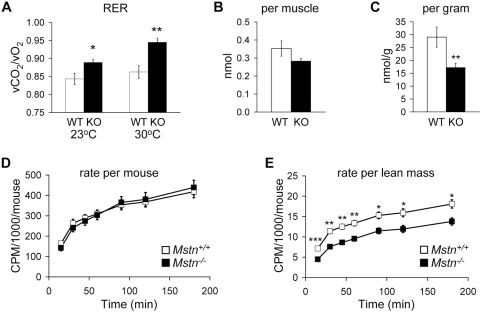
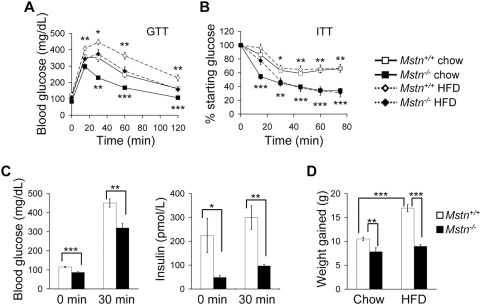
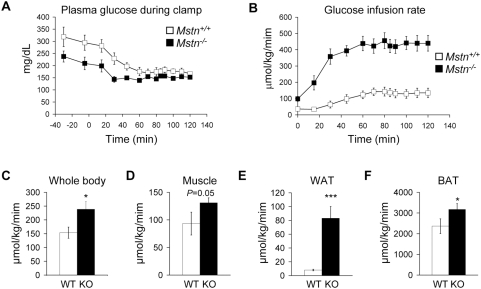
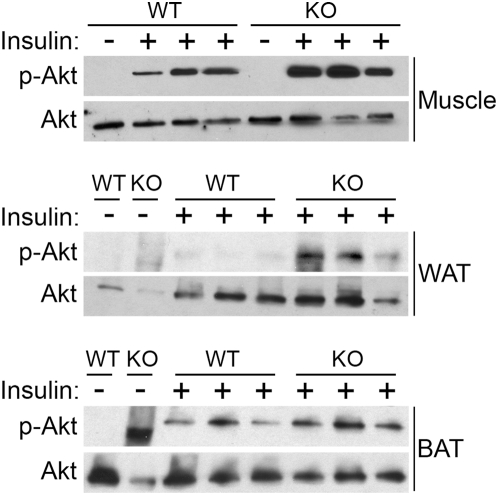
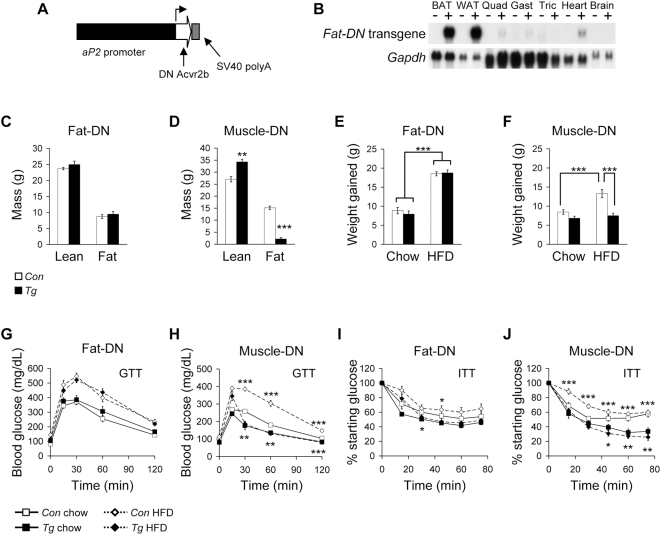
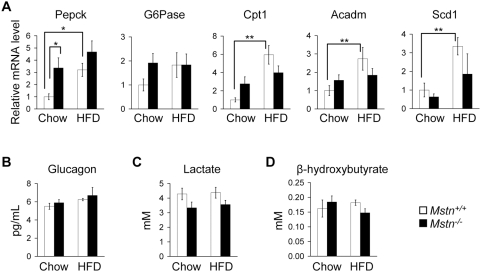
Myostatin (Mstn) is a secreted growth factor expressed in skeletal muscle and adipose tissue that negatively regulates skeletal muscle mass. Mstn(-/-) mice have a dramatic increase in muscle mass, reduction in fat mass, and resistance to diet-induced and genetic obesity. To determine how Mstn deletion causes reduced adiposity and resistance to obesity, we analyzed substrate utilization and insulin sensitivity in Mstn(-/-) mice fed a standard chow. Despite reduced lipid oxidation in skeletal muscle, Mstn(-/-) mice had no change in the rate of whole body lipid oxidation. In contrast, Mstn(-/-) mice had increased glucose utilization and insulin sensitivity as measured by indirect calorimetry, glucose and insulin tolerance tests, and hyperinsulinemic-euglycemic clamp. To determine whether these metabolic effects were due primarily to the loss of myostatin signaling in muscle or adipose tissue, we compared two transgenic mouse lines carrying a dominant negative activin IIB receptor expressed specifically in adipocytes or skeletal muscle. We found that inhibition of myostatin signaling in adipose tissue had no effect on body composition, weight gain, or glucose and insulin tolerance in mice fed a standard diet or a high-fat diet. In contrast, inhibition of myostatin signaling in skeletal muscle, like Mstn deletion, resulted in increased lean mass, decreased fat mass, improved glucose metabolism on standard and high-fat diets, and resistance to diet-induced obesity. Our results demonstrate that Mstn(-/-) mice have an increase in insulin sensitivity and glucose uptake, and that the reduction in adipose tissue mass in Mstn(-/-) mice is an indirect result of metabolic changes in skeletal muscle. These data suggest that increasing muscle mass by administration of myostatin antagonists may be a promising therapeutic target for treating patients with obesity or diabetes.
Overview
The claims and statistics of this paper haven’t been checked yet.
Run the check — free, no account needed. It reads the open-access text and checks the sources it cites.
Integrity signals
Registry
Cites
Statistics
Figures
Verification
Claims the paper makes
The claims and statistics of this paper haven’t been checked yet.
Run the check — free, no account needed. It reads the open-access text and checks the sources it cites.
Claims other papers make about this one
Each is checked against this paper’s own text: does it say what the citing paper says it does?
The cited source doesn’t support the claim as written.
In the citing paper
“Its importance in this tissue is related to the maintenance of adipose mass and greater sensitivity to insulin (Hamrick et al., 2006; Guo et al., 2009).”
From Physical Exercise-Induced Myokines and Muscle-Adipose Tissue Crosstalk: A Review of Current Knowledge and the Implications for Health and Metabolic Diseases (2018) · cites this paper as Guo et al., 2009
Checked by a reasoning model — may be wrong.
Experimental — accuracy not yet measuredThe source backs part of the claim, not all of it — or backs it for a different population, condition or comparison.
In the citing paper
“Evidence that myostatin needs to act on skeletal muscle to cause fat loss comes from a study where the knock out myostatin receptor in adipose tissue had no effect on body composition, weight gain, or glucose and insulin tolerance in mice fed a standard or high-fat diet [181].”
From Effects of Skeletal Muscle Hypertrophy on Fat Mass and Glucose Homeostasis in Humans and Animals: A Narrative Review with Systematic Literature Search (2025) · cites this paper as [181]
Experimental — accuracy not yet measuredThe source backs part of the claim, not all of it — or backs it for a different population, condition or comparison.
In the citing paper
“For example, the stimulation of skeletal muscle hypertrophy by expressing constitutively active Akt1 [22] only within muscle, or by knocking down the myostatin (i.e., activin IIB) receptor only in muscle [181], demonstrates that muscle hypertrophy is sufficient to cause fat loss and improve glucose homeostasis as secondary effects.”
From Effects of Skeletal Muscle Hypertrophy on Fat Mass and Glucose Homeostasis in Humans and Animals: A Narrative Review with Systematic Literature Search (2025) · cites this paper as [181]
Experimental — accuracy not yet measuredThe source backs part of the claim, not all of it — or backs it for a different population, condition or comparison.
In the citing paper
“It also exerts a significant regulatory influence on adipose tissue function, energy metabolism, and systemic energy homeostasis [62].”
From Exercise-Induced Muscle–Fat Crosstalk: Molecular Mediators and Their Pharmacological Modulation for the Maintenance of Metabolic Flexibility in Aging (2025) · cites this paper as [62]
Experimental — accuracy not yet measuredThe source backs part of the claim, not all of it — or backs it for a different population, condition or comparison.
In the citing paper
“However, myostatin is not exclusively secreted by SkM tissue, with studies indicating that AT also secretes this protein.”
From Physical Exercise-Induced Myokines and Muscle-Adipose Tissue Crosstalk: A Review of Current Knowledge and the Implications for Health and Metabolic Diseases (2018) · cites this paper as Guo et al., 2009
Experimental — accuracy not yet measured
In the citing paper
“Adipocyte-specific expression of a dominant negative form of Acvr2b did not induce any changes in body composition, suggesting that changes in fat mass are not directly due to loss of ActRII signaling in adipose tissue [26].”
From Antibody blockade of activin type II receptors preserves skeletal muscle mass and enhances fat loss during GLP-1 receptor agonism (2024) · cites this paper as [26]
Self-check
Percentages, sums and reported differences re-computed from the paper’s own numbers.
The self-check needs the paper’s full text.
Citations
Cites
Regulation of skeletal muscle mass in mice by a new TGF-p superfamily member
McPherron, A. C., Lawler, A. M., & Lee, S.-J. (1997) · Nature · doi:10.1038/387083a0 · Cited by 4,013
Self-citationRegulation of myostatin activity and muscle growth
Lee, S.-J., & McPherron, A. C. (2001) · Proceedings of the National Academy of Sciences · doi:10.1073/pnas.151270098 · Cited by 1,616
Self-citationFolland, J. P., & Williams, A. G. (2007) · Sports Medicine · doi:10.2165/00007256-200737020-00004 · Cited by 1,347
Musarò, A., McCullagh, K., Paul, A., Houghton, L., Dobrowolny, G., Molinaro, M., Barton, E. R., L Sweeney, H., & Rosenthal, N. (2001) · Nature Genetics · doi:10.1038/84839 · Cited by 1,137 · cited 3×
“Several other transgenic mouse models that have increased muscle mass, including some using muscle-specific promoters to drive expression of genes that cause muscle hypertrophy, also have decreased adiposity demonstrating that changes in adipose tissue size can be indirectly caused by changes in skeletal muscle size […”
Physical Activity/Exercise and Type 2 Diabetes
Sigal, R. J., Kenny, G. P., Wasserman, D. H., Castaneda-Sceppa, C., & White, R. D. (2006) · Diabetes Care · doi:10.2337/dc06-9910 · Cited by 949
Induction of Cachexia in Mice by Systemically Administered Myostatin
Zimmers, T. A., Davies, M. V., Koniaris, L. G., Haynes, P. A., Esquela‐Kerscher, A., Tomkinson, K. N., McPherron, A. C., Wolfman, N. M., & Lee, S. (2002) · Science · doi:10.1126/science.1069525 · Cited by 908
Self-citationFunctional improvement of dystrophic muscle by myostatin blockade
Bogdanovich, S., Krag, T. O. B., Barton, E. R., Morris, L. D., Whittemore, L.-A., Ahima, R. S., & Khurana, T. S. (2002) · Nature · doi:10.1038/nature01154 · Cited by 831
REGULATION OF MUSCLE MASS BY MYOSTATIN
Lee, S.-J. (2004) · Annual Review of Cell and Developmental Biology · doi:10.1146/annurev.cellbio.20.012103.135836 · Cited by 819
Life without white fat: a transgenic mousePreprint
Moitra, J., Mason, M. M., Olive, M., Krylov, D. Y., Gavrilova, O., Marcus‐Samuels, B., Feigenbaum, L., Lee, E., Aoyama, T., Eckhaus, M., et al. (1998) · Genes & Development · doi:10.1101/gad.12.20.3168 · Cited by 776
Self-citationInhibition of myostatin in adult mice increases skeletal muscle mass and strength
Whittemore, L.-A., Song, K., Li, X., Aghajanian, J. D., Davies, M. V., Girgenrath, S., Hill, J. J., Jalenak, M., Kelley, P. E., Knight, A., et al. (2003) · Biochemical and Biophysical Research Communications · doi:10.1016/s0006-291x(02)02953-4 · Cited by 512
Cited by
Sorted by citations
Muscles, exercise and obesity: skeletal muscle as a secretory organ
Pedersen, B. K., & Febbraio, M. A. (2012) · Nature Reviews Endocrinology · doi:10.1038/nrendo.2012.49 · Cited by 2,909
Exercise is the real polypill.
Fiuza-Luces, C., Garatachea, N., Berger, N. A., & Lucia, A. (2013) · Physiology · doi:10.1152/physiol.00019.2013 · Cited by 791
Insulin resistance and sarcopenia: mechanistic links between common co-morbidities
Cleasby, M. E., Jamieson, P. M., & Atherton, P. J. (2016) · Journal of Endocrinology · doi:10.1530/joe-15-0533 · Cited by 596
Pedersen, B. K. (2013) · Comprehensive physiology · doi:10.1002/cphy.c120033 · Cited by 516
PGC-1α as a Pivotal Factor in Lipid and Metabolic Regulation
Cheng, C., Ku, H., & Lin, H. (2018) · International Journal of Molecular Sciences · doi:10.3390/ijms19113447 · Cited by 450
Leal, L. G., Lopes, M. A., & Batista, M. L. (2018) · Frontiers in Physiology · doi:10.3389/fphys.2018.01307 · Cited by 382
“Its importance in this tissue is related to the maintenance of adipose mass and greater sensitivity to insulin (Hamrick et al., 2006; Guo et al., 2009).”
BackgroundHeymsfield, S. B., Coleman, L. A., Miller, R., Rooks, D. S., Laurent, D., Petricoul, O., Praestgaard, J., Swan, T., Wade, T., Perry, R. G., et al. (2021) · JAMA Network Open · doi:10.1001/jamanetworkopen.2020.33457 · Cited by 338
Shan, T., Liang, X., Bi, P., & Kuang, S. (2013) · The FASEB Journal · doi:10.1096/fj.12-225755 · Cited by 301
Myokines and Adipokines: Involvement in the Crosstalk between Skeletal Muscle and Adipose Tissue
Li, F., Li, Y., Duan, Y., Hu, C.-A. A., Tang, Y., & Yin, Y. (2017) · Cytokine & Growth Factor Reviews · doi:10.1016/j.cytogfr.2016.10.003 · Cited by 288
Mechanism of increased risk of insulin resistance in aging skeletal muscle
Shou, J., Chen, P.-J., & Xiao, W.-H. (2020) · Diabetology & Metabolic Syndrome · doi:10.1186/s13098-020-0523-x · Cited by 283
Gonzalez-Gil, A. M., & Elizondo-Montemayor, L. (2020) · Nutrients · doi:10.3390/nu12061899 · Cited by 278
TGF-β Family Signaling in Mesenchymal DifferentiationPreprint
Grafe, I., Alexander, S., Peterson, J. R., Snider, T. N., Lévi, B., Lee, B., & Mishina, Y. M. (2017) · Cold Spring Harbor Perspectives in Biology · doi:10.1101/cshperspect.a022202 · Cited by 278
Myostatin decreases with aerobic exercise and associates with insulin resistance
HITTEL, D. S., AXELSON, M., SARNA, N., SHEARER, J., HUFFMAN, K. M., & KRAUS, W. E. (2010) · Medicine & Science in Sports & Exercise · doi:10.1249/mss.0b013e3181e0b9a8 · Cited by 271
Bilski, J., Pierzchalski, P., Szczepanik, M., Bonior, J., & Zoladz, J. A. (2022) · Cells · doi:10.3390/cells11010160 · Cited by 271
The influence of skeletal muscle on systemic aging and lifespan
Demontis, F., Piccirillo, R., Goldberg, A. L., & Perrimon, N. (2013) · Aging Cell · doi:10.1111/acel.12126 · Cited by 238
Neuronal control of peripheral insulin sensitivity and glucose metabolism
Ruud, J., Steculorum, S. M., & Brüning, J. C. (2017) · Nature Communications · doi:10.1038/ncomms15259 · Cited by 245
Fibro–Adipogenic Progenitors Cross-Talk in Skeletal Muscle: The Social Network
Biferali, B., Proietti, D., Mozzetta, C., & Madaro, L. (2019) · Frontiers in Physiology · doi:10.3389/fphys.2019.01074 · Cited by 257
The role of exercise-induced myokines in regulating metabolism
Huh, J. Y. (2018) · Archives of Pharmacal Research · doi:10.1007/s12272-017-0994-y · Cited by 242
Low muscle mass and risk of type 2 diabetes in middle-aged and older adults: findings from the KoGES
Son, J. W., Lee, S. S., Kim, S. R., Yoo, S. J., Cha, B. Y., Son, H., & Cho, N. H. (2017) · Diabetologia · doi:10.1007/s00125-016-4196-9 · Cited by 232
Dong, J., Dong, Y., Dong, Y., Chen, F., Mitch, W. E., & Zhang, L. (2016) · International Journal of Obesity · doi:10.1038/ijo.2015.200 · Cited by 212
Metabolic adaptation in obesity and type ii diabetes: myokines, adipokines and hepatokines
Oh, K.-J., Lee, D., Kim, W., Han, B., Lee, S., & Bae, K.-H. (2016) · International Journal of Molecular Sciences · doi:10.3390/ijms18010008 · Cited by 210
Expression and function of myostatin in obesity, diabetes, and exercise adaptation
ALLEN, D. L., HITTEL, D. S., & MCPHERRON, A. C. (2011) · Medicine & Science in Sports & Exercise · doi:10.1249/mss.0b013e3182178bb4 · Cited by 207
Self-citationZamani, N., & Brown, C. (2010) · Endocrine Reviews · doi:10.1210/er.2010-0018 · Cited by 214
Zhang, C., McFarlane, C., Lokireddy, S., Masuda, S., Ge, X., Gluckman, P. D., Sharma, M., & Kambadur, R. (2012) · Diabetologia · doi:10.1007/s00125-011-2304-4 · Cited by 192
Camporez, J.-P. G., Petersen, M. C., Abudukadier, A., Moreira, G. V., Jurczak, M. J., Friedman, G., Haqq, C. M., Petersen, K. F., & Shulman, G. I. (2016) · Proceedings of the National Academy of Sciences · doi:10.1073/pnas.1525795113 · Cited by 184
The central role of myostatin in skeletal muscle and whole body homeostasis
Elliott, B., Renshaw, D. W., Getting, S. J., & Mackenzie, R. (2012) · Acta Physiologica · doi:10.1111/j.1748-1716.2012.02423.x · Cited by 186
New insights into the cellular activities of Fndc5/Irisin and its signaling pathways
Rabiee, F., Lachinani, L., Ghaedi, S., Nasr‐Esfahani, M. H., Megraw, T. L., & Ghaedi, K. (2020) · Cell & Bioscience · doi:10.1186/s13578-020-00413-3 · Cited by 188
Muscle–bone interactions: basic and clinical aspects
Cianferotti, L., & Brandi, M. L. (2013) · Endocrine · doi:10.1007/s12020-013-0026-8 · Cited by 170
Mechanisms Underlying Metabolic Syndrome-Related Sarcopenia and Possible Therapeutic Measures
Rubio-Ruiz, M. E., Guarner‐Lans, V., Pérez-Torres, I., & Soto, M. E. (2019) · International Journal of Molecular Sciences · doi:10.3390/ijms20030647 · Cited by 174
Zhang, C., McFarlane, C., Lokireddy, S., Bonala, S., Ge, X., Masuda, S., Gluckman, P. D., Sharma, M., & Kambadur, R. (2011) · Diabetologia · doi:10.1007/s00125-011-2079-7 · Cited by 158
Muscle-bone interactions: From experimental models to the clinic? A critical update
Laurent, M. R., Dubois, V., Claessens, F., Verschueren, S., Vanderschueren, D., Gielen, E., & Jardí, F. (2015) · Molecular and Cellular Endocrinology · doi:10.1016/j.mce.2015.10.017 · Cited by 156
Myostatin: A novel insight into its role in metabolism, signal pathways, and expression regulation
Huang, Z., Chen, X., & Chen, D. (2011) · Cellular Signalling · doi:10.1016/j.cellsig.2011.05.003 · Cited by 155
Double Muscling in Cattle: Genes, Husbandry, Carcasses and Meat
Fiems, L. O. (2012) · Animals · doi:10.3390/ani2030472 · Cited by 153
Busquets, S., Toledo, M., Orpí, M., Massa, D., Porta, M. M., Capdevila, E., Padilla, N., Frailis, V., López-Soriano, F. J., Han, H. Q., et al. (2011) · Journal of Cachexia Sarcopenia and Muscle · doi:10.1007/s13539-011-0049-z · Cited by 141
Dyle, M. C., Ebert, S. M., Cook, D. P., Kunkel, S. D., Fox, D. K., Bongers, K. S., Bullard, S. A., Dierdorff, J. M., & Adams, C. M. (2014) · Journal of Biological Chemistry · doi:10.1074/jbc.m114.556241 · Cited by 138
Cuthbertson, D. J., Shojaee-Moradie, F., Sprung, V. S., Jones, H., Pugh, C. J. A., Richardson, P., Kemp, G. J., Barrett, M., Jackson, N. C., Thomas, E. L., et al. (2016) · Clinical Science · doi:10.1042/cs20150447 · Cited by 138
Muscle wasting and aging: Experimental models, fatty infiltrations, and prevention
Brioche, T., Pagano, A. F., Py, G., & Chopard, A. (2016) · Molecular Aspects of Medicine · doi:10.1016/j.mam.2016.04.006 · Cited by 129
Mechanisms by Which Skeletal Muscle Myokines Ameliorate Insulin Resistance
Balakrishnan, R., & Thurmond, D. C. (2022) · International Journal of Molecular Sciences · doi:10.3390/ijms23094636 · Cited by 143
Nunn, E., Jaiswal, N., Gavin, M., Uehara, K., Stefkovich, M., Drareni, K., Calhoun, R., Lee, M., Holman, C. D., Baur, J. A., et al. (2024) · Molecular Metabolism · doi:10.1016/j.molmet.2024.101880 · Cited by 126
Fournier, B., Murray, B., Gutzwiller, S., Marcaletti, S., Marcellin, D., Bergling, S., Brachat, S., Persohn, E., Pierrel, E., Bombard, F., et al. (2012) · Molecular and Cellular Biology · doi:10.1128/mcb.06575-11 · Cited by 130
Myostatin: more than just a regulator of muscle mass
Argilés, J. M., Orpí, M., Busquets, S., & López-Soriano, F. J. (2012) · Drug Discovery Today · doi:10.1016/j.drudis.2012.02.001 · Cited by 125
Metabolic Functions of Myostatin and GDF11
McPherron, A. C. (2010) · Immunology Endocrine & Metabolic Agents - Medicinal Chemistry · doi:10.2174/187152210793663810 · Cited by 128
Self-citationMetabolic benefits of resistance training and fast glycolytic skeletal muscle
LeBrasseur, N. K., Walsh, K. X., & Arany, Z. P. (2010) · American Journal of Physiology-Endocrinology and Metabolism · doi:10.1152/ajpendo.00512.2010 · Cited by 123
Effects of myostatin deletion in aging mice
Morissette, M. R., Stricker, J., Rosenberg, M. A., Buranasombati, C., Levitan, E. B., Mittleman, M. A., & Rosenzweig, A. (2009) · Aging Cell · doi:10.1111/j.1474-9726.2009.00508.x · Cited by 123
Consitt, L. A., & Clark, B. C. (2018) · The Journal of Frailty & Aging · doi:10.14283/jfa.2017.33 · Cited by 122
Connecting Myokines and Metabolism
Ahima, R. S., & Park, H. K. (2015) · Endocrinology and Metabolism · doi:10.3803/enm.2015.30.3.235 · Cited by 111
A Novel Therapeutic Approach to Treating Obesity through Modulation of TGFβ Signaling
Koncarevic, A., Kajimura, S., Cornwall-Brady, M. R., Andreucci, A., Pullen, A. E., Sako, D., Kumar, R., Grinberg, A. V., Liharska, K., Ucran, J. A., et al. (2012) · Endocrinology · doi:10.1210/en.2012-1016 · Cited by 111
Watts, R., Johnsen, V. L., Shearer, J., & Hittel, D. S. (2013) · American Journal of Physiology-Cell Physiology · doi:10.1152/ajpcell.00392.2012 · Cited by 107
Plasma and Muscle Myostatin in Relation to Type 2 Diabetes
Brandt, C., Nielsen, A. R., Fischer, C. P., Hansen, J. B., Pedersen, B. K., & Plomgaard, P. (2012) · PLoS ONE · doi:10.1371/journal.pone.0037236 · Cited by 103
The Function of Myostatin in the Regulation of Fat Mass in Mammals
Deng, B., Zhang, F., Wen, J., Ye, S., Wang, L., Yang, Y., Gong, P., & Jiang, S. (2017) · Nutrition & Metabolism · doi:10.1186/s12986-017-0179-1 · Cited by 98
Melatonin improves insulin sensitivity independently of weight loss in old obese rats
Zanuto, R., de Siqueira-Filho, M. A., Caperuto, L. C., Bacurau, R. F. P., Hirata, E., Garcia, R. A. P., do Amaral, F. G., Marçal, A. C., Ribeiro, L. M., Camporez, J. P., et al. (2013) · Journal of Pineal Research · doi:10.1111/jpi.12056 · Cited by 98
Beyond the bone: Bone morphogenetic protein signaling in adipose tissue
Blázquez‐Medela, A. M., Jumabay, M., & Boström, K. I. (2019) · Obesity Reviews · doi:10.1111/obr.12822 · Cited by 100
Lipina, C., Kendall, H., McPherron, A. C., Taylor, P. M., & Hundal, H. S. (2010) · FEBS Letters · doi:10.1016/j.febslet.2010.04.039 · Cited by 98
Self-citationSerum Myostatin is Upregulated in Obesity and Correlates with Insulin Resistance in Humans
Amor, M., Itariu, B. K., Moreno-Viedma, V., Keindl, M., Jürets, A., Prager, G., Langer, F., Grablowitz, V., Zeyda, M., & Stulnig, T. M. (2019) · Experimental and Clinical Endocrinology & Diabetes · doi:10.1055/a-0641-5546 · Cited by 93
Tbx15 controls skeletal muscle fibre-type determination and muscle metabolism
Lee, K. Y., Singh, M. K., Ussar, S., Wetzel, P., Hirshman, M. F., Goodyear, L. J., Kispert, A., & Kahn, C. R. (2015) · Nature Communications · doi:10.1038/ncomms9054 · Cited by 95
Chen, Y., Ye, J., Cao, L., Zhang, Y., Xia, W., & Zhu, D. (2010) · The International Journal of Biochemistry & Cell Biology · doi:10.1016/j.biocel.2010.09.017 · Cited by 91
Emerging role of myostatin and its inhibition in the setting of chronic kidney disease
Verzola, D., Barisione, C., Picciotto, D., Garibotto, G., & Koppe, L. (2018) · Kidney International · doi:10.1016/j.kint.2018.10.010 · Cited by 95
Bimagrumab improves body composition and insulin sensitivity in insulin‐resistant individuals
Garito, T., Roubenoff, R., Hompesch, M., Morrow, L., Gomez, K., Rooks, D., Meyers, C., Buchsbaum, M. S., Neelakantham, S., Swan, T., et al. (2018) · Diabetes, Obesity and Metabolism · doi:10.1111/dom.13042 · Cited by 88
Harnessing Muscle–Liver Crosstalk to Treat Nonalcoholic Steatohepatitis
Chakravarthy, M. V., Siddiqui, M. S., Forsgren, M. F., & Sanyal, A. J. (2020) · Frontiers in Endocrinology · doi:10.3389/fendo.2020.592373 · Cited by 96
Revisiting the paradigm of myostatin in vertebrates: Insights from fishes
Gabillard, J., Biga, P. R., Rescan, P., & Seiliez, I. (2013) · General and Comparative Endocrinology · doi:10.1016/j.ygcen.2013.08.012 · Cited by 87
Hjorth, M., Pourteymour, S., Görgens, S. W., Langleite, T. M., Lee, S., Holen, T., Gulseth, H. L., Birkeland, K. I., Jensen, J., Drevon, C. A., et al. (2016) · Acta Physiologica · doi:10.1111/apha.12631 · Cited by 83
Abati, E., Manini, A., Comi, G. P., & Corti, S. P. (2022) · Cellular and Molecular Life Sciences · doi:10.1007/s00018-022-04408-w · Cited by 85
Myostatin – The Holy Grail for Muscle, Bone, and Fat?
Buehring, B., & Binkley, N. (2013) · Current Osteoporosis Reports · doi:10.1007/s11914-013-0160-5 · Cited by 79
Bagheri, R., Rashidlamir, A., Motevalli, M. S., Elliott, B., Mehrabani, J., & Wong, A. (2019) · European Journal of Applied Physiology · doi:10.1007/s00421-019-04180-z · Cited by 79
Price, E. R., Bauchinger, U., Zajac, D. M., Cerasale, D. J., McFarlan, J. T., Gerson, A. R., McWilliams, S. R., & Guglielmo, C. G. (2011) · Journal of Experimental Biology · doi:10.1242/jeb.057620 · Cited by 78
Metabolic control of myofibers: promising therapeutic target for obesity and type 2 diabetes
Duan, Y., Li, F., Tan, B., Yao, K., & Yin, Y. (2017) · Obesity Reviews · doi:10.1111/obr.12530 · Cited by 81
Güemes, A., & Georgiou, P. (2018) · Bioelectronic Medicine · doi:10.1186/s42234-018-0009-4 · Cited by 79
Han, X., Møller, L. L. V., Groote, E. D., Bojsen-Møller, K. N., Davey, J. R., Henríquez‐Olguín, C., Li, Z., Knudsen, J. R., Jensen, T. E., Madsbad, S., et al. (2019) · Journal of Cachexia Sarcopenia and Muscle · doi:10.1002/jcsm.12474 · Cited by 75
Ryan, A. S., Li, G., Blumenthal, J. B., & Ortmeyer, H. K. (2013) · Obesity · doi:10.1002/oby.20216 · Cited by 74
Tu, P., Bhasin, S., Hruz, P. W., Herbst, K. L., Castellani, L. W., Hua, N., Hamilton, J. A., & Guo, W. (2009) · Diabetes · doi:10.2337/db09-0349 · Cited by 72
Hansen, J., Rinnov, A., Krogh‐Madsen, R., Fischer, C. P., Andreasen, A. S., Berg, R. M. G., Møller, K., Pedersen, B. K., & Plomgaard, P. (2013) · Diabetes/Metabolism Research and Reviews · doi:10.1002/dmrr.2415 · Cited by 71
Koncarevic, A., Cornwall-Brady, M., Pullen, A., Davies, M., Sako, D., Liu, J., Kumar, R., Tomkinson, K., Baker, T., Umiker, B., et al. (2010) · Endocrinology · doi:10.1210/en.2010-0134 · Cited by 71
Regulation of brown adipocyte metabolism by myostatin/follistatin signaling
Singh, R., Braga, M., & Pervin, S. (2014) · Frontiers in Cell and Developmental Biology · doi:10.3389/fcell.2014.00060 · Cited by 71
Liu, M., Qin, J., Hao, Y., Liu, M., Luo, J., Luo, T., & Wei, L. (2013) · Oxidative Medicine and Cellular Longevity · doi:10.1155/2013/782497 · Cited by 70
Bernardo, B. L., Wachtmann, T. S., Cosgrove, P. G., Kühn, M., Opsahl, A., Judkins, K. M., Freeman, T. B., Hadcock, J. R., & LeBrasseur, N. K. (2010) · PLoS ONE · doi:10.1371/journal.pone.0011307 · Cited by 68
Myostatin Inhibition Prevents Diabetes and Hyperphagia in a Mouse Model of Lipodystrophy
Guo, T., Bond, N. D., Jou, W., Gavrilova, O., Portas, J., & McPherron, A. C. (2012) · Diabetes · doi:10.2337/db11-0915 · Cited by 68
Self-citationMyostatin: Basic biology to clinical application
Esposito, P. B., Picciotto, D., Battaglia, Y., Costigliolo, F., Viazzi, F. C., & Verzola, D. (2022) · Advances in clinical chemistry · doi:10.1016/bs.acc.2021.09.006 · Cited by 72
Myostatin signals through miR-34a to regulate Fndc5 expression and browning of white adipocytes
Ge, X., Sathiakumar, D., Lua, B.-N., Kukreti, H., Lee, M., & McFarlane, C. (2016) · International Journal of Obesity · doi:10.1038/ijo.2016.110 · Cited by 67
Rybalka, E., Timpani, C. A., Debruin, D. A., Bagaric, R. M., Campelj, D. G., & Hayes, A. (2020) · Cells · doi:10.3390/cells9122657 · Cited by 69
Wetzlich, B., Nyakundi, B. B., & Yang, J. (2024) · Molecular and Cellular Biochemistry · doi:10.1007/s11010-024-05120-y · Cited by 74
MacDonald, E. M., Andrés‐Mateos, E., Mejías, R., Simmers, J. L., Mi, R., Park, J.-S., Ying, S., Höke, A., Lee, S., & Cohn, R. D. (2014) · Disease Models & Mechanisms · doi:10.1242/dmm.014126 · Cited by 67
The effects of myosteatosis on skeletal muscle function in older adults
Dondero, K., Friedman, B., Rekant, J., Landers‐Ramos, R., & Addison, O. (2024) · Physiological Reports · doi:10.14814/phy2.16042 · Cited by 63
Coogan, M. P., Alston, V. N., Su, B., Khalil, K. M., Elaswad, A., Khan, M. G. Q., Simora, R. M. C., Johnson, A., Xing, D., Li, S., et al. (2022) · Aquaculture · doi:10.1016/j.aquaculture.2022.738290 · Cited by 65
Vijayakumar, A., Wu, Y., Sun, H., Li, X., Jeddy, Z., Liu, C., Schwartz, G. J., Yakar, S., & LeRoith, D. (2011) · Diabetes · doi:10.2337/db11-0814 · Cited by 65
Jackson, M. F., Luong, D., Vang, D. D., Garikipati, D. K., Stanton, J. B., Nelson, O. L., & Rodgers, B. D. (2012) · Journal of Endocrinology · doi:10.1530/joe-11-0455 · Cited by 69
Peripheral signalling involved in energy homeostasis control
Lancha, A., Frühbeck, G., & Gómez‐Ambrosi, J. (2012) · Nutrition Research Reviews · doi:10.1017/s0954422412000145 · Cited by 66
Emerging roles for the TGFβ family in pancreatic β-cell homeostasis
Brown, M. L., & Schneyer, A. L. (2010) · Trends in Endocrinology & Metabolism · doi:10.1016/j.tem.2010.02.008 · Cited by 63
Skeletal muscle as a therapeutic target for delaying type 1 diabetic complications
Coleman, S. K. (2015) · World Journal of Diabetes · doi:10.4239/wjd.v6.i17.1323 · Cited by 67
Lee, S.-J., Lehar, A., Liu, Y., Ly, C. H., Pham, Q.-M., Michaud, M., Rydzik, R., Youngstrom, D. W., Shen, M. M., Kaartinen, V., et al. (2020) · Proceedings of the National Academy of Sciences · doi:10.1073/pnas.2019263117 · Cited by 59
Allen, D. L., Cleary, A. S., Lindsay, S. F., Loh, A. S., & Reed, J. M. (2010) · Journal of Applied Physiology · doi:10.1152/japplphysiol.00504.2010 · Cited by 61
Konopka, A. R., Wolff, C. A., Suer, M. K., & Harber, M. P. (2018) · American Journal of Physiology-Regulatory, Integrative and Comparative Physiology · doi:10.1152/ajpregu.00030.2018 · Cited by 59
Liu, X., Bauman, W. A., & Cardozo, C. P. (2018) · Physiological Reports · doi:10.14814/phy2.13837 · Cited by 61
Biga, P. R., & Meyer, J. (2009) · Comparative Biochemistry and Physiology Part A Molecular & Integrative Physiology · doi:10.1016/j.cbpa.2009.07.023 · Cited by 58
Novel insights into the complex architecture of osteoporosis molecular genetics
Saad, F. A. (2019) · Annals of the New York Academy of Sciences · doi:10.1111/nyas.14231 · Cited by 55
Sarcopenic Obesity in Liver Cirrhosis: Possible Mechanism and Clinical Impact
Nishikawa, H., Enomoto, H., Nishiguchi, S., & Iijima, H. (2021) · International Journal of Molecular Sciences · doi:10.3390/ijms22041917 · Cited by 56
Follistatin and follistatin like-3 differentially regulate adiposity and glucose homeostasis
Brown, M. L., Bonomi, L., Ungerleider, N., Zina, J., Kimura, F., Mukherjee, A., Sidis, Y., & Schneyer, A. (2011) · Obesity · doi:10.1038/oby.2011.97 · Cited by 55
Azevedo, V. Z., Silaghi, C. A., Maurel, T., Silaghi, H., Ratziu, V., & Pais, R. (2022) · Frontiers in Nutrition · doi:10.3389/fnut.2021.774030 · Cited by 59
García-Fontana, B., Reyes‐García, R., Morales, S., Ávila-Rubio, V., Muñoz‐Garach, A., Rozas-Moreno, P., & Muñoz‐Torres, M. (2015) · Endocrine · doi:10.1007/s12020-015-0758-8 · Cited by 54
Myostatin — From the Mighty Mouse to cardiovascular disease and cachexia
Dschietzig, T. B. (2014) · Clinica Chimica Acta · doi:10.1016/j.cca.2014.03.021 · Cited by 55
Cleasby, M. E., Jarmin, S., Eilers, W., Elashry, M. I., Andersen, D. K., Dickson, G., & Foster, K. (2014) · American Journal of Physiology-Endocrinology and Metabolism · doi:10.1152/ajpendo.00586.2013 · Cited by 57
Metadata
- Authors
- Guo, T., Jou, W., Chanturiya, T., Portas, J., Gavrilova, O., & McPherron, A. C.
- Affiliations
- National Institutes of Health (US)
- Corresponding author
- McPherron, Alexandra C.
- Venue
- PLoS ONE
- Publisher
- Public Library of Science (PLoS)
- Published
- 2009-03-19
- Volume
- 4
- Issue
- 3
- Pages
- e4937
- ISSN
- 1932-6203 (ISSN-L)
- PMC
- PMC2654157
- OpenAlex
- W2028966038
- Cited by
- 402
- References
- 51
- Citations by year
- 2026: 17 · 2025: 18 · 2024: 20 · 2023: 17 · 2022: 27 · 2021: 31 · 2020: 23 · 2019: 25 · 2018: 15 · 2017: 23 · 2016: 17 · 2015: 28 · 2014: 27 · 2013: 29 · 2012: 27
- FWCI
- 11.40
- Type
- journal article
- Language
- en
- Open access
- gold
- doi.org
- Licence
- Locations
- PLoS ONE (publishedVersion, public-domain)
- PubMed Central (publishedVersion, public-domain)
- PubMed (publishedVersion)
- DOAJ (DOAJ: Directory of Open Access Journals) (submittedVersion)
- Figshare (submittedVersion, cc-by)
- Funders
- Johns Hopkins University
- National Institutes of Health
- National Institute of Diabetes and Digestive and Kidney Diseases
- Topics
- Life Sciences › Biochemistry, Genetics and Molecular Biology › Molecular Biology › Muscle Physiology and Disorders
- Health Sciences › Medicine › Endocrinology, Diabetes and Metabolism › Adipokines, Inflammation, and Metabolic Diseases
- Health Sciences › Medicine › Physiology (medical) › Adipose Tissue and Metabolism
- Keywords
- myostatin, Mstn knockout mice, skeletal muscle, adipose tissue, fat mass, insulin sensitivity, glucose metabolism, lipid oxidation, diet-induced obesity, obesity resistance, muscle mass, high-fat diet, diabetes treatment
- MeSH terms
- Adipose Tissue, Animals, Diet, Dietary Fats, Glucose, Humans, Insulin, Insulin Resistance, Male, Mice, Inbred C57BL, Oxidation-Reduction, Glucose Clamp Technique, Signal Transduction, Mice, Knockout, Muscle, Skeletal, Lipid Metabolism, Proto-Oncogene Proteins c-akt, Mice, Myostatin
About these checks
Registry, retraction, Cites and statistics results are computed, not judged, with one exception: a printed reference that no index lists is read once by a model before it counts as a citation error. Claims are extracted by a model and kept only when their quote appears verbatim in the text; each cited source is then checked, with a model’s help, for whether it says what the claim relies on. Those verdicts can be wrong — read the claim’s quote and the cited source before relying on one.
Statistics and arithmetic are recomputed, not judged.
Confidence bands are shown only for fields calibrated on our annotated test set. None is calibrated yet, so no band is shown.
What counts as a claim ›How we measure confidence ›How we check this ›
Are you an author, or do you see a problem with this page? Request a review
