

The DOI matches its Crossref record; 45 of the 45 references it cites were found in a registry or an index.
Social Transmission of Fear in Rats: The Role of 22-kHz Ultrasonic Distress Vocalization
Open accessAbstract
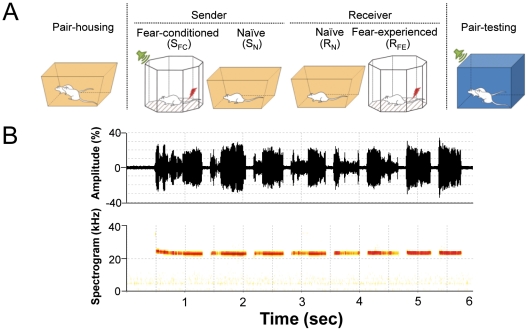
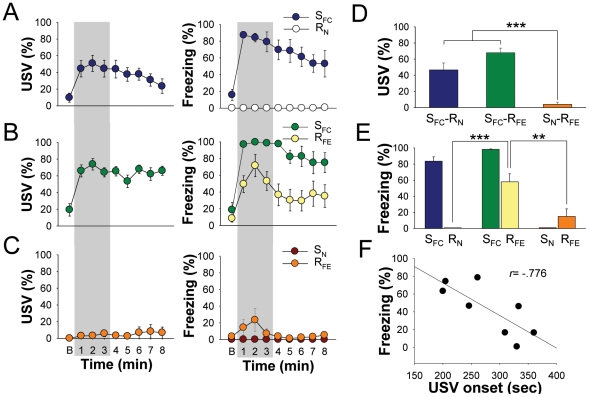
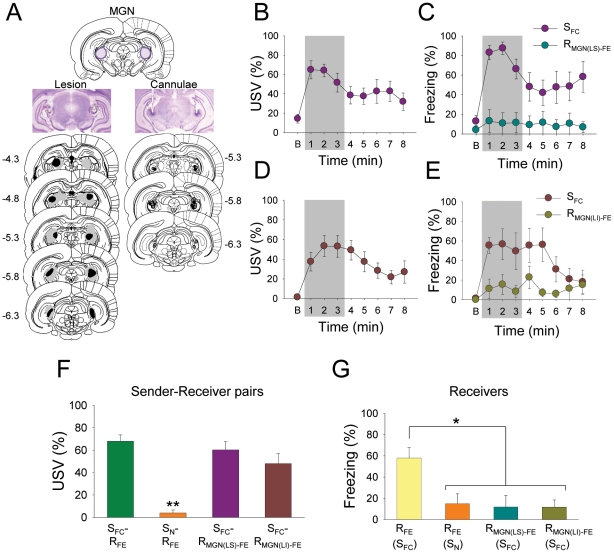
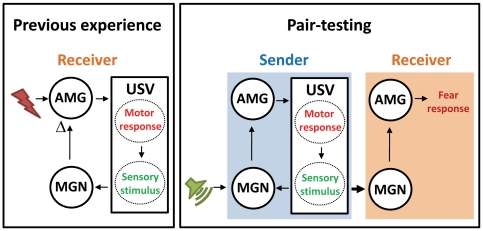
BACKGROUND: Social alarm calls alert animals to potential danger and thereby promote group survival. Adult laboratory rats in distress emit 22-kHz ultrasonic vocalization (USV) calls, but the question of whether these USV calls directly elicit defensive behavior in conspecifics is unresolved. METHODOLOGY/PRINCIPAL FINDINGS: The present study investigated, in pair-housed male rats, whether and how the conditioned fear-induced 22-kHz USVs emitted by the 'sender' animal affect the behavior of its partner, the 'receiver' animal, when both are placed together in a novel chamber. The sender rats' conditioned fear responses evoked significant freezing (an overt evidence of fear) in receiver rats that had previously experienced an aversive event but not in naïve receiver rats. Permanent lesions and reversible inactivations of the medial geniculate nucleus (MGN) of the thalamus effectively blocked the receivers' freeezing response to the senders' conditioned fear responses, and this occurred in absence of lesions/inactivations impeding the receiver animals' ability to freeze and emit 22-kHz USVs to the aversive event per se. CONCLUSIONS/SIGNIFICANCE: These results--that prior experience of fear and intact auditory system are required for receiver rats to respond to their conspecifics' conditioned fear responses--indicate that the 22-kHz USV is the main factor for social transmission of fear and that learning plays a crucial role in the development of social signaling of danger by USVs.
Overview
The claims and statistics of this paper haven’t been checked yet.
Run the check — free, no account needed. It reads the open-access text and checks the sources it cites.
Integrity signals
Registry
Cites
Statistics
Figures
Verification
Claims the paper makes
The claims and statistics of this paper haven’t been checked yet.
Run the check — free, no account needed. It reads the open-access text and checks the sources it cites.
Claims other papers make about this one
Each is checked against this paper’s own text: does it say what the citing paper says it does?
In the citing paper
“Observer mice did not have experience with foot-shock (i.e., “priming”) prior to demonstrator conditioning (cf. 7–9).”
From Oxytocin enhances observational fear in mice (2017) · cites this paper as [8]
Self-check
Percentages, sums and reported differences re-computed from the paper’s own numbers.
The self-check needs the paper’s full text.
Citations
Cites
Rescorla, R. A. (1972) · Medical Entomology and Zoology · Cited by 7,268
Hölldobler, B., & Wilson, E. O. (1990) · Springer eBooks · doi:10.1007/978-3-662-10306-7 · Cited by 5,476
Crouching as an index of fear.
Blanchard, R. J., & Blanchard, D. C. (1969) · Journal of Comparative and Physiological Psychology · doi:10.1037/h0026779 · Cited by 1,077
Antipredator defensive behaviors in a visible burrow system
Blanchard, R. J., & Blanchard, D. C. (1989) · Journal of comparative psychology · doi:10.1037/0735-7036.103.1.70 · Cited by 663
Olsson, A., & Phelps, E. A. (2007) · Nature Neuroscience · doi:10.1038/nn1968 · Cited by 622
Ultrasonic vocalizations as indices of affective states in rats
Knutson, B., Burgdorf, J., & Panksepp, J. (2002) · Psychological Bulletin · doi:10.1037/0033-2909.128.6.961 · Cited by 618
Romanski, L. M., & LeDoux, J. (1992) · Journal of Neuroscience · doi:10.1523/jneurosci.12-11-04501.1992 · Cited by 470
Precise auditory–vocal mirroring in neurons for learned vocal communication
Prather, J. F., Peters, S., Nowicki, S., & Mooney, R. (2008) · Nature · doi:10.1038/nature06492 · Cited by 463 · cited 1×
“Obviously, manipulations that can selectively inhibit USVs without altering other postshock fear responses (currently unavailable) will be required to further test this notion of auto-conditioning, perhaps analogous to auditory mirroring hypothesized in birds [40].”
BackgroundBlanchard, R. J., Blanchard, D. C., Agullana, R., & Weiss, S. M. (1991) · Physiology & Behavior · doi:10.1016/0031-9384(91)90423-l · Cited by 461
Goldstein, L. E., Rasmusson, A. M., Bunney, B. S., & Roth, R. H. (1996) · The Journal of Neuroscience · doi:10.1523/jneurosci.16-15-04787.1996 · Cited by 387
Cited by
Sorted by citations
Oxytocin-dependent consolation behavior in rodents
Burkett, J. P., Andari, E., Johnson, Z. V., Curry, D. C., de Waal, F. B. M., & Young, L. J. (2016) · Science · doi:10.1126/science.aac4785 · Cited by 692
Ethotransmission: communication of emotional states through ultrasonic vocalization in rats.
Brudzynski, S. M. (2013) · Current Opinion in Neurobiology · doi:10.1016/j.conb.2013.01.014 · Cited by 416
Wöhr, M., & Schwarting, R. K. W. (2013) · Cell and Tissue Research · doi:10.1007/s00441-013-1607-9 · Cited by 371
Toward a cross-species understanding of empathy
Panksepp, J., & Panksepp, J. B. (2013) · Trends in Neurosciences · doi:10.1016/j.tins.2013.04.009 · Cited by 309
Corticoamygdala Transfer of Socially Derived Information Gates Observational Learning
Allsop, S. A., Wichmann, R., Mills, F., Burgos-Robles, A., Chang, C.-J., Felix-Ortiz, A. C., Vienne, A., Beyeler, A., Izadmehr, E. M., Glober, G., et al. (2018) · Cell · doi:10.1016/j.cell.2018.04.004 · Cited by 288
Insular cortex mediates approach and avoidance responses to social affective stimuli
Rogers-Carter, M. M., Varela, J. A., Gribbons, K. B., Pierce, A. F., McGoey, M. T., Ritchey, M., & Christianson, J. P. (2018) · Nature Neuroscience · doi:10.1038/s41593-018-0071-y · Cited by 277
The neural and computational systems of social learning
Olsson, A., Knapska, E., & Lindström, B. (2020) · Nature reviews. Neuroscience · doi:10.1038/s41583-020-0276-4 · Cited by 285
Rodent empathy and affective neuroscience
Panksepp, J. B., & Lahvis, G. P. (2011) · Neuroscience & Biobehavioral Reviews · doi:10.1016/j.neubiorev.2011.05.013 · Cited by 224
Oxytocin Signaling in the Central Amygdala Modulates Emotion Discrimination in Mice
Ferretti, V., Maltese, F., Contarini, G., Nigro, M., Bonavia, A., Huang, H., Gigliucci, V., Morelli, G., Scheggia, D., Managò, F., et al. (2019) · Current Biology · doi:10.1016/j.cub.2019.04.070 · Cited by 212
Experience modulates vicarious freezing in rats: a model for empathy
Atsak, P., Orre, M., Bakker, P., Cerliani, L., Roozendaal, B., Gazzola, V., Moita, M., & Keysers, C. (2011) · PLoS ONE · doi:10.1371/journal.pone.0021855 · Cited by 193
Dorsal periaqueductal gray-amygdala pathway conveys both innate and learned fear responses in rats
Kim, E. J., Horovitz, O., Pellman, B. A., Tan, L. M., Li, Q., Richter‐Levin, G., & Kim, J. J. (2013) · Proceedings of the National Academy of Sciences · doi:10.1073/pnas.1310845110 · Cited by 204
Self-citationSocial Fear Learning: from Animal Models to Human Function
Debiec, J., & Olsson, A. (2017) · Trends in Cognitive Sciences · doi:10.1016/j.tics.2017.04.010 · Cited by 186
Wöhr, M., & Scattoni, M. L. (2013) · Behavioural Brain Research · doi:10.1016/j.bbr.2013.05.047 · Cited by 189
The roots of empathy: Through the lens of rodent models
Meyza, K. Z., Bartal, I. B.-A., Monfils, M., Panksepp, J. B., & Knapska, E. (2016) · Neuroscience & Biobehavioral Reviews · doi:10.1016/j.neubiorev.2016.10.028 · Cited by 172
Oxytocin enhances observational fear in mice
Pisansky, M. T., Hanson, L. R., Gottesman, I. I., & Gewirtz, J. C. (2017) · Nature Communications · doi:10.1038/s41467-017-02279-5 · Cited by 167
Dębiec, J., & Sullivan, R. M. (2014) · Proceedings of the National Academy of Sciences · doi:10.1073/pnas.1316740111 · Cited by 172
Riede, T. (2011) · Journal of Neurophysiology · doi:10.1152/jn.00478.2011 · Cited by 157
Social dimension of emotions and its implication for animal welfare
Špinka, M. (2012) · Applied Animal Behaviour Science · doi:10.1016/j.applanim.2012.02.005 · Cited by 147
Brudzyński, S. M. (2015) · Current Neuropharmacology · doi:10.2174/1570159x13999150210141444 · Cited by 157
Oxytocin modulation of neural circuits for social behavior
Marlin, B. J., & Froemke, R. C. (2017) · Developmental Neurobiology · doi:10.1002/dneu.22452 · Cited by 130
Pro-social ultrasonic communication in rats: Insights from playback studies
Seffer, D., Schwarting, R. K. W., & Wöhr, M. (2014) · Journal of Neuroscience Methods · doi:10.1016/j.jneumeth.2014.01.023 · Cited by 134
An insular view of the social decision-making network
Rogers-Carter, M. M., & Christianson, J. P. (2019) · Neuroscience & Biobehavioral Reviews · doi:10.1016/j.neubiorev.2019.06.005 · Cited by 121
Emotional contagion and prosocial behavior in rodents
Keysers, C., Knapska, E., Moita, M. A. P., & Gazzola, V. (2022) · Trends in Cognitive Sciences · doi:10.1016/j.tics.2022.05.005 · Cited by 130
Understanding others: Emotion recognition in humans and other animals
Ferretti, V., & Papaleo, F. (2018) · Genes Brain & Behavior · doi:10.1111/gbb.12544 · Cited by 142
Rats prefer mutual rewards in a prosocial choice task
Hernandez-Lallement, J., van Wingerden, M., Marx, C., Srejic, M., & Kalenscher, T. (2015) · Frontiers in Neuroscience · doi:10.3389/fnins.2014.00443 · Cited by 123
Hippocampal-amygdala memory circuits govern experience-dependent observational fear
Terranova, J. I., Yokose, J., Osanai, H., Marks, W. D., Yamamoto, J., Ogawa, S. K., & Kitamura, T. (2022) · Neuron · doi:10.1016/j.neuron.2022.01.019 · Cited by 117
Positive and negative ultrasonic social signals elicit opposing firing patterns in rat amygdala
Parsana, A. J., Li, N., & Brown, T. H. (2012) · Behavioural Brain Research · doi:10.1016/j.bbr.2011.08.040 · Cited by 108
Neural Basis of Observational Fear Learning: A Potential Model of Affective Empathy
Keum, S., & Shin, H.-S. (2019) · Neuron · doi:10.1016/j.neuron.2019.09.013 · Cited by 104
Empathy for Distress in Humans and Rodents
Chen, J. (2017) · Neuroscience Bulletin · doi:10.1007/s12264-017-0135-0 · Cited by 102
Biological Functions of Rat Ultrasonic Vocalizations, Arousal Mechanisms, and Call Initiation
Brudzyński, S. M. (2021) · Brain Sciences · doi:10.3390/brainsci11050605 · Cited by 111
An intra-amygdala circuit specifically regulates social fear learning
Twining, R. C., Vantrease, J. E., Love, S., Padival, M., & Rosenkranz, J. A. (2017) · Nature Neuroscience · doi:10.1038/nn.4481 · Cited by 93
Willadsen, M., Seffer, D., Schwarting, R. K. W., & Wöhr, M. (2013) · Journal of comparative psychology · doi:10.1037/a0034778 · Cited by 92
Pérez‐Manrique, A., & Gomila, A. (2017) · Biological reviews/Biological reviews of the Cambridge Philosophical Society · doi:10.1111/brv.12342 · Cited by 101
Emotional contagion in nonhuman animals: A review
Pérez‐Manrique, A., & Gomila, A. (2021) · Wiley Interdisciplinary Reviews Cognitive Science · doi:10.1002/wcs.1560 · Cited by 99
Harm to Others Acts as a Negative Reinforcer in Rats
Hernandez-Lallement, J., Attah, A. T., Soyman, E., Pinhal, C. M., Gazzola, V., & Keysers, C. (2020) · Current Biology · doi:10.1016/j.cub.2020.01.017 · Cited by 95
Silence resulting from the cessation of movement signals danger
Pereira, A. G., Cruz, A., Lima, S. Q., & Moita, M. A. (2012) · Current Biology · doi:10.1016/j.cub.2012.06.015 · Cited by 88
Dominance status predicts social fear transmission in laboratory rats
Jones, C. E., & Monfils, M.-H. (2016) · Animal Cognition · doi:10.1007/s10071-016-1013-2 · Cited by 81
Role of oxytocin receptors in modulation of fear by social memory
Guzmán, Y. F., Tronson, N. C., Sato, K., Mesic, I., Guedea, A. L., Nishimori, K., & Radulović, J. (2013) · Psychopharmacology · doi:10.1007/s00213-013-3356-6 · Cited by 86
Social transmission of Pavlovian fear: fear-conditioning by-proxy in related female rats
Jones, C. E., Riha, P. D., Gore, A. C., & Monfils, M. (2013) · Animal Cognition · doi:10.1007/s10071-013-0711-2 · Cited by 82
Goumon, S., & Špinka, M. (2016) · Animal Cognition · doi:10.1007/s10071-015-0950-5 · Cited by 78
Witnessing traumatic events causes severe behavioral impairments in rats
Patki, G., Solanki, N., & Salim, S. (2014) · The International Journal of Neuropsychopharmacology · doi:10.1017/s1461145714000923 · Cited by 75
Linking Social Cognition to Learning and Memory
Leblanc, H., & Ramirez, S. (2020) · The Journal of Neuroscience · doi:10.1523/jneurosci.1280-20.2020 · Cited by 69
Post-weaning social isolation impairs observational fear conditioning
Yusufishaq, S., & Rosenkranz, J. A. (2013) · Behavioural Brain Research · doi:10.1016/j.bbr.2012.12.050 · Cited by 80
Ventrolateral periaqueductal gray neurons prioritize threat probability over fear output
Wright, K. M., & McDannald, M. A. (2019) · eLife · doi:10.7554/elife.45013 · Cited by 64
Is there anybody out there? Neural circuits of threat detection in vertebrates
Pereira, A., & Moita, M. A. P. (2016) · Current Opinion in Neurobiology · doi:10.1016/j.conb.2016.09.011 · Cited by 73
Wöhr, M., & Schwarting, R. K. W. (2012) · Neurobiology of Learning and Memory · doi:10.1016/j.nlm.2012.05.004 · Cited by 65
Rodent models for studying empathy
Keum, S., & Shin, H. (2016) · Neurobiology of Learning and Memory · doi:10.1016/j.nlm.2016.07.022 · Cited by 64
The covariation of acoustic features of infant cries and autonomic state
Stewart, A. M., Lewis, G. F., Heilman, K. J., Davila, M. I., Coleman, D. D., Aylward, S. A., & Porges, S. W. (2013) · Physiology & Behavior · doi:10.1016/j.physbeh.2013.07.003 · Cited by 66
Rats learn to freeze to 22-kHz ultrasonic vocalizations through autoconditioning
Parsana, A. J., Moran, E. E., & Brown, T. H. (2012) · Behavioural Brain Research · doi:10.1016/j.bbr.2012.03.031 · Cited by 65
Abnormal Stress Responsivity in a Rodent Developmental Disruption Model of Schizophrenia
Zimmerman, E. C., Bellaire, M., Ewing, S. G., & Grace, A. A. (2013) · Neuropsychopharmacology · doi:10.1038/npp.2013.110 · Cited by 66
Ultrasonic communication in rats: appetitive 50-kHz ultrasonic vocalizations as social contact calls
Wöhr, M. (2017) · Behavioral Ecology and Sociobiology · doi:10.1007/s00265-017-2427-9 · Cited by 61
Lü, Y.-F., Ren, B., Ling, B.-F., Zhang, J., Chen, X., & Li, Z. (2017) · Neuroscience Letters · doi:10.1016/j.neulet.2017.10.063 · Cited by 66
Conserved features of anterior cingulate networks support observational learning across species
Burgos-Robles, A., Gothard, K. M., Monfils, M., Morozov, A., & Vicentic, A. (2019) · Neuroscience & Biobehavioral Reviews · doi:10.1016/j.neubiorev.2019.09.009 · Cited by 64
Validating Rat Model of Empathy for Pain: Effects of Pain Expressions in Social Partners
Li, C.-L., Yang, Y., He, T., Wang, R.-R., Geng, K.-W., Du, R., Luo, W.-J., Wei, N., Wang, X., Wang, Y., et al. (2018) · Frontiers in Behavioral Neuroscience · doi:10.3389/fnbeh.2018.00242 · Cited by 63
Dynamic influences on the neural encoding of social valence
Padilla-Coreano, N., Tye, K. M., & Zelikowsky, M. (2022) · Nature reviews. Neuroscience · doi:10.1038/s41583-022-00609-1 · Cited by 59
Observational fear behavior in rodents as a model for empathy
Kim, A., Keum, S., & Shin, H. (2018) · Genes Brain & Behavior · doi:10.1111/gbb.12521 · Cited by 63
Rieger, N. S., & Marler, C. A. (2017) · Animal Behaviour · doi:10.1016/j.anbehav.2017.11.008 · Cited by 62
Bidirectional cingulate-dependent danger information transfer across rats
Han, Y., Bruls, R., Soyman, E., Thomas, R. M., Pentaraki, V., Jelinek, N., Heinemans, M., Bassez, I., Verschooren, S., Pruis, I., et al. (2019) · PLoS Biology · doi:10.1371/journal.pbio.3000524 · Cited by 55
Brudzyński, S. M. (2019) · Behavioural Brain Research · doi:10.1016/j.bbr.2019.01.033 · Cited by 54
Anterior Cingulate Cortex Signals Attention in a Social Paradigm that Manipulates Reward and Shock
Schneider, K. N., Sciarillo, X. A., Nudelman, J. L., Cheer, J. F., & Roesch, M. R. (2020) · Current Biology · doi:10.1016/j.cub.2020.07.039 · Cited by 58
Towards a unified theory of emotional contagion in rodents—A meta-analysis
Hernandez-Lallement, J., Gómez-Sotres, P., & Carrillo, M. (2022) · Neuroscience & Biobehavioral Reviews · doi:10.1016/j.neubiorev.2020.09.010 · Cited by 53
Insights from social transmission of information in rodents
Monfils, M., & Agee, L. A. (2018) · Genes Brain & Behavior · doi:10.1111/gbb.12534 · Cited by 56
Cromwell, H. C., Abe, N., Barrett, K. C., Caldwell‐Harris, C. L., Gendolla, G. H. E., Koncz, R., & Sachdev, P. S. (2020) · Neuroscience & Biobehavioral Reviews · doi:10.1016/j.neubiorev.2020.02.032 · Cited by 57
Zoratto, F., Sbriccoli, M., Martinelli, A., Glennon, J. C., Macrı̀, S., & Laviola, G. (2018) · Neuropharmacology · doi:10.1016/j.neuropharm.2018.09.010 · Cited by 53
Basolateral amygdala lesions abolish mutual reward preferences in rats
Hernandez-Lallement, J., van Wingerden, M., Schäble, S., & Kalenscher, T. (2015) · Neurobiology of Learning and Memory · doi:10.1016/j.nlm.2015.11.004 · Cited by 53
Dual functions of perirhinal cortex in fear conditioning
Kent, B. A., & Brown, T. H. (2012) · Hippocampus · doi:10.1002/hipo.22058 · Cited by 55
Goats distinguish between positive and negative emotion-linked vocalisations
Baciadonna, L., Briefer, E. F., Favaro, L., & McElligott, A. G. (2019) · Frontiers in Zoology · doi:10.1186/s12983-019-0323-z · Cited by 50
Neuroscience and Biobehavioral Reviews
Champagne, F. A., & Curley, J. P. (2009) · Cited by 48
Demaestri, C., Brenhouse, H. C., & Honeycutt, J. A. (2018) · Behavioural Brain Research · doi:10.1016/j.bbr.2018.12.005 · Cited by 42
The neurobiology of safety and threat learning in infancy
Dębiec, J., & Sullivan, R. M. (2016) · Neurobiology of Learning and Memory · doi:10.1016/j.nlm.2016.10.015 · Cited by 49
Social Origin of Vocal Communication in Rodents
Brudzyński, S. M. (2013) · Springer eBooks · doi:10.1007/978-94-007-7414-8_5 · Cited by 43
Wöhr, M., Engelhardt, K.-A., Seffer, D., Sungur, A. Ö., & Schwarting, R. K. W. (2015) · Current topics in behavioral neurosciences · doi:10.1007/7854_2015_410 · Cited by 42
Fear paradigms: The times they are a-changin’
Kim, J. J., & Jung, M. W. (2018) · Current Opinion in Behavioral Sciences · doi:10.1016/j.cobeha.2018.02.007 · Cited by 47
Self-citationBerrio, J. P., Hestehave, S., & Kalliokoski, O. (2024) · Translational Psychiatry · doi:10.1038/s41398-024-02742-0 · Cited by 49
Affective communication in rodents
Wöhr, M., van Gaalen, M. M., & Schwarting, R. K. W. (2015) · Behavioural Pharmacology · doi:10.1097/fbp.0000000000000172 · Cited by 43
Expression of c-Fos in rat auditory and limbic systems following 22-kHz calls
Ouda, L., Jílek, M., & Syka, J. (2016) · Behavioural Brain Research · doi:10.1016/j.bbr.2016.04.030 · Cited by 39
Wotjak, C. T. (2018) · Psychopharmacology · doi:10.1007/s00213-018-5111-5 · Cited by 44
Cruz, A., Heinemans, M., Márquez, C., & Moita, M. A. P. (2019) · Current Biology · doi:10.1016/j.cub.2020.01.025 · Cited by 41
Aggregation in quads but not pairs of rats exposed to cat odor or bright light
Bowen, M. T., Keats, K., Kendig, M. D., Cakic, V., Callaghan, P. D., & McGregor, I. S. (2012) · Behavioural Processes · doi:10.1016/j.beproc.2012.03.014 · Cited by 40
Burgdorf, J., Moskal, J. R., Brudzynski, S. M., & Panksepp, J. (2013) · Behavioural Brain Research · doi:10.1016/j.bbr.2013.04.022 · Cited by 43
Vicarious Emotions of Fear and Pain in Rodents
Keysers, C., & Gazzola, V. (2023) · Affective Science · doi:10.1007/s42761-023-00198-x · Cited by 36
Brudzyński, S. M. (2013) · Journal of Molecular Neuroscience · doi:10.1007/s12031-013-0179-1 · Cited by 41
Rojas‐Carvajal, M., & Brenes, J. C. (2020) · Behavioural Processes · doi:10.1016/j.beproc.2020.104140 · Cited by 35
Amygdalar Stimulation Produces Alterations on Firing Properties of Hippocampal Place Cells
Kim, E. J., Kim, E. S., Park, M.-J., Cho, J., & Kim, J. J. (2012) · Journal of Neuroscience · doi:10.1523/jneurosci.1108-12.2012 · Cited by 36
Self-citationReceiving of emotional signal of pain from conspecifics in laboratory rats
Nakashima, S. F., Ukezono, M. M., Nishida, H., Sudo, R., & Takano, Y. (2015) · Royal Society Open Science · doi:10.1098/rsos.140381 · Cited by 40
Abnormal empathy-like pro-social behaviour in the valproic acid model of autism spectrum disorder
Fontes‐Dutra, M., Nunes, G. D., Santos‐Terra, J., Nunes, W. S., Bauer‐Negrini, G., Hirsch, M. M., Green, L., Riesgo, R. D. S., Gottfried, C., & Bambini-Júnior, V. (2019) · Behavioural Brain Research · doi:10.1016/j.bbr.2019.01.034 · Cited by 33
Studying Socio‐Affective Communication in Rats through Playback of Ultrasonic Vocalizations
Wöhr, M., Seffer, D., & Schwarting, R. K. W. (2016) · Current Protocols in Neuroscience · doi:10.1002/cpns.7 · Cited by 33
Rats Synchronize Locomotion with Ultrasonic Vocalizations at the Subsecond Time Scale
Laplagne, D. A., & Costa, M. E. (2016) · Frontiers in Behavioral Neuroscience · doi:10.3389/fnbeh.2016.00184 · Cited by 31
Ferrara, N. C., Trask, S., & Rosenkranz, J. A. (2021) · Neuroscience & Biobehavioral Reviews · doi:10.1016/j.neubiorev.2021.01.021 · Cited by 33
Repertoire and Biological Function of Ultrasonic Vocalizations in Adolescent and Adult Rats
Simola, N., & Brudzyński, S. M. (2018) · Handbook of behavioral neuroscience · doi:10.1016/b978-0-12-809600-0.00017-2 · Cited by 31
Dopaminergic Modulation of Affective and Social Deficits Induced by Prenatal Glucocorticoid Exposure
Borges, S., Coimbra, B., Soares‐Cunha, C., Pêgo, J. M., Sousa, N., & Rodrigues, A. J. (2013) · Neuropsychopharmacology · doi:10.1038/npp.2013.108 · Cited by 31
Factors That Can Influence Animal Research
Baker, D. G., & Lipman, N. S. (2015) · Elsevier eBooks · doi:10.1016/b978-0-12-409527-4.00033-x · Cited by 30
Previous sexual experience alters the display of paced mating behavior in female rats
Meerts, S. H., Schairer, R. S., Farry-Thorn, M. E., Johnson, E. G., & Strnad, H. K. (2014) · Hormones and Behavior · doi:10.1016/j.yhbeh.2013.12.015 · Cited by 28
Ability to share emotions of others as a foundation of social learning
Puścian, A., Bryksa, A., Kondrakiewicz, L., Kostecki, M., Winiarski, M., & Knapska, E. (2021) · Neuroscience & Biobehavioral Reviews · doi:10.1016/j.neubiorev.2021.11.022 · Cited by 28
Bonauto, S. M., Greuel, O. M., & Honeycutt, J. A. (2023) · Neuroscience & Biobehavioral Reviews · doi:10.1016/j.neubiorev.2023.105396 · Cited by 24
Immunity and ultrasonic vocalization in rodents
Jouda, J., Wöhr, M., & del Rey, A. (2018) · Annals of the New York Academy of Sciences · doi:10.1111/nyas.13931 · Cited by 28
Zheng, C., Huang, Y., Bo, B., Lei, W. I., Liang, Z., & Wang, Z. (2019) · Neuroscience Bulletin · doi:10.1007/s12264-019-00427-z · Cited by 28
Observational learning promotes hippocampal remote awake replay toward future reward locations
Mou, X., Pokhrel, A., Suresh, P., & Ji, D. (2021) · Neuron · doi:10.1016/j.neuron.2021.12.005 · Cited by 25
Fukushima, A., Yagi, R., Kawai, N., Honda, M., Nishina, E., & Oohashi, T. (2014) · PLoS ONE · doi:10.1371/journal.pone.0095464 · Cited by 24
Bigelow, L. J., Pope, E., MacDonald, D. S., Rock, J. E., & Bernard, P. B. (2023) · Laboratory Animals · doi:10.1177/00236772221142687 · Cited by 24
Metadata
- Authors
- Kim, E. J., Kim, E. S., Covey, E., & Kim, J. J.
- Affiliations
- University of Washington (US)
- Corresponding author
- Kim, Jeansok J.
- Venue
- PLoS ONE
- Publisher
- Public Library of Science (PLoS)
- Published
- 2010-12-01
- Volume
- 5
- Issue
- 12
- Pages
- e15077
- ISSN
- 1932-6203 (ISSN-L)
- PMC
- PMC2995742
- OpenAlex
- W1982780621
- Cited by
- 216
- References
- 44
- Citations by year
- 2026: 11 · 2025: 14 · 2024: 13 · 2023: 18 · 2022: 10 · 2021: 14 · 2020: 13 · 2019: 17 · 2018: 27 · 2017: 15 · 2016: 18 · 2015: 10 · 2014: 6 · 2013: 16 · 2012: 9
- FWCI
- 6.59
- Type
- journal article
- Language
- en
- Open access
- gold
- doi.org
- Locations
- PLoS ONE (publishedVersion, cc-by)
- PubMed Central (publishedVersion, cc-by)
- PubMed (publishedVersion)
- Digital Commons - George Fox University (George Fox University) (submittedVersion)
- DOAJ (DOAJ: Directory of Open Access Journals) (submittedVersion, cc-by-sa)
- Figshare (submittedVersion, cc-by)
- Funders
- National Institute of Mental Health (MH64457, R01 MH64457, R01MH064457)
- Topics
- Life Sciences › Agricultural and Biological Sciences › Ecology, Evolution, Behavior and Systematics › Animal Vocal Communication and Behavior
- Life Sciences › Neuroscience › Cognitive Neuroscience › Memory and Neural Mechanisms
- Life Sciences › Agricultural and Biological Sciences › Ecology, Evolution, Behavior and Systematics › Primate Behavior and Ecology
- Keywords
- distress vocalizations, fear conditioning, freezing behavior, medial geniculate body, thalamus, conspecific communication, rats
- MeSH terms
- Anesthetics, Local, Animals, Animal Communication, Behavior, Animal, Conditioning, Classical, Fear, Freezing, Geniculate Bodies, Lidocaine, Male, Social Behavior, Thalamus, Ultrasonics, Vocalization, Animal, Rats
About these checks
Registry, retraction, Cites and statistics results are computed, not judged, with one exception: a printed reference that no index lists is read once by a model before it counts as a citation error. Claims are extracted by a model and kept only when their quote appears verbatim in the text; each cited source is then checked, with a model’s help, for whether it says what the claim relies on. Those verdicts can be wrong — read the claim’s quote and the cited source before relying on one.
Statistics and arithmetic are recomputed, not judged.
Confidence bands are shown only for fields calibrated on our annotated test set. None is calibrated yet, so no band is shown.
What counts as a claim ›How we measure confidence ›How we check this ›
Are you an author, or do you see a problem with this page? Request a review
