

The DOI matches its Crossref record; 48 of the 48 references it cites were found in a registry or an index.
Increased Intestinal Permeability Correlates with Sigmoid Mucosa alpha-Synuclein Staining and Endotoxin Exposure Markers in Early Parkinson's Disease
Open accessAbstract
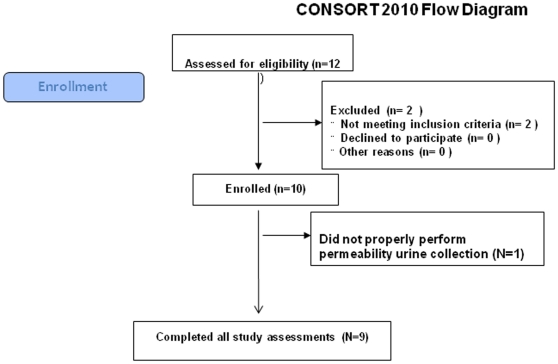
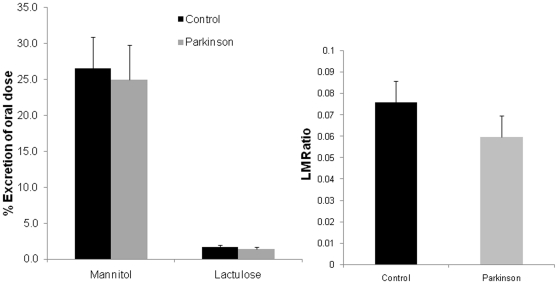
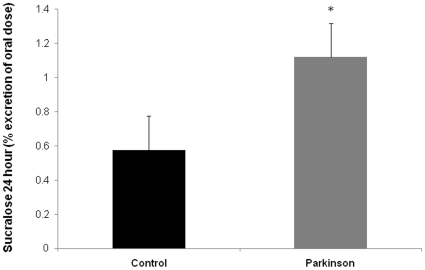
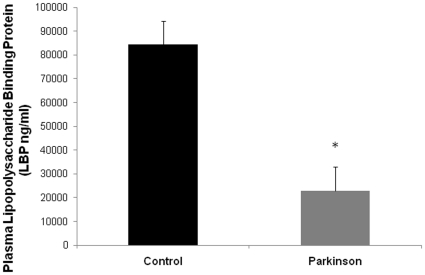
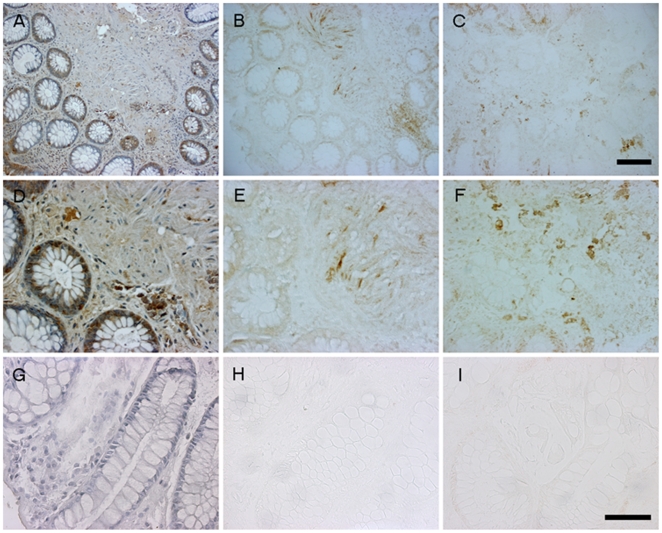
UNLABELLED: Parkinson's disease (PD) is the second most common neurodegenerative disorder of aging. The pathological hallmark of PD is neuronal inclusions termed Lewy bodies whose main component is alpha-synuclein protein. The finding of these Lewy bodies in the intestinal enteric nerves led to the hypothesis that the intestine might be an early site of PD disease in response to an environmental toxin or pathogen. One potential mechanism for environmental toxin(s) and proinflammatory luminal products to gain access to mucosal neuronal tissue and promote oxidative stress is compromised intestinal barrier integrity. However, the role of intestinal permeability in PD has never been tested. We hypothesized that PD subjects might exhibit increased intestinal permeability to proinflammatory bacterial products in the intestine. To test our hypothesis we evaluated intestinal permeability in subjects newly diagnosed with PD and compared their values to healthy subjects. In addition, we obtained intestinal biopsies from both groups and used immunohistochemistry to assess bacterial translocation, nitrotyrosine (oxidative stress), and alpha-synuclein. We also evaluated serum markers of endotoxin exposure including LPS binding protein (LBP). Our data show that our PD subjects exhibit significantly greater intestinal permeability (gut leakiness) than controls. In addition, this intestinal hyperpermeability significantly correlated with increased intestinal mucosa staining for E. coli bacteria, nitrotyrosine, and alpha-synuclein as well as serum LBP levels in PD subjects. These data represent not only the first demonstration of abnormal intestinal permeability in PD subjects but also the first correlation of increased intestinal permeability in PD with intestinal alpha-synuclein (the hallmark of PD), as well as staining for gram negative bacteria and tissue oxidative stress. Our study may thus shed new light on PD pathogenesis as well as provide a new method for earlier diagnosis of PD and suggests potential therapeutic targets in PD subjects. TRIAL REGISTRATION: Clinicaltrials.gov NCT01155492.
Overview
The claims and statistics of this paper haven’t been checked yet.
Run the check — free, no account needed. It reads the open-access text and checks the sources it cites.
Integrity signals
Registry
Cites
Statistics
Figures
Verification
Claims the paper makes
The claims and statistics of this paper haven’t been checked yet.
Run the check — free, no account needed. It reads the open-access text and checks the sources it cites.
Claims other papers make about this one
Each is checked against this paper’s own text: does it say what the citing paper says it does?
The source backs part of the claim, not all of it — or backs it for a different population, condition or comparison.
In the citing paper
“A leaky gut barrier has been linked to PD pathogenesis involving local flux of bacterial toxins, microbes, and potentially molecules like α-synuclein across the gastrointestinal epithelium [29–31]”
From The gut–brain axis in early Parkinson’s disease: from prodrome to prevention (2025) · cites this paper as [31]
Experimental — accuracy not yet measuredThe source backs part of the claim, not all of it — or backs it for a different population, condition or comparison.
In the citing paper
“Increased intestinal permeability is associated with increased bacteria and exposure to the bacterial endotoxin in Parkinson's disease, while increased intestinal a-synuclein and 3nitrotyrosine staining (associated with oxidative stress) leads to high intestinal permeability.127”
From The role of gut dysbiosis in Parkinson’s disease: mechanistic insights and therapeutic options (2021) · cites this paper as [127]
Experimental — accuracy not yet measuredIn the citing paper
“Intestinal permeability increases early in Parkinson’s disease”
From The endotoxin hypothesis of neurodegeneration (2019) · cites this paper as [92]
In the citing paper
“PD patients have increased gastrointestinal permeability [92] and LPS binding protein (LBP) [92], and a proportion of PD patients have elevated blood endotoxin [93].”
From The endotoxin hypothesis of neurodegeneration (2019) · cites this paper as [92]
In the citing paper
“serum from PD patients contains low levels of LPS binding protein [145,146], which are indicative of a chronic systemic exposure to LPS and gram negative endobacteria [147,148,149]”
From The Interplay between Gut Microbiota and Parkinson’s Disease: Implications on Diagnosis and Treatment (2022) · cites this paper as [146]
Self-check
Percentages, sums and reported differences re-computed from the paper’s own numbers.
The self-check needs the paper’s full text.
Citations
Cites
Hughes, A. J., Daniel, S. E., Kilford, L., & Lees, A. J. (1992) · Journal of Neurology, Neurosurgery & Psychiatry · doi:10.1136/jnnp.55.3.181 · Cited by 10,378
Metagenomic Analysis of the Human Distal Gut Microbiome
Gill, S. R., Pop, M., DeBoy, R. T., Eckburg, P. B., Turnbaugh, P. J., Samuel, B. S., Gordon, J. I., Relman, D. A., Fraser-Liggett, C. M., & Nelson, K. E. (2006) · Science · doi:10.1126/science.1124234 · Cited by 4,699
The Effect of Diet on the Human Gut Microbiome: A Metagenomic Analysis in Humanized Gnotobiotic Mice
Turnbaugh, P. J., Ridaura, V. K., Faith, J. J., Rey, F. E., Knight, R., & Gordon, J. I. (2009) · Science Translational Medicine · doi:10.1126/scitranslmed.3000322 · Cited by 3,058 · cited 1×
“The composition of this bacterial community is influenced by both genetic and environmental factors like diet [10].”
BackgroundProjected number of people with Parkinson disease in the most populous nations, 2005 through 2030
Dorsey, E. R., Constantinescu, R., Thompson, J. P., Biglan, K., Holloway, R. G., Kieburtz, K. D., Marshall, F. J., Ravina, B. M., Schifitto, G., Siderowf, A. D., et al. (2006) · Neurology · doi:10.1212/01.wnl.0000247740.47667.03 · Cited by 2,479
Systemic LPS causes chronic neuroinflammation and progressive neurodegeneration
Qin, L., Wu, X., Block, M. L., Liu, Y., Breese, G. R., Hong, J., Knapp, D. J., & Crews, F. T. (2007) · Glia · doi:10.1002/glia.20467 · Cited by 2,144
Neuroinflammation in Parkinson’s disease: A target for neuroprotection?
Hirsch, E. C., & Hunot, S. (2009) · The Lancet Neurology · doi:10.1016/s1474-4422(09)70062-6 · Cited by 1,984
Lees, A. J., Hardy, J., & Revesz, T. (2009) · The Lancet · doi:10.1016/s0140-6736(09)60492-x · Cited by 1,956
Braak, H., R�b, U., Gai, W. P., & Del Tredici, K. (2003) · Journal of Neural Transmission · doi:10.1007/s00702-002-0808-2 · Cited by 1,683
Parkinson's disease: a dual‐hit hypothesis
Hawkes, C. H., Del Tredici, K., & Braak, H. (2007) · Neuropathology and Applied Neurobiology · doi:10.1111/j.1365-2990.2007.00874.x · Cited by 1,021
Kim, W., Mohney, R. P., Wilson, B. C., Jeohn, G., Liu, B., & Hong, J. (2000) · Journal of Neuroscience · doi:10.1523/jneurosci.20-16-06309.2000 · Cited by 881
Research works printed but not linked: 3
- K Shannon, 2011, Alpha-synuclein in Colonic Submucosa in Early Untreated Parkinson Disease., Movement Disorders
- WJ Kupsky, 1987, Parkinson's disease and megacolon: concentric hyaline inclusions (Lewy bodies) in enteric ganglion cells., Neurology, 37, 1253, 10.1212/WNL.37.7.1253 · DOI
- K Wakabayashi, 1997, Neuropathology of autonomic nervous system in Parkinson's disease., Eur Neurol, 38, 2, 10.1159/000113469 · DOI
Cited by
Sorted by citations
Items 101–131 of 131
Increased intestinal permeability and gut dysbiosis in the R6/2 mouse model of Huntington’s disease
Stan, T. L., Soylu-Kucharz, R., Burleigh, S., Prykhodko, O., Cao, L., Franke, N., Sjögren, M., Haikal, C., Hållenius, F., & Björkqvist, M. (2020) · Scientific Reports · doi:10.1038/s41598-020-75229-9 · Cited by 101
Gut bacterial composition in a mouse model of Parkinson’s disease
Perez-Pardo, P., Dodiya, H. B., Engen, P. A., Naqib, A., Forsyth, C. B., Green, S. J., Garssen, J., Keshavarzian, A., & Kraneveld, A. D. (2018) · Beneficial Microbes · doi:10.3920/bm2017.0202 · Cited by 102
Self-citationPotential roles of gut microbiota and microbial metabolites in Parkinson’s disease
Zheng, S.-Y., Li, H.-X., Xu, R.-C., Miao, W.-T., Dai, M.-Y., Ding, S.-T., & Liu, H.-D. (2021) · Ageing Research Reviews · doi:10.1016/j.arr.2021.101347 · Cited by 101
Mihaila, D., Donegan, J., Barns, S., LaRocca, D., Du, Q., Zheng, D., Vidal, M., Neville, C., Uhlig, R., & Middleton, F. A. (2019) · PLOS ONE · doi:10.1371/journal.pone.0218252 · Cited by 94
Gastrointestinal Dysfunction in Parkinson’s Disease
Pfeiffer, R. F. (2018) · Current Treatment Options in Neurology · doi:10.1007/s11940-018-0539-9 · Cited by 94
Varesi, A., Campagnoli, L. I. M., Fahmideh, F., Pierella, E., Romeo, M., Ricevuti, G., Nicoletta, M., Chirumbolo, S., & Pascale, A. (2022) · International Journal of Molecular Sciences · doi:10.3390/ijms232012289 · Cited by 88
A prebiotic diet modulates microglial states and motor deficits in α-synuclein overexpressing mice
Abdel-Haq, R., Schlachetzki, J. C., Boktor, J. C., Cantu-Jungles, T. M., Thron, T., Zhang, M., Bostick, J. W., Khazaei, T., Chilakala, S., Morais, L. H., et al. (2022) · eLife · doi:10.7554/elife.81453 · Cited by 82
Self-citationJulio-Pieper, M., Bravo, J. A., Aliaga, E., & Gotteland, M. (2014) · Alimentary Pharmacology & Therapeutics · doi:10.1111/apt.12950 · Cited by 84
The gut-brain axis and Parkinson disease: Clinical and pathogenetic relevance
Menozzi, E., Macnaughtan, J., & Schapira, A. H. V. (2021) · Annals of Medicine · doi:10.1080/07853890.2021.1890330 · Cited by 81
Linking Smoking, Coffee, Urate, and Parkinson’s Disease – A Role for Gut Microbiota?
Scheperjans, F., Pekkonen, E., Kaakkola, S., & Auvinen, P. (2015) · Journal of Parkinson’s Disease · doi:10.3233/jpd-150557 · Cited by 83
Gut Microbiota-Derived Metabolite Trimethylamine N-Oxide as a Biomarker in Early Parkinson’s Disease
Chung, S. J., Rim, J. H., Ji, D., Lee, S., Yoo, H. S., Jung, J. H., Baik, K., Choi, Y., Ye, B. S., Sohn, Y. H., et al. (2021) · Nutrition · doi:10.1016/j.nut.2020.111090 · Cited by 74
Fang, X., Zhou, X., Miao, Y., Han, Y., Wei, J., & Chen, T. (2020) · AMB Express · doi:10.1186/s13568-020-01014-6 · Cited by 70
Gut bacterial dysbiosis in children with intractable epilepsy
Lee, K., Kim, N., Shim, J. O., & Kim, G.-H. (2020) · Journal of Clinical Medicine · doi:10.3390/jcm10010005 · Cited by 70
Lorente-Picón, M., & Laguna, A. (2021) · Biomolecules · doi:10.3390/biom11030433 · Cited by 69
New hope for Parkinson’s disease treatment: Targeting gut microbiota
Fan, H., Sheng, S., & Zhang, F. (2022) · CNS Neuroscience & Therapeutics · doi:10.1111/cns.13916 · Cited by 66
Rusch, C., Beke, M., Tucciarone, L., Nieves, C., Ukhanova, M., Tagliamonte, M. S., Mai, V., Suh, J. H., Wang, Y., Chiu, S., et al. (2021) · Frontiers in Neurology · doi:10.3389/fneur.2021.794640 · Cited by 63
Pal, G. D., Shaikh, M., Forsyth, C. B., Ouyang, B., Keshavarzian, A., & Shannon, K. M. (2015) · Frontiers in Neuroscience · doi:10.3389/fnins.2015.00306 · Cited by 57
Self-citationJoers, V., Masilamoni, G., Kempf, D., Weiss, A. R., Rotterman, T. M., Murray, B., Yalcin-Cakmakli, G., Voll, R. J., Goodman, M. M., Howell, L., et al. (2020) · Neurobiology of Disease · doi:10.1016/j.nbd.2020.105027 · Cited by 56
Gonzalez-Riano, C., Saiz, J., Barbas, C., Bergareche, A., Huerta, J. M., Ardanaz, E., Konjevod, M., Mondragon, E., Erro, M. E., Chirlaque, M. D., et al. (2021) · npj Parkinson's Disease · doi:10.1038/s41531-021-00216-4 · Cited by 49
Endres, K., & Schäfer, K.-H. (2018) · Journal of Innate Immunity · doi:10.1159/000488629 · Cited by 52
Zhu, Y., Huan, F., Wang, J., Xie, X., Yu, G., Wang, X., Jiang, L., Gao, R., Xiao, H., Ding, H., et al. (2020) · ACS Chemical Neuroscience · doi:10.1021/acschemneuro.0c00475 · Cited by 48
Torres, E. R. S., Akinyeke, T., Stagaman, K., Duvoisin, R. M., Meshul, C. K., Sharpton, T. J., & Raber, J. (2018) · Frontiers in Behavioral Neuroscience · doi:10.3389/fnbeh.2018.00140 · Cited by 38
Provotella-derived hydrogen sulfide, constipation, and neuroprotection in Parkinson's disease
Cakmak, Y. O. (2015) · Movement Disorders · doi:10.1002/mds.26258 · Cited by 37
The gut–brain axis in early Parkinson’s disease: from prodrome to prevention
Oliver, P. J., Civitelli, L., & Hu, M. T. (2025) · Journal of Neurology · doi:10.1007/s00415-025-13138-5 · Cited by 42
“…involving local flux of bacterial toxins, microbes, and potentially molecules like α-synuclein across the gastrointestinal epithelium [29–31]; while systemically gut inflammation drives pro-inflammatory cytokine production, blood–brain barrier disruption, and migration of inflammatory…”
Evidence for immune system alterations in peripheral biological fluids in Parkinson’s disease
Bartl, M., Xylaki, M., Bähr, M., Weber, S., Trenkwalder, C., & Mollenhauer, B. (2022) · Neurobiology of Disease · doi:10.1016/j.nbd.2022.105744 · Cited by 33
Chan, D. G., Ventura, K., Villeneuve, A., Du Bois, P., & Holahan, M. R. (2022) · Journal of Parkinson's Disease · doi:10.3233/jpd-223461 · Cited by 24
Drobny, A., Ngo, P. A., Neurath, M. F., Zunke, F., & López-Posadas, R. (2021) · Frontiers in Medicine · doi:10.3389/fmed.2021.655123 · Cited by 24
Jia, X., Chen, Q., Zhang, Y., & Asakawa, T. (2023) · Frontiers in Cellular and Infection Microbiology · doi:10.3389/fcimb.2023.1296713 · Cited by 22
Guo, X., Tang, P., Hou, C., Chong, L., Zhang, X., Liu, P., Chen, L., Liu, Y., Zhang, L., & Li, R. (2022) · Frontiers in Microbiology · doi:10.3389/fmicb.2022.875101 · Cited by 19
Grathwohl, S., Quansah, E., Maroof, N., Steiner, J. A., Spycher, L., Benmansour, F., Duran-Pacheco, G., Siebourg-Polster, J., Oroszlan-Szovik, K., Remy, H., et al. (2020) · doi:10.21203/rs.3.rs-100199/v1 · Cited by 17
Pesticides and the Gut Microbiota: Implications for Parkinson’s Disease
Ghosh, N., Sinha, K., & Sil, P. C. (2024) · Chemical Research in Toxicology · doi:10.1021/acs.chemrestox.4c00057 · Cited by 11
Metadata
- Authors
- Forsyth, C. B., Shannon, K. M., Kordower, J. H., Voigt, R. M., Shaikh, M., Jaglin, J. A., Estes, J. D., Dodiya, H. B., & Keshavarzian, A.
- Affiliations
- Rush University Medical Center (US)
- National Cancer Institute (US)
- Corresponding author
- Forsyth, Christopher B.
- ORCID
- Venue
- PLoS ONE
- Publisher
- Public Library of Science (PLoS)
- Published
- 2011-12-01
- Volume
- 6
- Issue
- 12
- Pages
- e28032
- ISSN
- 1932-6203 (ISSN-L)
- PMC
- PMC3228722
- OpenAlex
- W1992780204
- Cited by
- 974
- References
- 48
- Citations by year
- 2026: 72 · 2025: 73 · 2024: 86 · 2023: 108 · 2022: 108 · 2021: 132 · 2020: 96 · 2019: 72 · 2018: 66 · 2017: 44 · 2016: 33 · 2015: 36 · 2014: 20 · 2013: 13 · 2012: 14
- FWCI
- 9.55
- Type
- journal article
- Language
- en
- Open access
- gold
- doi.org
- Locations
- PLoS ONE (publishedVersion, cc-by)
- Europe PMC (PubMed Central) (publishedVersion, cc-by)
- PubMed Central (publishedVersion, cc-by)
- PubMed (publishedVersion)
- DOAJ (DOAJ: Directory of Open Access Journals) (submittedVersion, cc-by-sa)
- Figshare (submittedVersion, cc-by)
- Funders
- Parkinson's Disease Foundation
- Topics
- Health Sciences › Medicine › Clinical Neurology › Parkinson's Disease Mechanisms and Treatments
- Health Sciences › Medicine › Gastroenterology › Gastrointestinal motility and disorders
- Life Sciences › Biochemistry, Genetics and Molecular Biology › Molecular Biology › Gut microbiota and health
- Keywords
- Parkinson's disease, intestinal permeability, alpha-synuclein, Lewy bodies, endotoxin exposure, bacterial translocation, nitrotyrosine, oxidative stress, LPS-binding protein, Escherichia coli, intestinal barrier integrity, early diagnosis, gut-brain axis
- MeSH terms
- Lipopolysaccharide-Binding Protein, Acute-Phase Proteins, Aged, Carrier Proteins, Endotoxins, Escherichia coli, Escherichia coli Infections, Female, Humans, Immunoenzyme Techniques, Intestinal Mucosa, Intestines, Male, Membrane Glycoproteins, Middle Aged, Neurons, Parkinson Disease, Permeability, Sucrose, Tyrosine, Biomarkers, Oxidative Stress, alpha-Synuclein
About these checks
Registry, retraction, Cites and statistics results are computed, not judged, with one exception: a printed reference that no index lists is read once by a model before it counts as a citation error. Claims are extracted by a model and kept only when their quote appears verbatim in the text; each cited source is then checked, with a model’s help, for whether it says what the claim relies on. Those verdicts can be wrong — read the claim’s quote and the cited source before relying on one.
Statistics and arithmetic are recomputed, not judged.
Confidence bands are shown only for fields calibrated on our annotated test set. None is calibrated yet, so no band is shown.
What counts as a claim ›How we measure confidence ›How we check this ›
Are you an author, or do you see a problem with this page? Request a review
