

Plastic pollution in the world’s oceans: more than 5 trillion plastic pieces weighing over 250,000 tons afloat at sea
Open accessThe DOI matches its Crossref record; 43 of the 43 references it cites were found in a registry or an index.
Abstract
Plastic pollution is ubiquitous throughout the marine environment, yet estimates of the global abundance and weight of floating plastics have lacked data, particularly from the Southern Hemisphere and remote regions. Here we report an estimate of the total number of plastic particles and their weight floating in the world's oceans from 24 expeditions (2007-2013) across all five sub-tropical gyres, costal Australia, Bay of Bengal and the Mediterranean Sea conducting surface net tows (N = 680) and visual survey transects of large plastic debris (N = 891). Using an oceanographic model of floating debris dispersal calibrated by our data, and correcting for wind-driven vertical mixing, we estimate a minimum of 5.25 trillion particles weighing 268,940 tons. When comparing between four size classes, two microplastic <4.75 mm and meso- and macroplastic >4.75 mm, a tremendous loss of microplastics is observed from the sea surface compared to expected rates of fragmentation, suggesting there are mechanisms at play that remove <4.75 mm plastic particles from the ocean surface.
Overview
The claims and statistics of this paper haven’t been checked yet.
Free: it reads the open-access text and checks the first 5 claims that cite a source we can check. Create a free account to check every claim.
Integrity signals
Registry
Cites
Statistics
Figures
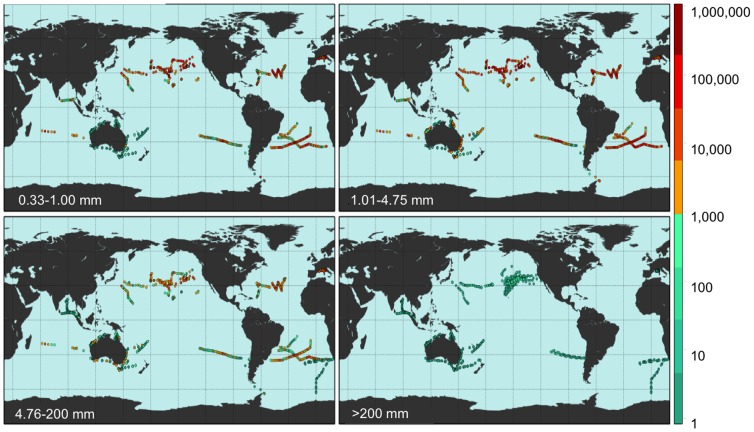
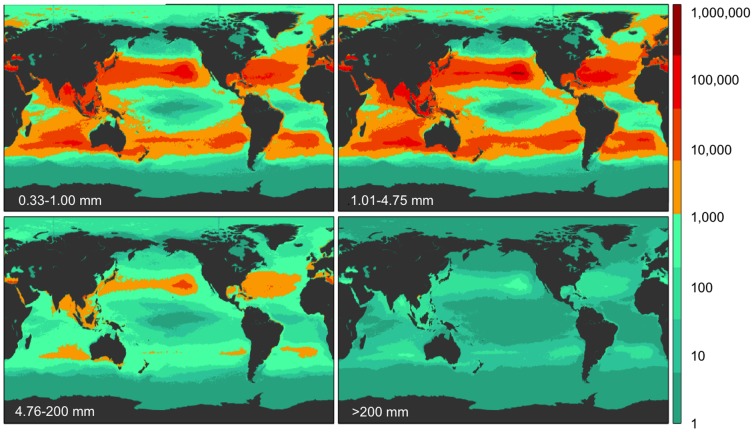
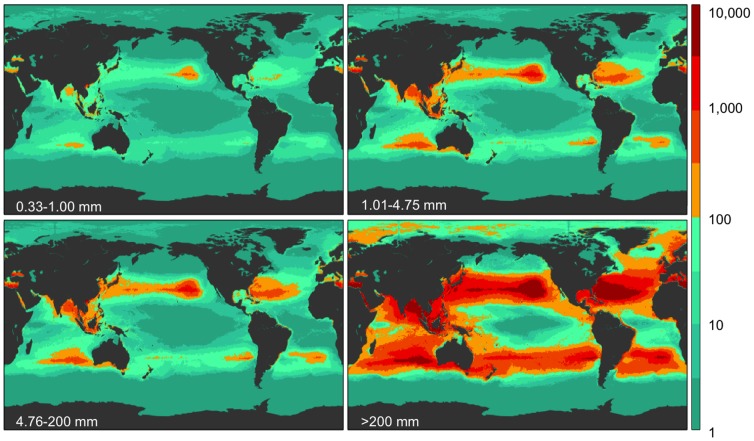
Verification
Claims the paper makes
The claims and statistics of this paper haven’t been checked yet.
Free: it reads the open-access text and checks the first 5 claims that cite a source we can check. Create a free account to check every claim.
Claims other papers make about this one
Each is checked against this paper’s own text: does it say what the citing paper says it does?
The source backs part of the claim, not all of it — or backs it for a different population, condition or comparison.
In the citing paper
“Measurements and model simulations revealed an uneven distribution of PMD, which complicates assessing global PMD inventories: highest PMD concentrations were found in the subtropical gyres (which have been termed 'trash vortexes' or 'garbage patches'), while PMD concentrations are much lower in the in the tropical and Arctic open ocean.51,53,54,[62][63][64]”
From The fate of plastic in the ocean environment – a minireview (2021) · cites this paper as [53]
Experimental — accuracy not yet measured
Self-check
Percentages, sums and reported differences re-computed from the paper’s own numbers.
The self-check needs the paper’s full text.
Citations
Cites
Lost at sea: where is all the plastic?
Thompson, R. C., Olsen, Y., Mitchell, R. P., Davis, A., Rowland, S. J., John, A. W. G., McGonigle, D., & Russell, A. E. (2004) · Science · doi:10.1126/science.1094559 · Cited by 7,765
Accumulation and fragmentation of plastic debris in global environments
Barnes, D. K. A., Galgani, F., Thompson, R. C., & Barlaz, M. (2009) · Philosophical Transactions of the Royal Society B: Biological Sciences · doi:10.1098/rstb.2008.0205 · Cited by 6,126 · cited 2×
“These include UV degradation, biodegradation, ingestion by organisms, decreased buoyancy due to fouling organisms, entrainment in settling detritus, and beaching [4].”
BackgroundSelf-citationHidalgo-Ruz, V., Gutow, L., Thompson, R. C., & Thiel, M. (2012) · Environmental Science & Technology · doi:10.1021/es2031505 · Cited by 5,440 · cited 2×
“33 mm, which is a commonly used lower limit for pelagic microplastics [31].”
BackgroundMethodSelf-citationLife in the “plastisphere”: microbial communities on plastic marine debris
Zettler, E. R., Mincer, T. J., & Amaral-Zettler, L. A. (2013) · Environmental Science & Technology · doi:10.1021/es401288x · Cited by 3,368 · cited 1×
“Furthermore, there is increasing evidence that some microbes can biodegrade microplastic particles [38–40].”
BackgroundPlastic debris in the open ocean
Cózar, A., Echevarría, F., González-Gordillo, J. I., Irigoien, X., Úbeda, B., Hernández-León, S., Palma, Á. T., Navarro, S., García-de-Lomas, J., Ruiz, A., et al. (2014) · Proceedings of the National Academy of Sciences · doi:10.1073/pnas.1314705111 · Cited by 3,133 · cited 4×
“Despite oceanographic model predictions of where debris might converge [24] estimates of regional and global abundance and weight of floating plastics have been limited to microplastics,5 mm [19, 25].”
BackgroundResultInfluentialTransport and release of chemicals from plastics to the environment and to wildlife
Teuten, E. L., Saquing, J. M., Knappe, D. R. U., Barlaz, M. A., Jonsson, S., Björn, A., Rowland, S. J., Thompson, R. C., Galloway, T. S., Yamashita, R., et al. (2009) · Philosophical Transactions of the Royal Society B: Biological Sciences · doi:10.1098/rstb.2008.0284 · Cited by 2,938 · cited 1×
“Adsorption of persistent organic pollutants onto plastic and their transfer into the tissues and organs through ingestion [15] is impacting marine megafauna [16] as well as lower trophic-level organisms [17, 18] and their predators [19, 20].”
BackgroundSelf-citationMicroplastic ingestion by zooplankton
Cole, M., Lindeque, P., Fileman, E., Halsband, C., Goodhead, R., Moger, J., & Galloway, T. S. (2013) · Environmental Science & Technology · doi:10.1021/es400663f · Cited by 2,763 · cited 2×
“In this manner, incorporation of smaller plastics into marine food chains could not only generate impacts on the health of the involved organisms [17–20], but also contribute to the removal of small microplastics from the sea surface [37].”
BackgroundLusher, A. L., McHugh, M., & Thompson, R. C. (2013) · Marine Pollution Bulletin · doi:10.1016/j.marpolbul.2012.11.028 · Cited by 2,075 · cited 1×
“via their prey organisms [34– 36].”
Plastic Resin Pellets as a Transport Medium for Toxic Chemicals in the Marine Environment
Mato, Y., Isobe, T., Takada, H., Kanehiro, H., Ohtake, C., & Kaminuma, T. (2001) · Environmental Science & Technology · doi:10.1021/es0010498 · Cited by 1,909 · cited 1×
“Plastic pollution is globally distributed across all oceans due to its properties of buoyancy and durability, and the sorption of toxicants to plastic while traveling through the environment [1, 2], have led some researchers to claim that synthetic polymers in the ocean should be regarded as hazardous waste [3].”
BackgroundGregory, M. R. (2009) · Philosophical Transactions of the Royal Society B: Biological Sciences · doi:10.1098/rstb.2008.0265 · Cited by 1,852 · cited 1×
“The impact of plastic pollution through ingestion and entanglement of marine fauna, ranging from zooplankton to cetaceans, seabirds and marine reptiles, are well documented [14].”
Background
Cited by
Items 901–1,000 of 1,035
Automatic detection of seafloor marine litter using towed camera images and deep learning
Politikos, D. V., Fakiris, E., Davvetas, A., Klampanos, I., & Papatheodorou, G. N. (2021) · Marine Pollution Bulletin · doi:10.1016/j.marpolbul.2021.111974 · Cited by 121
From bottle to microplastics: Can we estimate how our plastic products are breaking down?
Sipe, J. M., Bossa, N., Berger, W. A., von Windheim, N., Gall, K., & Wiesner, M. R. (2021) · The Science of The Total Environment · doi:10.1016/j.scitotenv.2021.152460 · Cited by 121
Porter, A., Godbold, J. A., Lewis, C. N., Savage, G., Solan, M., & Galloway, T. S. (2023) · Nature Communications · doi:10.1038/s41467-023-43788-w · Cited by 122
The Abundance of Microplastics in the World’s Oceans: A Systematic Review
Mutuku, J., Yanotti, M., Tocock, M., & MacDonald, D. H. (2024) · Oceans · doi:10.3390/oceans5030024 · Cited by 121
“These include [22], who used data on 680 surface tows to estimate microplastic abundance between 2007 and 2013, van Sebille, who synthesised microplastic data be-tween 1979 and 2013 using published and unpublished literature, and [73], who estimated microplastic abundance using pelagic (upper ocean…”
BackgroundMethodInfluentialGlobal review of shark and ray entanglement in anthropogenic marine debris
Parton, K. J., Galloway, T. S., & Godley, B. J. (2019) · Endangered Species Research · doi:10.3354/esr00964 · Cited by 123
Zambrano, M. C., Pawlak, J. J., Daystar, J., Ankeny, M., Goller, C., & Venditti, R. A. (2020) · Marine Pollution Bulletin · doi:10.1016/j.marpolbul.2019.110826 · Cited by 122
Gardon, T., Huvet, A., Paul-Pont, I., Cassone, A.-L., Koua, M. S., Soyez, C., Jézéquel, R., Receveur, J., & Moullac, G. L. (2020) · Water Research · doi:10.1016/j.watres.2020.115890 · Cited by 120
A Deep Learning Model for Automatic Plastic Mapping Using Unmanned Aerial Vehicle (UAV) Data
Jakovljević, G., Govedarica, M., & Taboada, M. F. Á. (2020) · Remote Sensing · doi:10.3390/rs12091515 · Cited by 120
“numerous, are typically based on local or regional scale surveys, and they vary from 250,000 tons [7] to 4.”
BackgroundZhang, W., Zhang, S., Zhao, Q., Qu, L., Ma, D., & Wang, J. (2020) · Marine Pollution Bulletin · doi:10.1016/j.marpolbul.2020.111343 · Cited by 120
Ye, X., Wang, P., Wu, Y., Zhou, Y., Sheng, Y., & Lao, K. (2020) · Environmental Science and Pollution Research · doi:10.1007/s11356-020-10136-0 · Cited by 120
Tang, J., Wu, Z., Wan, L., Cai, W., Chen, S., Wang, X., Luo, J., Zhou, Z., Zhao, J., & Lin, S. (2020) · Journal of Hazardous Materials · doi:10.1016/j.jhazmat.2020.124205 · Cited by 120
Vulnerability of microplastics on marine environment: A review
Pothiraj, C., Gokul, T. A., Kumar, K. R., Ramasubramanian, A., Palanichamy, A., Venkatachalam, K., Pastorino, P., Barceló, ., Balaji, P., & Faggio, C. (2023) · Ecological Indicators · doi:10.1016/j.ecolind.2023.111058 · Cited by 120
“…quantities are introduced into the ecosystem via secondary sources, such as the typical breakdown processes (mechanical breakdown, UV light exposure) that break down bigger plastics (with sizes ranging from 1.1 to 41.80 mm) in the pre-vailing environmental conditions (Eriksen et al., 2014).”
InfluentialFossi, M. C., Baini, M., Panti, C., Galli, M., Jiménez, B., Muñoz-Arnanz, J., Marsili, L., Finoia, M. G., & Ramírez‐Macías, D. (2017) · Comparative Biochemistry and Physiology Part C Toxicology & Pharmacology · doi:10.1016/j.cbpc.2017.03.002 · Cited by 119
“Marine litter represents a serious concern for the marine environment (Eriksen et al., 2014; Kühn et al., 2015).”
Microplastic: What Are the Solutions?
Eriksen, M., Thiel, M., Prindiville, M., & Kiessling, T. (2017) · The handbook of environmental chemistry · doi:10.1007/978-3-319-61615-5_13 · Cited by 119
“Estimates of environmental concentrations have ranged from 8 million tons of plastic leaving shorelines globally each year [11], compared to one estimate of a quarter million tons drifting at sea [12].”
BackgroundSelf-citationPaluselli, A., & Kim, S. (2020) · Marine Pollution Bulletin · doi:10.1016/j.marpolbul.2019.110831 · Cited by 119
Missawi, O., Bousserrhine, N., Belbekhouche, S., Zitouni, N., Alphonse, V., Boughattas, I., & Banni, M. (2020) · Environmental Pollution · doi:10.1016/j.envpol.2020.114634 · Cited by 104
Contamination of stream fish by plastic waste in the Brazilian Amazon
Ribeiro-Brasil, D. R. G., Torres, N. R., Picanço, A. B., Sousa, D. S. P., Ribeiro, V. S., Brasil, L. S., & Montag, L. F. D. A. (2020) · Environmental Pollution · doi:10.1016/j.envpol.2020.115241 · Cited by 123
Luo, H., Xiang, Y., Zhao, Y., Li, Y., & Pan, X. (2020) · The Science of The Total Environment · doi:10.1016/j.scitotenv.2020.140944 · Cited by 119
Grelaud, M., & Ziveri, P. (2020) · Scientific Reports · doi:10.1038/s41598-020-77225-5 · Cited by 120
Mohana, A. A., Farhad, S. M., Haque, N., & Pramanik, B. K. (2021) · Chemosphere · doi:10.1016/j.chemosphere.2021.131430 · Cited by 119
On the prediction of settling velocity for plastic particles of different shapes
Francalanci, S., Paris, E., & Solari, L. (2021) · Environmental Pollution · doi:10.1016/j.envpol.2021.118068 · Cited by 119
Levels of ingested debris vary across species in Canadian Arctic seabirds
Poon, F. E., Provencher, J. F., Mallory, M. L., Braune, B. M., & Smith, P. A. (2017) · Marine Pollution Bulletin · doi:10.1016/j.marpolbul.2016.11.051 · Cited by 118
Incidence and identification of microfibers in ocean waters in Admiralty Bay, Antarctica
Absher, T. M., Ferreira, S. L., Kern, Y., Júnior, A. L. F., Christo, S. W., & Ando, R. A. (2018) · Environmental Science and Pollution Research · doi:10.1007/s11356-018-3509-6 · Cited by 118
Identifying floating plastic marine debris using a deep learning approach
Kylili, K., Kyriakides, I., Artusi, A., & Hadjistassou, C. (2019) · Environmental Science and Pollution Research · doi:10.1007/s11356-019-05148-4 · Cited by 118
Exposure route affects the distribution and toxicity of polystyrene nanoplastics in zebrafish
Zhang, R., Silic, M. R., Schaber, A., Wasel, O., Freeman, J. L., & Sepúlveda, M. S. (2020) · The Science of The Total Environment · doi:10.1016/j.scitotenv.2020.138065 · Cited by 119
An assessment of microplastic inputs into the aquatic environment from wastewater streams
Uddin, S., Fowler, S. W., & Behbehani, M. (2020) · Marine Pollution Bulletin · doi:10.1016/j.marpolbul.2020.111538 · Cited by 120
The Plastic Cycle – An Unknown Branch of the Carbon Cycle
Zhu, X. (2021) · Frontiers in Marine Science · doi:10.3389/fmars.2020.609243 · Cited by 118
Barhoumi, B., Sander, S. G., & Tolosa, I. (2021) · Environmental Research · doi:10.1016/j.envres.2021.112595 · Cited by 118
Marine litter, future prospects for research
Galgani, F. (2015) · Frontiers in Marine Science · doi:10.3389/fmars.2015.00087 · Cited by 118
“Microplastics represent just 10% of the total weight of floating plastic particles (Eriksen et al., 2014).”
BackgroundInfluentialSelf-citationUnderstanding plasticiser leaching from polystyrene microplastics
Gulizia, A. M., Patel, K., Philippa, B., Motti, C. A., van Herwerden, L., & Vamvounis, G. (2023) · Science of The Total Environment · doi:10.1016/j.scitotenv.2022.159099 · Cited by 117
Näkki, P., Setälä, O., & Lehtiniemi, M. (2019) · Environmental Pollution · doi:10.1016/j.envpol.2019.02.099 · Cited by 118
“Seafloors are proposed to act as final sinks to the plastic debris distributed globally in our oceans (C ozar et al., 2014; Eriksen et al., 2014; Woodall et al., 2014).”
BackgroundMicroplastics in sea-surface waters surrounding Sweden sampled by manta trawl and in-situ pump
Schönlau, C., Karlsson, T., Rotander, A., Nilsson, H., Engwall, M., van Bavel, B., & Kärrman, A. (2020) · Marine Pollution Bulletin · doi:10.1016/j.marpolbul.2020.111019 · Cited by 118
Passive and Active Removal of Marine Microplastics by a Mushroom Coral (Danafungia scruposa)
Corona, E., Martin, C., Marasco, R., & Duarte, C. M. (2020) · Frontiers in Marine Science · doi:10.3389/fmars.2020.00128 · Cited by 117
“Especially, microplastics below 1 mm are found in much lower concentrations than expected in near-surface waters (Cozar et al., 2014; Eriksen et al., 2014).”
BackgroundSustainable bivalve farming can deliver food security in the tropics
Willer, D. F., & Aldridge, D. C. (2020) · Nature Food · doi:10.1038/s43016-020-0116-8 · Cited by 119
Recent Developments in Understanding Biochar’s Physical–Chemistry
Conte, P., Bertani, R., Sgarbossa, P., Bambina, P., Schmidt, H., Raga, R., Papa, G. L., Martino, D. F. C., & Meo, P. L. (2021) · Agronomy · doi:10.3390/agronomy11040615 · Cited by 117
“Plastic pollution is one of the main environmental problems humans are currently facing [134].”
BackgroundUnderstanding the fate and control of road dust-associated microplastics in stormwater
Monira, S., Bhuiyan, M. A., Haque, N., Shah, K., Roychand, R., Hai, F. I., & Pramanik, B. K. (2021) · Process Safety and Environmental Protection · doi:10.1016/j.psep.2021.05.033 · Cited by 105
Oceanic long-range transport of organic additives present in plastic products: an overview
Andrade, H., Glüge, J., Herzke, D., Ashta, N. M., Nayagar, S. M., & Scheringer, M. (2021) · Environmental Sciences Europe · doi:10.1186/s12302-021-00522-x · Cited by 118
“Within the NPG there are three large accumulation zones for marine debris: the North Pacific Subtropical Convergence Zone, the “Eastern Garbage Patch”, and the “Western Garbage Patch”.”
BackgroundResultInfluentialThe sorption of persistent organic pollutants in microplastics from the coastal environment
Wang, L., Lin, J. C.-T., Dong, C., Chen, C., & Liu, T. (2021) · Journal of Hazardous Materials · doi:10.1016/j.jhazmat.2021.126658 · Cited by 117
Ocean sediments as the global sink for marine micro‐ and mesoplastics
Martin, C., Young, C. A., Valluzzi, L., & Duarte, C. M. (2022) · Limnology and Oceanography Letters · doi:10.1002/lol2.10257 · Cited by 117
“The estimate of Eriksen et al. (2014) derives from samples collected from 2007 and 2013, the estimate of C ozar et al. (2014) mainly comes from samples collected during the Malaspina expedition in 2010, and Van Sebille et al. (2015) estimate is standardized to year 2014.”
BackgroundMethodInfluentialAdsorptive removal of micron-sized polystyrene particles using magnetic iron oxide nanoparticles
Heo, Y., Lee, E., & Lee, S.-W. (2022) · Chemosphere · doi:10.1016/j.chemosphere.2022.135672 · Cited by 119
From marine to freshwater environment: A review of the ecotoxicological effects of microplastics
Li, X., Chen, Y., Zhang, S., Dong, Y., Pang, Q., Lynch, I., Xie, C., Guo, Z., & Zhang, P. (2023) · Ecotoxicology and Environmental Safety · doi:10.1016/j.ecoenv.2023.114564 · Cited by 118
Microplastics disturb the anthozoan-algae symbiotic relationship
Okubo, N., Takahashi, S., & Nakano, Y. (2018) · Marine Pollution Bulletin · doi:10.1016/j.marpolbul.2018.07.016 · Cited by 116
Al-Jaibachi, R., Cuthbert, R. N., & Callaghan, A. (2019) · Science of The Total Environment · doi:10.1016/j.scitotenv.2018.09.236 · Cited by 113
Challenges for Sustained Observing and Forecasting Systems in the Mediterranean Sea
Tintoré, J., Pinardi, N., Álvarez-Fanjul, E., Aguiar, E., Álvarez‐Berastegui, D., Bajo, M., Balbín, R., Bozzano, R., Nardelli, B. B., Cardín, V., et al. (2019) · Frontiers in Marine Science · doi:10.3389/fmars.2019.00568 · Cited by 116
Self-citationMicroplastics impair the feeding performance of a Mediterranean habitat-forming coral
Savinelli, B., Fernández, T. V., Galasso, N. M., D’Anna, G., Pipitone, C., Prada, F., Zenone, A., Badalamenti, F., & Musco, L. (2020) · Marine Environmental Research · doi:10.1016/j.marenvres.2020.104887 · Cited by 116
Adika, S. A., Mahu, E., Crane, R., Marchant, R., Montford, J., Folorunsho, R., & Gordon, C. (2020) · Marine Pollution Bulletin · doi:10.1016/j.marpolbul.2020.110998 · Cited by 109
Jeong, J., & Choi, J. (2020) · Environment International · doi:10.1016/j.envint.2020.105557 · Cited by 116
Analytical methods and environmental processes of nanoplastics
Li, P., Li, Q., Hao, Z., Yu, S., & Liu, J. (2020) · Journal of Environmental Sciences · doi:10.1016/j.jes.2020.03.057 · Cited by 116
Cheng, H., Luo, H., Hu, Y., & Tao, S. (2020) · Water Research · doi:10.1016/j.watres.2020.116253 · Cited by 118
The “plastic cycle”: a watershed‐scale model of plastic pools and fluxes
Hoellein, T. J., & Rochman, C. M. (2021) · Frontiers in Ecology and the Environment · doi:10.1002/fee.2294 · Cited by 116
“Estimated emissions to the oceans were greater than the estimates of plastics floating on the surface (Eriksen et al. 2014), which stimulated a productive body of research to balance the plastic budget (Law 2017).”
BackgroundBiodegradable Packaging Materials from Animal Processing Co-Products and Wastes: An Overview
Khodaei, D., Álvarez, C., & Mullen, A. M. (2021) · Polymers · doi:10.3390/polym13152561 · Cited by 117
“However, the increasing generation and usage of petroleum-based materials in the recent decades, has put an immense stress on the environment through generation of plastic waste and their accumulation in landfills [3] and oceans [4].”
BackgroundGlobal distribution of potential impact hotspots for marine plastic debris entanglement
Høiberg, M. A., Woods, J. S., & Verones, F. (2021) · Ecological Indicators · doi:10.1016/j.ecolind.2021.108509 · Cited by 117
Soil under stress: The importance of soil life and how it is influenced by (micro)plastic pollution
Joos, L., & Tender, C. A. D. (2022) · Computational and Structural Biotechnology Journal · doi:10.1016/j.csbj.2022.03.041 · Cited by 116
“25 trillion plastic particles are now scattered in the marine environment [103].”
BackgroundWang, S., Zhang, P., Li, Y., Li, J., Li, X., Yang, J., Ji, M., Li, F., & Zhang, C. (2023) · Carbohydrate Polymers · doi:10.1016/j.carbpol.2023.120627 · Cited by 119
Taipale, S. J., Peltomaa, E., Kukkonen, J. V. K., Kainz, M. J., Kautonen, P., & Tiirola, M. (2019) · Scientific Reports · doi:10.1038/s41598-019-55990-2 · Cited by 115
Breeding Zebrafish: A Review of Different Methods and a Discussion on Standardization
Tsang, B., Zahid, H., Ansari, R., Lee, R. C.-Y., Partap, A., & Gerlai, R. T. (2017) · Zebrafish · doi:10.1089/zeb.2017.1477 · Cited by 115
Balakrishnan, G., Déniel, M., Nicolai, T., Chassenieux, C., & Lagarde, F. (2019) · Environmental Science: Nano · doi:10.1039/c8en01005f · Cited by 96
Assessing the citizen science approach as tool to increase awareness on the marine litter problem
Locritani, M., Merlino, S., & Abbate, M. (2019) · Marine Pollution Bulletin · doi:10.1016/j.marpolbul.2019.01.023 · Cited by 122
Kinjo, A., Mizukawa, K., Takada, H., & Inoue, K. (2019) · Marine Pollution Bulletin · doi:10.1016/j.marpolbul.2019.110512 · Cited by 117
Marine Debris Polymers on Main Hawaiian Island Beaches, Sea Surface, and Seafloor
Brignac, K. C., Jung, M. R., King, C., Royer, S.-J., Blickley, L., Lamson, M. R., Potemra, J. T., & Lynch, J. M. (2019) · Environmental Science & Technology · doi:10.1021/acs.est.9b03561 · Cited by 100
Wu, J., Xu, P., Chen, Q., Ma, D., Ge, W., Jiang, T., & Chai, C. (2020) · Chemosphere · doi:10.1016/j.chemosphere.2020.126706 · Cited by 111
Perumal, K., & Muthuramalingam, S. (2021) · Estuarine Coastal and Shelf Science · doi:10.1016/j.ecss.2021.107702 · Cited by 116
Plastic and sustainability: a bibliometric analysis using VOSviewer and CiteSpace
Zhang, J., Quoquab, F., & Mohammad, J. (2023) · Arab Gulf Journal of Scientific Research · doi:10.1108/agjsr-10-2022-0225 · Cited by 116
Tiller, R. G., Santo, E. M. D., Mendenhall, E., & Nyman, E. (2018) · Marine Policy · doi:10.1016/j.marpol.2018.10.046 · Cited by 114
Palatinus, A., Viršek, M. K., Robič, U., Grego, M., Bajt, O., Šiljić, J., Suaria, G., Liubartseva, S., Coppini, G., & Peterlin, M. (2019) · Marine Pollution Bulletin · doi:10.1016/j.marpolbul.2018.12.038 · Cited by 115
Science for the Future: The Use of Citizen Science in Marine Research and Conservation
Earp, H. S., & Liconti, A. (2019) · Springer eBooks · doi:10.1007/978-3-030-20389-4_1 · Cited by 115
Spatial characteristics of microplastics in the high-altitude area on the Tibetan Plateau
Feng, S., Lu, H., Yao, T., Xue, Y., Yin, C., & Tang, M. (2021) · Journal of Hazardous Materials · doi:10.1016/j.jhazmat.2021.126034 · Cited by 114
Characteristics, fate, and impact of marine plastic debris exposed to sunlight: A review
Masry, M., Rossignol, S., Gardette, J., Thérias, S., Bussière, P., & Wong‐Wah‐Chung, P. (2021) · Marine Pollution Bulletin · doi:10.1016/j.marpolbul.2021.112701 · Cited by 114
Alava, J. J. (2020) · Frontiers in Marine Science · doi:10.3389/fmars.2020.566101 · Cited by 113
Widom Lines in Binary Mixtures of Supercritical Fluids
Raju, M., Banuti, D. T., Ma, P., & Ihme, M. (2017) · Scientific Reports · doi:10.1038/s41598-017-03334-3 · Cited by 114
Microplastics in Galway Bay: A comparison of sampling and separation methods
Pagter, E., Frias, J., & Nash, R. (2018) · Marine Pollution Bulletin · doi:10.1016/j.marpolbul.2018.08.013 · Cited by 100
Modelling the accumulation and transport of floating marine micro-plastics around South Africa
Collins, C., & Hermes, J. C. (2018) · Marine Pollution Bulletin · doi:10.1016/j.marpolbul.2018.12.028 · Cited by 115
Muthukrishnan, T. S., Khaburi, M. A., & Abed, R. M. M. (2018) · Microbial Ecology · doi:10.1007/s00248-018-1303-0 · Cited by 113
Tuvo, B., Scarpaci, M., Bracaloni, S., Esposito, E., Costa, A. L., Ioppolo, M., & Casini, B. (2023) · International Journal of Environmental Research and Public Health · doi:10.3390/ijerph20105868 · Cited by 113
“More than 92% of the plastic particles in the sea are smaller than 5 mm (NP and MP) and represents only 13% by weight [16].”
BackgroundGlobal environmental plastic dispersal under OECD policy scenarios toward 2060
Sonke, J. E., Koenig, A. M., Segur, T., & Yakovenko, N. (2025) · Science Advances · doi:10.1126/sciadv.adu2396 · Cited by 114
Khanam, M. M., Uddin, M. K., & Kazi, J. U. (2025) · Frontiers in Environmental Science · doi:10.3389/fenvs.2025.1573579 · Cited by 114
Detection and Monitoring of Marine Pollution Using Remote Sensing Technologies
Hafeez, S., Wong, M. S., Abbas, S., Kwok, C. Y. T., Nichol, J. E., Lee, K., Tang, D., & Pun, L. (2019) · IntechOpen eBooks · doi:10.5772/intechopen.81657 · Cited by 112
“Although some surveys have been undertaken [85] to estimate the density and weight of floating plastic in the oceans globally, there is a lack of long-term and large-scale monitoring.”
Feng, S., Lu, H., Yao, T., Liu, Y., Tian, P., & Lu, J. (2020) · Journal of Hazardous Materials · doi:10.1016/j.jhazmat.2020.124776 · Cited by 112
Wang, S., Ma, S., Qiu, J., Tian, A., Li, Q., Xu, X., Wang, B., Lü, N., Liu, Y., & Zhu, J. (2021) · Green Chemistry · doi:10.1039/d0gc04337k · Cited by 112
Assessing exposure of the Australian population to microplastics through bottled water consumption
Samandra, S., Mescall, O. J., Plaisted, K., Symons, B., Xie, S., Ellis, A. V., & Clarke, B. O. (2022) · The Science of The Total Environment · doi:10.1016/j.scitotenv.2022.155329 · Cited by 114
Martin, L. M. A., Sheng, J., Zimba, P. V., Zhu, L., Fadare, O. O., Haley, C., Wang, M., Phillips, T. D., Conkle, J. L., & Xu, W. L. (2022) · Nanomaterials · doi:10.3390/nano12142348 · Cited by 113
“Although most of the plastic waste comes from secondary plastics, primary plastics remain contaminants of concern due to their small sizes [3].”
BackgroundA meta-analysis of methodologies adopted by microplastic studies in China
Fok, L., Lam, T. W. L., Li, H., & Xu, X. (2019) · The Science of The Total Environment · doi:10.1016/j.scitotenv.2019.135371 · Cited by 115
Çullu, A. F., Sönmez, V. Z., & Sivri, N. (2020) · Environmental Pollution · doi:10.1016/j.envpol.2020.115801 · Cited by 111
Cordova, M. R., Riani, E., & Shiomoto, A. (2020) · Marine Pollution Bulletin · doi:10.1016/j.marpolbul.2020.111763 · Cited by 115
Wang, J., Zheng, M., Lü, L., Li, X., Zhang, Z., & Ru, S. (2021) · Journal of Hazardous Materials · doi:10.1016/j.jhazmat.2021.125537 · Cited by 111
Vieira, K. S., Neto, J. A. B., Crapez, M. A. C., Gaylarde, C. C., Pierri, B. D. S., Saldaña‐Serrano, M., Bainy, A. C. D., Nogueira, D. J., & da Fonseca, E. M. (2021) · Marine Pollution Bulletin · doi:10.1016/j.marpolbul.2021.112225 · Cited by 114
Non-buoyant microplastic settling velocity varies with biofilm growth and ambient water salinity
Mendrik, F., Fernández, R., Hackney, C., Waller, C. L., & Parsons, D. R. (2023) · Communications Earth & Environment · doi:10.1038/s43247-023-00690-z · Cited by 112
Lefay, C., & Guillaneuf, Y. (2023) · Progress in Polymer Science · doi:10.1016/j.progpolymsci.2023.101764 · Cited by 111
Presence of plastic particles in waterbirds faeces collected in Spanish lakes
Gil-Delgado, J. A., Guijarro, D., Gosálvez, R. U., López-Iborra, G. M., Ponz, A., & Velasco, A. (2016) · Environmental Pollution · doi:10.1016/j.envpol.2016.09.054 · Cited by 111
Jang, Y. C., Ranatunga, R. R. M. K. P., Mok, J. Y., Kim, K. S., Hong, S. Y., Choi, Y. R., & Gunasekara, A. J. M. (2018) · Marine Pollution Bulletin · doi:10.1016/j.marpolbul.2018.01.018 · Cited by 111
Environmental implications of microplastic pollution in the Northwestern Pacific Ocean
Pan, Z., Liu, Q., Sun, Y., Sun, X., & Lin, H. (2019) · Marine Pollution Bulletin · doi:10.1016/j.marpolbul.2019.06.031 · Cited by 110
Wang, F., Wang, B., Qu, H., Zhao, W., Duan, L., Zhang, Y., Zhou, Y., & Yu, G. (2020) · Environmental Pollution · doi:10.1016/j.envpol.2020.114593 · Cited by 110
How sea urchins face microplastics: Uptake, tissue distribution and immune system response
Murano, C., Agnisola, C., Caramiello, D., Castellano, I., Casotti, R., Corsi, I., & Palumbo, A. (2020) · Environmental Pollution · doi:10.1016/j.envpol.2020.114685 · Cited by 99
Trevisan, R., Uzochukwu, D., & Giulio, R. T. D. (2020) · Frontiers in Environmental Science · doi:10.3389/fenvs.2020.00078 · Cited by 110
Microplastics in Asian freshwater ecosystems: Current knowledge and perspectives
Phương, N. N., Duong, T. T., Le, T. P. Q., Hoang, T. K., Ngo, H. M., Phuong, N. A., Pham, Q. T., Doan, T. O., Ho, T. C., Le, N. D., et al. (2021) · The Science of The Total Environment · doi:10.1016/j.scitotenv.2021.151989 · Cited by 110
Khan, M. T., Shah, I. A., Hossain, M. F., Akther, N., Zhou, Y., Khan, M. S., Al-Shaeli, M. N. Z., Bacha, M. S., & Ihsanullah, I. (2022) · The Science of The Total Environment · doi:10.1016/j.scitotenv.2022.160322 · Cited by 112
A marine plastic cloud - Global mass balance assessment of oceanic plastic pollution
Harris, P. T., Maes, T., Raubenheimer, K., & Walsh, J. P. (2023) · Continental Shelf Research · doi:10.1016/j.csr.2023.104947 · Cited by 111
New insights in to the environmental behavior and ecological toxicity of microplastics
Saud, S., Yang, A.-A., Jiang, Z.-Y., Du, N., & Fahad, S. (2023) · Journal of Hazardous Materials Advances · doi:10.1016/j.hazadv.2023.100298 · Cited by 111
Tofanelli, M. B. D., & Wortman, S. E. (2020) · Agronomy · doi:10.3390/agronomy10101618 · Cited by 101
Tailoring Hydrocarbon Polymers and All‐Hydrocarbon Composites for Circular Economy
Hees, T., Zhong, F., Stürzel, M., & Mülhaupt, R. (2019) · Macromolecular Rapid Communications · doi:10.1002/marc.201800608 · Cited by 100
Metadata
- Authors
- Eriksen, M., Lebreton, L. C. M., Carson, H. S., Thiel, M., Moore, C. J., Borerro, J. C., Galgani, F., Ryan, P. G., & Reisser, J.
- Affiliations
- University of Hawaii at Hilo (US)
- University of Cape Town (ZA)
- Corresponding author
- Eriksen, Marcus
- Venue
- PLoS ONE
- Publisher
- Public Library of Science (PLoS)
- Published
- 2014-12-10
- Volume
- 9
- Issue
- 12
- Pages
- e111913
- ISSN
- 1932-6203 (ISSN-L)
- PMC
- PMC4262196
- OpenAlex
- W2130707940
- Cited by
- 4,710
- References
- 43
- Citations by year
- 2026: 255 · 2025: 425 · 2024: 499 · 2023: 585 · 2022: 598 · 2021: 648 · 2020: 531 · 2019: 419 · 2018: 308 · 2017: 200 · 2016: 149 · 2015: 86 · 2014: 4
- FWCI
- 103.05
- Type
- journal article
- Language
- en
- Open access
- gold
- doi.org
- Licence
- Locations
- PLoS ONE (publishedVersion, public-domain)
- PubMed Central (publishedVersion, public-domain)
- UWA Profiles and Research Repository (UWA) (publishedVersion, public-domain)
- PubMed (publishedVersion)
- HAL (submittedVersion)
- Institutional Archive of Ifremer (French Research Institute for Exploitation of the Sea) (submittedVersion, other-oa)
- DOAJ (DOAJ: Directory of Open Access Journals) (submittedVersion, cc-by-sa)
- Figshare (submittedVersion, cc-by)
- Open University of Cape Town (University of Cape Town) (submittedVersion, cc-by)
- Funders
- Commonwealth Scientific and Industrial Research Organisation
- National Oceanic and Atmospheric Administration
- Topics
- Physical Sciences › Environmental Science › Pollution › Microplastics and Plastic Pollution
- Physical Sciences › Environmental Science › Pollution › Oil Spill Detection and Mitigation
- Physical Sciences › Earth and Planetary Sciences › Oceanography › Marine Plankton and Biogeochemistry
- Keywords
- plastic pollution, marine plastic debris, microplastics, mesoplastics, macroplastics, plastic fragmentation, Southern Hemisphere, Bay of Bengal, Mediterranean Sea
- MeSH terms
- Models, Theoretical, Oceans and Seas, Plastics, Water Pollution, Wind, Linear Models, Hydrodynamics
About these checks
Registry, retraction, Cites and statistics results are computed, not judged, with one exception: a printed reference that no index lists is read once by a model before it counts as a citation error. Claims are extracted by a model and kept only when their quote appears verbatim in the text; each cited source is then checked, with a model’s help, for whether it says what the claim relies on. Those verdicts can be wrong — read the claim’s quote and the cited source before relying on one.
Statistics and arithmetic are recomputed, not judged.
Confidence bands are shown only for fields calibrated on our annotated test set. None is calibrated yet, so no band is shown.
What counts as a claim ›How we measure confidence ›How we check this ›
Are you an author, or do you see a problem with this page? Request a review
Data sources
Bibliographic data: Semantic Scholar, OpenAlex, Crossref.
Contains information from the Semantic Scholar Academic Graph Datasets, made available under the ODC Attribution License (ODC-BY 1.0).
Semantic Scholar’s data is described in: Kinney, R., et al. (2023). The Semantic Scholar Open Data Platform. arXiv:2301.10140.
