

Plastic pollution in the world’s oceans: more than 5 trillion plastic pieces weighing over 250,000 tons afloat at sea
Open accessThe DOI matches its Crossref record; 43 of the 43 references it cites were found in a registry or an index.
Abstract
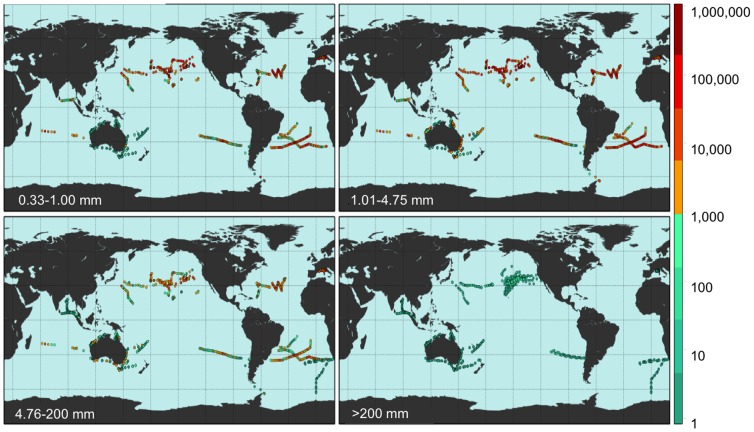
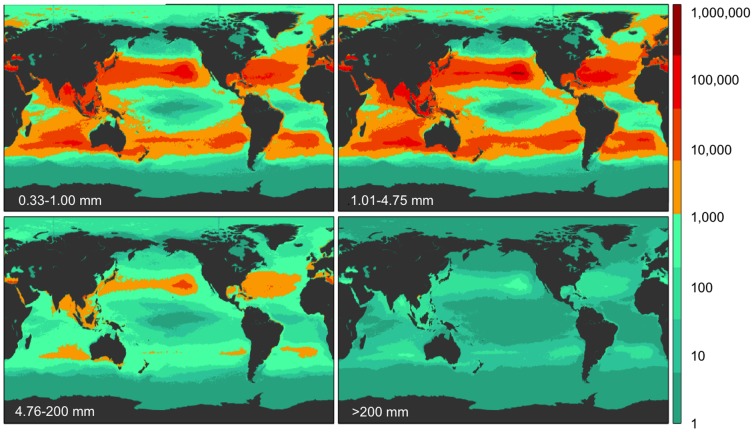
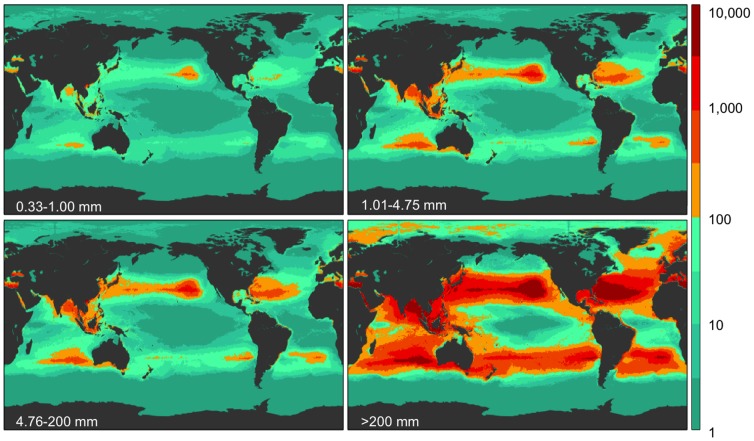
Plastic pollution is ubiquitous throughout the marine environment, yet estimates of the global abundance and weight of floating plastics have lacked data, particularly from the Southern Hemisphere and remote regions. Here we report an estimate of the total number of plastic particles and their weight floating in the world's oceans from 24 expeditions (2007-2013) across all five sub-tropical gyres, costal Australia, Bay of Bengal and the Mediterranean Sea conducting surface net tows (N = 680) and visual survey transects of large plastic debris (N = 891). Using an oceanographic model of floating debris dispersal calibrated by our data, and correcting for wind-driven vertical mixing, we estimate a minimum of 5.25 trillion particles weighing 268,940 tons. When comparing between four size classes, two microplastic <4.75 mm and meso- and macroplastic >4.75 mm, a tremendous loss of microplastics is observed from the sea surface compared to expected rates of fragmentation, suggesting there are mechanisms at play that remove <4.75 mm plastic particles from the ocean surface.
Overview
The claims and statistics of this paper haven’t been checked yet.
Free: it reads the open-access text and checks the first 5 claims that cite a source we can check. Create a free account to check every claim.
Integrity signals
Registry
Cites
Statistics
Figures
Verification
Claims the paper makes
The claims and statistics of this paper haven’t been checked yet.
Free: it reads the open-access text and checks the first 5 claims that cite a source we can check. Create a free account to check every claim.
Claims other papers make about this one
Each is checked against this paper’s own text: does it say what the citing paper says it does?
The source backs part of the claim, not all of it — or backs it for a different population, condition or comparison.
In the citing paper
“Measurements and model simulations revealed an uneven distribution of PMD, which complicates assessing global PMD inventories: highest PMD concentrations were found in the subtropical gyres (which have been termed 'trash vortexes' or 'garbage patches'), while PMD concentrations are much lower in the in the tropical and Arctic open ocean.51,53,54,[62][63][64]”
From The fate of plastic in the ocean environment – a minireview (2021) · cites this paper as [53]
Experimental — accuracy not yet measured
Self-check
Percentages, sums and reported differences re-computed from the paper’s own numbers.
The self-check needs the paper’s full text.
Citations
Cites
Lost at sea: where is all the plastic?
Thompson, R. C., Olsen, Y., Mitchell, R. P., Davis, A., Rowland, S. J., John, A. W. G., McGonigle, D., & Russell, A. E. (2004) · Science · doi:10.1126/science.1094559 · Cited by 7,765
Accumulation and fragmentation of plastic debris in global environments
Barnes, D. K. A., Galgani, F., Thompson, R. C., & Barlaz, M. (2009) · Philosophical Transactions of the Royal Society B: Biological Sciences · doi:10.1098/rstb.2008.0205 · Cited by 6,126 · cited 2×
“These include UV degradation, biodegradation, ingestion by organisms, decreased buoyancy due to fouling organisms, entrainment in settling detritus, and beaching [4].”
BackgroundSelf-citationHidalgo-Ruz, V., Gutow, L., Thompson, R. C., & Thiel, M. (2012) · Environmental Science & Technology · doi:10.1021/es2031505 · Cited by 5,440 · cited 2×
“33 mm, which is a commonly used lower limit for pelagic microplastics [31].”
BackgroundMethodSelf-citationLife in the “plastisphere”: microbial communities on plastic marine debris
Zettler, E. R., Mincer, T. J., & Amaral-Zettler, L. A. (2013) · Environmental Science & Technology · doi:10.1021/es401288x · Cited by 3,368 · cited 1×
“Furthermore, there is increasing evidence that some microbes can biodegrade microplastic particles [38–40].”
BackgroundPlastic debris in the open ocean
Cózar, A., Echevarría, F., González-Gordillo, J. I., Irigoien, X., Úbeda, B., Hernández-León, S., Palma, Á. T., Navarro, S., García-de-Lomas, J., Ruiz, A., et al. (2014) · Proceedings of the National Academy of Sciences · doi:10.1073/pnas.1314705111 · Cited by 3,133 · cited 4×
“Despite oceanographic model predictions of where debris might converge [24] estimates of regional and global abundance and weight of floating plastics have been limited to microplastics,5 mm [19, 25].”
BackgroundResultInfluentialTransport and release of chemicals from plastics to the environment and to wildlife
Teuten, E. L., Saquing, J. M., Knappe, D. R. U., Barlaz, M. A., Jonsson, S., Björn, A., Rowland, S. J., Thompson, R. C., Galloway, T. S., Yamashita, R., et al. (2009) · Philosophical Transactions of the Royal Society B: Biological Sciences · doi:10.1098/rstb.2008.0284 · Cited by 2,938 · cited 1×
“Adsorption of persistent organic pollutants onto plastic and their transfer into the tissues and organs through ingestion [15] is impacting marine megafauna [16] as well as lower trophic-level organisms [17, 18] and their predators [19, 20].”
BackgroundSelf-citationMicroplastic ingestion by zooplankton
Cole, M., Lindeque, P., Fileman, E., Halsband, C., Goodhead, R., Moger, J., & Galloway, T. S. (2013) · Environmental Science & Technology · doi:10.1021/es400663f · Cited by 2,763 · cited 2×
“In this manner, incorporation of smaller plastics into marine food chains could not only generate impacts on the health of the involved organisms [17–20], but also contribute to the removal of small microplastics from the sea surface [37].”
BackgroundLusher, A. L., McHugh, M., & Thompson, R. C. (2013) · Marine Pollution Bulletin · doi:10.1016/j.marpolbul.2012.11.028 · Cited by 2,075 · cited 1×
“via their prey organisms [34– 36].”
Plastic Resin Pellets as a Transport Medium for Toxic Chemicals in the Marine Environment
Mato, Y., Isobe, T., Takada, H., Kanehiro, H., Ohtake, C., & Kaminuma, T. (2001) · Environmental Science & Technology · doi:10.1021/es0010498 · Cited by 1,909 · cited 1×
“Plastic pollution is globally distributed across all oceans due to its properties of buoyancy and durability, and the sorption of toxicants to plastic while traveling through the environment [1, 2], have led some researchers to claim that synthetic polymers in the ocean should be regarded as hazardous waste [3].”
BackgroundGregory, M. R. (2009) · Philosophical Transactions of the Royal Society B: Biological Sciences · doi:10.1098/rstb.2008.0265 · Cited by 1,852 · cited 1×
“The impact of plastic pollution through ingestion and entanglement of marine fauna, ranging from zooplankton to cetaceans, seabirds and marine reptiles, are well documented [14].”
Background
Cited by
Items 801–900 of 1,035
Wan, S., Wang, X., Chen, W., Xu, Z., Zhao, J., Huang, W., Wang, M., & Zhang, H. (2024) · ACS Nano · doi:10.1021/acsnano.3c11734 · Cited by 139
Brandon, J. A., Freibott, A. L., & Sala, L. M. (2019) · Limnology and Oceanography Letters · doi:10.1002/lol2.10127 · Cited by 137
“Although the measured abundance of surface seawater microplastics is high (Law et al. 2010, 2014; Cózar et al. 2014; Eriksen et al. 2014), it is 1–3 orders of magnitude below model predictions of plastic inputs (Cózar et al. 2014; Jambeck et al. 2015).”
BackgroundParker, B. W., Beckingham, B. A., Ingram, B. C., Ballenger, J. C., Weinstein, J. E., & Sancho, G. (2020) · Marine Pollution Bulletin · doi:10.1016/j.marpolbul.2020.111539 · Cited by 124
Mishra, S., Singh, R. P., Rout, P. K., & Das, A. P. (2021) · Elsevier eBooks · doi:10.1016/b978-0-323-85583-9.00022-3 · Cited by 138
Ebrahimi, P., Abbasi, S., Pashaei, R., Bogusz, A., & Oleszczuk, P. (2022) · Chemosphere · doi:10.1016/j.chemosphere.2021.133146 · Cited by 124
Wang, X., Zhang, R., Li, Z., & Yan, B. (2021) · The Science of The Total Environment · doi:10.1016/j.scitotenv.2021.152573 · Cited by 137
Cazaudehore, G., Guyoneaud, R., Evon, P., Martin-Closas, L., Pelacho, A. M., Raynaud, C., & Monlau, F. (2022) · Biotechnology Advances · doi:10.1016/j.biotechadv.2022.107916 · Cited by 118
“In 2014, over 250,000 tons of plastics were estimated to be floating in the sea (Eriksen et al., 2014).”
BackgroundMicroplastics: A Matter of the Heart (and Vascular System)
Persiani, E., Cecchettini, A., Ceccherini, E., Gisone, I., Morales, M. A., & Vozzi, F. (2023) · Biomedicines · doi:10.3390/biomedicines11020264 · Cited by 137
“7 million metric tonnes of plastic were released into the oceans [1], leading to the accumulation of over 250,000 tonnes of plastics abandoned in oceans [2].”
BackgroundMicroplastic Pollution: Threats and Impacts on Global Marine Ecosystems
Yu, R.-S., & Singh, S. (2023) · Sustainability · doi:10.3390/su151713252 · Cited by 138
Cheap Food and Bad Climate: From Surplus Value to Negative Value in the Capitalist World-Ecology
Moore, J. W. (2015) · Critical Historical Studies · doi:10.1086/681007 · Cited by 140
Impacts of changing ocean circulation on the distribution of marine microplastic litter
Welden, N. A., & Lusher, A. L. (2017) · Integrated Environmental Assessment and Management · doi:10.1002/ieam.1911 · Cited by 116
Occurrence, Fate, and Effect of Microplastics in Freshwater Systems
Eerkes‐Medrano, D., & Thompson, R. C. (2018) · Elsevier eBooks · doi:10.1016/b978-0-12-813747-5.00004-7 · Cited by 141
London's river of plastic: High levels of microplastics in the Thames water column
Rowley, K. H., Cucknell, A.-C., Smith, B. D., Clark, P. F., & Morritt, D. (2020) · The Science of The Total Environment · doi:10.1016/j.scitotenv.2020.140018 · Cited by 137
Zhang, W., Liu, X., Liu, L., Lu, H., Wang, L., & Tang, J. (2022) · Journal of Hazardous Materials · doi:10.1016/j.jhazmat.2022.129030 · Cited by 136
A new biological recovery approach for PHA using mealworm, Tenebrio molitor
Murugan, P., Lizhu, H., Gan, C., Maurer, F. H. J., & Sudesh, K. (2016) · Journal of Biotechnology · doi:10.1016/j.jbiotec.2016.10.012 · Cited by 136
“This has negatively affected the land and marine wildlife (Eriksen et al., 2014; Nelms et al., 2015).”
Schlundt, C., Mark Welch, J. L., Knochel, A. M., Zettler, E. R., & Amaral‐Zettler, L. A. (2020) · Molecular Ecology Resources · doi:10.1111/1755-0998.13119 · Cited by 122
“Despite media depictions of large intact plastic litter that forms massive floating “islands” in the ocean's interior, most PMD is in the microplastic ( 5-mm) size range (Eriksen et al., 2014) and thus a habitat for primarily microbial and other microscopic life.”
BackgroundLimited long-distance transport of plastic pollution by the Orange-Vaal River system, South Africa
Weideman, E. A., Perold, V., & Ryan, P. G. (2020) · The Science of The Total Environment · doi:10.1016/j.scitotenv.2020.138653 · Cited by 135
Self-citationToxicity of polystyrene nanoplastics and zinc oxide to mice
Estrela, F. N., Guimarães, A. T. B., Araújo, A. P. D. C., Silva, F. G., da Luz, T. M., Silva, A. M., Pereira, P. S., & Malafaia, G. (2020) · Chemosphere · doi:10.1016/j.chemosphere.2020.129476 · Cited by 136
Consumer attitudes and concerns with bioplastics use: An international study
Filho, W. L., Barbir, J., Abubakar, I. R., Paço, A., Stasiškienė, Ž., Hornbogen, M., Fendt, M. T. C., Voronova, V., & Klõga, M. (2022) · PLoS ONE · doi:10.1371/journal.pone.0266918 · Cited by 135
“Accordingly, it is estimated that there are more than 5 trillion plastic particles in the world’s surface waters [7].”
BackgroundYao, P., Zhou, B., Lu, Y., Yin, Y., Zong, Y., Chen, M., & O'Donnell, Z. (2019) · Quaternary International · doi:10.1016/j.quaint.2019.03.028 · Cited by 134
On the Creation of Risk: Framing of Microplastics Risks in Science and Media
Völker, C., Kramm, J., & Wagner, M. (2020) · Global Challenges · doi:10.1002/gch2.201900010 · Cited by 114
Ebere, E. C., Wirnkor, V. A., Ngozi, V. E., & Ihenetu, S. C. (2019) · Environmental Analysis Health and Toxicology · doi:10.5620/eaht.e2019012 · Cited by 137
“Law KL, Moret-Ferguson S, Maximenko NA, Proskurowski G, Peacock EE, Hafner J et al., Plastic accumulation in the North Atlantic subtropical gyre.”
BackgroundHuntington, A., Corcoran, P. L., Jantunen, L. M., Thaysen, C., Bernstein, S., Stern, G. A., & Rochman, C. M. (2020) · FACETS · doi:10.1139/facets-2019-0042 · Cited by 138
Laverty, A. L., Primpke, S., Lorenz, C., Gerdts, G., & Dobbs, F. C. (2020) · PLoS ONE · doi:10.1371/journal.pone.0237704 · Cited by 135
“25 trillion plastic particles with a mass of 268,940 tons [3].”
BackgroundCheng, J., Jacquin, J., Conan, P., Pujo‐Pay, M., Barbe, V., George, M., Fabre, P., Bruzaud, S., ter Halle, A., Meistertzheim, A., et al. (2021) · Frontiers in Microbiology · doi:10.3389/fmicb.2020.610231 · Cited by 134
Microplastics in the atmosphere: a review
Habibi, N., Uddin, S., Fowler, S. W., & Behbehani, M. (2022) · Journal of Environmental Exposure Assessment · doi:10.20517/jeea.2021.07 · Cited by 99
Aiduang, W., Kumla, J., Srinuanpan, S., Thamjaree, W., Lumyong, S., & Suwannarach, N. (2022) · Journal of Fungi · doi:10.3390/jof8111125 · Cited by 135
Sampling microfibres at the sea surface: The effects of mesh size, sample volume and water depth
Ryan, P. G., Suaria, G., Perold, V., Pierucci, A., Bornman, T. G., & Aliani, S. (2020) · Environmental Pollution · doi:10.1016/j.envpol.2019.113413 · Cited by 112
Self-citationSchirinzi, G. F., Köck-Schulmeyer, M., Cabrera, M., González‐Fernández, D., Hanke, G., Farré, M., & Barceló, D. (2020) · The Science of The Total Environment · doi:10.1016/j.scitotenv.2020.136807 · Cited by 134
Bioaccumulation and reproductive effects of fluorescent microplastics in medaka fish
Assas, M. A., Qiu, X., Chen, K., Ogawa, H., Xu, H., Shimasaki, Y., & Oshima, Y. (2020) · Marine Pollution Bulletin · doi:10.1016/j.marpolbul.2020.111446 · Cited by 135
Sathish, N., Jeyasanta, K. I., & Patterson, J. (2020) · Environmental Pollution · doi:10.1016/j.envpol.2020.115219 · Cited by 134
Sun, X., Wang, T., Chen, B., Booth, A. M., Liu, S., Wang, R., Zhu, L., Zhao, X., Qu, K., & Xia, B. (2020) · Journal of Hazardous Materials · doi:10.1016/j.jhazmat.2020.124982 · Cited by 133
Young, A. M., & Elliott, J. A. (2016) · Marine Pollution Bulletin · doi:10.1016/j.marpolbul.2016.11.009 · Cited by 132
“A recent study based on collections from 24 expeditions . between 2007 and 2013 estimates that N5 trillion plastic pieces weighing 268,940 tons are currently afloat in the world's oceans, with particles b5 mm in diameter accounting for 92.4% of the total (Eriksen et al., 2014).”
BackgroundInfluentialTargeting microplastic particles in the void of diluted suspensions
Islam, S., Apitius, L., Jakob, F., & Schwaneberg, U. (2019) · Environment International · doi:10.1016/j.envint.2018.12.029 · Cited by 132
“To prevent the excessive generation of new microplastics, zero waste strategies and waste management are discussed (Eriksen et al., 2014).”
BackgroundMicroplastic in the stomachs of open-ocean and deep-sea fishes of the North-East Atlantic
Pereira, J. M., Rodríguez, Y., Blasco-Monleon, S., Porter, A., Lewis, C., & Pham, C. K. (2020) · Environmental Pollution · doi:10.1016/j.envpol.2020.115060 · Cited by 121
Review of Microplastic Distribution, Toxicity, Analysis Methods, and Removal Technologies
Park, H., & Park, B. (2021) · Water · doi:10.3390/w13192736 · Cited by 132
Barrowclough, D. V., & Birkbeck, C. D. (2022) · Social Sciences · doi:10.3390/socsci11010026 · Cited by 136
“…in the marine environment and multiple strategies to prevent leakage into oceans and wa-terways (Boucher and Friot 2017; Boucher et al. 2020; Eriksen et al. 2014; Halpern et al. 2008; Quantis and EA 2020; The Pew Charitable Trusts and SYSTEMIQ 2020; UNEP 2016, 2020; Vince and Stoett 2018;…”
Incorporating citizen science to study plastics in the environment
Zettler, E. R., Takada, H., Monteleone, B., Mallos, N., Eriksen, M., & Amaral-Zettler, L. A. (2017) · Analytical Methods · doi:10.1039/c6ay02716d · Cited by 114
Self-citationSantana, M., Moreira, F. T., Pereira, C. D. S., Abessa, D. M. D. S., & Turra, A. (2018) · Archives of Environmental Contamination and Toxicology · doi:10.1007/s00244-018-0504-3 · Cited by 131
“Although it corresponds to a much higher number of microplastic particles than registered by field data (Eriksen et al. 2014), this concentration also is 4–20 times lower than concentrations previously studied (Browne et al.”
ResultPrata, J. C., Reis, V., Paço, A., Martins, P., Cruz, A., da Costa, J. P., Duarte, A. C., & Rocha‐Santos, T. (2019) · The Science of The Total Environment · doi:10.1016/j.scitotenv.2019.135892 · Cited by 131
Avio, C. G., Cardelli, L. R., Gorbi, S., Pellegrini, D., & Regoli, F. (2017) · Environmental Pollution · doi:10.1016/j.envpol.2017.04.066 · Cited by 131
“000 tons of debris floating at sea surface, or accumulating on seafloor and shorelines from polar regions to the equator (C ozar et al., 2014; Eriksen et al., 2014).”
BackgroundInfluentialGasification of Plastic Solid Waste and Competitive Technologies
Salaudeen, S. A., Arku, P., & Dutta, A. (2018) · Elsevier eBooks · doi:10.1016/b978-0-12-813140-4.00010-8 · Cited by 131
Eo, S., Hong, S. H., Song, Y. K., Han, G. M., Seo, S., & Shim, W. J. (2021) · Water Research · doi:10.1016/j.watres.2021.117238 · Cited by 130
Zhang, Z., Deng, C., Li, D., Liu, L., Li, H., Wu, J., & Ye, C. (2021) · Environmental Pollution · doi:10.1016/j.envpol.2021.117580 · Cited by 130
Lacerda, A. L. D. F., Proietti, M. C., Secchi, E. R., & Taylor, J. D. (2020) · Molecular Ecology · doi:10.1111/mec.15444 · Cited by 129
“The approach identified a range of plastic polymer compositions, sizes and shapes, which were similar in composition and characterization to those found in other regions of the Oceans (Debroas et al., 2017; Eriksen et al., 2014).”
BackgroundResultPlastic waste discharge to the global ocean constrained by seawater observations
Zhang, Y., Wu, P., Xu, R., Wang, X., Lei, L., Schartup, A. T., Peng, Y., Pang, Q., Wang, X., Mai, L., et al. (2023) · Nature Communications · doi:10.1038/s41467-023-37108-5 · Cited by 129
“Welimittheobservationstothedata obtainedby visualidenti fi cationduetoitslargesamplesizeandspatial coverage (Supplementary Table 8) 11,13,24,25 .”
InfluentialOccurrence and identification of microplastics along a beach in the Biosphere Reserve of Lanzarote
Edo, C., Tamayo-Belda, M., Martínez-Campos, S., Martín-Betancor, K., González-Pleiter, M., Pulido‐Reyes, G., García‐Ruiz, C., Zapata, F., Leganés, F., Fernández‐Piñas, F., et al. (2019) · Marine Pollution Bulletin · doi:10.1016/j.marpolbul.2019.04.061 · Cited by 130
Revel, M., Châtel, A., Ettajani, H., Bruneau, M., Akcha, F., Sussarellu, R., Rouxel, J., Costil, K., Decottignies, P., Cognie, B., et al. (2019) · Marine Pollution Bulletin · doi:10.1016/j.marpolbul.2019.110627 · Cited by 131
“Plastic debris have been identified in marine ecosystems worldwide and are recognized as a global threat for diverse marine organisms (Eriksen et al., 2014).”
BackgroundMicroplastics in the Aquatic Environment: Occurrence, Persistence, Analysis, and Human Exposure
Ricciardi, M., Pironti, C., Motta, O., Miele, Y., Proto, A., & Montano, L. (2021) · Water · doi:10.3390/w13070973 · Cited by 129
Assessment of marine litter through remote sensing: recent approaches and future goals
Salgado-Hernanz, P. M., Llinàs, J. B., Alomar, C., Compa, M., Romero, L., & Deudero, S. (2021) · Marine Pollution Bulletin · doi:10.1016/j.marpolbul.2021.112347 · Cited by 129
Resource recovery from industrial effluents through the cultivation of microalgae: A review
., S. M. A., Peter, A. P., Chew, K. W., Munawaroh, H. S. H., & Show, P. L. (2021) · Bioresource Technology · doi:10.1016/j.biortech.2021.125461 · Cited by 129
Global assessment of marine plastic exposure risk for oceanic birds
Clark, B. L., Carneiro, A. P. B., Pearmain, E. J., Rouyer, M., Clay, T. A., Cowger, W., Phillips, R. A., Manica, A., Hazin, C., Eriksen, M., et al. (2023) · Nature Communications · doi:10.1038/s41467-023-38900-z · Cited by 130
“5) LC Cape Verde shearwater (1,1) NT Great shearwater (2,1) LC Band-rumped storm-petrel (3,1) LC Sooty shearwater (3,1) NT MacGillivray’s prion (1,1) EN Desertas petrel (1,1) VU Cory’s shearwater (4,1) LC Black-capped petrel (1,1) EN Mottled petrel (1,1) NT Bulwer’s petrel (4,1) LC Bermuda petrel (1,1) EN Mascarene pe…”
Self-citationCarreras-Colom, E., Constenla, M., Soler-Membrives, A., Cartes, J. E., Baeza, M., Padrós, F., & Carrassón, M. (2018) · Marine Pollution Bulletin · doi:10.1016/j.marpolbul.2018.05.012 · Cited by 128
Observations of floating anthropogenic litter in the Barents Sea and Fram Strait, Arctic
Bergmann, M., Sandhop, N., Schewe, I., & D’Hert, D. (2016) · Polar Biology · doi:10.1007/s00300-015-1795-8 · Cited by 109
“Objects floating at the sea surface have been reported from locations all over the world (e.g. Eriksen et al. 2014; Galgani et al. 2015).”
BackgroundIngestion of macroplastics by odontocetes of the Greek Seas, Eastern Mediterranean: Often deadly!
Alexiadou, P., Foskolos, I., & Frantzis, A. (2019) · Marine Pollution Bulletin · doi:10.1016/j.marpolbul.2019.05.055 · Cited by 129
“Contrary to this biological richness, the Mediterranean Sea is considered to have one of the highest concentrations of debris in the world (Barnes et al., 2009; Cózar et al., 2015; Eriksen et al., 2014).”
BackgroundMicroplastics on the Menu: Plastics Pollute Indonesian Manta Ray and Whale Shark Feeding Grounds
Germanov, E. S., Marshall, A. D., Hendrawan, I. G., Admiraal, R., Rohner, C. A., Argeswara, J., Wulandari, R., Himawan, M. R., & Loneragan, N. R. (2019) · Frontiers in Marine Science · doi:10.3389/fmars.2019.00679 · Cited by 129
Research landscape of a global environmental challenge: Microplastics
Klingelhöfer, D., Braun, M., Quarcoo, D., Brüggmann, D., & Groneberg, D. A. (2020) · Water Research · doi:10.1016/j.watres.2019.115358 · Cited by 115
Distribution of plastic debris pollution and it is implications on mangrove vegetation
Suyadi, & Manullang, C. Y. (2020) · Marine Pollution Bulletin · doi:10.1016/j.marpolbul.2020.111642 · Cited by 128
Karkanorachaki, K., Kiparissis, S., Kalogerakis, G. C., Yiantzi, E., Psillakis, E., & Kalogerakis, N. E. (2018) · Marine Pollution Bulletin · doi:10.1016/j.marpolbul.2018.06.011 · Cited by 127
Liboiron, M., Liboiron, F., Wells, E., Richárd, N., Zahara, A., Mather, C., Bradshaw, H., & Murichi, J. (2016) · Marine Pollution Bulletin · doi:10.1016/j.marpolbul.2016.10.043 · Cited by 129
Overhauling Ocean Spatial Planning to Improve Marine Megafauna Conservation
Sequeira, A. M. M., Hays, G. C., SIMS, D. W., Eguíluz, V. M., Rodríguez, J. P., Heupel, M. R., Harcourt, R. G., Calich, H. J., Queiroz, N. C., Costa, D. P., et al. (2019) · Frontiers in Marine Science · doi:10.3389/fmars.2019.00639 · Cited by 129
Self-citationIngested microplastics: Do humans eat one credit card per week?
Pletz, M. (2022) · Journal of Hazardous Materials Letters · doi:10.1016/j.hazl.2022.100071 · Cited by 126
Faisal, F., Rasul, M. G., Jahirul, M. I., & Chowdhury, A. A. (2023) · The Science of The Total Environment · doi:10.1016/j.scitotenv.2023.163756 · Cited by 127
Gautam, B. P. S., Qureshi, A., Gwasikoti, A., Kumar, V., & Gondwal, M. (2024) · Springer eBooks · doi:10.1007/978-3-031-55661-6_1 · Cited by 127
Wakkaf, T., Zrelli, R. B. E., Kedzierski, M., Balti, R., Shaiek, M., Mansour, L. A., Tlig‐Zouari, S., Bruzaud, S., & Rabaoui, L. J. (2020) · Marine Pollution Bulletin · doi:10.1016/j.marpolbul.2020.111355 · Cited by 127
Global assessment of innovative solutions to tackle marine litter
Bellou, N., Gambardella, C., Karantzalos, K. G., Monteiro, J. G., Canning‐Clode, J., Kemna, S., Camilo, A. A.-G., & Lemmen, C. (2021) · Nature Sustainability · doi:10.1038/s41893-021-00726-2 · Cited by 127
Chen, X., Xu, L., Chen, Q., Su, S., Zhuang, J., & Qiao, D. (2023) · Ecotoxicology and Environmental Safety · doi:10.1016/j.ecoenv.2023.115000 · Cited by 127
A plastic world: A review of microplastic pollution in the freshwaters of the Earth's poles
Citterich, F., Lo Giudice, A., & Azzaro, M. (2023) · Science of The Total Environment · doi:10.1016/j.scitotenv.2023.161847 · Cited by 125
Krause, S., Molari, M., Gorb, E. V., Gorb, S. N., Kossel, E., & Haeckel, M. (2020) · Scientific Reports · doi:10.1038/s41598-020-66361-7 · Cited by 125
Valente, T., Sbrana, A., Scacco, U., Jacomini, C., Bianchi, J., Palazzo, L., de Lucia, G. A., Silvestri, C., & Matiddi, M. (2019) · Environmental Pollution · doi:10.1016/j.envpol.2019.07.001 · Cited by 105
Zhang, J., Meng, H., Kong, X., Cheng, X., Ma, T., He, H., Du, W., Yang, S., Li, S., & Zhang, L. (2021) · Environmental Pollution · doi:10.1016/j.envpol.2021.116767 · Cited by 125
Baseline Study on Microplastics in Indian Rivers under Different Anthropogenic Influences
Lechthaler, S., Waldschläger, K., Sandhani, C. G., Sannasiraj, S. A., Sundar, V., Schwarzbauer, J., & Schüttrumpf, H. (2021) · Water · doi:10.3390/w13121648 · Cited by 126
Pelagic plastic pollution within the surface waters of Lake Michigan, USA
Mason, S. A., Kammin, L., Eriksen, M., Aleid, G., Wilson, S., Box, C., Williamson, N., & Riley, A. (2016) · Journal of Great Lakes Research · doi:10.1016/j.jglr.2016.05.009 · Cited by 124
Self-citationOceans of plastic: A research agenda to propel policy development
Mendenhall, E. (2018) · Marine Policy · doi:10.1016/j.marpol.2018.05.005 · Cited by 126
“This may be because of overlooked pathways, or because of differential rates of breakdown and sinking (where there is more plastic in the northern hemisphere, but more of it sinks and is therefore unaccounted for) [22].”
BackgroundInfluentialIngested microplastic as a two-way transporter for PBDEs in Talitrus saltator
Scopetani, C., Cincinelli, A., Martellini, T., Lombardini, E., Ciofini, A., Fortunati, A., Pasquali, V., Ciattini, S., & Ugolini, A. (2018) · Environmental Research · doi:10.1016/j.envres.2018.07.030 · Cited by 108
“…et al., 2015; Ruiz-Orejón et al., 2016; van der Hal et al., 2017; Cincinelli et al., 2017), with consequent adverse effects on marine biota (i.e. Derraik, 2002; Thompson et al., 2004; Barnes et al., 2009; Andrady, 2011; Cole et al., 2011; Eriksen et al., 2014) and socio and economic impacts.”
BackgroundMöhlenkamp, P., Purser, A., & Thomsen, L. (2018) · Elementa: Science of the Anthropocene · doi:10.1525/elementa.317 · Cited by 107
“…et al., 2013; Woodall et al., 2014), suggesting that removal of millimeter-sized plastic fragments from the sea surface is occurring on a large scale (Kukulka et al., 2012; Eriksen et al., 2014) and that the sea surface and beaches are not the ultimate or exclusive sinks for plastic pollution.”
BackgroundInfluentialPeters, C. A., Hendrickson, E., Minor, E. C., Schreiner, K. M., Halbur, J., & Bratton, S. P. (2018) · Marine Pollution Bulletin · doi:10.1016/j.marpolbul.2018.09.049 · Cited by 125
(Micro) plastic fluxes and stocks in Lake Geneva basin
Boucher, J., Faure, F., Pompini, O., Plummer, Z., Wieser, O., & Felippe de Alencastro, L. (2019) · TrAC Trends in Analytical Chemistry · doi:10.1016/j.trac.2018.11.037 · Cited by 107
Schellenberger, S., Jönsson, C., Mellin, P., Levenstam, O. A., Liagkouridis, I., Ribbenstedt, A., Hanning, A.-C., Schultes, L., Plassmann, M. M., Persson, C., et al. (2019) · Environmental Science & Technology · doi:10.1021/acs.est.9b04165 · Cited by 104
Jones-Williams, K., Galloway, T., Cole, M., Stowasser, G., Waluda, C., & Manno, C. (2020) · Environment International · doi:10.1016/j.envint.2020.105792 · Cited by 117
“…of micro- and mesoplastic concentrations (5056n/km2) are on the lower end of the global average, which has been estimated at 63,320 particles/km2 (Eriksen et al., 2014), and is significantly smaller when compared with populated coastlines such as in East Asia, which registered 1,720,000…”
BackgroundAdvanced epithelial lung and gut barrier models demonstrate passage of microplastic particles
Donkers, J. M., Höppener, E. M., Grigoriev, I., Will, L., Melgert, B. N., van der Zaan, B., van de Steeg, E., & Kooter, I. M. (2022) · Microplastics and Nanoplastics · doi:10.1186/s43591-021-00024-w · Cited by 108
Biopolymers production from microalgae and cyanobacteria cultivated in wastewater: recent advances
Mastropetros, S. G., Pispas, K., Zagklis, D., Ali, S. S., & Kornaros, M. (2022) · Biotechnology Advances · doi:10.1016/j.biotechadv.2022.107999 · Cited by 123
“In 2014, 5.25 trillion plastic particles weighing 268,940 t were estimated to have drifted at sea (Eriksen et al., 2014).”
BackgroundInfluentialMarine litter disrupts ecological processes in reef systems
de Carvalho-Souza, G. F., Llope, M., Tinôco, M. S., Medeiros, D. V., Maia-Nogueira, R., & Sampaio, C. L. S. (2018) · Marine Pollution Bulletin · doi:10.1016/j.marpolbul.2018.05.049 · Cited by 124
Analysis and inorganic composition of microplastics in commercial Malaysian fish meals
Karbalaei, S., Golieskardi, A., Watt, D. U., Boiret, M., Hanachi, P., Walker, T. R., & Karami, A. (2020) · Marine Pollution Bulletin · doi:10.1016/j.marpolbul.2019.110687 · Cited by 119
“Due to widespread distribution of MPs in the environment (e.g., Eriksen et al., 2014), MP contamination has been reported in abiotic and biotic prod ucts such as commercial salt (Karami et al., 2017b), processed seafood products (canned sardines and sprats) (Karami et al., 2018), and fish species…”
BackgroundResultSon, H. F., Joo, S., Seo, H., Sagong, H.-Y., Lee, S. H., Hong, H., & Kim, K.-J. (2020) · Enzyme and Microbial Technology · doi:10.1016/j.enzmictec.2020.109656 · Cited by 117
Wang, D., Su, L., Ruan, H. D., Chen, J., Lu, J., Lee, C.-H., & Jiang, S. Y. (2021) · Marine Pollution Bulletin · doi:10.1016/j.marpolbul.2021.112000 · Cited by 124
Dong, Y., Song, Z., Liu, Y., & Gao, M. (2021) · Environmental Pollution · doi:10.1016/j.envpol.2021.116871 · Cited by 123
Zhao, S., Zettler, E., Bos, R. P., Lin, P., Amaral‐Zettler, L., & Mincer, T. J. (2022) · Global Change Biology · doi:10.1111/gcb.16089 · Cited by 125
“However, a size- selective loss of MP has been observed at the sea surface (Cózar et al., 2014; Eriksen et al., 2014), suggesting the surface ocean is not the ultimate sink for plastic debris, bringing the ultimate fate of MP into question.”
BackgroundMethodResultInfluentialHamd, W. S., Daher, E. A., Tofa, T. S., & Dutta, J. (2022) · Frontiers in Marine Science · doi:10.3389/fmars.2022.885614 · Cited by 124
Nguyen, M., Lin, C., Nguyen, H.-L., Le, V.-R., Priya, K. L., Singh, J., Chang, S. W., Um, M., & Nguyen, D. D. (2023) · Journal of Environmental Management · doi:10.1016/j.jenvman.2023.118499 · Cited by 124
Beaching patterns of plastic debris along the Indian Ocean rim
van der Mheen, M., van Sebille, E., & Pattiaratchi, C. B. (2020) · Ocean science · doi:10.5194/os-16-1317-2020 · Cited by 123
Plastic pollution impacts on marine carbon biogeochemistry
Galgani, L., & Loiselle, S. (2020) · Environmental Pollution · doi:10.1016/j.envpol.2020.115598 · Cited by 123
Highlights from a review of microplastics in marine sediments
Phuong, N. N., Fauvelle, V., Grenz, C., Ourgaud, M., Schmidt, N., Strady, E., & Sempéré, R. (2021) · Science of The Total Environment · doi:10.1016/j.scitotenv.2021.146225 · Cited by 113
Impacts of global warming on marine microbial communities
Baskaran, A., Manikkam, R., Subramanian, K., & Aruni, W. (2021) · The Science of The Total Environment · doi:10.1016/j.scitotenv.2021.147905 · Cited by 122
Rossatto, A., Arlindo, M. Z. F., de Morais, M. S., de Souza, T. D., & Ogrodowski, C. S. (2023) · Environmental Advances · doi:10.1016/j.envadv.2023.100396 · Cited by 124
Choi, J., Kim, H. B., Ahn, Y., Kim, M., Yu, S., Kim, N., Lim, S. Y., Park, J., Ha, S., Lim, K. S., et al. (2024) · RSC Advances · doi:10.1039/d4ra00844h · Cited by 123
Modelling marine protected areas: insights and hurdles
Fulton, E. A., Bax, N. J., Bustamante, R. H., Dambacher, J. M., Dichmont, C. M., Dunstan, P. K., Hayes, K. R., Hobday, A. J., Pitcher, R., Plagányi, É. E., et al. (2015) · Philosophical Transactions of the Royal Society B Biological Sciences · doi:10.1098/rstb.2014.0278 · Cited by 123
Revealing accumulation zones of plastic pellets in sandy beaches
Moreira, F. T., Balthazar-Silva, D., Barbosa, L., & Turra, A. (2016) · Environmental Pollution · doi:10.1016/j.envpol.2016.07.006 · Cited by 106
“Contamination of the coastal zone by plastics is a major environmental issue (Eriksen et al., 2014; van Sebille et al., 2015; Zalasiewicz et al., 2016).”
BackgroundAnthropogenic particles ingestion in fish species from two areas of the western Mediterranean Sea
Rios-Fuster, B., Alomar, C., Compa, M., Guijarro, B., & Deudero, S. (2019) · Marine Pollution Bulletin · doi:10.1016/j.marpolbul.2019.04.064 · Cited by 113
Investigation on microplastic pollution of Dongting Lake and its affiliated rivers
Hu, D., Zhang, Y., & Shen, M. (2020) · Marine Pollution Bulletin · doi:10.1016/j.marpolbul.2020.111555 · Cited by 121
Metadata
- Authors
- Eriksen, M., Lebreton, L. C. M., Carson, H. S., Thiel, M., Moore, C. J., Borerro, J. C., Galgani, F., Ryan, P. G., & Reisser, J.
- Affiliations
- University of Hawaii at Hilo (US)
- University of Cape Town (ZA)
- Corresponding author
- Eriksen, Marcus
- Venue
- PLoS ONE
- Publisher
- Public Library of Science (PLoS)
- Published
- 2014-12-10
- Volume
- 9
- Issue
- 12
- Pages
- e111913
- ISSN
- 1932-6203 (ISSN-L)
- PMC
- PMC4262196
- OpenAlex
- W2130707940
- Cited by
- 4,710
- References
- 43
- Citations by year
- 2026: 255 · 2025: 425 · 2024: 499 · 2023: 585 · 2022: 598 · 2021: 648 · 2020: 531 · 2019: 419 · 2018: 308 · 2017: 200 · 2016: 149 · 2015: 86 · 2014: 4
- FWCI
- 103.05
- Type
- journal article
- Language
- en
- Open access
- gold
- doi.org
- Licence
- Locations
- PLoS ONE (publishedVersion, public-domain)
- PubMed Central (publishedVersion, public-domain)
- UWA Profiles and Research Repository (UWA) (publishedVersion, public-domain)
- PubMed (publishedVersion)
- HAL (submittedVersion)
- Institutional Archive of Ifremer (French Research Institute for Exploitation of the Sea) (submittedVersion, other-oa)
- DOAJ (DOAJ: Directory of Open Access Journals) (submittedVersion, cc-by-sa)
- Figshare (submittedVersion, cc-by)
- Open University of Cape Town (University of Cape Town) (submittedVersion, cc-by)
- Funders
- Commonwealth Scientific and Industrial Research Organisation
- National Oceanic and Atmospheric Administration
- Topics
- Physical Sciences › Environmental Science › Pollution › Microplastics and Plastic Pollution
- Physical Sciences › Environmental Science › Pollution › Oil Spill Detection and Mitigation
- Physical Sciences › Earth and Planetary Sciences › Oceanography › Marine Plankton and Biogeochemistry
- Keywords
- plastic pollution, marine plastic debris, microplastics, mesoplastics, macroplastics, plastic fragmentation, Southern Hemisphere, Bay of Bengal, Mediterranean Sea
- MeSH terms
- Models, Theoretical, Oceans and Seas, Plastics, Water Pollution, Wind, Linear Models, Hydrodynamics
About these checks
Registry, retraction, Cites and statistics results are computed, not judged, with one exception: a printed reference that no index lists is read once by a model before it counts as a citation error. Claims are extracted by a model and kept only when their quote appears verbatim in the text; each cited source is then checked, with a model’s help, for whether it says what the claim relies on. Those verdicts can be wrong — read the claim’s quote and the cited source before relying on one.
Statistics and arithmetic are recomputed, not judged.
Confidence bands are shown only for fields calibrated on our annotated test set. None is calibrated yet, so no band is shown.
What counts as a claim ›How we measure confidence ›How we check this ›
Are you an author, or do you see a problem with this page? Request a review
Data sources
Bibliographic data: Semantic Scholar, OpenAlex, Crossref.
Contains information from the Semantic Scholar Academic Graph Datasets, made available under the ODC Attribution License (ODC-BY 1.0).
Semantic Scholar’s data is described in: Kinney, R., et al. (2023). The Semantic Scholar Open Data Platform. arXiv:2301.10140.
