

Plastic pollution in the world’s oceans: more than 5 trillion plastic pieces weighing over 250,000 tons afloat at sea
Open accessThe DOI matches its Crossref record; 43 of the 43 references it cites were found in a registry or an index.
Abstract
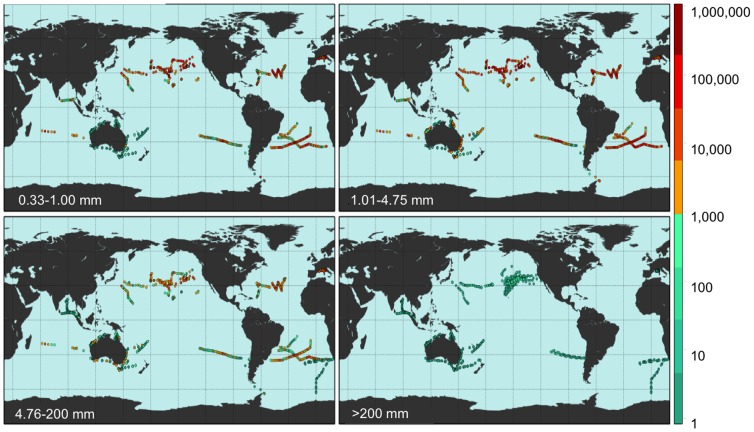
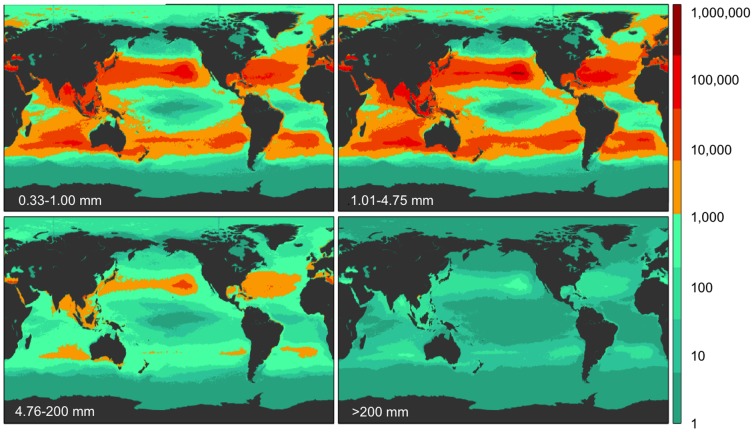
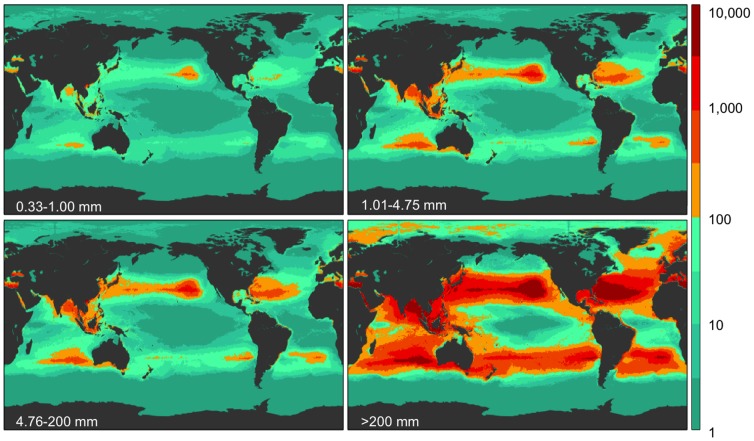
Plastic pollution is ubiquitous throughout the marine environment, yet estimates of the global abundance and weight of floating plastics have lacked data, particularly from the Southern Hemisphere and remote regions. Here we report an estimate of the total number of plastic particles and their weight floating in the world's oceans from 24 expeditions (2007-2013) across all five sub-tropical gyres, costal Australia, Bay of Bengal and the Mediterranean Sea conducting surface net tows (N = 680) and visual survey transects of large plastic debris (N = 891). Using an oceanographic model of floating debris dispersal calibrated by our data, and correcting for wind-driven vertical mixing, we estimate a minimum of 5.25 trillion particles weighing 268,940 tons. When comparing between four size classes, two microplastic <4.75 mm and meso- and macroplastic >4.75 mm, a tremendous loss of microplastics is observed from the sea surface compared to expected rates of fragmentation, suggesting there are mechanisms at play that remove <4.75 mm plastic particles from the ocean surface.
Overview
The claims and statistics of this paper haven’t been checked yet.
Free: it reads the open-access text and checks the first 5 claims that cite a source we can check. Create a free account to check every claim.
Integrity signals
Registry
Cites
Statistics
Figures
Verification
Claims the paper makes
The claims and statistics of this paper haven’t been checked yet.
Free: it reads the open-access text and checks the first 5 claims that cite a source we can check. Create a free account to check every claim.
Claims other papers make about this one
Each is checked against this paper’s own text: does it say what the citing paper says it does?
The source backs part of the claim, not all of it — or backs it for a different population, condition or comparison.
In the citing paper
“Measurements and model simulations revealed an uneven distribution of PMD, which complicates assessing global PMD inventories: highest PMD concentrations were found in the subtropical gyres (which have been termed 'trash vortexes' or 'garbage patches'), while PMD concentrations are much lower in the in the tropical and Arctic open ocean.51,53,54,[62][63][64]”
From The fate of plastic in the ocean environment – a minireview (2021) · cites this paper as [53]
Experimental — accuracy not yet measured
Self-check
Percentages, sums and reported differences re-computed from the paper’s own numbers.
The self-check needs the paper’s full text.
Citations
Cites
Lost at sea: where is all the plastic?
Thompson, R. C., Olsen, Y., Mitchell, R. P., Davis, A., Rowland, S. J., John, A. W. G., McGonigle, D., & Russell, A. E. (2004) · Science · doi:10.1126/science.1094559 · Cited by 7,765
Accumulation and fragmentation of plastic debris in global environments
Barnes, D. K. A., Galgani, F., Thompson, R. C., & Barlaz, M. (2009) · Philosophical Transactions of the Royal Society B: Biological Sciences · doi:10.1098/rstb.2008.0205 · Cited by 6,126 · cited 2×
“These include UV degradation, biodegradation, ingestion by organisms, decreased buoyancy due to fouling organisms, entrainment in settling detritus, and beaching [4].”
BackgroundSelf-citationHidalgo-Ruz, V., Gutow, L., Thompson, R. C., & Thiel, M. (2012) · Environmental Science & Technology · doi:10.1021/es2031505 · Cited by 5,440 · cited 2×
“33 mm, which is a commonly used lower limit for pelagic microplastics [31].”
BackgroundMethodSelf-citationLife in the “plastisphere”: microbial communities on plastic marine debris
Zettler, E. R., Mincer, T. J., & Amaral-Zettler, L. A. (2013) · Environmental Science & Technology · doi:10.1021/es401288x · Cited by 3,368 · cited 1×
“Furthermore, there is increasing evidence that some microbes can biodegrade microplastic particles [38–40].”
BackgroundPlastic debris in the open ocean
Cózar, A., Echevarría, F., González-Gordillo, J. I., Irigoien, X., Úbeda, B., Hernández-León, S., Palma, Á. T., Navarro, S., García-de-Lomas, J., Ruiz, A., et al. (2014) · Proceedings of the National Academy of Sciences · doi:10.1073/pnas.1314705111 · Cited by 3,133 · cited 4×
“Despite oceanographic model predictions of where debris might converge [24] estimates of regional and global abundance and weight of floating plastics have been limited to microplastics,5 mm [19, 25].”
BackgroundResultInfluentialTransport and release of chemicals from plastics to the environment and to wildlife
Teuten, E. L., Saquing, J. M., Knappe, D. R. U., Barlaz, M. A., Jonsson, S., Björn, A., Rowland, S. J., Thompson, R. C., Galloway, T. S., Yamashita, R., et al. (2009) · Philosophical Transactions of the Royal Society B: Biological Sciences · doi:10.1098/rstb.2008.0284 · Cited by 2,938 · cited 1×
“Adsorption of persistent organic pollutants onto plastic and their transfer into the tissues and organs through ingestion [15] is impacting marine megafauna [16] as well as lower trophic-level organisms [17, 18] and their predators [19, 20].”
BackgroundSelf-citationMicroplastic ingestion by zooplankton
Cole, M., Lindeque, P., Fileman, E., Halsband, C., Goodhead, R., Moger, J., & Galloway, T. S. (2013) · Environmental Science & Technology · doi:10.1021/es400663f · Cited by 2,763 · cited 2×
“In this manner, incorporation of smaller plastics into marine food chains could not only generate impacts on the health of the involved organisms [17–20], but also contribute to the removal of small microplastics from the sea surface [37].”
BackgroundLusher, A. L., McHugh, M., & Thompson, R. C. (2013) · Marine Pollution Bulletin · doi:10.1016/j.marpolbul.2012.11.028 · Cited by 2,075 · cited 1×
“via their prey organisms [34– 36].”
Plastic Resin Pellets as a Transport Medium for Toxic Chemicals in the Marine Environment
Mato, Y., Isobe, T., Takada, H., Kanehiro, H., Ohtake, C., & Kaminuma, T. (2001) · Environmental Science & Technology · doi:10.1021/es0010498 · Cited by 1,909 · cited 1×
“Plastic pollution is globally distributed across all oceans due to its properties of buoyancy and durability, and the sorption of toxicants to plastic while traveling through the environment [1, 2], have led some researchers to claim that synthetic polymers in the ocean should be regarded as hazardous waste [3].”
BackgroundGregory, M. R. (2009) · Philosophical Transactions of the Royal Society B: Biological Sciences · doi:10.1098/rstb.2008.0265 · Cited by 1,852 · cited 1×
“The impact of plastic pollution through ingestion and entanglement of marine fauna, ranging from zooplankton to cetaceans, seabirds and marine reptiles, are well documented [14].”
Background
Cited by
Items 401–500 of 1,035
Kinetics of microplastic generation from different types of mulch films in agricultural soil
Yang, Y., Li, Z., Yan, C., Chadwick, D., Jones, D. L., Liu, E., Liu, Q., Bai, R., & He, W. (2022) · Science of The Total Environment · doi:10.1016/j.scitotenv.2021.152572 · Cited by 256
Ranking of potential hazards from microplastics polymers in the marine environment
Yuan, Z., Nag, R., & Cummins, E. (2022) · Journal of Hazardous Materials · doi:10.1016/j.jhazmat.2022.128399 · Cited by 255
Stapleton, M. J., Ansari, A. J., & Hai, F. I. (2023) · Water Research · doi:10.1016/j.watres.2023.119790 · Cited by 253
Alomar, C., & Deudero, S. (2017) · Environmental Pollution · doi:10.1016/j.envpol.2017.01.015 · Cited by 252
Microplastics in Fish and Fishery Products and Risks for Human Health: A Review
Alberghini, L., Truant, A., Santonicola, S., Colavita, G., & Giaccone, V. (2022) · International Journal of Environmental Research and Public Health · doi:10.3390/ijerph20010789 · Cited by 250
“Furthermore, it has been estimated that they constitute more than 90% of the 5 trillion microplastics floating on the sea [37].”
BackgroundKoongolla, J. B., Lin, L., Pan, Y.-F., Yang, C.-P., Sun, D.-R., Liu, S., Xu, X.-R., Maharana, D., Huang, J.-S., & Li, H.-X. (2020) · Environmental Pollution · doi:10.1016/j.envpol.2019.113734 · Cited by 249
Meyer-Cifuentes, I. E., Werner, J., Jehmlich, N., Will, S. E., Neumann-Schaal, M., & Öztürk, B. (2020) · Nature Communications · doi:10.1038/s41467-020-19583-2 · Cited by 249
“Similarly, the abundances of free-living taxa (1, 2, 9, 10, 12, 13, 14, 15, 17, 21, 23, 26, 30, 33) are positively correlated with each other.”
Global trends and prospects in microplastics research: A bibliometric analysis
Zhang, Y., Pu, S., Lv, X., Gao, Y., & Ge, L. (2020) · Journal of Hazardous Materials · doi:10.1016/j.jhazmat.2020.123110 · Cited by 248
Santana, M. F. M., Moreira, F. T., & Turra, A. (2017) · Marine Pollution Bulletin · doi:10.1016/j.marpolbul.2017.05.061 · Cited by 246
“4% of the total plastic count (Eriksen et al., 2014), with an increasing tendency with time (Eriksen et al.”
BackgroundInfluentialZhao, S., Ward, J. E., Danley, M., & Mincer, T. J. (2018) · Environmental Science & Technology · doi:10.1021/acs.est.8b03467 · Cited by 246
Periphytic biofilm: An innovative approach for biodegradation of microplastics
Shabbir, S., Faheem, M., Ali, N., Kerr, P. G., Wang, L.-F., Kuppusamy, S., & Li, Y. (2020) · Science of The Total Environment · doi:10.1016/j.scitotenv.2020.137064 · Cited by 246
Riverine Microplastic Pollution in the Pearl River Delta, China: Are Modeled Estimates Accurate?
Mai, L., You, S.-N., He, H., Bao, L.-J., Liu, L.-Y., & Zeng, E. Y. (2019) · Environmental Science & Technology · doi:10.1021/acs.est.9b04838 · Cited by 246
Clark, J. R., Cole, M., Lindeque, P. K., Fileman, E., Blackford, J., Lewis, C., Lenton, T. M., & Galloway, T. S. (2016) · Frontiers in Ecology and the Environment · doi:10.1002/fee.1297 · Cited by 245
Floating microplastics and aggregate formation in the Western Mediterranean Sea
de Haan, W. P., Sanchez-Vidal, A., & Canals, M. (2019) · Marine Pollution Bulletin · doi:10.1016/j.marpolbul.2019.01.053 · Cited by 244
Superimposed microplastic pollution in a coastal metropolis
Su, L., Sharp, S. M., Pettigrove, V. J., Craig, N. J., Nan, B., Du, F., & Shi, H. (2020) · Water Research · doi:10.1016/j.watres.2019.115140 · Cited by 244
Sources, Fate and Effects of Microplastics in the Marine Environment : Part 2 of a global assessment
GESAMP (2016) · Institutional Archive of Ifremer (French Research Institute for Exploitation of the Sea) · Cited by 258
Santana, M. F. M., Ascer, L. G., Custódio, M. R., Moreira, F. T., & Turra, A. (2016) · Marine Pollution Bulletin · doi:10.1016/j.marpolbul.2016.02.074 · Cited by 243
Lee, Y. K., Romera-Castillo, C., Hong, S., & Hur, J. (2020) · Water Research · doi:10.1016/j.watres.2020.115678 · Cited by 242
Green, D. S., Colgan, T. J., Thompson, R. C., & Carolan, J. C. (2019) · Environmental Pollution · doi:10.1016/j.envpol.2018.12.017 · Cited by 241
Global simulations of marine plastic transport show plastic trapping in coastal zones
Onink, V., Jongedijk, C. E., Hoffman, M. J., van Sebille, E., & Laufkötter, C. (2021) · Environmental Research Letters · doi:10.1088/1748-9326/abecbd · Cited by 240
Oliveira, J., Belchior, A., da Silva, V. D., Rotter, A., Petrovski, Ž., Almeida, P. L., Lourenço, N. D., & Gaudêncio, S. P. (2020) · Frontiers in Marine Science · doi:10.3389/fmars.2020.567126 · Cited by 239
Wang, Z., Su, B., Xu, X., Di, D., Huang, H., Mei, K., Dahlgren, R. A., Zhang, M., & Shang, X. (2018) · Water Research · doi:10.1016/j.watres.2018.07.050 · Cited by 239
“Although the relative absence of small MPs in the surface ocean was previously reported (C ozar et al., 2014; Eriksen et al., 2014), a study in the South China Sea showed that small particles dominated the MPs in the surface water (Cai et al.”
BackgroundDistribution, abundance and risks of microplastics in the environment
Yu, Q., Hu, X., Yang, B., Zhang, G., Wang, J., & Ling, W. (2020) · Chemosphere · doi:10.1016/j.chemosphere.2020.126059 · Cited by 239
Microplastic Pollution in Benthic Midstream Sediments of the Rhine River
Mani, T., Primpke, S., Lorenz, C., Gerdts, G., & Burkhardt-Holm, P. (2019) · Environmental Science & Technology · doi:10.1021/acs.est.9b01363 · Cited by 238
Harmful effects of the microplastic pollution on animal health: a literature review
Zolotova, N., Kosyreva, A., Dzhalilova, D., Fokichev, N., & Makarova, O. (2022) · PeerJ · doi:10.7717/peerj.13503 · Cited by 236
“25 trillion plastic particles weighing 269 thousand tons in total (Eriksen et al., 2014).”
BackgroundMicroplastics affect assimilation efficiency in the freshwater amphipod Gammarus fossarum
Blarer, P., & Burkhardt-Holm, P. (2016) · Environmental Science and Pollution Research · doi:10.1007/s11356-016-7584-2 · Cited by 236
“They were first detected in ocean waters and meanwhile have been extensively studied in marine systems (Moore et al. 2001; Thompson et al. 2004; Eriksen et al. 2014).”
BackgroundMallik, A., Xavier, K. A. M., Naidu, B. C., & Nayak, B. B. (2021) · Science of The Total Environment · doi:10.1016/j.scitotenv.2021.146433 · Cited by 236
Observational Needs of Sea Surface Temperature
O’Carroll, A. G., Armstrong, E. M., Beggs, H. M., Bouali, M., Casey, K. S., Corlett, G. K., Dash, P., Donlon, C. J., Gentemann, C. L., Høyer, J. L., et al. (2019) · Frontiers in Marine Science · doi:10.3389/fmars.2019.00420 · Cited by 235
A quantitative analysis linking sea turtle mortality and plastic debris ingestion
Wilcox, C., Puckridge, M., Schuyler, Q. A., Townsend, K., & Hardesty, B. D. (2018) · Scientific Reports · doi:10.1038/s41598-018-30038-z · Cited by 235
Ory, N., Chagnon, C., Felix, F., Fernández, C., Ferreira, J. L., Gallardo, C., Garcés Ordóñez, O., Henostroza, A., Laaz, E., Mizraji, R., et al. (2018) · Marine Pollution Bulletin · doi:10.1016/j.marpolbul.2017.12.016 · Cited by 235
“Other studies confirmed low microplastic abundance in superficial waters along the eastern Pacific Boundary Currents (Eriksen et al., 2014; Law et al., 2014), suggesting”
BackgroundSelf-citationRegional approach to modeling the transport of floating plastic debris in the Adriatic Sea
Liubartseva, S., Coppini, G., Lecci, R., & Creti, S. (2016) · Marine Pollution Bulletin · doi:10.1016/j.marpolbul.2015.12.031 · Cited by 234
From the surface to the seafloor: How giant larvaceans transport microplastics into the deep sea
Katija, K., Choy, C. A., Sherlock, R. E., Sherman, A. D., & Robison, B. H. (2017) · Science Advances · doi:10.1126/sciadv.1700715 · Cited by 233
Bhatt, P., Pathak, V. M., Bagheri, A. R., & Bilal, M. (2021) · Environmental Research · doi:10.1016/j.envres.2021.111762 · Cited by 233
Li, L., Geng, S., Wu, C., Song, K., Sun, F., Visvanathan, C., Xie, F., & Wang, Q. (2019) · Environmental Pollution · doi:10.1016/j.envpol.2019.07.119 · Cited by 232
Microplastic ingestion cause intestinal lesions in the intertidal fish Girella laevifrons
Ahrendt, C., Perez-Venegas, D. J., Urbina, M., Gonzalez, C., Echeveste, P., Aldana, M., Pulgar, J., & Galbán-Malagón, C. (2020) · Marine Pollution Bulletin · doi:10.1016/j.marpolbul.2019.110795 · Cited by 231
McDevitt, J. P., Criddle, C. S., Morse, M., Hale, R. C., Bott, C. B., & Rochman, C. M. (2017) · Environmental Science & Technology · doi:10.1021/acs.est.6b05812 · Cited by 231
Liu, X., Sun, P., Qu, G., Jing, J., Zhang, T., Shi, H., & Zhao, Y. (2021) · Journal of Hazardous Materials · doi:10.1016/j.jhazmat.2020.124836 · Cited by 231
Lakhiar, I. A., Yan, H., Zhang, J., Wang, G., Deng, S., Bao, R., Zhang, C., Syed, T. N., Wang, B., Zhou, R., et al. (2024) · Agronomy · doi:10.3390/agronomy14030548 · Cited by 229
“Eriksen et al. [192] reported that five trillion plastic debris weighing more than 260,000 tons float on the world’s ocean surface due to improper waste disposal.”
Plastic pollution on the world’s coral reefs
Pinheiro, H. T., MacDonald, C., Santos, R. G., Ali, R., Bobat, A., Cresswell, B. J., Francini-Filho, R., Freitas, R., Galbraith, G. F., Musembi, P., et al. (2023) · Nature · doi:10.1038/s41586-023-06113-5 · Cited by 229
“However, global assessments of plastic pollution in marine ecosystems are rare, and the few assessments were conducted in pelagic ocean waters 14,15 .”
BackgroundAllegories of the Anthropocene
DeLoughrey, E. M. (2019) · Duke University Press eBooks · doi:10.1215/9781478005582 · Cited by 229
Effects of microplastic biofilms on nutrient cycling in simulated freshwater systems
Chen, X., Chen, X., Zhao, Y., Zhou, H., Xiong, X., & Wu, C. (2020) · Science of The Total Environment · doi:10.1016/j.scitotenv.2020.137276 · Cited by 227
Microplastic ingestion by zooplankton in Terengganu coastal waters, southern South China Sea
Md Amin, R., Sohaimi, E. S., Anuar, S. T., & Bachok, Z. (2020) · Marine Pollution Bulletin · doi:10.1016/j.marpolbul.2019.110616 · Cited by 226
Characterization of microplastics in indoor and ambient air in northern New Jersey
Yao, Y., Glamoclija, M., Murphy, A., & Gao, Y. (2022) · Environmental Research · doi:10.1016/j.envres.2021.112142 · Cited by 226
Shim, W. J., & Thomposon, R. C. (2015) · Archives of Environmental Contamination and Toxicology · doi:10.1007/s00244-015-0216-x · Cited by 226
“The North Pacific Ocean and its marginal seas have the highest microplastic contamination levels in the world (Eriksen et al. 2014; Song et al. 2014; Cózar et al. 2015).”
BackgroundInfluentialshan, J., Zhao, J., Liu, L., Zhang, Y., Wang, X., & Wu, F. (2018) · Environmental Pollution · doi:10.1016/j.envpol.2018.03.026 · Cited by 226
Fossi, M. C., Romeo, T., Baini, M., Panti, C., Marsili, L., Campani, T., Canese, S., Galgani, F., Druon, J.-N., Airoldi, S., et al. (2017) · Frontiers in Marine Science · doi:10.3389/fmars.2017.00167 · Cited by 225
Self-citationSendra, M., Sparaventi, E., Novoa, B., & Figueras, A. (2021) · Science of The Total Environment · doi:10.1016/j.scitotenv.2020.142024 · Cited by 225
Tubau, X., Canals, M., Lastras, G., Rayo, X., Rivera, J., & Amblas, D. (2015) · Progress in Oceanography · doi:10.1016/j.pocean.2015.03.013 · Cited by 224
Estimating the size distribution of plastics ingested by animals
Jâms, I. B., Windsor, F. M., Poudevigne-Durance, T., Ormerod, S. J., & Durance, I. (2020) · Nature Communications · doi:10.1038/s41467-020-15406-6 · Cited by 223
Yin, L., Liu, H., Cui, H., Chen, B., Li, L., & Wu, F. (2019) · Journal of Hazardous Materials · doi:10.1016/j.jhazmat.2019.120861 · Cited by 223
Jalón-Rojas, I., Wang, X. H., & Fredj, E. (2019) · Marine Pollution Bulletin · doi:10.1016/j.marpolbul.2019.02.052 · Cited by 222
Microplastics in Polar Regions: The role of long range transport
Obbard, R. W. (2018) · Current Opinion in Environmental Science & Health · doi:10.1016/j.coesh.2017.10.004 · Cited by 222
Kapp, K. J., & Yeatman, E. (2018) · Environmental Pollution · doi:10.1016/j.envpol.2018.06.033 · Cited by 221
Microplastics in polar regions: An early warning to the world's pristine ecosystem
Mishra, A. K., Singh, J., & Mishra, P. P. (2021) · Science of The Total Environment · doi:10.1016/j.scitotenv.2021.147149 · Cited by 221
Fragmentation of plastic objects in a laboratory seawater microcosm
Gerritse, J., Leslie, H. A., de Tender, C. A., Devriese, L. I., & Vethaak, A. D. (2020) · Scientific Reports · doi:10.1038/s41598-020-67927-1 · Cited by 220
van der Hal, N., Ariel, A., & Angel, D. L. (2017) · Marine Pollution Bulletin · doi:10.1016/j.marpolbul.2016.12.052 · Cited by 220
Modeling the Fate and Transport of Plastic Debris in Freshwaters: Review and Guidance
Kooi, M., Besseling, E., Kroeze, C., van Wezel, A. P., & Koelmans, A. A. (2017) · The handbook of environmental chemistry · doi:10.1007/978-3-319-61615-5_7 · Cited by 220
“Model predictions suggest that currently over 5 trillion plastic particles float on the ocean surface [3] and that in 2010 alone between 4.”
BackgroundWang, F., Wang, B., Duan, L., Zhang, Y., Zhou, Y., Sui, Q., Xu, D., Qu, H., & Yu, G. (2020) · Water Research · doi:10.1016/j.watres.2020.115956 · Cited by 219
Microplastic contamination in benthic organisms from the Arctic and sub-Arctic regions
Fang, C., Zheng, R., Zhang, Y., Hong, F., Mu, J., Chen, M., Song, P., Lin, L., Lin, H., Le, F., et al. (2018) · Chemosphere · doi:10.1016/j.chemosphere.2018.06.101 · Cited by 219
Sorption of fluorescent polystyrene microplastic particles to edible seaweed Fucus vesiculosus
Sundbæk, K. B., Koch, I. D. W., Villaro, C. G., Rasmussen, N. S., Holdt, S. L., & Hartmann, N. B. (2018) · Journal of Applied Phycology · doi:10.1007/s10811-018-1472-8 · Cited by 218
“At the same time there is a concern that the large amount of microplastic in the ocean (as described by e.g. Eriksen et al., 2014) might also pollute seaweeds.”
BackgroundO'Donovan, S., Mestre, N. C., Abel, S., Fonseca, T. G., Carteny, C. C., Cormier, B., Keiter, S. H., & Bebianno, M. J. (2018) · Frontiers in Marine Science · doi:10.3389/fmars.2018.00143 · Cited by 217
Energizing through Visuals: How Social Entrepreneurs Use Emotion-Symbolic Work for Social Change
Barberá-Tomás, D., Castelló, I., de Bakker, F. G. A., & Zietsma, C. (2019) · Academy of Management Journal · doi:10.5465/amj.2017.1488 · Cited by 217
“Studies estimate that there are at least 5.25 trillion particles of plastics floating in our oceans (Eriksen et al., 2014), causing the death of millions of animals as well as health problems in humans (Directorate-General for Environment, 2011; Van Cauwenberghe & Janssen, 2014).”
InfluentialNegative effects of microplastic exposure on growth and development of Crepidula onyx
Lo, H. K. A., & Chan, K. Y. K. (2018) · Environmental Pollution · doi:10.1016/j.envpol.2017.10.095 · Cited by 216
A comparative review of microplastics in lake systems from different countries and regions
Yang, S., Zhou, M., Chen, X., Hu, L., Xu, Y., Fu, W., & Li, C. (2022) · Chemosphere · doi:10.1016/j.chemosphere.2021.131806 · Cited by 216
Owens, P. N. (2020) · Journal of Soils and Sediments · doi:10.1007/s11368-020-02815-9 · Cited by 215
“Eriksen et al. (2014) estimate that there are 5 trillion pieces of microplastics (< 5 mm), with a mass of 250,000 t, in the global ocean.”
BackgroundBenson, N. U., Agboola, O. D., Fred-Ahmadu, O. H., De-la-Torre, G. E., Oluwalana, A., & Williams, A. B. (2022) · Frontiers in Marine Science · doi:10.3389/fmars.2022.851281 · Cited by 215
Oliviero, M., Tato, T., Schiavo, S., Fernández, V., Manzo, S., & Beiras, R. (2019) · Environmental Pollution · doi:10.1016/j.envpol.2019.01.098 · Cited by 215
Iwasaki, S., Isobe, A., Kako, S., Uchida, K., & Tokai, T. (2017) · Marine Pollution Bulletin · doi:10.1016/j.marpolbul.2017.05.057 · Cited by 214
Distribution, abundance, and diversity of microplastics in the upper St. Lawrence River
Crew, A., Gregory-Eaves, I., & Ricciardi, A. (2020) · Environmental Pollution · doi:10.1016/j.envpol.2020.113994 · Cited by 214
Between source and sea: The role of wastewater treatment in reducing marine microplastics
Freeman, S., Booth, A. M., Sabbah, I., Tiller, R., Dierking, J., Klun, K., Rotter, A., Ben-David, E., Javidpour, J., & Angel, D. L. (2020) · Journal of Environmental Management · doi:10.1016/j.jenvman.2020.110642 · Cited by 214
Micro(nanoplastics) in the marine environment: Current knowledge and gaps
Rios Mendoza, L. M., Karapanagioti, H., & Álvarez, N. R. (2018) · Current Opinion in Environmental Science & Health · doi:10.1016/j.coesh.2017.11.004 · Cited by 213
Garaba, S. P., & Dierssen, H. M. (2018) · Remote Sensing of Environment · doi:10.1016/j.rse.2017.11.023 · Cited by 212
The occurrence of microplastic contamination in littoral sediments of the Persian Gulf, Iran
Naji, A., Esmaili, Z., Mason, S. A., & Dick Vethaak, A. (2017) · Environmental Science and Pollution Research · doi:10.1007/s11356-017-9587-z · Cited by 212
“MP pollution in the world’s oceans has been recently estimated at over five trillion floating particles, corresponding to 250,000 t (Eriksen et al. 2014).”
BackgroundShi, C., Han, X., Guo, W., Wu, Q., Yang, X., Wang, Y., Tang, G., Wang, S., Wang, Z., Liu, Y., et al. (2022) · Environment International · doi:10.1016/j.envint.2022.107273 · Cited by 212
Wang, Z., Sun, C., Li, F., & Chen, L. (2021) · Chemical Engineering Journal · doi:10.1016/j.cej.2021.129006 · Cited by 212
Abundant plankton-sized microplastic particles in shelf waters of the northern Gulf of Mexico
Di Mauro, R., Kupchik, M. J., & Benfield, M. C. (2017) · Environmental Pollution · doi:10.1016/j.envpol.2017.07.030 · Cited by 211
The imprint of microfibres in southern European deep seas
Sanchez-Vidal, A., Thompson, R. C., Canals, M., & de Haan, W. P. (2018) · PLOS ONE · doi:10.1371/journal.pone.0207033 · Cited by 211
“Plastic debris have been reported in surface and subsurface waters [8, 9, 10], in the seafloor from the shoreline [11, 12] to the deep sea [13, 14] and in polar”
BackgroundThe power of environmental norms: marine plastic pollution and the politics of microbeads
Dauvergne, P. (2018) · Environmental Politics · doi:10.1080/09644016.2018.1449090 · Cited by 210
A Canadian policy framework to mitigate plastic marine pollution
Pettipas, S., Bernier, M., & Walker, T. R. (2016) · Marine Policy · doi:10.1016/j.marpol.2016.02.025 · Cited by 210
Odours from marine plastic debris induce food search behaviours in a forage fish
Savoca, M. S., Tyson, C. W., McGill, M., & Slager, C. J. (2017) · Proceedings of the Royal Society B: Biological Sciences · doi:10.1098/rspb.2017.1000 · Cited by 209
Accumulation, transformation and transport of microplastics in estuarine fronts
Wang, T., Zhao, S., Zhu, L., McWilliams, J. C., Galgani, L., Amin, R. M., Nakajima, R., Jiang, W., & Chen, M. (2022) · Nature Reviews Earth & Environment · doi:10.1038/s43017-022-00349-x · Cited by 209
Poulain, M., Mercier, M. J., Brach, L., Martignac, M., Routaboul, C., Perez, E., Desjean, M. C., & ter Halle, A. (2019) · Environmental Science & Technology · doi:10.1021/acs.est.8b05458 · Cited by 208
Viewpoint – Ocean plastic pollution: A convenient but distracting truth?
Stafford, R., & Jones, P. J. S. (2019) · Marine Policy · doi:10.1016/j.marpol.2019.02.003 · Cited by 208
Microplastic pollution in estuaries across a gradient of human impact
Hitchcock, J. N., & Mitrovic, S. M. (2019) · Environmental Pollution · doi:10.1016/j.envpol.2019.01.069 · Cited by 207
Wu, H., Hou, J., & Wang, X. (2023) · Ecotoxicology and Environmental Safety · doi:10.1016/j.ecoenv.2023.114567 · Cited by 207
Castro-Jiménez, J., González-Fernández, D., Fornier, M., Schmidt, N., & Sempéré, R. (2019) · Marine Pollution Bulletin · doi:10.1016/j.marpolbul.2019.05.067 · Cited by 206
“However, no previous field data on macro-plastics occurrence and loading exist for large European rivers draining into the Mediterranean Sea, a semi-enclosed marine environment reported as one of the major hotspots of plastic contamination in the World (Eriksen et al., 2014; Cózar et al., 2015).”
BackgroundUbiquity of microplastics in coastal seafloor sediments
Ling, S. D., Sinclair, M., Levi, C. J., Reeves, S. E., & Edgar, G. J. (2017) · Marine Pollution Bulletin · doi:10.1016/j.marpolbul.2017.05.038 · Cited by 206
Microplastic contamination of table salts from Taiwan, including a global review
Lee, H., Kunz, A., Shim, W. J., & Walther, B. A. (2019) · Scientific Reports · doi:10.1038/s41598-019-46417-z · Cited by 205
Raddadi, N., & Fava, F. (2019) · Science of The Total Environment · doi:10.1016/j.scitotenv.2019.04.419 · Cited by 205
Laundering and textile parameters influence fibers release in household washings
Cesa, F. S., Turra, A., Checon, H. H., Leonardi, B., & Baruque-Ramos, J. (2020) · Environmental Pollution · doi:10.1016/j.envpol.2019.113553 · Cited by 205
Food-web transfer of microplastics between wild caught fish and crustaceans in East China Sea
Zhang, F., Wang, X., Xu, J., Zhu, L., Peng, G., Xu, P., & Li, D. (2019) · Marine Pollution Bulletin · doi:10.1016/j.marpolbul.2019.05.061 · Cited by 205
Lohmann, R. (2017) · Integrated Environmental Assessment and Management · doi:10.1002/ieam.1914 · Cited by 204
Mu, J., Qu, L., Jin, F., Zhang, S., Fang, C., Ma, X., Zhang, W., Huo, C., Cong, Y., & Wang, J. (2019) · Environmental Pollution · doi:10.1016/j.envpol.2018.10.097 · Cited by 204
Use of unmanned aerial vehicles for efficient beach litter monitoring
Martin, C., Parkes, S., Zhang, Q., Zhang, X., McCabe, M. F., & Duarte, C. M. (2018) · Marine Pollution Bulletin · doi:10.1016/j.marpolbul.2018.04.045 · Cited by 203
Frequency of Microplastics in Mesopelagic Fishes from the Northwest Atlantic
Wieczorek, A. M., Morrison, L., Croot, P. L., Allcock, A. L., MacLoughlin, E., Savard, O., Brownlow, H., & Doyle, T. K. (2018) · Frontiers in Marine Science · doi:10.3389/fmars.2018.00039 · Cited by 203
“The other two studies collected samples at the edge region of the North Pacific Gyre, which while potentially having slightly higher concentrations of plastics, were still not located close to the centre of the gyre, known to be a hot spot for microplastics (Eriksen et al., 2014).”
BackgroundIsobe, A., Azuma, T., Cordova, M. R., Cózar, A., Galgani, F., Hagita, R., Kanhai, L. D., Imai, K., Iwasaki, S., Kako, S., et al. (2021) · Microplastics and Nanoplastics · doi:10.1186/s43591-021-00013-z · Cited by 203
“[7] created a publicly available dataset of microplastic abundance based on data obtained from 680 surface net tows conducted by different researchers during 2007–2013.”
BackgroundSelf-citationFayshal, M. A. (2024) · Heliyon · doi:10.1016/j.heliyon.2024.e40838 · Cited by 202
Baini, M., Fossi, M. C., Galli, M., Caliani, I., Campani, T., Finoia, M. G., & Panti, C. (2018) · Marine Pollution Bulletin · doi:10.1016/j.marpolbul.2018.06.016 · Cited by 202
Microplastics in beluga whales (Delphinapterus leucas) from the Eastern Beaufort Sea
Moore, R. C., Loseto, L., Noel, M., Etemadifar, A., Brewster, J. D., MacPhee, S., Bendell, L., & Ross, P. S. (2020) · Marine Pollution Bulletin · doi:10.1016/j.marpolbul.2019.110723 · Cited by 202
Environmentally relevant microplastic exposure affects sediment-dwelling bivalves
Bour, A., Haarr, A., Keiter, S., & Hylland, K. (2018) · Environmental Pollution · doi:10.1016/j.envpol.2018.02.006 · Cited by 202
Metadata
- Authors
- Eriksen, M., Lebreton, L. C. M., Carson, H. S., Thiel, M., Moore, C. J., Borerro, J. C., Galgani, F., Ryan, P. G., & Reisser, J.
- Affiliations
- University of Hawaii at Hilo (US)
- University of Cape Town (ZA)
- Corresponding author
- Eriksen, Marcus
- Venue
- PLoS ONE
- Publisher
- Public Library of Science (PLoS)
- Published
- 2014-12-10
- Volume
- 9
- Issue
- 12
- Pages
- e111913
- ISSN
- 1932-6203 (ISSN-L)
- PMC
- PMC4262196
- OpenAlex
- W2130707940
- Cited by
- 4,710
- References
- 43
- Citations by year
- 2026: 255 · 2025: 425 · 2024: 499 · 2023: 585 · 2022: 598 · 2021: 648 · 2020: 531 · 2019: 419 · 2018: 308 · 2017: 200 · 2016: 149 · 2015: 86 · 2014: 4
- FWCI
- 103.05
- Type
- journal article
- Language
- en
- Open access
- gold
- doi.org
- Licence
- Locations
- PLoS ONE (publishedVersion, public-domain)
- PubMed Central (publishedVersion, public-domain)
- UWA Profiles and Research Repository (UWA) (publishedVersion, public-domain)
- PubMed (publishedVersion)
- HAL (submittedVersion)
- Institutional Archive of Ifremer (French Research Institute for Exploitation of the Sea) (submittedVersion, other-oa)
- DOAJ (DOAJ: Directory of Open Access Journals) (submittedVersion, cc-by-sa)
- Figshare (submittedVersion, cc-by)
- Open University of Cape Town (University of Cape Town) (submittedVersion, cc-by)
- Funders
- Commonwealth Scientific and Industrial Research Organisation
- National Oceanic and Atmospheric Administration
- Topics
- Physical Sciences › Environmental Science › Pollution › Microplastics and Plastic Pollution
- Physical Sciences › Environmental Science › Pollution › Oil Spill Detection and Mitigation
- Physical Sciences › Earth and Planetary Sciences › Oceanography › Marine Plankton and Biogeochemistry
- Keywords
- plastic pollution, marine plastic debris, microplastics, mesoplastics, macroplastics, plastic fragmentation, Southern Hemisphere, Bay of Bengal, Mediterranean Sea
- MeSH terms
- Models, Theoretical, Oceans and Seas, Plastics, Water Pollution, Wind, Linear Models, Hydrodynamics
About these checks
Registry, retraction, Cites and statistics results are computed, not judged, with one exception: a printed reference that no index lists is read once by a model before it counts as a citation error. Claims are extracted by a model and kept only when their quote appears verbatim in the text; each cited source is then checked, with a model’s help, for whether it says what the claim relies on. Those verdicts can be wrong — read the claim’s quote and the cited source before relying on one.
Statistics and arithmetic are recomputed, not judged.
Confidence bands are shown only for fields calibrated on our annotated test set. None is calibrated yet, so no band is shown.
What counts as a claim ›How we measure confidence ›How we check this ›
Are you an author, or do you see a problem with this page? Request a review
Data sources
Bibliographic data: Semantic Scholar, OpenAlex, Crossref.
Contains information from the Semantic Scholar Academic Graph Datasets, made available under the ODC Attribution License (ODC-BY 1.0).
Semantic Scholar’s data is described in: Kinney, R., et al. (2023). The Semantic Scholar Open Data Platform. arXiv:2301.10140.
