

Plastic pollution in the world’s oceans: more than 5 trillion plastic pieces weighing over 250,000 tons afloat at sea
Open accessThe DOI matches its Crossref record; 43 of the 43 references it cites were found in a registry or an index.
Abstract
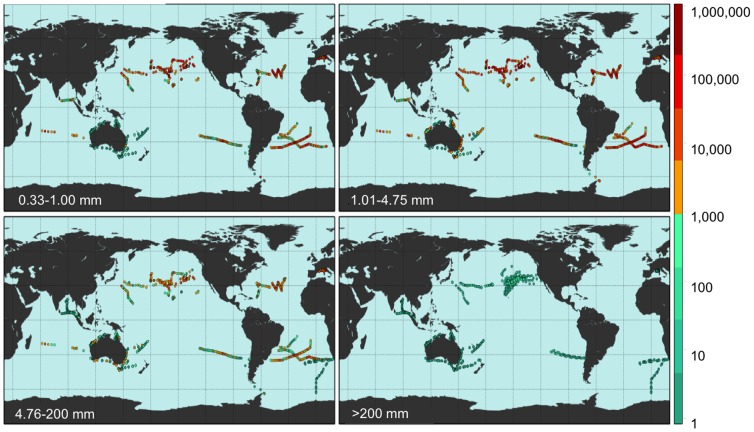
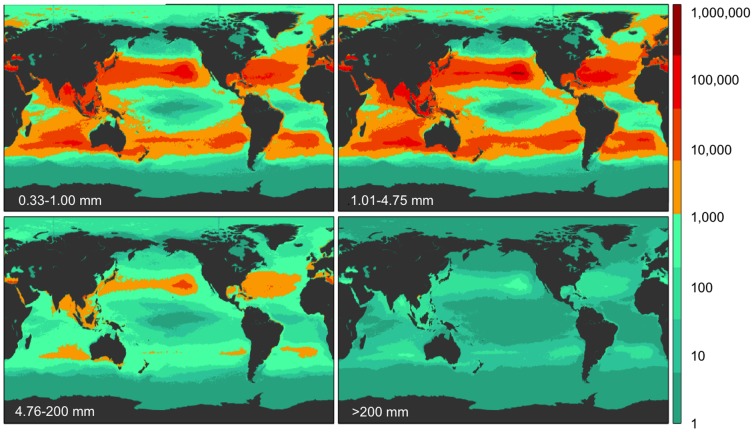
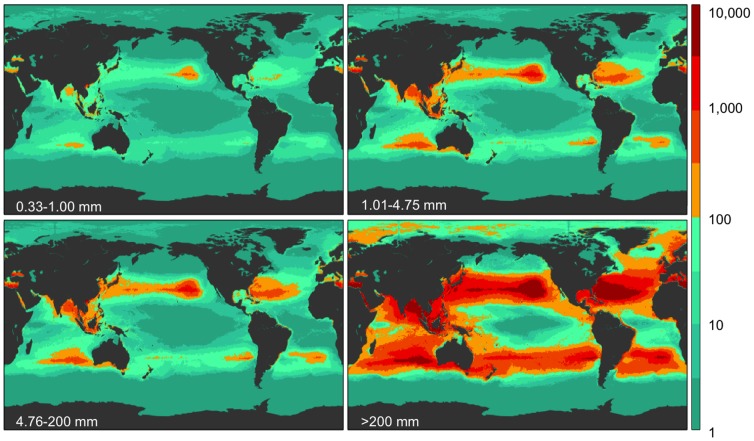
Plastic pollution is ubiquitous throughout the marine environment, yet estimates of the global abundance and weight of floating plastics have lacked data, particularly from the Southern Hemisphere and remote regions. Here we report an estimate of the total number of plastic particles and their weight floating in the world's oceans from 24 expeditions (2007-2013) across all five sub-tropical gyres, costal Australia, Bay of Bengal and the Mediterranean Sea conducting surface net tows (N = 680) and visual survey transects of large plastic debris (N = 891). Using an oceanographic model of floating debris dispersal calibrated by our data, and correcting for wind-driven vertical mixing, we estimate a minimum of 5.25 trillion particles weighing 268,940 tons. When comparing between four size classes, two microplastic <4.75 mm and meso- and macroplastic >4.75 mm, a tremendous loss of microplastics is observed from the sea surface compared to expected rates of fragmentation, suggesting there are mechanisms at play that remove <4.75 mm plastic particles from the ocean surface.
Overview
The claims and statistics of this paper haven’t been checked yet.
Free: it reads the open-access text and checks the first 5 claims that cite a source we can check. Create a free account to check every claim.
Integrity signals
Registry
Cites
Statistics
Figures
Verification
Claims the paper makes
The claims and statistics of this paper haven’t been checked yet.
Free: it reads the open-access text and checks the first 5 claims that cite a source we can check. Create a free account to check every claim.
Claims other papers make about this one
Each is checked against this paper’s own text: does it say what the citing paper says it does?
The source backs part of the claim, not all of it — or backs it for a different population, condition or comparison.
In the citing paper
“Measurements and model simulations revealed an uneven distribution of PMD, which complicates assessing global PMD inventories: highest PMD concentrations were found in the subtropical gyres (which have been termed 'trash vortexes' or 'garbage patches'), while PMD concentrations are much lower in the in the tropical and Arctic open ocean.51,53,54,[62][63][64]”
From The fate of plastic in the ocean environment – a minireview (2021) · cites this paper as [53]
Experimental — accuracy not yet measured
Self-check
Percentages, sums and reported differences re-computed from the paper’s own numbers.
The self-check needs the paper’s full text.
Citations
Cites
Lost at sea: where is all the plastic?
Thompson, R. C., Olsen, Y., Mitchell, R. P., Davis, A., Rowland, S. J., John, A. W. G., McGonigle, D., & Russell, A. E. (2004) · Science · doi:10.1126/science.1094559 · Cited by 7,765
Accumulation and fragmentation of plastic debris in global environments
Barnes, D. K. A., Galgani, F., Thompson, R. C., & Barlaz, M. (2009) · Philosophical Transactions of the Royal Society B: Biological Sciences · doi:10.1098/rstb.2008.0205 · Cited by 6,126 · cited 2×
“These include UV degradation, biodegradation, ingestion by organisms, decreased buoyancy due to fouling organisms, entrainment in settling detritus, and beaching [4].”
BackgroundSelf-citationHidalgo-Ruz, V., Gutow, L., Thompson, R. C., & Thiel, M. (2012) · Environmental Science & Technology · doi:10.1021/es2031505 · Cited by 5,440 · cited 2×
“33 mm, which is a commonly used lower limit for pelagic microplastics [31].”
BackgroundMethodSelf-citationLife in the “plastisphere”: microbial communities on plastic marine debris
Zettler, E. R., Mincer, T. J., & Amaral-Zettler, L. A. (2013) · Environmental Science & Technology · doi:10.1021/es401288x · Cited by 3,368 · cited 1×
“Furthermore, there is increasing evidence that some microbes can biodegrade microplastic particles [38–40].”
BackgroundPlastic debris in the open ocean
Cózar, A., Echevarría, F., González-Gordillo, J. I., Irigoien, X., Úbeda, B., Hernández-León, S., Palma, Á. T., Navarro, S., García-de-Lomas, J., Ruiz, A., et al. (2014) · Proceedings of the National Academy of Sciences · doi:10.1073/pnas.1314705111 · Cited by 3,133 · cited 4×
“Despite oceanographic model predictions of where debris might converge [24] estimates of regional and global abundance and weight of floating plastics have been limited to microplastics,5 mm [19, 25].”
BackgroundResultInfluentialTransport and release of chemicals from plastics to the environment and to wildlife
Teuten, E. L., Saquing, J. M., Knappe, D. R. U., Barlaz, M. A., Jonsson, S., Björn, A., Rowland, S. J., Thompson, R. C., Galloway, T. S., Yamashita, R., et al. (2009) · Philosophical Transactions of the Royal Society B: Biological Sciences · doi:10.1098/rstb.2008.0284 · Cited by 2,938 · cited 1×
“Adsorption of persistent organic pollutants onto plastic and their transfer into the tissues and organs through ingestion [15] is impacting marine megafauna [16] as well as lower trophic-level organisms [17, 18] and their predators [19, 20].”
BackgroundSelf-citationMicroplastic ingestion by zooplankton
Cole, M., Lindeque, P., Fileman, E., Halsband, C., Goodhead, R., Moger, J., & Galloway, T. S. (2013) · Environmental Science & Technology · doi:10.1021/es400663f · Cited by 2,763 · cited 2×
“In this manner, incorporation of smaller plastics into marine food chains could not only generate impacts on the health of the involved organisms [17–20], but also contribute to the removal of small microplastics from the sea surface [37].”
BackgroundLusher, A. L., McHugh, M., & Thompson, R. C. (2013) · Marine Pollution Bulletin · doi:10.1016/j.marpolbul.2012.11.028 · Cited by 2,075 · cited 1×
“via their prey organisms [34– 36].”
Plastic Resin Pellets as a Transport Medium for Toxic Chemicals in the Marine Environment
Mato, Y., Isobe, T., Takada, H., Kanehiro, H., Ohtake, C., & Kaminuma, T. (2001) · Environmental Science & Technology · doi:10.1021/es0010498 · Cited by 1,909 · cited 1×
“Plastic pollution is globally distributed across all oceans due to its properties of buoyancy and durability, and the sorption of toxicants to plastic while traveling through the environment [1, 2], have led some researchers to claim that synthetic polymers in the ocean should be regarded as hazardous waste [3].”
BackgroundGregory, M. R. (2009) · Philosophical Transactions of the Royal Society B: Biological Sciences · doi:10.1098/rstb.2008.0265 · Cited by 1,852 · cited 1×
“The impact of plastic pollution through ingestion and entanglement of marine fauna, ranging from zooplankton to cetaceans, seabirds and marine reptiles, are well documented [14].”
Background
Cited by
Items 701–800 of 1,035
Investigating the toxicities of different functionalized polystyrene nanoplastics on Daphnia magna
Lin, W., Jiang, R., Hu, S., Xiao, X., Wu, J., Wei, S., Xiong, Y., & Ouyang, G. (2019) · Ecotoxicology and Environmental Safety · doi:10.1016/j.ecoenv.2019.05.036 · Cited by 159
Auta, H. S., Abioye, O. P., Aransiola, S. A., Bala, J. D., Chukwuemeka, V. I., Hassan, A., Aziz, A., & Fauziah, S. H. (2021) · Journal of Environmental Management · doi:10.1016/j.jenvman.2021.114273 · Cited by 159
Kurniawan, T. A., Haider, A., Ahmad, H. M., Mohyuddin, A., Aslam, H. M. U., Nadeem, S., Javed, M., Othman, M. H. D., Goh, H. H., & Chew, K. W. (2023) · Chemosphere · doi:10.1016/j.chemosphere.2023.138367 · Cited by 159
RetractedBottles, bags, ropes and toothbrushes: the struggle to track ocean plastics
Cressey, D. (2016) · Nature · doi:10.1038/536263a · Cited by 159
Liu, J., Liang, J., Ding, J., Zhang, G., Zeng, X., Yang, Q., Zhu, B., & Gao, W. (2021) · Environment, Development and Sustainability · doi:10.1007/s10668-020-01173-3 · Cited by 158
“2011), the sea surface (Eriksen et al. 2014; Lebreton et al. 2018), deep-sea sediment (Sanchez-Vidal et al.”
BackgroundFood and human safety: the impact of microplastics
Kadac-Czapska, K., Knez, E., & Grembecka, M. (2024) · Critical Reviews in Food Science and Nutrition · doi:10.1080/10408398.2022.2132212 · Cited by 158
“In Ireland, it is estimated that 73% of deep-sea fish ingest plastic (Eriksen et al. 2014).”
BackgroundRecent advances on the transport of microplastics/nanoplastics in abiotic and biotic compartments
Huang, D., Chen, H., Shen, M., Tao, J., Chen, S., Yin, L., Zhou, W., Wang, X., Xiao, R., & Li, R. (2022) · Journal of Hazardous Materials · doi:10.1016/j.jhazmat.2022.129515 · Cited by 158
Eriksen, M., Liboiron, M., Kiessling, T., Charron, L., Alling, A., Lebreton, L., Richards, H., Roth, B., Ory, N. C., Hidalgo‐Ruz, V., et al. (2017) · Environmental Pollution · doi:10.1016/j.envpol.2017.09.058 · Cited by 161
“While estimates vary as to howmuch plastic ultimately reaches the oceans (Thompson, 2006; Eriksen et al., 2014; Jambeck et al., 2015), the amount is expected to grow over the next decades as production continues to increase.”
BackgroundMethodSelf-citationNapper, I. E., & Thompson, R. C. (2023) · Annual Review of Environment and Resources · doi:10.1146/annurev-environ-112522-072642 · Cited by 125
Microplastics in Fish and Shellfish – A Threat to Seafood Safety?
Gamarro, E. G., Ryder, J., Elvevoll, E. O., & Olsen, R. L. (2020) · Journal of Aquatic Food Product Technology · doi:10.1080/10498850.2020.1739793 · Cited by 159
“environmental problem, it has been estimated that about 5 trillion plastic pieces of different sizes weighing about 250,000 tons are floating in the oceans (Eriksen et al. 2014).”
BackgroundRoman, L., Schuyler, Q. A., Wilcox, C., & Hardesty, B. D. (2020) · Conservation Letters · doi:10.1111/conl.12781 · Cited by 159
“Large, whole debris items make up just a small percentage of total marine litter (Eriksen et al., 2014).”
BackgroundHuang, W., Wang, X., Chen, D., Xu, E. G., Luo, X. F., Zeng, J., Huan, T., Li, L., & Wang, Y. (2021) · Journal of Hazardous Materials · doi:10.1016/j.jhazmat.2021.126003 · Cited by 159
Plastic ingestion by fish in the Southern Hemisphere: A baseline study and review of methods
Cannon, S. M. E., Lavers, J. L., & Figueiredo, B. (2016) · Marine Pollution Bulletin · doi:10.1016/j.marpolbul.2016.03.057 · Cited by 157
Percentage of microbeads in pelagic microplastics within Japanese coastal waters
Isobe, A. (2016) · Marine Pollution Bulletin · doi:10.1016/j.marpolbul.2016.06.030 · Cited by 135
Johansen, M. P., Cresswell, T., Davis, J., Howard, D. L., Howell, N. R., & Prentice, E. (2019) · Water Research · doi:10.1016/j.watres.2019.04.029 · Cited by 148
Zhang, H., Pap, S., Taggart, M. A., Boyd, K. G., James, N. A., & Gibb, S. W. (2020) · Environmental Pollution · doi:10.1016/j.envpol.2019.113698 · Cited by 149
Storm Response of Fluvial Sedimentary Microplastics
Ockelford, A., Cundy, A. B., & Ebdon, J. (2020) · Scientific Reports · doi:10.1038/s41598-020-58765-2 · Cited by 156
Industrial water conservation by water footprint and sustainable development goals: a review
Weerasooriya, R. R., Liyanage, L., Rathnappriya, R. H. K., Bandara, W. B. M. A. C., Perera, T. A. N. T., Gunarathna, M. H. J. P., & Jayasinghe, G. Y. (2021) · Environment Development and Sustainability · doi:10.1007/s10668-020-01184-0 · Cited by 157
Sun, Q., Li, J., Wang, C., Chen, A., You, Y., Yang, S., Liu, H., Jiang, G., Wu, Y., & Li, Y. (2021) · Frontiers of Environmental Science & Engineering · doi:10.1007/s11783-021-1429-z · Cited by 156
“Areas with high MPs levels are the North Pacific Ocean and its marginal seas, such as in the western and southern coasts of Korea (Eriksen et al., 2014; Shim and Thomposon, 2015).”
BackgroundInfluentialA global perspective on microplastic bioaccumulation in marine organisms
Parolini, M., Stucchi, M., Ambrosini, R., & Romanò, A. (2023) · Ecological Indicators · doi:10.1016/j.ecolind.2023.110179 · Cited by 158
Editorial: Impacts of Marine Litter
Galgani, L., Beiras, R., Galgani, F., Panti, C., & Borja, Á. (2019) · Frontiers in Marine Science · doi:10.3389/fmars.2019.00208 · Cited by 156
“, 2015), contributing to an estimated total abundance of at least 5 trillion particles (Eriksen et al., 2014).”
BackgroundSelf-citationBenthic Crustacean Digestion Can Modulate the Environmental Fate of Microplastics in the Deep Sea
Cau, A., Avio, C. G., Dessì, C., Moccia, D., Pusceddu, A., Regoli, F., Cannas, R., & Follesa, M. C. (2020) · Environmental Science & Technology · doi:10.1021/acs.est.9b07705 · Cited by 155
The potential role of marine fungi in plastic degradation – a review
Zeghal, E., Vaksmaa, A., Vielfaure, H., Boekhout, T., & Niemann, H. (2021) · Frontiers in Marine Science · doi:10.3389/fmars.2021.738877 · Cited by 155
Oßmann, B. E., Sarau, G., Schmitt, S. W., Holtmannspötter, H., Christiansen, S. H., & Dicke, W. (2017) · Analytical and Bioanalytical Chemistry · doi:10.1007/s00216-017-0358-y · Cited by 156
Microplastics in Marine Food Webs
Setälä, O., Lehtiniemi, M., Coppock, R., & Cole, M. (2018) · Elsevier eBooks · doi:10.1016/b978-0-12-813747-5.00011-4 · Cited by 158
Huang, Y., Li, W., Gao, J., Wang, F., Yang, W., Han, L., Lin, D., Min, B., Zhi, Y., Grieger, K., et al. (2021) · Science of The Total Environment · doi:10.1016/j.scitotenv.2020.142133 · Cited by 149
A temporal record of microplastic pollution in Mediterranean seagrass soils
Dahl, M., Bergman, S., Björk, M., Díaz-Almela, E., Granberg, M., Gullström, M., Dueñas, C. L., Magnusson, K., Marco‐Méndez, C., Piñeiro‐Juncal, N., et al. (2021) · Environmental Pollution · doi:10.1016/j.envpol.2021.116451 · Cited by 155
Naidu, S. A., Rao, V. R., & Ramu, K. (2018) · Environmental Geochemistry and Health · doi:10.1007/s10653-017-0062-z · Cited by 156
“Because of the growing demand, usage pattern and production trends of plastics, the improper disposal of the plastic waste will lead to an increase in plastics debris in the oceans (Thompson et al. 2009; Eriksen et al. 2014).”
BackgroundFloating plastics in Adriatic waters (Mediterranean Sea): From the macro- to the micro-scale
Zeri, C., Adamopoulou, A., Varezić, D. B., Fortibuoni, T., Viršek, M. K., Kržan, A., Mandić, M., Mazziotti, C., Palatinus, A., Peterlin, M., et al. (2018) · Marine Pollution Bulletin · doi:10.1016/j.marpolbul.2018.09.016 · Cited by 156
Removal of >10 µm Microplastic Particles from Treated Wastewater by a Disc Filter
Simon, M., Vianello, A., & Vollertsen, J. (2019) · Water · doi:10.3390/w11091935 · Cited by 155
“3–5 mm-sized MPs floating in the world’s oceans alone is 7000–35,000 tons [5,6].”
BackgroundChew, K. W., Chia, S. R., Chia, W. Y., Cheah, W. Y., Munawaroh, H. S. H., & Ong, W.-J. (2021) · Environmental Pollution · doi:10.1016/j.envpol.2021.116836 · Cited by 138
Plastic pollution in water ecosystems: A bibliometric analysis from 2000 to 2020
Kasavan, S., Yusoff, S. B., Fakri, M. F. R., & Siron, R. (2021) · Journal of Cleaner Production · doi:10.1016/j.jclepro.2021.127946 · Cited by 154
Lagrangian Transport of Marine Litter in the Mediterranean Sea
Zambianchi, E., Trani, M., & Falco, P. (2017) · Frontiers in Environmental Science · doi:10.3389/fenvs.2017.00005 · Cited by 153
“Concern about marine litter has been rising in the last decades, triggered by the studies on the great mid-ocean garbage patches (Moore et al., 2001; Law et al., 2010; Lebreton et al., 2012; Maximenko et al., 2012; van Sebille et al., 2012; Eriksen et al., 2014; Cózar et al., 2015; van Sebille et al., 2015).”
BackgroundNewly emerging airborne pollutants: current knowledge of health impact of micro and nanoplastics
Facciolà, A., Visalli, G., Pruiti Ciarello, M., & Di Pietro, A. (2021) · International Journal of Environmental Research and Public Health · doi:10.3390/ijerph18062997 · Cited by 152
“It is estimated that more than 250,000 tons of plastic litter is floating in the oceans, having accumulated over time [4].”
BackgroundWoodall, L. C., Robinson, L. F., Rogers, A. D., Narayanaswamy, B. E., & PATERSON, G. L. J. (2015) · Frontiers in Marine Science · doi:10.3389/fmars.2015.00003 · Cited by 153
“, and Borrero, J. C. (2012). Numerical modelling”
BackgroundInfluentialNovel methods, new results and science-based solutions to tackle marine debris impacts on wildlife
Hardesty, B. D., Good, T. P., & Wilcox, C. (2015) · Ocean & Coastal Management · doi:10.1016/j.ocecoaman.2015.04.004 · Cited by 152
Rios Mendoza, L. M., & Jones, P. R. (2015) · Environmental Chemistry · doi:10.1071/en14236 · Cited by 138
Adhesion to coral surface as a potential sink for marine microplastics
Martin, C., Corona, E., Mahadik, G. A., & Duarte, C. M. (2019) · Environmental Pollution · doi:10.1016/j.envpol.2019.113281 · Cited by 152
Guo, X., & Wang, J. (2020) · Journal of Hazardous Materials · doi:10.1016/j.jhazmat.2020.123709 · Cited by 155
Huang, Y., Xiao, X., Effiong, K. S., Xu, C., Su, Z., Hu, J., Jiao, S., & Holmer, M. (2021) · Environmental Science & Technology · doi:10.1021/acs.est.0c07289 · Cited by 152
Hu, C. (2021) · Remote Sensing of Environment · doi:10.1016/j.rse.2021.112414 · Cited by 152
Plastic bag bans: Lessons from the Australian Capital Territory
Macintosh, A., Simpson, A., Neeman, T. M., & Dickson, K. (2019) · Resources Conservation and Recycling · doi:10.1016/j.resconrec.2019.104638 · Cited by 154
Quantifying impacts of plastic debris on marine wildlife identifies ecological breakpoints
Marn, N., Jusup, M., Kooijman, S. A. L. M., & Klanjšček, T. (2020) · Ecology Letters · doi:10.1111/ele.13574 · Cited by 151
Vidal, C., & Pasquini, C. (2021) · Environmental Pollution · doi:10.1016/j.envpol.2021.117251 · Cited by 151
Lozoya, J. P., de Mello, F. T., Carrizo, D., Weinstein, F., Olivera, Y., Cedrés, F., Pereira, M. D. L. S., & Fossati, M. (2016) · Environmental Pollution · doi:10.1016/j.envpol.2016.08.041 · Cited by 151
Phuong, N. N., Poirier, L., Lagarde, F., Kamari, A., & Zalouk‐Vergnoux, A. (2018) · Environmental Pollution · doi:10.1016/j.envpol.2018.08.032 · Cited by 151
Evangeliou, N., Tichý, O., Eckhardt, S., Zwaaftink, C. G., & Brahney, J. (2022) · Journal of Hazardous Materials · doi:10.1016/j.jhazmat.2022.128585 · Cited by 138
“Around 92% of these oceanic plastics are MPs (Auta et al., 2017; Eriksen et al., 2014), or 0.74 – 1.9 Tg y -1 ( < 5 mm).”
InfluentialHong, H., Ki, D., Seo, H., Park, J., Jang, J., & Kim, K. (2023) · Nature Communications · doi:10.1038/s41467-023-40233-w · Cited by 152
Ghosal, S., Chen, M., Wagner, J., Wang, Z.-M., & Wall, S. M. (2017) · Environmental Pollution · doi:10.1016/j.envpol.2017.10.014 · Cited by 149
Vered, G., Kaplan, A., Avisar, D., & Shenkar, N. (2019) · Marine Pollution Bulletin · doi:10.1016/j.marpolbul.2018.12.013 · Cited by 134
Macheca, A. D., Mutuma, B. K., Adalima, J. L., Midheme, E., Lucas, L. H. M., Ochanda, V. K., & Mhlanga, S. D. (2024) · Recycling · doi:10.3390/recycling9050077 · Cited by 150
Behavior of Microplastics in Coastal Zones
Chubarenko, I., Esiukova, E., Bagaev, A., Isachenko, I. A., Demchenko, N., Zobkov, M., Efimova, I., Bagaeva, M., & Khatmullina, L. (2018) · Elsevier eBooks · doi:10.1016/b978-0-12-813747-5.00006-0 · Cited by 148
Gore, P. M., Naebe, M., Wang, X., & Kandasubramanian, B. (2019) · Chemical Engineering Journal · doi:10.1016/j.cej.2019.05.163 · Cited by 148
Microplastic contamination in Auckland (New Zealand) beach sediments
Bridson, J. H., Patel, M., Lewis, A., Gaw, S., & Parker, K. (2020) · Marine Pollution Bulletin · doi:10.1016/j.marpolbul.2019.110867 · Cited by 147
The long-term legacy of plastic mass production
Hohn, S., Acevedo‐Trejos, E., Abrams, J. F., de Moura, J. F., Spranz, R., & Merico, A. (2020) · The Science of The Total Environment · doi:10.1016/j.scitotenv.2020.141115 · Cited by 148
Neto, J. A. B., Gaylarde, C. C., Beech, I. B., Bastos, A. C., Quaresma, V. D. S., & de Carvalho, D. G. (2019) · Ocean & Coastal Management · doi:10.1016/j.ocecoaman.2018.12.030 · Cited by 148
Plastic ingestion by fish: A global assessment
Azevedo-Santos, V. M., Gonçalves, G. R. L., Manoel, P. S., Andrade, M. C., de Lima, F. P., & Pelicice, F. M. (2019) · Environmental Pollution · doi:10.1016/j.envpol.2019.112994 · Cited by 149
Akanyange, S. N., Lyu, X., Zhao, X., Li, X., Zhang, Y., Crittenden, J. C., Anning, C., Chen, T., Jiang, T., & Zhao, H. (2021) · Science of The Total Environment · doi:10.1016/j.scitotenv.2021.146020 · Cited by 132
Microplastics, a Global Issue: Human Exposure through Environmental and Dietary Sources
Borriello, L., Scivicco, M., Cacciola, N. A., Esposito, F., Severino, L., & Cirillo, T. (2023) · Foods · doi:10.3390/foods12183396 · Cited by 150
Kroon, F., Motti, C., Talbot, S., Sobral, P., & Puotinen, M. (2018) · Environmental Pollution · doi:10.1016/j.envpol.2018.03.010 · Cited by 130
Organic contaminants sorbed to microplastics affect marine medaka fish early life stages development
Bihanic, F. L., Clérandeau, C., Cormier, B., Crebassa, J.-C., Keiter, S. H., Beiras, R., Morin, B., Bégout, M., Cousin, X., & Cachot, J. (2020) · Marine Pollution Bulletin · doi:10.1016/j.marpolbul.2020.111059 · Cited by 146
The fate of missing ocean plastics: Are they just a marine environmental problem?
Isobe, A., & Iwasaki, S. (2022) · The Science of The Total Environment · doi:10.1016/j.scitotenv.2022.153935 · Cited by 147
Heavy metal remediation from wastewater using microalgae: Recent advances and future trends
Priya, A. K., Jalil, A. A., Vadivel, S., Dutta, K., Rajendran, S., Fujii, M., & Soto-Moscoso, M. (2022) · Chemosphere · doi:10.1016/j.chemosphere.2022.135375 · Cited by 132
Tata, T., Belabed, B. E., Bououdina, M., & Bellucci, S. (2020) · The Science of The Total Environment · doi:10.1016/j.scitotenv.2020.136664 · Cited by 146
Olivelli, A., Hardesty, B. D., & Wilcox, C. (2020) · Environmental Research Letters · doi:10.1088/1748-9326/ab7836 · Cited by 145
“Different model estimates show that the amount of plastic particles afloat on the surface of the ocean is more than 5 trillion pieces (Eriksen et al 2014), ranging between 15 and 51 trillion pieces weighing between 96 and 236 thousand metric tonnes (Van Sebille et al 2015).”
BackgroundHong, Y., Wu, S., & Wei, G. (2023) · The Science of The Total Environment · doi:10.1016/j.scitotenv.2023.166258 · Cited by 146
Microplastics pollution in the marine environment: A review of sources, impacts and mitigation
Kushwaha, M., Shankar, S., Goel, D., Singh, S., Rahul, J., Rachna, K., & Singh, J. (2024) · Marine Pollution Bulletin · doi:10.1016/j.marpolbul.2024.117109 · Cited by 145
Wang, S., Liu, M., Wang, J., Jingshan, H., & Wang, J. (2020) · Marine Pollution Bulletin · doi:10.1016/j.marpolbul.2020.111403 · Cited by 144
Human exposure to microplastics: A review on exposure routes and public health impacts
Nawab, A., Ahmad, M., Khan, M. T., Nafees, M., Khan, I., & Ihsanullah, I. (2024) · Journal of Hazardous Materials Advances · doi:10.1016/j.hazadv.2024.100487 · Cited by 148
Veiga, J. M., Vlachogianni, T., Pahl, S., Thompson, R. C., Köpke, K., Doyle, T. K., Hartley, B. L., Maes, T., Orthodoxou, D., Loizidou, X. I., et al. (2016) · Marine Pollution Bulletin · doi:10.1016/j.marpolbul.2016.01.031 · Cited by 143
Initial data on adsorption of Cs and Sr to the surfaces of microplastics with biofilm
Johansen, M. P., Prentice, E., Cresswell, T., & Howell, N. (2018) · Journal of Environmental Radioactivity · doi:10.1016/j.jenvrad.2018.05.001 · Cited by 138
Microplastic pollution on Caribbean beaches in the Lesser Antilles
Bosker, T., Guaita, L., & Behrens, P. (2018) · Marine Pollution Bulletin · doi:10.1016/j.marpolbul.2018.05.060 · Cited by 143
Microplastics in the surface water of small-scale estuaries in Shanghai
Zhang, J., Zhang, C., Deng, Y., Wang, R., Ma, E., Wang, J., Bai, J., Wu, J. L., & Zhou, Y. (2019) · Marine Pollution Bulletin · doi:10.1016/j.marpolbul.2019.110569 · Cited by 143
Cooperative recyclable magnetic microsubmarines for oil and microplastics removal from water
Sun, M., Chen, W., Fan, X., Tian, C., Sun, L., & Xie, H. (2020) · Applied Materials Today · doi:10.1016/j.apmt.2020.100682 · Cited by 143
Ronkay, F., Molnar, B., Gere, D., & Czigany, T. (2021) · Waste Management · doi:10.1016/j.wasman.2020.09.029 · Cited by 129
Li, W., Wang, Z., Li, W., & Li, Z. (2022) · Chemosphere · doi:10.1016/j.chemosphere.2022.135836 · Cited by 143
Ambrose, K. K., Box, C., Boxall, J. C., Brooks, A., Eriksen, M., Fabrés, J., Fylakis, G., & Walker, T. R. (2019) · Marine Pollution Bulletin · doi:10.1016/j.marpolbul.2019.03.036 · Cited by 142
“Eriksen et al. (2014) estimated 5.25 trillion plastic particles are afloat at sea, mainly consisting of fragmented plastic (< 5mm) known as microplastics.”
BackgroundSelf-citationMicroplastic ingestion and diet composition of planktivorous fish
Lopes, C., Raimundo, J., Caetano, M., & Garrido, S. (2020) · Limnology and Oceanography Letters · doi:10.1002/lol2.10144 · Cited by 129
Adeogun, A. O., Ibor, O. R., Khan, E. A., Chukwuka, A. V., Omogbemi, E. D., & Arukwe, A. (2020) · Environmental Science and Pollution Research · doi:10.1007/s11356-020-09031-5 · Cited by 144
“Some authors have reported that an estimated five trillion plastics are floating particles on the ocean surface (Eriksen et al. 2014; PlasticsEurope 2016, 2017).”
BackgroundBorges-Ramírez, M. M., Mendoza-Franco, E. F., Escalona-Segura, G., & Osten, J. R.-V. (2020) · Environmental Pollution · doi:10.1016/j.envpol.2020.115659 · Cited by 120
Overview of global status of plastic presence in marine vertebrates
López‐Martínez, S., Morales‐Caselles, C., Kadar, J., & Rivas, M. L. (2020) · Global Change Biology · doi:10.1111/gcb.15416 · Cited by 143
“Eriksen et al. (2014) estimated that there are 268,940 t of floating particles of plastic in the world's oceans, and recently, it was confirmed that the highest concentrations of 1CECOUAL Scientific Collection Centre, University of Almería, Almería, Spain 2CEIMAR Marine Campus of International…”
BackgroundRisk posed by microplastics: Scientific evidence and public perception
Catarino, A. I., Kramm, J., Völker, C., Henry, T. B., & Everaert, G. (2021) · Current Opinion in Green and Sustainable Chemistry · doi:10.1016/j.cogsc.2021.100467 · Cited by 144
Mincer, T. J., Zettler, E. R., & Amaral-Zettler, L. A. (2016) · The Handbook of Environmental Chemistry · doi:10.1007/698_2016_12 · Cited by 99
Uzun, P., Farazande, S., & Güven, B. (2021) · Chemosphere · doi:10.1016/j.chemosphere.2021.132517 · Cited by 141
Molded fiber and pulp products as green and sustainable alternatives to plastics: A mini review
Zhang, Y., Duan, C., Bokka, S. K., He, Z., & Ni, Y. (2022) · Journal of Bioresources and Bioproducts · doi:10.1016/j.jobab.2021.10.003 · Cited by 141
Distribution characteristics of microplastics in surface and subsurface Antarctic seawater
Zhang, S., Zhang, W., Ju, M., Qu, L., Chu, X., Huo, C., & Wang, J. (2022) · The Science of The Total Environment · doi:10.1016/j.scitotenv.2022.156051 · Cited by 143
Talukdar, A., Bhattacharya, S., Bandyopadhyay, A., & Dey, A. (2023) · The Science of The Total Environment · doi:10.1016/j.scitotenv.2023.162495 · Cited by 142
Syranidou, E., Karkanorachaki, K., Amorotti, F., Repouskou, E., Kroll, K., Kolvenbach, B., Corvini, P. F.-X., Fava, F., & Kalogerakis, N. (2017) · PLOS ONE · doi:10.1371/journal.pone.0183984 · Cited by 130
Polystyrene microbeads modulate the energy metabolism of the marine diatom Chaetoceros neogracile
Seoane, M., González-Fernández, C., Soudant, P., Huvet, A., Esperanza, M., Cid, Á., & Paul-Pont, I. (2019) · Environmental Pollution · doi:10.1016/j.envpol.2019.04.142 · Cited by 135
Microplastics in freshwater systems: A review of classification, sources, and environmental impacts
Bexeitova, K., Baimenov, A., Varol, E. A., Kudaibergenov, K., Zhantikeyev, U., Sailaukhanuly, Y., Toshtay, K., Тауанов, Ж. Т., Азат, С., & Berndtsson, R. (2024) · Chemical Engineering Journal Advances · doi:10.1016/j.ceja.2024.100649 · Cited by 143
Sea surface microplastics in Slovenian part of the Northern Adriatic
Gajšt, T., Bizjak, T., Palatinus, A., Liubartseva, S., & Kržan, A. (2016) · Marine Pollution Bulletin · doi:10.1016/j.marpolbul.2016.10.031 · Cited by 140
“According to the global assessment by Eriksen et al. (2014), 250 thousand tons of plastics are floating at sea.”
BackgroundCollected marine litter — A growing waste challenge
Schneider, F., Parsons, S., Clift, S. E., Stolte, A., & McManus, M. C. (2018) · Marine Pollution Bulletin · doi:10.1016/j.marpolbul.2018.01.011 · Cited by 140
“419 Di Beneditto, A. P., and Awabdi, D. R. (2014).”
InfluentialCourtene-Jones, W., Quinn, B., Ewins, C., Gary, S. F., & Narayanaswamy, B. E. (2019) · Environmental Pollution · doi:10.1016/j.envpol.2018.10.090 · Cited by 118
Lefebvre, C., Saraux, C., Heitz, O., Nowaczyk, A., & Bonnet, D. (2019) · Marine Pollution Bulletin · doi:10.1016/j.marpolbul.2019.03.025 · Cited by 142
“While some accumulation zones around the oceanic gyres such as the 7 continent in the 83 North Pacific Ocean are now regrettably infamous (Eriksen et al., 2014), our knowledge on other 84 areas is still very scarce.”
BackgroundInfluentialGlobal marine litter research 2015–2020: Geographical and methodological trends
Haarr, M. L., Falk‐Andersson, J., & Fabrés, J. (2022) · The Science of The Total Environment · doi:10.1016/j.scitotenv.2022.153162 · Cited by 140
The evolving global plastics policy landscape: An inventory and effectiveness review
Diana, Z., Vegh, T., Karasik, R., Bering, J., Caldas, J. D. L., Pickle, A., Rittschof, D., Lau, W. W. Y., & Virdin, J. (2022) · Environmental Science & Policy · doi:10.1016/j.envsci.2022.03.028 · Cited by 139
Schmidt, L. K., Bochow, M., Imhof, H. K., & Oswald, S. E. (2018) · Environmental Pollution · doi:10.1016/j.envpol.2018.03.097 · Cited by 141
Consoli, P., Romeo, T., Angiolillo, M., Canese, S., Esposito, V., Salvati, E., Scotti, G., Andaloro, F., & Tunesi, L. (2019) · Environmental Pollution · doi:10.1016/j.envpol.2019.03.072 · Cited by 138
Ruggero, F., Gori, R., & Lubello, C. (2020) · Journal of Polymers and the Environment · doi:10.1007/s10924-019-01644-3 · Cited by 139
Li, C., Wang, X., Liu, K., Zhu, L., Wei, N., Zong, C., & Li, D. (2020) · The Science of The Total Environment · doi:10.1016/j.scitotenv.2020.142629 · Cited by 138
Metadata
- Authors
- Eriksen, M., Lebreton, L. C. M., Carson, H. S., Thiel, M., Moore, C. J., Borerro, J. C., Galgani, F., Ryan, P. G., & Reisser, J.
- Affiliations
- University of Hawaii at Hilo (US)
- University of Cape Town (ZA)
- Corresponding author
- Eriksen, Marcus
- Venue
- PLoS ONE
- Publisher
- Public Library of Science (PLoS)
- Published
- 2014-12-10
- Volume
- 9
- Issue
- 12
- Pages
- e111913
- ISSN
- 1932-6203 (ISSN-L)
- PMC
- PMC4262196
- OpenAlex
- W2130707940
- Cited by
- 4,710
- References
- 43
- Citations by year
- 2026: 255 · 2025: 425 · 2024: 499 · 2023: 585 · 2022: 598 · 2021: 648 · 2020: 531 · 2019: 419 · 2018: 308 · 2017: 200 · 2016: 149 · 2015: 86 · 2014: 4
- FWCI
- 103.05
- Type
- journal article
- Language
- en
- Open access
- gold
- doi.org
- Licence
- Locations
- PLoS ONE (publishedVersion, public-domain)
- PubMed Central (publishedVersion, public-domain)
- UWA Profiles and Research Repository (UWA) (publishedVersion, public-domain)
- PubMed (publishedVersion)
- HAL (submittedVersion)
- Institutional Archive of Ifremer (French Research Institute for Exploitation of the Sea) (submittedVersion, other-oa)
- DOAJ (DOAJ: Directory of Open Access Journals) (submittedVersion, cc-by-sa)
- Figshare (submittedVersion, cc-by)
- Open University of Cape Town (University of Cape Town) (submittedVersion, cc-by)
- Funders
- Commonwealth Scientific and Industrial Research Organisation
- National Oceanic and Atmospheric Administration
- Topics
- Physical Sciences › Environmental Science › Pollution › Microplastics and Plastic Pollution
- Physical Sciences › Environmental Science › Pollution › Oil Spill Detection and Mitigation
- Physical Sciences › Earth and Planetary Sciences › Oceanography › Marine Plankton and Biogeochemistry
- Keywords
- plastic pollution, marine plastic debris, microplastics, mesoplastics, macroplastics, plastic fragmentation, Southern Hemisphere, Bay of Bengal, Mediterranean Sea
- MeSH terms
- Models, Theoretical, Oceans and Seas, Plastics, Water Pollution, Wind, Linear Models, Hydrodynamics
About these checks
Registry, retraction, Cites and statistics results are computed, not judged, with one exception: a printed reference that no index lists is read once by a model before it counts as a citation error. Claims are extracted by a model and kept only when their quote appears verbatim in the text; each cited source is then checked, with a model’s help, for whether it says what the claim relies on. Those verdicts can be wrong — read the claim’s quote and the cited source before relying on one.
Statistics and arithmetic are recomputed, not judged.
Confidence bands are shown only for fields calibrated on our annotated test set. None is calibrated yet, so no band is shown.
What counts as a claim ›How we measure confidence ›How we check this ›
Are you an author, or do you see a problem with this page? Request a review
Data sources
Bibliographic data: Semantic Scholar, OpenAlex, Crossref.
Contains information from the Semantic Scholar Academic Graph Datasets, made available under the ODC Attribution License (ODC-BY 1.0).
Semantic Scholar’s data is described in: Kinney, R., et al. (2023). The Semantic Scholar Open Data Platform. arXiv:2301.10140.
