

Plastic pollution in the world’s oceans: more than 5 trillion plastic pieces weighing over 250,000 tons afloat at sea
Open accessThe DOI matches its Crossref record; 43 of the 43 references it cites were found in a registry or an index.
Abstract
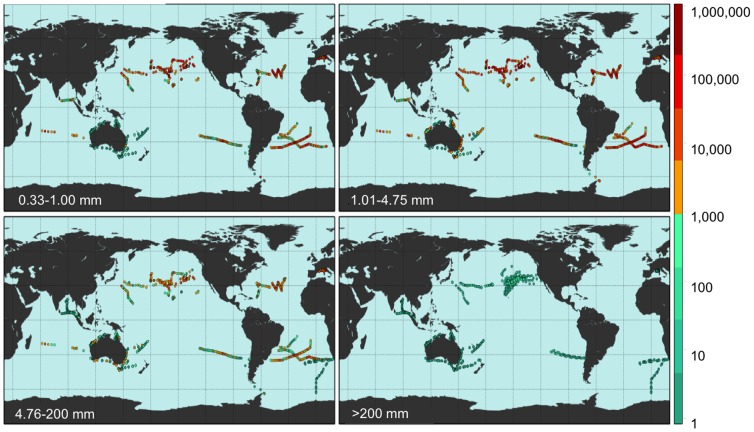
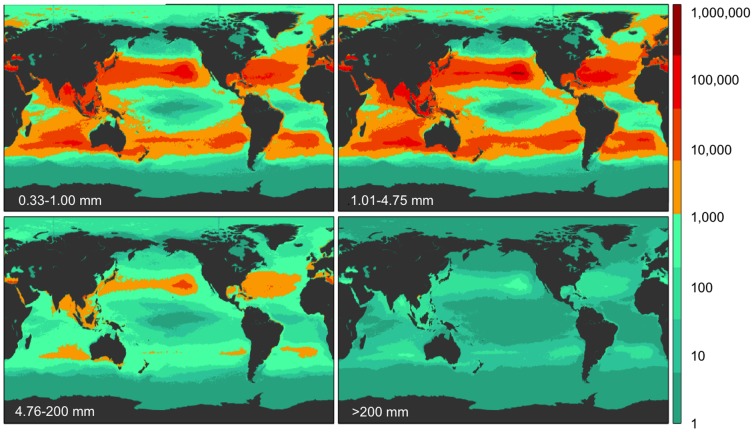
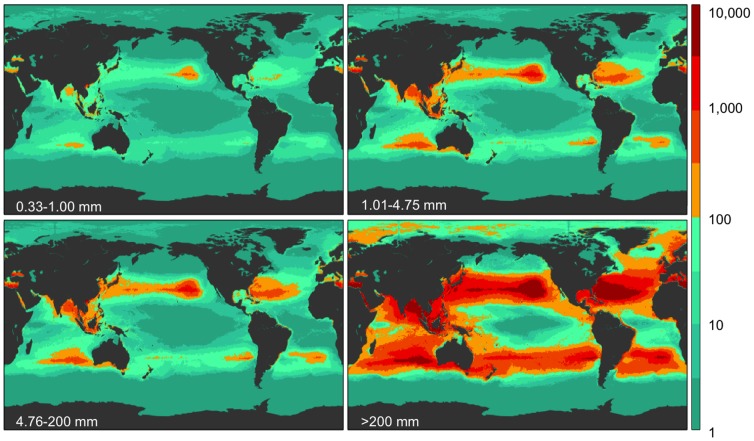
Plastic pollution is ubiquitous throughout the marine environment, yet estimates of the global abundance and weight of floating plastics have lacked data, particularly from the Southern Hemisphere and remote regions. Here we report an estimate of the total number of plastic particles and their weight floating in the world's oceans from 24 expeditions (2007-2013) across all five sub-tropical gyres, costal Australia, Bay of Bengal and the Mediterranean Sea conducting surface net tows (N = 680) and visual survey transects of large plastic debris (N = 891). Using an oceanographic model of floating debris dispersal calibrated by our data, and correcting for wind-driven vertical mixing, we estimate a minimum of 5.25 trillion particles weighing 268,940 tons. When comparing between four size classes, two microplastic <4.75 mm and meso- and macroplastic >4.75 mm, a tremendous loss of microplastics is observed from the sea surface compared to expected rates of fragmentation, suggesting there are mechanisms at play that remove <4.75 mm plastic particles from the ocean surface.
Overview
The claims and statistics of this paper haven’t been checked yet.
Free: it reads the open-access text and checks the first 5 claims that cite a source we can check. Create a free account to check every claim.
Integrity signals
Registry
Cites
Statistics
Figures
Verification
Claims the paper makes
The claims and statistics of this paper haven’t been checked yet.
Free: it reads the open-access text and checks the first 5 claims that cite a source we can check. Create a free account to check every claim.
Claims other papers make about this one
Each is checked against this paper’s own text: does it say what the citing paper says it does?
The source backs part of the claim, not all of it — or backs it for a different population, condition or comparison.
In the citing paper
“Measurements and model simulations revealed an uneven distribution of PMD, which complicates assessing global PMD inventories: highest PMD concentrations were found in the subtropical gyres (which have been termed 'trash vortexes' or 'garbage patches'), while PMD concentrations are much lower in the in the tropical and Arctic open ocean.51,53,54,[62][63][64]”
From The fate of plastic in the ocean environment – a minireview (2021) · cites this paper as [53]
Experimental — accuracy not yet measured
Self-check
Percentages, sums and reported differences re-computed from the paper’s own numbers.
The self-check needs the paper’s full text.
Citations
Cites
Lost at sea: where is all the plastic?
Thompson, R. C., Olsen, Y., Mitchell, R. P., Davis, A., Rowland, S. J., John, A. W. G., McGonigle, D., & Russell, A. E. (2004) · Science · doi:10.1126/science.1094559 · Cited by 7,765
Accumulation and fragmentation of plastic debris in global environments
Barnes, D. K. A., Galgani, F., Thompson, R. C., & Barlaz, M. (2009) · Philosophical Transactions of the Royal Society B: Biological Sciences · doi:10.1098/rstb.2008.0205 · Cited by 6,126 · cited 2×
“These include UV degradation, biodegradation, ingestion by organisms, decreased buoyancy due to fouling organisms, entrainment in settling detritus, and beaching [4].”
BackgroundSelf-citationHidalgo-Ruz, V., Gutow, L., Thompson, R. C., & Thiel, M. (2012) · Environmental Science & Technology · doi:10.1021/es2031505 · Cited by 5,440 · cited 2×
“33 mm, which is a commonly used lower limit for pelagic microplastics [31].”
BackgroundMethodSelf-citationLife in the “plastisphere”: microbial communities on plastic marine debris
Zettler, E. R., Mincer, T. J., & Amaral-Zettler, L. A. (2013) · Environmental Science & Technology · doi:10.1021/es401288x · Cited by 3,368 · cited 1×
“Furthermore, there is increasing evidence that some microbes can biodegrade microplastic particles [38–40].”
BackgroundPlastic debris in the open ocean
Cózar, A., Echevarría, F., González-Gordillo, J. I., Irigoien, X., Úbeda, B., Hernández-León, S., Palma, Á. T., Navarro, S., García-de-Lomas, J., Ruiz, A., et al. (2014) · Proceedings of the National Academy of Sciences · doi:10.1073/pnas.1314705111 · Cited by 3,133 · cited 4×
“Despite oceanographic model predictions of where debris might converge [24] estimates of regional and global abundance and weight of floating plastics have been limited to microplastics,5 mm [19, 25].”
BackgroundResultInfluentialTransport and release of chemicals from plastics to the environment and to wildlife
Teuten, E. L., Saquing, J. M., Knappe, D. R. U., Barlaz, M. A., Jonsson, S., Björn, A., Rowland, S. J., Thompson, R. C., Galloway, T. S., Yamashita, R., et al. (2009) · Philosophical Transactions of the Royal Society B: Biological Sciences · doi:10.1098/rstb.2008.0284 · Cited by 2,938 · cited 1×
“Adsorption of persistent organic pollutants onto plastic and their transfer into the tissues and organs through ingestion [15] is impacting marine megafauna [16] as well as lower trophic-level organisms [17, 18] and their predators [19, 20].”
BackgroundSelf-citationMicroplastic ingestion by zooplankton
Cole, M., Lindeque, P., Fileman, E., Halsband, C., Goodhead, R., Moger, J., & Galloway, T. S. (2013) · Environmental Science & Technology · doi:10.1021/es400663f · Cited by 2,763 · cited 2×
“In this manner, incorporation of smaller plastics into marine food chains could not only generate impacts on the health of the involved organisms [17–20], but also contribute to the removal of small microplastics from the sea surface [37].”
BackgroundLusher, A. L., McHugh, M., & Thompson, R. C. (2013) · Marine Pollution Bulletin · doi:10.1016/j.marpolbul.2012.11.028 · Cited by 2,075 · cited 1×
“via their prey organisms [34– 36].”
Plastic Resin Pellets as a Transport Medium for Toxic Chemicals in the Marine Environment
Mato, Y., Isobe, T., Takada, H., Kanehiro, H., Ohtake, C., & Kaminuma, T. (2001) · Environmental Science & Technology · doi:10.1021/es0010498 · Cited by 1,909 · cited 1×
“Plastic pollution is globally distributed across all oceans due to its properties of buoyancy and durability, and the sorption of toxicants to plastic while traveling through the environment [1, 2], have led some researchers to claim that synthetic polymers in the ocean should be regarded as hazardous waste [3].”
BackgroundGregory, M. R. (2009) · Philosophical Transactions of the Royal Society B: Biological Sciences · doi:10.1098/rstb.2008.0265 · Cited by 1,852 · cited 1×
“The impact of plastic pollution through ingestion and entanglement of marine fauna, ranging from zooplankton to cetaceans, seabirds and marine reptiles, are well documented [14].”
Background
Cited by
Items 301–400 of 1,035
Wu, F., Wang, Y., Leung, J. Y. S., Huang, W., Zeng, J., Tang, Y., Chen, J., Shi, A., Yu, X., Xu, X., et al. (2020) · Science of The Total Environment · doi:10.1016/j.scitotenv.2019.135432 · Cited by 316
The Colors of the Ocean Plastics
Martí, E., Martin, C., Galli, M., Echevarría, F., Duarte, C. M., & Cózar, A. (2020) · Environmental Science & Technology · doi:10.1021/acs.est.9b06400 · Cited by 316
Microplastics in aquatic environment: Challenges and perspectives
Vivekanand, A. C., Mohapatra, S., & Tyagi, V. K. (2021) · Chemosphere · doi:10.1016/j.chemosphere.2021.131151 · Cited by 316
Zhao, S., Danley, M., Ward, J. E., Li, D., & Mincer, T. J. (2017) · Analytical Methods · doi:10.1039/c6ay02302a · Cited by 315
Occurrence and amount of microplastic ingested by fishes in watersheds of the Gulf of Mexico
Phillips, M. B., & Bonner, T. H. (2015) · Marine Pollution Bulletin · doi:10.1016/j.marpolbul.2015.08.041 · Cited by 314
Zhao, S., Wang, T., Zhu, L., Xu, P., Wang, X., Gao, L., & Li, D. (2019) · Water Research · doi:10.1016/j.watres.2019.06.019 · Cited by 312
Critchell, K., & Hoogenboom, M. O. (2018) · PLOS ONE · doi:10.1371/journal.pone.0193308 · Cited by 310
Vendel, A. L., Bessa, F., Alves, V. E. N., Amorim, A. L. A., Patrício, J., & Palma, A. R. T. (2017) · Marine Pollution Bulletin · doi:10.1016/j.marpolbul.2017.01.081 · Cited by 310
Alfaro-Núñez, A., Astorga, D., Cáceres-Farías, L., Bastidas, L., Soto Villegas, C., Macay, K., & Christensen, J. H. (2021) · Scientific Reports · doi:10.1038/s41598-021-85939-3 · Cited by 309
Analysis, Occurrence, and Degradation of Microplastics in the Aqueous Environment
Klein, S., Dimzon, I. K., Eubeler, J., & Knepper, T. P. (2018) · The Handbook of Environmental Chemistry · doi:10.1007/978-3-319-61615-5_3 · Cited by 308
“This precludes misidentifications of microplastics with fragile carbon or carbonate particles that break during the test and are not removed or formed during the sample treatment [33].”
BackgroundThe distribution of subsurface microplastics in the ocean
Zhao, S., Kvale, K. F., Zhu, L., Zettler, E. R., Egger, M., Mincer, T. J., Amaral-Zettler, L. A., Lebreton, L., Niemann, H., Nakajima, R., et al. (2025) · Nature · doi:10.1038/s41586-025-08818-1 · Cited by 307
“The accumulation of large microplastics at 1–60-m depths at mid-latitudes matches plastic convergence zones observed by surface net tows 89–91 and global models 92–94 , suggesting that these zones extend deeper.”
Self-citationToward the Integrated Marine Debris Observing System
Maximenko, N., Corradi, P., Law, K. L., Van Sebille, E., Garaba, S. P., Lampitt, R. S., Galgani, F., Martinez-Vicente, V., Goddijn-Murphy, L., Veiga, J. M., et al. (2019) · Frontiers in Marine Science · doi:10.3389/fmars.2019.00447 · Cited by 306
Self-citationBacterial Candidates for Colonization and Degradation of Marine Plastic Debris
Roager, L., & Sonnenschein, E. C. (2019) · Environmental Science & Technology · doi:10.1021/acs.est.9b02212 · Cited by 305
Seabirds, gyres and global trends in plastic pollution
van Franeker, J. A., & Law, K. L. (2015) · Environmental Pollution · doi:10.1016/j.envpol.2015.02.034 · Cited by 305
“Eriksen et al. (2014) estimated that around 270.000 tons of micro- and macro plastic debris floats in the global oceans.”
InfluentialCapitalismo e colapso ambiental
Marques, L. (2018) · Editora da Unicamp eBooks · doi:10.7476/9788526815032 · Cited by 304
Kim, S.-K., Kim, J.-S., Lee, H., & Lee, H.-J. (2021) · Journal of Hazardous Materials · doi:10.1016/j.jhazmat.2020.123997 · Cited by 303
Prata, J. C., Lavorante, B. R. B. O., B.S.M. Montenegro, M. D. C., & Guilhermino, L. (2018) · Aquatic Toxicology · doi:10.1016/j.aquatox.2018.02.015 · Cited by 303
Danopoulos, E., Jenner, L. C., Twiddy, M., & Rotchell, J. M. (2020) · Environmental Health Perspectives · doi:10.1289/ehp7171 · Cited by 302
Plastic waste as pyrolysis feedstock for plastic oil production: A review
Chang, S. H. (2023) · Science of The Total Environment · doi:10.1016/j.scitotenv.2023.162719 · Cited by 302
Conversion and removal strategies for microplastics in wastewater treatment plants and landfills
Hou, L., Kumar, D., Yoo, C. G., Gitsov, I., & Majumder, E. L.-W. (2021) · Chemical Engineering Journal · doi:10.1016/j.cej.2020.126715 · Cited by 302
Miller, R. Z., Watts, A. J. R., Winslow, B. O., Galloway, T. S., & Barrows, A. P. W. (2017) · Marine Pollution Bulletin · doi:10.1016/j.marpolbul.2017.07.028 · Cited by 301
Park, E.-J., Han, J.-S., Park, E.-J., Seong, E., Lee, G.-H., Kim, D.-W., Son, H.-Y., Han, H.-Y., & Lee, B.-S. (2020) · Toxicology Letters · doi:10.1016/j.toxlet.2020.01.008 · Cited by 301
Making sense of microplastics? Public understandings of plastic pollution
Henderson, L., & Green, C. (2020) · Marine Pollution Bulletin · doi:10.1016/j.marpolbul.2020.110908 · Cited by 300
Rainfall is a significant environmental factor of microplastic pollution in inland waters
Xia, W., Rao, Q., Deng, X., Chen, J., & Xie, P. (2020) · Science of The Total Environment · doi:10.1016/j.scitotenv.2020.139065 · Cited by 299
Global mass of buoyant marine plastics dominated by large long-lived debris
Kaandorp, M. L. A., Lobelle, D., Kehl, C., Dijkstra, H. A., & van Sebille, E. (2023) · Nature Geoscience · doi:10.1038/s41561-023-01216-0 · Cited by 297
Biofilm alters tetracycline and copper adsorption behaviors onto polyethylene microplastics
Wang, Y., Wang, X., Li, Y., Li, J., Wang, F., Xia, S., & Zhao, J. (2020) · Chemical Engineering Journal · doi:10.1016/j.cej.2019.123808 · Cited by 296
Mediterranean marine biodiversity under threat: Reviewing influence of marine litter on species
Deudero, S., & Alomar, C. (2015) · Marine Pollution Bulletin · doi:10.1016/j.marpolbul.2015.07.012 · Cited by 295
Nanoplastics impaired oyster free living stages, gametes and embryos
Tallec, K., Huvet, A., Di Poi, C., González-Fernández, C., Lambert, C., Petton, B., Le Goïc, N., Berchel, M., Soudant, P., & Paul-Pont, I. (2018) · Environmental Pollution · doi:10.1016/j.envpol.2018.08.020 · Cited by 295
Pedrotti, M. L., Petit, S., Elineau, A., Bruzaud, S., Crebassa, J.-C., Dumontet, B., Martí, E., Gorsky, G., & Cózar, A. (2016) · PLOS ONE · doi:10.1371/journal.pone.0161581 · Cited by 294
Sorption of antibiotics onto aged microplastics in freshwater and seawater
Guo, X., & Wang, J. (2019) · Marine Pollution Bulletin · doi:10.1016/j.marpolbul.2019.110511 · Cited by 294
Collard, F., Gilbert, B., Eppe, G., Parmentier, E., & Das, K. (2015) · Archives of Environmental Contamination and Toxicology · doi:10.1007/s00244-015-0221-0 · Cited by 293
“It also is known that MP are widespread in the marine environment (Cózar et al. 2014; Eriksen et al. 2014; Law and Thompson 2014).”
BackgroundLiu, Z., Yu, P., Cai, M., Wu, D., Zhang, M., Huang, Y., & Zhao, Y. (2019) · Chemosphere · doi:10.1016/j.chemosphere.2018.09.176 · Cited by 293
Microplastic pollution in surface water of Lake Victoria
Egessa, R., Nankabirwa, A., Ocaya, H., & Pabire, W. G. (2020) · Science of The Total Environment · doi:10.1016/j.scitotenv.2020.140201 · Cited by 293
Song, Y. K., Hong, S. H., Jang, M., Han, G. M., & Shim, W. J. (2015) · Archives of Environmental Contamination and Toxicology · doi:10.1007/s00244-015-0209-9 · Cited by 291
Waldschläger, K., Lechthaler, S., Stauch, G., & Schüttrumpf, H. (2020) · Science of The Total Environment · doi:10.1016/j.scitotenv.2020.136584 · Cited by 291
Bour, A., Avio, C. G., Gorbi, S., Regoli, F., & Hylland, K. (2018) · Environmental Pollution · doi:10.1016/j.envpol.2018.09.115 · Cited by 290
Abundance and characteristics of microplastics in commercial marine fish from Malaysia
Karbalaei, S., Golieskardi, A., Hamzah, H. B., Abdulwahid, S., Hanachi, P., Walker, T. R., & Karami, A. (2019) · Marine Pollution Bulletin · doi:10.1016/j.marpolbul.2019.07.072 · Cited by 290
“4%) which is in agreement with the widespread distribution of this type of plastic debris in the marine environment (Eriksen et al., 2014).”
BackgroundKumar, R., Sharma, P., Verma, A., Jha, P. K., Singh, P., Gupta, P. K., Chandra, R., & Prasad, P. V. V. (2021) · Water · doi:10.3390/w13192710 · Cited by 289
“Regardless of origin, ample quantities of plastics are inevitably available in natural ecosystems due to the degradation of large plastic particles into smaller micro- or nano-sized plastics [29,30].”
BackgroundAirborne microplastic particles detected in the remote marine atmosphere
Trainic, M., Flores, J. M., Pinkas, I., Pedrotti, M. L., Lombard, F., Bourdin, G., Gorsky, G., Boss, E., Rudich, Y., Vardi, A., et al. (2020) · Communications Earth & Environment · doi:10.1038/s43247-020-00061-y · Cited by 288
Recent advances in photocatalytic degradation of plastics and plastic-derived chemicals
Ouyang, Z., Yang, Y., Zhang, C., Zhu, S., Qin, L., Wang, W., He, D., Zhou, Y., Luo, H., & Qin, F. (2021) · Journal of Materials Chemistry A · doi:10.1039/d0ta12465f · Cited by 288
Are We Underestimating Microplastic Contamination in Aquatic Environments?
Conkle, J. L., Báez Del Valle, C. D., & Turner, J. W. (2018) · Environmental Management · doi:10.1007/s00267-017-0947-8 · Cited by 287
Casein films crosslinked by tannic acid for food packaging applications
Picchio, M. L., Linck, Y. G., Monti, G. A., Gugliotta, L. M., Minari, R. J., & Alvarez Igarzabal, C. I. (2018) · Food Hydrocolloids · doi:10.1016/j.foodhyd.2018.06.028 · Cited by 287
Dimassi, S. N., Hahladakis, J. N., Yahia, M. N. D., Ahmad, M. I., Sayadi, S., & Al-Ghouti, M. A. (2022) · Arabian Journal of Chemistry · doi:10.1016/j.arabjc.2022.104262 · Cited by 286
Designing Biobased Recyclable Polymers for Plastics
Hatti-Kaul, R., Nilsson, L. J., Zhang, B., Rehnberg, N., & Lundmark, S. (2020) · Trends in Biotechnology · doi:10.1016/j.tibtech.2019.04.011 · Cited by 286
The effect of particle properties on the depth profile of buoyant plastics in the ocean
Kooi, M., Reisser, J., Slat, B., Ferrari, F. F., Schmid, M. S., Cunsolo, S., Brambini, R., Noble, K., Sirks, L.-A., Linders, T. E. W., et al. (2016) · Scientific Reports · doi:10.1038/srep33882 · Cited by 285
Self-citationBarrows, A. P. W., Christiansen, K. S., Bode, E. T., & Hoellein, T. J. (2018) · Water Research · doi:10.1016/j.watres.2018.10.013 · Cited by 285
“…science is growing in use in studies of large scale data collection on research for plastic pollution in general (Hoellein et al. 2015, McKinley et al. 2016) and microplastic in particular (Eriksen et al. 2014, Hidalgo-Ruz and Thiel 2013, Law et al. 2014, Ogata et al. 2009, Zettler et al. 2017).”
BackgroundDetection and removal of microplastics in wastewater: evolution and impact
Dey, T. K., Uddin, M. E., & Jamal, M. (2021) · Environmental Science and Pollution Research · doi:10.1007/s11356-021-12943-5 · Cited by 284
“Discharge of MPs from secondary sources, including degradation of large plastics to smaller ones under different environmental conditions, such as mechanical fragmentation and ultraviolet light (Eriksen et al. 2014).”
BackgroundLeads, R. R., & Weinstein, J. E. (2019) · Marine Pollution Bulletin · doi:10.1016/j.marpolbul.2019.06.061 · Cited by 283
Need a bag? A review of public policies on plastic carrier bags – Where, how and to what effect?
Nielsen, T. D., Holmberg, K., & Stripple, J. (2019) · Waste Management · doi:10.1016/j.wasman.2019.02.025 · Cited by 283
Microplastic contamination of an unconfined groundwater aquifer in Victoria, Australia
Samandra, S., Johnston, J. M., Jaeger, J. E., Symons, B., Xie, S., Currell, M., Ellis, A. V., & Clarke, B. O. (2022) · Science of The Total Environment · doi:10.1016/j.scitotenv.2021.149727 · Cited by 283
Microplastics alter composition of fungal communities in aquatic ecosystems
Kettner, M. T., Rojas‐Jimenez, K., Oberbeckmann, S., Labrenz, M., & Grossart, H. (2017) · Environmental Microbiology · doi:10.1111/1462-2920.13891 · Cited by 282
Suaria, G., Perold, V., Lee, J. R., Lebouard, F., Aliani, S., & Ryan, P. G. (2020) · Environment International · doi:10.1016/j.envint.2020.105494 · Cited by 282
Self-citationPlastic ingestion by marine fish is widespread and increasing
Savoca, M. S., McInturf, A. G., & Hazen, E. L. (2021) · Global Change Biology · doi:10.1111/gcb.15533 · Cited by 282
“…examining particles >0.2 mm; by comparison, studies that had increasingly smaller detection thresholds had exponentially higher plastic FOs plastic debris in the open ocean being a well- known phenomenon (Cózar et al., 2014; Eriksen et al., 2014; Lebreton et al., 2018; Van Sebille et al., 2020).”
BackgroundInfluentialFloating macrolitter leaked from Europe into the ocean
González-Fernández, D., Cózar, A., Hanke, G., Viejo, J., Morales-Caselles, C., Bakiu, R., Barceló, D., Bessa, F., Bruge, A., Cabrera, M., et al. (2021) · Nature Sustainability · doi:10.1038/s41893-021-00722-6 · Cited by 281
Microbial colonization and degradation of marine microplastics in the plastisphere: A review
Zhai, X., Zhang, X.-H., & Yu, M. (2023) · Frontiers in Microbiology · doi:10.3389/fmicb.2023.1127308 · Cited by 281
Raman Spectroscopy for the Analysis of Microplastics in Aquatic Systems
Nava, V., Frezzotti, M. L., & Leoni, B. (2021) · Applied Spectroscopy · doi:10.1177/00037028211043119 · Cited by 280
Tanaka, K., Takada, H., Yamashita, R., Mizukawa, K., Fukuwaka, M.-A., & Watanuki, Y. (2015) · Environmental Science & Technology · doi:10.1021/acs.est.5b01376 · Cited by 279
Contamination of table salts from Turkey with microplastics
Gündoğdu, S. (2018) · Food Additives & Contaminants: Part A · doi:10.1080/19440049.2018.1447694 · Cited by 279
A scientific perspective on microplastics in nature and society: Evidence review report
Koelmans, B., Pahl, S., Backhaus, T., Bessa, F., CALSTER, G. V., Contzen, N., Cronin, R. J. F., Galloway, T. S., Hart, A., Henderson, L., et al. (2019) · RUCforsk (Roskilde University) · doi:10.26356/microplastics · Cited by 279
“the Barents Sea and Mediterranean) (Cózar et al., 2014; Eriksen et al., 2014; van Sebille et al., 2015).”
BackgroundCompa, M., Ventero, A., Iglesias, M., & Deudero, S. (2018) · Marine Pollution Bulletin · doi:10.1016/j.marpolbul.2018.01.009 · Cited by 278
“It has been found floating on the surface, suspended in the water column and deposited on the seafloor with its unlimited presence ranging from the equator to the polar regions (Enders et al., 2015; Eriksen et al., 2014; Pham et al., 2014).”
BackgroundGuidelines for the monitoring and assessment of plastic litter and microplastics in the ocean.
Kershaw, P. J., Turra, A., Galgani, F., & Gesamp (2019) · IOC of UNESCO (Intergovernmental Oceanographic Commission) · doi:10.25607/obp-435 · Cited by 278
Self-citationMicroplastics in the Solent estuarine complex, UK: An initial assessment
Gallagher, A., Rees, A., Rowe, R., Stevens, J., & Wright, P. (2016) · Marine Pollution Bulletin · doi:10.1016/j.marpolbul.2015.04.002 · Cited by 277
Microplastics Affect the Ecological Functioning of an Important Biogenic Habitat
Green, D. S., Boots, B., O’Connor, N. E., & Thompson, R. (2017) · Environmental Science & Technology · doi:10.1021/acs.est.6b04496 · Cited by 277
Microplastics in the commercial seaweed nori
Li, Q., Feng, Z., Zhang, T., Ma, C., & Shi, H. (2020) · Journal of Hazardous Materials · doi:10.1016/j.jhazmat.2020.122060 · Cited by 276
Sources and dispersive modes of micro-fibers in the environment
Carr, S. A. (2017) · Integrated Environmental Assessment and Management · doi:10.1002/ieam.1916 · Cited by 275
“Eriksen et al. (2014) estimates there are more than 5 trillion individual pieces of plastic floating on the surface of the world’s oceans and weighing collectively about 269000 tons.”
BackgroundOnink, V., Wichmann, D., Delandmeter, P., & van Sebille, E. (2019) · Journal of Geophysical Research: Oceans · doi:10.1029/2018jc014547 · Cited by 275
“Plastic debris has been found in a large number of marine habitats, such as in the open ocean (Cózar et al., 2014, 2017; Eriksen et al., 2013, 2014; Lebreton et al., 2018), on coastlines (Pieper et al., 2015; Thompson et al., 2004; Young & Elliott, 2016), and on the sea floor (Galgani et al., 2000;…”
BackgroundHerzke, D., Anker-Nilssen, T., Nøst, T. H., Götsch, A., Christensen-Dalsgaard, S., Langset, M., Fangel, K., & Koelmans, A. A. (2016) · Environmental Science & Technology · doi:10.1021/acs.est.5b04663 · Cited by 274
Redefining pollution and action: The matter of plastics
Liboiron, M. (2016) · Journal of Material Culture · doi:10.1177/1359183515622966 · Cited by 274
“(Eriksen, 2015) The metaphor of smog is designed not only to convey the size of the particles, the scale of the problem, and their origins in petrochemical industries, but also to evoke the filthy, choking sensations of smog and to borrow the environmental legacy of mass rallies around urban air…”
BackgroundThe ocean’s ultimate trashcan: Hadal trenches as major depositories for plastic pollution
Peng, G., Bellerby, R., Zhang, F., Sun, X., & Li, D. (2020) · Water Research · doi:10.1016/j.watres.2019.115121 · Cited by 274
“Nevertheless, theoretical estimates of the amount of microplastics in the surface ocean from input estimates heavily outweigh the measured concentrations (Eriksen et al., 2014).”
BackgroundUsing expert elicitation to estimate the impacts of plastic pollution on marine wildlife
Wilcox, C., Mallos, N. J., Leonard, G. H., Rodriguez, A., & Hardesty, B. D. (2016) · Marine Policy · doi:10.1016/j.marpol.2015.10.014 · Cited by 273
Pirsaheb, M., Hossini, H., & Makhdoumi, P. (2020) · Process Safety and Environmental Protection · doi:10.1016/j.psep.2020.05.050 · Cited by 273
Recovery of epoxy thermosets and their composites
Zhao, X., Long, Y., Xu, S., Liu, X., Chen, L., & Wang, Y.-Z. (2023) · Materials Today · doi:10.1016/j.mattod.2022.12.005 · Cited by 273
Microplastics in landfill leachate: Sources, detection, occurrence, and removal
Kabir, M. S., Wang, H., Luster-Teasley, S., Zhang, L., & Zhao, R. (2023) · Environmental Science and Ecotechnology · doi:10.1016/j.ese.2023.100256 · Cited by 273
Imhof, H. K., Sigl, R., Brauer, E., Feyl, S., Giesemann, P., Klink, S., Leupolz, K., Löder, M. G. J., Löschel, L. A., Missun, J., et al. (2017) · Marine Pollution Bulletin · doi:10.1016/j.marpolbul.2017.01.010 · Cited by 272
River export of macro- and microplastics to seas by sources worldwide
Strokal, M., Vriend, P., Bak, M. P., Kroeze, C., van Wijnen, J., & van Emmerik, T. (2023) · Nature Communications · doi:10.1038/s41467-023-40501-9 · Cited by 272
Harrison, J. P., Boardman, C., O'Callaghan, K., Delort, A.-M., & Song, J. (2018) · Royal Society Open Science · doi:10.1098/rsos.171792 · Cited by 271
Peng, J., Wang, J., & Cai, L. (2017) · Integrated Environmental Assessment and Management · doi:10.1002/ieam.1912 · Cited by 271
“Such conflicting trends may be explained by 4 possible mechanisms, i.e., sedimentation, shore deposition, nanofragmentation, and ingestion (Law et al. 2010, 2014; C ozar et al. 2014; Eriksen et al. 2014).”
BackgroundLi, H.-X., Getzinger, G. J., Ferguson, P. L., Orihuela, B., Zhu, M., & Rittschof, D. (2016) · Environmental Science & Technology · doi:10.1021/acs.est.5b02781 · Cited by 270
Microplastics in coastal environments of the Arabian Gulf
Abayomi, O. A., Range, P., Al-Ghouti, M. A., Obbard, J. P., Almeer, S. H., & Ben-Hamadou, R. (2017) · Marine Pollution Bulletin · doi:10.1016/j.marpolbul.2017.07.011 · Cited by 270
Microplastics in the Marine Environment: Sources, Fates, Impacts and Microbial Degradation
Yang, H., Chen, G., & Wang, J. (2021) · Toxics · doi:10.3390/toxics9020041 · Cited by 269
Does size and buoyancy affect the long-distance transport of floating debris?
Ryan, P. G. (2015) · Environmental Research Letters · doi:10.1088/1748-9326/10/8/084019 · Cited by 269
“…mechanism for the great discrepancy between estimates of the amount of plastic waste entering the sea (Jambeck et al 2015) and the amount drifting at the sea surface (Cózar et al 2014, Eriksen et al 2014), and suggests that the deep ocean is the major sink for waste plastic (Woodall et al 2014).”
BackgroundMethodSelf-citationSingh, N., Khandelwal, N., Ganie, Z. A., Tiwari, E., & Darbha, G. K. (2021) · Chemical Engineering Journal · doi:10.1016/j.cej.2021.129405 · Cited by 268
Li, W., Zhang, Y., Wu, N., Zhao, Z., Xu, W., Ma, Y., & Niu, Z. (2019) · Environmental Science & Technology · doi:10.1021/acs.est.9b03659 · Cited by 266
Extraction of microplastic from biota: recommended acidic digestion destroys common plastic polymers
Enders, K., Lenz, R., Beer, S., & Stedmon, C. A. (2017) · ICES Journal of Marine Science · doi:10.1093/icesjms/fsw173 · Cited by 265
“Plastic is accumulating in the oceans (Eriksen et al., 2014) where as a result of exposure to various environmental stressors (e.g. Ultra Violet light and abrasion), it breaks down to ever-smaller fragments resulting in microplastic.”
BackgroundEffects of Nylon Microplastic on Feeding, Lipid Accumulation, and Moulting in a Coldwater Copepod
Cole, M., Coppock, R., Lindeque, P. K., Altin, D., Reed, S., Pond, D. W., Sørensen, L., Galloway, T. S., & Booth, A. M. (2019) · Environmental Science & Technology · doi:10.1021/acs.est.9b01853 · Cited by 264
Guo, X., Liu, Y., & Wang, J. (2019) · Marine Pollution Bulletin · doi:10.1016/j.marpolbul.2019.06.063 · Cited by 263
Effects of microplastics and nanoplastics on marine environment and human health
Sana, S. S., Dogiparthi, L. K., Gangadhar, L., Chakravorty, A., & Abhishek, N. (2020) · Environmental Science and Pollution Research · doi:10.1007/s11356-020-10573-x · Cited by 263
“It is characterized byMPs as smaller or larger MPs when their size was less than or greater than 1 mm, respectively (Eriksen et al. 2014).”
BackgroundHardesty, B. D., Harari, J., Isobe, A., Lebreton, L., Maximenko, N., Potemra, J., van Sebille, E., Vethaak, A. D., & Wilcox, C. (2017) · Frontiers in Marine Science · doi:10.3389/fmars.2017.00030 · Cited by 262
“However, there is increased sampling of and analyses of micro-plastics on the ocean’s surface (Reisser et al., 2013; Cózar et al., 2014; Eriksen et al., 2014; Isobe et al., 2015; Ryan, 2015; van Sebille et al., 2015) with fewer studies reporting on sub-surface micro-plastics (but see Reisser et…”
Self-citationWang, Y., Wang, X., Li, Y., Li, J., Liu, Y., Xia, S., & Zhao, J. (2021) · Chemical Engineering Journal · doi:10.1016/j.cej.2020.126412 · Cited by 262
Environmental fate and impacts of microplastics in aquatic ecosystems: A review
Du, S., Zhu, R., Cai, Y., Xu, N., Yap, P.-S., Zhang, Y., He, Y., & Zhang, Y. (2021) · RSC Advances · doi:10.1039/d1ra00880c · Cited by 261
Yokota, K., Waterfield, H., Hastings, C., Davidson, E., Kwietniewski, E., & Wells, B. (2017) · Limnology and Oceanography Letters · doi:10.1002/lol2.10040 · Cited by 261
Virgin microplastics are not causing imminent harm to fish after dietary exposure
Jovanović, B., Gökdağ, K., Güven, O., Emre, Y., Whitley, E. M., & Kideys, A. E. (2018) · Marine Pollution Bulletin · doi:10.1016/j.marpolbul.2018.03.016 · Cited by 261
Thiel, M., Luna-Jorquera, G., Álvarez-Varas, R., Gallardo, C., Hinojosa, I. A., Luna, N., Miranda-Urbina, D., Morales, N., Ory, N., Pacheco, A. S., et al. (2018) · Frontiers in Marine Science · doi:10.3389/fmars.2018.00238 · Cited by 261
“The distribution of floating microplastics in the SE Pacific shows the typical distribution documented for other ocean basins (Eriksen et al., 2014; Law, 2017), with highest concentrations in the subtropical gyre (Eriksen et al.”
Self-citationModelling global river export of microplastics to the marine environment: Sources and future trends
van Wijnen, J., Ragas, A. M. J., & Kroeze, C. (2019) · Science of The Total Environment · doi:10.1016/j.scitotenv.2019.04.078 · Cited by 261
Biodegradable and re-usable sponge materials made from chitin for efficient removal of microplastics
Sun, C., Wang, Z., Zheng, H., Chen, L., & Li, F. (2021) · Journal of Hazardous Materials · doi:10.1016/j.jhazmat.2021.126599 · Cited by 261
Luo, H., Li, Y., Zhao, Y., Xiang, Y., He, D., & Pan, X. (2020) · Environmental Pollution · doi:10.1016/j.envpol.2019.113475 · Cited by 260
Microplastic abundance, distribution and composition in the mid-west Pacific Ocean
Wang, S., Chen, H., Zhou, X., Tian, Y., Lin, C., Wang, W., Zhou, K., Zhang, Y., & Lin, H. (2020) · Environmental Pollution · doi:10.1016/j.envpol.2020.114125 · Cited by 260
Biofilm facilitates metal accumulation onto microplastics in estuarine waters
Richard, H., Carpenter, E. J., Komada, T., Palmer, P. T., & Rochman, C. M. (2019) · Science of The Total Environment · doi:10.1016/j.scitotenv.2019.04.331 · Cited by 257
Protein-Based Biological Materials: Molecular Design and Artificial Production
Miserez, A., Yu, J., & Mohammadi, P. (2023) · Chemical Reviews · doi:10.1021/acs.chemrev.2c00621 · Cited by 257
Intasian, P., Prakinee, K., Phintha, A., Trisrivirat, D., Weeranoppanant, N., Wongnate, T., & Chaiyen, P. (2021) · Chemical Reviews · doi:10.1021/acs.chemrev.1c00121 · Cited by 256
Metadata
- Authors
- Eriksen, M., Lebreton, L. C. M., Carson, H. S., Thiel, M., Moore, C. J., Borerro, J. C., Galgani, F., Ryan, P. G., & Reisser, J.
- Affiliations
- University of Hawaii at Hilo (US)
- University of Cape Town (ZA)
- Corresponding author
- Eriksen, Marcus
- Venue
- PLoS ONE
- Publisher
- Public Library of Science (PLoS)
- Published
- 2014-12-10
- Volume
- 9
- Issue
- 12
- Pages
- e111913
- ISSN
- 1932-6203 (ISSN-L)
- PMC
- PMC4262196
- OpenAlex
- W2130707940
- Cited by
- 4,710
- References
- 43
- Citations by year
- 2026: 255 · 2025: 425 · 2024: 499 · 2023: 585 · 2022: 598 · 2021: 648 · 2020: 531 · 2019: 419 · 2018: 308 · 2017: 200 · 2016: 149 · 2015: 86 · 2014: 4
- FWCI
- 103.05
- Type
- journal article
- Language
- en
- Open access
- gold
- doi.org
- Licence
- Locations
- PLoS ONE (publishedVersion, public-domain)
- PubMed Central (publishedVersion, public-domain)
- UWA Profiles and Research Repository (UWA) (publishedVersion, public-domain)
- PubMed (publishedVersion)
- HAL (submittedVersion)
- Institutional Archive of Ifremer (French Research Institute for Exploitation of the Sea) (submittedVersion, other-oa)
- DOAJ (DOAJ: Directory of Open Access Journals) (submittedVersion, cc-by-sa)
- Figshare (submittedVersion, cc-by)
- Open University of Cape Town (University of Cape Town) (submittedVersion, cc-by)
- Funders
- Commonwealth Scientific and Industrial Research Organisation
- National Oceanic and Atmospheric Administration
- Topics
- Physical Sciences › Environmental Science › Pollution › Microplastics and Plastic Pollution
- Physical Sciences › Environmental Science › Pollution › Oil Spill Detection and Mitigation
- Physical Sciences › Earth and Planetary Sciences › Oceanography › Marine Plankton and Biogeochemistry
- Keywords
- plastic pollution, marine plastic debris, microplastics, mesoplastics, macroplastics, plastic fragmentation, Southern Hemisphere, Bay of Bengal, Mediterranean Sea
- MeSH terms
- Models, Theoretical, Oceans and Seas, Plastics, Water Pollution, Wind, Linear Models, Hydrodynamics
About these checks
Registry, retraction, Cites and statistics results are computed, not judged, with one exception: a printed reference that no index lists is read once by a model before it counts as a citation error. Claims are extracted by a model and kept only when their quote appears verbatim in the text; each cited source is then checked, with a model’s help, for whether it says what the claim relies on. Those verdicts can be wrong — read the claim’s quote and the cited source before relying on one.
Statistics and arithmetic are recomputed, not judged.
Confidence bands are shown only for fields calibrated on our annotated test set. None is calibrated yet, so no band is shown.
What counts as a claim ›How we measure confidence ›How we check this ›
Are you an author, or do you see a problem with this page? Request a review
Data sources
Bibliographic data: Semantic Scholar, OpenAlex, Crossref.
Contains information from the Semantic Scholar Academic Graph Datasets, made available under the ODC Attribution License (ODC-BY 1.0).
Semantic Scholar’s data is described in: Kinney, R., et al. (2023). The Semantic Scholar Open Data Platform. arXiv:2301.10140.
