

Plastic pollution in the world’s oceans: more than 5 trillion plastic pieces weighing over 250,000 tons afloat at sea
Open accessThe DOI matches its Crossref record; 43 of the 43 references it cites were found in a registry or an index.
Abstract
Plastic pollution is ubiquitous throughout the marine environment, yet estimates of the global abundance and weight of floating plastics have lacked data, particularly from the Southern Hemisphere and remote regions. Here we report an estimate of the total number of plastic particles and their weight floating in the world's oceans from 24 expeditions (2007-2013) across all five sub-tropical gyres, costal Australia, Bay of Bengal and the Mediterranean Sea conducting surface net tows (N = 680) and visual survey transects of large plastic debris (N = 891). Using an oceanographic model of floating debris dispersal calibrated by our data, and correcting for wind-driven vertical mixing, we estimate a minimum of 5.25 trillion particles weighing 268,940 tons. When comparing between four size classes, two microplastic <4.75 mm and meso- and macroplastic >4.75 mm, a tremendous loss of microplastics is observed from the sea surface compared to expected rates of fragmentation, suggesting there are mechanisms at play that remove <4.75 mm plastic particles from the ocean surface.
Overview
The claims and statistics of this paper haven’t been checked yet.
Free: it reads the open-access text and checks the first 5 claims that cite a source we can check. Create a free account to check every claim.
Integrity signals
Registry
Cites
Statistics
Figures
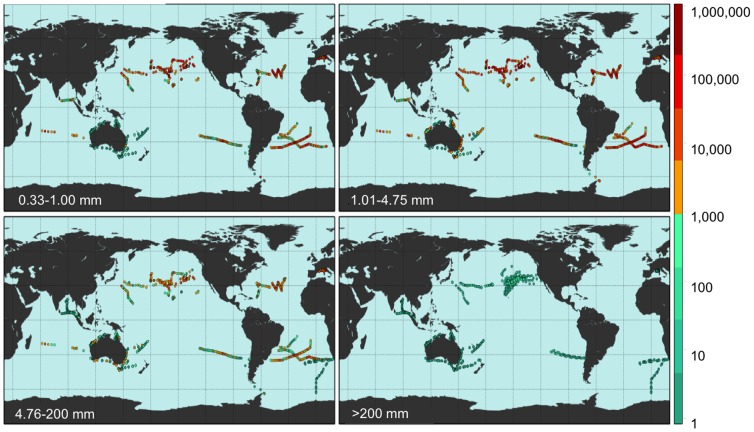
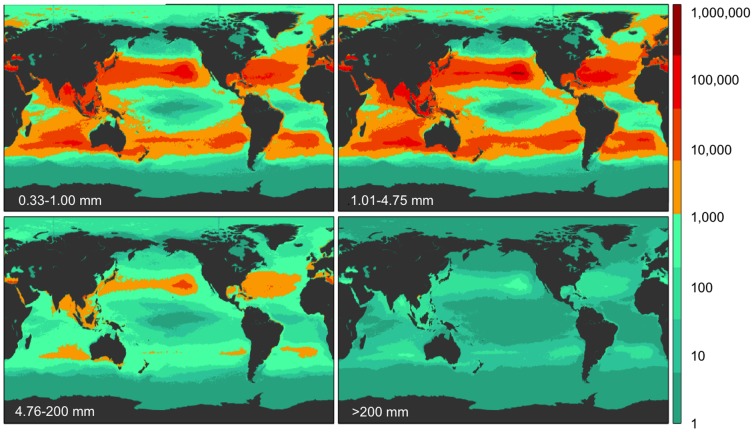
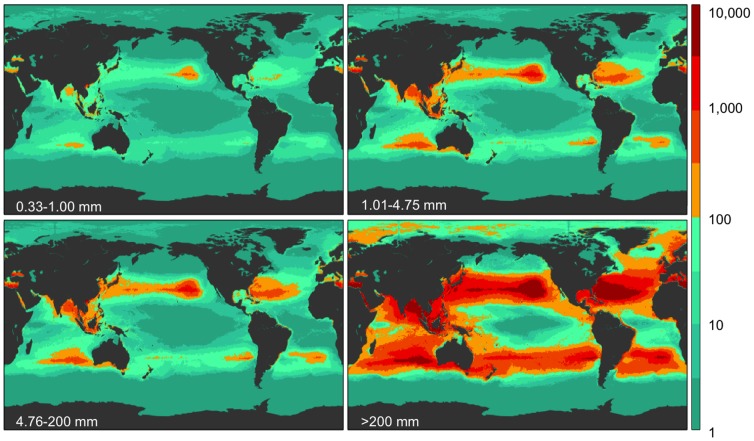
Verification
Claims the paper makes
The claims and statistics of this paper haven’t been checked yet.
Free: it reads the open-access text and checks the first 5 claims that cite a source we can check. Create a free account to check every claim.
Claims other papers make about this one
Each is checked against this paper’s own text: does it say what the citing paper says it does?
The source backs part of the claim, not all of it — or backs it for a different population, condition or comparison.
In the citing paper
“Measurements and model simulations revealed an uneven distribution of PMD, which complicates assessing global PMD inventories: highest PMD concentrations were found in the subtropical gyres (which have been termed 'trash vortexes' or 'garbage patches'), while PMD concentrations are much lower in the in the tropical and Arctic open ocean.51,53,54,[62][63][64]”
From The fate of plastic in the ocean environment – a minireview (2021) · cites this paper as [53]
Experimental — accuracy not yet measured
Self-check
Percentages, sums and reported differences re-computed from the paper’s own numbers.
The self-check needs the paper’s full text.
Citations
Cites
Lost at sea: where is all the plastic?
Thompson, R. C., Olsen, Y., Mitchell, R. P., Davis, A., Rowland, S. J., John, A. W. G., McGonigle, D., & Russell, A. E. (2004) · Science · doi:10.1126/science.1094559 · Cited by 7,765
Accumulation and fragmentation of plastic debris in global environments
Barnes, D. K. A., Galgani, F., Thompson, R. C., & Barlaz, M. (2009) · Philosophical Transactions of the Royal Society B: Biological Sciences · doi:10.1098/rstb.2008.0205 · Cited by 6,126 · cited 2×
“These include UV degradation, biodegradation, ingestion by organisms, decreased buoyancy due to fouling organisms, entrainment in settling detritus, and beaching [4].”
BackgroundSelf-citationHidalgo-Ruz, V., Gutow, L., Thompson, R. C., & Thiel, M. (2012) · Environmental Science & Technology · doi:10.1021/es2031505 · Cited by 5,440 · cited 2×
“33 mm, which is a commonly used lower limit for pelagic microplastics [31].”
BackgroundMethodSelf-citationLife in the “plastisphere”: microbial communities on plastic marine debris
Zettler, E. R., Mincer, T. J., & Amaral-Zettler, L. A. (2013) · Environmental Science & Technology · doi:10.1021/es401288x · Cited by 3,368 · cited 1×
“Furthermore, there is increasing evidence that some microbes can biodegrade microplastic particles [38–40].”
BackgroundPlastic debris in the open ocean
Cózar, A., Echevarría, F., González-Gordillo, J. I., Irigoien, X., Úbeda, B., Hernández-León, S., Palma, Á. T., Navarro, S., García-de-Lomas, J., Ruiz, A., et al. (2014) · Proceedings of the National Academy of Sciences · doi:10.1073/pnas.1314705111 · Cited by 3,133 · cited 4×
“Despite oceanographic model predictions of where debris might converge [24] estimates of regional and global abundance and weight of floating plastics have been limited to microplastics,5 mm [19, 25].”
BackgroundResultInfluentialTransport and release of chemicals from plastics to the environment and to wildlife
Teuten, E. L., Saquing, J. M., Knappe, D. R. U., Barlaz, M. A., Jonsson, S., Björn, A., Rowland, S. J., Thompson, R. C., Galloway, T. S., Yamashita, R., et al. (2009) · Philosophical Transactions of the Royal Society B: Biological Sciences · doi:10.1098/rstb.2008.0284 · Cited by 2,938 · cited 1×
“Adsorption of persistent organic pollutants onto plastic and their transfer into the tissues and organs through ingestion [15] is impacting marine megafauna [16] as well as lower trophic-level organisms [17, 18] and their predators [19, 20].”
BackgroundSelf-citationMicroplastic ingestion by zooplankton
Cole, M., Lindeque, P., Fileman, E., Halsband, C., Goodhead, R., Moger, J., & Galloway, T. S. (2013) · Environmental Science & Technology · doi:10.1021/es400663f · Cited by 2,763 · cited 2×
“In this manner, incorporation of smaller plastics into marine food chains could not only generate impacts on the health of the involved organisms [17–20], but also contribute to the removal of small microplastics from the sea surface [37].”
BackgroundLusher, A. L., McHugh, M., & Thompson, R. C. (2013) · Marine Pollution Bulletin · doi:10.1016/j.marpolbul.2012.11.028 · Cited by 2,075 · cited 1×
“via their prey organisms [34– 36].”
Plastic Resin Pellets as a Transport Medium for Toxic Chemicals in the Marine Environment
Mato, Y., Isobe, T., Takada, H., Kanehiro, H., Ohtake, C., & Kaminuma, T. (2001) · Environmental Science & Technology · doi:10.1021/es0010498 · Cited by 1,909 · cited 1×
“Plastic pollution is globally distributed across all oceans due to its properties of buoyancy and durability, and the sorption of toxicants to plastic while traveling through the environment [1, 2], have led some researchers to claim that synthetic polymers in the ocean should be regarded as hazardous waste [3].”
BackgroundGregory, M. R. (2009) · Philosophical Transactions of the Royal Society B: Biological Sciences · doi:10.1098/rstb.2008.0265 · Cited by 1,852 · cited 1×
“The impact of plastic pollution through ingestion and entanglement of marine fauna, ranging from zooplankton to cetaceans, seabirds and marine reptiles, are well documented [14].”
Background
Cited by
Items 501–600 of 1,035
Amaral-Zettler, L. A., Zettler, E. R., Mincer, T. J., Klaassen, M. A., & Gallager, S. M. (2021) · Water Research · doi:10.1016/j.watres.2021.117289 · Cited by 202
Mai, L., Bao, L.-J., Shi, L., Liu, L.-Y., & Zeng, E. Y. (2018) · Environmental Pollution · doi:10.1016/j.envpol.2018.06.012 · Cited by 202
“Although plastics are ubiquitously found in the world's oceans (Andrady, 2011; Eriksen et al., 2014), the calculated average mass abundance of plastics (~2 ng L 1) in the oceans is negligible (i.”
BackgroundSamak, N. A., Jia, Y., Sharshar, M. M., Mu, T., Yang, M., Peh, S., & Xing, J. (2020) · Environment International · doi:10.1016/j.envint.2020.106144 · Cited by 202
“Utilization of plastic in the packaging industry has risen a massive environmental problem due to the difficult biodegradation of many synthetic plastics such as polyethylene (PE), poly(vinyl chloride), polystyrene, polypropylene, and PET which remain in the environment for hundred years (Eriksen et al., 2014; Lechner…”
BackgroundLatest developments in wastewater treatment and biopolymer production by microalgae
Lutzu, G. A., Ciurli, A., Chiellini, C., Di Caprio, F., Concas, A., & Dunford, N. T. (2021) · Journal of Environmental Chemical Engineering · doi:10.1016/j.jece.2020.104926 · Cited by 130
Microplastic materials in the environment: Problem and strategical solutions
Tian, W., Song, P., Zhang, H., Duan, X., Wei, Y., Wang, H., & Wang, S. (2023) · Progress in Materials Science · doi:10.1016/j.pmatsci.2022.101035 · Cited by 201
Fan, X., Gan, R., Liu, J., Xie, Y., Xu, D., Xiang, Y., Su, J., Teng, Z., & Hou, J. (2021) · Science of The Total Environment · doi:10.1016/j.scitotenv.2021.145451 · Cited by 200
Microplastics: A major source of phthalate esters in aquatic environments
Cao, Y., Lin, H., Zhang, K., Xu, S., Yan, M., Leung, K. M. Y., & Lam, P. K. S. (2022) · Journal of Hazardous Materials · doi:10.1016/j.jhazmat.2022.128731 · Cited by 200
Dawson, A., Huston, W., Kawaguchi, S., King, C., Cropp, R., Wild, S., Eisenmann, P., Townsend, K., & Bengtson Nash, S. (2018) · Environmental Science & Technology · doi:10.1021/acs.est.7b05759 · Cited by 199
Are nanoplastics able to bind significant amount of metals? The lead example
Davranche, M., Veclin, C., Pierson-Wickmann, A.-C., El Hadri, H., Grassl, B., Rowenczyk, L., Dia, A., Ter Halle, A., Blancho, F., Reynaud, S., et al. (2019) · Environmental Pollution · doi:10.1016/j.envpol.2019.03.087 · Cited by 199
Micro-plastic ingestion by waterbirds from contaminated wetlands in South Africa
Reynolds, C., & Ryan, P. G. (2018) · Marine Pollution Bulletin · doi:10.1016/j.marpolbul.2017.11.021 · Cited by 199
Self-citationPolyester‐based biodegradable plastics: an approach towards sustainable development
Satti, S. M., & Shah, A. A. (2020) · Letters in Applied Microbiology · doi:10.1111/lam.13287 · Cited by 198
“…demand and production of plastics over the last few decades has resulted in generation of tremendous amount of plastic waste in the environment Letters in Applied Microbiology 70, 413--430 © 2020 The Society for Applied Microbiology 413 (Andrady 2011; Wright et al. 2013; Eriksen et al. 2014).”
BackgroundOccurrence of microplastics in surface waters of the Gulf of Lion (NW Mediterranean Sea)
Schmidt, N., Thibault, D., Galgani, F., Paluselli, A., & Sempéré, R. (2018) · Progress in Oceanography · doi:10.1016/j.pocean.2017.11.010 · Cited by 197
“Approximately 270 · 10(3) tons of plastic are suspected to float in the world’s oceans (Eriksen et al., 2014).”
BackgroundResultInfluentialSelf-citationMakhdoumi, P., Amin, A. A., Karimi, H., Pirsaheb, M., Kim, H., & Hossini, H. (2021) · Journal of Water Process Engineering · doi:10.1016/j.jwpe.2020.101708 · Cited by 197
Accumulation of microcapsules derived from coated fertilizer in paddy fields
Katsumi, N., Kusube, T., Nagao, S., & Okochi, H. (2021) · Chemosphere · doi:10.1016/j.chemosphere.2020.129185 · Cited by 197
Beer, S., Garm, A., Huwer, B., Dierking, J., & Nielsen, T. G. (2018) · Science of The Total Environment · doi:10.1016/j.scitotenv.2017.10.101 · Cited by 196
Plastic pollution: A focus on freshwater biodiversity
Azevedo-Santos, V. M., Brito, M. F. G., Manoel, P. S., Perroca, J. F., Rodrigues-Filho, J. L., Paschoal, L. R. P., Gonçalves, G. R. L., Wolf, M. R., Blettler, M. C. M., Andrade, M. C., et al. (2021) · Ambio · doi:10.1007/s13280-020-01496-5 · Cited by 196
Marine Litter as Habitat and Dispersal Vector
Kiessling, T., Gutow, L., & Thiel, M. (2015) · Marine Anthropogenic Litter · doi:10.1007/978-3-319-16510-3_6 · Cited by 195
“2011), widespread (Barnes et al. 2009; Eriksen et al. 2014) and abounds in oceanic regions where natural floating substrata, such as macroalgae, occur less frequently (Rothäusler et al.”
BackgroundInfluentialSelf-citationFirst evidence of plastic fallout from the North Pacific Garbage Patch
Egger, M., Sulu-Gambari, F., & Lebreton, L. (2020) · Scientific Reports · doi:10.1038/s41598-020-64465-8 · Cited by 195
Self-citationMessinetti, S., Mercurio, S., Parolini, M., Sugni, M., & Pennati, R. (2018) · Environmental Pollution · doi:10.1016/j.envpol.2017.11.030 · Cited by 195
Size distribution of stranded small plastic debris on the coast of Guangdong, South China
Fok, L., Cheung, P. K., Tang, G., & Li, W. C. (2017) · Environmental Pollution · doi:10.1016/j.envpol.2016.09.079 · Cited by 195
brzuska, K., Graaf, J. D., Kaumanns, J., Meyberg, M., & Schlatter, H. (2015) · Cited by 197
Malankowska, M., Echaide-Gorriz, C., & Coronas, J. (2021) · Environmental Science: Water Research & Technology · doi:10.1039/d0ew00802h · Cited by 193
Le Guen, C., Suaria, G., Sherley, R. B., Ryan, P. G., Aliani, S., Boehme, L., & Brierley, A. S. (2020) · Environment International · doi:10.1016/j.envint.2019.105303 · Cited by 192
“5 million tonnes (MT) in 1960 to 348 MT in 2017 (Plastics Europe, 2018), and almost 300 MT of plastic debris is estimated to be floating at the sea surface globally, with more deposited on the seafloor and along shorelines (Boerger et al., 2010; Browne et al., 2011; Eriksen et al., 2014).”
BackgroundSelf-citationTekman, M. B., Krumpen, T., & Bergmann, M. (2017) · Deep Sea Research Part I: Oceanographic Research Papers · doi:10.1016/j.dsr.2016.12.011 · Cited by 191
“, 2015) and global plastic litter figures derived from field studies (Cozar et al., 2014; Eriksen et al., 2014; van Sebille et al., 2015) suggests the presence of hidden sinks of plastic in the oceans.”
The Way of Macroplastic through the Environment
Lechthaler, S., Waldschläger, K., Stauch, G., & Schüttrumpf, H. (2020) · Environments · doi:10.3390/environments7100073 · Cited by 191
“(2017) [57], 99% are already sedimented on the seafloor, this amounts to 386,001 million items and about 231,125 tons of MaP on the seafloor worldwide under the assumption of 57 [56].”
BackgroundInfluentialGlobal transportation of plastics and microplastics: A critical review of pathways and influences
Su, L., Xiong, X., Zhang, Y., Wu, C., Xu, X., Sun, C., & Shi, H. (2022) · Science of The Total Environment · doi:10.1016/j.scitotenv.2022.154884 · Cited by 191
Rotjan, R., Sharp, K. H., Gauthier, A. E., Yelton, R., Lopez, E. M. B., Carilli, J., Kagan, J. C., & Urban-Rich, J. (2019) · Proceedings of the Royal Society B Biological Sciences · doi:10.1098/rspb.2019.0726 · Cited by 191
Microplastic contamination, an emerging threat to the freshwater environment: a systematic review
Bhardwaj, L. K., Rath, P., Yadav, P., & Gupta, U. (2024) · ENVIRONMENTAL SYSTEMS RESEARCH · doi:10.1186/s40068-024-00338-7 · Cited by 194
Sleight, V. A., Bakir, A., Thompson, R. C., & Henry, T. B. (2017) · Marine Pollution Bulletin · doi:10.1016/j.marpolbul.2016.12.055 · Cited by 190
“Plastic debris is present in numerous shapes and sizes and particles b 5 mm (MPs) in size are reported as the most abundant sizes detected in large-scale assessments of the oceans (Eriksen et al., 2014).”
BackgroundHasan Anik, A., Hossain, S., Alam, M., Binte Sultan, M., Hasnine, M. T., & Rahman, M. M. (2021) · Environmental Nanotechnology, Monitoring & Management · doi:10.1016/j.enmm.2021.100530 · Cited by 190
Pollutants in Plastics within the North Pacific Subtropical Gyre
Chen, Q., Reisser, J., Cunsolo, S., Kwadijk, C., Kotterman, M., Proietti, M., Slat, B., Ferrari, F. F., Schwarz, A., Levivier, A., et al. (2018) · Environmental Science & Technology · doi:10.1021/acs.est.7b04682 · Cited by 190
Self-citationUnderstanding plastics pollution: The role of economic development and technological research
Barnes, S. J. (2019) · Environmental Pollution · doi:10.1016/j.envpol.2019.03.108 · Cited by 190
Biodegradation of weathered polystyrene films in seawater microcosms
Syranidou, E., Karkanorachaki, K., Amorotti, F., Franchini, M., Repouskou, E., Kaliva, M., Vamvakaki, M., Kolvenbach, B., Fava, F., Corvini, P. F.-X., et al. (2017) · Scientific Reports · doi:10.1038/s41598-017-18366-y · Cited by 190
Daniel, D. B., Ashraf, P. M., & Thomas, S. N. (2020) · Environmental Pollution · doi:10.1016/j.envpol.2020.115365 · Cited by 189
Measuring Marine Plastic Debris from Space: Initial Assessment of Observation Requirements
Martínez-Vicente, V., Clark, J. R., Corradi, P., Aliani, S., Arias, M., Bochow, M., Bonnery, G., Cole, M., Cózar, A., Donnelly, R., et al. (2019) · Remote Sensing · doi:10.3390/rs11202443 · Cited by 189
Self-citationRelease of primary microplastics from consumer products to wastewater in the Netherlands
van Wezel, A., Caris, I., & Kools, S. A. E. (2015) · Environmental Toxicology and Chemistry · doi:10.1002/etc.3316 · Cited by 189
“1%) of the annual global production [7,8], possibly explained by sampling methods that do not include the low tail of the particle size distribution and accumulation in nonsampled matrices and stocks.”
BackgroundIngestion of Plastics by Marine Organisms
Ryan, P. G. (2016) · The Handbook of Environmental Chemistry · doi:10.1007/698_2016_21 · Cited by 126
Self-citationDegradation of ecosystems and loss of ecosystem services
Kahrić, A., Kulijer, D., Neira, D., & Šnjegota, D. (2022) · Elsevier eBooks · doi:10.1016/b978-0-12-822794-7.00008-3 · Cited by 195
Mu, J., Zhang, S., Qu, L., Jin, F., Fang, C., Ma, X., Zhang, W., & Wang, J. (2019) · Marine Pollution Bulletin · doi:10.1016/j.marpolbul.2019.04.023 · Cited by 188
Lett, Z., Hall, A., Skidmore, S., & Alves, N. J. (2021) · Environmental Pollution · doi:10.1016/j.envpol.2021.118190 · Cited by 188
Fallati, L., Polidori, A., Salvatore, C., Saponari, L., Savini, A., & Galli, P. (2019) · Science of The Total Environment · doi:10.1016/j.scitotenv.2019.133581 · Cited by 188
Caron, A. G. M., Thomas, C. R., Berry, K. L. E., Motti, C. A., Ariel, E., & Brodie, J. E. (2018) · Marine Pollution Bulletin · doi:10.1016/j.marpolbul.2017.12.062 · Cited by 188
A method for extracting soil microplastics through circulation of sodium bromide solutions
Liu, M., Song, Y., Lu, S., Qiu, R., Hu, J., Li, X., Bigalke, M., Shi, H., & He, D. (2019) · Science of The Total Environment · doi:10.1016/j.scitotenv.2019.07.144 · Cited by 188
Ocean plastic crisis—Mental models of plastic pollution from remote Indonesian coastal communities
Phelan, A., Ross, H., Setianto, N. A., Fielding, K. S., & Pradipta, L. (2020) · PLoS ONE · doi:10.1371/journal.pone.0236149 · Cited by 193
“The accumulation rates of plastic on the coastlines, in some regions, is reaching catastrophic proportions [83, 84].”
BackgroundBrowning, S., Beymer-Farris, B., & Seay, J. R. (2021) · Current Opinion in Chemical Engineering · doi:10.1016/j.coche.2021.100682 · Cited by 187
A framework for the assessment of marine litter impacts in life cycle impact assessment
Woods, J. S., Verones, F., Jolliet, O., Vázquez-Rowe, I., & Boulay, A.-M. (2021) · Ecological Indicators · doi:10.1016/j.ecolind.2021.107918 · Cited by 187
Plastic pollution on the Baltic beaches of Kaliningrad region, Russia
Esiukova, E. (2017) · Marine Pollution Bulletin · doi:10.1016/j.marpolbul.2016.10.001 · Cited by 187
“…sediment Baltic Sea Coastal and ocean waters have accumulated nowadays hundreds of thousands of tons of polymer litter of primary and secondary origin (Wright et al., 2013; Koelmans et al., 2014; Eriksen et al., 2014; Jambeck et al., 2015; Rilling, 2012; Browne et al., 2011; Wang et al., 2016).”
BackgroundSetälä, O., Magnusson, K., Lehtiniemi, M., & Norén, F. (2016) · Marine Pollution Bulletin · doi:10.1016/j.marpolbul.2016.06.065 · Cited by 186
L., F., I., P.-P., J., M., P., S., C., L., A., H., & E., R. (2016) · Marine Pollution Bulletin · doi:10.1016/j.marpolbul.2016.10.051 · Cited by 186
Ogunola, O. S., Onada, O. A., & Falaye, A. E. (2018) · Environmental Science and Pollution Research · doi:10.1007/s11356-018-1499-z · Cited by 186
“…variety of sizes ranging from metres to micrometres and have different routes of entering into various compartments of marine food webs (Barnes et al. 2009; Wright et al. 2013; Eriksson et al. 2013; Eriksen et al. 2014; Nuelle et al. 2014; Yang et al. 2015; Boucher et al. 2016; Alomar et al. 2016).”
BackgroundA review of microplastic distribution in sediment profiles
Uddin, S., Fowler, S. W., Uddin, M. F., Behbehani, M., & Naji, A. (2021) · Marine Pollution Bulletin · doi:10.1016/j.marpolbul.2021.111973 · Cited by 185
Plastic debris and policy: Using current scientific understanding to invoke positive change
Rochman, C. M., Cook, A.-M., & Koelmans, A. A. (2016) · Environmental Toxicology and Chemistry · doi:10.1002/etc.3408 · Cited by 148
Kesy, K., Oberbeckmann, S., Kreikemeyer, B., & Labrenz, M. (2019) · Frontiers in Microbiology · doi:10.3389/fmicb.2019.01665 · Cited by 184
Impacts of microplastics on growth and health of hermatypic corals are species-specific
Reichert, J., Arnold, A. L., Hoogenboom, M. O., Schubert, P., & Wilke, T. (2019) · Environmental Pollution · doi:10.1016/j.envpol.2019.113074 · Cited by 184
Sensing Ocean Plastics with an Airborne Hyperspectral Shortwave Infrared Imager
Garaba, S. P., Aitken, J., Slat, B., Dierssen, H. M., Lebreton, L., Zielinski, O., & Reisser, J. (2018) · Environmental Science & Technology · doi:10.1021/acs.est.8b02855 · Cited by 184
Self-citationFaure, F., Saini, C., Potter, G., Galgani, F., de Alencastro, L. F., & Hagmann, P. (2015) · Environmental Science and Pollution Research · doi:10.1007/s11356-015-4453-3 · Cited by 183
“Recently, similar approaches have been used to evaluate the plastic abundance over the full water column (Cózar et al. 2014; Eriksen et al. 2014; Law et al. 2014).”
Self-citationDeep sea sediments of the Arctic Central Basin: A potential sink for microplastics
Kanhai, L. D. K., Johansson, C., Frias, J. P. G. L., Gardfeldt, K., Thompson, R. C., & O’Connor, I. (2019) · Deep Sea Research Part I: Oceanographic Research Papers · doi:10.1016/j.dsr.2019.03.003 · Cited by 183
Okuku, E., Kiteresi, L., Owato, G., Otieno, K., Mwalugha, C., Mbuche, M., Gwada, B., Nelson, A., Chepkemboi, P., Achieng, Q., et al. (2021) · Marine Pollution Bulletin · doi:10.1016/j.marpolbul.2020.111840 · Cited by 183
The Contribution of Citizen Scientists to the Monitoring of Marine Litter
Hidalgo‐Ruz, V., & Thiel, M. (2015) · Springer eBooks · doi:10.1007/978-3-319-16510-3_16 · Cited by 192
“Large quantities of anthropogenic litter reach the marine environment, where they spread throughout all oceans and persist for many years (Derraik 2002; Barnes et al. 2009; Ryan et al. 2009; Eriksen et al. 2014).”
BackgroundSelf-citationSharma, S., Sharma, V., & Chatterjee, S. (2021) · Frontiers in Marine Science · doi:10.3389/fmars.2021.634934 · Cited by 182
Estimating quantities and sources of marine debris at a continental scale
Hardesty, B. D., Lawson, T., van der Velde, T., Lansdell, M., & Wilcox, C. (2017) · Frontiers in Ecology and the Environment · doi:10.1002/fee.1447 · Cited by 182
Tejaswini, M. S. S. R., Pathak, P., Ramkrishna, S., & Ganesh, P. S. (2022) · Science of The Total Environment · doi:10.1016/j.scitotenv.2022.153973 · Cited by 182
Gedik, K., & Eryaşar, A. R. (2020) · Chemosphere · doi:10.1016/j.chemosphere.2020.127570 · Cited by 182
Wang, J., Lu, L., Wang, M., Jiang, T., Liu, X., & Ru, S. (2019) · Science of The Total Environment · doi:10.1016/j.scitotenv.2019.02.367 · Cited by 182
Ayram, C. A. C., Andrés Etter, R., Díaz-Timoté, J., Rodríguez‐Buriticá, S., Ramírez, W., & Corzo, G. (2020) · Ecological Indicators · doi:10.1016/j.ecolind.2020.106630 · Cited by 192
Investigating Detection of Floating Plastic Litter from Space Using Sentinel-2 Imagery
Themistocleous, K., Papoutsa, C., Michaelides, S., & Hadjimitsis, D. (2020) · Remote Sensing · doi:10.3390/rs12162648 · Cited by 181
“Other approximations estimate that the oceans may already contain more than 150 million tons of plastic [22]; around 250,000 tons of these contaminants is fragmented into 5 trillion plastic pieces, which may be floating on the oceans’ surface [23].”
BackgroundMicro- and nanoplastic toxicity: A review on size, type, source, and test-organism implications
Pelegrini, K., Pereira, T. C. B., Maraschin, T. G., Teodoro, L. D. S., Basso, N. R. D. S., De Galland, G. L. B., Ligabue, R. A., & Bogo, M. R. (2023) · Science of The Total Environment · doi:10.1016/j.scitotenv.2023.162954 · Cited by 181
Beach litter dynamics on Mediterranean coasts: Distinguishing sources and pathways
Prevenios, M., Zeri, C., Tsangaris, C., Liubartseva, S., Fakiris, E., & Papatheodorou, G. (2018) · Marine Pollution Bulletin · doi:10.1016/j.marpolbul.2017.10.013 · Cited by 181
Distribution and quantity of microplastic on sandy beaches along the northern coast of Taiwan
Kunz, A., Walther, B. A., Löwemark, L., & Lee, Y.-C. (2016) · Marine Pollution Bulletin · doi:10.1016/j.marpolbul.2016.07.022 · Cited by 181
Economics for the future – Beyond the superorganism
Hagens, N. J. (2019) · Ecological Economics · doi:10.1016/j.ecolecon.2019.106520 · Cited by 184
Progress in quantitative analysis of microplastics in the environment: A review
Jung, S., Cho, S.-H., Kim, K., & Kwon, E. E. (2021) · Chemical Engineering Journal · doi:10.1016/j.cej.2021.130154 · Cited by 181
Trevail, A. M., Gabrielsen, G. W., Kühn, S., & Van Franeker, J. A. (2015) · Polar Biology · doi:10.1007/s00300-015-1657-4 · Cited by 153
Krause, S., Baranov, V., Nel, H. A., Drummond, J. D., Kukkola, A., Hoellein, T., Sambrook Smith, G. H., Lewandowski, J., Bonet, B., Packman, A. I., et al. (2021) · Environmental Pollution · doi:10.1016/j.envpol.2020.115750 · Cited by 179
Zhang, H., Zhou, Q., Xie, Z., Zhou, Y., Tu, C., Fu, C., Mi, W., Ebinghaus, R., Christie, P., & Luo, Y. (2018) · Science of The Total Environment · doi:10.1016/j.scitotenv.2017.10.163 · Cited by 179
Gago, J., Galgani, F., Maes, T., & Thompson, R. C. (2016) · Frontiers in Marine Science · doi:10.3389/fmars.2016.00219 · Cited by 179
“A Need for Standardization: The Exemplary Case of Sampling Seawater In the last years studies determining the global quantity of plastic particles in the ocean have been published (Eriksen et al., 2014; Cózar et al., 2014, 2015).”
BackgroundSelf-citationNaji, A., Nuri, M., Amiri, P., & Niyogi, S. (2019) · Marine Pollution Bulletin · doi:10.1016/j.marpolbul.2019.06.033 · Cited by 179
Sorption of polybrominated diphenyl ethers by microplastics
Xu, P., Ge, W., Chai, C., Zhang, Y., Jiang, T., & Xia, B. (2019) · Marine Pollution Bulletin · doi:10.1016/j.marpolbul.2019.05.050 · Cited by 179
Modeling marine surface microplastic transport to assess optimal removal locations
Sherman, P., & van Sebille, E. (2016) · Environmental Research Letters · doi:10.1088/1748-9326/11/1/014006 · Cited by 146
A quantitative analysis linking seabird mortality and marine debris ingestion
Roman, L., Hardesty, B. D., Hindell, M. A., & Wilcox, C. (2019) · Scientific Reports · doi:10.1038/s41598-018-36585-9 · Cited by 148
Athey, S. N., Albotra, S. D., Gordon, C. A., Monteleone, B., Seaton, P., Andrady, A. L., Taylor, A. R., & Brander, S. M. (2020) · Limnology and Oceanography Letters · doi:10.1002/lol2.10130 · Cited by 178
“Microplastics (plastic particles ranging from 1 μm to 5 mm) are the most abundant type of anthropogenic debris found in marine and freshwater environments (Wright et al. 2013; Eriksen et al. 2014).”
BackgroundThe removal of microplastics from water by coagulation: A comprehensive review
Tang, W., Li, H., Fei, L., Wei, B., Zhou, T., & Zhang, H. (2022) · Science of The Total Environment · doi:10.1016/j.scitotenv.2022.158224 · Cited by 178
From source to sink: Review and prospects of microplastics in wetland ecosystems
Qian, J., Tang, S., Wang, P., Lu, B., Li, K., Jin, W., & He, X. (2021) · Science of The Total Environment · doi:10.1016/j.scitotenv.2020.143633 · Cited by 178
Wang, F., Gao, J., Zhai, W., Liu, D., Zhou, Z., & Wang, P. (2020) · Journal of Hazardous Materials · doi:10.1016/j.jhazmat.2020.122517 · Cited by 178
Zhou, Z., Sun, Y., Wang, Y., Yu, F., & Ma, J. (2022) · Chemosphere · doi:10.1016/j.chemosphere.2021.132794 · Cited by 178
From macro- to microplastics - Analysis of EU regulation along the life cycle of plastic bags
Steensgaard, I. M., Syberg, K., Rist, S., Hartmann, N. B., Boldrin, A., & Hansen, S. F. (2017) · Environmental Pollution · doi:10.1016/j.envpol.2017.02.007 · Cited by 180
“Eriksen et al. (2014) estimated global plastic pollution by oceanographic modelling of floating plastic debris dispersal.”
BackgroundAntarctic Marine Biodiversity: Adaptations, Environments and Responses to Change
Peck, L. S. (2018) · Oceanography and Marine Biology · doi:10.1201/9780429454455-3 · Cited by 177
Seagrasses provide a novel ecosystem service by trapping marine plastics
Sanchez-Vidal, A., Canals, M., de Haan, W. P., Romero, J., & Veny, M. (2021) · Scientific Reports · doi:10.1038/s41598-020-79370-3 · Cited by 177
Spatial and seasonal variations in biofilm formation on microplastics in coastal waters
Zhang, B., Yang, X., Liu, L., Chen, L., Teng, J., Zhu, X., Zhao, J., & Wang, Q. (2021) · Science of The Total Environment · doi:10.1016/j.scitotenv.2021.145303 · Cited by 177
Wang, J., Peng, C., Li, H., Zhang, P., & Liu, X. (2021) · Science of The Total Environment · doi:10.1016/j.scitotenv.2021.145697 · Cited by 177
Alijagić, A., Suljević, D., Fočak, M., Sulejmanović, J., Šehović, E., Särndahl, E., & Engwall, M. (2024) · Environment International · doi:10.1016/j.envint.2024.108736 · Cited by 179
Macroplastics Pollution in the Marine Environment
Barboza, L. G. A., Cózar, A., Gimenez, B. C. G., Barros, T. L., Kershaw, P. J., & Guilhermino, L. (2019) · World Seas: An Environmental Evaluation · doi:10.1016/b978-0-12-805052-1.00019-x · Cited by 176
Microplastic Identification via Holographic Imaging and Machine Learning
Bianco, V., Memmolo, P., Carcagnì, P., Merola, F., Paturzo, M., Distante, C., & Ferraro, P. (2020) · Advanced Intelligent Systems · doi:10.1002/aisy.201900153 · Cited by 176
Floating plastic debris in the Central and Western Mediterranean Sea
Ruiz-Orejón, L. F., Sardá, R., & Ramis‐Pujol, J. (2016) · Marine Environmental Research · doi:10.1016/j.marenvres.2016.08.001 · Cited by 180
Hebner, T. S., & Maurer‐Jones, M. A. (2020) · Environmental Science Processes & Impacts · doi:10.1039/c9em00475k · Cited by 178
Rudoviča, V., Rotter, A., Gaudêncio, S. P., Novoveská, L., Akgül, F., Akslen-Hoel, L. K., Alexandrino, D. A. M., Anne, O., Arbidāns, L., Atanassova, M., et al. (2021) · Frontiers in Marine Science · doi:10.3389/fmars.2021.723333 · Cited by 179
“Consequently, more than 5 trillion plastic particles weighing over 250,000 tons are estimated to be floating in Earth’s oceans (Eriksen et al., 2014), posing a major threat to the trophic chain.”
BackgroundEnvironmental (in)justice in the Anthropocene ocean
Bennett, N. J., Alava, J. J., Ferguson, C. E., Blythe, J. L., Morgera, E., Boyd, D. R., & Côté, I. M. (2022) · Marine Policy · doi:10.1016/j.marpol.2022.105383 · Cited by 179
Microplastic pollution: Understanding microbial degradation and strategies for pollutant reduction
Jain, R., Gaur, A., Suravajhala, R., Chauhan, U., Pant, M., Tripathi, V., & Pant, G. (2023) · Science of The Total Environment · doi:10.1016/j.scitotenv.2023.167098 · Cited by 175
Rapid increase in Asian bottles in the South Atlantic Ocean indicates major debris inputs from ships
Ryan, P. G., Dilley, B. J., Ronconi, R. A., & Connan, M. (2019) · Proceedings of the National Academy of Sciences · doi:10.1073/pnas.1909816116 · Cited by 175
Self-citationBrunner, I., Fischer, M., Rüthi, J., Stierli, B., & Frey, B. (2018) · PLOS ONE · doi:10.1371/journal.pone.0202047 · Cited by 175
Insights into the uptake, elimination and accumulation of microplastics in mussel
Fernández, B., & Albentosa, M. (2019) · Environmental Pollution · doi:10.1016/j.envpol.2019.03.037 · Cited by 175
Metadata
- Authors
- Eriksen, M., Lebreton, L. C. M., Carson, H. S., Thiel, M., Moore, C. J., Borerro, J. C., Galgani, F., Ryan, P. G., & Reisser, J.
- Affiliations
- University of Hawaii at Hilo (US)
- University of Cape Town (ZA)
- Corresponding author
- Eriksen, Marcus
- Venue
- PLoS ONE
- Publisher
- Public Library of Science (PLoS)
- Published
- 2014-12-10
- Volume
- 9
- Issue
- 12
- Pages
- e111913
- ISSN
- 1932-6203 (ISSN-L)
- PMC
- PMC4262196
- OpenAlex
- W2130707940
- Cited by
- 4,710
- References
- 43
- Citations by year
- 2026: 255 · 2025: 425 · 2024: 499 · 2023: 585 · 2022: 598 · 2021: 648 · 2020: 531 · 2019: 419 · 2018: 308 · 2017: 200 · 2016: 149 · 2015: 86 · 2014: 4
- FWCI
- 103.05
- Type
- journal article
- Language
- en
- Open access
- gold
- doi.org
- Licence
- Locations
- PLoS ONE (publishedVersion, public-domain)
- PubMed Central (publishedVersion, public-domain)
- UWA Profiles and Research Repository (UWA) (publishedVersion, public-domain)
- PubMed (publishedVersion)
- HAL (submittedVersion)
- Institutional Archive of Ifremer (French Research Institute for Exploitation of the Sea) (submittedVersion, other-oa)
- DOAJ (DOAJ: Directory of Open Access Journals) (submittedVersion, cc-by-sa)
- Figshare (submittedVersion, cc-by)
- Open University of Cape Town (University of Cape Town) (submittedVersion, cc-by)
- Funders
- Commonwealth Scientific and Industrial Research Organisation
- National Oceanic and Atmospheric Administration
- Topics
- Physical Sciences › Environmental Science › Pollution › Microplastics and Plastic Pollution
- Physical Sciences › Environmental Science › Pollution › Oil Spill Detection and Mitigation
- Physical Sciences › Earth and Planetary Sciences › Oceanography › Marine Plankton and Biogeochemistry
- Keywords
- plastic pollution, marine plastic debris, microplastics, mesoplastics, macroplastics, plastic fragmentation, Southern Hemisphere, Bay of Bengal, Mediterranean Sea
- MeSH terms
- Models, Theoretical, Oceans and Seas, Plastics, Water Pollution, Wind, Linear Models, Hydrodynamics
About these checks
Registry, retraction, Cites and statistics results are computed, not judged, with one exception: a printed reference that no index lists is read once by a model before it counts as a citation error. Claims are extracted by a model and kept only when their quote appears verbatim in the text; each cited source is then checked, with a model’s help, for whether it says what the claim relies on. Those verdicts can be wrong — read the claim’s quote and the cited source before relying on one.
Statistics and arithmetic are recomputed, not judged.
Confidence bands are shown only for fields calibrated on our annotated test set. None is calibrated yet, so no band is shown.
What counts as a claim ›How we measure confidence ›How we check this ›
Are you an author, or do you see a problem with this page? Request a review
Data sources
Bibliographic data: Semantic Scholar, OpenAlex, Crossref.
Contains information from the Semantic Scholar Academic Graph Datasets, made available under the ODC Attribution License (ODC-BY 1.0).
Semantic Scholar’s data is described in: Kinney, R., et al. (2023). The Semantic Scholar Open Data Platform. arXiv:2301.10140.
