

Plastic pollution in the world’s oceans: more than 5 trillion plastic pieces weighing over 250,000 tons afloat at sea
Open accessThe DOI matches its Crossref record; 43 of the 43 references it cites were found in a registry or an index.
Abstract
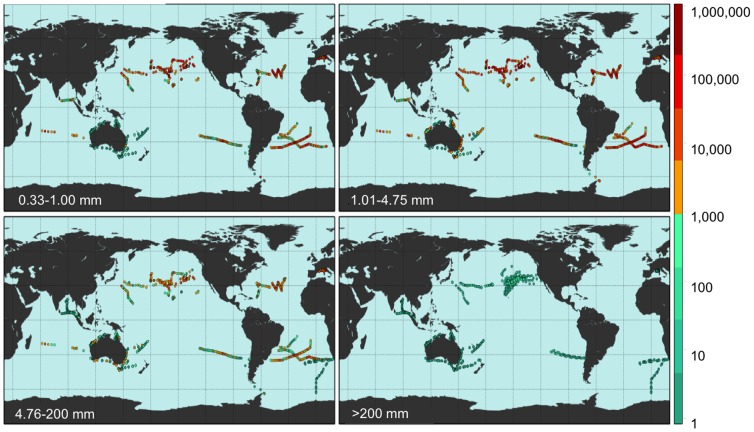
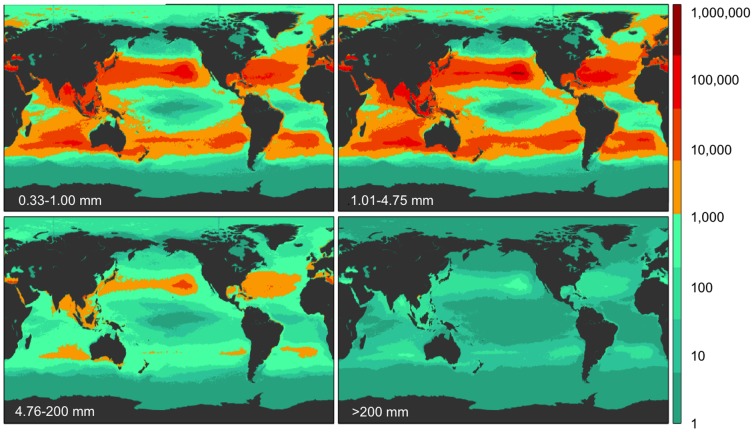
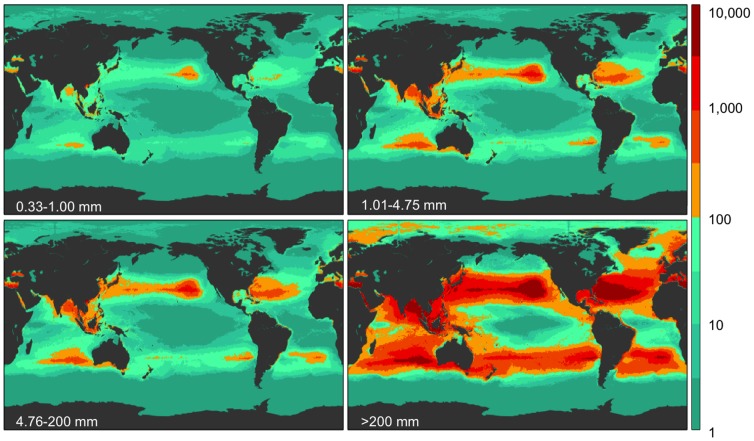
Plastic pollution is ubiquitous throughout the marine environment, yet estimates of the global abundance and weight of floating plastics have lacked data, particularly from the Southern Hemisphere and remote regions. Here we report an estimate of the total number of plastic particles and their weight floating in the world's oceans from 24 expeditions (2007-2013) across all five sub-tropical gyres, costal Australia, Bay of Bengal and the Mediterranean Sea conducting surface net tows (N = 680) and visual survey transects of large plastic debris (N = 891). Using an oceanographic model of floating debris dispersal calibrated by our data, and correcting for wind-driven vertical mixing, we estimate a minimum of 5.25 trillion particles weighing 268,940 tons. When comparing between four size classes, two microplastic <4.75 mm and meso- and macroplastic >4.75 mm, a tremendous loss of microplastics is observed from the sea surface compared to expected rates of fragmentation, suggesting there are mechanisms at play that remove <4.75 mm plastic particles from the ocean surface.
Overview
The claims and statistics of this paper haven’t been checked yet.
Free: it reads the open-access text and checks the first 5 claims that cite a source we can check. Create a free account to check every claim.
Integrity signals
Registry
Cites
Statistics
Figures
Verification
Claims the paper makes
The claims and statistics of this paper haven’t been checked yet.
Free: it reads the open-access text and checks the first 5 claims that cite a source we can check. Create a free account to check every claim.
Claims other papers make about this one
Each is checked against this paper’s own text: does it say what the citing paper says it does?
The source backs part of the claim, not all of it — or backs it for a different population, condition or comparison.
In the citing paper
“Measurements and model simulations revealed an uneven distribution of PMD, which complicates assessing global PMD inventories: highest PMD concentrations were found in the subtropical gyres (which have been termed 'trash vortexes' or 'garbage patches'), while PMD concentrations are much lower in the in the tropical and Arctic open ocean.51,53,54,[62][63][64]”
From The fate of plastic in the ocean environment – a minireview (2021) · cites this paper as [53]
Experimental — accuracy not yet measured
Self-check
Percentages, sums and reported differences re-computed from the paper’s own numbers.
The self-check needs the paper’s full text.
Citations
Cites
Lost at sea: where is all the plastic?
Thompson, R. C., Olsen, Y., Mitchell, R. P., Davis, A., Rowland, S. J., John, A. W. G., McGonigle, D., & Russell, A. E. (2004) · Science · doi:10.1126/science.1094559 · Cited by 7,765
Accumulation and fragmentation of plastic debris in global environments
Barnes, D. K. A., Galgani, F., Thompson, R. C., & Barlaz, M. (2009) · Philosophical Transactions of the Royal Society B: Biological Sciences · doi:10.1098/rstb.2008.0205 · Cited by 6,126 · cited 2×
“These include UV degradation, biodegradation, ingestion by organisms, decreased buoyancy due to fouling organisms, entrainment in settling detritus, and beaching [4].”
BackgroundSelf-citationHidalgo-Ruz, V., Gutow, L., Thompson, R. C., & Thiel, M. (2012) · Environmental Science & Technology · doi:10.1021/es2031505 · Cited by 5,440 · cited 2×
“33 mm, which is a commonly used lower limit for pelagic microplastics [31].”
BackgroundMethodSelf-citationLife in the “plastisphere”: microbial communities on plastic marine debris
Zettler, E. R., Mincer, T. J., & Amaral-Zettler, L. A. (2013) · Environmental Science & Technology · doi:10.1021/es401288x · Cited by 3,368 · cited 1×
“Furthermore, there is increasing evidence that some microbes can biodegrade microplastic particles [38–40].”
BackgroundPlastic debris in the open ocean
Cózar, A., Echevarría, F., González-Gordillo, J. I., Irigoien, X., Úbeda, B., Hernández-León, S., Palma, Á. T., Navarro, S., García-de-Lomas, J., Ruiz, A., et al. (2014) · Proceedings of the National Academy of Sciences · doi:10.1073/pnas.1314705111 · Cited by 3,133 · cited 4×
“Despite oceanographic model predictions of where debris might converge [24] estimates of regional and global abundance and weight of floating plastics have been limited to microplastics,5 mm [19, 25].”
BackgroundResultInfluentialTransport and release of chemicals from plastics to the environment and to wildlife
Teuten, E. L., Saquing, J. M., Knappe, D. R. U., Barlaz, M. A., Jonsson, S., Björn, A., Rowland, S. J., Thompson, R. C., Galloway, T. S., Yamashita, R., et al. (2009) · Philosophical Transactions of the Royal Society B: Biological Sciences · doi:10.1098/rstb.2008.0284 · Cited by 2,938 · cited 1×
“Adsorption of persistent organic pollutants onto plastic and their transfer into the tissues and organs through ingestion [15] is impacting marine megafauna [16] as well as lower trophic-level organisms [17, 18] and their predators [19, 20].”
BackgroundSelf-citationMicroplastic ingestion by zooplankton
Cole, M., Lindeque, P., Fileman, E., Halsband, C., Goodhead, R., Moger, J., & Galloway, T. S. (2013) · Environmental Science & Technology · doi:10.1021/es400663f · Cited by 2,763 · cited 2×
“In this manner, incorporation of smaller plastics into marine food chains could not only generate impacts on the health of the involved organisms [17–20], but also contribute to the removal of small microplastics from the sea surface [37].”
BackgroundLusher, A. L., McHugh, M., & Thompson, R. C. (2013) · Marine Pollution Bulletin · doi:10.1016/j.marpolbul.2012.11.028 · Cited by 2,075 · cited 1×
“via their prey organisms [34– 36].”
Plastic Resin Pellets as a Transport Medium for Toxic Chemicals in the Marine Environment
Mato, Y., Isobe, T., Takada, H., Kanehiro, H., Ohtake, C., & Kaminuma, T. (2001) · Environmental Science & Technology · doi:10.1021/es0010498 · Cited by 1,909 · cited 1×
“Plastic pollution is globally distributed across all oceans due to its properties of buoyancy and durability, and the sorption of toxicants to plastic while traveling through the environment [1, 2], have led some researchers to claim that synthetic polymers in the ocean should be regarded as hazardous waste [3].”
BackgroundGregory, M. R. (2009) · Philosophical Transactions of the Royal Society B: Biological Sciences · doi:10.1098/rstb.2008.0265 · Cited by 1,852 · cited 1×
“The impact of plastic pollution through ingestion and entanglement of marine fauna, ranging from zooplankton to cetaceans, seabirds and marine reptiles, are well documented [14].”
Background
Cited by
Items 101–200 of 1,035
Fischer, M., & Scholz-Böttcher, B. M. (2017) · Environmental Science & Technology · doi:10.1021/acs.est.6b06362 · Cited by 647
Biodegradation of PET: Current Status and Application Aspects
Taniguchi, I., Yoshida, S., Hiraga, K., Miyamoto, K., Kimura, Y., & Oda, K. (2019) · ACS Catalysis · doi:10.1021/acscatal.8b05171 · Cited by 646
Identification and quantification of microplastics using Nile Red staining
Shim, W. J., Song, Y. K., Hong, S. H., & Jang, M. (2016) · Marine Pollution Bulletin · doi:10.1016/j.marpolbul.2016.10.049 · Cited by 637
“They are widely distributed, from lakes to the open ocean (Imhof et al., 2013; Eriksen et al., 2014), in surface water and deep sea sediments (Song et al.”
BackgroundAli, S. S., Elsamahy, T., Koutra, E., Kornaros, M., El-Sheekh, M., Abdelkarim, E. A., Zhu, D., & Sun, J. (2021) · Science of The Total Environment · doi:10.1016/j.scitotenv.2020.144719 · Cited by 634
Cózar, A., Martí, E., Duarte, C. M., García-de-Lomas, J., van Sebille, E., Ballatore, T. J., Eguíluz, V. M., González-Gordillo, J. I., Pedrotti, M. L., Echevarría, F., et al. (2017) · Science Advances · doi:10.1126/sciadv.1600582 · Cited by 631
Responses of Hyalella azteca to acute and chronic microplastic exposures
Au, S. Y., Bruce, T. F., Bridges, W. C., & Klaine, S. J. (2015) · Environmental Toxicology and Chemistry · doi:10.1002/etc.3093 · Cited by 628
“Microplastic abundances worldwide in both freshwater andmarine ecosystemshave been shown to be greater than that of larger plastic debris (greater than 5mm), representing more than half of the total plastic samples [16,41,42].”
BackgroundBrandon, J., Goldstein, M., & Ohman, M. D. (2016) · Marine Pollution Bulletin · doi:10.1016/j.marpolbul.2016.06.048 · Cited by 626
“7 million metric tons entering the ocean annually (Eriksen et al., 2014; Jambeck et al., 2015).”
BackgroundIngestion of Nanoplastics and Microplastics by Pacific Oyster Larvae
Cole, M., & Galloway, T. S. (2015) · Environmental Science & Technology · doi:10.1021/acs.est.5b04099 · Cited by 626
Microplastics in aquatic environments: implications for Canadian ecosystems
Anderson, J. C., Park, B. J., & Palace, V. P. (2016) · Environmental Pollution · doi:10.1016/j.envpol.2016.06.074 · Cited by 624
“Microplastics are ubiquitous in marine environments (Eriksen et al., 2014; Norwegian Institute for Water Research, 2014) and widespread contamination of freshwater systems is likely inevitable (Ross and Morales-Caselles, 2015).”
BackgroundKowalski, N., Reichardt, A. M., & Waniek, J. J. (2016) · Marine Pollution Bulletin · doi:10.1016/j.marpolbul.2016.05.064 · Cited by 623
Degradation of plastics and plastic-degrading bacteria in cold marine habitats
Urbanek, A. K., Rymowicz, W., & Mirończuk, A. M. (2018) · Applied Microbiology and Biotechnology · doi:10.1007/s00253-018-9195-y · Cited by 619
Occurrence of microplastics in commercial fish from a natural estuarine environment
Bessa, F., Barría, P., Neto, J. M., Frias, J. P. G. L., Otero, V., Sobral, P., & Marques, J. C. (2018) · Marine Pollution Bulletin · doi:10.1016/j.marpolbul.2018.01.044 · Cited by 618
Reducing marine pollution from single-use plastics (SUPs): A review
Schnurr, R. E. J., Alboiu, V., Chaudhary, M., Corbett, R. A., Quanz, M. E., Sankar, K., Srain, H. S., Thavarajah, V., Xanthos, D., & Walker, T. R. (2018) · Marine Pollution Bulletin · doi:10.1016/j.marpolbul.2018.10.001 · Cited by 614
Understanding the fragmentation pattern of marine plastic debris
ter Halle, A., Ladirat, L., Gendre, X., Goudouneche, D., Pusineri, C., Routaboul, C., Tenailleau, C., Duployer, B., & Perez, E. (2016) · Environmental Science & Technology · doi:10.1021/acs.est.6b00594 · Cited by 613
Yu, P., Liu, Z., Wu, D., Chen, M., Lv, W., & Zhao, Y. (2018) · Aquatic Toxicology · doi:10.1016/j.aquatox.2018.04.015 · Cited by 613
Using mussel as a global bioindicator of coastal microplastic pollution
Li, J., Lusher, A. L., Rotchell, J. M., Deudero, S., Turra, A., Bråte, I. L. N., Sun, C., Shahadat Hossain, M., Li, Q., Kolandhasamy, P., et al. (2019) · Environmental Pollution · doi:10.1016/j.envpol.2018.10.032 · Cited by 606
Microplastic pollution in the surface waters of the Bohai Sea, China
Zhang, W., Zhang, S., Wang, J., Wang, Y., Mu, J., Wang, P., Lin, X., & Ma, D. (2017) · Environmental Pollution · doi:10.1016/j.envpol.2017.08.058 · Cited by 601
Romeo, T., Pietro, B., Pedà, C., Consoli, P., Andaloro, F., & Fossi, M. C. (2015) · Marine Pollution Bulletin · doi:10.1016/j.marpolbul.2015.04.048 · Cited by 598
“A recent study (Eriksen et al., 2014), estimated that 5.25 trillion plastic particles weighing some 269,000 tons are floating on the surface of the sea.”
BackgroundInfluentialExport of microplastics from land to sea. A modelling approach
Siegfried, M., Koelmans, A. A., Besseling, E., & Kroeze, C. (2017) · Water Research · doi:10.1016/j.watres.2017.10.011 · Cited by 594
“…et al 2014; Kooi et 47 al 2017) received increased attention and attempts have been made to quantify microplastic 48 (plastic particles with the dimension of 1 µm up to 5 mm) pollution in the marine environment 49 (Barnes et al 2009, Cózar et al 2014, Eriksen et al 2014, van Sebille et al 2015).”
BackgroundMicroplastics in the Marine Environment: Distribution, Interactions and Effects
Lusher, A. (2015) · Marine Anthropogenic Litter · doi:10.1007/978-3-319-16510-3_10 · Cited by 589
“…may be considered a major sink for microplastic debris (Woodall et al. 2014) and explain the current mismatch between estimated global inputs of plastic debris to the oceans (Jambeck et al. 2015) and field data (Cózar et al. 2014; Eriksen et al. 2014), which refer largely to floating litter.”
BackgroundFazey, F. M. C., & Ryan, P. G. (2016) · Environmental Pollution · doi:10.1016/j.envpol.2016.01.026 · Cited by 588
Self-citationVillarrubia-Gómez, P., Cornell, S. E., & Fabres, J. (2018) · Marine Policy · doi:10.1016/j.marpol.2017.11.035 · Cited by 588
Jeong, C.-B., Kang, H.-M., Lee, M.-C., Kim, D.-H., Han, J., Hwang, D.-S., Souissi, S., Lee, S.-J., Shin, K.-H., Park, H. G., et al. (2017) · Scientific Reports · doi:10.1038/srep41323 · Cited by 585
McCormick, A. R., Hoellein, T. J., London, M. G., Hittie, J., Scott, J. W., & Kelly, J. J. (2016) · Ecosphere · doi:10.1002/ecs2.1556 · Cited by 584
“A growing field of research focuses on the abundance, sources, movement, and biological interactions of microplastic (<5- mm particles) in the environment (Thompson et al. 2004, Browne et al. 2011, Eriksen et al. 2014).”
BackgroundMethodTowards a Circular Economy: The Role of Dutch Logistics Industries and Governments
Van Buren, N., Demmers, M., Van der Heijden, R., & Witlox, F. (2016) · Sustainability · doi:10.3390/su8070647 · Cited by 582
“25 trillion particles weighing about 269,000 tons are floating in the world’s oceans (so-called: “plastic soup”) [13].”
BackgroundCai, L., Wang, J., Peng, J., Wu, Z., & Tan, X. (2018) · Science of The Total Environment · doi:10.1016/j.scitotenv.2018.02.079 · Cited by 575
Constraining the atmospheric limb of the plastic cycle
Brahney, J., Mahowald, N., Prank, M., Cornwell, G., Klimont, Z., Matsui, H., & Prather, K. A. (2021) · Proceedings of the National Academy of Sciences · doi:10.1073/pnas.2020719118 · Cited by 575
Oberbeckmann, S., Osborn, A. M., & Duhaime, M. B. (2016) · PLOS ONE · doi:10.1371/journal.pone.0159289 · Cited by 572
“25 million tons [5], while estimates of plastic in surface waters are as high as half a million pieces per square kilometer [6].”
BackgroundSon, H. F., Cho, I. J., Joo, S., Seo, H., Sagong, H.-Y., Choi, S. Y., Lee, S. Y., & Kim, K.-J. (2019) · ACS Catalysis · doi:10.1021/acscatal.9b00568 · Cited by 572
Ranjani, M., Veerasingam, S., Venkatachalapathy, R., Mugilarasan, M., Bagaev, A., Mukhanov, V., & Vethamony, P. (2021) · Marine Pollution Bulletin · doi:10.1016/j.marpolbul.2021.111969 · Cited by 571
A global mass budget for positively buoyant macroplastic debris in the ocean
Lebreton, L., Egger, M., & Slat, B. (2019) · Scientific Reports · doi:10.1038/s41598-019-49413-5 · Cited by 563
“= + ∗ − O y y d O y y ( , ) (1 ) ( 1, ) (8) m O M 0 0”
Self-citationChoy, C. A., Robison, B. H., Gagne, T. O., Erwin, B., Firl, E., Halden, R. U., Hamilton, J. A., Katija, K., Lisin, S. E., Rolsky, C., et al. (2019) · Scientific Reports · doi:10.1038/s41598-019-44117-2 · Cited by 560
Bioavailability and toxicity of microplastics to fish species: A review
Wang, W., Ge, J., & Yu, X. (2020) · Ecotoxicology and Environmental Safety · doi:10.1016/j.ecoenv.2019.109913 · Cited by 557
Beyond the ocean: contamination of freshwater ecosystems with (micro-)plastic particles
Dris, R., Imhof, H., Sanchez, W., Gasperi, J., Galgani, F., Tassin, B., & Laforsch, C. (2015) · Environmental Chemistry · doi:10.1071/en14172 · Cited by 554
Self-citationMicroplastic pollution in sediments from the Bohai Sea and the Yellow Sea, China
Zhao, J., Ran, W., Teng, J., Liu, Y., Liu, H., Yin, X., Cao, R., & Wang, Q. (2018) · Science of The Total Environment · doi:10.1016/j.scitotenv.2018.05.346 · Cited by 554
Risk assessment of microplastics in the ocean: Modelling approach and first conclusions
Everaert, G., Van Cauwenberghe, L., De Rijcke, M., Koelmans, A. A., Mees, J., Vandegehuchte, M., & Janssen, C. R. (2018) · Environmental Pollution · doi:10.1016/j.envpol.2018.07.069 · Cited by 550
“Regarding exposure assessment, complex transport mechanisms (both horizontal and vertical) of microplastics (Van Sebille et al., 2015; Eriksen et al., 2014; Kukulka et al., 2012; Fossi et al., 2017; Kooi et al., 2017), have not been integrated in our modelling approach.”
BackgroundAllegories of the Anthropocene
DeLoughrey, E. (2019) · Duke University Press eBooks · doi:10.1515/9781478090021 · Cited by 567
Lavers, J. L., & Bond, A. L. (2017) · Proceedings of the National Academy of Sciences · doi:10.1073/pnas.1619818114 · Cited by 545
“The increase in debris on this isolated island therefore mirrors the long-term accumulation and the increased abundance of debris in our oceans (6, 11).”
BackgroundInfluentialReisser, J., Slat, B., Noble, K., du Plessis, K., Epp, M., Proietti, M., de Sonneville, J., Becker, T., & Pattiaratchi, C. (2015) · Biogeosciences · doi:10.5194/bg-12-1249-2015 · Cited by 539
“Cózar et al. (2014) and Eriksen et al. (2014) quantified the size distribution of ocean plastics from worldwide sampling locations and concluded that there are major losses of small plastics from the sea surface.”
InfluentialSelf-citationJacquin, J., Cheng, J., Odobel, C., Pandin, C., Conan, P., Pujo-Pay, M., Barbe, V., Meistertzheim, A.-L., & Ghiglione, J.-F. (2019) · Frontiers in Microbiology · doi:10.3389/fmicb.2019.00865 · Cited by 535
Prospects for microbiological solutions to environmental pollution with plastics
Krueger, M. C., Harms, H., & Schlosser, D. (2015) · Applied Microbiology and Biotechnology · doi:10.1007/s00253-015-6879-4 · Cited by 534
“At the same time, Eriksen et al. (2014) reported approximately 270,000 t of macro- and microplastics in the open oceans, stating this to be a conservative estimate.”
BackgroundInfluentialWatts, A. J. R., Urbina, M. A., Corr, S., Lewis, C., & Galloway, T. S. (2015) · Environmental Science & Technology · doi:10.1021/acs.est.5b04026 · Cited by 534
Yan, M., Nie, H., Xu, K., He, Y., Hu, Y., Huang, Y., & Wang, J. (2019) · Chemosphere · doi:10.1016/j.chemosphere.2018.11.093 · Cited by 533
Quantitative overview of marine debris ingested by marine megafauna
Kühn, S., & van Franeker, J. A. (2020) · Marine Pollution Bulletin · doi:10.1016/j.marpolbul.2019.110858 · Cited by 528
Human footprint in the abyss: 30 year records of deep-sea plastic debris
Chiba, S., Saito, H., Fletcher, R., Yogi, T., Kayo, M., Miyagi, S., Ogido, M., & Fujikura, K. (2018) · Marine Policy · doi:10.1016/j.marpol.2018.03.022 · Cited by 519
Phthalate Release from Plastic Fragments and Degradation in Seawater
Paluselli, A., Fauvelle, V., Galgani, F., & Sempéré, R. (2019) · Environmental Science & Technology · doi:10.1021/acs.est.8b05083 · Cited by 519
Self-citationBarrows, A. P. W., Cathey, S. E., & Petersen, C. W. (2018) · Environmental Pollution · doi:10.1016/j.envpol.2018.02.062 · Cited by 518
Filtration of microplastic spheres by biochar: removal efficiency and immobilisation mechanisms
Wang, Z., Sedighi, M., & Lea‐Langton, A. (2020) · Water Research · doi:10.1016/j.watres.2020.116165 · Cited by 521
Environmental occurrences, fate, and impacts of microplastics
Wu, P., Huang, J., Zheng, Y., Yang, Y., Zhang, Y., He, F., Chen, H., Quan, G., Yan, J., Li, T., et al. (2019) · Ecotoxicology and Environmental Safety · doi:10.1016/j.ecoenv.2019.109612 · Cited by 515
Lindeque, P. K., Cole, M., Coppock, R. L., Lewis, C. N., Miller, R. Z., Watts, A. J. R., Wilson-McNeal, A., Wright, S. L., & Galloway, T. S. (2020) · Environmental Pollution · doi:10.1016/j.envpol.2020.114721 · Cited by 514
“Global estimates of floating microplastic debris, modelled on data primarily ascertained from 333 mm net samples, is in the order of 5e50 trillion particles (Eriksen et al., 2014; van Sebille et al., 2015).”
Backgroundvan Emmerik, T., & Schwarz, A. (2020) · WIREs Water · doi:10.1002/wat2.1398 · Cited by 511
“These gyres are identified as the five main accumulation zones for surface plastics (Cózar et al., 2014; Eriksen et al., 2014; Lebreton et al., 2017).”
BackgroundTourinho, P. S., Kočí, V., Loureiro, S., & van Gestel, C. A. M. (2019) · Environmental Pollution · doi:10.1016/j.envpol.2019.06.030 · Cited by 507
“Nowadays, one of the greatest concerns regarding environmental contamination is the presence of plastics in diverse ecosystems (Eriksen et al., 2014).”
BackgroundShan, S., Zhang, Y., Zhao, H., Zeng, T., & Zhao, X. (2022) · Chemosphere · doi:10.1016/j.chemosphere.2022.134261 · Cited by 506
Gago, J., Carretero, O., Filgueiras, A. V., & Viñas, L. (2018) · Marine Pollution Bulletin · doi:10.1016/j.marpolbul.2017.11.070 · Cited by 503
Wan, Z., Wang, C., Zhou, J., Shen, M., Wang, X., Fu, Z., & Jin, Y. (2019) · Chemosphere · doi:10.1016/j.chemosphere.2018.11.070 · Cited by 503
Politics and the plastic crisis: A review throughout the plastic life cycle
Nielsen, T. D., Hasselbalch, J., Holmberg, K., & Stripple, J. (2020) · WIREs Energy and Environment · doi:10.1002/wene.360 · Cited by 499
“Several studies on plastic pollution end their analysis by recommending that the causes, consequences, scale, and solutions to plastic pollution need further research (Eriksen et al., 2014; Jang et al., 2015; Peng et al., 2017; Thompson et al., 2009; Worm et al., 2017).”
BackgroundHigh concentrations of plastic hidden beneath the surface of the Atlantic Ocean
Pabortsava, K., & Lampitt, R. S. (2020) · Nature Communications · doi:10.1038/s41467-020-17932-9 · Cited by 499
Comparison of microplastic pollution in different water bodies from urban creeks to coastal waters
Luo, W., Su, L., Craig, N. J., Du, F., Wu, C., & Shi, H. (2019) · Environmental Pollution · doi:10.1016/j.envpol.2018.11.081 · Cited by 497
“The current quantities of microplastics in these systems will inevitably increase due to degradation of larger plastic items, ultimately breaking down into smaller, even nanosized, plastic pieces (C ozar et al., 2014; Corcoran et al., 2015; Eriksen et al., 2014).”
BackgroundDistribution of microplastics in surface water of the lower Yellow River near estuary
Han, M., Niu, X., Tang, M., Zhang, B.-T., Wang, G., Yue, W., Kong, X., & Zhu, J. (2020) · Science of The Total Environment · doi:10.1016/j.scitotenv.2019.135601 · Cited by 496
Biodegradable Plastics: Standards, Policies, and Impacts
Filiciotto, L., & Rothenberg, G. (2021) · ChemSusChem · doi:10.1002/cssc.202002044 · Cited by 495
Ziccardi, L. M., Edgington, A., Hentz, K., Kulacki, K. J., & Kane Driscoll, S. (2016) · Environmental Toxicology and Chemistry · doi:10.1002/etc.3461 · Cited by 495
“1% of the world annual production of plastic [8].”
BackgroundMarine microplastic-associated biofilms – a review
Oberbeckmann, S., Löder, M. G. J., & Labrenz, M. (2015) · Environmental Chemistry · doi:10.1071/en15069 · Cited by 493
Chemical Pollutants Sorbed to Ingested Microbeads from Personal Care Products Accumulate in Fish
Wardrop, P., Shimeta, J., Nugegoda, D., Morrison, P. D., Miranda, A., Tang, M., & Clarke, B. O. (2016) · Environmental Science & Technology · doi:10.1021/acs.est.5b06280 · Cited by 493
Rehse, S., Kloas, W., & Zarfl, C. (2016) · Chemosphere · doi:10.1016/j.chemosphere.2016.02.133 · Cited by 493
Micro- and nanoplastic induced cellular toxicity in mammals: A review
Banerjee, A., & Shelver, W. L. (2021) · Science of The Total Environment · doi:10.1016/j.scitotenv.2020.142518 · Cited by 492
Structure of the plastic-degrading Ideonella sakaiensis MHETase bound to a substrate
Palm, G. J., Reisky, L., Böttcher, D., Müller, H., Michels, E. A. P., Walczak, M. C., Berndt, L., Weiss, M. S., Bornscheuer, U. T., & Weber, G. (2019) · Nature Communications · doi:10.1038/s41467-019-09326-3 · Cited by 491
Abundance of non-conservative microplastics in the upper ocean from 1957 to 2066
Isobe, A., Iwasaki, S., Uchida, K., & Tokai, T. (2019) · Nature Communications · doi:10.1038/s41467-019-08316-9 · Cited by 491
Cheung, P. K., & Fok, L. (2017) · Water Research · doi:10.1016/j.watres.2017.05.053 · Cited by 490
“…input of plastics into the sea because most 279 previous studies focused on general plastic waste (Jambeck et al., 2015) or the results of 280 fragmentation of plastic debris (Cózar et al., 2014; Eriksen et al., 2014) and very few took 281 primary microplastics into account (Gouin et al., 2015).”
BackgroundBiodegradation of Wasted Bioplastics in Natural and Industrial Environments: A Review
Folino, A., Karageorgiou, A., Calabrò, P. S., & Komilis, D. (2020) · Sustainability · doi:10.3390/su12156030 · Cited by 489
Green bioplastics as part of a circular bioeconomy
Karan, H., Funk, C., Grabert, M., Oey, M., & Hankamer, B. (2019) · Trends in Plant Science · doi:10.1016/j.tplants.2018.11.010 · Cited by 485
Microplastics in mussels and fish from the Northern Ionian Sea
Digka, N., Tsangaris, C., Torre, M., Anastasopoulou, A., & Zeri, C. (2018) · Marine Pollution Bulletin · doi:10.1016/j.marpolbul.2018.06.063 · Cited by 484
Diversity and Activity of Communities Inhabiting Plastic Debris in the North Pacific Gyre
Bryant, J. A., Clemente, T. M., Viviani, D. A., Fong, A. A., Thomas, K. A., Kemp, P., Karl, D. M., White, A. E., & DeLong, E. F. (2016) · mSystems · doi:10.1128/msystems.00024-16 · Cited by 483
“However, consistent with other studies (4), Cózar et al.”
BackgroundResultInfluentialMicroplastic contamination in Lake Winnipeg, Canada
Anderson, P. J., Warrack, S., Langen, V., Challis, J. K., Hanson, M. L., & Rennie, M. D. (2017) · Environmental Pollution · doi:10.1016/j.envpol.2017.02.072 · Cited by 483
The Effects of Natural and Anthropogenic Microparticles on Individual Fitness in Daphnia magna
Ogonowski, M., Schür, C., Jarsén, Å., & Gorokhova, E. (2016) · PLOS ONE · doi:10.1371/journal.pone.0155063 · Cited by 480
Plastics in the marine environment are reservoirs for antibiotic and metal resistance genes
Yang, Y., Liu, G., Song, W., Ye, C., Lin, H., Li, Z., & Liu, W. (2019) · Environment International · doi:10.1016/j.envint.2018.11.061 · Cited by 479
Why is the global governance of plastic failing the oceans?
Dauvergne, P. (2018) · Global Environmental Change · doi:10.1016/j.gloenvcha.2018.05.002 · Cited by 478
Yin, L., Chen, B., Xia, B., Shi, X., & Qu, K. (2018) · Journal of Hazardous Materials · doi:10.1016/j.jhazmat.2018.07.110 · Cited by 478
Kane, I. A., & Clare, M. A. (2019) · Frontiers in Earth Science · doi:10.3389/feart.2019.00080 · Cited by 476
“25 trillion pieces of plastic are estimated to be afloat in the world’s oceans (Eriksen et al., 2014).”
BackgroundLots, F. A. E., Behrens, P., Vijver, M. G., Horton, A. A., & Bosker, T. (2017) · Marine Pollution Bulletin · doi:10.1016/j.marpolbul.2017.08.057 · Cited by 476
“MPs are now ubiquitous in the marine environment (Eriksen et al., 2014): their presence has been recorded near densely-populated areas, remote regions, and in different types of marine environments, such as beaches (e.g. Besley et al., 2017), estuaries (e.g. Leslie et al., 2013), surface water…”
BackgroundA review of analytical techniques for quantifying microplastics in sediments
Hanvey, J. S., Lewis, P. J., Lavers, J. L., Crosbie, N. D., Pozo, K., & Clarke, B. O. (2017) · Analytical Methods · doi:10.1039/c6ay02707e · Cited by 475
Sánchez, C. (2020) · Biotechnology Advances · doi:10.1016/j.biotechadv.2019.107501 · Cited by 475
Marine Microbial Assemblages on Microplastics: Diversity, Adaptation, and Role in Degradation
Oberbeckmann, S., & Labrenz, M. (2020) · Annual Review of Marine Science · doi:10.1146/annurev-marine-010419-010633 · Cited by 471
“So-called primary microplastics are directly synthesized for consumer products, such as hand and facial cleansers, shower gels, or toothpaste (Fendall & Sewell 2009, Gregory 2009).”
BackgroundThe Minderoo-Monaco Commission on Plastics and Human Health
Landrigan, P. J., Raps, H., Cropper, M., Bald, C., Brunner, M., Canonizado, E. M., Charles, D., Chiles, T. C., Donohue, M. J., Enck, J., et al. (2023) · Annals of Global Health · doi:10.5334/aogh.4056 · Cited by 471
Sangkham, S., Faikhaw, O., Munkong, N., Sakunkoo, P., Arunlertaree, C., Chavali, M., Mousazadeh, M., & Tiwari, A. (2022) · Marine Pollution Bulletin · doi:10.1016/j.marpolbul.2022.113832 · Cited by 465
Courtene-Jones, W., Quinn, B., Gary, S. F., Mogg, A. O. M., & Narayanaswamy, B. E. (2017) · Environmental Pollution · doi:10.1016/j.envpol.2017.08.026 · Cited by 464
Microplastics as an Emerging Threat to the Global Environment and Human Health
Ghosh, S., Sinha, J. K., Ghosh, S., Vashisth, K., Han, S., & Bhaskar, R. (2023) · Sustainability · doi:10.3390/su151410821 · Cited by 461
Gray, A. D., & Weinstein, J. E. (2017) · Environmental Toxicology and Chemistry · doi:10.1002/etc.3881 · Cited by 460
“[3] estimated that there are more than 5.”
BackgroundMicroplastic ingestion in fish larvae in the western English Channel
Steer, M., Cole, M., Thompson, R. C., & Lindeque, P. K. (2017) · Environmental Pollution · doi:10.1016/j.envpol.2017.03.062 · Cited by 459
Matsuguma, Y., Takada, H., Kumata, H., Kanke, H., Sakurai, S., Suzuki, T., Itoh, M., Okazaki, Y., Boonyatumanond, R., Zakaria, M. P., et al. (2017) · Archives of Environmental Contamination and Toxicology · doi:10.1007/s00244-017-0414-9 · Cited by 458
East Asian seas: A hot spot of pelagic microplastics
Isobe, A., Uchida, K., Tokai, T., & Iwasaki, S. (2015) · Marine Pollution Bulletin · doi:10.1016/j.marpolbul.2015.10.042 · Cited by 457
An inshore–offshore sorting system revealed from global classification of ocean litter
Morales-Caselles, C., Viejo, J., Martí, E., González-Fernández, D., Pragnell-Raasch, H., González-Gordillo, J. I., Montero, E., Arroyo, G. M., Hanke, G., Salvo, V. S., et al. (2021) · Nature Sustainability · doi:10.1038/s41893-021-00720-8 · Cited by 457
Self-citationTo what extent are microplastics from the open ocean weathered?
ter Halle, A., Ladirat, L., Martignac, M., Mingotaud, A. F., Boyron, O., & Perez, E. (2017) · Environmental Pollution · doi:10.1016/j.envpol.2017.04.051 · Cited by 456
Tiwari, M., Rathod, T. D., Ajmal, P. Y., Bhangare, R. C., & Sahu, S. K. (2019) · Marine Pollution Bulletin · doi:10.1016/j.marpolbul.2019.01.055 · Cited by 454
Suhrhoff, T. J., & Scholz-Böttcher, B. M. (2016) · Marine Pollution Bulletin · doi:10.1016/j.marpolbul.2015.11.054 · Cited by 453
“The current content of plastic debris in themarine environment is still unknown and subject to ongoing discussion (Cózar et al., 2014; Eriksen et al., 2014; Law and Thompson, 2014).”
BackgroundFrère, L., Paul-Pont, I., Rinnert, E., Petton, S., Jaffré, J., Bihannic, I., Soudant, P., Lambert, C., & Huvet, A. (2017) · Environmental Pollution · doi:10.1016/j.envpol.2017.03.023 · Cited by 450
“Microplastics (MP) were detected throughout the Bay of Brest, both in surface water and sediment, in accordance with reports of the ubiquity of this emerging contaminant throughout the marine environment (Browne et al., 2011; Eriksen et al., 2014).”
Jamieson, A. J., Brooks, L. S. R., Reid, W. D. K., Piertney, S. B., Narayanaswamy, B. E., & Linley, T. D. (2019) · Royal Society Open Science · doi:10.1098/rsos.180667 · Cited by 450
Shruti, V. C., Pérez-Guevara, F., Elizalde-Martínez, I., & Kutralam-Muniasamy, G. (2020) · Science of The Total Environment · doi:10.1016/j.scitotenv.2020.138580 · Cited by 450
Microplastics:Occurrence, effects and sources of releases to the environment in Denmark
Lassen, C., Hansen, S. F., Magnusson, K., Hartmann, N. B., Jensen, P. R., Nielsen, T. G., & Brinch, A. (2015) · Technical University of Denmark, DTU Orbit (Technical University of Denmark, DTU) · Cited by 462
A critical review of interactions between microplastics, microalgae and aquatic ecosystem function
Nava, V., & Leoni, B. (2021) · Water Research · doi:10.1016/j.watres.2020.116476 · Cited by 449
Microplastic bacterial communities in the Bay of Brest: Influence of polymer type and size
Frère, L., Maignien, L., Chalopin, M., Huvet, A., Rinnert, E., Morrison, H., Kerninon, S., Cassone, A.-L., Lambert, C., Reveillaud, J., et al. (2018) · Environmental Pollution · doi:10.1016/j.envpol.2018.07.023 · Cited by 443
“…54 Plastic debris, and notably microplastics (defined as plastic particles < 5mm (Arthur et al., 55 2009) contaminate the worldwide marine ecosystems (Eriksen et al., 2014; Lusher, 2015; 56 Sebille et al., 2015) leading to increased concerns about their ecological impacts (Rochman, 57 2016).”
Background
Metadata
- Authors
- Eriksen, M., Lebreton, L. C. M., Carson, H. S., Thiel, M., Moore, C. J., Borerro, J. C., Galgani, F., Ryan, P. G., & Reisser, J.
- Affiliations
- University of Hawaii at Hilo (US)
- University of Cape Town (ZA)
- Corresponding author
- Eriksen, Marcus
- Venue
- PLoS ONE
- Publisher
- Public Library of Science (PLoS)
- Published
- 2014-12-10
- Volume
- 9
- Issue
- 12
- Pages
- e111913
- ISSN
- 1932-6203 (ISSN-L)
- PMC
- PMC4262196
- OpenAlex
- W2130707940
- Cited by
- 4,710
- References
- 43
- Citations by year
- 2026: 255 · 2025: 425 · 2024: 499 · 2023: 585 · 2022: 598 · 2021: 648 · 2020: 531 · 2019: 419 · 2018: 308 · 2017: 200 · 2016: 149 · 2015: 86 · 2014: 4
- FWCI
- 103.05
- Type
- journal article
- Language
- en
- Open access
- gold
- doi.org
- Licence
- Locations
- PLoS ONE (publishedVersion, public-domain)
- PubMed Central (publishedVersion, public-domain)
- UWA Profiles and Research Repository (UWA) (publishedVersion, public-domain)
- PubMed (publishedVersion)
- HAL (submittedVersion)
- Institutional Archive of Ifremer (French Research Institute for Exploitation of the Sea) (submittedVersion, other-oa)
- DOAJ (DOAJ: Directory of Open Access Journals) (submittedVersion, cc-by-sa)
- Figshare (submittedVersion, cc-by)
- Open University of Cape Town (University of Cape Town) (submittedVersion, cc-by)
- Funders
- Commonwealth Scientific and Industrial Research Organisation
- National Oceanic and Atmospheric Administration
- Topics
- Physical Sciences › Environmental Science › Pollution › Microplastics and Plastic Pollution
- Physical Sciences › Environmental Science › Pollution › Oil Spill Detection and Mitigation
- Physical Sciences › Earth and Planetary Sciences › Oceanography › Marine Plankton and Biogeochemistry
- Keywords
- plastic pollution, marine plastic debris, microplastics, mesoplastics, macroplastics, plastic fragmentation, Southern Hemisphere, Bay of Bengal, Mediterranean Sea
- MeSH terms
- Models, Theoretical, Oceans and Seas, Plastics, Water Pollution, Wind, Linear Models, Hydrodynamics
About these checks
Registry, retraction, Cites and statistics results are computed, not judged, with one exception: a printed reference that no index lists is read once by a model before it counts as a citation error. Claims are extracted by a model and kept only when their quote appears verbatim in the text; each cited source is then checked, with a model’s help, for whether it says what the claim relies on. Those verdicts can be wrong — read the claim’s quote and the cited source before relying on one.
Statistics and arithmetic are recomputed, not judged.
Confidence bands are shown only for fields calibrated on our annotated test set. None is calibrated yet, so no band is shown.
What counts as a claim ›How we measure confidence ›How we check this ›
Are you an author, or do you see a problem with this page? Request a review
Data sources
Bibliographic data: Semantic Scholar, OpenAlex, Crossref.
Contains information from the Semantic Scholar Academic Graph Datasets, made available under the ODC Attribution License (ODC-BY 1.0).
Semantic Scholar’s data is described in: Kinney, R., et al. (2023). The Semantic Scholar Open Data Platform. arXiv:2301.10140.
