

Plastic pollution in the world’s oceans: more than 5 trillion plastic pieces weighing over 250,000 tons afloat at sea
Open accessThe DOI matches its Crossref record; 43 of the 43 references it cites were found in a registry or an index.
Abstract
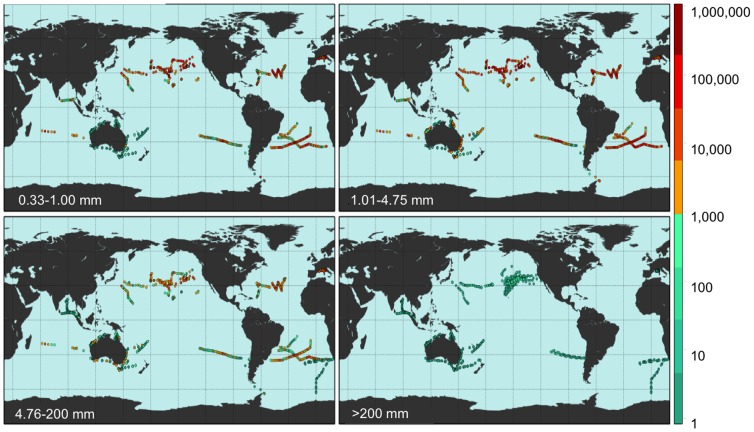
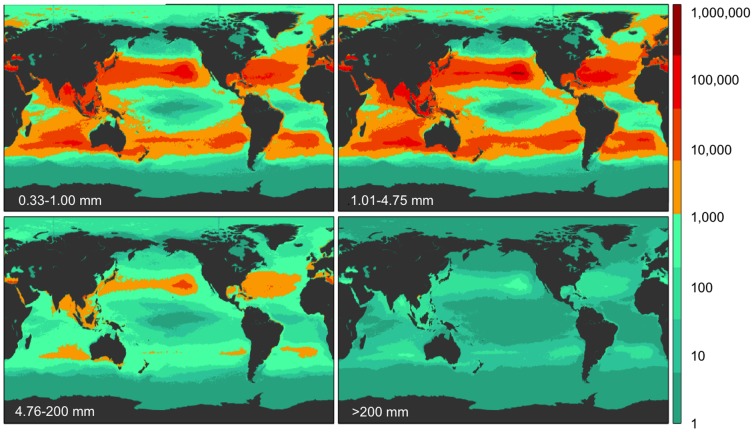
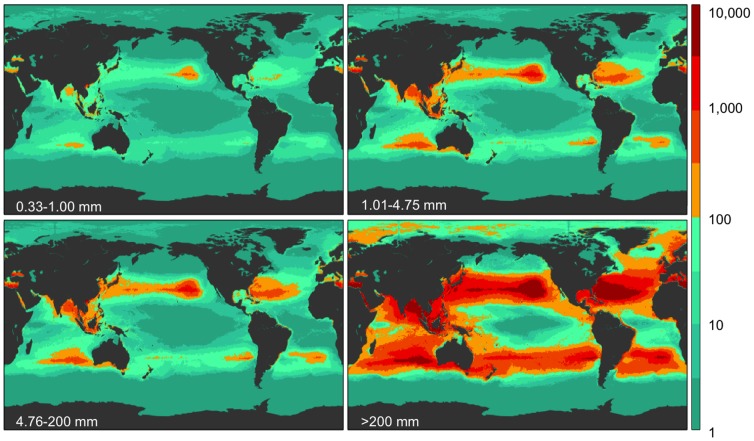
Plastic pollution is ubiquitous throughout the marine environment, yet estimates of the global abundance and weight of floating plastics have lacked data, particularly from the Southern Hemisphere and remote regions. Here we report an estimate of the total number of plastic particles and their weight floating in the world's oceans from 24 expeditions (2007-2013) across all five sub-tropical gyres, costal Australia, Bay of Bengal and the Mediterranean Sea conducting surface net tows (N = 680) and visual survey transects of large plastic debris (N = 891). Using an oceanographic model of floating debris dispersal calibrated by our data, and correcting for wind-driven vertical mixing, we estimate a minimum of 5.25 trillion particles weighing 268,940 tons. When comparing between four size classes, two microplastic <4.75 mm and meso- and macroplastic >4.75 mm, a tremendous loss of microplastics is observed from the sea surface compared to expected rates of fragmentation, suggesting there are mechanisms at play that remove <4.75 mm plastic particles from the ocean surface.
Overview
The claims and statistics of this paper haven’t been checked yet.
Free: it reads the open-access text and checks the first 5 claims that cite a source we can check. Create a free account to check every claim.
Integrity signals
Registry
Cites
Statistics
Figures
Verification
Claims the paper makes
The claims and statistics of this paper haven’t been checked yet.
Free: it reads the open-access text and checks the first 5 claims that cite a source we can check. Create a free account to check every claim.
Claims other papers make about this one
Each is checked against this paper’s own text: does it say what the citing paper says it does?
The source backs part of the claim, not all of it — or backs it for a different population, condition or comparison.
In the citing paper
“Measurements and model simulations revealed an uneven distribution of PMD, which complicates assessing global PMD inventories: highest PMD concentrations were found in the subtropical gyres (which have been termed 'trash vortexes' or 'garbage patches'), while PMD concentrations are much lower in the in the tropical and Arctic open ocean.51,53,54,[62][63][64]”
From The fate of plastic in the ocean environment – a minireview (2021) · cites this paper as [53]
Experimental — accuracy not yet measured
Self-check
Percentages, sums and reported differences re-computed from the paper’s own numbers.
The self-check needs the paper’s full text.
Citations
Cites
Lost at sea: where is all the plastic?
Thompson, R. C., Olsen, Y., Mitchell, R. P., Davis, A., Rowland, S. J., John, A. W. G., McGonigle, D., & Russell, A. E. (2004) · Science · doi:10.1126/science.1094559 · Cited by 7,765
Accumulation and fragmentation of plastic debris in global environments
Barnes, D. K. A., Galgani, F., Thompson, R. C., & Barlaz, M. (2009) · Philosophical Transactions of the Royal Society B: Biological Sciences · doi:10.1098/rstb.2008.0205 · Cited by 6,126 · cited 2×
“These include UV degradation, biodegradation, ingestion by organisms, decreased buoyancy due to fouling organisms, entrainment in settling detritus, and beaching [4].”
BackgroundSelf-citationHidalgo-Ruz, V., Gutow, L., Thompson, R. C., & Thiel, M. (2012) · Environmental Science & Technology · doi:10.1021/es2031505 · Cited by 5,440 · cited 2×
“33 mm, which is a commonly used lower limit for pelagic microplastics [31].”
BackgroundMethodSelf-citationLife in the “plastisphere”: microbial communities on plastic marine debris
Zettler, E. R., Mincer, T. J., & Amaral-Zettler, L. A. (2013) · Environmental Science & Technology · doi:10.1021/es401288x · Cited by 3,368 · cited 1×
“Furthermore, there is increasing evidence that some microbes can biodegrade microplastic particles [38–40].”
BackgroundPlastic debris in the open ocean
Cózar, A., Echevarría, F., González-Gordillo, J. I., Irigoien, X., Úbeda, B., Hernández-León, S., Palma, Á. T., Navarro, S., García-de-Lomas, J., Ruiz, A., et al. (2014) · Proceedings of the National Academy of Sciences · doi:10.1073/pnas.1314705111 · Cited by 3,133 · cited 4×
“Despite oceanographic model predictions of where debris might converge [24] estimates of regional and global abundance and weight of floating plastics have been limited to microplastics,5 mm [19, 25].”
BackgroundResultInfluentialTransport and release of chemicals from plastics to the environment and to wildlife
Teuten, E. L., Saquing, J. M., Knappe, D. R. U., Barlaz, M. A., Jonsson, S., Björn, A., Rowland, S. J., Thompson, R. C., Galloway, T. S., Yamashita, R., et al. (2009) · Philosophical Transactions of the Royal Society B: Biological Sciences · doi:10.1098/rstb.2008.0284 · Cited by 2,938 · cited 1×
“Adsorption of persistent organic pollutants onto plastic and their transfer into the tissues and organs through ingestion [15] is impacting marine megafauna [16] as well as lower trophic-level organisms [17, 18] and their predators [19, 20].”
BackgroundSelf-citationMicroplastic ingestion by zooplankton
Cole, M., Lindeque, P., Fileman, E., Halsband, C., Goodhead, R., Moger, J., & Galloway, T. S. (2013) · Environmental Science & Technology · doi:10.1021/es400663f · Cited by 2,763 · cited 2×
“In this manner, incorporation of smaller plastics into marine food chains could not only generate impacts on the health of the involved organisms [17–20], but also contribute to the removal of small microplastics from the sea surface [37].”
BackgroundLusher, A. L., McHugh, M., & Thompson, R. C. (2013) · Marine Pollution Bulletin · doi:10.1016/j.marpolbul.2012.11.028 · Cited by 2,075 · cited 1×
“via their prey organisms [34– 36].”
Plastic Resin Pellets as a Transport Medium for Toxic Chemicals in the Marine Environment
Mato, Y., Isobe, T., Takada, H., Kanehiro, H., Ohtake, C., & Kaminuma, T. (2001) · Environmental Science & Technology · doi:10.1021/es0010498 · Cited by 1,909 · cited 1×
“Plastic pollution is globally distributed across all oceans due to its properties of buoyancy and durability, and the sorption of toxicants to plastic while traveling through the environment [1, 2], have led some researchers to claim that synthetic polymers in the ocean should be regarded as hazardous waste [3].”
BackgroundGregory, M. R. (2009) · Philosophical Transactions of the Royal Society B: Biological Sciences · doi:10.1098/rstb.2008.0265 · Cited by 1,852 · cited 1×
“The impact of plastic pollution through ingestion and entanglement of marine fauna, ranging from zooplankton to cetaceans, seabirds and marine reptiles, are well documented [14].”
Background
Cited by
Items 601–700 of 1,035
Liang, Y., Lehmann, A., Yang, G., Leifheit, E. F., & Rillig, M. C. (2021) · Frontiers in Environmental Science · doi:10.3389/fenvs.2021.650155 · Cited by 175
Varó, I., Perini, A., Torreblanca, A., Garcia, Y., Bergami, E., Vannuccini, M. L., & Corsi, I. (2019) · Science of The Total Environment · doi:10.1016/j.scitotenv.2019.04.157 · Cited by 175
Ballesteros, L. V., Matthews, J. L., & Hoeksema, B. W. (2018) · Marine Pollution Bulletin · doi:10.1016/j.marpolbul.2018.08.033 · Cited by 175
A review of possible pathways of marine microplastics transport in the ocean
Li, Y., Zhang, H., & Tang, C. (2020) · Anthropocene Coasts · doi:10.1139/anc-2018-0030 · Cited by 174
“plastic concentrations in surface oceanic waters (Eriksen et al. 2014; Cózar et al. 2014), which promoted research into the vertical distribution of microplastics within the water”
BackgroundMarine debris ingestion and Thayer's law – The importance of plastic color
Santos, R. G. D., de Andrades, R. C., Fardim, L. M., & Martins, A. S. (2016) · Environmental Pollution · doi:10.1016/j.envpol.2016.04.024 · Cited by 174
Folino, A., Pangallo, D., & Calabrò, P. S. (2023) · Journal of Environmental Chemical Engineering · doi:10.1016/j.jece.2023.109424 · Cited by 173
Tursi, A., Baratta, M., Easton, T., Chatzisymeon, E., Chidichimo, F., De Biase, M., & De Filpo, G. (2022) · RSC Advances · doi:10.1039/d2ra04713f · Cited by 173
Microplastic Ingestion by Gelatinous Zooplankton May Lower Efficiency of the Biological Pump
Wieczorek, A. M., Croot, P. L., Lombard, F., Sheahan, J. N., & Doyle, T. K. (2019) · Environmental Science & Technology · doi:10.1021/acs.est.8b07174 · Cited by 150
Microplastics and the functional traits of fishes: A global meta‐analysis
Salerno, M., Berlino, M., Mangano, M. C., & Sarà, G. (2021) · Global Change Biology · doi:10.1111/gcb.15570 · Cited by 173
“Eriksen et al. (2014) estimated that at least 5.25 trillion plastic particles weighing 26,894 tons were floating in the world's oceans and 3554 tons of these were microplastics, whose early detection through spectral characterisation is promising (Corbari et al., 2020).”
BackgroundInfluentialMassive benthic litter funnelled to deep sea by flash-flood generated hyperpycnal flows
Pierdomenico, M., Casalbore, D., & Chiocci, F. L. (2019) · Scientific Reports · doi:10.1038/s41598-019-41816-8 · Cited by 156
The rapid increases in microplastics in urban lake sediments
Dong, M., Luo, Z., Jiang, Q., Xing, X., Zhang, Q., & Sun, Y. (2020) · Scientific Reports · doi:10.1038/s41598-020-57933-8 · Cited by 172
Dibke, C., Fischer, M., & Scholz-Böttcher, B. M. (2021) · Environmental Science & Technology · doi:10.1021/acs.est.0c04522 · Cited by 155
Effect of nanoplastics on fish health and performance: A review
Barría, C., Brandts, I., Tort, L., Oliveira, M., & Teles, M. (2020) · Marine Pollution Bulletin · doi:10.1016/j.marpolbul.2019.110791 · Cited by 171
Summers, S., Henry, T., & Gutierrez, T. (2018) · Marine Pollution Bulletin · doi:10.1016/j.marpolbul.2018.03.039 · Cited by 171
Marine litter as a vector for non-native species: What we need to know
Rech, S., Borrell, Y., & García-Vazquez, E. (2016) · Marine Pollution Bulletin · doi:10.1016/j.marpolbul.2016.08.032 · Cited by 151
Influencing factors for the purchase intention of consumers choosing bioplastic products in Germany
Klein, F., Emberger‐Klein, A., Menrad, K., Möhring, W., & Blesin, J.-M. (2019) · Sustainable Production and Consumption · doi:10.1016/j.spc.2019.01.004 · Cited by 171
Global Review of Beach Debris Monitoring and Future Recommendations
Serra-Gonçalves, C., Lavers, J. L., & Bond, A. L. (2019) · Environmental Science & Technology · doi:10.1021/acs.est.9b01424 · Cited by 172
Marine Microplastics: Abundance, Distribution, and Composition
Shim, W. J., Hong, S. H., & Eo, S. (2018) · Microplastic Contamination in Aquatic Environments · doi:10.1016/b978-0-12-813747-5.00001-1 · Cited by 170
Aquatic toxicity of chemically defined microplastics can be explained by functional additives
Beiras, R., Verdejo, E., Campoy-López, P., & Vidal-Liñán, L. (2021) · Journal of Hazardous Materials · doi:10.1016/j.jhazmat.2020.124338 · Cited by 170
Pollution and Environmental Perturbations in the Global System
Maximillian, J., Brusseau, M. L., Glenn, E. P., & Matthias, A. D. (2019) · Elsevier eBooks · doi:10.1016/b978-0-12-814719-1.00025-2 · Cited by 170
Yu, J., Wang, P., Ni, F., Cizdziel, J. V., Wu, D., Zhao, Q., & Zhou, Y. (2019) · Marine Pollution Bulletin · doi:10.1016/j.marpolbul.2019.05.037 · Cited by 172
Early Colonization of Weathered Polyethylene by Distinct Bacteria in Marine Coastal Seawater
Erni-Cassola, G., Wright, R., Gibson, M. I., & Christie‐Oleza, J. A. (2019) · Microbial Ecology · doi:10.1007/s00248-019-01424-5 · Cited by 170
Cable, R. N., Beletsky, D., Beletsky, R., Wigginton, K., Locke, B. W., & Duhaime, M. B. (2017) · Frontiers in Environmental Science · doi:10.3389/fenvs.2017.00045 · Cited by 169
“, 2015), with a quarter of a million tons currently floating in the world’s oceans (Eriksen et al., 2014).”
BackgroundInfluentialDebris ingestion by juvenile marine turtles: An underestimated problem
Santos, R. G., Andrades, R., Boldrini, M. A., & Martins, A. S. (2015) · Marine Pollution Bulletin · doi:10.1016/j.marpolbul.2015.02.022 · Cited by 169
James, K., Vasant, K., Padua, S., Gopinath, V., K.S., A., R., J., Babu, A., & John, S. (2020) · Marine Pollution Bulletin · doi:10.1016/j.marpolbul.2020.111027 · Cited by 169
Microplastics and Wastewater Treatment Plants—A Review
Habib, R. Z., Thiemann, T., & Al Kendi, R. (2020) · Journal of Water Resource and Protection · doi:10.4236/jwarp.2020.121001 · Cited by 169
“Today, it is estimated that about 5 trillion plastic particles are floating on the oceans, weighing 250,000 metric tons [11].”
BackgroundHorn, D. A., Granek, E. F., & Steele, C. L. (2020) · Limnology and Oceanography Letters · doi:10.1002/lol2.10137 · Cited by 169
“Globally, microplastics are common in littoral and marine sediments (Barnes et al. 2009; Browne et al. 2011; Cole et al. 2011, Uhrin and Schellinger 2011, Horn et al. 2019), potential sinks sequestering microplastics (Cózar et al. 2014; Eriksen et al. 2014; Woodall et al. 2014).”
BackgroundWang, W., Zhang, J., Qiu, Z., Cui, Z., Li, N., Li, X., Wang, Y., Zhang, H., & Zhao, C. (2022) · Journal of Hazardous Materials · doi:10.1016/j.jhazmat.2022.128323 · Cited by 169
Influence of Near‐Surface Currents on the Global Dispersal of Marine Microplastic
Wichmann, D., Delandmeter, P., & van Sebille, E. (2019) · Journal of Geophysical Research: Oceans · doi:10.1029/2019jc015328 · Cited by 152
Neustonic microplastic pollution in the Persian Gulf
Kor, K., & Mehdinia, A. (2019) · Marine Pollution Bulletin · doi:10.1016/j.marpolbul.2019.110665 · Cited by 169
Continents of Plastics: An Estimate of the Stock of Microplastics in Agricultural Soils
Kedzierski, M., Boulant, D. C., Palazot, M., Yvin, M., & Bruzaud, S. (2022) · The Science of The Total Environment · doi:10.1016/j.scitotenv.2023.163294 · Cited by 169
González-Fernández, D., & Hanke, G. (2017) · Frontiers in Marine Science · doi:10.3389/fmars.2017.00086 · Cited by 168
“…have been estimated to count over 5 trillion pieces and weigh more than a quarter million tons globally, with microplastics (as pieces <4.75mm) being about 92% of total counts and meso+macro plastics (as pieces >4.75mm) comprising with ca. 87% the bulk of total litter weight (Eriksen et al., 2014).”
BackgroundGong, J., Kong, T., Li, Y., Li, Q., Li, Z., & Zhang, J. (2018) · Polymers · doi:10.3390/polym10121326 · Cited by 168
The global biological microplastic particle sink
Kvale, K., Prowe, A. E. F., Chien, C., Landolfi, A., & Oschlies, A. (2020) · Scientific Reports · doi:10.1038/s41598-020-72898-4 · Cited by 168
Plastics in the Indian Ocean – sources, transport, distribution, and impacts
Pattiaratchi, C. B., van der Mheen, M., Schlundt, C., Narayanaswamy, B. E., Sura, A., Hajbane, S., White, R., Nimit, K., Fernandes, M., & Wijeratne, S. (2022) · Ocean science · doi:10.5194/os-18-1-2022 · Cited by 168
“In addition, it has been estimated that the IO contains the second-largest plastic load in the ocean after the North Pacific Ocean (Eriksen et al., 2014), although there are insufficient measurements of plastics available to confirm this.”
BackgroundEnvironmental and Economic Impacts of Mismanaged Plastics and Measures for Mitigation
Diggle, A., & Walker, T. R. (2022) · Environments · doi:10.3390/environments9020015 · Cited by 170
“Some microplastic debris has greater buoyancy and is transported along the surface water via wind and oceanic currents, whereas plastic with greater weight may descend deeper into the water column [47].”
BackgroundInfluentialLee, W., van Muyden, A. P., Bobbink, F. D., Mensi, M., Carullo, J. R., & Dyson, P. J. (2022) · Nature Communications · doi:10.1038/s41467-022-32563-y · Cited by 169
Jing, J., Zhang, L., Han, L., Wang, J., Zhang, W., Liu, Z., & Gao, A. (2022) · Environment International · doi:10.1016/j.envint.2022.107131 · Cited by 167
Cheung, P. K., Fok, L., Hung, P. L., & Cheung, L. T. O. (2018) · Science of The Total Environment · doi:10.1016/j.scitotenv.2018.01.338 · Cited by 167
Gündoğdu, S., & Çevik, C. (2017) · Marine Pollution Bulletin · doi:10.1016/j.marpolbul.2017.03.002 · Cited by 167
“10 total amount of plastic in marine, and are called microplastics (Eriksen et al., 2014; Thompson, 2016; Suaria et al., 2016).”
BackgroundResultInfluentialMicroplastic in the Environment: Pattern and Process
Bank, M. S. (2021) · Environmental contamination remediation and management · doi:10.1007/978-3-030-78627-4 · Cited by 167
The micro-, submicron-, and nanoplastic hunt: A review of detection methods for plastic particles
Caldwell, J., Taladriz‐Blanco, P., Lehner, R., Lubskyy, A., Ortuso, R. D., Rothen‐Rutishauser, B., & Petri‐Fink, A. (2022) · Chemosphere · doi:10.1016/j.chemosphere.2022.133514 · Cited by 167
Raman spectroscopy for microplastic detection in water sources: a systematic review
Chakraborty, I., Banik, S., Biswas, R., Yamamoto, T., Noothalapati, H., & Mazumder, N. (2023) · International Journal of Environmental Science and Technology · doi:10.1007/s13762-022-04505-0 · Cited by 166
Microplastics in the Food Chain: Food Safety and Environmental Aspects
Lehel, J., & Murphy, S. (2021) · Reviews of Environmental Contamination and Toxicology · doi:10.1007/398_2021_77 · Cited by 170
Topouzelis, K., Papageorgiou, D., Suaria, G., & Aliani, S. (2021) · Marine Pollution Bulletin · doi:10.1016/j.marpolbul.2021.112675 · Cited by 167
Cordova, M. R., & Nurhati, I. S. (2019) · Scientific Reports · doi:10.1038/s41598-019-55065-2 · Cited by 165
Plastic as a Vector of Dispersion for Marine Species With Invasive Potential. A Review
García-Gómez, J. C., Garrigós, M., & Garrigós, J. (2021) · Frontiers in Ecology and Evolution · doi:10.3389/fevo.2021.629756 · Cited by 165
Foschi, E., & Bonoli, A. (2019) · Administrative Sciences · doi:10.3390/admsci9010018 · Cited by 165
“An estimated 8 Mt of plastic waste enters the Ocean every year, where around 60% has been rediscovered in five Asian countries: China, Indonesia, the Philippines, Thailand and Vietnam (Meng et al. 2015).”
BackgroundInfluentialZooplankton grazing of microplastic can accelerate global loss of ocean oxygen
Kvale, K., Prowe, A. E. F., Chien, C.-T., Landolfi, A., & Oschlies, A. (2021) · Nature Communications · doi:10.1038/s41467-021-22554-w · Cited by 165
Branson, Y., Söltl, S., Buchmann, C., Wei, R., Schaffert, L., Badenhorst, C. P. S., Reisky, L., Jäger, G., & Bornscheuer, U. T. (2023) · Angewandte Chemie International Edition · doi:10.1002/anie.202216220 · Cited by 165
Chemotaxis-selective colonization of mangrove rhizosphere microbes on nine different microplastics
Xie, H., Chen, J., Feng, L., He, L., Zhou, C., Hong, P., Sun, S., Zhao, H., Liang, Y., Ren, L., et al. (2021) · Science of The Total Environment · doi:10.1016/j.scitotenv.2020.142223 · Cited by 165
A, N. (2019) · Marine Pollution Bulletin · doi:10.1016/j.marpolbul.2019.01.024 · Cited by 165
The costs of removing the unsanctioned import of marine plastic litter to small island states
Burt, A., Raguain, J., Sanchez, C. L., Brice, J., Fleischer‐Dogley, F., Goldberg, R. L., Talma, S., Syposz, M., Mahony, J., Letori, J., et al. (2020) · Scientific Reports · doi:10.1038/s41598-020-71444-6 · Cited by 167
Microplastics in ecosystems: their implications and mitigation pathways
Roy, P., Mohanty, A. K., & Misra, M. (2022) · Environmental Science: Advances · doi:10.1039/d1va00012h · Cited by 164
Anticyclonic eddies increase accumulation of microplastic in the North Atlantic subtropical gyre
Brach, L., Deixonne, P., Bernard, M.-F., Durand, E., Desjean, M.-C., Perez, E., van Sebille, E., & ter Halle, A. (2018) · Marine Pollution Bulletin · doi:10.1016/j.marpolbul.2017.10.077 · Cited by 164
“, 2013), gulfs (Phillips and Bonner, 2015) and oceans (Eriksen et al., 2014).”
BackgroundZobkov, M. B., Esiukova, E. E., Zyubin, A. Y., & Samusev, I. G. (2019) · Marine Pollution Bulletin · doi:10.1016/j.marpolbul.2018.11.047 · Cited by 164
Ropert-Coudert, Y., Chiaradia, A., Ainley, D., Barbosa, A., Boersma, P. D., Brasso, R., Dewar, M., Ellenberg, U., García-Borboroglu, P., Emmerson, L., et al. (2019) · Frontiers in Marine Science · doi:10.3389/fmars.2019.00248 · Cited by 145
Self-citationRecent progress of microplastic toxicity on human exposure base on in vitro and in vivo studies
Liu, Z., & You, X. (2023) · The Science of The Total Environment · doi:10.1016/j.scitotenv.2023.166766 · Cited by 165
Plastics at sea: Treaty design for a global solution to marine plastic pollution
Tessnow-von Wysocki, I., & Le Billon, P. (2019) · Environmental Science & Policy · doi:10.1016/j.envsci.2019.06.005 · Cited by 163
Wang, J., Zheng, L., & Li, J. (2018) · Waste Management & Research: The Journal for a Sustainable Circular Economy · doi:10.1177/0734242x18793504 · Cited by 163
Simple and rapid detection of microplastics in seawater using hyperspectral imaging technology
Shan, J., Zhao, J., Zhang, Y., Liu, L., Wu, F., & Wang, X. (2019) · Analytica Chimica Acta · doi:10.1016/j.aca.2018.11.008 · Cited by 163
Combined toxicity of microplastics and cadmium on the zebrafish embryos (Danio rerio)
Zhang, R., Wang, M., Chen, X., Yang, C., & Wu, L. (2020) · Science of The Total Environment · doi:10.1016/j.scitotenv.2020.140638 · Cited by 163
Closing the Mediterranean Marine Floating Plastic Mass Budget: Inverse Modeling of Sources and Sinks
Kaandorp, M. L. A., Dijkstra, H. A., & van Sebille, E. (2020) · Environmental Science & Technology · doi:10.1021/acs.est.0c01984 · Cited by 147
Lam, S., Sin, J., Zeng, H., Lin, H., Li, H., Chai, Y.-Y., Choong, M.-K., & Mohamed, A. R. (2020) · Materials Science in Semiconductor Processing · doi:10.1016/j.mssp.2020.105574 · Cited by 163
Effects of microplastics on marine copepods
Bai, Z., Wang, N., & Wang, M. (2021) · Ecotoxicology and Environmental Safety · doi:10.1016/j.ecoenv.2021.112243 · Cited by 165
Thermogravimetric analysis of microplastics: A mini review
Mansa, R., & Zou, S. (2021) · Environmental Advances · doi:10.1016/j.envadv.2021.100117 · Cited by 163
Microbial colonization of microplastics in the Caribbean Sea
Dudek, K. L., Cruz, B. N., Polidoro, B., & Neuer, S. (2020) · Limnology and Oceanography Letters · doi:10.1002/lol2.10141 · Cited by 162
Pedersen, A. F., Meyer, D. N., Petriv, A.-M. V., Soto, A. L., Shields, J. N., Akemann, C., Baker, B. B., Tsou, W.-L., Zhang, Y., & Baker, T. R. (2020) · Environmental Pollution · doi:10.1016/j.envpol.2020.115090 · Cited by 162
“Large amounts end up in the oceans, which are now predicted to contain more than five trillion individual pieces of plastic materials (equaling 250,000 tons) in the first 20 meters of the water column (Eriksen et al., 2014).”
BackgroundMicroplastics, a food safety issue?
Rainieri, S., & Barranco, A. (2019) · Trends in Food Science & Technology · doi:10.1016/j.tifs.2018.12.009 · Cited by 162
Microplastic and tar pollution on three Canary Islands beaches: An annual study
Herrera, A., Asensio, M., Martínez, I., Santana, Á., Packard, T. T., & Gómez, M. (2017) · Marine Pollution Bulletin · doi:10.1016/j.marpolbul.2017.10.020 · Cited by 162
“These small pieces of plastic become one of the most common and persistent pollutants of the sea and beaches around the world (Derraik, 2002; Moore, 2008; Ryan et al., 2009; Cózar et al., 2014; Eriksen et al., 2014).”
BackgroundInfluentialCapolupo, M., Franzellitti, S., Valbonesi, P., Lanzas, C. S., & Fabbri, E. (2018) · Environmental Pollution · doi:10.1016/j.envpol.2018.06.035 · Cited by 150
Li, S., Shi, M., Wang, Y., Xiao, Y., Cai, D., & Xiao, F. (2021) · Journal of Hazardous Materials · doi:10.1016/j.jhazmat.2020.123933 · Cited by 151
Highly effective removal of microplastics by microalgae Scenedesmus abundans
Cheng, Y.-R., & Wang, H.-Y. A. (2022) · Chemical Engineering Journal · doi:10.1016/j.cej.2022.135079 · Cited by 165
Microplastics and Nanoplastics in Aquatic Environments: Challenges and Threats to Aquatic Organisms
Al-Thawadi, S. (2020) · Arabian Journal for Science and Engineering · doi:10.1007/s13369-020-04402-z · Cited by 161
“They are considered to be the most abundant form of solid waste on Earth, categorized into primary and secondarymicroplastics, which are increasing over time [17, 18].”
BackgroundMicroplastic and charred microplastic in the Faafu Atoll, Maldives
Saliu, F., Montano, S., Garavaglia, M. G., Lasagni, M., Seveso, D., & Galli, P. (2018) · Marine Pollution Bulletin · doi:10.1016/j.marpolbul.2018.09.023 · Cited by 161
Mountford, A. S., & Morales Maqueda, M. A. (2019) · Journal of Geophysical Research: Oceans · doi:10.1029/2019jc015050 · Cited by 161
Towards a meaningful assessment of marine ecological impacts in life cycle assessment (LCA)
Woods, J. S., Veltman, K., Huijbregts, M. A. J., Verones, F., & Hertwich, E. G. (2016) · Environment International · doi:10.1016/j.envint.2015.12.033 · Cited by 172
“An estimate of floating plastic abundance and weight, allocated by fragment size-class, across all five subtropical gyres and coastal Australia, Bay of Bengal and the Mediterranean Sea indicated that “the ultimate fate of buoyant microplastics is not at the ocean surface” (Eriksen et al., 2014).”
Sea surface microlayer in a changing ocean – A perspective
Wurl, O., Ekau, W., Landing, W. M., & Zappa, C. J. (2017) · Elementa Science of the Anthropocene · doi:10.1525/elementa.228 · Cited by 163
“Since the 1970s, the sea surface has contained floating plastic material estimated at 250,000 tons (Eriksen et al., 2014), which has become a critical environmental issue.”
BackgroundChagnon, C., Thiel, M., Antunes, J., Ferreira, J. L., Sobral, P., & Ory, N. C. (2018) · Environmental Pollution · doi:10.1016/j.envpol.2018.08.042 · Cited by 143
Self-citationTrace elements in microplastics in Cartagena: A hotspot for plastic pollution at the Caribbean
Acosta-Coley, I., Mendez-Cuadro, D., Rodriguez-Cavallo, E., de la Rosa, J., & Olivero-Verbel, J. (2019) · Marine Pollution Bulletin · doi:10.1016/j.marpolbul.2018.12.016 · Cited by 153
Research and management of plastic pollution in coastal environments of China
Wang, M. H., He, Y., & Sen, B. (2019) · Environmental Pollution · doi:10.1016/j.envpol.2019.02.098 · Cited by 162
Clark, E., Mulgrew, K. E., Kannis‐Dymand, L., Schaffer, V., & Hoberg, R. (2019) · Journal of Sustainable Tourism · doi:10.1080/09669582.2019.1603237 · Cited by 161
“Eighty percent of global ocean pollution comes from land-based sources which has resulted from human behaviour (World Economic Forum, 2016), and estimates suggest global ocean currents contain over five trillion pieces of plastic pollutants (Eriksen et al., 2014).”
BackgroundSignificant plastic accumulation on the Cocos (Keeling) Islands, Australia
Lavers, J. L., Dicks, L., Dicks, M. R., & Finger, A. (2019) · Scientific Reports · doi:10.1038/s41598-019-43375-4 · Cited by 161
Ray, S. S., Lee, H. K., Huyen, D. T. T., Chen, S., & Kwon, Y. (2022) · Environmental Technology & Innovation · doi:10.1016/j.eti.2022.102290 · Cited by 162
Regulation and Management of Marine Litter
Chen, C.-L. (2015) · Marine Anthropogenic Litter · doi:10.1007/978-3-319-16510-3_15 · Cited by 160
“In the light of recent weight estimates of 268,940 t of litter adrift in the oceans (Eriksen et al. 2014) this initiative could significantly help to reduce marine litter (although this figure did not include litter on the seabed).”
BackgroundMani, T., & Burkhardt-Holm, P. (2020) · Science of The Total Environment · doi:10.1016/j.scitotenv.2019.135579 · Cited by 160
How plastic debris and associated chemicals impact the marine food web: A review
Tuuri, E. M., & Leterme, S. C. (2023) · Environmental Pollution · doi:10.1016/j.envpol.2023.121156 · Cited by 160
“In 2014, a minimum of 5.25 trillion plastic particles were thought to be present in the environment (Eriksen et al., 2014) with later predictions estimating a 50-fold increase by 2100 (Everaert et al., 2018).”
BackgroundInfluentialPinniped entanglement in oceanic plastic pollution: A global review
Jepsen, E. M., & de Bruyn, P. J. N. (2019) · Marine Pollution Bulletin · doi:10.1016/j.marpolbul.2019.05.042 · Cited by 160
O’Connor, I. A., Golsteijn, L., & Hendriks, A. J. (2016) · Marine Pollution Bulletin · doi:10.1016/j.marpolbul.2016.07.021 · Cited by 161
Inventory and transport of plastic debris in the Laurentian Great Lakes
Hoffman, M. J., & Hittinger, E. (2016) · Marine Pollution Bulletin · doi:10.1016/j.marpolbul.2016.11.061 · Cited by 162
de Farias, J. G. G., Cavalcante, R. C., Canabarro, B. R., Viana, H. M., Scholz, S., & Simão, R. A. (2017) · Carbohydrate Polymers · doi:10.1016/j.carbpol.2017.02.042 · Cited by 161
“Their lack of biodegradability, associated with insufficient efforts for collection and recycling, causes a large environmental problem (Eriksen et al., 2014; Wilcox, van Sebille, & Hardesty, 2015).”
BackgroundPlastic ingestion by juvenile polar cod (Boreogadus saida) in the Arctic Ocean
Kühn, S., Schaafsma, F. L., van Werven, B., Flores, H., Bergmann, M., Egelkraut-Holtus, M., Tekman, M. B., & van Franeker, J. A. (2018) · Polar Biology · doi:10.1007/s00300-018-2283-8 · Cited by 126
“Marine debris and in particular plastics have been found in all ocean basins of the world (Barnes et al. 2009; Eriksen et al. 2014; Galgani et al. 2015; Van Sebille et al. 2015).”
BackgroundLife in a polluted world: A global review of anthropogenic materials in bird nests
Jagiello, Z. A., Dylewski, Ł., Tobółka, M., & Aguirre, J. I. (2019) · Environmental Pollution · doi:10.1016/j.envpol.2019.05.028 · Cited by 161
“Nevertheless, the marine environment is highly polluted with plastic (Eriksen et al., 2014; Schuyler et al., 2016), which demonstrates that marine species also respond to human activities.”
BackgroundCau, A., Avio, C. G., Dessì, C., Follesa, M. C., Moccia, D., Regoli, F., & Pusceddu, A. (2019) · Environmental Pollution · doi:10.1016/j.envpol.2019.113107 · Cited by 160
Microplastic accumulation in a Zostera marina L. bed at Deerness Sound, Orkney, Scotland
Jones, K. L., Hartl, M. G. J., Bell, M. C., & Capper, A. (2020) · Marine Pollution Bulletin · doi:10.1016/j.marpolbul.2020.110883 · Cited by 161
Understanding individual and population-level effects of plastic pollution on marine megafauna
Senko, J., Nelms, S. E., Reavis, J. L., Witherington, B. E., Godley, B. J., & Wallace, B. (2020) · Endangered Species Research · doi:10.3354/esr01064 · Cited by 161
“…influx into the oceans, plastic is accumulating in a wide range of marine habitats, including shorelines, the seafloor in shallow waters as well as deep basins, and in all major ocean gyres (Barnes et al. 2009, Lebreton et al. 2012, Eriksen et al. 2014, Pham et al. 2014, Woodall et al. 2014).”
BackgroundPlastic-Degrading Potential across the Global Microbiome Correlates with Recent Pollution Trends
Zrimec, J., Kokina, M., Jonasson, S., Zorrilla, F., & Zelezniak, A. (2021) · mBio · doi:10.1128/mbio.02155-21 · Cited by 162
Prey-size plastics are invading larval fish nurseries
Gove, J. M., Whitney, J. L., McManus, M. A., Lecky, J., Carvalho, F. C., Lynch, J. M., Li, J., Neubauer, P., Smith, K. A., Phipps, J. E., et al. (2019) · Proceedings of the National Academy of Sciences · doi:10.1073/pnas.1907496116 · Cited by 159
“The accumulation of plastics in large-scale oceanic features, such as subtropical gyres, has been well documented (13, 14).”
BackgroundSpatio-temporal variation of anthropogenic marine debris on Chilean beaches
Hidalgo‐Ruz, V., Honorato‐Zimmer, D., Gatta‐Rosemary, M., Núñez, P. E., Hinojosa, I. A., & Thiel, M. (2017) · Marine Pollution Bulletin · doi:10.1016/j.marpolbul.2017.11.014 · Cited by 163
Self-citationUp and away: ontogenic transference as a pathway for aerial dispersal of microplastics
Al-Jaibachi, R., Cuthbert, R. N., & Callaghan, A. (2018) · Biology Letters · doi:10.1098/rsbl.2018.0479 · Cited by 160
“MPs have been defined as plastic particles smaller than 5 mm in size [4,5].”
Background
Metadata
- Authors
- Eriksen, M., Lebreton, L. C. M., Carson, H. S., Thiel, M., Moore, C. J., Borerro, J. C., Galgani, F., Ryan, P. G., & Reisser, J.
- Affiliations
- University of Hawaii at Hilo (US)
- University of Cape Town (ZA)
- Corresponding author
- Eriksen, Marcus
- Venue
- PLoS ONE
- Publisher
- Public Library of Science (PLoS)
- Published
- 2014-12-10
- Volume
- 9
- Issue
- 12
- Pages
- e111913
- ISSN
- 1932-6203 (ISSN-L)
- PMC
- PMC4262196
- OpenAlex
- W2130707940
- Cited by
- 4,710
- References
- 43
- Citations by year
- 2026: 255 · 2025: 425 · 2024: 499 · 2023: 585 · 2022: 598 · 2021: 648 · 2020: 531 · 2019: 419 · 2018: 308 · 2017: 200 · 2016: 149 · 2015: 86 · 2014: 4
- FWCI
- 103.05
- Type
- journal article
- Language
- en
- Open access
- gold
- doi.org
- Licence
- Locations
- PLoS ONE (publishedVersion, public-domain)
- PubMed Central (publishedVersion, public-domain)
- UWA Profiles and Research Repository (UWA) (publishedVersion, public-domain)
- PubMed (publishedVersion)
- HAL (submittedVersion)
- Institutional Archive of Ifremer (French Research Institute for Exploitation of the Sea) (submittedVersion, other-oa)
- DOAJ (DOAJ: Directory of Open Access Journals) (submittedVersion, cc-by-sa)
- Figshare (submittedVersion, cc-by)
- Open University of Cape Town (University of Cape Town) (submittedVersion, cc-by)
- Funders
- Commonwealth Scientific and Industrial Research Organisation
- National Oceanic and Atmospheric Administration
- Topics
- Physical Sciences › Environmental Science › Pollution › Microplastics and Plastic Pollution
- Physical Sciences › Environmental Science › Pollution › Oil Spill Detection and Mitigation
- Physical Sciences › Earth and Planetary Sciences › Oceanography › Marine Plankton and Biogeochemistry
- Keywords
- plastic pollution, marine plastic debris, microplastics, mesoplastics, macroplastics, plastic fragmentation, Southern Hemisphere, Bay of Bengal, Mediterranean Sea
- MeSH terms
- Models, Theoretical, Oceans and Seas, Plastics, Water Pollution, Wind, Linear Models, Hydrodynamics
About these checks
Registry, retraction, Cites and statistics results are computed, not judged, with one exception: a printed reference that no index lists is read once by a model before it counts as a citation error. Claims are extracted by a model and kept only when their quote appears verbatim in the text; each cited source is then checked, with a model’s help, for whether it says what the claim relies on. Those verdicts can be wrong — read the claim’s quote and the cited source before relying on one.
Statistics and arithmetic are recomputed, not judged.
Confidence bands are shown only for fields calibrated on our annotated test set. None is calibrated yet, so no band is shown.
What counts as a claim ›How we measure confidence ›How we check this ›
Are you an author, or do you see a problem with this page? Request a review
Data sources
Bibliographic data: Semantic Scholar, OpenAlex, Crossref.
Contains information from the Semantic Scholar Academic Graph Datasets, made available under the ODC Attribution License (ODC-BY 1.0).
Semantic Scholar’s data is described in: Kinney, R., et al. (2023). The Semantic Scholar Open Data Platform. arXiv:2301.10140.
