

Plastic pollution in the world’s oceans: more than 5 trillion plastic pieces weighing over 250,000 tons afloat at sea
Open accessThe DOI matches its Crossref record; 43 of the 43 references it cites were found in a registry or an index.
Abstract
Plastic pollution is ubiquitous throughout the marine environment, yet estimates of the global abundance and weight of floating plastics have lacked data, particularly from the Southern Hemisphere and remote regions. Here we report an estimate of the total number of plastic particles and their weight floating in the world's oceans from 24 expeditions (2007-2013) across all five sub-tropical gyres, costal Australia, Bay of Bengal and the Mediterranean Sea conducting surface net tows (N = 680) and visual survey transects of large plastic debris (N = 891). Using an oceanographic model of floating debris dispersal calibrated by our data, and correcting for wind-driven vertical mixing, we estimate a minimum of 5.25 trillion particles weighing 268,940 tons. When comparing between four size classes, two microplastic <4.75 mm and meso- and macroplastic >4.75 mm, a tremendous loss of microplastics is observed from the sea surface compared to expected rates of fragmentation, suggesting there are mechanisms at play that remove <4.75 mm plastic particles from the ocean surface.
Overview
The claims and statistics of this paper haven’t been checked yet.
Free: it reads the open-access text and checks the first 5 claims that cite a source we can check. Create a free account to check every claim.
Integrity signals
Registry
Cites
Statistics
Figures
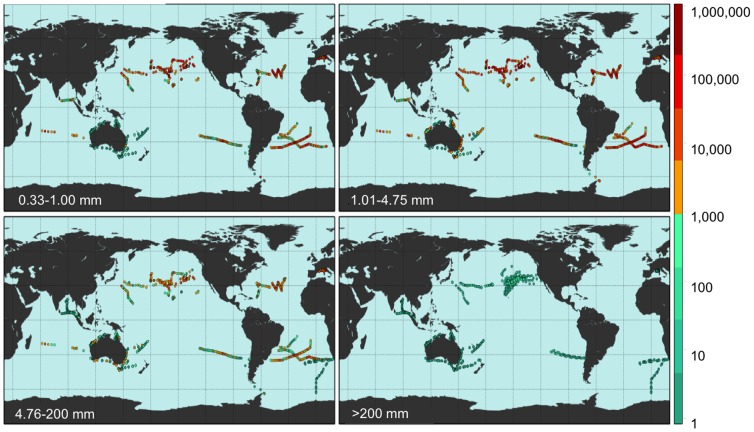
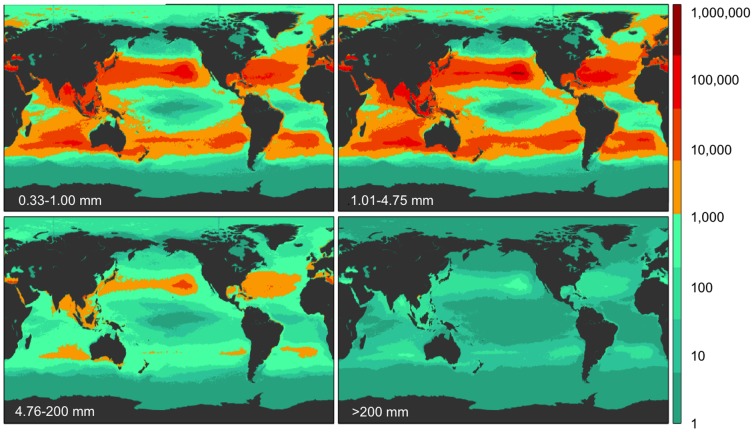
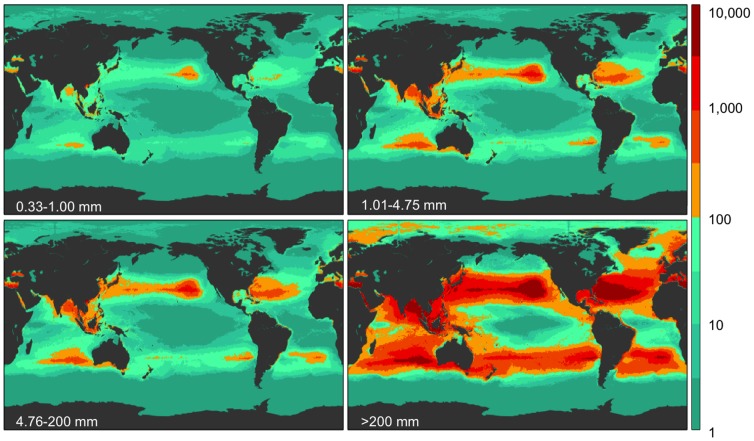
Verification
Claims the paper makes
The claims and statistics of this paper haven’t been checked yet.
Free: it reads the open-access text and checks the first 5 claims that cite a source we can check. Create a free account to check every claim.
Claims other papers make about this one
Each is checked against this paper’s own text: does it say what the citing paper says it does?
The source backs part of the claim, not all of it — or backs it for a different population, condition or comparison.
In the citing paper
“Measurements and model simulations revealed an uneven distribution of PMD, which complicates assessing global PMD inventories: highest PMD concentrations were found in the subtropical gyres (which have been termed 'trash vortexes' or 'garbage patches'), while PMD concentrations are much lower in the in the tropical and Arctic open ocean.51,53,54,[62][63][64]”
From The fate of plastic in the ocean environment – a minireview (2021) · cites this paper as [53]
Experimental — accuracy not yet measured
Self-check
Percentages, sums and reported differences re-computed from the paper’s own numbers.
The self-check needs the paper’s full text.
Citations
Cites
Lost at sea: where is all the plastic?
Thompson, R. C., Olsen, Y., Mitchell, R. P., Davis, A., Rowland, S. J., John, A. W. G., McGonigle, D., & Russell, A. E. (2004) · Science · doi:10.1126/science.1094559 · Cited by 7,765
Accumulation and fragmentation of plastic debris in global environments
Barnes, D. K. A., Galgani, F., Thompson, R. C., & Barlaz, M. (2009) · Philosophical Transactions of the Royal Society B: Biological Sciences · doi:10.1098/rstb.2008.0205 · Cited by 6,126 · cited 2×
“These include UV degradation, biodegradation, ingestion by organisms, decreased buoyancy due to fouling organisms, entrainment in settling detritus, and beaching [4].”
BackgroundSelf-citationHidalgo-Ruz, V., Gutow, L., Thompson, R. C., & Thiel, M. (2012) · Environmental Science & Technology · doi:10.1021/es2031505 · Cited by 5,440 · cited 2×
“33 mm, which is a commonly used lower limit for pelagic microplastics [31].”
BackgroundMethodSelf-citationLife in the “plastisphere”: microbial communities on plastic marine debris
Zettler, E. R., Mincer, T. J., & Amaral-Zettler, L. A. (2013) · Environmental Science & Technology · doi:10.1021/es401288x · Cited by 3,368 · cited 1×
“Furthermore, there is increasing evidence that some microbes can biodegrade microplastic particles [38–40].”
BackgroundPlastic debris in the open ocean
Cózar, A., Echevarría, F., González-Gordillo, J. I., Irigoien, X., Úbeda, B., Hernández-León, S., Palma, Á. T., Navarro, S., García-de-Lomas, J., Ruiz, A., et al. (2014) · Proceedings of the National Academy of Sciences · doi:10.1073/pnas.1314705111 · Cited by 3,133 · cited 4×
“Despite oceanographic model predictions of where debris might converge [24] estimates of regional and global abundance and weight of floating plastics have been limited to microplastics,5 mm [19, 25].”
BackgroundResultInfluentialTransport and release of chemicals from plastics to the environment and to wildlife
Teuten, E. L., Saquing, J. M., Knappe, D. R. U., Barlaz, M. A., Jonsson, S., Björn, A., Rowland, S. J., Thompson, R. C., Galloway, T. S., Yamashita, R., et al. (2009) · Philosophical Transactions of the Royal Society B: Biological Sciences · doi:10.1098/rstb.2008.0284 · Cited by 2,938 · cited 1×
“Adsorption of persistent organic pollutants onto plastic and their transfer into the tissues and organs through ingestion [15] is impacting marine megafauna [16] as well as lower trophic-level organisms [17, 18] and their predators [19, 20].”
BackgroundSelf-citationMicroplastic ingestion by zooplankton
Cole, M., Lindeque, P., Fileman, E., Halsband, C., Goodhead, R., Moger, J., & Galloway, T. S. (2013) · Environmental Science & Technology · doi:10.1021/es400663f · Cited by 2,763 · cited 2×
“In this manner, incorporation of smaller plastics into marine food chains could not only generate impacts on the health of the involved organisms [17–20], but also contribute to the removal of small microplastics from the sea surface [37].”
BackgroundLusher, A. L., McHugh, M., & Thompson, R. C. (2013) · Marine Pollution Bulletin · doi:10.1016/j.marpolbul.2012.11.028 · Cited by 2,075 · cited 1×
“via their prey organisms [34– 36].”
Plastic Resin Pellets as a Transport Medium for Toxic Chemicals in the Marine Environment
Mato, Y., Isobe, T., Takada, H., Kanehiro, H., Ohtake, C., & Kaminuma, T. (2001) · Environmental Science & Technology · doi:10.1021/es0010498 · Cited by 1,909 · cited 1×
“Plastic pollution is globally distributed across all oceans due to its properties of buoyancy and durability, and the sorption of toxicants to plastic while traveling through the environment [1, 2], have led some researchers to claim that synthetic polymers in the ocean should be regarded as hazardous waste [3].”
BackgroundGregory, M. R. (2009) · Philosophical Transactions of the Royal Society B: Biological Sciences · doi:10.1098/rstb.2008.0265 · Cited by 1,852 · cited 1×
“The impact of plastic pollution through ingestion and entanglement of marine fauna, ranging from zooplankton to cetaceans, seabirds and marine reptiles, are well documented [14].”
Background
Cited by
Items 201–300 of 1,035
Microplastics in the Northwestern Pacific: Abundance, distribution, and characteristics
Pan, Z., Guo, H., Chen, H., Wang, S., Sun, X., Zou, Q., Zhang, Y., Lin, H., Cai, S., & Huang, J. (2019) · Science of The Total Environment · doi:10.1016/j.scitotenv.2018.09.244 · Cited by 440
“Particularly high MP concentrations have been reported in the convergent zones of subtropical ocean gyres due to accumulation and persistence of MPs in these regions (Cózar et al., 2014; Eriksen et al., 2014; Mauro et al., 2017; Moore et al., 2001).”
BackgroundEnvironmental samples of microplastics induce significant toxic effects in fish larvae
Pannetier, P., Morin, B., Le Bihanic, F., Dubreil, L., Clérandeau, C., Chouvellon, F., Van Arkel, K., Danion, M., & Cachot, J. (2020) · Environment International · doi:10.1016/j.envint.2019.105047 · Cited by 439
Microplastics in the Marine Environment: Sources, Consequences and Solutions
Thompson, R. C. (2015) · Marine Anthropogenic Litter · doi:10.1007/978-3-319-16510-3_7 · Cited by 436
“Recent studies have attempted to assess global distributions (Cózar et al. 2014; Eriksen et al. 2014), the logical next step could be to estimate total production, current tonnage in use and accumulated disposal via recognized waste management in order to establish via a mass balance the amount of plastic that is miss…”
BackgroundMicroplastics in sub-surface waters of the Arctic Central Basin
Kanhai, L. D. K., Gårdfeldt, K., Lyashevska, O., Hassellöv, M., Thompson, R. C., & O'Connor, I. (2018) · Marine Pollution Bulletin · doi:10.1016/j.marpolbul.2018.03.011 · Cited by 433
Sorption properties of tylosin on four different microplastics
Guo, X., Pang, J., Chen, S., & Jia, H. (2018) · Chemosphere · doi:10.1016/j.chemosphere.2018.06.100 · Cited by 430
Occurrence of microplastics in landfill systems and their fate with landfill age
Su, Y., Zhang, Z., Wu, D., Zhan, L., Shi, H., & Xie, B. (2019) · Water Research · doi:10.1016/j.watres.2019.114968 · Cited by 427
Eriksen, M., Cowger, W., Erdle, L. M., Coffin, S., Villarrubia-Gómez, P., Moore, C. J., Carpenter, E. J., Day, R. H., Thiel, M., & Wilcox, C. (2023) · PLOS ONE · doi:10.1371/journal.pone.0281596 · Cited by 427
“The data were collected with multiple methods of sea-surface sampling: manta trawl [8, 16], AVANI trawl [17], or a rectangular neuston net [7, 18].”
MethodSelf-citationAriza-Tarazona, M. C., Villarreal-Chiu, J. F., Barbieri, V., Siligardi, C., & Cedillo-González, E. I. (2019) · Ceramics International · doi:10.1016/j.ceramint.2018.10.208 · Cited by 426
Plastics in the North Atlantic garbage patch: A boat-microbe for hitchhikers and plastic degraders
Debroas, D., Mone, A., & Ter Halle, A. (2017) · Science of The Total Environment · doi:10.1016/j.scitotenv.2017.05.059 · Cited by 424
Microplastics in the Southern Ocean
Isobe, A., Uchiyama-Matsumoto, K., Uchida, K., & Tokai, T. (2017) · Marine Pollution Bulletin · doi:10.1016/j.marpolbul.2016.09.037 · Cited by 422
“However, microplastic surveys in the Southern Ocean have not been reported in peer-reviewed publications, except for a small number of surveys conducted in the Drake Passage close to South America (unpublished, but data were used in Cózar et al. (2014) and Eriksen et al. (2014)).”
BackgroundMethodInfluentialLong, M., Paul-Pont, I., Hégaret, H., Moriceau, B., Lambert, C., Huvet, A., & Soudant, P. (2017) · Environmental Pollution · doi:10.1016/j.envpol.2017.05.047 · Cited by 416
“In addition, the ubiquitous nature of these microparticles has been shown to lead to their accumulation in oceans over the last decades (Eriksen et al., 2014; Woodall et al., 2014).”
BackgroundMicroplastics in Spanish Table Salt
Iñiguez, M. E., Conesa, J. A., & Fullana, A. (2017) · Scientific Reports · doi:10.1038/s41598-017-09128-x · Cited by 414
Zambrano, M. C., Pawlak, J. J., Daystar, J., Ankeny, M., Cheng, J. J., & Venditti, R. A. (2019) · Marine Pollution Bulletin · doi:10.1016/j.marpolbul.2019.02.062 · Cited by 414
Pitt, J. A., Trevisan, R., Massarsky, A., Kozal, J. S., Levin, E. D., & Di Giulio, R. T. (2018) · Science of The Total Environment · doi:10.1016/j.scitotenv.2018.06.186 · Cited by 413
Water Analysis: Emerging Contaminants and Current Issues
Richardson, S. D., & Kimura, S. Y. (2016) · Analytical Chemistry · doi:10.1021/acs.analchem.5b04493 · Cited by 413
Zhang, S., Wang, J., Liu, X., Qu, F., Wang, X., Wang, X., Li, Y., & Sun, Y. (2019) · TrAC Trends in Analytical Chemistry · doi:10.1016/j.trac.2018.12.002 · Cited by 412
Pittura, L., Avio, C. G., Giuliani, M. E., d'Errico, G., Keiter, S. H., Cormier, B., Gorbi, S., & Regoli, F. (2018) · Frontiers in Marine Science · doi:10.3389/fmars.2018.00103 · Cited by 411
“Microplastics are particles smaller than 5mm in diameter (NOAA, 2015), now identified as the predominant component of plastic debris in the marine environment (Goldstein et al., 2013; Eriksen et al., 2014).”
BackgroundWang, J., Wang, M., Ru, S., & Liu, X. (2019) · Science of The Total Environment · doi:10.1016/j.scitotenv.2018.10.007 · Cited by 408
Rabnawaz, M., Wyman, I., Auras, R., & Cheng, S. (2017) · Green Chem. · doi:10.1039/c7gc02521a · Cited by 406
Review on plastic wastes in marine environment – Biodegradation and biotechnological solutions
A., G. K., K., A., M., H., K., S., & G., D. (2020) · Marine Pollution Bulletin · doi:10.1016/j.marpolbul.2019.110733 · Cited by 406
The degradation potential of PET bottles in the marine environment: an ATR-FTIR based approach
Ioakeimidis, C., Fotopoulou, K. N., Karapanagioti, H. K., Geraga, M., Zeri, C., Papathanassiou, E., Galgani, F., & Papatheodorou, G. (2016) · Scientific Reports · doi:10.1038/srep23501 · Cited by 405
Self-citationGreen, D. S. (2016) · Environmental Pollution · doi:10.1016/j.envpol.2016.05.043 · Cited by 405
Microfibers from synthetic textiles as a major source of microplastics in the environment: A review
Acharya, S., Rumi, S. S., Hu, Y., & Abidi, N. (2021) · Textile Research Journal · doi:10.1177/0040517521991244 · Cited by 405
Napper, I. E., Baroth, A., Barrett, A. C., Bhola, S., Chowdhury, G. W., Davies, B. F. R., Duncan, E. M., Kumar, S., Nelms, S. E., Hasan Niloy, M. N., et al. (2021) · Environmental Pollution · doi:10.1016/j.envpol.2020.116348 · Cited by 404
Fin whales and microplastics: The Mediterranean Sea and the Sea of Cortez scenarios
Fossi, M. C., Marsili, L., Baini, M., Giannetti, M., Coppola, D., Guerranti, C., Caliani, I., Minutoli, R., Lauriano, G., Finoia, M. G., et al. (2016) · Environmental Pollution · doi:10.1016/j.envpol.2015.11.022 · Cited by 403
“Litter enters the sea from land-based sources, maritime activities and sea-based infrastructure, among other sources, and can travel long distances (Eriksen et al., 2014).”
BackgroundResultInfluentialMicroplastics in cosmetics: Environmental issues and needs for global bans
Guerranti, C., Martellini, T., Perra, G., Scopetani, C., & Cincinelli, A. (2019) · Environmental Toxicology and Pharmacology · doi:10.1016/j.etap.2019.03.007 · Cited by 401
Microplastics in marine biota: A review
Ugwu, K., Herrera, A., & Gómez, M. (2021) · Marine Pollution Bulletin · doi:10.1016/j.marpolbul.2021.112540 · Cited by 400
All is not lost: deriving a top-down mass budget of plastic at sea
Koelmans, A. A., Kooi, M., Law, K. L., & van Sebille, E. (2017) · Environmental Research Letters · doi:10.1088/1748-9326/aa9500 · Cited by 396
“There is much uncertainty in the limited data on abundance of plastic debris in the oceans (Eriksen et al 2014, Cózar et al 2014, Van Sebille et al 2015).”
BackgroundMethodInfluentialBrandts, I., Teles, M., Gonçalves, A. P., Barreto, A., Franco-Martinez, L., Tvarijonaviciute, A., Martins, M. A., Soares, A. M. V. M., Tort, L., & Oliveira, M. (2018) · Science of The Total Environment · doi:10.1016/j.scitotenv.2018.06.257 · Cited by 396
Microplastic Impacts on Microalgae Growth: Effects of Size and Humic Acid
Liu, G., Jiang, R., You, J., Muir, D. C. G., & Zeng, E. Y. (2020) · Environmental Science & Technology · doi:10.1021/acs.est.9b06187 · Cited by 396
Rochman, C. M. (2015) · Marine Anthropogenic Litter · doi:10.1007/978-3-319-16510-3_5 · Cited by 395
“Today, marine plastic pollution has become ubiquitous and is reported globally from the ocean surface (Thompson et al. 2004; Goldstein et al. 2013; Eriksen et al. 2014; Law et al. 2014; Desforges et al. 2014) to the deep sea (Goldberg 1997; Galgani et al. 2000).”
BackgroundMangrove forests as traps for marine litter
Martin, C., Almahasheer, H., & Duarte, C. M. (2019) · Environmental Pollution · doi:10.1016/j.envpol.2019.01.067 · Cited by 395
“The global load of marine fl oating plastic litter in surface waters is far smaller than expected based on the loads of mismanaged plastic entering the marine environment (Cozar et al., 2014; Eriksen et al., 2014; Jambeck et al., 2015; Van Sebille et al., 2015).”
Zhu, L., Zhao, S., Bittar, T. B., Stubbins, A., & Li, D. (2020) · Journal of Hazardous Materials · doi:10.1016/j.jhazmat.2019.121065 · Cited by 394
Impacts of temperature and selected chemical digestion methods on microplastic particles
Munno, K., Helm, P. A., Jackson, D. A., Rochman, C., & Sims, A. (2017) · Environmental Toxicology and Chemistry · doi:10.1002/etc.3935 · Cited by 393
“Microplastics, which are microscopic plastic particles less than 5mm in size [1], comprise the majority of the plastic debris present in aquatic environments based on particle abundance [2], leading to concerns about exposure and effects in organisms.”
BackgroundDussud, C., Meistertzheim, A. L., Conan, P., Pujo-Pay, M., George, M., Fabre, P., Coudane, J., Higgs, P., Elineau, A., Pedrotti, M. L., et al. (2018) · Environmental Pollution · doi:10.1016/j.envpol.2017.12.027 · Cited by 392
Veerasingam, S., Saha, M., Suneel, V., Vethamony, P., Rodrigues, A. C., Bhattacharyya, S., & Naik, B. G. (2016) · Chemosphere · doi:10.1016/j.chemosphere.2016.06.056 · Cited by 390
Brander, S. M., Renick, V. C., Foley, M. M., Steele, C., Woo, M., Lusher, A., Carr, S., Helm, P., Box, C., Cherniak, S., et al. (2020) · Applied Spectroscopy · doi:10.1177/0003702820945713 · Cited by 389
Choi, J. S., Jung, Y.-J., Hong, N.-H., Hong, S. H., & Park, J.-W. (2018) · Marine Pollution Bulletin · doi:10.1016/j.marpolbul.2018.02.039 · Cited by 389
Photocatalytic TiO 2 Micromotors for Removal of Microplastics and Suspended Matter
Wang, L., Kaeppler, A., Fischer, D., & Simmchen, J. (2019) · ACS Applied Materials & Interfaces · doi:10.1021/acsami.9b06128 · Cited by 389
Thermochemical conversion of plastic waste to fuels: A review
Nanda, S., & Berruti, F. (2021) · Environmental Chemistry Letters · doi:10.1007/s10311-020-01094-7 · Cited by 383
Toxicities of polystyrene nano- and microplastics toward marine bacterium Halomonas alkaliphila
Sun, X., Chen, B., Li, Q., Liu, N., Xia, B., Zhu, L., & Qu, K. (2018) · Science of The Total Environment · doi:10.1016/j.scitotenv.2018.06.141 · Cited by 382
Risks of Plastic Debris: Unravelling Fact, Opinion, Perception, and Belief
Koelmans, A. A., Besseling, E., Foekema, E., Kooi, M., Mintenig, S., Ossendorp, B. C., Redondo-Hasselerharm, P. E., Verschoor, A., van Wezel, A. P., & Scheffer, M. (2017) · Environmental Science & Technology · doi:10.1021/acs.est.7b02219 · Cited by 381
“It has been reported, however, that >80% of the mass of marine plastic debris is macroplastic (i.e., >5 mm), 42 with a (very) low number count per unit of surface or unit of volume.”
Menéndez-Pedriza, A., & Jaumot, J. (2020) · Toxics · doi:10.3390/toxics8020040 · Cited by 381
Bergami, E., Bocci, E., Vannuccini, M. L., Monopoli, M., Salvati, A., Dawson, K. A., & Corsi, I. (2016) · Ecotoxicology and Environmental Safety · doi:10.1016/j.ecoenv.2015.09.021 · Cited by 379
“Several studies estimate that trillions of plastics are fl oating all over the oceans (Eriksen et al., 2014), representing one of the most important threats for marine ecosystems (Cozar et al., 2014).”
BackgroundUnderestimated Microplastic Pollution Derived from Fishery Activities and “Hidden” in Deep Sediment
Xue, B., Zhang, L., Li, R., Wang, Y., Guo, J., Yu, K., & Wang, S. (2020) · Environmental Science & Technology · doi:10.1021/acs.est.9b04850 · Cited by 379
Das, A. (2023) · Science of The Total Environment · doi:10.1016/j.scitotenv.2023.165076 · Cited by 379
Plastics in sea surface waters around the Antarctic Peninsula
Lacerda, A. L. D. F., Rodrigues, L. D. S., van Sebille, E., Rodrigues, F. L., Ribeiro, L., Secchi, E. R., Kessler, F., & Proietti, M. C. (2019) · Scientific Reports · doi:10.1038/s41598-019-40311-4 · Cited by 378
Microplastics contamination in molluscs from the northern part of the Persian Gulf
Naji, A., Nuri, M., & Vethaak, A. D. (2018) · Environmental Pollution · doi:10.1016/j.envpol.2017.12.046 · Cited by 376
Microplastics and the gut microbiome: How chronically exposed species may suffer from gut dysbiosis
Fackelmann, G., & Sommer, S. (2019) · Marine Pollution Bulletin · doi:10.1016/j.marpolbul.2019.04.030 · Cited by 376
Microplastics as Both a Sink and a Source of Bisphenol A in the Marine Environment
Liu, X., Shi, H., Xie, B., Dionysiou, D. D., & Zhao, Y. (2019) · Environmental Science & Technology · doi:10.1021/acs.est.9b02834 · Cited by 376
Lv, L., He, L., Jiang, S., Chen, J., Zhou, C., Qu, J., Lu, Y., Hong, P., Sun, S., & Li, C. (2020) · Science of The Total Environment · doi:10.1016/j.scitotenv.2020.138449 · Cited by 374
Direct radiative effects of airborne microplastics
Revell, L. E., Kuma, P., Le Ru, E. C., Somerville, W. R. C., & Gaw, S. (2021) · Nature · doi:10.1038/s41586-021-03864-x · Cited by 372
The missing ocean plastic sink: Gone with the rivers
Weiss, L., Ludwig, W., Heussner, S., Canals, M., Ghiglione, J.-F., Estournel, C., Constant, M., & Kerhervé, P. (2021) · Science · doi:10.1126/science.abe0290 · Cited by 372
Microplastic pollution in the surface waters of Italian Subalpine Lakes
Sighicelli, M., Pietrelli, L., Lecce, F., Iannilli, V., Falconieri, M., Coscia, L., Di Vito, S., Nuglio, S., & Zampetti, G. (2018) · Environmental Pollution · doi:10.1016/j.envpol.2018.02.008 · Cited by 370
A One Health perspective of the impacts of microplastics on animal, human and environmental health
Prata, J. C., da Costa, J. P., Lopes, I., Andrady, A. L., Duarte, A. C., & Rocha-Santos, T. (2021) · Science of The Total Environment · doi:10.1016/j.scitotenv.2021.146094 · Cited by 370
Agboola, O. D., & Benson, N. U. (2021) · Frontiers in Environmental Science · doi:10.3389/fenvs.2021.678574 · Cited by 369
Biofilm-Developed Microplastics As Vectors of Pollutants in Aquatic Environments
Wang, J., Guo, X., & Xue, J. (2021) · Environmental Science & Technology · doi:10.1021/acs.est.1c04466 · Cited by 369
Microplastics in coastal sediments from Southern Portuguese shelf waters
Frias, J. P. G. L., Gago, J., Otero, V., & Sobral, P. (2016) · Marine Environmental Research · doi:10.1016/j.marenvres.2015.12.006 · Cited by 366
First evidence of microplastic contamination in the supraglacial debris of an alpine glacier
Ambrosini, R., Azzoni, R. S., Pittino, F., Diolaiuti, G., Franzetti, A., & Parolini, M. (2019) · Environmental Pollution · doi:10.1016/j.envpol.2019.07.005 · Cited by 364
Hermabessiere, L., Himber, C., Boricaud, B., Kazour, M., Amara, R., Cassone, A.-L., Laurentie, M., Paul-Pont, I., Soudant, P., Dehaut, A., et al. (2018) · Analytical and Bioanalytical Chemistry · doi:10.1007/s00216-018-1279-0 · Cited by 360
Microplastics generated when opening plastic packaging
Sobhani, Z., Lei, Y., Tang, Y., Wu, L., Zhang, X., Naidu, R., Megharaj, M., & Fang, C. (2020) · Scientific Reports · doi:10.1038/s41598-020-61146-4 · Cited by 358
Colonization of Non-biodegradable and Biodegradable Plastics by Marine Microorganisms
Dussud, C., Hudec, C., George, M., Fabre, P., Higgs, P., Bruzaud, S., Delort, A.-M., Eyheraguibel, B., Meistertzheim, A.-L., Jacquin, J., et al. (2018) · Frontiers in Microbiology · doi:10.3389/fmicb.2018.01571 · Cited by 356
Temporal dynamics of bacterial and fungal colonization on plastic debris in the North Sea
De Tender, C., Devriese, L. I., Haegeman, A., Maes, S., Vangeyte, J., Cattrijsse, A., Dawyndt, P., & Ruttink, T. (2017) · Environmental Science & Technology · doi:10.1021/acs.est.7b00697 · Cited by 355
Li, R., Yu, L., Chai, M., Wu, H., & Zhu, X. (2020) · Science of The Total Environment · doi:10.1016/j.scitotenv.2019.135025 · Cited by 350
Keswani, A., Oliver, D. M., Gutierrez, T., & Quilliam, R. S. (2016) · Marine Environmental Research · doi:10.1016/j.marenvres.2016.04.006 · Cited by 349
Prata, J. C., da Costa, J. P., Girão, A. V., Lopes, I., Duarte, A. C., & Rocha-Santos, T. (2019) · Science of The Total Environment · doi:10.1016/j.scitotenv.2019.05.456 · Cited by 348
Raman Tweezers for Small Microplastics and Nanoplastics Identification in Seawater
Gillibert, R., Balakrishnan, G., Deshoules, Q., Tardivel, M., Magazzù, A., Donato, M. G., Maragò, O. M., Lamy de La Chapelle, M., Colas, F., Lagarde, F., et al. (2019) · Environmental Science & Technology · doi:10.1021/acs.est.9b03105 · Cited by 348
Barrows, A. P. W., Neumann, C. A., Berger, M. L., & Shaw, S. D. (2017) · Analytical Methods · doi:10.1039/c6ay02387h · Cited by 348
Experimental Evaluation of Seaweeds as a Vector for Microplastics into Marine Food Webs
Gutow, L., Eckerlebe, A., Giménez, L., & Saborowski, R. (2016) · Environmental Science & Technology · doi:10.1021/acs.est.5b02431 · Cited by 346
Lost but can't be neglected: Huge quantities of small microplastics hide in the South China Sea
Cai, M., He, H., Liu, M., Li, S., Tang, G., Wang, W., Huang, P., Wei, G., Lin, Y., Chen, B., et al. (2018) · Science of The Total Environment · doi:10.1016/j.scitotenv.2018.03.197 · Cited by 346
Horizontal and Vertical Distribution of Microplastics in Korean Coastal Waters
Song, Y. K., Hong, S. H., Eo, S., Jang, M., Han, G. M., Isobe, A., & Shim, W. J. (2018) · Environmental Science & Technology · doi:10.1021/acs.est.8b04032 · Cited by 345
Occurrence of microplastics and its pollution in the environment: A review
Jiang, J.-Q. (2018) · Sustainable Production and Consumption · doi:10.1016/j.spc.2017.11.003 · Cited by 344
Microplastic fiber uptake, ingestion, and egestion rates in the blue mussel (Mytilus edulis)
Woods, M. N., Stack, M. E., Fields, D. M., Shaw, S. D., & Matrai, P. A. (2018) · Marine Pollution Bulletin · doi:10.1016/j.marpolbul.2018.10.061 · Cited by 344
Luo, H., Xiang, Y., He, D., Li, Y., Zhao, Y., Wang, S., & Pan, X. (2019) · Science of The Total Environment · doi:10.1016/j.scitotenv.2019.04.401 · Cited by 343
Nadal, M. A., Alomar, C., & Deudero, S. (2016) · Environmental Pollution · doi:10.1016/j.envpol.2016.04.054 · Cited by 338
Microplastics in oysters Saccostrea cucullata along the Pearl River Estuary, China
Li, H.-X., Ma, L.-S., Lin, L., Ni, Z.-X., Xu, X.-R., Shi, H.-H., Yan, Y., Zheng, G.-M., & Rittschof, D. (2018) · Environmental Pollution · doi:10.1016/j.envpol.2018.01.083 · Cited by 335
RETRACTED: Microplastic contamination in Penaeid shrimp from the Northern Bay of Bengal
Hossain, M. S., Rahman, M. S., Uddin, M. N., Sharifuzzaman, S. M., Chowdhury, S. R., Sarker, S., & Nawaz Chowdhury, M. S. (2020) · Chemosphere · doi:10.1016/j.chemosphere.2019.124688 · Cited by 335
RetractedUsing a marine microalga as a chassis for polyethylene terephthalate (PET) degradation
Moog, D., Schmitt, J., Senger, J., Zarzycki, J., Rexer, K.-H., Linne, U., Erb, T., & Maier, U. G. (2019) · Microbial Cell Factories · doi:10.1186/s12934-019-1220-z · Cited by 334
Microplastic in cultured oysters from different coastal areas of China
Teng, J., Wang, Q., Ran, W., Wu, D., Liu, Y., Sun, S., Liu, H., Cao, R., & Zhao, J. (2019) · Science of The Total Environment · doi:10.1016/j.scitotenv.2018.11.057 · Cited by 333
“It is estimated that approximately 5.35 trillion plastic particles float on the surface of oceans and seas (Eriksen et al., 2014).”
BackgroundInfluentialTransport and Burial of Microplastics in Deep-Marine Sediments by Turbidity Currents
Pohl, F., Eggenhuisen, J. T., Kane, I. A., & Clare, M. A. (2020) · Environmental Science & Technology · doi:10.1021/acs.est.9b07527 · Cited by 333
A novel method for preparing microplastic fibers
Cole, M. (2016) · Scientific Reports · doi:10.1038/srep34519 · Cited by 332
Occurrence, toxicity and remediation of polyethylene terephthalate plastics. A review
Dhaka, V., Singh, S., Anil, A. G., Sunil Kumar Naik, T. S., Garg, S., Samuel, J., Kumar, M., Ramamurthy, P. C., & Singh, J. (2022) · Environmental Chemistry Letters · doi:10.1007/s10311-021-01384-8 · Cited by 331
A local-to-global emissions inventory of macroplastic pollution
Cottom, J. W., Cook, E., & Velis, C. A. (2024) · Nature · doi:10.1038/s41586-024-07758-6 · Cited by 331
New Link in the Food Chain? Marine Plastic Pollution and Seafood Safety
Seltenrich, N. (2015) · Environmental Health Perspectives · doi:10.1289/ehp.123-a34 · Cited by 330
Catarino, A. I., Thompson, R., Sanderson, W., & Henry, T. B. (2016) · Environmental Toxicology and Chemistry · doi:10.1002/etc.3608 · Cited by 330
“Microplastics (particles between 5mm [2] and 1mm [3]) are reported to be the most abundant pieces of plastics found in themarine environment [4], and these particles have accumulated at the sea surface, on shorelines, and in sediments [5].”
BackgroundMicroplastics: addressing ecological risk through lessons learned
Syberg, K., Khan, F. R., Selck, H., Palmqvist, A., Banta, G. T., Daley, J., Sano, L., & Duhaime, M. B. (2015) · Environmental Toxicology and Chemistry · doi:10.1002/etc.2914 · Cited by 329
“This intensive use has led to a widespread distribution of plastics in the aquatic environment [4], a significant part of which is present as microplastics (plastic particles with a diameter <5mm) [5].”
InfluentialMicroplastic Pollution in Deep-Sea Sediments From the Great Australian Bight
Barrett, J., Chase, Z., Zhang, J., Holl, M. M. B., Willis, K., Williams, A., Hardesty, B. D., & Wilcox, C. (2020) · Frontiers in Marine Science · doi:10.3389/fmars.2020.576170 · Cited by 328
Swedish sources and pathways for microplastics to the marine environment
Magnusson, K., Eliaeson, K., Fråne, A., Haikonen, K., Olshammar, M., Stadmark, J., & Hultén, J. (2016) · DiVA (Digitala Vetenskapliga Arkivet) · Cited by 350
Sharma, S., Sharma, V., & Chatterjee, S. (2023) · Science of The Total Environment · doi:10.1016/j.scitotenv.2023.162627 · Cited by 326
The fate of plastic in the ocean environment – a minireview
Wayman, C., & Niemann, H. (2021) · Environmental Science: Processes & Impacts · doi:10.1039/d0em00446d · Cited by 325
Ferreira, P., Fonte, E., Soares, M. E., Carvalho, F., & Guilhermino, L. (2016) · Aquatic Toxicology · doi:10.1016/j.aquatox.2015.11.011 · Cited by 325
Microplastic ingestion ubiquitous in marine turtles
Duncan, E. M., Broderick, A. C., Fuller, W. J., Galloway, T. S., Godfrey, M. H., Hamann, M., Limpus, C. J., Lindeque, P. K., Mayes, A. G., Omeyer, L. C. M., et al. (2019) · Global Change Biology · doi:10.1111/gcb.14519 · Cited by 325
“Global models predict some of the world's highest concentrations of marine plastics in this basin (Cózar et al., 2014; Duncan et al., 2018; Eriksen et al., 2014; Suaria et al., 2016).”
BackgroundInfluentialCoyle, R., Hardiman, G., & Driscoll, K. O. (2020) · Case Studies in Chemical and Environmental Engineering · doi:10.1016/j.cscee.2020.100010 · Cited by 324
Grigorakis, S., Mason, S. A., & Drouillard, K. G. (2017) · Chemosphere · doi:10.1016/j.chemosphere.2016.11.055 · Cited by 323
Marine plastic debris emits a keystone infochemical for olfactory foraging seabirds
Savoca, M. S., Wohlfeil, M. E., Ebeler, S. E., & Nevitt, G. A. (2016) · Science Advances · doi:10.1126/sciadv.1600395 · Cited by 322
Wessel, C. C., Lockridge, G. R., Battiste, D., & Cebrian, J. (2016) · Marine Pollution Bulletin · doi:10.1016/j.marpolbul.2016.06.002 · Cited by 322
“This is consistent with results from other regions of the world's oceans, where plastics b 5 mm in size have been found to be the most abundant type of marine debris (Browne et al., 2010; Eriksen et al., 2014).”
BackgroundMethodResultInfluentialMicroplastics Baseline Surveys at the Water Surface and in Sediments of the North-East Atlantic
Maes, T., Van der Meulen, M. D., Devriese, L. I., Leslie, H. A., Huvet, A., Frère, L., Robbens, J., & Vethaak, A. D. (2017) · Frontiers in Marine Science · doi:10.3389/fmars.2017.00135 · Cited by 320
“25 trillion pieces of plastic debris in the ocean, of that mass, 269,000-ton float on the sea surface (Cózar et al., 2014; Eriksen et al., 2014; van Sebille et al., 2015).”
BackgroundInfluentialDuarte, C. M. (2017) · Biogeosciences · doi:10.5194/bg-14-301-2017 · Cited by 319
Kumar, R., Sharma, P., Manna, C., & Jain, M. (2021) · Science of The Total Environment · doi:10.1016/j.scitotenv.2021.146695 · Cited by 318
Luo, T., Zhang, Y., Wang, C., Wang, X., Zhou, J., Shen, M., Zhao, Y., Fu, Z., & Jin, Y. (2019) · Environmental Pollution · doi:10.1016/j.envpol.2019.113122 · Cited by 316
Metadata
- Authors
- Eriksen, M., Lebreton, L. C. M., Carson, H. S., Thiel, M., Moore, C. J., Borerro, J. C., Galgani, F., Ryan, P. G., & Reisser, J.
- Affiliations
- University of Hawaii at Hilo (US)
- University of Cape Town (ZA)
- Corresponding author
- Eriksen, Marcus
- Venue
- PLoS ONE
- Publisher
- Public Library of Science (PLoS)
- Published
- 2014-12-10
- Volume
- 9
- Issue
- 12
- Pages
- e111913
- ISSN
- 1932-6203 (ISSN-L)
- PMC
- PMC4262196
- OpenAlex
- W2130707940
- Cited by
- 4,710
- References
- 43
- Citations by year
- 2026: 255 · 2025: 425 · 2024: 499 · 2023: 585 · 2022: 598 · 2021: 648 · 2020: 531 · 2019: 419 · 2018: 308 · 2017: 200 · 2016: 149 · 2015: 86 · 2014: 4
- FWCI
- 103.05
- Type
- journal article
- Language
- en
- Open access
- gold
- doi.org
- Licence
- Locations
- PLoS ONE (publishedVersion, public-domain)
- PubMed Central (publishedVersion, public-domain)
- UWA Profiles and Research Repository (UWA) (publishedVersion, public-domain)
- PubMed (publishedVersion)
- HAL (submittedVersion)
- Institutional Archive of Ifremer (French Research Institute for Exploitation of the Sea) (submittedVersion, other-oa)
- DOAJ (DOAJ: Directory of Open Access Journals) (submittedVersion, cc-by-sa)
- Figshare (submittedVersion, cc-by)
- Open University of Cape Town (University of Cape Town) (submittedVersion, cc-by)
- Funders
- Commonwealth Scientific and Industrial Research Organisation
- National Oceanic and Atmospheric Administration
- Topics
- Physical Sciences › Environmental Science › Pollution › Microplastics and Plastic Pollution
- Physical Sciences › Environmental Science › Pollution › Oil Spill Detection and Mitigation
- Physical Sciences › Earth and Planetary Sciences › Oceanography › Marine Plankton and Biogeochemistry
- Keywords
- plastic pollution, marine plastic debris, microplastics, mesoplastics, macroplastics, plastic fragmentation, Southern Hemisphere, Bay of Bengal, Mediterranean Sea
- MeSH terms
- Models, Theoretical, Oceans and Seas, Plastics, Water Pollution, Wind, Linear Models, Hydrodynamics
About these checks
Registry, retraction, Cites and statistics results are computed, not judged, with one exception: a printed reference that no index lists is read once by a model before it counts as a citation error. Claims are extracted by a model and kept only when their quote appears verbatim in the text; each cited source is then checked, with a model’s help, for whether it says what the claim relies on. Those verdicts can be wrong — read the claim’s quote and the cited source before relying on one.
Statistics and arithmetic are recomputed, not judged.
Confidence bands are shown only for fields calibrated on our annotated test set. None is calibrated yet, so no band is shown.
What counts as a claim ›How we measure confidence ›How we check this ›
Are you an author, or do you see a problem with this page? Request a review
Data sources
Bibliographic data: Semantic Scholar, OpenAlex, Crossref.
Contains information from the Semantic Scholar Academic Graph Datasets, made available under the ODC Attribution License (ODC-BY 1.0).
Semantic Scholar’s data is described in: Kinney, R., et al. (2023). The Semantic Scholar Open Data Platform. arXiv:2301.10140.
