

The DOI matches its Crossref record; 80 of the 80 references it cites were found in a registry or an index.
Computer-Delivered and Web-Based Interventions to Improve Depression, Anxiety, and Psychological Well-Being of University Students: A Systematic Review and Meta-Analysis
Open accessAbstract
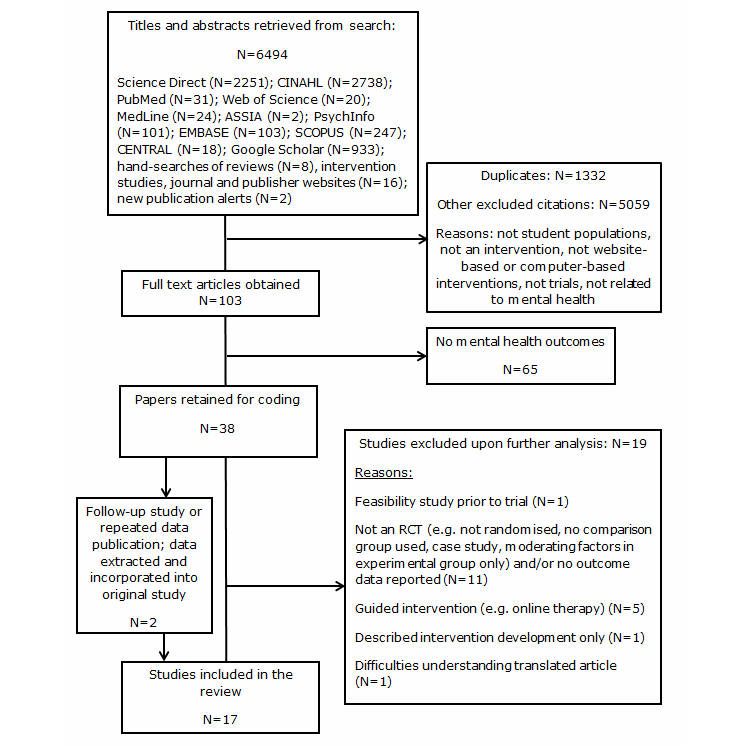
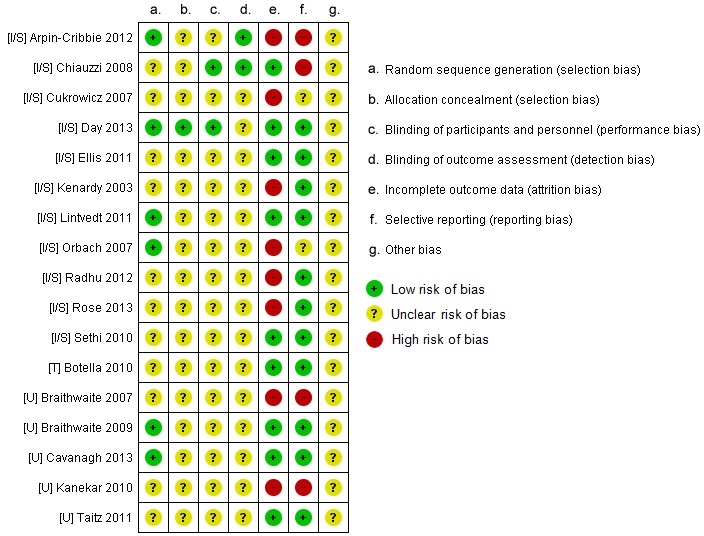
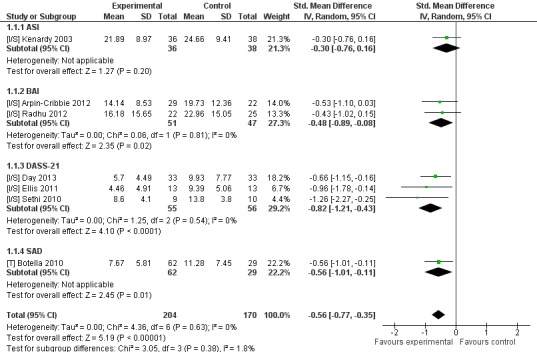
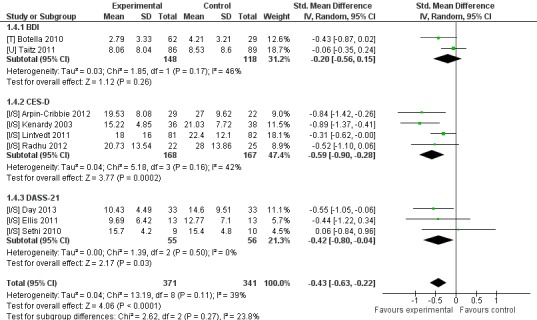
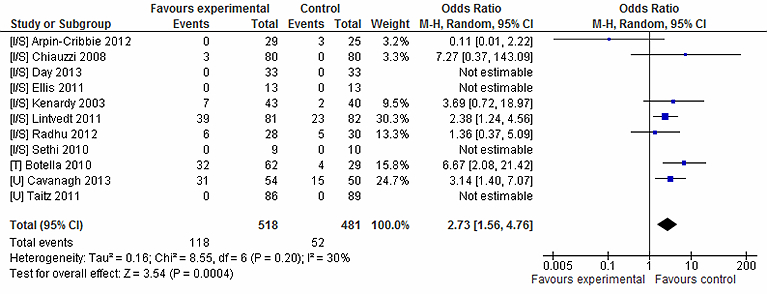
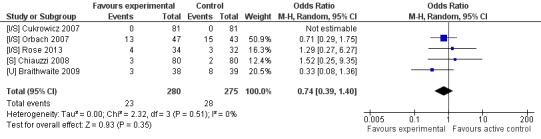
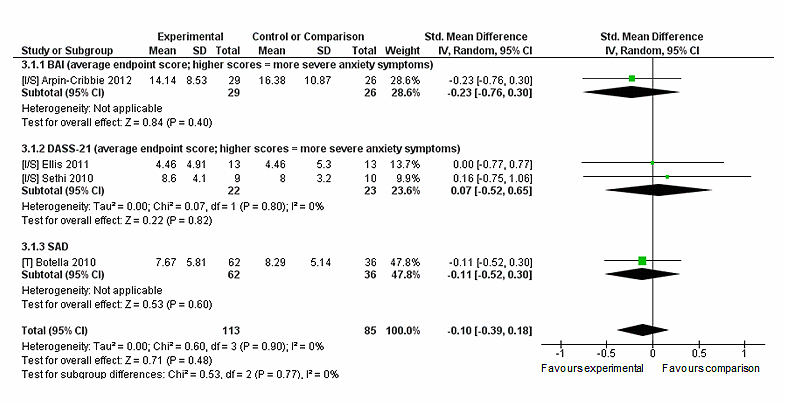
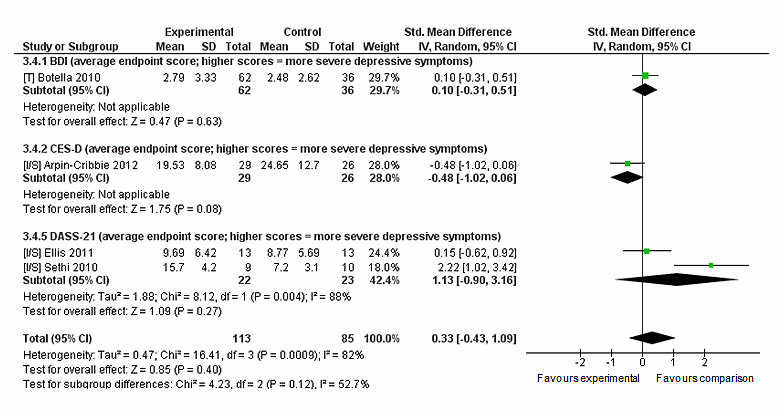
BACKGROUND: Depression and anxiety are common mental health difficulties experienced by university students and can impair academic and social functioning. Students are limited in seeking help from professionals. As university students are highly connected to digital technologies, Web-based and computer-delivered interventions could be used to improve students' mental health. The effectiveness of these intervention types requires investigation to identify whether these are viable prevention strategies for university students. OBJECTIVE: The intent of the study was to systematically review and analyze trials of Web-based and computer-delivered interventions to improve depression, anxiety, psychological distress, and stress in university students. METHODS: Several databases were searched using keywords relating to higher education students, mental health, and eHealth interventions. The eligibility criteria for studies included in the review were: (1) the study aimed to improve symptoms relating to depression, anxiety, psychological distress, and stress, (2) the study involved computer-delivered or Web-based interventions accessed via computer, laptop, or tablet, (3) the study was a randomized controlled trial, and (4) the study was trialed on higher education students. Trials were reviewed and outcome data analyzed through random effects meta-analyses for each outcome and each type of trial arm comparison. Cochrane Collaboration risk of bias tool was used to assess study quality. RESULTS: A total of 17 trials were identified, in which seven were the same three interventions on separate samples; 14 reported sufficient information for meta-analysis. The majority (n=13) were website-delivered and nine interventions were based on cognitive behavioral therapy (CBT). A total of 1795 participants were randomized and 1480 analyzed. Risk of bias was considered moderate, as many publications did not sufficiently report their methods and seven explicitly conducted completers' analyses. In comparison to the inactive control, sensitivity meta-analyses supported intervention in improving anxiety (pooled standardized mean difference [SMD] -0.56; 95% CI -0.77 to -0.35, P<.001), depression (pooled SMD -0.43; 95% CI -0.63 to -0.22, P<.001), and stress (pooled SMD -0.73; 95% CI -1.27 to -0.19, P=.008). In comparison to active controls, sensitivity analyses did not support either condition for anxiety (pooled SMD -0.18; 95% CI -0.98 to 0.62, P=.66) or depression (pooled SMD -0.28; 95% CI -0.75 to -0.20, P=.25). In contrast to a comparison intervention, neither condition was supported in sensitivity analyses for anxiety (pooled SMD -0.10; 95% CI -0.39 to 0.18, P=.48) or depression (pooled SMD -0.33; 95% CI -0.43 to 1.09, P=.40). CONCLUSIONS: The findings suggest Web-based and computer-delivered interventions can be effective in improving students' depression, anxiety, and stress outcomes when compared to inactive controls, but some caution is needed when compared to other trial arms and methodological issues were noticeable. Interventions need to be trialed on more heterogeneous student samples and would benefit from user evaluation. Future trials should address methodological considerations to improve reporting of trial quality and address post-intervention skewed data.
Overview
The claims and statistics of this paper haven’t been checked yet.
Run the check — free, no account needed. It reads the open-access text and checks the sources it cites.
Integrity signals
Registry
Cites
Statistics
Figures
Verification
Claims the paper makes
The claims and statistics of this paper haven’t been checked yet.
Run the check — free, no account needed. It reads the open-access text and checks the sources it cites.
Claims other papers make about this one
Each is checked against this paper’s own text: does it say what the citing paper says it does?
The source backs part of the claim, not all of it — or backs it for a different population, condition or comparison.
In the citing paper
“Internet-delivered CBT has demonstrated effectiveness in addressing anxiety disorders and depression in both the general population [23–25] and in college samples [26, 27].”
From An internet-delivered acceptance and commitment therapy program for anxious affect, depression, and wellbeing: A randomized, parallel, two-group, waitlist-controlled trial in a Middle Eastern sample of college students (2024) · cites this paper as [27]
Experimental — accuracy not yet measuredThe source backs part of the claim, not all of it — or backs it for a different population, condition or comparison.
In the citing paper
“The consistent improvements in the intervention group on both measures of anxiety, the generalized and social anxiety variants, as well as wellbeing are in concurrence with the preceding literature”
From An internet-delivered acceptance and commitment therapy program for anxious affect, depression, and wellbeing: A randomized, parallel, two-group, waitlist-controlled trial in a Middle Eastern sample of college students (2024) · cites this paper as [27]
Experimental — accuracy not yet measuredThe source backs part of the claim, not all of it — or backs it for a different population, condition or comparison.
In the citing paper
“and improving happiness and well-being [21-23].”
From Apps with maps-anxiety and depression mobile apps with evidence-based frameworks: Systematic search of major app stores (2020) · cites this paper as [21]
Experimental — accuracy not yet measuredThe source backs part of the claim, not all of it — or backs it for a different population, condition or comparison.
In the citing paper
“Although the aforementioned meta-analyses showed positive results on depressive symptoms with effect sizes in a small range”
From Meta-analytic review of online guided self-help interventions for depressive symptoms among college students (2021) · cites this paper as Davies et al., 2014
Experimental — accuracy not yet measuredThe source backs part of the claim, not all of it — or backs it for a different population, condition or comparison.
In the citing paper
“all authors combined guided and unguided self-help interventions in their investigations and there was substantial variation in the degree of success for included programs”
From Meta-analytic review of online guided self-help interventions for depressive symptoms among college students (2021) · cites this paper as Davies et al., 2014
Experimental — accuracy not yet measured
The source backs part of the claim, not all of it — or backs it for a different population, condition or comparison.
In the citing paper
“Only one qualitative review and two meta-analytic reviews have examined the effectiveness of internet-based interventions for depression targeting this population”
From Meta-analytic review of online guided self-help interventions for depressive symptoms among college students (2021) · cites this paper as Davies et al., 2014
Experimental — accuracy not yet measuredThe source backs part of the claim, not all of it — or backs it for a different population, condition or comparison.
In the citing paper
“Empirical studies on evidence-based digital interventions for mental health, including internet-based cognitive behavioral therapy (CBT), have shown that these interventions are effective, feasible, and acceptable to users [12-14]”
From Engagement and effectiveness of a healthy-coping intervention via chatbot for university students during the COVID-19 pandemic: Mixed methods proof-of-concept study (2021) · cites this paper as [13]
Experimental — accuracy not yet measuredThe cited source says what the claim attributes to it.
In the citing paper
“In addition, the systematic reviews that exist on this topic combine digital programs with and without human support (Davies et al., 2014; Heber et al., 2017; Lattie et al., 2019).”
From Effects of self-guided stress management interventions in college students: A systematic review and meta-analysis (2022) · cites this paper as Davies et al., 2014
The cited source says what the claim attributes to it.
In the citing paper
“Several systematic reviews and meta-analyses have attested that digital interventions have the potential to improve mental well-being among this population [14,15,27-29]”
From Optimization of a Transdiagnostic Mobile Emotion Regulation Intervention for University Students: Protocol for a Microrandomized Trial (2023) · cites this paper as [28]
The cited source says what the claim attributes to it.
In the citing paper
“Even if a staff member took only 5 -10 minutes per session to provide assistance (Marks and Cavanagh, 2009), this could impact user engagement (Batterham et al ., 2018; Davies et al ., 2014).”
From A qualitative study of patients’ experiences and acceptance of computerised cognitive behavioural therapy in primary care, Scotland (2021) · cites this paper as Davies et al., 2014
The cited source says what the claim attributes to it.
In the citing paper
“another meta-analysis25 of computer-delivered and web-based interventions (14 trials, n=1795 university students) reported that the interventions—relative to an inactive control—were effective for anxiety (SDM: −0.56; 95% CI −0.77 to −0.35, p<0.001), depression (SDM: −0.43; 95% CI −0.63 to −0.22, p<0.001) and stress (SDM: −0.73; 95% CI −1.27 to −0.19, p=0.008).”
From Novel ACT-based eHealth psychoeducational intervention for students with mental distress: A study protocol for a mixed-methodology pilot trial (2019) · cites this paper as [25]
The cited source says what the claim attributes to it.
In the citing paper
“However, the pooling of data of the two comparisons (229 participants) with active control conditions, such as online psychoeducation material, did not result in a significant difference between e-mental health interventions and controls.”
From The effect of e-mental health interventions on academic performance in university and college students: A meta-analysis of randomized controlled trials (2020) · cites this paper as Davies et al. (2014)
The cited source says what the claim attributes to it.
In the citing paper
“The authors found that compared to inactive control conditions, e-mental-health interventions had a moderate effect on symptoms of depression (d = 0.43; nine studies; 712 participants), anxiety (d = 0.56; seven studies; 374 participants), and stress (d = 0.73; three studies; 217 participants).”
From The effect of e-mental health interventions on academic performance in university and college students: A meta-analysis of randomized controlled trials (2020) · cites this paper as Davies et al. (2014)
In the citing paper
“Noninferiority trials comparing DMH interventions to face-to-face CBT in order to determine whether a new intervention is therapeutically similar to an existing effective treatment [33] showed that most DMH approaches were as effective as face-to-face CBT [31,34-36].”
From Use of the Principles of Design Thinking to Address Limitations of Digital Mental Health Interventions for Youth: Viewpoint (2019) · cites this paper as [31]
In the citing paper
“However, analyses comparing DMH interventions for both anxiety and depression with active nontherapeutic controls have generally failed to show superiority of DMH interventions [31,32].”
From Use of the Principles of Design Thinking to Address Limitations of Digital Mental Health Interventions for Youth: Viewpoint (2019) · cites this paper as [31]
Self-check
Percentages, sums and reported differences re-computed from the paper’s own numbers.
The self-check needs the paper’s full text.
Citations
Cites
Measuring inconsistency in meta-analyses
Higgins, J. P. T., Thompson, S. G., Deeks, J. J., & Altman, D. G. (2003) · BMJ · doi:10.1136/bmj.327.7414.557 · Cited by 63,139
Cochrane Handbook for Systematic Reviews of Interventions: Cochrane Book Series
(2008) · doi:10.1002/9780470712184 · Cited by 25,048
CONSORT 2010 Statement: updated guidelines for reporting parallel group randomised trials
the CONSORT Group, Schulz, K. F., Altman, D. G., & Moher, D. (2010) · BMC Medicine · doi:10.1186/1741-7015-8-18 · Cited by 13,371
CONSORT 2010 Statement: updated guidelines for reporting parallel group randomised trials
Schulz, K. F., Altman, D. G., Moher, D., & for the CONSORT Group (2010) · BMJ · doi:10.1136/bmj.c332 · Cited by 9,329
Sterne, J. A. C., Sutton, A. J., Ioannidis, J. P. A., Terrin, N., Jones, D. R., Lau, J., Carpenter, J., Rucker, G., Harbord, R. M., Schmid, C. H., et al. (2011) · BMJ · doi:10.1136/bmj.d4002 · Cited by 7,709
The effect of mindfulness based therapy on anxiety and depression: A meta analytic review
Hofmann, S. G., Sawyer, A. T., Witt, A. A., & Oh, D. (2010) · Journal of Consulting and Clinical Psychology · doi:10.1037/a0018555 · Cited by 3,846
Assessing Risk of Bias in Included Studies
Higgins, J. P., & Altman, D. G. (2008) · Cochrane Handbook for Systematic Reviews of Interventions · doi:10.1002/9780470712184.ch8 · Cited by 3,396
Assessing the quality of controlled clinical trials
Jüni, P., Altman, D. G., & Egger, M. (2001) · BMJ · doi:10.1136/bmj.323.7303.42 · Cited by 3,309 · cited 1×
“ITT analysis helps avoid selection bias that can occur if only those completing measures at all study time-points are analyzed [71].”
BackgroundGulliver, A., Griffiths, K. M., & Christensen, H. (2010) · BMC Psychiatry · doi:10.1186/1471-244x-10-113 · Cited by 3,292
Reducing Risks for Mental Disorders: Frontiers for Preventive Intervention Research
(1994) · doi:10.17226/2139 · Cited by 2,073
A systematic review of studies of depression prevalence in university students
Ibrahim, A. K., Kelly, S. J., Adams, C. E., & Glazebrook, C. (2013) · Journal of Psychiatric Research · doi:10.1016/j.jpsychires.2012.11.015 · Cited by 1,988
Self-citationEysenbach, G., & CONSORT-EHEALTH Group (2011) · Journal of Medical Internet Research · doi:10.2196/jmir.1923 · Cited by 1,863 · cited 6×
“Authors should aim to provide a CONSORT-EHEALTH statement to help report their interventions [31] so the design and content of interventions can be viewed clearly.”
BackgroundMethodInfluentialAnalysing Data and Undertaking Meta‐Analyses
Deeks, J. J., Higgins, J. P., & Altman, D. G. (2008) · Cochrane Handbook for Systematic Reviews of Interventions · doi:10.1002/9780470712184.ch9 · Cited by 1,800
Internet-based cognitive behaviour therapy for symptoms of depression and anxiety: A meta-analysis
SPEK, V., CUIJPERS, P., NYKLÍČEK, I., RIPER, H., KEYZER, J., & POP, V. (2007) · Psychological Medicine · doi:10.1017/s0033291706008944 · Cited by 1,586
Computer-based psychological treatments for depression: A systematic review and meta-analysis
Richards, D., & Richardson, T. (2012) · Clinical Psychology Review · doi:10.1016/j.cpr.2012.02.004 · Cited by 1,442
Internet-Based and Other Computerized Psychological Treatments for Adult Depression: A Meta-Analysis
Andersson, G., & Cuijpers, P. (2009) · Cognitive Behaviour Therapy · doi:10.1080/16506070903318960 · Cited by 1,368
Statistics Notes: Detecting skewness from summary information: Table 1
Altman, D. G., & Bland, J. M. (1996) · BMJ · doi:10.1136/bmj.313.7066.1200 · Cited by 1,278 · cited 1×
“This is done by multiplying the standard deviation by two; if the mean is smaller than this number, it suggests the data is skewed [36].”
BackgroundSmartphones for smarter delivery of mental health programs: A systematic review
Donker, T., Petrie, K., Proudfoot, J., Clarke, J., Birch, M.-R., & Christensen, H. (2013) · Journal of Medical Internet Research · doi:10.2196/jmir.2791 · Cited by 1,136 · cited 1×
“A recent review of mental health apps for smartphones/tablets found only five apps that had been trialed [80], one of which was trialed on a student population [81].”
BackgroundAdherence in Internet Interventions for Anxiety and Depression
Christensen, H., Griffiths, K. M., & Farrer, L. (2009) · Journal of Medical Internet Research · doi:10.2196/jmir.1194 · Cited by 1,133
Help-Seeking and Access to Mental Health Care in a University Student Population
Eisenberg, D., Golberstein, E., & Gollust, S. E. (2007) · Medical Care · doi:10.1097/mlr.0b013e31803bb4c1 · Cited by 1,131
Reducing Risks for Mental Disorders: Frontiers for Preventive Intervention Research
Novins, D. K. (1995) · Journal of the American Academy of Child & Adolescent Psychiatry · doi:10.1097/00004583-199503000-00028 · Cited by 1,085
Response Burden and Questionnaire Length: Is Shorter Better? A Review and Meta-analysis
Rolstad, S., Adler, J., & Rydén, A. (2011) · Value in Health · doi:10.1016/j.jval.2011.06.003 · Cited by 958
Interventions to reduce stress in university students: A review and meta-analysis
Regehr, C., Glancy, D., & Pitts, A. (2013) · Journal of Affective Disorders · doi:10.1016/j.jad.2012.11.026 · Cited by 956
The relation of depression and anxiety to life-stress and achievement in students
Andrews, B., & Wilding, J. M. (2004) · British Journal of Psychology · doi:10.1348/0007126042369802 · Cited by 919
Persistence of mental health problems and needs in a college student population
Zivin, K., Eisenberg, D., Gollust, S. E., & Golberstein, E. (2009) · Journal of Affective Disorders · doi:10.1016/j.jad.2009.01.001 · Cited by 784
Sterne, J. A., Egger, M., & Moher, D. (2008) · Cochrane Handbook for Systematic Reviews of Interventions · doi:10.1002/9780470712184.ch10 · Cited by 651
(2005) · PubMed · Cited by 649
Psychoeducation for depression, anxiety and psychological distress: a meta-analysis
Donker, T., Griffiths, K. M., Cuijpers, P., & Christensen, H. (2009) · BMC Medicine · doi:10.1186/1741-7015-7-79 · Cited by 542
Internet-based psychological treatments for depression
Johansson, R., & Andersson, G. (2012) · Expert Review of Neurotherapeutics · doi:10.1586/ern.12.63 · Cited by 509
Selecting Studies and Collecting Data
Higgins, J. P., & Deeks, J. J. (2008) · Cochrane Handbook for Systematic Reviews of Interventions · doi:10.1002/9780470712184.ch7 · Cited by 467
Pharmacotherapy for borderline personality disorder: Cochrane systematic review of randomised trials
Lieb, K., Vӧllm, B., Rücker, G., Timmer, A., & Stoffers-Winterling, J. M. (2009) · The British Journal of Psychiatry · doi:10.1192/bjp.bp.108.062984 · Cited by 403
Waller, R., & Gilbody, S. (2009) · Psychological Medicine · doi:10.1017/s0033291708004224 · Cited by 393 · cited 1×
“Participant dropouts were reported in 12 studies; attrition is common in these types of intervention trials [65,66].”
BackgroundInternet Use for Health Information Among College Students
Escoffery, C., Miner, K. R., Adame, D. D., Butler, S., McCormick, L. K., & Mendell, E. (2005) · Journal of American College Health · doi:10.3200/jach.53.4.183-188 · Cited by 355
A randomised controlled trial of a brief online mindfulness-based intervention
Cavanagh, K., Strauss, C., Cicconi, F., Griffiths, N., Wyper, A., & Jones, F. (2013) · Behaviour Research and Therapy · doi:10.1016/j.brat.2013.06.003 · Cited by 350
Gulliver, A., Griffiths, K. M., Christensen, H., & Brewer, J. L. (2012) · BMC Psychiatry · doi:10.1186/1471-244x-12-81 · Cited by 342 · cited 4×
“Measurements of help-seeking intentions and behavior, as well as aspects of mental health literacy, would be highly useful in future research as online interventions are often promoted as an alternative to seeking face-to-face help or preventing onset of ill mental health [23].”
BackgroundMethodInfluentialThe mental health of university students in the United Kingdom
Macaskill, A. (2013) · British Journal of Guidance and Counselling · doi:10.1080/03069885.2012.743110 · Cited by 335
Incentives in Web Studies: Methodological Issues and a Review
Göritz, A. S. (2006) · OPUS (Augsburg University) · Cited by 301
Ryan, M. L., Shochet, I. M., & Stallman, H. M. (2010) · Advances in Mental Health · doi:10.5172/jamh.9.1.73 · Cited by 252
Computer-delivered interventions to reduce college student drinking: A meta-analysis
Carey, K. B., Scott‐Sheldon, L. A. J., Elliott, J. C., Bolles, J. R., & Carey, M. P. (2009) · Addiction · doi:10.1111/j.1360-0443.2009.02691.x · Cited by 250
Bewick, B. M., Trusler, K., Barkham, M., Hill, A. J., Cahill, J., & Mulhern, B. (2008) · Preventive Medicine · doi:10.1016/j.ypmed.2008.01.005 · Cited by 233
Hedges, L., & Vevea, J. L. (1996) · Journal of Educational and Behavioral Statistics · doi:10.3102/10769986021004299 · Cited by 223
Ellis, L. A., Collin, P., Hurley, P. J., Davenport, T. A., Burns, J. M., & Hickie, I. B. (2013) · BMC Psychiatry · doi:10.1186/1471-244x-13-119 · Cited by 222
Yamaguchi, S., Wu, S., Biswas, M., Madinah, Y., Aoki, Y. Y., Barley, E. A., & Thornicroft, G. (2013) · The Journal of Nervous and Mental Disease · doi:10.1097/nmd.0b013e31829480df · Cited by 219
Presenting Results and ‘Summary of Findings’ Tables
Schünemann, H. J., Oxman, A. D., Higgins, J. P. T., Vist, G. E., Glasziou, P., & Guyatt, G. H. (2008) · Wiley eBooks · doi:10.1002/9780470712184.ch11 · Cited by 209
Can stand‐alone computer‐based interventions reduce alcohol consumption? A systematic review
Khadjesari, Z., Murray, E., Hewitt, C., Hartley, S., & Godfrey, C. (2011) · Addiction · doi:10.1111/j.1360-0443.2010.03214.x · Cited by 208 · cited 1×
“Skewed data has been reported previously in a review of computer-delivered interventions for reducing alcohol consumption [68].”
BackgroundComputerised cognitive-behavioural therapy for depression: systematic review
Kaltenthaler, E., Parry, G., Beverley, C., & Ferriter, M. (2008) · British Journal of Psychiatry · doi:10.1192/bjp.bp.106.025981 · Cited by 206
Establishing Guidelines for Executing and Reporting Internet Intervention Research
Proudfoot, J., Klein, B., Barak, A., Carlbring, P., Cuijpers, P., Lange, A., Ritterband, L., & Andersson, G. (2011) · Cognitive Behaviour Therapy · doi:10.1080/16506073.2011.573807 · Cited by 202
Technology-based interventions for mental health in tertiary students: Systematic review
Farrer, L., Gulliver, A., Chan, J. K., Batterham, P. J., Reynolds, J., Calear, A., Tait, R., Bennett, K., & Griffiths, K. M. (2013) · Journal of Medical Internet Research · doi:10.2196/jmir.2639 · Cited by 188 · cited 12×
“Unlike Farrer [4], we did not have age as inclusion criteria for the review.”
BackgroundMethodInfluentialYager, Z., & O’Dea, J. (2008) · Health Promotion International · doi:10.1093/heapro/dan004 · Cited by 185
An internet-based self-help treatment for fear of public speaking: a controlled trial.
Botella, C., Gallego, M. J., Garcia-Palacios, A., Guillen, V., Baños, R. M., Quero, S., & Alcañiz, M. (2010) · Cyberpsychology, Behavior, and Social Networking · doi:10.1089/cyber.2009.0224 · Cited by 169
Lintvedt, O. K., Griffiths, K. M., Sørensen, K., Østvik, A. R., Wang, C. E. A., Eisemann, M., & Waterloo, K. (2013) · Clinical Psychology & Psychotherapy · doi:10.1002/cpp.770 · Cited by 157
Rose, R. D., Buckey, J. C., Zbozinek, T. D., Motivala, S. J., Glenn, D. E., Cartreine, J. A., & Craske, M. G. (2013) · Behaviour Research and Therapy · doi:10.1016/j.brat.2012.11.003 · Cited by 153 · cited 10×
“Five trials compared intervention to inactive (ie, no treatment or waitlist control) and either an active control [53] or comparison intervention [28,47,50,52], five trialed the intervention to an active control [44,45,55-57], six trialed against inactive control [42,46,48,49,51,54], and one compared intervention to a…”
BackgroundMethodInfluentialRussell, G. C., & Shaw, S. R. (2009) · Journal of Mental Health · doi:10.1080/09638230802522494 · Cited by 152
Day, V., McGrath, P. J., & Wojtowicz, M. (2013) · Behaviour Research and Therapy · doi:10.1016/j.brat.2013.03.003 · Cited by 145
Meta-review of the effectiveness of computerised CBT in treating depression
Foroushani, P. S., Schneider, J., & Assareh, N. (2011) · BMC Psychiatry · doi:10.1186/1471-244x-11-131 · Cited by 132
Computer- and Internet-Based Psychotherapy Interventions
Taylor, C. B., & Luce, K. H. (2003) · Current Directions in Psychological Science · doi:10.1111/1467-8721.01214 · Cited by 130
The Use of Computerized Self-Help Packages to Treat Adolescent Depression and Anxiety
Sethi, S., Campbell, A. J., & Ellis, L. A. (2010) · Journal of Technology in Human Services · doi:10.1080/15228835.2010.508317 · Cited by 129 · cited 7×
“Five trials compared intervention to inactive (ie, no treatment or waitlist control) and either an active control [53] or comparison intervention [28,47,50,52], five trialed the intervention to an active control [44,45,55-57], six trialed against inactive control [42,46,48,49,51,54], and one compared intervention to a…”
BackgroundInfluentialInternet-Delivered Indicated Prevention For Anxiety Disorders: A Randomized Controlled Trial
Kenardy, J., McCafferty, K., & Rosa, V. (2003) · Behavioural and Cognitive Psychotherapy · doi:10.1017/s1352465803003047 · Cited by 121
Understanding how men experience, express and cope with mental distress: where next?
Ridge, D., Emslie, C., & White, A. (2010) · Sociology of Health & Illness · doi:10.1111/j.1467-9566.2010.01266.x · Cited by 119
MyStudentBody-stress: an online stress management intervention for college students
Chiauzzi, E., Brevard, J., Thurn, C., Decembrele, S., & Lord, S. (2008) · Journal of Health Communication · doi:10.1080/10810730802281668 · Cited by 119 · cited 10×
“Five trials compared intervention to inactive (ie, no treatment or waitlist control) and either an active control [53] or comparison intervention [28,47,50,52], five trialed the intervention to an active control [44,45,55-57], six trialed against inactive control [42,46,48,49,51,54], and one compared intervention to a…”
BackgroundInfluentialePREP: Computer Based Prevention of Relationship Dysfunction, Depression and Anxiety
Braithwaite, S. R., & Fincham, F. D. (2007) · Journal of Social and Clinical Psychology · doi:10.1521/jscp.2007.26.5.609 · Cited by 116
Braithwaite, S. R., & Fincham, F. D. (2009) · Journal of Family Psychology · doi:10.1037/a0014061 · Cited by 112
Attitudes towards computerized CBT for depression amongst a student population
Mitchell, N., & Gordon, P. K. (2007) · Behavioural and Cognitive Psychotherapy · doi:10.1017/s1352465807003700 · Cited by 106
Grist, R., & Cavanagh, K. (2013) · Journal of Contemporary Psychotherapy · doi:10.1007/s10879-013-9243-y · Cited by 100
Radhu, N., Daskalakis, Z. J., Arpin-Cribbie, C. A., Irvine, J., & Ritvo, P. (2012) · Journal of American College Health · doi:10.1080/07448481.2011.630703 · Cited by 94
Web-based cognitive-behavioral therapy for perfectionism: A randomized controlled trial
Arpin-Cribbie, C., Irvine, J., & Ritvo, P. (2012) · Psychotherapy Research · doi:10.1080/10503307.2011.637242 · Cited by 72
Computer-Based Intervention for Anxious and Depressive Symptoms in a Non-Clinical Population
Cukrowicz, K. C., & Joiner, T. E. (2007) · Cognitive Therapy and Research · doi:10.1007/s10608-006-9094-x · Cited by 68 · cited 9×
“Five trials compared intervention to inactive (ie, no treatment or waitlist control) and either an active control [53] or comparison intervention [28,47,50,52], five trialed the intervention to an active control [44,45,55-57], six trialed against inactive control [42,46,48,49,51,54], and one compared intervention to a…”
BackgroundInfluentialA randomised placebo-controlled trial of a self-help Internet-based intervention for test anxiety
Orbach, G., Lindsay, S., & Grey, S. J. (2006) · Behaviour Research and Therapy · doi:10.1016/j.brat.2006.04.002 · Cited by 67
Ellis, L. A., Campbell, A., Sethi, S., & O’Dea, B. (2011) · Cited by 65
Concordance between PHQ-9 scores and patients’ experiences of depression: a mixed methods study
Malpass, A., Shaw, A. R. G., Kessler, D. S., & Sharp, D. (2010) · British Journal of General Practice · doi:10.3399/bjgp10x502119 · Cited by 62
Rickwood, D., & Bradford (2012) · Psychology Research and Behavior Management · doi:10.2147/prbm.s23357 · Cited by 62
Currie, S. L., McGrath, P., & Day, V. (2010) · Computers in Human Behavior · doi:10.1016/j.chb.2010.04.020 · Cited by 61
Internet-delivered indicated prevention for anxiety disorders: Six-month follow-up
Kenardy, J. A., McCafferty, K., & Rosa, V. D. O. (2005) · Clinical Psychologist · doi:10.1080/13284200500378746 · Cited by 50
What Stresses University Students: An Interview Investigation of the Demands of Tertiary Studies
Bitsika, V., Sharpley, C. F., & Rubenstein, V. (2010) · Australian Journal of Guidance and Counselling · doi:10.1375/ajgc.20.1.41 · Cited by 45
Kanekar, A. S., Sharma, M., & Atri, A. (2010) · International Quarterly of Community Health Education · doi:10.2190/iq.30.1.e · Cited by 41
Arpin‐Cribbie, C. A., Irvine, J., Ritvo, P., Cribbie, R. A., Flett, G. L., & Hewitt, P. L. (2008) · Journal of Rational-Emotive & Cognitive-Behavior Therapy · doi:10.1007/s10942-007-0065-2 · Cited by 39
The Need for Web-Based Cognitive Behavior Therapy Among University Students
Lintvedt, O., S⊘rensen, K., Østvik, A. R., Verplanken, B., & Wang, C. E. (2008) · Journal of Technology in Human Services · doi:10.1080/15228830802096705 · Cited by 30
New Technologies to Manage Exam Anxiety
Grassi, A., Gaggioli, A., & Giuseppe, R. (2011) · Studies in health technology and informatics · doi:10.3233/978-1-60750-766-6-57 · Cited by 29
Learning Lucid Dreaming and its Effect on Depression in Undergraduates
Taitz, I. Y. (2011) · International journal of dream research · doi:10.11588/ijodr.2011.2.9123 · Cited by 19
Davy, B. M., Potter, K. L., Parker, E. A. D., Harden, S. M., Hill, J. L., Halliday, T. M., & Estabrooks, P. A. (2013) · Open Journal of Preventive Medicine · doi:10.4236/ojpm.2013.37058 · Cited by 5
Research works printed but not linked: 10
- Hysenbegasi, A, 2005, J Ment Health Policy Econ, 8, 145
- Givi, H, 2012, Koomesh: Journal of Semnan University of Medical Sciences, 13, 218
- Higgins, JPT, 2008, Cochrane Handbook for Systematic Reviews of Interventions, 10.1002/9780470712184 · DOI · Paper page
- Deeks, JJ, 2008, Cochrane Handbook for Systematic Reviews of Interventions
- Ellis, LA, 2011, J Cyber Ther Rehabil, 4, 461
- Schunemann, H, 2008, Cochrane Handbook for Systematic Reviews of Interventions
- Göritz, A, 2006, International Journal of Internet Science, 1, 58
- Sterne, JAC, 2008, Cochrane Handbook for Systematic Reviews of Interventions
- Davis-McCabe, C, 2009, Association for University and College Counselling Journal, November, 25
- Grassi, A, 2011, Stud Health Technol Inform, 167, 57
Cited by
Sorted by citations
Lipson, S. K., Lattie, E. G., & Eisenberg, D. (2019) · Psychiatric Services · doi:10.1176/appi.ps.201800332 · Cited by 947
Hollis, C., Falconer, C. J., Martin, J. L., Whittington, C., Stockton, S., Glazebrook, C., & Davies, E. B. (2017) · Journal of Child Psychology and Psychiatry · doi:10.1111/jcpp.12663 · Cited by 846
Self-citationLattie, E. G., Adkins, E. C., Winquist, N., Stiles-Shields, C., Wafford, Q. E., & Graham, A. K. (2019) · Journal of Medical Internet Research · doi:10.2196/12869 · Cited by 843
Lehtimaki, S., Martic, J., Wahl, B., Foster, K. T., & Schwalbe, N. (2021) · JMIR Mental Health · doi:10.2196/25847 · Cited by 488
Harrer, M., Adam, S. H., Baumeister, H., Cuijpers, P., Karyotaki, E., Auerbach, R. P., Kessler, R. C., Bruffaerts, R., Berking, M., & Ebert, D. D. (2019) · International Journal of Methods in Psychiatric Research · doi:10.1002/mpr.1759 · Cited by 445
Metadata
- Authors
- Davies, E. B., Morriss, R., & Glazebrook, C.
- Affiliations
- University of Nottingham (GB)
- Corresponding author
- Davies, E Bethan
- Venue
- Journal of Medical Internet Research
- Publisher
- JMIR Publications Inc.
- Published
- 2014-05-16
- Volume
- 16
- Issue
- 5
- Pages
- e130
- ISSN
- 1438-8871 (ISSN-L)
- PMC
- PMC4051748
- OpenAlex
- W2110842912
- Cited by
- 499
- References
- 80
- Citations by year
- 2026: 25 · 2025: 36 · 2024: 34 · 2023: 56 · 2022: 52 · 2021: 106 · 2020: 43 · 2019: 42 · 2018: 33 · 2017: 24 · 2016: 28 · 2015: 16 · 2014: 4
- FWCI
- 2.90
- Type
- journal article
- Language
- en
- Open access
- gold
- doi.org
- Licence
- cc-by
- Locations
- Journal of Medical Internet Research (publishedVersion, cc-by)
- PubMed Central (publishedVersion, cc-by)
- PubMed (publishedVersion)
- DOAJ (DOAJ: Directory of Open Access Journals) (submittedVersion, cc-by-sa)
- Nottingham ePrints (University of Nottingham) (submittedVersion, cc-by)
- Funders
- Mental Health Research UK
- National Institute for Health and Care Research
- Topics
- Social Sciences › Psychology › Applied Psychology › Digital Mental Health Interventions
- Social Sciences › Psychology › Experimental and Cognitive Psychology › Anxiety, Depression, Psychometrics, Treatment, Cognitive Processes
- Social Sciences › Psychology › Developmental and Educational Psychology › Student Stress and Coping
- Keywords
- depression, anxiety, psychological distress, stress, university students, digital health interventions, online intervention, computer-based intervention, cognitive behavioral therapy, student mental health, risk of bias assessment, attrition bias, publication bias, risk of bias in meta-analysis, risk of bias in individual studies
- MeSH terms
- Anxiety, Depression, Female, Humans, Male, Mental Health, Stress, Psychological, Students, Universities, Cognitive Behavioral Therapy, Telemedicine, Internet
About these checks
Registry, retraction, Cites and statistics results are computed, not judged, with one exception: a printed reference that no index lists is read once by a model before it counts as a citation error. Claims are extracted by a model and kept only when their quote appears verbatim in the text; each cited source is then checked, with a model’s help, for whether it says what the claim relies on. Those verdicts can be wrong — read the claim’s quote and the cited source before relying on one.
Statistics and arithmetic are recomputed, not judged.
Confidence bands are shown only for fields calibrated on our annotated test set. None is calibrated yet, so no band is shown.
What counts as a claim ›How we measure confidence ›How we check this ›
Are you an author, or do you see a problem with this page? Request a review
