

The DOI matches its Crossref record; 142 of the 142 references it cites were found in a registry or an index.
New Insights Into Cholinergic Neuron Diversity
Open accessAbstract
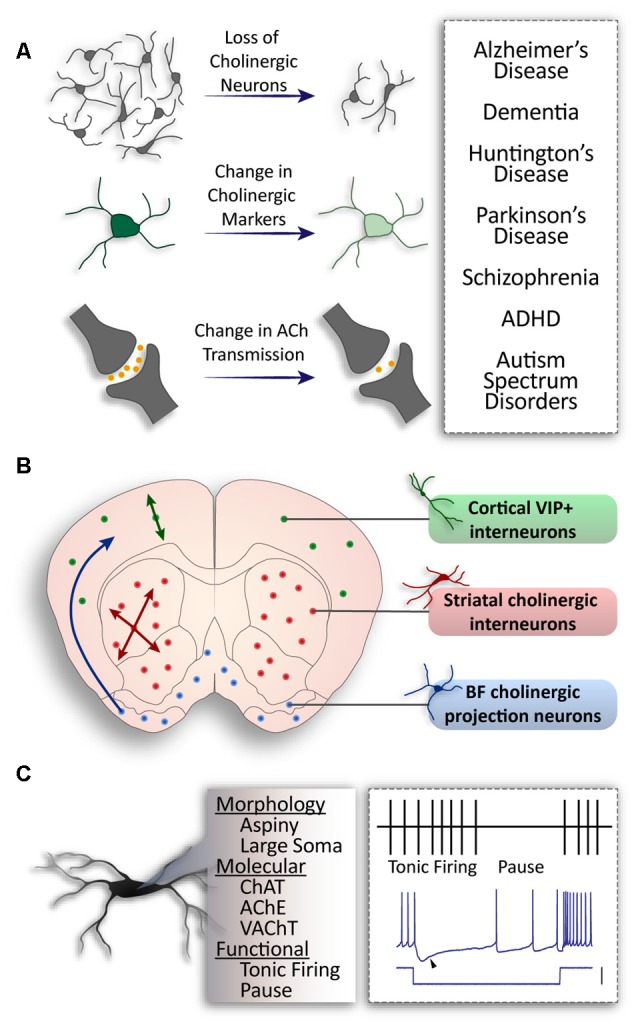
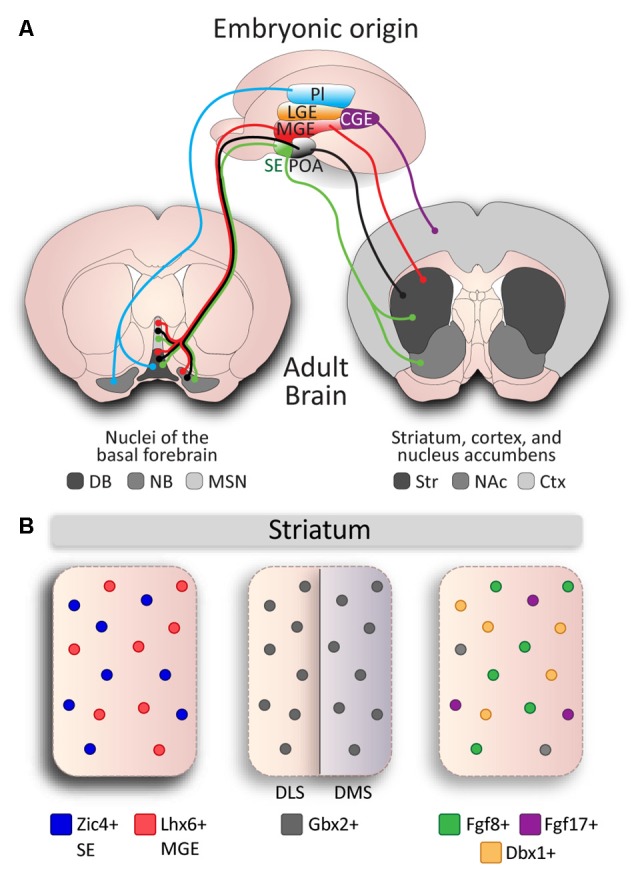
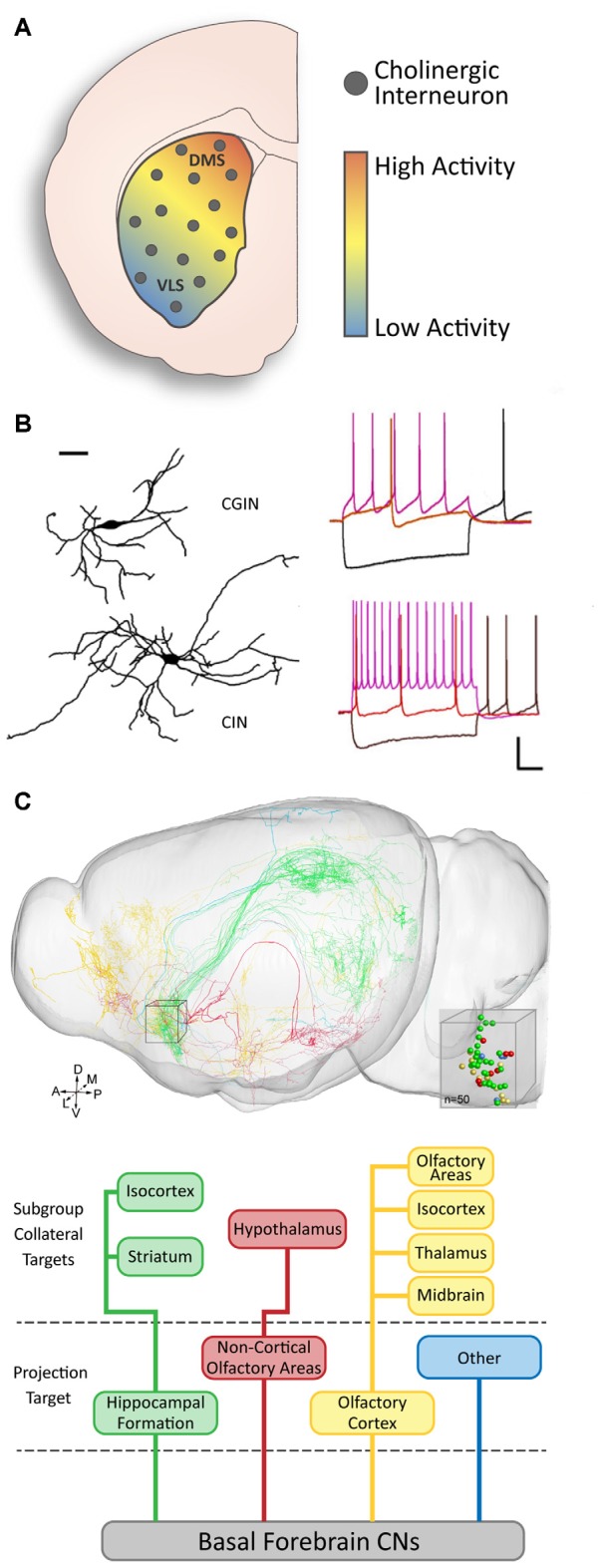
Cholinergic neurons comprise a small population of cells in the striatum but have fundamental roles in fine tuning brain function, and in the etiology of neurological and psychiatric disorders such as Parkinson's disease (PD) or schizophrenia. The process of developmental cell specification underlying neuronal identity and function is an area of great current interest. There has been significant progress in identifying the developmental origins, commonalities in molecular markers, and physiological properties of the cholinergic neurons. Currently, we are aware of a number of key factors that promote cholinergic fate during development. However, the extent of cholinergic cell diversity is still largely underestimated. New insights into the biological basis of their specification indicate that cholinergic neurons may be far more diverse than previously thought. This review article, highlights the physiological features and the synaptic properties that segregate cholinergic cell subtypes. It provides an accurate picture of cholinergic cell diversity underlying their organization and function in neuronal networks. This review article, also discusses current challenges in deciphering the logic of the cholinergic cell heterogeneity that plays a fundamental role in the control of neural processes in health and disease.
Overview
The claims and statistics of this paper haven’t been checked yet.
Run the check — free, no account needed. It reads the open-access text and checks the sources it cites.
Integrity signals
Registry
Cites
Statistics
Figures
Verification
Claims the paper makes
The claims and statistics of this paper haven’t been checked yet.
Run the check — free, no account needed. It reads the open-access text and checks the sources it cites.
Claims other papers make about this one
Each is checked against this paper’s own text: does it say what the citing paper says it does?
The source backs part of the claim, not all of it — or backs it for a different population, condition or comparison.
In the citing paper
“Cholinergic neurons43,44 are found mainly in subclass 58 in the ventral PAL (11 clusters), but also include 2 clusters in LSX, 8 clusters in MH, 3 clusters in PPN, 5 clusters in dorsal motor nucleus of the vagus nerve (DMX) and nucleus of the solitary tract (NTS), and approximately 13 clusters scattered in other medulla nuclei.”
From A high-resolution transcriptomic and spatial atlas of cell types in the whole mouse brain (2023) · cites this paper as [43]
Experimental — accuracy not yet measured
Self-check
Percentages, sums and reported differences re-computed from the paper’s own numbers.
The self-check needs the paper’s full text.
Citations
Cites
Cell types in the mouse cortex and hippocampus revealed by single-cell RNA-seq
Zeisel, A., Muñoz-Manchado, A. B., Codeluppi, S., Lönnerberg, P., La Manno, G., Juréus, A., Marques, S., Munguba, H., He, L., Betsholtz, C., et al. (2015) · Science · doi:10.1126/science.aaa1934 · Cited by 3,124
Molecular Architecture of the Mouse Nervous System
Zeisel, A., Hochgerner, H., Lönnerberg, P., Johnsson, A., Memic, F., van der Zwan, J., Häring, M., Braun, E., Borm, L. E., La Manno, G., et al. (2018) · Cell · doi:10.1016/j.cell.2018.06.021 · Cited by 2,552
Central cholinergic pathways in the rat: An overview based on an alternative nomenclature (Ch1–Ch6)
Mesulam, M. M., Mufson, E. J., Wainer, B. H., & Levey, A. I. (1983) · Neuroscience · doi:10.1016/0306-4522(83)90108-2 · Cited by 2,329
The cholinergic system in the pathophysiology and treatment of Alzheimer’s disease
Hampel, H., Mesulam, M.-M., Cuello, A. C., Farlow, M. R., Giacobini, E., Grossberg, G. T., Khachaturian, A. S., Vergallo, A., Cavedo, E., Snyder, P. J., et al. (2018) · Brain · doi:10.1093/brain/awy132 · Cited by 1,918
Shared and distinct transcriptomic cell types across neocortical areas
Tasic, B., Yao, Z., Graybuck, L. T., Smith, K. A., Nguyen, T. N., Bertagnolli, D., Goldy, J., Garren, E., Economo, M. N., Viswanathan, S., et al. (2018) · Nature · doi:10.1038/s41586-018-0654-5 · Cited by 1,746
Adult mouse cortical cell taxonomy revealed by single cell transcriptomics
Tasic, B., Menon, V., Nguyen, T. N., Kim, T. K., Jarsky, T., Yao, Z., Levi, B., Gray, L. T., Sorensen, S. A., Dolbeare, T., et al. (2016) · Nature Neuroscience · doi:10.1038/nn.4216 · Cited by 1,714
Three groups of interneurons account for nearly 100% of neocortical GABAergic neurons
Rudy, B., Fishell, G., Lee, S., & Hjerling‐Leffler, J. (2011) · Developmental Neurobiology · doi:10.1002/dneu.20853 · Cited by 1,420
The organization of the projection from the cerebral cortex to the striatum in the rat
McGeorge, A. J., & Faull, R. L. M. (1989) · Neuroscience · doi:10.1016/0306-4522(89)90128-0 · Cited by 1,360
Basic Neurochemistry???Molecular, Cellular, and Medical Aspects
Long, D. M. (2006) · Neurosurgery Quarterly · doi:10.1097/01.wnq.0000203279.82150.41 · Cited by 1,294
Synaptic organisation of the basal ganglia
Bolam, J. P., Hanley, J. J., Booth, P. A. C., & Bevan, M. D. (2000) · Journal of Anatomy · doi:10.1046/j.1469-7580.2000.19640527.x · Cited by 946
Sussel, L., Marin, O., Kimura, S., & Rubenstein, J. L. R. (1999) · Development · doi:10.1242/dev.126.15.3359 · Cited by 873
Berendse, H. W., Graaf, Y. G.-D., & Groenewegen, H. J. (1992) · The Journal of Comparative Neurology · doi:10.1002/cne.903160305 · Cited by 847
Basal Forebrain Cholinergic Circuits and Signaling in Cognition and Cognitive Decline
Ballinger, E. C., Ananth, M. R., Talmage, D. A., & Role, L. W. (2016) · Neuron · doi:10.1016/j.neuron.2016.09.006 · Cited by 763
Activity-Regulated Transcription: Bridging the Gap between Neural Activity and Behavior
Yap, E.-L., & Greenberg, M. E. (2018) · Neuron · doi:10.1016/j.neuron.2018.10.013 · Cited by 706
Origin and Molecular Specification of Striatal Interneurons
Marín, Ó., Anderson, S. A., & Rubenstein, J. L. R. (2000) · Journal of Neuroscience · doi:10.1523/jneurosci.20-16-06063.2000 · Cited by 643
Dopaminergic neurons inhibit striatal output through non-canonical release of GABA
Tritsch, N. X., Ding, J. B., & Sabatini, B. L. (2012) · Nature · doi:10.1038/nature11466 · Cited by 576
Hamani, C., Aziz, T. Z., Bloem, B. R., Brown, P., Chabardès, S., Coyne, T. J., Foote, K. D., García‐Rill, E., Hirsch, É. C., Lozano, A. M., et al. (2016) · Stereotactic and Functional Neurosurgery · doi:10.1159/000449010 · Cited by 571
Flames, N., Pla, R., Gelman, D. M., Rubenstein, J. L. R., Puelles, L., & Marín, O. (2007) · The Journal of Neuroscience · doi:10.1523/jneurosci.2750-07.2007 · Cited by 560
Acetylcholine-mediated modulation of striatal function
Calabresi, P., Centonze, D., Gubellini, P., Pisani, A., & Bernardi, G. (2000) · Trends in Neurosciences · doi:10.1016/s0166-2236(99)01501-5 · Cited by 452
The Striatum Organizes 3D Behavior via Moment-to-Moment Action Selection
Markowitz, J. E., Gillis, W. F., Beron, C. C., Neufeld, S. Q., Robertson, K., Bhagat, N. D., Peterson, R. E., Peterson, E., Hyun, M., Linderman, S. W., et al. (2018) · Cell · doi:10.1016/j.cell.2018.04.019 · Cited by 418
Activity-dependent homeostatic specification of transmitter expression in embryonic neurons
Borodinsky, L. N., Root, C. M., Cronin, J. A., Sann, S. B., Gu, X., & Spitzer, N. C. (2004) · Nature · doi:10.1038/nature02518 · Cited by 396
Fuzik, J., Zeisel, A., Máté, Z., Calvigioni, D., Yanagawa, Y., Szabó, G., Linnarsson, S., & Harkany, T. (2016) · Nature Biotechnology · doi:10.1038/nbt.3443 · Cited by 386
Liodis, P., Denaxa, M., Grigoriou, M., Akufo-Addo, C., Yanagawa, Y., & Pachnis, V. (2007) · The Journal of Neuroscience · doi:10.1523/jneurosci.3055-06.2007 · Cited by 377
Dautan, D., Huerta-Ocampo, I., Witten, I. B., Deisseroth, K. A., Bolam, J. P., Gerdjikov, T. V., & Mena‐Segovia, J. (2014) · Journal of Neuroscience · doi:10.1523/jneurosci.5071-13.2014 · Cited by 361
Li, X., Yu, B., Sun, Q., Zhang, Y., Ren, M., Zhang, X., Li, A., Yuan, J., Madisen, L., Luo, Q., et al. (2017) · Proceedings of the National Academy of Sciences · doi:10.1073/pnas.1703601115 · Cited by 344
Bennett, B. D., Callaway, J. C., & Wilson, C. J. (2000) · Journal of Neuroscience · doi:10.1523/jneurosci.20-22-08493.2000 · Cited by 332
Bradfield, L. A., Bertran‐Gonzalez, J., Chieng, B. C. H., & Balleine, B. W. (2013) · Neuron · doi:10.1016/j.neuron.2013.04.039 · Cited by 321
GABAergic circuits mediate the reinforcement-related signals of striatal cholinergic interneurons
English, D. F., Ibáñez-Sandoval, O., Stark, E., Tecuapetla, F., Buzsáki, G., Deisseroth, K. A., Tepper, J. M., & Koós, T. Z. (2011) · Nature Neuroscience · doi:10.1038/nn.2984 · Cited by 312
The distribution of acetylcholine in the peripheral and the central nervous system
MacIntosh, F. C. (1941) · The Journal of Physiology · doi:10.1113/jphysiol.1941.sp003913 · Cited by 292
Genetic and activity-dependent mechanisms underlying interneuron diversity
Wamsley, B., & Fishell, G. (2017) · Nature Reviews Neuroscience · doi:10.1038/nrn.2017.30 · Cited by 290
Záborszky, L., Csordás, A., Mosca, K., Kim, J., Gielow, M. R., Vadász, C., & Nádasdy, Z. (2013) · Cerebral Cortex · doi:10.1093/cercor/bht210 · Cited by 284
Early emergence of cortical interneuron diversity in the mouse embryo
Mi, D., Li, Z., Lim, L., Li, M., Moissidis, M., Yang, Y., Gao, T., Hu, T. X., Pratt, T., Price, D. J., et al. (2018) · Science · doi:10.1126/science.aar6821 · Cited by 259
Rethinking the Pedunculopontine Nucleus: From Cellular Organization to Function
Mena‐Segovia, J., & Bolam, J. P. (2017) · Neuron · doi:10.1016/j.neuron.2017.02.027 · Cited by 257
Striatal cholinergic interneuron regulation and circuit effects
Lim, S. A. O., Kang, U. J., & McGehee, D. S. (2014) · Frontiers in Synaptic Neuroscience · doi:10.3389/fnsyn.2014.00022 · Cited by 244
Dopaminergic control of the striatum for high-level cognition
Cools, R. (2011) · Current Opinion in Neurobiology · doi:10.1016/j.conb.2011.04.002 · Cited by 232
Diversity of Interneurons in the Dorsal Striatum Revealed by Single-Cell RNA Sequencing and PatchSeq
Muñoz-Manchado, A. B., Bengtsson Gonzales, C., Zeisel, A., Munguba, H., Bekkouche, B., Skene, N. G., Lönnerberg, P., Ryge, J., Harris, K. D., Linnarsson, S., et al. (2018) · Cell Reports · doi:10.1016/j.celrep.2018.07.053 · Cited by 229
Zhao, Y., Marín, O., Hermesz, E., Powell, A., Flames, N., Palkovits, M., Rubenstein, J. L. R., & Westphal, H. (2003) · Proceedings of the National Academy of Sciences · doi:10.1073/pnas.1537759100 · Cited by 227
NKX2.1 specifies cortical interneuron fate by activatingLhx6
Du, T., Xu, Q., Ocbina, P. J. R., & Anderson, S. A. (2008) · Development · doi:10.1242/dev.015123 · Cited by 220
Heterogeneity and Diversity of Striatal GABAergic Interneurons: Update 2018
Tepper, J. M., Koós, T. Z., Ibáñez-Sandoval, O., Tecuapetla, F., Faust, T. W., & Assous, M. (2018) · Frontiers in Neuroanatomy · doi:10.3389/fnana.2018.00091 · Cited by 218
Cholinergic modulation of hippocampal network function
Ruivo, L. M. T.-G., & Mellor, J. R. (2013) · Frontiers in Synaptic Neuroscience · doi:10.3389/fnsyn.2013.00002 · Cited by 214
The vesicular glutamate transporter VGLUT3 synergizes striatal acetylcholine tone
Gras, C., Amilhon, B., Lepicard, È. M., Poirel, O., Vinatier, J., Herbin, M., Dumas, S., Tzavara, E. T., Wade, M. R., Nomikos, G. G., et al. (2008) · Nature Neuroscience · doi:10.1038/nn2052 · Cited by 211
Acetylcholine Elevation Relieves Cognitive Rigidity and Social Deficiency in a Mouse Model of Autism
Karvat, G., & Kimchi, T. (2013) · Neuropsychopharmacology · doi:10.1038/npp.2013.274 · Cited by 208
Specific basal forebrain-cortical cholinergic circuits coordinate cognitive operations
Záborszky, L., Gombkoto, P., Varsanyi, P., Gielow, M. R., Poe, G., Role, L. W., Ananth, M., Rajebhosale, P., Talmage, D. A., Hasselmo, M. E., et al. (2018) · The Journal of Neuroscience · doi:10.1523/jneurosci.1676-18.2018 · Cited by 202
Brimblecombe, K. R., & Cragg, S. J. (2016) · ACS Chemical Neuroscience · doi:10.1021/acschemneuro.6b00333 · Cited by 201
Corelease of acetylcholine and GABA from cholinergic forebrain neurons
Saunders, A., Granger, A. J., & Sabatini, B. L. (2015) · eLife · doi:10.7554/elife.06412 · Cited by 200
Neuromodulation by acetylcholine: examples from schizophrenia and depression
Higley, M. J., & Picciotto, M. R. (2014) · Current Opinion in Neurobiology · doi:10.1016/j.conb.2014.06.004 · Cited by 184
A wide diversity of cortical GABAergic interneurons derives from the embryonic preoptic area
Gelman, D., Griveau, A., Dehorter, N., Teissier, A., Varela, C., Pla, R., Pierani, A., & Marín, O. (2011) · The Journal of Neuroscience · doi:10.1523/jneurosci.4068-11.2011 · Cited by 179
Self-citationDistinct Cortical-Thalamic-Striatal Circuits through the Parafascicular Nucleus
Mandelbaum, G., Taranda, J., Haynes, T. M., Hochbaum, D. R., Huang, K. W., Hyun, M., Venkataraju, K. U., Straub, C., Wang, W., Robertson, K., et al. (2019) · Neuron · doi:10.1016/j.neuron.2019.02.035 · Cited by 179
Functional Characterization of Intrinsic Cholinergic Interneurons in the Cortex
von Engelhardt, J., Eliava, M., Meyer, A. H., Rozov, A., & Monyer, H. (2007) · The Journal of Neuroscience · doi:10.1523/jneurosci.4647-06.2007 · Cited by 177
Cholinergic interneurons mediate fast VGluT3-dependent glutamatergic transmission in the striatum
Higley, M. J., Gittis, A. H., Oldenburg, I. A., Balthasar, N., Seal, R. P., Edwards, R. H., Lowell, B. B., Kreitzer, A. C., & Sabatini, B. L. (2011) · PLoS ONE · doi:10.1371/journal.pone.0019155 · Cited by 175 · cited 2×
“They also drive spontaneous activation of SPNs via muscarinic (Mamaligas and Ford, 2016) and glutamatergic transmission (Higley et al., 2011).”
BackgroundGoldberg, J. A., & Wilson, C. J. (2005) · Journal of Neuroscience · doi:10.1523/jneurosci.2734-05.2005 · Cited by 172
Extrinsic Sources of Cholinergic Innervation of the Striatal Complex: A Whole-Brain Mapping Analysis
Dautan, D., Bay, H. H., Bolam, J. P., Gerdjikov, T. V., & Mena‐Segovia, J. (2016) · Frontiers in Neuroanatomy · doi:10.3389/fnana.2016.00001 · Cited by 172
Tuning of fast-spiking interneuron properties by an activity-dependent transcriptional switch
Dehorter, N., Ciceri, G., Bartolini, G., Lim, L., del Pino, I., & Marín, O. (2015) · Science · doi:10.1126/science.aab3415 · Cited by 169
Self-citationCortical Control of Striatal Dopamine Transmission via Striatal Cholinergic Interneurons
Kosillo, P., Zhang, Y.-F., Threlfell, S., & Cragg, S. J. (2016) · Cerebral Cortex · doi:10.1093/cercor/bhw252 · Cited by 169
Co-transmission of acetylcholine and GABA regulates hippocampal states
Takács, V. T., Cserép, C., Schlingloff, D., Pósfai, B., Szőnyi, A., Sos, K. E., Környei, Z., Dénes, Á., Gulyás, A. I., Freund, T. F., et al. (2018) · Nature Communications · doi:10.1038/s41467-018-05136-1 · Cited by 169
Neural Stem Cells: Historical Perspective and Future Prospects
Breunig, J. J., Haydar, T. F., & RAKIC, P. T. (2011) · Neuron · doi:10.1016/j.neuron.2011.05.005 · Cited by 167
Simon, A., Poindessous‐Jazat, F., Dutar, P., Epelbaum, J., & Bassant, M. (2006) · Journal of Neuroscience · doi:10.1523/jneurosci.1401-06.2006 · Cited by 149
Goldberg, J. A., & Reynolds, J. N. J. (2011) · Neuroscience · doi:10.1016/j.neuroscience.2011.08.067 · Cited by 148
The fate of the brain cholinergic neurons in neurodegenerative diseases
Pepeu, G., & Giovannini, M. G. (2017) · Brain Research · doi:10.1016/j.brainres.2017.06.023 · Cited by 144
Cholinergic modulation of striatal microcircuits
Abudukeyoumu, N., Hernández-Flores, T., Garcia-Munoz, M., & Arbuthnott, G. W. (2018) · European Journal of Neuroscience · doi:10.1111/ejn.13949 · Cited by 144
Lozovaya, N., Eftekhari, S., Cloarec, R., Gouty‐Colomer, L., Dufour, A., Riffault, B., Billon-Grand, M., Pons-Bennaceur, A., Oumar, N., Burnashev, N., et al. (2018) · Nature Communications · doi:10.1038/s41467-018-03802-y · Cited by 143
Origin and molecular specification of globus pallidus neurons
Nóbrega-Pereira, S., Gelman, D., Bartolini, G., Pla, R., Pierani, A., & Marín, O. (2010) · The Journal of Neuroscience · doi:10.1523/jneurosci.4023-09.2010 · Cited by 142
Mufson, E. J., Martin, T. L., Mash, D. C., Wainer, B. H., & Mesulam, M. M. (1986) · Brain Research · doi:10.1016/0006-8993(86)91114-5 · Cited by 141
Centrality of Striatal Cholinergic Transmission in Basal Ganglia Function
Bonsi, P., Cuomo, D., Martella, G., Madeo, G., Schirinzi, T., Puglisi, F., Ponterio, G., & Pisani, A. (2011) · Frontiers in Neuroanatomy · doi:10.3389/fnana.2011.00006 · Cited by 140
Doig, N. M., Magill, P. J., Apicella, P., Bolam, J. P., & Sharott, A. (2014) · Journal of Neuroscience · doi:10.1523/jneurosci.4627-13.2014 · Cited by 138
Cholinergic neuronal defect without cell loss in Huntington's disease
Smith, R. A., Chung, H., Rundquist, S., Maat–Schieman, M. L. C., Colgan, L. A., Englund, E. M., Liu, Y.-J., Roos, R. A. C., Faull, R. L. M., Brundin, P., et al. (2006) · Human Molecular Genetics · doi:10.1093/hmg/ddl252 · Cited by 138
Role of Striatal Cholinergic Interneurons in Set-Shifting in the Rat
Aoki, S., Liu, A. W., Zucca, A., Zucca, S., & Wickens, J. R. (2015) · Journal of Neuroscience · doi:10.1523/jneurosci.0490-15.2015 · Cited by 137
Fragkouli, A., van Wijk, N. V., Lopes, R., Kessaris, N., & Pachnis, V. (2009) · Development · doi:10.1242/dev.038083 · Cited by 135
A Review of the Pedunculopontine Nucleus in Parkinson's Disease
French, I. T., & Muthusamy, K. A. (2018) · Frontiers in Aging Neuroscience · doi:10.3389/fnagi.2018.00099 · Cited by 135
Fate and freedom in developing neocortical circuits
Jabaudon, D. (2017) · Nature Communications · doi:10.1038/ncomms16042 · Cited by 134
Lhx6 directly regulates Arx and CXCR7 to determine cortical interneuron fate and laminar position
Vogt, D., Hunt, R. F., Mandal, S., Sandberg, M., Silberberg, S. N., Nagasawa, T., Yang, Z., Baraban, S. C., & Rubenstein, J. L. R. (2014) · Neuron · doi:10.1016/j.neuron.2014.02.030 · Cited by 129
Cholinergic shaping of neural correlations
Minces, V. H., Pinto, L., Dan, Y., & Chiba, A. A. (2017) · Proceedings of the National Academy of Sciences · doi:10.1073/pnas.1621493114 · Cited by 129
Klug, J. R., Engelhardt, M. D., Cadman, C. N., Li, H., Smith, J. B., Ayala, S., Williams, E., Hoffman, H., & Jin, X. (2018) · eLife · doi:10.7554/elife.35657 · Cited by 127
Principles of Synaptic Organization of GABAergic Interneurons in the Striatum
Straub, C., Saulnier, J. L., Bègue, A., Feng, D. D., Huang, K. W., & Sabatini, B. L. (2016) · Neuron · doi:10.1016/j.neuron.2016.09.007 · Cited by 126
Maurice, N., Liberge, M., Jaouen, F., Ztaou, S., Hanini, M., Camon, J., Deisseroth, K. A., Amalric, M., Goff, L. K., & Beurrier, C. (2015) · Cell Reports · doi:10.1016/j.celrep.2015.09.034 · Cited by 125
Cholinergic connectivity: it's implications for psychiatric disorders
Scarr, E., Gibbons, A. S., Neo, J. H., Udawela, M., & Dean, B. (2013) · Frontiers in Cellular Neuroscience · doi:10.3389/fncel.2013.00055 · Cited by 124
Ztaou, S., Maurice, N., Camon, J., Guiraudie-Capraz, G., Goff, L. K., Beurrier, C., Liberge, M., & Amalric, M. (2016) · Journal of Neuroscience · doi:10.1523/jneurosci.0873-16.2016 · Cited by 123
Cho, H.-H., Cargnin, F., Kim, Y., Lee, B., Kwon, R.-J., Nam, H., Shen, R., Barnes, A. P., Lee, J. W., Lee, S., et al. (2014) · PLoS Genetics · doi:10.1371/journal.pgen.1004280 · Cited by 116
The Neuron Identity Problem: Form Meets Function
Fishell, G., & Heintz, N. (2013) · Neuron · doi:10.1016/j.neuron.2013.10.035 · Cited by 115
HCN2 Channels in Cholinergic Interneurons of Nucleus Accumbens Shell Regulate Depressive Behaviors
Cheng, J., Umschweif, G., Leung, J., Sagi, Y., & Greengard, P. (2019) · Neuron · doi:10.1016/j.neuron.2018.12.018 · Cited by 110
Atallah, H. E., McCool, A. D., Howe, M. W., & Graybiel, A. M. (2014) · Neuron · doi:10.1016/j.neuron.2014.04.021 · Cited by 103
Cotransmission of acetylcholine and GABA
Granger, A. J., Mulder, N., Saunders, A. B., & Sabatini, B. L. (2015) · Neuropharmacology · doi:10.1016/j.neuropharm.2015.07.031 · Cited by 101
Mori, T., Yuxing, Z., Takaki, H., Takeuchi, M., Iseki, K., Hagino, S., Kitanaka, J., Takemura, M., Misawa, H., Ikawa, M., et al. (2004) · European Journal of Neuroscience · doi:10.1111/j.0953-816x.2004.03415.x · Cited by 99
Striatal cholinergic neurotransmission requires VGLUT3
Nelson, A. B., Bussert, T. G., Kreitzer, A. C., & Seal, R. P. (2014) · Journal of Neuroscience · doi:10.1523/jneurosci.0901-14.2014 · Cited by 99
Role of Tonically Active Neurons in Primate Caudate in Reward-Oriented Saccadic Eye Movement
Shimo, Y., & Hikosaka, O. (2001) · Journal of Neuroscience · doi:10.1523/jneurosci.21-19-07804.2001 · Cited by 97
Cholinergic systems and schizophrenia: primary pathology or epiphenomena?
Hyde, T. M., & Crook, J. M. (2001) · Journal of Chemical Neuroanatomy · doi:10.1016/s0891-0618(01)00101-6 · Cited by 97
Ünal, Ç. T., Golowasch, J., & Záborszky, L. (2012) · Frontiers in Behavioral Neuroscience · doi:10.3389/fnbeh.2012.00021 · Cited by 96
Dehorter, N., Vinay, L., Hammond, C., & Ben‐Ari, Y. (2012) · European Journal of Neuroscience · doi:10.1111/j.1460-9568.2012.08152.x · Cited by 93
Self-citationWichterle, H., Alvarez-Dolado, M., Erskine, L., & Alvarez-Buylla, A. (2003) · Proceedings of the National Academy of Sciences · doi:10.1073/pnas.242721899 · Cited by 92
Enhanced flexibility of place discrimination learning by targeting striatal cholinergic interneurons
Okada, K., Nishizawa, K., Fukabori, R., Kai, N., Shiota, A., Ueda, M., Tsutsui, Y., Sakata, S., Matsushita, N., & Kobayashi, K. (2014) · Nature Communications · doi:10.1038/ncomms4778 · Cited by 90
Elshatory, Y. M., & Gan, L. (2008) · Journal of Neuroscience · doi:10.1523/jneurosci.5730-07.2008 · Cited by 80
Zhang, Y.-F., Reynolds, J. N. J., & Cragg, S. J. (2018) · Neuron · doi:10.1016/j.neuron.2018.04.027 · Cited by 75
Target selectivity of septal cholinergic neurons in the medial and lateral entorhinal cortex
Desikan, S., Koser, D. E., Neitz, A., & Monyer, H. (2018) · Proceedings of the National Academy of Sciences · doi:10.1073/pnas.1716531115 · Cited by 72
Spontaneous Synaptic Activation of Muscarinic Receptors by Striatal Cholinergic Neuron Firing
Mamaligas, A. A., & Ford, C. (2016) · Neuron · doi:10.1016/j.neuron.2016.06.021 · Cited by 70
Yamanaka, K., Hori, Y., Minamimoto, T., Yamada, H., Matsumoto, N., Enomoto, K., Aosaki, T., Graybiel, A. M., & Kimura, M. (2017) · Journal of Neural Transmission · doi:10.1007/s00702-017-1713-z · Cited by 69
NKX2-1 Is Required in the Embryonic Septum for Cholinergic System Development, Learning, and Memory
Magno, L., Barry, C., Schmidt‐Hieber, C., Theodotou, P., Häusser, M., & Kessaris, N. (2017) · Cell Reports · doi:10.1016/j.celrep.2017.07.053 · Cited by 69
Developmental specification of forebrain cholinergic neurons
Allaway, K. C., & Machold, R. (2017) · Developmental Biology · doi:10.1016/j.ydbio.2016.11.007 · Cited by 68
Chuhma, N., Mingote, S., Yetnikoff, L., Kalmbach, A., Ma, T. C., Ztaou, S., Siena, A.-C., Tepler, S., Poulin, J.-F., Ansorge, M. S., et al. (2018) · eLife · doi:10.7554/elife.39786 · Cited by 66
Choline transporter gene variation is associated with attention-deficit hyperactivity disorder
English, B. A., Hahn, M. K., Gizer, I., Mazei-Robison, M., Steele, A., Kurnik, D., Stein, M., Waldman, I., & Blakely, R. (2009) · Journal of Neurodevelopmental Disorders · doi:10.1007/s11689-009-9033-8 · Cited by 65
To move or to sense? Incorporating somatosensory representation into striatal functions
Robbe, D. (2018) · Current Opinion in Neurobiology · doi:10.1016/j.conb.2018.04.009 · Cited by 64
Nagy, J., Kobolák, J., Berzsenyi, S., Ábrahám, Z., Avci, H. X., Bock, I., Bekes, Z., Hodoscsek, B., Chandrasekaran, A., Téglási, A., et al. (2017) · Translational Psychiatry · doi:10.1038/tp.2017.144 · Cited by 61
Pauses in cholinergic interneuron firing exert an inhibitory control on striatal output in vivo
Zucca, S., Zucca, A., Nakano, T., Aoki, S., & Wickens, J. R. (2018) · eLife · doi:10.7554/elife.32510 · Cited by 61
Faust, T. W., Assous, M., Shah, F., Tepper, J. M., & Koós, T. Z. (2015) · European Journal of Neuroscience · doi:10.1111/ejn.12915 · Cited by 60
Compulsive Social Behavior Emerges after Selective Ablation of Striatal Cholinergic Interneurons
Martos, Y. V., Braz, B. Y., Beccaria, J. P., Murer, M. G., & Belforte, J. E. (2017) · Journal of Neuroscience · doi:10.1523/jneurosci.3460-16.2017 · Cited by 59
Assous, M., Dautan, D., Tepper, J. M., & Mena‐Segovia, J. (2019) · Journal of Neuroscience · doi:10.1523/jneurosci.2913-18.2019 · Cited by 58
Touzot, A., Ruiz-Reig, N., Vitalis, T., & Studer, M. (2016) · Development · doi:10.1242/dev.131102 · Cited by 56
Chen, L., Chatterjee, M., & Li, J. Y. H. (2010) · Journal of Neuroscience · doi:10.1523/jneurosci.3742-10.2010 · Cited by 54
Semba, K., Vincent, S., & Fibiger, H. (1988) · Journal of Neuroscience · doi:10.1523/jneurosci.08-10-03937.1988 · Cited by 53
Matamales, M., Götz, J., & Bertran‐Gonzalez, J. (2016) · PLoS ONE · doi:10.1371/journal.pone.0157682 · Cited by 53
Oswald, M. J., Oorschot, D. E., Schulz, J. M., Lipski, J., & Reynolds, J. N. J. (2009) · The Journal of Physiology · doi:10.1113/jphysiol.2009.177600 · Cited by 52
Hoch, R. V., Lindtner, S., Price, J. D., & Rubenstein, J. L. R. (2015) · Cell Reports · doi:10.1016/j.celrep.2015.06.043 · Cited by 48
Role of the Central Cholinergic System in the Therapeutics of Schizophrenia
Terry, A. V. (2008) · Current Neuropharmacology · doi:10.2174/157015908785777247 · Cited by 48
Petzold, A., Valencia, M., Pál, B. Z., & Mena‐Segovia, J. (2015) · Frontiers in Neural Circuits · doi:10.3389/fncir.2015.00068 · Cited by 46
Albert‐Gascó, H., García-Avilés, Á., Moustafa, S., Sánchez‐Sarasúa, S., Gundlach, A. L., Olucha-Bordonau, F. E., & Sánchez‐Pérez, A. M. (2016) · Brain Structure and Function · doi:10.1007/s00429-016-1227-8 · Cited by 46
Molecular Mechanisms Controlling the Migration of Striatal Interneurons
Villar‐Cerviño, V., Kappeler, C., Pereira, S. N., Henkemeyer, M. J., Rago, L., Nieto, M. A., & Marín, Ó. (2015) · Journal of Neuroscience · doi:10.1523/jneurosci.4317-14.2015 · Cited by 45
Cholinergic interneurons in the rat striatum modulate substitution of habits
Aoki, S., Liu, A. W., Akamine, Y., Zucca, A., Zucca, S., & Wickens, J. R. (2018) · European Journal of Neuroscience · doi:10.1111/ejn.13820 · Cited by 44
Lopes, R., van Wijk, N. V., Neves, G., & Pachnis, V. (2012) · Proceedings of the National Academy of Sciences · doi:10.1073/pnas.1109251109 · Cited by 42
Striatal Cholinergic Interneurons Display Activity-Related Phosphorylation of Ribosomal Protein S6
Bertran‐Gonzalez, J., Chieng, B. C. H., Laurent, V., Valjent, E., & Balleine, B. W. (2012) · PLoS ONE · doi:10.1371/journal.pone.0053195 · Cited by 42
Crittenden, J. R., Lacey, C. J., Weng, F., Garrison, C. E., Gibson, D. J., Lin, Y., & Graybiel, A. M. (2017) · Frontiers in Neuroanatomy · doi:10.3389/fnana.2017.00020 · Cited by 42
Hoch, R. V., Clarke, J. A., & Rubenstein, J. L. R. (2015) · Neural Development · doi:10.1186/s13064-015-0037-7 · Cited by 40
Medial habenula cholinergic signaling regulates cocaine‐associated relapse‐like behavior
López, A. J., Jia, Y., White, A. O., Kwapis, J. L., Espinoza, M. E., Hwang, P. H., Campbell, R. R., Alaghband, Y., Chitnis, O., Matheos, D. P., et al. (2018) · Addiction Biology · doi:10.1111/adb.12605 · Cited by 40
Quantitative assessment of cell population diversity in single-cell landscapes
Liu, Q., Herring, C. A., Sheng, Q., Ping, J., Simmons, A. J., Chen, B., Banerjee, A., Li, W., Gu, G., Coffey, R. J., et al. (2018) · PLoS Biology · doi:10.1371/journal.pbio.2006687 · Cited by 40
Marche, K., Martel, A., & Apicella, P. (2017) · Frontiers in Systems Neuroscience · doi:10.3389/fnsys.2017.00052 · Cited by 39
Krishnaswamy, A., & Cooper, E. (2009) · Neuron · doi:10.1016/j.neuron.2008.11.025 · Cited by 37
Tuning neural circuits by turning the interneuron knob
Dehorter, N., Marichal, N., Marín, Ó., & Berninger, B. (2017) · Current Opinion in Neurobiology · doi:10.1016/j.conb.2016.12.009 · Cited by 34
Self-citationJeong, J. H., Woo, Y. J., Chua, S. C., & Jo, Y. (2016) · PLoS ONE · doi:10.1371/journal.pone.0162839 · Cited by 33
Bordia, T., Zhang, D., Perez, X. A., & Quik, M. (2016) · Experimental Neurology · doi:10.1016/j.expneurol.2016.09.009 · Cited by 32
Birth time/order-dependent neuron type specification
Kao, C.-F., & Lee, T. (2009) · Current Opinion in Neurobiology · doi:10.1016/j.conb.2009.10.017 · Cited by 31
Pombero, A., Bueno, C., Saglietti, L., Rodenas, M., Guimerá, J., Bulfone, A., & Martı́nez, S. (2011) · Development · doi:10.1242/dev.069534 · Cited by 30
Novak, G., Fan, T., O’Dowd, B. F., & George, S. R. (2012) · Synapse · doi:10.1002/syn.21628 · Cited by 29
The Generation of Cortical Interneurons
Gelman, D. M., Marín, Ó., & Rubenstein, J. L. R. (2012) · Oxford University Press eBooks · doi:10.1093/med/9780199746545.003.0061 · Cited by 28
Zheng, Y., Feng, S., Zhu, X., Jiang, W., Wen, P., Ye, F., Rao, X., Jin, S., He, X., & Xu, F. (2018) · Frontiers in Neural Circuits · doi:10.3389/fncir.2018.00099 · Cited by 26
Sandberg, M., Taher, L., Hu, J., Black, B. L., Nord, A. S., & Rubenstein, J. L. R. (2018) · Neural Development · doi:10.1186/s13064-018-0119-4 · Cited by 26
The Embryonic Septum and Ventral Pallium, New Sources of Olfactory Cortex Cells
Ceci, M. L., Pedraza, M., & Carlos, J. (2012) · PLoS ONE · doi:10.1371/journal.pone.0044716 · Cited by 25
Diverse populations of intrinsic cholinergic interneurons in the mouse olfactory bulb
Krosnowski, K. A., Ashby, S., Sathyanesan, A. G., Luo, W., Ogura, T., & Lin, W. (2012) · Neuroscience · doi:10.1016/j.neuroscience.2012.04.024 · Cited by 23
Baksa, B., Kovács, A., Bayasgalan, T., Szentesi, P., Kőszeghy, Á., Szűcs, P., & Pál, B. Z. (2019) · Cellular and Molecular Life Sciences · doi:10.1007/s00018-019-03025-4 · Cited by 23
Hagimoto, K., Takami, S., Murakami, F., & Tanabe, Y. (2016) · The Journal of Comparative Neurology · doi:10.1002/cne.24096 · Cited by 22
Zhou, K., Cherra, S. J., Goncharov, A., & Jin, Y. (2017) · Cell Reports · doi:10.1016/j.celrep.2017.04.043 · Cited by 21
Synthesis, Storage and Release of Acetylcholine
Taylor, P., & Brown, J. H. (1999) · Cited by 21
López‐Hernández, G. Y., Ananth, M. R., Jiang, L., Ballinger, E. C., Talmage, D. A., & Role, L. W. (2017) · Journal of Neurochemistry · doi:10.1111/jnc.14073 · Cited by 17
Task‐dependent function of striatal cholinergic interneurons in behavioural flexibility
Okada, K., Nishizawa, K., Setogawa, S., Hashimoto, K., & Kobayashi, K. (2017) · European Journal of Neuroscience · doi:10.1111/ejn.13768 · Cited by 16
Hamasaki, T., & Goto, S. (2019) · Brain Sciences · doi:10.3390/brainsci9040090 · Cited by 10
Cited by
Sorted by citations
A high-resolution transcriptomic and spatial atlas of cell types in the whole mouse brain
Yao, Z., van Velthoven, C. T. J., Kunst, M., Zhang, M., McMillen, D., Lee, C., Jung, W., Goldy, J., Abdelhak, A., Aitken, M., et al. (2023) · Nature · doi:10.1038/s41586-023-06812-z · Cited by 1,203
Neurodegenerative Disease: Roles for Sex, Hormones, and Oxidative Stress
Sumien, N., Cunningham, J. T., Davis, D., Engelland, R. E., Fadeyibi, O., Farmer, G. E., Mabry, S., Mensah-Kane, P., Trinh, O. T. P., Vann, P. H., et al. (2021) · Endocrinology · doi:10.1210/endocr/bqab185 · Cited by 106
Montali, L., Calabretta, M. M., Lopreside, A., D’Elia, M., Guardigli, M., & Michelini, E. (2020) · Biosensors and Bioelectronics · doi:10.1016/j.bios.2020.112232 · Cited by 103
An Overview of 1,2,3-triazole-Containing Hybrids and Their Potential Anticholinesterase Activities
Khan, S. A., Akhtar, M. J., Gogoi, U., Meenakshi, D. U., & Das, A. (2023) · Pharmaceuticals · doi:10.3390/ph16020179 · Cited by 95
Brainstem Modulation of Large-Scale Intrinsic Cortical Activity Correlations
van den Brink, R. L., Pfeffer, T. A., & Donner, T. H. (2019) · Frontiers in Human Neuroscience · doi:10.3389/fnhum.2019.00340 · Cited by 85
Metadata
- Authors
- Ahmed, N. Y., Knowles, R., & Dehorter, N.
- Affiliations
- Australian National University (AU)
- Corresponding author
- Dehorter, Nathalie
- Venue
- Frontiers in Molecular Neuroscience
- Publisher
- Frontiers Media SA
- Published
- 2019-08-27
- Volume
- 12
- Pages
- 204-204
- ISSN
- 1662-5099 (ISSN-L)
- PMC
- PMC6736589
- OpenAlex
- W2966298191
- Cited by
- 108
- References
- 142
- Citations by year
- 2026: 10 · 2025: 18 · 2024: 23 · 2023: 22 · 2022: 16 · 2021: 12 · 2020: 6 · 2019: 1
- FWCI
- 1.10
- Type
- journal article
- Language
- en
- Open access
- gold
- doi.org
- Licence
- Locations
- Frontiers in Molecular Neuroscience (publishedVersion, cc-by)
- PubMed Central (publishedVersion, cc-by)
- PubMed (publishedVersion)
- DOAJ (DOAJ: Directory of Open Access Journals) (submittedVersion, cc-by-sa)
- ANU Open Research (Australian National University) (submittedVersion, cc-by)
- Funders
- Australian National University
- National Health and Medical Research Council
- Topics
- Life Sciences › Neuroscience › Developmental Neuroscience › Neurogenesis and neuroplasticity mechanisms
- Life Sciences › Neuroscience › Cellular and Molecular Neuroscience › Neuroscience and Neuropharmacology Research
- Life Sciences › Biochemistry, Genetics and Molecular Biology › Molecular Biology › Developmental Biology and Gene Regulation
- Keywords
- cholinergic neurons, striatum, neuronal specification, synaptic properties, Parkinson's disease, schizophrenia, molecular markers, neuronal networks
About these checks
Registry, retraction, Cites and statistics results are computed, not judged, with one exception: a printed reference that no index lists is read once by a model before it counts as a citation error. Claims are extracted by a model and kept only when their quote appears verbatim in the text; each cited source is then checked, with a model’s help, for whether it says what the claim relies on. Those verdicts can be wrong — read the claim’s quote and the cited source before relying on one.
Statistics and arithmetic are recomputed, not judged.
Confidence bands are shown only for fields calibrated on our annotated test set. None is calibrated yet, so no band is shown.
What counts as a claim ›How we measure confidence ›How we check this ›
Are you an author, or do you see a problem with this page? Request a review
