

The DOI matches its Crossref record; 49 of the 50 references it cites were found in a registry or an index.
The effect of loving-kindness meditation on positive emotions: a meta-analytic review
Open accessAbstract
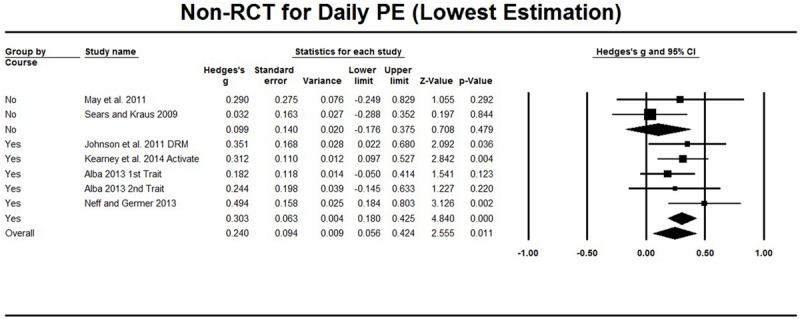
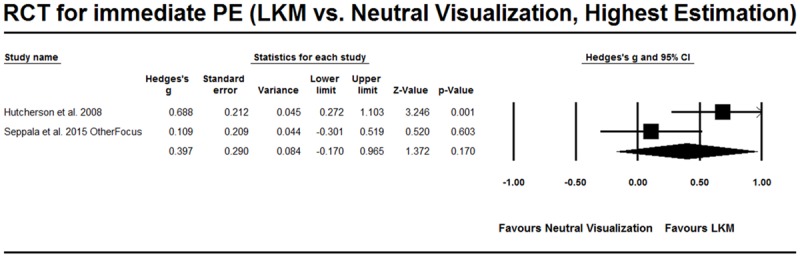
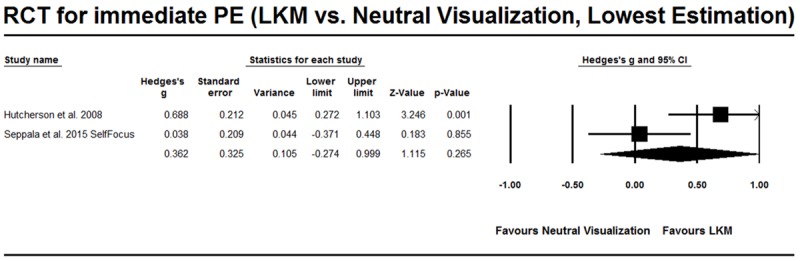
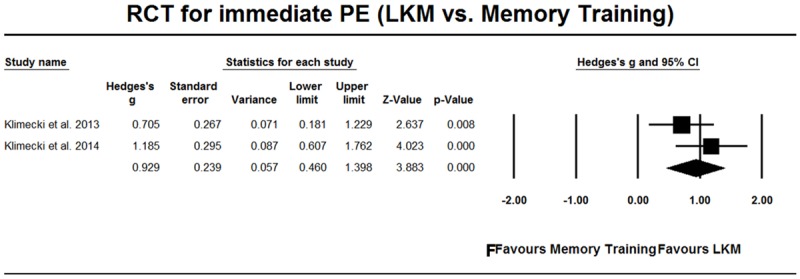
While it has been suggested that loving-kindness meditation (LKM) is an effective practice for promoting positive emotions, the empirical evidence in the literature remains unclear. Here, we provide a systematic review of 24 empirical studies (N = 1759) on LKM with self-reported positive emotions. The effect of LKM on positive emotions was estimated with meta-analysis, and the influence of variations across LKM interventions was further explored with subgroup analysis and meta-regression. The meta-analysis showed that (1) medium effect sizes for LKM interventions on daily positive emotions in both wait-list controlled RCTs and non-RCT studies; and (2) small to large effect sizes for the on-going practice of LKM on immediate positive emotions across different comparisons. Further analysis showed that (1) interventions focused on loving-kindness had medium effect size, but interventions focused on compassion showed small effect sizes; (2) the length of interventions and the time spent on meditation did not influence the effect sizes, but the studies without didactic components in interventions had small effect sizes. A few individual studies reported that the nature of positive emotions and individual differences also influenced the results. In sum, LKM practice and interventions are effective in enhancing positive emotions, but more studies are needed to identify the active components of the interventions, to compare different psychological operations, and to explore the applicability in clinical populations.
Overview
The claims and statistics of this paper haven’t been checked yet.
Run the check — free, no account needed. It reads the open-access text and checks the sources it cites.
Integrity signals
Registry
Cites
Statistics
Figures
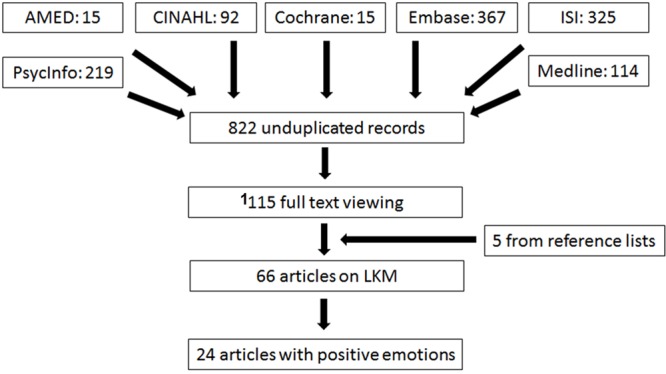
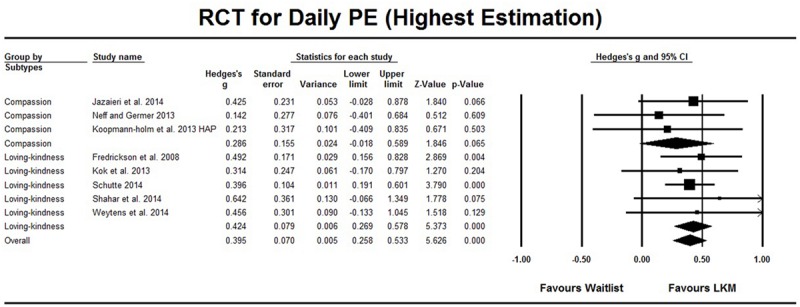
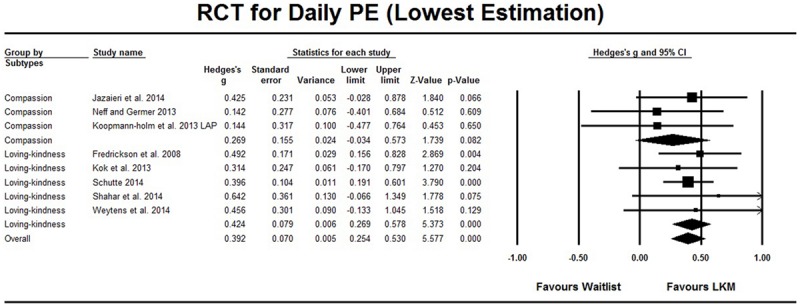
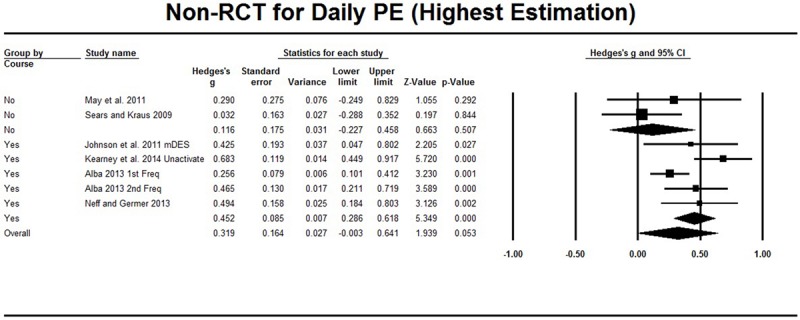
Verification
Claims the paper makes
The claims and statistics of this paper haven’t been checked yet.
Run the check — free, no account needed. It reads the open-access text and checks the sources it cites.
Claims other papers make about this one
Each is checked against this paper’s own text: does it say what the citing paper says it does?
The source backs part of the claim, not all of it — or backs it for a different population, condition or comparison.
In the citing paper
“Previous systematic reviews and meta-analyses have tended to focus on one specific type of meditation practice (e.g., mindfulness or LKM; Galante et al., 2014; Zeng et al., 2015;), negative emotions (Hofmann et al., 2010), or self-focused positive emotions (e.g., Zeng et al., 2015).”
From A Systematic Review and Meta-analysis of the Effects of Meditation on Empathy, Compassion, and Prosocial Behaviors (2018) · cites this paper as Zeng et al., 2015
Experimental — accuracy not yet measuredThe cited source says what the claim attributes to it.
In the citing paper
“other previous studies have found some differences in emotional outcomes across meditation types (Zeng et al., 2015).”
From A Systematic Review and Meta-analysis of the Effects of Meditation on Empathy, Compassion, and Prosocial Behaviors (2018) · cites this paper as Zeng et al., 2015
Self-check
Percentages, sums and reported differences re-computed from the paper’s own numbers.
The self-check needs the paper’s full text.
Citations
Cites
Statistical Power Analysis for the Behavioral Sciences
Muller, K. E., & Cohen, J. (1989) · Technometrics · doi:10.2307/1270020 · Cited by 99,603
Development and validation of brief measures of positive and negative affect: The PANAS scales.
Watson, D., Clark, L. A., & Tellegen, A. (1988) · Journal of Personality and Social Psychology · doi:10.1037/0022-3514.54.6.1063 · Cited by 32,433
Fredrickson, B. L. (2001) · American Psychologist · doi:10.1037//0003-066x.56.3.218 · Cited by 18,025
Russell, J. A. (1980) · Journal of Personality and Social Psychology · doi:10.1037/h0077714 · Cited by 16,334
Self-Compassion: An Alternative Conceptualization of a Healthy Attitude Toward Oneself
NEFF, K. (2003) · Self and Identity · doi:10.1080/15298860309032 · Cited by 5,440
A Measure of Subjective Happiness: Preliminary Reliability and Construct Validation
Lyubomirsky, S., & Lepper, H. S. (1999) · Social Indicators Research · doi:10.1023/a:1006824100041 · Cited by 4,071
Fredrickson, B. L., Cohn, M. A., Coffey, K. A., Pek, J., & Finkel, S. M. (2008) · Journal of Personality and Social Psychology · doi:10.1037/a0013262 · Cited by 2,365
A pilot study and randomized controlled trial of the mindful self-compassion program
Neff, K. D., & Germer, C. K. (2013) · Journal of Clinical Psychology · doi:10.1002/jclp.21923 · Cited by 2,253
Beyond the hedonic treadmill: Revising the adaptation theory of well-being.
Diener, E., Lucas, R. E., & Scollon, C. N. (2006) · American Psychologist · doi:10.1037/0003-066x.61.4.305 · Cited by 1,946
Loving-Kindness and Compassion Meditation: Potential for Psychological Interventions
Hofmann, S. G., Grossman, P., & Hinton, D. E. (2011) · Clinical Psychology Review · doi:10.1016/j.cpr.2011.07.003 · Cited by 960
Loving-kindness meditation increases social connectedness.
Hutcherson, C. A., Seppala, E. M., & Gross, J. J. (2008) · Emotion · doi:10.1037/a0013237 · Cited by 758
Kok, B. E., Coffey, K. A., Cohn, M. A., Catalino, L. I., Vacharkulksemsuk, T., Algoe, S. B., Brantley, M., & Fredrickson, B. L. (2013) · Psychological Science · doi:10.1177/0956797612470827 · Cited by 755
Differential pattern of functional brain plasticity after compassion and empathy training
Klimecki, O. M., Leiberg, S., Ricard, M., & Singer, T. (2014) · Social Cognitive and Affective Neuroscience · doi:10.1093/scan/nst060 · Cited by 676
Functional Neural Plasticity and Associated Changes in Positive Affect After Compassion Training
Klimecki, O. M., Leiberg, S., Lamm, C., & Singer, T. (2013) · Cerebral Cortex · doi:10.1093/cercor/bhs142 · Cited by 634
Compassion training alters altruism and neural responses to suffering.
Weng, H. Y., Fox, A. S., Shackman, A. J., Stodola, D. E., Caldwell, J. Z. K., Olson, M. C., Rogers, G. M., & Davidson, R. J. (2013) · Psychological Science · doi:10.1177/0956797612469537 · Cited by 602
Feldman, G., Greeson, J., & Senville, J. (2010) · Behaviour Research and Therapy · doi:10.1016/j.brat.2010.06.006 · Cited by 455
Short-term compassion training increases prosocial behavior in a newly developed prosocial game
Leiberg, S., Klimecki, O., & Singer, T. (2011) · PLoS ONE · doi:10.1371/journal.pone.0017798 · Cited by 442
Gable, P. A., & Harmon‐Jones, E. (2010) · Cognition & Emotion · doi:10.1080/02699930903378305 · Cited by 435
Jazaieri, H., McGonigal, K. M., Jinpa, T., Doty, J. R., Gross, J. J., & Goldin, P. R. (2013) · Motivation and Emotion · doi:10.1007/s11031-013-9368-z · Cited by 385
Effect of kindness-based meditation on health and well-being: A systematic review and meta-analysis.
Galante, J., Galante, I., Bekkers, M.-J., & Gallacher, J. (2014) · Journal of Consulting and Clinical Psychology · doi:10.1037/a0037249 · Cited by 380
Cohn, M., & Fredrickson, B. L. (2010) · The Journal of Positive Psychology · doi:10.1080/17439760.2010.508883 · Cited by 336
The Construct and Measurement of Peace of Mind
Lee, Y.-C., Lin, Y.-C., Huang, C.-L., & Fredrickson, B. L. (2013) · Journal of Happiness Studies · doi:10.1007/s10902-012-9343-5 · Cited by 287
Shonin, E., Van Gordon, W., Compare, A., Zangeneh, M., & Griffiths, M. D. (2015) · Mindfulness · doi:10.1007/s12671-014-0368-1 · Cited by 268
Sears, S., & Kraus, S. (2009) · Journal of Clinical Psychology · doi:10.1002/jclp.20543 · Cited by 209
Lutz, A., Greischar, L. L., Perlman, D. M., & Davidson, R. J. (2009) · NeuroImage · doi:10.1016/j.neuroimage.2009.04.081 · Cited by 199
Cognitive-Based Compassion Training: A Promising Prevention Strategy for At-Risk Adolescents
Reddy, S. D., Negi, L. T., Dodson‐Lavelle, B., Silva, B. O.-D., Pace, T. W. W., Cole, S. P., Raison, C. L., & Craighead, L. W. (2012) · Journal of Child and Family Studies · doi:10.1007/s10826-012-9571-7 · Cited by 173
A pilot study of loving-kindness meditation for the negative symptoms of schizophrenia
Johnson, D. P., Penn, D. L., Fredrickson, B. L., Kring, A. M., Meyer-Kalos, P., Catalino, L. I., & Brantley, M. M. (2011) · Schizophrenia Research · doi:10.1016/j.schres.2011.02.015 · Cited by 172
Distinct Neural Activity Associated with Focused-Attention Meditation and Loving-Kindness Meditation
Lee, T. M. C., Leung, M.-K., Hou, W.-K., Tang, J. C. Y., Yin, J., So, K.-F., Lee, C.-F., & Chan, C. C. H. (2012) · PLoS ONE · doi:10.1371/journal.pone.0040054 · Cited by 162
A wait-list randomized controlled trial of loving-kindness meditation programme for self-criticism
Shahar, B., Szepsenwol, O., Zilcha‐Mano, S., Haim, N., Zamir, O., Levi‐Yeshuvi, S., & Levit‐Binnun, N. (2015) · Clinical Psychology & Psychotherapy · doi:10.1002/cpp.1893 · Cited by 139
Seppala, E. M., Hutcherson, C. A. C., Nguyen, D. T. H., Doty, J. R., & Gross, J. J. (2014) · Journal of Compassionate Health Care · doi:10.1186/s40639-014-0005-9 · Cited by 127
Judge, L., Cleghorn, A., McEwan, K., & Gilbert, P. (2012) · International Journal of Cognitive Therapy · doi:10.1521/ijct.2012.5.4.420 · Cited by 122
BOLD signal and functional connectivity associated with loving kindness meditation
Garrison, K. A., Scheinost, D., Constable, R. T., & Brewer, J. A. (2014) · Brain and Behavior · doi:10.1002/brb3.219 · Cited by 82
An Integrative Theory-Driven Positive Emotion Regulation Intervention
Weytens, F., Luminet, O., Verhofstadt, L., & Mikolajczak, M. (2014) · PLoS ONE · doi:10.1371/journal.pone.0095677 · Cited by 77
Schutte, N. S. (2013) · The Journal of Positive Psychology · doi:10.1080/17439760.2013.841280 · Cited by 72
Brain Activation During Compassion Meditation: A Case Study
Engström, M., & Söderfeldt, B. (2010) · The Journal of Alternative and Complementary Medicine · doi:10.1089/acm.2009.0309 · Cited by 66
Kearney, D., McManus, C., Malte, C., Martinez, M., Felleman, B. I., & Simpson, T. L. (2014) · Medical Care · doi:10.1097/mlr.0000000000000221 · Cited by 61
The neural mediators of kindness-based meditation: a theoretical model
Mascaro, J. S., Darcher, A., Negi, L. T., & Raison, C. L. (2015) · Frontiers in Psychology · doi:10.3389/fpsyg.2015.00109 · Cited by 58
Evidence That a Brief Meditation Exercise Can Reduce Prejudice Toward Homeless People
Parks, S., Birtel, M. D., & Crisp, R. J. (2014) · Social Psychology · doi:10.1027/1864-9335/a000212 · Cited by 56
May, C. J., Weyker, J. R., Spengel, S. K., Finkler, L. J., & Hendrix, S. E. (2012) · Mindfulness · doi:10.1007/s12671-012-0172-8 · Cited by 53
Buddhist-inspired meditation increases the value of calm.
Koopmann‐Holm, B., Sze, J. A., Ochs, C., & Tsai, J. L. (2013) · Emotion · doi:10.1037/a0031070 · Cited by 49
Perceived Benefits and Doubts of Participants in a Weekly Meditation Study
Sears, S. R., Kraus, S., Carlough, K., & Treat, E. (2011) · Mindfulness · doi:10.1007/s12671-011-0055-4 · Cited by 42
The neural correlates of social connection
Hutcherson, C. A. C., Seppala, E. M., & Gross, J. J. (2014) · Cognitive Affective & Behavioral Neuroscience · doi:10.3758/s13415-014-0304-9 · Cited by 40
May, C. J., Burgard, M., Mena, M., Abbasi, I., Bernhardt, N., Clemens, S., Curtis, E., Daggett, E. W., Hauch, J., Housh, K., et al. (2011) · Mindfulness · doi:10.1007/s12671-011-0053-6 · Cited by 32
Dispositional Mindfulness, Meditation, and Conditional Goal Setting
Crane, C., Jandric, D., Barnhofer, T., & Williams, J. M. G. (2010) · Mindfulness · doi:10.1007/s12671-010-0029-y · Cited by 31
Loving-kindness meditation: a field study
Alba, B. (2013) · Contemporary Buddhism · doi:10.1080/14639947.2013.832494 · Cited by 23
Kang, Y., Gray, J. R., & Dovidio, J. F. (2015) · Mindfulness · doi:10.1007/s12671-014-0355-6 · Cited by 22
Kabat‐Zinn, J. (2017) · Mindfulness · doi:10.1007/s12671-017-0757-3 · Cited by 20
The Application of Loving-kindness Meditation from Psychological Perspective
Zeng, X., Shuangyang, L. I. U., & Liu, X. (2013) · Advances in Psychological Science · doi:10.3724/sp.j.1042.2013.01466 · Cited by 10
Self-citationPhysiological Effects of Practice of Loving - Kindness Meditation
Shobitha, M., & Kohli, S. K. (2015) · International Journal of Physiology · doi:10.5958/2320-608x.2015.00001.3 · Cited by 1
Research works printed but not linked: 4
- Fredrickson, 2008, Open hearts build lives: positive emotions, induced through loving-kindness meditation, build consequential personal resources., J. Pers. Soc. Psychol., 95, 1045, 10.1037/a0013262 · DOI · Paper page
- Hedges, 1985, Statistical Models for Meta-analysis.
- Sujiva, 2007, Loving-Kindness Meditation.
- Wheeler, 2014, Brief compassion meditation and recall of positive-emotion words., J. Artic. Support Null Hypothesis, 11, 12
Cited by
Sorted by citations
Self-compassion interventions and psychosocial outcomes: a meta-analysis of RCTs
Ferrari, M., Hunt, C., Harrysunker, A., Abbott, M. J., Beath, A. P., & Einstein, D. A. (2019) · Mindfulness · doi:10.1007/s12671-019-01134-6 · Cited by 740
Luberto, C. M., Shinday, N., Song, R., Philpotts, L. L., Park, E. R., Fricchione, G. L., & Yeh, G. Y. (2018) · Mindfulness · doi:10.1007/s12671-017-0841-8 · Cited by 346
Fredrickson, B. L., Boulton, A. J., Firestine, A. M., Cappellen, P. V., Algoe, S. B., Brantley, M. M., Kim, S. L., Brantley, J. G., & Salzberg, S. (2017) · Mindfulness · doi:10.1007/s12671-017-0735-9 · Cited by 171
Positive affect treatment targets reward sensitivity: A randomized controlled trial.
Craske, M. G., Meuret, A. E., Echiverri-Cohen, A. M., Rosenfield, D., & Ritz, T. (2023) · Journal of Consulting and Clinical Psychology · doi:10.1037/ccp0000805 · Cited by 152
Vieten, C., Wahbeh, H., Cahn, B. R., MacLean, K., Estrada, M., Mills, P., Murphy, M., Shapiro, S., Radin, D., Josipovic, Z., et al. (2018) · PLoS ONE · doi:10.1371/journal.pone.0205740 · Cited by 124
Metadata
- Authors
- Zeng, X., Chiu, C. P. K., Wang, R., Oei, T. P. S., & Leung, F. Y. K.
- Affiliations
- Chinese University of Hong Kong (HK)
- Nanjing Forestry University (CN)
- The University of Queensland (AU)
- Corresponding author
- Zeng, Xianglong
- Venue
- Frontiers in Psychology
- Publisher
- Frontiers Media SA
- Published
- 2015-11-03
- Volume
- 6
- Pages
- 1693-1693
- ISSN
- 1664-1078 (ISSN-L)
- PMC
- PMC4630307
- OpenAlex
- W2213657943
- Cited by
- 258
- References
- 50
- Citations by year
- 2026: 13 · 2025: 44 · 2024: 17 · 2023: 21 · 2022: 60 · 2021: 27 · 2020: 27 · 2019: 16 · 2018: 15 · 2017: 13 · 2016: 4
- FWCI
- 1.54
- Type
- journal article
- Language
- en
- Open access
- gold
- doi.org
- Licence
- cc-by
- Locations
- Frontiers in Psychology (publishedVersion, cc-by)
- Europe PMC (PubMed Central) (publishedVersion, cc-by)
- PubMed Central (publishedVersion, cc-by)
- PubMed (publishedVersion)
- ResearchOnline at James Cook University (James Cook University) (submittedVersion)
- DOAJ (DOAJ: Directory of Open Access Journals) (submittedVersion, cc-by-sa)
- Funders
- James Cook University
- Nanjing University
- Topics
- Social Sciences › Psychology › Clinical Psychology › Mindfulness and Compassion Interventions
- Social Sciences › Psychology › Social Psychology › Psychological Well-being and Life Satisfaction
- Social Sciences › Health › Religion, Spirituality, and Psychology
- Keywords
- loving-kindness meditation, positive emotions, compassion-focused interventions, meditation intervention, intervention components, individual differences, mindfulness-based interventions
About these checks
Registry, retraction, Cites and statistics results are computed, not judged, with one exception: a printed reference that no index lists is read once by a model before it counts as a citation error. Claims are extracted by a model and kept only when their quote appears verbatim in the text; each cited source is then checked, with a model’s help, for whether it says what the claim relies on. Those verdicts can be wrong — read the claim’s quote and the cited source before relying on one.
Statistics and arithmetic are recomputed, not judged.
Confidence bands are shown only for fields calibrated on our annotated test set. None is calibrated yet, so no band is shown.
What counts as a claim ›How we measure confidence ›How we check this ›
Are you an author, or do you see a problem with this page? Request a review
