

Bioactive Compounds and Bioactivities of Ginger (Zingiber officinale Roscoe)
Open accessThe DOI matches its Crossref record; 117 of the 117 references it cites were found in a registry or an index.
Abstract
Ginger (Zingiber officinale Roscoe) is a common and widely used spice. It is rich in various chemical constituents, including phenolic compounds, terpenes, polysaccharides, lipids, organic acids, and raw fibers. The health benefits of ginger are mainly attributed to its phenolic compounds, such as gingerols and shogaols. Accumulated investigations have demonstrated that ginger possesses multiple biological activities, including antioxidant, anti-inflammatory, antimicrobial, anticancer, neuroprotective, cardiovascular protective, respiratory protective, antiobesity, antidiabetic, antinausea, and antiemetic activities. In this review, we summarize current knowledge about the bioactive compounds and bioactivities of ginger, and the mechanisms of action are also discussed. We hope that this updated review paper will attract more attention to ginger and its further applications, including its potential to be developed into functional foods or nutraceuticals for the prevention and management of chronic diseases.
Overview
The claims and statistics of this paper haven’t been checked yet.
Free: it reads the open-access text and checks the first 5 claims that cite a source we can check. Create a free account to check every claim.
Integrity signals
Registry
Cites
Statistics
Figures
Verification
Claims the paper makes
The claims and statistics of this paper haven’t been checked yet.
Free: it reads the open-access text and checks the first 5 claims that cite a source we can check. Create a free account to check every claim.
Claims other papers make about this one
Each is checked against this paper’s own text: does it say what the citing paper says it does?
In the citing paper
“A meta-analysis of 13 randomized control trials (n = 1174) found that ginger significantly improves overall pregnancy-associated nausea and vomiting, comparable to vitamin B6 [230] and as effective as standard antiemetics like dimenhydrinate [231].”
From Nutritional Approaches to Enhance GLP-1 Analogue Therapy in Obesity: A Narrative Review (2025) · cites this paper as [231]
Self-check
Percentages, sums and reported differences re-computed from the paper’s own numbers.
The self-check needs the paper’s full text.
Citations
Cites
Bray, F., Ferlay, J., Soerjomataram, I., Siegel, R. L., Torre, L. A., & Jemal, A. (2018) · CA: A Cancer Journal for Clinicians · doi:10.3322/caac.21492 · Cited by 84,109
Targeting Free Radicals in Oxidative Stress-Related Human Diseases
Poprac, P., Jomova, K., Simunkova, M., Kollar, V., Rhodes, C. J., & Valko, M. (2017) · Trends in Pharmacological Sciences · doi:10.1016/j.tips.2017.04.005 · Cited by 1,107 · cited 1×
“It has been known that overproduction of free radicals, such as reactive oxygen species (ROS), plays an important part in the development of many chronic diseases [17].”
BackgroundPlant-derived exosomal MicroRNAs shape the gut microbiota
Teng, Y., Ren, Y., Sayed, M., Hu, X., Lei, C., Kumar, A., Hutchins, E., Mu, J., Deng, Z., Luo, C., et al. (2018) · Cell Host & Microbe · doi:10.1016/j.chom.2018.10.001 · Cited by 1,027 · cited 1×
“Moreover, microRNAs of ginger exosome-like nanoparticles (GELN) ameliorated mouse colitis by inducing the production of IL-22, a barrier function improvement factor [41].”
BackgroundZhang, M., Viennois, E., Prasad, M., Zhang, Y., Wang, L., Zhang, Z., Han, M. K., Xiao, B., Xu, C., Srinivasan, S., et al. (2016) · Biomaterials · doi:10.1016/j.biomaterials.2016.06.018 · Cited by 1,026 · cited 12×
“Besides, ginger extract and zingerone inhibited NF-κB activation and decreased the level of IL-1β in the colons of mice, which alleviated colitis induced by 2, 4, 6-trinitrobenzene sulfonic acid [38].”
BackgroundInfluentialAntioxidant capacities and total phenolic contents of 62 fruits
Fu, L., Xu, B.-T., Xu, X.-R., Gan, R.-Y., Zhang, Y., Xia, E.-Q., & Li, H.-B. (2011) · Food Chemistry · doi:10.1016/j.foodchem.2011.04.079 · Cited by 757
Self-citationGinger and Its Constituents: Role in Prevention and Treatment of Gastrointestinal Cancer
Prasad, S., & Tyagi, A. K. (2015) · Gastroenterology Research and Practice · doi:10.1155/2015/142979 · Cited by 439 · cited 2×
“Besides these, polysaccharides, lipids, organic acids, and raw fibers are also present in ginger [13,16].”
BackgroundChang, J. S., Wang, K. C., Yeh, C. F., Shieh, D. E., & Chiang, L. C. (2013) · Journal of Ethnopharmacology · doi:10.1016/j.jep.2012.10.043 · Cited by 369 · cited 2×
“Ginger was effective in blocking viral attachment and internalization [52].”
BackgroundXu, X.-Y., Meng, X., Li, S., Gan, R.-Y., Li, Y., & Li, H.-B. (2018) · Nutrients · doi:10.3390/nu10101553 · Cited by 358
Self-citationLi, C.-L., Ou, C.-M., Huang, C.-C., Wu, W.-C., Chen, Y.-P., Lin, T.-E., Ho, L.-C., Wang, C.-W., Shih, C.-C., Zhou, H.-C., et al. (2014) · Journal of Materials Chemistry B · doi:10.1039/c4tb00216d · Cited by 350 · cited 2×
“The in vitro experiment found that C-dots increased the content of ROS in the HepG2 cells, which upregulated the expression of p53 and promoted apoptosis [67].”
BackgroundTotal Phenolic Contents and Antioxidant Capacities of Selected Chinese Medicinal Plants
Song, F.-L., Gan, R.-Y., Zhang, Y., Xiao, Q., Kuang, L., & Li, H.-B. (2010) · International Journal of Molecular Sciences · doi:10.3390/ijms11062362 · Cited by 346
Self-citationAntioxidant capacities and total phenolic contents of 56 vegetables
Deng, G.-F., Lin, X., Xu, X.-R., Gao, L.-L., Xie, J.-F., & Li, H.-B. (2013) · Journal of Functional Foods · doi:10.1016/j.jff.2012.10.015 · Cited by 330
Self-citationLuettig, J., Rosenthal, R., Lee, I.-F. M., Krug, S. M., & Schulzke, J. D. (2016) · Molecular Nutrition & Food Research · doi:10.1002/mnfr.201600274 · Cited by 301
Fresh Fruit consumption and major cardiovascular disease in China
Du, H., Li, L., Bennett, D., Guo, Y., Key, T. J., Bian, Z., Sherliker, P., Gao, H., Chen, Y., Yang, L., et al. (2016) · New England Journal of Medicine · doi:10.1056/nejmoa1501451 · Cited by 281
Yeh, H.-Y., Chuang, C.-H., Chen, H.-C., Wan, C.-J., Chen, T.-L., & Lin, L.-Y. (2014) · LWT - Food Science and Technology · doi:10.1016/j.lwt.2013.08.003 · Cited by 244 · cited 3×
“Moreover, there are several terpene components in ginger, such as β-bisabolene, α-curcumene, zingiberene, α-farnesene, and β-sesquiphellandrene, which are considered to be the main constituents of ginger essential oils [16].”
BackgroundGinger Extract Inhibits Biofilm Formation by Pseudomonas aeruginosa PA14
Kim, H.-S., & Park, H.-D. (2013) · PLoS ONE · doi:10.1371/journal.pone.0076106 · Cited by 241 · cited 1×
“In addition, treatment with ginger extract blocked biofilm formation via a reduction in the level of bis-(3′-5′)-cyclic dimeric guanosine monophosphate (c-di-GMP) in Pseudomonas aeruginosa PA14 [47].”
BackgroundZhang, M., Xu, C., Liu, D., Han, M. K., Wang, L., & Merlin, D. (2018) · Journal of Crohn's and Colitis · doi:10.1093/ecco-jcc/jjx115 · Cited by 229 · cited 1×
“In addition, nanoparticles loaded with 6-shogaol were found to attenuate colitis symptoms and improve colitis wound repair in mice with dextran sulfate sodium-induced colitis [40].”
BackgroundArablou, T., Aryaeian, N., Valizadeh, M., Sharifi, F., Hosseini, A., & Djalali, M. (2014) · International Journal of Food Sciences and Nutrition · doi:10.3109/09637486.2014.880671 · Cited by 228 · cited 2×
“In a randomized, double-blind, and placebo-controlled trial, the ingestion of ginger decreased the levels of insulin, low-density lipoprotein cholesterol (LDL-C), and TG; decreased the homeostasis model assessment index; and increased the quantitative insulin sensitivity check index in patients with DM2 [93].”
BackgroundAntioxidant capacities and total phenolic contents of infusions from 223 medicinal plants
Li, S., Li, S.-K., Gan, R.-Y., Song, F.-L., Kuang, L., & Li, H.-B. (2013) · Industrial Crops and Products · doi:10.1016/j.indcrop.2013.09.017 · Cited by 210
Self-citationHasan, S., Danishuddin, M., & Khan, A. U. (2015) · BMC Microbiology · doi:10.1186/s12866-014-0320-5 · Cited by 200 · cited 2×
“In vitro Streptococcus mutans 8, 16, 32, 64, and 128 μg/mL Inhibiting biofilm formation, glucan synthesis, and adherence [48]”
BackgroundResultNile, S. H., & Park, S. W. (2015) · Industrial Crops and Products · doi:10.1016/j.indcrop.2015.03.033 · Cited by 190 · cited 2×
“In recent years, ginger has been found to possess biological activities, such as antioxidant [3], anti-inflammatory [4], antimicrobial [5], and anticancer [6] activities.”
BackgroundMethodKumar, N. V., Murthy, P. S., Manjunatha, J. R., & Bettadaiah, B. K. (2014) · Food Chemistry · doi:10.1016/j.foodchem.2014.03.039 · Cited by 188 · cited 1×
“In recent years, ginger has been found to possess biological activities, such as antioxidant [3], anti-inflammatory [4], antimicrobial [5], and anticancer [6] activities.”
BackgroundTotal Phenolic Contents and Antioxidant Capacities of Herbal and Tea Infusions
Li, F., Xu, B., Gan, R., Zhang, Y., Xu, X., Xia, E.-Q., & Li, H. (2011) · International Journal of Molecular Sciences · doi:10.3390/ijms12042112 · Cited by 183
Self-citationAkimoto, M., Iizuka, M., Kanematsu, R., Yoshida, M., & Takenaga, K. (2015) · PLOS ONE · doi:10.1371/journal.pone.0126605 · Cited by 178 · cited 1×
“Ginger extract suppressed tumor growth from pancreatic cancer in both a peritoneal dissemination model and an orthotopic model of mice without serious adverse effects [68].”
BackgroundWei, C.-K., Tsai, Y.-H., Korinek, M., Hung, P.-H., El-Shazly, M., Cheng, Y.-B., Wu, Y.-C., Hsieh, T.-J., & Chang, F.-R. (2017) · International Journal of Molecular Sciences · doi:10.3390/ijms18010168 · Cited by 168 · cited 2×
“In addition, accumulating studies have demonstrated that ginger possesses the potential to prevent and manage several diseases, such as neurodegenerative diseases [7], cardiovascular diseases [8], obesity [9], diabetes mellitus [10], chemotherapy-induced nausea and emesis [11], and respiratory disorders [12].”
BackgroundAnti-neuroinflammatory capacity of fresh ginger is attributed mainly to 10-gingerol
Ho, S.-C., Chang, K., & Lin, C. (2013) · Food Chemistry · doi:10.1016/j.foodchem.2013.06.010 · Cited by 163 · cited 9×
“Ginger also protected against anti-CD3 antibody-induced enteritis in mice, and ginger could reduce the production of TNF-α as well as the activation of Akt and NF-κB [39].”
BackgroundInfluentialLi, Y., Hong, Y., Han, Y., Wang, Y., & Xia, L. (2016) · Journal of Chromatography B · doi:10.1016/j.jchromb.2016.01.009 · Cited by 159 · cited 1×
“However, when dried ginger was further heated to obtain stir-fried ginger and carbonized ginger, the antioxidant activity decreased, because the processing could change gingerols into shogaols [26].”
BackgroundAbolaji, A. O., Ojo, M., Afolabi, T. T., Arowoogun, M. D., Nwawolor, D., & Farombi, E. O. (2017) · Chemico-Biological Interactions · doi:10.1016/j.cbi.2017.03.017 · Cited by 159 · cited 17×
“Ginger also protected against anti-CD3 antibody-induced enteritis in mice, and ginger could reduce the production of TNF-α as well as the activation of Akt and NF-κB [39].”
BackgroundInfluentialMoon, M., Kim, H. G., Choi, J. G., Oh, H., Lee, P. K. J., Ha, S. K., Kim, S. Y., Park, Y., Huh, Y., & Oh, M. S. (2014) · Biochemical and Biophysical Research Communications · doi:10.1016/j.bbrc.2014.04.121 · Cited by 158 · cited 1×
“Moreover, 6-shogaol could alleviate cognitive dysfunction in mice with AD by inhibiting inflammatory responses, upregulating the level of NGF, and enhancing synaptogenesis in the brain [74].”
BackgroundGinger in the Prevention of Nausea and Vomiting: A Review
Palatty, P. L., Haniadka, R., Valder, B., Arora, R., & Baliga, M. S. (2013) · Critical Reviews in Food Science and Nutrition · doi:10.1080/10408398.2011.553751 · Cited by 156 · cited 1×
“Previous results have shown that ginger could attenuate pregnancy-induced nausea and emesis and motion sickness, while recent studies have focused on the preventive efficacy of ginger on postoperative and chemotherapy-induced nausea and emesis [102].”
ResultMahluji, S., Attari, V. E., Mobasseri, M., Payahoo, L., Ostadrahimi, A., & Golzari, S. E. (2013) · International Journal of Food Sciences and Nutrition · doi:10.3109/09637486.2013.775223 · Cited by 153 · cited 2×
“In a randomized, double-blind, and placebo-controlled trial, the ingestion of ginger decreased the levels of insulin, low-density lipoprotein cholesterol (LDL-C), and TG; decreased the homeostasis model assessment index; and increased the quantitative insulin sensitivity check index in patients with DM2 [93].”
BackgroundEffects of Ginger and Its Constituents on Airway Smooth Muscle Relaxation and Calcium Regulation
Townsend, E., Siviski, M. E., Zhang, Y., Xu, C., Hoonjan, B., & Emala, C. W. (2013) · American Journal of Respiratory Cell and Molecular Biology · doi:10.1165/rcmb.2012-0231oc · Cited by 153 · cited 3×
“Natural herbal medicines have a long history of application in the treatment of respiratory disorders such as asthma, and ginger is one of these remedies [12,103].”
BackgroundLai, Y.-S., Lee, W.-C., Lin, Y., Ho, C., Lu, K., Lin, S.-H., Panyod, S., Chu, Y., & Sheen, L. (2016) · Journal of Agricultural and Food Chemistry · doi:10.1021/acs.jafc.5b06159 · Cited by 152 · cited 2×
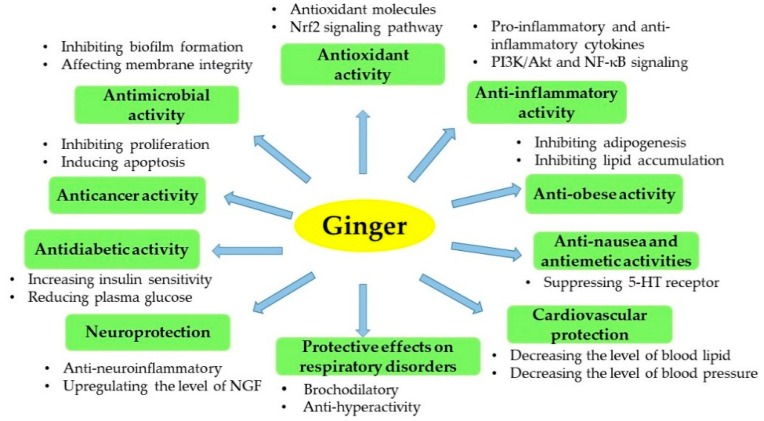
“Apart from the bioactivities mentioned above (Figure 3), ginger has other beneficial effects, such as hepatoprotective and antiallergic effects [108,109].”
BackgroundAntioxidant capacities, phenolic compounds and polysaccharide contents of 49 edible macro-fungi
Guo, Y.-J., Deng, G.-F., Xu, X.-R., Wu, S., Li, S., Xia, E.-Q., Li, F., Chen, F., Ling, W.-H., & Li, H.-B. (2012) · Food & Function · doi:10.1039/c2fo30110e · Cited by 148
Self-citationDeng, G.-F., Xu, X.-R., Guo, Y.-J., Xia, E.-Q., Li, S., Wu, S., Chen, F., Ling, W.-H., & Li, H.-B. (2012) · Journal of Functional Foods · doi:10.1016/j.jff.2012.06.008 · Cited by 148
Self-citationSaha, A., Blando, J., Silver, E., Beltran, L., Sessler, J., & DiGiovanni, J. (2014) · Cancer Prevention Research · doi:10.1158/1940-6207.capr-13-0420 · Cited by 147 · cited 2×
“6-shogaol In vitro LNCaP, DU145, and PC-3 human prostate cancer cells 10, 20, and 40 μM Inducing apoptosis; inhibiting STAT3 and NF-κB signaling; downregulating the expression of cyclin D1, survivin, c-Myc, and Bcl2 [57]”
BackgroundSuk, S., Kwon, G. T., Lee, E., Jang, W. J., Yang, H., Kim, J. H., Thimmegowda, N. R., Chung, M., Kwon, J. Y., Yang, S., et al. (2017) · Molecular Nutrition & Food Research · doi:10.1002/mnfr.201700139 · Cited by 143 · cited 3×
“Several studies have reported that ginger is effective in the management and prevention of obesity [9,84].”
BackgroundMisawa, K., Hashizume, K., Yamamoto, M., Minegishi, Y., Hase, T., & Shimotoyodome, A. (2015) · The Journal of Nutritional Biochemistry · doi:10.1016/j.jnutbio.2015.04.014 · Cited by 140 · cited 2×
“In cultured skeletal muscle myotubes, 6-shogaol and 6-gingerol could increase peroxisome proliferator-activated receptor δ (PPARδ)-dependent gene expression, and this resulted in the enhancement of cellular fatty acid catabolism [83].”
BackgroundAntiproliferative activity of peels, pulps and seeds of 61 fruits
Li, F., Li, S., Li, H.-B., Deng, G.-F., Ling, W.-H., Wu, S., Xu, X.-R., & Chen, F. (2013) · Journal of Functional Foods · doi:10.1016/j.jff.2013.04.016 · Cited by 134 · cited 2×
“Several research works have demonstrated that natural products such as fruits and medicinal plants possess anticancer activity [55,56].”
BackgroundSelf-citationPark, G., Kim, H. G., Ju, M. S., Ha, S. K., Park, Y., Kim, S. Y., & Oh, M. S. (2013) · Acta Pharmacologica Sinica · doi:10.1038/aps.2013.57 · Cited by 129 · cited 2×
“Recently, many investigations have revealed that ginger positively affects memory function and exhibits anti-neuroinflammatory activity, which might contribute to the management and prevention of neurodegenerative diseases [70,71].”
BackgroundGinger Phytochemicals Exhibit Synergy to Inhibit Prostate Cancer Cell Proliferation
Brahmbhatt, M., Gundala, S. R., Asif, G., Shamsi, S. A., & Aneja, R. (2013) · Nutrition and Cancer · doi:10.1080/01635581.2013.749925 · Cited by 125 · cited 1×
“In addition, binary combinations of ginger phytochemicals, such as 6-gingerol, 8-gingerol, 10-gingerol, and 6-shogaol, synergistically inhibited the proliferation of PC-3 prostate cancer cells [63].”
BackgroundEffect of Zingiber officinale essential oil on Fusarium verticillioides and fumonisin production
Ribeiro, M. M. Y., Grespan, R., Kohiyama, C. Y., Ferreira, F. D., Mossini, S. A. G., Silva, E. L., Filho, B. A. D. A., Mikcha, J. M. G., & Machinski, M. (2013) · Food Chemistry · doi:10.1016/j.foodchem.2013.05.144 · Cited by 124
Tahir, A. A., Sani, N. F. A., Murad, N. A., Makpol, S., Ngah, W. Z. W., & Yusof, Y. A. M. (2015) · Nutrition Journal · doi:10.1186/s12937-015-0015-2 · Cited by 119 · cited 5×
“Besides, treatment with ginger extract promoted apoptosis by decreasing the expression of genes involved with the Ras/extracellular signal-regulated kinase (ERK) and PI3K/Akt pathways, such as the v-Ki-ras2 Kirsten rat sarcoma viral oncogene homolog (KRAS), ERK, Akt, and B-cell lymphoma-extralarge (Bcl-xL).”
BackgroundInfluentialLim, S., Moon, M., Oh, H., Kim, H. G., Kim, S. Y., & Oh, M. S. (2014) · The Journal of Nutritional Biochemistry · doi:10.1016/j.jnutbio.2014.05.009 · Cited by 113 · cited 2×
“Further experiments in mouse hippocampi and rat C6 glioma cells revealed that ginger extract promoted the formation of synapses in the brain through the activation of extracellular signal-regulated kinase (ERK) induced by nerve growth factor (NGF) and cyclic AMP response element-binding protein (CREB) [69].”
BackgroundHsiang, C., Lo, H., Huang, H., Li, C., Wu, S., & Ho, T. (2012) · Food Chemistry · doi:10.1016/j.foodchem.2012.07.124 · Cited by 113 · cited 7×
“Besides, ginger extract and zingerone inhibited NF-κB activation and decreased the level of IL-1β in the colons of mice, which alleviated colitis induced by 2, 4, 6-trinitrobenzene sulfonic acid [38].”
BackgroundInfluentialMarx, W. M., Teleni, L., McCarthy, A. L., Vitetta, L., McKavanagh, D., Thomson, D., & Isenring, E. (2013) · Nutrition Reviews · doi:10.1111/nure.12016 · Cited by 112 · cited 1×
“Moreover, nausea and emesis are common side effects of chemotherapy [98].”
BackgroundPeng, S., Yao, J., Liu, Y., Duan, D., Zhang, X., & Fang, J. (2015) · Food & Function · doi:10.1039/c5fo00214a · Cited by 111 · cited 1×
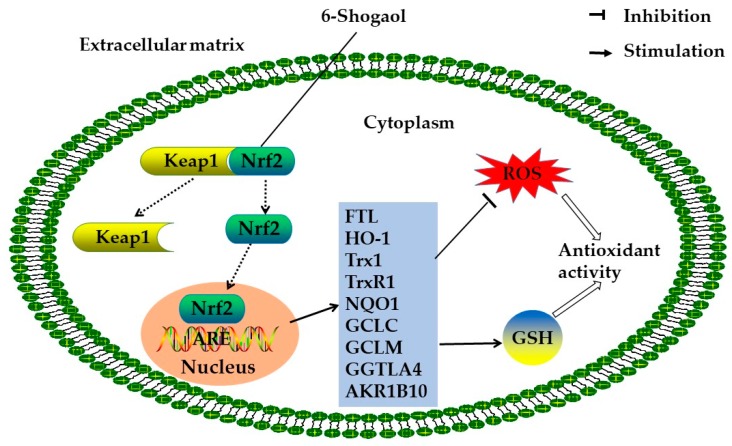
“Ginger and its bioactive compounds (such as 6-shogaol) exhibited antioxidant activity via the nuclear factor erythroid 2-related factor 2 (Nrf2) signaling pathway (Figure 1) [32].”
BackgroundSamad, M. B., Mohsin, M. N. A. B., Razu, B. A., Hossain, M. T., Mahzabeen, S., Unnoor, N., Muna, I. A., Akhter, F., Kabir, A. U., & Hannan, J. M. A. (2017) · BMC Complementary and Alternative Medicine · doi:10.1186/s12906-017-1903-0 · Cited by 109
Hosseinzadeh, A., Juybari, K. B., Fatemi, M. J., Kamarul, T., Bagheri, A., Maroof, N. T., & Sharifi, A. M. (2017) · Cells Tissues Organs · doi:10.1159/000479789 · Cited by 107 · cited 2×
“In vitro C28I2 human chondrocyte cells 5 and 25 μg/mL Increasing the gene expression of antioxidant enzymes; reducing the content of ROS and lipid peroxidation [30]”
BackgroundMahmoud, R. H., & Elnour, W. (2013) · PubMed · Cited by 106
Bernard, M., McConnery, J. R., & Hoskin, D. W. (2017) · Experimental and Molecular Pathology · doi:10.1016/j.yexmp.2017.03.006 · Cited by 102 · cited 2×
“10-gingerol In vitro Human and mouse breast carcinoma cells 50, 100, and 200 μM Inhibiting cell growth; reducing cell division; inducing S phase cell cycle arrest and apoptosis [66]”
BackgroundAttari, V. E., Ostadrahimi, A., Jafarabadi, M. A., Sajjad, M., & Mahluji, S. (2015) · European Journal of Nutrition · doi:10.1007/s00394-015-1027-6 · Cited by 102 · cited 1×
“In a randomized, double-blind, and placebo-controlled study, obese women receiving 2 g of ginger powder daily had a decreased body mass index (BMI) [85].”
BackgroundZhang, F., Zhang, J.-G., Qu, J., Zhang, Q., Prasad, C., & Wei, Z. (2017) · Food and Chemical Toxicology · doi:10.1016/j.fct.2017.02.038 · Cited by 98 · cited 2×
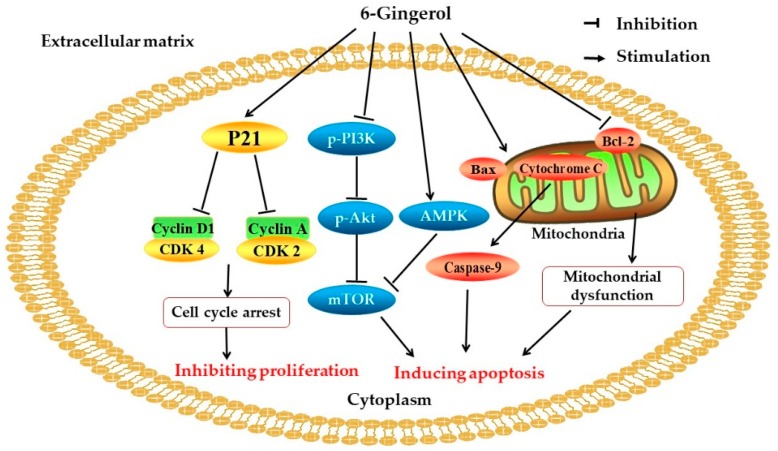
“Apoptosis in Hela cells was induced by increasing the expression of caspase and inhibiting mammalian target of rapamycin (mTOR) signaling [65].”
BackgroundAkinyemi, A. J., Thome, G. R., Morsch, V. M., Stefanello, N., Goularte, J. F., Belló-Klein, A., Oboh, G., & Schetinger, M. R. C. (2015) · Journal of Functional Foods · doi:10.1016/j.jff.2015.06.011 · Cited by 98 · cited 4×
“Thus, blood pressure decreased in hypertensive rats pretreated with ginger [8].”
BackgroundInfluentialChen, H., Fu, J., Chen, H., Hu, Y., Soroka, D. N., Prigge, J. R., Schmidt, E. E., Yan, F., Major, M. B., Chen, X. L., et al. (2014) · Chemical Research in Toxicology · doi:10.1021/tx500211x · Cited by 96 · cited 3×
“Further analysis revealed that 6-shogaol and its metabolite activated Nrf2 via the alkylation of cysteine residues of Kelch-like ECH-associated protein 1 (Keap1) [33].”
BackgroundInfluentialBossi, P., Cortinovis, D. L., Fatigoni, S., Rocca, M. C., Fabi, A., Seminara, P., Ripamonti, C. B., Alfieri, S., Granata, R., Bergamini, C., et al. (2017) · Annals of Oncology · doi:10.1093/annonc/mdx315 · Cited by 96 · cited 1×
“Ginger has been traditionally used to treat gastrointestinal symptoms, and recent research has demonstrated that ginger could effectively alleviate nausea and emesis [11,94,95].”
BackgroundZeng, G.-F., Zhang, Z.-Y., Lu, L., Xiao, D.-Q., Zong, S.-H., & He, J.-M. (2013) · Rejuvenation Research · doi:10.1089/rej.2012.1389 · Cited by 94 · cited 4×
“In stressed rat heart homogenates, ginger extract decreased the content of malondialdehyde (MDA), which was related to lipid peroxidation [29].”
BackgroundInfluentialZingiber officinaleameliorates allergic asthma via suppression of Th2-mediated immune response
Khan, A. M., Shahzad, M., Asim, M. B. R., Imran, M., & Shabbir, A. (2014) · Pharmaceutical Biology · doi:10.3109/13880209.2014.920396 · Cited by 94 · cited 1×
“In addition, ginger ameliorated allergic asthma by reducing allergic airway inflammation and suppressed Th2-mediated immune responses in mice with ovalbumin-induced allergic asthma [105].”
BackgroundSampath, C., Rashid, M. R., Sang, S., & Ahmedna, M. (2017) · Food Chemistry · doi:10.1016/j.foodchem.2017.01.056 · Cited by 93 · cited 2×
“Many research works have evaluated the antidiabetic effect of ginger and its major active constituents [88].”
BackgroundKawamoto, Y., Ueno, Y., Nakahashi, E., Obayashi, M., Sugihara, K., Qiao, S., Iida, M., Kumasaka, M. Y., Yajima, I., Goto, Y., et al. (2015) · The Journal of Nutritional Biochemistry · doi:10.1016/j.jnutbio.2015.08.025 · Cited by 92
Gingerol Fraction from Zingiber officinale Protects against Gentamicin-Induced Nephrotoxicity
Rodrigues, F. A. P., Prata, M. D. M. G., Oliveira, I. C. M., Alves, N. T. Q., de Freitas, R. E. M., Monteiro, H. S. A., da Silva, J. A., Vieira, P. C., Viana, D. A., Libório, A. B., et al. (2014) · Antimicrobial Agents and Chemotherapy · doi:10.1128/aac.02431-13 · Cited by 92 · cited 2×
“In another study with mice fed an alcohol-containing liquid diet, ginger essential oil ameliorated alcoholic fatty liver disease by decreasing the levels of AST, ALT, TG, and TC and increasing liver antioxidant enzyme activity, such as catalase and SOD [112].”
BackgroundSchadich, E., Hlaváč, J., Volná, T., Varanasi, L., Hajdúch, M., & Džubák, P. (2016) · BioMed Research International · doi:10.1155/2016/2173275 · Cited by 90 · cited 3×
“Ginger phenylpropanoids In vitro BJ foreskin fibroblasts 40 μg/mL Increasing Nrf2 activity and the level of GSTP1 [15]”
BackgroundCitronberg, J., Bostick, R., Ahearn, T., Turgeon, D. K., Ruffin, M. T., Djuric, Z., Sen, A., Brenner, D. E., & Zick, S. M. (2013) · Cancer Prevention Research · doi:10.1158/1940-6207.capr-12-0327 · Cited by 89 · cited 3×
“In recent years, ginger has been found to possess biological activities, such as antioxidant [3], anti-inflammatory [4], antimicrobial [5], and anticancer [6] activities.”
BackgroundMarx, W., McCarthy, A., Ried, K., McKavanagh, D., Vitetta, L., Sali, A., Lohning, A., & Isenring, E. (2017) · Nutrients · doi:10.3390/nu9080867 · Cited by 89
Antiproliferative activities of tea and herbal infusions
Li, F., Li, S., Li, H.-B., Deng, G.-F., Ling, W.-H., & Xu, X.-R. (2013) · Food & Function · doi:10.1039/c2fo30252g · Cited by 86 · cited 2×
“Several research works have demonstrated that natural products such as fruits and medicinal plants possess anticancer activity [55,56].”
BackgroundSelf-citationRampogu, S. D., Baek, A., Gajula, R. G., Zeb, A., Bavi, R., Kumar, R., Kim, Y., Kwon, Y. J., & Lee, K. W. (2018) · Annals of Clinical Microbiology and Antimicrobials · doi:10.1186/s12941-018-0266-9 · Cited by 86
Liu, C.-M., Kao, C., Tseng, Y., Lo, Y., & Chen, C. (2017) · Molecules · doi:10.3390/molecules22091477 · Cited by 84 · cited 7×
“Moreover, ginger phenylpropanoids improved Nrf2 activity and enhanced the levels of glutathione S-transferase P1 (GSTP1) as well as the downstream effector of the Nrf2 antioxidant response element in foreskin fibroblast cells [15].”
BackgroundInfluentialChakotiya, A. S., Tanwar, A., Narula, A., & Sharma, R. K. (2017) · Microbial Pathogenesis · doi:10.1016/j.micpath.2017.03.029 · Cited by 82 · cited 2×
“One result found that ginger inhibited the growth of a multidrug-resistant strain of Pseudomonas aeruginosa by affecting membrane integrity and inhibiting biofilm formation [46].”
BackgroundWalstab, J., Krüger, D., Stark, T., Hofmann, T., Demir, I. E., Ceyhan, G. O., Feistel, B., Schemann, M., & Niesler, B. (2013) · Neurogastroenterology & Motility · doi:10.1111/nmo.12107 · Cited by 81 · cited 3×
“Ginger has been traditionally used to treat gastrointestinal symptoms, and recent research has demonstrated that ginger could effectively alleviate nausea and emesis [11,94,95].”
BackgroundBeneficial therapeutic effects of Nigella sativa and/or Zingiber officinale in HCV patients in Egypt
Adel, A.-M., Morsy, B. M., Mahmoud, A. M., Abo-Seif, M. A., & Zanaty, M. I. (2013) · EXCLI journal · doi:10.17877/de290r-7408 · Cited by 81 · cited 1×
“In a clinical trial, ginger extract decreased hepatitis C virus (HCV) loads, the level of α-fetoprotein (AFP), and markers relevant to liver function, such as aspartate aminotransferase (AST) and alanine aminotransferase (ALT), in Egyptian HCV patients [53].”
BackgroundNerilo, S. B., da Rocha, G. H. O., Tomoike, C., Mossini, S. A. G., Grespan, R., Mikcha, J. M. G., & Machinski, M. (2015) · International Journal of Food Science & Technology · doi:10.1111/ijfs.12950 · Cited by 73 · cited 3×
“In vitro Aspergillus flavus 5, 10, 15, 20, 25, 50, 100, and 150 μg/mL Reducing ergosterol biosynthesis; affecting membrane integrity; inhibiting the production of aflatoxin [50]”
BackgroundInfluentialHan, Y. A., Song, C. W., Koh, W. S., Yon, G. H., Kim, Y. S., Ryu, S. Y., Kwon, H. J., & Lee, K. H. (2013) · Phytotherapy Research · doi:10.1002/ptr.4847 · Cited by 72 · cited 1×
“Ginger (Zingiber officinale Roscoe), which belongs to the Zingiberaceae family and the Zingiber genus, has been commonly consumed as a spice and an herbal medicine for a long time [1].”
BackgroundMaghbooli, M., Golipour, F., Esfandabadi, A. M., & Yousefi, M. (2013) · Phytotherapy Research · doi:10.1002/ptr.4996 · Cited by 71 · cited 1×
“In a double-blinded randomized clinical trial, treatment with ginger powder alleviated a common migraine attack and had fewer clinical adverse effects than the clinical medicine sumatriptan [114].”
BackgroundJi, K., Fang, L., Zhao, H., Li, Q., Shi, Y., Xu, C., Wang, Y., Du, L., Wang, J., & Liu, Q. (2017) · Oxidative Medicine and Cellular Longevity · doi:10.1155/2017/1480294 · Cited by 70 · cited 5×
“The underlying mechanisms of antioxidant action were investigated in cell models [14,29].”
BackgroundInfluentialAkinyemi, A. J., Ademiluyi, A. O., & Oboh, G. (2013) · Journal of Medicinal Food · doi:10.1089/jmf.2012.0022 · Cited by 69 · cited 6×
“It could prevent an increase in the level of MDA and a decrease in catalase activity as well as the level of glutathione [34].”
BackgroundInfluentialGinger: Is it Ready for Prime Time?
Stoner, G. D. (2013) · Cancer Prevention Research · doi:10.1158/1940-6207.capr-13-0055 · Cited by 66 · cited 4×
“After hydrogenation, shogaols can be transformed into paradols [2].”
BackgroundInfluentialHeras, N. D. L., Valero‐Muñoz, M., Martín‐Fernández, B., Ballesteros, S., López-Farré, A. J., Ruiz‐Roso, B., & Lahera, V. (2016) · Applied Physiology, Nutrition, and Metabolism · doi:10.1139/apnm-2016-0374 · Cited by 66 · cited 2×
“A series of studies has shown that ginger can decrease the levels of blood lipids and blood pressure [77,78], contributing to protection from cardiovascular diseases.”
BackgroundBioactive Ginger Constituents Alleviate Protein Glycation by Trapping Methylglyoxal
Zhu, Y., Zhao, Y., Wang, P., Ahmedna, M., & Sang, S. (2015) · Chemical Research in Toxicology · doi:10.1021/acs.chemrestox.5b00293 · Cited by 65 · cited 3×
“Prolonged hyperglycemia could accelerate protein glycation and the formation of advanced glycation end products (AGEs) [87].”
BackgroundYao, J., Ge, C., Duan, D., Zhang, B., Cui, X., Peng, S., Liu, Y., & Fang, J. (2014) · Journal of Agricultural and Food Chemistry · doi:10.1021/jf405553v · Cited by 65 · cited 1×
“It could effectively scavenge various free radicals in PC12 cells [72].”
BackgroundMoon, Y.-S., Lee, H., & Lee, S. (2018) · Applied Biological Chemistry · doi:10.1007/s13765-018-0352-x · Cited by 64 · cited 4×
“Bioactive compounds Gingerols, shogaols, paradols, nd essential oils Dihydro-5,6-dehydrokawain, 5,6-dehydrokawain, essential oils, and flavonoids [2,44,115]”
BackgroundInfluentialHuh, E., Lim, S., Kim, H. G., Ha, S. K., Park, H., Huh, Y., & Oh, M. S. (2018) · Food & Function · doi:10.1039/c7fo01149k · Cited by 63 · cited 2×
“In a mouse model of AD induced by amyloid β1–42 plaque, fermented ginger ameliorated memory impairment by protecting neuronal cells in mouse hippocampi, and it increased the levels of presynaptic and postsynaptic proteins [71].”
BackgroundLi, Y., Tran, V. H., Kota, B. P., Nammi, S., Duke, C. C., & Roufogalis, B. D. (2014) · Basic & Clinical Pharmacology & Toxicology · doi:10.1111/bcpt.12196 · Cited by 62 · cited 1×
“Moreover, ginger extract treatment improved insulin sensitivity in rats with metabolic syndrome, which might have been relevant to the energy metabolism improvement induced by 6-gingerol [91].”
BackgroundEffect of enteral feeding with ginger extract in acute respiratory distress syndrome
Shariatpanahi, Z. V., Mokhtari, M., Taleban, F. A., Alavi, F., Surmaghi, M. H. S., Mehrabi, Y., & Shahbazi, S. (2012) · Journal of Critical Care · doi:10.1016/j.jcrc.2012.04.017 · Cited by 61 · cited 1×
“Furthermore, in patients with acute respiratory distress syndrome (ARDS), an enteral diet with rich ginger contributed to gas exchange and reduced the duration of mechanical ventilation [107].”
BackgroundWang, Y., Yu, H., Zhang, X., Feng, Q., Guo, X., Li, S., Li, R., Chu, D., & Ma, Y. (2016) · Nutrition · doi:10.1016/j.nut.2016.05.009 · Cited by 60 · cited 1×
“Furthermore, a cross-sectional study found that the probability of hypertension and coronary heart disease declined when a daily intake of ginger was increased [82].”
BackgroundGundala, S. R., Mukkavilli, R., Yang, C., Yadav, P., Tandon, V., Vangala, S., Prakash, S., & Aneja, R. (2014) · Carcinogenesis · doi:10.1093/carcin/bgu011 · Cited by 57 · cited 1×
“4-fold higher inhibitory effect on the growth of tumors than an artificial mixture of 6-shogaol, 6-gingerol, 8-gingerol, and 10-gingerol [64].”
BackgroundJin, Z., Lee, G., Kim, S., Park, C.-S., Park, Y. S., & Jin, Y.-H. (2014) · The Korean Journal of Physiology & Pharmacology · doi:10.4196/kjpp.2014.18.2.149 · Cited by 56 · cited 1×
“An in vitro experiment revealed that 6-shogaol, 6-gingerol, and zingerone inhibited emetic signal transmission in vagal afferent neurons by suppressing the 5-HT receptor, and 6-shogaol had the strongest inhibitory efficacy [99].”
BackgroundMetabolomics of Ginger Essential Oil against Alcoholic Fatty Liver in Mice
Liu, C.-T., Raghu, R., Lin, S.-H., Wang, S.-Y., Kuo, C.-H., Tseng, Y. J., & Sheen, L.-Y. (2013) · Journal of Agricultural and Food Chemistry · doi:10.1021/jf403523g · Cited by 55 · cited 2×
“In another study with mice fed an alcohol-containing liquid diet, ginger essential oil ameliorated alcoholic fatty liver disease by decreasing the levels of AST, ALT, TG, and TC and increasing liver antioxidant enzyme activity, such as catalase and SOD [112].”
BackgroundJiang, Y., Turgeon, D. K., Wright, B. D., Sidahmed, E., Ruffin, M. T., Brenner, D. E., Sen, A., & Zick, S. M. (2013) · European Journal of Cancer Prevention · doi:10.1097/cej.0b013e32835c829b · Cited by 55 · cited 1×
“In subjects with a high risk of colorectal cancer, ginger supplementation decreased cyclooxygenase-1 (COX-1) expression, a key enzyme in the production of PGE2, which indicated the preventive potential of ginger in colorectal cancer [62].”
BackgroundGinger extract adjuvant to doxorubicin in mammary carcinoma: study of some molecular mechanisms
El‐Ashmawy, N. E., Khedr, N. F., El‐Bahrawy, H. A., & Mansour, H. E. A. (2017) · European Journal of Nutrition · doi:10.1007/s00394-017-1382-6 · Cited by 54 · cited 3×
“In vivo Female Swiss albino mice 100 mg/kg Activating AMPK; decreasing the expression of cyclin D1 and the level of NF-κB; increasing the expression of p53 [58]”
BackgroundProtective effect ofZingiber officinaleextract on rat testis after cyclophosphamide treatment
Mohammadi, F., Nikzad, H., Taghizadeh, M., Taherian, A., Tameh, A. A., Hosseini, S. M., & Moravveji, A. R. (2013) · Andrologia · doi:10.1111/and.12135 · Cited by 53 · cited 1×
“Furthermore, treatment with ginger extract elevated the contents of antioxidants and testosterone in serum and protected rat testes from injuries in chemotherapy with cyclophosphamide [35].”
BackgroundDongare, S., Gupta, S. K., Mathur, R., Saxena, R., Mathur, S. R., Agarwal, R., Nag, T. C., Srivastava, S., & Kumar, P. (2016) · PubMed Central · Cited by 53
Participation of citral in the bronchodilatory effect of ginger oil and possible mechanism of action
Mangprayool, T., Kupittayanant, S., & Chudapongse, N. (2013) · Fitoterapia · doi:10.1016/j.fitote.2013.05.012 · Cited by 52 · cited 2×
“Besides, ginger oil and its bioactive compounds, including citral and eucalyptol, inhibited rat tracheal contraction induced by carbachol in rats [104].”
BackgroundTeschke, R., & Xuan, T. D. (2018) · Nutrients · doi:10.3390/nu10020166 · Cited by 49
Liu, R., Heiß, E. H., Sider, N., Schinkovitz, A., Gröblacher, B., Guo, D., Bučar, F., Bauer, R., Dirsch, V. M., & Atanasov, A. G. (2015) · Molecular Nutrition & Food Research · doi:10.1002/mnfr.201400791 · Cited by 49 · cited 1×
“In an in vitro study, 6-shogaol exerted antiproliferative effects through increasing the number of cells in the G0/G1 phase and activating the Nrf2 and HO-1 pathways [80].”
BackgroundZehsaz, F., Farhangi, N., & Mirheidari, L. (2014) · Central European Journal of Immunology · doi:10.5114/ceji.2014.43719 · Cited by 47
Investigating the effects of inhaling ginger essence on post-nephrectomy nausea and vomiting
Adib‐Hajbaghery, M., & Hosseini, F. (2015) · Complementary Therapies in Medicine · doi:10.1016/j.ctim.2015.10.002 · Cited by 46 · cited 1×
“In a clinical trial, inhaling ginger essence could attenuate nausea intensity and decrease emesis episodes two and six hours after a nephrectomy in patients [96].”
BackgroundAkinyemi, A. J., Thomé, G. R., Morsch, V. M., Bottari, N. B., Baldissarelli, J., de Oliveira, L. S., Goularte, J. F., Belló‐Klein, A., Oboh, G., & Schetinger, M. R. C. (2016) · Phytotherapy Research · doi:10.1002/ptr.5621 · Cited by 46 · cited 2×
“Besides, ginger protected against hypertension-derived complications by decreasing platelet adenosine deaminase (ADA) activity and increasing the level of adenosine, which prevented platelet aggregation and promoted vasodilation in hypertensive rats [77].”
BackgroundKashefi, F., Khajehei, M., Alavinia, M., Golmakani, E., & Asili, J. (2014) · Phytotherapy Research · doi:10.1002/ptr.5235 · Cited by 46 · cited 1×
“Moreover, treatment with ginger could reduce blood loss in women with heavy menstrual bleeding [113].”
BackgroundOh, S., Lee, M.-S., Jung, S., Kim, S., Park, H.-Y., Park, S., Kim, S.-Y., Kim, C., Jo, Y.-H., Kim, I.-H., et al. (2016) · Journal of Functional Foods · doi:10.1016/j.jff.2016.12.023 · Cited by 44 · cited 1×
“Besides, ginger extract increased the levels of apolipoprotein A-1 and lecithin-cholesterol acyltransferase mRNA in the liver, which was related to high-density lipoprotein (HDL) formation [79].”
BackgroundSaiah, W., Halzoune, H., Djaziri, R., Tabani, K., Koceir, E.-A., & Omari, N. (2017) · Journal of Food Biochemistry · doi:10.1111/jfbc.12456 · Cited by 44 · cited 2×
“Ginger extract In vivo Male Wistar albino rats 100 mg/kg Reducing the level of MDA; preventing the depletion of catalase activity and GSH content [34]”
BackgroundTownsend, E., Zhang, Y., Xu, C., Wakita, R., & Emala, C. W. (2013) · American Journal of Respiratory Cell and Molecular Biology · doi:10.1165/rcmb.2013-0133oc · Cited by 43
Bera, K., Nosalova, G., Sivová, V., & Ray, B. (2015) · Phytotherapy Research · doi:10.1002/ptr.5508 · Cited by 42 · cited 1×
“Moreover, the water-extracted polysaccharides of ginger could decrease times of coughing, which was induced through citric acid in guinea pigs [106].”
BackgroundMiyamoto, M., Matsuzaki, K., Katakura, M., Hara, T., Tanabe, Y., & Shido, O. (2015) · International Journal of Biometeorology · doi:10.1007/s00484-015-0957-2 · Cited by 40 · cited 1×
“Moreover, the intake of dried ginger powder could reduce respiratory exchange ratios and promote fat utilization by increasing fat oxidation in humans [86].”
BackgroundInhibition of Human Low-Density Lipoprotein Oxidation In Vitro by Ginger Extracts
Gunathilake, K. D. P. P., & Rupasinghe, H. P. V. (2014) · Journal of Medicinal Food · doi:10.1089/jmf.2013.0035 · Cited by 39
Sakulnarmrat, K., Srzednicki, G., & Konczak, I. (2015) · International Journal of Food Science & Technology · doi:10.1111/ijfs.12889 · Cited by 39 · cited 2×
“Additionally, a fraction of the dried ginger powder abundant in polyphenols showed high antioxidant activity based on data from FRAP, oxygen radical absorbance capacity, and cellular antioxidant activity assays [27].”
BackgroundGlutathione conjugation attenuates biological activities of 6-dehydroshogaol from ginger
Zhang, G., Nitteranon, V., Chan, L. Y., & Parkin, K. L. (2013) · Food Chemistry · doi:10.1016/j.foodchem.2013.02.073 · Cited by 38 · cited 4×
“In addition, 6-dehydroshogaol was more potent than 6-shogaol and 6-gingerol in reducing the generation of proinflammatory mediators such as nitric oxide (NO) and prostaglandin E2 (PGE2) in mouse macrophage RAW 264.7 cells [36].”
BackgroundInfluentialKalava, A., Darji, S. J., Kalstein, A., Yarmush, J. M., SchianodiCola, J., & Weinberg, J. (2013) · European Journal of Obstetrics & Gynecology and Reproductive Biology · doi:10.1016/j.ejogrb.2013.02.014 · Cited by 36
Deol, P. K., & Kaur, I. P. (2013) · Journal of drug targeting · doi:10.3109/1061186x.2013.829076 · Cited by 36 · cited 3×
“In rats with 1,2-dimethylhydrazine-induced colon cancer, ginger extract loading with coated alginate beads increased the activities of NADH dehydrogenase and succinate dehydrogenase [61].”
BackgroundMethodInfluentialRelaxant and vasoprotective effects of ginger extracts on porcine coronary arteries
Wu, H., Horng, C., Tsai, S., Lee, Y., Hsu, S., Tsai, Y., Tsai, F., Chiang, J., Kuo, D., & Yang, J. (2018) · International Journal of Molecular Medicine · doi:10.3892/ijmm.2018.3380 · Cited by 36 · cited 1×
“Moreover, ginger extract exhibited vasoprotective effects on porcine coronary arteries by suppressing NO synthase and cyclooxygenase [81].”
BackgroundRomero, A., Forero, M., Sequeda-Castañeda, L. G., Grismaldo, A., Iglesias, J., Celis, C. A., Schuler, I., & Morales, L. (2017) · Journal of King Saud University - Science · doi:10.1016/j.jksus.2017.09.015 · Cited by 35 · cited 12×
“It should also be pointed out that the overproduction of ROS in the human body is considered to be a Figure 1.”
BackgroundInfluentialSaberi, H., Keshavarzi, B., Shirpoor, A., Gharalari, F. H., & Rasmi, Y. (2017) · Biomedicine & Pharmacotherapy · doi:10.1016/j.biopha.2017.07.128 · Cited by 34 · cited 1×
“Additionally, ginger extract ameliorated histological and biochemical alterations in the radiation-induced kidney damage of rats through antioxidant and anti-inflammatory activities [111].”
BackgroundAwan, U. A., Ali, S., Shahnawaz, A., Shafique, I., Zafar, A., Khan, M. A. R., Ghous, T., Saleem, A., & Andleeb, S. (2017) · Pakistan Journal of Pharmaceutical Sciences · doi:10.36721/pjps/30/3/03.05.2017/3733/729-745 · Cited by 33 · cited 1×
“Several herbs and spices have been developed into natural effective antimicrobial agents against many pathogenic microorganisms [43].”
BackgroundGinger for prevention of antiretroviral-induced nausea and vomiting: a randomized clinical trial
Dabaghzadeh, F., Khalili, H., Dashti-Khavidaki, S., Abbasian, L., & Moeinifard, A. (2014) · Expert Opinion on Drug Safety · doi:10.1517/14740338.2014.914170 · Cited by 30 · cited 1×
“Moreover, ginger alleviated the nausea induced by antituberculosis drugs and antiretroviral therapy, and it reduced the frequency of mild, moderate, and severe episodes of nausea in patients [100,101].”
BackgroundUeno, N., Hasebe, T., Kaneko, A., Yamamoto, M., Fujiya, M., Kohgo, Y., Kono, T., Wang, C., Yuan, C., Bissonnette, M., et al. (2014) · PLoS ONE · doi:10.1371/journal.pone.0097456 · Cited by 24 · cited 4×
“Ginger also protected against anti-CD3 antibody-induced enteritis in mice, and ginger could reduce the production of TNF-α as well as the activation of Akt and NF-κB [39].”
BackgroundMethodInfluentialGinger extract and aerobic training reduces lipid profile in high-fat fed diet rats.
Khosravani, M., Azarbayjani, M. A., Abolmaesoomi, M., Yusof, A., Abidin, N. Z., Rahimi, E., Feizolahi, F., Akbari, M., Seyedjalali, S., & Dehghan, F. (2016) · PubMed · Cited by 24
NASSAN, M. A., & Mohamed, E. H. (2014) · International Journal of Immunopathology and Pharmacology · doi:10.1177/039463201402700409 · Cited by 23 · cited 1×
“In recent years, ginger has been reported to show antibacterial, antifungal, and antiviral activities [44,45].”
BackgroundLi, H., Huang, M., Tan, D., Liao, Q., Zou, Y., & Jiang, Y. (2018) · Acta Physiologiae Plantarum · doi:10.1007/s11738-018-2698-4 · Cited by 19
Self-citationEmrani, Z., Shojaei, E., & Khalili, H. (2016) · Phytotherapy Research · doi:10.1002/ptr.5607 · Cited by 16 · cited 1×
“Moreover, ginger alleviated the nausea induced by antituberculosis drugs and antiretroviral therapy, and it reduced the frequency of mild, moderate, and severe episodes of nausea in patients [100,101].”
Background
Cited by
Dirir, A. M., Daou, M., Yousef, A. F., & Yousef, L. F. (2022) · Phytochemistry Reviews · doi:10.1007/s11101-021-09773-1 · Cited by 586
Antioxidant, phytochemical, and therapeutic properties of medicinal plants: a review
Nwozo, O. S., Effiong, E. M., Aja, P. M., & Awuchi, C. G. (2023) · International Journal of Food Properties · doi:10.1080/10942912.2022.2157425 · Cited by 327
“[88] Ethanol [43] Eletta et al .”
BackgroundMethodInfluentialBanwo, K., Olojede, A. O., Adesulu-Dahunsi, A. T., Verma, D. K., Thakur, M., Tripathy, S., Singh, S., Patel, A. R., Gupta, A. K., Aguilar, C. N., et al. (2021) · Food Bioscience · doi:10.1016/j.fbio.2021.101320 · Cited by 313
Plant-derived extracellular vesicles: a novel nanomedicine approach with advantages and challenges
Nemati, M., Singh, B., Mir, R. A., Nemati, M., Babaei, A., Ahmadi, M., Rasmi, Y., Golezani, A. G., & Rezaie, J. (2022) · Cell Communication and Signaling · doi:10.1186/s12964-022-00889-1 · Cited by 307
“Ginger may also decrease the risk of cancer and diabetes [27, 29].”
BackgroundNutritional implications of ginger: chemistry, biological activities and signaling pathways
Kiyama, R. (2020) · The Journal of Nutritional Biochemistry · doi:10.1016/j.jnutbio.2020.108486 · Cited by 288
Metadata
- Authors
- Mao, Q.-Q., Xu, X.-Y., Cao, S.-Y., Gan, R.-Y., Corke, H., Beta, T., & Li, H.-B.
- Affiliations
- Guangdong Provincial Key Laboratory of Food, Nutrition and Health, Department of Nutrition, School of Public Health, Sun Yat-sen University, Guangzhou 510080, China
- Sun Yat-sen University (CN)
- Shanghai Jiao Tong University (CN)
- Department of Food & Human Nutritional Sciences, University of Manitoba, Winnipeg, MB R3T 2N2, Canada
- Corresponding author
- Gan, Ren-You
- Li, Hua-Bin
- Venue
- Foods
- Publisher
- MDPI AG
- Published
- 2019-05-30
- Volume
- 8
- Issue
- 6
- Pages
- 185
- ISSN
- 2304-8158 (ISSN-L)
- PMC
- PMC6616534
- OpenAlex
- W2947671311
- Cited by
- 1,418
- References
- 117
- Citations by year
- 2026: 162 · 2025: 247 · 2024: 255 · 2023: 254 · 2022: 255 · 2021: 159 · 2020: 74 · 2019: 10
- FWCI
- 19.61
- Type
- journal article
- Language
- en
- Open access
- gold
- dx.doi.org
- Licence
- Locations
- Foods (publishedVersion, cc-by)
- Europe PMC (PubMed Central) (publishedVersion, cc-by)
- PubMed Central (publishedVersion, cc-by)
- PubMed (publishedVersion)
- DOAJ (DOAJ: Directory of Open Access Journals) (submittedVersion, cc-by-sa)
- Funders
- the National Key R&D Program of China (2017YFC1600100)
- Shanghai Basic and Key Program (18JC1410800)
- the Agri-X Interdisciplinary Fund of Shanghai Jiao Tong University (Agri-X2017004)
- the Key Project of Guangdong Provincial Science and Technology Program (2014B020205002)
- Topics
- Life Sciences › Pharmacology, Toxicology and Pharmaceutics › Pharmacology › Ginger and Zingiberaceae research
- Life Sciences › Agricultural and Biological Sciences › Plant Science › Garlic and Onion Studies
- Life Sciences › Pharmacology, Toxicology and Pharmaceutics › Pharmacology › Ginseng Biological Effects and Applications
- Keywords
- ginger, bioactive compounds, phenolic compounds, gingerol, shogaol, antioxidant activity, anti-inflammatory activity, antimicrobial activity, anticancer activity, neuroprotection, cardioprotection, respiratory protection, anti-obesity, antidiabetic activity, antiemetic activity, functional foods, nutraceuticals, chronic disease prevention
About these checks
Registry, retraction, Cites and statistics results are computed, not judged, with one exception: a printed reference that no index lists is read once by a model before it counts as a citation error. Claims are extracted by a model and kept only when their quote appears verbatim in the text; each cited source is then checked, with a model’s help, for whether it says what the claim relies on. Those verdicts can be wrong — read the claim’s quote and the cited source before relying on one.
Statistics and arithmetic are recomputed, not judged.
Confidence bands are shown only for fields calibrated on our annotated test set. None is calibrated yet, so no band is shown.
What counts as a claim ›How we measure confidence ›How we check this ›
Are you an author, or do you see a problem with this page? Request a review
Data sources
Bibliographic data: Semantic Scholar, OpenAlex, Crossref.
Contains information from the Semantic Scholar Academic Graph Datasets, made available under the ODC Attribution License (ODC-BY 1.0).
Semantic Scholar’s data is described in: Kinney, R., et al. (2023). The Semantic Scholar Open Data Platform. arXiv:2301.10140.
