

ChatGPT Utility in Healthcare Education, Research, and Practice: Systematic Review on the Promising Perspectives and Valid Concerns
Open accessPublished version of a preprint
The DOI matches its Crossref record; 116 of the 117 references it cites were found in a registry or an index; 110 of the 179 sources its claims cite were checked for support.
Abstract
ChatGPT is an artificial intelligence-powered chatbot. This systematic review synthesised the evidence regarding its application in healthcare education, research, and practice. ChatGPT shows remarkable utilities in summarizing research, translating materials, serving as a virtual tutor, drafting case scenarios, and automating administrative workflows. However, concerns regarding incorrect outputs (hallucinations), lack of analytical depth, risk of plagiarism, and algorithmic bias remain significant across the literature.
Overview
CoChat Summary
TL;DR
This systematic review of 60 records found that ChatGPT was cited as beneficial in 51/60 (85.0%) records for healthcare education, research, and practice, while concerns were raised in 58/60 (96.7%) records. The author concludes that ChatGPT has promising applications but requires cautious, guideline-driven use, and does not currently qualify for scientific authorship under ICMJE/COPE guidelines.
Key findings
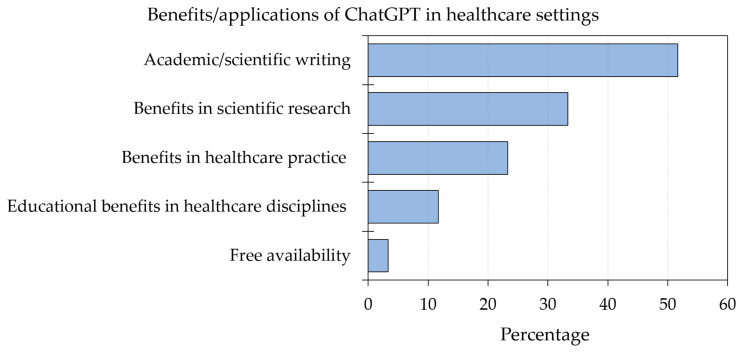
- Benefits were most frequently cited for academic/scientific writing (31 records, 51.7%), followed by scientific research (20, 33.3%), healthcare practice (14, 23.3%), healthcare education (7, 11.7%), and being a free package (2, 3.3%).
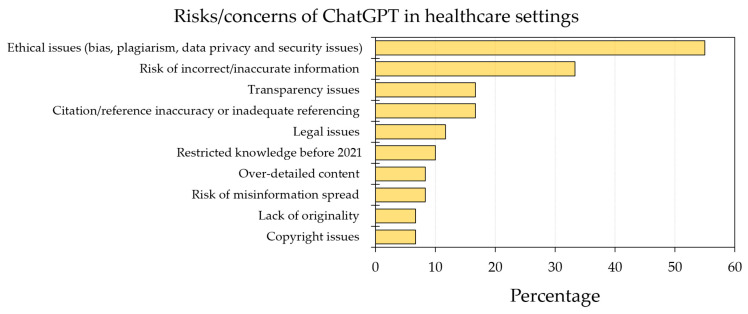
- Ethical concerns were the most common risk category (33 records, 55.0%), including risk of bias (18, 30.0%) and plagiarism (14, 23.3%); incorrect/inaccurate information was cited in 20 records (33.3%), citation/reference inaccuracy in 10 (16.7%), and transparency issues in 10 (16.7%).
- Other reported concerns included legal issues (7, 11.7%), restricted knowledge before 2021 (6, 10.0%), misinformation spread (5, 8.3%), over-detailed content (5, 8.3%), copyright issues (4, 6.7%), and lack of originality (4, 6.7%).
- The review states that ChatGPT does not qualify as an author under current ICMJE/COPE guidelines unless those guidelines are revised, and calls for stakeholder-developed ethics guidance for responsible LLM use in healthcare and academia.
Methods
- Systematic review conducted according to PRISMA guidelines, searching PubMed/MEDLINE and Google Scholar for English records on ChatGPT in healthcare practice/research, healthcare education, or academic writing; searches concluded on 16 February 2023.
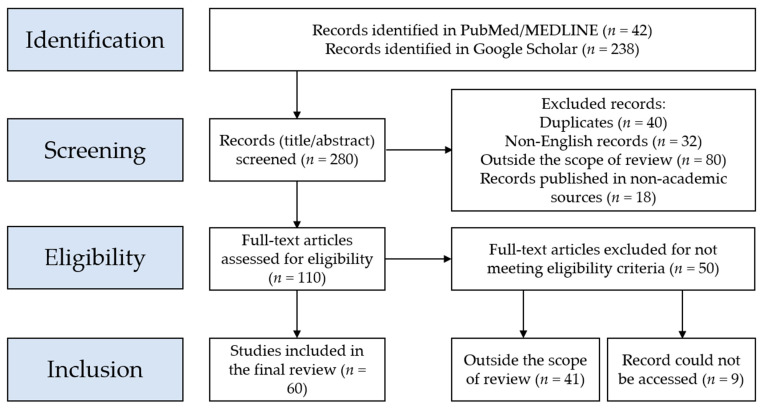
- PubMed/MEDLINE yielded 42 records and Google Scholar yielded 238 records, totaling 280 records; after duplicate removal (n = 40), non-English exclusion (n = 32), out-of-scope exclusion (n = 80), non-academic source exclusion (n = 18), full-text screening exclusions (n = 41), and inaccessible full texts (n = 9), 60 records were included.
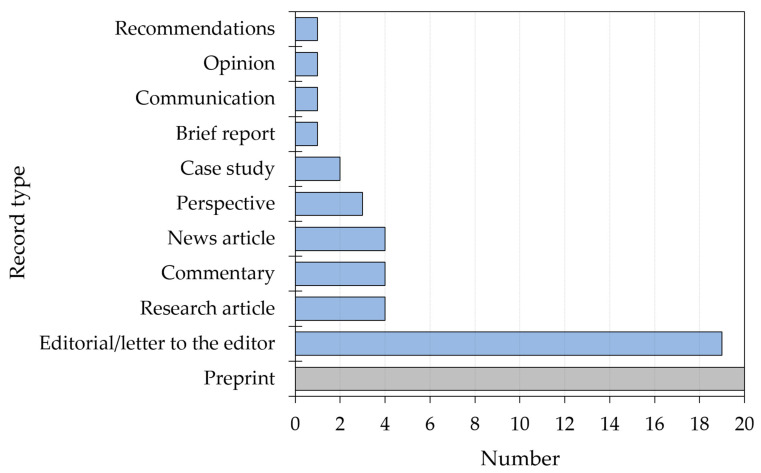
- Each included record was searched for record type, listed benefits/applications, listed risks/concerns, and main conclusions/recommendations regarding ChatGPT in healthcare education, practice, or scientific research/academic writing.
Limitations
- The paper states that included records had variable quality, non-English exclusion may have caused selection bias, inaccessible records may have led to missing relevant data, preprints were not peer reviewed, the literature is growing rapidly with the search ending 16 February 2023, and screening/interpretation was performed by a single author.
- Evident from the text: the review reports descriptive counts of mentions across heterogeneous record types rather than a formal meta-analysis or independent risk-of-bias assessment.
Model-written summary. Check it against the paper before relying on it.
Integrity signals
Registry
Cites
Statistics
Figures
Verification
Claims the paper makes
53 Valid · 1 Not valid · 6 Not checked · 37 Own results and interpretations
Every source the paper cites for this claim was checked and supports it.
In the paper
“This comes in light of the ability of ChatGPT to generate incorrect content that appears plausible from a scientific point of view [81].”
§ ChatGPT Utility in Healthcare Education, Research, and Practice: Systematic Review on the Promising Perspectives and Valid Concerns > 4. Discussion > 4.2. Limitations of ChatGPT Use in Scientific Research
What the sources say
- Supportedcites [81] Cascella M. Montomoli J. Bellini V. Bignami E. Evaluating the Feasibility of ChatGPT in Healthcare: An Analysis of Multiple Clinical and Research Scenarios J. Med. Syst. 2023 47 33 10.1007/s10916-023-01925-4 36869927 PMC9985086 source
In “Reasoning About Public Health Topics,” the paper says ChatGPT can produce believable answers that may be incorrect or nonsensical. In “Possible Misuse of GPT in Medicine and Research,” it describes a scientific abstract that appeared reliable and simulated statistical outputs that could seem plausible to readers. Together, these passages support the claim. (LLM, conf=0.94)
plain- Asserted: passes — The authors put it forward as true.
- Checkable: passes — It can be checked against evidence.
- Load-bearing: passes — The paper’s conclusions depend on it.
- Based: passes — The paper gives a reason why it holds.
- Supported
The sources with a verdict support this claim; the rest weren’t checked yet, have no full text we could read, or their verdicts aren’t rated yet.
In the paper
“This comes in light of the fact that authorship entails legal obligations that are not met by ChatGPT [43,48].”
§ ChatGPT Utility in Healthcare Education, Research, and Practice: Systematic Review on the Promising Perspectives and Valid Concerns > 4. Discussion > 4.2. Limitations of ChatGPT Use in Scientific Research
What the sources say
- Supportedcites [43] Zielinski C. Winker M. Aggarwal R. Ferris L. Heinemann M. Lapeña J. Pai S. Ing E. Citrome L. Chatbots, ChatGPT, and Scholarly Manuscripts WAME Recommendations on ChatGPT and Chatbots in Relation to Scholarly Publications Maced J. Med. Sci. 2023 11 83 86 10.3889/oamjms.2023.11502 37615142 source
The Introduction (p. 2) says chatbots are not legal entities, cannot be held legally liable, and that listing ChatGPT as an author may not be legally defensible. The WAME Recommendations (p. 2) add that chatbots cannot take responsibility for a paper or have the legal standing to sign a statement. (LLM, conf=0.93)
- Not checked — no full text of the sourcecites [48] Liebrenz M. Schleifer R. Buadze A. Bhugra D. Smith A. Generating scholarly content with ChatGPT: Ethical challenges for medical publishing Lancet Digit. Health 2023 5 e105 e106 10.1016/S2589-7500(23)00019-5 36754725 source
plain- Asserted: passes — The authors put it forward as true.
- Checkable: passes — It can be checked against evidence.
- Load-bearing: passes — The paper’s conclusions depend on it.
- Based: passes — The paper gives a reason why it holds.
- Supported
The cited sources support only part of this claim — read each source’s verdict below.
In the paper
“On one hand, ChatGPT, among other LLMs, can be beneficial in conversational and writing tasks, assisting to increase the efficiency and accuracy of the required output [11].”
§ ChatGPT Utility in Healthcare Education, Research, and Practice: Systematic Review on the Promising Perspectives and Valid Concerns > 1. Introduction
What the sources say
- Partly supportedcites [11] Deng J. Lin Y. The Benefits and Challenges of ChatGPT: An Overview Front. Comput. Intell. Syst. 2023 2 81 83 10.54097/fcis.v2i2.4465 sourceExperimental — accuracy not yet measured
Sections 4.1 (Increased Efficiency) and 4.2 (Improved Accuracy) say ChatGPT can make conversations more efficient and generate more accurate responses. The paper does not establish those benefits for writing tasks or for other LLMs, so the broader claim is only partially supported. (LLM, conf=0.88)
plainstates a cause- Asserted: passes — The authors put it forward as true.
- Checkable: passes — It can be checked against evidence.
- Load-bearing: unclear — It is unclear whether the paper’s conclusions depend on it.
- Based: passes — The paper gives a reason why it holds.
- Partly supported
The cited sources support only part of this claim — read each source’s verdict below.
In the paper
“Importantly, the concept of ChatGPT hallucination could be risky if the generated content is not thoroughly evaluated by researchers and health providers with proper expertise [37,56,73,77,79].”
§ ChatGPT Utility in Healthcare Education, Research, and Practice: Systematic Review on the Promising Perspectives and Valid Concerns > 4. Discussion > 4.2. Limitations of ChatGPT Use in Scientific Research
What the sources say
- Not checked — no full text of the sourcecites [37] Shen Y. Heacock L. Elias J. Hentel K.D. Reig B. Shih G. Moy L. ChatGPT and Other Large Language Models Are Double-edged Swords Radiology 2023 230163 10.1148/radiol.230163 36700838 source
- Partly supportedcites [56] Huh S. Are ChatGPT’s knowledge and interpretation ability comparable to those of medical students in Korea for taking a parasitology examination?: A descriptive study J. Educ. Eval. Health Prof. 2023 20 1 10.3352/jeehp.2023.20.1 36627845 PMC9905868 sourceExperimental — accuracy not yet measured
The Background says medical students must evaluate the accuracy of AI-generated medical information before creating reliable information for patients and the public. The Interpretation also reports that some ChatGPT explanations contained incorrect information. These passages support the need for scrutiny, but the paper does not specifically discuss hallucination or evaluation by researchers and health providers. (LLM, conf=0.84)
- Partly supportedcites [73] Duong D. Solomon B.D. Analysis of large-language model versus human performance for genetics questions medRxiv 2023 Preprint 10.1101/2023.01.27.23285115 PMC10999420 37246194 sourceExperimental — accuracy not yet measured
The Discussion (p. 6) says ChatGPT can give plausible explanations for incorrect answers and that its correctness requires additional verification, which is concerning in medical or other high-stakes settings. This supports the risk and need for evaluation, but the paper does not specify that researchers and health providers with proper expertise must perform it. (LLM, conf=0.83)
- Supportedcites [77] Jeblick K. Schachtner B. Dexl J. Mittermeier A. Stüber A.T. Topalis J. Weber T. Wesp P. Sabel B. Ricke J. ChatGPT Makes Medicine Easy to Swallow: An Exploratory Case Study on Simplified Radiology Reports arXiv 2022 10.48550/arxiv.2212.14882 2212.14882 PMC11126432 37794249 source
The Results (Free-text analysis) identify a ChatGPT hallucination that radiologists judged potentially harmful to a patient. The Key Points state that minimizing harm requires supervision by medical experts, supporting the claim’s warning about unevaluated medical content. (LLM, conf=0.90)
- Partly supportedcites [79] Lin Z. Why and how to embrace AI such as ChatGPT in your academic life PsyArXiv 2023 Preprint 10.31234/osf.io/sdx3j PMC10445029 37621662 sourceExperimental — accuracy not yet measured
The “Limitations of generative AI” section says ChatGPT may fabricate facts and false citations (“hallucination”) and urges users to critically evaluate and verify its responses, particularly when reliability is critical. It does not specifically say that researchers and health providers with proper expertise must evaluate the content; that part is more specific than the source. (LLM, conf=0.84)
hedgedstates a possible cause- Asserted: passes — The authors put it forward as true.
- Checkable: passes — It can be checked against evidence.
- Load-bearing: passes — The paper’s conclusions depend on it.
- Based: passes — The paper gives a reason why it holds.
- Rests on an assumption not shown here.
The sources with a verdict support this claim; the rest weren’t checked yet, have no full text we could read, or their verdicts aren’t rated yet.
In the paper
“This is particularly relevant for researchers who are non-native English speakers [23,25,63].”
§ ChatGPT Utility in Healthcare Education, Research, and Practice: Systematic Review on the Promising Perspectives and Valid Concerns > 4. Discussion > 4.1. Benefits of ChatGPT in Scientific Research
What the sources say
- Supportedcites [23] Chen T.J. ChatGPT and Other Artificial Intelligence Applications Speed up Scientific Writing Available online: https://journals.lww.com/jcma/Citation/9900/ChatGPT_and_other_artificial_intelligence.174.aspx (accessed on 16 February 2023) PMC12755446 36791246 source
In the main text (page not provided), Chen says many scientists who are not native English speakers struggle to write in English and describes AI translation and writing tools as ways to overcome that barrier. This supports the claim that language assistance in scientific writing is particularly relevant to those researchers. (LLM, conf=0.91)
- Not checked — no full text of the sourcecites [25] Kitamura F.C. ChatGPT Is Shaping the Future of Medical Writing but Still Requires Human Judgment Radiology 2023 230171 10.1148/radiol.230171 36728749 source
- Supportedcites [63] Gao C.A. Howard F.M. Markov N.S. Dyer E.C. Ramesh S. Luo Y. Pearson A.T. Comparing scientific abstracts generated by ChatGPT to original abstracts using an artificial intelligence output detector, plagiarism detector, and blinded human reviewers bioRxiv 2022 10.1101/2022.12.23.521610 source
The Discussion/Abstract section of our copy states directly that the technology 'could be used by scientists publishing in a language that is not their native language, to improve equity,' alongside the point that generated text 'may help alleviate the burden of writing' and that LLMs are 'a powerful tool to create readable scientific abstracts.' That covers the attributed content — AI-assisted language improvement being especially pertinent for non-native-English researchers — with the source's own hedge ('could be used') slightly weaker than the citing sentence's flat 'is particularly relevant.' No passage in our copy contradicts it. (LLM, conf=0.82)
plainstates an association- Asserted: passes — The authors put it forward as true.
- Checkable: passes — It can be checked against evidence.
- Load-bearing: unclear — It is unclear whether the paper’s conclusions depend on it.
- Based: passes — The paper gives a reason why it holds.
- Supported
42 more claims · 23 with their cited sources checked
Create a free account to see all 97 claims and to verify the 16 references still open.
- Probably not a substantial claim. 31
- It may state two separate claims as one. 27
Claims other papers make about this one
Each is checked against this paper’s own text: does it say what the citing paper says it does?
The source backs part of the claim, not all of it — or backs it for a different population, condition or comparison.
In the citing paper
“The reliance on ChatGPT may result in hindering the development of the skills needed to interpret and respond to social cues, which should be considered in health care education [9,91].”
From Assessing Health Students' Attitudes and Usage of ChatGPT in Jordan: Validation Study (2023) · cites this paper as [9]
Experimental — accuracy not yet measuredThe source backs part of the claim, not all of it — or backs it for a different population, condition or comparison.
In the citing paper
“A recent surge in the use of ChatGPT, in particular for mental health, is emergent for providing crucial personalized advice without clinical explanation, which can hurt user's safety, and thus trust (Sallam, 2023).”
From A review of the explainability and safety of conversational agents for mental health to identify avenues for improvement (2023) · cites this paper as Sallam, 2023
Experimental — accuracy not yet measuredThe source backs part of the claim, not all of it — or backs it for a different population, condition or comparison.
In the citing paper
“ChatGPT plays a crucial role in pandemic management by aiding in the swift and accurate dissemination of critical information.”
From A Systematic Review and Meta-Analysis of Artificial Intelligence Tools in Medicine and Healthcare: Applications, Considerations, Limitations, Motivation and Challenges (2024) · cites this paper as [6]
Experimental — accuracy not yet measuredThe source backs part of the claim, not all of it — or backs it for a different population, condition or comparison.
In the citing paper
“Its natural language processing capabilities enable it to generate coherent responses, making it a valuable tool for healthcare organisations.”
From A Systematic Review and Meta-Analysis of Artificial Intelligence Tools in Medicine and Healthcare: Applications, Considerations, Limitations, Motivation and Challenges (2024) · cites this paper as [6]
Experimental — accuracy not yet measuredThe source backs part of the claim, not all of it — or backs it for a different population, condition or comparison.
In the citing paper
“Specific advantages include its ability to provide rapid updates, preventive measures, and medical guidelines to the public.”
From A Systematic Review and Meta-Analysis of Artificial Intelligence Tools in Medicine and Healthcare: Applications, Considerations, Limitations, Motivation and Challenges (2024) · cites this paper as [6]
Experimental — accuracy not yet measured
31 more claims about this paper
Create a free account to see every claim other papers make about this one.
Citations
Cites
Preferred Reporting Items for Systematic Reviews and Meta-Analyses: the PRISMA statement
Moher, D., Liberati, A., Tetzlaff, J., Altman, D. G., & for the PRISMA Group (2009) · BMJ · doi:10.1136/bmj.b2535 · Cited by 83,823
Preferred Reporting Items for Systematic Reviews and Meta-Analyses: The PRISMA Statement
Moher, D., Liberati, A., Tetzlaff, J., Altman, D. G., & The PRISMA Group (2009) · PLoS Medicine · doi:10.1371/journal.pmed.1000097 · Cited by 64,042 · cited 1×
“The current systematic review was conducted according to the Preferred Reporting Items for Systematic Reviews and Meta-Analyses (PRIMSA) guidelines [21].”
Language Models are Few-Shot Learners
Brown, T. B., Mann, B., Ryder, N., Subbiah, M., Kaplan, J., Dhariwal, P., Neelakantan, A., Shyam, P., Sastry, G., Askell, A., et al. (2020) · arXiv · doi:10.48550/arxiv.2005.14165 · Cited by 23,372 · cited 3×
“The GPT architecture utilizes a neural network to process natural language, thus generating responses based on the context of input text [7].”
BackgroundWang, G., Ma, R., Qiao, G., Wada, K., Aizawa, Y., & Satoh, T. (2015) · Integrative Medicine International · doi:10.1159/000368408 · Cited by 18,657
Kaugeranna, R., Kaugeranna, E., & Aion, (. S. 4. 6. (2023) · DROPS (Schloss Dagstuhl – Leibniz Center for Informatics) · doi:10.4230/lipics.giscience.2023.43 · Cited by 13,690
Machine learning: Trends, perspectives, and prospects
Jordan, M. I., & Mitchell, T. M. (2015) · Science · doi:10.1126/science.aaa8415 · Cited by 9,955
Kung, T. H., Cheatham, M., Medenilla, A., Sillos, C., De Leon, L., Elepaño, C., Madriaga, M., Aggabao, R., Diaz-Candido, G., Maningo, J., et al. (2023) · PLOS Digital Health · doi:10.1371/journal.pdig.0000198 · Cited by 4,115 · cited 2×
“[59] An article showing the ChatGPT raised accuracy which enabled passing the USMLE Accuracy with high concordance and insight; it can facilitate patient communication; improved personalized medicine ChatGPT has a promising potential in medical education; future studies are recommended to consider non-biased approach…”
BackgroundKung, T. H., Cheatham, M., ChatGPT, Medenilla, A., Sillos, C., De Leon, L., Elepaño, C., Madriaga, M., Aggabao, R., Diaz-Candido, G., et al. (2022) · doi:10.1101/2022.12.19.22283643 · Cited by 4,115
Rajpurkar, P., Chen, E., Banerjee, O., & Topol, E. J. (2022) · Nature Medicine · doi:10.1038/s41591-021-01614-0 · Cited by 3,212 · cited 1×
“The promising utility of AI in health care has been outlined previously with possible benefits in personalized medicine, drug discovery, and the analysis of large datasets aside from the potential applications to improve diagnosis and clinical decisions [17,18].”
BackgroundChatting and cheating: Ensuring academic integrity in the era of ChatGPT
Cotton, D. R. E., Cotton, P. A., & Shipway, J. R. (2024) · Innovations in Education and Teaching International · doi:10.1080/14703297.2023.2190148 · Cited by 3,087 · cited 1×
“[62] An EdArXiv 2 preprint on the academic integrity in ChatGPT era Risk of plagiarism; academic dishonesty Careful thinking of educational assessment tools”
Background
Cited by
Items 1,501–1,600 of 3,096
Seneviratne, T., Manathunga, S. S., Idirisingha, W., Somaratne, K., Marambe, K. N., & Dangahadeniya, U. (2025) · PLoS ONE · doi:10.1371/journal.pone.0336154 · Cited by 6
Li, P., Xu, Y., Liu, X., Shen, Z., Wang, Y., Lv, X., Lu, Z., Wu, H., Zhuang, J., & Chen, Y. (2026) · JMIR Medical Informatics · doi:10.2196/81422 · Cited by 9
“…routine guideline XSL • FO RenderX concordance audits and a risk stratification framework (eg, dosing errors, contraindications, and care delay advice) [27], and establish continuous monitoring and incident reporting mechanisms to detect and mitigate potentially harmful or misleading outputs [26].”
A community-codesigned LLM-powered chatbot for primary care: a randomized controlled trial
Li, S., Li, Y., Zhou, S., Tao, X., Yu, C., Shen, M., Chen, W., Meng, E., Wu, B., Huang, Q., et al. (2026) · Nature Health · doi:10.1038/s44360-025-00021-w · Cited by 18
“Furthermore, inherent biases in training data and the potential for model hallucinations can produce plausible but inaccurate information, which demands critical evaluation skills 22 .”
ChatGPT usage among nursing students in Taiwan: a qualitative study
Huang, H. (2026) · BMC Nursing · doi:10.1186/s12912-026-04341-4 · Cited by 7
“Challenges such as bias, accuracy, and effects on students’ critical thinking and communication skills remain [7, 11, 12].”
Taylor, A. W. R., Patel, F. Y., Smyth, E. K., Gay, S. P., & Bird, T. (2026) · The Clinical Teacher · doi:10.1111/tct.70360 · Cited by 10
“There is little empirical data on the impact of AI chatbots on medical education [4], including qualitative data [12], with conclusions based mostly on editorials and studies testing chatbots against exams [4, 5, 12].”
Generative pretrained transformer 4: an innovative approach to facilitate value-based healthcare
Lv, H., Wang, Z., Li, J., Sun, J., Wang, X., Ren, P., Cai, L., Wang, Z., & Wintermark, M. (2023) · Intelligent Medicine · doi:10.1016/j.imed.2023.09.001 · Cited by 6
Role of Chat GPT in Nursing: Brief Communication
Lata, K., & Kudi, S. R. (2024) · Asian Journal of Nursing Education and Research · doi:10.52711/2349-2996.2024.00014 · Cited by 10
AI and the next medical revolution: deep learning’s uncharted healthcare promise
Krithika, L. B., Vishnu, S., Kotei, E., Gadde, A., Kothamasu, G. A., Nallabantu, S. C., & Jayabalasamy, G. (2024) · Engineering Research Express · doi:10.1088/2631-8695/ad56fc · Cited by 9
Using the Chat Generative Pre-trained Transformer in academic writing in health: a scoping review
Costa, I. C. P., do Nascimento, M. C., Treviso, P., Chini, L. T., Roza, B. D. A., Barbosa, S. D. F. F., & Mendes, K. D. S. (2024) · Revista Latino-Americana de Enfermagem · doi:10.1590/1518-8345.7133.4194 · Cited by 20
Palliative care national plan implementation through stakeholder analysis
Sánchez-Cárdenas, M. A., León, M., Vargas-Escobar, L. M., et al. (2024) · BMC Palliative Care · doi:10.1186/s12904-024-01427-1 · Cited by 6
“We believe the methodology used herein could also be adapted to other health or public contexts and improved with the integration of artificial intelligence [31].”
MethodKeyßer, G., Pfeil, A., Reuss-Borst, M. A., Frohne, I., Schultz, O., & Sander, O. (2024) · Zeitschrift für Rheumatologie · doi:10.1007/s00393-024-01535-6 · Cited by 8
AI in interventional cardiology: Innovations and challenges
Khelimskii, D. A., Гозоевич, Б. А., Krymcov, O., Baranov, A. A., Manukian, S. N., & Lazarev, M. (2024) · Heliyon · doi:10.1016/j.heliyon.2024.e36691 · Cited by 14
Sigalov, S. E., Cohen, A., & Nachmias, R. (2024) · Journal of Computers in Education · doi:10.1007/s40692-024-00334-x · Cited by 24
“Additional issues are privacy (Behnia et al., 2022; Peris et al., 2023; Staab et al., 2023), copyrights (Abd-Alrazaq et al., 2023; Park, 2023; Peng et al., 2023; Sallam, 2023), and per-petuating socio-economical differences.”
Application of text-to-image translation algorithms in medicine: A systematic review
Mai, M., Mirza, F. N., & DiMarco, C. (2024) · JAAD reviews. · doi:10.1016/j.jdrv.2024.09.003 · Cited by 10
Mo, W., Singh, A., & Holloway, C. (2024) · International ACM SIGACCESS Conference on Computers and Accessibility (ASSETS) · doi:10.1145/3663548.3675609 · Cited by 10
“Many reviews shared similar findings [17, 67, 77] that the current version of ChatGPT needs a fact check for its all statements.”
Ghanem, D. (2024) · International Journal of Surgery · doi:10.1097/js9.0000000000002130 · Cited by 9
Nzobonimpa, S., Savard, J., Caron, I., & Lawarée, J. (2024) · AI & Society · doi:10.1007/s00146-024-02103-x · Cited by 8
ChatGPT utilization within the building blocks of the healthcare services: A mixed-methods study
Shojaei, P., Khosravi, M., Jafari, Y., Mahmoudi, A. H., & Hassanipourmahani, H. (2024) · Digital Health · doi:10.1177/20552076241297059 · Cited by 9
“6 7 – 9 The use of ChatGPT in the fi eld of education solves educational problems in less than a few minutes.”
Bıdık, N. Ü. (2024) · European Journal of Education · doi:10.1111/ejed.12848 · Cited by 8
Key Insights for the Ethical and Appropriate Use of Artificial Intelligence by Medical Learners
Murray, B. P., Thota, D., Baker, C. K., & Stierwalt, J. B. (2024) · Military Medicine · doi:10.1093/milmed/usae536 · Cited by 10
Patient-centric Summarization of Radiology Findings Using Two-step Training of Large Language Models
Tariq, A., Trivedi, S., Khan, A. U., Ramasamy, G., Fathizadeh, S., Stib, M. T., Tan, N., Patel, B. N., & Banerjee, I. (2025) · ACM Transactions on Computing for Healthcare · doi:10.1145/3709154 · Cited by 12
“…large languages like GPT and LLaMA may be used as zero-shot learners for this task [20], studies have shown that their off-the-shelf use in sensitive fields like medicine is inadvisable given inconsistency in their performance and their propensity to “hallucinate” information [2, 31, 35].”
Maitín, A. M., Nogales, A., Fernández-Rincón, S., Aranguren, E., Barba, E. C., Arranz, S. D., Rodríguez, A. A. M., & García-Tejedor, Á. J. (2024) · Journal of the American Medical Informatics Association · doi:10.1093/jamia/ocae302 · Cited by 8
Evaluating the Evolution of ChatGPT as an Information Resource in Shoulder and Elbow Surgery
Nieves-López, B., Bechtle, A. R., Traverse, J. M., Klifto, C. S., Schoch, B. S., & Aziz, K. T. (2025) · Orthopedics · doi:10.3928/01477447-20250123-03 · Cited by 8
Artificial intelligence in academic Research: Contributor, constructivist or cheat?
Scott‐Kennel, J., 张, 蓉., & Scott, J. M. (2025) · The Journal of Marketing Theory and Practice · doi:10.1080/10696679.2025.2457672 · Cited by 14
“Four were literature reviews (Bakiner, 2023; Sallam, 2023; Vlačić et al., 2021; Wagner et al., 2022), four were editorials (Bhatia, 2023; Goto & Katanoda, 2023; Lévesque et al., 2022; Polonsky & Rotman, 2023), and one each of: a review article (J. Huang & Tan, 2023), a letter to the editor (Ide et…”
Smrke, U., Rehberger, A., Plohl, N., & Mlakar, I. (2025) · Applied Sciences · doi:10.3390/app15041937 · Cited by 14
Optimizing patient understanding of spine MRI reports using AI: A prospective single center study
Encalada, S., Gupta, S., Hunt, C., Eldrige, J. S., Evans, J., Mosquera‐Moscoso, J., Furtado-Pessoa-de-Mendonca, L., Kanahan-Osman, S., Bade, S., Bade, S., et al. (2025) · Interventional Pain Medicine · doi:10.1016/j.inpm.2025.100550 · Cited by 10
“In this context, the transformative impact of Artificial Intelligence (AI) and Natural Language Processing (NLP) demonstrates promising potential for improving healthcare communication by enhancing medical information accessibility and understanding [9].”
Er-Rays, Y., M’dioud, M., & Lemqeddem, H. A. (2025) · AI and Ethics · doi:10.1007/s43681-025-00672-1 · Cited by 11
“Nedbal et al. [ 65 ] and Sallam [ 66 ] review ChatGPT's applications in urology and healthcare, respectively, pointing 1 3 out its potential benefits while stressing the need for valida - tion and regulation.”
Assessing GPT‐4's accuracy in answering clinical pharmacological questions on pain therapy
Stroop, A., Stroop, T., Alsofy, S. Z., Wegner, M., Nakamura, M., & Stroop, R. (2025) · British Journal of Clinical Pharmacology · doi:10.1002/bcp.70036 · Cited by 9
“10,11 With 175 billion parameters, GPT-4 represents a significant advancement over its predecessor, offering more precise and context-sensitive responses to intricate medical inquiries.”
Saji, J. G., Balagangatharan, A., Bajaj, S., Swarnkar, V., Unni, D., & Dileep, A. (2025) · Cureus · doi:10.7759/cureus.81156 · Cited by 9
“These concerns included issues with ethics, copyright, transparency, lack of originality, plagiarism, bias, and inaccurate content with the potential for hallucinations, limited knowledge, the risk of infodemics, cybersecurity, and incorrect citations [17].”
InfluentialAlessi, M. R., Gomes, H. A., de Oliveira, G. F. C., de Castro, M. L., Grenteski, F., Miyashiro, L., Pavanelo, C. D. V., da Silva, L. T. T., & Okamoto, C. T. (2025) · JMIR AI · doi:10.2196/66552 · Cited by 9
“This action is not fully understood, but it results in a plausible-sounding, yet incorrect answer for the user, without informing the user of its inaccuracy [25].”
InfluentialExploring Detection Methods for Synthetic Medical Datasets Created With a Large Language Model
Taloni, A., Coco, G., Pellegrini, M., Wjst, M., Salgari, N., Carnovale-Scalzo, G., Scorcia, V., Busin, M., & Giannaccare, G. (2025) · JAMA Ophthalmology · doi:10.1001/jamaophthalmol.2025.0834 · Cited by 7
Tan, J. T., Gan, R. K., Alsua, C. J., Peterson, M., Sales, R. Ú., Gan, A. Z., Martínez, J. A. C., & González, P. I. A. (2025) · Journal of Clinical Psychology · doi:10.1002/jclp.23808 · Cited by 8
“Several factors need to be considered before AI ‐ performed PFA can be considered equivalent to human ‐ delivered interventions (Mardikaningsih et al. 2023; Sallam 2023; Spytska 2025).”
Sain, Z. H., & Kurniati, V. S. D. (2023) · TAMANSISWA INTERNATIONAL JOURNAL IN EDUCATION AND SCIENCE · doi:10.30738/tijes.v5i1.16274 · Cited by 12
Experiences with Content Development and Assessment Design in the Era of GenAI
Sharma, A., Shailendra, S., & Kadel, R. (2025) · International Conference on Computer Science, Engineering, and Education (CSEE) · doi:10.1109/csee64583.2025.00008 · Cited by 9
“The researchers have suggested to exercise caution while using these models [33], [34].”
Overcoming medical overuse with AI assistance: An experimental investigation
Wang, Z., Wei, L., & Xue, L. (2025) · Journal of Health Economics · doi:10.1016/j.jhealeco.2025.103043 · Cited by 7
The application of chatbot in gastroenterology nursing
Zhao, Y., Gao, C., Zhang, L., Gao, X., & Zhang, Z. (2023) · Gastroenterology & Endoscopy · doi:10.1016/j.gande.2023.07.003 · Cited by 7
Assessing ChatGPT’s Capability for Multiple Choice Questions Using RaschOnline: Observational Study
Chow, J. C., Cheng, T.-Y., Chien, T., & Chou, W. (2023) · JMIR Formative Research · doi:10.2196/46800 · Cited by 7
“While there are still obstacles to overcome when applying ChatGPT to clinical medicine [26-28], it has demonstrated satisfactory performance in English examinations [29].”
ChatGPT to document ocular infectious diseases
Masalkhi, M., Ong, J., Waisberg, E., Zaman, N., Sarker, P., Lee, A. G., & Tavakkoli, A. (2023) · Eye · doi:10.1038/s41433-023-02823-2 · Cited by 6
“ChatGPT, equipped with medical knowledge, can assist in preliminary assessments based on patients’ reported symptoms [6].”
On the Linguistic Limitations of ChatGPT: An Experimental Case Study
Baziyad, M. S., Kamel, I., & Rabie, T. F. (2023) · International Symposium on Networks, Computers and Communications (ISNCC) · doi:10.1109/isncc58260.2023.10323661 · Cited by 10
“ChatGPT is an example of an NLP technology that has been widely popular in the last few months [7]–[9].”
BackgroundDiane, A., Gencarelli, P., Lee, J. M., & Mittal, R. (2023) · Cureus · doi:10.7759/cureus.49680 · Cited by 11
“However, manually formulating these letters is not only time-consuming and resource-intensive but also requires strict attention to detail and adherence to complicated rules imposed by insurance companies [5-9].”
BackgroundImpact of ChatGPT on Medical Research Article Writing and Publication
Chandra, A., & Dasgupta, S. (2023) · Sultan Qaboos University medical journal · doi:10.18295/squmj.11.2023.068 · Cited by 11
(How) ChatGPT—Artificial Intelligence Thinks It Can Help/Harm Physiatry
Jačiško, J., Veselý, V., Chang, K. C., & Özçakar, L. (2023) · American Journal of Physical Medicine & Rehabilitation · doi:10.1097/phm.0000000000002370 · Cited by 9
ChatGPT's learning and reasoning capacity in anesthesiology
Cruz, G., Pedroza, S., & Ariza, F. (2023) · Colombian Journal of Anesthesiology · doi:10.5554/22562087.e1092 · Cited by 9
“However, risks associated with its implementation in healthcare have been identified, including bias, data confidentiality, misleading information and lack of adequate referencing (9).”
BackgroundChatGPT for Parents of Children Seeking Emergency Care – so much Hope, so much Caution
Yu, J. L., & Matava, C. T. (2024) · Journal of Medical Systems · doi:10.1007/s10916-024-02036-4 · Cited by 6
“ChatGPT has been one of the most well-known and accessible conversational versions of this technology, and as such has garnered significant interest in how it should be safely applied in healthcare and academia [4, 5].”
Khan, M. M. R. R., Habib, S. B., Tasnim, S. T., & Islam, M. A. (2023) · International Conference on Computer and Information Technology (ICCIT) · doi:10.1109/iccit60459.2023.10441564 · Cited by 13
A Review ChatGPT and the Future of Education
Machado, A. D. B., Pesqueira, A. M., & Sousa, M. J. (2024) · EAI/Springer Innovations in Communication and Computing · doi:10.1007/978-3-031-52296-3_9 · Cited by 8
Al-Moghrabi, K. G., & Al-Ghonmein, A. M. (2024) · Bulletin of Electrical Engineering and Informatics · doi:10.11591/eei.v13i3.7237 · Cited by 11
“These tasks include the ability to learn, reasoning, adapting, understanding natural language (NL), image recognition, and decision-making [1].”
BackgroundImplications of ChatGPT in Library Services: A systematic review
Zakaria, N., & Sani, M. K. J. A. (2024) · Environment-Behaviour Proceedings Journal · doi:10.21834/e-bpj.v9isi18.5487 · Cited by 11
Togunwa, T. O., Ajibade, A., Uche-Orji, C. I., & Olatunji, R. (2024) · The Arab Journal of Interventional Radiology · doi:10.1055/s-0044-1782663 · Cited by 8
“16 Additionally, the ability of LLMs to continuously learn from new data ensures that their recommendations evolve with the dynamic landscape of VIR.”
BackgroundAn Outlook for AI Innovation in Multimodal Communication Research
Henlein, A., Bauer, A., Bhattacharjee, R., Ćwiek, A., Gregori, A., Kügler, F., Lemanski, J., Lücking, A., Mehler, A., Prieto, P., et al. (2024) · Lecture notes in computer science · doi:10.1007/978-3-031-61066-0_13 · Cited by 11
Moreno, E., Álvarez-Lozada, L. A., Arrambide‐Garza, F. J., Quiroga‐Garza, A., & Elizondo‐Omaña, R. E. (2023) · Healthcare · doi:10.3390/healthcare11212819 · Cited by 10
“We read with great interest and applaud the recently published review paper regarding ChatGPT and its implications in research and education [1].”
BackgroundHow to get the most out of ChatGPT? Tips and tricks on prompting
Durieux, B. N., Davis, J., Moons, P., & Bulck, L. V. (2024) · European Journal of Cardiovascular Nursing · doi:10.1093/eurjcn/zvae016 · Cited by 5
Prospectives and drawbacks of ChatGPT in healthcare and clinical medicine
Alam, K., Kumar, A., & Samiullah, F. (2024) · AI and Ethics · doi:10.1007/s43681-024-00434-5 · Cited by 8
Stawicki, S. P., Martinez-Baladejo, M. T., & Ng-Pellegrino, A. (2023) · International Journal of Academic Medicine · doi:10.4103/ijam.ijam_63_23 · Cited by 6
From Assistance to Misconduct: Unpacking the Complex Role of Generative AI in Student Learning
Axelsson, A., Wallgren, D. T., Verma, U., Cajander, Å., Daniels, M., Eckerdal, A., & McDermott, R. (2024) · 2024 IEEE Frontiers in Education Conference (FIE) · doi:10.1109/fie61694.2024.10893133 · Cited by 5
“Technologies like ChatGPT raise various ethical considerations in educational settings, including privacy, bias, transparency, security, intellectual property rights, and the potential impact on academic integrity [21], [22], [23].”
Correlates of Medical and Allied Health Students’ Engagement with Generative AI in Nigeria
Iliyasu, Z., Abdullahi, H. O., Iliyasu, B. Z., Bashir, H. A., Amole, T. G., Abdullahi, H. M., Abdullahi, A. U., Kwaku, A. A., Dahir, T., Tsiga-Ahmed, F. I., et al. (2024) · Medical Science Educator · doi:10.1007/s40670-024-02181-y · Cited by 13
“Knowledge of ChatGPT and a positive attitude toward it emerged as strong predictors of usage, with these factors similarly reported as key determinants of AI adoption across different educational contexts globally [39, 45].”
Saad, M., Almasri, W., Hye, T., Roni, M. A., & Mohiyeddini, C. (2024) · Algorithms · doi:10.3390/a17100469 · Cited by 6
Geneş, M., & Deveci, B. (2024) · Diagnostics · doi:10.3390/diagnostics14232731 · Cited by 7
Generative Artificial Intelligence in Nuclear Medicine Education
Currie, G. M. (2025) · Journal of Nuclear Medicine Technology · doi:10.2967/jnmt.124.268323 · Cited by 7
On, S.-W.-O., Cho, S.-W., Park, S.-Y., Ha, J., Yi, S.-M., Park, I.-Y., Byun, S., & Yang, B.-E. (2025) · Journal of Clinical Medicine · doi:10.3390/jcm14041363 · Cited by 4
A Heart-to-Heart With ChatGPT: AI Applications in Hypertension
Layton, A. T. (2025) · American Journal of Hypertension · doi:10.1093/ajh/hpaf045 · Cited by 6
“…of AI is profoundly transforming the medical field, revolutionizing clinical practices, patient care, medical education, and research methodologies 32,33 In particular, ChatGPT has made major contributions in hypertension research, diagnosis, and treatment, by enhancing data analysis, decision…”
Impact of ChatGPT on Diabetes Mellitus Self-Management Among Patients in Saudi Arabia
Alanzi, T. M., Arif, W. M., Alotaibi, A., Alnafisi, A., Alhwaimal, R., Altowairqi, N., Alnifaie, A., Aldossari, K., Althumali, K., & Alanzi, N. (2025) · Cureus · doi:10.7759/cureus.81855 · Cited by 8
“Although ChatGPT could provide emotional support for the patients by providing informational and educational support, its effectiveness in providing motivational support for DM patients is under-researched [49].”
Automated detection of ChatGPT-generated text vs. human text using gannet-optimized deep learning
Alshareef, A. M., Alsobhi, A. Y., Khadidos, A. O., Alyoubi, K. H., Khadidos, A. O., & Ragab, M. (2025) · Alexandria Engineering Journal · doi:10.1016/j.aej.2025.03.139 · Cited by 8
ChatGPT in Education: Challenges in Local Knowledge Representation of Romanian History and Geography
Ioanid, A., & Andrei, N. (2025) · Education Sciences · doi:10.3390/educsci15040511 · Cited by 12
“Sallam reinforces this point, emphasizing the need for critical evaluation of AI-generated content in scienti fi c writing to maintain research quality (Sallam, 2023).”
Cognitive Echo: Enhancing think‐aloud protocols with LLM ‐based simulated students
Zheng, L., He, A., Qi, C., Zhang, H., & Gu, X. (2025) · British Journal of Educational Technology · doi:10.1111/bjet.13590 · Cited by 20
Huang, H., & Shu, S.-H. (2025) · Clinical Simulation in Nursing · doi:10.1016/j.ecns.2025.101732 · Cited by 7
Tawil, S., & Samar, M. (2025) · PLoS ONE · doi:10.1371/journal.pone.0322197 · Cited by 9
“…AI -related challenges and possible decision-making problems in the health domain and discussed their solutions [122–124] which explains why major AI companies are actively identifying priority areas, opportunities, and recommendations to address these concerns in healthcare practice [125,126].”
Ferretti, R., Rizzi, J. S., Requena, L. S., Bicudo, A. M., & Filho, P. T. H. (2025) · Medical Science Educator · doi:10.1007/s40670-025-02426-4 · Cited by 5
“…in tackling multiple-choice questions provides deeper insight into its potential and limitations in accurately distinguishing medical specialties, addressing image-based questions, and overcoming the complexities posed by the intricacies of questions in particular medical contexts [2, 13].”
InfluentialThe Impact of AI and ChatGPT on Bangladeshi University Students: A Machine Learning Approach
Islam, M. T., Akhi, A. B., Rahman, M. M., Tuhin, H. H., Kayum, M. A., & Hasan, M. U. (2025) · International Conference on Electrical, Computer and Communication Engineering · doi:10.1109/ecce64574.2025.11014010 · Cited by 7
Artificial Intelligence Versus Traditional Learning in a Medical School Setting
Ramsamooj, A., Ibrahim, S. M., Gerriets, V. A., Cusick, J., & Ramsamooj, R. (2025) · Cureus · doi:10.7759/cureus.85262 · Cited by 8
Lin, X., Bai, L., Zhao, X., Cai, L., & Yang, J. (2025) · Frontiers in Artificial Intelligence · doi:10.3389/frai.2025.1548385 · Cited by 7
Echoes of Bias: An Analysis of ChatGPT in Financial Planner–Client Dialogs
Bennetts, C. R., & Ludwig, E. T. (2025) · Financial Planning Review · doi:10.1002/cfp2.70006 · Cited by 7
Cheese, E., Bichoo, R. A., Grover, K., Dumitru, D., Zenonos, A., Groark, J., Gibson, D. F. C., & Pope, R. A. (2025) · Journal of Medical Internet Research · doi:10.2196/70971 · Cited by 8
“However, because these tools are accessible only through application programming interfaces, their use would have compromised the confidentiality of the patient data [57].”
Rethinking evidence-informed policy and practice in the age of generative artificial intelligence
Cong‐Lem, N. (2025) · London Review of Education · doi:10.14324/lre.23.1.16 · Cited by 9
“…the form Rethinking evidence-informed policy and practice in the age of generative artificial intelligence 3 and tone of scholarly writing, creating an illusion of authority that makes them especially appealing for time-constrained professionals and institutions (Peng et al., 2023; Sallam, 2023).”
How does students' perception of ChatGPT shape online learning engagement and performance?
Mehrvarz, M., Salimi, G., Abdoli, S., & McLaren, B. M. (2025) · Computers and Education Artificial Intelligence · doi:10.1016/j.caeai.2025.100459 · Cited by 34
Al-Otaibi, G. M., Alotaibi, H. M., & Alsalmi, S. S. (2025) · Behavioral Sciences · doi:10.3390/bs15081119 · Cited by 6
“…et al., 2023; Prananta et al., 2023; Sok & Heng, 2023; Zhang & Tur, 2024), customer services (Damaševiˇcius & Zailskait˙e-Jakšt˙e, 2024; George & George, 2023), and health care sector (Biswas, 2023; Cascella et al., 2023; J. Li et al., 2024; Sallam, 2023; L. Wang et al., 2024; Wu et al., 2024).”
Li, A., Sheehan, A. H., Giuliano, C. A., Dobry, P., Walker, P., Philips, J., & Jordan, J. K. (2025) · JMIR Medical Education · doi:10.2196/71767 · Cited by 7
“ChatGPT has been explored for use in health care practice, education, and research, and specialized chatbots such as OpenEvidence and Dougall GPT have emerged, catering specifically to clinicians and health care workers [3-6].”
DeepSeek: implications for data science and management in the AI era
Xu, Z., Liu, S., Huang, W., Shi, J., Xu, F., Tang, X., & Lu, H. (2025) · Data Science and Management · doi:10.1016/j.dsm.2025.09.001 · Cited by 8
Artificial intelligence in wound care education: Scoping review
Encarnação, R., Alves, J. M., Marques, A., Neves‐Amado, J., & Alves, P. (2025) · Nurse Education Today · doi:10.1016/j.nedt.2025.106872 · Cited by 8
Ambivalence and emotion in the age of AI: how students navigate ChatGPT in higher education
Christodoulou, E., & Zembylas, M. (2025) · Education Inquiry · doi:10.1080/20004508.2025.2567092 · Cited by 15
Palacios-Núñez, M. L., Mendoza-García, E. M., Zarate, J. W. N., & Deroncele-Acosta, Á. (2025) · Edutec Revista Electrónica de Tecnología Educativa · doi:10.21556/edutec.2025.93.3995 · Cited by 20
Zerrouki, Y., Baran, J. V., Bandi, R., Moothedan, E., Knecht, M. K., Follin, T. A., & Perumareddi, P. (2025) · Cureus · doi:10.7759/cureus.93793 · Cited by 6
From human artefact to machine output: automating the “art” of psychological measurement
Marmolejo‐Ramos, F., Bulut, O., Anunciação, L., Marques, L. D. N., Barthakur, A., Kundrát, J., Rečka, K., Karakale, Ö., Correa, J. C., Ullauri, L. A. P., et al. (2025) · Journal of Psychology and AI · doi:10.1080/29974100.2025.2561692 · Cited by 5
Friend or foe? Enhancing creativity in K-12 education through AI
Weatherly, K. I. C. H., & Weatherly, C. A. (2025) · Thinking Skills and Creativity · doi:10.1016/j.tsc.2025.102030 · Cited by 8
Maywald, L., Nguyen, L., Winterstein, J. T., Hetz, M. J., Mangold, M. H., Renner, L. V., Brinker, T. J., Wessels, F., & Carl, N. (2025) · Current Oncology · doi:10.3390/curroncol32100582 · Cited by 8
“Large language models (LLMs) in the form of chatbots are increasingly investigated as conversational tools for patient education, including applications in urooncology [6].”
Krichevsky, B., Engeli, S., Bode‐Böger, S. M., Koop, F., Westhoff, M. S., Schröder, S., Schumacher, C., Pape, T., Stichtenoth, D. O., & Heck, J. (2025) · British Journal of Clinical Pharmacology · doi:10.1002/bcp.70321 · Cited by 7
“6,7,22,23 This has led to extreme caution regarding the potential usefulness of LLMs like ChatGPT in clinical practice.”
InfluentialXinming, X. U., Haoxuan, L. I., Guan, Z., Dian, Z. E. N. G., ZHENG, Q., Qin, Y., Yang, W. E. N., Li, H., Lim, C. T., Wong, T. Y., et al. (2025) · Virtual Reality & Intelligent Hardware · doi:10.1016/j.vrih.2025.08.001 · Cited by 7
Can artificial intelligence (AI)-based software programs generate accurate clinical dictation?
Kazim, S. A., Goodacre, C. J., Kan, J. Y. K., & Goldstein, G. (2025) · Journal of Prosthetic Dentistry · doi:10.1016/j.prosdent.2025.10.051 · Cited by 7
Hooshiar, M. H. (2026) · The Journal of Prosthetic Dentistry · doi:10.1016/j.prosdent.2025.11.005 · Cited by 5
The potential of AI-generated feedback from the students’ perspective: a systematic review
Öztürk, Y., & Çebi, A. (2025) · Assessment & Evaluation in Higher Education · doi:10.1080/02602938.2025.2588385 · Cited by 9
Al-Haddad, A., Alrabadi, M., Sa'deh, O., Alrabadi, G., & Hassona, Y. M. (2025) · Frontiers in Digital Health · doi:10.3389/fdgth.2025.1710159 · Cited by 8
Genç, A., Aydın, G. R., Kasap, M., Özkan, A., Rakhymzhanov, A., Gürcan, H. H., Güllü, S., & Demırhan, B. (2025) · BMC Sports Science Medicine and Rehabilitation · doi:10.1186/s13102-025-01409-7 · Cited by 7
Tran, T., Le, U. M., & Phan, V. (2025) · Pharmacy · doi:10.3390/pharmacy14010001 · Cited by 11
“This phenomenon is widely called “hallucination” [9].”
Elzeky, M. E. H., & Shahine, N. F. M. (2025) · Nurse Education in Practice · doi:10.1016/j.nepr.2025.104696 · Cited by 8
Zero-Shot Multi-Label Topic Inference with Sentence Encoders and LLMs
Sarkar, S., Feng, D., & Santu, S. K. K. (2023) · Conference on Empirical Methods in Natural Language Processing (EMNLP) · doi:10.18653/v1/2023.emnlp-main.1008 · Cited by 25
EXPLORING THE POTENTIAL AND LIMITATIONS OF CHATGPT IN ACADEMIC WRITING AND EDITORIAL TASKS
Akpur, A. (2024) · Fırat Üniversitesi Sosyal Bilimler Dergisi · doi:10.18069/firatsbed.1299700 · Cited by 11
Ilma, A., & Sampurna, R. A. (2024) · Peradaban Journal of Interdisciplinary Educational Research · doi:10.59001/pjier.v2i1.152 · Cited by 11
Gao, Y., Arava, S. K., Li, Y., & WSnyder, J. (2024) · International Journal on Cybernetics & Informatics · doi:10.5121/ijci.2024.130202 · Cited by 13
ChatGPT, a Helpful Scaffold or a Debilitating Crutch for Academic Writing?
Mahdi, R., Salehi, H., & Tabatabaei, O. (2024) · International and National Conference on E-Learning and E-Teaching (ICeLeT) · doi:10.1109/icelet62507.2024.10493087 · Cited by 12
GPT VS. HUMAN FOR SCIENTIFIC REVIEWS: A DUAL SOURCE REVIEW ON APPLICATIONS OF CHATGPT IN SCIENCE
Wu, C., Varghese, A. J., Oommen, V., & Karniadakis, G. E. (2024) · Journal of Machine Learning for Modeling and Computing · doi:10.1615/jmachlearnmodelcomput.2024052432 · Cited by 17
Metadata
- Authors
- Sallam, M.
- Affiliations
- University of Jordan (JO)
- Corresponding author
- Sallam, Malik
- ORCID
- Sallam, Malik
- Venue
- Healthcare
- Publisher
- MDPI AG
- Published
- 2023-03-19
- Volume
- 11
- Issue
- 6
- Pages
- 887
- ISSN
- 2227-9032 (ISSN-L)
- PMC
- PMC10048148
- OpenAlex
- W4327946446
- Semantic Scholar
- dfdf7ff01aa6f691831e663fd29bc71890be39e2
- Cited by
- 3,126
- References
- 114
- Citations by year
- 2026: 561 · 2025: 839 · 2024: 1052 · 2023: 669
- FWCI
- 36.67
- Type
- journal article
- Language
- en
- Open access
- gold
- doi.org
- Licence
- Locations
- Healthcare (publishedVersion, cc-by)
- medRxiv (acceptedVersion, cc-by-nc-nd)
- Preprints.org (acceptedVersion, cc-by)
- PubMed Central (publishedVersion, cc-by)
- PubMed (publishedVersion)
- Topics
- Health Sciences › Medicine › Health Informatics › Artificial Intelligence in Healthcare and Education
- Physical Sciences › Computer Science › Artificial Intelligence › Artificial Intelligence Applications
- Social Sciences › Education › Artificial Intelligence in Education
- Keywords
- ChatGPT, large language models, artificial intelligence in healthcare, healthcare education, health care research, clinical practice, scientific writing, research equity, drug discovery, personalized medicine, health literacy, plagiarism, hallucinations, authorship criteria, AI ethics, infodemic
About these checks
Registry, retraction, Cites and statistics results are computed, not judged, with one exception: a printed reference that no index lists is read once by a model before it counts as a citation error. Claims are extracted by a model and kept only when their quote appears verbatim in the text; each cited source is then checked, with a model’s help, for whether it says what the claim relies on. Those verdicts can be wrong — read the claim’s quote and the cited source before relying on one.
The claim verdicts this report counts are experimental: their accuracy is not yet measured.
A language model drew the claims from the paper on 2026-10-10, under version 3 of the claim definition (model deepseek-v4.1-flash, prompt extract-v3).
A second model labelled each claim on 2026-10-10 (model jev-1.13-20260917, definition revision gold-guideline-v0.2).
Cited sources are checked with a language model’s help (gpt-6-sol and qwen3.8-omni-flash).
Statistics and arithmetic are recomputed, not judged.
Confidence bands are shown only for fields calibrated on our annotated test set. None is calibrated yet, so no band is shown.
What counts as a claim ›How we measure confidence ›How we check this ›
Are you an author, or do you see a problem with this page? Request a review
Data sources
Bibliographic data: Semantic Scholar, OpenAlex, Crossref.
Contains information from the Semantic Scholar Academic Graph Datasets, made available under the ODC Attribution License (ODC-BY 1.0).
Semantic Scholar’s data is described in: Kinney, R., et al. (2023). The Semantic Scholar Open Data Platform. arXiv:2301.10140.
