

ChatGPT Utility in Healthcare Education, Research, and Practice: Systematic Review on the Promising Perspectives and Valid Concerns
Open accessPublished version of a preprint
The DOI matches its Crossref record; 116 of the 117 references it cites were found in a registry or an index; 110 of the 179 sources its claims cite were checked for support.
Abstract
ChatGPT is an artificial intelligence-powered chatbot. This systematic review synthesised the evidence regarding its application in healthcare education, research, and practice. ChatGPT shows remarkable utilities in summarizing research, translating materials, serving as a virtual tutor, drafting case scenarios, and automating administrative workflows. However, concerns regarding incorrect outputs (hallucinations), lack of analytical depth, risk of plagiarism, and algorithmic bias remain significant across the literature.
Overview
CoChat Summary
TL;DR
This systematic review of 60 records found that ChatGPT was cited as beneficial in 51/60 (85.0%) records for healthcare education, research, and practice, while concerns were raised in 58/60 (96.7%) records. The author concludes that ChatGPT has promising applications but requires cautious, guideline-driven use, and does not currently qualify for scientific authorship under ICMJE/COPE guidelines.
Key findings
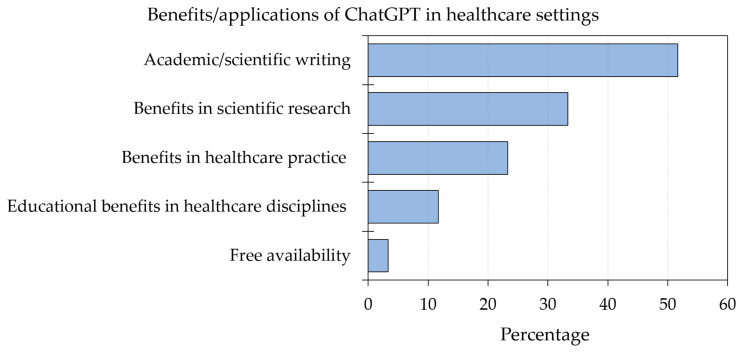
- Benefits were most frequently cited for academic/scientific writing (31 records, 51.7%), followed by scientific research (20, 33.3%), healthcare practice (14, 23.3%), healthcare education (7, 11.7%), and being a free package (2, 3.3%).
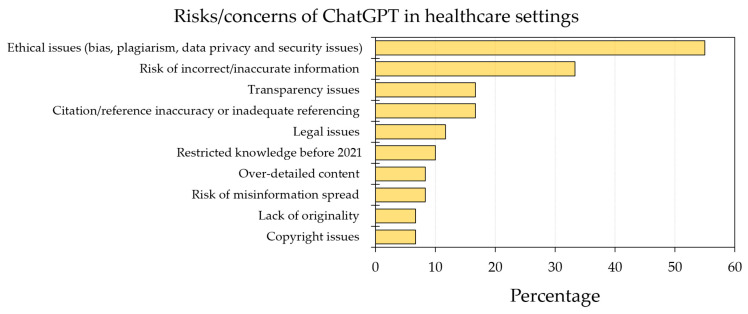
- Ethical concerns were the most common risk category (33 records, 55.0%), including risk of bias (18, 30.0%) and plagiarism (14, 23.3%); incorrect/inaccurate information was cited in 20 records (33.3%), citation/reference inaccuracy in 10 (16.7%), and transparency issues in 10 (16.7%).
- Other reported concerns included legal issues (7, 11.7%), restricted knowledge before 2021 (6, 10.0%), misinformation spread (5, 8.3%), over-detailed content (5, 8.3%), copyright issues (4, 6.7%), and lack of originality (4, 6.7%).
- The review states that ChatGPT does not qualify as an author under current ICMJE/COPE guidelines unless those guidelines are revised, and calls for stakeholder-developed ethics guidance for responsible LLM use in healthcare and academia.
Methods
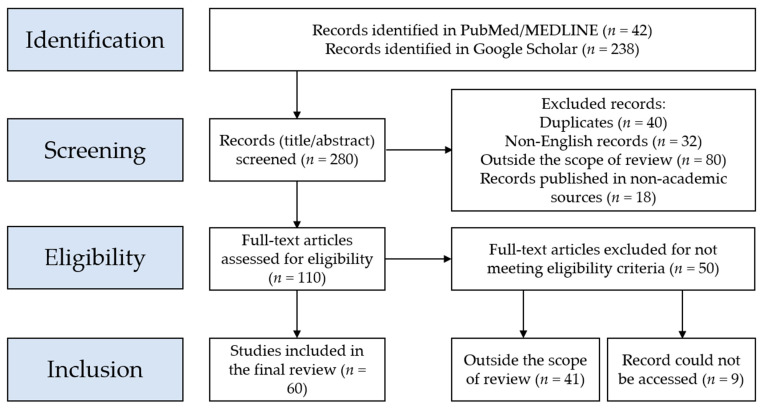
- Systematic review conducted according to PRISMA guidelines, searching PubMed/MEDLINE and Google Scholar for English records on ChatGPT in healthcare practice/research, healthcare education, or academic writing; searches concluded on 16 February 2023.
- PubMed/MEDLINE yielded 42 records and Google Scholar yielded 238 records, totaling 280 records; after duplicate removal (n = 40), non-English exclusion (n = 32), out-of-scope exclusion (n = 80), non-academic source exclusion (n = 18), full-text screening exclusions (n = 41), and inaccessible full texts (n = 9), 60 records were included.
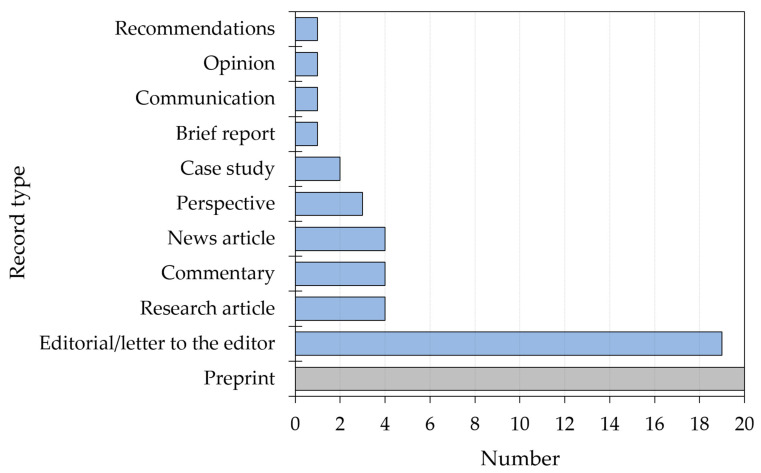
- Each included record was searched for record type, listed benefits/applications, listed risks/concerns, and main conclusions/recommendations regarding ChatGPT in healthcare education, practice, or scientific research/academic writing.
Limitations
- The paper states that included records had variable quality, non-English exclusion may have caused selection bias, inaccessible records may have led to missing relevant data, preprints were not peer reviewed, the literature is growing rapidly with the search ending 16 February 2023, and screening/interpretation was performed by a single author.
- Evident from the text: the review reports descriptive counts of mentions across heterogeneous record types rather than a formal meta-analysis or independent risk-of-bias assessment.
Model-written summary. Check it against the paper before relying on it.
Integrity signals
Registry
Cites
Statistics
Figures
Verification
Claims the paper makes
53 Valid · 1 Not valid · 6 Not checked · 37 Own results and interpretations
Every source the paper cites for this claim was checked and supports it.
In the paper
“This comes in light of the ability of ChatGPT to generate incorrect content that appears plausible from a scientific point of view [81].”
§ ChatGPT Utility in Healthcare Education, Research, and Practice: Systematic Review on the Promising Perspectives and Valid Concerns > 4. Discussion > 4.2. Limitations of ChatGPT Use in Scientific Research
What the sources say
- Supportedcites [81] Cascella M. Montomoli J. Bellini V. Bignami E. Evaluating the Feasibility of ChatGPT in Healthcare: An Analysis of Multiple Clinical and Research Scenarios J. Med. Syst. 2023 47 33 10.1007/s10916-023-01925-4 36869927 PMC9985086 source
In “Reasoning About Public Health Topics,” the paper says ChatGPT can produce believable answers that may be incorrect or nonsensical. In “Possible Misuse of GPT in Medicine and Research,” it describes a scientific abstract that appeared reliable and simulated statistical outputs that could seem plausible to readers. Together, these passages support the claim. (LLM, conf=0.94)
plain- Asserted: passes — The authors put it forward as true.
- Checkable: passes — It can be checked against evidence.
- Load-bearing: passes — The paper’s conclusions depend on it.
- Based: passes — The paper gives a reason why it holds.
- Supported
The sources with a verdict support this claim; the rest weren’t checked yet, have no full text we could read, or their verdicts aren’t rated yet.
In the paper
“This comes in light of the fact that authorship entails legal obligations that are not met by ChatGPT [43,48].”
§ ChatGPT Utility in Healthcare Education, Research, and Practice: Systematic Review on the Promising Perspectives and Valid Concerns > 4. Discussion > 4.2. Limitations of ChatGPT Use in Scientific Research
What the sources say
- Supportedcites [43] Zielinski C. Winker M. Aggarwal R. Ferris L. Heinemann M. Lapeña J. Pai S. Ing E. Citrome L. Chatbots, ChatGPT, and Scholarly Manuscripts WAME Recommendations on ChatGPT and Chatbots in Relation to Scholarly Publications Maced J. Med. Sci. 2023 11 83 86 10.3889/oamjms.2023.11502 37615142 source
The Introduction (p. 2) says chatbots are not legal entities, cannot be held legally liable, and that listing ChatGPT as an author may not be legally defensible. The WAME Recommendations (p. 2) add that chatbots cannot take responsibility for a paper or have the legal standing to sign a statement. (LLM, conf=0.93)
- Not checked — no full text of the sourcecites [48] Liebrenz M. Schleifer R. Buadze A. Bhugra D. Smith A. Generating scholarly content with ChatGPT: Ethical challenges for medical publishing Lancet Digit. Health 2023 5 e105 e106 10.1016/S2589-7500(23)00019-5 36754725 source
plain- Asserted: passes — The authors put it forward as true.
- Checkable: passes — It can be checked against evidence.
- Load-bearing: passes — The paper’s conclusions depend on it.
- Based: passes — The paper gives a reason why it holds.
- Supported
The cited sources support only part of this claim — read each source’s verdict below.
In the paper
“On one hand, ChatGPT, among other LLMs, can be beneficial in conversational and writing tasks, assisting to increase the efficiency and accuracy of the required output [11].”
§ ChatGPT Utility in Healthcare Education, Research, and Practice: Systematic Review on the Promising Perspectives and Valid Concerns > 1. Introduction
What the sources say
- Partly supportedcites [11] Deng J. Lin Y. The Benefits and Challenges of ChatGPT: An Overview Front. Comput. Intell. Syst. 2023 2 81 83 10.54097/fcis.v2i2.4465 sourceExperimental — accuracy not yet measured
Sections 4.1 (Increased Efficiency) and 4.2 (Improved Accuracy) say ChatGPT can make conversations more efficient and generate more accurate responses. The paper does not establish those benefits for writing tasks or for other LLMs, so the broader claim is only partially supported. (LLM, conf=0.88)
plainstates a cause- Asserted: passes — The authors put it forward as true.
- Checkable: passes — It can be checked against evidence.
- Load-bearing: unclear — It is unclear whether the paper’s conclusions depend on it.
- Based: passes — The paper gives a reason why it holds.
- Partly supported
The cited sources support only part of this claim — read each source’s verdict below.
In the paper
“Importantly, the concept of ChatGPT hallucination could be risky if the generated content is not thoroughly evaluated by researchers and health providers with proper expertise [37,56,73,77,79].”
§ ChatGPT Utility in Healthcare Education, Research, and Practice: Systematic Review on the Promising Perspectives and Valid Concerns > 4. Discussion > 4.2. Limitations of ChatGPT Use in Scientific Research
What the sources say
- Not checked — no full text of the sourcecites [37] Shen Y. Heacock L. Elias J. Hentel K.D. Reig B. Shih G. Moy L. ChatGPT and Other Large Language Models Are Double-edged Swords Radiology 2023 230163 10.1148/radiol.230163 36700838 source
- Partly supportedcites [56] Huh S. Are ChatGPT’s knowledge and interpretation ability comparable to those of medical students in Korea for taking a parasitology examination?: A descriptive study J. Educ. Eval. Health Prof. 2023 20 1 10.3352/jeehp.2023.20.1 36627845 PMC9905868 sourceExperimental — accuracy not yet measured
The Background says medical students must evaluate the accuracy of AI-generated medical information before creating reliable information for patients and the public. The Interpretation also reports that some ChatGPT explanations contained incorrect information. These passages support the need for scrutiny, but the paper does not specifically discuss hallucination or evaluation by researchers and health providers. (LLM, conf=0.84)
- Partly supportedcites [73] Duong D. Solomon B.D. Analysis of large-language model versus human performance for genetics questions medRxiv 2023 Preprint 10.1101/2023.01.27.23285115 PMC10999420 37246194 sourceExperimental — accuracy not yet measured
The Discussion (p. 6) says ChatGPT can give plausible explanations for incorrect answers and that its correctness requires additional verification, which is concerning in medical or other high-stakes settings. This supports the risk and need for evaluation, but the paper does not specify that researchers and health providers with proper expertise must perform it. (LLM, conf=0.83)
- Supportedcites [77] Jeblick K. Schachtner B. Dexl J. Mittermeier A. Stüber A.T. Topalis J. Weber T. Wesp P. Sabel B. Ricke J. ChatGPT Makes Medicine Easy to Swallow: An Exploratory Case Study on Simplified Radiology Reports arXiv 2022 10.48550/arxiv.2212.14882 2212.14882 PMC11126432 37794249 source
The Results (Free-text analysis) identify a ChatGPT hallucination that radiologists judged potentially harmful to a patient. The Key Points state that minimizing harm requires supervision by medical experts, supporting the claim’s warning about unevaluated medical content. (LLM, conf=0.90)
- Partly supportedcites [79] Lin Z. Why and how to embrace AI such as ChatGPT in your academic life PsyArXiv 2023 Preprint 10.31234/osf.io/sdx3j PMC10445029 37621662 sourceExperimental — accuracy not yet measured
The “Limitations of generative AI” section says ChatGPT may fabricate facts and false citations (“hallucination”) and urges users to critically evaluate and verify its responses, particularly when reliability is critical. It does not specifically say that researchers and health providers with proper expertise must evaluate the content; that part is more specific than the source. (LLM, conf=0.84)
hedgedstates a possible cause- Asserted: passes — The authors put it forward as true.
- Checkable: passes — It can be checked against evidence.
- Load-bearing: passes — The paper’s conclusions depend on it.
- Based: passes — The paper gives a reason why it holds.
- Rests on an assumption not shown here.
The sources with a verdict support this claim; the rest weren’t checked yet, have no full text we could read, or their verdicts aren’t rated yet.
In the paper
“This is particularly relevant for researchers who are non-native English speakers [23,25,63].”
§ ChatGPT Utility in Healthcare Education, Research, and Practice: Systematic Review on the Promising Perspectives and Valid Concerns > 4. Discussion > 4.1. Benefits of ChatGPT in Scientific Research
What the sources say
- Supportedcites [23] Chen T.J. ChatGPT and Other Artificial Intelligence Applications Speed up Scientific Writing Available online: https://journals.lww.com/jcma/Citation/9900/ChatGPT_and_other_artificial_intelligence.174.aspx (accessed on 16 February 2023) PMC12755446 36791246 source
In the main text (page not provided), Chen says many scientists who are not native English speakers struggle to write in English and describes AI translation and writing tools as ways to overcome that barrier. This supports the claim that language assistance in scientific writing is particularly relevant to those researchers. (LLM, conf=0.91)
- Not checked — no full text of the sourcecites [25] Kitamura F.C. ChatGPT Is Shaping the Future of Medical Writing but Still Requires Human Judgment Radiology 2023 230171 10.1148/radiol.230171 36728749 source
- Supportedcites [63] Gao C.A. Howard F.M. Markov N.S. Dyer E.C. Ramesh S. Luo Y. Pearson A.T. Comparing scientific abstracts generated by ChatGPT to original abstracts using an artificial intelligence output detector, plagiarism detector, and blinded human reviewers bioRxiv 2022 10.1101/2022.12.23.521610 source
The Discussion/Abstract section of our copy states directly that the technology 'could be used by scientists publishing in a language that is not their native language, to improve equity,' alongside the point that generated text 'may help alleviate the burden of writing' and that LLMs are 'a powerful tool to create readable scientific abstracts.' That covers the attributed content — AI-assisted language improvement being especially pertinent for non-native-English researchers — with the source's own hedge ('could be used') slightly weaker than the citing sentence's flat 'is particularly relevant.' No passage in our copy contradicts it. (LLM, conf=0.82)
plainstates an association- Asserted: passes — The authors put it forward as true.
- Checkable: passes — It can be checked against evidence.
- Load-bearing: unclear — It is unclear whether the paper’s conclusions depend on it.
- Based: passes — The paper gives a reason why it holds.
- Supported
42 more claims · 23 with their cited sources checked
Create a free account to see all 97 claims and to verify the 16 references still open.
- Probably not a substantial claim. 31
- It may state two separate claims as one. 27
Claims other papers make about this one
Each is checked against this paper’s own text: does it say what the citing paper says it does?
The source backs part of the claim, not all of it — or backs it for a different population, condition or comparison.
In the citing paper
“The reliance on ChatGPT may result in hindering the development of the skills needed to interpret and respond to social cues, which should be considered in health care education [9,91].”
From Assessing Health Students' Attitudes and Usage of ChatGPT in Jordan: Validation Study (2023) · cites this paper as [9]
Experimental — accuracy not yet measuredThe source backs part of the claim, not all of it — or backs it for a different population, condition or comparison.
In the citing paper
“A recent surge in the use of ChatGPT, in particular for mental health, is emergent for providing crucial personalized advice without clinical explanation, which can hurt user's safety, and thus trust (Sallam, 2023).”
From A review of the explainability and safety of conversational agents for mental health to identify avenues for improvement (2023) · cites this paper as Sallam, 2023
Experimental — accuracy not yet measuredThe source backs part of the claim, not all of it — or backs it for a different population, condition or comparison.
In the citing paper
“ChatGPT plays a crucial role in pandemic management by aiding in the swift and accurate dissemination of critical information.”
From A Systematic Review and Meta-Analysis of Artificial Intelligence Tools in Medicine and Healthcare: Applications, Considerations, Limitations, Motivation and Challenges (2024) · cites this paper as [6]
Experimental — accuracy not yet measuredThe source backs part of the claim, not all of it — or backs it for a different population, condition or comparison.
In the citing paper
“Its natural language processing capabilities enable it to generate coherent responses, making it a valuable tool for healthcare organisations.”
From A Systematic Review and Meta-Analysis of Artificial Intelligence Tools in Medicine and Healthcare: Applications, Considerations, Limitations, Motivation and Challenges (2024) · cites this paper as [6]
Experimental — accuracy not yet measuredThe source backs part of the claim, not all of it — or backs it for a different population, condition or comparison.
In the citing paper
“Specific advantages include its ability to provide rapid updates, preventive measures, and medical guidelines to the public.”
From A Systematic Review and Meta-Analysis of Artificial Intelligence Tools in Medicine and Healthcare: Applications, Considerations, Limitations, Motivation and Challenges (2024) · cites this paper as [6]
Experimental — accuracy not yet measured
31 more claims about this paper
Create a free account to see every claim other papers make about this one.
Citations
Cites
Preferred Reporting Items for Systematic Reviews and Meta-Analyses: the PRISMA statement
Moher, D., Liberati, A., Tetzlaff, J., Altman, D. G., & for the PRISMA Group (2009) · BMJ · doi:10.1136/bmj.b2535 · Cited by 83,823
Preferred Reporting Items for Systematic Reviews and Meta-Analyses: The PRISMA Statement
Moher, D., Liberati, A., Tetzlaff, J., Altman, D. G., & The PRISMA Group (2009) · PLoS Medicine · doi:10.1371/journal.pmed.1000097 · Cited by 64,042 · cited 1×
“The current systematic review was conducted according to the Preferred Reporting Items for Systematic Reviews and Meta-Analyses (PRIMSA) guidelines [21].”
Language Models are Few-Shot Learners
Brown, T. B., Mann, B., Ryder, N., Subbiah, M., Kaplan, J., Dhariwal, P., Neelakantan, A., Shyam, P., Sastry, G., Askell, A., et al. (2020) · arXiv · doi:10.48550/arxiv.2005.14165 · Cited by 23,372 · cited 3×
“The GPT architecture utilizes a neural network to process natural language, thus generating responses based on the context of input text [7].”
BackgroundWang, G., Ma, R., Qiao, G., Wada, K., Aizawa, Y., & Satoh, T. (2015) · Integrative Medicine International · doi:10.1159/000368408 · Cited by 18,657
Kaugeranna, R., Kaugeranna, E., & Aion, (. S. 4. 6. (2023) · DROPS (Schloss Dagstuhl – Leibniz Center for Informatics) · doi:10.4230/lipics.giscience.2023.43 · Cited by 13,690
Machine learning: Trends, perspectives, and prospects
Jordan, M. I., & Mitchell, T. M. (2015) · Science · doi:10.1126/science.aaa8415 · Cited by 9,955
Kung, T. H., Cheatham, M., Medenilla, A., Sillos, C., De Leon, L., Elepaño, C., Madriaga, M., Aggabao, R., Diaz-Candido, G., Maningo, J., et al. (2023) · PLOS Digital Health · doi:10.1371/journal.pdig.0000198 · Cited by 4,115 · cited 2×
“[59] An article showing the ChatGPT raised accuracy which enabled passing the USMLE Accuracy with high concordance and insight; it can facilitate patient communication; improved personalized medicine ChatGPT has a promising potential in medical education; future studies are recommended to consider non-biased approach…”
BackgroundKung, T. H., Cheatham, M., ChatGPT, Medenilla, A., Sillos, C., De Leon, L., Elepaño, C., Madriaga, M., Aggabao, R., Diaz-Candido, G., et al. (2022) · doi:10.1101/2022.12.19.22283643 · Cited by 4,115
Rajpurkar, P., Chen, E., Banerjee, O., & Topol, E. J. (2022) · Nature Medicine · doi:10.1038/s41591-021-01614-0 · Cited by 3,212 · cited 1×
“The promising utility of AI in health care has been outlined previously with possible benefits in personalized medicine, drug discovery, and the analysis of large datasets aside from the potential applications to improve diagnosis and clinical decisions [17,18].”
BackgroundChatting and cheating: Ensuring academic integrity in the era of ChatGPT
Cotton, D. R. E., Cotton, P. A., & Shipway, J. R. (2024) · Innovations in Education and Teaching International · doi:10.1080/14703297.2023.2190148 · Cited by 3,087 · cited 1×
“[62] An EdArXiv 2 preprint on the academic integrity in ChatGPT era Risk of plagiarism; academic dishonesty Careful thinking of educational assessment tools”
Background
Cited by
Items 1,601–1,700 of 3,096
Simon, B., Gelikman, D. G., & Türkbey, B. (2024) · Translational Andrology and Urology · doi:10.21037/tau-23-635 · Cited by 7
“Tools such as ChatGPT are in their early stages and are at risk of generating inaccurate and potentially non-existent information (3), leaving users at risk of fraud or error if relied upon too heavily.”
Ramasubramanian, S., Balaji, S., Kannan, T., Jeyaraman, N., Sharma, S., Migliorini, F., Balasubramaniam, S., & Jeyaraman, M. (2024) · World Journal of Methodology · doi:10.5662/wjm.v14.i4.92802 · Cited by 11
Will ChatGPT-4 improve the quality of medical abstracts?
Gravel, J., Dion, C., Kermani, M. F., Mousseau, S., & Osmanlliu, E. (2024) · Paediatrics & Child Health · doi:10.1093/pch/pxae062 · Cited by 10
Artificial intelligence generates proficient Spanish obstetrics and gynecology counseling templates
Solmonovich, R. L., Kouba, I., Quezada, O., Rodríguez-Ayala, G., Rojas, V., Bonilla, K., Espino, K., & Bracero, L. A. (2024) · AJOG Global Reports · doi:10.1016/j.xagr.2024.100400 · Cited by 6
A cross-lingual syntactic investigation of gender bias and stereotyping in GPT-4o: English vs Hindi
Arora, S., & Srivastava, A. (2024) · AI and Ethics · doi:10.1007/s43681-024-00565-9 · Cited by 6
CHATGPT IN COMMUNICATION: A SYSTEMATIC LITERATURE REVIEW
Batubara, M. H., Nasution, A. K. P., NURMALINA, & Rizha, F. (2024) · Applied Computer Science · doi:10.35784/acs-2024-31 · Cited by 10
“In the healthcare space, ChatGPT has been identified as helpful in simplifying workflows and improving personalized medicine, potentially improving patient care (Sallam, 2023).”
Karacan, E. (2024) · International Journal of Medical Informatics · doi:10.1016/j.ijmedinf.2024.105663 · Cited by 6
Lanzetti, J., Ferrati, F., Pavone, L., et al. (2024) · Clinical and Experimental Dental Research · doi:10.1002/cre2.70018 · Cited by 5
The Role of Artificial Intelligence in Radiology Residency Training: A National Survey Study
Emekli, E., Çoşkun, Ö., & Budakoğlu, I. İ. (2024) · European Journal of Therapeutics · doi:10.58600/eurjther2344 · Cited by 12
Generative artificial intelligence (AI): a key innovation or just hype in primary care settings?
Rahmanti, A. R., Iqbal, U., Reddy, S., Gao, X. W., Nguyen, H. X., & Li, Y. (2024) · BMJ Health & Care Informatics · doi:10.1136/bmjhci-2024-101367 · Cited by 4
Cheating with ChatGPT and Techniques of Neutralization
E.Hawdon, J., Costello, M., & Reichelmann, A. V. (2025) · Deviant Behavior · doi:10.1080/01639625.2025.2456067 · Cited by 11
Ly, R., & Ly, B. (2025) · AI and Ethics · doi:10.1007/s43681-025-00667-y · Cited by 7
“While frameworks such as the General Data Protection Regulation (GDPR) exist to safeguard data privacy, their enforcement in educational contexts has been largely inconsistent, leaving significant gaps in protection [ 9 ].”
Does ChatGPT Increase Language Homogenization?
Bauer, N. F. (2025) · Springer eBooks · doi:10.1007/978-3-658-46344-1_2 · Cited by 11
Kleinhendler, E., Pinkhasov, A., Hayek, S., Man, A., Freund, O., Perluk, T. M., Gershman, E., Unterman, A., Fire, G., & Bar‐Shai, A. (2025) · Expert Review of Respiratory Medicine · doi:10.1080/17476348.2025.2474138 · Cited by 7
“Moreover, the utility of large language models in healthcare, as explored by Sallam [42], emphasizes the necessity for a balanced approach in deploying AI for CPET interpretation.”
Salyers, A. J., Bull, S., Silvasstar, J., Howell, K., Wright, T., & Banaei‐Kashani, F. (2025) · JMIR Human Factors · doi:10.2196/69144 · Cited by 6
“…including generative chatbots such as ChatGPT, have raised concerns related to their use that warrant attention for health-related applications [13] Ethical concerns include observations that systems could discriminate against stereotype or stigmatize users, and could also compromise privacy…”
Okulich-Kazarin, V. (2025) · Sustainability · doi:10.3390/su17062747 · Cited by 7
“Paper [50] scored 1189 citations in the Scopus database.”
A comparative analysis of CDC and AI-generated health information using computer-aided text analysis
Young, A., & Omosun, F. (2025) · Journal of Communications In Healthcare · doi:10.1080/17538068.2025.2487378 · Cited by 5
“Because of its utility, ChatGPT can be used in health-care, optimizing workflow and making it easy for healthcare professionals to handle documentation, reducing cost, eliminating human errors, and persona-lizing messages [11].”
Soddu, M., VITO, A. D., Madeddu, G., Nicolosi, B., Provenzano, M., Ivziku, D., & Curcio, F. (2025) · Nursing Reports · doi:10.3390/nursrep15040130 · Cited by 13
“While much research debates the potential advantages and disadvantages of using ChatGPT in scientific research [55–58], to date there is a considerable gap in the literature on the knowledge of its use in various specific clinical contexts.”
The Role of ChatGPT in Enhancing Students’ Critical Thinking in Academic Writing
Hikmah, D., & Walida, B. (2024) · Ethical Lingua Journal of Language Teaching and Literature · doi:10.30605/25409190.780 · Cited by 17
“This confirms that ChatGPT can be an effective tool in enriching idea, an element that is often difficult for students to achieve, especially when they face an idea impasse (Mhlanga, 2023; Sallam, 2023).”
Digital healthcare: the new frontier of holistic and efficient care
Cha, D. (2023) · Clinical and Experimental Emergency Medicine · doi:10.15441/ceem.23.054 · Cited by 8
“The era of large language models and digital innovation offers numerous possibilities for both patients and healthcare professionals [15].”
BackgroundTorales, J. C., & O’Higgins, M. G. (2023) · International Journal of Social Psychiatry · doi:10.1177/00207640231178488 · Cited by 5
“Continuing with ethical considerations, there is a possibility of students using AI as a tool for plagiarism, particularly in tasks related to making essays or reports (Sallam, 2023).”
Bulloch, G., Seth, I., & Lee, C. H. A. (2023) · ANZ Journal of Surgery · doi:10.1111/ans.18544 · Cited by 6
Application of Machine Learning and Data Mining in Medicine: Opportunities and Considerations
Li, L. (2023) · Artificial intelligence · doi:10.5772/intechopen.113286 · Cited by 8
Analisis Pengaruh ChatGPT Terhadap Produktivitas Mahasiswa
Suryono, M. N. R. N., Bhagaskara, R. E., Pratama, M. A., & Pratama, A. (2023) · Prosiding Seminar Nasional Teknologi dan Sistem Informasi · doi:10.33005/sitasi.v3i1.511 · Cited by 32
“Hal tersebut menunjukkan bahwa penggunaan ChatGPT dapat membantu menaikkan efisiensi dan efektifitas mahasiswa [16][17] dibanding dengan metode tradisional.”
BackgroundOmar, H. (2023) · Journal of Dental Education · doi:10.1002/jdd.13430 · Cited by 7
Adversarial Robustness for Large Language NER models using Disentanglement and Word Attributions
Jin, X., Vinzamuri, B., Venkatapathy, S., Ji, H., & Natarajan, P. (2023) · Findings of the Association for Computational Linguistics: EMNLP (Findings of EMNLP) · doi:10.18653/v1/2023.findings-emnlp.830 · Cited by 12
“Touvron et al., 2023), have brought attention that they outperform many NLP tasks and have been widely used for applications (Sallam, 2023).”
Prachnakorn, N., Preecha, K., Sri-u-thai, T., Jaroenyod, T., Sawang, K., Patwong, N., & Wattanapisit, A. (2024) · Medical Teacher · doi:10.1080/0142159x.2024.2311267 · Cited by 8
ChatGPT and Personalised Learning: Reshaping Pedagogical Approaches in the VUCA Age
Baskara, F. R. (2024) · Jurnal Educative Journal of Educational Studies · doi:10.30983/educative.v8i2.7620 · Cited by 21
Exploring the Competency of ChatGPT in Solving Competitive Programming Challenges
(2023) · International Journal of Advanced Trends in Computer Science and Engineering · doi:10.30534/ijatcse/2024/031312024 · Cited by 15
Student’s Perception of Chat GPT
Singh, P., Phutela, N., Grover, P., Sinha, D., & Sinha, S. (2023) · International Conference on Electrical, Communication, and Computer Engineering (ICECCE) · doi:10.1109/icecce61019.2023.10442033 · Cited by 9
“The major challenge of using ChatGPT is related to its accuracy and reliability [35].”
BackgroundChatGPT: A game-changer in oral and maxillofacial surgery
Abdalla, A. Q., & Aziz, T. A. (2024) · Journal of Medicine Surgery and Public Health · doi:10.1016/j.glmedi.2024.100078 · Cited by 6
Moya‐Salazar, J., Salazar, C. R., Delzo, S. S., Goicochea‐Palomino, E. A., & Rojas-Zumarán, V. (2024) · Electronic Journal of General Medicine · doi:10.29333/ejgm/14354 · Cited by 7
“Firstly, the 14 analysed papers were identified in the Scopus database, but there are other databases (including Gray literature) with additional papers discussing the role of ChatGPT in medicine [12, 33-35].”
BackgroundComparison of ChatGPT knowledge against 2020 consensus statement on ankyloglossia in children
Howard, E. C., Chong, N. Y. K., Carnino, J. M., & Levi, J. R. (2024) · International Journal of Pediatric Otorhinolaryngology · doi:10.1016/j.ijporl.2024.111957 · Cited by 6
Use of large language models to optimize poison center charting
Matsler, N., Pepin, L. C., Banerji, S., Hoyte, C. O., & Heard, K. J. (2024) · Clinical Toxicology · doi:10.1080/15563650.2024.2348107 · Cited by 5
Analysis of Institutional Policies on the Use of Chat GPT in Peruvian Universities
Cantoral, E. M., Suárez, S., Acra-Despradel, C., Mamani-Calcina, J. G., Ponce-Aranibar, M. D. P., Villalba‐Condori, K. O., & Cardona-Reyes, H. (2023) · International Conference on Virtual Campus (JICV) · doi:10.1109/jicv59748.2023.10565652 · Cited by 5
“It is qualitative because its purpose is to describe and understand the phenomena of human activity to gain profound knowledge of this interaction [13].”
BackgroundLearning with Conversational AI: ChatGPT and Bard/Gemini in Education
da Silva, G. S., & Ulbricht, V. R. (2024) · Cognition and exploratory learning in the digital age · doi:10.1007/978-3-031-66462-5_6 · Cited by 9
Král, J., Hradiš, M., Bužga, M., & Kunovský, L. (2024) · Biomedical Papers · doi:10.5507/bp.2024.027 · Cited by 9
Manufacturing Domain QA with Integrated Term Enhanced RAG
Bei, Y., Fang, Z., Mao, S., Yu, S., Jiang, Y., Tong, Y., & Cai, W. (2024) · International Joint Conference on Neural Networks (IJCNN) · doi:10.1109/ijcnn60899.2024.10649905 · Cited by 11
“This deficiency has spurred the development of domain-specific LLMs, meticulously designed to cater to the intricate needs of specific fields such as healthcare, biomedicine, and oceanography [5]– [8].”
BackgroundYe, X., Zhai, W., Du, J., Zandt, S. V., & Ye, Y. (2024) · Frontiers of Urban and Rural Planning · doi:10.1007/s44243-024-00046-x · Cited by 6
“Conversely, the integration of ChatGPT raises critical ethical concerns (Liebrenz et al., 2023; Sallam, 2023).”
Stavros Hatzopoulos, A., Cardinali, L., Skarzynski, P. H., & Zimatore, G. (2024) · Children · doi:10.3390/children11111276 · Cited by 7
Keating, M., Bollard, S. M., & Potter, S. (2024) · Cureus · doi:10.7759/cureus.73874 · Cited by 15
Roos, J., Wilhelm, T. I., Martin, R., & Kaczmarczyk, R. (2024) · AI · doi:10.3390/ai5040128 · Cited by 5
Bordin, R. W., Bartnack, C. C., Westphalen, V. P. D., Gasparello, G. G., Bark, M. J., Gava, T. N., & Tanaka, O. M. (2024) · Saudi Endodontic Journal · doi:10.4103/sej.sej_107_24 · Cited by 6
Sawamura, S., Kohiyama, K., Takenaka, T., Sera, T., Inoue, T., & Nagai, T. (2025) · Cureus · doi:10.7759/cureus.76989 · Cited by 10
Weber, V., Truelove, A., Gohari, S. S., Wynne, L. A., Kearns, R. J., & O’Carroll, J. (2025) · International Journal of Obstetric Anesthesia · doi:10.1016/j.ijoa.2025.104344 · Cited by 5
Chavda, H., Sontam, T. R., Skinner, W. C., Ingall, E. M., & Zide, J. R. (2025) · Journal of the American Academy of Orthopaedic Surgeons · doi:10.5435/jaaos-d-25-00260 · Cited by 7
Mueen Ahmed, K. K., & Chaman Sab, M. (2023) · International Journal of Medicine and Public Health · doi:10.5530/ijmedph.2023.2.13 · Cited by 5
Uzun, L. (2023) · Digital Society · doi:10.1007/s44206-023-00070-2 · Cited by 11
“LLMs can provide students with instant feedback on their writing, highlighting errors and suggesting improvements (Sallam, 2023).”
AI did not pass Finnish plastic surgery written board examination
Kelloniemi, M., & Koljonen, V. (2023) · Journal of Plastic Reconstructive & Aesthetic Surgery · doi:10.1016/j.bjps.2023.10.059 · Cited by 5
ChatGPT answers a frequently asked question about nursing: What it is and what it is not
Danielis, M., & Zanotti, R. (2023) · Nursing Inquiry · doi:10.1111/nin.12620 · Cited by 8
English Education Students' Perception of the Use of ChatGPT in Writing Articles
Hasanah, U., & Nurcholis, I. A. (2024) · Pubmedia Jurnal Pendidikan Bahasa Inggris · doi:10.47134/jpbi.v1i2.298 · Cited by 20
“ChatGPT allows users to identify grammar and structure errors or mistakes, provide recommendations for creating sentences that fit the topic of the writing, paraphrase paragraphs, and more (Lee, 2023; Megahed, 2023; Sallam, 2023).”
BackgroundChatGPT for Automated Cross‐Checking of Authors' Conflicts of Interest Against Industry Payments
Safranek, C. W., Liu, C., Richmond, R. L., Boyi, T., Rimmer, R., & Manes, R. P. (2024) · Otolaryngology · doi:10.1002/ohn.720 · Cited by 5
Scheschenja, M., Bastian, M. B., Wessendorf, J., Owczarek, A. D., König, A. M., Viniol, S., & Mahnken, A. H. (2024) · Current Problems in Diagnostic Radiology · doi:10.1067/j.cpradiol.2024.04.005 · Cited by 5
Analyzing the Performance of ChatGPT in Cardiology and Vascular PathologiesPreprint
Hariri, W. (2023) · Research Square · doi:10.21203/rs.3.rs-2782768/v1 · Cited by 7
Bushuven, S., Bentele, M., Bentele, S., et al. (2023) · Research Square · doi:10.21203/rs.3.rs-2910261/v1 · Cited by 5
Capability of GPT-4V(ision) in Japanese National Medical Licensing ExaminationPreprint
Nakao, T., Miki, S., Nakamura, Y., Kikuchi, T., Nomura, Y., Hanaoka, S., Yoshikawa, T., & Abe, O. (2023) · medRxiv · doi:10.1101/2023.11.07.23298133 · Cited by 5
Validation of the QAMAI tool to assess the quality of health information provided by AIPreprint
Vaira, L. A., Lechien, J. R., Abbate, V., Allevi, F., Audino, G., Beltramini, G. A., Bergonzani, M., Boscolo‐Rizzo, P., Califano, G., Cammaroto, G., et al. (2024) · medRxiv · doi:10.1101/2024.01.25.24301774 · Cited by 5
Mousavi, M., Shafiee, S., Harley, J. M., Cheung, J. C. K., & Rahimi, S. A. (2024) · Family Medicine and Community Health · doi:10.1136/fmch-2023-002626 · Cited by 7
Assessing the performance of GPT-4 in the filed of osteoarthritis and orthopaedic case consultation
Li, J., Gao, X., Dou, T., Gao, Y., & Zhu, W. (2023) · doi:10.1101/2023.08.06.23293735 · Cited by 4
“Further, it has been employed as a preparatory tool for medical board examinations, thus evidencing its immense potential in education([6-7]).”
MethodAcademic Integrity and Students’ Ethical Use of ChatGPT in Higher Education
Shishakly, R., & Nachouki, M. (2026) · Journal of Information Technology Education: Research · doi:10.28945/5730 · Cited by 15
“…programming, and problem - solving by leveraging deep learning techniques to generate contextually relevant responses (Atlas, 2023; Baidoo - Anu & Owusu Ansah, 2023; Else, 2023; Herft, 2023; Kasneci et al., 2023; Qadir, 2022; Sallam, 2023; Sok & Heng, 2023; Susnjak, 2022; Vieriu & Petrea, 2025).”
Rising to the Challenge of Rare Diagnoses
Venus, K., Kwan, J. L., & Frost, D. (2024) · Journal of General Internal Medicine · doi:10.1007/s11606-024-09086-x · Cited by 5
Naldi, L., Bettoli, V., Santoro, E., Valetto, M. R., Bolzon, A., Cassalia, F., Cazzaniga, S., Cima, S., Danese, A., Emendi, S., et al. (2024) · Dermatology Reports · doi:10.4081/dr.2024.10138 · Cited by 6
Masur, L., Driller, M. W., Suppiah, H. T., Matzka, M., Sperlich, B., & Düking, P. (2025) · JMIR Formative Research · doi:10.2196/71358 · Cited by 5
“LLMs such as ChatGPT (OpenAI) are rapidly gaining popularity among the general population [16] as well as in various scientific domains such as medical research and education [17-20], health care [21-23], or nutrition [24,25].”
Firdaus, T. (2025) · Turkish Academic Research Review - Türk Akademik Araştırmalar Dergisi [TARR] · doi:10.30622/tarr.1610935 · Cited by 16
Wang, J., Min, H., Li, T., Li, J., Jiang, Y., Zhang, J., Wu, Y., & Sun, X. (2025) · Journal of Medical Internet Research · doi:10.2196/67303 · Cited by 10
“In health care education, tools like ChatGPT have been used to facilitate personalized learning, encourage critical thinking, and support problem-based learning [53].”
Mukunya, D., Nantale, R., Kayemba, F., Ajalo, E., Pangholi, K., Babuya, J., Akuu, S. L., Namiiro, A. M., Tweheyo, R., Ekak, S., et al. (2025) · MedEdPublish · doi:10.12688/mep.20554.3 · Cited by 6
Generative AI Integrated Educational Model for User-Centered Design
Wu, Y., Zeng, X., & Lin, Q. (2024) · doi:10.1145/3722237.3722260 · Cited by 11
Alsaawi, A., Almoaily, M., Almulhim, F., Alahmadi, N. S., & Alshenqeeti, H. (2025) · International Journal of Computer-Assisted Language Learning and Teaching · doi:10.4018/ijcallt.376344 · Cited by 15
Dolu, F., Ay, O. F., Kupeli, A. H., Karademir, E., & Büyükavcı, M. H. (2025) · JMIR Medical Informatics · doi:10.2196/68980 · Cited by 7
“At present, it has been argued that ChatGPT has the potential to enhance patient outcomes and health literacy [22].”
Alharbi, L. Y., Alrashoud, R. R., Alotaibi, B. S., Dera, A. M. A., Alajlan, R. S., AlHuthail, R. R., & Alessa, D. (2025) · JMIR Formative Research · doi:10.2196/73642 · Cited by 7
“Chatbots, as AI-powered apps, are designed to simulate human conversations effectively through text or voice interactions [5].”
Applications of Artificial Intelligence in Dermatology
Arza, A., Lebhar, J., & Lipoff, J. B. (2025) · Dermatologic Clinics · doi:10.1016/j.det.2025.05.003 · Cited by 7
Leveraging ChatGPT for Enhancing Learning in Radiology Resident Education
Zheng, A., Barker, C. J., Ferrante, S. S., Squires, J. H., Branstetter, B. F., & Hughes, M. A. (2025) · Academic Radiology · doi:10.1016/j.acra.2025.06.019 · Cited by 11
Tsai, C., Lin, Y.-C., Hou, J.-U., Tsai, S., Yeh, P.-C., & Kao, C. (2025) · Digital Health · doi:10.1177/20552076251357468 · Cited by 4
“5,12 In this context, we aim to investigate whether ChatGPT combining CoT technique can help health professionals answer common questions about radioiodine therapy and provide suf fi cient accurate information.”
Reinforcing the medical education system and internship program in Saudi Arabia: A narrative review
Kuwaiti, A. A., Al-Gelban, K. S., Subbarayalu, A. V., Almuhanna, A., & Al-Muhanna, F. A. (2025) · Informatics in Medicine Unlocked · doi:10.1016/j.imu.2025.101674 · Cited by 5
Sun, M., Reiter, E., Duncan, L., & Adam, R. (2025) · Artificial Intelligence in Medicine · doi:10.1016/j.artmed.2025.103227 · Cited by 7
Jenkins, D. M., Cleverley-Thompson, S., Erikson, D., Blankenbaker, A., & Brown-Saracino, B. (2025) · Journal of Leadership Studies · doi:10.1002/jls.70014 · Cited by 14
Generative chatbots in headache education and research: A narrative review
Romozzi, M., García‐Azorín, D., Rubio‐Beltrán, E., & Labastida‐Ramírez, A. (2025) · Cephalalgia · doi:10.1177/03331024251372117 · Cited by 4
Almasri, W., Saad, M., & Mohiyeddini, C. (2025) · Algorithms · doi:10.3390/a18100612 · Cited by 5
Vitale, J. A., McCall, A., Cina, A., Athlete Travel, S. I. G. (., Alonso, J.-M., Bender, A., Biggins, M., Charest, J., Dohi, M., Filip-Stachnik, A., et al. (2025) · Sports Medicine · doi:10.1007/s40279-025-02303-5 · Cited by 7
“Issues such as ethics, transparency, potential biases, and the risk of generating inaccurate or misleading information, commonly called “hallucination”, remain of concern [4].”
Zhang, Y. (2025) · Frontiers in Psychology · doi:10.3389/fpsyg.2025.1549755 · Cited by 6
“The adoption of Generative Pre-trained Transformer (GPT) models has introduced profound changes in human-AI collaboration, with applications spanning education, healthcare, and daily problem-solving (Ng et al., 2024; Sallam, 2023; Lee and Chung, 2024).”
Wang, H., Shan, W., Liu, R. Z., & Wang, Z. (2025) · Digital Health · doi:10.1177/20552076251390280 · Cited by 11
“35 Collectively, these foundational studies inaugurated a new era in which generative AI underpins standardised testing, personalised instruction and intelligent tutoring systems.”
Aydin, M., Aral, F., Daşcı, M. F., Sürücü, S., Mahiroğulları, M., & Çıtak, M. (2025) · Archives of Orthopaedic and Trauma Surgery · doi:10.1007/s00402-025-06085-3 · Cited by 4
“Furthermore, the ability of ChatGPT to synthesize information from a broad range of academic sources allows it to provide comprehensive answers that are crucial for informed patient decision-making [28].”
Nana, V. K., & Marshall, M. T. (2025) · AI · doi:10.3390/ai6110278 · Cited by 7
“The most cited reference was a single-author systematic review by Sallam [33].”
Oben, A. I., Xu, H., Bahtilla, M., & Quanguo, L. (2025) · Innovations in Education and Teaching International · doi:10.1080/14703297.2025.2587333 · Cited by 10
Erden, Y., Temel, M. H., & Bağcıer, F. (2025) · Reumatologia/Rheumatology · doi:10.5114/reum/207526 · Cited by 6
AutoHall: Automated Factuality Hallucination Dataset Generation for Large Language Models
Cao, Z., Yang, Y., Li, X., & Zhao, H. (2025) · IEEE Transactions on Audio Speech and Language Processing · doi:10.1109/taslpro.2025.3635038 · Cited by 33
“Index Terms —Natural language processing, large language models (LLMs), LLM hallucination, automated dataset generation, hallucination detection.”
Generative AI-Augmented Thematic Analysis
Jayawardene, V., & Ewing, M. T. (2025) · International Journal of Market Research · doi:10.1177/14707853251405043 · Cited by 10
“Gen AI tools use large language models (LLMs), trained on vast datasets (Sallam, 2023; Yan, Sha, et al., 2023), enabling them to produce original content that closely mirrors human language patterns (Brown et al., 2020; Meng et al., 2023).”
Çerkini, B., Bajraktari, K., Çibukçiu, B., Ramadani, F., Zejnullahu, F., & Hajdini, L. (2025) · Frontiers in Education · doi:10.3389/feduc.2025.1700056 · Cited by 11
HPB SmartNotes: The impact of artificial intelligence on surgeon workload in the outpatient office
Gasque, R. A., Zaietta, N., Mollard, L., Beltrame, M. C., Virreira, M. E. L., Quiñonez, E. G., & Mattera, F. J. (2025) · EngMedicine · doi:10.1016/j.engmed.2025.100101 · Cited by 6
Ettadili, H., & Darvishmohammadi, T. (2025) · SN Comprehensive Clinical Medicine · doi:10.1007/s42399-025-02218-2 · Cited by 5
“These applications extend AI’s influence beyond diagnostics, supporting clinician educa - tion, personalized learning for medical students and profes - sionals, simplifying communication, facilitating research and analysis tasks, and improving public health literacy [77–81 ].”
Tezcan, H., Tunçez, A., Özen, Y., Yalçın, M. U., & Gürses, K. M. (2026) · Digital Health · doi:10.1177/20552076251412985 · Cited by 6
Huang, B., Xie, S., & Hew, T. K. F. (2026) · Educational Psychology · doi:10.1080/01443410.2025.2611980 · Cited by 7
The effectiveness of AI-based conversational agents in nursing education: A systematic review
Ko, J., & Lee, Y. (2026) · Nurse Education in Practice · doi:10.1016/j.nepr.2026.104728 · Cited by 8
Zhao, H., & Dang, T. N. Y. (2026) · Education and Information Technologies · doi:10.1007/s10639-025-13870-5 · Cited by 4
Lim, J., Tan, P., Gutai, F., Sainsbury, D. C. G., Strong, B., Varma, S., & Lewis, C. (2026) · Journal of Plastic Reconstructive & Aesthetic Surgery · doi:10.1016/j.bjps.2026.01.032 · Cited by 4
TAŞKIRAN, N., Türk, G., & Hacı, A. (2026) · BMC Medical Education · doi:10.1186/s12909-026-08822-7 · Cited by 8
“To prepare future nurses for AI-enhanced environments and to foster AI literacy, providing hands-on learning opportunities has been emphasized as essential [1, 31–33].”
Aliyeva, A., Azizli, E., Snyder, V., Muradova, A., Ahmadov, N., Müderris, T., Hashimli, R., Erbek, S. S., Hepkarşı, S., & Dalğıç, A. (2026) · Journal of Clinical Medicine · doi:10.3390/jcm15041590 · Cited by 9
Motevalli, M. S., Boaventura, B. C. B., & Stanford, F. C. (2026) · The Lancet Digital Health · doi:10.1016/j.landig.2026.100980 · Cited by 9
Delibasi, S. I., Hayyar, S., & Bektaş, H. (2026) · Nurse Education Today · doi:10.1016/j.nedt.2026.107122 · Cited by 7
Expert evaluation of GPT-4o and Gemini responses to patient questions on carotid endarterectomy
Rahman, Ö. F., Özbakkaloğlu, A., Arslangilay, M., et al. (2026) · Revista da Associação Médica Brasileira · doi:10.1590/1806-9282.20251453 · Cited by 4
Metadata
- Authors
- Sallam, M.
- Affiliations
- University of Jordan (JO)
- Corresponding author
- Sallam, Malik
- ORCID
- Sallam, Malik
- Venue
- Healthcare
- Publisher
- MDPI AG
- Published
- 2023-03-19
- Volume
- 11
- Issue
- 6
- Pages
- 887
- ISSN
- 2227-9032 (ISSN-L)
- PMC
- PMC10048148
- OpenAlex
- W4327946446
- Semantic Scholar
- dfdf7ff01aa6f691831e663fd29bc71890be39e2
- Cited by
- 3,126
- References
- 114
- Citations by year
- 2026: 561 · 2025: 839 · 2024: 1052 · 2023: 669
- FWCI
- 36.67
- Type
- journal article
- Language
- en
- Open access
- gold
- doi.org
- Licence
- Locations
- Healthcare (publishedVersion, cc-by)
- medRxiv (acceptedVersion, cc-by-nc-nd)
- Preprints.org (acceptedVersion, cc-by)
- PubMed Central (publishedVersion, cc-by)
- PubMed (publishedVersion)
- Topics
- Health Sciences › Medicine › Health Informatics › Artificial Intelligence in Healthcare and Education
- Physical Sciences › Computer Science › Artificial Intelligence › Artificial Intelligence Applications
- Social Sciences › Education › Artificial Intelligence in Education
- Keywords
- ChatGPT, large language models, artificial intelligence in healthcare, healthcare education, health care research, clinical practice, scientific writing, research equity, drug discovery, personalized medicine, health literacy, plagiarism, hallucinations, authorship criteria, AI ethics, infodemic
About these checks
Registry, retraction, Cites and statistics results are computed, not judged, with one exception: a printed reference that no index lists is read once by a model before it counts as a citation error. Claims are extracted by a model and kept only when their quote appears verbatim in the text; each cited source is then checked, with a model’s help, for whether it says what the claim relies on. Those verdicts can be wrong — read the claim’s quote and the cited source before relying on one.
The claim verdicts this report counts are experimental: their accuracy is not yet measured.
A language model drew the claims from the paper on 2026-10-10, under version 3 of the claim definition (model deepseek-v4.1-flash, prompt extract-v3).
A second model labelled each claim on 2026-10-10 (model jev-1.13-20260917, definition revision gold-guideline-v0.2).
Cited sources are checked with a language model’s help (gpt-6-sol and qwen3.8-omni-flash).
Statistics and arithmetic are recomputed, not judged.
Confidence bands are shown only for fields calibrated on our annotated test set. None is calibrated yet, so no band is shown.
What counts as a claim ›How we measure confidence ›How we check this ›
Are you an author, or do you see a problem with this page? Request a review
Data sources
Bibliographic data: Semantic Scholar, OpenAlex, Crossref.
Contains information from the Semantic Scholar Academic Graph Datasets, made available under the ODC Attribution License (ODC-BY 1.0).
Semantic Scholar’s data is described in: Kinney, R., et al. (2023). The Semantic Scholar Open Data Platform. arXiv:2301.10140.
