

Metal-Based Nanoparticles as Antimicrobial Agents: An Overview
Open accessThe DOI matches its Crossref record; 194 of the 197 references it cites were found in a registry or an index.
Abstract
Metal-based nanoparticles have been extensively investigated for a set of biomedical applications. According to the World Health Organization, in addition to their reduced size and selectivity for bacteria, metal-based nanoparticles have also proved to be effective against pathogens listed as a priority. Metal-based nanoparticles are known to have non-specific bacterial toxicity mechanisms (they do not bind to a specific receptor in the bacterial cell) which not only makes the development of resistance by bacteria difficult, but also broadens the spectrum of antibacterial activity. As a result, a large majority of metal-based nanoparticles efficacy studies performed so far have shown promising results in both Gram-positive and Gram-negative bacteria. The aim of this review has been a comprehensive discussion of the state of the art on the use of the most relevant types of metal nanoparticles employed as antimicrobial agents. A special emphasis to silver nanoparticles is given, while others (e.g., gold, zinc oxide, copper, and copper oxide nanoparticles) commonly used in antibiotherapy are also reviewed. The novelty of this review relies on the comparative discussion of the different types of metal nanoparticles, their production methods, physicochemical characterization, and pharmacokinetics together with the toxicological risk encountered with the use of different types of nanoparticles as antimicrobial agents. Their added-value in the development of alternative, more effective antibiotics against multi-resistant Gram-negative bacteria has been highlighted.
Overview
The claims and statistics of this paper haven’t been checked yet.
Free: it reads the open-access text and checks the first 5 claims that cite a source we can check. Create a free account to check every claim.
Integrity signals
Registry
Cites
Statistics
Figures
Verification
Claims the paper makes
The claims and statistics of this paper haven’t been checked yet.
Free: it reads the open-access text and checks the first 5 claims that cite a source we can check. Create a free account to check every claim.
Claims other papers make about this one
Each is checked against this paper’s own text: does it say what the citing paper says it does?
The source backs part of the claim, not all of it — or backs it for a different population, condition or comparison.
In the citing paper
“The bactericidal property of TiO 2 NPs depends on their size, stability, and concentration added to the growth medium, which provides greater retention time for bacterium NP interaction, allowing them to interact closely with microbial membranes [23,24].”
From Antibacterial Activity of TiO2 Nanoparticles Prepared by One-Step Laser Ablation in Liquid (2021) · cites this paper as [23]
Experimental — accuracy not yet measuredIn the citing paper
“Polymeric hydrogels containing silver nanoparticles (AgNPs) have attracted great attention for a set of applications in the biomedical field, attributed to the antimicrobial and healing properties of silver [11,12].”
From Silver Nanoparticles-Composing Alginate/Gelatine Hydrogel Improves Wound Healing In Vivo (2020) · cites this paper as [12]
Self-check
Percentages, sums and reported differences re-computed from the paper’s own numbers.
The self-check needs the paper’s full text.
Citations
Cites
Review on Zinc Oxide Nanoparticles: Antibacterial Activity and Toxicity Mechanism
Sirelkhatim, A., Mahmud, S., Seeni, A., Kaus, N. H. M., Ann, L. C., Bakhori, S. K. M., Hasan, H., & Mohamad, D. (2015) · Nano-Micro Letters · doi:10.1007/s40820-015-0040-x · Cited by 4,586 · cited 1×
“Several authors have used ZnONPs as antimicrobial agents either as ZnO alone or in combination with drugs [161].”
BackgroundThe antimicrobial activity of nanoparticles: present situation and prospects for the future
Wang, L., Hu, C., & Shao, L. (2017) · International Journal of Nanomedicine · doi:10.2147/ijn.s121956 · Cited by 4,062 · cited 2×
“Since the main toxicological effect induced by antimicrobial compounds in bacteria occurs by direct contact with the cell surface, it is important to understand the differences between the cell wall of Gram-positive and Gram-negative bacteria [12].”
BackgroundZhang, X.-F., Liu, Z.-G., Shen, W., & Gurunathan, S. (2016) · International Journal of Molecular Sciences · doi:10.3390/ijms17091534 · Cited by 3,220 · cited 3×
“AgNPs demonstrated to be antiangiogenic and antiproliferative [59].”
BackgroundInfluentialAhmed, S., Ahmad, M., Swami, B. L., & Ikram, S. (2016) · Journal of Advanced Research · doi:10.1016/j.jare.2015.02.007 · Cited by 3,028 · cited 2×
“Synthesis of AgNPs using plant extracts is based on their relatively high levels of steroids, sapogenins, carbohydrates, and flavonoids, that act as reducing agents, as well as bio-capping compounds reducing agglomeration of nanoparticles and allowing a better size control [73].”
BackgroundMechanisms of Antibiotic Resistance
Munita, J. M., & Arias, C. A. (2016) · Microbiology Spectrum · doi:10.1128/microbiolspec.vmbf-0016-2015 · Cited by 2,782
Metal nanoparticles: understanding the mechanisms behind antibacterial activity
Slavin, Y. N., Asnis, J., Häfeli, U. O., & Bach, H. (2017) · Journal of Nanobiotechnology · doi:10.1186/s12951-017-0308-z · Cited by 2,571 · cited 3×
“Both Gram-positive and Gram-negative bacteria have a negatively charged surface [11].”
BackgroundAntibiotic resistance: a rundown of a global crisis
Aslam, B., Wang, W., Arshad, M. I., Khurshid, M., Muzammil, S., Rasool, M. H., Nisar, M. A., Alvi, R. F., Aslam, M. A., Qamar, M. U., et al. (2018) · Infection and Drug Resistance · doi:10.2147/idr.s173867 · Cited by 2,552 · cited 3×
“Besides the genetic mutations in the microorganism, bacterial resistance can result from the exchange of genetic material among bacteria or phages by: (i) DNA transformation, which is the uptake and incorporation of a DNA fragment; or by (ii) transduction or transfer of bacterial genes through a virus and conjugation,…”
BackgroundZinc oxide—from synthesis to application: a review
Kołodziejczak-Radzimska, A., & Jesionowski, T. (2014) · Materials · doi:10.3390/ma7042833 · Cited by 2,475 · cited 1×
“Therefore, ZnONPs are used in the preparation of sun creams in combination of TiO2, acting as a successful UV blocker [168].”
BackgroundMechanistic Basis of Antimicrobial Actions of Silver Nanoparticles
Dakal, T. C., Kumar, A., Majumdar, R. S., & Yadav, V. (2016) · Frontiers in Microbiology · doi:10.3389/fmicb.2016.01831 · Cited by 2,135 · cited 2×
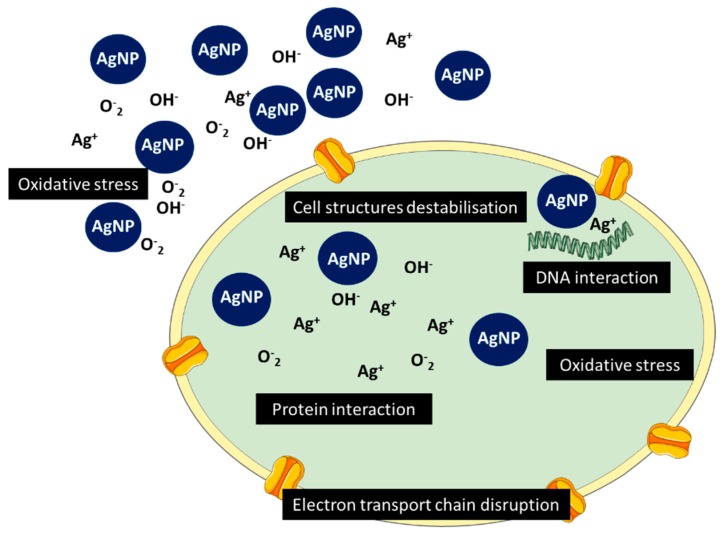
“The antimicrobial action of AgNPs is linked to four main mechanisms: (i) attraction to bacterial surface, (ii) destabilization of bacterial cell wall and membrane with change in its permeability, (iii) induction of toxicity and oxidative stress by generation of ROS and free radicals, and (iv) modulation of signal tran…”
BackgroundNanosilver: A nanoproduct in medical application
Chen, X., & Schluesener, H. J. (2008) · Toxicology Letters · doi:10.1016/j.toxlet.2007.10.004 · Cited by 1,888 · cited 1×
“Nowadays, dressings impregnated with AgNO3 can be found [57].”
Background
Research works printed but not linked: 4
- Dugassa J. Shukuri N. Antibiotic resistance and its mechanism of Development J. Heal. Med. Nurs. 2017 1 1 17
- Cardoso P. Nanopartículas de plata: Obtención, utilización como antimicrobiano e impacto en el área de la salud Rev. Hosp. Niños 2016 58 19 28
- Mirhosseini M. Synergistic antibacterial effect of metal oxide nanoparticles and ultrasound stimulation J. Biol. Today’s World 2015 4 138 144
- Singh P. Nanda A. Antimicrobial and antifungal potential of zinc oxide nanoparticles in comparison to conventional zinc oxide particles J. Chem. Pharm. Res. 2013 5 457 463
Cited by
Items 901–1,000 of 1,000
Oso, T. A., Okesanya, O. J., Adebayo, U. O., Ayelaagbe, O. B., Obadeyi, K. B., Ogunmuyiwa-James, M. E., Ahmed, M. M., Yahaya, A. K., Musa, S. S., Chukwu, C. N., et al. (2025) · Beni-Suef University Journal of Basic and Applied Sciences · doi:10.1186/s43088-025-00707-w · Cited by 7
“They are effective against biofilm-associated pathogens, which are a major reservoir of AMR (Table 2) [52].”
Li, J., Li, T., Wu, C., Fan, G., Zhou, D.-D., Li, X., & Zhu, Y. (2025) · Trends in Food Science & Technology · doi:10.1016/j.tifs.2025.105470 · Cited by 5
Baraili, R., Pathak, I., Sharma, S., Bhusal, M., & Sharma, K. R. (2025) · PLoS ONE · doi:10.1371/journal.pone.0320475 · Cited by 5
“Because of their surface plasmon resonance, solubility, adhesiveness, and chemical stability, metal and metal oxide (MO) nanoparticles (NPs) are expected to spread easily throughout the ecosystem [4–6].”
Ali, A., Khan, M. Z., Rasheed, S., & Imtiaz, R. (2026) · Micro · doi:10.3390/micro6010005 · Cited by 5
“Various antibacterial agents have been integrated into fabrics through this process, including quaternary ammonium salts, polybiguanides, N-halamines, and metal oxide nanoparticles such as TiO 2 , ZnO, and silver nanoparticles [94].”
Asfaw, B. T., Tefera, G., & Bright, G. (2026) · Journal of Composites Science · doi:10.3390/jcs10030129 · Cited by 6
Adekanmbi, A. O., Adesola, R. O., Adeyemi, A. O., & Mbionwu, C. C. (2023) · Infectious diseases · doi:10.5772/intechopen.113967 · Cited by 10
Tanka, Z. Y., Odogu, A. N., Ngouana, V., Taghu, F. L. T., Mforbesi, A. L., Nguena-Dongue, B.-N., Ndi, J. N., Kamdem, B. P., Lunga, P. K., & Boyom, F. F. (2024) · BioMed · doi:10.3390/biomed4010005 · Cited by 5
Mingot, J., Lanzalaco, S., Ferreres, G., Tzanov, T., Alemán, C., & Armelin, E. A. (2024) · Chemical Engineering Journal · doi:10.1016/j.cej.2024.154617 · Cited by 5
Noori, A. S., Abdalameer, N. K., Yaaqoob, L. A., Nayef, U. M., & Mohammed, R. M. (2024) · Plasmonics · doi:10.1007/s11468-024-02626-5 · Cited by 5
“This method, while extremely straightforward, produces nanoparticles with a widely distributed size distribution, making it unsuitable for synthesizing metal-based nano-particles [8, 9].”
Hasanin, M. S., Saeb, M. R., Abdel-Maksoud, M. A., El-Tayeb, M. A., Kiani, B. H., & Hashem, A. H. (2024) · RSC Advances · doi:10.1039/d4ra06216g · Cited by 6
Lestari, S. A., Rahayu, M. D., Dewijanti, I. D., Raguvaran, K., Kusumastuti, S. A., Nuralih, N., Mufidah, A. H., Antonius, H., Rahmi, E. P., Ratnasari, D., et al. (2024) · Biomass Conversion and Biorefinery · doi:10.1007/s13399-024-06456-7 · Cited by 5
“It helps assess the efficacy of antimicrobial agents, such as nanoparticles, for treating infections and optimizing dosages [47].”
Dharejo, S. A., Pirzada, T., Shah, M. R., Nadeem, A., & Thebo, K. H. (2025) · Heliyon · doi:10.1016/j.heliyon.2025.e41636 · Cited by 5
Al-Shimmary, S. M. H., Shehab, Z. H., & Jassim, E. H. (2025) · Inorganic Chemistry Communications · doi:10.1016/j.inoche.2025.113925 · Cited by 5
Marques, V. D. S., de Carvalho, L. M. G., de Almeida, D. A., de Farias, R. R. S., Valente, A. D., Martins, A. F., Nakamura, C. V., & Muniz, E. C. (2025) · ACS Omega · doi:10.1021/acsomega.4c07471 · Cited by 5
Ali, A. S., Liu, T., Zhang, J., Liu, Q., Peng, Y., Li, S., Shi, K., & Zhou, H. (2025) · ACS Applied Nano Materials · doi:10.1021/acsanm.4c06859 · Cited by 6
Al-Azzawi, M., Yılmaz, İ., & Bostancı, H. E. (2025) · Journal of Molecular Structure · doi:10.1016/j.molstruc.2025.142199 · Cited by 5
Amod, A., Singh, S., Lawrence, R., Anand, A. A., Ranjan, S., Singh, S., Sahoo, A. K., & Samanta, S. K. (2025) · Nanotechnology · doi:10.1088/1361-6528/addacd · Cited by 6
“Even though copper is a trace element, it can still exhibit a certain degree of toxicity toward human cells [29].”
Lanthanum-based nanoparticles: A promising frontier in antimicrobial applications
Ifijen, I. H., Agyemang, P., Faderin, E., Onyinyechi, O. L., Okeke, E. I., Onugha, D. I., Obuba, S. E., Oluwafunke, O., & Ogochukwu, C. (2025) · Next Materials · doi:10.1016/j.nxmate.2025.100719 · Cited by 6
Soni, M., Ragavendran, C., Imath, M., Manoharadas, S., & Nakouti, I. (2025) · Journal of Cluster Science · doi:10.1007/s10876-025-02852-9 · Cited by 6
Amhan, S. A., Khalaf, Y. H., & Mohammed, A. M. (2025) · Results in Chemistry · doi:10.1016/j.rechem.2025.102648 · Cited by 7
Ahmed, S. M., Ali, S. M., Khedr, M. A., Emara, M. M., & Hamed, S. (2025) · BMC Microbiology · doi:10.1186/s12866-025-04364-y · Cited by 5
“These properties are leveraged in various industries, from medical treatments to advanced energy systems [13, 17].”
Shevchenko, L. V., Dovbnia, Y. Y., Zheltonozhskaya, T., Permyakova, N. М., & Shulyak, S. V. (2021) · Regulatory Mechanisms in Biosystems · doi:10.15421/022183 · Cited by 5
“…are silver nanoparticles (AgNPs), which are used in everyday life, industry, animal husbandry and medicine due to their wide range of antimicrobial (Abdelsalam et al., 2019; Salem et al., 2020; Sánchez-López et al., 2020) and antiparasitic (Chauke & Siebrits, 2011; Said et al., 2012) efficiency.”
BackgroundSibiya, D. M., Dlamini, B., & Malinga, S. P. (2022) · Journal of environmental chemical engineering · doi:10.1016/j.jece.2022.108960 · Cited by 5
Tanwar, S. N., Parauha, Y. R., There, Y., & Dhoble, S. J. (2023) · Luminescence · doi:10.1002/bio.4579 · Cited by 5
Nikolaeva, A., Nikonenko, A. V., Bakina, O. V., Chzhou, V. R., Miller, A. A., Rodkevich, N. G., & Zykova, A. P. (2023) · Materials Letters · doi:10.1016/j.matlet.2023.135051 · Cited by 5
Magnetic Adsorbents/Photocatalysts for Water Purification: Progress and Challenges
Galloni, M. G., Sharif, H. M. A., Grainca, A., Haider, M. R., & Djellabi, R. (2024) · Royal Society of Chemistry eBooks · doi:10.1039/9781837671663-00078 · Cited by 5
Kalińska, A., Wawryło, C., Tlatlik, W., Gołębiewski, M., Kot, M., Lange, A., & Jaworski, S. (2024) · International Journal of Molecular Sciences · doi:10.3390/ijms25179494 · Cited by 5
Miao, H., Wang, H., Feng, X., & Jiao, H. (2025) · Dalton Transactions · doi:10.1039/d4dt02581d · Cited by 6
Mohammed, H. A., Laouini, S. E., Meneceur, S., Azzi, M., Salmi, C., Hasan, G. G., Bouafia, A., Al‐Lohedan, H. A., Abdullah, M. M. S., Al‐Essa, K., et al. (2025) · ChemistrySelect · doi:10.1002/slct.202404984 · Cited by 5
Copper/Graphene Based Materials Nanocomposites and Their Antibacterial Study: A Mini Review
Ismail, N. A., Shameli, K., Ali, R. R., Sukri, S. N. A. M., & Isa, E. D. M. (2021) · Journal of Research in Nanoscience and Nanotechnology · doi:10.37934/jrnn.1.1.4452 · Cited by 7
Layered Fibrous Scaffolds/Membranes in Wound Healing
Günyaktı, A., Demirtaş, T. T., & Karakeçili, A. G. (2022) · Advances in polymer science · doi:10.1007/12_2022_124 · Cited by 5
Pham, N.-D., Thao, N. H., Luan, V. H., Hoang, H. A., Sagadevan, S., Ngo, M.-T., Duong, N. N. H., & Le, M. (2022) · Topics in Catalysis · doi:10.1007/s11244-022-01700-8 · Cited by 5
Shahabadi, N., Zendehcheshm, S., & Mahdavi, M. R. (2023) · Emergent Materials · doi:10.1007/s42247-023-00455-6 · Cited by 5
“In general, it has been proposed that some nanoparticles can follow three mechanisms: (1) oxidative stress, (2) intracellular penetration, and (3) cell wall and membrane damage [24, 25, 48, 49].”
BackgroundAntimicrobial and drug delivery aspect of environment-friendly polymer nanocomposites
Šišková, A. O., Andicsová, A. E., Duale, K., Zawidlak-Węgrzyńska, B., & Rydz, J. (2023) · Elsevier eBooks · doi:10.1016/b978-0-323-99704-1.00002-3 · Cited by 7
Metal-based nanosystems and the evaluation of their antimicrobial activity
Aruna, V., Mundru, K., Aishwarya, C. V. S., Mokkapati, V., & Dhulipalla, B. S. (2023) · Elsevier eBooks · doi:10.1016/b978-0-323-91156-6.00009-9 · Cited by 6
Kristl, M., Šturm, J., Golobič, A., Jagličić, Z., & Dojer, B. (2023) · Inorganica Chimica Acta · doi:10.1016/j.ica.2023.121670 · Cited by 5
Pahal, V., Kumar, P., Kumar, P., & Kumar, V. (2022) · Plant Science Today · doi:10.14719/pst.1449 · Cited by 6
Vijayalakshmi, S., Muthusamy, K., Mukherjee, A., Shahana Farheen, S., Chelliah, R., Barathikannan, K., Oh, D., Ayyamperumal, R., & Karuppannan, S. (2022) · Journal of Nanomaterials · doi:10.1155/2022/6506796 · Cited by 5
“Various physical and chemical methods are adopted for the synthesis of metal oxide NPs [14].”
MethodSeshadri, V. D., Kandasamy, K., Alossaimi, M. A., Gabr, G. A., Kamal, M., Poyil, M. M., Oyouni, A. A. A., Altayar, M. A., Jalal, M. M., Albloshi, A. M. K., et al. (2022) · Applied Nanoscience · doi:10.1007/s13204-022-02546-y · Cited by 5
“The bactericidal action of the elements on Gram-negative and Gram-positive bacteria was much effective than that of the Cu-NPs synthesized using additional techniques (El-Batal et al. 2020; Mur-thy et al. 2020; Sanchez-Lopez et al. 2020; Sharma et al. 2019).”
MethodAntimicrobial Applications of Nanoparticles
Elsawy, M. A., & Mostafa, M. H. (2022) · Wiley eBooks · doi:10.1002/9781119558026.ch19 · Cited by 6
Ranganathan, S., Nagarajan, H., Busi, S., Esakkiraj, P., Parasuraman, P., Mariasoosai, R. C. C., & Vetrivel, U. (2026) · Frontiers in Cellular and Infection Microbiology · doi:10.3389/fcimb.2025.1756728 · Cited by 5
Yurtsever, M. Ç., Cömertpay, A., İyigündoğdu, Z., & Yurtsever, H. A. (2024) · International Journal of Environmental Science and Technology · doi:10.1007/s13762-024-05528-5 · Cited by 6
“Metal-based nanoparticles pose a great challenge for microorganisms to develop resistance than conventional antibiotics because they create physical damage to the cell membrane (Sánchez-López et al. 2020).”
Nanoparticles and Chemical Inducers: A Sustainable Shield against Onion White Rot
Elenany, A. M., Atia, M., Abbas, E., Moustafa, M., Alshaharni, M. O., Negm, S., & Elnahal, A. S. M. (2024) · Biology · doi:10.3390/biology13040219 · Cited by 4
Devliya, B., Patel, B., Chauhan, S. J., & Patel, H. D. (2024) · Pharmaceutical Nanotechnology · doi:10.2174/0122117385314186240522100239 · Cited by 4
Poinern, G. E. J., Halim, A. F. M. F., Fawcett, D., Chapman, P., & Sharma, R. (2024) · AIMS Materials Science · doi:10.3934/matersci.2024053 · Cited by 4
Tarmoul, H., Brahmi, F., Issaadi, O., Chennit, B., Djermoune, A., Elsebai, M. F., & Boulekbache‐Makhlouf, L. (2025) · Current Bioactive Compounds · doi:10.2174/0115734072361896250114094955 · Cited by 4
Overview of Nanotherapeutics for Bacterial Infections
Muñoz-López, J., Lopes, C. D. F., & Batalha, I. L. (2025) · doi:10.1201/9781003566786-6 · Cited by 4
Group IB Metal‐Based Nanomaterials for Antibacterial Applications
Zhao, X., Wang, H., Sun, Y., Zhang, J., & Liu, H. (2025) · Small Science · doi:10.1002/smsc.202400412 · Cited by 6
Thayil, R., Chinthamreddy, A., Ramana, C. V., Kathirvelu, V., & Parne, S. R. (2025) · JOM · doi:10.1007/s11837-025-07352-9 · Cited by 5
Kumar, R., Sharma, R., Kaura, S., Sethi, N., Shah, I., & Gahlot, D. K. (2025) · Current Microbiology · doi:10.1007/s00284-025-04290-2 · Cited by 4
“Metallic nanomaterials, such as silver, zinc, or copper nanoparticles, have inherent antimicrobial properties, making them effective agents against a range of bacteria, including antibiotic-resistant strains [19].”
Sharmila, A. M., Johnson, J. M., Sam, S. S., Chandran, D. R., Ajay, B., Heera, G., Sarada, S., Thomas, U. C., Alex, S., & Radhakrishanan, N. (2025) · Frontiers in Microbiology · doi:10.3389/fmicb.2025.1612335 · Cited by 4
Nanotechnology in Crop Protection: Innovations for Sustainable Agriculture
Nadarajah, K. K. (2025) · Springer eBooks · doi:10.1007/978-981-96-9756-4_7 · Cited by 5
Swebocki, T., Kocot, A. M., Ciemińska, K., Bortolus, C., Muchembled, J., Mechouche, M. S., Jacquin, J., Haddadi, K., Siah, A., Sendid, B., et al. (2025) · ACS Applied Bio Materials · doi:10.1021/acsabm.5c01159 · Cited by 4
Bhujel, S., Koju, S., Yadav, S. K., Khadka, D., Sharma, M. L., & Parajuli, K. (2025) · Journal of Nanotechnology · doi:10.1155/jnt/7616178 · Cited by 4
“Tese ROS can harm bacterial cell membranes, DNA, and proteins, ultimately resulting in cell death [19].”
Engineering Biocompatible Metal‐Based Nanoparticles for Advanced Antibacterial Therapy
Kim, J., Enkhtaivan, K., Kim, M., Lee, S., Kim, S., Lee, S., Jang, J., Choi, Y., & Choi, J. H. (2025) · ChemBioChem · doi:10.1002/cbic.202500752 · Cited by 4
Viswanathan, D., Govindasamy, R., Kuchipudia, J. D., & Anantharaman, R. (2025) · Next research. · doi:10.1016/j.nexres.2025.101233 · Cited by 5
Biodegradable polymer-based active packaging for perishable foods in the tropics: A review
Awobifa, O. S., Alimi, A. A., Adesina, G. O., Kayode, S. E., Villegas-Méndez, J. R., Adeoye, E. O., & Faleye, B. R. (2026) · Food and Humanity · doi:10.1016/j.foohum.2026.100997 · Cited by 4
Recent Progress in Organic Small‐Molecule Antibacterial Agents
Huang, X., Meng, Y. B., Zhou, P., Wang, M., & Cheng, Z. (2026) · ChemBioChem · doi:10.1002/cbic.202500729 · Cited by 4
“Beyond conventional antibiotics, a variety of other antimicrobial agents have been explored, including small-molecule compounds, antimicrobial peptides (AMPs), nanomaterials, and cationic polymers [15, 16].”
Bousiakou, L. G. (2026) · Journal of King Saud University - Science · doi:10.25259/jksus_1274_2025 · Cited by 5
Quazi, S., Rodrigo, S., Fatima, Z., & Prakash, A. (2023) · Advances in environmental engineering and green technologies book series · doi:10.4018/978-1-6684-5533-3.ch002 · Cited by 4
Pallavicini, P., Preti, L., Protopapa, M. L., Carbone, D., Capodieci, L., Fernandez, Y. A. D., Milanese, C., Taglietti, A., & Doveri, L. (2023) · Molecules · doi:10.3390/molecules28104026 · Cited by 4
Nano-antimicrobial Materials: Alternative Antimicrobial Approach
Sharma, R. P., Shirsat, S. D., Shinde, P. V., Mohite, S., & Mane, R. S. (2023) · Springer eBooks · doi:10.1007/978-981-99-1635-1_5 · Cited by 5
Jorge, E. C., Martínez, N. M. N., González, M. J., Sánchez, S. V., Robino, L., Morales, J. O., & Scavone, P. (2023) · Nanomedicine · doi:10.2217/nnm-2022-0239 · Cited by 4
Tekerek, S., Tanrıverdi, A., Kıray, E., & Çakmak, E. (2023) · Brazilian Journal of Physics · doi:10.1007/s13538-023-01415-5 · Cited by 4
“Biofilms produced by most pathogenic bacteria contribute to the development of resistance, reducing or neutralizing the effect of anti-microbial agents [5].”
Conclusion and future prospective of silver nanoparticles
Kar, A., Giri, L., Almalki, W. H., Singh, S., Sahebkar, A., Kesharwani, P., & Dandela, R. (2024) · Elsevier eBooks · doi:10.1016/b978-0-443-15343-3.00001-2 · Cited by 7
Ünal, İ., Aydoğdu, B., & Aytar, M. (2024) · Advances in Applied Ceramics Structural Functional and Bioceramics · doi:10.1177/17436753231219539 · Cited by 4
Perspectives for polymer-based antimicrobial films in food packaging applications
Tiwari, A., Tiwari, A., Kumar, S., Singh, S., & Dutta, P. (2024) · Elsevier eBooks · doi:10.1016/b978-0-323-91749-0.00024-1 · Cited by 4
Vanangamudi, A., & Punniyakoti, S. (2024) · Green Chemistry Letters and Reviews · doi:10.1080/17518253.2024.2356612 · Cited by 4
“were employed here preferably due to their features, such as catalysis, electrolytic, antifungal, antimicrobial, and anti-biotic activity, and less toxic to cells of mammals ( 29, 30 ).”
Shang, X., Zhou, C., Zhang, X., & Xin, Z. (2024) · Journal of Polymer Research · doi:10.1007/s10965-024-04019-y · Cited by 4
“Additionally, inorganic antimicrobial agents are mostly heavy metals, which may cause pollution to the ecological environment, thus causing controversy [21–23].”
Nanomaterials for the Management of Crop Diseases: Methods and Applications
Rajesh, M., Sushmitha, K., Megha, G., Sneha, R., Cible, A. D., Manoj, M., Murugan, M., & Anand, A. V. (2024) · Springer eBooks · doi:10.1007/978-981-97-0851-2_1 · Cited by 4
Haghighi, T. M., Kargar, P. G., Bagherzade, G., Beyzaei, H., & Ebrahimnezhad, Z. (2024) · Inorganic Chemistry Communications · doi:10.1016/j.inoche.2024.112736 · Cited by 4
Nguyen, H. H., Dinh, T. M., Loan, N. T., Pham, H. P., Kim, S.-J., Dang, V. Q., Dung, L. T., Cường, T. V., Park, Y. J., & Hòa, H. T. M. (2024) · Materials Chemistry and Physics · doi:10.1016/j.matchemphys.2024.129816 · Cited by 4
Chaschin, I. S., Perepelkin, E. I., Levin, E. E., Abramchuk, S. S., Anuchina, N. M., Kizas, O. A., Ryzhova, Y. V., & Bakuleva, N. P. (2024) · Journal of Inorganic and Organometallic Polymers and Materials · doi:10.1007/s10904-024-03212-2 · Cited by 4
Krishna, D. V., Sankar, M. R., Sarma, P. V. G. K., & Samundeshwari, E. L. (2024) · Advanced Industrial and Engineering Polymer Research · doi:10.1016/j.aiepr.2024.10.001 · Cited by 4
Дідур, О. О., Хромых, Н. О., Drehval, О. А., Sklyar, T. V., Dzhagan, V., Mazur, N. V., Skoryk, M. A., & Kurahina, V. (2024) · Biosystems Diversity · doi:10.15421/012441 · Cited by 4
Antimicrobial Resistance and Its Societal Implications: A Comprehensive Review
Bothe, H., Chhajed, S. S., & Bothe, S. (2024) · International Journal of Pathogen Research · doi:10.9734/ijpr/2024/v13i6334 · Cited by 5
Ishaq, S., Habib, O., Aziz, A., Tahir, R., Mushtaq, H., Hassan, S., Sarwar, S., Mubarak, M. S., Ahmad, A., & Ullah, A. (2025) · Heliyon · doi:10.1016/j.heliyon.2025.e41739 · Cited by 4
RetractedNano-enhanced peptides: bridging cutting-edge tech and biology to outsmart resilient microbes
Yadav, A., & Yadav, K. (2025) · Academia Nano Science Materials Technology · doi:10.20935/acadnano7454 · Cited by 7
Almeida, É. D. S., da Rocha, J. D. G., de Olíveira, D., & Hotza, D. (2025) · Materials Science and Engineering B · doi:10.1016/j.mseb.2025.118172 · Cited by 4
Zakharova, O. V., Gusev, A., Baranchikov, P. A., Chebotaryova, S. P., Razlivalova, S. S., Koiava, E. Y., Kataranova, A. A., Grigoriev, G. V., Strekalova, N. S., & Krutovsky, K. V. (2025) · Nanomaterials · doi:10.3390/nano15060469 · Cited by 4
“Metal and metal oxide-based NPs have been the subject of considerable research interest over the past few decades due to their availability, surface modification capabilities, and high reactivity [8,9].”
Omole, R. K., Agboluaje, E. O., Torimiro, N., Xiong, M. P., Adeyemi, O. I., George, R. C., Daramola, O. B., & Saravanan, M. (2025) · BioNanoScience · doi:10.1007/s12668-025-01904-8 · Cited by 5
“The AuNPs could also create reactive oxygen species (ROS), which prevents the synthesis of protein by bacteria [25, 73, 76, 78, 86, 87].”
Qazi, U. Y. (2021) · Journal of New Materials for Electrochemical Systems · doi:10.14447/jnmes.v24i2.a07 · Cited by 4
“…in order to cope with HIV viruses, infectious disease, the food processes as antibacterial agents in food packaging and antibacterial properties and as antibacterial agents in nutrient packing, has drawn attention to a strong conductiveness, chemical stability, and use as a catalytic agent [35-50].”
Consumer Nanoproducts for Biomedical Applications
Thomas, D., Reshmy, R., Philip, E., Madhavan, A., Sindhu, R., Binod, P., & Pandey, A. (2022) · Springer eBooks · doi:10.1007/978-981-16-8698-6_47 · Cited by 4
Direct Synthesis of HKUST-1 onto Cotton Fabrics and Properties
da Costa, B. L., Rosa, I. L. A. A., Silva, V. H., Wu, Q., Samulewski, R. B., Scacchetti, F. A. P., Moisés, M. P., Arias, M. J. L., & Bezerra, F. M. (2022) · Polymers · doi:10.3390/polym14204256 · Cited by 8
Therapeutic and Diagnostic Approaches by using Nanotechnology in SARS-CoV-2 Infections
Venkatesan, B., Vajravelu, L. K., Ravi, S., Thulukanam, J., & Muthamilan, O. L. (2022) · Journal of Pure and Applied Microbiology · doi:10.22207/jpam.16.4.38 · Cited by 4
Gold Ions Hyperpolarize Bacteria
Han, X., & Payne, C. K. (2023) · Bioelectricity · doi:10.1089/bioe.2023.0008 · Cited by 4
Patwari, D. R., Swetha, B. N., Gurushantha, K., Shobha, G., Srinatha, N., Mushrif, S. K., Kolgi, R. R., Roopa, K. P., & Keshavamurthy, K. (2023) · Results in Optics · doi:10.1016/j.rio.2023.100472 · Cited by 4
Muthukumarasamy, R., Nisa, M. L. B., Rosli, N. A. B., Kamaruddin, N. S. B., Danish, M., Mahmad, A. B., Ibrahim, M. N. M., & Majeed, S. (2023) · Karbala International Journal of Modern Science · doi:10.33640/2405-609x.3305 · Cited by 4
Kaplan, Ö., & Tosun, N. G. (2023) · Düzce Üniversitesi Bilim ve Teknoloji Dergisi · doi:10.29130/dubited.1093468 · Cited by 4
Saba, M., Khitab, F., Jamila, N., Khan, N., Amin, F., Bibi, N., Qazi, R. A., & Khan, S. N. (2023) · Arabian Journal for Science and Engineering · doi:10.1007/s13369-023-08382-8 · Cited by 4
The future of nanoparticles as a potential substitute for antibiotics
Roy, R. (2023) · doi:10.61577/jmi.2023.100001 · Cited by 4
Ambrogi, V., Nocchetti, M., Pietrella, D., Quaglia, G., Michele, A. D., & Latterini, L. (2023) · Journal of Functional Biomaterials · doi:10.3390/jfb15010004 · Cited by 4
“Silver-based nanoparticles act through mechanisms that are completely different from those of traditional antibiotics, and show several mechanisms to exert their antimicrobial effects and target multiple biomolecules [14].”
BackgroundTwo-Dimensional (2D)-Based Hybrid Composites for Cancer Diagnosis and Therapy
Abedi, M., Asadi, M., Mehrzadeh, M., Rahiminezhad, Z., Ghasemi, Y., & Alimardani, V. (2024) · Engineering materials · doi:10.1007/978-981-99-8010-9_11 · Cited by 4
Diana, E. J., & Mathew, T. (2024) · Inorganic Chemistry Communications · doi:10.1016/j.inoche.2024.112135 · Cited by 4
Razmkhah, M., Montazer, M., Mianehro, A., & Rad, M. M. (2024) · Optik · doi:10.1016/j.ijleo.2024.171790 · Cited by 4
Best served small: nano battles in the war against wound biofilm infections
Shepherd, J. (2020) · Emerging Topics in Life Sciences · doi:10.1042/etls20200155 · Cited by 4
Анатольевич, С. Д., Vasilyeva, L. V., Berestovskaya, Y. Y., Kotsyurbenko, O. R., Kalenov, S. V., & Sorokin, V. V. (2020) · Frontiers in Astronomy and Space Sciences · doi:10.3389/fspas.2020.00059 · Cited by 4
Antimicrobial activity of hybrid organic–inorganic core–shell magnetic nanocomposites
Zablotsky, D., Segal, I., Zablotskaya, A., Maiorov, M., & Nguyen, T. A. (2021) · Elsevier eBooks · doi:10.1016/b978-0-12-823688-8.00013-2 · Cited by 5
Lichen-Based Nano-Particles, an Emerging Antibacterial Approach
Ahsan, T., Liu, H., Yu, M., Li, B., & Wu, Y.-H. (2021) · Journal of Materials Science and Chemical Engineering · doi:10.4236/msce.2021.98002 · Cited by 4
A Pragmatic Perspective of the Antibacterial Properties of Metal-Based Nanoparticles
Sacher, E., & Yelon, A. (2021) · Nanomaterials · doi:10.3390/nano11123214 · Cited by 4
“Indeed, a perusal of the literature [3] indicates that many metal-based nanoparticles have antibacterial properties.”
BackgroundInfluential
Metadata
- Authors
- Sánchez-López, E., Gomes, D., Esteruelas, G., Bonilla, L., Lopez-Machado, A. L., Galindo, R., Cano, A., Espina, M., Ettcheto, M., Camins, A., Silva, A. M., Durazzo, A., Santini, A., Garcia, M. L., & Souto, E. B.
- Affiliations
- Department of Pharmacy, Pharmaceutical Technology and Physical Chemistry, Faculty of Pharmacy, University of Barcelona, 08028 Barcelona, Spain
- University of Coimbra (PT)
- Universitat de Barcelona (ES)
- Institut de Nanociència i Nanotecnologia de la Universitat de Barcelona (ES)
- Instituto de Salud Carlos III (ES)
- University of Trás-os-Montes and Alto Douro (PT)
- Consiglio per la ricerca in agricoltura e l’analisi dell’economia agraria (IT)
- University of Naples Federico II (IT)
- Corresponding author
- Souto, Eliana B.
- ORCID
- Venue
- Nanomaterials
- Publisher
- MDPI AG
- Published
- 2020-02-09
- Volume
- 10
- Issue
- 2
- Pages
- 292
- ISSN
- 2079-4991 (ISSN-L)
- PMC
- PMC7075170
- OpenAlex
- W3005269120
- Semantic Scholar
- d26e02375a9fc651603564d60fbcb732cd1345f8
- Cited by
- 1,474
- References
- 197
- Citations by year
- 2026: 140 · 2025: 246 · 2024: 268 · 2023: 280 · 2022: 250 · 2021: 198 · 2020: 90
- FWCI
- 10.55
- Type
- journal article
- Language
- en
- Open access
- gold
- dx.doi.org
- Licence
- Locations
- Nanomaterials (publishedVersion, cc-by)
- Europe PMC (PubMed Central) (publishedVersion, cc-by)
- PubMed Central (publishedVersion, cc-by)
- PubMed (publishedVersion)
- Portuguese National Funding Agency for Science, Research and Technology (RCAAP Project by FCT) (submittedVersion, cc-by)
- Dipòsit Digital de la Universitat de Barcelona (Universitat de Barcelona) (submittedVersion, cc-by)
- DOAJ (DOAJ: Directory of Open Access Journals) (submittedVersion, cc-by-sa)
- Portuguese National Funding Agency for Science, Research and Technology (RCAAP Project by FCT) (submittedVersion, other-oa)
- Portuguese National Funding Agency for Science, Research and Technology (RCAAP Project by FCT) (submittedVersion, cc-by-nc-nd)
- Funders
- M-ERA-NET-0004/2015-PAIRED (Portuguese Science and Technology Foundation (FCT/MCT) and European Funds (PRODER/COMPETE))
- Institute of Nanoscience and Nanotechnology (ART2018 project) (2017SGR-1477)
- Topics
- Physical Sciences › Materials Science › Materials Chemistry › Nanoparticles: synthesis and applications
- Life Sciences › Immunology and Microbiology › Applied Microbiology and Biotechnology › Antimicrobial agents and applications
- Physical Sciences › Materials Science › Electronic, Optical and Magnetic Materials › Gold and Silver Nanoparticles Synthesis and Applications
- Keywords
- metal-based nanoparticles, antimicrobial agents, silver nanoparticles, gold nanoparticles, zinc oxide nanoparticles, copper nanoparticles, copper oxide nanoparticles, antibacterial mechanism, physicochemical characterization, pharmacokinetics, nanoparticle toxicity, antibiotic alternatives
About these checks
Registry, retraction, Cites and statistics results are computed, not judged, with one exception: a printed reference that no index lists is read once by a model before it counts as a citation error. Claims are extracted by a model and kept only when their quote appears verbatim in the text; each cited source is then checked, with a model’s help, for whether it says what the claim relies on. Those verdicts can be wrong — read the claim’s quote and the cited source before relying on one.
Statistics and arithmetic are recomputed, not judged.
Confidence bands are shown only for fields calibrated on our annotated test set. None is calibrated yet, so no band is shown.
What counts as a claim ›How we measure confidence ›How we check this ›
Are you an author, or do you see a problem with this page? Request a review
Data sources
Bibliographic data: Semantic Scholar, OpenAlex, Crossref.
Contains information from the Semantic Scholar Academic Graph Datasets, made available under the ODC Attribution License (ODC-BY 1.0).
Semantic Scholar’s data is described in: Kinney, R., et al. (2023). The Semantic Scholar Open Data Platform. arXiv:2301.10140.
