

Metal-Based Nanoparticles as Antimicrobial Agents: An Overview
Open accessThe DOI matches its Crossref record; 194 of the 197 references it cites were found in a registry or an index.
Abstract
Metal-based nanoparticles have been extensively investigated for a set of biomedical applications. According to the World Health Organization, in addition to their reduced size and selectivity for bacteria, metal-based nanoparticles have also proved to be effective against pathogens listed as a priority. Metal-based nanoparticles are known to have non-specific bacterial toxicity mechanisms (they do not bind to a specific receptor in the bacterial cell) which not only makes the development of resistance by bacteria difficult, but also broadens the spectrum of antibacterial activity. As a result, a large majority of metal-based nanoparticles efficacy studies performed so far have shown promising results in both Gram-positive and Gram-negative bacteria. The aim of this review has been a comprehensive discussion of the state of the art on the use of the most relevant types of metal nanoparticles employed as antimicrobial agents. A special emphasis to silver nanoparticles is given, while others (e.g., gold, zinc oxide, copper, and copper oxide nanoparticles) commonly used in antibiotherapy are also reviewed. The novelty of this review relies on the comparative discussion of the different types of metal nanoparticles, their production methods, physicochemical characterization, and pharmacokinetics together with the toxicological risk encountered with the use of different types of nanoparticles as antimicrobial agents. Their added-value in the development of alternative, more effective antibiotics against multi-resistant Gram-negative bacteria has been highlighted.
Overview
The claims and statistics of this paper haven’t been checked yet.
Free: it reads the open-access text and checks the first 5 claims that cite a source we can check. Create a free account to check every claim.
Integrity signals
Registry
Cites
Statistics
Figures
Verification
Claims the paper makes
The claims and statistics of this paper haven’t been checked yet.
Free: it reads the open-access text and checks the first 5 claims that cite a source we can check. Create a free account to check every claim.
Claims other papers make about this one
Each is checked against this paper’s own text: does it say what the citing paper says it does?
The source backs part of the claim, not all of it — or backs it for a different population, condition or comparison.
In the citing paper
“The bactericidal property of TiO 2 NPs depends on their size, stability, and concentration added to the growth medium, which provides greater retention time for bacterium NP interaction, allowing them to interact closely with microbial membranes [23,24].”
From Antibacterial Activity of TiO2 Nanoparticles Prepared by One-Step Laser Ablation in Liquid (2021) · cites this paper as [23]
Experimental — accuracy not yet measuredIn the citing paper
“Polymeric hydrogels containing silver nanoparticles (AgNPs) have attracted great attention for a set of applications in the biomedical field, attributed to the antimicrobial and healing properties of silver [11,12].”
From Silver Nanoparticles-Composing Alginate/Gelatine Hydrogel Improves Wound Healing In Vivo (2020) · cites this paper as [12]
Self-check
Percentages, sums and reported differences re-computed from the paper’s own numbers.
The self-check needs the paper’s full text.
Citations
Cites
Review on Zinc Oxide Nanoparticles: Antibacterial Activity and Toxicity Mechanism
Sirelkhatim, A., Mahmud, S., Seeni, A., Kaus, N. H. M., Ann, L. C., Bakhori, S. K. M., Hasan, H., & Mohamad, D. (2015) · Nano-Micro Letters · doi:10.1007/s40820-015-0040-x · Cited by 4,586 · cited 1×
“Several authors have used ZnONPs as antimicrobial agents either as ZnO alone or in combination with drugs [161].”
BackgroundThe antimicrobial activity of nanoparticles: present situation and prospects for the future
Wang, L., Hu, C., & Shao, L. (2017) · International Journal of Nanomedicine · doi:10.2147/ijn.s121956 · Cited by 4,062 · cited 2×
“Since the main toxicological effect induced by antimicrobial compounds in bacteria occurs by direct contact with the cell surface, it is important to understand the differences between the cell wall of Gram-positive and Gram-negative bacteria [12].”
BackgroundZhang, X.-F., Liu, Z.-G., Shen, W., & Gurunathan, S. (2016) · International Journal of Molecular Sciences · doi:10.3390/ijms17091534 · Cited by 3,220 · cited 3×
“AgNPs demonstrated to be antiangiogenic and antiproliferative [59].”
BackgroundInfluentialAhmed, S., Ahmad, M., Swami, B. L., & Ikram, S. (2016) · Journal of Advanced Research · doi:10.1016/j.jare.2015.02.007 · Cited by 3,028 · cited 2×
“Synthesis of AgNPs using plant extracts is based on their relatively high levels of steroids, sapogenins, carbohydrates, and flavonoids, that act as reducing agents, as well as bio-capping compounds reducing agglomeration of nanoparticles and allowing a better size control [73].”
BackgroundMechanisms of Antibiotic Resistance
Munita, J. M., & Arias, C. A. (2016) · Microbiology Spectrum · doi:10.1128/microbiolspec.vmbf-0016-2015 · Cited by 2,782
Metal nanoparticles: understanding the mechanisms behind antibacterial activity
Slavin, Y. N., Asnis, J., Häfeli, U. O., & Bach, H. (2017) · Journal of Nanobiotechnology · doi:10.1186/s12951-017-0308-z · Cited by 2,571 · cited 3×
“Both Gram-positive and Gram-negative bacteria have a negatively charged surface [11].”
BackgroundAntibiotic resistance: a rundown of a global crisis
Aslam, B., Wang, W., Arshad, M. I., Khurshid, M., Muzammil, S., Rasool, M. H., Nisar, M. A., Alvi, R. F., Aslam, M. A., Qamar, M. U., et al. (2018) · Infection and Drug Resistance · doi:10.2147/idr.s173867 · Cited by 2,552 · cited 3×
“Besides the genetic mutations in the microorganism, bacterial resistance can result from the exchange of genetic material among bacteria or phages by: (i) DNA transformation, which is the uptake and incorporation of a DNA fragment; or by (ii) transduction or transfer of bacterial genes through a virus and conjugation,…”
BackgroundZinc oxide—from synthesis to application: a review
Kołodziejczak-Radzimska, A., & Jesionowski, T. (2014) · Materials · doi:10.3390/ma7042833 · Cited by 2,475 · cited 1×
“Therefore, ZnONPs are used in the preparation of sun creams in combination of TiO2, acting as a successful UV blocker [168].”
BackgroundMechanistic Basis of Antimicrobial Actions of Silver Nanoparticles
Dakal, T. C., Kumar, A., Majumdar, R. S., & Yadav, V. (2016) · Frontiers in Microbiology · doi:10.3389/fmicb.2016.01831 · Cited by 2,135 · cited 2×
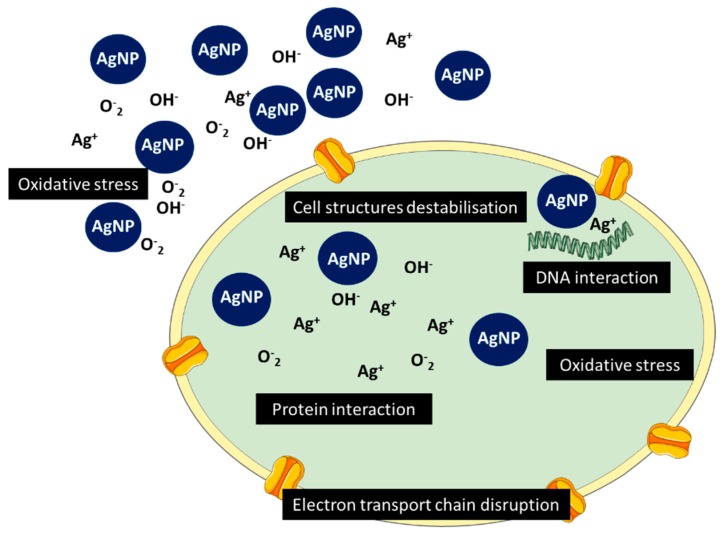
“The antimicrobial action of AgNPs is linked to four main mechanisms: (i) attraction to bacterial surface, (ii) destabilization of bacterial cell wall and membrane with change in its permeability, (iii) induction of toxicity and oxidative stress by generation of ROS and free radicals, and (iv) modulation of signal tran…”
BackgroundNanosilver: A nanoproduct in medical application
Chen, X., & Schluesener, H. J. (2008) · Toxicology Letters · doi:10.1016/j.toxlet.2007.10.004 · Cited by 1,888 · cited 1×
“Nowadays, dressings impregnated with AgNO3 can be found [57].”
Background
Research works printed but not linked: 4
- Dugassa J. Shukuri N. Antibiotic resistance and its mechanism of Development J. Heal. Med. Nurs. 2017 1 1 17
- Cardoso P. Nanopartículas de plata: Obtención, utilización como antimicrobiano e impacto en el área de la salud Rev. Hosp. Niños 2016 58 19 28
- Mirhosseini M. Synergistic antibacterial effect of metal oxide nanoparticles and ultrasound stimulation J. Biol. Today’s World 2015 4 138 144
- Singh P. Nanda A. Antimicrobial and antifungal potential of zinc oxide nanoparticles in comparison to conventional zinc oxide particles J. Chem. Pharm. Res. 2013 5 457 463
Cited by
Metals to combat antimicrobial resistance
Frei, A., Verderosa, A. D., Elliott, A. G., Zuegg, J., & Blaskovich, M. A. T. (2023) · Nature Reviews Chemistry · doi:10.1038/s41570-023-00463-4 · Cited by 638
Face Masks in the New COVID-19 Normal: Materials, Testing, and Perspectives
Chua, M. H., Cheng, W., Goh, S. S., Kong, J., Li, B., Lim, J. Y. C., Mao, L., Wang, S., Xue, K., Yang, L., et al. (2020) · Research · doi:10.34133/2020/7286735 · Cited by 495
Antimicrobial Nano-Agents: The Copper Age
Ermini, M. L., & Voliani, V. (2021) · ACS Nano · doi:10.1021/acsnano.0c10756 · Cited by 477
Plant Extracts Mediated Metal-Based Nanoparticles: Synthesis and Biological Applications
Adeyemi, J. O., Oriola, A. O., Onwudiwe, D. C., & Oyedeji, A. O. (2022) · Biomolecules · doi:10.3390/biom12050627 · Cited by 367
“Their vastness has consequently aroused much research interest, which has led to the continuous search and discovery of new materials of varying compositions, eco-friendly methods, and applications [12].”
BackgroundChaud, M., Souto, E. B., Zielinska, A., Severino, P., Batain, F., Oliveira-Junior, J., & Alves, T. (2021) · Toxics · doi:10.3390/toxics9060131 · Cited by 381
Self-citationOmerović, N., Djisalov, M., Živojević, K., Mladenović, M., Vunduk, J., Milenković, I., Knežević, N. Ž., Gadjanski, I., & Vidić, J. (2021) · Comprehensive Reviews in Food Science and Food Safety · doi:10.1111/1541-4337.12727 · Cited by 367
Rodrigues, A. S., Batista, J. G. S., Rodrigues, M. Á. V., Thipe, V. C., Minarini, L. A. R., Lopes, P. S., & Lugão, A. B. (2024) · Frontiers in Microbiology · doi:10.3389/fmicb.2024.1440065 · Cited by 346
Magnetite nanoparticles: Synthesis methods – A comparative review
Niculescu, A.-G., Chircov, C., & Grumezescu, A. M. (2022) · Methods · doi:10.1016/j.ymeth.2021.04.018 · Cited by 331
Nyabadza, A., McCarthy, É., Makhesana, M., Heidarinassab, S., Plouze, A., Vazquez, M., & Brabazon, D. (2023) · Advances in Colloid and Interface Science · doi:10.1016/j.cis.2023.103010 · Cited by 318
The emerging role of nanotechnology in skincare
Salvioni, L., Morelli, L., Ochoa, E., Labra, M., Fiandra, L., Palugan, L., Prosperi, D., & Colombo, M. (2021) · Advances in Colloid and Interface Science · doi:10.1016/j.cis.2021.102437 · Cited by 317
Ma, X., Zhou, S., Xu, X., & Du, Q. (2022) · Frontiers in Surgery · doi:10.3389/fsurg.2022.905892 · Cited by 317
Balasubramaniam, B., Prateek, Ranjan, S., Saraf, M., Kar, P., Singh, S. P., Thakur, V. K., Singh, A., & Gupta, R. K. (2021) · ACS Pharmacology & Translational Science · doi:10.1021/acsptsci.0c00174 · Cited by 285
An Updated Review on Silver Nanoparticles in Biomedicine
Gherasim, O., Puiu, R. A., Bîrcă, A. C., Burdușel, A.-C., & Grumezescu, A. M. (2020) · Nanomaterials · doi:10.3390/nano10112318 · Cited by 257
Silver Nanoparticles-Composing Alginate/Gelatine Hydrogel Improves Wound Healing In Vivo
Diniz, F., Maia, R., de Andrade, L. R., Andrade, L., Vinicius Chaud, M., da Silva, C., Corrêa, C., de Albuquerque Junior, R., Pereira da Costa, L., Shin, S., et al. (2020) · Nanomaterials · doi:10.3390/nano10020390 · Cited by 259
“Polymeric hydrogels containing silver nanoparticles (AgNPs) have attracted great attention for a set of applications in the biomedical field, attributed to the antimicrobial and healing properties of silver [11,12].”
BackgroundSelf-citationNanotoxicology and Nanosafety: Safety-by-Design and Testing at a Glance
Zielińska, A., Costa, B., Ferreira, M. V., Miguéis, D., Louros, J. M. S., Durazzo, A., Lucarini, M., Eder, P., V. Chaud, M., Morsink, M., et al. (2020) · International Journal of Environmental Research and Public Health · doi:10.3390/ijerph17134657 · Cited by 245
“applied in the mapping and diagnosis of diseases with the so-called “lab-on-a-chip” [18], the arrays of nanosensors [19], magnetic nanoparticles [20], and “quantum dots” [21,22].”
BackgroundSelf-citationMammari, N., Lamouroux, E., Boudier, A., & Duval, R. E. (2022) · Microorganisms · doi:10.3390/microorganisms10020437 · Cited by 244
“Thus, many studies have abundantly demonstrated the antimicrobial activity of metalbased NPs [4,6,14].”
BackgroundJin, S.-E., & Jin, H.-E. (2021) · Nanomaterials · doi:10.3390/nano11020263 · Cited by 237
“They can be combined with antibiotic and anti-inflammatory drugs to enhance antimicrobial activity against pathogenic microorganisms without antibiotic resistance in non-clinical and clinical conditions [7,8].”
BackgroundGold Nanoparticles in Nanobiotechnology: From Synthesis to Biosensing Applications
Karnwal, A., Kumar Sachan, R. S., Devgon, I., Devgon, J., Pant, G., Panchpuri, M., Ahmad, A., Alshammari, M. B., Hossain, K., & Kumar, G. (2024) · ACS Omega · doi:10.1021/acsomega.3c10352 · Cited by 220
Poggio, C., Colombo, M., Arciola, C. R., Greggi, T., Scribante, A., & Dagna, A. (2020) · Materials · doi:10.3390/ma13153244 · Cited by 231
“Toxicity-minimized NPs might be promising for controlling and treating different infectious diseases in the future [59,60].”
BackgroundSarraf, M., Vishwakarma, K., Kumar, V., Arif, N., Das, S., Johnson, R., Janeeshma, E., Puthur, J. T., Aliniaeifard, S., Chauhan, D. K., et al. (2022) · Plants · doi:10.3390/plants11030316 · Cited by 217
Antibacterial efficiency of carbon dots against Gram-positive and Gram-negative bacteria: A review
Varghese, M., & Balachandran, M. (2021) · Journal of Environmental Chemical Engineering · doi:10.1016/j.jece.2021.106821 · Cited by 205
Application of nanotechnology in different aspects of the food industry
Mohammad, Z. H., Ahmad, F., Ibrahim, S. A., & Zaidi, S. (2022) · Discover Food · doi:10.1007/s44187-022-00013-9 · Cited by 190
“Other than the above-mentioned ones, various other nanoparticles such as copper, magnesium, copper and magnesium oxide, gold, cadmium, selenium, and chitosan are also well known to have antimicrobial activity [128, 129].”
BackgroundNanomaterials for wound healing: Current status and futuristic frontier
Nandhini, J., Karthikeyan, E., & Rajeshkumar, S. (2024) · Biomedical Technology · doi:10.1016/j.bmt.2023.10.001 · Cited by 195
Hornak, J. (2021) · International Journal of Molecular Sciences · doi:10.3390/ijms222312752 · Cited by 189
“Metal-based nanomaterials are synthesized using metallic materials, such as Au, Cu, Se, and Ag [11], and they find applications in areas, such as radiotherapy enhancement, gene delivery, or thermal ablation [12].”
Rezazadeh, N. H., Buazar, F., & Matroodi, S. (2020) · Scientific Reports · doi:10.1038/s41598-020-76726-7 · Cited by 188
RetractedAdvances in Nanotechnology for Biofilm Inhibition
Kumar, L., Bisen, M., Harjai, K., Chhibber, S., Azizov, S., Lalhlenmawia, H., & Kumar, D. (2023) · ACS Omega · doi:10.1021/acsomega.3c02239 · Cited by 175
Yazdanian, M., Rostamzadeh, P., Rahbar, M., Alam, M., Abbasi, K., Tahmasebi, E., Tebyaniyan, H., Ranjbar, R., Seifalian, A., & Yazdanian, A. (2022) · Bioinorganic Chemistry and Applications · doi:10.1155/2022/2311910 · Cited by 174
Padilla-Cruz, A. L., Garza-Cervantes, J. A., Vasto-Anzaldo, X. G., García-Rivas, G., León-Buitimea, A., & Morones-Ramírez, J. R. (2021) · Scientific Reports · doi:10.1038/s41598-021-84768-8 · Cited by 178
Shineh, G., Mobaraki, M., Perves Bappy, M. J., & Mills, D. K. (2023) · Applied Microbiology · doi:10.3390/applmicrobiol3030044 · Cited by 177
Antibacterial Activity of TiO2 Nanoparticles Prepared by One-Step Laser Ablation in Liquid
Khashan, K. S., Sulaiman, G. M., Abdulameer, F. A., Albukhaty, S., Ibrahem, M. A., Al-Muhimeed, T., & AlObaid, A. A. (2021) · Applied Sciences · doi:10.3390/app11104623 · Cited by 182
“The bactericidal property of TiO2 NPs depends on their size, stability, and concentration added to the growth medium, which provides greater retention time for bacterium NP interaction, allowing them to interact closely with microbial membranes [23,24].”
BackgroundNanomaterials for Skin Delivery of Cosmeceuticals and Pharmaceuticals
Souto, E. B., Fernandes, A. R., Martins-Gomes, C., Coutinho, T. E., Durazzo, A., Lucarini, M., Souto, S. B., Silva, A. M., & Santini, A. (2020) · Applied Sciences · doi:10.3390/app10051594 · Cited by 169
“Metal nanoparticles are non-specific anti-bacterial agents of wide spectrum, that have been proposed as an alternative to classical antibiotics to overcome bacterial resistance [98].”
BackgroundSelf-citationSilver and Gold Nanoparticles for Antimicrobial Purposes against Multi-Drug Resistance Bacteria
Rabiee, N., Ahmadi, S., Akhavan, O., & Luque, R. (2022) · Materials · doi:10.3390/ma15051799 · Cited by 169
“Despite various benefits, Au NPs have significantly lower antibacterial activity than Ag NPs [180].”
BackgroundNanomaterials in Wound Healing and Infection Control
Pormohammad, A., Monych, N. K., Ghosh, S., Turner, D. L., & Turner, R. J. (2021) · Antibiotics · doi:10.3390/antibiotics10050473 · Cited by 167
Skłodowski, K., Chmielewska-Deptuła, S. J., Piktel, E., Wolak, P., Wollny, T., & Bucki, R. (2023) · International Journal of Molecular Sciences · doi:10.3390/ijms24032104 · Cited by 171
Endophytic Nanotechnology: An Approach to Study Scope and Potential Applications
Meena, M., Zehra, A., Swapnil, P., Harish, Marwal, A., Yadav, G., & Sonigra, P. (2021) · Frontiers in Chemistry · doi:10.3389/fchem.2021.613343 · Cited by 169
“The antimicrobial properties of nanosilver particles are reported on by several researchers (Silva et al., 2017; Loo et al., 2018; Sánchez-López et al., 2020).”
BackgroundCarbon Dots as an Emergent Class of Antimicrobial Agents
Ghirardello, M., Ramos-Soriano, J., & Galan, M. C. (2021) · Nanomaterials · doi:10.3390/nano11081877 · Cited by 169
Venkateswaran, P., Vasudevan, S., David, H., Shaktivel, A., Shanmugam, K., Neelakantan, P., & Solomon, A. P. (2023) · Frontiers in Cellular and Infection Microbiology · doi:10.3389/fcimb.2023.1159798 · Cited by 162
El‐Saadony, M. T., Fang, G., Yan, S., Alkafaas, S. S., Nasharty, M. A. E., Khedr, S. A., Hussien, A. M., Ghosh, S. B., Dladla, M., Elkafas, S. S., et al. (2024) · International Journal of Nanomedicine · doi:10.2147/ijn.s487188 · Cited by 198
Inorganic Nanoparticles and Composite Films for Antimicrobial Therapies
Spirescu, V. A., Chircov, C., Grumezescu, A. M., Vasile, B. Ș., & Andronescu, E. (2021) · International Journal of Molecular Sciences · doi:10.3390/ijms22094595 · Cited by 160
“, iron displacement from iron–sulfur clusters and zinc or other metal ions competition for protein binding sites, disruption of the microbial membrane, and blocking of cellular respiration [60,95,96,98,99].”
Backgroundde Souza, A. G., dos Santos, N. M. A., da Silva Torin, R. F., & dos Santos Rosa, D. (2020) · International Journal of Biological Macromolecules · doi:10.1016/j.ijbiomac.2020.07.226 · Cited by 158
A review: Pharmacological aspects of metal based 1,2,4-triazole derived Schiff bases
Zafar, W., Sumrra, S. H., & Chohan, Z. H. (2021) · European Journal of Medicinal Chemistry · doi:10.1016/j.ejmech.2021.113602 · Cited by 165
Nanomedicines for the Delivery of Antimicrobial Peptides (AMPs)
Teixeira, M. C., Carbone, C., Sousa, M. C., Espina, M., Garcia, M. L., Sanchez-Lopez, E., & Souto, E. B. (2020) · Nanomaterials · doi:10.3390/nano10030560 · Cited by 159
“Current advances in the use of inorganic nanoparticles for AMP delivery involve essentially the development of silver nanoparticles (AgNPs) and gold nanoparticles (AuNPs), as well as silicon derivates nano-systems [38].”
BackgroundSelf-citationWahab, S., Salman, A., Khan, Z., Khan, S. H., Krishnaraj, C., & Yun, S. (2023) · International Journal of Molecular Sciences · doi:10.3390/ijms241914897 · Cited by 178
Shen, X., Ma, R., Huang, Y., Chen, L., Xu, Z., Li, D., Meng, X., Fan, K., Xi, J., Yan, X., et al. (2020) · Nano Today · doi:10.1016/j.nantod.2020.100981 · Cited by 157
Gold Nanoparticles: Can They Be the Next Magic Bullet for Multidrug-Resistant Bacteria?
Okkeh, M., Bloise, N., Restivo, E., Vita, L. D., Pallavicini, P., & Visai, L. (2021) · Nanomaterials · doi:10.3390/nano11020312 · Cited by 178
Uneputty, A., Dávila-Lezama, A., Garibo, D., Oknianska, A., Bogdanchikova, N., Hernández-Sánchez, J. F., & Susarrey-Arce, A. (2022) · Colloid and Interface Science Communications · doi:10.1016/j.colcom.2021.100560 · Cited by 155
Alavi, M., Kamarasu, P., McClements, D. J., & Moore, M. D. (2022) · Advances in Colloid and Interface Science · doi:10.1016/j.cis.2022.102726 · Cited by 162
Emerging Concern for Silver Nanoparticle Resistance in Acinetobacter baumannii and Other Bacteria
McNeilly, O., Mann, R., Hamidian, M., & Gunawan, C. (2021) · Frontiers in Microbiology · doi:10.3389/fmicb.2021.652863 · Cited by 172
“The silver-induced ‘pitting’ effect on the cell wall along with altered membrane permeability inevitably allows smaller NAg particles and Ag+ to penetrate through the cell envelope and into the cytoplasm, while larger nanoparticles remain outside the cell (Sánchez-López et al., 2020).”
BackgroundInsight into the amoxicillin resistance, ecotoxicity, and remediation strategies
Sodhi, K. K., Kumar, M., & Singh, D. K. (2020) · Journal of Water Process Engineering · doi:10.1016/j.jwpe.2020.101858 · Cited by 187
Mulla, M. Z., Rahman, M. R. T., Marcos, B., Tiwari, B. K., & Pathania, S. (2021) · Molecules · doi:10.3390/molecules26071967 · Cited by 147
“[64] explained that electrostatic interactions are responsible for this antimicrobial activity, as positively charged metal NPs are attracted to negatively charged bacterial cell walls, resulting in disruption and consequently increasing their permeability.”
BackgroundModi, S. K., Gaur, S., Sengupta, M., & Singh, M. S. (2023) · Frontiers in Microbiology · doi:10.3389/fmicb.2023.1135579 · Cited by 179
“, 2020), Cu NPs (Chatterjee et al., 2014; Sánchez-López et al., 2020), ZnO NPs (Kim et al.”
BackgroundGhosh, J., Rupanty, N. S., Noor, T., Asif, T. R., Islam, T., & Reukov, V. V. (2025) · RSC Advances · doi:10.1039/d5ra01429h · Cited by 172
Souto, E. B., Silva, G. F., Dias-Ferreira, J., Zielinska, A., Ventura, F., Durazzo, A., Lucarini, M., Novellino, E., & Santini, A. (2020) · Pharmaceutics · doi:10.3390/pharmaceutics12020146 · Cited by 144
“1 nanometer to 100 nanometers—for which the properties considerably differ in comparison to the bulk counterpart [7].”
BackgroundSelf-citationVadakkan, K., Rumjit, N. P., Ngangbam, A. K., Vijayanand, S., & Nedumpillil, N. K. (2023) · Coordination Chemistry Reviews · doi:10.1016/j.ccr.2023.215528 · Cited by 156
Alyamani, A. A., Albukhaty, S., Aloufi, S., AlMalki, F. A., Al-Karagoly, H., & Sulaiman, G. M. (2021) · Molecules · doi:10.3390/molecules26206140 · Cited by 154
“Dir ct interaction o ZnO NPs with the bacteria cell surface alters the permeability of the cell m mbrane toward the NPs, according to these hypotheses [44].”
BackgroundMethodCancer Therapy by Silver Nanoparticles: Fiction or Reality?
Kovács, D., Igaz, N., Gopisetty, M. K., & Kiricsi, M. (2022) · International Journal of Molecular Sciences · doi:10.3390/ijms23020839 · Cited by 162
“Among them, due to their well-recognized anti-microbial activities silver nanoparticles (AgNPs) are the most widely used in various clinical applications [2].”
BackgroundA Review on Antimicrobial Packaging from Biodegradable Polymer Composites
Kamarudin, S. H., Rayung, M., Abu, F., Ahmad, S., Fadil, F., Karim, A. A., Norizan, M. N., Sarifuddin, N., Desa, M. S. Z. M., Basri, M. S. M., et al. (2022) · Polymers · doi:10.3390/polym14010174 · Cited by 163
“The literature reports various types of synthetic antimicrobial agents such as metallic nanoparticles (Ag, Cu, S) [40], oxide nanoparticles (ZnO, TiO2, CuO) [41], clay nanoparticles (bentonite, cloisite, montmorilonitrile) [42], chelating agents [43], volatile compounds (SO2, ClO2, ethanol) [44], organics acids and th…”
BackgroundKumar, P., Roy, S., Sarkar, A., & Jaiswal, A. K. (2021) · ACS Applied Materials & Interfaces · doi:10.1021/acsami.1c00083 · Cited by 143
Rozilah, A., Jaafar, C. N. A., Sapuan, S. M., Zainol, I., & Ilyas, R. A. (2020) · Polymers · doi:10.3390/polym12112605 · Cited by 137
“Highly reactive metal oxide nanoparticles exhibit excellent antimicrobial effects action against Gram-positive and Gram-negative bacteria [52].”
BackgroundHawthorn (Crataegus spp.): An Updated Overview on Its Beneficial Properties
Nazhand, A., Lucarini, M., Durazzo, A., Zaccardelli, M., Cristarella, S., Souto, S. B., Silva, A. M., Severino, P. B., Souto, E. B., & Santini, A. (2020) · Forests · doi:10.3390/f11050564 · Cited by 162
Self-citationAntimicrobial Compounds in Food Packaging
Duda‐Chodak, A., Tarko, T., & Petka, K. (2023) · International Journal of Molecular Sciences · doi:10.3390/ijms24032457 · Cited by 151
Kotrange, H., Najda, A., Bains, A., Gruszecki, R., Chawla, P., & Tosif, M. M. (2021) · International Journal of Molecular Sciences · doi:10.3390/ijms22179596 · Cited by 144
“Moreover, hydrogels, metal colloids, dendrimers, polymers, and lipids are significantly used for synthesizing NPs [13].”
BackgroundThe advances in nanomedicine for bone and cartilage repair
Qiao, K., Xu, L., Tang, J., Wang, Q., Lim, K. S., Hooper, G. J., Woodfield, T. B. F., Liu, G., Tian, K., Zhang, W., et al. (2022) · Journal of Nanobiotechnology · doi:10.1186/s12951-022-01342-8 · Cited by 138
“cell membrane to change the membrane potential and affect the normal physiological activities of bacteria, while the latter can directly or indirectly damage the cell structure, thus achieving the effect of inhibiting bacteria [40, 41].”
BackgroundRecent developments in the use of gold and silver nanoparticles in biomedicine
Pasparakis, G. (2022) · Wiley Interdisciplinary Reviews Nanomedicine and Nanobiotechnology · doi:10.1002/wnan.1817 · Cited by 141
Mbugua, S. N., Sibuyi, N. R. S., Njenga, L. W., Odhiambo, R. A., Wandiga, S. O., Meyer, M., Lalancette, R. A., & Onani, M. O. (2020) · ACS Omega · doi:10.1021/acsomega.0c00360 · Cited by 133
Fiorati, A., Bellingeri, A., Punta, C., Corsi, I., & Venditti, I. (2020) · Polymers · doi:10.3390/polym12081635 · Cited by 132
Ramburrun, P., Pringle, N. A., Dube, A., Adam, R. Z., D’Souza, S., & Aucamp, M. E. (2021) · Materials · doi:10.3390/ma14123167 · Cited by 145
Metal-Based Nanoparticles in Food Packaging and Coating Technologies: A Review
Adeyemi, J. O., & Fawole, O. A. (2023) · Biomolecules · doi:10.3390/biom13071092 · Cited by 130
“This enhances the antibacterial activity of metal nanoparticles and contributes to their effectiveness against Gram-positive and Gram-negative bacteria [92].”
BackgroundInfluentialPérez, A. A., Durán-Armenta, L. F., Pérez-Loredo, M. G., & Torres‐Huerta, A. L. (2023) · Micromachines · doi:10.3390/mi14101882 · Cited by 147
“…Among the most frequently utilized metals for synthesizing NPs are silver (Ag), gold (Au), palladium (Pd), iron (Fe), platinum (Pt), nickel (Ni), cobalt (Co), and copper (Cu) and their oxidized forms, such as iron oxide (Fe 3 O 4 ), zinc oxide (ZnO), copper oxide (CuO), among others [4,14].”
BackgroundRajendran, N. K., George, B. P. A., Houreld, N. N., & Abrahamse, H. (2021) · Molecules · doi:10.3390/molecules26103029 · Cited by 123
Bhandari, V., Jose, S., Badanayak, P., Sankaran, A., & Anandan, V. (2022) · Industrial & Engineering Chemistry Research · doi:10.1021/acs.iecr.1c04203 · Cited by 130
Cano, A., Turowski, P., Ettcheto, M., Duskey, J. T., Tosi, G., Sánchez-López, E., García, M. L., Camins, A., Souto, E. B., Ruiz, A., et al. (2021) · Journal of Nanobiotechnology · doi:10.1186/s12951-021-00864-x · Cited by 122
“MNPs are commonly fabricated with gold, silver, iron, zinc, and copper, all of which provide different properties to the final nanocarrier [187].”
BackgroundSelf-citationQais, F. A., Shafiq, A., Ahmad, I., Husain, F. M., Khan, R. A., & Hassan, I. (2020) · Microbial Pathogenesis · doi:10.1016/j.micpath.2020.104172 · Cited by 129
Kalia, A., Abd-Elsalam, K. A., & Kuča, K. (2020) · Journal of Fungi · doi:10.3390/jof6040222 · Cited by 134
Norouzi, M., Montazer, M., Harifi, T., & Karimi, P. (2020) · Polymer Testing · doi:10.1016/j.polymertesting.2020.106914 · Cited by 121
Matalkeh, M., Nasrallah, G. K., Shurrab, F. M., Al-Absi, E. S., Mohammed, W., Elzatahry, A. A. F., & Saoud, K. M. (2021) · Results in Engineering · doi:10.1016/j.rineng.2021.100313 · Cited by 129
Nanomaterials-Based Wound Dressing for Advanced Management of Infected Wound
Pang, Q., Jiang, Z., Wu, K., Hou, R., & Zhu, Y. (2023) · Antibiotics · doi:10.3390/antibiotics12020351 · Cited by 131
Recent advances in green synthesized nanoparticles for bactericidal and wound healing applications
Nandhini, S. N., Sisubalan, N., Vijayan, A., Karthikeyan, C., Gnanaraj, M., Gideon, D. A., Jebastin, T., Varaprasad, K., & Sadiku, E. R. (2023) · Heliyon · doi:10.1016/j.heliyon.2023.e13128 · Cited by 126
“Wound healing in the skin occurs commonly with minimal intervention or without it [14].”
BackgroundAlam, M. W., BaQais, A., Mir, T. A., Nahvi, I., Zaidi, N., & Yasin, A. (2023) · Scientific Reports · doi:10.1038/s41598-023-28356-y · Cited by 119
Nanomaterials in Drug Delivery: Strengths and Opportunities in Medicine
Egwu, C. O., Aloke, C., Onwe, K. T., Umoke, C. I., Nwafor, J. A., Eyo, R. A., Chukwu, J. A., Ufebe, G. O., Ladokun, J., Audu, D. T., et al. (2024) · Molecules · doi:10.3390/molecules29112584 · Cited by 131
“Because of their non-specific bacterial toxicity mechanism, they have been positioned to treat resistant infections [76].”
BackgroundIslam, M. F., Islam, S., Miah, M. A. S., Huq, A. K. O., Saha, A. K., Mou, Z. J., Mondol, M. M. H., & Bhuiyan, M. N. I. (2024) · Heliyon · doi:10.1016/j.heliyon.2024.e25430 · Cited by 121
“Metal and metal oxide (MO) NPs are regarded as the anticipated materials because of their characteristics such as solubility, chemical stability, adhesiveness, and surface plasmon resonance [7 – 9].”
BackgroundJiang, H., Li, L., Li, Z., & Chu, X. (2024) · Biomedical Microdevices · doi:10.1007/s10544-023-00686-8 · Cited by 122
“…the development of drug resistance, they have been proven to be as effective as conventional antimicrobial agents such as antibiotics and can be active even toward multidrug-resistant strains through different mechanisms (Sanchez-Lopez et al. 2020; Lemire et al. 2013; Bottollier et al. 2020).”
BackgroundKiarashi, M., Mahamed, P., Ghotbi, N., Tadayonfard, A., Nasiri, K., Kazemi, P., Badkoobeh, A., Yasamineh, S., & Joudaki, A. (2024) · Journal of Nanobiotechnology · doi:10.1186/s12951-023-02284-5 · Cited by 129
“Researchers will find that although other NPs often utilized in antibiotherapy (such as Au, ZnO, Cu, and CuO NPs) are also studied, AgNPs get the lion’s share of the attention [103].”
BackgroundZhang, S. J., Lin, L., Huang, X., Lu, Y., Zheng, D., & Feng, Y. (2022) · Journal of Nanomaterials · doi:10.1155/2022/2063265 · Cited by 128
Stimuli-Activable Metal-Bearing Nanomaterials and Precise On-Demand Antibacterial Strategies
Zhong, Y., Zheng, X. T., Zhao, S., Su, X., & Loh, X. J. (2022) · ACS Nano · doi:10.1021/acsnano.2c08262 · Cited by 114
Nanoparticles as Potential Antivirals in Agriculture
Vargas-Hernández, M., Macias-Bobadilla, I., Guevara-González, R. G., Rico-García, E., Ocampo-Velazquez, R. V., Ávila-Juárez, L., & Torres‐Pacheco, I. (2020) · Agriculture · doi:10.3390/agriculture10100444 · Cited by 109
2D materials, synthesis, characterization and toxicity: A critical review
Naikoo, G. A., Arshad, F., Almas, M., Hassan, I. U., Pedram, M. Z., Aljabali, A. A. A., Mishra, V. K., Serrano‐Aroca, Á., Birkett, M., Charbe, N. B., et al. (2022) · Chemico-Biological Interactions · doi:10.1016/j.cbi.2022.110081 · Cited by 116
Advances in Nanotechnology as a Potential Alternative for Plant Viral Disease Management
Dutta, P., Kumari, A., Mahanta, M., Biswas, K. K., Dudkiewicz, A., Thakuria, D., Abdelrhim, A. S., Singh, S. B., Muthukrishnan, G., Sabarinathan, K. G., et al. (2022) · Frontiers in Microbiology · doi:10.3389/fmicb.2022.935193 · Cited by 108
“Thus, NPs are proposed as preventive control measures that can be used for seed or seedling treatment at an early stage to protect against viruses, fungi, or bacteria (Sánchez-López et al., 2020).”
BackgroundZinc: Multidimensional Effects on Living Organisms
Cuajungco, M. P., Ramirez, M. S., & Tolmasky, M. E. (2021) · Biomedicines · doi:10.3390/biomedicines9020208 · Cited by 116
“Zinc oxide is the most common, but not the only, zinc compound used as an antibacterial [78, 79], and it has attracted great interest in nanoparticle form [80, 81].”
BackgroundMethodInfluentialChug, M. K., & Brisbois, E. J. (2022) · ACS Materials Au · doi:10.1021/acsmaterialsau.2c00040 · Cited by 114
Ifijen, I. H., Maliki, M., & Anegbe, B. (2022) · OpenNano · doi:10.1016/j.onano.2022.100082 · Cited by 115
Flores-Contreras, E. A., González-González, R. B., Pizaña-Aranda, J. J. P., Parra-Arroyo, L., Rodríguez-Aguayo, A. A., Iñíguez-Moreno, M., González-Meza, G. M., Araújo, R. G., Ramírez-Gamboa, D., Parra‐Saldívar, R., et al. (2024) · Frontiers in Nanotechnology · doi:10.3389/fnano.2024.1346069 · Cited by 121
ZnO Nanoparticles-Modified Dressings to Inhibit Wound Pathogens
Irayyif, S. M., Mohammed, H. B., Curuțiu, C., Bîrcă, A. C., Grumezescu, A. M., Vasile, B. Ş., Diţu, L.-M., Lazăr, V., Chifiriuc, M. C., Mihăescu, G., et al. (2021) · Materials · doi:10.3390/ma14113084 · Cited by 106
“Irrespective of their metallic nature, such NPs are mostly used owing to their unique properties of being antibacterial and having the ability to penetrate into deep skin [20,21].”
Review on chitosan-based antibacterial hydrogels: Preparation, mechanisms, and applications
Wang, Y., Wang, Z., Lu, W., & Hu, Y. (2023) · International Journal of Biological Macromolecules · doi:10.1016/j.ijbiomac.2023.128080 · Cited by 112
Huang, R., Cai, G.-Q., Li, J., Li, X., Liu, H., Shang, X., Zhou, J., Nie, X., & Gui, R. (2021) · Journal of Nanobiotechnology · doi:10.1186/s12951-021-00978-2 · Cited by 111
“Some metal-based nanoparticles have natural antimicrobial activity and therefore show great potential for antimicrobial therapy [31].”
BackgroundTrends in Photothermal Nanostructures for Antimicrobial Applications
Dediu, V., Ghițman, J., Pîrcălăbioru, G. G., Chan, K. H., Iliescu, F. S., & Iliescu, C. (2023) · International Journal of Molecular Sciences · doi:10.3390/ijms24119375 · Cited by 111
Green synthesis of CuO nanoparticles for biological applications
Murugan, B., Rahman, M. Z., Fatimah, I., Lett, J. A., Annaraj, J., Kaus, N. H. M., Al-Anber, M. A., & Sagadevan, S. (2023) · Inorganic Chemistry Communications · doi:10.1016/j.inoche.2023.111088 · Cited by 103
Fathy, R. M., & Mahfouz, A. Y. (2021) · Journal of nanostructure in chemistry · doi:10.1007/s40097-020-00369-3 · Cited by 105
“[59] as the primary stage of a mechanism of the microbial growth suppression.”
BackgroundKaur, J., Mishra, V. K., Singh, S. K., Gulati, M., Kapoor, B., Chellappan, D. K., Gupta, G., Dureja, H., Anand, K., Dua, K., et al. (2021) · Journal of Controlled Release · doi:10.1016/j.jconrel.2021.04.014 · Cited by 106
Ruthenium Complexes in the Fight against Pathogenic Microorganisms. An Extensive Review
Munteanu, A., & Uivaroşi, V. (2021) · Pharmaceutics · doi:10.3390/pharmaceutics13060874 · Cited by 121
“Modification of the drug’s target can involve mutations in DNA gyrase and topoisomerase IV or alterations in the structure and/or number of penicillin-binding proteins [5].”
Background
Metadata
- Authors
- Sánchez-López, E., Gomes, D., Esteruelas, G., Bonilla, L., Lopez-Machado, A. L., Galindo, R., Cano, A., Espina, M., Ettcheto, M., Camins, A., Silva, A. M., Durazzo, A., Santini, A., Garcia, M. L., & Souto, E. B.
- Affiliations
- Department of Pharmacy, Pharmaceutical Technology and Physical Chemistry, Faculty of Pharmacy, University of Barcelona, 08028 Barcelona, Spain
- University of Coimbra (PT)
- Universitat de Barcelona (ES)
- Institut de Nanociència i Nanotecnologia de la Universitat de Barcelona (ES)
- Instituto de Salud Carlos III (ES)
- University of Trás-os-Montes and Alto Douro (PT)
- Consiglio per la ricerca in agricoltura e l’analisi dell’economia agraria (IT)
- University of Naples Federico II (IT)
- Corresponding author
- Souto, Eliana B.
- ORCID
- Venue
- Nanomaterials
- Publisher
- MDPI AG
- Published
- 2020-02-09
- Volume
- 10
- Issue
- 2
- Pages
- 292
- ISSN
- 2079-4991 (ISSN-L)
- PMC
- PMC7075170
- OpenAlex
- W3005269120
- Semantic Scholar
- d26e02375a9fc651603564d60fbcb732cd1345f8
- Cited by
- 1,474
- References
- 197
- Citations by year
- 2026: 140 · 2025: 246 · 2024: 268 · 2023: 280 · 2022: 250 · 2021: 198 · 2020: 90
- FWCI
- 10.55
- Type
- journal article
- Language
- en
- Open access
- gold
- dx.doi.org
- Licence
- Locations
- Nanomaterials (publishedVersion, cc-by)
- Europe PMC (PubMed Central) (publishedVersion, cc-by)
- PubMed Central (publishedVersion, cc-by)
- PubMed (publishedVersion)
- Portuguese National Funding Agency for Science, Research and Technology (RCAAP Project by FCT) (submittedVersion, cc-by)
- Dipòsit Digital de la Universitat de Barcelona (Universitat de Barcelona) (submittedVersion, cc-by)
- DOAJ (DOAJ: Directory of Open Access Journals) (submittedVersion, cc-by-sa)
- Portuguese National Funding Agency for Science, Research and Technology (RCAAP Project by FCT) (submittedVersion, other-oa)
- Portuguese National Funding Agency for Science, Research and Technology (RCAAP Project by FCT) (submittedVersion, cc-by-nc-nd)
- Funders
- M-ERA-NET-0004/2015-PAIRED (Portuguese Science and Technology Foundation (FCT/MCT) and European Funds (PRODER/COMPETE))
- Institute of Nanoscience and Nanotechnology (ART2018 project) (2017SGR-1477)
- Topics
- Physical Sciences › Materials Science › Materials Chemistry › Nanoparticles: synthesis and applications
- Life Sciences › Immunology and Microbiology › Applied Microbiology and Biotechnology › Antimicrobial agents and applications
- Physical Sciences › Materials Science › Electronic, Optical and Magnetic Materials › Gold and Silver Nanoparticles Synthesis and Applications
- Keywords
- metal-based nanoparticles, antimicrobial agents, silver nanoparticles, gold nanoparticles, zinc oxide nanoparticles, copper nanoparticles, copper oxide nanoparticles, antibacterial mechanism, physicochemical characterization, pharmacokinetics, nanoparticle toxicity, antibiotic alternatives
About these checks
Registry, retraction, Cites and statistics results are computed, not judged, with one exception: a printed reference that no index lists is read once by a model before it counts as a citation error. Claims are extracted by a model and kept only when their quote appears verbatim in the text; each cited source is then checked, with a model’s help, for whether it says what the claim relies on. Those verdicts can be wrong — read the claim’s quote and the cited source before relying on one.
Statistics and arithmetic are recomputed, not judged.
Confidence bands are shown only for fields calibrated on our annotated test set. None is calibrated yet, so no band is shown.
What counts as a claim ›How we measure confidence ›How we check this ›
Are you an author, or do you see a problem with this page? Request a review
Data sources
Bibliographic data: Semantic Scholar, OpenAlex, Crossref.
Contains information from the Semantic Scholar Academic Graph Datasets, made available under the ODC Attribution License (ODC-BY 1.0).
Semantic Scholar’s data is described in: Kinney, R., et al. (2023). The Semantic Scholar Open Data Platform. arXiv:2301.10140.
