

Metal-Based Nanoparticles as Antimicrobial Agents: An Overview
Open accessThe DOI matches its Crossref record; 194 of the 197 references it cites were found in a registry or an index.
Abstract
Metal-based nanoparticles have been extensively investigated for a set of biomedical applications. According to the World Health Organization, in addition to their reduced size and selectivity for bacteria, metal-based nanoparticles have also proved to be effective against pathogens listed as a priority. Metal-based nanoparticles are known to have non-specific bacterial toxicity mechanisms (they do not bind to a specific receptor in the bacterial cell) which not only makes the development of resistance by bacteria difficult, but also broadens the spectrum of antibacterial activity. As a result, a large majority of metal-based nanoparticles efficacy studies performed so far have shown promising results in both Gram-positive and Gram-negative bacteria. The aim of this review has been a comprehensive discussion of the state of the art on the use of the most relevant types of metal nanoparticles employed as antimicrobial agents. A special emphasis to silver nanoparticles is given, while others (e.g., gold, zinc oxide, copper, and copper oxide nanoparticles) commonly used in antibiotherapy are also reviewed. The novelty of this review relies on the comparative discussion of the different types of metal nanoparticles, their production methods, physicochemical characterization, and pharmacokinetics together with the toxicological risk encountered with the use of different types of nanoparticles as antimicrobial agents. Their added-value in the development of alternative, more effective antibiotics against multi-resistant Gram-negative bacteria has been highlighted.
Overview
The claims and statistics of this paper haven’t been checked yet.
Free: it reads the open-access text and checks the first 5 claims that cite a source we can check. Create a free account to check every claim.
Integrity signals
Registry
Cites
Statistics
Figures
Verification
Claims the paper makes
The claims and statistics of this paper haven’t been checked yet.
Free: it reads the open-access text and checks the first 5 claims that cite a source we can check. Create a free account to check every claim.
Claims other papers make about this one
Each is checked against this paper’s own text: does it say what the citing paper says it does?
The source backs part of the claim, not all of it — or backs it for a different population, condition or comparison.
In the citing paper
“The bactericidal property of TiO 2 NPs depends on their size, stability, and concentration added to the growth medium, which provides greater retention time for bacterium NP interaction, allowing them to interact closely with microbial membranes [23,24].”
From Antibacterial Activity of TiO2 Nanoparticles Prepared by One-Step Laser Ablation in Liquid (2021) · cites this paper as [23]
Experimental — accuracy not yet measuredIn the citing paper
“Polymeric hydrogels containing silver nanoparticles (AgNPs) have attracted great attention for a set of applications in the biomedical field, attributed to the antimicrobial and healing properties of silver [11,12].”
From Silver Nanoparticles-Composing Alginate/Gelatine Hydrogel Improves Wound Healing In Vivo (2020) · cites this paper as [12]
Self-check
Percentages, sums and reported differences re-computed from the paper’s own numbers.
The self-check needs the paper’s full text.
Citations
Cites
Review on Zinc Oxide Nanoparticles: Antibacterial Activity and Toxicity Mechanism
Sirelkhatim, A., Mahmud, S., Seeni, A., Kaus, N. H. M., Ann, L. C., Bakhori, S. K. M., Hasan, H., & Mohamad, D. (2015) · Nano-Micro Letters · doi:10.1007/s40820-015-0040-x · Cited by 4,586 · cited 1×
“Several authors have used ZnONPs as antimicrobial agents either as ZnO alone or in combination with drugs [161].”
BackgroundThe antimicrobial activity of nanoparticles: present situation and prospects for the future
Wang, L., Hu, C., & Shao, L. (2017) · International Journal of Nanomedicine · doi:10.2147/ijn.s121956 · Cited by 4,062 · cited 2×
“Since the main toxicological effect induced by antimicrobial compounds in bacteria occurs by direct contact with the cell surface, it is important to understand the differences between the cell wall of Gram-positive and Gram-negative bacteria [12].”
BackgroundZhang, X.-F., Liu, Z.-G., Shen, W., & Gurunathan, S. (2016) · International Journal of Molecular Sciences · doi:10.3390/ijms17091534 · Cited by 3,220 · cited 3×
“AgNPs demonstrated to be antiangiogenic and antiproliferative [59].”
BackgroundInfluentialAhmed, S., Ahmad, M., Swami, B. L., & Ikram, S. (2016) · Journal of Advanced Research · doi:10.1016/j.jare.2015.02.007 · Cited by 3,028 · cited 2×
“Synthesis of AgNPs using plant extracts is based on their relatively high levels of steroids, sapogenins, carbohydrates, and flavonoids, that act as reducing agents, as well as bio-capping compounds reducing agglomeration of nanoparticles and allowing a better size control [73].”
BackgroundMechanisms of Antibiotic Resistance
Munita, J. M., & Arias, C. A. (2016) · Microbiology Spectrum · doi:10.1128/microbiolspec.vmbf-0016-2015 · Cited by 2,782
Metal nanoparticles: understanding the mechanisms behind antibacterial activity
Slavin, Y. N., Asnis, J., Häfeli, U. O., & Bach, H. (2017) · Journal of Nanobiotechnology · doi:10.1186/s12951-017-0308-z · Cited by 2,571 · cited 3×
“Both Gram-positive and Gram-negative bacteria have a negatively charged surface [11].”
BackgroundAntibiotic resistance: a rundown of a global crisis
Aslam, B., Wang, W., Arshad, M. I., Khurshid, M., Muzammil, S., Rasool, M. H., Nisar, M. A., Alvi, R. F., Aslam, M. A., Qamar, M. U., et al. (2018) · Infection and Drug Resistance · doi:10.2147/idr.s173867 · Cited by 2,552 · cited 3×
“Besides the genetic mutations in the microorganism, bacterial resistance can result from the exchange of genetic material among bacteria or phages by: (i) DNA transformation, which is the uptake and incorporation of a DNA fragment; or by (ii) transduction or transfer of bacterial genes through a virus and conjugation,…”
BackgroundZinc oxide—from synthesis to application: a review
Kołodziejczak-Radzimska, A., & Jesionowski, T. (2014) · Materials · doi:10.3390/ma7042833 · Cited by 2,475 · cited 1×
“Therefore, ZnONPs are used in the preparation of sun creams in combination of TiO2, acting as a successful UV blocker [168].”
BackgroundMechanistic Basis of Antimicrobial Actions of Silver Nanoparticles
Dakal, T. C., Kumar, A., Majumdar, R. S., & Yadav, V. (2016) · Frontiers in Microbiology · doi:10.3389/fmicb.2016.01831 · Cited by 2,135 · cited 2×
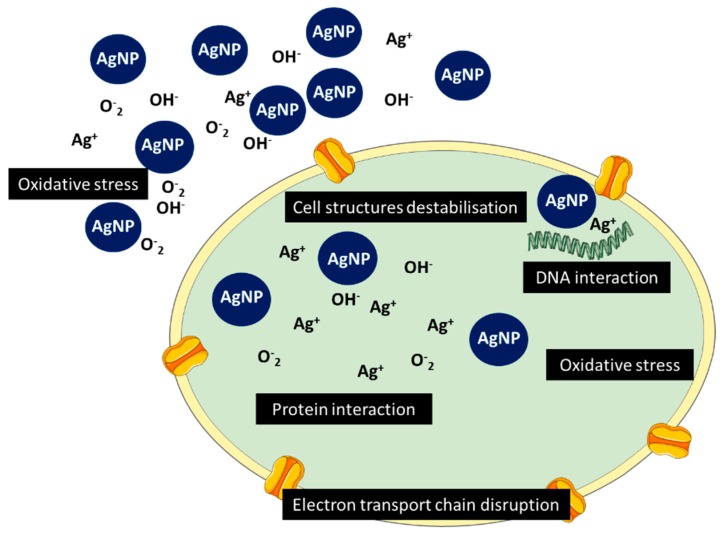
“The antimicrobial action of AgNPs is linked to four main mechanisms: (i) attraction to bacterial surface, (ii) destabilization of bacterial cell wall and membrane with change in its permeability, (iii) induction of toxicity and oxidative stress by generation of ROS and free radicals, and (iv) modulation of signal tran…”
BackgroundNanosilver: A nanoproduct in medical application
Chen, X., & Schluesener, H. J. (2008) · Toxicology Letters · doi:10.1016/j.toxlet.2007.10.004 · Cited by 1,888 · cited 1×
“Nowadays, dressings impregnated with AgNO3 can be found [57].”
Background
Research works printed but not linked: 4
- Dugassa J. Shukuri N. Antibiotic resistance and its mechanism of Development J. Heal. Med. Nurs. 2017 1 1 17
- Cardoso P. Nanopartículas de plata: Obtención, utilización como antimicrobiano e impacto en el área de la salud Rev. Hosp. Niños 2016 58 19 28
- Mirhosseini M. Synergistic antibacterial effect of metal oxide nanoparticles and ultrasound stimulation J. Biol. Today’s World 2015 4 138 144
- Singh P. Nanda A. Antimicrobial and antifungal potential of zinc oxide nanoparticles in comparison to conventional zinc oxide particles J. Chem. Pharm. Res. 2013 5 457 463
Cited by
Items 401–500 of 1,000
Ahari, H., Jafari, A., Özdal, T., Moradi, S., Bahari-Poor, H.-R., Wu, Q., Eş, İ., & Khaneghah, A. M. (2025) · Applied Food Research · doi:10.1016/j.afres.2025.100860 · Cited by 32
Current Status of the Application of Antimicrobial Peptides and Their Conjugated Derivatives
del Olmo, M., & Andreu, C. (2025) · Molecules · doi:10.3390/molecules30153070 · Cited by 35
“…form the basis of alternative therapies under investigation, including those involving the antimicrobial properties of metallic nanoparticles [10–12], phytochemicals (such as phenolic acids, flavonoids, tannins, and stilbene) [13,14], bacteriophages [15,16] and monoclonal antibodies [17,18].”
Fatima, F., & Wahid, I. (2021) · International Journal of Environmental Science and Technology · doi:10.1007/s13762-021-03517-6 · Cited by 30
“Silver and copper NPs have arisen as an antimicrobial agent against drug-resistant microorganisms due to their high surface-to-volume ratio and unusual physicochemical properties with particle sizes ranging from 1 to 100 nm that seem to have a clear antimicrobial effect against both Gram-positive and Gram-negative bac…”
BackgroundBroad-spectrum nanoparticles against bacteriophage infections
Richter, Ł., Paszkowska, K., Cendrowska, U., Olgiati, F., Silva, P. J., Gasbarri, M., Güven, Z. P., Paczesny, J., & Stellacci, F. (2021) · Nanoscale · doi:10.1039/d1nr04936d · Cited by 27
Antibacterial Electroconductive Composite Coating of Cotton Fabric
Makowski, T., Svyntkivska, M., Piórkowska, E., Mizerska, U., Fortuniak, W., Kowalczyk, D., Brzeziński, S., & Kręgiel, D. (2022) · Materials · doi:10.3390/ma15031072 · Cited by 27
“Deposition of Ag particles on carbon nanotubecoated fibrous materials, including cotton fabric, made them antibacterial [6,20,21], as such particles act against bacteria and fungi, and are also antiviral [22,23].”
BackgroundSathiyaseelan, A., Saravanakumar, K., Naveen, K. V., Han, K., Zhang, X., Jeong, M. S., & Wang, M. (2022) · Environmental Research · doi:10.1016/j.envres.2022.113237 · Cited by 27
Das, S., Vishakha, K., Banerjee, S., Nag, D., & Ganguli, A. (2022) · Colloids and Surfaces B Biointerfaces · doi:10.1016/j.colsurfb.2022.112688 · Cited by 29
Singh, M. P., Shabir, S., Deopa, A. S., Raina, S. R., Bantun, F., Jalal, N. A., Abdel-razik, N. E., Jamous, Y. F., Alhumaidi, M. S., Altammar, K. A., et al. (2022) · Antibiotics · doi:10.3390/antibiotics11121690 · Cited by 31
“Even against infectious organisms, including Pseudomonas putida, Escherichia coli, Syphillis typhus, Staphylococcus aureus, and Vibria cholera, AgNPs are also recognized as antimicrobial agents [10].”
BackgroundRahimi, B., Behroozi, Z., Motamednezhad, A., Jafarpour, M., Hamblin, M. R., Moshiri, A., Janzadeh, A., & Ramezani, F. (2023) · Journal of Materials Science Materials in Medicine · doi:10.1007/s10856-023-06711-9 · Cited by 31
Antimicrobial and antioxidant activity of AgNPs stabilized with Calendula officinalis flower extract
Zhangabay, Z., & Berillo, D. A. (2023) · Results in Surfaces and Interfaces · doi:10.1016/j.rsurfi.2023.100109 · Cited by 32
Guerra, N. B., Bortoluz, J., Bystronski, A. R., Maddalozzo, A. E. D., Restelatto, D., Roesch‐Ely, M., Devine, D. M., Giovanela, M., & Crespo, J. D. S. (2023) · Compounds · doi:10.3390/compounds3020023 · Cited by 29
“According to the World Health Organization (WHO), in addition to their reduced dimensions and selectivity for bacteria, metallic NPs have also proved to be efficient against pathogens registered as a priority [7].”
BackgroundCorrosion of Fixed Orthodontic Appliances: Causes, Concerns, and Mitigation Strategies
Fróis, A., SANTOS, A. C. D. S., & Louro, C. S. (2023) · Metals · doi:10.3390/met13121955 · Cited by 33
Microbial biosynthesis of selenium nanoparticles using probiotic strain and its characterization
Rao, V., & Poonia, A. (2024) · Journal of Food Measurement & Characterization · doi:10.1007/s11694-024-02581-z · Cited by 29
“These biologically produced nanoparticles are stable and do not clump over time due to their natural bio-molecular coating [18].”
Metal nanoparticles and their toxicity impacts on microorganisms
Abishagu, A., Kannan, P., Uthandi, S., Boopathi, N. M., & Senthilkumar, M. (2024) · Biologia · doi:10.1007/s11756-024-01760-z · Cited by 30
“Numerous types of nanoparticles, including metals (Sánchez-López et al. 2020), metal oxides (Raghunath et al. 2017), fullerene (Emelyantsev et al. 2019; Kovel et al. 2019; Bai et al. 2021), and nano-particles coated with various functional groups (Kunc et al. 2019), have been examined.”
Havryliuk, O., Rathee, G., Blair, J. S., Hovorukha, V., Tashyrev, O., Morató, J., Pérez, L. M., & Tzanov, T. (2024) · Nanomaterials · doi:10.3390/nano14201644 · Cited by 34
“In particular, metal-based nanoparticles (NPs) have demonstrated potent antibacterial properties, at low concentrations, against resistant microorganisms [13–17].”
BackgroundDejene, B. K. (2025) · Materials Today Chemistry · doi:10.1016/j.mtchem.2025.102619 · Cited by 40
Costa, S. M., Pacheco, L., Antunes, W., Vieira, R., Bem, N., Teixeira, P., Fangueiro, R. M. E. S., & Ferreira, D. P. (2021) · Applied Sciences · doi:10.3390/app12010067 · Cited by 26
Paluch, E., Sobierajska, P., Okińczyc, P., Widelski, J., Duda-Madej, A., Krzyżanowska, B., Krzyżek, P., Ogórek, R., Szperlik, J., Chmielowiec, J., et al. (2022) · International Journal of Molecular Sciences · doi:10.3390/ijms23031533 · Cited by 29
“In Gram-positive bacteria, the cell wall is not covered by the outer membrane and the peptidoglycan has numerous channels that allow the antimicrobial compounds to penetrate the interior [15].”
BackgroundSalas, Z. H., Ávila, A. F. M., Hernández‐Orozco, M. M., Elizalde-Peña, E. A., Tirado, L. P., Baldenegro-Pérez, L. A., Vaca, F. P., Luna‐Bárcenas, G., & España‐Sánchez, B. L. (2022) · Polymer Composites · doi:10.1002/pc.27142 · Cited by 26
Jiang, X., Mietner, J. B., Harder, C., Komban, R., Chen, S., Strelow, C., Sazama, U., Fröba, M., Gimmler, C., Müller‐Buschbaum, P., et al. (2023) · ACS Applied Materials & Interfaces · doi:10.1021/acsami.2c20775 · Cited by 26
Vairo, C., Villar-Vidal, M., Hernández, R. M., Igartúa, M., & Villullas, S. (2023) · International Journal of Pharmaceutics · doi:10.1016/j.ijpharm.2023.122739 · Cited by 26
Rafi, R., Zulfiqar, S., Asad, M., Zeeshan, R., Zehra, M., Khalid, H., Akhtar, N., & Yar, M. (2023) · Materials Today Communications · doi:10.1016/j.mtcomm.2023.105914 · Cited by 34
Hashem, A. H., Rizk, S. H., Abdel-Maksoud, M. A., Al‐Qahtani, W. H., AbdElgawad, H., & El-Sayyad, G. S. (2023) · RSC Advances · doi:10.1039/d3ra03413e · Cited by 27
Oliveira, D. M. D. L., Menezes, D. B., de Andrade, L. R. M., Lima, F. D. C., de Hollanda, L. M., Zielińska, A., Sánchez‐López, E., Souto, E. B., & Severino, P. B. (2021) · Pharmaceutical Development and Technology · doi:10.1080/10837450.2021.1898634 · Cited by 32
Self-citationAntimycotic nail polish based on humic acid‐coated silver nanoparticles for onychomycosis
Dantas, K. N. M., de Andrade, L. R. M., LISBÔA, E. M. M., Santana, V. L., dos Santos, A. L. S., de Mello, T. P., Sangenito, L. S., Lima, Á. S., Fricks, A. T., Begnami, A. F., et al. (2021) · Journal of Chemical Technology & Biotechnology · doi:10.1002/jctb.6676 · Cited by 26
Self-citationA review on recent advances in nanomedicines for the treatment of pulmonary tuberculosis
Chaudhary, K. R., Puri, V., Singh, A., & Singh, C. (2022) · Journal of Drug Delivery Science and Technology · doi:10.1016/j.jddst.2021.103069 · Cited by 25
Sheikhi, S., Aliannezhadi, M., & Tehrani, F. S. (2022) · Materials Today Communications · doi:10.1016/j.mtcomm.2022.105103 · Cited by 25
Alhoqail, W. A., Alothaim, A. S., Suhail, M., Iqbal, D., Kamal, M., Asmari, M. M., & Jamal, A. (2023) · Biomedicines · doi:10.3390/biomedicines11020320 · Cited by 28
“Zinc is an important mineral that functions as a cofactor in several enzymes [5].”
Tian, J., Wu, Z., Wang, Y., Han, C., Zhou, Z., Guo, D., Lin, Y., Ye, Z., & Fu, J. W. (2023) · Journal of the mechanical behavior of biomedical materials/Journal of mechanical behavior of biomedical materials · doi:10.1016/j.jmbbm.2023.105783 · Cited by 25
Himanshu, Mukherjee, R., Vidić, J., Leal, E. D. S., da Costa, A. C., Prudêncio, C. R., Raj, V. S., Pandey, R. P., & Chang, C.-M. (2023) · Biomolecules · doi:10.3390/biom13081182 · Cited by 31
“The inappropriate and excessive use of antibiotics greatly encourages such changes [35].”
Agarwalla, A., Ahmed, W. K., Al-Marzouqi, A. H., Rizvi, T. A., Khan, M. A., & Zaneldin, E. K. (2023) · Molecules · doi:10.3390/molecules28248041 · Cited by 29
“Polymeric antibacterial materials are prepared by modifying polymer matrices using antimicrobial or antibacterial agents through different methods [85].”
MethodSelective inhibitory activity of multidrug-resistant bacteria by zinc oxide nanoparticles
Marques, G. N., Moreira, A. J., Nóbrega, E. T. D., Braga, S., Argentin, M. N., Camargo, I. L. B. D. C., Azevedo, E., Pereira, E. C., Bernardi, M. I. B., & Mascaro, L. H. (2024) · Journal of environmental chemical engineering · doi:10.1016/j.jece.2023.111870 · Cited by 27
Antimicrobial Metal and Metal Oxide Nanoparticles in Bone Tissue Repair
Shineh, G., Mobaraki, M., Afzali, E., Alakija, F., Velisdeh, Z. J., & Mills, D. K. (2024) · Biomedical Materials & Devices · doi:10.1007/s44174-024-00159-3 · Cited by 32
“As the use of metal and metal oxide NPs increases in various applications, such as drug delivery, diagnostics, cosmetics, and plant growth, public unease within communities is expected to rise [119, 200].”
Sundar, M., Rajagopal, G., Nivetha, A., Seetharaman, P., & Muthukumar, S. (2024) · Separations · doi:10.3390/separations11020061 · Cited by 28
Bioactive Chitosan-Based Organometallic Scaffolds for Tissue Engineering and Regeneration
Zakhireh, S., Barar, J., Adibkia, K., Beygi‐Khosrowshahi, Y., Fathi, M., Omidain, H., & Omidi, Y. (2022) · Topics in Current Chemistry · doi:10.1007/s41061-022-00364-y · Cited by 27
Amin, M. A., Algamdi, N. A., Waznah, M. S., Bukhari, D. A., Alsharif, S. M., Alkhayri, F., Abdel-Nasser, M., & Fouda, A. (2024) · Journal of Cluster Science · doi:10.1007/s10876-024-02742-6 · Cited by 31
Ghosh, G., Bhattacharyya, R., & Penumadu, D. (2025) · Functional Composites and Structures · doi:10.1088/2631-6331/ae1350 · Cited by 32
Comparative Analysis of Commercial Colloidal Silver Products
Kumar, A., & Goia, D. V. (2020) · International Journal of Nanomedicine · doi:10.2147/ijn.s287730 · Cited by 26
Cassani, L., Marcovich, N. E., & Gómez‐Zavaglia, A. (2021) · Critical Reviews in Food Science and Nutrition · doi:10.1080/10408398.2021.1965537 · Cited by 26
“As a consequence, metal ions become free to interact with intracellular structures (e.g., DNA, proteins) by establishing strong coordination bonds with N, O or S atoms and thus, disrupting their functions (S anchez-L opez et al. 2020).”
BackgroundRaţă, D. M., Cadinoiu, A. N., Popa, M., Atanase, L. I., Daraba, O. M., Popescu, I., Romila, L. E., & Ichim, D. L. (2021) · Pharmaceutics · doi:10.3390/pharmaceutics13122079 · Cited by 24
“Antibiotic abuse or incorrect use can lead to changes in the ability of microorganisms to resist antibacterial agents, leading to a decrease in their therapeutic efficacy [2,3].”
BackgroundYadav, N., Yadav, R. R., & Dey, K. K. (2021) · Journal of Alloys and Compounds · doi:10.1016/j.jallcom.2021.163073 · Cited by 26
Moris, H., Ghaee, A., Karimi, M., Nouri-Felekori, M., & Mashak, A. (2022) · Biomaterials Advances · doi:10.1016/j.bioadv.2022.212733 · Cited by 24
Dhiman, S., Varma, A. K., Prasad, R., & Goel, A. (2022) · Journal of Nanomaterials · doi:10.1155/2022/7138843 · Cited by 32
“This also confirms the inhibitory action of nanoparticles against the test fungi by inhibiting the synthesis of polysaccharides [10, 33].”
BackgroundThammawithan, S., Talodthaisong, C., Srichaiyapol, O., Patramanon, R., Hutchison, J. A., & Kulchat, S. (2022) · Scientific Reports · doi:10.1038/s41598-022-14550-x · Cited by 25
Wang, T., & Liu, W. (2022) · Chemosphere · doi:10.1016/j.chemosphere.2022.137386 · Cited by 24
“Metal-based nanoparticles (MNPs) are present in various commercial products and their widespread use inevitably results in NPs pollution (Canaparo et al., 2020; S ´ anchez-L ´ opez et al., 2020; Mashkour et al., 2021).”
Sharma, R. K., Dey, G., Banerjee, P., Maity, J. P., Lu, C.-M., Siddique, J. A., Wang, S.-C., Chatterjee, N., Das, K., & Chen, C. (2023) · Journal of Materials Chemistry B · doi:10.1039/d2tb01564a · Cited by 27
Clay-Nanocomposite Based Smart Delivery Systems: A Promising Tool for Sustainable Farming
Pal, A., Kaur, P., Dwivedi, N., Rookes, J. E., Bohidar, H. B., Yang, W. R., Cahill, D. M., & Manna, P. K. (2022) · ACS Agricultural Science & Technology · doi:10.1021/acsagscitech.2c00140 · Cited by 26
Balkrishna, A., Rohela, A., Kumar, A., Mishra, S., Arya, V., Kala, V., Thakur, N., Thakur, N., Kumari, A., & Khan, N. (2023) · Journal of Nanomaterials · doi:10.1155/2023/4085090 · Cited by 34
“Metallic NPs have also been shown to be efficient against diverse pathogens and their selectivity for bacterial strains [32].”
BackgroundQiao, H., Zhao, Q., Li, J., Lu, H., Wu, J., Yang, L., Ma, Y., Yin, Y., Guo, F. Z., Wang, Y., et al. (2024) · Journal of Hazardous Materials · doi:10.1016/j.jhazmat.2024.136552 · Cited by 24
Tayel, A. A., Ebaid, A. M., Otian, A. M., Mahrous, H. A., Rabey, H. A. E., & Salem, M. F. (2024) · International Journal of Biological Macromolecules · doi:10.1016/j.ijbiomac.2024.133109 · Cited by 24
Fayed, R. M., Baka, Z. A. M., Farouk, B. H., & El‐Zahed, M. M. (2025) · Biocatalysis and Agricultural Biotechnology · doi:10.1016/j.bcab.2025.103500 · Cited by 25
Guan, J., Wang, J., Zhang, X., Chi, J., Ma, Z., & Zhang, X. (2025) · Nanoscale · doi:10.1039/d5nr02066b · Cited by 29
Klębowski, B., Stec, M., Depciuch, J., Gałuszka-Bulaga, A., Pajor-Świerzy, A., Baran, J., & Parlińska‐Wojtan, M. (2021) · Pharmaceutics · doi:10.3390/pharmaceutics13101726 · Cited by 23
Wang, Y., Shen, B., Zhang, Z., Chen, Y., Zhū, L., Zhang, Y., Huang, H., & Jiang, L. (2021) · Biomaterials Advances · doi:10.1016/j.bioadv.2022.212841 · Cited by 24
Przemieniecki, S. W., Oćwieja, M., Ciesielski, S., Halecki, W., Matras, E., & Gorczyca, A. (2022) · International Journal of Environmental Research and Public Health · doi:10.3390/ijerph192114438 · Cited by 26
Torres–Mendieta, R., Nguyen, N. H. A., Guadagnini, A., Semerád, J., Łukowiec, D., Parma, P., Yang, J., Agnoli, S., Ševců, A., Cajthaml, T., et al. (2022) · Nanoscale · doi:10.1039/d2nr03902h · Cited by 25
Biogenic Vaterite Calcium Carbonate-Silver/Poly(Vinyl Alcohol) Film for Wound Dressing
Azarian, M. H., Junyusen, T., & Sutapun, W. (2023) · ACS Omega · doi:10.1021/acsomega.3c07135 · Cited by 23
Hamid, L. L., Hassan, M. H., & Obaid, A. S. (2024) · Materials Chemistry and Physics · doi:10.1016/j.matchemphys.2024.129507 · Cited by 25
Fernández, L., Cima-Cabal, M. D., Duarte, A. C., Rodríguez, A., García, P., & García-Suárez, M. D. M. (2020) · Antibiotics · doi:10.3390/antibiotics9120916 · Cited by 28
“Other types of nanoparticles (colloidal forms of silver, zinc, copper, titanium and vanadium) can also exert antimicrobial activity through the generation of reactive oxygen species, cell membrane permeation, triggering DNA damage or interrupting transmembrane electron transport [51].”
BackgroundDeng, J., Ren, L., Pan, Y., Gao, H., & Meng, X. (2021) · Journal of Dentistry · doi:10.1016/j.jdent.2021.103589 · Cited by 26
Zhang, F., Wang, Z., Vijver, M. G., & Peijnenburg, W. J. G. M. (2021) · Ecotoxicology and Environmental Safety · doi:10.1016/j.ecoenv.2021.112357 · Cited by 25
Zabihi, E., Arab‐Bafrani, Z., Hoseini, S. M., Mousavi, E., Babaei, A., Khalili, M., Hashemi, M. M., & Javid, N. (2021) · Carbohydrate Polymers · doi:10.1016/j.carbpol.2021.118639 · Cited by 23
Skóra, B., Piechowiak, T., & Szychowski, K. A. (2022) · Toxicology and Applied Pharmacology · doi:10.1016/j.taap.2022.116009 · Cited by 24
Abdelmoneim, H. M., Taha, T. H., Alhudhaibi, A. M., Afifi, F. M., Faqihi, A. A., Alsalamah, S. A., & Bendıf, H. (2025) · Polymers · doi:10.3390/polym17172327 · Cited by 27
“Among the various types of nanosized antimicrobial materials, namely ZnO, CuO, and TiO 2 , the AgNPs have been reported as the most effective antimicrobial agents [21,275,401,402].”
Idriss, O. M. A., AlSudais, H., Alhumaidan, O. S., Altwaijry, H. D., Bakhsh, A., Almuhanna, Y., Alkudmani, Z. S., Al-Qarni, I., Alenazi, D., Aljasham, A. T., et al. (2025) · Pharmaceutics · doi:10.3390/pharmaceutics17111426 · Cited by 30
“Further studies are recommended to approve these metals and elucidate their behavior in vivo, thereby facilitating pharmaceutical development [263].”
Nouairi, I., Djébali, N., Nechi, G., Maatalah, S., Zribi, K., & Mhadhbi, H. (2021) · Archives of Phytopathology and Plant Protection · doi:10.1080/03235408.2021.1889859 · Cited by 22
González-Ballesteros, N., Flórez-Fernández, N., Torres, M. D., Domínguez, H., & Rodríguez-Argüelles, M. C. (2021) · Algal Research · doi:10.1016/j.algal.2021.102377 · Cited by 23
Sur, V. P., Sen, M. K., & Komrsková, K. (2021) · Molecules · doi:10.3390/molecules26206199 · Cited by 22
“However, some metal-based nanoparticles have also been reported to have non-specific bacterial toxicity mechanisms, thereby reducing the chances of developing resistance as well as expanding the spectrum of antimicrobial activity [18].”
BackgroundAldayel, M. F., Alsobeg, M. S., & Khalifa, A. Y. Z. (2022) · Brazilian Journal of Biology · doi:10.1590/1519-6984.242301 · Cited by 27
“AgNPs have a very tiny size and large surface area that enable them to enter easily the cell and reach the nuclear region of the bacteria (Sánchez-López et al., 2020).. Silver ions could also result in impairment enzymes involved in vital metabolic pathways such as respiratory chains, by…”
BackgroundInfluentialMeher, M. K., & Poluri, K. M. (2022) · Carbohydrate Polymers · doi:10.1016/j.carbpol.2022.119546 · Cited by 22
Bastos, I. D. S., Nobre, F. X., da Silva, E. R., Orlandi, P. P., Lima, D. C., Mendes, O. D. C., Manzato, L., Pereira, M. L. R. D., Leyet, Y., Couceiro, P. R. D. C., et al. (2022) · Colloids and Surfaces A Physicochemical and Engineering Aspects · doi:10.1016/j.colsurfa.2022.129132 · Cited by 25
Elfadil, D., Elkhatib, W. F., & El-Sayyad, G. S. (2022) · Microbial Pathogenesis · doi:10.1016/j.micpath.2022.105721 · Cited by 23
Buşilă, M., Mușat, V., Dinică, R. M., Tutunaru, D., Pantazi, A. G., Dorobantu, D., Culita, D. C., & Enăchescu, M. (2022) · Materials · doi:10.3390/ma15217656 · Cited by 26
Recent progress in algae-mediated silver nanoparticle synthesis
Choudhary, S., Sangela, V., Saxena, P., Saharan͙, V., Pugazhendhi, A., & Mangesh, H. (2022) · International nano letters. · doi:10.1007/s40089-022-00390-0 · Cited by 26
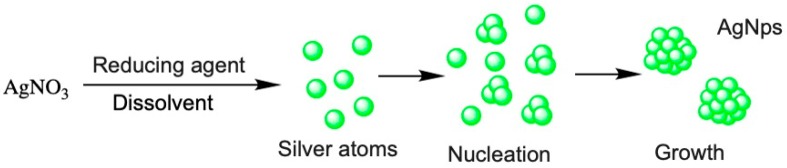
“AgNO3 acts as a precursor in this chemical reaction, and NaBH4 acts as a reducing agent [40].”
BackgroundCao, W., Zhou, X., Tu, C., Wang, Z., Liu, X., Kang, Y., Wang, J., Deng, L., Zhou, T., & Gao, C. (2022) · Biomaterials Advances · doi:10.1016/j.bioadv.2022.213244 · Cited by 24
Wang, Y., Lu, H., Wang, X., Han, L., Liu, X., Cheng, D., Yang, F., Guo, F., & Wang, W. (2023) · Separation and Purification Technology · doi:10.1016/j.seppur.2023.123278 · Cited by 22
Asmat-Campos, D. A., Rojas‐Jaimes, J., de Oca-Vásquez, G. M., Nazario-Naveda, R., Delfín-Narciso, D., Juárez-Cortijo, L., Bayona, D. A. E., Diringer, B., Pereira, R., & Menezes, D. B. (2023) · Scientific Reports · doi:10.1038/s41598-023-36910-x · Cited by 25
Vishnupriya, C., Mohamedrizwan, K., Arya, P. R., Vijayakumar, S., & Rangasamy, K. (2023) · International Journal of Biological Macromolecules · doi:10.1016/j.ijbiomac.2023.128032 · Cited by 24
Advances of mussel-inspired hydrogels for Bone/Cartilage regeneration
Li, H., Wang, J., Yang, G., Pei, X., & Zhang, X. (2024) · Chemical Engineering Journal · doi:10.1016/j.cej.2024.150560 · Cited by 24
Bhushan, M., Mohapatra, D., Kumar, Y., & Viswanath, A. K. (2021) · Materials Science and Engineering B · doi:10.1016/j.mseb.2021.115119 · Cited by 23
Mare, A. D., Man, A., Ciurea, C. N., Toma, F., Cighir, A., Mareș, M., Berța, L., & Tanase, C. (2021) · Antibiotics · doi:10.3390/antibiotics10101261 · Cited by 23
Salem, M. F., Tayel, A. A., Alzuaibr, F. M., & Bakr, R. A. (2022) · Polymers · doi:10.3390/polym14102116 · Cited by 26
“They stated the concentration and size-dependent actions of nanometals to inhibit fungal growth, penetrate into their cells and disrupt their biological functions [47].”
BackgroundАntibacterial inorganic agents: efficiency of using multicomponent systems
Meleshko, A. A., Геннадьевна, А. А., Afinogenov, G. E., Spiridonova, A. A., & Tolstoy, V. P. (2020) · Russian Journal of Infection and Immunity · doi:10.15789/2220-7619-aia-1512 · Cited by 38
“Механизмы действия антибактериальных металлических/металл-оксидных наночастиц описаны в большом количестве научных источников [12, 13, 45, 63, 69].”
ADVANCES OF NON-IRON METAL NANOPARTICLES IN BIOMEDICINE
Nair, A. B., Morsy, M. A., Shinu, P., Kotta, S., Chandrasekaran, M., & Tahir, A. (2021) · Journal of Pharmacy & Pharmaceutical Sciences · doi:10.18433/jpps31434 · Cited by 22
Tirado-Kulieva, V. A., Sánchez‐Chero, M., Palacios, D. P., Chero, J. A. S., Cruz, A. G. Y. S., Minchán-Velayarce, H. H., Suclupe, L. A. P., & García, L. O. C. (2022) · Current Research in Nutrition and Food Science Journal · doi:10.12944/crnfsj.10.1.01 · Cited by 21
Metallic nanoparticles as effective sensors of bio-molecules
Proniewicz, L. M. (2022) · Spectrochimica Acta Part A Molecular and Biomolecular Spectroscopy · doi:10.1016/j.saa.2022.122207 · Cited by 21
Tania, I. S., Ali, M., & Akter, M. (2022) · Journal of Engineered Fibers and Fabrics · doi:10.1177/15589250221136378 · Cited by 22
Metal and metal oxide nanostructures applied as alternatives of antibiotics
Mir, S. A., Shrotriya, V., Al‐Muhimeed, T. I., Hossain, M. A., & Zaman, M. B. (2023) · Inorganic Chemistry Communications · doi:10.1016/j.inoche.2023.110503 · Cited by 25
Murillo, L. E., Rivero, P. J., Sandúa, X., Pérez, G., Palacio, J. F., & Rodríguez, R. (2023) · Polymers · doi:10.3390/polym15183700 · Cited by 24
Manaa, H. M., Hamza, E. M., & Sorour, N. M. (2023) · AMB Express · doi:10.1186/s13568-023-01622-y · Cited by 21
“The antifungal potentialities of diverse nanometals such as, Se, Ag, Cu, and TiO 2 have been confirmed against some phytopathogenic fungi such as, P. digitatum, A. alternata, and Aspergillus spp. (Ouda 2014; Sánchez-López et al. 2020).”
BackgroundSuman, S. K., Chandrasekaran, N., & Doss, C. G. P. (2023) · Clinical Microbiology Reviews · doi:10.1128/cmr.00088-23 · Cited by 28
“Metallic NPs have huge potential to target a broad range of microorganisms (220, 221).”
BackgroundBiogenic Zinc Oxide Nanoparticles: An Insight into the Advancements in Antimicrobial Resistance
Sharma, A. K., Akash, K., Kumari, S., Chauhan, K., James, A., Goel, R., Singh, J. P., Nagraik, R., & Kumar, D. (2024) · ECS Journal of Solid State Science and Technology · doi:10.1149/2162-8777/ad397f · Cited by 18
Amoon, H., Moghadam, A., & Hajkarim, M. C. (2024) · International Journal of Biological Macromolecules · doi:10.1016/j.ijbiomac.2024.131922 · Cited by 21
Antimicrobial zeolites and metal–organic frameworks
Oheix, E., Daou, T. J., & Pieuchot, L. (2024) · Materials Horizons · doi:10.1039/d4mh00259h · Cited by 22
Sustainable antimicrobial and antioxidant packaging: Environmental implications and solutions
Mondal, S., Gautam, M. K., Das, R., Maddela, N. R., & Prasad, R. (2025) · Food Bioscience · doi:10.1016/j.fbio.2025.106347 · Cited by 22
He, J., Fan, Z., Jiang, Q., Yang, X., Sun, J., Pang, Y., Fang, X., Zhang, D., Li, Y., Liu, Y., et al. (2025) · Industrial Crops and Products · doi:10.1016/j.indcrop.2025.121493 · Cited by 20
Nanofertilizers for Sustainable Agriculture: Mechanisms, Benefits, and Environmental Challenges
Qadri, T. A., Khan, A., Khan, R. A., Mâaza, M., Batool, R., Nazir, R., & Abbas, S. (2026) · BioNanoScience · doi:10.1007/s12668-025-02370-y · Cited by 22
“There has been evidence of reduced microbial diversity and disruptions of functional processes by metal-based nanoparticles such as CuO, ZnO, and TiO 2 nanoparticles [123].”
Lee, C.-Y., Horng, J., Liu, S., & Lin, L. (2020) · Chemosphere · doi:10.1016/j.chemosphere.2020.128051 · Cited by 20
Jin, S., & Jin, H. (2021) · Pharmaceutics · doi:10.3390/pharmaceutics13020222 · Cited by 21
“Specifically, their physicochemical characteristics including morphology, particle size, atomic composition, crystallinity, and porosity are the major factors to affect the responses of microorganisms inducing antimicrobial actions [7].”
BackgroundAntiviral Polymers Based on N-Halamine Polyurea
Steinman, N. Y., Tan, H., Dombrovsky, A., Reches, M., & Domb, A. J. (2021) · Biomacromolecules · doi:10.1021/acs.biomac.1c00920 · Cited by 23
Metadata
- Authors
- Sánchez-López, E., Gomes, D., Esteruelas, G., Bonilla, L., Lopez-Machado, A. L., Galindo, R., Cano, A., Espina, M., Ettcheto, M., Camins, A., Silva, A. M., Durazzo, A., Santini, A., Garcia, M. L., & Souto, E. B.
- Affiliations
- Department of Pharmacy, Pharmaceutical Technology and Physical Chemistry, Faculty of Pharmacy, University of Barcelona, 08028 Barcelona, Spain
- University of Coimbra (PT)
- Universitat de Barcelona (ES)
- Institut de Nanociència i Nanotecnologia de la Universitat de Barcelona (ES)
- Instituto de Salud Carlos III (ES)
- University of Trás-os-Montes and Alto Douro (PT)
- Consiglio per la ricerca in agricoltura e l’analisi dell’economia agraria (IT)
- University of Naples Federico II (IT)
- Corresponding author
- Souto, Eliana B.
- ORCID
- Venue
- Nanomaterials
- Publisher
- MDPI AG
- Published
- 2020-02-09
- Volume
- 10
- Issue
- 2
- Pages
- 292
- ISSN
- 2079-4991 (ISSN-L)
- PMC
- PMC7075170
- OpenAlex
- W3005269120
- Semantic Scholar
- d26e02375a9fc651603564d60fbcb732cd1345f8
- Cited by
- 1,474
- References
- 197
- Citations by year
- 2026: 140 · 2025: 246 · 2024: 268 · 2023: 280 · 2022: 250 · 2021: 198 · 2020: 90
- FWCI
- 10.55
- Type
- journal article
- Language
- en
- Open access
- gold
- dx.doi.org
- Licence
- Locations
- Nanomaterials (publishedVersion, cc-by)
- Europe PMC (PubMed Central) (publishedVersion, cc-by)
- PubMed Central (publishedVersion, cc-by)
- PubMed (publishedVersion)
- Portuguese National Funding Agency for Science, Research and Technology (RCAAP Project by FCT) (submittedVersion, cc-by)
- Dipòsit Digital de la Universitat de Barcelona (Universitat de Barcelona) (submittedVersion, cc-by)
- DOAJ (DOAJ: Directory of Open Access Journals) (submittedVersion, cc-by-sa)
- Portuguese National Funding Agency for Science, Research and Technology (RCAAP Project by FCT) (submittedVersion, other-oa)
- Portuguese National Funding Agency for Science, Research and Technology (RCAAP Project by FCT) (submittedVersion, cc-by-nc-nd)
- Funders
- M-ERA-NET-0004/2015-PAIRED (Portuguese Science and Technology Foundation (FCT/MCT) and European Funds (PRODER/COMPETE))
- Institute of Nanoscience and Nanotechnology (ART2018 project) (2017SGR-1477)
- Topics
- Physical Sciences › Materials Science › Materials Chemistry › Nanoparticles: synthesis and applications
- Life Sciences › Immunology and Microbiology › Applied Microbiology and Biotechnology › Antimicrobial agents and applications
- Physical Sciences › Materials Science › Electronic, Optical and Magnetic Materials › Gold and Silver Nanoparticles Synthesis and Applications
- Keywords
- metal-based nanoparticles, antimicrobial agents, silver nanoparticles, gold nanoparticles, zinc oxide nanoparticles, copper nanoparticles, copper oxide nanoparticles, antibacterial mechanism, physicochemical characterization, pharmacokinetics, nanoparticle toxicity, antibiotic alternatives
About these checks
Registry, retraction, Cites and statistics results are computed, not judged, with one exception: a printed reference that no index lists is read once by a model before it counts as a citation error. Claims are extracted by a model and kept only when their quote appears verbatim in the text; each cited source is then checked, with a model’s help, for whether it says what the claim relies on. Those verdicts can be wrong — read the claim’s quote and the cited source before relying on one.
Statistics and arithmetic are recomputed, not judged.
Confidence bands are shown only for fields calibrated on our annotated test set. None is calibrated yet, so no band is shown.
What counts as a claim ›How we measure confidence ›How we check this ›
Are you an author, or do you see a problem with this page? Request a review
Data sources
Bibliographic data: Semantic Scholar, OpenAlex, Crossref.
Contains information from the Semantic Scholar Academic Graph Datasets, made available under the ODC Attribution License (ODC-BY 1.0).
Semantic Scholar’s data is described in: Kinney, R., et al. (2023). The Semantic Scholar Open Data Platform. arXiv:2301.10140.
