

The DOI matches its Crossref record; 90 of the 91 references it cites were found in a registry or an index, and 1 are not checked yet.
Associations between Pro- and Anti-Inflammatory Gastro-Intestinal Microbiota, Diet, and Cognitive Functioning in Dutch Healthy Older Adults: The NU-AGE Study
Open accessAbstract
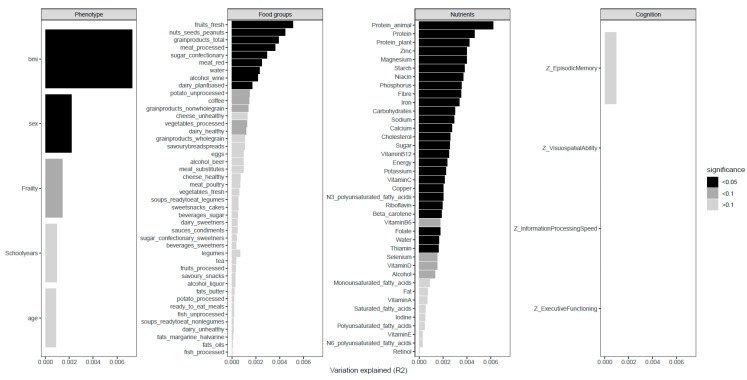
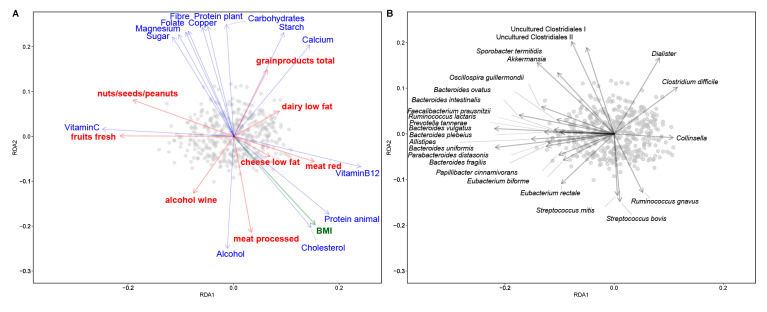
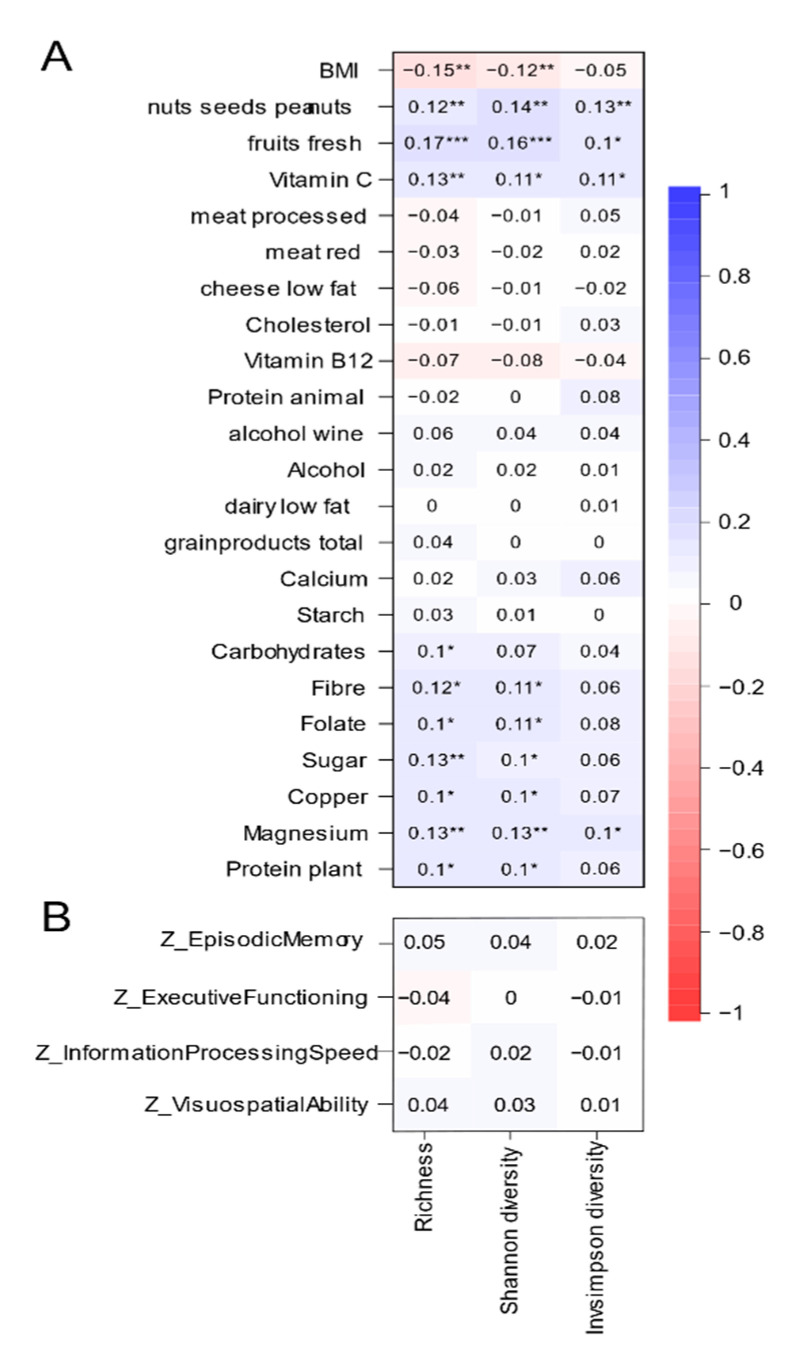
Dietary modulation of the gastro-intestinal microbiota is a potential target in improving healthy ageing and age-related functional outcomes, including cognitive decline. We explored the association between diet, gastro-intestinal microbiota and cognition in Dutch healthy older adults of the ‘New dietary strategies addressing the specific needs of the elderly population for healthy aging in Europe’ (NU-AGE) study. The microbiota profile of 452 fecal samples from 226 subjects was determined using a 16S ribosomal RNA gene-targeted microarray. Dietary intake was assessed by 7-day food records. Cognitive functioning was measured with an extensive cognitive test battery. We observed a dietary and microbial pro- to anti-inflammatory gradient associated with diets richer in animal- or plant-based foods. Fresh fruits, nuts, seeds and peanuts, red and processed meat and grain products were most strongly associated to microbiota composition. Plant-rich diets containing fresh fruits, nuts, seeds and peanuts were positively correlated with alpha-diversity, various taxa from the Bacteroidetes phylum and anti-inflammatory species, including those related to Faecalibacterium prausnitzii and Eubacterium rectale and E. biforme. Animal product-rich diets associated with pro-inflammatory species, including those related to Ruminococcus gnavus and Collinsella spp.. Cognition was neither associated with microbiota composition nor alpha-diversity. In conclusion, diets richer in animal- and plant-based foods were related to a pro- and anti-inflammatory microbial profile, while cognition was associated with neither.
Overview
The claims and statistics of this paper haven’t been checked yet.
Run the check — free, no account needed. It reads the open-access text and checks the sources it cites.
Integrity signals
Registry
Cites
Statistics
Figures
Verification
Claims the paper makes
The claims and statistics of this paper haven’t been checked yet.
Run the check — free, no account needed. It reads the open-access text and checks the sources it cites.
Claims other papers make about this one
Each is checked against this paper’s own text: does it say what the citing paper says it does?
The cited source says what the claim attributes to it.
In the citing paper
“Moreover, this phenomenon exists simultaneously in species such as Drosophila,219 fish,220 mice,221 rats,222 and humans.223”
From Inflammation and aging: signaling pathways and intervention therapies (2023) · cites this paper as [223]
Self-check
Percentages, sums and reported differences re-computed from the paper’s own numbers.
The self-check needs the paper’s full text.
Citations
Cites
Controlling the False Discovery Rate: A Practical and Powerful Approach to Multiple Testing
Benjamini, Y., & Hochberg, Y. (1995) · Journal of the Royal Statistical Society Series B: Statistical Methodology · doi:10.1111/j.2517-6161.1995.tb02031.x · Cited by 109,482
Folstein, M. F., Folstein, S. E., & McHugh, P. R. (1975) · Journal of Psychiatric Research · doi:10.1016/0022-3956(75)90026-6 · Cited by 88,282
Frailty in Older Adults: Evidence for a Phenotype
Fried, L. P., Tangen, C. M., Walston, J., Newman, A. B., Hirsch, C., Gottdiener, J., Seeman, T., Tracy, R., Kop, W. J., Burke, G., et al. (2001) · The Journals of Gerontology Series A: Biological Sciences and Medical Sciences · doi:10.1093/gerona/56.3.m146 · Cited by 24,907
Diet rapidly and reproducibly alters the human gut microbiome
David, L. A., Maurice, C. F., Carmody, R. N., Gootenberg, D. B., Button, J. E., Wolfe, B. E., Ling, A. V., Devlin, A. S., Varma, Y., Fischbach, M. A., et al. (2014) · Nature · doi:10.1038/nature12820 · Cited by 10,100
VALIDITY OF THE TRAIL MAKING TEST AS AN INDICATOR OF ORGANIC BRAIN DAMAGE
Reitan, R. M. (1958) · Perceptual and Motor Skills · doi:10.2466/pms.1958.8.3.271 · Cited by 8,167
A metagenome-wide association study of gut microbiota in type 2 diabetes
Qin, J., Li, Y., Cai, Z., Li, S., Zhu, J., Zhang, F., Liang, S., Zhang, W., Guan, Y., Shen, D., et al. (2012) · Nature · doi:10.1038/nature11450 · Cited by 6,762
Mind-altering microorganisms: the impact of the gut microbiota on brain and behaviour
Cryan, J. F., & Dinan, T. G. (2012) · Nature Reviews Neuroscience · doi:10.1038/nrn3346 · Cited by 4,572
Sokol, H., Pigneur, B., Watterlot, L., Lakhdari, O., Bermúdez-Humarán, L. G., Gratadoux, J.-J., Blugeon, S., Bridonneau, C., Furet, J.-P., Corthier, G., et al. (2008) · Proceedings of the National Academy of Sciences · doi:10.1073/pnas.0804812105 · Cited by 4,413
A new rating scale for Alzheimer's disease
(1984) · American Journal of Psychiatry · doi:10.1176/ajp.141.11.1356 · Cited by 4,175
Moms, J. C., Heyman, A., Mohs, R. C., Hughes, J. P., van Belle, G., Fillenbaum, G., Mellits, E. D., & Clark, C. (1989) · Neurology · doi:10.1212/wnl.39.9.1159 · Cited by 4,130
Gut microbiota composition correlates with diet and health in the elderly
Claesson, M. J., Jeffery, I. B., Conde, S., Power, S. E., O’Connor, E. M., Cusack, S., Harris, H. M. B., Coakley, M., Lakshminarayanan, B., O’Sullivan, O., et al. (2012) · Nature · doi:10.1038/nature11319 · Cited by 3,314
The physical activity scale for the elderly (PASE): Development and evaluation
Washburn, R. A., Smith, K. W., Jette, A. M., & Janney, C. A. (1993) · Journal of Clinical Epidemiology · doi:10.1016/0895-4356(93)90053-4 · Cited by 3,256
Designing and developing a literature-derived, population-based dietary inflammatory index
Shivappa, N., Steck, S. E., Hurley, T. G., Hussey, J. R., & Hébert, J. R. (2014) · Public Health Nutrition · doi:10.1017/s1368980013002115 · Cited by 2,731
Population-level analysis of gut microbiome variation
Falony, G., Joossens, M., Vieira-Silva, S., Wang, J., Darzi, Y., Faust, K., Kurilshikov, A., Bonder, M. J., Valles-Colomer, M., Vandeputte, D., et al. (2016) · Science · doi:10.1126/science.aad3503 · Cited by 2,400
Bacteroides : the Good, the Bad, and the Nitty-Gritty
Wexler, H. M. (2007) · Clinical Microbiology Reviews · doi:10.1128/cmr.00008-07 · Cited by 2,388
Depommier, C., Everard, A., Druart, C., Plovier, H., Van Hul, M., Vieira-Silva, S., Falony, G., Raes, J., Maiter, D., Delzenne, N. M., et al. (2019) · Nature Medicine · doi:10.1038/s41591-019-0495-2 · Cited by 2,357
Inflammation as a central mechanism in Alzheimer's disease
Kinney, J. W., Bemiller, S. M., Murtishaw, A. S., Leisgang, A. M., Salazar, A. M., & Lamb, B. T. (2018) · Alzheimer's & Dementia: Translational Research & Clinical Interventions · doi:10.1016/j.trci.2018.06.014 · Cited by 2,253
Population-based metagenomics analysis reveals markers for gut microbiome composition and diversity
Zhernakova, A., Kurilshikov, A., Bonder, M. J., Tigchelaar, E. F., Schirmer, M., Vatanen, T., Mujagic, Z., Vila, A. V., Falony, G., Vieira-Silva, S., et al. (2016) · Science · doi:10.1126/science.aad3369 · Cited by 1,914
Machiels, K., Joossens, M., Sabino, J., De Preter, V., Arijs, I., Eeckhaut, V., Ballet, V., Claes, K., Van Immerseel, F., Verbeke, K., et al. (2014) · Gut · doi:10.1136/gutjnl-2013-304833 · Cited by 1,904
Composition, variability, and temporal stability of the intestinal microbiota of the elderly
Claesson, M. J., Cusack, S., O'Sullivan, O., Greene-Diniz, R., de Weerd, H., Flannery, E., Marchesi, J. R., Falush, D., Dinan, T., Fitzgerald, G., et al. (2011) · Proceedings of the National Academy of Sciences · doi:10.1073/pnas.1000097107 · Cited by 1,754
Kovatcheva-Datchary, P., Nilsson, A., Akrami, R., Lee, Y. S., De Vadder, F., Arora, T., Hallen, A., Martens, E., Björck, I., & Bäckhed, F. (2015) · Cell Metabolism · doi:10.1016/j.cmet.2015.10.001 · Cited by 1,731
Regulation of inflammation by short chain fatty acids
Vinolo, M. A. R., Rodrigues, H. G., Nachbar, R. T., & Curi, R. (2011) · Nutrients · doi:10.3390/nu3100858 · Cited by 1,724
De Filippis, F., Pellegrini, N., Vannini, L., Jeffery, I. B., La Storia, A., Laghi, L., Serrazanetti, D. I., Di Cagno, R., Ferrocino, I., Lazzi, C., et al. (2016) · Gut · doi:10.1136/gutjnl-2015-309957 · Cited by 1,638
Through Ageing, and Beyond: Gut Microbiota and Inflammatory Status in Seniors and Centenarians
Biagi, E., Nylund, L., Candela, M., Ostan, R., Bucci, L., Pini, E., Nikkïla, J., Monti, D., Satokari, R., Franceschi, C., et al. (2010) · PLoS ONE · doi:10.1371/journal.pone.0010667 · Cited by 1,483
Self-citationPotential beneficial effects of butyrate in intestinal and extraintestinal diseases
Canani, R. B. (2011) · World Journal of Gastroenterology · doi:10.3748/wjg.v17.i12.1519 · Cited by 1,381
Decomposing adult age differences in working memory
Salthouse, T. A., & Babcock, R. L. (1991) · Developmental Psychology · doi:10.1037/0012-1649.27.5.763 · Cited by 1,373
Symptomatic atherosclerosis is associated with an altered gut metagenome
Karlsson, F. H., Fåk, F., Nookaew, I., Tremaroli, V., Fagerberg, B., Petranovic, D., Bäckhed, F., & Nielsen, J. (2012) · Nature Communications · doi:10.1038/ncomms2266 · Cited by 1,371 · cited 1×
“Increased abundance of Collinsella has been observed in several inflammatory diseases, including type 2 diabetes mellitus [51,52], atherosclerosis [53] and rheumatoid arthritis [54].”
The immune response to Prevotella bacteria in chronic inflammatory disease
Larsen, J. M. (2017) · Immunology · doi:10.1111/imm.12760 · Cited by 1,343
How informative is the mouse for human gut microbiota research?
Nguyen, T. L. A., Vieira-Silva, S., Liston, A., & Raes, J. (2015) · Disease Models & Mechanisms · doi:10.1242/dmm.017400 · Cited by 1,334
Reichardt, N., Duncan, S. H., Young, P., Belenguer, Á., Leitch, E. C. M., Scott, K. P., Flint, H. J., & Louis, P. (2014) · The ISME Journal · doi:10.1038/ismej.2014.14 · Cited by 1,327
Structural segregation of gut microbiota between colorectal cancer patients and healthy volunteers
Wang, T., Cai, G., Qiu, Y., Fei, N., Zhang, M., Pang, X., Jia, W., Cai, S., & Zhao, L. (2012) · The ISME Journal · doi:10.1038/ismej.2011.109 · Cited by 1,287
Ghosh, T. S., Rampelli, S., Jeffery, I. B., Santoro, A., Neto, M., Capri, M., Giampieri, E., Jennings, A., Candela, M., Turroni, S., et al. (2020) · Gut · doi:10.1136/gutjnl-2019-319654 · Cited by 991
Self-citationMediterranean Diet and Age-Related Cognitive Decline: A Randomized Clinical Trial
Valls-Pedret, C., Sala-Vila, A., Serra-Mir, M., Corella, D., de la Torre, R., Martínez-González, M. Á., Martínez-Lapiscina, E. H., Fitó, M., Pérez-Heras, A., Salas-Salvadó, J., et al. (2015) · JAMA Internal Medicine · doi:10.1001/jamainternmed.2015.1668 · Cited by 952
Human Gut Microbiota Changes Reveal the Progression of Glucose Intolerance
Zhang, X., Shen, D., Fang, Z., Jie, Z., Qiu, X., Zhang, C., Chen, Y., & Ji, L. (2013) · PLoS ONE · doi:10.1371/journal.pone.0071108 · Cited by 946
Akbari, E., Asemi, Z., Daneshvar Kakhaki, R., Bahmani, F., Kouchaki, E., Tamtaji, O. R., Hamidi, G. A., & Salami, M. (2016) · Frontiers in Aging Neuroscience · doi:10.3389/fnagi.2016.00256 · Cited by 946
Claesson, M. J., O’Sullivan, Ó., Wang, Q., Nikkilä, J., Marchesi, J. R., Smidt, H., de Vos, W. M., Ross, R. P., & O’Toole, P. W. (2009) · PLoS ONE · doi:10.1371/journal.pone.0006669 · Cited by 900
An expansion of rare lineage intestinal microbes characterizes rheumatoid arthritis
Chen, J., Wright, K., Davis, J. M., Jeraldo, P., Marietta, E. V., Murray, J., Nelson, H., Matteson, E. L., & Taneja, V. (2016) · Genome Medicine · doi:10.1186/s13073-016-0299-7 · Cited by 858
Economic and social implications of aging societies
Harper, S. E. (2014) · Science · doi:10.1126/science.1254405 · Cited by 837
Henke, M. T., Kenny, D. J., Cassilly, C. D., Vlamakis, H. C., Xavier, R. J., & Clardy, J. (2019) · Proceedings of the National Academy of Sciences · doi:10.1073/pnas.1904099116 · Cited by 835
A novel Ruminococcus gnavus clade enriched in inflammatory bowel disease patients
Hall, A. B., Yassour, M., Sauk, J., Garner, A., Jiang, X., Arthur, T., Lagoudas, G. K., Vatanen, T., Fornelos, N., Wilson, R., et al. (2017) · Genome Medicine · doi:10.1186/s13073-017-0490-5 · Cited by 777
Mortality and Morbidity Trends: Is There Compression of Morbidity?
Crimmins, E. M., & Beltran-Sanchez, H. (2011) · The Journals of Gerontology Series B: Psychological Sciences and Social Sciences · doi:10.1093/geronb/gbq088 · Cited by 694
Fermentation of mucin and plant polysaccharides by strains of Bacteroides from the human colon
Salyers, A. A., Vercellotti, J. R., West, S. E. H., & Wilkins, T. D. (1977) · Applied and Environmental Microbiology · doi:10.1128/aem.33.2.319-322.1977 · Cited by 691
Roopchand, D. E., Carmody, R. N., Kuhn, P., Moskal, K., Rojas-Silva, P., Turnbaugh, P. J., & Raskin, I. (2015) · Diabetes · doi:10.2337/db14-1916 · Cited by 678
Healthy Traditional Mediterranean Diet: An Expression of Culture, History, and Lifestyle
Trichopoulou, A., & Λάγιου, Π. (2009) · Nutrition Reviews · doi:10.1111/j.1753-4887.1997.tb01578.x · Cited by 629
World population ageing 2020 highlights
Division, U. P. (2020) · Cited by 623
Salonen, A., Nikkilä, J., Jalanka, J., Immonen, O., Rajilić-Stojanović, M. D., Kekkonen, R. A., Palva, A., & de Vos, W. M. (2010) · Journal of Microbiological Methods · doi:10.1016/j.mimet.2010.02.007 · Cited by 606
Verbal fluency in aging and dementia
Rosen, W. G. (1980) · Journal of Clinical and Experimental Neuropsychology · doi:10.1080/01688638008403788 · Cited by 597
Propionate as a health-promoting microbial metabolite in the human gut
Hosseini, E., Grootaert, C., Verstraete, W., & de Wiele, T. V. (2011) · Nutrition Reviews · doi:10.1111/j.1753-4887.2011.00388.x · Cited by 586
Kim, C.-S., Cha, J., Sim, M., Jung, S., Chun, W. Y., Baik, H. W., & Shin, D.-M. (2020) · The Journals of Gerontology Series A · doi:10.1093/gerona/glaa090 · Cited by 572
van den Brink, A. C., Brouwer-Brolsma, E. M., Berendsen, A. A. M., & van de Rest, O. (2019) · Advances in Nutrition · doi:10.1093/advances/nmz054 · Cited by 571
Self-citationImpact of consuming a milk drink containing a probiotic on mood and cognition
Benton, D., Williams, C., & Brown, A. (2007) · European Journal of Clinical Nutrition · doi:10.1038/sj.ejcn.1602546 · Cited by 554
Rajilić‐Stojanović, M., Heilig, H. G. H. J., Molenaar, D., Kajander, K., Surakka, A., Smidt, H., & De Vos, W. M. (2009) · Environmental Microbiology · doi:10.1111/j.1462-2920.2009.01900.x · Cited by 484
Mild cognitive impairment has similar alterations as Alzheimer's disease in gut microbiota
Li, B., He, Y., Ma, J., Huang, P., Du, J., Cao, L. H., Wang, Y., Xiao, Q., Tang, H., & Chen, S. (2019) · Alzheimer s & Dementia · doi:10.1016/j.jalz.2019.07.002 · Cited by 484
Effects of Sweeteners on the Gut Microbiota: A Review of Experimental Studies and Clinical Trials
Ruiz‐Ojeda, F. J., Plaza‐Díaz, J., Sáez‐Lara, M. J., & Gil, Á. (2018) · Advances in Nutrition · doi:10.1093/advances/nmy037 · Cited by 470
Dietary intakes of berries and flavonoids in relation to cognitive decline
Devore, E. E., Kang, J. H., Breteler, M. M. B., & Grodstein, F. (2012) · Annals of Neurology · doi:10.1002/ana.23594 · Cited by 466
Faecal microbiota study reveals specific dysbiosis in spondyloarthritis
Bréban, M., Tap, J., Leboime, A., Said‐Nahal, R., Langella, P., Chiocchia, G., Furet, J., & Sokol, H. (2017) · Annals of the Rheumatic Diseases · doi:10.1136/annrheumdis-2016-211064 · Cited by 409
A survey of modulation of gut microbiota by dietary polyphenols
Dueñas, M., Muñoz-González, I., Cueva, C., Jiménez-Girón, A., Sánchez-Patán, F., Santos-Buelga, C., Moreno-Arribas, M. V., & Bartolomé, B. (2015) · BioMed Research International · doi:10.1155/2015/850902 · Cited by 396
Kang, S., Denman, S. E., Morrison, M., Yu, Z., Dore, J. M., Leclerc, M., & McSweeney, C. S. (2010) · Inflammatory Bowel Diseases · doi:10.1002/ibd.21319 · Cited by 365
Major Issues in Cognitive Aging
Salthouse, T. A. (2009) · Oxford University Press eBooks · doi:10.1093/acprof:oso/9780195372151.001.0001 · Cited by 364
Slimani, N., Ferrari, P., Ocké, M. C., Welch, A. A., Boeing, H., van Liere, M. J., Pala, V. M., Amiano, P., Lagiou, A., Mattisson, I., et al. (2000) · European Journal of Clinical Nutrition · doi:10.1038/sj.ejcn.1601107 · Cited by 360
Biagi, E., Nylund, L., Candela, M., Ostan, R., Bucci, L., Pini, E., Nikkïla, J., Monti, D., Satokari, R., Franceschi, C., et al. (2010) · PLoS ONE · doi:10.1371/annotation/df45912f-d15c-44ab-8312-e7ec0607604d · Cited by 345
Self-citation(2019) · doi:10.18356/9df3caed-en · Cited by 299
Composition Diversity and Abundance of Gut Microbiome in Prediabetes and Type 2 Diabetes
Shah, V. O., Lambeth, S. M., Carson, T., Lowe, J. R., Ramaraj, T., Leff, J. W., Luo, L., & Bell, C. J. (2015) · Journal of Diabetes and Obesity · doi:10.15436/2376-0949.15.031 · Cited by 294
Sub-clinical detection of gut microbial biomarkers of obesity and type 2 diabetes
Yassour, M., Lim, M. Y., Yun, H. S., Tickle, T. L., Sung, J., Song, Y., Lee, K., Franzosa, E. A., Morgan, X. C., Gevers, D., et al. (2016) · Genome Medicine · doi:10.1186/s13073-016-0271-6 · Cited by 293
Vieira, E. L. M., Leonel, A. J., Sad, A. P., Beltrão, N. R. M., Costa, T. F., Ferreira, T. M. R., Gomes-Santos, A. C., Faria, A. M. C., Peluzio, M. C. G., Cara, D. C., et al. (2012) · The Journal of Nutritional Biochemistry · doi:10.1016/j.jnutbio.2011.01.007 · Cited by 290
Hwang, Y., Park, S., Paik, J., Chae, S., Kim, D., Jeong, D., Ha, E., Kim, M., Hong, G., Park, S., et al. (2019) · Nutrients · doi:10.3390/nu11020305 · Cited by 263
Modulation of gut microbiota dysbioses in type 2 diabetic patients by macrobiotic Ma-Pi 2 diet
Candela, M., Biagi, E., Soverini, M., Consolandi, C., Quercia, S., Severgnini, M., Peano, C., Turroni, S., Rampelli, S., Pozzilli, P., et al. (2016) · British Journal Of Nutrition · doi:10.1017/s0007114516001045 · Cited by 260
Effects of omega-3 fatty acids on cognitive performance: a meta-analysis
Mazereeuw, G., Lanctôt, K. L., Chau, S. A., Swardfager, W., & Herrmann, N. (2012) · Neurobiology of Aging · doi:10.1016/j.neurobiolaging.2011.12.014 · Cited by 253
Genetic determinants of in vivo fitness and diet responsiveness in multiple human gut Bacteroides
Wu, M., McNulty, N. P., Rodionov, D. A., Khoroshkin, M., Griffin, N. W., Cheng, J., Latreille, P., Kerstetter, R. A., Terrapon, N., Henrissat, B., et al. (2015) · Science · doi:10.1126/science.aac5992 · Cited by 248
Vernia, P., Annese, V., Bresci, G., D'Albasio, G., Renata D'Incà, Giaccari, S., Ingrosso, M., Mansi, C., Riegler, G., Valpiani, D., et al. (2003) · European Journal of Clinical Investigation · doi:10.1046/j.1365-2362.2003.01130.x · Cited by 217
Prosberg, M. V., Bendtsen, F., Vind, I., Petersen, A. M., & Gluud, L. L. (2016) · Scandinavian Journal of Gastroenterology · doi:10.1080/00365521.2016.1216587 · Cited by 210
Age-dependent changes in GI physiology and microbiota: time to reconsider?
An, R., Wilms, E., Masclee, A. A. M., Smidt, H., Zoetendal, E. G., & Jonkers, D. (2018) · Gut · doi:10.1136/gutjnl-2017-315542 · Cited by 209
Self-citationKobayashi, Y., Kuhara, T., Oki, M., & Xiao, J. (2019) · Beneficial Microbes · doi:10.3920/bm2018.0170 · Cited by 203
Altered Gut Microbiota Composition Associated with Eczema in Infants
Zheng, H., Liang, H., Wang, Y., Miao, M., Shi, T., Yang, F., Liu, E., Yuan, W., Ji, Z., & Li, D. (2016) · PLoS ONE · doi:10.1371/journal.pone.0166026 · Cited by 172
Measuring longitudinal cognition: Individual tests versus composites
Jonaitis, E. M., Koscik, R. L., Clark, L. R., Ma, Y., Betthauser, T. J., Berman, S. E., Allison, S. L., Mueller, K. D., Hermann, B. P., Hulle, C. A. V., et al. (2018) · Alzheimer s & Dementia Diagnosis Assessment & Disease Monitoring · doi:10.1016/j.dadm.2018.11.006 · Cited by 145
Santoro, A., Pini, E., Scurti, M., Palmas, M. G., Berendsen, A. A. M., Brzozowska, A., Pietruszka, B., Szczecińska, A., Cano, N., Meunier, N., et al. (2013) · Mechanisms of Ageing and Development · doi:10.1016/j.mad.2013.12.001 · Cited by 129
Self-citationUnusual sub-genus associations of faecal Prevotella and Bacteroides with specific dietary patterns
Filippis, F. D., Pellegrini, N., Laghi, L., Gobbetti, M., & Ercolini, D. (2016) · Microbiome · doi:10.1186/s40168-016-0202-1 · Cited by 127
Inoue, T., Kobayashi, Y., Mori, N., Sakagawa, M., Xiao, J., Moritani, T., Sakane, N., & Nagai, N. (2018) · Beneficial Microbes · doi:10.3920/bm2017.0193 · Cited by 117
Effect of the NU-AGE Diet on Cognitive Functioning in Older Adults: A Randomized Controlled Trial
Marseglia, A., Xu, W., Fratiglioni, L., Fabbri, C., Berendsen, A. A. M., Białecka-Dębek, A., Jennings, A., Gillings, R., Meunier, N., Caumon, E., et al. (2018) · Frontiers in Physiology · doi:10.3389/fphys.2018.00349 · Cited by 116
Self-citationPartula, V., Mondot, S., Torres, M. J., Kesse-Guyot, E., Deschasaux, M., Assmann, K., Latino-Martel, P., Buscail, C., Julia, C., Galan, P., et al. (2019) · The American Journal of Clinical Nutrition · doi:10.1093/ajcn/nqz029 · Cited by 100
Maintenance of a healthy trajectory of the intestinal microbiome during aging: A dietary approach
Candela, M., Biagi, E., Brigidi, P., O’Toole, P. W., & de Vos, W. M. (2013) · Mechanisms of Ageing and Development · doi:10.1016/j.mad.2013.12.004 · Cited by 87
Berendsen, A., Santoro, A., Pini, E., Cevenini, E., Ostan, R., Pietruszka, B., Rolf, K., Cano, N., Caille, A., Lyon-Belgy, N., et al. (2013) · Mechanisms of Ageing and Development · doi:10.1016/j.mad.2013.10.002 · Cited by 82
Self-citationNut consumption for vascular health and cognitive function
Barbour, J. A., Howe, P. R. C., Buckley, J. D., Bryan, J., & Coates, A. M. (2014) · Nutrition Research Reviews · doi:10.1017/s0954422414000079 · Cited by 66
An, R., Wilms, E., Smolinska, A., Hermes, G. D. A., Masclee, A., de Vos, P., Schols, H. A., van Schooten, F., Smidt, H., Jonkers, D. M. A. E., et al. (2019) · Nutrients · doi:10.3390/nu11092193 · Cited by 66
Self-citationBerendsen, A. A. M., van de Rest, O., Feskens, E. J. M., Santoro, A., Ostan, R., Pietruszka, B., Brzozowska, A., Stelmaszczyk-Kusz, A., Jennings, A., Gillings, R., et al. (2018) · Nutrients · doi:10.3390/nu10121905 · Cited by 64
Self-citationGut Microbiota and Body Weight in School‐Aged Children: The KOALA Birth Cohort Study
Mbakwa, C. A., Hermes, G. D. A., Penders, J., Savelkoul, P. H. M., Thijs, C. T., Dagnelie, P. C., Mommers, M., Zoetendal, E. G., Smidt, H., & Arts, I. C. W. (2018) · Obesity · doi:10.1002/oby.22320 · Cited by 58
Self-citationBerendsen, A. A. M., Santoro, A., Pini, E., Cevenini, E., Ostan, R., Pietruszka, B., Rolf, K., Cano, N., Caillé, A., Lyon-Belgy, N., et al. (2014) · Mechanisms of Ageing and Development · doi:10.1016/j.mad.2014.03.001 · Cited by 48
Self-citationLahti, L., Elo, L. L., Aittokallio, T. A., & Samuel Kaski, A. (2009) · IEEE Transactions on Computational Biology and Bioinformatics · doi:10.1109/tcbb.2009.38 · Cited by 42
Hermes, G. D. A., Reijnders, D., Kootte, R. S., Goossens, G. H., Smidt, H., Nieuwdorp, M., Blaak, E. E., & Zoetendal, E. G. (2020) · Scientific Reports · doi:10.1038/s41598-020-64574-4 · Cited by 33
Self-citationA fully scalable online pre-processing algorithm for short oligonucleotide microarray atlases
Lahti, L., Torrente, A., Elo, L. L., Brāzma, A., & Rung, J. (2013) · Nucleic Acids Research · doi:10.1093/nar/gkt229 · Cited by 29
Kaunitz, J. D. (2015) · Faculty Opinions – Post-Publication Peer Review of the Biomedical Literature · doi:10.3410/f.718105672.793509782
Research works printed but not linked: 1
- Lewis, R., and Kupke, T. (1977, January 4–7). The Lafayette Clinic Repeatable Neuropsychological Test Battery: Its Development and Research Applications. Proceedings of the Annual Meeting of the Southeastern Psychological Association, Hollywood, FL, USA.
Cited by
Sorted by citations
Inflammation and aging: signaling pathways and intervention therapies
Li, X., Li, C., Zhang, W., Wang, Y., Qian, P., & Huang, H. (2023) · Signal Transduction and Targeted Therapy · doi:10.1038/s41392-023-01502-8 · Cited by 1,443
The Role of the Gut Microbiota in the Relationship Between Diet and Human Health
Perler, B. K., Friedman, E. S., & Wu, G. D. (2022) · Annual Review of Physiology · doi:10.1146/annurev-physiol-031522-092054 · Cited by 402
Ruminococcus gnavus : friend or foe for human health
Crost, E. H., Coletto, E., Bell, A., & Juge, N. (2023) · FEMS Microbiology Reviews · doi:10.1093/femsre/fuad014 · Cited by 335
Feeding gut microbes to nourish the brain: unravelling the diet–microbiota–gut–brain axis
Schneider, E., O’Riordan, K. J., Clarke, G. A., & Cryan, J. F. (2024) · Nature Metabolism · doi:10.1038/s42255-024-01108-6 · Cited by 317
The role of nutrition in inflammaging
Giosia, P. D., Stamerra, C. A., Giorgini, P., Jamialahamdi, T., Butler, A. E., & Sahebkar, A. (2022) · Ageing Research Reviews · doi:10.1016/j.arr.2022.101596 · Cited by 262
Metadata
- Authors
- van Soest, A. P. M., Hermes, G. D. A., Berendsen, A. A. M., van de Rest, O., Zoetendal, E. G., Fuentes, S., Santoro, A., Franceschi, C., de Groot, L. C. P. G. M., & de Vos, W. M.
- Affiliations
- Division of Human Nutrition and Health, Wageningen University & Research, 6708WE Wageningen, The Netherlands
- Wageningen University & Research (NL)
- National Institute for Public Health and the Environment (NL)
- University of Bologna (IT)
- N. I. Lobachevsky State University of Nizhny Novgorod (RU)
- Laboratory of Microbiology, Wageningen University & Research, 6708WE Wageningen, The Netherlands
- ORCID
- Venue
- Nutrients
- Publisher
- MDPI AG
- Published
- 2020-11-12
- Volume
- 12
- Issue
- 11
- Pages
- 3471
- ISSN
- 2072-6643 (ISSN-L)
- PMC
- PMC7697493
- OpenAlex
- W3103664997
- Cited by
- 118
- References
- 89
- Citations by year
- 2026: 8 · 2025: 22 · 2024: 26 · 2023: 38 · 2022: 19 · 2021: 5
- FWCI
- 5.02
- Type
- journal article
- Language
- en
- Open access
- gold
- doi.org
- Licence
- Locations
- Nutrients (publishedVersion, cc-by)
- PubMed Central (publishedVersion, cc-by)
- PubMed (publishedVersion)
- Socio-Environmental Systems Modeling (acceptedVersion, cc-by)
- Archivio istituzionale della ricerca (Alma Mater Studiorum Università di Bologna) (submittedVersion, cc-by)
- DOAJ (DOAJ: Directory of Open Access Journals) (submittedVersion, cc-by-sa)
- Työväentutkimus Vuosikirja (submittedVersion)
- Rivm Repository (Netherlands National Institute for Public Health and the Environment) (submittedVersion)
- Rivm (National Institute for Public Health and the Environment) (submittedVersion)
- Rivm (National Institute for Public Health and the Environment) (submittedVersion, other-oa)
- Data Archiving and Networked Services (DANS) (submittedVersion, cc-by)
- Funders
- Seventh Framework Programme (266486)
- Horizon 2020 Framework Programme (818368)
- Spinoza award of The Netherlands Organization for Scientific Research 2008 (n/a)
- Topics
- Life Sciences › Biochemistry, Genetics and Molecular Biology › Molecular Biology › Gut microbiota and health
- Health Sciences › Medicine › Public Health, Environmental and Occupational Health › Nutritional Studies and Diet
- Life Sciences › Agricultural and Biological Sciences › Food Science › Probiotics and Fermented Foods
- Keywords
- gut microbiota, diet, cognitive function, older adults, healthy aging, inflammation, plant-based diet, animal-based diet, alpha diversity, Faecalibacterium prausnitzii, Ruminococcus gnavus, Bacteroidetes, red and processed meat, fresh fruits, nuts and seeds, cognitive decline
- MeSH terms
- Gastrointestinal Microbiome, Aged, Bacteria, Cognition, Feces, Female, Humans, Male, Netherlands, RNA, Ribosomal, 16S, Diet, Mediterranean, Healthy Volunteers
About these checks
Registry, retraction, Cites and statistics results are computed, not judged, with one exception: a printed reference that no index lists is read once by a model before it counts as a citation error. Claims are extracted by a model and kept only when their quote appears verbatim in the text; each cited source is then checked, with a model’s help, for whether it says what the claim relies on. Those verdicts can be wrong — read the claim’s quote and the cited source before relying on one.
Statistics and arithmetic are recomputed, not judged.
Confidence bands are shown only for fields calibrated on our annotated test set. None is calibrated yet, so no band is shown.
What counts as a claim ›How we measure confidence ›How we check this ›
Are you an author, or do you see a problem with this page? Request a review
