

Specific Phobia in Young Children: Associations between the Origins of Fear and Clinical Expression of Phobia Symptoms.
Open accessThe DOI matches its Crossref record; 55 of the 55 references it cites were found in a registry or an index; 19 of the 60 sources its claims cite were checked for support.
Abstract
Specific phobias set early in life, have a chronic course, and predict development of additional mental health concerns later in life; however, little is currently known about the origins of specific phobias in young children aged 3–6 years. The current study explores the origins of phobic fear among treatment seeking pre-school aged children diagnosed with a Specific Phobia. Specifically, Rachman's (1977) theory of fear acquisition and differences in children's specific phobia presentation and parental characteristics across direct and indirect (information and modelling) pathways. Seventy-four children aged 3–6 years with a specific phobia, and their parents completed an assessment battery of child phobic symptoms and related child and parent factors. Parents completed a child diagnostic telephone interview and online questionnaires assessing child factors (phobia type, phobia severity, child anxiety) and parent factors (fears, anxiety symptoms, psychopathology, parental rearing). Children participated in a standardised behavioural approach task (BAT) within the clinic and rated subjective units of distress for their phobic stimuli. All children who experienced a direct aversive event, regardless of other pathways endorsed, demonstrated more behavioural avoidance and subjective distress relative to those who did not. Animal phobias were associated with greater frequency of direct aversive events. Children experiencing the indirect pathways experienced greater generalised anxiety symptoms than all other pathways. The findings of this study suggest unique clusters of clinical presentations across the different pathways to fear among young children with SP. Future research examining whether treatment outcomes differ based on pathways to fear would enhance treatment planning. Highlights: Little is known about the origins of specific phobias around the time of onset, during the preschool years (ages 3–6). This study examines child clinical presentations associated with of Rachman's (1977) pathways to fear at the time of onset. Children who experienced a direct aversive event displayed greater behavioural avoidance and subjective distress. Children who experienced indirect (information and modelling) pathways to fear displayed more generalised anxiety symptoms. Parental factors, including psychopathology and parenting styles did not differ across the different pathways to fear.
Overview
CoChat Summary
TL;DR
This treatment-seeking study of 74 preschoolers with specific phobia found that the way fear originated mattered for how phobia showed up clinically. Direct aversive events were linked to more avoidance and distress, while indirect pathways (information/modeling) were linked to higher generalized anxiety symptoms.
Key findings
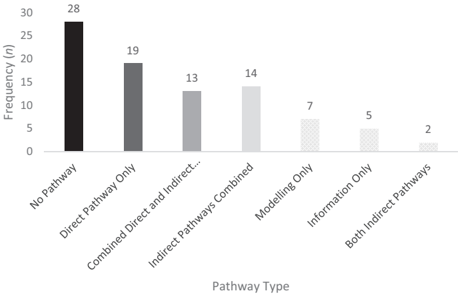
- Among 74 children aged 3–6 years, 46 parents (62%) endorsed at least one pathway to fear.
- Of endorsed pathways, the most common was direct experience only (42%), followed by combined direct + indirect pathways (28%), modelling alone (15%), information alone (11%), and both indirect pathways together (4%).
- Direct pathway only was associated with more behavioral avoidance: 63% did not attempt the BAT, compared with 19% in the no-pathway group; 37% in the direct-only group attempted the BAT versus 80% of those with no pathway.
- Direct pathway only was also associated with higher pre-BAT subjective distress (SUDS), and indirect pathways were associated with higher generalized anxiety on the Preschool Anxiety Scale than all other pathways; phobia severity (CSR) did not differ across pathway groups.
- Parental factors did not differ by pathway: 65% of parents reported a fear of their own, but parent fear frequency was not associated with pathway type, and neither parenting style nor parent psychopathology differed across groups.
Methods
- Cross-sectional analysis of a treatment-seeking clinical sample of 74 children aged 3–6 years with DSM-5 specific phobia, recruited through a Griffith University clinical trial.
- Parent report and child assessment battery: ADIS-5-P diagnostic interview/clinician severity rating, Pathways to Fear Survey, Preschool Anxiety Scale, EMBU-P parenting styles, Brief Symptom Inventory, and a child behavioral approach task (BAT) with pre-BAT SUDS.
- Analyses included frequencies, chi-square tests, one-way ANOVAs, and a t-test; missing cases were excluded analysis by analysis.
Limitations
- The paper states that the sample size was small across subgroups, limiting power and increasing the likelihood of type II errors.
- The Pathways to Fear Survey was not a validated measure, according to the paper.
- Evident from the text: the study is cross-sectional and treatment-seeking, so it cannot establish causal direction or necessarily generalize beyond this clinical preschool sample.
Model-written summary. Check it against the paper before relying on it.
Integrity signals
Registry
Cites
Statistics
Figures
Verification
Claims the paper makes
17 Valid · 2 Not valid · 21 Not checked · 68 Own results and interpretations
The cited sources support only part of this claim — read each source’s verdict below.
In the paper
“In pre-school aged children, SPs are associated with signi fi cant impairments across most domains of life, including, dif fi culties with education, family, social, and peer relationships (Egger & Angold, 2006; Rifkin et al., 2016; Towe-Goodman et al., 2014).”
What the sources say
- Not checked — no full text of the sourcecites Egger & Angold, 2006 matched to “Common emotional and behavioral disorders in preschool children: presentation, nosology, and epidemiology” (2006) source
- Not checked — no full text of the sourcecites Rifkin et al., 2016 matched to “Adaptation of a paradigm for examining the development of fear beliefs through the verbal information pathway in preschool-age children” (2016) source
- Partly supportedcites Towe-Goodman et al., 2014 matched to “Perceived Family Impact of Preschool Anxiety Disorders” (2014) sourceExperimental — accuracy not yet measured
The Results and Discussion (page numbers unavailable) report a significant perceived family impact of social phobia for preschool girls, but not boys. The study measures effects on family functioning, including activities and relationships; it does not establish significant impairment across most domains of the child’s life, including education and peer relationships. (LLM, conf=0.88)
plainstates an association- Asserted: passes — The authors put it forward as true.
- Checkable: passes — It can be checked against evidence.
- Load-bearing: passes — The paper’s conclusions depend on it.
- Based: passes — The paper gives a reason why it holds.
The cited sources support only part of this claim — read each source’s verdict below.
In the paper
“Children with SP are also at greater risk for the development of future mental health conditions, such as substance abuse, depression, panic disorder, eating disorders, and post-traumatic stress disorder (PTSD, Fichter et al., 2009; Lieb et al., 2016; Rifkin et al., 2016).”
What the sources say
- Not checked — no full text of the sourcecites Fichter et al., 2009 matched to “From childhood to adult age: 18-year longitudinal results and prediction of the course of mental disorders in the community” (2009) source
- Partly supportedcites Lieb et al., 2016 matched to “IMPACT OF SPECIFIC PHOBIA ON THE RISK OF ONSET OF MENTAL DISORDERS: A 10-YEAR PROSPECTIVE-LONGITUDINAL COMMUNITY STUDY OF ADOLESCENTS AND YOUNG ADULTS: Research Article: Specific Phobia Predicts Psychopathology” (2016) sourceExperimental — accuracy not yet measured
The Results section reports that baseline specific phobia predicted subsequent panic disorder, depression, eating disorders, and PTSD in a sample of adolescents and young adults. It also explicitly reports no association with a higher risk of the assessed substance use disorders. The claim’s reference to children is broader than the study’s 14-to-24-year-old sample. (LLM, conf=0.90)
- Not checked — no full text of the sourcecites Rifkin et al., 2016 matched to “Adaptation of a paradigm for examining the development of fear beliefs through the verbal information pathway in preschool-age children” (2016) source
plainstates an association- Asserted: passes — The authors put it forward as true.
- Checkable: passes — It can be checked against evidence.
- Load-bearing: passes — The paper’s conclusions depend on it.
- Based: passes — The paper gives a reason why it holds.
The sources with a verdict support this claim; the rest weren’t checked yet, have no full text we could read, or their verdicts aren’t rated yet.
In the paper
“Much of the research (Field & Storksen-Coulson, 2007; Merckelbach et al., 1996; Muris & Field, 2010; Ollendick & King, 1991) that has examined these pathways to fear have primarily relied upon non-clinical samples, providing insight into the nature of the development of normative childhood fears.”
What the sources say
- Not checked — no full text of the sourcecites Field & Storksen-Coulson, 2007 matched to “The interaction of pathways to fear in childhood anxiety: A preliminary study” (2007) source
- Not checked — no full text of the sourcecites Merckelbach et al., 1996 matched to “Pathways to fear in spider phobic children” (1996) source
- Supportedcites Muris & Field, 2010 matched to “The Role of Verbal Threat Information in the Development of Childhood Fear. “Beware the Jabberwock!”” (2010) source
The section on child and parent reports describes a pathways-to-fear study of 1,092 schoolchildren. The research summary also says that children in the experimental studies did not exhibit fear anywhere close to clinical levels, supporting the characterization of the reviewed research as primarily non-clinical. Page numbers are not provided in our copy. (LLM, conf=0.88)
plain- Asserted: passes — The authors put it forward as true.
- Checkable: passes — It can be checked against evidence.
- Load-bearing: passes — The paper’s conclusions depend on it.
- Based: passes — The paper gives a reason why it holds.
The cited sources support only part of this claim — read each source’s verdict below.
In the paper
“In contrast, positive maternal modelling decreases children ' s fear beliefs (Broeren et al., 2011; Egliston & Rapee, 2007; Gerull & Rapee, 2002; Kelly et al., 2010).”
What the sources say
- Partly supportedcites Broeren et al., 2011 matched to “They are afraid of the animal, so therefore I am too: Influence of peer modeling on fear beliefs and approach–avoidance behaviors towards animals in typically developing children” (2011) sourceExperimental — accuracy not yet measured
The paper’s background discussion says positive maternal modelling may reduce children’s risk of developing fear, but describes the maternal study as finding more positive reactions and approach behaviour, not decreased fear beliefs. Its reported decrease in fear-belief scores followed positive peer modelling, so the claim combines a maternal model with an outcome demonstrated for peers. (LLM, conf=0.85)
- Not checked — no full text of the sourcecites Egliston & Rapee, 2007 matched to “Inhibition of fear acquisition in toddlers following positive modelling by their mothers” (2007) source
- Not checked — no full text of the sourcecites Gerull & Rapee, 2002 matched to “Mother knows best: effects of maternal modelling on the acquisition of fear and avoidance behaviour in toddlers” (2002) source
plainstates a cause- Asserted: passes — The authors put it forward as true.
- Checkable: passes — It can be checked against evidence.
- Load-bearing: unclear — It is unclear whether the paper’s conclusions depend on it.
- Based: passes — The paper gives a reason why it holds.
- Partly supported
The cited sources support only part of this claim — read each source’s verdict below.
In the paper
“Indeed, overinvolved/controlling parenting and low parental warmth are associated with the development and course of anxiety symptoms and phobias, including greater distress and avoidance behaviours in children (Kane et al., 2015; Murray et al., 2009; Ollendick & Horsch, 2007).”
What the sources say
- Partly supportedcites Kane et al., 2015 matched to “Relations of Anxiety Sensitivity, Control Beliefs, and Maternal Over-Control to Fears in Clinic-Referred Children with Specific Phobia” (2015) sourceExperimental — accuracy not yet measured
The Introduction says overprotective or controlling parenting has been linked to the acquisition and maintenance of childhood fear. But the study’s Discussion reports that maternal overprotection was not a significant predictor of fear in its sample. The paper does not establish the claimed links involving low parental warmth or children’s avoidance behaviours; its Methods say it measured overprotection, not parental care. (LLM, conf=0.88)
- Partly supportedcites Murray et al., 2009 matched to “The development of anxiety disorders in childhood: an integrative review” (2009) sourceExperimental — accuracy not yet measured
In “Other parental influences: warmth and control” (page unavailable), the review links parental overcontrol to child anxiety and says it may reinforce avoidance of challenges. But it describes the evidence for an association with low parental warmth as inconsistent; the cited passages also do not establish greater distress or the course of phobias. (LLM, conf=0.87)
- Not checked — no full text of the sourcecites Ollendick & Horsch, 2007 matched to “Fears in Clinic-Referred Children: Relations With Child Anxiety Sensitivity, Maternal Overcontrol, and Maternal Phobic Anxiety” (2007) source
plainstates an association- Asserted: passes — The authors put it forward as true.
- Checkable: passes — It can be checked against evidence.
- Load-bearing: unclear — It is unclear whether the paper’s conclusions depend on it.
- Based: passes — The paper gives a reason why it holds.
- Partly supported
54 more claims
Create a free account to see all 108 claims and to verify the 1 reference still open.
- Probably not a substantial claim. 27
- It may state two separate claims as one. 34
Statistics that don’t add up
Each reported p-value recomputed from its test statistic and degrees of freedom, each partial η² from its F, and each ratio, mean difference or B printed with a p checked against its own confidence interval.
Rated minor: it would not touch a result — a value no result rests on, a p-value that stays on the same side of the significance level, or a conflict that is clerical, resolved elsewhere in the paper, or outside its own findings.
In the paper
“χ 2 (3, N = 74) = 3.44, p = 0.343”
Reported p = .343 · recomputed p = .329
Statistics recomputed
Every reported test result, recomputed from its test statistic and degrees of freedom. A result shows as not adding up only once an independent check has confirmed it.
- Doesn’t add upχ²(3) = 3.44reported p = .343 · recomputed p = .329
“χ 2 (3, N = 74) = 3.44, p = .343”
- Consistentt(72) = -1.31reported p = .195 · recomputed p = .194
“t (72) = -1.31, p = .195”
- ConsistentF(3, 70) = 0.6reported p = .62 · recomputed p = .617
“F (3, 70) = 0.60, p = .620”
- ConsistentF(3, 65) = 4.24reported p = .008 · recomputed p = .008
“F (3, 65) = 4.24, p = .008”
- ConsistentF(3, 65) = 1.36reported p = .263 · recomputed p = .263
“F (3, 65) = 1.36, p = .263”
6 more recomputed tests
Create a free account to see every test the Stats check recomputed.
Self-check
Percentages, sums and reported differences re-computed from the paper’s own numbers.
Self-check results appear here once an independent check has confirmed them.
Citations
Cites
Diagnostic and Statistical Manual of Mental Disorders
American Psychiatric Association (2013) · doi:10.1176/appi.books.9780890425596 · Cited by 116,369
Bandura, A. (1977) · Zenodo (CERN European Organization for Nuclear Research) · doi:10.5281/zenodo.15521699 · Cited by 7,607
Conditioned emotional reactions.
Watson, J. B., & Rayner, R. (1920) · Journal of Experimental Psychology · doi:10.1037/h0069608 · Cited by 2,005 · cited 2×
“Models of the aetiology and maintenance of SPs highlight the bi-directional relationships among these variables and are largely informed by conditioning theories (Watson & Rayner, 1920) and social learning theory (i.e., Bandura, 1971).”
Abidin, R. R. (2011) · PsycTESTS Dataset · doi:10.1037/t02445-000 · Cited by 1,609
Egger, H. L., & Angold, A. (2006) · Journal of Child Psychology and Psychiatry · doi:10.1111/j.1469-7610.2006.01618.x · Cited by 1,575 · cited 1×
“In pre-school aged children, SPs are associated with signi fi cant impairments across most domains of life, including, dif fi culties with education, family, social, and peer relationships (Egger & Angold, 2006; Rifkin et al., 2016; Towe-Goodman et al., 2014).”
The conditioning theory of fearacquisition: A critical examination
Rachman, S. (1977) · Behaviour Research and Therapy · doi:10.1016/0005-7967(77)90041-9 · Cited by 1,191 · cited 3×
“Future research examining the inclusion of parents in treatment, targeting the speci fi c learning pathways implicated in theory (Rachman, 1977) and addressing parent ’ s own fears and potential fear-inducing life experiences, would provide insight into the possibility of more personalised child…”
SILVERMAN, W. K., SAAVEDRA, L. M., & PINA, A. A. (2001) · Journal of the American Academy of Child & Adolescent Psychiatry · doi:10.1097/00004583-200108000-00016 · Cited by 1,190
Analysis of a phobia in a five-year-old boy
Freud, S. (1909) · Medical Entomology and Zoology · Cited by 1,176
Reliability and validity of the revised fear survey schedule for children (FSSC-R)
Ollendick, T. H. (1983) · Behaviour Research and Therapy · doi:10.1016/0005-7967(83)90087-6 · Cited by 1,010 · cited 3×
“…Scale, Lyneham et al., 2013; anxiety severity – Spence Children ’ s Anxiety Scale, Spence, 1997; Fear Survey Schedule for Children-Revised, Ollendick, 1983) and parent related variables (i.e., parenting stress – Parenting Stress Index, Abidin, 2012; parental rearing styles – EMBU, Castro…”
Structure of anxiety symptoms among children: A confirmatory factor-analytic study.
Spence, S. H. (1997) · Journal of Abnormal Psychology · doi:10.1037/0021-843x.106.2.280 · Cited by 753 · cited 7×
“…(e.g., interference – the Child Anxiety and Life Interference Scale, Lyneham et al., 2013; anxiety severity – Spence Children ’ s Anxiety Scale, Spence, 1997; Fear Survey Schedule for Children-Revised, Ollendick, 1983) and parent related variables (i.e., parenting stress – Parenting Stress…”
Influential(1978) · Medical Entomology and Zoology · Cited by 605
The structure of anxiety symptoms among preschoolers
Spence, S. H., Rapee, R., McDonald, C., & Ingram, M. (2001) · Behaviour Research and Therapy · doi:10.1016/s0005-7967(00)00098-x · Cited by 534 · cited 1×
“The Preschool Anxiety Scale (PAS, Spence et al., 2001) Adapted from the Spence Children ’ s Anxiety Scale (Spence, 1997), the PAS includes a measure of overall anxiety symptoms for children aged 3 – 6 years, as well as fi ve subscales including generalised anxiety, social anxiety,…”
Lieb, R., Wittchen, H.-U., Höfler, M., Fuetsch, M., Stein, M. B., & Merikangas, K. R. (2000) · Archives of General Psychiatry · doi:10.1001/archpsyc.57.9.859 · Cited by 501 · cited 1×
“Speci fi c phobias (SP) are among the most commonly occurring disorders across the lifespan and are one of the earliest to onset (Lieb et al., 2000; Steinhausen et al., 2016) with studies indicating emergence among children as young as three years of age (Rifkin et al., 2016).”
The development of anxiety disorders in childhood: an integrative review
Murray, L., Creswell, C., & Cooper, P. J. (2009) · Psychological Medicine · doi:10.1017/s0033291709005157 · Cited by 367 · cited 5×
“…and indirect combined and both indirect pathways combined, which are hypothesised to occur naturally during daily interactions (King et al., 1998; Murray et al., 2009); including all reported phobia subtypes; and addressing some of the methodological limitations of previous research in this area…”
InfluentialGerull, F. C., & Rapee, R. M. (2002) · Behaviour Research and Therapy · doi:10.1016/s0005-7967(01)00013-4 · Cited by 352 · cited 2×
“Similar effects have been found with the modelling pathway, in which toddlers have demonstrated increased fear and avoidance when playing with a toy snake, after observing their mother modelling negative interactions with the toy (Gerull & Rapee, 2002).”
Jaccard, J., & Guilamo-Ramos, V. (2002) · Journal of Clinical Child & Adolescent Psychology · doi:10.1207/s15374424jccp3101_15 · Cited by 248 · cited 1×
“Given the exploratory nature of this study and the small sample size, correction to alpha was not applied for multiple comparisons, given that doing so increases the risk of Type II errors (Jaccard & Guilamo-Ramos, 2002).”
Field, A. P., & Lawson, J. (2003) · Behaviour Research and Therapy · doi:10.1016/s0005-7967(03)00034-2 · Cited by 222 · cited 1×
“Children were provided with either negative or positive information about two novel animals and they completed the Fear Beliefs Questionnaire (Field & Lawson, 2003) before and after receiving the information, followed by the Parenting Style Questionnaire (Smith, et al., 1993).”
Origins of childhood fears: An evaluation of Rachman's theory of fear acquisition
Ollendick, T. H., & King, N. J. (1991) · Behaviour Research and Therapy · doi:10.1016/0005-7967(91)90039-6 · Cited by 220 · cited 10×
“Further, the Pathways to Fear Survey is not a validated measure, despite similar measures being used in several other related research studies (e.g., Doogan & Thomas, 1992; King et al., 1997; Muris et al., 1997; Ollendick & King, 1991).”
InfluentialJinghuan, Z. (2024) · The ECPH Encyclopedia of Psychology · doi:10.1007/978-981-97-7874-4_1142 · Cited by 196
Psychometric properties of the child anxiety life interference scale (CALIS)
Lyneham, H. J., Sburlati, E. S., Abbott, M. J., Rapee, R. M., Hudson, J. L., Tolin, D. F., & Carlson, S. E. (2013) · Journal of Anxiety Disorders · doi:10.1016/j.janxdis.2013.09.008 · Cited by 186 · cited 3×
“…could guide case formulation alongside other measures of child-clinical variables (e.g., interference – the Child Anxiety and Life Interference Scale, Lyneham et al., 2013; anxiety severity – Spence Children ’ s Anxiety Scale, Spence, 1997; Fear Survey Schedule for Children-Revised, Ollendick,…”
Fears and Phobias in Children: Phenomenology, Epidemiology, and Aetiology
Ollendick, T. H., King, N. J., & Muris, P. (2002) · Child and Adolescent Mental Health · doi:10.1111/1475-3588.00019 · Cited by 185 · cited 1×
“…including child factors (e.g., temperament, genetics, and cognitive processing of threat), parent factors (e.g., parental psychopathology, parenting practices), and learning experiences (e.g., stress, trauma, fear conditioning) (Kane et al., 2015; Ollendick et al., 2002; Ollendick & Horsch, 2007).”
The Role of Verbal Threat Information in the Development of Childhood Fear. “Beware the Jabberwock!”
Muris, P., & Field, A. P. (2010) · Clinical Child and Family Psychology Review · doi:10.1007/s10567-010-0064-1 · Cited by 146 · cited 2×
“…three pathways to fear have been widely validated through adult retrospective accounts (e.g. Murray & Foote, 1979; Rimm et al., 1977), as well as experimental studies with non-clinical children (Field & Storksen-Coul-son, 2007; Merckelbach et al., 1996; Muris & Field, 2010; Ollendick & King, 1991).”
Etiology of childhood phobias: current status of Rachman’s three pathways theory
King, N. J., Eleonora, G., & Ollendick, T. H. (1998) · Behaviour Research and Therapy · doi:10.1016/s0005-7967(98)00015-1 · Cited by 136 · cited 2×
“Parents of phobic preschoolers may be especially inclined to provide learning contexts associated with fear as many parents experience phobias themselves (King et al., 1998; Murray & Foote, 1979).”
Common childhood fears and their origins
Muris, P., Merckelbach, H., & Collaris, R. (1997) · Behaviour Research and Therapy · doi:10.1016/s0005-7967(97)00050-8 · Cited by 126
Fichter, M. M., Kohlboeck, G., Quadflieg, N., Wyschkon, A., & Esser, G. (2009) · Social Psychiatry and Psychiatric Epidemiology · doi:10.1007/s00127-009-0501-y · Cited by 107 · cited 2×
“Furthermore, the presence of a childhood SP almost doubles the risk of having an anxiety disorder in adulthood (Fichter et al., 2009).”
Child and Maternal Influence on Parenting Behavior in Clinically Anxious Children
Hudson, J. L., Doyle, A. M., & Gar, N. (2009) · Journal of Clinical Child & Adolescent Psychology · doi:10.1080/15374410802698438 · Cited by 106 · cited 1×
“Alternatively, parenting a more sensitive and inhibited toddler may in fl uence parenting whereby parents become more over-involved to support their child ’ s anxious behaviours (Hudson et al., 2009, 2011).”
Temperament and Family Environment in the Development of Anxiety Disorder: Two-Year Follow-up
Hudson, J. L., Dodd, H. F., Lyneham, H. J., & Bovopoulous, N. (2011) · Journal of the American Academy of Child & Adolescent Psychiatry · doi:10.1016/j.jaac.2011.09.009 · Cited by 98 · cited 1×
“Alternatively, parenting a more sensitive and inhibited toddler may in fl uence parenting whereby parents become more over-involved to support their child ’ s anxious behaviours (Hudson et al., 2009, 2011).”
Murray, E. J., & Foote, F. (1979) · Behaviour Research and Therapy · doi:10.1016/0005-7967(79)90065-2 · Cited by 92 · cited 5×
“…to Fear Among Children with SP Rachman ’ s (1977) three pathways to fear have been widely validated through adult retrospective accounts (e.g. Murray & Foote, 1979; Rimm et al., 1977), as well as experimental studies with non-clinical children (Field & Storksen-Coul-son, 2007; Merckelbach et…”
InfluentialAktar, E., Nikolić, M., & Bögels, S. M. (2017) · Dialogues in Clinical Neuroscience · doi:10.31887/dcns.2017.19.2/eaktar · Cited by 91 · cited 2×
“Generalised worry is differentiated from fear-speci fi c worry, as generalised worry is based on the future potential for threat, whereas fear-speci fi c worry is primarily based on actual occurrences of threat (Aktar et al., 2017).”
Remmerswaal, D., & Muris, P. (2011) · Journal of Anxiety Disorders · doi:10.1016/j.janxdis.2010.11.008 · Cited by 85 · cited 1×
“Parents with fears of their own may model more fear behaviours and provide more threatening information to their children (Remmerswaal & Muris, 2011).”
An exploratory investigation of the origin and maintenance of phobias
Rimm, D. C., Janda, L. H., Lancaster, D. W., Nahl, M., & Dittmar, K. (1977) · Behaviour Research and Therapy · doi:10.1016/0005-7967(77)90020-1 · Cited by 82 · cited 2×
“…with SP Rachman ’ s (1977) three pathways to fear have been widely validated through adult retrospective accounts (e.g. Murray & Foote, 1979; Rimm et al., 1977), as well as experimental studies with non-clinical children (Field & Storksen-Coul-son, 2007; Merckelbach et al., 1996; Muris &…”
Doogan, S., & Thomas, G. V. (1992) · Behaviour Research and Therapy · doi:10.1016/0005-7967(92)90050-q · Cited by 80 · cited 6×
“Upon completion of the screening, the study aims and procedures were explained to participants and initial verbal consent obtained to proceed to telephone assessment interview including the ADIS-5-P diagnostic interview and the Pathways to Fear Survey.”
InfluentialAssessing rearing behaviour from the perspective of the parents: a new form of the EMBU
Castro, J., de Pablo, J., Gómez, J., Arrindell, W. A., & Toro, J. (1997) · Social Psychiatry and Psychiatric Epidemiology · doi:10.1007/bf00788243 · Cited by 77 · cited 2×
“…Spence, 1997; Fear Survey Schedule for Children-Revised, Ollendick, 1983) and parent related variables (i.e., parenting stress – Parenting Stress Index, Abidin, 2012; parental rearing styles – EMBU, Castro et al., 1997) that are implicated in the presentation and maintenance of childhood phobias.”
Lieb, R., Miché, M., Gloster, A. T., Beesdo-Baum, K., Meyer, A. H., & Wittchen, H.-U. (2016) · Depression and Anxiety · doi:10.1002/da.22487 · Cited by 73 · cited 1×
“Children with SP are also at greater risk for the development of future mental health conditions, such as substance abuse, depression, panic disorder, eating disorders, and post-traumatic stress disorder (PTSD, Fichter et al., 2009; Lieb et al., 2016; Rifkin et al., 2016).”
The interaction of pathways to fear in childhood anxiety: A preliminary study
Field, A. P., & Storksen-Coulson, H. (2007) · Behaviour Research and Therapy · doi:10.1016/j.brat.2007.09.001 · Cited by 72 · cited 1×
“Much of the research (Field & Storksen-Coulson, 2007; Merckelbach et al., 1996; Muris & Field, 2010; Ollendick & King, 1991) that has examined these pathways to fear have primarily relied upon non-clinical samples, providing insight into the nature of the development of normative childhood fears.”
Perceived Family Impact of Preschool Anxiety Disorders
Towe-Goodman, N. R., Franz, L., Copeland, W., Angold, A., & Egger, H. (2014) · Journal of the American Academy of Child & Adolescent Psychiatry · doi:10.1016/j.jaac.2013.12.017 · Cited by 64 · cited 1×
“In pre-school aged children, SPs are associated with signi fi cant impairments across most domains of life, including, dif fi culties with education, family, social, and peer relationships (Egger & Angold, 2006; Rifkin et al., 2016; Towe-Goodman et al., 2014).”
Inhibition of fear acquisition in toddlers following positive modelling by their mothers
Egliston, K.-A., & Rapee, R. M. (2007) · Behaviour Research and Therapy · doi:10.1016/j.brat.2007.02.007 · Cited by 61 · cited 1×
“In contrast, positive maternal modelling decreases children ’ s fear beliefs (Broeren et al., 2011; Egliston & Rapee, 2007; Gerull & Rapee, 2002; Kelly et al., 2010).”
Evaluating and Approaching a Strange Animal: Children's Trust in Informant Testimony
Boseovski, J. J., & Thurman, S. L. (2014) · Child Development · doi:10.1111/cdev.12156 · Cited by 61 · cited 1×
“Boseovski & Thurman (2014) compared non-clinical preschool children (3 – 5 years, n = 30) with a middle childhood group (6 – 7 years, n = 30) assessing children ’ s fear following information about a novel animal, provided by two different people, either a person acting as a maternal fi gure or a…”
Pathways to fear in spider phobic children
Merckelbach, H., Muris, P., & Schouten, E. (1996) · Behaviour Research and Therapy · doi:10.1016/s0005-7967(96)00052-6 · Cited by 61 · cited 3×
“Merckelbach et al. (1996) examined a clinical sample of girls (9 – 14 years, N = 22) who met DSM-III criteria for a SP of spiders.”
The etiology of childhood dog phobia
King, N. J., Clowes-Hollins, V., & Ollendick, T. H. (1997) · Behaviour Research and Therapy · doi:10.1016/s0005-7967(96)00067-8 · Cited by 52 · cited 6×
“Further, the Pathways to Fear Survey is not a validated measure, despite similar measures being used in several other related research studies (e.g., Doogan & Thomas, 1992; King et al., 1997; Muris et al., 1997; Ollendick & King, 1991).”
InfluentialOllendick, T. H., & Horsch, L. M. (2007) · Behavior Therapy · doi:10.1016/j.beth.2006.12.001 · Cited by 50 · cited 2×
“…including child factors (e.g., temperament, genetics, and cognitive processing of threat), parent factors (e.g., parental psychopathology, parenting practices), and learning experiences (e.g., stress, trauma, fear conditioning) (Kane et al., 2015; Ollendick et al., 2002; Ollendick & Horsch, 2007).”
One-Session Treatment of Specific Phobias in Children: Recent Developments and a Systematic Review
Davis, T. E., Ollendick, T. H., & Öst, L.-G. (2019) · Annual Review of Clinical Psychology · doi:10.1146/annurev-clinpsy-050718-095608 · Cited by 49 · cited 1×
“Additionally, whilst there are well established treatment options available for children with SP across a variety of populations, such as the one session treatment (OST; Davis et al., 2019; Muskett et al., 2020), 20 – 50% of youth with SPs remain unresponsive to treatment (Ollendick & Muris, 2015).”
Kelly, V. L., Barker, H., Field, A. P., Wilson, C., & Reynolds, S. (2010) · Behaviour Research and Therapy · doi:10.1016/j.brat.2009.10.002 · Cited by 48 · cited 1×
“In contrast, positive maternal modelling decreases children ’ s fear beliefs (Broeren et al., 2011; Egliston & Rapee, 2007; Gerull & Rapee, 2002; Kelly et al., 2010).”
Rachman, S. (1984) · Behavior Therapy · doi:10.1016/s0005-7894(84)80045-3 · Cited by 46
O'Connor, E. E., Holly, L. E., Chevalier, L. L., Pincus, D. B., & Langer, D. A. (2020) · Journal of Clinical Psychology · doi:10.1002/jclp.22941 · Cited by 35 · cited 1×
“A reciprocal relationship exists between parenting and children ’ s SPs such that parental perceptions of heightened distress symptoms in their child are associated with more accommodating parenting, which relates to greater child avoidance behaviours (O ’ connor et al., 2020).”
Ollendick, T. H., & Muris, P. (2015) · Journal of Clinical Child & Adolescent Psychology · doi:10.1080/15374416.2015.1020543 · Cited by 35 · cited 1×
“Additionally, whilst there are well established treatment options available for children with SP across a variety of populations, such as the one session treatment (OST; Davis et al., 2019; Muskett et al., 2020), 20 – 50% of youth with SPs remain unresponsive to treatment (Ollendick & Muris, 2015).”
What Happens When Verbal Threat Information and Vicarious Learning Combine?
Askew, C., Kessock-Philip, H., & Field, A. P. (2008) · Behavioural and Cognitive Psychotherapy · doi:10.1017/s1352465808004402 · Cited by 33 · cited 1×
“Considering the ef fi cacy of the indirect pathways as therapeutic procedures (Askew et al., 2008; Broeren et al., 2011; Rifkin et al., 2016; Ollendick & King, 1991), the fi ndings of this study could be bene fi cial in collaborative approaches to treatment including parents, potentially leading to…”
Field, A. P., Ball, J. E., Kawycz, N. J., & Moore, H. (2007) · Behavioural and Cognitive Psychotherapy · doi:10.1017/s1352465807003736 · Cited by 33 · cited 1×
“One study has examined parenting practices and Rach-man ’ s (1977) pathways to fear in a cohort of nonclinical children (6 – 10 years, n = 41) (Field et al., 2007).”
Broeren, S., Lester, K. J., Muris, P., & Field, A. P. (2011) · Behaviour Research and Therapy · doi:10.1016/j.brat.2010.11.001 · Cited by 31 · cited 2×
“In contrast, positive maternal modelling decreases children ’ s fear beliefs (Broeren et al., 2011; Egliston & Rapee, 2007; Gerull & Rapee, 2002; Kelly et al., 2010).”
Steinhausen, H., Jakobsen, H. N., & Munk‐Jørgensen, P. (2017) · PLoS ONE · doi:10.1371/journal.pone.0177700 · Cited by 20
Steinhausen, H.-C., Jakobsen, H., Meyer, A., Jørgensen, P. M., & Lieb, R. (2016) · PLOS ONE · doi:10.1371/journal.pone.0146591 · Cited by 17 · cited 1×
“Speci fi c phobias (SP) are among the most commonly occurring disorders across the lifespan and are one of the earliest to onset (Lieb et al., 2000; Steinhausen et al., 2016) with studies indicating emergence among children as young as three years of age (Rifkin et al., 2016).”
Kane, E. J., Braunstein, K., Ollendick, T. H., & Muris, P. (2015) · Journal of Child and Family Studies · doi:10.1007/s10826-014-0014-5 · Cited by 10 · cited 2×
“…including child factors (e.g., temperament, genetics, and cognitive processing of threat), parent factors (e.g., parental psychopathology, parenting practices), and learning experiences (e.g., stress, trauma, fear conditioning) (Kane et al., 2015; Ollendick et al., 2002; Ollendick & Horsch, 2007).”
A Pilot Study of One-Session Treatment for Specific Phobias in Children with ASD Traits
Muskett, A., Radtke, S. R., & Ollendick, T. H. (2019) · Journal of Child and Family Studies · doi:10.1007/s10826-019-01620-4 · Cited by 10
Rifkin, L. S., Schofield, C. A., Beard, C., & Armstrong, T. (2016) · Behaviour Research and Therapy · doi:10.1016/j.brat.2016.08.013 · Cited by 6 · cited 4×
“Speci fi c phobias (SP) are among the most commonly occurring disorders across the lifespan and are one of the earliest to onset (Lieb et al., 2000; Steinhausen et al., 2016) with studies indicating emergence among children as young as three years of age (Rifkin et al., 2016).”
InfluentialChild Anxiety Life Interference Scale
Lyneham, H. J., Sburlati, E. S., Abbott, M. J., Rapee, R. M., Hudson, J. L., Tolin, D. F., & Carlson, S. E. (2013) · PsycTESTS Dataset · doi:10.1037/t29814-000
Research works printed but not linked: 3
- Derogatis, L. R. (1993). The Brief Symptom Inventory (BSI): Administration, Scoring and Procedures Manual . National Computer Systems.
- Silverman, W. K., & Albano, A. M. (1996). Anxiety disorders interview schedule ADIS-IV: child and parent interview schedules . Graywind Publications.
- Smith, P. K., Padley, E., Bowers, L., & Binney, V. A. (1993). A revision of the parental bonding instrument: The parenting style questionnaire. Unpublished Manuscript. - Spence, S. H. (1997). Structure of anxiety symptoms among children: A Con fi rmatory Factor-Analytic Study. Journal of Abnormal Psychology , 106 (2), 280 -297.
Cited by
Trimarchi, L., Simcock, G. P., Calteaux, I. G., Waters, A. M., Ollendick, T. H., & Farrell, L. J. (2025) · Behavior Therapy · doi:10.1016/j.beth.2025.08.008 · Cited by 1
Self-citation
Metadata
- Authors
- Trimarchi, L., Waters, A. M., Simcock, G., & Farrell, L. J.
- Affiliations
- Griffith University (AU)
- Corresponding author
- Farrell, Lara J.
- Venue
- Journal of Child and Family Studies
- Published
- 2025-04
- Volume
- 34
- Issue
- 4
- Pages
- 1018-1030
- ISSN
- 1062-1024 (ISSN-L)
- 1573-2843
- OpenAlex
- W4409183771
- Cited by
- 1
- References
- 52
- Citations by year
- 2025: 1
- FWCI
- 1.19
- Type
- journal article
- Language
- en
- Open access
- hybrid
- doi.org
- Licence
- cc-by
- creativecommons.org/licenses/by/4.0 (tdm)
- creativecommons.org/licenses/by/4.0 (vor, 3 d)
- Locations
- Journal of Child and Family Studies (publishedVersion, cc-by)
- Griffith Research Online (submittedVersion, cc-by)
- Funders
- Medical Research Council
- National Health and Medical Research Council (1141902)
- Topics
- Social Sciences › Psychology › Clinical Psychology › Child and Adolescent Psychosocial and Emotional Development
- Social Sciences › Psychology › Experimental and Cognitive Psychology › Anxiety, Depression, Psychometrics, Treatment, Cognitive Processes
- Social Sciences › Psychology › Clinical Psychology › Child Therapy and Development
- Keywords
- specific phobia, young children, fear acquisition, parental role modeling, parental anxiety, animal phobia, avoidance behavior, subjective distress, generalized anxiety disorder, preschool children, treatment planning
About these checks
Registry, retraction, Cites and statistics results are computed, not judged, with one exception: a printed reference that no index lists is read once by a model before it counts as a citation error. Claims are extracted by a model and kept only when their quote appears verbatim in the text; each cited source is then checked, with a model’s help, for whether it says what the claim relies on. Those verdicts can be wrong — read the claim’s quote and the cited source before relying on one.
The claim verdicts this report counts are experimental: their accuracy is not yet measured.
A language model drew the claims from the paper on 2026-10-11, under version 3 of the claim definition (model deepseek-v4.1-flash, prompt extract-v3).
A second model labelled each claim on 2026-10-11 (model jev-1.13-20260917, definition revision gold-guideline-v0.2).
Cited sources are checked with a language model’s help (gpt-6-sol).
Statistics and arithmetic are recomputed, not judged.
Confidence bands are shown only for fields calibrated on our annotated test set. None is calibrated yet, so no band is shown.
What counts as a claim ›How we measure confidence ›How we check this ›
Are you an author, or do you see a problem with this page? Request a review
Data sources
Bibliographic data: Semantic Scholar, OpenAlex, Crossref.
Contains information from the Semantic Scholar Academic Graph Datasets, made available under the ODC Attribution License (ODC-BY 1.0).
Semantic Scholar’s data is described in: Kinney, R., et al. (2023). The Semantic Scholar Open Data Platform. arXiv:2301.10140.
