

The DOI matches its Crossref record; 97 of the 99 references it cites were found in a registry or an index; 1 of the 159 sources its claims cite were checked for support.
Guidelines: The do’s, don’ts and don’t knows of feedback for clinical education.
Open accessAbstract
Introduction The guidelines offered in this paper aim to amalgamate the literature on formative feedback into practical Do’s, Don’ts and Don’t Knows for individual clinical supervisors and for the institutions that support clinical learning. Methods The authors built consensus by an iterative process. Do’s and Don’ts were proposed based on authors’ individual teaching experience and awareness of the literature, and the amalgamated set of guidelines were then refined by all authors and the evidence was summarized for each guideline. Don’t Knows were identified as being important questions to this international group of educators which if answered would change practice. The criteria for inclusion of evidence for these guidelines were not those of a systematic review, so indicators of strength of these recommendations were developed which combine the evidence with the authors’ consensus. Results A set of 32 Do and Don’t guidelines with the important Don’t Knows was compiled along with a summary of the evidence for each. These are divided into guidelines for the individual clinical supervisor giving feedback to their trainee (recommendations about both the process and the content of feedback) and guidelines for the learning culture (what elements of learning culture support the exchange of meaningful feedback, and what elements constrain it?) Conclusion Feedback is not easy to get right, but it is essential to learning in medicine, and there is a wealth of evidence supporting the Do’s and warning against the Don’ts. Further research into the critical Don’t Knows of feedback is required.
Overview
AI snapshot
Written from the paper’s full text.
TL;DR
This consensus guideline amalgamates literature and expert experience into 32 Do’s, Don’ts, and Don’t Knows for formative feedback in clinical education, divided between individual clinical supervisors and the learning culture. It offers a new definition of helpful feedback and highlights unresolved questions requiring further research.
Key findings
- The authors compiled 32 guidelines from an initial list of 65, dropping only two as unimportant; the guidelines cover feedback process and content for individual supervisors and elements of learning culture that support or constrain meaningful feedback.
- Each Do/Don’t is assigned a strength of recommendation: Strong (large and consistent body of evidence), Moderate (solid empiric evidence from one or more papers plus author consensus), or Tentative (limited empiric evidence plus author consensus).
- No single feedback approach—sandwich, Pendleton, reflective feedback conversation, agenda-led outcome-based analysis, or feedforward—was established as most effective; the best approach likely varies by learner, teacher-learner relationship, and context.
- Don’t Knows include what determines credibility, the right amount of feedback content, what makes an open and safe interaction, what influences trainee response, whether peer or standard comparisons help, whether written summaries enhance learning, group versus individual feedback, and whether using formative assessment for summative purposes corrupts the educational system.
Methods
- The authors built consensus iteratively: after agreeing scope and criteria, each author independently listed Do’s, Don’ts, and Don’t Knows; these were amalgamated by JL, lead authors outlined evidence, all authors added evidence and comments, and the process was repeated once more for final agreement.
- This was not a systematic review; inclusion of guidelines was based on the authors’ teaching experience and awareness of the literature, and strength of recommendation was determined by consensus using their own criteria rather than ABC indicators.
- The guidelines concern formative feedback in clinical education for medical students and doctors learning in the workplace, and are also relevant to formative feedback associated with summative assessment.
Limitations
- Stated: the authors identify an obvious weakness as the lack of a systematic search method, meaning they will have missed some usable evidence; they note they used known systematic reviews to ensure that evidence contributed to the guidelines.
- Stated/evident: the recommendations rely on author consensus and a non-systematic evidence synthesis, with strength indicators that combine evidence and consensus rather than systematic review criteria.
- Evident from the text: the guidelines are not empirically tested for implementation or outcomes, and many Don’t Knows remain unanswered, including whether feedback is more effective individually or in groups and how formative/summative role mixing affects feedback.
Model-written summary. Check it against the paper before relying on it.
Integrity signals
Registry
Cites
Statistics
Figures
Verification
Claims the paper makes
116 Not checked yet · 35 Own interpretation · 10 Own method · 10 No basis given · 1 Supported · 1 Own result
Every source the paper cites for this claim was checked and supports it.
In the paper
“Evidence is now emerging from qualitative evaluations of programmatic assessment curricula which raises questions about the mixing of formative and summative assessment.”
§ Guidelines: the do’s, don’ts and don’t knows of feedback for clinical education > Background evidence to guidelines for the individual clinical supervisor giving feedback > Don’t knows
What the sources say
- Supportedcites [69] Bok HG, Teunissen PW, Favier RP. Programmatic assessment of competency-based workplace learning: when theory meets practice. BMC Med Educ. 2013;13:123. source
The Background says the authors collected and analysed qualitative evaluation data from an assessment programme. The Results report that students perceived assessments intended as formative to be summative, while the Discussion says the data gave no conclusive answer on whether the two functions could be combined. (LLM, conf=0.94)
plaincorrelational- Asserted: passes — The authors put it forward as true.
- Checkable: passes — It can be checked against evidence.
- Load-bearing: passes — The paper’s conclusions depend on it.
- Based: passes — The paper gives a reason why it holds.
- Supported
The paper states this without a source or data behind it here, so there is nothing to check it against. The quote shows it is in the paper.
In the paper
“Several approaches to feedback have been described in the literature (sandwich, Pendleton, reflective feedback conversation, agenda-led outcome-based analysis, feedforward), but no single approach has been established to be the most effective.”
§ Guidelines: the do’s, don’ts and don’t knows of feedback for clinical education > Background evidence to guidelines for the individual clinical supervisor giving feedback > Do’s for the content of feedback
plain- Asserted: passes — The authors put it forward as true.
- Checkable: passes — It can be checked against evidence.
- Load-bearing: passes — The paper’s conclusions depend on it.
- Based: passes — The paper gives a reason why it holds.
The paper states this without a source or data behind it here, so there is nothing to check it against. The quote shows it is in the paper.
In the paper
“Evidence of its effectiveness is lacking.”
§ Guidelines: the do’s, don’ts and don’t knows of feedback for clinical education > Background evidence to guidelines for the individual clinical supervisor giving feedback > Do’s for the content of feedback
plain- Asserted: passes — The authors put it forward as true.
- Checkable: passes — It can be checked against evidence.
- Load-bearing: unclear — It is unclear whether the paper’s conclusions depend on it.
- Based: passes — The paper gives a reason why it holds.
The paper states this without a source or data behind it here, so there is nothing to check it against. The quote shows it is in the paper.
In the paper
“The evidence is rather conflicting on these two related questions, so although there is a lot of evidence we have decided that it may depend on the context and on what comparison is made.”
§ Guidelines: the do’s, don’ts and don’t knows of feedback for clinical education > Background evidence to guidelines for the individual clinical supervisor giving feedback > Don’t knows
hedgedconditional- Asserted: passes — The authors put it forward as true.
- Checkable: passes — It can be checked against evidence.
- Load-bearing: passes — The paper’s conclusions depend on it.
- Based: passes — The paper gives a reason why it holds.
A result the paper reports from its own data — it cites no other source for it, so there is none to check. The quote shows it is in the paper.
In the paper
“Although we found several Do’s relating to the system approach to learning in the workplace, these feedback approaches are largely limited to individuals, despite ways of working in health care that increasingly demand competent team function.”
§ Guidelines: the do’s, don’ts and don’t knows of feedback for clinical education > Background evidence to guidelines for the individual clinical supervisor giving feedback > Don’t knows
plain- Asserted: passes — The authors put it forward as true.
- Checkable: passes — It can be checked against evidence.
- Load-bearing: passes — The paper’s conclusions depend on it.
- Based: passes — The paper gives a reason why it holds.
A conclusion the paper draws from its own results — it cites no other source for it, so there is none to check. The quote shows it is in the paper.
In the paper
“Feedback is not easy to get right, but it is essential to learning in medicine”
§ Guidelines: the do’s, don’ts and don’t knows of feedback for clinical education > Abstract > Conclusion
plaindirect- Asserted: passes — The authors put it forward as true.
- Checkable: passes — It can be checked against evidence.
- Load-bearing: passes — The paper’s conclusions depend on it.
- Based: passes — The paper gives a reason why it holds.
None of the sources cited for this claim have been checked yet.
In the paper
“General information unrelated to the performance, comments about a good or poor performance or compliments are less effective than specific comments [27, 28].”
§ Guidelines: the do’s, don’ts and don’t knows of feedback for clinical education > Background evidence to guidelines for the individual clinical supervisor giving feedback > Do’s for the content of feedback
What the sources say
- Not checked yetcites [27] Shute VJ. Focus on formative feedback. Rev Educ Res. 2008;78:153–89. source
- Not checked yetcites [28] Kluger A, DeNisi A. The effects of feedback interventions on performance: a historical review, a meta-analysis, and a preliminary feedback intervention theory. Psychol Bull. 1996;119:254. source
plaindirect- Asserted: passes — The authors put it forward as true.
- Checkable: passes — It can be checked against evidence.
- Load-bearing: passes — The paper’s conclusions depend on it.
- Based: passes — The paper gives a reason why it holds.
In the paper
“for simulation training of procedural skills, terminal feedback (at the end of the task performance) may be superior to concurrent feedback (during the task performance) for enhancing learning [12].”
§ Guidelines: the do’s, don’ts and don’t knows of feedback for clinical education > Background evidence to guidelines for the individual clinical supervisor giving feedback > Do’s for the process of feedback
What the sources say
- Not checked yetcites [12] Walsh C, Ling S, Carnahan H. Concurrent versus terminal feedback: it may be better to wait. Acad Med. 2009;84(10 Suppl):S54–7. source
hedgedconditional- Asserted: passes — The authors put it forward as true.
- Checkable: passes — It can be checked against evidence.
- Load-bearing: passes — The paper’s conclusions depend on it.
- Based: passes — The paper gives a reason why it holds.
In the paper
“Lack of specificity has repeatedly been identified as an all-too-common weakness of the feedback that is typically exchanged in medical training [29].”
§ Guidelines: the do’s, don’ts and don’t knows of feedback for clinical education > Background evidence to guidelines for the individual clinical supervisor giving feedback > Do’s for the content of feedback
What the sources say
- Not checked yetcites [29] Weston PSJ, Smith CA. The use of mini-CEX in UK foundation training six years following its introduction: lessons still to be learned and the benefit of formal teaching regarding its utility. Med Teach. 2014;36:155–63. source
boosted- Asserted: passes — The authors put it forward as true.
- Checkable: passes — It can be checked against evidence.
- Load-bearing: passes — The paper’s conclusions depend on it.
- Based: passes — The paper gives a reason why it holds.
None of the sources cited for this claim have been checked yet.
In the paper
“Studies of learners’ perceptions of effective feedback have highlighted the importance of timeliness to learners’ acceptance and use of feedback [7, 11]”
§ Guidelines: the do’s, don’ts and don’t knows of feedback for clinical education > Background evidence to guidelines for the individual clinical supervisor giving feedback > Do’s for the process of feedback
What the sources say
- Not checked yetcites [7] Bing-You RG, Paterson J. Feedback falling on deaf ears: residents’ receptivity to feedback tempered by sender credibility. Med Teach. 1997;19:40. source
- Not checked yetcites [11] Watling C, Kenyon C, Zibrowski E, et al. Rules of engagement: residents’ perceptions of the in-training evaluation process. Acad Med. 2008;83(10 Suppl):S97–100. source
plaincorrelational- Asserted: passes — The authors put it forward as true.
- Checkable: passes — It can be checked against evidence.
- Load-bearing: passes — The paper’s conclusions depend on it.
- Based: passes — The paper gives a reason why it holds.
- Probably not a substantial claim. 52
- It may state two separate claims as one. 45
The paper states this without a source or data behind it here, so there is nothing to check it against. The quote shows it is in the paper.
In the paper
“But the specific constituents of a safe climate remain poorly understood, as are the ways in which individuals and organizations can promote it.”
§ Guidelines: the do’s, don’ts and don’t knows of feedback for clinical education > Background evidence to guidelines for the individual clinical supervisor giving feedback > Don’t knows
plain- Asserted: passes — The authors put it forward as true.
- Checkable: passes — It can be checked against evidence.
- Load-bearing: passes — The paper’s conclusions depend on it.
- Based: fails — The paper may give no reason why it holds.
Probably not a substantial claim. The paper may give no reason why it holds. It may state two separate claims as one.
The paper states this without a source or data behind it here, so there is nothing to check it against. The quote shows it is in the paper.
In the paper
“The way these desires and understandings are shaped is an area of study which is still producing conflicting results so deserves further careful study.”
§ Guidelines: the do’s, don’ts and don’t knows of feedback for clinical education > Background evidence to guidelines for the individual clinical supervisor giving feedback > Don’t knows
plain- Asserted: passes — The authors put it forward as true.
- Checkable: passes — It can be checked against evidence.
- Load-bearing: passes — The paper’s conclusions depend on it.
- Based: passes — The paper gives a reason why it holds.
Probably not a substantial claim.
None of the sources cited for this claim have been checked yet.
In the paper
“Do recognize that trainees must perceive feedback as credible in order for it to be influential.”
§ Guidelines: the do’s, don’ts and don’t knows of feedback for clinical education > Abstract > Electronic supplementary material
What the sources say
- Not checked yetcites [7] Bing-You RG, Paterson J. Feedback falling on deaf ears: residents’ receptivity to feedback tempered by sender credibility. Med Teach. 1997;19:40. source
- Not checked yetcites [8] Sargeant J, Mann K, Ferrier S. Exploring family physicians’ reactions to multisource feedback: perceptions of credibility and usefulness. Med Educ. 2005;39:497–504. source
- Not checked yetcites [9] Sargeant J, Mann K, Sinclair D, Van Der Vleuten C, Metsemakers J. Challenges in multisource feedback: intended and unintended outcomes. Med Educ. 2007;41:583–91. source
- Not checked yetcites [10] Watling C, Driessen E, Vleuten CPM van der, Lingard L. Learning from clinical work: the roles of learning cues and credibility judgements. Med Educ. 2012;46:192–200. source
plaindirect- Asserted: passes — The authors put it forward as true.
- Checkable: passes — It can be checked against evidence.
- Load-bearing: passes — The paper’s conclusions depend on it.
- Based: passes — The paper gives a reason why it holds.
Probably not a substantial claim.
What the paper did — it cites no source for this, so there is none to check. The quote shows it is in the paper.
In the paper
“The authors built consensus by an iterative process.”
§ Guidelines: the do’s, don’ts and don’t knows of feedback for clinical education > Abstract > Methods
plaindirect- Asserted: passes — The authors put it forward as true.
- Checkable: passes — It can be checked against evidence.
- Load-bearing: passes — The paper’s conclusions depend on it.
- Based: passes — The paper gives a reason why it holds.
Probably not a substantial claim.
What the paper did — it cites no source for this, so there is none to check. The quote shows it is in the paper.
In the paper
“Do’s and Don’ts were proposed based on authors’ individual teaching experience and awareness of the literature, and the amalgamated set of guidelines were then refined by all authors and the evidence was summarized for each guideline.”
§ Guidelines: the do’s, don’ts and don’t knows of feedback for clinical education > Abstract > Methods
plaindirect- Asserted: passes — The authors put it forward as true.
- Checkable: passes — It can be checked against evidence.
- Load-bearing: passes — The paper’s conclusions depend on it.
- Based: passes — The paper gives a reason why it holds.
Probably not a substantial claim. It may state two separate claims as one.
A conclusion the paper draws from its own results — it cites no other source for it, so there is none to check. The quote shows it is in the paper.
In the paper
“there is a wealth of evidence supporting the Do’s and warning against the Don’ts”
§ Guidelines: the do’s, don’ts and don’t knows of feedback for clinical education > Abstract > Conclusion
boosted- Asserted: passes — The authors put it forward as true.
- Checkable: passes — It can be checked against evidence.
- Load-bearing: passes — The paper’s conclusions depend on it.
- Based: fails — The paper may give no reason why it holds.
Probably not a substantial claim. The paper may give no reason why it holds. It may state two separate claims as one.
What the paper did — it cites no source for this, so there is none to check. The quote shows it is in the paper.
In the paper
“The criteria for inclusion of evidence for these guidelines were not those of a systematic review, so indicators of strength of these recommendations were developed which combine the evidence with the authors’ consensus.”
§ Guidelines: the do’s, don’ts and don’t knows of feedback for clinical education > Abstract > Methods
plaindirect- Asserted: passes — The authors put it forward as true.
- Checkable: passes — It can be checked against evidence.
- Load-bearing: passes — The paper’s conclusions depend on it.
- Based: passes — The paper gives a reason why it holds.
It may state two separate claims as one.
None of the sources cited for this claim have been checked yet.
In the paper
“Feedback is part of a social interaction influenced by culture, values, expectations, personal histories, relationships, and power.”
§ Guidelines: the do’s, don’ts and don’t knows of feedback for clinical education > Abstract > Electronic supplementary material
What the sources say
- Not checked yetcites [3] Sargeant J, Mann K, Vleuten C van der, Metsemakers J. ‘Directed’ self-assessment: practice and feedback within a social context. J Contin Educ Health Prof. 2008;28:47–54. source
- Not checked yetcites [4] Watling C, Driessen E, Van der Vleuten CPM, Vanstone M, Lingard L. Beyond individualism: professional culture and its influence on feedback. Med Educ. 2013;47:585–94. source
- Not checked yetcites [6] Teunissen PW. Experience, trajectories, and reifications: an emerging framework of practice-based learning in healthcare workplaces. Adv Heal Sci Educ. 2015;20:843–56. source
plaincorrelational- Asserted: passes — The authors put it forward as true.
- Checkable: passes — It can be checked against evidence.
- Load-bearing: passes — The paper’s conclusions depend on it.
- Based: passes — The paper gives a reason why it holds.
Probably not a substantial claim.
In the paper
“Kluger and DeNisi’s feedback intervention theory, derived from their meta-analysis of over 130 studies of feedback interventions in various settings, also posits that feedback becomes less effective as attention shifts away from the task and toward the individual; in short, feedback that is threatening to self-esteem is unlikely to be effective [28].”
§ Guidelines: the do’s, don’ts and don’t knows of feedback for clinical education > Background evidence to guidelines for the individual clinical supervisor giving feedback > Do’s for the content of feedback
What the sources say
- Not checked yetcites [28] Kluger A, DeNisi A. The effects of feedback interventions on performance: a historical review, a meta-analysis, and a preliminary feedback intervention theory. Psychol Bull. 1996;119:254. source
hedgeddirect- Asserted: passes — The authors put it forward as true.
- Checkable: passes — It can be checked against evidence.
- Load-bearing: passes — The paper’s conclusions depend on it.
- Based: passes — The paper gives a reason why it holds.
It may state two separate claims as one.
None of the sources cited for this claim have been checked yet.
In the paper
“Research in non-clinical higher education shows that learners ask for feedback more frequently and see more benefits than costs in it as it is perceived to contain more valuable information.”
§ Guidelines: the do’s, don’ts and don’t knows of feedback for clinical education > Background evidence to guidelines for the individual clinical supervisor giving feedback > Do’s for the process of feedback
What the sources say
- Not checked yetcites [18] Morrison E, Cummings L. The impact of feedback diagnosticity and performance expectations on feedback-seeking behaviour. Hum Perform. 1992;5:251–64. source
- Not checked yetcites [19] Tsui AS, Ashford SJ. Adaptive self-regulation: a process view of managerial effectiveness. J Manage. 1994;20(1):93–121.
plaindirect- Asserted: passes — The authors put it forward as true.
- Checkable: passes — It can be checked against evidence.
- Load-bearing: unclear — It is unclear whether the paper’s conclusions depend on it.
- Based: passes — The paper gives a reason why it holds.
It may state two separate claims as one.
In the paper
“There are experimental studies showing that although goal orientation is a fairly stable concept, a learning goal orientation can be fostered [21].”
§ Guidelines: the do’s, don’ts and don’t knows of feedback for clinical education > Background evidence to guidelines for the individual clinical supervisor giving feedback > Do’s for the process of feedback
What the sources say
- Not checked yetcites [21] Molloy E, Boud D. Seeking a different angle on feedback in clinical education: the learner as seeker, judge and user of performance information. Med Educ. 2013;47:227–9. source
plaindirect- Asserted: passes — The authors put it forward as true.
- Checkable: passes — It can be checked against evidence.
- Load-bearing: passes — The paper’s conclusions depend on it.
- Based: passes — The paper gives a reason why it holds.
It may state two separate claims as one.
In the paper
“Goodman et al. [30], for example, showed that increasing the specificity of feedback benefits initial performance, but discourages exploration, potentially undermining the deeper learning required for independent performance.”
§ Guidelines: the do’s, don’ts and don’t knows of feedback for clinical education > Background evidence to guidelines for the individual clinical supervisor giving feedback > Do’s for the content of feedback
What the sources say
- Not checked yetcites [30] Goodman JS, Wood RE, Hendrickx M. Feedback specificity, exploration, and learning. J Appl Psychol. 2004;89:248–62. source
hedgeddirect- Asserted: passes — The authors put it forward as true.
- Checkable: passes — It can be checked against evidence.
- Load-bearing: passes — The paper’s conclusions depend on it.
- Based: passes — The paper gives a reason why it holds.
It may state two separate claims as one.
In the paper
“Credible feedback is well-informed, typically by direct observation of the task or event, and it comes from a trustworthy source.”
§ Guidelines: the do’s, don’ts and don’t knows of feedback for clinical education > Abstract > Electronic supplementary material
What the sources say
- Not checked yetcites [9] Sargeant J, Mann K, Sinclair D, Van Der Vleuten C, Metsemakers J. Challenges in multisource feedback: intended and unintended outcomes. Med Educ. 2007;41:583–91. source
plain- Asserted: passes — The authors put it forward as true.
- Checkable: passes — It can be checked against evidence.
- Load-bearing: passes — The paper’s conclusions depend on it.
- Based: passes — The paper gives a reason why it holds.
Probably not a substantial claim. It may state two separate claims as one.
None of the sources cited for this claim have been checked yet.
In the paper
“feedback is most effective when directed at the task level and may assist in ‘deep processing and mastery of tasks’ when it is about processing of tasks or self-regulation.”
§ Guidelines: the do’s, don’ts and don’t knows of feedback for clinical education > Background evidence to guidelines for the individual clinical supervisor giving feedback > Do’s for the content of feedback
What the sources say
- Not checked yetcites [13] Hattie J, Timperley H. The power of feedback. Rev Educ Res. 2007;77:81–112. source
- Not checked yetcites [28] Kluger A, DeNisi A. The effects of feedback interventions on performance: a historical review, a meta-analysis, and a preliminary feedback intervention theory. Psychol Bull. 1996;119:254. source
- Not checked yetcites [32] Archer JC. State of the science in health professional education: effective feedback. Med Educ. 2010;44:101–8. source
hedgedconditional- Asserted: passes — The authors put it forward as true.
- Checkable: passes — It can be checked against evidence.
- Load-bearing: passes — The paper’s conclusions depend on it.
- Based: passes — The paper gives a reason why it holds.
It may state two separate claims as one.
In the paper
“Sargeant invoked this theory to explain the difficulty practising physicians experienced in accepting and using negative or critical multisource feedback [31].”
§ Guidelines: the do’s, don’ts and don’t knows of feedback for clinical education > Background evidence to guidelines for the individual clinical supervisor giving feedback > Do’s for the content of feedback
What the sources say
- Not checked yetcites [31] Sargeant J, Mann K, Sinclair D, Vleuten C van der, Metsemakers J. Understanding the influence of emotions and reflection upon multi-source feedback acceptance and use. Adv Heal Sci Educ Theory Pr. 2008;13:275–88. source
plaindirect- Asserted: passes — The authors put it forward as true.
- Checkable: passes — It can be checked against evidence.
- Load-bearing: fails — The paper’s conclusions may not depend on it.
- Based: passes — The paper gives a reason why it holds.
Probably not a substantial claim. The paper’s conclusions may not depend on it.
In the paper
“Thus immediate error correction during task acquisition is more effective than delayed, whereas immediate correction when trying to build fluency will detract from the learning of automaticity which is a process and therefore better discussed after the event.”
§ Guidelines: the do’s, don’ts and don’t knows of feedback for clinical education > Background evidence to guidelines for the individual clinical supervisor giving feedback > Do’s for the process of feedback
What the sources say
- Not checked yetcites [13] Hattie J, Timperley H. The power of feedback. Rev Educ Res. 2007;77:81–112. source
plaindirect- Asserted: passes — The authors put it forward as true.
- Checkable: passes — It can be checked against evidence.
- Load-bearing: passes — The paper’s conclusions depend on it.
- Based: passes — The paper gives a reason why it holds.
It may state two separate claims as one.
In the paper
“It is most effective if directed at unsatisfactory elements of performance and linked to specific learning aims [23].”
§ Guidelines: the do’s, don’ts and don’t knows of feedback for clinical education > Background evidence to guidelines for the individual clinical supervisor giving feedback > Do’s for the content of feedback
What the sources say
- Not checked yetcites [23] Van de Ridder JMM, McGaghie WC, Stokking KM, ten Cate OTJ. Variables that affect the process and outcome of feedback, relevant for medical training: a meta-review. Med Educ. 2015;49:658–73. source
plaindirect- Asserted: passes — The authors put it forward as true.
- Checkable: passes — It can be checked against evidence.
- Load-bearing: passes — The paper’s conclusions depend on it.
- Based: passes — The paper gives a reason why it holds.
It may state two separate claims as one.
In the paper
“Feedback needs to be tailored to the trainee’s perceptions [2].”
§ Guidelines: the do’s, don’ts and don’t knows of feedback for clinical education > Background evidence to guidelines for the individual clinical supervisor giving feedback > Do’s for the content of feedback
What the sources say
- Not checked yetcites [2] Eva KW, Armson H, Holmboe E, et al. Factors influencing responsiveness to feedback: on the interplay between fear, confidence, and reasoning processes. Adv Health Sci Educ Theory Pract. 2012;17:15–26. source
plaindirect- Asserted: passes — The authors put it forward as true.
- Checkable: passes — It can be checked against evidence.
- Load-bearing: passes — The paper’s conclusions depend on it.
- Based: passes — The paper gives a reason why it holds.
Probably not a substantial claim.
In the paper
“The prevention self-regulatory system may encourage learning for fear of failure but this will feel like a necessity and achievement will cause relaxation rather than a desire for further learning [34].”
§ Guidelines: the do’s, don’ts and don’t knows of feedback for clinical education > Background evidence to guidelines for the individual clinical supervisor giving feedback > Do’s for the content of feedback
What the sources say
- Not checked yetcites [34] Kluger A, Van Dijk A. Feedback, the various tasks of the doctor, and the feedforward alternative. Med Educ. 2010;44:1166. source
hedgedconditional- Asserted: passes — The authors put it forward as true.
- Checkable: passes — It can be checked against evidence.
- Load-bearing: passes — The paper’s conclusions depend on it.
- Based: passes — The paper gives a reason why it holds.
It may state two separate claims as one.
What the paper did — it cites no source for this, so there is none to check. The quote shows it is in the paper.
In the paper
“Items which had been thought clear Do’s or Don’ts but after examining the conflicting evidence were moved into the Don’t Know section were: Is comparison with peers helpful? Is comparison with required performance standards helpful? Can the same people give summative and formative feedback? (item no.32).”
§ Guidelines: the do’s, don’ts and don’t knows of feedback for clinical education > Results
plain- Asserted: passes — The authors put it forward as true.
- Checkable: passes — It can be checked against evidence.
- Load-bearing: passes — The paper’s conclusions depend on it.
- Based: passes — The paper gives a reason why it holds.
Probably not a substantial claim. It may state two separate claims as one.
A conclusion the paper draws from its own results — it cites no other source for it, so there is none to check. The quote shows it is in the paper.
In the paper
“Overcoming barriers to meaningful feedback demands both individual and institutional efforts.”
§ Guidelines: the do’s, don’ts and don’t knows of feedback for clinical education > Introduction
plaindirect- Asserted: passes — The authors put it forward as true.
- Checkable: passes — It can be checked against evidence.
- Load-bearing: passes — The paper’s conclusions depend on it.
- Based: passes — The paper gives a reason why it holds.
Probably not a substantial claim.
What the paper did — it cites no source for this, so there is none to check. The quote shows it is in the paper.
In the paper
“Our initial list of Do’s, Don’ts, and Don’t Knows numbered 65. We reduced this to the 32 listed largely by amalgamation with only two being dropped as unimportant on group reflection.”
§ Guidelines: the do’s, don’ts and don’t knows of feedback for clinical education > Results
plaindirect- Asserted: passes — The authors put it forward as true.
- Checkable: passes — It can be checked against evidence.
- Load-bearing: fails — The paper’s conclusions may not depend on it.
- Based: passes — The paper gives a reason why it holds.
Probably not a substantial claim. The paper’s conclusions may not depend on it. It may state two separate claims as one.
A conclusion the paper draws from its own results — it cites no other source for it, so there is none to check. The quote shows it is in the paper.
In the paper
“the impact of that guidance would be limited if they were working within a system that didn’t actively promote feedback as a way of improving.”
§ Guidelines: the do’s, don’ts and don’t knows of feedback for clinical education > Results
hedgedconditional- Asserted: passes — The authors put it forward as true.
- Checkable: passes — It can be checked against evidence.
- Load-bearing: passes — The paper’s conclusions depend on it.
- Based: passes — The paper gives a reason why it holds.
Probably not a substantial claim.
What the paper did — it cites no source for this, so there is none to check. The quote shows it is in the paper.
In the paper
“The Don’t Knows were identified as being important questions to this international group of educators which if answered would change practice.”
§ Guidelines: the do’s, don’ts and don’t knows of feedback for clinical education > Foundation paper > Methods and ‘way of working’
plain- Asserted: passes — The authors put it forward as true.
- Checkable: passes — It can be checked against evidence.
- Load-bearing: passes — The paper’s conclusions depend on it.
- Based: passes — The paper gives a reason why it holds.
Probably not a substantial claim.
The paper states this without a source or data behind it here, so there is nothing to check it against. The quote shows it is in the paper.
In the paper
“influential feedback thrives in the context of trusting relationships”
§ Guidelines: the do’s, don’ts and don’t knows of feedback for clinical education > Abstract > Electronic supplementary material
plaindirect- Asserted: passes — The authors put it forward as true.
- Checkable: passes — It can be checked against evidence.
- Load-bearing: passes — The paper’s conclusions depend on it.
- Based: fails — The paper may give no reason why it holds.
Probably not a substantial claim. The paper may give no reason why it holds.
In the paper
“Sadler suggests that for information to become feedback, it must enable the learner to take action to remedy the gap between actual and desired performance [37].”
§ Guidelines: the do’s, don’ts and don’t knows of feedback for clinical education > Background evidence to guidelines for the individual clinical supervisor giving feedback > Do’s for the content of feedback
What the sources say
- Not checked yetcites [37] Sadler DR. Beyond feedback: developing student capability in complex appraisal. Assess Eval High Educ. 2010;35:535–50. source
hedgeddirect- Asserted: passes — The authors put it forward as true.
- Checkable: passes — It can be checked against evidence.
- Load-bearing: passes — The paper’s conclusions depend on it.
- Based: passes — The paper gives a reason why it holds.
Probably not a substantial claim.
The paper states this without a source or data behind it here, so there is nothing to check it against. The quote shows it is in the paper.
In the paper
“Don’t provide feedback that is poorly informed (or is based on hearsay); doing so diminishes the value that trainees assign to feedback in general”
§ Guidelines: the do’s, don’ts and don’t knows of feedback for clinical education > Abstract > Electronic supplementary material
plaindirect- Asserted: passes — The authors put it forward as true.
- Checkable: passes — It can be checked against evidence.
- Load-bearing: passes — The paper’s conclusions depend on it.
- Based: fails — The paper may give no reason why it holds.
Probably not a substantial claim. The paper may give no reason why it holds.
A conclusion the paper draws from its own results — it cites no other source for it, so there is none to check. The quote shows it is in the paper.
In the paper
“As the players and the contexts change, so too does the most useful approach to feedback.”
§ Guidelines: the do’s, don’ts and don’t knows of feedback for clinical education > Abstract > Electronic supplementary material
plaindirect- Asserted: passes — The authors put it forward as true.
- Checkable: fails — It may be too vague to check against evidence.
- Load-bearing: passes — The paper’s conclusions depend on it.
- Based: passes — The paper gives a reason why it holds.
Probably not a substantial claim. It may be too vague to check against evidence.
In the paper
“positive feedback is more effective in motivating performance improvement for learners in promotion focus, while negative feedback is more useful in motivating performance improvement for learners in prevention focus [28].”
§ Guidelines: the do’s, don’ts and don’t knows of feedback for clinical education > Background evidence to guidelines for the individual clinical supervisor giving feedback > Do’s for the content of feedback
What the sources say
- Not checked yetcites [28] Kluger A, DeNisi A. The effects of feedback interventions on performance: a historical review, a meta-analysis, and a preliminary feedback intervention theory. Psychol Bull. 1996;119:254. source
plaindirect- Asserted: passes — The authors put it forward as true.
- Checkable: passes — It can be checked against evidence.
- Load-bearing: passes — The paper’s conclusions depend on it.
- Based: passes — The paper gives a reason why it holds.
It may state two separate claims as one.
What the paper did — it cites no source for this, so there is none to check. The quote shows it is in the paper.
In the paper
“Conflicts of individual authors’ Do’s and Don’ts arose over whether trainees benefit from receiving grades with formative feedback. The consensus was that this may be useful to some trainees and a tentative recommendation was included.”
§ Guidelines: the do’s, don’ts and don’t knows of feedback for clinical education > Results
hedgedconditional- Asserted: passes — The authors put it forward as true.
- Checkable: passes — It can be checked against evidence.
- Load-bearing: fails — The paper’s conclusions may not depend on it.
- Based: passes — The paper gives a reason why it holds.
Probably not a substantial claim. The paper’s conclusions may not depend on it. It may state two separate claims as one.
What the paper did — it cites no source for this, so there is none to check. The quote shows it is in the paper.
In the paper
“The range of undergraduate to postgraduate education teaching and research experience we had across three countries’ health systems led us to believe that we could compile useful guidelines.”
§ Guidelines: the do’s, don’ts and don’t knows of feedback for clinical education > Foundation paper > Methods and ‘way of working’
hedgeddirect- Asserted: passes — The authors put it forward as true.
- Checkable: passes — It can be checked against evidence.
- Load-bearing: passes — The paper’s conclusions depend on it.
- Based: passes — The paper gives a reason why it holds.
Probably not a substantial claim.
The paper states this without a source or data behind it here, so there is nothing to check it against. The quote shows it is in the paper.
In the paper
“Several approaches have been described in the literature (sandwich, Pendleton, reflective feedback conversation, agenda-led outcome-based analysis, feedforward), but no single approach has been established to be the most effective. Rather, the likely best approach varies according to the learner, the teacher-learner relationship, and the context”
§ Guidelines: the do’s, don’ts and don’t knows of feedback for clinical education > Abstract > Electronic supplementary material
hedged- Asserted: passes — The authors put it forward as true.
- Checkable: passes — It can be checked against evidence.
- Load-bearing: passes — The paper’s conclusions depend on it.
- Based: fails — The paper may give no reason why it holds.
Probably not a substantial claim. The paper may give no reason why it holds. It may state two separate claims as one.
In the paper
“Grades are a clear and non-nuanced form of feedback which can trigger both promotion and prevention responses in trainees [28].”
§ Guidelines: the do’s, don’ts and don’t knows of feedback for clinical education > Background evidence to guidelines for the individual clinical supervisor giving feedback > Do’s for the content of feedback
What the sources say
- Not checked yetcites [28] Kluger A, DeNisi A. The effects of feedback interventions on performance: a historical review, a meta-analysis, and a preliminary feedback intervention theory. Psychol Bull. 1996;119:254. source
plaindirect- Asserted: passes — The authors put it forward as true.
- Checkable: passes — It can be checked against evidence.
- Load-bearing: passes — The paper’s conclusions depend on it.
- Based: passes — The paper gives a reason why it holds.
It may state two separate claims as one.
A conclusion the paper draws from its own results — it cites no other source for it, so there is none to check. The quote shows it is in the paper.
In the paper
“To some extent these are personality traits (innate or learned earlier in life) but they can change with the trainee’s situation and we need to know how to promote both.”
§ Guidelines: the do’s, don’ts and don’t knows of feedback for clinical education > Introduction
plainconditional- Asserted: passes — The authors put it forward as true.
- Checkable: passes — It can be checked against evidence.
- Load-bearing: passes — The paper’s conclusions depend on it.
- Based: passes — The paper gives a reason why it holds.
It may state two separate claims as one.
In the paper
“For trainees with a low level of competence, scaffolding involves giving directive feedback or specific instructions; for trainees with a high level of competence scaffolding can be less directive i.e. suggestions, hints and tips for (further) improvement (facilitative feedback) [27].”
§ Guidelines: the do’s, don’ts and don’t knows of feedback for clinical education > Background evidence to guidelines for the individual clinical supervisor giving feedback > Do’s for the content of feedback
What the sources say
- Not checked yetcites [27] Shute VJ. Focus on formative feedback. Rev Educ Res. 2008;78:153–89. source
plaindirect- Asserted: passes — The authors put it forward as true.
- Checkable: passes — It can be checked against evidence.
- Load-bearing: passes — The paper’s conclusions depend on it.
- Based: passes — The paper gives a reason why it holds.
It may state two separate claims as one.
In the paper
“It aims to avoid creating a discrepancy between a preferred standard and the actual state of affairs (seen as a key element of feedback, but also recognized as problematic for trainees who have low self-esteem) by focusing learners on their best performances.”
§ Guidelines: the do’s, don’ts and don’t knows of feedback for clinical education > Background evidence to guidelines for the individual clinical supervisor giving feedback > Do’s for the content of feedback
What the sources say
- Not checked yetcites [34] Kluger A, Van Dijk A. Feedback, the various tasks of the doctor, and the feedforward alternative. Med Educ. 2010;44:1166. source
plaindirect- Asserted: passes — The authors put it forward as true.
- Checkable: passes — It can be checked against evidence.
- Load-bearing: fails — The paper’s conclusions may not depend on it.
- Based: passes — The paper gives a reason why it holds.
Probably not a substantial claim. The paper’s conclusions may not depend on it.
None of the sources cited for this claim have been checked yet.
In the paper
“Kluger and van Dijk [34] proposed that regulatory focus theory might explain some of the observed variability in feedback responses, and Watling et al.’s naturalistic exploration of the usefulness of this theory showed it offered some insights into feedback responses in clinical learning situations [25].”
§ Guidelines: the do’s, don’ts and don’t knows of feedback for clinical education > Background evidence to guidelines for the individual clinical supervisor giving feedback > Do’s for the content of feedback
What the sources say
- Not checked yetcites [25] Watling C, Driessen E, Vleuten CPM van der, Vanstone M, Lingard L. Understanding responses to feedback: the potential and limitations of regulatory focus theory. Med Educ. 2012;46:593–603. source
- Not checked yetcites [34] Kluger A, Van Dijk A. Feedback, the various tasks of the doctor, and the feedforward alternative. Med Educ. 2010;44:1166. source
hedgedconditional- Asserted: passes — The authors put it forward as true.
- Checkable: passes — It can be checked against evidence.
- Load-bearing: fails — The paper’s conclusions may not depend on it.
- Based: passes — The paper gives a reason why it holds.
Probably not a substantial claim. The paper’s conclusions may not depend on it.
A conclusion the paper draws from its own results — it cites no other source for it, so there is none to check. The quote shows it is in the paper.
In the paper
“Trainee response depends on perceptions of the advice—does it challenge their way of doing things? (I need to change) and is the emotional impact of feedback positive? (I want to change and believe I can change).”
§ Guidelines: the do’s, don’ts and don’t knows of feedback for clinical education > Background evidence to guidelines for the individual clinical supervisor giving feedback > Do’s for the content of feedback
plaindirect- Asserted: passes — The authors put it forward as true.
- Checkable: passes — It can be checked against evidence.
- Load-bearing: passes — The paper’s conclusions depend on it.
- Based: passes — The paper gives a reason why it holds.
It may state two separate claims as one.
In the paper
“Kluger and van Dijk recommend periodical feedforward interviews with trainees about their peak experiences, partly in order to prepare the ground for necessary feedback to be received with a ‘promotion’ approach.”
§ Guidelines: the do’s, don’ts and don’t knows of feedback for clinical education > Background evidence to guidelines for the individual clinical supervisor giving feedback > Do’s for the content of feedback
What the sources say
- Not checked yetcites [34] Kluger A, Van Dijk A. Feedback, the various tasks of the doctor, and the feedforward alternative. Med Educ. 2010;44:1166. source
plainconditional- Asserted: passes — The authors put it forward as true.
- Checkable: passes — It can be checked against evidence.
- Load-bearing: fails — The paper’s conclusions may not depend on it.
- Based: passes — The paper gives a reason why it holds.
Probably not a substantial claim. The paper’s conclusions may not depend on it.
A conclusion the paper draws from its own results — it cites no other source for it, so there is none to check. The quote shows it is in the paper.
In the paper
“Importantly, the conversation should be viewed as a process rather than an event; revisiting and follow-up are often required.”
§ Guidelines: the do’s, don’ts and don’t knows of feedback for clinical education > Background evidence to guidelines for the individual clinical supervisor giving feedback > Do’s for the content of feedback
plain- Asserted: passes — The authors put it forward as true.
- Checkable: passes — It can be checked against evidence.
- Load-bearing: passes — The paper’s conclusions depend on it.
- Based: passes — The paper gives a reason why it holds.
Probably not a substantial claim. It may state two separate claims as one.
In the paper
“There are many factors which influence the effect of feedback, and the choice of how to deliver the feedback will depend on the task, the recipient and the feedback relationship [23].”
§ Guidelines: the do’s, don’ts and don’t knows of feedback for clinical education > Background evidence to guidelines for the individual clinical supervisor giving feedback > Do’s for the content of feedback
What the sources say
- Not checked yetcites [23] Van de Ridder JMM, McGaghie WC, Stokking KM, ten Cate OTJ. Variables that affect the process and outcome of feedback, relevant for medical training: a meta-review. Med Educ. 2015;49:658–73. source
plaincorrelational- Asserted: passes — The authors put it forward as true.
- Checkable: passes — It can be checked against evidence.
- Load-bearing: unclear — It is unclear whether the paper’s conclusions depend on it.
- Based: passes — The paper gives a reason why it holds.
It may state two separate claims as one.
In the paper
“Because of the potential for grades to demotivate or to reduce effort, it has been suggested that it might be wisest to avoid giving grades except when formally assessing the learner (in infrequent ‘high stakes’ assessments) [58].”
§ Guidelines: the do’s, don’ts and don’t knows of feedback for clinical education > Background evidence to guidelines for the individual clinical supervisor giving feedback > Do’s for the content of feedback
What the sources say
- Not checked yetcites [58] Driessen E, Scheele F. What is wrong with assessment in postgraduate training? Lessons from clinical practice and educational research. Med Teach. 2013;35:569–74. source
hedgedconditional- Asserted: passes — The authors put it forward as true.
- Checkable: passes — It can be checked against evidence.
- Load-bearing: passes — The paper’s conclusions depend on it.
- Based: passes — The paper gives a reason why it holds.
It may state two separate claims as one.
In the paper
“We do have some evidence from higher education studies which suggests that more is less, and that increasing complexity can even reduce the effect of feedback [27].”
§ Guidelines: the do’s, don’ts and don’t knows of feedback for clinical education > Background evidence to guidelines for the individual clinical supervisor giving feedback > Don’t knows
What the sources say
- Not checked yetcites [27] Shute VJ. Focus on formative feedback. Rev Educ Res. 2008;78:153–89. source
hedgeddirect- Asserted: passes — The authors put it forward as true.
- Checkable: passes — It can be checked against evidence.
- Load-bearing: unclear — It is unclear whether the paper’s conclusions depend on it.
- Based: passes — The paper gives a reason why it holds.
It may state two separate claims as one.
In the paper
“Reflection was found to influence not only the assessment and assimilation of feedback, but also the processing of their emotional responses to feedback.”
§ Guidelines: the do’s, don’ts and don’t knows of feedback for clinical education > Background evidence to guidelines for the individual clinical supervisor giving feedback > Do’s for the content of feedback
What the sources say
- Not checked yetcites [52] Sargeant JM, Mann KV, Vleuten CP van der, Metsemakers JF. Reflection: a link between receiving and using assessment feedback. Adv Heal Sci Educ. 2008;14:399–410. source
plaindirect- Asserted: passes — The authors put it forward as true.
- Checkable: passes — It can be checked against evidence.
- Load-bearing: passes — The paper’s conclusions depend on it.
- Based: passes — The paper gives a reason why it holds.
It may state two separate claims as one.
A conclusion the paper draws from its own results — it cites no other source for it, so there is none to check. The quote shows it is in the paper.
In the paper
“Credibility is a fundamental determinant of the ultimate impact of feedback on a learner.”
§ Guidelines: the do’s, don’ts and don’t knows of feedback for clinical education > Background evidence to guidelines for the individual clinical supervisor giving feedback > Don’t knows
plaindirect- Asserted: passes — The authors put it forward as true.
- Checkable: passes — It can be checked against evidence.
- Load-bearing: fails — The paper’s conclusions may not depend on it.
- Based: fails — The paper may give no reason why it holds.
Probably not a substantial claim. The paper’s conclusions may not depend on it. The paper may give no reason why it holds.
In the paper
“Surveys have demonstrated that trainees value feedback in principle, and value the provision of feedback as a desired quality of clinical teachers [53].”
§ Guidelines: the do’s, don’ts and don’t knows of feedback for clinical education > Background evidence to guidelines for the individual clinical supervisor giving feedback > Do’s for the content of feedback
What the sources say
- Not checked yetcites [53] Schultz KW, Kirby J, Delva D, et al. Medical students’ and residents’ preferred site characteristics and preceptor behaviours for learning in the ambulatory setting: a cross-sectional survey. BMC Med Educ. 2004;4:12. source
boosted- Asserted: passes — The authors put it forward as true.
- Checkable: passes — It can be checked against evidence.
- Load-bearing: unclear — It is unclear whether the paper’s conclusions depend on it.
- Based: passes — The paper gives a reason why it holds.
It may state two separate claims as one.
None of the sources cited for this claim have been checked yet.
In the paper
“Billett emphasizes the notions of affordances and agency; a learning environment offers a range of affordances, or opportunities to learn, but an individual learner must exercise agency to engage with those affordances.”
§ Guidelines: the do’s, don’ts and don’t knows of feedback for clinical education > Background evidence to guidelines for the individual clinical supervisor giving feedback > Don’t knows
What the sources say
plaindirect- Asserted: passes — The authors put it forward as true.
- Checkable: passes — It can be checked against evidence.
- Load-bearing: passes — The paper’s conclusions depend on it.
- Based: passes — The paper gives a reason why it holds.
Probably not a substantial claim. It may state two separate claims as one.
In the paper
“According to Kluger and de Nisi’s meta-analysis, some feedback recipients feel content to be ‘good enough’ or become helpless when told they are not making the grade, to the detriment of their performance [28].”
§ Guidelines: the do’s, don’ts and don’t knows of feedback for clinical education > Background evidence to guidelines for the individual clinical supervisor giving feedback > Don’t knows
What the sources say
- Not checked yetcites [28] Kluger A, DeNisi A. The effects of feedback interventions on performance: a historical review, a meta-analysis, and a preliminary feedback intervention theory. Psychol Bull. 1996;119:254. source
plaindirect- Asserted: passes — The authors put it forward as true.
- Checkable: passes — It can be checked against evidence.
- Load-bearing: passes — The paper’s conclusions depend on it.
- Based: passes — The paper gives a reason why it holds.
It may state two separate claims as one.
A conclusion the paper draws from its own results — it cites no other source for it, so there is none to check. The quote shows it is in the paper.
In the paper
“Trainees are anxious to know whether they are ‘making the grade’.”
§ Guidelines: the do’s, don’ts and don’t knows of feedback for clinical education > Background evidence to guidelines for the individual clinical supervisor giving feedback > Don’t knows
plain- Asserted: passes — The authors put it forward as true.
- Checkable: passes — It can be checked against evidence.
- Load-bearing: fails — The paper’s conclusions may not depend on it.
- Based: fails — The paper may give no reason why it holds.
Probably not a substantial claim. The paper’s conclusions may not depend on it. The paper may give no reason why it holds.
In the paper
“But despite these concerns, some research has suggested value in comparisons: one group showed that undergraduate medical students can be motivated by and can learn from self-comparison with peers [65].”
§ Guidelines: the do’s, don’ts and don’t knows of feedback for clinical education > Background evidence to guidelines for the individual clinical supervisor giving feedback > Don’t knows
What the sources say
- Not checked yetcites [65] Raat J, Kuks J, Cohen-Schotanus J. Learning in clinical practice: stimulating and discouraging response to social comparison. Med Teach. 2010;32:899–904. source
hedgeddirect- Asserted: passes — The authors put it forward as true.
- Checkable: passes — It can be checked against evidence.
- Load-bearing: fails — The paper’s conclusions may not depend on it.
- Based: passes — The paper gives a reason why it holds.
Probably not a substantial claim. The paper’s conclusions may not depend on it. It may state two separate claims as one.
A conclusion the paper draws from its own results — it cites no other source for it, so there is none to check. The quote shows it is in the paper.
In the paper
“Responses to feedback are driven by individual traits and preferences and by values embedded within the learning culture.”
§ Guidelines: the do’s, don’ts and don’t knows of feedback for clinical education > Background evidence to guidelines for the individual clinical supervisor giving feedback > Don’t knows
plaindirect- Asserted: passes — The authors put it forward as true.
- Checkable: passes — It can be checked against evidence.
- Load-bearing: passes — The paper’s conclusions depend on it.
- Based: fails — The paper may give no reason why it holds.
Probably not a substantial claim. The paper may give no reason why it holds. It may state two separate claims as one.
In the paper
“Unfavourable comparisons with others may threaten self-esteem and promote a performance goal orientation, potentially hindering learning [17].”
§ Guidelines: the do’s, don’ts and don’t knows of feedback for clinical education > Background evidence to guidelines for the individual clinical supervisor giving feedback > Don’t knows
What the sources say
- Not checked yetcites [17] Teunissen PW, Bok HGJ. Believing is seeing: how people’s beliefs influence goals, emotions and behaviour. Med Educ. 2013;47:1064–72. source
hedgedconditional- Asserted: passes — The authors put it forward as true.
- Checkable: passes — It can be checked against evidence.
- Load-bearing: unclear — It is unclear whether the paper’s conclusions depend on it.
- Based: passes — The paper gives a reason why it holds.
It may state two separate claims as one.
A conclusion the paper draws from its own results — it cites no other source for it, so there is none to check. The quote shows it is in the paper.
In the paper
“Feedback challenges may lie with either affordance (is good feedback made available to learners?) or agency (do learners choose to engage with feedback?), or both”
§ Guidelines: the do’s, don’ts and don’t knows of feedback for clinical education > Background evidence to guidelines for the individual clinical supervisor giving feedback > Don’t knows
hedgedconditional- Asserted: passes — The authors put it forward as true.
- Checkable: passes — It can be checked against evidence.
- Load-bearing: passes — The paper’s conclusions depend on it.
- Based: passes — The paper gives a reason why it holds.
Probably not a substantial claim. It may state two separate claims as one.
None of the sources cited for this claim have been checked yet.
In the paper
“Institutions can create opportunities for longitudinal teacher-learner relationships to flourish, such as extended placements [68–70].”
§ Guidelines: the do’s, don’ts and don’t knows of feedback for clinical education > Background evidence to guidelines for the individual clinical supervisor giving feedback > Do's
What the sources say
- Not checked yetcites [68] Veloski J, Boex JR, Grasberger J, Evans A, Wolfson DB. Systematic review of the literature on assessment, feedback and physicians’ clinical performance: BEME Guide No. 7. Med Teach. 2006;28(2):117. source
- Not checked yetcites [69] Bok HG, Teunissen PW, Favier RP. Programmatic assessment of competency-based workplace learning: when theory meets practice. BMC Med Educ. 2013;13:123. source
- Not checked yetcites [70] Hägg-Martinell A, Hult H, Henriksson P, Kiessling A. Students perceive healthcare as a valuable learning environment when accepted as a part of the workplace community. Educ Heal Chang Learn Pract. 2014;27:15–23.
plaindirect- Asserted: passes — The authors put it forward as true.
- Checkable: passes — It can be checked against evidence.
- Load-bearing: fails — The paper’s conclusions may not depend on it.
- Based: passes — The paper gives a reason why it holds.
Probably not a substantial claim. The paper’s conclusions may not depend on it.
None of the sources cited for this claim have been checked yet.
In the paper
“One explanation is that feedback works best soon after the event, especially for a complex task such as consulting with a patient [11, 13].”
§ Guidelines: the do’s, don’ts and don’t knows of feedback for clinical education > Background evidence to guidelines for the individual clinical supervisor giving feedback > Don’t knows
What the sources say
- Not checked yetcites [11] Watling C, Kenyon C, Zibrowski E, et al. Rules of engagement: residents’ perceptions of the in-training evaluation process. Acad Med. 2008;83(10 Suppl):S97–100. source
- Not checked yetcites [13] Hattie J, Timperley H. The power of feedback. Rev Educ Res. 2007;77:81–112. source
plaindirect- Asserted: passes — The authors put it forward as true.
- Checkable: passes — It can be checked against evidence.
- Load-bearing: passes — The paper’s conclusions depend on it.
- Based: passes — The paper gives a reason why it holds.
Probably not a substantial claim.
None of the sources cited for this claim have been checked yet.
In the paper
“Enabling support of learners to self-monitor in relation to competency requirements is an important goal [63, 64]”
§ Guidelines: the do’s, don’ts and don’t knows of feedback for clinical education > Background evidence to guidelines for the individual clinical supervisor giving feedback > Don’t knows
What the sources say
- Not checked yetcites [63] GMC. Tomorrow’s doctors the duties of a doctor registered with the General Medical Council. 2009.
- Not checked yetcites [64] Eva K, Regehr G. Self-assessment in the health professions: a reformulation and research agenda. Acad Med. 2005;80:46. source
plain- Asserted: passes — The authors put it forward as true.
- Checkable: fails — It may be too vague to check against evidence.
- Load-bearing: passes — The paper’s conclusions depend on it.
- Based: passes — The paper gives a reason why it holds.
Probably not a substantial claim. It may be too vague to check against evidence.
None of the sources cited for this claim have been checked yet.
In the paper
“In the new movement towards programmatic assessment, progress and learning from feedback is emphasized and built into the system [74, 75].”
§ Guidelines: the do’s, don’ts and don’t knows of feedback for clinical education > Background evidence to guidelines for the individual clinical supervisor giving feedback > Do's
What the sources say
- Not checked yetcites [74] Van der Vleuten CPM, Schuwirth LWT. Assessing professional competence: from methods to programmes. Med Educ. 2005;39:309–17. source
- Not checked yetcites [75] Schuwirth LWT, Van der Vleuten CPM. Programmatic assessment: from assessment of learning to assessment for learning. Med Teach. 2011;33:478–85. source
plaindirect- Asserted: passes — The authors put it forward as true.
- Checkable: passes — It can be checked against evidence.
- Load-bearing: unclear — It is unclear whether the paper’s conclusions depend on it.
- Based: passes — The paper gives a reason why it holds.
It may state two separate claims as one.
In the paper
“Many, including Pendleton [47], have highlighted the importance of a safe and supportive climate for the exchange of feedback.”
§ Guidelines: the do’s, don’ts and don’t knows of feedback for clinical education > Background evidence to guidelines for the individual clinical supervisor giving feedback > Don’t knows
What the sources say
- Not checked yetcites [47] Pendleton D, Schofield T, Tate P, Havelock P. The new consultation developing doctor-patient communication. Oxford: Oxford University Press; 2003. source
plain- Asserted: passes — The authors put it forward as true.
- Checkable: passes — It can be checked against evidence.
- Load-bearing: fails — The paper’s conclusions may not depend on it.
- Based: passes — The paper gives a reason why it holds.
Probably not a substantial claim. The paper’s conclusions may not depend on it.
A conclusion the paper draws from its own results — it cites no other source for it, so there is none to check. The quote shows it is in the paper.
In the paper
“Potential disadvantages include the relative complexity of arranging filming and viewing and that if videos are being selectively proffered for feedback the trainee may choose their best performances.”
§ Guidelines: the do’s, don’ts and don’t knows of feedback for clinical education > Background evidence to guidelines for the individual clinical supervisor giving feedback > Do's
plainconditional- Asserted: passes — The authors put it forward as true.
- Checkable: passes — It can be checked against evidence.
- Load-bearing: fails — The paper’s conclusions may not depend on it.
- Based: fails — The paper may give no reason why it holds.
Probably not a substantial claim. The paper’s conclusions may not depend on it. The paper may give no reason why it holds. It may state two separate claims as one.
A conclusion the paper draws from its own results — it cites no other source for it, so there is none to check. The quote shows it is in the paper.
In the paper
“The main advantage of video is that the trainee can review what they did and as well as getting feedback.”
§ Guidelines: the do’s, don’ts and don’t knows of feedback for clinical education > Background evidence to guidelines for the individual clinical supervisor giving feedback > Do's
plaindirect- Asserted: passes — The authors put it forward as true.
- Checkable: passes — It can be checked against evidence.
- Load-bearing: passes — The paper’s conclusions depend on it.
- Based: passes — The paper gives a reason why it holds.
It may state two separate claims as one.
A conclusion the paper draws from its own results — it cites no other source for it, so there is none to check. The quote shows it is in the paper.
In the paper
“Faculty development is important but not sufficient; attention must also be paid to learners’ receptivity to feedback and to the elements of the learning culture that support or constrain the feedback exchange.”
§ Guidelines: the do’s, don’ts and don’t knows of feedback for clinical education > Background evidence to guidelines for the individual clinical supervisor giving feedback > Don'ts
plain- Asserted: passes — The authors put it forward as true.
- Checkable: passes — It can be checked against evidence.
- Load-bearing: passes — The paper’s conclusions depend on it.
- Based: passes — The paper gives a reason why it holds.
It may state two separate claims as one.
In the paper
“The feedback landscape described by Evans [1] indicates the need for tutor training: the tutor must accurately diagnose academic and social needs; understand and empathize with the learner’s perspective, and have skills to employ appropriate scaffolding tools.”
§ Guidelines: the do’s, don’ts and don’t knows of feedback for clinical education > Background evidence to guidelines for the individual clinical supervisor giving feedback > Do's
What the sources say
- Not checked yetcites [1] Evans C. Making sense of assessment feedback in higher education. Rev Educ Res. 2013;83:70–120. source
hedgeddirect- Asserted: passes — The authors put it forward as true.
- Checkable: passes — It can be checked against evidence.
- Load-bearing: passes — The paper’s conclusions depend on it.
- Based: passes — The paper gives a reason why it holds.
Probably not a substantial claim. It may state two separate claims as one.
In the paper
“There are few studies on the impact of the provision of feedback to teams of individuals and the outcomes are variable, as described in a review by Gabelica et al. [89].”
§ Guidelines: the do’s, don’ts and don’t knows of feedback for clinical education > Background evidence to guidelines for the individual clinical supervisor giving feedback > Don’t knows
What the sources say
- Not checked yetcites [89] Gabelica C, Bossche P Van Den, Segers M, Gijselaers W. Feedback, a powerful lever in teams: a review. Educ Res Rev. 2012;7:123–44. source
plain- Asserted: passes — The authors put it forward as true.
- Checkable: passes — It can be checked against evidence.
- Load-bearing: passes — The paper’s conclusions depend on it.
- Based: passes — The paper gives a reason why it holds.
It may state two separate claims as one.
A conclusion the paper draws from its own results — it cites no other source for it, so there is none to check. The quote shows it is in the paper.
In the paper
“And part of becoming ‘routine’ is that feedback, including critique, is exchanged very frequently.”
§ Guidelines: the do’s, don’ts and don’t knows of feedback for clinical education > Background evidence to guidelines for the individual clinical supervisor giving feedback > Do's
plaindirect- Asserted: passes — The authors put it forward as true.
- Checkable: passes — It can be checked against evidence.
- Load-bearing: fails — The paper’s conclusions may not depend on it.
- Based: passes — The paper gives a reason why it holds.
Probably not a substantial claim. The paper’s conclusions may not depend on it.
In the paper
“This can be a helpful approach in turning the workplace into a powerful learning environment when it can otherwise be a frustratingly hard place to change [6].”
§ Guidelines: the do’s, don’ts and don’t knows of feedback for clinical education > Background evidence to guidelines for the individual clinical supervisor giving feedback > Do's
What the sources say
- Not checked yetcites [6] Teunissen PW. Experience, trajectories, and reifications: an emerging framework of practice-based learning in healthcare workplaces. Adv Heal Sci Educ. 2015;20:843–56. source
plainconditional- Asserted: passes — The authors put it forward as true.
- Checkable: passes — It can be checked against evidence.
- Load-bearing: passes — The paper’s conclusions depend on it.
- Based: passes — The paper gives a reason why it holds.
Probably not a substantial claim.
None of the sources cited for this claim have been checked yet.
In the paper
“Recognizing the centrality of relationship in the feedback process, the concept of the ‘educational alliance’ has been proposed as a framework for understanding the links between the teacher-learner relationship and the impact of the feedback generated within it [51, 79].”
§ Guidelines: the do’s, don’ts and don’t knows of feedback for clinical education > Background evidence to guidelines for the individual clinical supervisor giving feedback > Do's
What the sources say
- Not checked yetcites [51] Telio S, Ajjawi R, Regehr G. The “Educational Alliance” as a framework for reconceptualizing feedback in medical education. Acad Med. 2015;90:609–14. source
- Not checked yetcites [79] Wearne S, Dornan T, Teunissen PW, Skinner T. General practitioners as supervisors in postgraduate clinical education: an integrative review. Med Educ. 2012;46:1161–73. source
plaincorrelational- Asserted: passes — The authors put it forward as true.
- Checkable: passes — It can be checked against evidence.
- Load-bearing: fails — The paper’s conclusions may not depend on it.
- Based: passes — The paper gives a reason why it holds.
Probably not a substantial claim. The paper’s conclusions may not depend on it.
What the paper did — it cites no source for this, so there is none to check. The quote shows it is in the paper.
In the paper
“We did, however, use the systematic reviews we know of to ensure that the evidence therein has contributed to these guidelines.”
§ Guidelines: the do’s, don’ts and don’t knows of feedback for clinical education > Summary
plaindirect- Asserted: passes — The authors put it forward as true.
- Checkable: passes — It can be checked against evidence.
- Load-bearing: fails — The paper’s conclusions may not depend on it.
- Based: passes — The paper gives a reason why it holds.
Probably not a substantial claim. The paper’s conclusions may not depend on it.
What the paper did — it cites no source for this, so there is none to check. The quote shows it is in the paper.
In the paper
“An obvious weakness is the lack of a systematic search method; as a consequence, we will have missed some useable evidence.”
§ Guidelines: the do’s, don’ts and don’t knows of feedback for clinical education > Summary
plaindirect- Asserted: passes — The authors put it forward as true.
- Checkable: passes — It can be checked against evidence.
- Load-bearing: fails — The paper’s conclusions may not depend on it.
- Based: passes — The paper gives a reason why it holds.
Probably not a substantial claim. The paper’s conclusions may not depend on it. It may state two separate claims as one.
A conclusion the paper draws from its own results — it cites no other source for it, so there is none to check. The quote shows it is in the paper.
In the paper
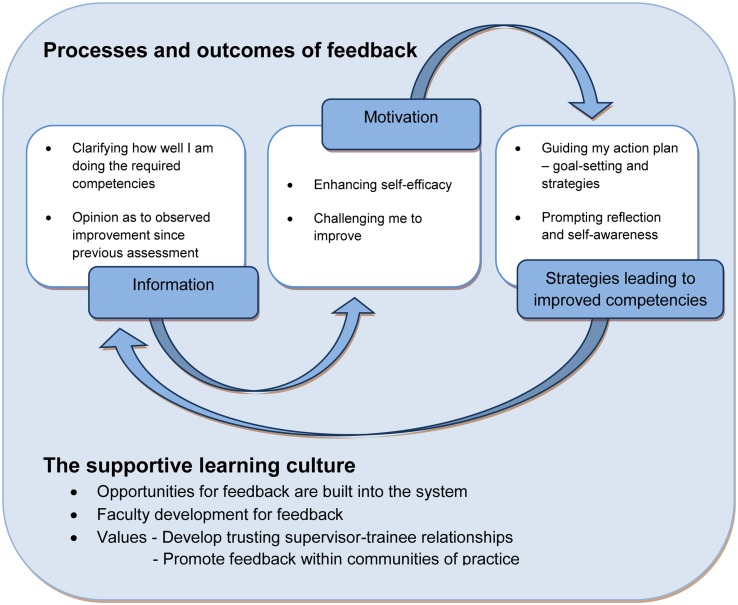
“These processes and outcomes will flourish in the supportive learning culture of systematic dialogic feedback.”
§ Guidelines: the do’s, don’ts and don’t knows of feedback for clinical education > Summary
plaindirect- Asserted: passes — The authors put it forward as true.
- Checkable: fails — It may be too vague to check against evidence.
- Load-bearing: passes — The paper’s conclusions depend on it.
- Based: fails — The paper may give no reason why it holds.
Probably not a substantial claim. It may be too vague to check against evidence. The paper may give no reason why it holds.
In the paper
“Programmatic assessment (a system of frequent formative assessments also used for end-of-year summative judgements) is designed to optimize learning and reduce exam stress [86].”
§ Guidelines: the do’s, don’ts and don’t knows of feedback for clinical education > Background evidence to guidelines for the individual clinical supervisor giving feedback > Don’t knows
What the sources say
- Not checked yetcites [86] Van der Vleuten CPM, Schuwirth LWT, Driessen EW, et al. A model for programmatic assessment fit for purpose. Med Teach. 2012;34:205–14. source
plaindirect- Asserted: passes — The authors put it forward as true.
- Checkable: passes — It can be checked against evidence.
- Load-bearing: fails — The paper’s conclusions may not depend on it.
- Based: passes — The paper gives a reason why it holds.
Probably not a substantial claim. The paper’s conclusions may not depend on it. It may state two separate claims as one.
In the paper
“Feedback about and during the process of teamwork was more reliably effective than feedback about performance given to the team or to individuals within the team.”
§ Guidelines: the do’s, don’ts and don’t knows of feedback for clinical education > Background evidence to guidelines for the individual clinical supervisor giving feedback > Don’t knows
What the sources say
- Not checked yetcites [89] Gabelica C, Bossche P Van Den, Segers M, Gijselaers W. Feedback, a powerful lever in teams: a review. Educ Res Rev. 2012;7:123–44. source
plaindirect- Asserted: passes — The authors put it forward as true.
- Checkable: passes — It can be checked against evidence.
- Load-bearing: fails — The paper’s conclusions may not depend on it.
- Based: passes — The paper gives a reason why it holds.
Probably not a substantial claim. The paper’s conclusions may not depend on it.
A conclusion the paper draws from its own results — it cites no other source for it, so there is none to check. The quote shows it is in the paper.
In the paper
“The wealth of research on feedback paints a picture of a nuanced process, with a great potential to help learners in all sorts of circumstances, but also a process that is fraught with variability and unpredictability, and influenced by individuals, contexts, and culture.”
§ Guidelines: the do’s, don’ts and don’t knows of feedback for clinical education > Conclusion
plaincorrelational- Asserted: passes — The authors put it forward as true.
- Checkable: fails — It may be too vague to check against evidence.
- Load-bearing: passes — The paper’s conclusions depend on it.
- Based: fails — The paper may give no reason why it holds.
Probably not a substantial claim. It may be too vague to check against evidence. The paper may give no reason why it holds. It may state two separate claims as one.
A conclusion the paper draws from its own results — it cites no other source for it, so there is none to check. The quote shows it is in the paper.
In the paper
“And the best feedback process loops back into a subsequent assessment with feedback about whether this has resulted in improved clinical performance.”
§ Guidelines: the do’s, don’ts and don’t knows of feedback for clinical education > Summary
plaindirect- Asserted: passes — The authors put it forward as true.
- Checkable: fails — It may be too vague to check against evidence.
- Load-bearing: passes — The paper’s conclusions depend on it.
- Based: fails — The paper may give no reason why it holds.
Probably not a substantial claim. It may be too vague to check against evidence. The paper may give no reason why it holds.
- Rests on an assumption: Trainees are looking for information about their performance and motivation to be/aim to be exemplary clinicians.
A conclusion the paper draws from its own results — it cites no other source for it, so there is none to check. The quote shows it is in the paper.
In the paper
“The advantages to this approach are that a range of feedback perspectives are gained, feedback-giving is role-modelled, and observers learn vicariously.”
§ Guidelines: the do’s, don’ts and don’t knows of feedback for clinical education > Background evidence to guidelines for the individual clinical supervisor giving feedback > Don’t knows
plaindirect- Asserted: passes — The authors put it forward as true.
- Checkable: passes — It can be checked against evidence.
- Load-bearing: unclear — It is unclear whether the paper’s conclusions depend on it.
- Based: passes — The paper gives a reason why it holds.
It may state two separate claims as one.
- Rests on an assumption: In group learning of clinical skills, feedback to the trainee(s) who have experimented with a task is generally given by and in front of the group.
A conclusion the paper draws from its own results — it cites no other source for it, so there is none to check. The quote shows it is in the paper.
In the paper
“In short, feedback is both an opportunity and a threat for teachers and learners.”
§ Guidelines: the do’s, don’ts and don’t knows of feedback for clinical education > Conclusion
plain- Asserted: passes — The authors put it forward as true.
- Checkable: fails — It may be too vague to check against evidence.
- Load-bearing: passes — The paper’s conclusions depend on it.
- Based: passes — The paper gives a reason why it holds.
Probably not a substantial claim. It may be too vague to check against evidence.
None of the sources cited for this claim have been checked yet.
In the paper
“Recent literature has begun to challenge this approach, suggesting that the quality and impact of feedback may be compromised when the teacher is assigned this dual role [38, 91, 92].”
§ Guidelines: the do’s, don’ts and don’t knows of feedback for clinical education > Background evidence to guidelines for the individual clinical supervisor giving feedback > Don’t knows
What the sources say
- Not checked yetcites [38] Watling C, Driessen E, Vleuten CPM van der, Lingard L. Learning culture and feedback: an international study of medical athletes and musicians. Med Educ. 2014;48:713–23. source
- Not checked yetcites [91] Cavalcanti RB, Detsky AS. The education and training of future physicianswhy coaches can’t be judges. JAMA. 2011;306:993–4.
- Not checked yetcites [92] Kogan JR, Conforti LN, Bernabeo EC, Durning SJ, Hauer KE, Holmboe ES. Faculty staff perceptions of feedback to residents after direct observation of clinical skills. Med Educ. 2012;46:201–15. source
hedgedconditional- Asserted: passes — The authors put it forward as true.
- Checkable: passes — It can be checked against evidence.
- Load-bearing: passes — The paper’s conclusions depend on it.
- Based: passes — The paper gives a reason why it holds.
Probably not a substantial claim.
- Rests on an assumption: The same teacher is routinely expected to play both the coach and assessor roles simultaneously and for the same learner.
A conclusion the paper draws from its own results — it cites no other source for it, so there is none to check. The quote shows it is in the paper.
In the paper
“Feedback resists one-size-fits-all guidelines.”
§ Guidelines: the do’s, don’ts and don’t knows of feedback for clinical education > Conclusion
plain- Asserted: passes — The authors put it forward as true.
- Checkable: fails — It may be too vague to check against evidence.
- Load-bearing: passes — The paper’s conclusions depend on it.
- Based: passes — The paper gives a reason why it holds.
Probably not a substantial claim. It may be too vague to check against evidence.
A conclusion the paper draws from its own results — it cites no other source for it, so there is none to check. The quote shows it is in the paper.
In the paper
“The feedback process is incomplete if it does not result in the generation of strategies for improvement—either recommendations, or self-generated as a result of feedback.”
§ Guidelines: the do’s, don’ts and don’t knows of feedback for clinical education > Summary
plaindirect- Asserted: passes — The authors put it forward as true.
- Checkable: fails — It may be too vague to check against evidence.
- Load-bearing: passes — The paper’s conclusions depend on it.
- Based: fails — The paper may give no reason why it holds.
Probably not a substantial claim. It may be too vague to check against evidence. The paper may give no reason why it holds.
- Rests on an assumption: Trainees are looking for information about their performance and motivation to be/aim to be exemplary clinicians.
A conclusion the paper draws from its own results — it cites no other source for it, so there is none to check. The quote shows it is in the paper.
In the paper
“The disadvantages are reduced control over content and volume of feedback, plus the risk of a negative emotional impact.”
§ Guidelines: the do’s, don’ts and don’t knows of feedback for clinical education > Background evidence to guidelines for the individual clinical supervisor giving feedback > Don’t knows
plaindirect- Asserted: passes — The authors put it forward as true.
- Checkable: passes — It can be checked against evidence.
- Load-bearing: unclear — It is unclear whether the paper’s conclusions depend on it.
- Based: passes — The paper gives a reason why it holds.
It may state two separate claims as one.
- Rests on an assumption: In group learning of clinical skills, feedback to the trainee(s) who have experimented with a task is generally given by and in front of the group.
The paper relies on this without support.
Effective feedback remains difficult to achieve within the context of clinical education.
“Despite the importance of feedback and the attention it has received in scholarly literature, effective feedback remains difficult to achieve within the context of clinical education.”
The paper relies on this without support.
The authors’ combined experience and study in this area is sufficient to offer recommendations.
“we offer recommendations based on published evidence from scientific exploration of the feedback process, and on our combined experience and study in this area.”
The paper relies on this without support.
The Don’t Knows are important questions which if answered would change practice.
“The Don’t Knows were identified as being important questions to this international group of educators which if answered would change practice.”
The paper relies on this without support.
The authors’ range of experience across three countries’ health systems enabled them to compile useful guidelines.
“The range of undergraduate to postgraduate education teaching and research experience we had across three countries’ health systems led us to believe that we could compile useful guidelines.”
The paper relies on this without support.
The authors’ consensus is a valid basis for determining the strength of recommendations.
“indicators of strength of these recommendations were developed which combine the evidence with the authors’ consensus.”
The paper relies on this without support.
Feedback is a powerful way of learning.
“feedback is a powerful way of learning”
The paper relies on this without support.
In group learning of clinical skills, feedback to the trainee(s) who have experimented with a task is generally given by and in front of the group.
“In group learning of clinical skills, feedback to the trainee(s) who have experimented with a task is generally given by and in front of the group.”
The paper relies on this without support.
Medical education blurs the line, at times, between summative and formative assessment.
“Medical education not only blurs the line, at times, between summative and formative assessment, but also blurs the line for its teachers between the roles of coach and assessor.”
The paper relies on this without support.
Medical education blurs the line for its teachers between the roles of coach and assessor.
“Medical education not only blurs the line, at times, between summative and formative assessment, but also blurs the line for its teachers between the roles of coach and assessor.”
The paper relies on this without support.
The same teacher is routinely expected to play both the coach and assessor roles simultaneously and for the same learner.
“Although these roles are distinct—coaches provide formative feedback while assessors make summative judgements—the same teacher is routinely expected to play both roles simultaneously and for the same learner.”
The paper relies on this without support.
Trainees are looking for information about their performance and motivation to be/aim to be exemplary clinicians.
“Trainees are looking for information about their performance and motivation to be/aim to be exemplary clinicians.”
The paper relies on this without support.
Feedback is essential to learning in medicine.
“Feedback may be complex, but it is essential to learning in medicine.”
Claims other papers make about this one
Each is checked against this paper’s own text: does it say what the citing paper says it does?
The cited source says what the claim attributes to it.
In the citing paper
“Invested, credible supervisors 2,4-7 and a supportive, open culture [33][34][35][36] are integral to positive learning and coaching in medicine 8 and education.16,19”
From The R2C2 Model in Residency Education: How Does It Foster Coaching and Promote Feedback Use? (2018) · cites this paper as [2]
In the citing paper
“Features seen to be especially important to the provision of feedback include actively engaging providers and recipients in the feedback interaction and addressing factors that influence feedback credibility and use, such as relationships, context, and culture.[2][3][4][5][6][7][8]”
From The R2C2 Model in Residency Education: How Does It Foster Coaching and Promote Feedback Use? (2018) · cites this paper as [2]
Citations
Cites
Advances In Experimental Social Psychology
(2022) · Advances in experimental social psychology · doi:10.1016/s0065-2601(22)x0002-6 · Cited by 22,559
Vygotsky, L. S. (1964) · Bulletin of the Orton Society · doi:10.1007/bf02928399 · Cited by 20,704
Hattie, J., & Timperley, H. (2007) · Review of Educational Research · doi:10.3102/003465430298487 · Cited by 12,905
THE ROLE OF TUTORING IN PROBLEM SOLVING *
Wood, D., Bruner, J. S., & Ross, G. (1976) · Journal of Child Psychology and Psychiatry · doi:10.1111/j.1469-7610.1976.tb00381.x · Cited by 8,851
Kluger, A. N., & DeNisi, A. (1996) · Psychological Bulletin · doi:10.1037/0033-2909.119.2.254 · Cited by 5,882
Audit and feedback: effects on professional practice and healthcare outcomes
Ivers, N., Jamtvedt, G., Flottorp, S., Young, J. M., Odgaard-Jensen, J., French, S. D., O'Brien, M. A., Johansen, M., Grimshaw, J., & Oxman, A. D. (2012) · Cochrane Database of Systematic Reviews · doi:10.1002/14651858.cd000259.pub3 · Cited by 5,485
Shute, V. J. (2008) · Review of Educational Research · doi:10.3102/0034654307313795 · Cited by 4,631
Promotion and Prevention: Regulatory Focus as A Motivational Principle
Higgins, E. T. (1998) · Advances in Experimental Social Psychology · doi:10.1016/s0065-2601(08)60381-0 · Cited by 3,511
Making a good decision: Value from fit.
Higgins, E. T. (2000) · American Psychologist · doi:10.1037/0003-066x.55.11.1217 · Cited by 2,053
Rethinking models of feedback for learning: the challenge of design
Boud, D., & Molloy, E. (2013) · Assessment & Evaluation in Higher Education · doi:10.1080/02602938.2012.691462 · Cited by 1,636
Cited by
Sorted by citations
Assessment, feedback and the alchemy of learning
Watling, C., & Ginsburg, S. (2018) · Medical Education · doi:10.1111/medu.13645 · Cited by 461
Self-citationHealthcare Simulation Standards of Best PracticeTM The Debriefing Process
Decker, S., Alinier, G., Crawford, S. B., Gordon, R. M., Jenkins, D., & Wilson, C. A. (2021) · Clinical Simulation in Nursing · doi:10.1016/j.ecns.2021.08.011 · Cited by 433
Cheng, A., Nadkarni, V., Mancini, M. B., Hunt, E. A., Sinz, E. H., Merchant, R. M., Donoghue, A. J., Duff, J. P., Eppich, W., Auerbach, M. A., et al. (2018) · Circulation · doi:10.1161/cir.0000000000000583 · Cited by 461
Gottlieb, M. A., Chan, T. M., Zaver, F., & Ellaway, R. (2021) · Medical Education · doi:10.1111/medu.14592 · Cited by 210
Twelve tips for the implementation of EPAs for assessment and entrustment decisions
Peters, H., Holzhausen, Y., Boscardin, C., ten Cate, O., & Chen, H. C. (2017) · Medical Teacher · doi:10.1080/0142159x.2017.1331031 · Cited by 180
Metadata
- Authors
- Lefroy, J., Watling, C., Teunissen, P. W., & Brand, P.
- Affiliations
- Keele University (GB)
- Maastricht University Medical Centre (NL)
- Isala (NL)
- Corresponding author
- Lefroy, Janet
- Venue
- Perspectives on Medical Education
- Publisher
- Ubiquity Press, Ltd.
- Published
- 2015-11-30
- Volume
- 4
- Issue
- 6
- Pages
- 284-299
- ISSN
- 2212-2761 (ISSN-L)
- 2212-277X
- PMC
- PMC4673072
- OpenAlex
- W2184804741
- Semantic Scholar
- a247cc3bded28c9d1b09ad1d54b30c73454a56a6
- Cited by
- 347
- References
- 99
- Citations by year
- 2026: 26 · 2025: 26 · 2024: 31 · 2023: 44 · 2022: 44 · 2021: 54 · 2020: 29 · 2019: 39 · 2018: 26 · 2017: 19 · 2016: 8 · 2015: 1
- FWCI
- 19.30
- Type
- journal article
- Language
- en
- Open access
- diamond
- doi.org
- Licence
- Locations
- Perspectives on Medical Education (publishedVersion, cc-by)
- Europe PMC (PubMed Central) (publishedVersion, cc-by)
- PubMed Central (publishedVersion, cc-by)
- PubMed (publishedVersion)
- Research Publications (Maastricht University) (publishedVersion, cc-by)
- Amsterdam UMC (VU Amsterdam) - Institutional Repository (publishedVersion, other-oa)
- Keele Research Repository (Keele University) (submittedVersion, cc-by)
- Pure Amsterdam UMC (submittedVersion, other-oa)
- DOAJ (DOAJ: Directory of Open Access Journals) (submittedVersion)
- University of Groningen research database (University of Groningen / Centre for Information Technology) (submittedVersion, other-oa)
- Research Publications (Maastricht University) (submittedVersion, other-oa)
- Data Archiving and Networked Services (DANS) (submittedVersion, other-oa)
- Topics
- Social Sciences › Education › Innovations in Medical Education
- Health Sciences › Medicine › Family Practice › Clinical Reasoning and Diagnostic Skills
- Social Sciences › Education › Student Assessment and Feedback
- Keywords
- formative feedback, clinical supervision, clinical teaching, trainee feedback, learning culture, competence development, self-efficacy, medical education
About these checks
Registry, retraction, Cites and statistics results are computed, not judged, with one exception: a printed reference that no index lists is read once by a model before it counts as a citation error. Claims are extracted by a model and kept only when their quote appears verbatim in the text; each cited source is then checked, with a model’s help, for whether it says what the claim relies on. Those verdicts can be wrong — read the claim’s quote and the cited source before relying on one.
A language model drew the claims from the paper on 2026-10-10, under version 3 of the claim definition (model deepseek-v4.1-flash, prompt extract-v3).
A second model labelled each claim on 2026-10-10 (model jev-1.13-20260917, definition revision gold-guideline-v0.2).
Cited sources are checked with a language model’s help (gpt-6-sol).
Statistics and arithmetic are recomputed, not judged.
Confidence bands are shown only for fields calibrated on our annotated test set. None is calibrated yet, so no band is shown.
What counts as a claim ›How we measure confidence ›How we check this ›
Are you an author, or do you see a problem with this page? Request a review
