

The DOI matches its Crossref record; 79 of the 81 references it cites were found in a registry or an index; 6 of the 76 sources its claims cite were checked for support.
World Endometriosis Research Foundation Endometriosis Phenome and biobanking harmonization project: II. Clinical and covariate phenotype data collection in endometriosis research
Open accessAbstract
OBJECTIVE: To harmonize the collection of nonsurgical clinical and epidemiologic data relevant to endometriosis research, allowing large-scale collaboration. DESIGN: An international collaboration involving 34 clinical/academic centers and three industry collaborators from 16 countries on five continents. SETTING: In 2013, two workshops followed by global consultation, bringing together 54 leaders in endometriosis research. PATIENTS: None. INTERVENTION(S): Development of a self-administered endometriosis patient questionnaire (EPQ), based on [1] systematic comparison of questionnaires from eight centers that collect data from endometriosis cases (and controls/comparison women) on a medium to large scale (publication on >100 cases); [2] literature evidence; and [3] several global consultation rounds. MAIN OUTCOME MEASURE(S): Standard recommended and minimum required questionnaires to capture detailed clinical and covariate data. RESULT(S): The standard recommended (EPHect EPQ-S) and minimum required (EPHect EPQ-M) questionnaires contain questions on pelvic pain, subfertility and menstrual/reproductive history, hormone/medication use, medical history, and personal information. CONCLUSION(S): The EPQ captures the basic set of patient characteristics and exposures considered by the WERF EPHect Working Group to be most critical for the advancement of endometriosis research, but is also relevant to other female conditions with similar risk factors and/or symptomatology. The instruments will be reviewed based on feedback from investigators, and-after a first review after 1 year-triannually through systematic follow-up surveys. Updated versions will be made available through http://endometriosisfoundation.org/ephect.
Overview
AI snapshot
Written from the paper’s full text.
TL;DR
The WERF EPHect Working Group developed standard recommended (EPQ-S) and minimum required (EPQ-M) self-administered questionnaires to harmonize nonsurgical clinical and epidemiologic data collection in endometriosis research. The instruments cover pain, subfertility/reproductive history, menstrual and hormone history, medical/surgical history, medication use, and personal/lifestyle information, with planned periodic review.
Key findings
- The standard recommended (EPHect EPQ-S) and minimum required (EPHect EPQ-M) questionnaires contain questions on pelvic pain, subfertility and menstrual/reproductive history, hormone/medication use, medical history, and personal information.
- Development involved 34 clinical/academic centers and three industry collaborators (54 participants) from 16 countries on five continents, and was based on questionnaires from eight centers that had published on >100 cases.
- Pilot work in several EPHect centers showed the full standard questionnaire requires 25 to 40 minutes to complete in paper or electronic form; the EPQ-M excludes life-course sections considered secondary in some settings.
- Pain intensity is measured on an 11-point numerical rating scale; the EPQ includes the SF-MPQ, recommends SF-MPQ-2 as standard, and includes the 13-question Pain Catastrophizing Scale; menstrual flow is classified using a validated menstrual pictogram.
Methods
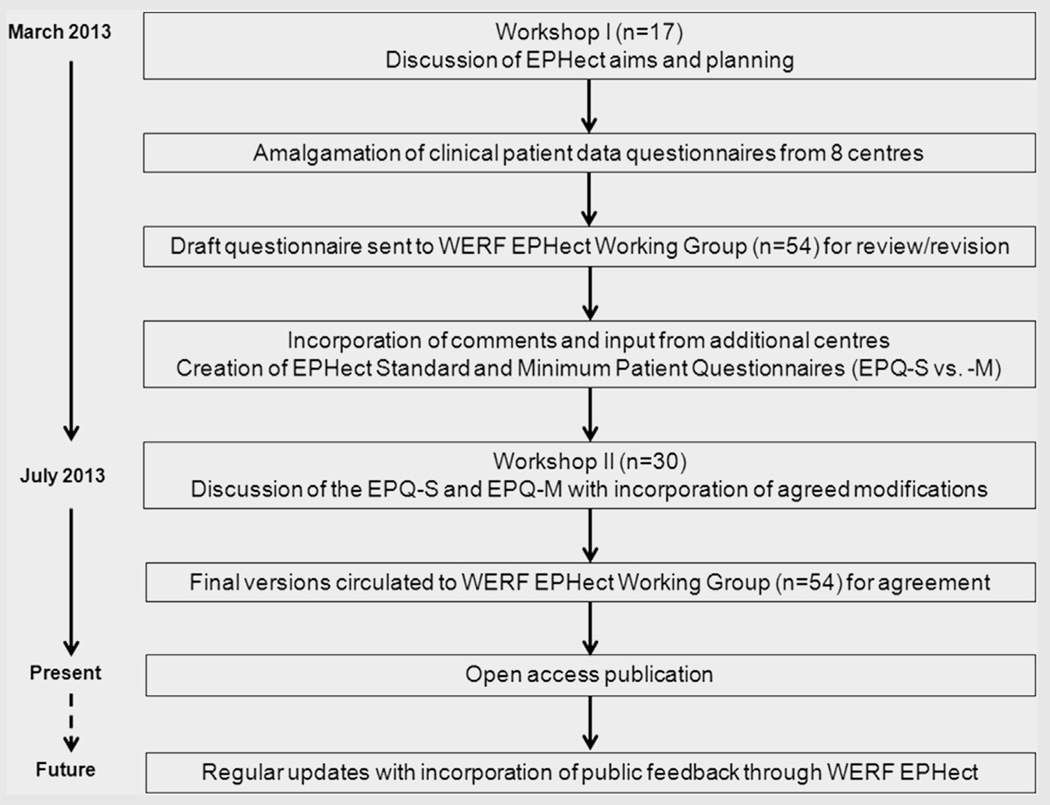
- International consensus process: two workshops in March 2013 and July 2013, followed by global consultation, bringing together 54 leaders in endometriosis research; 34 clinical/academic centers and three industry collaborators from 16 countries participated.
- Questionnaire development used systematic comparison of questionnaires from eight centers, a PubMed literature search, expert review of question phrasing and temporality, patient/volunteer piloting, face-validity review, and consensus at Workshop II.
- No patients were included; ethics committee or IRB approval was not required for formation of the Working Group, literature review, or consensus on best practices, and the endeavor did not include human subjects data.
Limitations
- Stated: the EPQ is not designed for clinical practice to inform immediate clinical decisions, nor for in-clinic completion and immediate review.
- Stated: the Working Group excluded potentially important exposures such as nevi and freckles, sun exposure, and in utero exposures, and did not include validated generic health status or depression/anxiety scales because some require registration and/or payment; self-administered questionnaires are also not appropriate for accurately collecting detailed infertility treatment data.
- Evident from the text: no formal psychometric validation of the full EPQ is reported; validation relies on previously validated component questions, piloting, and face-validity review.
Model-written summary. Check it against the paper before relying on it.
Integrity signals
Registry
Cites
Statistics
Figures
Verification
Claims the paper makes
40 Not checked yet · 19 No basis given · 14 Own interpretation · 10 Own method · 3 Partly supported · 2 Own result · accuracy not yet measured
The cited sources support only part of this claim — read each source’s verdict below.
In the paper
“In addition, long-term and recent hormone use can affect biomarker profiles (41–43)”
§ World Endometriosis Research Foundation Endometriosis Phenome and biobanking harmonization project: II. Clinical and covariate phenotype data collection in endometriosis research > RESULTS > Menstrual History and Hormone Use
What the sources say
- Partly supportedcites [41] Piltonen, 2012, Oral, transdermal and vaginal combined contraceptives induce an increase in markers of chronic inflammation and impair insulin sensitivity in young healthy normal-weight women: a randomized study, Hum Reprod sourceExperimental — accuracy not yet measured
The Measurements section reports biomarker sampling at baseline and after 5 and 9 weeks of contraceptive treatment. The Serum levels of lipids, CRP and PTX-3 section reports changes in several markers over that period, supporting the point about recent hormone use. The study does not establish an effect of long-term use. (LLM, conf=0.87)
- Partly supportedcites [42] Rossouw, 2008, Inflammatory, lipid, thrombotic, and genetic markers of coronary heart disease risk in the women's health initiative trials of hormone therapy, Arch Intern Med sourceExperimental — accuracy not yet measured
The Results section, “Biomarker Changes from Baseline to Year 1” (page not provided), reports changes in inflammatory, lipid, and other biomarkers after one year of hormone therapy. This supports the point that hormone use can affect biomarker profiles, but the paper does not establish the claim specifically for both long-term and recent use. (LLM, conf=0.82)
- Partly supportedcites [43] de Sa Rosa e Silva, 2006, The levonorgestrel-releasing intrauterine device reduces CA-125 serum levels in patients with endometriosis, Fertil Steril sourceExperimental — accuracy not yet measured
The study reports that six months of levonorgestrel-IUD or GnRH-agonist treatment significantly reduced serum CA-125 in patients with endometriosis (results, pp. 742–744). This supports an effect of sustained hormone treatment on one biomarker, but does not establish an effect of recent hormone use or changes across biomarker profiles more broadly. (LLM, conf=0.85)
plaindirect- Asserted: passes — The authors put it forward as true.
- Checkable: passes — It can be checked against evidence.
- Load-bearing: passes — The paper’s conclusions depend on it.
- Based: passes — The paper gives a reason why it holds.
- Partly supported
The cited sources support only part of this claim — read each source’s verdict below.
In the paper
“Current BMI has been shown to be inversely associated with endometriosis (66) and validly measured by self-reported questionnaire (67–69).”
§ World Endometriosis Research Foundation Endometriosis Phenome and biobanking harmonization project: II. Clinical and covariate phenotype data collection in endometriosis research > RESULTS > Personal Information
What the sources say
- Not checked yetcites [67] Rowland, 1990, Self-reported weight and height, Am J Clin Nutr source
- Partly supportedcites [68] Stommel, 2009, Accuracy and usefulness of BMI measures based on self-reported weight and height: findings from the NHANES & NHIS 2001–2006, BMC Public Health sourceExperimental — accuracy not yet measured
The Results report that self-reported BMI was within two BMI units of measured BMI for 81.5% of adults, supporting its usefulness as an approximate measure. But the Discussion reports substantial misclassification at the high and low ends of the BMI scale, and the Conclusion qualifies its use for estimating health risks on correcting for demographic biases. The unqualified claim that current BMI is validly measured by questionnaire overstates the paper. (LLM, conf=0.88)
- Could not verifycites [69] Spencer, 2004, Accuracy of self-reported waist and hip measurements in 4492 EPIC-Oxford participants, Public Health Nutr sourceExperimental — accuracy not yet measured
The Participants and methods section calculates BMI from measured height and weight; the study validates self-reported waist and hip measurements, not questionnaire-based BMI. The Discussion mentions an earlier comparison of self-reported and measured BMI and notes greater underestimation among heavier participants, but does not establish that self-reported BMI is valid. (LLM, conf=0.72)
plain- Asserted: passes — The authors put it forward as true.
- Checkable: passes — It can be checked against evidence.
- Load-bearing: passes — The paper’s conclusions depend on it.
- Based: passes — The paper gives a reason why it holds.
A result the paper reports from its own data — it cites no other source for it, so there is none to check. The quote shows it is in the paper.
In the paper
“However, we stress that pilot work in several EPHect centers has shown that in both paper and electronic form the full standard questionnaire requires 25 to 40 minutes to complete.”
§ World Endometriosis Research Foundation Endometriosis Phenome and biobanking harmonization project: II. Clinical and covariate phenotype data collection in endometriosis research > RESULTS
plain- Asserted: passes — The authors put it forward as true.
- Checkable: passes — It can be checked against evidence.
- Load-bearing: passes — The paper’s conclusions depend on it.
- Based: passes — The paper gives a reason why it holds.
The paper states this without a source or data behind it here, so there is nothing to check it against. The quote shows it is in the paper.
In the paper
“and [2] standard operating procedures (SOPs) for the collection, processing, and long-term storage of biologic samples from women with and without endometriosis.”
§ World Endometriosis Research Foundation Endometriosis Phenome and biobanking harmonization project: II. Clinical and covariate phenotype data collection in endometriosis research > Abstract > Conclusion(s)
plain- Asserted: passes — The authors put it forward as true.
- Checkable: passes — It can be checked against evidence.
- Load-bearing: passes — The paper’s conclusions depend on it.
- Based: passes — The paper gives a reason why it holds.
The paper states this without a source or data behind it here, so there is nothing to check it against. The quote shows it is in the paper.
In the paper
“A complete history of hormone use is captured in the questionnaire”
§ World Endometriosis Research Foundation Endometriosis Phenome and biobanking harmonization project: II. Clinical and covariate phenotype data collection in endometriosis research > RESULTS > Menstrual History and Hormone Use
plain- Asserted: passes — The authors put it forward as true.
- Checkable: passes — It can be checked against evidence.
- Load-bearing: passes — The paper’s conclusions depend on it.
- Based: passes — The paper gives a reason why it holds.
A result the paper reports from its own data — it cites no other source for it, so there is none to check. The quote shows it is in the paper.
In the paper
“In the EPHect EPQ, participants are asked if they have ever been diagnosed (and at what age) with a list of ~30 medical conditions, including cancer, gynecologic diseases, pain syndromes, and autoimmune diseases”
§ World Endometriosis Research Foundation Endometriosis Phenome and biobanking harmonization project: II. Clinical and covariate phenotype data collection in endometriosis research > RESULTS > Medical and Surgical History
plain- Asserted: passes — The authors put it forward as true.
- Checkable: passes — It can be checked against evidence.
- Load-bearing: passes — The paper’s conclusions depend on it.
- Based: passes — The paper gives a reason why it holds.
None of the sources cited for this claim have been checked yet.
In the paper
“Indeed, successful, field-altering risk-factor and subphenotype investigations among many centers have been demonstrated by large consortia across an array of health outcomes (5–11).”
§ World Endometriosis Research Foundation Endometriosis Phenome and biobanking harmonization project: II. Clinical and covariate phenotype data collection in endometriosis research > Abstract > Conclusion(s)
What the sources say
- Not checked yetcites [5] Blein, 2014, Factors associated with oxidative stress and cancer risk in the Breast and Prostate Cancer Cohort Consortium, Free Radic Res source
- Not checked yetcites [6] Elks, 2013, Age at menarche and type 2 diabetes risk: the EPIC-InterAct study, Diabetes Care source
- Not checked yetcites [7] Felix, 2013, The etiology of uterine sarcomas: a pooled analysis of the epidemiology of endometrial cancer consortium, Br J Cancer source
- Not checked yetcites [8] Thorgeirsson, 2013, A common biological basis of obesity and nicotine addiction, Transl Psychiatry source
- Not checked yetcites [9] Trabert, 2014, Aspirin, nonaspirin nonsteroidal anti-inflammatory drug, and acetaminophen use and risk of invasive epithelial ovarian cancer: a pooled analysis in the Ovarian Cancer Association Consortium, J Natl Cancer Inst source
- Not checked yetcites [10] Jung, 2013, Fruit and vegetable intake and risk of breast cancer by hormone receptor status, J Natl Cancer Inst source
- Not checked yetcites [11] Pesch, 2013, N-acetyltransferase 2 phenotype, occupation, and bladder cancer risk: results from the EPIC cohort, Cancer Epidemiol Biomarkers Prev source
boosteddirect- Asserted: passes — The authors put it forward as true.
- Checkable: passes — It can be checked against evidence.
- Load-bearing: unclear — It is unclear whether the paper’s conclusions depend on it.
- Based: passes — The paper gives a reason why it holds.
None of the sources cited for this claim have been checked yet.
In the paper
“It also is a direct answer to the key priority of phenome data collection and SOP harmonization identified in Endometriosis Research Directions workshops held in 2008 (12) and 2011 (2)”
§ World Endometriosis Research Foundation Endometriosis Phenome and biobanking harmonization project: II. Clinical and covariate phenotype data collection in endometriosis research > Abstract > Conclusion(s)
What the sources say
- Not checked yetcites [12] Rogers, 2009, Priorities for endometriosis research: recommendations from an international consensus workshop, Reprod Sci source
- Not checked yetcites [2] Rogers, 2013, Defining future directions for endometriosis research: workshop report from the 2011 World Congress of Endometriosis in Montpellier, France, Reprod Sci source
plaindirect- Asserted: passes — The authors put it forward as true.
- Checkable: passes — It can be checked against evidence.
- Load-bearing: passes — The paper’s conclusions depend on it.
- Based: passes — The paper gives a reason why it holds.
In the paper
“it may be that the inclusion of different patient populations in studies, which cannot be adequately defined or recognized as they have been poorly characterized, has led to conflicting results between studies of different populations (2).”
§ World Endometriosis Research Foundation Endometriosis Phenome and biobanking harmonization project: II. Clinical and covariate phenotype data collection in endometriosis research > Abstract > Conclusion(s)
What the sources say
- Not checked yetcites [2] Rogers, 2013, Defining future directions for endometriosis research: workshop report from the 2011 World Congress of Endometriosis in Montpellier, France, Reprod Sci source
hedgedconditional- Asserted: passes — The authors put it forward as true.
- Checkable: passes — It can be checked against evidence.
- Load-bearing: passes — The paper’s conclusions depend on it.
- Based: passes — The paper gives a reason why it holds.
In the paper
“The variability of patient “types” included in endometriosis research studies is not solely determined by the surgical characterization of the (extent of) disease during laparoscopy (1).”
§ World Endometriosis Research Foundation Endometriosis Phenome and biobanking harmonization project: II. Clinical and covariate phenotype data collection in endometriosis research > Abstract > Conclusion(s)
What the sources say
- Not checked yetcites [1] Becker, 2014, World Endometriosis Research Foundation Endometriosis Phenome and Biobanking Harmonisation Project: I. Surgical phenotype data collection in endometriosis research, Fertil Steril source
plain- Asserted: passes — The authors put it forward as true.
- Checkable: passes — It can be checked against evidence.
- Load-bearing: passes — The paper’s conclusions depend on it.
- Based: passes — The paper gives a reason why it holds.
- It may state two separate claims as one. 23
- Probably not a substantial claim. 55
The cited sources support only part of this claim — read each source’s verdict below.
In the paper
“As the pain catastrophizing scale is valid and relevant for both patients and healthy controls (referring to any pain experienced rather than to pelvic pain specifically), acceptable to patients/controls, and comprises of only 13 questions”
§ World Endometriosis Research Foundation Endometriosis Phenome and biobanking harmonization project: II. Clinical and covariate phenotype data collection in endometriosis research > RESULTS > Pain
What the sources say
- Partly supportedcites [25] Quartana, 2009, Pain catastrophizing: a critical review, Expert Rev Neurother sourceExperimental — accuracy not yet measured
The section ‘Pain catastrophizing: conceptual & measurement considerations’ (page not provided) reports that the PCS factor structure has been replicated in healthy, pain-free adults and chronic pain patients, and appears invariant across patient and nonpatient groups. It also says respondents rate items by recalling past pain experiences, rather than pelvic pain specifically. Our copy does not establish that patients and controls find the scale acceptable or state that it has 13 questions. (LLM, conf=0.86)
plain- Asserted: passes — The authors put it forward as true.
- Checkable: passes — It can be checked against evidence.
- Load-bearing: passes — The paper’s conclusions depend on it.
- Based: passes — The paper gives a reason why it holds.
It may state two separate claims as one.
- Partly supported
The paper states this without a source or data behind it here, so there is nothing to check it against. The quote shows it is in the paper.
In the paper
“These sections focus on symptoms or characteristics pertaining across the life course.”
§ World Endometriosis Research Foundation Endometriosis Phenome and biobanking harmonization project: II. Clinical and covariate phenotype data collection in endometriosis research > RESULTS
plain- Asserted: passes — The authors put it forward as true.
- Checkable: passes — It can be checked against evidence.
- Load-bearing: fails — The paper’s conclusions may not depend on it.
- Based: passes — The paper gives a reason why it holds.
Probably not a substantial claim. The paper’s conclusions may not depend on it.
The paper states this without a source or data behind it here, so there is nothing to check it against. The quote shows it is in the paper.
In the paper
“To date, the WERF EPHect global initiative has involved 34 clinical/academic centers and three industry collaborators (54 participants) from 16 countries on five continents.”
§ World Endometriosis Research Foundation Endometriosis Phenome and biobanking harmonization project: II. Clinical and covariate phenotype data collection in endometriosis research > MATERIALS AND METHODS
plainn = 54- Asserted: passes — The authors put it forward as true.
- Checkable: passes — It can be checked against evidence.
- Load-bearing: fails — The paper’s conclusions may not depend on it.
- Based: passes — The paper gives a reason why it holds.
Probably not a substantial claim. The paper’s conclusions may not depend on it.
The paper states this without a source or data behind it here, so there is nothing to check it against. The quote shows it is in the paper.
In the paper
“EPHect therefore agreed on two tiers for all data collection instruments as well as for biologic sample SOPs: standard recommended and minimum required.”
§ World Endometriosis Research Foundation Endometriosis Phenome and biobanking harmonization project: II. Clinical and covariate phenotype data collection in endometriosis research > MATERIALS AND METHODS
plain- Asserted: passes — The authors put it forward as true.
- Checkable: passes — It can be checked against evidence.
- Load-bearing: passes — The paper’s conclusions depend on it.
- Based: passes — The paper gives a reason why it holds.
Probably not a substantial claim.
The paper states this without a source or data behind it here, so there is nothing to check it against. The quote shows it is in the paper.
In the paper
“The standard recommended (EPHect EPQ-S) and minimum required (EPHect EPQ-M) questionnaires contain questions on pelvic pain, subfertility and menstrual/reproductive history, hormone/medication use, medical history, and personal information.”
§ World Endometriosis Research Foundation Endometriosis Phenome and biobanking harmonization project: II. Clinical and covariate phenotype data collection in endometriosis research > Abstract > Result(s)
plain- Asserted: passes — The authors put it forward as true.
- Checkable: passes — It can be checked against evidence.
- Load-bearing: passes — The paper’s conclusions depend on it.
- Based: passes — The paper gives a reason why it holds.
Probably not a substantial claim.
The paper states this without a source or data behind it here, so there is nothing to check it against. The quote shows it is in the paper.
In the paper
“The EPQ captures the basic set of patient characteristics and exposures considered by the WERF EPHect Working Group to be most critical for the advancement of endometriosis research”
§ World Endometriosis Research Foundation Endometriosis Phenome and biobanking harmonization project: II. Clinical and covariate phenotype data collection in endometriosis research > Abstract > Conclusion(s)
plain- Asserted: passes — The authors put it forward as true.
- Checkable: passes — It can be checked against evidence.
- Load-bearing: passes — The paper’s conclusions depend on it.
- Based: passes — The paper gives a reason why it holds.
Probably not a substantial claim.
The paper states this without a source or data behind it here, so there is nothing to check it against. The quote shows it is in the paper.
In the paper
“WERF EPHect provides evidence-based guidelines on [1] detailed surgical, clinical, and epidemiologic phenotyping (phenome) data to be collected from women with and without endometriosis to allow collaborative subphenotype discovery and validation analyses”
§ World Endometriosis Research Foundation Endometriosis Phenome and biobanking harmonization project: II. Clinical and covariate phenotype data collection in endometriosis research > Abstract > Conclusion(s)
plain- Asserted: passes — The authors put it forward as true.
- Checkable: passes — It can be checked against evidence.
- Load-bearing: passes — The paper’s conclusions depend on it.
- Based: passes — The paper gives a reason why it holds.
Probably not a substantial claim.
None of the sources cited for this claim have been checked yet.
In the paper
“Using these guidelines, the EPHect Working Group agreed that pain intensity will be measured on an 11-point numerical rating scale (NRS) anchored with 0 = no pain and 10 = worst imaginable pain.”
§ World Endometriosis Research Foundation Endometriosis Phenome and biobanking harmonization project: II. Clinical and covariate phenotype data collection in endometriosis research > RESULTS > Pain
plain- Asserted: passes — The authors put it forward as true.
- Checkable: passes — It can be checked against evidence.
- Load-bearing: passes — The paper’s conclusions depend on it.
- Based: passes — The paper gives a reason why it holds.
Probably not a substantial claim.
The paper states this without a source or data behind it here, so there is nothing to check it against. The quote shows it is in the paper.
In the paper
“Pain affect is captured on the EPHect EPQ with the short form McGill Pain Questionnaire (SF-MPQ).”
§ World Endometriosis Research Foundation Endometriosis Phenome and biobanking harmonization project: II. Clinical and covariate phenotype data collection in endometriosis research > RESULTS > Pain
plain- Asserted: passes — The authors put it forward as true.
- Checkable: passes — It can be checked against evidence.
- Load-bearing: fails — The paper’s conclusions may not depend on it.
- Based: passes — The paper gives a reason why it holds.
Probably not a substantial claim. The paper’s conclusions may not depend on it.
The paper states this without a source or data behind it here, so there is nothing to check it against. The quote shows it is in the paper.
In the paper
“and this definition can be derived from data collected with the EPHect EPQ.”
§ World Endometriosis Research Foundation Endometriosis Phenome and biobanking harmonization project: II. Clinical and covariate phenotype data collection in endometriosis research > RESULTS > Subfertility and Reproductive History
plain- Asserted: passes — The authors put it forward as true.
- Checkable: passes — It can be checked against evidence.
- Load-bearing: passes — The paper’s conclusions depend on it.
- Based: passes — The paper gives a reason why it holds.
Probably not a substantial claim.
The paper states this without a source or data behind it here, so there is nothing to check it against. The quote shows it is in the paper.
In the paper
“The EPHect EPQ-S includes a table on lifetime menstrual cycle characteristics while not on hormone medication, across different age ranges, which is not included in the EPHect EPQ-M.”
§ World Endometriosis Research Foundation Endometriosis Phenome and biobanking harmonization project: II. Clinical and covariate phenotype data collection in endometriosis research > RESULTS > Menstrual History and Hormone Use
plain- Asserted: passes — The authors put it forward as true.
- Checkable: passes — It can be checked against evidence.
- Load-bearing: fails — The paper’s conclusions may not depend on it.
- Based: passes — The paper gives a reason why it holds.
Probably not a substantial claim. The paper’s conclusions may not depend on it.
The paper states this without a source or data behind it here, so there is nothing to check it against. The quote shows it is in the paper.
In the paper
“A detailed pregnancy history is captured in the EPHect EPQ, including age at the start of each pregnancy, type of fertility treatment used for each pregnancy, if applicable, and pregnancy outcome.”
§ World Endometriosis Research Foundation Endometriosis Phenome and biobanking harmonization project: II. Clinical and covariate phenotype data collection in endometriosis research > RESULTS > Subfertility and Reproductive History
plain- Asserted: passes — The authors put it forward as true.
- Checkable: passes — It can be checked against evidence.
- Load-bearing: fails — The paper’s conclusions may not depend on it.
- Based: passes — The paper gives a reason why it holds.
Probably not a substantial claim. The paper’s conclusions may not depend on it. It may state two separate claims as one.
In the paper
“Therefore, we have classified menstrual flow as spotting, light, moderate, and heavy using a previously validated menstrual pictogram (40).”
§ World Endometriosis Research Foundation Endometriosis Phenome and biobanking harmonization project: II. Clinical and covariate phenotype data collection in endometriosis research > RESULTS > Menstrual History and Hormone Use
What the sources say
- Not checked yetcites [40] Wyatt, 2001, Determination of total menstrual blood loss, Fertil Steril source
plain- Asserted: passes — The authors put it forward as true.
- Checkable: passes — It can be checked against evidence.
- Load-bearing: fails — The paper’s conclusions may not depend on it.
- Based: passes — The paper gives a reason why it holds.
Probably not a substantial claim. The paper’s conclusions may not depend on it.
The paper states this without a source or data behind it here, so there is nothing to check it against. The quote shows it is in the paper.
In the paper
“Age at menarche and menstrual cycle characteristics in the last 3 months are captured in detail on the questionnaire”
§ World Endometriosis Research Foundation Endometriosis Phenome and biobanking harmonization project: II. Clinical and covariate phenotype data collection in endometriosis research > RESULTS > Menstrual History and Hormone Use
plain- Asserted: passes — The authors put it forward as true.
- Checkable: passes — It can be checked against evidence.
- Load-bearing: passes — The paper’s conclusions depend on it.
- Based: passes — The paper gives a reason why it holds.
Probably not a substantial claim.
The paper states this without a source or data behind it here, so there is nothing to check it against. The quote shows it is in the paper.
In the paper
“Subfertility is assessed in the EPHect EPQ by the longest time (>6 months) a study participant has tried to become pregnant without success and any tests she might have had to find the cause of the sub-fertility.”
§ World Endometriosis Research Foundation Endometriosis Phenome and biobanking harmonization project: II. Clinical and covariate phenotype data collection in endometriosis research > RESULTS > Subfertility and Reproductive History
plain- Asserted: passes — The authors put it forward as true.
- Checkable: passes — It can be checked against evidence.
- Load-bearing: passes — The paper’s conclusions depend on it.
- Based: passes — The paper gives a reason why it holds.
Probably not a substantial claim.
The paper states this without a source or data behind it here, so there is nothing to check it against. The quote shows it is in the paper.
In the paper
“Additional details for live births include whether the pregnancy was a multiple gestation, the type of delivery, and pregnancy complications.”
§ World Endometriosis Research Foundation Endometriosis Phenome and biobanking harmonization project: II. Clinical and covariate phenotype data collection in endometriosis research > RESULTS > Subfertility and Reproductive History
plain- Asserted: passes — The authors put it forward as true.
- Checkable: passes — It can be checked against evidence.
- Load-bearing: fails — The paper’s conclusions may not depend on it.
- Based: passes — The paper gives a reason why it holds.
Probably not a substantial claim. The paper’s conclusions may not depend on it. It may state two separate claims as one.
In the paper
“To capture bowel symptoms that are common in women with endometriosis, we have included questions from the Rome III criteria irritable bowel syndrome module (58).”
§ World Endometriosis Research Foundation Endometriosis Phenome and biobanking harmonization project: II. Clinical and covariate phenotype data collection in endometriosis research > RESULTS > Medical and Surgical History
What the sources say
- Not checked yetcites [58] Drossman, 2006, Rome III: New standard for functional gastrointestinal disorders, J Gastrointestin Liver Dis
plain- Asserted: passes — The authors put it forward as true.
- Checkable: passes — It can be checked against evidence.
- Load-bearing: passes — The paper’s conclusions depend on it.
- Based: passes — The paper gives a reason why it holds.
Probably not a substantial claim.
The paper states this without a source or data behind it here, so there is nothing to check it against. The quote shows it is in the paper.
In the paper
“A diagnostic history for endometriosis is canvassed in detail, including age at first symptoms, age and method of diagnoses, and any prior surgical treatments.”
§ World Endometriosis Research Foundation Endometriosis Phenome and biobanking harmonization project: II. Clinical and covariate phenotype data collection in endometriosis research > RESULTS > Medical and Surgical History
plain- Asserted: passes — The authors put it forward as true.
- Checkable: passes — It can be checked against evidence.
- Load-bearing: fails — The paper’s conclusions may not depend on it.
- Based: passes — The paper gives a reason why it holds.
Probably not a substantial claim. The paper’s conclusions may not depend on it.
The paper states this without a source or data behind it here, so there is nothing to check it against. The quote shows it is in the paper.
In the paper
“A family history of endometriosis or of chronic pelvic pain is also obtained”
§ World Endometriosis Research Foundation Endometriosis Phenome and biobanking harmonization project: II. Clinical and covariate phenotype data collection in endometriosis research > RESULTS > Medical and Surgical History
plain- Asserted: passes — The authors put it forward as true.
- Checkable: passes — It can be checked against evidence.
- Load-bearing: fails — The paper’s conclusions may not depend on it.
- Based: passes — The paper gives a reason why it holds.
Probably not a substantial claim. The paper’s conclusions may not depend on it.
None of the sources cited for this claim have been checked yet.
In the paper
“Any occurrence of a structural problem/birth defect of the uterus, cervix, or vagina is also ascertained and whether it was surgically repaired”
§ World Endometriosis Research Foundation Endometriosis Phenome and biobanking harmonization project: II. Clinical and covariate phenotype data collection in endometriosis research > RESULTS > Medical and Surgical History
plain- Asserted: passes — The authors put it forward as true.
- Checkable: passes — It can be checked against evidence.
- Load-bearing: passes — The paper’s conclusions depend on it.
- Based: passes — The paper gives a reason why it holds.
Probably not a substantial claim. It may state two separate claims as one.
The paper states this without a source or data behind it here, so there is nothing to check it against. The quote shows it is in the paper.
In the paper
“Additionally, women are asked about recent bowel and urinary symptoms.”
§ World Endometriosis Research Foundation Endometriosis Phenome and biobanking harmonization project: II. Clinical and covariate phenotype data collection in endometriosis research > RESULTS > Medical and Surgical History
plain- Asserted: passes — The authors put it forward as true.
- Checkable: passes — It can be checked against evidence.
- Load-bearing: passes — The paper’s conclusions depend on it.
- Based: passes — The paper gives a reason why it holds.
Probably not a substantial claim.
What the paper did — it cites no source for this, so there is none to check. The quote shows it is in the paper.
In the paper
“During Workshop II, the questionnaire was presented to participants together with a summary of reviews obtained through e-mail consultation, and a consensus was obtained on the final content and format of the questionnaire”
§ World Endometriosis Research Foundation Endometriosis Phenome and biobanking harmonization project: II. Clinical and covariate phenotype data collection in endometriosis research > MATERIALS AND METHODS
plain- Asserted: passes — The authors put it forward as true.
- Checkable: passes — It can be checked against evidence.
- Load-bearing: fails — The paper’s conclusions may not depend on it.
- Based: passes — The paper gives a reason why it holds.
Probably not a substantial claim. The paper’s conclusions may not depend on it.
In the paper
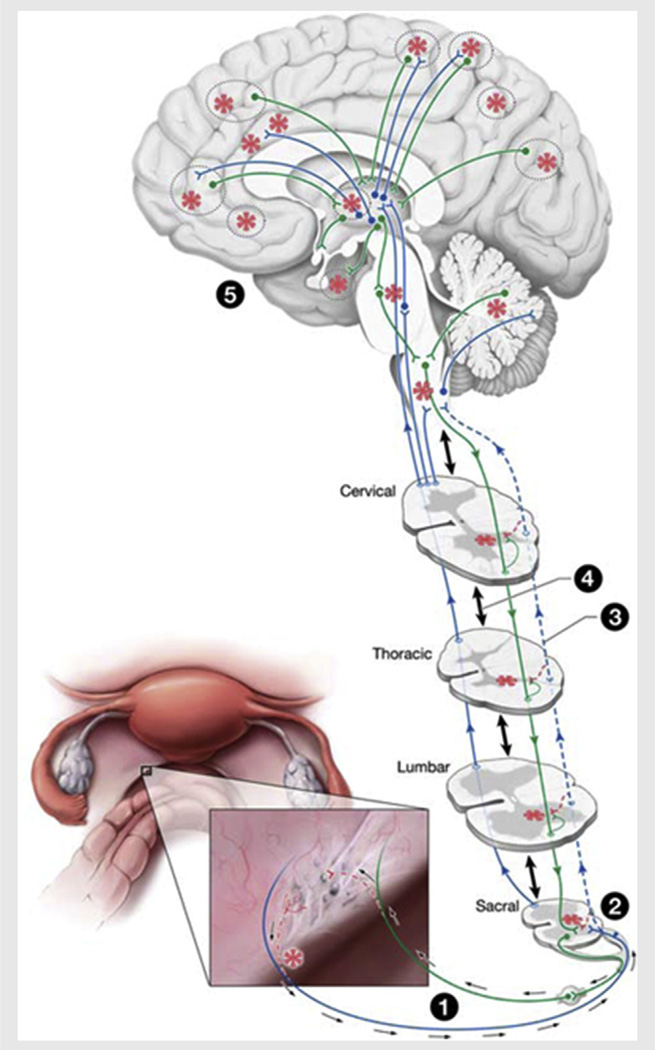
“As with many other disorders that involve visceral pain, it has become apparent that there are a variety of different mechanisms by which pain could be generated in endometriosis (Fig. 2) (20), potentially producing discrete “pain phenotypes,” even though our current understanding of these mechanisms is still fragmented.”
§ World Endometriosis Research Foundation Endometriosis Phenome and biobanking harmonization project: II. Clinical and covariate phenotype data collection in endometriosis research > RESULTS > Pain
What the sources say
- Not checked yetcites [20] Stratton, 2011, Chronic pelvic pain and endometriosis: translational evidence of the relationship and implications, Hum Reprod Update source
hedgedconditional- Asserted: passes — The authors put it forward as true.
- Checkable: passes — It can be checked against evidence.
- Load-bearing: passes — The paper’s conclusions depend on it.
- Based: passes — The paper gives a reason why it holds.
It may state two separate claims as one.
In the paper
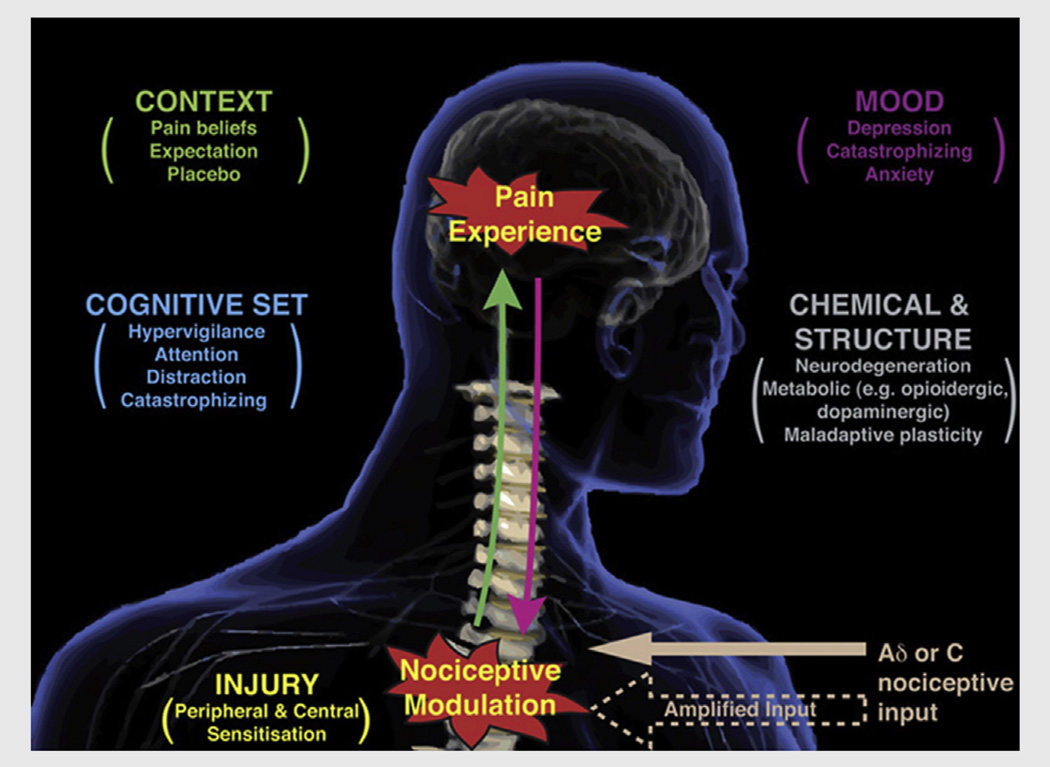
“Furthermore, both psychological and cognitive factors can modulate–in either a facilitatory or inhibitory manner–the pain experience, and they may also need to be considered (Fig. 3) (21).”
§ World Endometriosis Research Foundation Endometriosis Phenome and biobanking harmonization project: II. Clinical and covariate phenotype data collection in endometriosis research > RESULTS > Pain
What the sources say
- Not checked yetcites [21] Tracey, 2007, The cerebral signature for pain perception and its modulation, Neuron source
hedgedconditional- Asserted: passes — The authors put it forward as true.
- Checkable: passes — It can be checked against evidence.
- Load-bearing: fails — The paper’s conclusions may not depend on it.
- Based: passes — The paper gives a reason why it holds.
Probably not a substantial claim. The paper’s conclusions may not depend on it. It may state two separate claims as one.
A conclusion the paper draws from its own results — it cites no other source for it, so there is none to check. The quote shows it is in the paper.
In the paper
“Given the variation in quality and complexity of the data collected across disparate centers, data pooling may not always be feasible, which can impede scientific progress.”
§ World Endometriosis Research Foundation Endometriosis Phenome and biobanking harmonization project: II. Clinical and covariate phenotype data collection in endometriosis research > Abstract > Conclusion(s)
hedgedconditional- Asserted: passes — The authors put it forward as true.
- Checkable: passes — It can be checked against evidence.
- Load-bearing: passes — The paper’s conclusions depend on it.
- Based: passes — The paper gives a reason why it holds.
It may state two separate claims as one.
In the paper
“Collaboration and pooling of individual participant data across research centers can enable much larger sample sizes, can afford subgroup analyses, and is more effective than meta-analyses (3).”
§ World Endometriosis Research Foundation Endometriosis Phenome and biobanking harmonization project: II. Clinical and covariate phenotype data collection in endometriosis research > Abstract > Conclusion(s)
What the sources say
- Not checked yetcites [3] Thompson, 2009, Thinking big: large-scale collaborative research in observational epidemiology, Eur J Epidemiol source
plaindirect- Asserted: passes — The authors put it forward as true.
- Checkable: passes — It can be checked against evidence.
- Load-bearing: passes — The paper’s conclusions depend on it.
- Based: passes — The paper gives a reason why it holds.
It may state two separate claims as one.
A conclusion the paper draws from its own results — it cites no other source for it, so there is none to check. The quote shows it is in the paper.
In the paper
“It is plausible that these phenotypes may be characterized by different biomarker profiles or may be responsive to specific treatments only, and therefore a failure to correctly characterize the pain symptoms may obscure a significant result in such studies.”
§ World Endometriosis Research Foundation Endometriosis Phenome and biobanking harmonization project: II. Clinical and covariate phenotype data collection in endometriosis research > RESULTS > Pain
hedgedconditional- Asserted: passes — The authors put it forward as true.
- Checkable: fails — It may be too vague to check against evidence.
- Load-bearing: passes — The paper’s conclusions depend on it.
- Based: passes — The paper gives a reason why it holds.
Probably not a substantial claim. It may be too vague to check against evidence. It may state two separate claims as one.
What the paper did — it cites no source for this, so there is none to check. The quote shows it is in the paper.
In the paper
“All participants in the consultation were asked to decide which information in the EPHect EPQ should be collected as a minimum (EPQ-M) requirement and which would be recommended as standard (EPQ-S), and a consensus on this division was achieved during Workshop II.”
§ World Endometriosis Research Foundation Endometriosis Phenome and biobanking harmonization project: II. Clinical and covariate phenotype data collection in endometriosis research > MATERIALS AND METHODS
plain- Asserted: passes — The authors put it forward as true.
- Checkable: passes — It can be checked against evidence.
- Load-bearing: passes — The paper’s conclusions depend on it.
- Based: passes — The paper gives a reason why it holds.
Probably not a substantial claim. It may state two separate claims as one.
In the paper
“we strongly recommend as standard the use of the most recent SF-MPQ-2, as ratings are given on an 11-point scale, similar to the measures of pain intensity, and seven additional questions allow for the calculation of four separate domains (continuous pain, intermittent pain, neuropathic pain, and affective) and a total score”
§ World Endometriosis Research Foundation Endometriosis Phenome and biobanking harmonization project: II. Clinical and covariate phenotype data collection in endometriosis research > RESULTS > Pain
What the sources say
- Not checked yetcites [23] Dworkin, 2009, Development and initial validation of an expanded and revised version of the Short-form McGill Pain Questionnaire (SF-MPQ-2), Pain source
boosted- Asserted: passes — The authors put it forward as true.
- Checkable: passes — It can be checked against evidence.
- Load-bearing: passes — The paper’s conclusions depend on it.
- Based: passes — The paper gives a reason why it holds.
Probably not a substantial claim. It may state two separate claims as one.
In the paper
“Recommendations have been published for standard endometriosis–associated pain data collection techniques (22).”
§ World Endometriosis Research Foundation Endometriosis Phenome and biobanking harmonization project: II. Clinical and covariate phenotype data collection in endometriosis research > RESULTS > Pain
What the sources say
- Not checked yetcites [22] Vincent, 2010, Pain scoring in endometriosis: entry criteria and outcome measures for clinical trials: report from the Art and Science of Endometriosis meeting, Fertil Steril source
plain- Asserted: passes — The authors put it forward as true.
- Checkable: passes — It can be checked against evidence.
- Load-bearing: passes — The paper’s conclusions depend on it.
- Based: passes — The paper gives a reason why it holds.
Probably not a substantial claim.
None of the sources cited for this claim have been checked yet.
In the paper
“However, the relationship between endometriosis and pain symptoms is complex, with little correlation between the extent of disease seen at laparoscopy and the severity of pain experienced by the patient (18, 19).”
§ World Endometriosis Research Foundation Endometriosis Phenome and biobanking harmonization project: II. Clinical and covariate phenotype data collection in endometriosis research > RESULTS > Pain
What the sources say
- Not checked yetcites [18] Chapron, 2003, Deep infiltrating endometriosis: relation between severity of dysmenorrhoea and extent of disease, Hum Reprod source
- Not checked yetcites [19] Vercellini, 2007, Association between endometriosis stage, lesion type, patient characteristics and severity of pelvic pain symptoms: a multivariate analysis of over 1000 patients, Hum Reprod source
plaincorrelational- Asserted: passes — The authors put it forward as true.
- Checkable: passes — It can be checked against evidence.
- Load-bearing: passes — The paper’s conclusions depend on it.
- Based: passes — The paper gives a reason why it holds.
It may state two separate claims as one.
A conclusion the paper draws from its own results — it cites no other source for it, so there is none to check. The quote shows it is in the paper.
In the paper
“but is also relevant to other female conditions with similar risk factors and/or symptomatology.”
§ World Endometriosis Research Foundation Endometriosis Phenome and biobanking harmonization project: II. Clinical and covariate phenotype data collection in endometriosis research > Abstract > Conclusion(s)
plain- Asserted: passes — The authors put it forward as true.
- Checkable: passes — It can be checked against evidence.
- Load-bearing: fails — The paper’s conclusions may not depend on it.
- Based: fails — The paper may give no reason why it holds.
Probably not a substantial claim. The paper’s conclusions may not depend on it. The paper may give no reason why it holds.
A conclusion the paper draws from its own results — it cites no other source for it, so there is none to check. The quote shows it is in the paper.
In the paper
“Moreover, standardization and harmonization of phenotypic data and biologic sample collection methods are crucial to allow meaningful comparison between different patient populations and (ethnic) groups in endometriosis research, and will aid the scientific inquiry into the etiology and pathogenesis of the disease.”
§ World Endometriosis Research Foundation Endometriosis Phenome and biobanking harmonization project: II. Clinical and covariate phenotype data collection in endometriosis research > Abstract > Conclusion(s)
plaindirect- Asserted: passes — The authors put it forward as true.
- Checkable: fails — It may be too vague to check against evidence.
- Load-bearing: passes — The paper’s conclusions depend on it.
- Based: passes — The paper gives a reason why it holds.
Probably not a substantial claim. It may be too vague to check against evidence. It may state two separate claims as one.
- Rests on an assumption: Endometriosis is heterogeneous with respect to its natural history, disease burden, extent of inflammation, state of progression, and phenotypic presentation of lesions and symptoms.
- Rests on an assumption: Important nonsurgical aspects characterize patient subpopulations, including symptomatology and nonsymptomatic phenotypes such as anthropometric characteristics, ethnicity, and reproductive and demographic factors.
What the paper did — it cites no source for this, so there is none to check. The quote shows it is in the paper.
In the paper
“In addition, most questions were piloted by patients and volunteers in the centers contributing the questions, and all questions were reviewed by the workshop participants for face validity.”
§ World Endometriosis Research Foundation Endometriosis Phenome and biobanking harmonization project: II. Clinical and covariate phenotype data collection in endometriosis research > MATERIALS AND METHODS
plain- Asserted: passes — The authors put it forward as true.
- Checkable: passes — It can be checked against evidence.
- Load-bearing: fails — The paper’s conclusions may not depend on it.
- Based: passes — The paper gives a reason why it holds.
Probably not a substantial claim. The paper’s conclusions may not depend on it. It may state two separate claims as one.
In the paper
“Although pain catastrophizing is considered a trait measure (25) and thus should not be influenced by the preceding questions”
§ World Endometriosis Research Foundation Endometriosis Phenome and biobanking harmonization project: II. Clinical and covariate phenotype data collection in endometriosis research > RESULTS > Pain
What the sources say
- Not checked yetcites [25] Quartana, 2009, Pain catastrophizing: a critical review, Expert Rev Neurother source
plain- Asserted: passes — The authors put it forward as true.
- Checkable: passes — It can be checked against evidence.
- Load-bearing: passes — The paper’s conclusions depend on it.
- Based: passes — The paper gives a reason why it holds.
Probably not a substantial claim. It may state two separate claims as one.
A conclusion the paper draws from its own results — it cites no other source for it, so there is none to check. The quote shows it is in the paper.
In the paper
“Collection of information on psychological state and health-related quality of life in a symptom-based questionnaire can be important as these factors may affect responses related to symptomatology and therefore may be important in patient (symptomatic) stratification.”
§ World Endometriosis Research Foundation Endometriosis Phenome and biobanking harmonization project: II. Clinical and covariate phenotype data collection in endometriosis research > RESULTS > Depression, Anxiety, and Health-related Quality of Life
hedgedconditional- Asserted: passes — The authors put it forward as true.
- Checkable: fails — It may be too vague to check against evidence.
- Load-bearing: passes — The paper’s conclusions depend on it.
- Based: passes — The paper gives a reason why it holds.
Probably not a substantial claim. It may be too vague to check against evidence. It may state two separate claims as one.
In the paper
“The standard definition of infertility is 12 months of regular unprotected intercourse without achieving a clinical pregnancy (45)”
§ World Endometriosis Research Foundation Endometriosis Phenome and biobanking harmonization project: II. Clinical and covariate phenotype data collection in endometriosis research > RESULTS > Subfertility and Reproductive History
What the sources say
- Not checked yetcites [45] Zegers-Hochschild, 2009, The International Committee for Monitoring Assisted Reproductive Technology (ICMART) and the World Health Organization (WHO) Revised Glossary on ART Terminology, 2009, Hum Reprod source
plain- Asserted: passes — The authors put it forward as true.
- Checkable: passes — It can be checked against evidence.
- Load-bearing: fails — The paper’s conclusions may not depend on it.
- Based: passes — The paper gives a reason why it holds.
Probably not a substantial claim. The paper’s conclusions may not depend on it.
A conclusion the paper draws from its own results — it cites no other source for it, so there is none to check. The quote shows it is in the paper.
In the paper
“because early life menstrual cycle characteristics and their change over time may be important in the etiology of endometriosis.”
§ World Endometriosis Research Foundation Endometriosis Phenome and biobanking harmonization project: II. Clinical and covariate phenotype data collection in endometriosis research > RESULTS > Menstrual History and Hormone Use
hedgedconditional- Asserted: passes — The authors put it forward as true.
- Checkable: fails — It may be too vague to check against evidence.
- Load-bearing: passes — The paper’s conclusions depend on it.
- Based: fails — The paper may give no reason why it holds.
Probably not a substantial claim. It may be too vague to check against evidence. The paper may give no reason why it holds.
In the paper
“The FIGO classification for volume of menstrual flow is heavy (>80 mL), normal (5–80 mL), and light (<5 mL)”
§ World Endometriosis Research Foundation Endometriosis Phenome and biobanking harmonization project: II. Clinical and covariate phenotype data collection in endometriosis research > RESULTS > Menstrual History and Hormone Use
What the sources say
- Not checked yetcites [39] Fraser, 2011, The FIGO recommendations on terminologies and definitions for normal and abnormal uterine bleeding, Semin Reprod Med source
plain- Asserted: passes — The authors put it forward as true.
- Checkable: passes — It can be checked against evidence.
- Load-bearing: fails — The paper’s conclusions may not depend on it.
- Based: passes — The paper gives a reason why it holds.
Probably not a substantial claim. The paper’s conclusions may not depend on it.
In the paper
“The International Federation of Gynecology and Obstetrics (FIGO) recommendation for defining normal menstruation and menstrual cycle characteristics includes four parameters: regularity of menses, frequency of menses, and duration and heaviness of menstrual flow (39).”
§ World Endometriosis Research Foundation Endometriosis Phenome and biobanking harmonization project: II. Clinical and covariate phenotype data collection in endometriosis research > RESULTS > Menstrual History and Hormone Use
What the sources say
- Not checked yetcites [39] Fraser, 2011, The FIGO recommendations on terminologies and definitions for normal and abnormal uterine bleeding, Semin Reprod Med source
plain- Asserted: passes — The authors put it forward as true.
- Checkable: passes — It can be checked against evidence.
- Load-bearing: fails — The paper’s conclusions may not depend on it.
- Based: passes — The paper gives a reason why it holds.
Probably not a substantial claim. The paper’s conclusions may not depend on it.
A conclusion the paper draws from its own results — it cites no other source for it, so there is none to check. The quote shows it is in the paper.
In the paper
“In fact, subfertility and endometriosis may have a common origin, as suggested by evidence linking in-utero exposures with endometriosis.”
§ World Endometriosis Research Foundation Endometriosis Phenome and biobanking harmonization project: II. Clinical and covariate phenotype data collection in endometriosis research > RESULTS > Subfertility and Reproductive History
hedgedconditional- Asserted: passes — The authors put it forward as true.
- Checkable: passes — It can be checked against evidence.
- Load-bearing: fails — The paper’s conclusions may not depend on it.
- Based: fails — The paper may give no reason why it holds.
Probably not a substantial claim. The paper’s conclusions may not depend on it. The paper may give no reason why it holds.
In the paper
“In prospective studies, increasing number of live births has been linearly associated with decreasing incidence of endometriosis (38).”
§ World Endometriosis Research Foundation Endometriosis Phenome and biobanking harmonization project: II. Clinical and covariate phenotype data collection in endometriosis research > RESULTS > Subfertility and Reproductive History
What the sources say
- Not checked yetcites [38] Missmer, 2004, Reproductive history and endometriosis among premenopausal women, Obstet Gynecol source
plaincorrelational- Asserted: passes — The authors put it forward as true.
- Checkable: passes — It can be checked against evidence.
- Load-bearing: fails — The paper’s conclusions may not depend on it.
- Based: passes — The paper gives a reason why it holds.
Probably not a substantial claim. The paper’s conclusions may not depend on it.
None of the sources cited for this claim have been checked yet.
In the paper
“Alternatively, to save time and/or space, a combined measure such as the Hospital Anxiety and Depression Scale (HADS) (32) can be used, but it has been argued that this is more useful as a measure of overall psychological distress than for accurately determining the degree of anxiety and depression (33).”
§ World Endometriosis Research Foundation Endometriosis Phenome and biobanking harmonization project: II. Clinical and covariate phenotype data collection in endometriosis research > RESULTS > Depression, Anxiety, and Health-related Quality of Life
What the sources say
plain- Asserted: passes — The authors put it forward as true.
- Checkable: passes — It can be checked against evidence.
- Load-bearing: fails — The paper’s conclusions may not depend on it.
- Based: passes — The paper gives a reason why it holds.
Probably not a substantial claim. The paper’s conclusions may not depend on it. It may state two separate claims as one.
None of the sources cited for this claim have been checked yet.
In the paper
“Additionally, validated depression and anxiety scales that can be helpful for patient stratification include measures such as the Beck Depression Inventory (BDI) (30) and the State Trait Anxiety Inventory (STAI) (31), both of which are also considered valid for healthy controls.”
§ World Endometriosis Research Foundation Endometriosis Phenome and biobanking harmonization project: II. Clinical and covariate phenotype data collection in endometriosis research > RESULTS > Depression, Anxiety, and Health-related Quality of Life
What the sources say
- Not checked yetcites [30] Beck, 1996, Comparison of Beck Depression Inventories -IA and -II in psychiatric outpatients, J Pers Assess source
- Not checked yetcites [31] Spielberger, 1983
plain- Asserted: passes — The authors put it forward as true.
- Checkable: passes — It can be checked against evidence.
- Load-bearing: unclear — It is unclear whether the paper’s conclusions depend on it.
- Based: passes — The paper gives a reason why it holds.
It may state two separate claims as one.
A conclusion the paper draws from its own results — it cites no other source for it, so there is none to check. The quote shows it is in the paper.
In the paper
“[2] are likely to influence symptom reporting”
§ World Endometriosis Research Foundation Endometriosis Phenome and biobanking harmonization project: II. Clinical and covariate phenotype data collection in endometriosis research > RESULTS > Menstrual History and Hormone Use
hedgedconditional- Asserted: passes — The authors put it forward as true.
- Checkable: passes — It can be checked against evidence.
- Load-bearing: passes — The paper’s conclusions depend on it.
- Based: fails — The paper may give no reason why it holds.
Probably not a substantial claim. The paper may give no reason why it holds.
A conclusion the paper draws from its own results — it cites no other source for it, so there is none to check. The quote shows it is in the paper.
In the paper
“Surgical history (the age at each surgery, the type of surgery, and its indication) can be etiologically related to pelvic pain symptoms and impact on symptom reporting.”
§ World Endometriosis Research Foundation Endometriosis Phenome and biobanking harmonization project: II. Clinical and covariate phenotype data collection in endometriosis research > RESULTS > Medical and Surgical History
plainconditional- Asserted: passes — The authors put it forward as true.
- Checkable: passes — It can be checked against evidence.
- Load-bearing: passes — The paper’s conclusions depend on it.
- Based: fails — The paper may give no reason why it holds.
Probably not a substantial claim. The paper may give no reason why it holds. It may state two separate claims as one.
A conclusion the paper draws from its own results — it cites no other source for it, so there is none to check. The quote shows it is in the paper.
In the paper
“and these are important to capture for defining case subpopulations.”
§ World Endometriosis Research Foundation Endometriosis Phenome and biobanking harmonization project: II. Clinical and covariate phenotype data collection in endometriosis research > RESULTS > Medical and Surgical History
plain- Asserted: passes — The authors put it forward as true.
- Checkable: passes — It can be checked against evidence.
- Load-bearing: passes — The paper’s conclusions depend on it.
- Based: passes — The paper gives a reason why it holds.
Probably not a substantial claim.
None of the sources cited for this claim have been checked yet.
In the paper
“Greater body size and adolescent weight have both been shown to be associated with a decreased risk of endometriosis (66, 70).”
§ World Endometriosis Research Foundation Endometriosis Phenome and biobanking harmonization project: II. Clinical and covariate phenotype data collection in endometriosis research > RESULTS > Personal Information
What the sources say
- Not checked yetcites [66] Shah, 2013, Body size and endometriosis: results from 20 years of follow-up within the Nurses' Health Study II prospective cohort, Hum Reprod source
- Not checked yetcites [70] Vitonis, 2010, A prospective study of body size during childhood and early adulthood and the incidence of endometriosis, Hum Reprod source
plaincorrelational- Asserted: passes — The authors put it forward as true.
- Checkable: passes — It can be checked against evidence.
- Load-bearing: fails — The paper’s conclusions may not depend on it.
- Based: passes — The paper gives a reason why it holds.
Probably not a substantial claim. The paper’s conclusions may not depend on it.
None of the sources cited for this claim have been checked yet.
In the paper
“Two questions on hair and eye color, previously associated with endometriosis (71–75) and possibly useful in marking genetic subpopulations, are also included.”
§ World Endometriosis Research Foundation Endometriosis Phenome and biobanking harmonization project: II. Clinical and covariate phenotype data collection in endometriosis research > RESULTS > Personal Information
What the sources say
- Not checked yetcites [71] Kvaskoff, 2009, Endometriosis risk in relation to naevi, freckles and skin sensitivity to sun exposure: the French E3N cohort, Int J Epidemiol source
- Not checked yetcites [72] Missmer, 2006, Natural hair color and the incidence of endometriosis, Fertil Steril source
- Not checked yetcites [73] Somigliana, 2010, ‘Here comes the sun’: pigmentary traits and sun habits in women with endometriosis, Hum Reprod source
- Not checked yetcites [74] Woodworth, 1995, A prospective study on the association between red hair color and endometriosis in infertile patients, Fertil Steril source
- Not checked yetcites [75] Wyshak, 2000, Red hair color, melanoma, and endometriosis: suggestive associations, Int J Dermatol source
plaincorrelational- Asserted: passes — The authors put it forward as true.
- Checkable: passes — It can be checked against evidence.
- Load-bearing: fails — The paper’s conclusions may not depend on it.
- Based: passes — The paper gives a reason why it holds.
Probably not a substantial claim. The paper’s conclusions may not depend on it.
None of the sources cited for this claim have been checked yet.
In the paper
“Retrospective studies have suggested that women with endometriosis may have higher rates of maternal complications and fetal problems such as preeclampsia and miscarriage (46–50), though these associations need further study.”
§ World Endometriosis Research Foundation Endometriosis Phenome and biobanking harmonization project: II. Clinical and covariate phenotype data collection in endometriosis research > RESULTS > Subfertility and Reproductive History
What the sources say
- Not checked yetcites [46] Fernando, 2009, Preterm birth, ovarian endometriomata, and assisted reproduction technologies, Fertil Steril source
- Not checked yetcites [47] Stephansson, 2009, Endometriosis, assisted reproduction technology, and risk of adverse pregnancy outcome, Hum Reprod source
- Not checked yetcites [48] Tomassetti, 2006, Endometriosis, recurrent miscarriage and implantation failure: is there an immunological link?, Reprod Biomed Online source
- Not checked yetcites [49] Vercellini, 2012, Pregnancy outcome in women with peritoneal, ovarian and rectovaginal endometriosis: a retrospective cohort study, Br J Obstet Gynaecol source
- Not checked yetcites [50] Brosens, 2012, Risks of adverse pregnancy outcome in endometriosis, Fertil Steril source
hedgedconditional- Asserted: passes — The authors put it forward as true.
- Checkable: passes — It can be checked against evidence.
- Load-bearing: fails — The paper’s conclusions may not depend on it.
- Based: passes — The paper gives a reason why it holds.
Probably not a substantial claim. The paper’s conclusions may not depend on it. It may state two separate claims as one.
None of the sources cited for this claim have been checked yet.
In the paper
“Moreover, experimental data suggest that anti-inflammatory drugs may affect the severity of the disease (61, 62).”
§ World Endometriosis Research Foundation Endometriosis Phenome and biobanking harmonization project: II. Clinical and covariate phenotype data collection in endometriosis research > RESULTS > Medication Use
What the sources say
- Not checked yetcites [61] Olivares, 2011, The inhibitory effect of celecoxib and rosiglitazone on experimental endometriosis, Fertil Steril source
- Not checked yetcites [62] Ozawa, 2006, A selective cyclooxygenase-2 inhibitor suppresses the growth of endometriosis xenografts via antiangiogenic activity in severe combined immunodeficiency mice, Fertil Steril source
hedgedconditional- Asserted: passes — The authors put it forward as true.
- Checkable: passes — It can be checked against evidence.
- Load-bearing: fails — The paper’s conclusions may not depend on it.
- Based: passes — The paper gives a reason why it holds.
Probably not a substantial claim. The paper’s conclusions may not depend on it.
In the paper
“Smoking and alcohol use, which have been associated with endometriosis in a prospective study (76), are captured as former and current smoking and packs per day as well as current number of alcoholic drinks per week.”
§ World Endometriosis Research Foundation Endometriosis Phenome and biobanking harmonization project: II. Clinical and covariate phenotype data collection in endometriosis research > RESULTS > Personal Information
What the sources say
- Not checked yetcites [76] Missmer, 2004, Incidence of laparoscopically confirmed endometriosis by demographic, anthropometric, and lifestyle factors, Am J Epidemiol source
plaincorrelational- Asserted: passes — The authors put it forward as true.
- Checkable: passes — It can be checked against evidence.
- Load-bearing: fails — The paper’s conclusions may not depend on it.
- Based: passes — The paper gives a reason why it holds.
Probably not a substantial claim. The paper’s conclusions may not depend on it.
What the paper did — it cites no source for this, so there is none to check. The quote shows it is in the paper.
In the paper
“The questionnaire can be completed by any woman undergoing investigation for symptoms of endometriosis (whether she has the disease or not), or asymptomatic women, subject to signed written informed consent obtained from each patient and local ethics approval for the study according to ethical principles for clinical research summarized in the Declaration of Helsinki.”
§ World Endometriosis Research Foundation Endometriosis Phenome and biobanking harmonization project: II. Clinical and covariate phenotype data collection in endometriosis research > DISCUSSION
plain- Asserted: passes — The authors put it forward as true.
- Checkable: passes — It can be checked against evidence.
- Load-bearing: passes — The paper’s conclusions depend on it.
- Based: passes — The paper gives a reason why it holds.
Probably not a substantial claim. It may state two separate claims as one.
In the paper
“Smoking and alcohol use, which have been associated with endometriosis in a prospective study (76), are captured as former and current smoking and packs per day as well as current number of alcoholic drinks per week.”
§ World Endometriosis Research Foundation Endometriosis Phenome and biobanking harmonization project: II. Clinical and covariate phenotype data collection in endometriosis research > RESULTS > Personal Information
What the sources say
- Not checked yetcites [76] Missmer, 2004, Incidence of laparoscopically confirmed endometriosis by demographic, anthropometric, and lifestyle factors, Am J Epidemiol source
plaincorrelational- Asserted: passes — The authors put it forward as true.
- Checkable: passes — It can be checked against evidence.
- Load-bearing: fails — The paper’s conclusions may not depend on it.
- Based: passes — The paper gives a reason why it holds.
Probably not a substantial claim. The paper’s conclusions may not depend on it.
A conclusion the paper draws from its own results — it cites no other source for it, so there is none to check. The quote shows it is in the paper.
In the paper
“This standardization will promote large-scale research using multiple data sets that are characterized using the same phenotypic definitions and will simplify interpretation of concordant or discordant results among data sets.”
§ World Endometriosis Research Foundation Endometriosis Phenome and biobanking harmonization project: II. Clinical and covariate phenotype data collection in endometriosis research > DISCUSSION
plaindirect- Asserted: passes — The authors put it forward as true.
- Checkable: fails — It may be too vague to check against evidence.
- Load-bearing: passes — The paper’s conclusions depend on it.
- Based: passes — The paper gives a reason why it holds.
Probably not a substantial claim. It may be too vague to check against evidence. It may state two separate claims as one.
A conclusion the paper draws from its own results — it cites no other source for it, so there is none to check. The quote shows it is in the paper.
In the paper
“If adopted by research centers across the globe, the EPHect EPQ will aid in the design and conduction of large, multicenter, geographically diverse studies with high reliability and validity, conducted on behalf of the millions of girls and women struggling with endometriosis and its associated symptoms.”
§ World Endometriosis Research Foundation Endometriosis Phenome and biobanking harmonization project: II. Clinical and covariate phenotype data collection in endometriosis research > DISCUSSION
plainconditional- Asserted: passes — The authors put it forward as true.
- Checkable: fails — It may be too vague to check against evidence.
- Load-bearing: passes — The paper’s conclusions depend on it.
- Based: passes — The paper gives a reason why it holds.
Probably not a substantial claim. It may be too vague to check against evidence.
A conclusion the paper draws from its own results — it cites no other source for it, so there is none to check. The quote shows it is in the paper.
In the paper
“However, we realize these categories may not sufficiently capture all populations where this questionnaire will be used.”
§ World Endometriosis Research Foundation Endometriosis Phenome and biobanking harmonization project: II. Clinical and covariate phenotype data collection in endometriosis research > RESULTS > Personal Information
hedged- Asserted: passes — The authors put it forward as true.
- Checkable: fails — It may be too vague to check against evidence.
- Load-bearing: fails — The paper’s conclusions may not depend on it.
- Based: passes — The paper gives a reason why it holds.
Probably not a substantial claim. It may be too vague to check against evidence. The paper’s conclusions may not depend on it.
What the paper did — it cites no source for this, so there is none to check. The quote shows it is in the paper.
In the paper
“The EPQ is not designed for use in clinical practice to inform immediate clinical decisions.”
§ World Endometriosis Research Foundation Endometriosis Phenome and biobanking harmonization project: II. Clinical and covariate phenotype data collection in endometriosis research > DISCUSSION
plain- Asserted: passes — The authors put it forward as true.
- Checkable: passes — It can be checked against evidence.
- Load-bearing: passes — The paper’s conclusions depend on it.
- Based: passes — The paper gives a reason why it holds.
Probably not a substantial claim.
- Rests on an assumption: None of the longstanding, validated component parts of the EPQ have been applied in an immediate point-of-care setting.
In the paper
“Race/ethnicity is assessed with categories previously used in a worldwide study (63).”
§ World Endometriosis Research Foundation Endometriosis Phenome and biobanking harmonization project: II. Clinical and covariate phenotype data collection in endometriosis research > RESULTS > Personal Information
What the sources say
- Not checked yetcites [63] Nnoaham, 2011, Impact of endometriosis on quality of life and work productivity: a multicenter study across ten countries, Fertil Steril source
plain- Asserted: passes — The authors put it forward as true.
- Checkable: passes — It can be checked against evidence.
- Load-bearing: fails — The paper’s conclusions may not depend on it.
- Based: passes — The paper gives a reason why it holds.
Probably not a substantial claim. The paper’s conclusions may not depend on it.
What the paper did — it cites no source for this, so there is none to check. The quote shows it is in the paper.
In the paper
“However, the questionnaire was not designed to accommodate in-clinic completion and immediate review, as this is beyond the scope and inconsistent with the goals of EPHect.”
§ World Endometriosis Research Foundation Endometriosis Phenome and biobanking harmonization project: II. Clinical and covariate phenotype data collection in endometriosis research > DISCUSSION
plain- Asserted: passes — The authors put it forward as true.
- Checkable: passes — It can be checked against evidence.
- Load-bearing: fails — The paper’s conclusions may not depend on it.
- Based: passes — The paper gives a reason why it holds.
Probably not a substantial claim. The paper’s conclusions may not depend on it.
- Rests on an assumption: None of the longstanding, validated component parts of the EPQ have been applied in an immediate point-of-care setting.
What the paper did — it cites no source for this, so there is none to check. The quote shows it is in the paper.
In the paper
“The EPHect EPQ captures details on pain, menstrual and reproductive history, medical history, hormone use and infertility, and demographics and lifestyle characteristics and is sufficient to capture the minimum nonsurgical clinical phenome in endometriosis cases and controls.”
§ World Endometriosis Research Foundation Endometriosis Phenome and biobanking harmonization project: II. Clinical and covariate phenotype data collection in endometriosis research > DISCUSSION
plain- Asserted: passes — The authors put it forward as true.
- Checkable: passes — It can be checked against evidence.
- Load-bearing: passes — The paper’s conclusions depend on it.
- Based: passes — The paper gives a reason why it holds.
Probably not a substantial claim. It may state two separate claims as one.
- Rests on an assumption: The demographic data required for interpretation of any epidemiologic study result include age, race/ethnicity, major ancestry, and highest level of education attained.
The paper relies on this without support.
Endometriosis is heterogeneous with respect to its natural history, disease burden, extent of inflammation, state of progression, and phenotypic presentation of lesions and symptoms.
“It is generally accepted that endometriosis is a heterogeneous disease with respect to its natural history, disease burden, extent of inflammation, state of progression, and phenotypic presentation of lesions and symptoms.”
The paper relies on this without support.
Important nonsurgical aspects characterize patient subpopulations, including symptomatology and nonsymptomatic phenotypes such as anthropometric characteristics, ethnicity, and reproductive and demographic factors.
“There are important nonsurgical aspects that characterize patient (sub)populations, including symptomatology (onset, duration, extent and severity of symptoms, comorbidity) and other nonsymptomatic phenotypes such as anthropometric characteristics, ethnicity, and reproductive and demographic factors.”
The paper relies on this without support.
Women with endometriosis experience a variety of pain symptoms, most commonly dysmenorrhea, noncyclical pelvic pain, dyspareunia, and dyschezia.
“Women with endometriosis experience a variety of pain symptoms, most commonly dysmenorrhea, noncyclical pelvic pain, dyspareunia, and dyschezia.”
The paper relies on this without support.
The three main mechanisms generating pain are nociceptive, inflammatory, and neuropathic or centrally generated pain.
“The three main mechanisms generating pain are [1] nociceptive, [2] inflammatory, and [3] neuropathic or centrally generated pain”
The paper relies on this without support.
Comorbidity is an important potential confounding factor in assessing symptom extent and severity.
“Comorbidity is an important potential confounding factor in assessing symptom extent and severity.”
The paper relies on this without support.
Older women or women already known to have conditions that can lead to infertility might not try for 12 months before seeking medical intervention.
“as older women (such as women >35 years old) or women already known to have conditions that can lead to infertility might not try for 12 months before seeking medical intervention”
The paper relies on this without support.
Accuracy of diagnosis has varied across generations.
“while recognizing that accuracy of diagnosis has varied across generations.”
The paper relies on this without support.
Some drugs may interact with the biomarkers to be studied and may thus distort the results.
“Collecting information on recent medication use is important for biomarker research as some drugs may interact with the biomarkers to be studied and may thus distort the results.”
The paper relies on this without support.
Medications for chronic pain or inflammatory conditions or for other symptoms, such as depression or anxiety, may affect pain reporting.
“Medications for chronic pain or inflammatory conditions or for other symptoms, such as depression or anxiety, may affect pain reporting.”
The paper relies on this without support.
The demographic data required for interpretation of any epidemiologic study result include age, race/ethnicity, major ancestry, and highest level of education attained.
“The demographic data that are required for interpretation of any epidemiologic study result include age, race/ethnicity, major ancestry, and highest level of education attained, and are collected on the EPHect EPQ.”
The paper relies on this without support.
None of the longstanding, validated component parts of the EPQ have been applied in an immediate point-of-care setting.
“Additionally, to our knowledge, none of the longstanding, validated component parts of the EPQ have been applied in an immediate point-of-care setting.”
Claims other papers make about this one
Each is checked against this paper’s own text: does it say what the citing paper says it does?
In the citing paper
“Recently, the World Endometriosis Research Foundation (WERF) Endometriosis Phenome and Biobanking Harmonisation Project (EPHect) has developed a consensus on standardisation and harmonisation of phenotypic surgical/clinical data and biologic sample collection methods in endometriosis research [146, 147, 149, 150].”
From Update on biomarkers for the detection of endometriosis (2015) · cites this paper as [150]
Self-check
Percentages, sums and reported differences re-computed from the paper’s own numbers.
Each contradiction between two passages listed here was confirmed by an independent check.
Rated minor: it would not touch a result — a value no result rests on, a p-value that stays on the same side of the significance level, or a conflict that is clerical, resolved elsewhere in the paper, or outside its own findings.
In the paper
§ World Endometriosis Research Foundation Endometriosis Phenome and biobanking harmonization project: II. Clinical and covariate phenotype data collection in endometriosis research > References
“13. Rahmioglu N Fassbender A Vitonis AF Tworoger SS Hummelshoj L D'Hooghe TM World Endometriosis Research Foundation Endometriosis Phenome and Biobanking Harmonisation Project: III: Fluid biospecimen collection, processing, and storage in endometriosis research Fertil Steril 2014 102 XXX-XX PMC4230639 25256929”
§ World Endometriosis Research Foundation Endometriosis Phenome and biobanking harmonization project: II. Clinical and covariate phenotype data collection in endometriosis research > References
“14. Fassbender A Rahmioglu N Vitonis AF Vigano P Giudice LC D’Hooghe TM World Endometriosis Research Endometriosis Phenome and Biobanking Harmonisation Project: IV. Tissue collection, processing, and storage in endometriosis research Fertil Steril 2014 102 XXX-XX PMC4230639 25256929”
Citations
Cites
The Hospital Anxiety and Depression Scale
Zigmond, A. S., & Snaith, R. P. (1983) · Acta Psychiatrica Scandinavica · doi:10.1111/j.1600-0447.1983.tb09716.x · Cited by 47,139
(1970) · Cited by 24,983
Depression and quality of life in older persons: A review
Sivertsen, H., Bjørkløf, G. H., Engedal, K., Selbæk, G., & Helvik, A.-S. (2015) · Dementia and Geriatric Cognitive Disorders · doi:10.1159/000437299 · Cited by 14,152
The Pain Catastrophizing Scale: Development and validation.
Sullivan, M. J. L., Bishop, S. R., & Pivik, J. (1995) · Psychological Assessment · doi:10.1037//1040-3590.7.4.524 · Cited by 8,227
Comparison of Beck Depression Inventories -IA and -II in psychiatric outpatients
Beck, A. T., Steer, R. A., Ball, R., & Ranieri, W. F. (1996) · Journal of Personality Assessment · doi:10.1207/s15327752jpa6703_13 · Cited by 5,965
Theoretical perspectives on the relation between catastrophizing and pain
Sullivan, M. J. L., Thorn, B., Haythornthwaite, J. A., Keefe, F., Martin, M., Bradley, L. A., & Lefebvre, J. C. (2001) · The Clinical Journal of Pain · doi:10.1097/00002508-200103000-00008 · Cited by 2,472
Giudice, L. C. (2010) · New England Journal of Medicine · doi:10.1056/nejmcp1000274 · Cited by 1,924
Self-citationThe Cerebral Signature for Pain Perception and Its Modulation
Tracey, I., & Mantyh, P. W. (2007) · Neuron · doi:10.1016/j.neuron.2007.07.012 · Cited by 1,843
Use of the Danish Adoption Register for the study of obesity and thinness.
Stunkard, A. J., Sørensen, T. I. A., & D, F. S. M. (1983) · PubMed · Cited by 1,773
Nnoaham, K. E., Hummelshoj, L., Webster, P., d’Hooghe, T., de Cicco Nardone, F., de Cicco Nardone, C., Jenkinson, C., Kennedy, S. H., & Zondervan, K. T. (2011) · Fertility and Sterility · doi:10.1016/j.fertnstert.2011.05.090 · Cited by 1,584
Self-citation
Cited by
Sorted by citations
Items 201–236 of 236
Goodwin, E., Rojas, H. E., Noga, H. L., Lee, C. E., Bedaiwy, M. A., Williams, C., Allaire, C., & Yong, P. J. (2025) · Journal of Minimally Invasive Gynecology · doi:10.1016/j.jmig.2025.02.009 · Cited by 1
Self-citationFlores-Caldera, I., Lou-Mercadé, A. C., Nieves, Y., et al. (2025) · Women & Health · doi:10.1080/03630242.2025.2469939 · Cited by 1
Hummelshøj, L., Peterse, D., Bruner‐Tran, K. L., et al. (2025) · Molecular Human Reproduction · doi:10.1093/molehr/gaaf020 · Cited by 1
Self-citationMesothelin as a diagnostic biomarker in endometriosis: A cross-sectional study
Kiecka, K., Zyguła, A., Sankiewicz, A., Kuźmicki, M., Ławicki, S., Ciebiera, M., Issat, T., Błaszczyk, J., Cendrowski, K., Gorodkiewicz, E., et al. (2025) · Advances in Medical Sciences · doi:10.1016/j.advms.2025.11.002 · Cited by 1
Chowdhury, F. I., Rafi, M. A., & Hasan, M. J. (2025) · BMC Women s Health · doi:10.1186/s12905-025-04193-1 · Cited by 1
“…clinical data, a semi-structured questionnaire was prepared based on the recommendations of the endo-metriosis participant questionnaire (EPQ) which was developed in the Endometriosis Phenome and Bio-banking Harmonization Project (EPHect) by the World Endometriosis Research Foundation (WERF) [10].”
Kadah, S., Soh, S., Morin, M., Colombage, U. N., Tsaltas, J., Gwata, N., White, B., & Frawley, H. (2026) · Journal of Endometriosis and Pelvic Pain Disorders · doi:10.1177/22840265251406141 · Cited by 1
Pathogenesis of Endometriosis: Genetics
Rahmioğlu, N., & Zondervan, K. T. (2022) · Springer eBooks · doi:10.1007/978-3-030-97236-3_6 · Cited by 1
Self-citationResearch in Benign Gynaecology
Gerval, M., & Panay, N. (2017) · Cambridge University Press eBooks · doi:10.1017/9781107585775.030
[Analysis of the factors contributing to endometriosis in China and UK].
Nie, W., Li, S., Krina, T., et al. (2022) · PubMed · doi:10.12122/j.issn.1673-4254.2022.01.17
“[15]Vitonis AF, Vincent K, Rahmioglu N, et al.”
BackgroundJOHNSON, N. P. (2018) · Wiley eBooks · doi:10.1002/9781119211457.ch53
Godfrey, E. M., Andrilla, C. H. A., & Odem‐Davis, K. (2020) · Research Square · doi:10.21203/rs.3.rs-45458/v1
“Once consented, enrolled participants completed several baseline questionnaires that included contact and demographic information, medical history, menstrual and pelvic pain history questions adapted from the World Endometriosis Foundation (WERF-EPHect Questionnaire) [9].”
MethodMortlock, S., Houshdaran, S., Kosti, I., Rahmioglu, N., Nezhat, C., Vitonis, A., Andrews, S. V., Grosjean, P., Paranjpe, M., Horne, A., et al. (2022) · bioRxiv · doi:10.1101/2022.11.27.518106 · Cited by 1
Self-citationSteroids in urine, other fluids and tissues
Honour, J. W. (2023) · Elsevier eBooks · doi:10.1016/b978-0-12-818124-9.00007-3
Yousif, A., DePari, M., Vitonis, A. F., Harris, H. R., Shafrir, A. L., Terry, K. L., Missmer, S. A., & Sasamoto, N. (2023) · Frontiers in Reproductive Health · doi:10.3389/frph.2023.1297907
Self-citationVargas-Costales, J. A., Rosero, C. Y. D. L. M. V., Mazin, S. C., dos Reis, F. J. C., Nogueira, A. A., Silva, J. C. R. E., & Poli‐Neto, O. B. (2024) · Research Square · doi:10.21203/rs.3.rs-3903885/v1
Prevalencia de dolor pélvico crónico y factores asociados en mujeres de Otavalo-Ecuador
Costales, J. A. V. (2024) · Digital Library of Theses and Dissertations (Universidade de São Paulo) · doi:10.11606/t.17.2024.tde-12042024-092342
Codreanu, N., & Ivanova, E. (2024) · Moldovan Journal of Health Sciences · doi:10.52645/mjhs.2024.3.03
Sumapraja, K., Maidarti, M., Pratama, G., et al. (2024) · Journal of South Asian Federation of Obstetrics and Gynaecology · doi:10.5005/jp-journals-10006-2533
Muteshi, C., Mwaka, G., Duncan, A., Gitau, S. N., Kathiresan, P., Bwika, J., Yousef, A., & Wandera, E. (2025) · Journal of Endometriosis and Pelvic Pain Disorders · doi:10.1177/22840265241312538
“17 This approach guarantees standardised acquisition of data and comparison of symptoms over time.”
Goławski, K., Zielińska, Z., Wojtyła, C., Ołdak, Ł., Kuźmicki, M., Ławicki, S., Ciebiera, M., Issat, T., Gorodkiewicz, E., Pierzyński, P., et al. (2025) · Diagnostics · doi:10.3390/diagnostics15111366
“All participants also completed the World Endometriosis Research Foundation (WERF) clinical questionnaire [27].”
Persoons, E., Bafort, C., Mechelen, P. V., Ciprietti, M., Luyten, K., Benoit, M., Vanhie, A., Voets, T., Tomassetti, C., & Vriens, J. (2025) · Biomolecules · doi:10.3390/biom15101352
“These NRSs were provided through the World Endometriosis Research Foundation—Endometriosis Phenome and Biobanking Harmonisation Project (WERF-EPHect) endometriosis patient questionnaire—standard (EPQ-S) [29].”
Morau, G. B. A., de Oliveira, R. Z., Meola, J., Michelazzo, D., Perussi-e-Silva, R., Silva, J. C. R. E., Becker, C. M., Rahmioğlu, N., Hummelshøj, L., Missmer, S. A., et al. (2025) · Revista Brasileira Ginecologia e Obstetrícia · doi:10.61622/rbgo/2025rbgo40
“(15) 16-19) One of the developed tools was the EPHect Clinical Questionnaire (EPQ), which guides the recording of clinical characteristics of participants, especially those relevant to endometriosis diagnosis, and more.”
InfluentialSelf-citationVargas-Costales, J. A., Rosero, C. Y. D. L. M. V., Mazin, S. C., Candido-dos-Reis, F. J., Nogueira, A. A., Rosa-e-Silva, J. C., & Poli‐Neto, O. B. (2024) · Figshare · doi:10.6084/m9.figshare.26182280
Parke, S., Gude, K., Roth, K., & Messina, F. (2024) · Figshare · doi:10.6084/m9.figshare.26061474
Coxon, L., Evans, E., Toyé, F., Cox, E., & Vincent, K. (2026) · BJOG An International Journal of Obstetrics & Gynaecology · doi:10.1111/1471-0528.70211
Self-citationFundaun, J., Kelleher, E. M., Coxon, L., Wall, A. J. W., John, J., Garbutt, K., Themistocleous, A. C., Terajima, Y., Bennett, D., Vincent, K., et al. (2026) · PAIN Reports · doi:10.1097/pr9.0000000000001423
Self-citationGénétique et épigénétique de l'endométriose : analyse des micro-ARNs et séquençage de familles
Abo, C. (2020) · theses.fr (ABES) · doi:10.70675/1f196b86zdff4z4171zaff3zba99042c1a5d
Mid-Cycle Pain in Endometriosis: Clinical Correlations and Potential Etiological Factors
Rojas, H. E., Prior, J. C., Noga, H. L., Williams, C., Bedaiwy, M. A., Lee, C. E., Allaire, C., & Yong, P. J. (2026) · Journal of Women s Health · doi:10.1177/15409996261443813
“33 In particular, the WERF EPHect Patient Questionnaire included questions on mid-cycle pain as well as menstrual cycle patterns.”
InfluentialSelf-citationGibbons, T., Ghesani, M., Burch, D., et al. (2026) · The Lancet Obstetrics Gynaecology & Women s Health · doi:10.1016/s3050-5038(26)00048-8
Self-citationEndometrioseschmerz-Forschung in Deutschland
Velho, R. V., Pradier, B., Werner, F., Pogatzki-Zahn, E. M., & Mechsner, S. (2026) · Der Schmerz · doi:10.1007/s00482-026-00958-1
Self-citationCourtois, E. T., Roy, L., Kuljancic, J., Mullaj, K., Lockshire, D., & Luciano, D. E. (2026) · Frontiers in Reproductive Health · doi:10.3389/frph.2026.1918764
“After two years, approximately 7,000 biospecimens had been collected under harmonized protocols (8 – 11).”
Sasamoto, N., Shafrir, A. L., Sieberg, C. B., et al. (2026) · American Journal of Obstetrics and Gynecology · doi:10.1016/j.ajog.2026.08.026
Self-citationTranscriptome differences in lesions by color, and cancer mutations in endometriosis
Huang, J. Y., Relovská, S., Madnani, R. S., Li, L., Liu, S., Milne, A., Waldman, I. N., Seshan, M. L., Lindholm, A. E., Disler, E. R., et al. (2026) · Reproduction and Fertility · doi:10.1530/raf-26-0057
Self-citationVinci, D., Caniglia, F. M., Casolari, C., et al. (2026) · International Urogynecology Journal · doi:10.1007/s00192-026-06877-0
Nazri, H. M., Fischer, R., Steele, J. R., et al. (2026) · BJOG An International Journal of Obstetrics & Gynaecology · doi:10.1111/1471-0528.70334
Self-citation
Metadata
- Authors
- Vitonis, A. F., Vincent, K., Rahmioglu, N., Fassbender, A., Buck Louis, G. M., Hummelshoj, L., Giudice, L. C., Stratton, P., Adamson, G. D., Becker, C. M., Zondervan, K. T., Missmer, S. A., Adamson, G. D., Allaire, C., Anchan, R., Becker, C. M., Bedaiwy, M. A., Buck Louis, G. M., Calhaz-Jorge, C., Chwalisz, K., D'Hooghe, T. M., Fassbender, A., Faustmann, T., Fazleabas, A. T., Flores, I., Forman, A., Fraser, I., Giudice, L. C., Gotte, M., Gregersen, P., Guo, S.-W., Harada, T., Hartwell, D., Horne, A. W., Hull, M. L., Hummelshoj, L., Ibrahim, M. G., Kiesel, L., Laufer, M. R., Machens, K., Mechsner, S., Missmer, S. A., Montgomery, G. W., Nap, A., Nyegaard, M., Osteen, K. G., Petta, C. A., Rahmioglu, N., Renner, S. P., Riedlinger, J., Roehrich, S., Rogers, P. A., Rombauts, L., Salumets, A., Saridogan, E., Seckin, T., Stratton, P., Sharpe-Timms, K. L., Tworoger, S., Vigano, P., Vincent, K., Vitonis, A. F., Wienhues-Thelen, U.-H., Yeung, P. P., Yong, P., & Zondervan, K. T.
- Affiliations
- World Endometriosis Research Foundation (GB)
- Brigham and Women's Hospital (US)
- Eunice Kennedy Shriver National Institute of Child Health and Human Development (US)
- Centre for Human Genetics (GB)
- National Institutes of Health (US)
- Corresponding author
- Hartwell, D.
- Mechsner, S.
- Nyegaard, M.
- Roehrich, S.
- Tworoger, S.
- ORCID
- Allaire, C.
- Anchan, R.
- Bedaiwy, M.A.
- Fazleabas, A.T.
- Flores, I.
- Forman, A.
- Gregersen, P.
- Guo, S.-W.
- Harada, T.
- Horne, A.W.
- Hull, M.L.
- Ibrahim, M.G.
- Kiesel, L.
- Laufer, M.R.
- Mechsner, S.
- Montgomery, G.W.
- Nap, A.
- Nyegaard, M.
- Osteen, K.G.
- Petta, C.A.
- Renner, S.P.
- Rogers, P.A.
- Rombauts, L.
- Salumets, A.
- Seckin, T.
- Sharpe-Timms, K.L.
- Tworoger, S.
- Yong, P.
- Venue
- Fertility and Sterility
- Publisher
- Elsevier BV
- Published
- 2014-11
- Volume
- 102
- Issue
- 5
- Pages
- 1223-1232
- ISSN
- 0015-0282 (ISSN-L)
- PMC
- PMC4252538
- OpenAlex
- W2164565395
- Semantic Scholar
- 91dc082dd79dedaad6920e83014be9b514782f05
- Cited by
- 236
- References
- 81
- Citations by year
- 2026: 13 · 2025: 28 · 2024: 30 · 2023: 24 · 2022: 29 · 2021: 20 · 2020: 28 · 2019: 13 · 2018: 14 · 2017: 12 · 2016: 16 · 2015: 6 · 2014: 3
- FWCI
- 1.93
- Type
- journal article
- Language
- en
- Open access
- hybrid
- doi.org
- Licence
- Locations
- Fertility and Sterility (publishedVersion, cc-by-nc-nd)
- PubMed (publishedVersion)
- Europe PMC (PubMed Central) (acceptedVersion, cc-by-nc-nd)
- PubMed Central (acceptedVersion, cc-by-nc-nd)
- Minerva Access (University of Melbourne) (submittedVersion, cc-by-nc-nd)
- Digital Access to Scholarship at Harvard (DASH) (Harvard University) (submittedVersion, cc-by)
- eScholarship (California Digital Library) (submittedVersion)
- Funders
- Ernst Schering Foundation
- J. Willard and Alice S. Marriott Foundation
- Roche
- Health Technology Assessment Programme
- National Institute for Health Research
- Puerto Rico Science, Technology and Research Trust (2013-000032)
- Wellcome Trust (WT085235/Z/08/Z)
- Medical Research Council (MR/K011480/1)
- National Institutes of Health
- Chief Scientist Office
- Eunice Kennedy Shriver National Institute of Child Health and Human Development (HD57210)
- Astellas Pharma US
- Boston Center for Endometriosis
- Topics
- Health Sciences › Medicine › Reproductive Medicine › Endometriosis Research and Treatment
- Health Sciences › Medicine › Obstetrics and Gynecology › Ectopic Pregnancy Diagnosis and Management
- Health Sciences › Medicine › Public Health, Environmental and Occupational Health › Menstrual Health and Disorders
- Keywords
- endometriosis, pelvic pain, subfertility, menstrual history, reproductive history, hormone use, medical history, biobanking, international research collaboration
- MeSH terms
- Education, Endometriosis, Female, Humans, Medical History Taking, Phenotype, Surveys and Questionnaires, Registries, Information Storage and Retrieval, Biomedical Research, Internationality
About these checks
Registry, retraction, Cites and statistics results are computed, not judged, with one exception: a printed reference that no index lists is read once by a model before it counts as a citation error. Claims are extracted by a model and kept only when their quote appears verbatim in the text; each cited source is then checked, with a model’s help, for whether it says what the claim relies on. Those verdicts can be wrong — read the claim’s quote and the cited source before relying on one.
A language model drew the claims from the paper on 2026-10-10, under version 3 of the claim definition (model deepseek-v4.1-flash, prompt extract-v3).
A second model labelled each claim on 2026-10-10 (model jev-1.13-20260917, definition revision gold-guideline-v0.2).
Cited sources are checked with a language model’s help (gpt-6-sol).
Statistics and arithmetic are recomputed, not judged.
Confidence bands are shown only for fields calibrated on our annotated test set. None is calibrated yet, so no band is shown.
What counts as a claim ›How we measure confidence ›How we check this ›
Are you an author, or do you see a problem with this page? Request a review
