

The DOI matches its Crossref record; 81 of the 82 references it cites were found in a registry or an index; none of the 50 sources its claims cite is checked for support yet.
Gut microbiota and glucometabolic alterations in response to recurrent partial sleep deprivation in normal-weight young individuals
Open accessAbstract
OBJECTIVE: Changes to the microbial community in the human gut have been proposed to promote metabolic disturbances that also occur after short periods of sleep loss (including insulin resistance). However, whether sleep loss affects the gut microbiota remains unknown. METHODS: In a randomized within-subject crossover study utilizing a standardized in-lab protocol (with fixed meal times and exercise schedules), we studied nine normal-weight men at two occasions: after two nights of partial sleep deprivation (PSD; sleep opportunity 02:45-07:00 h), and after two nights of normal sleep (NS; sleep opportunity 22:30-07:00 h). Fecal samples were collected within 24 h before, and after two in-lab nights, of either NS or PSD. In addition, participants underwent an oral glucose tolerance test following each sleep intervention. RESULTS: Microbiota composition analysis (V4 16S rRNA gene sequencing) revealed that after two days of PSD vs. after two days of NS, individuals exhibited an increased Firmicutes:Bacteroidetes ratio, higher abundances of the families Coriobacteriaceae and Erysipelotrichaceae, and lower abundance of Tenericutes (all P < 0.05) - previously all associated with metabolic perturbations in animal or human models. However, no PSD vs. NS effect on beta diversity or on fecal short-chain fatty acid concentrations was found. Fasting and postprandial insulin sensitivity decreased after PSD vs. NS (all P < 0.05). DISCUSSION: Our findings demonstrate that short-term sleep loss induces subtle effects on human microbiota. To what extent the observed changes to the microbial community contribute to metabolic consequences of sleep loss warrants further investigations in larger and more prolonged sleep studies, to also assess how sleep loss impacts the microbiota in individuals who already are metabolically compromised.
Overview
AI snapshot
Written from the paper’s full text.
TL;DR
In a randomized within-subject crossover study of nine normal-weight young men, two nights of partial sleep deprivation altered several gut microbial taxa and increased the Firmicutes:Bacteroidetes ratio, while also reducing fasting and postprandial insulin sensitivity. However, sleep loss did not change beta diversity or fecal short-chain fatty acid concentrations, and microbial changes were not significantly associated with the insulin-sensitivity reductions.
Key findings
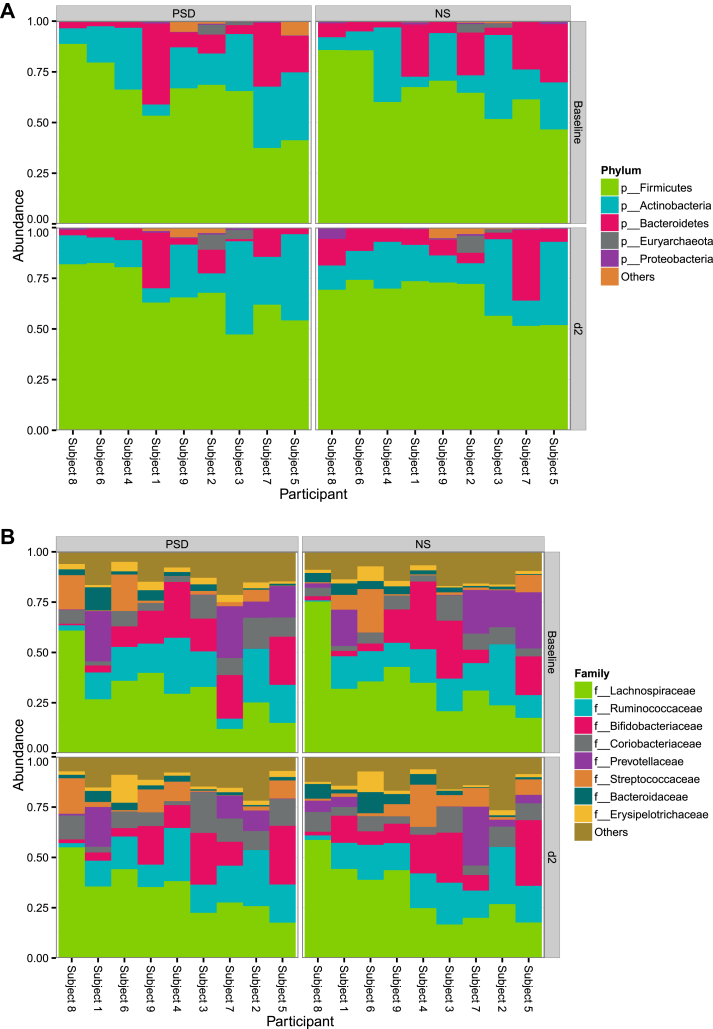
- After two nights of partial sleep deprivation (PSD) vs normal sleep (NS), the Firmicutes:Bacteroidetes ratio was almost doubled on day 2 (17.5 ± 13.7 vs 9.1 ± 4.6, P = 0.04, one-sided), with no significant baseline difference.
- PSD increased abundances of Coriobacteriaceae (9.61 ± 5.59% vs 7.26 ± 3.30%) and Erysipelotrichaceae (3.37 ± 3.98% vs 2.55 ± 2.97%; both P = 0.049, one-sided) and decreased Tenericutes (0.129 ± 0.241% vs 0.284 ± 0.347%; P = 0.030, one-sided).
- No PSD vs NS effect was found on beta diversity or fecal short-chain fatty acid concentrations; only trends for time effects on acetate, propionate, and total SCFAs were observed (all P < 0.10, two-sided).
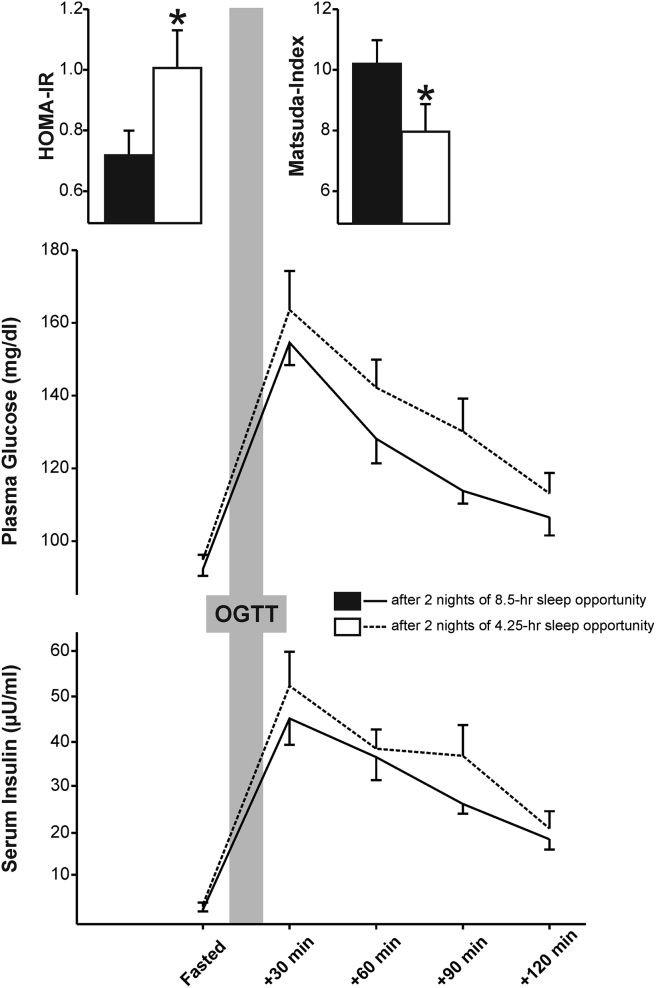
- Fasting insulin resistance increased after PSD vs NS (HOMA-IR 1.01 ± 0.12 vs 0.72 ± 0.08, P = 0.014, one-sided), fasting insulin was 34% higher (4.26 ± 0.48 vs 3.17 ± 0.35 μU/mL, P = 0.006, one-sided), and postprandial insulin sensitivity decreased by ∼22% (Matsuda index 8.0 ± 0.90 vs 10.2 ± 0.78, P = 0.017, one-sided).
Methods
- Randomized within-subject crossover study with a standardized in-lab protocol; nine normal-weight men completed two conditions: two nights of PSD (sleep opportunity 02:45–07:00 h) and two nights of NS (22:30–07:00 h).
- Fecal samples were collected within 24 h before and after two in-lab nights for each condition, yielding 36 samples; microbiota composition was assessed by V4 16S rRNA gene sequencing, and fecal SCFAs were measured by gas chromatography.
- Participants underwent an oral glucose tolerance test after each sleep intervention; analyses included PERMANOVA, DESeq, Wilcoxon signed rank tests, Student’s t-tests, repeated measures ANOVA, and Pearson correlations.
Limitations
- The paper states that only a subsample of participants provided fecal samples, the sample was small and limited to healthy young men, and the lack of counterbalancing in condition order among these nine participants may have influenced results.
- The paper states that the intervention lasted only two days and nights, did not include recovery sleep, and restricted sleep in the first part of the night, so longer-term, circadian-timing, and recovery effects remain unknown.
- The text makes evident that the study cannot establish causality between the observed microbial shifts and metabolic changes, and the authors note that larger, longer, and more diverse studies are needed.
Model-written summary. Check it against the paper before relying on it.
Integrity signals
Registry
Cites
Statistics
Figures
Verification
Claims the paper makes
33 Not checked yet · 24 Own result · 7 Own method · 7 Own interpretation
A result the paper reports from its own data — it cites no other source for it, so there is none to check. The quote shows it is in the paper.
In the paper
“without any significant difference on baseline (13.1 ± 11.7 vs. 9.6 ± 7.2, P = 0.18, two-sided).”
§ Gut microbiota and glucometabolic alterations in response to recurrent partial sleep deprivation in normal-weight young individuals > Results > Effects of partial sleep deprivation on microbial composition at the phylum, family, and species level
plain- Asserted: passes — The authors put it forward as true.
- Checkable: passes — It can be checked against evidence.
- Load-bearing: unclear — It is unclear whether the paper’s conclusions depend on it.
- Based: passes — The paper gives a reason why it holds.
A result the paper reports from its own data — it cites no other source for it, so there is none to check. The quote shows it is in the paper.
In the paper
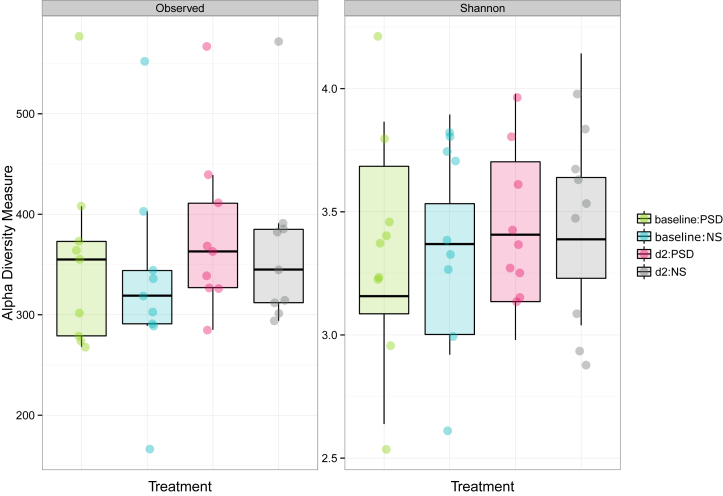
“Testing for within and across-subject variation for both condition (NS vs. PSD) and time point (baseline vs. day 2), with alpha and beta diversity using Observed and Shannon methods, did not reveal any significant differences (Figure 2; all P > 0.05, two-sided; also Supplementary Table 2).”
§ Gut microbiota and glucometabolic alterations in response to recurrent partial sleep deprivation in normal-weight young individuals > Results > Effects of partial sleep deprivation on microbial beta diversity
plainn = 36- Asserted: passes — The authors put it forward as true.
- Checkable: passes — It can be checked against evidence.
- Load-bearing: unclear — It is unclear whether the paper’s conclusions depend on it.
- Based: passes — The paper gives a reason why it holds.
A result the paper reports from its own data — it cites no other source for it, so there is none to check. The quote shows it is in the paper.
In the paper
“neither sleep condition nor fecal collection day (time effect) were found to be significant drivers for beta diversity using weighted abundances or hierarchical clustering (baseline vs. day 2, P = 0.988; or day 2 samples for PSD vs. NS, P = 0.574, both two-sided; Supplementary Fig. 1A)”
§ Gut microbiota and glucometabolic alterations in response to recurrent partial sleep deprivation in normal-weight young individuals > Results > Effects of partial sleep deprivation on microbial beta diversity
plain- Asserted: passes — The authors put it forward as true.
- Checkable: passes — It can be checked against evidence.
- Load-bearing: unclear — It is unclear whether the paper’s conclusions depend on it.
- Based: passes — The paper gives a reason why it holds.
A result the paper reports from its own data — it cites no other source for it, so there is none to check. The quote shows it is in the paper.
In the paper
“Following two nights of PSD vs. sleep, no significant changes were noted at the OTU level”
§ Gut microbiota and glucometabolic alterations in response to recurrent partial sleep deprivation in normal-weight young individuals > Results > Effects of partial sleep deprivation on microbial composition at the phylum, family, and species level
plain- Asserted: passes — The authors put it forward as true.
- Checkable: passes — It can be checked against evidence.
- Load-bearing: unclear — It is unclear whether the paper’s conclusions depend on it.
- Based: passes — The paper gives a reason why it holds.
A result the paper reports from its own data — it cites no other source for it, so there is none to check. The quote shows it is in the paper.
In the paper
“we observed a decrease in the Tenericutes phylum after PSD vs. NS (0.129 ± 0.241% vs. 0.284 ± 0.347%; P = 0.030, one-sided; Supplementary Fig. 2A; Table 3A)”
§ Gut microbiota and glucometabolic alterations in response to recurrent partial sleep deprivation in normal-weight young individuals > Results > Effects of partial sleep deprivation on microbial composition at the phylum, family, and species level
plaindirect- Asserted: passes — The authors put it forward as true.
- Checkable: passes — It can be checked against evidence.
- Load-bearing: unclear — It is unclear whether the paper’s conclusions depend on it.
- Based: passes — The paper gives a reason why it holds.
A result the paper reports from its own data — it cites no other source for it, so there is none to check. The quote shows it is in the paper.
In the paper
“Subsequent paired Student's t-tests indicated that the trend for the sleep effect was driven by an almost doubled F:B ratio after PSD vs. NS on day 2 (17.5 ± 13.7 vs. 9.1 ± 4.6, P = 0.04, one-sided)”
§ Gut microbiota and glucometabolic alterations in response to recurrent partial sleep deprivation in normal-weight young individuals > Results > Effects of partial sleep deprivation on microbial composition at the phylum, family, and species level
hedgeddirect- Asserted: passes — The authors put it forward as true.
- Checkable: passes — It can be checked against evidence.
- Load-bearing: passes — The paper’s conclusions depend on it.
- Based: passes — The paper gives a reason why it holds.
A result the paper reports from its own data — it cites no other source for it, so there is none to check. The quote shows it is in the paper.
In the paper
“coupled with increased abundances of the families Coriobacteriaceae and Erysipelotrichaceae (9.61 ± 5.59% vs. 7.26 ± 3.30% and 3.37 ± 3.98% vs. 2.55 ± 2.97%, respectively; both P = 0.049, one-sided; Supplementary Fig. 2B; Table 3B).”
§ Gut microbiota and glucometabolic alterations in response to recurrent partial sleep deprivation in normal-weight young individuals > Results > Effects of partial sleep deprivation on microbial composition at the phylum, family, and species level
plaindirect- Asserted: passes — The authors put it forward as true.
- Checkable: passes — It can be checked against evidence.
- Load-bearing: passes — The paper’s conclusions depend on it.
- Based: passes — The paper gives a reason why it holds.
A result the paper reports from its own data — it cites no other source for it, so there is none to check. The quote shows it is in the paper.
In the paper
“we failed to find any impact on SCFAs as a result of our sleep intervention, apart for statistical trends for time effects on acetate, propionate, and total fecal SCFAs levels.”
§ Gut microbiota and glucometabolic alterations in response to recurrent partial sleep deprivation in normal-weight young individuals > Discussion
plain- Asserted: passes — The authors put it forward as true.
- Checkable: passes — It can be checked against evidence.
- Load-bearing: passes — The paper’s conclusions depend on it.
- Based: passes — The paper gives a reason why it holds.
A result the paper reports from its own data — it cites no other source for it, so there is none to check. The quote shows it is in the paper.
In the paper
“we also investigated whether beta diversity on day 2 was associated with the decreased insulin sensitivity observed on the same day following sleep loss, but we did not find any significant effect (PERMANOVA P = 0.121 and P = 0.235 for effects related to the HOMA-IR and Matsuda index, respectively, both two-sided).”
§ Gut microbiota and glucometabolic alterations in response to recurrent partial sleep deprivation in normal-weight young individuals > Results > Effects of partial sleep deprivation on glucometabolic parameters and lipid metabolism
plain- Asserted: passes — The authors put it forward as true.
- Checkable: passes — It can be checked against evidence.
- Load-bearing: unclear — It is unclear whether the paper’s conclusions depend on it.
- Based: passes — The paper gives a reason why it holds.
- It may state two separate claims as one. 11
- Probably not a substantial claim. 35
- The quote only partly states this claim. 1
A result the paper reports from its own data — it cites no other source for it, so there is none to check. The quote shows it is in the paper.
In the paper
“in the PSD condition, participants slept 3 h:59 min ± 4 min on the first night, and 4 h:3 min ± 3 min on the second night.”
§ Gut microbiota and glucometabolic alterations in response to recurrent partial sleep deprivation in normal-weight young individuals > Methods > Sleep assessment
plain- Asserted: passes — The authors put it forward as true.
- Checkable: passes — It can be checked against evidence.
- Load-bearing: passes — The paper’s conclusions depend on it.
- Based: passes — The paper gives a reason why it holds.
It may state two separate claims as one.
A result the paper reports from its own data — it cites no other source for it, so there is none to check. The quote shows it is in the paper.
In the paper
“The polysomnographic analysis revealed that both on the first and second night, subjects slept 7 h:47min ± 13 min and 8 h:00 min ± 7 min, respectively, in the NS condition”
§ Gut microbiota and glucometabolic alterations in response to recurrent partial sleep deprivation in normal-weight young individuals > Methods > Sleep assessment
plain- Asserted: passes — The authors put it forward as true.
- Checkable: passes — It can be checked against evidence.
- Load-bearing: fails — The paper’s conclusions may not depend on it.
- Based: passes — The paper gives a reason why it holds.
Probably not a substantial claim. The paper’s conclusions may not depend on it. It may state two separate claims as one.
A result the paper reports from its own data — it cites no other source for it, so there is none to check. The quote shows it is in the paper.
In the paper
“we did not observe any main effects of sleep or any interaction effects, in the ANOVA (all P > 0.10, two-sided; Table 4).”
§ Gut microbiota and glucometabolic alterations in response to recurrent partial sleep deprivation in normal-weight young individuals > Results > Changes in stool content of short-chained fatty acids following short sleep
plain- Asserted: passes — The authors put it forward as true.
- Checkable: passes — It can be checked against evidence.
- Load-bearing: unclear — It is unclear whether the paper’s conclusions depend on it.
- Based: passes — The paper gives a reason why it holds.
It may state two separate claims as one.
A result the paper reports from its own data — it cites no other source for it, so there is none to check. The quote shows it is in the paper.
In the paper
“we observed increased levels of the families Coriobacteriaceae and Erysipelotrichaceae (phylum Actinobacteria and Firmicutes, respectively), with a lower abundance of the phylum Tenericutes, following two nights of PSD compared with two nights of normal sleep.”
§ Gut microbiota and glucometabolic alterations in response to recurrent partial sleep deprivation in normal-weight young individuals > Discussion
plaindirect- Asserted: passes — The authors put it forward as true.
- Checkable: passes — It can be checked against evidence.
- Load-bearing: passes — The paper’s conclusions depend on it.
- Based: passes — The paper gives a reason why it holds.
It may state two separate claims as one.
What the paper did — it cites no source for this, so there is none to check. The quote shows it is in the paper.
In the paper
“In a randomized within-subject crossover study utilizing a standardized in-lab protocol (with fixed meal times and exercise schedules), we studied nine normal-weight men at two occasions”
§ Gut microbiota and glucometabolic alterations in response to recurrent partial sleep deprivation in normal-weight young individuals > Abstract > Methods
plainn = 9- Asserted: passes — The authors put it forward as true.
- Checkable: passes — It can be checked against evidence.
- Load-bearing: passes — The paper’s conclusions depend on it.
- Based: passes — The paper gives a reason why it holds.
Probably not a substantial claim.
In the paper
“obesity has been associated with an increase in total levels of SCFAs [10]”
§ Gut microbiota and glucometabolic alterations in response to recurrent partial sleep deprivation in normal-weight young individuals > Introduction
What the sources say
- Not checked yetcites [10] Schwiertz, 2010, Microbiota and SCFA in lean and overweight healthy subjects, Obesity (Silver Spring) source
plaincorrelational- Asserted: passes — The authors put it forward as true.
- Checkable: passes — It can be checked against evidence.
- Load-bearing: fails — The paper’s conclusions may not depend on it.
- Based: passes — The paper gives a reason why it holds.
Probably not a substantial claim. The paper’s conclusions may not depend on it.
In the paper
“T2DM patients have been found to have a reduction in butyrate-producing bacterial species, and lower levels of butyrate biosynthesis when the microbiomes of T2DM patients are compared with those of non-diabetic controls [6].”
§ Gut microbiota and glucometabolic alterations in response to recurrent partial sleep deprivation in normal-weight young individuals > Introduction
What the sources say
- Not checked yetcites [6] Qin, 2012, A metagenome-wide association study of gut microbiota in type 2 diabetes, Nature source
plaincorrelational- Asserted: passes — The authors put it forward as true.
- Checkable: passes — It can be checked against evidence.
- Load-bearing: fails — The paper’s conclusions may not depend on it.
- Based: passes — The paper gives a reason why it holds.
Probably not a substantial claim. The paper’s conclusions may not depend on it. It may state two separate claims as one.
None of the sources cited for this claim have been checked yet.
In the paper
“Both acute [12], [14], [15], [16] and long-term [16], [17] changes in diet have been demonstrated to alter the abundance of bacterial species in the gut, as well as their functional capacity to process various nutrients, with such changes being detectable within days of dietary interventions in humans [15], [16].”
§ Gut microbiota and glucometabolic alterations in response to recurrent partial sleep deprivation in normal-weight young individuals > Introduction
What the sources say
- Not checked yetcites [12] Zeevi, 2015, Personalized nutrition by prediction of glycemic responses, Cell source
- Not checked yetcites [15] David, 2014, Diet rapidly and reproducibly alters the human gut microbiome, Nature source
- Not checked yetcites [16] Wu, 2011, Linking long-term dietary patterns with gut microbial enterotypes, Science source
boosteddirect- Asserted: passes — The authors put it forward as true.
- Checkable: passes — It can be checked against evidence.
- Load-bearing: fails — The paper’s conclusions may not depend on it.
- Based: passes — The paper gives a reason why it holds.
Probably not a substantial claim. The paper’s conclusions may not depend on it. It may state two separate claims as one.
In the paper
“SCFAs can constitute about 2.2% of daily caloric intake [18]”
§ Gut microbiota and glucometabolic alterations in response to recurrent partial sleep deprivation in normal-weight young individuals > Introduction
What the sources say
- Not checked yetcites [18] Blaut, 2015, Gut microbiota and energy balance: role in obesity, Proceedings of the Nutrition Society source
plain- Asserted: passes — The authors put it forward as true.
- Checkable: passes — It can be checked against evidence.
- Load-bearing: fails — The paper’s conclusions may not depend on it.
- Based: passes — The paper gives a reason why it holds.
Probably not a substantial claim. The paper’s conclusions may not depend on it.
In the paper
“germfree mice – which lack a functional microbiome – are resistant to diet-induced obesity on a western diet [7].”
§ Gut microbiota and glucometabolic alterations in response to recurrent partial sleep deprivation in normal-weight young individuals > Introduction
What the sources say
- Not checked yetcites [7] Backhed, 2007, Mechanisms underlying the resistance to diet-induced obesity in germ-free mice, Proceedings of the National Academy of Sciences of the United States of America source
plaindirect- Asserted: passes — The authors put it forward as true.
- Checkable: passes — It can be checked against evidence.
- Load-bearing: fails — The paper’s conclusions may not depend on it.
- Based: passes — The paper gives a reason why it holds.
Probably not a substantial claim. The paper’s conclusions may not depend on it.
In the paper
“beneficial effects concerning insulin sensitivity have been observed in human trials of patients with metabolic syndrome who received the transplants from lean donors [4].”
§ Gut microbiota and glucometabolic alterations in response to recurrent partial sleep deprivation in normal-weight young individuals > Introduction
What the sources say
- Not checked yetcites [4] Vrieze, 2012, Transfer of intestinal microbiota from lean donors increases insulin sensitivity in individuals with metabolic syndrome, Gastroenterology source
plaindirect- Asserted: passes — The authors put it forward as true.
- Checkable: passes — It can be checked against evidence.
- Load-bearing: fails — The paper’s conclusions may not depend on it.
- Based: passes — The paper gives a reason why it holds.
Probably not a substantial claim. The paper’s conclusions may not depend on it.
In the paper
“increased acetate production by gut bacteria has been found recently to promote insulin secretion, hyperphagia, and obesity [22]”
§ Gut microbiota and glucometabolic alterations in response to recurrent partial sleep deprivation in normal-weight young individuals > Introduction
What the sources say
- Not checked yetcites [22] Perry, 2016, Acetate mediates a microbiome-brain-beta-cell axis to promote metabolic syndrome, Nature source
plaindirect- Asserted: passes — The authors put it forward as true.
- Checkable: passes — It can be checked against evidence.
- Load-bearing: fails — The paper’s conclusions may not depend on it.
- Based: passes — The paper gives a reason why it holds.
Probably not a substantial claim. The paper’s conclusions may not depend on it. It may state two separate claims as one.
None of the sources cited for this claim have been checked yet.
In the paper
“transplanting the microbiota of genetically obese ob/ob mice or obese humans to lean germfree mice increases the adiposity of the recipient mice [8], [9]”
§ Gut microbiota and glucometabolic alterations in response to recurrent partial sleep deprivation in normal-weight young individuals > Introduction
What the sources say
plaindirect- Asserted: passes — The authors put it forward as true.
- Checkable: passes — It can be checked against evidence.
- Load-bearing: fails — The paper’s conclusions may not depend on it.
- Based: passes — The paper gives a reason why it holds.
Probably not a substantial claim. The paper’s conclusions may not depend on it.
In the paper
“the OGTT was employed to test the participants' insulin sensitivity using the WHO-defined gold standard [33].”
§ Gut microbiota and glucometabolic alterations in response to recurrent partial sleep deprivation in normal-weight young individuals > Methods > Experimental procedure
What the sources say
- Not checked yetcites [33] WHO, 2006
plain- Asserted: passes — The authors put it forward as true.
- Checkable: passes — It can be checked against evidence.
- Load-bearing: passes — The paper’s conclusions depend on it.
- Based: passes — The paper gives a reason why it holds.
Probably not a substantial claim.
In the paper
“Merely curtailing sleep to half the recommended amount for a single night acutely impairs fasting insulin sensitivity [26].”
§ Gut microbiota and glucometabolic alterations in response to recurrent partial sleep deprivation in normal-weight young individuals > Introduction
What the sources say
- Not checked yetcites [26] Cedernaes, 2015, A single night of partial sleep loss impairs fasting insulin sensitivity but does not affect cephalic phase insulin release in young men, Journal of Sleep Research
plaindirect- Asserted: passes — The authors put it forward as true.
- Checkable: passes — It can be checked against evidence.
- Load-bearing: passes — The paper’s conclusions depend on it.
- Based: passes — The paper gives a reason why it holds.
Probably not a substantial claim.
None of the sources cited for this claim have been checked yet.
In the paper
“Differences in intestinal microbiota composition have been uncovered between healthy controls and those suffering from various diseases, including metabolic pathologies such as obesity, the metabolic syndrome and type-2 diabetes mellitus (T2DM) [4], [5], [6].”
§ Gut microbiota and glucometabolic alterations in response to recurrent partial sleep deprivation in normal-weight young individuals > Introduction
What the sources say
- Not checked yetcites [4] Vrieze, 2012, Transfer of intestinal microbiota from lean donors increases insulin sensitivity in individuals with metabolic syndrome, Gastroenterology source
- Not checked yetcites [5] Hartstra, 2015, Insights into the role of the microbiome in obesity and type 2 diabetes, Diabetes Care source
- Not checked yetcites [6] Qin, 2012, A metagenome-wide association study of gut microbiota in type 2 diabetes, Nature source
plaincorrelational- Asserted: passes — The authors put it forward as true.
- Checkable: passes — It can be checked against evidence.
- Load-bearing: fails — The paper’s conclusions may not depend on it.
- Based: passes — The paper gives a reason why it holds.
Probably not a substantial claim. The paper’s conclusions may not depend on it.
In the paper
“Butyrate and propionate have recently been demonstrated to play a role in intestinal gluconeogenesis, which has beneficial effects on glucose and energy homeostasis [20].”
§ Gut microbiota and glucometabolic alterations in response to recurrent partial sleep deprivation in normal-weight young individuals > Introduction
What the sources say
- Not checked yetcites [20] De Vadder, 2014, Microbiota-generated metabolites promote metabolic benefits via gut-brain neural circuits, Cell source
boosteddirect- Asserted: passes — The authors put it forward as true.
- Checkable: passes — It can be checked against evidence.
- Load-bearing: fails — The paper’s conclusions may not depend on it.
- Based: passes — The paper gives a reason why it holds.
Probably not a substantial claim. The paper’s conclusions may not depend on it. It may state two separate claims as one.
In the paper
“When prolonged, sleep restriction can promote weight gain [27]”
§ Gut microbiota and glucometabolic alterations in response to recurrent partial sleep deprivation in normal-weight young individuals > Introduction
What the sources say
- Not checked yetcites [27] Spaeth, 2013, Effects of experimental sleep restriction on weight gain, caloric intake, and meal timing in healthy adults, Sleep source
plainconditional- Asserted: passes — The authors put it forward as true.
- Checkable: passes — It can be checked against evidence.
- Load-bearing: fails — The paper’s conclusions may not depend on it.
- Based: passes — The paper gives a reason why it holds.
Probably not a substantial claim. The paper’s conclusions may not depend on it.
In the paper
“and, correspondingly, that this may be perturbed following circadian misalignment [28].”
§ Gut microbiota and glucometabolic alterations in response to recurrent partial sleep deprivation in normal-weight young individuals > Introduction
What the sources say
- Not checked yetcites [28] Thaiss, 2014, Transkingdom control of microbiota diurnal oscillations promotes metabolic homeostasis, Cell source
hedgedconditional- Asserted: passes — The authors put it forward as true.
- Checkable: passes — It can be checked against evidence.
- Load-bearing: passes — The paper’s conclusions depend on it.
- Based: passes — The paper gives a reason why it holds.
Probably not a substantial claim.
None of the sources cited for this claim have been checked yet.
In the paper
“There is currently some evidence in both mice and humans that the gut microbiota exhibits a circadian rhythm [28], [29], [30]”
§ Gut microbiota and glucometabolic alterations in response to recurrent partial sleep deprivation in normal-weight young individuals > Introduction
What the sources say
- Not checked yetcites [28] Thaiss, 2014, Transkingdom control of microbiota diurnal oscillations promotes metabolic homeostasis, Cell source
- Not checked yetcites [29] Liang, 2015, Rhythmicity of the intestinal microbiota is regulated by gender and the host circadian clock, Proceedings of the National Academy of Sciences of the United States of America source
- Not checked yetcites [30] Zarrinpar, 2014, Diet and feeding pattern affect the diurnal dynamics of the gut microbiome, Cell Metabolism source
hedgedcorrelational- Asserted: passes — The authors put it forward as true.
- Checkable: passes — It can be checked against evidence.
- Load-bearing: passes — The paper’s conclusions depend on it.
- Based: passes — The paper gives a reason why it holds.
Probably not a substantial claim.
What the paper did — it cites no source for this, so there is none to check. The quote shows it is in the paper.
In the paper
“Analyses of changes in the phyla, families, or OTUs of sequenced gut bacteria were analyzed for the eight most abundant features to minimize multiple comparisons.”
§ Gut microbiota and glucometabolic alterations in response to recurrent partial sleep deprivation in normal-weight young individuals > Methods > Statistical analysis
plain- Asserted: passes — The authors put it forward as true.
- Checkable: passes — It can be checked against evidence.
- Load-bearing: fails — The paper’s conclusions may not depend on it.
- Based: passes — The paper gives a reason why it holds.
Probably not a substantial claim. The paper’s conclusions may not depend on it.
What the paper did — it cites no source for this, so there is none to check. The quote shows it is in the paper.
In the paper
“false discovery rate (FDR; q-values) was calculated with the Benjamini–Hochberg procedure.”
§ Gut microbiota and glucometabolic alterations in response to recurrent partial sleep deprivation in normal-weight young individuals > Methods > Statistical analysis
plain- Asserted: passes — The authors put it forward as true.
- Checkable: passes — It can be checked against evidence.
- Load-bearing: fails — The paper’s conclusions may not depend on it.
- Based: passes — The paper gives a reason why it holds.
Probably not a substantial claim. The paper’s conclusions may not depend on it.
None of the sources cited for this claim have been checked yet.
In the paper
“the composition of the microbiota has been found to regulate the metabolic response to various such factors in humans [11], [12].”
§ Gut microbiota and glucometabolic alterations in response to recurrent partial sleep deprivation in normal-weight young individuals > Introduction
What the sources say
plaindirect- Asserted: passes — The authors put it forward as true.
- Checkable: passes — It can be checked against evidence.
- Load-bearing: fails — The paper’s conclusions may not depend on it.
- Based: passes — The paper gives a reason why it holds.
Probably not a substantial claim. The paper’s conclusions may not depend on it.
In the paper
“To further isolate the solitary impact of sleep on the microbiota – separate from the previously documented impact of e.g. high-fat diet [32] – participants were provided with a non-sugar sweetened, low-fat diet throughout the three meals, the exception being the oral glucose tolerance (OGTT) test on day 2”
§ Gut microbiota and glucometabolic alterations in response to recurrent partial sleep deprivation in normal-weight young individuals > Methods > Experimental procedure
What the sources say
- Not checked yetcites [32] Hildebrandt, 2009, High-fat diet determines the composition of the murine gut microbiome independently of obesity, Gastroenterology source
plain- Asserted: passes — The authors put it forward as true.
- Checkable: passes — It can be checked against evidence.
- Load-bearing: passes — The paper’s conclusions depend on it.
- Based: passes — The paper gives a reason why it holds.
Probably not a substantial claim.
In the paper
“similar transplantation of the microbiome from the obese but not normal-weight twin, to healthy germ-free mice, also promotes adiposity and perturbs glucose metabolism [9].”
§ Gut microbiota and glucometabolic alterations in response to recurrent partial sleep deprivation in normal-weight young individuals > Introduction
What the sources say
- Not checked yetcites [9] Ridaura, 2013, Gut microbiota from twins discordant for obesity modulate metabolism in mice, Science source
plaindirect- Asserted: passes — The authors put it forward as true.
- Checkable: passes — It can be checked against evidence.
- Load-bearing: fails — The paper’s conclusions may not depend on it.
- Based: passes — The paper gives a reason why it holds.
Probably not a substantial claim. The paper’s conclusions may not depend on it. It may state two separate claims as one.
In the paper
“An experienced scorer blinded to the study conditions adhered to standardized criteria for subsequent sleep analysis [36].”
§ Gut microbiota and glucometabolic alterations in response to recurrent partial sleep deprivation in normal-weight young individuals > Methods > Sleep assessment
What the sources say
- Not checked yetcites [36] Silber, 2007, The visual scoring of sleep in adults, Journal of Clinical Sleep Medicine source
plain- Asserted: passes — The authors put it forward as true.
- Checkable: passes — It can be checked against evidence.
- Load-bearing: passes — The paper’s conclusions depend on it.
- Based: passes — The paper gives a reason why it holds.
Probably not a substantial claim. It may state two separate claims as one. The quote only partly states this claim.
None of the sources cited for this claim have been checked yet.
In the paper
“Coriobacteriaceae and Erysipelotrichaceae – previously linked to obesity and lipid, primarily cholesterol, metabolism [43], [44], [45]”
§ Gut microbiota and glucometabolic alterations in response to recurrent partial sleep deprivation in normal-weight young individuals > Results > Effects of partial sleep deprivation on glucometabolic parameters and lipid metabolism
What the sources say
- Not checked yetcites [43] Zhang, 2009, Human gut microbiota in obesity and after gastric bypass, Proceedings of the National Academy of Sciences of the United States of America source
- Not checked yetcites [44] Spencer, 2011, Association between composition of the human gastrointestinal microbiome and development of fatty liver with choline deficiency, Gastroenterology source
- Not checked yetcites [45] Claus, 2011, Colonization-induced host-gut microbial metabolic interaction, MBio source
plaincorrelational- Asserted: passes — The authors put it forward as true.
- Checkable: passes — It can be checked against evidence.
- Load-bearing: passes — The paper’s conclusions depend on it.
- Based: passes — The paper gives a reason why it holds.
Probably not a substantial claim.
In the paper
“among families of the phylum Firmicutes, specifically Erysipelotrichaceae has instead been found to increase several fold in mice exposed to both a high-fat or Western diet [56].”
§ Gut microbiota and glucometabolic alterations in response to recurrent partial sleep deprivation in normal-weight young individuals > Discussion
What the sources say
- Not checked yetcites [56] Fleissner, 2010, Absence of intestinal microbiota does not protect mice from diet-induced obesity, British Journal of Nutrition source
plaindirect- Asserted: passes — The authors put it forward as true.
- Checkable: passes — It can be checked against evidence.
- Load-bearing: fails — The paper’s conclusions may not depend on it.
- Based: passes — The paper gives a reason why it holds.
Probably not a substantial claim. The paper’s conclusions may not depend on it.
In the paper
“levels of the latter positively correlate with changes in liver fat following a 2-month long dietary choline manipulation [44].”
§ Gut microbiota and glucometabolic alterations in response to recurrent partial sleep deprivation in normal-weight young individuals > Discussion
What the sources say
- Not checked yetcites [44] Spencer, 2011, Association between composition of the human gastrointestinal microbiome and development of fatty liver with choline deficiency, Gastroenterology source
plaincorrelational- Asserted: passes — The authors put it forward as true.
- Checkable: passes — It can be checked against evidence.
- Load-bearing: fails — The paper’s conclusions may not depend on it.
- Based: passes — The paper gives a reason why it holds.
Probably not a substantial claim. The paper’s conclusions may not depend on it.
What the paper did — it cites no source for this, so there is none to check. The quote shows it is in the paper.
In the paper
“We utilized a standardized in-lab protocol (including for factors such as meal times and activity schedule) in an attempt to isolate the effect of sleep loss on the gut microbiome in normal-weight, healthy subjects.”
§ Gut microbiota and glucometabolic alterations in response to recurrent partial sleep deprivation in normal-weight young individuals > Limitations and perspectives
plain- Asserted: passes — The authors put it forward as true.
- Checkable: passes — It can be checked against evidence.
- Load-bearing: passes — The paper’s conclusions depend on it.
- Based: passes — The paper gives a reason why it holds.
Probably not a substantial claim.
In the paper
“Tenericutes has been demonstrated to decrease following diet-induced obesity in mice [47]”
§ Gut microbiota and glucometabolic alterations in response to recurrent partial sleep deprivation in normal-weight young individuals > Discussion
What the sources say
- Not checked yetcites [47] Everard, 2014, Microbiome of prebiotic-treated mice reveals novel targets involved in host response during obesity, ISME Journal source
boosteddirect- Asserted: passes — The authors put it forward as true.
- Checkable: passes — It can be checked against evidence.
- Load-bearing: fails — The paper’s conclusions may not depend on it.
- Based: passes — The paper gives a reason why it holds.
Probably not a substantial claim. The paper’s conclusions may not depend on it.
In the paper
“increased abundance of Firmicutes and reduced abundance of Bacteroidetes in the gut microbiota have been observed in mice subjected to sleep fragmentation for 4 weeks [48]”
§ Gut microbiota and glucometabolic alterations in response to recurrent partial sleep deprivation in normal-weight young individuals > Discussion
What the sources say
- Not checked yetcites [48] Poroyko, 2016, Chronic sleep disruption alters gut microbiota, induces systemic and adipose tissue inflammation and insulin resistance in mice, Scientific Reports source
plaincorrelational- Asserted: passes — The authors put it forward as true.
- Checkable: passes — It can be checked against evidence.
- Load-bearing: fails — The paper’s conclusions may not depend on it.
- Based: passes — The paper gives a reason why it holds.
Probably not a substantial claim. The paper’s conclusions may not depend on it.
What the paper did — it cites no source for this, so there is none to check. The quote shows it is in the paper.
In the paper
“since only a subsample of the participants was able to provide fecal samples, we cannot rule out that the lack of counterbalancing in the order of experimental conditions may have influenced the present results.”
§ Gut microbiota and glucometabolic alterations in response to recurrent partial sleep deprivation in normal-weight young individuals > Limitations and perspectives
hedgedconditional- Asserted: passes — The authors put it forward as true.
- Checkable: passes — It can be checked against evidence.
- Load-bearing: fails — The paper’s conclusions may not depend on it.
- Based: passes — The paper gives a reason why it holds.
Probably not a substantial claim. The paper’s conclusions may not depend on it.
None of the sources cited for this claim have been checked yet.
In the paper
“These increased levels have been associated previously with changes in hepatic and lipid metabolism in humans and various rodent species [44], [45], [53], [54], [55].”
§ Gut microbiota and glucometabolic alterations in response to recurrent partial sleep deprivation in normal-weight young individuals > Discussion
What the sources say
- Not checked yetcites [44] Spencer, 2011, Association between composition of the human gastrointestinal microbiome and development of fatty liver with choline deficiency, Gastroenterology source
- Not checked yetcites [45] Claus, 2011, Colonization-induced host-gut microbial metabolic interaction, MBio source
- Not checked yetcites [53] Martinez, 2013, Diet-induced alterations of host cholesterol metabolism are likely to affect the gut microbiota composition in hamsters, Applied and Environmental Microbiology source
plaincorrelational- Asserted: passes — The authors put it forward as true.
- Checkable: passes — It can be checked against evidence.
- Load-bearing: fails — The paper’s conclusions may not depend on it.
- Based: passes — The paper gives a reason why it holds.
Probably not a substantial claim. The paper’s conclusions may not depend on it.
None of the sources cited for this claim have been checked yet.
In the paper
“Obesity and associated metabolic perturbations primarily have been reflected by altered diversity of the microbiota [73], [74]”
§ Gut microbiota and glucometabolic alterations in response to recurrent partial sleep deprivation in normal-weight young individuals > Limitations and perspectives
What the sources say
plaincorrelational- Asserted: passes — The authors put it forward as true.
- Checkable: passes — It can be checked against evidence.
- Load-bearing: fails — The paper’s conclusions may not depend on it.
- Based: passes — The paper gives a reason why it holds.
Probably not a substantial claim. The paper’s conclusions may not depend on it.
A conclusion the paper draws from its own results — it cites no other source for it, so there is none to check. The quote shows it is in the paper.
In the paper
“Two days of short vs. normal sleep was found to reduce insulin sensitivity without any associated changes in gut species diversity”
§ Gut microbiota and glucometabolic alterations in response to recurrent partial sleep deprivation in normal-weight young individuals > Discussion
plaindirect- Asserted: passes — The authors put it forward as true.
- Checkable: passes — It can be checked against evidence.
- Load-bearing: passes — The paper’s conclusions depend on it.
- Based: passes — The paper gives a reason why it holds.
It may state two separate claims as one.
In the paper
“smaller studies in humans have found that morbidly obese subjects harbor higher proportions of Coriobacteriaceae and Erysipelotrichaceae [43]”
§ Gut microbiota and glucometabolic alterations in response to recurrent partial sleep deprivation in normal-weight young individuals > Discussion
What the sources say
- Not checked yetcites [43] Zhang, 2009, Human gut microbiota in obesity and after gastric bypass, Proceedings of the National Academy of Sciences of the United States of America source
plaincorrelational- Asserted: passes — The authors put it forward as true.
- Checkable: passes — It can be checked against evidence.
- Load-bearing: fails — The paper’s conclusions may not depend on it.
- Based: passes — The paper gives a reason why it holds.
Probably not a substantial claim. The paper’s conclusions may not depend on it.
In the paper
“weight loss can increase the already lower abundance of Bacteroidetes in obese subjects [40]”
§ Gut microbiota and glucometabolic alterations in response to recurrent partial sleep deprivation in normal-weight young individuals > Discussion
What the sources say
- Not checked yetcites [40] Ley, 2006, Microbial ecology: human gut microbes associated with obesity, Nature source
plaindirect- Asserted: passes — The authors put it forward as true.
- Checkable: passes — It can be checked against evidence.
- Load-bearing: fails — The paper’s conclusions may not depend on it.
- Based: passes — The paper gives a reason why it holds.
Probably not a substantial claim. The paper’s conclusions may not depend on it.
None of the sources cited for this claim have been checked yet.
In the paper
“An increase in this ratio in some [40], but not all [10] studies, has been found to be associated with obesity in humans as well as in genetically or diet-induced obese mice [40], [46], [47]”
§ Gut microbiota and glucometabolic alterations in response to recurrent partial sleep deprivation in normal-weight young individuals > Discussion
What the sources say
- Not checked yetcites [40] Ley, 2006, Microbial ecology: human gut microbes associated with obesity, Nature source
- Not checked yetcites [10] Schwiertz, 2010, Microbiota and SCFA in lean and overweight healthy subjects, Obesity (Silver Spring) source
- Not checked yetcites [46] Ley, 2005, Obesity alters gut microbial ecology, Proceedings of the National Academy of Sciences of the United States of America source
hedgedcorrelational- Asserted: passes — The authors put it forward as true.
- Checkable: passes — It can be checked against evidence.
- Load-bearing: fails — The paper’s conclusions may not depend on it.
- Based: passes — The paper gives a reason why it holds.
Probably not a substantial claim. The paper’s conclusions may not depend on it.
The paper relies on this without support.
No studies have investigated the impact of insufficient sleep on the composition of the human gut microbiota.
“However, to date, there are no studies that have investigated the impact of insufficient sleep on the composition of the human gut microbiota.”
The paper relies on this without support.
Studies are lacking that assess whether adverse metabolic changes that may increase the risk of T2DM and obesity, such as impaired insulin sensitivity, are associated with changes in the gut microbiome and associated SCFAs that could result from recurrent sleep loss.
“Studies are therefore lacking that assess whether important adverse metabolic changes that may increase the risk of T2DM and obesity, such as impaired insulin sensitivity, are associated with changes in the gut microbiome and associated SCFAs that could result from recurrent sleep loss.”
The paper relies on this without support.
No prior study has provided evidence for sleep deprivation-induced changes in microbial families of bacterial gut species linked to metabolic pathologies.
“our study is the first to provide evidence for sleep deprivation-induced changes in microbial families of bacterial gut species, which have previously been linked to metabolic pathologies.”
Claims other papers make about this one
Each is checked against this paper’s own text: does it say what the citing paper says it does?
In the citing paper
“early studies in the late 19th century showed that total sleep deprivation in dogs leads to death after several days (reviewed in Ref. 38).”
From The Sleep-Immune Crosstalk in Health and Disease (2019) · cites this paper as [38]
Citations
Cites
An obesity-associated gut microbiome with increased capacity for energy harvest
Turnbaugh, P. J., Ley, R. E., Mahowald, M. A., Magrini, V., Mardis, E. R., & Gordon, J. I. (2006) · Nature · doi:10.1038/nature05414 · Cited by 12,444 · cited 3×
“Consistently, transplanting the microbiota of genetically obese ob/ob mice or obese humans to lean germfree mice increases the adiposity of the recipient mice [8,9], indicating an increased capacity to harvest energy”
BackgroundDiet rapidly and reproducibly alters the human gut microbiome
David, L. A., Maurice, C. F., Carmody, R. N., Gootenberg, D. B., Button, J. E., Wolfe, B. E., Ling, A. V., Devlin, A. S., Varma, Y., Fischbach, M. A., et al. (2014) · Nature · doi:10.1038/nature12820 · Cited by 10,100 · cited 2×
“Even so, dietary-induced acute changes of the gut microbiotae observed in previous human studies [15,16] e highlight how the gut microbiota interacts with dietary factors also over shorter timescales.”
BackgroundHuman gut microbes associated with obesity
Ley, R. E., Turnbaugh, P. J., Klein, S., & Gordon, J. I. (2006) · Nature · doi:10.1038/4441022a · Cited by 8,785 · cited 2×
“An increase in this ratio in some [40], but not all [10] studies, has been found to be associated with obesity in humans as well as in genetically or diet-induced obese mice [40,46,47], and weight loss can increase the already lower abundance of Bacteroidetes in obese subjects [40].”
BackgroundMethodA metagenome-wide association study of gut microbiota in type 2 diabetes
Qin, J., Li, Y., Cai, Z., Li, S., Zhu, J., Zhang, F., Liang, S., Zhang, W., Guan, Y., Shen, D., et al. (2012) · Nature · doi:10.1038/nature11450 · Cited by 6,762
Linking long-term dietary patterns with gut microbial enterotypes
Wu, G. D., Chen, J., Hoffmann, C., Bittinger, K., Chen, Y.-Y., Keilbaugh, S. A., Bewtra, M., Knights, D., Walters, W. A., Knight, R., et al. (2011) · Science · doi:10.1126/science.1208344 · Cited by 6,513 · cited 2×
“Even so, dietary-induced acute changes of the gut microbiotae observed in previous human studies [15,16] e highlight how the gut microbiota interacts with dietary factors also over shorter timescales.”
BackgroundObesity alters gut microbial ecology
Ley, R. E., Bäckhed, F., Turnbaugh, P., Lozupone, C. A., Knight, R. D., & Gordon, J. I. (2005) · Proceedings of the National Academy of Sciences · doi:10.1073/pnas.0504978102 · Cited by 6,176 · cited 1×
“An increase in this ratio in some [40], but not all [10] studies, has been found to be associated with obesity in humans as well as in genetically or diet-induced obese mice [40,46,47], and weight loss can increase the already lower abundance of Bacteroidetes in obese subjects [40].”
BackgroundMatsuda, M., & DeFronzo, R. A. (1999) · Diabetes Care · doi:10.2337/diacare.22.9.1462 · Cited by 5,621
Host-gut microbiota metabolic interactions
Nicholson, J. K., Holmes, E., Kinross, J., Burcelin, R., Gibson, G., Jia, W., & Pettersson, S. (2012) · Science · doi:10.1126/science.1223813 · Cited by 4,760 · cited 1×
“Such changes in intestinal bile acid levels, through altered production, secretion, and/or uptake (via bile acid transporters) [72], together with bidirectional effects of altered intestinal permeability also may represent mechanistic pathways through which changes in sleep duration or the sleep-wake cycle are able to…”
BackgroundRichness of human gut microbiome correlates with metabolic markers
Le Chatelier, E., Nielsen, T., Qin, J., Prifti, E., Hildebrand, F., Falony, G., Almeida, M., Arumugam, M., Batto, J.-M., Kennedy, S., et al. (2013) · Nature · doi:10.1038/nature12506 · Cited by 4,662
Gut Microbiota from Twins Discordant for Obesity Modulate Metabolism in Mice
Ridaura, V. K., Faith, J. J., Rey, F. E., Cheng, J., Duncan, A. E., Kau, A. L., Griffin, N. W., Lombard, V., Henrissat, B., Bain, J. R., et al. (2013) · Science · doi:10.1126/science.1241214 · Cited by 3,788 · cited 2×
“Furthermore, similar transplantation of the microbiome from the obese but not normal-weight twin, to healthy germfree mice, also promotes adiposity and perturbs glucose metabolism [9].”
Cited by
Sorted by citations
Items 201–300 of 321
Supasitdikul, T., Mazariegos, J. R. R., Nhat, N. N., Tung, Y., Yang, D., Lee, L., Gunawan, S. P., & Chen, Y. (2025) · Journal of Sleep Research · doi:10.1111/jsr.70125 · Cited by 7
“…2023; Bowers et al. 2020; Wang et al. 2021, 2023; Triplett et al. 2020; El Aidy et al. 2020; Wang, Wang, et al. 2022; Gunawan et al. 2024; Liu et al. 2020, 2022; Benedict et al. 2016; Wang, Yuan, et al. 2022; Ma et al. 2019; Yao et al. 2022; Maki et al. 2020; Song et al. 2022; Poroyko et al. 2016).”
Gut microbiota alterations in sleep disturbances: A systematic review and meta-analysis
Wang, Z., Wu, T., Li, J., Dong, G., Kong, L., Zhang, Y., Zhang, Z., Lv, Z., Zhang, Y., Zhan, R., et al. (2026) · Sleep Medicine Reviews · doi:10.1016/j.smrv.2026.102293 · Cited by 7
Current Aspects of Selected Factors to Modulate Brain Health and Sports Performance in Athletes
Przewłócka, K., Korewo-Labelle, D., Berezka, P., Karnia, M. J., & Kaczor, J. J. (2024) · Nutrients · doi:10.3390/nu16121842 · Cited by 9
“Conversely, short-term sleep loss can induce adverse changes in the gut microbiome content, promoting the growth of the Coriobacteriaceae and Erysipelotrichaceae families, combined with a lower abundance of the Tenericutes family [99].”
BackgroundThe Metabolic Syndrome in Mid-Aged Women
Pérez-López, F. R., & Chedraui, P. A. (2017) · Springer eBooks · doi:10.1007/978-3-319-59318-0_9 · Cited by 7
Shan, W., Zang, W., & Zuo, Z. (2025) · PLoS ONE · doi:10.1371/journal.pone.0335754 · Cited by 6
“Previous studies have shown that sleep deprivation changes the relative richness of bacteria but does not alter the species makeup of gut microbiota as reflected by no changes in β diversity when compared with controls [24–26].”
Sleep Debt and Insulin Resistance: What's Worse, Sleep Deprivation or Sleep Restriction?
de Souza, J. F. T., Mônico‐Neto, M., Tufik, S., & Antunes, H. K. M. (2024) · Sleep Science · doi:10.1055/s-0044-1782173 · Cited by 8
Zhou, Q., Tang, Y., Yuan, L., Xu, L., Yu, L., Yu, Z., & Zhang, Q. (2023) · Arab Journal of Gastroenterology · doi:10.1016/j.ajg.2023.05.003 · Cited by 5
Jászberényi, M., Thurzó, B., Jayakumar, A. R., & Schally, A. V. (2024) · International Journal of Molecular Sciences · doi:10.3390/ijms252313086 · Cited by 5
“Moreover, restoration of the gut microbiota and the function of the ghrelin-GHRH-GH-IGF axis may help prevent several chronic neuropsychiatric conditions [381,489].”
Sleep and the Microbiome: A Two-Way Relationship
Farré, N., & Gozal, D. (2018) · Archivos de Bronconeumología · doi:10.1016/j.arbr.2018.04.014 · Cited by 5
Gut microbiome as a therapeutic target in the treatment of sleep disorders: where we are
Pacheco, A. P., Cedernaes, J., & Benedict, C. (2021) · Sleep Medicine Reviews · doi:10.1016/j.smrv.2021.101547 · Cited by 5
Self-citationWang, H., Zhan, J., Jiang, H., Jia, H., Yue, P., Zhong, X., Huo, J., & Zhao, S. (2024) · Animals · doi:10.3390/ani14152256 · Cited by 5
“Moreover, there was lower Tenericutes abundance in metabolically unhealthy, obese individuals [64] and individuals with reduced insulin sensitivity [65].”
BackgroundHan, Y., Han, Y.-X., Huang, F., Zou, H.-M., Gu, Q., Hu, X. F., Fang, J.-X., Meng, J., & Wang, S. (2025) · Frontiers in Endocrinology · doi:10.3389/fendo.2025.1471608 · Cited by 5
“After two consecutive nights of partial sleep deprivation, normal-weight adults exhibit an increased ratio of Firmicutes to Bacteroidetes (43).”
Huang, S., Yu, S., Zhang, W., Qi, D., Pei, X., Lu, D., Ba, M., Xuan, S., Huang, D., Yang, J., et al. (2026) · Communications Biology · doi:10.1038/s42003-026-09657-0 · Cited by 5
The interplay of sleep characteristics with health factors and gut microbiome
Wu, J., Andreu‐Sánchez, S., Peng, H., Gaćeša, R., Gois, M. F. B., Brushett, S., Weersma, R. K., Wang, D., Kurilshikov, A., Zhernakova, A., et al. (2026) · Nature Communications · doi:10.1038/s41467-026-68791-9 · Cited by 5
“Mice with aberrant circadian gene expression display altered gut microbiome pro fi les 16,17 , and chronic sleep deprivation or jet lag can change the diversity and abundance of gut bacteria and increase intestinal permeability and in fl ammation 18 – 20 .”
Maki, K. A., Barb, J. J., Alkhatib, J., Butera, G., & Wallen, G. R. (2026) · Neuroscience & Biobehavioral Reviews · doi:10.1016/j.neubiorev.2026.106578 · Cited by 5
“…5 h/sleep per night for 7 days led to within-group differences in microbiome composition from baseline (Gao et al., 2023b), but this effect on beta diversity was not replicated in shorter durations of sleep restriction in other studies (Benedict et al., 2016; Karl et al., 2023; Zhang et al., 2017).”
InfluentialLiang, L., Zhang, X., & Nian, X. (2026) · Frontiers in Microbiology · doi:10.3389/fmicb.2026.1765775 · Cited by 6
“…for just two days exhibited an increased Firmicutes: Bacteroidetes ratio in their gut compared to those with normal sleep, with significantly elevated abundances of Coriobacteriaceae and Erysipelotrichaceae —both associated with obesity—and reduced Tenericutes abundance (Benedict et al., 2016).”
Lupu, V. V., Nedelcu, A. H., Miron, I. C., Anton, S. C., Săsăran, M. O., Frăsinariu, O. E., Jechel, E., Bozomitu, L. I., Chisnoiu, T., Anton, C., et al. (2026) · Nutrients · doi:10.3390/nu18101541 · Cited by 4
“Similarly, psychological or environmental factors, such as stress, anxiety, or sleep deprivation, can affect gut function, influencing digestion, motility, and gastrointestinal comfort [20–23].”
Potential role of healthy microbiome in metabolic syndrome and immune competence
Majumder, R., Debnath, A., & Das, A. (2023) · Elsevier eBooks · doi:10.1016/b978-0-323-85730-7.00061-8 · Cited by 4
Ohkuma, T., Iwase, M., & Kitazono, T. (2024) · PLoS ONE · doi:10.1371/journal.pone.0302430 · Cited by 5
Catecholamine exposure and the gut microbiota in obstructive sleep apnea
Alcock, J., Lin, D., Setty, P., Brown, L. K., Dichosa, A. E. K., Burnett, B. J., Han, C. S., & Lin, H. C. (2025) · PeerJ · doi:10.7717/peerj.19203 · Cited by 4
“Sleep fragmentation and intermittent hypoxia can change the composition of the gut microbiota ( Moreno-Indias et al., 2015 ; Benedict et al., 2016 ).”
Tian, A., Zheng, Y., Jin, J., & Huang, C.-Y. (2025) · Frontiers in Nutrition · doi:10.3389/fnut.2025.1586530 · Cited by 3
Kortman, G. A. M., Hester, E. R., Schaafsma, A., Mulder, J., Mallee, L., & Nauta, A. (2024) · Beneficial Microbes · doi:10.1163/18762891-bja00017 · Cited by 3
Zheng, T.-S., Gao, X., Gu, C. J., Ru, Y., Xu, R.-P., Yang, Y., & Wang, D. (2025) · Biomolecules · doi:10.3390/biom15060862 · Cited by 3
“Increased levels of lipopolysaccharides (LPS) and decreased concentrations of melatonin and short-chain fatty acids (SCFAs) have been noted following SD, leading to inflammation, cognitive impairment, and systemic dysregulation [29–31].”
InfluentialBacterial peptidoglycan levels have brain area, time of day, and sleep loss-induced fluctuations
English, E. L., & Krueger, J. M. (2025) · Frontiers in Neuroscience · doi:10.3389/fnins.2025.1608302 · Cited by 3
Small molecule modulation of microbiota: a systems pharmacology perspective
Liu, Q., Lee, B., & Xie, L. (2022) · BMC Bioinformatics · doi:10.1186/s12859-022-04941-2 · Cited by 5
“For example, loss of sleep could increase the ratio of Firmicutes to Bacteroidetes [69].”
BackgroundOral Administration of Human-Gut-Derived Prevotella histicola Improves Sleep Architecture in Rats
Yoon, D. W., & Baik, I. (2023) · Microorganisms · doi:10.3390/microorganisms11051151 · Cited by 3
“In particular, increased abundance of the phylum Firmicutes and decreased abundance of the phylum Bacteroidetes [3,11] or an increased Firmicutes to Bacteroidetes ratio [6,7] have been observed.”
Bundy, N., Jesus, M. D., Lytle, M., Calabrese, L. H., Gobin, C. M., & Dyhrberg, M. (2023) · RMD Open · doi:10.1136/rmdopen-2023-003061 · Cited by 4
From symbiosis to dysbiosis in gut-consequence includes metabolic syndrome
Mohan, N., & Sunder, A. (2023) · Elsevier eBooks · doi:10.1016/b978-0-323-95715-1.00005-4 · Cited by 3
Gut microbiome, stress and interventional strategies using hardy animals
Siddiqui, R., Qaisar, R., Maciver, S. K., & Khan, N. A. (2025) · Future Science OA · doi:10.1080/20565623.2025.2583020 · Cited by 3
“…no significant changes in microbial diversity after short periods of restricted sleep, such as two days with 4.25 hours of sleep opportunities [54] and five days with 4 hours of sleep opportunities [55], others observed an increase in the Firmicutes to Bacteroidetes ratio and alterations in…”
InfluentialSleep Health Should be Included as a Therapeutic Target in the Treatment of HIV
Burgess, H. J., Williams, B., LANDAY, A. L., et al. (2020) · AIDS Research and Human Retroviruses · doi:10.1089/aid.2020.0094 · Cited by 3
Oral Limonite Supplement Ameliorates Glucose Intolerance in Diabetic and Obese Mice
Uchida, A., Yasuma, T., Takeshita, A., Toda, M., Okano, Y., Nishihama, K., D’Alessandro‐Gabazza, C. N., D’Alessandro, V. F., Inoue, C., Takagi, T., et al. (2021) · Journal of Inflammation Research · doi:10.2147/jir.s320451 · Cited by 3
“On the other hand, we found that abundant microbial communities (Proteobacteria, Prevotella) or protective (Bacteroidetes, Allobaculum)(59,60) in type 1 DM increased in our DM mouse model fed with limonite supplement compared to untreated mice, and Tenericutes that are scarce in mice with obesity were increased in mic…”
BackgroundAcute sleep deprivation in humans
Casale, C. E., Brieva, T. E., Yamazaki, E. M., Antler, C. A., & Goel, N. (2021) · Elsevier eBooks · doi:10.1016/b978-0-12-822963-7.00005-0 · Cited by 3
Zeng, Q., Zhu, J., Hu, Y., Su, S., & Chen, J. (2025) · Frontiers in Immunology · doi:10.3389/fimmu.2025.1566722 · Cited by 4
Gut Microbiota Composition and Sleep in Preschoolers: The ELFE Birth Cohort Study
Houshialsadat, Z., Zaros, C., Butel, M., Charles, M.-A. A., Toubon, G., & Plancoulaine, S. (2025) · Children · doi:10.3390/children12091240 · Cited by 2
“…the present study, a randomized clinical trial including nine healthy young men (23.3 years ± 0.6, standard error [SE]) reported no significant differences in the OTU richness and Shannon evenness indices after two nights of partial sleep deprivation (4 h reduction of sleep opportunity/night) [45].”
InfluentialChen, C., Li, C., Zhu, Q., Yang, Y., Jia, S., Zhang, X., & Xia, S. (2025) · European journal of medical research · doi:10.1186/s40001-025-03218-7 · Cited by 3
“3 Impact of LE8, cardiovascular age, cardiovascular age acceleration, phenotypic age, and phenotypic age acceleration on the incidence of cardiovascular event subtypes and stroke subtypes oxidation, increased sympathetic nervous system activity, alterations in gut microbiota composition [25–27].”
Robinson, L. A., Lennon, S., Pegel, A. R., Strickland, K. P., Feeley, C. A., Watts, S. O., Pol, W. J. V. D., Roberts, M. D., Greene, M. W., & Frugé, A. D. (2025) · Nutrients · doi:10.3390/nu17213342 · Cited by 2
“This finding is consistent with prior work showing limited changes in alpha diversity under acute circadian disruption, such as short-term night-shift exposure or partial sleep deprivation, where metabolic impairments occurred without major microbial diversity shifts [31,32].”
Leone, V., Frazier, K., Kaur, M., Chrisler, E. A., Sidebottom, A. M., Tai, E., Tran, V., Li, S., Chang, E. B., Jones, D. P., et al. (2026) · Journal of Clinical Investigation · doi:10.1172/jci189363 · Cited by 2
Gut Dysbiosis in Insomnia and Diurnal Cycle
Kumar, R. (2022) · Springer eBooks · doi:10.1007/978-981-16-6760-2_8 · Cited by 2
Gut Microbiome and Insomnia: A Mini-Review
Asaad, N. Y., Ballan, M. W., Shalabi, H. E., & Hossain, A. (2022) · New Emirates Medical Journal · doi:10.2174/04666221122085900 · Cited by 2
Napoli, T. F., Cortez, R. V., Sparvoli, L. G., Taddei, C. R., & Salles, J. E. N. (2024) · BMJ Open Diabetes Research & Care · doi:10.1136/bmjdrc-2023-003964 · Cited by 4
“This is obviously an observation for further research and way beyond the scope and reach of our work but certainly not neglectable and an important path to be explored.”
BackgroundHabitual sleep duration, healthy eating, and digestive system cancer mortality
Nôga, D. A., Meth, E. M. S., Pacheco, A. P., Cedernaes, J., Xue, P., & Benedict, C. (2025) · BMC Medicine · doi:10.1186/s12916-025-03882-w · Cited by 3
“For instance, several nights of short sleep in healthy young men led to changes in the gut microbiota, an imbalance that has been implicated in tumorigenesis [7].”
Self-citationLi, C., Zeng, K., Mo, D., Yu, X., Peng, J., & Zhao, Z. (2025) · HORMONES · doi:10.1007/s42000-025-00711-w · Cited by 3
“4, Supplementary Table 11 ).”
InfluentialSueño y microbioma: una relación bidireccional
Farré, N., & Gozal, D. (2018) · Archivos de Bronconeumología · doi:10.1016/j.arbres.2018.04.007 · Cited by 2
Study on the Changes of Intestinal Microflora Structure in Long-Term Night Shift Nurses
Liu, Y., Zhang, B., Li, R., Meng, Y., & Pang, Z. (2022) · Evidence-based Complementary and Alternative Medicine · doi:10.1155/2022/5248288 · Cited by 2
“)e study by Racz et al. [18–20] It was shown that the ratio of Firmicutes/Bacteroidetes was positively correlated with obesity, blood glucose concentration, and the higher the ratio, the more prone to obesity, which is in Benedict [13].”
BackgroundResultInfluentialRetractedMetabolomics and the Gut–Brain Axis
Caspani, G., Harvey, M., & Swann, J. R. (2024) · Elsevier eBooks · doi:10.1016/b978-0-323-99971-7.00003-5 · Cited by 3
Schoch, S. F., Castro-Meija, J. L., Krych, Ł., Kot, W., Leng, B., Kohler, M., Huber, R., Rogler, G., Biedermann, L., Walser, J., et al. (2021) · doi:10.31219/osf.io/3b58x · Cited by 2
Gut Microbes and the Liver Circadian Clock Partition Glucose and Lipid MetabolismPreprint
Frazier, K., Manzoor, S. S., Carroll, K., DeLeon, O., Miyoshi, S., Miyoshi, J., George, M. S., Tan, A., Izumo, M., Takahashi, J. S., et al. (2022) · bioRxiv (Cold Spring Harbor Laboratory) · doi:10.1101/2022.05.24.491361 · Cited by 2
Lipopolysaccharide-Mediated Effects of the Microbiota on Sleep and Body TemperaturePreprint
Szentirmai, É., Buckley, K., Massie, A. R., et al. (2024) · Research Square · doi:10.21203/rs.3.rs-3995260/v1 · Cited by 2
Rhythmic Bacteria as Biomarkers for Circadian-Related DiseasesPreprint
Ubilla, P., Ferrada, E., & Marquet, P. A. (2025) · Research Square · doi:10.21203/rs.3.rs-5723754/v1 · Cited by 2
The Relationship Between Insomnia and Gut Microbiota
Nie, Y., & Tian, Z. (2022) · Highlights in Science Engineering and Technology · doi:10.54097/hset.v8i.1150 · Cited by 1
Intestinal Microbiota and Sleep Inversion
Хавкин, А. И., Новикова, В. П., & Trapeznikova, A. Y. (2022) · Педиатрическая фармакология · doi:10.15690/pf.v19i4.2442 · Cited by 1
The role of sleep deprivation in physiological system dysfunctions
Uslu, H., & Uslu, G. A. (2023) · World Journal of Advanced Research and Reviews · doi:10.30574/wjarr.2023.20.3.2412 · Cited by 1
“Benedict et al. [90] found that Coriobacteriaceae and Erysipelotrichaceae were higher and Tenericutes were lower in individuals subjected to two days of normal sleep after two days of partial sleep deprivation.”
CORRELAÇÃO ENTRE O SONO E A MICROBIOTA INTESTINAL
Flores, F. D. A. B., Ayala, G. A., Menezes, R. D. P., & Röder, D. V. D. D. B. (2024) · Brazilian Journal of Implantology and Health Sciences · doi:10.36557/2674-8169.2024v6n1p1267-1281 · Cited by 1
Distinct Gut Microbiota Profiles Reflect Severity in Chronic Insomnia Disorder
Liu, Y., Cai, Y., Shi, X., Fan, M., Zhang, X., Lin, J., Fan, X., Liu, B., & Pan, J. (2025) · Brain and Behavior · doi:10.1002/brb3.71155 · Cited by 1
“Several studies have reported a significant reduction in Ruminococcaceae in patients with insomnia disorder (Benedict et al. 2016 ; Zhou et al. 2022 ), which was positively correlated with anti-inflammatory IL-10 and negatively correlated with PSQI and ISI scores (Zeng et al. 2024 ).”
The Effect of Night Shift Work on the Gut Microbiome Diversity: The EXPONIT Study
Galán, R., Castaño‐Vinyals, G., Rubio-García, E., López-Aladid, R., Espinosa, A., Papantoniou, K., Bustamante, M., Bhatti, P., Lassale, C. M., Márquez, C., et al. (2026) · Journal of Biological Rhythms · doi:10.1177/07487304251408152 · Cited by 2
“To date, only a few very small studies have evaluated the relationship between night shift work and the gut microbiome in relation to health (Benedict et al., 2016; Morta ş et al., 2020).”
Torre, S. B. D., Clerc, A., Wild, P. P., Chatelan, A., Schrenzel, J., Gaïa, N., Chaâbane, C., & Lazarević, V. (2026) · International Journal of Environmental Research and Public Health · doi:10.3390/ijerph23020169 · Cited by 1
Sleep deprivation silently undermines immunity
Zhou, Q., Feng, C., Li, S., Zhangyan, M., & Sun, Y. (2025) · International Journal of Surgery · doi:10.1097/js9.0000000000004071 · Cited by 2
PLAKIDA, A. L., Юшковська, О., & Sierpińska, L. E. (2026) · World Journal of Hepatology · doi:10.4254/wjh.v18.i3.113284 · Cited by 1
Saghiv, M. S. (2018) · Sleep Medicine and Disorders International Journal · doi:10.15406/smdij.2018.02.00048 · Cited by 1
Determinants of the Gut Microbiota
Muthaiyan, A. (2020) · Springer eBooks · doi:10.1007/978-3-030-47384-6_2 · Cited by 1
Host, Genetic, and Environmental Influences on the Gut Microbiota
Ishiguro, E. E., Haskey, N., & Campbell, K. (2023) · Elsevier eBooks · doi:10.1016/b978-0-323-91387-4.00003-x · Cited by 1
Chen, J., Zhang, R., Zhou, C., Lu, L. W., Feng, D., Zou, H., Gao, R., Zhang, X., Chen, P., Zhu, J., et al. (2024) · Food Science and Human Wellness · doi:10.26599/fshw.2023.9250038 · Cited by 3
Garashchenko, N. E., Semenova, N. V., & Kolesnikova, L. I. (2024) · Бюллетень Восточно-Сибирского научного центра Сибирского отделения Российской академии медицинских наук · doi:10.29413/abs.2024-9.2.2 · Cited by 1
The Relationship between Intestinal Flora and Sleep Disorders and Research Progress
Zhang, X., Dong, X., Yang, C., Wang, W., & Fang, J. (2023) · Journal of medicine and health science. · doi:10.62517/jmhs.202305107 · Cited by 1
The Metabolic Syndrome During Female Midlife and Beyond
Chedraui, P. A., & Pérez-López, F. R. (2025) · Springer eBooks · doi:10.1007/978-3-031-83979-5_9 · Cited by 1
Sciamama-Saghiv, M., Welch, L., Goldhammer, E., et al. (2019) · Sleep Medicine and Disorders International Journal · doi:10.15406/smdij.2019.03.00061 · Cited by 1
Microbiota as a Regulator of Circadian Rhythms—Special Focus on Sleep and Metabolism
Parkar, S. G., & Blum, D. J. (2021) · Elsevier eBooks · doi:10.1016/b978-0-12-819265-8.00109-1 · Cited by 1
Zhang, Y., Xie, B., Lv, Z., Qi, H., Zhang, J., & Yuan, S. (2020) · doi:10.21203/rs.3.rs-52216/v1 · Cited by 1
“In a randomized within-subject crossover study, microbiota composition analysis revealed that compared with two days of normal sleep, individuals experiencing two days of partial SD exhibited an obvious fecal microbial disorder [11].”
BackgroundTailoring Gut Microbiota for Enhanced Resilience and Performance Under Sleep-Deprived Conditions
Soto, A., Chan, V., Walters, A., Dixon, D., Braddock, A., Hill, E., Shurte, L. A., Sayson, S. E., & Soto, J. (2016)
Genetic and Environmental Influences on Gut Microbiota
Ishiguro, E. E., Haskey, N., & Campbell, K. (2018) · Elsevier eBooks · doi:10.1016/b978-0-12-810541-2.00005-1
Medina, A. L. B. (2017) · Universidad San Ignacio de Loyola · doi:10.20511/usil.thesis/2906
Small Molecule Modulation of Microbiome Ecosystem: A Systems Pharmacology PerspectivePreprint
Liu, Q., Lee, B., & Xie, L. (2020) · bioRxiv (Cold Spring Harbor Laboratory) · doi:10.1101/2020.03.23.003285
The Microbiome and the Public’s Health
Stein, M. D., & Galea, S. (2020) · doi:10.1093/oso/9780197510384.003.0017
Waynick, G. (2021) · Hollins Digital Commons (Hollins University)
Circadian Clock, Sleep, and Diet
Irie, J. (2021) · IntechOpen eBooks · doi:10.5772/intechopen.100421
Human gut microbiota – its diversity and impact on our health
Wardak, S. (2021) · Medycyna Doświadczalna i Mikrobiologia · doi:10.32394/mdm.73.06
Assistance of Gut Microbiota in Depression
Reji, R. T., Krishna, R., & Kumar, R. S. (2021) · Journal of Drug Delivery and Therapeutics · doi:10.22270/jddt.v11i6-s.5202
“Short-term partial sleep deprivation may also have minor impacts on the human microbiome [72].”
BackgroundThe Relationship Between Sleep Disorders, Medical Conditions, and Your Health
Bailey, F. D. R., & Attanasio, M. R. (2022) · Wiley eBooks · doi:10.1002/9781119080336.ch5
Gao, Z., Yang, J., Li, N., Xu, C. B., Zhu, Y., Zhu, J., Wang, A., Xu, H., Wu, X., Guan, J., et al. (2021) · SSRN Electronic Journal · doi:10.2139/ssrn.3959678
Downs, B. W., Banik, S. P., Bagchi, M., Ghosh, R. B., Kushner, S. W., & Bagchi, D. (2022) · Elsevier eBooks · doi:10.1016/b978-0-12-822238-6.00024-8
Waynick, G., & Carmichael, M. J. (2022) · Fine Focus · doi:10.33043/ff.8.1.48-72
“2016) and sleep (Benedict et al. 2016) all affect the microbiota of the human body.”
BackgroundRELATIONSHIP OF SLEEP DISORDERS AND GUT MICROBIOTA
Trapeznikova, A. Y. (2022) · Медицина: теория и практика · doi:10.56871/6556.2022.64.42.004
Sweet Dreams for Better Metabolic Health
Xue, P., Nôga, D. A., & Benedict, C. (2023) · The Journal of Clinical Endocrinology & Metabolism · doi:10.1210/clinem/dgad320
“Previous re - search conducted in a laboratory setting (6) suggests this might be the case.”
BackgroundSelf-citationPhenylketonuria in a microbial world
van der Goot, E. (2023) · University of Groningen research database (University of Groningen / Centre for Information Technology) · doi:10.33612/diss.678170132
O PAPEL DA MICROBIOTA INTESTINAL, PROBIÓTICOS E ESTILO DE VIDA NA SAÚDE METABÓLICA E NA OBESIDADE
Florêncio, G. P., Onofre, M. J., Menezes, R. D. P., Sadoyama, L. P., Sadoyama, A., Leal, G., & Röder, D. V. D. D. B. (2023) · Enciclopédia Biosfera · doi:10.18677/encibio_2023d25
高, 原. (2024) · Advances in Clinical Medicine · doi:10.12677/acm.2024.1472027
Short sleep time has a greater impact on the gut microbiota of female
Gao, F., Ding, L., & Du, G. (2024) · Sleep And Breathing · doi:10.1007/s11325-024-03193-z
“Prior studies have noted an increase in the ratio of Firmicutes to Bacteroidetes among individuals characterized as short sleepers [1, 6 ].”
InfluentialTang, W., Tan, Q., Cui, J., & Xiao, Z. (2025) · Biological Rhythm Research · doi:10.1080/09291016.2025.2480145
“Sleep disturbances further exacerbate these effects(Benedict et al. 2016; Reynolds et al. 2017).”
Impact of night sentry duties on cardiometabolic health in military personnel
Byeon, H. (2025) · World Journal of Cardiology · doi:10.4330/wjc.v17.i4.102133 · Cited by 2
The gut–brain axis in narcolepsy: emerging research on microbiota, diet, and sleep
Xiao, F. (2025) · Elsevier eBooks · doi:10.1016/b978-0-443-30004-2.00004-3 · Cited by 1
Stamper, C. E., Hoisington, A. J., Ellis, J. C., Lowry, C. A., & Brenner, L. A. (2025) · PLoS ONE · doi:10.1371/journal.pone.0324351
“The Firmicutes/Bacteroidetes ratio, a global measure of health previously used by several studies [43–47], is impacted by both stabilizing reagents (i.e., Bacteriodota was higher in OmniGene samples) and transport time of unstabilized samples (i.e., Firmicutes negatively correlated with transport…”
Microbiota, metabolic disorders, and pharmacological opportunities
Martín-Chaves, L., de Fonseca, F. R., Jiménez-Navarro, M. F., Criado, A. S., & Pavón, F. J. (2025) · Elsevier eBooks · doi:10.1016/b978-0-443-27370-4.00030-5
Effect of gardening activities in early childhood education institutions
Jeong, S. J., Moon, J.-W., Yoo, E., Kang, Y., Park, D.-S., & Uygun, M. N. (2025) · Acta Psychologica · doi:10.1016/j.actpsy.2025.105723
Zhang, J., Zhong, L., Yi, X., Yao, X., Wen, Y., Yang, J., Li, B., Gao, S., & Li, M. (2025) · Scientific Reports · doi:10.1038/s41598-025-20862-5
“Another study involving humans highlighted that short-term sleep loss elicited subtle effects on human microbiota, encompassing increased Firmicutes:Bacteroidetes ratio 16 .”
Mei, H., Zhao, C., Jin, H., Qi, W.-Y., Lu, X., Xin, Y., Wang, W., Sun, Y., & Li, W. (2025) · Frontiers in Medicine · doi:10.3389/fmed.2025.1717587
Gomes, A. R. C., Oliveira, T. M., Campos, G. G. D., & Baccarin, R. Y. A. (2025) · International Journal of Equine Science · doi:10.64292/ijes.203
Circadian desynchronization and its impact on the gut microbiome: a literature revie
Півень, Л. В., Shvets, O., Sineok, L., Gavalko, A., Bartsch, M., Hahn, A., Müller, M., & Romanenko, M. (2025) · Problems of ageing and longevity (Ukraine) · doi:10.71012/pro-ageing-2025-4-06
Metadata
- Authors
- Benedict, C., Vogel, H., Jonas, W., Woting, A., Blaut, M., Schürmann, A., & Cedernaes, J.
- Affiliations
- Uppsala University (SE)
- German Center for Diabetes Research (DE)
- German Institute of Human Nutrition (DE)
- Corresponding author
- Cedernaes, Jonathan
- Venue
- Molecular Metabolism
- Publisher
- Elsevier BV
- Published
- 2016-12
- Volume
- 5
- Issue
- 12
- Pages
- 1175-1186
- ISSN
- 2212-8778 (ISSN-L)
- PMC
- PMC5123208
- OpenAlex
- W2539003831
- Semantic Scholar
- 05ebcd974de0be45aa22a5d3619b5373a6aba009
- Cited by
- 324
- References
- 82
- Citations by year
- 2026: 33 · 2025: 45 · 2024: 37 · 2023: 42 · 2022: 42 · 2021: 41 · 2020: 39 · 2019: 18 · 2018: 15 · 2017: 10 · 2016: 2
- FWCI
- 7.80
- Type
- journal article
- Language
- en
- Open access
- gold
- doi.org
- Licence
- Locations
- Molecular Metabolism (publishedVersion, cc-by-nc-nd)
- PubMed Central (publishedVersion, cc-by)
- PubMed (publishedVersion)
- Informationszentrum Lebenswissenschaften (ZB MED) (submittedVersion, cc-by)
- KTH Publication Database DiVA (KTH Royal Institute of Technology) (submittedVersion, other-oa)
- DOAJ (DOAJ: Directory of Open Access Journals) (submittedVersion, cc-by-sa)
- Funders
- Tore Nilsons Stiftelse för Medicinsk Forskning
- Novo Nordisk Fonden
- AFA Försäkring
- Fredrik och Ingrid Thurings Stiftelse
- Svenska Sällskapet för Medicinsk Forskning
- Hjärnfonden
- Åke Wiberg Stiftelse
- Vetenskapsrådet
- Topics
- Life Sciences › Biochemistry, Genetics and Molecular Biology › Molecular Biology › Gut microbiota and health
- Social Sciences › Psychology › Experimental and Cognitive Psychology › Sleep and Work-Related Fatigue
- Health Sciences › Dentistry › Periodontics › Oral microbiology and periodontitis research
- Keywords
- gut microbiota, sleep restriction, sleep deprivation, insulin resistance, insulin sensitivity, glucose tolerance, Firmicutes/Bacteroidetes ratio, Coriobacteriaceae, Erysipelotrichaceae, Tenericutes, short-chain fatty acids, oral glucose tolerance test, metabolic disorders
- MeSH terms
- Firmicutes, Bacillota, Gastrointestinal Microbiome, Adult, Feces, Glucose, Glucose Tolerance Test, Humans, Insulin Resistance, Male, RNA, Ribosomal, 16S, Sleep, Sleep Deprivation, Cross-Over Studies, Bacteroidetes, Microbiota
About these checks
Registry, retraction, Cites and statistics results are computed, not judged, with one exception: a printed reference that no index lists is read once by a model before it counts as a citation error. Claims are extracted by a model and kept only when their quote appears verbatim in the text; each cited source is then checked, with a model’s help, for whether it says what the claim relies on. Those verdicts can be wrong — read the claim’s quote and the cited source before relying on one.
A language model drew the claims from the paper on 2026-10-10, under version 3 of the claim definition (model deepseek-v4.1-flash, prompt extract-v3).
A second model labelled each claim on 2026-10-10 (model jev-1.13-20260917, definition revision gold-guideline-v0.2).
Statistics and arithmetic are recomputed, not judged.
Confidence bands are shown only for fields calibrated on our annotated test set. None is calibrated yet, so no band is shown.
What counts as a claim ›How we measure confidence ›How we check this ›
Are you an author, or do you see a problem with this page? Request a review
