

The DOI matches its Crossref record; 81 of the 82 references it cites were found in a registry or an index; none of the 50 sources its claims cite is checked for support yet.
Gut microbiota and glucometabolic alterations in response to recurrent partial sleep deprivation in normal-weight young individuals
Open accessAbstract
OBJECTIVE: Changes to the microbial community in the human gut have been proposed to promote metabolic disturbances that also occur after short periods of sleep loss (including insulin resistance). However, whether sleep loss affects the gut microbiota remains unknown. METHODS: In a randomized within-subject crossover study utilizing a standardized in-lab protocol (with fixed meal times and exercise schedules), we studied nine normal-weight men at two occasions: after two nights of partial sleep deprivation (PSD; sleep opportunity 02:45-07:00 h), and after two nights of normal sleep (NS; sleep opportunity 22:30-07:00 h). Fecal samples were collected within 24 h before, and after two in-lab nights, of either NS or PSD. In addition, participants underwent an oral glucose tolerance test following each sleep intervention. RESULTS: Microbiota composition analysis (V4 16S rRNA gene sequencing) revealed that after two days of PSD vs. after two days of NS, individuals exhibited an increased Firmicutes:Bacteroidetes ratio, higher abundances of the families Coriobacteriaceae and Erysipelotrichaceae, and lower abundance of Tenericutes (all P < 0.05) - previously all associated with metabolic perturbations in animal or human models. However, no PSD vs. NS effect on beta diversity or on fecal short-chain fatty acid concentrations was found. Fasting and postprandial insulin sensitivity decreased after PSD vs. NS (all P < 0.05). DISCUSSION: Our findings demonstrate that short-term sleep loss induces subtle effects on human microbiota. To what extent the observed changes to the microbial community contribute to metabolic consequences of sleep loss warrants further investigations in larger and more prolonged sleep studies, to also assess how sleep loss impacts the microbiota in individuals who already are metabolically compromised.
Overview
AI snapshot
Written from the paper’s full text.
TL;DR
In a randomized within-subject crossover study of nine normal-weight young men, two nights of partial sleep deprivation altered several gut microbial taxa and increased the Firmicutes:Bacteroidetes ratio, while also reducing fasting and postprandial insulin sensitivity. However, sleep loss did not change beta diversity or fecal short-chain fatty acid concentrations, and microbial changes were not significantly associated with the insulin-sensitivity reductions.
Key findings
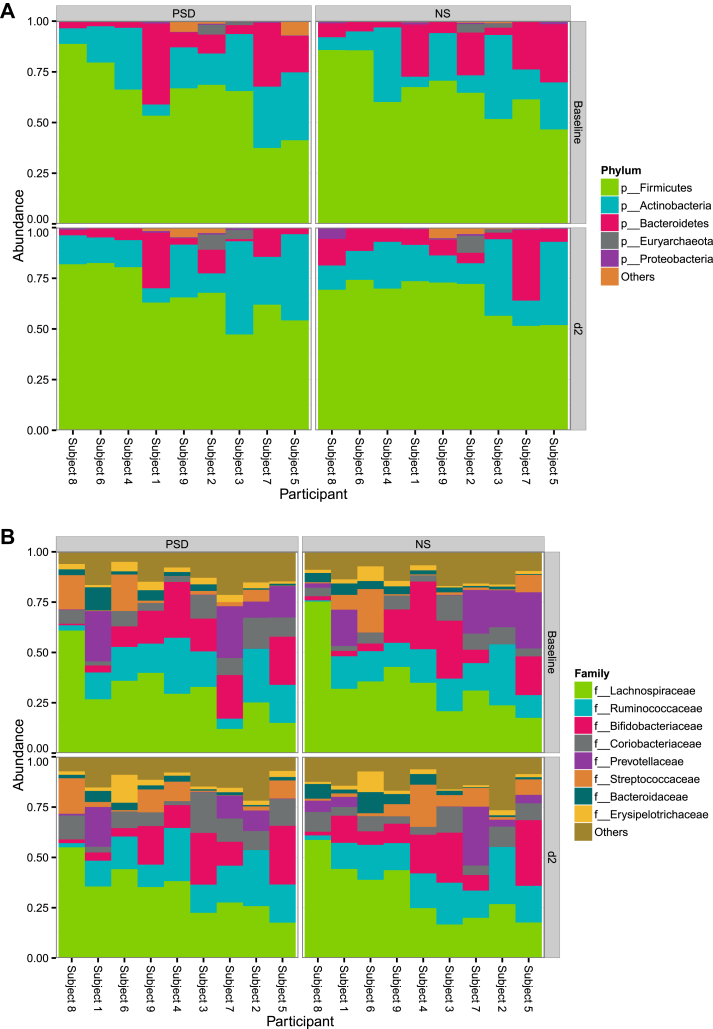
- After two nights of partial sleep deprivation (PSD) vs normal sleep (NS), the Firmicutes:Bacteroidetes ratio was almost doubled on day 2 (17.5 ± 13.7 vs 9.1 ± 4.6, P = 0.04, one-sided), with no significant baseline difference.
- PSD increased abundances of Coriobacteriaceae (9.61 ± 5.59% vs 7.26 ± 3.30%) and Erysipelotrichaceae (3.37 ± 3.98% vs 2.55 ± 2.97%; both P = 0.049, one-sided) and decreased Tenericutes (0.129 ± 0.241% vs 0.284 ± 0.347%; P = 0.030, one-sided).
- No PSD vs NS effect was found on beta diversity or fecal short-chain fatty acid concentrations; only trends for time effects on acetate, propionate, and total SCFAs were observed (all P < 0.10, two-sided).
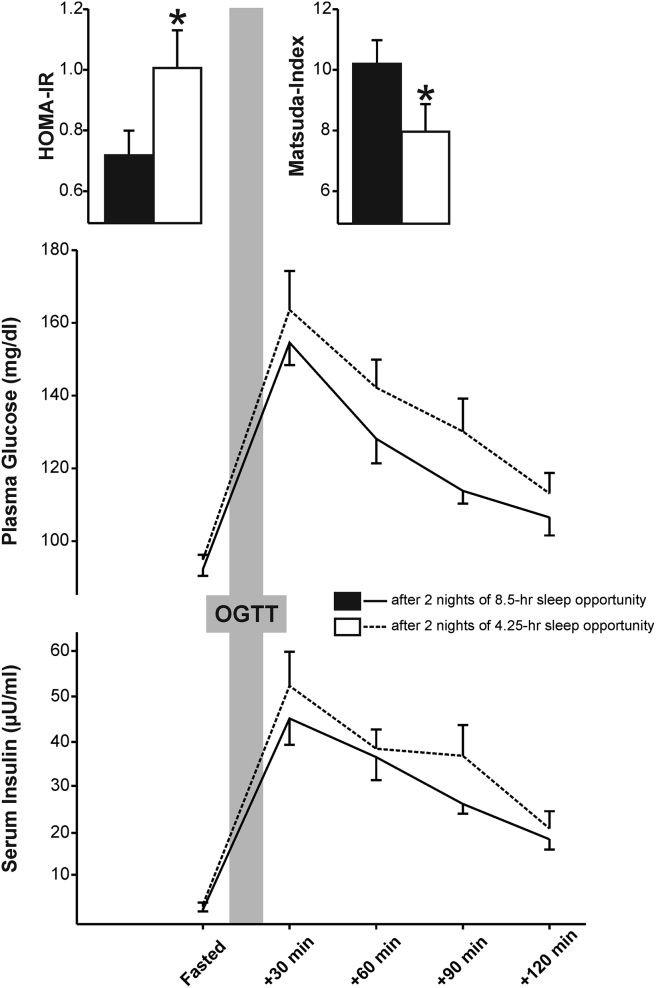
- Fasting insulin resistance increased after PSD vs NS (HOMA-IR 1.01 ± 0.12 vs 0.72 ± 0.08, P = 0.014, one-sided), fasting insulin was 34% higher (4.26 ± 0.48 vs 3.17 ± 0.35 μU/mL, P = 0.006, one-sided), and postprandial insulin sensitivity decreased by ∼22% (Matsuda index 8.0 ± 0.90 vs 10.2 ± 0.78, P = 0.017, one-sided).
Methods
- Randomized within-subject crossover study with a standardized in-lab protocol; nine normal-weight men completed two conditions: two nights of PSD (sleep opportunity 02:45–07:00 h) and two nights of NS (22:30–07:00 h).
- Fecal samples were collected within 24 h before and after two in-lab nights for each condition, yielding 36 samples; microbiota composition was assessed by V4 16S rRNA gene sequencing, and fecal SCFAs were measured by gas chromatography.
- Participants underwent an oral glucose tolerance test after each sleep intervention; analyses included PERMANOVA, DESeq, Wilcoxon signed rank tests, Student’s t-tests, repeated measures ANOVA, and Pearson correlations.
Limitations
- The paper states that only a subsample of participants provided fecal samples, the sample was small and limited to healthy young men, and the lack of counterbalancing in condition order among these nine participants may have influenced results.
- The paper states that the intervention lasted only two days and nights, did not include recovery sleep, and restricted sleep in the first part of the night, so longer-term, circadian-timing, and recovery effects remain unknown.
- The text makes evident that the study cannot establish causality between the observed microbial shifts and metabolic changes, and the authors note that larger, longer, and more diverse studies are needed.
Model-written summary. Check it against the paper before relying on it.
Integrity signals
Registry
Cites
Statistics
Figures
Verification
Claims the paper makes
33 Not checked yet · 24 Own result · 7 Own method · 7 Own interpretation
A result the paper reports from its own data — it cites no other source for it, so there is none to check. The quote shows it is in the paper.
In the paper
“without any significant difference on baseline (13.1 ± 11.7 vs. 9.6 ± 7.2, P = 0.18, two-sided).”
§ Gut microbiota and glucometabolic alterations in response to recurrent partial sleep deprivation in normal-weight young individuals > Results > Effects of partial sleep deprivation on microbial composition at the phylum, family, and species level
plain- Asserted: passes — The authors put it forward as true.
- Checkable: passes — It can be checked against evidence.
- Load-bearing: unclear — It is unclear whether the paper’s conclusions depend on it.
- Based: passes — The paper gives a reason why it holds.
A result the paper reports from its own data — it cites no other source for it, so there is none to check. The quote shows it is in the paper.
In the paper
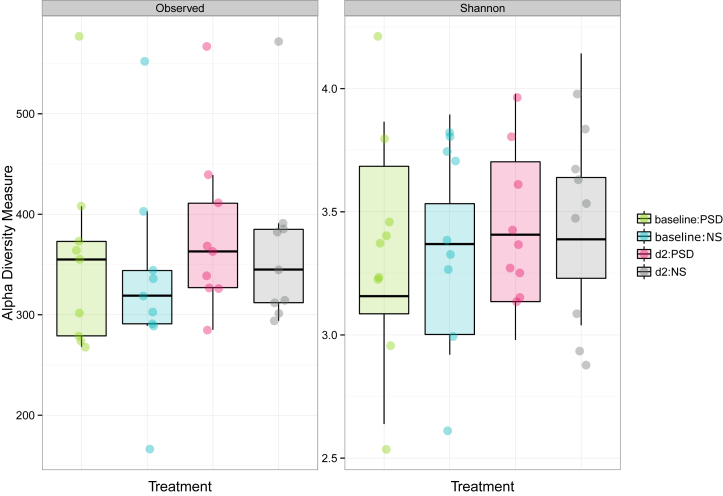
“Testing for within and across-subject variation for both condition (NS vs. PSD) and time point (baseline vs. day 2), with alpha and beta diversity using Observed and Shannon methods, did not reveal any significant differences (Figure 2; all P > 0.05, two-sided; also Supplementary Table 2).”
§ Gut microbiota and glucometabolic alterations in response to recurrent partial sleep deprivation in normal-weight young individuals > Results > Effects of partial sleep deprivation on microbial beta diversity
plainn = 36- Asserted: passes — The authors put it forward as true.
- Checkable: passes — It can be checked against evidence.
- Load-bearing: unclear — It is unclear whether the paper’s conclusions depend on it.
- Based: passes — The paper gives a reason why it holds.
A result the paper reports from its own data — it cites no other source for it, so there is none to check. The quote shows it is in the paper.
In the paper
“neither sleep condition nor fecal collection day (time effect) were found to be significant drivers for beta diversity using weighted abundances or hierarchical clustering (baseline vs. day 2, P = 0.988; or day 2 samples for PSD vs. NS, P = 0.574, both two-sided; Supplementary Fig. 1A)”
§ Gut microbiota and glucometabolic alterations in response to recurrent partial sleep deprivation in normal-weight young individuals > Results > Effects of partial sleep deprivation on microbial beta diversity
plain- Asserted: passes — The authors put it forward as true.
- Checkable: passes — It can be checked against evidence.
- Load-bearing: unclear — It is unclear whether the paper’s conclusions depend on it.
- Based: passes — The paper gives a reason why it holds.
A result the paper reports from its own data — it cites no other source for it, so there is none to check. The quote shows it is in the paper.
In the paper
“Following two nights of PSD vs. sleep, no significant changes were noted at the OTU level”
§ Gut microbiota and glucometabolic alterations in response to recurrent partial sleep deprivation in normal-weight young individuals > Results > Effects of partial sleep deprivation on microbial composition at the phylum, family, and species level
plain- Asserted: passes — The authors put it forward as true.
- Checkable: passes — It can be checked against evidence.
- Load-bearing: unclear — It is unclear whether the paper’s conclusions depend on it.
- Based: passes — The paper gives a reason why it holds.
A result the paper reports from its own data — it cites no other source for it, so there is none to check. The quote shows it is in the paper.
In the paper
“we observed a decrease in the Tenericutes phylum after PSD vs. NS (0.129 ± 0.241% vs. 0.284 ± 0.347%; P = 0.030, one-sided; Supplementary Fig. 2A; Table 3A)”
§ Gut microbiota and glucometabolic alterations in response to recurrent partial sleep deprivation in normal-weight young individuals > Results > Effects of partial sleep deprivation on microbial composition at the phylum, family, and species level
plaindirect- Asserted: passes — The authors put it forward as true.
- Checkable: passes — It can be checked against evidence.
- Load-bearing: unclear — It is unclear whether the paper’s conclusions depend on it.
- Based: passes — The paper gives a reason why it holds.
A result the paper reports from its own data — it cites no other source for it, so there is none to check. The quote shows it is in the paper.
In the paper
“Subsequent paired Student's t-tests indicated that the trend for the sleep effect was driven by an almost doubled F:B ratio after PSD vs. NS on day 2 (17.5 ± 13.7 vs. 9.1 ± 4.6, P = 0.04, one-sided)”
§ Gut microbiota and glucometabolic alterations in response to recurrent partial sleep deprivation in normal-weight young individuals > Results > Effects of partial sleep deprivation on microbial composition at the phylum, family, and species level
hedgeddirect- Asserted: passes — The authors put it forward as true.
- Checkable: passes — It can be checked against evidence.
- Load-bearing: passes — The paper’s conclusions depend on it.
- Based: passes — The paper gives a reason why it holds.
A result the paper reports from its own data — it cites no other source for it, so there is none to check. The quote shows it is in the paper.
In the paper
“coupled with increased abundances of the families Coriobacteriaceae and Erysipelotrichaceae (9.61 ± 5.59% vs. 7.26 ± 3.30% and 3.37 ± 3.98% vs. 2.55 ± 2.97%, respectively; both P = 0.049, one-sided; Supplementary Fig. 2B; Table 3B).”
§ Gut microbiota and glucometabolic alterations in response to recurrent partial sleep deprivation in normal-weight young individuals > Results > Effects of partial sleep deprivation on microbial composition at the phylum, family, and species level
plaindirect- Asserted: passes — The authors put it forward as true.
- Checkable: passes — It can be checked against evidence.
- Load-bearing: passes — The paper’s conclusions depend on it.
- Based: passes — The paper gives a reason why it holds.
A result the paper reports from its own data — it cites no other source for it, so there is none to check. The quote shows it is in the paper.
In the paper
“we failed to find any impact on SCFAs as a result of our sleep intervention, apart for statistical trends for time effects on acetate, propionate, and total fecal SCFAs levels.”
§ Gut microbiota and glucometabolic alterations in response to recurrent partial sleep deprivation in normal-weight young individuals > Discussion
plain- Asserted: passes — The authors put it forward as true.
- Checkable: passes — It can be checked against evidence.
- Load-bearing: passes — The paper’s conclusions depend on it.
- Based: passes — The paper gives a reason why it holds.
A result the paper reports from its own data — it cites no other source for it, so there is none to check. The quote shows it is in the paper.
In the paper
“we also investigated whether beta diversity on day 2 was associated with the decreased insulin sensitivity observed on the same day following sleep loss, but we did not find any significant effect (PERMANOVA P = 0.121 and P = 0.235 for effects related to the HOMA-IR and Matsuda index, respectively, both two-sided).”
§ Gut microbiota and glucometabolic alterations in response to recurrent partial sleep deprivation in normal-weight young individuals > Results > Effects of partial sleep deprivation on glucometabolic parameters and lipid metabolism
plain- Asserted: passes — The authors put it forward as true.
- Checkable: passes — It can be checked against evidence.
- Load-bearing: unclear — It is unclear whether the paper’s conclusions depend on it.
- Based: passes — The paper gives a reason why it holds.
- It may state two separate claims as one. 11
- Probably not a substantial claim. 35
- The quote only partly states this claim. 1
A result the paper reports from its own data — it cites no other source for it, so there is none to check. The quote shows it is in the paper.
In the paper
“in the PSD condition, participants slept 3 h:59 min ± 4 min on the first night, and 4 h:3 min ± 3 min on the second night.”
§ Gut microbiota and glucometabolic alterations in response to recurrent partial sleep deprivation in normal-weight young individuals > Methods > Sleep assessment
plain- Asserted: passes — The authors put it forward as true.
- Checkable: passes — It can be checked against evidence.
- Load-bearing: passes — The paper’s conclusions depend on it.
- Based: passes — The paper gives a reason why it holds.
It may state two separate claims as one.
A result the paper reports from its own data — it cites no other source for it, so there is none to check. The quote shows it is in the paper.
In the paper
“The polysomnographic analysis revealed that both on the first and second night, subjects slept 7 h:47min ± 13 min and 8 h:00 min ± 7 min, respectively, in the NS condition”
§ Gut microbiota and glucometabolic alterations in response to recurrent partial sleep deprivation in normal-weight young individuals > Methods > Sleep assessment
plain- Asserted: passes — The authors put it forward as true.
- Checkable: passes — It can be checked against evidence.
- Load-bearing: fails — The paper’s conclusions may not depend on it.
- Based: passes — The paper gives a reason why it holds.
Probably not a substantial claim. The paper’s conclusions may not depend on it. It may state two separate claims as one.
A result the paper reports from its own data — it cites no other source for it, so there is none to check. The quote shows it is in the paper.
In the paper
“we did not observe any main effects of sleep or any interaction effects, in the ANOVA (all P > 0.10, two-sided; Table 4).”
§ Gut microbiota and glucometabolic alterations in response to recurrent partial sleep deprivation in normal-weight young individuals > Results > Changes in stool content of short-chained fatty acids following short sleep
plain- Asserted: passes — The authors put it forward as true.
- Checkable: passes — It can be checked against evidence.
- Load-bearing: unclear — It is unclear whether the paper’s conclusions depend on it.
- Based: passes — The paper gives a reason why it holds.
It may state two separate claims as one.
A result the paper reports from its own data — it cites no other source for it, so there is none to check. The quote shows it is in the paper.
In the paper
“we observed increased levels of the families Coriobacteriaceae and Erysipelotrichaceae (phylum Actinobacteria and Firmicutes, respectively), with a lower abundance of the phylum Tenericutes, following two nights of PSD compared with two nights of normal sleep.”
§ Gut microbiota and glucometabolic alterations in response to recurrent partial sleep deprivation in normal-weight young individuals > Discussion
plaindirect- Asserted: passes — The authors put it forward as true.
- Checkable: passes — It can be checked against evidence.
- Load-bearing: passes — The paper’s conclusions depend on it.
- Based: passes — The paper gives a reason why it holds.
It may state two separate claims as one.
What the paper did — it cites no source for this, so there is none to check. The quote shows it is in the paper.
In the paper
“In a randomized within-subject crossover study utilizing a standardized in-lab protocol (with fixed meal times and exercise schedules), we studied nine normal-weight men at two occasions”
§ Gut microbiota and glucometabolic alterations in response to recurrent partial sleep deprivation in normal-weight young individuals > Abstract > Methods
plainn = 9- Asserted: passes — The authors put it forward as true.
- Checkable: passes — It can be checked against evidence.
- Load-bearing: passes — The paper’s conclusions depend on it.
- Based: passes — The paper gives a reason why it holds.
Probably not a substantial claim.
In the paper
“obesity has been associated with an increase in total levels of SCFAs [10]”
§ Gut microbiota and glucometabolic alterations in response to recurrent partial sleep deprivation in normal-weight young individuals > Introduction
What the sources say
- Not checked yetcites [10] Schwiertz, 2010, Microbiota and SCFA in lean and overweight healthy subjects, Obesity (Silver Spring) source
plaincorrelational- Asserted: passes — The authors put it forward as true.
- Checkable: passes — It can be checked against evidence.
- Load-bearing: fails — The paper’s conclusions may not depend on it.
- Based: passes — The paper gives a reason why it holds.
Probably not a substantial claim. The paper’s conclusions may not depend on it.
In the paper
“T2DM patients have been found to have a reduction in butyrate-producing bacterial species, and lower levels of butyrate biosynthesis when the microbiomes of T2DM patients are compared with those of non-diabetic controls [6].”
§ Gut microbiota and glucometabolic alterations in response to recurrent partial sleep deprivation in normal-weight young individuals > Introduction
What the sources say
- Not checked yetcites [6] Qin, 2012, A metagenome-wide association study of gut microbiota in type 2 diabetes, Nature source
plaincorrelational- Asserted: passes — The authors put it forward as true.
- Checkable: passes — It can be checked against evidence.
- Load-bearing: fails — The paper’s conclusions may not depend on it.
- Based: passes — The paper gives a reason why it holds.
Probably not a substantial claim. The paper’s conclusions may not depend on it. It may state two separate claims as one.
None of the sources cited for this claim have been checked yet.
In the paper
“Both acute [12], [14], [15], [16] and long-term [16], [17] changes in diet have been demonstrated to alter the abundance of bacterial species in the gut, as well as their functional capacity to process various nutrients, with such changes being detectable within days of dietary interventions in humans [15], [16].”
§ Gut microbiota and glucometabolic alterations in response to recurrent partial sleep deprivation in normal-weight young individuals > Introduction
What the sources say
- Not checked yetcites [12] Zeevi, 2015, Personalized nutrition by prediction of glycemic responses, Cell source
- Not checked yetcites [15] David, 2014, Diet rapidly and reproducibly alters the human gut microbiome, Nature source
- Not checked yetcites [16] Wu, 2011, Linking long-term dietary patterns with gut microbial enterotypes, Science source
boosteddirect- Asserted: passes — The authors put it forward as true.
- Checkable: passes — It can be checked against evidence.
- Load-bearing: fails — The paper’s conclusions may not depend on it.
- Based: passes — The paper gives a reason why it holds.
Probably not a substantial claim. The paper’s conclusions may not depend on it. It may state two separate claims as one.
In the paper
“SCFAs can constitute about 2.2% of daily caloric intake [18]”
§ Gut microbiota and glucometabolic alterations in response to recurrent partial sleep deprivation in normal-weight young individuals > Introduction
What the sources say
- Not checked yetcites [18] Blaut, 2015, Gut microbiota and energy balance: role in obesity, Proceedings of the Nutrition Society source
plain- Asserted: passes — The authors put it forward as true.
- Checkable: passes — It can be checked against evidence.
- Load-bearing: fails — The paper’s conclusions may not depend on it.
- Based: passes — The paper gives a reason why it holds.
Probably not a substantial claim. The paper’s conclusions may not depend on it.
In the paper
“germfree mice – which lack a functional microbiome – are resistant to diet-induced obesity on a western diet [7].”
§ Gut microbiota and glucometabolic alterations in response to recurrent partial sleep deprivation in normal-weight young individuals > Introduction
What the sources say
- Not checked yetcites [7] Backhed, 2007, Mechanisms underlying the resistance to diet-induced obesity in germ-free mice, Proceedings of the National Academy of Sciences of the United States of America source
plaindirect- Asserted: passes — The authors put it forward as true.
- Checkable: passes — It can be checked against evidence.
- Load-bearing: fails — The paper’s conclusions may not depend on it.
- Based: passes — The paper gives a reason why it holds.
Probably not a substantial claim. The paper’s conclusions may not depend on it.
In the paper
“beneficial effects concerning insulin sensitivity have been observed in human trials of patients with metabolic syndrome who received the transplants from lean donors [4].”
§ Gut microbiota and glucometabolic alterations in response to recurrent partial sleep deprivation in normal-weight young individuals > Introduction
What the sources say
- Not checked yetcites [4] Vrieze, 2012, Transfer of intestinal microbiota from lean donors increases insulin sensitivity in individuals with metabolic syndrome, Gastroenterology source
plaindirect- Asserted: passes — The authors put it forward as true.
- Checkable: passes — It can be checked against evidence.
- Load-bearing: fails — The paper’s conclusions may not depend on it.
- Based: passes — The paper gives a reason why it holds.
Probably not a substantial claim. The paper’s conclusions may not depend on it.
In the paper
“increased acetate production by gut bacteria has been found recently to promote insulin secretion, hyperphagia, and obesity [22]”
§ Gut microbiota and glucometabolic alterations in response to recurrent partial sleep deprivation in normal-weight young individuals > Introduction
What the sources say
- Not checked yetcites [22] Perry, 2016, Acetate mediates a microbiome-brain-beta-cell axis to promote metabolic syndrome, Nature source
plaindirect- Asserted: passes — The authors put it forward as true.
- Checkable: passes — It can be checked against evidence.
- Load-bearing: fails — The paper’s conclusions may not depend on it.
- Based: passes — The paper gives a reason why it holds.
Probably not a substantial claim. The paper’s conclusions may not depend on it. It may state two separate claims as one.
None of the sources cited for this claim have been checked yet.
In the paper
“transplanting the microbiota of genetically obese ob/ob mice or obese humans to lean germfree mice increases the adiposity of the recipient mice [8], [9]”
§ Gut microbiota and glucometabolic alterations in response to recurrent partial sleep deprivation in normal-weight young individuals > Introduction
What the sources say
plaindirect- Asserted: passes — The authors put it forward as true.
- Checkable: passes — It can be checked against evidence.
- Load-bearing: fails — The paper’s conclusions may not depend on it.
- Based: passes — The paper gives a reason why it holds.
Probably not a substantial claim. The paper’s conclusions may not depend on it.
In the paper
“the OGTT was employed to test the participants' insulin sensitivity using the WHO-defined gold standard [33].”
§ Gut microbiota and glucometabolic alterations in response to recurrent partial sleep deprivation in normal-weight young individuals > Methods > Experimental procedure
What the sources say
- Not checked yetcites [33] WHO, 2006
plain- Asserted: passes — The authors put it forward as true.
- Checkable: passes — It can be checked against evidence.
- Load-bearing: passes — The paper’s conclusions depend on it.
- Based: passes — The paper gives a reason why it holds.
Probably not a substantial claim.
In the paper
“Merely curtailing sleep to half the recommended amount for a single night acutely impairs fasting insulin sensitivity [26].”
§ Gut microbiota and glucometabolic alterations in response to recurrent partial sleep deprivation in normal-weight young individuals > Introduction
What the sources say
- Not checked yetcites [26] Cedernaes, 2015, A single night of partial sleep loss impairs fasting insulin sensitivity but does not affect cephalic phase insulin release in young men, Journal of Sleep Research
plaindirect- Asserted: passes — The authors put it forward as true.
- Checkable: passes — It can be checked against evidence.
- Load-bearing: passes — The paper’s conclusions depend on it.
- Based: passes — The paper gives a reason why it holds.
Probably not a substantial claim.
None of the sources cited for this claim have been checked yet.
In the paper
“Differences in intestinal microbiota composition have been uncovered between healthy controls and those suffering from various diseases, including metabolic pathologies such as obesity, the metabolic syndrome and type-2 diabetes mellitus (T2DM) [4], [5], [6].”
§ Gut microbiota and glucometabolic alterations in response to recurrent partial sleep deprivation in normal-weight young individuals > Introduction
What the sources say
- Not checked yetcites [4] Vrieze, 2012, Transfer of intestinal microbiota from lean donors increases insulin sensitivity in individuals with metabolic syndrome, Gastroenterology source
- Not checked yetcites [5] Hartstra, 2015, Insights into the role of the microbiome in obesity and type 2 diabetes, Diabetes Care source
- Not checked yetcites [6] Qin, 2012, A metagenome-wide association study of gut microbiota in type 2 diabetes, Nature source
plaincorrelational- Asserted: passes — The authors put it forward as true.
- Checkable: passes — It can be checked against evidence.
- Load-bearing: fails — The paper’s conclusions may not depend on it.
- Based: passes — The paper gives a reason why it holds.
Probably not a substantial claim. The paper’s conclusions may not depend on it.
In the paper
“Butyrate and propionate have recently been demonstrated to play a role in intestinal gluconeogenesis, which has beneficial effects on glucose and energy homeostasis [20].”
§ Gut microbiota and glucometabolic alterations in response to recurrent partial sleep deprivation in normal-weight young individuals > Introduction
What the sources say
- Not checked yetcites [20] De Vadder, 2014, Microbiota-generated metabolites promote metabolic benefits via gut-brain neural circuits, Cell source
boosteddirect- Asserted: passes — The authors put it forward as true.
- Checkable: passes — It can be checked against evidence.
- Load-bearing: fails — The paper’s conclusions may not depend on it.
- Based: passes — The paper gives a reason why it holds.
Probably not a substantial claim. The paper’s conclusions may not depend on it. It may state two separate claims as one.
In the paper
“When prolonged, sleep restriction can promote weight gain [27]”
§ Gut microbiota and glucometabolic alterations in response to recurrent partial sleep deprivation in normal-weight young individuals > Introduction
What the sources say
- Not checked yetcites [27] Spaeth, 2013, Effects of experimental sleep restriction on weight gain, caloric intake, and meal timing in healthy adults, Sleep source
plainconditional- Asserted: passes — The authors put it forward as true.
- Checkable: passes — It can be checked against evidence.
- Load-bearing: fails — The paper’s conclusions may not depend on it.
- Based: passes — The paper gives a reason why it holds.
Probably not a substantial claim. The paper’s conclusions may not depend on it.
In the paper
“and, correspondingly, that this may be perturbed following circadian misalignment [28].”
§ Gut microbiota and glucometabolic alterations in response to recurrent partial sleep deprivation in normal-weight young individuals > Introduction
What the sources say
- Not checked yetcites [28] Thaiss, 2014, Transkingdom control of microbiota diurnal oscillations promotes metabolic homeostasis, Cell source
hedgedconditional- Asserted: passes — The authors put it forward as true.
- Checkable: passes — It can be checked against evidence.
- Load-bearing: passes — The paper’s conclusions depend on it.
- Based: passes — The paper gives a reason why it holds.
Probably not a substantial claim.
None of the sources cited for this claim have been checked yet.
In the paper
“There is currently some evidence in both mice and humans that the gut microbiota exhibits a circadian rhythm [28], [29], [30]”
§ Gut microbiota and glucometabolic alterations in response to recurrent partial sleep deprivation in normal-weight young individuals > Introduction
What the sources say
- Not checked yetcites [28] Thaiss, 2014, Transkingdom control of microbiota diurnal oscillations promotes metabolic homeostasis, Cell source
- Not checked yetcites [29] Liang, 2015, Rhythmicity of the intestinal microbiota is regulated by gender and the host circadian clock, Proceedings of the National Academy of Sciences of the United States of America source
- Not checked yetcites [30] Zarrinpar, 2014, Diet and feeding pattern affect the diurnal dynamics of the gut microbiome, Cell Metabolism source
hedgedcorrelational- Asserted: passes — The authors put it forward as true.
- Checkable: passes — It can be checked against evidence.
- Load-bearing: passes — The paper’s conclusions depend on it.
- Based: passes — The paper gives a reason why it holds.
Probably not a substantial claim.
What the paper did — it cites no source for this, so there is none to check. The quote shows it is in the paper.
In the paper
“Analyses of changes in the phyla, families, or OTUs of sequenced gut bacteria were analyzed for the eight most abundant features to minimize multiple comparisons.”
§ Gut microbiota and glucometabolic alterations in response to recurrent partial sleep deprivation in normal-weight young individuals > Methods > Statistical analysis
plain- Asserted: passes — The authors put it forward as true.
- Checkable: passes — It can be checked against evidence.
- Load-bearing: fails — The paper’s conclusions may not depend on it.
- Based: passes — The paper gives a reason why it holds.
Probably not a substantial claim. The paper’s conclusions may not depend on it.
What the paper did — it cites no source for this, so there is none to check. The quote shows it is in the paper.
In the paper
“false discovery rate (FDR; q-values) was calculated with the Benjamini–Hochberg procedure.”
§ Gut microbiota and glucometabolic alterations in response to recurrent partial sleep deprivation in normal-weight young individuals > Methods > Statistical analysis
plain- Asserted: passes — The authors put it forward as true.
- Checkable: passes — It can be checked against evidence.
- Load-bearing: fails — The paper’s conclusions may not depend on it.
- Based: passes — The paper gives a reason why it holds.
Probably not a substantial claim. The paper’s conclusions may not depend on it.
None of the sources cited for this claim have been checked yet.
In the paper
“the composition of the microbiota has been found to regulate the metabolic response to various such factors in humans [11], [12].”
§ Gut microbiota and glucometabolic alterations in response to recurrent partial sleep deprivation in normal-weight young individuals > Introduction
What the sources say
plaindirect- Asserted: passes — The authors put it forward as true.
- Checkable: passes — It can be checked against evidence.
- Load-bearing: fails — The paper’s conclusions may not depend on it.
- Based: passes — The paper gives a reason why it holds.
Probably not a substantial claim. The paper’s conclusions may not depend on it.
In the paper
“To further isolate the solitary impact of sleep on the microbiota – separate from the previously documented impact of e.g. high-fat diet [32] – participants were provided with a non-sugar sweetened, low-fat diet throughout the three meals, the exception being the oral glucose tolerance (OGTT) test on day 2”
§ Gut microbiota and glucometabolic alterations in response to recurrent partial sleep deprivation in normal-weight young individuals > Methods > Experimental procedure
What the sources say
- Not checked yetcites [32] Hildebrandt, 2009, High-fat diet determines the composition of the murine gut microbiome independently of obesity, Gastroenterology source
plain- Asserted: passes — The authors put it forward as true.
- Checkable: passes — It can be checked against evidence.
- Load-bearing: passes — The paper’s conclusions depend on it.
- Based: passes — The paper gives a reason why it holds.
Probably not a substantial claim.
In the paper
“similar transplantation of the microbiome from the obese but not normal-weight twin, to healthy germ-free mice, also promotes adiposity and perturbs glucose metabolism [9].”
§ Gut microbiota and glucometabolic alterations in response to recurrent partial sleep deprivation in normal-weight young individuals > Introduction
What the sources say
- Not checked yetcites [9] Ridaura, 2013, Gut microbiota from twins discordant for obesity modulate metabolism in mice, Science source
plaindirect- Asserted: passes — The authors put it forward as true.
- Checkable: passes — It can be checked against evidence.
- Load-bearing: fails — The paper’s conclusions may not depend on it.
- Based: passes — The paper gives a reason why it holds.
Probably not a substantial claim. The paper’s conclusions may not depend on it. It may state two separate claims as one.
In the paper
“An experienced scorer blinded to the study conditions adhered to standardized criteria for subsequent sleep analysis [36].”
§ Gut microbiota and glucometabolic alterations in response to recurrent partial sleep deprivation in normal-weight young individuals > Methods > Sleep assessment
What the sources say
- Not checked yetcites [36] Silber, 2007, The visual scoring of sleep in adults, Journal of Clinical Sleep Medicine source
plain- Asserted: passes — The authors put it forward as true.
- Checkable: passes — It can be checked against evidence.
- Load-bearing: passes — The paper’s conclusions depend on it.
- Based: passes — The paper gives a reason why it holds.
Probably not a substantial claim. It may state two separate claims as one. The quote only partly states this claim.
None of the sources cited for this claim have been checked yet.
In the paper
“Coriobacteriaceae and Erysipelotrichaceae – previously linked to obesity and lipid, primarily cholesterol, metabolism [43], [44], [45]”
§ Gut microbiota and glucometabolic alterations in response to recurrent partial sleep deprivation in normal-weight young individuals > Results > Effects of partial sleep deprivation on glucometabolic parameters and lipid metabolism
What the sources say
- Not checked yetcites [43] Zhang, 2009, Human gut microbiota in obesity and after gastric bypass, Proceedings of the National Academy of Sciences of the United States of America source
- Not checked yetcites [44] Spencer, 2011, Association between composition of the human gastrointestinal microbiome and development of fatty liver with choline deficiency, Gastroenterology source
- Not checked yetcites [45] Claus, 2011, Colonization-induced host-gut microbial metabolic interaction, MBio source
plaincorrelational- Asserted: passes — The authors put it forward as true.
- Checkable: passes — It can be checked against evidence.
- Load-bearing: passes — The paper’s conclusions depend on it.
- Based: passes — The paper gives a reason why it holds.
Probably not a substantial claim.
In the paper
“among families of the phylum Firmicutes, specifically Erysipelotrichaceae has instead been found to increase several fold in mice exposed to both a high-fat or Western diet [56].”
§ Gut microbiota and glucometabolic alterations in response to recurrent partial sleep deprivation in normal-weight young individuals > Discussion
What the sources say
- Not checked yetcites [56] Fleissner, 2010, Absence of intestinal microbiota does not protect mice from diet-induced obesity, British Journal of Nutrition source
plaindirect- Asserted: passes — The authors put it forward as true.
- Checkable: passes — It can be checked against evidence.
- Load-bearing: fails — The paper’s conclusions may not depend on it.
- Based: passes — The paper gives a reason why it holds.
Probably not a substantial claim. The paper’s conclusions may not depend on it.
In the paper
“levels of the latter positively correlate with changes in liver fat following a 2-month long dietary choline manipulation [44].”
§ Gut microbiota and glucometabolic alterations in response to recurrent partial sleep deprivation in normal-weight young individuals > Discussion
What the sources say
- Not checked yetcites [44] Spencer, 2011, Association between composition of the human gastrointestinal microbiome and development of fatty liver with choline deficiency, Gastroenterology source
plaincorrelational- Asserted: passes — The authors put it forward as true.
- Checkable: passes — It can be checked against evidence.
- Load-bearing: fails — The paper’s conclusions may not depend on it.
- Based: passes — The paper gives a reason why it holds.
Probably not a substantial claim. The paper’s conclusions may not depend on it.
What the paper did — it cites no source for this, so there is none to check. The quote shows it is in the paper.
In the paper
“We utilized a standardized in-lab protocol (including for factors such as meal times and activity schedule) in an attempt to isolate the effect of sleep loss on the gut microbiome in normal-weight, healthy subjects.”
§ Gut microbiota and glucometabolic alterations in response to recurrent partial sleep deprivation in normal-weight young individuals > Limitations and perspectives
plain- Asserted: passes — The authors put it forward as true.
- Checkable: passes — It can be checked against evidence.
- Load-bearing: passes — The paper’s conclusions depend on it.
- Based: passes — The paper gives a reason why it holds.
Probably not a substantial claim.
In the paper
“Tenericutes has been demonstrated to decrease following diet-induced obesity in mice [47]”
§ Gut microbiota and glucometabolic alterations in response to recurrent partial sleep deprivation in normal-weight young individuals > Discussion
What the sources say
- Not checked yetcites [47] Everard, 2014, Microbiome of prebiotic-treated mice reveals novel targets involved in host response during obesity, ISME Journal source
boosteddirect- Asserted: passes — The authors put it forward as true.
- Checkable: passes — It can be checked against evidence.
- Load-bearing: fails — The paper’s conclusions may not depend on it.
- Based: passes — The paper gives a reason why it holds.
Probably not a substantial claim. The paper’s conclusions may not depend on it.
In the paper
“increased abundance of Firmicutes and reduced abundance of Bacteroidetes in the gut microbiota have been observed in mice subjected to sleep fragmentation for 4 weeks [48]”
§ Gut microbiota and glucometabolic alterations in response to recurrent partial sleep deprivation in normal-weight young individuals > Discussion
What the sources say
- Not checked yetcites [48] Poroyko, 2016, Chronic sleep disruption alters gut microbiota, induces systemic and adipose tissue inflammation and insulin resistance in mice, Scientific Reports source
plaincorrelational- Asserted: passes — The authors put it forward as true.
- Checkable: passes — It can be checked against evidence.
- Load-bearing: fails — The paper’s conclusions may not depend on it.
- Based: passes — The paper gives a reason why it holds.
Probably not a substantial claim. The paper’s conclusions may not depend on it.
What the paper did — it cites no source for this, so there is none to check. The quote shows it is in the paper.
In the paper
“since only a subsample of the participants was able to provide fecal samples, we cannot rule out that the lack of counterbalancing in the order of experimental conditions may have influenced the present results.”
§ Gut microbiota and glucometabolic alterations in response to recurrent partial sleep deprivation in normal-weight young individuals > Limitations and perspectives
hedgedconditional- Asserted: passes — The authors put it forward as true.
- Checkable: passes — It can be checked against evidence.
- Load-bearing: fails — The paper’s conclusions may not depend on it.
- Based: passes — The paper gives a reason why it holds.
Probably not a substantial claim. The paper’s conclusions may not depend on it.
None of the sources cited for this claim have been checked yet.
In the paper
“These increased levels have been associated previously with changes in hepatic and lipid metabolism in humans and various rodent species [44], [45], [53], [54], [55].”
§ Gut microbiota and glucometabolic alterations in response to recurrent partial sleep deprivation in normal-weight young individuals > Discussion
What the sources say
- Not checked yetcites [44] Spencer, 2011, Association between composition of the human gastrointestinal microbiome and development of fatty liver with choline deficiency, Gastroenterology source
- Not checked yetcites [45] Claus, 2011, Colonization-induced host-gut microbial metabolic interaction, MBio source
- Not checked yetcites [53] Martinez, 2013, Diet-induced alterations of host cholesterol metabolism are likely to affect the gut microbiota composition in hamsters, Applied and Environmental Microbiology source
plaincorrelational- Asserted: passes — The authors put it forward as true.
- Checkable: passes — It can be checked against evidence.
- Load-bearing: fails — The paper’s conclusions may not depend on it.
- Based: passes — The paper gives a reason why it holds.
Probably not a substantial claim. The paper’s conclusions may not depend on it.
None of the sources cited for this claim have been checked yet.
In the paper
“Obesity and associated metabolic perturbations primarily have been reflected by altered diversity of the microbiota [73], [74]”
§ Gut microbiota and glucometabolic alterations in response to recurrent partial sleep deprivation in normal-weight young individuals > Limitations and perspectives
What the sources say
plaincorrelational- Asserted: passes — The authors put it forward as true.
- Checkable: passes — It can be checked against evidence.
- Load-bearing: fails — The paper’s conclusions may not depend on it.
- Based: passes — The paper gives a reason why it holds.
Probably not a substantial claim. The paper’s conclusions may not depend on it.
A conclusion the paper draws from its own results — it cites no other source for it, so there is none to check. The quote shows it is in the paper.
In the paper
“Two days of short vs. normal sleep was found to reduce insulin sensitivity without any associated changes in gut species diversity”
§ Gut microbiota and glucometabolic alterations in response to recurrent partial sleep deprivation in normal-weight young individuals > Discussion
plaindirect- Asserted: passes — The authors put it forward as true.
- Checkable: passes — It can be checked against evidence.
- Load-bearing: passes — The paper’s conclusions depend on it.
- Based: passes — The paper gives a reason why it holds.
It may state two separate claims as one.
In the paper
“smaller studies in humans have found that morbidly obese subjects harbor higher proportions of Coriobacteriaceae and Erysipelotrichaceae [43]”
§ Gut microbiota and glucometabolic alterations in response to recurrent partial sleep deprivation in normal-weight young individuals > Discussion
What the sources say
- Not checked yetcites [43] Zhang, 2009, Human gut microbiota in obesity and after gastric bypass, Proceedings of the National Academy of Sciences of the United States of America source
plaincorrelational- Asserted: passes — The authors put it forward as true.
- Checkable: passes — It can be checked against evidence.
- Load-bearing: fails — The paper’s conclusions may not depend on it.
- Based: passes — The paper gives a reason why it holds.
Probably not a substantial claim. The paper’s conclusions may not depend on it.
In the paper
“weight loss can increase the already lower abundance of Bacteroidetes in obese subjects [40]”
§ Gut microbiota and glucometabolic alterations in response to recurrent partial sleep deprivation in normal-weight young individuals > Discussion
What the sources say
- Not checked yetcites [40] Ley, 2006, Microbial ecology: human gut microbes associated with obesity, Nature source
plaindirect- Asserted: passes — The authors put it forward as true.
- Checkable: passes — It can be checked against evidence.
- Load-bearing: fails — The paper’s conclusions may not depend on it.
- Based: passes — The paper gives a reason why it holds.
Probably not a substantial claim. The paper’s conclusions may not depend on it.
None of the sources cited for this claim have been checked yet.
In the paper
“An increase in this ratio in some [40], but not all [10] studies, has been found to be associated with obesity in humans as well as in genetically or diet-induced obese mice [40], [46], [47]”
§ Gut microbiota and glucometabolic alterations in response to recurrent partial sleep deprivation in normal-weight young individuals > Discussion
What the sources say
- Not checked yetcites [40] Ley, 2006, Microbial ecology: human gut microbes associated with obesity, Nature source
- Not checked yetcites [10] Schwiertz, 2010, Microbiota and SCFA in lean and overweight healthy subjects, Obesity (Silver Spring) source
- Not checked yetcites [46] Ley, 2005, Obesity alters gut microbial ecology, Proceedings of the National Academy of Sciences of the United States of America source
hedgedcorrelational- Asserted: passes — The authors put it forward as true.
- Checkable: passes — It can be checked against evidence.
- Load-bearing: fails — The paper’s conclusions may not depend on it.
- Based: passes — The paper gives a reason why it holds.
Probably not a substantial claim. The paper’s conclusions may not depend on it.
The paper relies on this without support.
No studies have investigated the impact of insufficient sleep on the composition of the human gut microbiota.
“However, to date, there are no studies that have investigated the impact of insufficient sleep on the composition of the human gut microbiota.”
The paper relies on this without support.
Studies are lacking that assess whether adverse metabolic changes that may increase the risk of T2DM and obesity, such as impaired insulin sensitivity, are associated with changes in the gut microbiome and associated SCFAs that could result from recurrent sleep loss.
“Studies are therefore lacking that assess whether important adverse metabolic changes that may increase the risk of T2DM and obesity, such as impaired insulin sensitivity, are associated with changes in the gut microbiome and associated SCFAs that could result from recurrent sleep loss.”
The paper relies on this without support.
No prior study has provided evidence for sleep deprivation-induced changes in microbial families of bacterial gut species linked to metabolic pathologies.
“our study is the first to provide evidence for sleep deprivation-induced changes in microbial families of bacterial gut species, which have previously been linked to metabolic pathologies.”
Claims other papers make about this one
Each is checked against this paper’s own text: does it say what the citing paper says it does?
In the citing paper
“early studies in the late 19th century showed that total sleep deprivation in dogs leads to death after several days (reviewed in Ref. 38).”
From The Sleep-Immune Crosstalk in Health and Disease (2019) · cites this paper as [38]
Citations
Cites
An obesity-associated gut microbiome with increased capacity for energy harvest
Turnbaugh, P. J., Ley, R. E., Mahowald, M. A., Magrini, V., Mardis, E. R., & Gordon, J. I. (2006) · Nature · doi:10.1038/nature05414 · Cited by 12,444 · cited 3×
“Consistently, transplanting the microbiota of genetically obese ob/ob mice or obese humans to lean germfree mice increases the adiposity of the recipient mice [8,9], indicating an increased capacity to harvest energy”
BackgroundDiet rapidly and reproducibly alters the human gut microbiome
David, L. A., Maurice, C. F., Carmody, R. N., Gootenberg, D. B., Button, J. E., Wolfe, B. E., Ling, A. V., Devlin, A. S., Varma, Y., Fischbach, M. A., et al. (2014) · Nature · doi:10.1038/nature12820 · Cited by 10,100 · cited 2×
“Even so, dietary-induced acute changes of the gut microbiotae observed in previous human studies [15,16] e highlight how the gut microbiota interacts with dietary factors also over shorter timescales.”
BackgroundHuman gut microbes associated with obesity
Ley, R. E., Turnbaugh, P. J., Klein, S., & Gordon, J. I. (2006) · Nature · doi:10.1038/4441022a · Cited by 8,785 · cited 2×
“An increase in this ratio in some [40], but not all [10] studies, has been found to be associated with obesity in humans as well as in genetically or diet-induced obese mice [40,46,47], and weight loss can increase the already lower abundance of Bacteroidetes in obese subjects [40].”
BackgroundMethodA metagenome-wide association study of gut microbiota in type 2 diabetes
Qin, J., Li, Y., Cai, Z., Li, S., Zhu, J., Zhang, F., Liang, S., Zhang, W., Guan, Y., Shen, D., et al. (2012) · Nature · doi:10.1038/nature11450 · Cited by 6,762
Linking long-term dietary patterns with gut microbial enterotypes
Wu, G. D., Chen, J., Hoffmann, C., Bittinger, K., Chen, Y.-Y., Keilbaugh, S. A., Bewtra, M., Knights, D., Walters, W. A., Knight, R., et al. (2011) · Science · doi:10.1126/science.1208344 · Cited by 6,513 · cited 2×
“Even so, dietary-induced acute changes of the gut microbiotae observed in previous human studies [15,16] e highlight how the gut microbiota interacts with dietary factors also over shorter timescales.”
BackgroundObesity alters gut microbial ecology
Ley, R. E., Bäckhed, F., Turnbaugh, P., Lozupone, C. A., Knight, R. D., & Gordon, J. I. (2005) · Proceedings of the National Academy of Sciences · doi:10.1073/pnas.0504978102 · Cited by 6,176 · cited 1×
“An increase in this ratio in some [40], but not all [10] studies, has been found to be associated with obesity in humans as well as in genetically or diet-induced obese mice [40,46,47], and weight loss can increase the already lower abundance of Bacteroidetes in obese subjects [40].”
BackgroundMatsuda, M., & DeFronzo, R. A. (1999) · Diabetes Care · doi:10.2337/diacare.22.9.1462 · Cited by 5,621
Host-gut microbiota metabolic interactions
Nicholson, J. K., Holmes, E., Kinross, J., Burcelin, R., Gibson, G., Jia, W., & Pettersson, S. (2012) · Science · doi:10.1126/science.1223813 · Cited by 4,760 · cited 1×
“Such changes in intestinal bile acid levels, through altered production, secretion, and/or uptake (via bile acid transporters) [72], together with bidirectional effects of altered intestinal permeability also may represent mechanistic pathways through which changes in sleep duration or the sleep-wake cycle are able to…”
BackgroundRichness of human gut microbiome correlates with metabolic markers
Le Chatelier, E., Nielsen, T., Qin, J., Prifti, E., Hildebrand, F., Falony, G., Almeida, M., Arumugam, M., Batto, J.-M., Kennedy, S., et al. (2013) · Nature · doi:10.1038/nature12506 · Cited by 4,662
Gut Microbiota from Twins Discordant for Obesity Modulate Metabolism in Mice
Ridaura, V. K., Faith, J. J., Rey, F. E., Cheng, J., Duncan, A. E., Kau, A. L., Griffin, N. W., Lombard, V., Henrissat, B., Bain, J. R., et al. (2013) · Science · doi:10.1126/science.1241214 · Cited by 3,788 · cited 2×
“Furthermore, similar transplantation of the microbiome from the obese but not normal-weight twin, to healthy germfree mice, also promotes adiposity and perturbs glucose metabolism [9].”
The Effect of Diet on the Human Gut Microbiome: A Metagenomic Analysis in Humanized Gnotobiotic Mice
Turnbaugh, P. J., Ridaura, V. K., Faith, J. J., Rey, F. E., Knight, R., & Gordon, J. I. (2009) · Science Translational Medicine · doi:10.1126/scitranslmed.3000322 · Cited by 3,058
Gut Microbiota in Human Adults with Type 2 Diabetes Differs from Non-Diabetic Adults
Larsen, N., Vogensen, F. K., van den Berg, F. W. J., Nielsen, D. S., Andreasen, A. S., Pedersen, B. K., Al-Soud, W. A., Sørensen, S. J., Hansen, L. H., & Jakobsen, M. (2010) · PLoS ONE · doi:10.1371/journal.pone.0009085 · Cited by 2,952 · cited 10×
“Phylum NS d2 PSD d2 V P value Firmicutes 65.8 9.6 67.2 12.5 28 0.277 Actinobacteria 20.2 11.6 21.7 14.2 28 0.277 Bacteroidetes 10.7 9.53 8.2 8.4 13 0.143 Euryarchaeota 1.12 2.76 1.34 2.74 20 0.407 Verrucomicrobia 0.813 1.75 0.839 1.49 17 0.277 Proteobacteria 0.992 1.72 0.498 0.42 15 0.204 Tenericutes 0.284 0.347 0.129…”
MethodInfluentialPersonalized nutrition by prediction of glycemic responses
Zeevi, D., Korem, T., Zmora, N., Israeli, D., Rothschild, D., Weinberger, A., Ben-Yacov, O., Lador, D., Avnit-Sagi, T., Lotan-Pompan, M., et al. (2015) · Cell · doi:10.1016/j.cell.2015.11.001 · Cited by 2,929 · cited 1×
“The gut microbiome regulates nutrient availability through complex interactions with dietary factors, and, consequently, the composition of the microbiota has been found to regulate the metabolic response to various such factors in humans [11,12].”
BackgroundVrieze, A., Van Nood, E., Holleman, F., Salojärvi, J., Kootte, R. S., Bartelsman, J. F. W. M., Dallinga–Thie, G. M., Ackermans, M. T., Serlie, M. J., Oozeer, R., et al. (2012) · Gastroenterology · doi:10.1053/j.gastro.2012.06.031 · Cited by 2,913 · cited 1×
“Providing evidence for the importance of a healthy microbiota, beneficial effects concerning insulin sensitivity have been observed in human trials of patients with metabolic syndrome who received the transplants from lean donors [4].”
BackgroundMechanisms underlying the resistance to diet-induced obesity in germ-free mice
Bäckhed, F., Manchester, J. K., Semenkovich, C. F., & Gordon, J. I. (2007) · Proceedings of the National Academy of Sciences · doi:10.1073/pnas.0605374104 · Cited by 2,615 · cited 1×
“An important role of the gut microbiome for energy homeostasis is supported by studies showing that germfree mice e which lack a functional microbiome e are resistant to diet-induced obesity on a western diet [7].”
BackgroundMicrobiota and SCFA in lean and overweight healthy subjects
Schwiertz, A., Taras, D., Schäfer, K., Beijer, S., Bos, N. A., Donus, C., & Hardt, P. D. (2010) · Obesity · doi:10.1038/oby.2009.167 · Cited by 2,457 · cited 5×
“of SCFAs [10,21], and SCFAs have been found either to be permissive or protective against detrimental effects of diet-induced obesity on metabolism in mice [22,65,67].”
BackgroundInfluentialIntestinal Short Chain Fatty Acids and their Link with Diet and Human Health
Ríos-Covián, D., Ruas‐Madiedo, P., Margollés, A., Gueimonde, M., Reyes‐Gavilán, C. G. D. L., & Salazar, N. (2016) · Frontiers in Microbiology · doi:10.3389/fmicb.2016.00185 · Cited by 2,300 · cited 3×
“2% of daily caloric intake [18], but also exert effects locally in the gut, as well as on hepatic glucose and lipid metabolism [19].”
BackgroundDiet–microbiota interactions as moderators of human metabolism
Sonnenburg, J. L., & Bäckhed, F. (2016) · Nature · doi:10.1038/nature18846 · Cited by 2,257 · cited 1×
“Obesity and associated metabolic perturbations primarily have been reflected by altered diversity of themicrobiota [73,74], but, in our limited number of individuals, we failed to observe a similar impact from our acute sleep restriction paradigm.”
ResultButyrate improves insulin sensitivity and increases energy expenditure in mice
Gao, Z., Yin, J., Zhang, J., Ward, R. E., Martin, R. J., Lefevre, M., Cefalu, W. T., & Ye, J. (2009) · Diabetes · doi:10.2337/db08-1637 · Cited by 2,204 · cited 2×
“of SCFAs [10,21], and SCFAs have been found either to be permissive or protective against detrimental effects of diet-induced obesity on metabolism in mice [22,65,67].”
BackgroundMicrobiota-Generated Metabolites Promote Metabolic Benefits via Gut-Brain Neural Circuits
De Vadder, F., Kovatcheva-Datchary, P., Goncalves, D., Vinera, J., Zitoun, C., Duchampt, A., Bäckhed, F., & Mithieux, G. (2014) · Cell · doi:10.1016/j.cell.2013.12.016 · Cited by 2,200 · cited 2×
“Consistently, transplanting the microbiota of genetically obese ob/ob mice or obese humans to lean germfree mice increases the adiposity of the recipient mice [8,9], indicating an increased capacity to harvest energy 1Department of Neuroscience, Uppsala University, Uppsala, Sweden 2Department of Ex Nuthetal, Germany 3…”
BackgroundMeta-Analysis of Short Sleep Duration and Obesity in Children and Adults
Cappuccio, F. P., Taggart, F. M., Kandala, N.-B., Currie, A., Peile, E., Stranges, S., & Miller, M. A. (2008) · Sleep · doi:10.1093/sleep/31.5.619 · Cited by 2,076 · cited 1×
“Given that we did not observe any changes to systemic markers of lipid and cholesterol metabolism, it remains to be determined whether the changes in these families of gut bacteria are more accentuated in chronic sleep loss conditions and, if so, whether these changes over longer time periods are associated with sleep…”
BackgroundDiabetes in Asia: Epidemiology, Risk Factors, and Pathophysiology
Chan, J. C. N., Malik, V., Jia, W., Kadowaki, T., Yajnik, C. S., Yoon, K.-H., & Hu, F. B. (2009) · JAMA · doi:10.1001/jama.2009.726 · Cited by 1,997 · cited 10×
“Diet is a key pathophysiological and treatment component for diseases such as T2DM [13], and diet has a major impact on the gut microbiome as it is the most”
BackgroundInfluentialDiet Drives Convergence in Gut Microbiome Functions Across Mammalian Phylogeny and Within Humans
Muegge, B. D., Kuczynski, J., Knights, D., Clemente, J. C., González, A., Fontana, L., Henrissat, B., Knight, R., & Gordon, J. I. (2011) · Science · doi:10.1126/science.1198719 · Cited by 1,988 · cited 1×
“Both acute [12,14e16] and long-term [16,17] changes in diet have been demonstrated to alter the abundance of bacterial species in the gut, as well as their functional capacity to process various nutrients, with such changes being detectable within days of dietary interventions in humans [15,16].”
BackgroundBlundell, J. E., Baker, J. L., Boyland, E. J., Blaak, E. E., Charzewska, J., Henauw, S. D., Frühbeck, G., González‐Gross, M., Hebebrand, J., Holm, L., et al. (2017) · Obesity Facts · doi:10.1159/000455952 · Cited by 1,983
Human gut microbiota in obesity and after gastric bypass
Zhang, H., DiBaise, J. K., Zuccolo, A., Kudrna, D., Braidotti, M., Yu, Y., Parameswaran, P., Crowell, M. D., Wing, R., Rittmann, B. E., et al. (2009) · Proceedings of the National Academy of Sciences · doi:10.1073/pnas.0812600106 · Cited by 1,880 · cited 7×
“2A; Table 3A), coupled with increased abundances of the families Coriobacteriaceae and Erysipelotrichaceae (9.61 5.59% vs. 7.26 3.30% and 3.37 3.98% vs. 2.55 2.97%, respectively; both P ¼ 0.049, one-sided; Supplementary Fig.”
ResultInfluentialThe short-chain fatty acid acetate reduces appetite via a central homeostatic mechanism
Frost, G., Sleeth, M. L., Sahuri-Arisoylu, M., Lizarbe, B., Cerdan, S., Brody, L., Anastasovska, J., Ghourab, S., Hankir, M., Zhang, S., et al. (2014) · Nature Communications · doi:10.1038/ncomms4611 · Cited by 1,771 · cited 2×
“As they readily cross the bloodebrain barrier [22], SCFAs seem to be able to modulate behaviors such as appetite, even in humans [66], although the directionality remains to be fully determined [22,23].”
BackgroundKovatcheva-Datchary, P., Nilsson, A., Akrami, R., Lee, Y. S., De Vadder, F., Arora, T., Hallen, A., Martens, E., Björck, I., & Bäckhed, F. (2015) · Cell Metabolism · doi:10.1016/j.cmet.2015.10.001 · Cited by 1,731 · cited 1×
“Discussion: Our findings demonstrate that short-term sleep loss induces subtle effects on human microbiota.”
BackgroundUnwin, N. C. (2006) · Cited by 1,661
High-Fat Diet Determines the Composition of the Murine Gut Microbiome Independently of Obesity
Hildebrandt, M. A., Hoffmann, C., Sherrill–Mix, S. A., Keilbaugh, S. A., Hamady, M., Chen, Y., Knight, R., Ahima, R. S., Bushman, F., & Wu, G. D. (2009) · Gastroenterology · doi:10.1053/j.gastro.2009.08.042 · Cited by 1,576 · cited 1×
“…the CC BY license (http://creativecommons.org/licenses/by/4.0/). www.molecularmetabolism.com Table 3 e Wilcoxon signed rank test on the eight most abundant phyla (A) and families (B) in fecal samples collected after two nights (d2) of either partial sleep deprivation (PSD) or normal sleep (NS).”
BackgroundInfluentialTranskingdom Control of Microbiota Diurnal Oscillations Promotes Metabolic Homeostasis
Thaiss, C. A., Zeevi, D., Levy, M., Zilberman-Schapira, G., Suez, J., Tengeler, A. C., Abramson, L., Katz, M. N., Korem, T., Zmora, N., et al. (2014) · Cell · doi:10.1016/j.cell.2014.09.048 · Cited by 1,449 · cited 1×
“There is currently some evidence in both mice and humans that the gut microbiota exhibits a circadian rhythm [28e30] and, correspondingly, that this may be perturbed following circadian misalignment [28].”
BackgroundInfluentialChambers, E. S., Viardot, A., Psichas, A., Morrison, D. J., Murphy, K. G., Zac-Varghese, S. E. K., MacDougall, K., Preston, T., Tedford, C., Finlayson, G. S., et al. (2015) · Gut · doi:10.1136/gutjnl-2014-307913 · Cited by 1,424 · cited 2×
“As they readily cross the bloodebrain barrier [22], SCFAs seem to be able to modulate behaviors such as appetite, even in humans [66], although the directionality remains to be fully determined [22,23].”
BackgroundLin, H. V., Frassetto, A., Kowalik Jr, E. J., Nawrocki, A. R., Lu, M. M., Kosinski, J. R., Hubert, J. A., Szeto, D., Yao, X., Forrest, G., et al. (2012) · PLoS ONE · doi:10.1371/journal.pone.0035240 · Cited by 1,378
Acetate mediates a microbiome–brain–β-cell axis to promote metabolic syndrome
Perry, R. J., Peng, L., Barry, N. A., Cline, G. W., Zhang, D., Cardone, R. L., Petersen, K. F., Kibbey, R. G., Goodman, A. L., & Shulman, G. I. (2016) · Nature · doi:10.1038/nature18309 · Cited by 1,299
Jumpertz, R., Le, D. S., Turnbaugh, P. J., Trinidad, C., Bogardus, C., Gordon, J. I., & Krakoff, J. (2011) · The American Journal of Clinical Nutrition · doi:10.3945/ajcn.110.010132 · Cited by 1,232 · cited 1×
“Such changes may promote increased energy uptake from the gut [8,49], and could”
BackgroundGut Microbiota and Metabolic Endotoxemia in Young Obese Mexican Subjects
Radilla-Vázquez, R. B., Parra‐Rojas, I., Martínez-Hernández, N. E., Márquez‐Sandoval, F., Illades‐Aguiar, B., & Castro-Alarcón, N. (2016) · Obesity Facts · doi:10.1159/000442479 · Cited by 1,200
The visual scoring of sleep in adults
Silber, M. H., Ancoli-Israel, S., Bonnet, M. H., Chokroverty, S., Grigg-Damberger, M. M., Hirshkowitz, M., Kapen, S., Keenan, S. A., Kryger, M. H., Penzel, T., et al. (2007) · Journal of Clinical Sleep Medicine · doi:10.5664/jcsm.26814 · Cited by 1,064 · cited 1×
“An experienced scorer blinded to the study conditions adhered to standardized criteria for subsequent sleep analysis [36].”
MethodZhang, C., Zhang, M., Wang, S., Han, R., Cao, Y., Hua, W., Mao, Y., Zhang, X., Pang, X., Wei, C., et al. (2010) · The ISME Journal · doi:10.1038/ismej.2009.112 · Cited by 1,024
Murphy, E. F., Cotter, P. D., Healy, S., Marques, T. M., O’Sullivan, Ó., Fouhy, F., Clarke, S. F., O’Toole, P. W., Quigley, E. M. M., Stanton, C., et al. (2010) · Gut · doi:10.1136/gut.2010.215665 · Cited by 964 · cited 18×
“of SCFAs [10,21], and SCFAs have been found either to be permissive or protective against detrimental effects of diet-induced obesity on metabolism in mice [22,65,67].”
BackgroundInfluentialDiet and feeding pattern affect the diurnal dynamics of the gut microbiome
Zarrinpar, A., Chaix, A., Yooseph, S., & Panda, S. (2014) · Cell Metabolism · doi:10.1016/j.cmet.2014.11.008 · Cited by 926 · cited 1×
“As meal timing and nutrient composition can influence the gut microbiota [30], these were kept constant across the two study conditions.”
BackgroundA humanized gnotobiotic mouse model of host-archaeal-bacterial mutualism
Samuel, B. S., & Gordon, J. I. (2006) · Proceedings of the National Academy of Sciences · doi:10.1073/pnas.0602187103 · Cited by 674
Metabolic adaptation to a high-fat diet is associated with a change in the gut microbiota
Sérino, M., Luche, É., Grès, S., Baylac, A., Bergé, M., Cénac, C., Waget, A., Klopp, P., Iacovoni, J. S., Klopp, C., et al. (2011) · Gut · doi:10.1136/gutjnl-2011-301012 · Cited by 648 · cited 1×
“high- or high-sugar diets, which are known to impact not only glucose metabolism but also the gut microbiome [75].”
BackgroundInsights into the role of the microbiome in obesity and type 2 diabetes
Hartstra, A. V., Bouter, K. E. C., Bäckhed, F., & Nieuwdorp, M. (2015) · Diabetes Care · doi:10.2337/dc14-0769 · Cited by 641
Sleep Restriction for 1 Week Reduces Insulin Sensitivity in Healthy Men
Buxton, O. M., Pavlova, M., Reid, E. W., Wang, W., Simonson, D. C., & Adler, G. K. (2010) · Diabetes · doi:10.2337/db09-0699 · Cited by 604
Looking for a Signal in the Noise: Revisiting Obesity and the Microbiome
Sze, M. A., & Schloss, P. D. (2016) · mBio · doi:10.1128/mbio.01018-16 · Cited by 600 · cited 1×
“Of note, a recent meta-analysis has thrown into question whether there is a specific gut microbiome signature of obesity [79].”
ResultMicrobiome of prebiotic-treated mice reveals novel targets involved in host response during obesity
Everard, A., Lazarevic, V., Gaïa, N., Johansson, M., Ståhlman, M., Backhed, F., Delzenne, N. M., Schrenzel, J., François, P., & Cani, P. D. (2014) · The ISME Journal · doi:10.1038/ismej.2014.45 · Cited by 598 · cited 2×
“Notably, Tenericutes has been demonstrated to decrease following diet-induced obesity in mice [47], and among families of the phylum Firmicutes, specifically Erysipelotrichaceae has instead been found to increase several fold in mice exposed to both a high-fat or Western diet [56].”
BackgroundSpencer, M. D., Hamp, T. J., Reid, R. W., Fischer, L. M., Zeisel, S. H., & Fodor, A. A. (2011) · Gastroenterology · doi:10.1053/j.gastro.2010.11.049 · Cited by 593
Rhythmicity of the intestinal microbiota is regulated by gender and the host circadian clock
Liang, X., Bushman, F. D., & FitzGerald, G. A. (2015) · Proceedings of the National Academy of Sciences · doi:10.1073/pnas.1501305112 · Cited by 578
Genomic and metabolic adaptations of Methanobrevibacter smithii to the human gut
Samuel, B. S., Hansen, E. E., Manchester, J. K., Coutinho, P. M., Henrissat, B., Fulton, R., Latreille, P., Kim, K., Wilson, R. K., & Gordon, J. I. (2007) · Proceedings of the National Academy of Sciences · doi:10.1073/pnas.0704189104 · Cited by 549
Poroyko, V. A., Carreras, A., Khalyfa, A., Khalyfa, A. A., Leone, V., Peris, E., Almendros, I., Gileles-Hillel, A., Qiao, Z., Hubert, N., et al. (2016) · Scientific Reports · doi:10.1038/srep35405 · Cited by 480 · cited 1×
“Complementary to our findings, increased abundance of Firmicutes and reduced abundance of Bacteroidetes in the gut microbiota have been observed in mice subjected to sleep fragmentation for 4 weeks [48].”
BackgroundSpaeth, A. M., Dinges, D. F., & Goel, N. (2013) · Sleep · doi:10.5665/sleep.2792 · Cited by 457 · cited 1×
“When prolonged, sleep restriction can promote weight gain [27], possibly by altering energy expenditure as well as food choices and the behavioral response to especially hedonic food stimuli [24].”
BackgroundAbsence of intestinal microbiota does not protect mice from diet-induced obesity
Fleissner, C. K., Huebel, N., Abd El-Bary, M. M., Loh, G., Klaus, S., & Blaut, M. (2010) · British Journal of Nutrition · doi:10.1017/s0007114510001303 · Cited by 436
Self-citationTrends in self-reported sleep duration among US adults from 1985 to 2012
Ford, E. S., Cunningham, T. J., & Croft, J. B. (2015) · Sleep · doi:10.5665/sleep.4684 · Cited by 424 · cited 1×
“The risk of T2DM and obesity e metabolic pathologies that have been linked to dysregulated gut microbiotas e has been found to be increased in subjects suffering from chronic sleep loss [24], which has become increasingly common in modern stressful 24/7 lifestyle [25].”
BackgroundColonization-induced host-gut microbial metabolic interaction
Claus, S. P., Ellero, S. L., Berger, B., Krause, L., Bruttin, A., Molina, J., Paris, A., Want, E. J., de Waziers, I., Cloarec, O., et al. (2011) · mBio · doi:10.1128/mbio.00271-10 · Cited by 414
Broussard, J. L., Ehrmann, D. A., Van Cauter, E., Tasali, E., & Brady, M. J. (2012) · Annals of Internal Medicine · doi:10.7326/0003-4819-157-8-201210160-00005 · Cited by 364
Martínez, I., Wallace, G., Zhang, C., Legge, R. M., Benson, A. K., Carr, T. P., Moriyama, E. N., & Walter, J. (2009) · Applied and Environmental Microbiology · doi:10.1128/aem.00380-09 · Cited by 360
How gut microbes talk to organs: The role of endocrine and nervous routes
Cani, P. D., & Knauf, C. (2016) · Molecular Metabolism · doi:10.1016/j.molmet.2016.05.011 · Cited by 342
Interaction between colonic acetate and propionate in humans
Wolever, T. M. S., Spadafora, P., & Eshuis, H. (1991) · American Journal of Clinical Nutrition · doi:10.1093/ajcn/53.3.681 · Cited by 333
Evidence for greater production of colonic short-chain fatty acids in overweight than lean humans
Rahat-Rozenbloom, S., Fernandes, J., Gloor, G. B., & Wolever, T. M. S. (2014) · International Journal of Obesity · doi:10.1038/ijo.2014.46 · Cited by 298 · cited 1×
“Bacteria producing SCFAs are less abundant in obesity and T2DM [6], but, strikingly, some studies found higher fecal SCFA concentrations in obese subjects [10,64].”
BackgroundSumma, K. C., Voigt, R. M., Forsyth, C. B., Shaikh, M. W., Cavanaugh, K. E., Tang, Y., Vitaterna, M. H., Song, S., Turek, F. W., & Keshavarzian, A. (2013) · PLoS ONE · doi:10.1371/journal.pone.0067102 · Cited by 263 · cited 1×
“Nevertheless, whereas previous evidence has indicated that circadian disruption may impair the intestinal barrier [68], at present it is not known if pro-inflammatory effects of sleep loss can increase intestinal permeability in humans, and thus alter uptake and plasma levels of SCFAs, which ultimately will determine…”
BackgroundAcute sleep deprivation reduces energy expenditure in healthy men
Benedict, C., Hallschmid, M., Lassen, A., Mahnke, C., Schultes, B., Schiöth, H. B., Born, J., & Lange, T. (2011) · The American Journal of Clinical Nutrition · doi:10.3945/ajcn.110.006460 · Cited by 243 · cited 2×
“com Firmicutes:Bacteroidetes ratio; [37e40]) that have previously been associated with metabolic perturbations that also occur after acute sleep loss, including insulin resistance and dysregulation of lipid metabolism [34,41].”
BackgroundMethodInfluentialSelf-citationEffect of rectal infusion of short chain fatty acids in human subjects.
Tm, W., Brighenti, F., Royall, D., Al, J., & Dj, J. (1989) · PubMed · Cited by 240
Associations of Usual Sleep Duration with Serum Lipid and Lipoprotein Levels
Kaneita, Y., Uchiyama, M., Yoshiike, N., & Ohida, T. (2008) · SLEEP · doi:10.1093/sleep/31.5.645 · Cited by 239
Gut microbiota and energy balance: role in obesity
Blaut, M. (2015) · Proceedings of The Nutrition Society · doi:10.1017/s0029665114001700 · Cited by 232 · cited 1×
“2% of daily caloric intake [18], but also exert effects locally in the gut, as well as on hepatic glucose and lipid metabolism [19].”
BackgroundSelf-citationMartínez, I., Perdicaro, D. J., Brown, A. W., Hammons, S., Carden, T. J., Carr, T. P., Eskridge, K. M., & Walter, J. (2013) · Applied and Environmental Microbiology · doi:10.1128/aem.03046-12 · Cited by 215
Gangwisch, J. E., Malaspina, D., Babiss, L. A., Opler, M. G., Posner, K., Shen, S., Turner, J. B., Zammit, G. K., & Ginsberg, H. N. (2010) · SLEEP · doi:10.1093/sleep/33.7.956 · Cited by 211 · cited 1×
“Given that we did not observe any changes to systemic markers of lipid and cholesterol metabolism, it remains to be determined whether the changes in these families of gut bacteria are more accentuated in chronic sleep loss conditions and, if so, whether these changes over longer time periods are associated with sleep…”
BackgroundCedernaes, J., Osler, M. E., Voisin, S., Broman, J.-E., Vogel, H., Dickson, S. L., Zierath, J. R., Schiöth, H. B., & Benedict, C. (2015) · The Journal of Clinical Endocrinology & Metabolism · doi:10.1210/jc.2015-2284 · Cited by 188 · cited 4×
“com Firmicutes:Bacteroidetes ratio; [37e40]) that have previously been associated with metabolic perturbations that also occur after acute sleep loss, including insulin resistance and dysregulation of lipid metabolism [34,41].”
BackgroundMethodInfluentialSelf-citationLeproult, R., Deliens, G., Gilson, M., & Peigneux, P. (2015) · SLEEP · doi:10.5665/sleep.4660 · Cited by 187 · cited 1×
“com restored, similar to what has recently been observed in the context of sleep loss-induced metabolic perturbations [76,77].”
ResultInteractions between host genetics and gut microbiome in diabetes and metabolic syndrome
Ussar, S., Fujisaka, S., & Kahn, C. R. (2016) · Molecular Metabolism · doi:10.1016/j.molmet.2016.07.004 · Cited by 163
Subchronic sleep restriction causes tissue-specific insulin resistance
Rao, M. N., Neylan, T. C., Grunfeld, C., Mulligan, K., Schambelan, M., & Schwarz, J.-M. (2015) · The Journal of Clinical Endocrinology & Metabolism · doi:10.1210/jc.2014-3911 · Cited by 156
Circadian Dysregulation Disrupts Bile Acid Homeostasis
Ma, K., Xiao, R., Tseng, H.-T., Shan, L., Fu, L., & Moore, D. D. (2009) · PLoS ONE · doi:10.1371/journal.pone.0006843 · Cited by 146
Propionate inhibits incorporation of colonic [1,2-13C]acetate into plasma lipids in humans
Wolever, T. M. S., Spadafora, P. J., Cunnane, S. C., & Pencharz, P. B. (1995) · American Journal of Clinical Nutrition · doi:10.1093/ajcn/61.6.1241 · Cited by 144
Cedernaes, J., Schiöth, H. B., & Benedict, C. (2015) · Diabetes · doi:10.2337/db14-1475 · Cited by 103 · cited 2×
“When prolonged, sleep restriction can promote weight gain [27], possibly by altering energy expenditure as well as food choices and the behavioral response to especially hedonic food stimuli [24].”
BackgroundSelf-citationShort-Term Circadian Disruption Impairs Bile Acid and Lipid Homeostasis in Mice
Ferrell, J. M., & Chiang, J. Y. L. (2015) · Cellular and Molecular Gastroenterology and Hepatology · doi:10.1016/j.jcmgh.2015.08.003 · Cited by 101
The changing microbial landscape of Western society: Diet, dwellings and discordance
Broussard, J. L., & Devkota, S. (2016) · Molecular Metabolism · doi:10.1016/j.molmet.2016.07.007 · Cited by 76
Cedernaes, J., Lampola, L., Axelsson, E. K., Liethof, L., Hassanzadeh, S., Yeganeh, A., Broman, J., Schiöth, H. B., & Benedict, C. (2015) · Journal of Sleep Research · doi:10.1111/jsr.12340 · Cited by 69 · cited 1×
“Merely curtailing sleep to half the recommended amount for a single night acutely impairs fasting insulin sensitivity [26].”
BackgroundSelf-citationTwo Nights of Recovery Sleep Reverses the Effects of Short-term Sleep Restriction on Diabetes Risk
Broussard, J. L., Wroblewski, K., Kilkus, J. M., & Tasali, E. (2016) · Diabetes Care · doi:10.2337/dc15-2214 · Cited by 56 · cited 1×
“com restored, similar to what has recently been observed in the context of sleep loss-induced metabolic perturbations [76,77].”
ResultCircadian coupling between pancreatic secretion and intestinal motility in humans
Keller, J., Gröger, G., Cherian, L., Günther, B., & Layer, P. (2001) · American Journal of Physiology-Gastrointestinal and Liver Physiology · doi:10.1152/ajpgi.2001.280.2.g273 · Cited by 55 · cited 1×
“This is especially relevant in the setting of sleep loss or circadian misalignment, as such conditions may also impact gut motility [78] and thus the circadian timing of nutrient availability to the gut microbiota, as well as bowel emptying; the latter being of relevance when considering fecal sampling across the slee…”
BackgroundWoting, A., Pfeiffer, N., Hanske, L., Loh, G., Klaus, S., & Blaut, M. (2015) · Molecular Nutrition & Food Research · doi:10.1002/mnfr.201500249 · Cited by 44 · cited 1×
“Analysis of short-chain fatty acids Fecal SCFA levels were analyzed in duplicates and determined as previously described [35] with an HP 5890 series II gas chromatograph, but equipped with an HP-FFAP column.”
MethodSelf-citationVeech, R. L., Gitomer, W. L., King, M. T., Balaban, R. S., Costa, J. L., & Eanes, E. D. (1986) · Advances in experimental medicine and biology · doi:10.1007/978-1-4684-5107-8_48 · Cited by 24
Cedernaes, J., Sand, F., Liethof, L., Lampola, L., Hassanzadeh, S., Axelsson, E. K., Yeganeh, A., Ros, O., Broman, J., Schiöth, H. B., et al. (2016) · Neurobiology of Learning and Memory · doi:10.1016/j.nlm.2016.03.012 · Cited by 16 · cited 2×
“Effects of partial sleep deprivation on glucometabolic parameters and lipid metabolism After two days of restricted vs. normal sleep, participants exhibited almost 40% greater increased insulin resistance as assessed by the HOMA-IR index in the fasting state on the third day (1.01 0.12 vs. 0.72…”
BackgroundMethodInfluentialSelf-citationDiurnal variation in cholesterol saturation of gall-bladder bile.
Kupfer, R. M., & Northfield, T. C. (1983) · Gut · doi:10.1136/gut.24.10.950 · Cited by 5
Cited by
Sorted by citations
Cryan, J. F., O'Riordan, K. J., Cowan, C. S. M., Sandhu, K. V., Bastiaanssen, T. F. S., Boehme, M., Codagnone, M. G., Cussotto, S., Fulling, C., Golubeva, A. V., et al. (2019) · Physiological Reviews · doi:10.1152/physrev.00018.2018 · Cited by 5,286
Current understanding of the human microbiome
Gilbert, J. A., Blaser, M. J., Caporaso, J. G., Jansson, J. K., Lynch, S. V., & Knight, R. (2018) · Nature Medicine · doi:10.1038/nm.4517 · Cited by 2,609
The Sleep-Immune Crosstalk in Health and Disease
Besedovsky, L., Lange, T., & Haack, M. (2019) · Physiological Reviews · doi:10.1152/physrev.00010.2018 · Cited by 1,479
“Whether sleep loss contributes in this way to intestinal dysbiosis and, consequently, to low-grade inflammation is still unclear (12, 37, 425, 444, 603).”
BackgroundSleep Loss Can Cause Death through Accumulation of Reactive Oxygen Species in the Gut
Vaccaro, A., Kaplan Dor, Y., Nambara, K., Pollina, E. A., Lin, C., Greenberg, M. E., & Rogulja, D. (2020) · Cell · doi:10.1016/j.cell.2020.04.049 · Cited by 541
“This might be relevant because sleep deprivation reportedly affects gut microbiota (Benedict et al., 2016; El Aidy et al., 2019; Gao et al., 2019; Ma et al., 2019; Poroyko et al., 2016), but conflicting evidence exists (Zhang et al.”
Role of sleep deprivation in immune-related disease risk and outcomes
Garbarino, S., Lanteri, P., Bragazzi, N. L., Magnavita, N., & Scoditti, E. (2021) · Communications Biology · doi:10.1038/s42003-021-02825-4 · Cited by 665
Metadata
- Authors
- Benedict, C., Vogel, H., Jonas, W., Woting, A., Blaut, M., Schürmann, A., & Cedernaes, J.
- Affiliations
- Uppsala University (SE)
- German Center for Diabetes Research (DE)
- German Institute of Human Nutrition (DE)
- Corresponding author
- Cedernaes, Jonathan
- Venue
- Molecular Metabolism
- Publisher
- Elsevier BV
- Published
- 2016-12
- Volume
- 5
- Issue
- 12
- Pages
- 1175-1186
- ISSN
- 2212-8778 (ISSN-L)
- PMC
- PMC5123208
- OpenAlex
- W2539003831
- Semantic Scholar
- 05ebcd974de0be45aa22a5d3619b5373a6aba009
- Cited by
- 324
- References
- 82
- Citations by year
- 2026: 33 · 2025: 45 · 2024: 37 · 2023: 42 · 2022: 42 · 2021: 41 · 2020: 39 · 2019: 18 · 2018: 15 · 2017: 10 · 2016: 2
- FWCI
- 7.80
- Type
- journal article
- Language
- en
- Open access
- gold
- doi.org
- Licence
- Locations
- Molecular Metabolism (publishedVersion, cc-by-nc-nd)
- PubMed Central (publishedVersion, cc-by)
- PubMed (publishedVersion)
- Informationszentrum Lebenswissenschaften (ZB MED) (submittedVersion, cc-by)
- KTH Publication Database DiVA (KTH Royal Institute of Technology) (submittedVersion, other-oa)
- DOAJ (DOAJ: Directory of Open Access Journals) (submittedVersion, cc-by-sa)
- Funders
- Tore Nilsons Stiftelse för Medicinsk Forskning
- Novo Nordisk Fonden
- AFA Försäkring
- Fredrik och Ingrid Thurings Stiftelse
- Svenska Sällskapet för Medicinsk Forskning
- Hjärnfonden
- Åke Wiberg Stiftelse
- Vetenskapsrådet
- Topics
- Life Sciences › Biochemistry, Genetics and Molecular Biology › Molecular Biology › Gut microbiota and health
- Social Sciences › Psychology › Experimental and Cognitive Psychology › Sleep and Work-Related Fatigue
- Health Sciences › Dentistry › Periodontics › Oral microbiology and periodontitis research
- Keywords
- gut microbiota, sleep restriction, sleep deprivation, insulin resistance, insulin sensitivity, glucose tolerance, Firmicutes/Bacteroidetes ratio, Coriobacteriaceae, Erysipelotrichaceae, Tenericutes, short-chain fatty acids, oral glucose tolerance test, metabolic disorders
- MeSH terms
- Firmicutes, Bacillota, Gastrointestinal Microbiome, Adult, Feces, Glucose, Glucose Tolerance Test, Humans, Insulin Resistance, Male, RNA, Ribosomal, 16S, Sleep, Sleep Deprivation, Cross-Over Studies, Bacteroidetes, Microbiota
About these checks
Registry, retraction, Cites and statistics results are computed, not judged, with one exception: a printed reference that no index lists is read once by a model before it counts as a citation error. Claims are extracted by a model and kept only when their quote appears verbatim in the text; each cited source is then checked, with a model’s help, for whether it says what the claim relies on. Those verdicts can be wrong — read the claim’s quote and the cited source before relying on one.
A language model drew the claims from the paper on 2026-10-10, under version 3 of the claim definition (model deepseek-v4.1-flash, prompt extract-v3).
A second model labelled each claim on 2026-10-10 (model jev-1.13-20260917, definition revision gold-guideline-v0.2).
Statistics and arithmetic are recomputed, not judged.
Confidence bands are shown only for fields calibrated on our annotated test set. None is calibrated yet, so no band is shown.
What counts as a claim ›How we measure confidence ›How we check this ›
Are you an author, or do you see a problem with this page? Request a review
