

The DOI matches its Crossref record; 4 of the 4 references it cites were found in a registry or an index.
Advances in oral nano-delivery systems for colon targeted drug delivery in inflammatory bowel disease: Selective targeting to diseased versus healthy tissue
Overview
The claims and statistics of this paper haven’t been checked yet.
Run the check — free, no account needed. It reads the open-access text and checks the sources it cites.
Integrity signals
Registry
Cites
Statistics
Figures
Verification
Claims the paper makes
The claims and statistics of this paper haven’t been checked yet.
Run the check — free, no account needed. It reads the open-access text and checks the sources it cites.
Claims other papers make about this one
Each is checked against this paper’s own text: does it say what the citing paper says it does?
In the citing paper
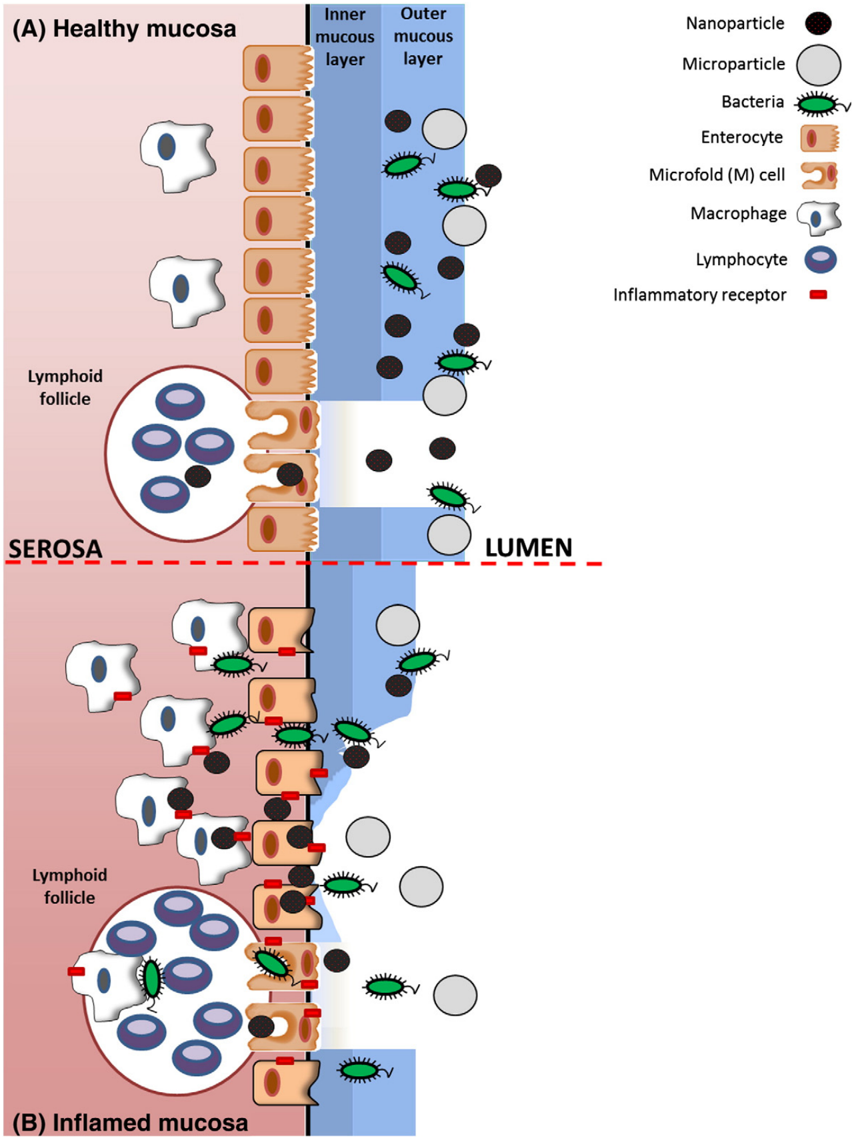
“Nanosized particles possess increased epithelial permeability and retention, that promotes selective delivery into inflamed tissues,103 prevents removal through diarrhoea,104 and enhances uptake by immune cells accumulated in the inflamed colon portions.”
From Current Advances in Chitosan Nanoparticles Based Oral Drug Delivery for Colorectal Cancer Treatment (2022) · cites this paper as [104]
Self-check
Percentages, sums and reported differences re-computed from the paper’s own numbers.
The self-check needs the paper’s full text.
Citations
Cites
Diet and the Intestinal Microbiome: Associations, Functions, and Implications for Health and Disease
Albenberg, L. G., & Wu, G. D. (2014) · Gastroenterology · doi:10.1053/j.gastro.2014.01.058 · Cited by 606
Lih-Brody, L., Powell, S. R., Collier, K. P., Reddy, G. M., Cerchia, R., Kahn, E., Weissman, G. S., Katz, S., Floyd, R. A., McKinley, M. J., et al. (1996) · Digestive Diseases and Sciences · doi:10.1007/bf02093613 · Cited by 496
Biodegradable polymer nanoparticles that rapidly penetrate the human mucus barrier
Tang, B. C., Dawson, M., Lai, S. K., Wang, Y.-Y., Suk, J. S., Yang, M., Zeitlin, P., Boyle, M. P., Fu, J., & Hanes, J. (2009) · Proceedings of the National Academy of Sciences · doi:10.1073/pnas.0905998106 · Cited by 453
Tacchini, L., Gammella, E., De Ponti, C., Recalcati, S., & Cairo, G. (2008) · Journal of Biological Chemistry · doi:10.1074/jbc.m800365200 · Cited by 132
Research works printed but not linked: 146
- Podolsky, 2002, Inflammatory bowel disease, N Engl J Med, 347, 417, 10.1056/NEJMra020831 · DOI
- Sartor, 2010, Genetics and environmental interactions shape the intestinal microbiome to promote inflammatory bowel disease versus mucosal homeostasis, Gastroenterology, 139, 1816, 10.1053/j.gastro.2010.10.036 · DOI · Paper page
- Keely, 2009, Dexamethasone–pDMAEMA polymeric conjugates reduce inflammatory biomarkers in human intestinal epithelial monolayers, J Control Release, 135, 35, 10.1016/j.jconrel.2008.12.001 · DOI
- Podolsky, 2003, The future of IBD treatment, J Gastroenterol, 38, 63
- Talley, 2011, An evidence-based systematic review on medical therapies for inflammatory bowel disease, Am J Gastroenterol, 106, S2, 10.1038/ajg.2011.58 · DOI
- Byrne, 2007, Patient preferences between surgical and medical treatment in Crohn's disease, Dis Colon Rectum, 50, 586, 10.1007/s10350-006-0847-0 · DOI
- Yang, 2002, Colon-specific drug delivery: new approaches and in vitro/in vivo evaluation, Int J Pharm, 235, 1, 10.1016/S0378-5173(02)00004-2 · DOI
- Sandborn, 2002, Rational selection of oral 5-aminosalicylate formulations and prodrugs for the treatment of ulcerative colitis, Am J Gastroenterol, 97, 2939, 10.1111/j.1572-0241.2002.07092.x · DOI
- Hanauer, 2004, COLAL-PRED Alizyme, Curr Opin Investig Drugs, 5, 1192
- Steed, 1997, The use of pharmacoscintigraphy to focus the development strategy for a novel 5-ASA colon targeting system (“TIME CLOCK (R)” system), J Control Release, 49, 115, 10.1016/S0168-3659(97)00062-X · DOI
- Hebden, 2000, Limited exposure of the healthy distal colon to orally-dosed formulation is further exaggerated in active left-sided ulcerative colitis, Aliment Pharmacol Ther, 14, 155, 10.1046/j.1365-2036.2000.00697.x · DOI
- Hua, 2014, Orally administered liposomal formulations for colon targeted drug delivery, Front Pharmacol, 5, 1, 10.3389/fphar.2014.00138 · DOI
- Laroui, 2010, Drug-loaded nanoparticles targeted to the colon with polysaccharide hydrogel reduce colitis in a mouse model, Gastroenterology, 138, 843, 10.1053/j.gastro.2009.11.003 · DOI
- Coco, 2013, Drug delivery to inflamed colon by nanoparticles: comparison of different strategies, Int J Pharm, 440, 3, 10.1016/j.ijpharm.2012.07.017 · DOI · Paper page
- Asghar, 2006, Multiparticulate formulation approach to colon specific drug delivery: current perspectives, J Pharm Pharm Sci, 9, 327
- Hu, 2000, Application of a biomagnetic measurement system (BMS) to the evaluation of gastrointestinal transit of intestinal pressure-controlled colon delivery capsules (PCDCs) in human subjects, Pharm Res, 17, 160, 10.1023/A:1007561129221 · DOI · Paper page
- Coupe, 1991, Variation in gastrointestinal transit of pharmaceutical dosage forms in healthy subjects, Pharm Res, 8, 360, 10.1023/A:1015849700421 · DOI · Paper page
- Rao, 2004, Objective evaluation of small bowel and colonic transit time using pH telemetry in athletes with gastrointestinal symptoms, Br J Sports Med, 38, 482, 10.1136/bjsm.2003.006825 · DOI · Paper page
- Buhmann, 2007, Assessment of colonic transit time using MRI: a feasibility study, Eur Radiol, 17, 669, 10.1007/s00330-006-0414-z · DOI · Paper page
- Sathyan, 2000, Effect of dosing time on the total intestinal transit time of non-disintegrating systems, Int J Pharm, 204, 47, 10.1016/S0378-5173(00)00472-5 · DOI
- Fallingborg, 1993, Very low intraluminal colonic pH in patients with active ulcerative colitis, Dig Dis Sci, 38, 1989, 10.1007/BF01297074 · DOI
- Bratten, 2006, New directions in the assessment of gastric function: clinical applications of physiologic measurements, Dig Dis, 24, 252, 10.1159/000092878 · DOI · Paper page
- Nugent, 2001, Intestinal luminal pH in inflammatory bowel disease: possible determinants and implications for therapy with aminosalicylates and other drugs, Gut, 48, 571, 10.1136/gut.48.4.571 · DOI
- Sasaki, 1997, Improved localizing method of radiopill in measurement of entire gastrointestinal pH profiles: colonic luminal pH in normal subjects and patients with Crohn's disease, Am J Gastroenterol, 92, 114
- Ibekwe, 2008, Interplay between intestinal pH, transit time and feed status on the in vivo performance of pH responsive ileo-colonic release systems, Pharm Res, 25, 1828, 10.1007/s11095-008-9580-9 · DOI · Paper page
- Nyhof, 1985, Effect of atropine on digested food-induced intestinal hyperemia, Am J Physiol, 249, G685
- Fatouros, 2008, In vitro lipid digestion models in design of drug delivery systems for enhancing oral bioavailability, Expert Opin Drug Metab Toxicol, 4, 65, 10.1517/17425255.4.1.65 · DOI
- Keely, 2011, Chloride-led disruption of the intestinal mucous layer impedes Salmonella invasion: evidence for an ‘enteric tear’ mechanism, Cell Physiol Biochem, 28, 743, 10.1159/000335768 · DOI
- Sartor, 2008, Microbial influences in inflammatory bowel diseases, Gastroenterology, 134, 577, 10.1053/j.gastro.2007.11.059 · DOI · Paper page
- Macfarlane, 2011, Fermentation in the human large intestine: its physiologic consequences and the potential contribution of prebiotics, J Clin Gastroenterol, 45, S120, 10.1097/MCG.0b013e31822fecfe · DOI · Paper page
- Sinha, 2001, Polysaccharides in colon-specific drug delivery, Int J Pharm, 224, 19, 10.1016/S0378-5173(01)00720-7 · DOI · Paper page
- Frank, 2007, Molecular–phylogenetic characterization of microbial community imbalances in human inflammatory bowel diseases, Proc Natl Acad Sci U S A, 104, 13780, 10.1073/pnas.0706625104 · DOI · Paper page
- Britton, 2014, Role of the intestinal microbiota in resistance to colonization by Clostridium difficile, Gastroenterology, 146, 1547, 10.1053/j.gastro.2014.01.059 · DOI · Paper page
- Patel, 2014, Mucosal inflammatory response to Salmonella typhimurium infection, Front Immunol, 5, 311, 10.3389/fimmu.2014.00311 · DOI
- Grover, 2008, Small intestinal bacterial overgrowth in irritable bowel syndrome: association with colon motility, bowel symptoms, and psychological distress, Neurogastroenterol Motil, 20, 998, 10.1111/j.1365-2982.2008.01142.x · DOI · Paper page
- Li, 2003, Basement membrane components, J Clin Pathol, 56, 885, 10.1136/jcp.56.12.885 · DOI
- Antoni, 2014, Intestinal barrier in inflammatory bowel disease, World J Gastroenterol, 20, 1165, 10.3748/wjg.v20.i5.1165 · DOI
- Rana, 2013, Small intestinal bacterial overgrowth and orocecal transit time in patients of inflammatory bowel disease, Dig Dis Sci, 58, 2594, 10.1007/s10620-013-2694-x · DOI
- Kashyap, 2013, Complex interactions among diet, gastrointestinal transit, and gut microbiota in humanized mice, Gastroenterology, 144, 967, 10.1053/j.gastro.2013.01.047 · DOI · Paper page
- Sartor, 2008, Therapeutic correction of bacterial dysbiosis discovered by molecular techniques, Proc Natl Acad Sci U S A, 105, 16413, 10.1073/pnas.0809363105 · DOI
- Linskens, 2001, The bacterial flora in inflammatory bowel disease: current insights in pathogenesis and the influence of antibiotics and probiotics, Scand J Gastroenterol Suppl, 234, 29, 10.1080/003655201753265082 · DOI · Paper page
- Keely, 2012, Activated fluid transport regulates bacterial–epithelial interactions and significantly shifts the murine colonic microbiome, Gut Microbes, 3, 250, 10.4161/gmic.20529 · DOI
- Musch, 2013, Lubiprostone decreases mouse colonic inner mucus layer thickness and alters intestinal microbiota, Dig Dis Sci, 58, 668, 10.1007/s10620-012-2509-5 · DOI
- Barkas, 2013, Electrolyte and acid–base disorders in inflammatory bowel disease, Ann Gastroenterol, 26, 23
- Lucas, 1978, Acid microclimate in coeliac and Crohn's disease: a model for folate malabsorption, Gut, 19, 735, 10.1136/gut.19.8.735 · DOI
- McConnell, 2008, Gut instincts: explorations in intestinal physiology and drug delivery, Int J Pharm, 364, 213, 10.1016/j.ijpharm.2008.05.012 · DOI
- Van Citters, 2006, Ileal brake: neuropeptidergic control of intestinal transit, Curr Gastroenterol Rep, 8, 367, 10.1007/s11894-006-0021-9 · DOI · Paper page
- Yang, 2008, Biorelevant dissolution testing of colon-specific delivery systems activated by colonic microflora, J Control Release, 125, 77, 10.1016/j.jconrel.2007.10.026 · DOI · Paper page
- Laukoetter, 2008, Role of the intestinal barrier in inflammatory bowel disease, World J Gastroenterol, 14, 401, 10.3748/wjg.14.401 · DOI
- Cunningham, 2012, Myosin light chain kinase: pulling the strings of epithelial tight junction function, Ann N Y Acad Sci, 1258, 34, 10.1111/j.1749-6632.2012.06526.x · DOI · Paper page
- Wang, 2010, Restoration of rat colonic epithelium after in situ intestinal instillation of the absorption promoter, sodium caprate, Ther Deliv, 1, 75, 10.4155/tde.10.5 · DOI
- Goggins, 2013, Hypoxia and integrin-mediated epithelial restitution during mucosal inflammation, Front Immunol, 4, 272, 10.3389/fimmu.2013.00272 · DOI
- Comerford, 2002, Hypoxia-inducible factor-1-dependent regulation of the multidrug resistance (MDR1) gene, Cancer Res, 62, 3387
- Creed, 2007, Review article: steroid resistance in inflammatory bowel disease—mechanisms and therapeutic strategies, Aliment Pharmacol Ther, 25, 111, 10.1111/j.1365-2036.2006.03156.x · DOI
- Dong, 2009, Doxorubicin and paclitaxel-loaded lipid-based nanoparticles overcome multidrug resistance by inhibiting P-glycoprotein and depleting ATP, Cancer Res, 69, 3918, 10.1158/0008-5472.CAN-08-2747 · DOI
- Schmidt, 1996, Effect of intestinal resection on human small bowel motility, Gut, 38, 859, 10.1136/gut.38.6.859 · DOI
- Spiller, 1988, Further characterisation of the ‘ileal brake’ reflex in man—effect of ileal infusion of partial digests of fat, protein, and starch on jejunal motility and release of neurotensin, enteroglucagon, and peptide YY, Gut, 29, 1042, 10.1136/gut.29.8.1042 · DOI
- Fallingborg, 1998, Small intestinal transit time and intraluminal pH in ileocecal resected patients with Crohn's disease, Dig Dis Sci, 43, 702, 10.1023/A:1018893409596 · DOI
- Gracie, 2012, Prevalence of, and predictors of, bile acid malabsorption in outpatients with chronic diarrhea, Neurogastroenterol Motil, 24, 983-e538, 10.1111/j.1365-2982.2012.01953.x · DOI
- Thompson, 1998, Role of the ileocecal junction in the motor response to intestinal resection, J Gastrointest Surg, 2, 174, 10.1016/S1091-255X(98)80010-3 · DOI
- Ammon, 1974, Inhibition of ileal water absorption by intraluminal fatty acids. Influence of chain length, hydroxylation, and conjugation of fatty acids, J Clin Invest, 53, 205, 10.1172/JCI107539 · DOI
- Watts, 1992, The transit rate of different-sized model dosage forms through the human colon and the effects of a lactulose-induced catharsis, Int J Pharm, 87, 215, 10.1016/0378-5173(92)90245-W · DOI
- Van Citters, 1999, The ileal brake: a fifteen-year progress report, Curr Gastroenterol Rep, 1, 404, 10.1007/s11894-999-0022-6 · DOI
- Lin, 2005, Measurement of gastrointestinal transit, Dig Dis Sci, 50, 989, 10.1007/s10620-005-2694-6 · DOI
- Malayandi, 2014, Biopharmaceutical considerations and characterizations in development of colon targeted dosage forms for inflammatory bowel disease, Drug Deliv Transl Res, 4, 187, 10.1007/s13346-013-0185-4 · DOI
- Xiao, 2012, Oral colon-specific therapeutic approaches toward treatment of inflammatory bowel disease, Expert Opin Drug Deliv, 9, 1393, 10.1517/17425247.2012.730517 · DOI · Paper page
- Collnot, 2012, Nano- and microparticulate drug carriers for targeting of the inflamed intestinal mucosa, J Control Release, 161, 235, 10.1016/j.jconrel.2012.01.028 · DOI
- Lamprecht, 2005, Nanoparticles enhance therapeutic efficiency by selectively increased local drug dose in experimental colitis in rats, J Pharmacol Exp Ther, 315, 196, 10.1124/jpet.105.088146 · DOI
- Beloqui, 2013, Budesonide-loaded nanostructured lipid carriers reduce inflammation in murine DSS-induced colitis, Int J Pharm, 454, 775, 10.1016/j.ijpharm.2013.05.017 · DOI
- Hillyer, 2001, Gastrointestinal persorption and tissue distribution of differently sized colloidal gold nanoparticles, J Pharm Sci, 90, 1927, 10.1002/jps.1143 · DOI
- des Rieux, 2005, Transport of nanoparticles across an in vitro model of the human intestinal follicle associated epithelium, Eur J Pharm Sci, 25, 455, 10.1016/j.ejps.2005.04.015 · DOI
- Pichai, 2012, Potential prospects of nanomedicine for targeted therapeutics in inflammatory bowel diseases, World J Gastroenterol, 18, 2895, 10.3748/wjg.v18.i23.2895 · DOI
- Lamprecht, 2001, Size-dependent bioadhesion of micro- and nanoparticulate carriers to the inflamed colonic mucosa, Pharm Res, 18, 788, 10.1023/A:1011032328064 · DOI · Paper page
- Lamprecht, 2010, IBD: selective nanoparticle adhesion can enhance colitis therapy, Nat Rev Gastroenterol Hepatol, 7, 311, 10.1038/nrgastro.2010.66 · DOI
- Wachsmann, 2013, Surfactant-dependence of nanoparticle treatment in murine experimental colitis, J Control Release, 172, 62, 10.1016/j.jconrel.2013.07.031 · DOI
- Schmidt, 2013, Nano- and microscaled particles for drug targeting to inflamed intestinal mucosa: a first in vivo study in human patients, J Control Release, 165, 139, 10.1016/j.jconrel.2012.10.019 · DOI
- Han, 2012, Improved oral bioavailability of alendronate via the mucoadhesive liposomal delivery system, Eur J Pharm Sci, 46, 500, 10.1016/j.ejps.2012.04.002 · DOI
- Liu, 2005, Interaction of various pectin formulations with porcine colonic tissues, Biomaterials, 26, 5907, 10.1016/j.biomaterials.2005.03.005 · DOI
- Larsson, 2009, A complex, but uniform O-glycosylation of the human MUC2 mucin from colonic biopsies analyzed by nanoLC/MSn, Glycobiology, 19, 756, 10.1093/glycob/cwp048 · DOI
- Urayama, 1997, Mechanisms and treatment of diarrhea in inflammatory bowel diseases, Inflamm Bowel Dis, 3, 114, 10.1097/00054725-199706000-00006 · DOI
- Niebel, 2012, Nanoparticle-based clodronate delivery mitigates murine experimental colitis, J Control Release, 160, 659, 10.1016/j.jconrel.2012.03.004 · DOI
- Lautenschlager, 2013, PEG-functionalized microparticles selectively target inflamed mucosa in inflammatory bowel disease, Eur J Pharm Biopharm, 85, 578, 10.1016/j.ejpb.2013.09.016 · DOI
- Gradauer, 2013, Liposomes coated with thiolated chitosan enhance oral peptide delivery to rats, J Control Release, 172, 872, 10.1016/j.jconrel.2013.10.011 · DOI
- Manconi, 2013, Improving oral bioavailability and pharmacokinetics of liposomal metformin by glycerolphosphate–chitosan microcomplexation, AAPS PharmSciTech, 14, 485, 10.1208/s12249-013-9926-4 · DOI
- Takeuchi, 2003, Mucoadhesive properties of carbopol or chitosan-coated liposomes and their effectiveness in the oral administration of calcitonin to rats, J Control Release, 86, 235, 10.1016/S0168-3659(02)00411-X · DOI
- Gradauer, 2012, Chemical coupling of thiolated chitosan to preformed liposomes improves mucoadhesive properties, Int J Nanomedicine, 7, 2523
- Thirawong, 2008, Improved intestinal absorption of calcitonin by mucoadhesive delivery of novel pectin–liposome nanocomplexes, J Control Release, 125, 236, 10.1016/j.jconrel.2007.10.023 · DOI
- Tirosh, 2009, Transferrin as a luminal target for negatively charged liposomes in the inflamed colonic mucosa, Mol Pharm, 6, 1083, 10.1021/mp9000926 · DOI
- Carlson, 1999, Increased intraluminal release of eosinophil granule proteins EPO, ECP, EPX, and cytokines in ulcerative colitis and proctitis in segmental perfusion, Am J Gastroenterol, 94, 1876, 10.1111/j.1572-0241.1999.01223.x · DOI
- Peterson, 2002, A new method for the quantification of neutrophil and eosinophil cationic proteins in feces: establishment of normal levels and clinical application in patients with inflammatory bowel disease, Am J Gastroenterol, 97, 1755, 10.1111/j.1572-0241.2002.05837.x · DOI · Paper page
- Lamprecht, 2001, Biodegradable nanoparticles for targeted drug delivery in treatment of inflammatory bowel disease, J Pharmacol Exp Ther, 299, 775, 10.1016/S0022-3565(24)29290-9 · DOI
- Jubeh, 2004, Differential adhesion of normal and inflamed rat colonic mucosa by charged liposomes, Pharm Res, 21, 447, 10.1023/B:PHAM.0000019298.29561.cd · DOI · Paper page
- Muchow, 2008, Lipid nanoparticles with a solid matrix (SLN, NLC, LDC) for oral drug delivery, Drug Dev Ind Pharm, 34, 1394, 10.1080/03639040802130061 · DOI
- Beloqui, 2014, Fate of nanostructured lipid carriers (NLCs) following the oral route: design, pharmacokinetics and biodistribution, J Microencapsul, 31, 1, 10.3109/02652048.2013.788090 · DOI
- Meissner, 2006, Nanoparticles in inflammatory bowel disease: particle targeting versus pH-sensitive delivery, Int J Pharm, 316, 138, 10.1016/j.ijpharm.2006.01.032 · DOI
- Cu, 2008, Controlled surface modification with poly(ethylene) glycol enhances diffusion of PLGA nanoparticles in human cervical mucus, Mol Pharm, 6, 173, 10.1021/mp8001254 · DOI
- Lai, 2009, Mucus-penetrating nanoparticles for drug and gene delivery to mucosal tissues, Adv Drug Deliv Rev, 61, 158, 10.1016/j.addr.2008.11.002 · DOI
- Vong, 2012, An orally administered redox nanoparticle that accumulates in the colonic mucosa and reduces colitis in mice, Gastroenterology, 143, 1027, 10.1053/j.gastro.2012.06.043 · DOI
- Ju, 2009, A gamma-tocopherol-rich mixture of tocopherols inhibits colon inflammation and carcinogenesis in azoxymethane and dextran sulfate sodium-treated mice, Cancer Prev Res (Phila), 2, 143, 10.1158/1940-6207.CAPR-08-0099 · DOI
- Jin, 2008, American ginseng suppresses inflammation and DNA damage associated with mouse colitis, Carcinogenesis, 29, 2351, 10.1093/carcin/bgn211 · DOI
- Kotakadi, 2008, Ginkgo biloba extract EGb 761 has anti-inflammatory properties and ameliorates colitis in mice by driving effector T cell apoptosis, Carcinogenesis, 29, 1799, 10.1093/carcin/bgn143 · DOI
- Tobio, 2000, The role of PEG on the stability in digestive fluids and in vivo fate of PEG–PLA nanoparticles following oral administration, Colloids Surf B: Biointerfaces, 18, 315, 10.1016/S0927-7765(99)00157-5 · DOI
- Ashford, 1993, An in vivo investigation into the suitability of pH dependent polymers for colonic targeting, Int J Pharm, 95, 193, 10.1016/0378-5173(93)90406-6 · DOI
- Karn, 2011, Mucoadhesive liposomal delivery systems: the choice of coating material, Drug Dev Ind Pharm, 37, 482, 10.3109/03639045.2010.523425 · DOI
- Haznedar, 2004, Preparation and in vitro evaluation of Eudragit microspheres containing acetazolamide, Int J Pharm, 269, 131, 10.1016/j.ijpharm.2003.09.015 · DOI
- Barea, 2012, Encapsulation of liposomes within pH responsive microspheres for oral colonic drug delivery, Int J Biomater, 1, 10.1155/2012/458712 · DOI
- Barea, 2010, Evaluation of liposomes coated with a pH responsive polymer, Int J Pharm, 402, 89, 10.1016/j.ijpharm.2010.09.028 · DOI
- Makhlof, 2009, pH-Sensitive nanospheres for colon-specific drug delivery in experimentally induced colitis rat model, Eur J Pharm Biopharm, 72, 1, 10.1016/j.ejpb.2008.12.013 · DOI
- Kshirsagar, 2012, Preparation and characterization of nanocapsules for colon-targeted drug delivery system, Pharm Dev Technol, 17, 607, 10.3109/10837450.2011.557732 · DOI
- Legrand, 1999, Polymeric nanocapsules as drug delivery systems, STP Pharm Sci, 9, 411
- Ali, 2014, Budesonide loaded nanoparticles with pH-sensitive coating for improved mucosal targeting in mouse models of inflammatory bowel diseases, J Control Release, 183, 167, 10.1016/j.jconrel.2014.03.039 · DOI
- Beloqui, 2014, pH-sensitive nanoparticles for colonic delivery of curcumin in inflammatory bowel disease, Int J Pharm, 473, 203, 10.1016/j.ijpharm.2014.07.009 · DOI
- Lamprecht, 2005, A pH-sensitive microsphere system for the colon delivery of tacrolimus containing nanoparticles, J Control Release, 104, 337, 10.1016/j.jconrel.2005.02.011 · DOI
- Laroui, 2014, Targeting intestinal inflammation with CD98 siRNA/PEI-loaded nanoparticles, Mol Ther, 22, 69, 10.1038/mt.2013.214 · DOI
- Xiao, 2014, Nanoparticles with surface antibody against CD98 and carrying CD98 small interfering RNA reduce colitis in mice, Gastroenterology, 146, 1289, 10.1053/j.gastro.2014.01.056 · DOI
- Kriegel, 2011, Oral TNF-alpha gene silencing using a polymeric microsphere-based delivery system for the treatment of inflammatory bowel disease, J Control Release, 150, 77, 10.1016/j.jconrel.2010.10.002 · DOI
- Kriegel, 2011, Dual TNF-alpha/cyclin D1 gene silencing with an oral polymeric microparticle system as a novel strategy for the treatment of inflammatory bowel disease, Clin Transl Gastroenterol, 2, e2, 10.1038/ctg.2011.1 · DOI
- Bhavsar, 2007, Gastrointestinal distribution and in vivo gene transfection studies with nanoparticles-in-microsphere oral system (NiMOS), J Control Release, 119, 339, 10.1016/j.jconrel.2007.03.006 · DOI
- Moulari, 2008, The targeting of surface modified silica nanoparticles to inflamed tissue in experimental colitis, Biomaterials, 29, 4554, 10.1016/j.biomaterials.2008.08.009 · DOI
- Li, 2004, Fabrication of porous hollow silica nanoparticles and their applications in drug release control, J Control Release, 98, 245, 10.1016/j.jconrel.2004.04.019 · DOI
- Simmonds, 1992, Chemiluminescence assay of mucosal reactive oxygen metabolites in inflammatory bowel disease, Gastroenterology, 103, 186, 10.1016/0016-5085(92)91112-H · DOI
- Mahida, 1989, Respiratory burst activity of intestinal macrophages in normal and inflammatory bowel disease, Gut, 30, 1362, 10.1136/gut.30.10.1362 · DOI
- Wilson, 2010, Orally delivered thioketal nanoparticles loaded with TNF-alpha-siRNA target inflammation and inhibit gene expression in the intestines, Nat Mater, 9, 923, 10.1038/nmat2859 · DOI
- Leirdal, 2002, Gene silencing in mammalian cells by preformed small RNA duplexes, Biochem Biophys Res Commun, 295, 744, 10.1016/S0006-291X(02)00736-2 · DOI
- Zhang, 2007, Cationic lipids and polymers mediated vectors for delivery of siRNA, J Control Release, 123, 1, 10.1016/j.jconrel.2007.07.016 · DOI
- Thiele, 2001, Evaluation of particle uptake in human blood monocyte-derived cells in vitro. Does phagocytosis activity of dendritic cells measure up with macrophages?, J Control Release, 76, 59, 10.1016/S0168-3659(01)00412-6 · DOI
- Hua, 2013, Targeting sites of inflammation: intercellular adhesion molecule-1 as a target for novel inflammatory therapies, Front Pharmacol, 4, 127, 10.3389/fphar.2013.00127 · DOI
- Sofou, 2008, Antibody-targeted liposomes in cancer therapy and imaging, Expert Opin Drug Deliv, 5, 189, 10.1517/17425247.5.2.189 · DOI
- Willis, 1998, Ligand-targeted liposomes, Adv Drug Deliv Rev, 29, 249, 10.1016/S0169-409X(97)00083-5 · DOI
- Saltzman, 1994, Antibody diffusion in human cervical mucus, Biophys J, 66, 508, 10.1016/S0006-3495(94)80802-1 · DOI
- Mane, 2012, Biodistribution and endocytosis of ICAM-1-targeting antibodies versus nanocarriers in the gastrointestinal tract in mice, Int J Nanomedicine, 7, 4223
- Sans, 1999, VCAM-1 and ICAM-1 mediate leukocyte–endothelial cell adhesion in rat experimental colitis, Gastroenterology, 116, 874, 10.1016/S0016-5085(99)70070-3 · DOI
- Danese, 2005, Adhesion molecules in inflammatory bowel disease: therapeutic implications for gut inflammation, Dig Liver Dis, 37, 811, 10.1016/j.dld.2005.03.013 · DOI
- Binion, 1998, Acquired increase in leucocyte binding by intestinal microvascular endothelium in inflammatory bowel disease, Lancet, 352, 1742, 10.1016/S0140-6736(98)05050-8 · DOI
- Binion, 1997, Enhanced leukocyte binding by intestinal microvascular endothelial cells in inflammatory bowel disease, Gastroenterology, 112, 1895, 10.1053/gast.1997.v112.pm9178682 · DOI
- Bernstein, 1996, Beta 2-integrin/intercellular adhesion molecule (ICAM) expression in the normal human intestine, Clin Exp Immunol, 106, 160
- Salmi, 1994, Aberrant binding of lamina propria lymphocytes to vascular endothelium in inflammatory bowel diseases, Gastroenterology, 106, 596, 10.1016/0016-5085(94)90691-2 · DOI
- Wileman, 1986, Identification of the macrophage mannose receptor as a 175-kDa membrane protein, Proc Natl Acad Sci U S A, 83, 2501, 10.1073/pnas.83.8.2501 · DOI
- van Vliet, 2008, Sweet preferences of MGL: carbohydrate specificity and function, Trends Immunol, 29, 83, 10.1016/j.it.2007.10.010 · DOI
- Xiao, 2013, Mannosylated bioreducible nanoparticle-mediated macrophage-specific TNF-alpha RNA interference for IBD therapy, Biomaterials, 34, 7471, 10.1016/j.biomaterials.2013.06.008 · DOI
- Zhang, 2013, Galactosylated trimethyl chitosan–cysteine nanoparticles loaded with Map4k4 siRNA for targeting activated macrophages, Biomaterials, 34, 3667, 10.1016/j.biomaterials.2013.01.079 · DOI
- Laroui, 2014, Fab′-bearing siRNA TNFalpha-loaded nanoparticles targeted to colonic macrophages offer an effective therapy for experimental colitis, J Control Release, 186, 41, 10.1016/j.jconrel.2014.04.046 · DOI
- Harel, 2011, Enhanced transferrin receptor expression by proinflammatory cytokines in enterocytes as a means for local delivery of drugs to inflamed gut mucosa, PLoS One, 6, e24202, 10.1371/journal.pone.0024202 · DOI
- Xiao, 2014, Glycoprotein CD98 as a receptor for colitis-targeted delivery of nanoparticle, J Mater Chem B Mater Biol Med, 2, 1499, 10.1039/c3tb21564d · DOI
- Kucharzik, 2005, Activation of epithelial CD98 glycoprotein perpetuates colonic inflammation, Lab Invest, 85, 932, 10.1038/labinvest.3700289 · DOI
- Nguyen, 2012, Homeostatic and innate immune responses: role of the transmembrane glycoprotein CD98, Cell Mol Life Sci, 69, 3015, 10.1007/s00018-012-0963-z · DOI
Cited by
Sorted by citations
Strategic approaches for colon targeted drug delivery: an overview of recent advancements
Lee, S. H., Bajracharya, R., Min, J. Y., Han, J.-W., Park, B. J., & Han, H.-K. (2020) · Pharmaceutics · doi:10.3390/pharmaceutics12010068 · Cited by 318
Advances in colon-targeted nano-drug delivery systems: challenges and solutions
Naeem, M., Awan, U. A., Subhan, F., Cao, J., Hlaing, S. P., Lee, J., Im, E., Jung, Y., & Yoo, J.-W. (2020) · Archives of Pharmacal Research · doi:10.1007/s12272-020-01219-0 · Cited by 248
Novel nano-encapsulated probiotic agents: Encapsulate materials, delivery, and encapsulation systems
Xu, C., Ban, Q., Wang, W., Hou, J., & Jiang, Z. (2022) · Journal of Controlled Release · doi:10.1016/j.jconrel.2022.06.061 · Cited by 225
Current Advances in Chitosan Nanoparticles Based Oral Drug Delivery for Colorectal Cancer Treatment
Choukaife, H., Seyam, S., Alallam, B., Doolaanea, A. A., & Alfatama, M. (2022) · International Journal of Nanomedicine · doi:10.2147/ijn.s375229 · Cited by 127
Recent advances in targeted drug delivery systems for resistant colorectal cancer
Sharifi-Azad, M., Fathi, M., Cho, W. C., Barzegari, A., Dadashi, H., Dadashpour, M., & Jahanban-Esfahlan, R. (2022) · Cancer Cell International · doi:10.1186/s12935-022-02605-y · Cited by 65
Metadata
- Authors
- Hua, S., Marks, E., Schneider, J. J., & Keely, S.
- Venue
- Nanomedicine: Nanotechnology, Biology and Medicine
- Publisher
- Elsevier BV
- Published
- 2015-07
- Volume
- 11
- Issue
- 5
- Pages
- 1117-1132
- ISSN
- 1549-9634
- Cited by
- 494
- References
- 4
- Language
- en
About these checks
Registry, retraction, Cites and statistics results are computed, not judged, with one exception: a printed reference that no index lists is read once by a model before it counts as a citation error. Claims are extracted by a model and kept only when their quote appears verbatim in the text; each cited source is then checked, with a model’s help, for whether it says what the claim relies on. Those verdicts can be wrong — read the claim’s quote and the cited source before relying on one.
Statistics and arithmetic are recomputed, not judged.
Confidence bands are shown only for fields calibrated on our annotated test set. None is calibrated yet, so no band is shown.
What counts as a claim ›How we measure confidence ›How we check this ›
Are you an author, or do you see a problem with this page? Request a review
