

Automated psychological therapy using immersive virtual reality for treatment of fear of heights: a single-blind, parallel-group, randomised controlled trial
Open accessThe DOI matches its Crossref record; 19 of the 19 references it cites were found in a registry or an index; 3 of the 15 sources its claims cite were checked for support.
Abstract
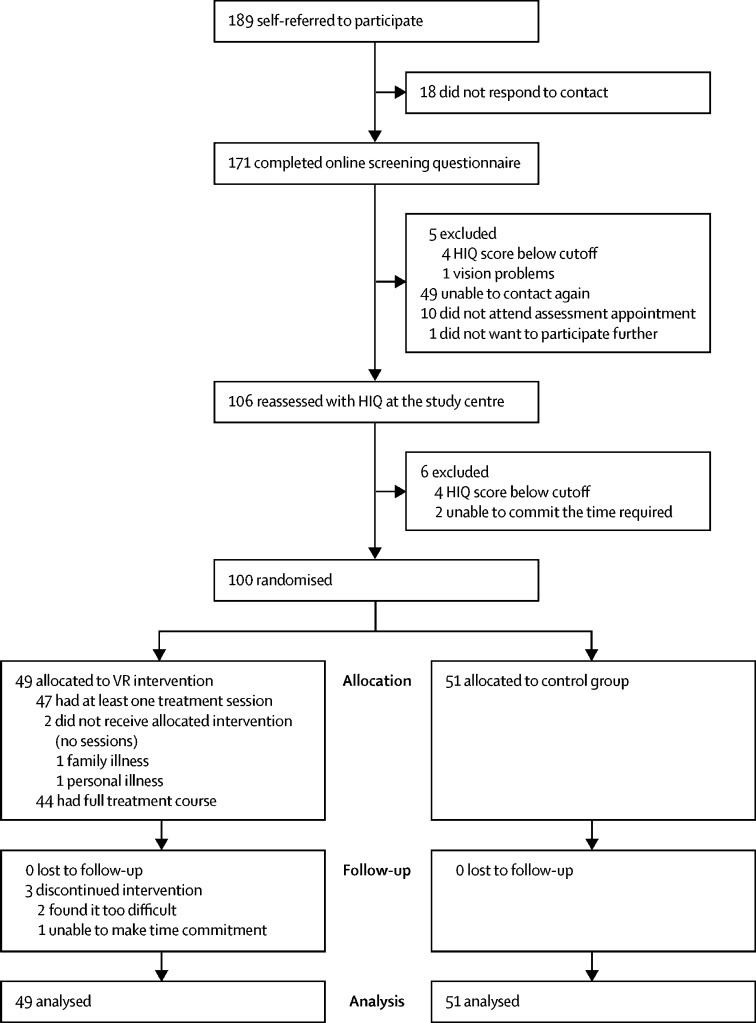
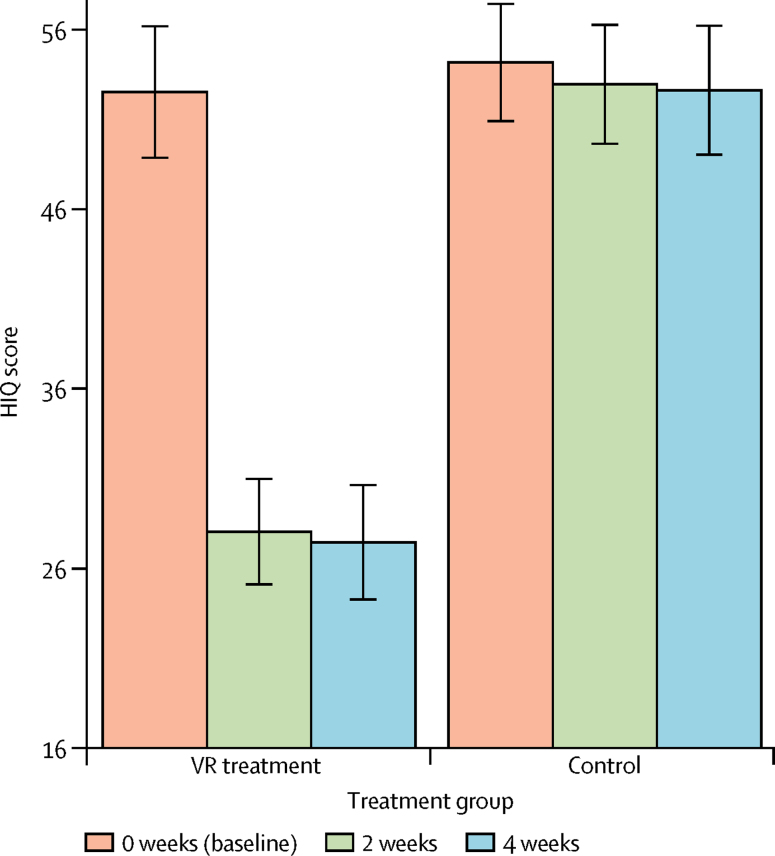
BACKGROUND: Engaging, interactive, and automated virtual reality (VR) treatments might help solve the unmet needs of individuals with mental health disorders. We tested the efficacy of an automated cognitive intervention for fear of heights guided by an avatar virtual coach (animated using motion and voice capture of an actor) in VR and delivered with the latest consumer equipment. METHODS: We did a randomised trial of automated VR versus usual care. We recruited adults aged older than 18 years with a fear of heights by radio advertisements in Oxfordshire, UK. We diagnosed fear of heights if participants scored more than 29 on the Heights Interpretation Questionnaire (HIQ). We randomly allocated participants by computer in a 1:1 ratio to either automated VR delivered in roughly six 30-min sessions administered about two to three times a week over a 2-week period (intervention group) or to usual care (control group). Randomisation was stratified by severity of fear of heights. The research team, who were unaware of the random allocation, administered three fear-of-height assessments, at baseline (0 weeks), at the end of treatment (2 weeks), and at follow-up (4 weeks). The primary outcome measure was HIQ score (range 16-80, with higher scores indicating greater severity). This trial is registered with the ISRCTN registry, number ISRCTN11898283. FINDINGS: Between Nov 25, 2017, and Feb 27, 2018, 100 individuals were enrolled and underwent randomisation, of whom 49 were assigned to the VR treatment group and 51 to the control group. All participants completed the 4-week follow-up. The mean total treatment time in VR was 124·43 min (SD 34·23). Compared with participants in the control group, the VR treatment reduced fear of heights at the end of treatment (mean change score -24·5 [SD 13·1] in the VR group vs -1·2 [7·3] in the control group; adjusted difference -24·0, 95% CI -27·7 to -20·3; Cohen's d=2·0; p<0·0001). The benefit was maintained at follow-up (mean change score -25·1 [SD 13·9] in the VR group vs -1·5 [7·8] in the control group; adjusted difference -24·3, 95% CI -27·9 to -20·6; Cohen's d=2·0; p<0·0001). The number needed to treat to at least halve the fear of heights was 1·3. No adverse events were reported. INTERPRETATION: Psychological therapy delivered automatically by a VR coach can produce large clinical benefits. Evidence-based VR treatments have the potential to greatly increase treatment provision for mental health disorders. FUNDING: Oxford VR, and the National Institute of Health Research Oxford Health Biomedical Research Centre.
Overview
CoChat Summary
## TL;DR
This single-blind, parallel-group randomized controlled trial found that an automated immersive VR intervention for fear of heights produced very large short-term and 4-week benefits versus usual care. The treatment was well tolerated, with no adverse events reported and very high uptake.
## Key findings
- 100 participants were randomized: 49 to VR and 51 to usual care; all participants completed 4-week follow-up.
- At the end of treatment (2 weeks), HIQ change was −24.5 in the VR group vs −1.2 in controls, with an adjusted between-group difference of −24.0 (95% CI −27.7 to −20.3; Cohen’s d=2.0; p<0.0001).
- At follow-up (4 weeks), HIQ change was −25.1 in the VR group vs −1.5 in controls, with an adjusted difference of −24.3 (95% CI −27.9 to −20.6; d=2.0; p<0.0001).
- 34/49 (69%) in the VR group fell below the trial’s HIQ entry criterion by follow-up, versus 0/51 controls; NNT 1.6. No adverse events were reported.
## Methods
- Single-blind, parallel-group, randomized, superiority trial comparing automated VR with usual care in adults older than 18 years recruited by radio advertisements in Oxfordshire, UK; fear of heights required HIQ >29.
- Participants were randomized 1:1, stratified by severity (moderate HIQ 30–55 or severe 56–80), to about six 30-minute VR sessions over 2 weeks or usual care.
- Primary outcome was HIQ; secondary outcomes included AQ, IAPT phobia scale–avoidance, and Simulator Sickness Questionnaire. Analyses used intention to treat and linear mixed-effects models with repeated measures at 2 and 4 weeks.
## Limitations
- The authors state they do not know how representative the participants are of the wider population with acrophobia.
- They state they did not test behaviour at real heights and did not test long-term outcomes beyond 4 weeks.
- They note the trial compared VR with usual care / no treatment, so they cannot pinpoint which elements caused the reduction; this is explicitly stated in the paper. An additional evident limitation is that the study was conducted in a single UK setting with self-referred participants.
Model-written summary. Check it against the paper before relying on it.
Integrity signals
Registry
Cites
Statistics
Figures
Verification
Claims the paper makes
2 Valid · 0 Not valid · 11 Not checked · 47 Own results and interpretations
A result the paper reports from its own data — it cites no other source for it, so there is none to check. The quote shows it is in the paper.
In the paper
“The mean reduction in the fear-of-heights score on the HIQ in the control group was 3·3% (SD 23·0).”
§ Automated psychological therapy using immersive virtual reality for treatment of fear of heights: a single-blind, parallel-group, randomised controlled trial > Results
plainn = 51- Asserted: passes — The authors put it forward as true.
- Checkable: passes — It can be checked against evidence.
- Load-bearing: passes — The paper’s conclusions depend on it.
- Based: passes — The paper gives a reason why it holds.
A result the paper reports from its own data — it cites no other source for it, so there is none to check. The quote shows it is in the paper.
In the paper
“We found no reports of automated VR being used to treat mental health problems.”
§ Automated psychological therapy using immersive virtual reality for treatment of fear of heights: a single-blind, parallel-group, randomised controlled trial > Introduction
plain- Asserted: passes — The authors put it forward as true.
- Checkable: passes — It can be checked against evidence.
- Load-bearing: passes — The paper’s conclusions depend on it.
- Based: passes — The paper gives a reason why it holds.
A result the paper reports from its own data — it cites no other source for it, so there is none to check. The quote shows it is in the paper.
In the paper
“Uptake of the VR treatment was very high. 47 (96%) of 49 people attended at least one VR session.”
§ Automated psychological therapy using immersive virtual reality for treatment of fear of heights: a single-blind, parallel-group, randomised controlled trial > Results
plainn = 49- Asserted: passes — The authors put it forward as true.
- Checkable: passes — It can be checked against evidence.
- Load-bearing: unclear — It is unclear whether the paper’s conclusions depend on it.
- Based: passes — The paper gives a reason why it holds.
A result the paper reports from its own data — it cites no other source for it, so there is none to check. The quote shows it is in the paper.
In the paper
“No adverse events were reported by any participant in either treatment group.”
§ Automated psychological therapy using immersive virtual reality for treatment of fear of heights: a single-blind, parallel-group, randomised controlled trial > Results
plain- Asserted: passes — The authors put it forward as true.
- Checkable: passes — It can be checked against evidence.
- Load-bearing: passes — The paper’s conclusions depend on it.
- Based: passes — The paper gives a reason why it holds.
A result the paper reports from its own data — it cites no other source for it, so there is none to check. The quote shows it is in the paper.
In the paper
“44 (90%) people had a full course of the VR intervention (ie, they completed all the treatment exercises), which comprised three (n=4), four (n=18), five (n=8), six (n=12), seven (n=1), or eight (n=1) treatment sessions.”
§ Automated psychological therapy using immersive virtual reality for treatment of fear of heights: a single-blind, parallel-group, randomised controlled trial > Results
plain- Asserted: passes — The authors put it forward as true.
- Checkable: passes — It can be checked against evidence.
- Load-bearing: unclear — It is unclear whether the paper’s conclusions depend on it.
- Based: passes — The paper gives a reason why it holds.
11 more claims
Create a free account to see all 60 claims and to verify the 12 references still open.
- It may state two separate claims as one. 31
- Probably not a substantial claim. 23
Claims other papers make about this one
Each is checked against this paper’s own text: does it say what the citing paper says it does?
The source backs part of the claim, not all of it — or backs it for a different population, condition or comparison.
In the citing paper
“The effect size of chatbots on acrophobia in this RCT [38] was substantially higher than the total effect size of therapist-assisted exposure treatment on phobias reported by a meta-analysis (2.0 versus 1.1) [46].”
From Effectiveness and safety of using chatbots to improve mental health: systematic review and meta-analysis (2020) · cites this paper as [38]
Experimental — accuracy not yet measuredThe source backs part of the claim, not all of it — or backs it for a different population, condition or comparison.
In the citing paper
“Compared with participants who received usual care, the chatbot significantly decreased the severity of acrophobia as measured by both tools at 2-week and 4-week follow-ups (P<.001) [38].”
From Effectiveness and safety of using chatbots to improve mental health: systematic review and meta-analysis (2020) · cites this paper as [38]
Experimental — accuracy not yet measuredThe source backs part of the claim, not all of it — or backs it for a different population, condition or comparison.
In the citing paper
“Generally, from studies that reported user experience outcomes (n=11), participants reported being satisfied with the conversational agent interventions offered [22,23,25,26,29,30,32].”
From Conversational agents in the treatment of mental health problems: mixed-method systematic review (2019) · cites this paper as [23]
Experimental — accuracy not yet measuredThe source backs part of the claim, not all of it — or backs it for a different population, condition or comparison.
In the citing paper
“This provides some support for the utility of conversational agents in treating mild-to-moderate psychological distress in adults [23,25,26,31,34].”
From Conversational agents in the treatment of mental health problems: mixed-method systematic review (2019) · cites this paper as [23]
Experimental — accuracy not yet measuredThe source backs part of the claim, not all of it — or backs it for a different population, condition or comparison.
In the citing paper
“Although all three studies reported large effect sizes in terms of symptom reduction”
From Experiences of gamified and automated virtual reality exposure therapy for spider phobia: qualitative study (2020) · cites this paper as [17]
Experimental — accuracy not yet measured
15 more claims about this paper
Create a free account to see every claim other papers make about this one.
Citations
Cites
Diagnostic and Statistical Manual of Mental Disorders
Williams, J. B. W., & First, M. (2013) · Encyclopedia of Social Work · doi:10.1093/acrefore/9780199975839.013.104 · Cited by 109,519
Simulator Sickness Questionnaire: An Enhanced Method for Quantifying Simulator Sickness
Kennedy, R. S., Lane, N. E., Berbaum, K. S., & Lilienthal, M. G. (1993) · The International Journal of Aviation Psychology · doi:10.1207/s15327108ijap0303_3 · Cited by 5,457
Virtual Reality in the Assessment, Understanding, and Treatment of Mental Health Disorders
Freeman, D., Reeve, S., Robinson, A., Ehlers, A., Clark, D., Spanlang, B., & Slater, M. (2017) · Psychological Medicine · doi:10.1017/s003329171700040x · Cited by 1,428
Self-citationVirtual reality exposure therapy for anxiety disorders: A meta-analysis
Powers, M. B., & Emmelkamp, P. M. G. (2008) · Journal of Anxiety Disorders · doi:10.1016/j.janxdis.2007.04.006 · Cited by 904
McHugh, R. K., Whitton, S. W., Peckham, A. D., Welge, J. A., & Otto, M. W. (2013) · The Journal of Clinical Psychiatry · doi:10.4088/jcp.12r07757 · Cited by 800
(2016) · City Research Online (City University London) · Cited by 747
Effectiveness of computer-generated (virtual reality) graded exposure in the treatment of acrophobia
(1995) · American Journal of Psychiatry · doi:10.1176/ajp.152.4.626 · Cited by 694
Mayo-Wilson, E., Dias, S., Mavranezouli, I., Kew, K., Clark, D. M., Ades, A. E., & Pilling, S. (2014) · The Lancet Psychiatry · doi:10.1016/s2215-0366(14)70329-3 · Cited by 680
Psychological approaches in the treatment of specific phobias: A meta-analysis
Wolitzky-Taylor, K. B., Horowitz, J. D., Powers, M. B., & Telch, M. J. (2008) · Clinical Psychology Review · doi:10.1016/j.cpr.2008.02.007 · Cited by 530
Virtual reality treatment versus exposure in vivo: a comparative evaluation in acrophobia
Emmelkamp, P. M. G., Krijn, M., Hulsbosch, A. M., de Vries, S., Schuemie, M. J., & van der Mast, C. A. P. G. (2002) · Behaviour Research and Therapy · doi:10.1016/s0005-7967(01)00023-7 · Cited by 475
Research works printed but not linked: 1
- Bouchard S St-Jacques J Renaud P Wiederhold B Side effects of immersions in virtual reality for people suffering from anxiety disorders J Cyber Ther Rehabil 2 2009 127 137
Cited by
Fiske, A., Henningsen, P., & Buyx, A. (2019) · Journal of Medical Internet Research · doi:10.2196/13216 · Cited by 857
“‘Avatar coaches’ have also been employed as part of an immersive virtual reality situation for treating the fear of heights [27] or as ‘virtual patients’ to provide medical students with lifelike interviewing practice [28].”
BackgroundPenninx, B. W., Pine, D. S., Holmes, E. A., & Reif, A. (2021) · The Lancet · doi:10.1016/s0140-6736(21)00359-7 · Cited by 740
Abd-Alrazaq, A. A., Rababeh, A., Alajlani, M., Bewick, B. M., & Househ, M. (2020) · Journal of Medical Internet Research · doi:10.2196/16021 · Cited by 503
“Compared with participants who received usual care, the chatbot significantly decreased the severity of acrophobia as measured by both tools at 2-week and 4-week follow-ups ( P <.001) [38].”
InfluentialThe digital revolution and its impact on mental health care
Bucci, S., Schwannauer, M., & Berry, N. (2019) · Psychology and Psychotherapy: Theory, Research and Practice · doi:10.1111/papt.12222 · Cited by 444
Virtual and augmented reality applications in medicine: analysis of the scientific literature
Yeung, A. W. K., Tosevska, A., Klager, E., Eibensteiner, F., Laxar, D., Stoyanov, J., Glisic, M., Zeiner, S., Kulnik, S. T., Crutzen, R., et al. (2021) · Journal of Medical Internet Research · doi:10.2196/25499 · Cited by 428
“Meanwhile, the use of immersive VR was beneficial in managing a spectrum of emotional problems, such as the fear of heights [48], anxiety disorders [17], depression [49], and ASD [50].”
Conversational agents in the treatment of mental health problems: mixed-method systematic review
Gaffney, H., Mansell, W., & Tai, S. (2019) · JMIR Mental Health · doi:10.2196/14166 · Cited by 275
“Overall, 6 of the conversational agents were embodied (7 studies) [22,23,28,30-32,34].”
InfluentialLei, C., Sunzi, K., Dai, F., Liu, X., Wang, Y., Zhang, B., He, L., & Ju, M. (2019) · PLOS ONE · doi:10.1371/journal.pone.0224819 · Cited by 270
Boeldt, D., McMahon, E., McFaul, M., & Greenleaf, W. (2019) · Frontiers in Psychiatry · doi:10.3389/fpsyt.2019.00773 · Cited by 242
Gao, T., Zhang, T., Zhu, L., Gao, Y., & Qiu, L. (2019) · International Journal of Environmental Research and Public Health · doi:10.3390/ijerph16173102 · Cited by 223
“[37], virtual reality technology (VR) is a new way to maximize the perception of an environment by isolating the visual and auditory sense of the outside world, using a head-mounted display device [38].”
BackgroundVirtual reality in the diagnostic and therapy for mental disorders: A systematic review
Wiebe, A., Kannen, K., Selaskowski, B., Mehren, A., Thöne, A.-K., Pramme, L., Blumenthal, N., Li, M., Asché, L., Jonas, S., et al. (2022) · Clinical Psychology Review · doi:10.1016/j.cpr.2022.102213 · Cited by 223
He, Y., Yang, L., Qian, C., Li, T., Su, Z., Zhang, Q., & Hou, X. (2023) · Journal of Medical Internet Research · doi:10.2196/43862 · Cited by 213
“A total of 16 studies with CAs were classified as chatbot [28-43], 6 studies with CAs classified as ECA [44-49], 5 studies with CAs classified as CA in VR [50-54], and 5 studies with CAs classified as avatar [27,55-58].”
Digital Mental Health Challenges and the Horizon Ahead for Solutions
Balcombe, L., & De Leo, D. (2021) · JMIR Mental Health · doi:10.2196/26811 · Cited by 173
“Immersive virtual therapeutic interventions with virtual reality (VR), have been proposed as a cost-effective aid in treating mental health disorders and symptoms (eg, acrophobia [35], persecutory delusions [36], delusions, hallucinations, or cognitive and social skills associated with the schizophrenia spectrum [37]).”
BackgroundDonker, T., Cornelisz, I., van Klaveren, C., van Straten, A., Carlbring, P., Cuijpers, P., & van Gelder, J.-L. (2019) · JAMA Psychiatry · doi:10.1001/jamapsychiatry.2019.0219 · Cited by 187
Extended Reality (XR) Remote Research: a Survey of Drawbacks and Opportunities
Ratcliffe, J., Soave, F., Bryan-Kinns, N., Tokarchuk, L., & Farkhatdinov, I. (2021) · CHI Conference on Human Factors in Computing Systems · doi:10.1145/3411764.3445170 · Cited by 219
“psychological [7], including social facilitation–inhibition [28], conformity and social comparison [6], social identity [34]; neuroscience and neuropsychology [36], visual perception [78], multisensory integration [14], proxemics [61], spatial cognition [75], education and training [54], therapeutic applications [20],…”
BackgroundMartens, M. A., Antley, A., Freeman, D., Slater, M., Harrison, P. J., & Tunbridge, E. M. (2019) · Journal of Psychopharmacology · doi:10.1177/0269881119860156 · Cited by 160
“Virtual reality (VR) is increasingly being used to investigate and to treat psychological disorders, such as paranoia, social phobia, and acrophobia (Freeman et al., 2018; Freeman et al., 2019; Gujjar et al., 2019; Kampmann et al., 2016).”
BackgroundSelf-citationFreeman, D., Lambe, S., Kabir, T., Petit, A., Rosebrock, L., Yu, L.-M., Dudley, R., Chapman, K., Morrison, A., O'Regan, E., et al. (2022) · The Lancet Psychiatry · doi:10.1016/s2215-0366(22)00060-8 · Cited by 157
Self-citationAdvances in immersive virtual reality interventions for mental disorders: A new reality?
Geraets, C. N. W., van der Stouwe, E. C. D., Pot-Kolder, R., & Veling, W. (2021) · Current Opinion in Psychology · doi:10.1016/j.copsyc.2021.02.004 · Cited by 156
Miloff, A., Lindner, P., Dafgård, P., Deak, S., Garke, M., Hamilton, W., Heinsoo, J., Kristoffersson, G., Rafi, J., Sindemark, K., et al. (2019) · Behaviour Research and Therapy · doi:10.1016/j.brat.2019.04.004 · Cited by 155
An experimental study of a virtual reality counselling paradigm using embodied self-dialogue
Slater, M., Neyret, S., Johnston, T., Iruretagoyena, G., Crespo, M. Á. D. L. C., Alabèrnia-Segura, M., Spanlang, B., & Feixas, G. (2019) · Scientific Reports · doi:10.1038/s41598-019-46877-3 · Cited by 155
Self-citationThe dawn of digital public health in Europe: Implications for public health policy and practice
Wong, B. L. H., Maaß, L., Vodden, A., van Kessel, R., Sorbello, S., Buttigieg, S., & Odone, A. (2022) · The Lancet Regional Health - Europe · doi:10.1016/j.lanepe.2022.100316 · Cited by 148
A Comprehensive Review of Multimodal XR Applications, Risks, and Ethical Challenges in the Metaverse
Kourtesis, P. (2024) · Multimodal Technologies and Interaction · doi:10.3390/mti8110098 · Cited by 194
“Virtual museums allow users to explore historical artifacts and sites through immersive 3D reconstructions, with haptic feedback providing tactile sensations to deepen user engagement [98].”
Artificial intelligence and Psychiatry: An overview
Ray, A., Bhardwaj, A., Malik, Y. K., Singh, S., & Gupta, R. (2022) · Asian Journal of Psychiatry · doi:10.1016/j.ajp.2022.103021 · Cited by 134
“‘Avatar coaches ’ have also been utilized for treatment of fear of heights as part of an immersive virtual reality situation (Freeman et al., 2018).”
BackgroundVirtual Reality Aided Therapy towards Health 4.0: A Two-Decade Bibliometric Analysis
Liu, Z., Ren, L., Xiao, C., Zhang, K., & Demian, P. (2022) · International Journal of Environmental Research and Public Health · doi:10.3390/ijerph19031525 · Cited by 142
“Additional controlled trials [87–95] compared the effects of virtual exposure and in vivo exposure, and two special studies [88,91] compared the differences between self-help virtual therapy and therapist-guided therapy.”
BackgroundAdvances in the use of virtual reality to treat mental health conditions
Bell, I. H., Pot-Kolder, R., Rizzo, A., Rus-Calafell, M., Cardi, V., Cella, M., Ward, T., Riches, S., Reinoso, M., Thompson, A., et al. (2024) · Nature Reviews Psychology · doi:10.1038/s44159-024-00334-9 · Cited by 140
“Basic forms of artificial intelligence have already been integrated into VR-based treatments for fear of heights 131,132 , public speaking anxiety 133 , spider phobia 134 and psychosis 135,136 , with good research evidence for effectiveness.”
Practitioner Review: Anxiety disorders in children and young people – assessment and treatment
Creswell, C., Waite, P., & Hudson, J. (2020) · Journal of Child Psychology and Psychiatry · doi:10.1111/jcpp.13186 · Cited by 140
“The use of technological advances, such as virtual reality, shown to be effective in delivering exposure in adults in a number of studies (e.g., Freeman et al., 2018), may also enable better and more meaningful in-session exposure; early signs are promising that virtual environments invoke…”
Juul, S., Gluud, C., Simonsen, S., Frandsen, F. W., Kirsch, I., & Jakobsen, J. C. (2021) · BMJ Evidence-Based Medicine · doi:10.1136/bmjebm-2020-111407 · Cited by 135
Anxiety level recognition for virtual reality therapy system using physiological signals
Šalkevicius, J., Damaševičius, R., Maskeliunas, R., & Laukienė, I. (2019) · Electronics · doi:10.3390/electronics8091039 · Cited by 135
“used [25] immersive VR for treating the fear of heights.”
MethodTreatable clinical intervention targets for patients with schizophrenia
Freeman, D., Taylor, K. M., Molodynski, A., & Waite, F. (2019) · Schizophrenia Research · doi:10.1016/j.schres.2019.07.016 · Cited by 125
“…tests of adapted psychological treatment we have shown that reducing anxious avoidance (Freeman et al., 2016a), worry (Freeman et al., 2015), low self-esteem (Freeman et al., 2014b), insomnia (Freeman et al., 2018), and reasoning bias (Garety et al., 2015) all lead to reductions in paranoia.”
BackgroundSelf-citationVirtual Reality in Clinical Psychology
Riva, G. (2020) · Elsevier eBooks · doi:10.1016/b978-0-12-818697-8.00006-6 · Cited by 154
Virtual Reality for the Enhancement of Emotion Regulation
Colombo, D., Díaz‐García, A., Fernandez‐Álvarez, J., & Botella, C. (2021) · Clinical Psychology & Psychotherapy · doi:10.1002/cpp.2618 · Cited by 120
Better, Virtually: the Past, Present, and Future of Virtual Reality Cognitive Behavior Therapy
Lindner, P. (2021) · International Journal of Cognitive Therapy · doi:10.1007/s41811-020-00090-7 · Cited by 120
Phobia Exposure Therapy Using Virtual and Augmented Reality: A Systematic Review
Albakri, G., Bouaziz, R., Alharthi, W., Kammoun, S., Al-Sarem, M., Saeed, F., & Hadwan, M. (2022) · Applied Sciences · doi:10.3390/app12031672 · Cited by 106
“The evaluation measurements include a Heights Interpretation Questionnaire (HIQ), the acrophobia questionnaire (AQ) and the Improving Access to Psychological Therapies (IAPT), and phobia scale avoidance [44].”
BackgroundMethodInfluentialMottelson, A., Muresan, A., Hornbæk, K., & Makransky, G. (2023) · ACM Transactions on Computer-Human Interaction · doi:10.1145/3590767 · Cited by 130
Immersive Virtual Reality in Health Care: Systematic Review of Technology and Disease States
Snoswell, A. J., & Snoswell, C. L. (2019) · JMIR Biomedical Engineering · doi:10.2196/15025 · Cited by 99
“30-53 100 Acrophobia (fear of heights) Efficacy HTC Vive Freeman et al, 2018 (UK) [49]”
BackgroundDense Light Field Coding: A Survey
Conti, C., Soares, L. D., & Nunes, P. J. L. (2020) · IEEE Access · doi:10.1109/access.2020.2977767 · Cited by 95
“Additionally, in health care, recent researches [19] have shown the benefits of using true-to-life VR exposure therapy for the treatment of a variety of mental health disorders, such as phobias and social anxiety.”
BackgroundVirtual reality for acute pain in outpatient hysteroscopy: a randomised controlled trial
Deo, N. D., Khan, K. S., Mak, J., Allotey, J., Carreras, F. G., Fusari, G., & Benn, J. (2020) · BJOG An International Journal of Obstetrics & Gynaecology · doi:10.1111/1471-0528.16377 · Cited by 103
“Virtual reality for managing pain has been studied in paediatrics, dentistry, burns treatment, chronic pain, labour, episiotomy and phobias 14–22 23 24 .”
A systematic review: Virtual-reality-based techniques for human exercises and health improvement
Ali, S. G., Wang, X., Li, P., Jung, Y., Bi, L., Kim, J., Chen, Y., Feng, D. D., Magnenat‐Thalmann, N., Wang, J., et al. (2023) · Frontiers in Public Health · doi:10.3389/fpubh.2023.1143947 · Cited by 102
“First, the patient is aware that the training is simply a simulation, they might feel safer and be more open to trying out other navigational methods (73).”
Schröder, D., Wrona, K. J., Müller, F., Heinemann, S., Fischer, F., & Dockweiler, C. (2023) · Journal of Behavior Therapy and Experimental Psychiatry · doi:10.1016/j.jbtep.2023.101893 · Cited by 85
Lindner, P., Hamilton, W., Miloff, A., & Carlbring, P. (2019) · Frontiers in Psychiatry · doi:10.3389/fpsyt.2019.00792 · Cited by 81
Examining Design Choices of Questionnaires in VR User Studies
Alexandrovsky, D., Putze, S., Bonfert, M., Höffner, S., Michelmann, P., Wenig, D., Malaka, R., & Smeddinck, J. D. (2020) · CHI Conference on Human Factors in Computing Systems · doi:10.1145/3313831.3376260 · Cited by 105
Halldorsson, B., Hill, C., Waite, P., Partridge, K., Freeman, D., & Creswell, C. (2021) · Journal of Child Psychology and Psychiatry · doi:10.1111/jcpp.13400 · Cited by 84
“Typically, VR has been used by therapists as an adjunct to face-to-face intervention, but there is a new generation of automated VR cognitive treatments which bring the potential to widely expand opportunities for access to effective treatments (Freeman et al., 2018).”
Self-citationLindner, P., Dagöö, J., Hamilton, W., Miloff, A., Andersson, G., Schill, A., & Carlbring, P. (2021) · Cognitive Behaviour Therapy · doi:10.1080/16506073.2020.1795240 · Cited by 78
“…or practically infeasible or too costly to provide in other ways; and full or partial automation of treatment delivery (Donker et al., 2019; Freeman et al., 2018; Lindner et al., 2020) can be used to address difficulties in training clinicians to specific protocols and ensure a greater…”
BackgroundLaacke, S., Mueller, R., Schomerus, G., & Salloch, S. (2021) · The American Journal of Bioethics · doi:10.1080/15265161.2020.1863515 · Cited by 74
“…al. 2017), virtual human avatars (Abbott and Shaw 2016; Craig et al. 2018; Rizzo et al. 2011), systems supporting the clinician ’ s judgment (Gil and Johnson 2009; Masri and Jani 2012), intelligent virtual worlds (Freeman et al. 2018; Gorrindo and Groves 2009; Krijn et al. 2004) and augmented…”
BackgroundCross-species anxiety tests in psychiatry: pitfalls and promises
Bach, D. R. (2021) · Molecular Psychiatry · doi:10.1038/s41380-021-01299-4 · Cited by 85
Ebert, D. D., Harrer, M., Apolinário-Hagen, J., & Baumeister, H. (2019) · Advances in Experimental Medicine and Biology · doi:10.1007/978-981-32-9721-0_29 · Cited by 76
Goldenhersch, E., Thrul, J., Ungaretti, J., Rosencovich, N., Waitman, C., & Ceberio, M. R. (2020) · Journal of Medical Internet Research · doi:10.2196/17571 · Cited by 77
“These findings are in line with those of existing studies, which have shown that VR can enhance treatment fidelity by having behavioral interventions delivered by a programmed avatar [21] and that VR environments offer existing opportunities to enhance a patient ́s involvement in treatments [63].”
ResultImmersive virtual reality in orthopaedics—a narrative review
Combalía, A., Sanchez-Vives, M. V., & Donegan, T. (2023) · International Orthopaedics · doi:10.1007/s00264-023-05911-w · Cited by 84
“…is a significant barrier to adherence, and VR can effectively address this problem through treatment techniques such as graded exposure (see e.g., [38]) (2) Recovery from orthopaedic interventions is often long and arduous, and adherence to rehabilitation interventions is required to optimize…”
BackgroundRiva, G., Bernardelli, L., Browning, M. H. E. M., Castelnuovo, G., Cavedoni, S., Chirico, A., Cipresso, P., de Paula, D. M. B., Di Lernia, D., Fernández-Álvarez, J., et al. (2020) · Frontiers in Psychiatry · doi:10.3389/fpsyt.2020.563319 · Cited by 72
Holohan, M., & Fiske, A. (2021) · Frontiers in Psychology · doi:10.3389/fpsyg.2021.720476 · Cited by 70
“…skills with individuals with autism or other developmental disabilities (Burke et al., 2018), promoting life skills and well-being for adolescents (Gabrielli et al., 2020), treating the fear of heights (Freeman et al., 2018; Donker et al., 2019), and risk prevention (Rein et al., 2018).”
BackgroundLindner, P., Rozental, A., Jurell, A., Reuterskiöld, L., Andersson, G., Hamilton, W., Miloff, A., & Carlbring, P. (2020) · JMIR Serious Games · doi:10.2196/17807 · Cited by 71
“Although all three studies reported large effect sizes in terms of symptom reduction, none reported on any user experiences beyond providing quotes from four participants on treatment effects [17], system usability ratings and cybersickness scores [18], and common negative effects [19].”
BackgroundResultInfluentialA meta-analytic review of gamified interventions in mental health enhancement
Cheng, C., & Ebrahimi, O. V. (2022) · Computers in Human Behavior · doi:10.1016/j.chb.2022.107621 · Cited by 82
Harker-Schuch, I., Mills, F. P., Lade, S. J., & Colvin, R. M. (2019) · Computers & Education · doi:10.1016/j.compedu.2019.103705 · Cited by 88
Lindner, P., Miloff, A., Bergman, C., Andersson, G., Hamilton, W., & Carlbring, P. (2020) · Frontiers in Psychiatry · doi:10.3389/fpsyt.2020.00116 · Cited by 66
“Virtual Reality exposure therapy has well-established ef fi cacy, and several recent studies show that this applies also to automated interventions (15, 16, 18).”
BackgroundJabir, A. I., Martinengo, L., Lin, X., Torous, J., Subramaniam, M., & Tudor Car, L. (2023) · Journal of Medical Internet Research · doi:10.2196/44548 · Cited by 63
“%) included embodied CAs [24,29-31, 39,43-50 43-50], 11 (”
Freeman, D., Lister, R., Waite, F., Yu, L.-M., Slater, M., Dunn, G., & Clark, D. (2019) · Trials · doi:10.1186/s13063-019-3198-6 · Cited by 60
Self-citationThe Need for Artificial Intelligence in Digital Therapeutics
Palanica, A., Docktor, M., Lieberman, M., & Fossat, Y. (2020) · Digital Biomarkers · doi:10.1159/000506861 · Cited by 70
Parsons, T. D. (2021) · Journal of Clinical Medicine · doi:10.3390/jcm10030378 · Cited by 61
“Similarly, Freeman and colleagues [10] examined the efficacy of automated VRET sessions for acrophobia over a period of four weeks.”
BackgroundMiloff, A., Carlbring, P., Hamilton, W., Andersson, G., Reuterskiöld, L., & Lindner, P. (2020) · Journal of Medical Internet Research · doi:10.2196/16660 · Cited by 60
“To date, three automated VRET treatments have been tested in clinical trials: two for use with acrophobia [26,27] and one for use with spider phobia [28].”
BackgroundMethodImperatori, C., Dakanalis, A., Farina, B., Pallavicini, F., Colmegna, F., Mantovani, F., & Clerici, M. (2020) · Cyberpsychology, Behavior, and Social Networking · doi:10.1089/cyber.2020.0339 · Cited by 58
“65 67 Therefore, VR could be easily included in most of the extant psychological intervention protocols (Table 1) developed to face COVID-19 emergency.”
Kritikos, I., Alevizopoulos, G. A., & Koutsouris, D. (2021) · Frontiers in Human Neuroscience · doi:10.3389/fnhum.2021.596980 · Cited by 79
“…considerable progress and can be a useful tool in clinical settings by assisting therapists in stimulating desirable psychological states, to create a more precise diagnosis, and, finally, proposing a more integrated treatment (Krijn et al., 2004a,b; Kim et al., 2017; Freeman et al., 2018).”
The effectiveness of self-guided virtual-reality exposure therapy for public-speaking anxiety
Premkumar, P., Heym, N., Brown, D. J., Battersby, S., Sumich, A., Huntington, B., Daly, R., & Zysk, E. (2021) · Frontiers in Psychiatry · doi:10.3389/fpsyt.2021.694610 · Cited by 57
Virtual reality reduces COVID-19 vaccine hesitancy in the wild: a randomized trial
Vandeweerdt, C., Luong, T., Atchapero, M., Mottelson, A., Holz, C., Makransky, G., & BOHM, R. M. (2022) · Scientific Reports · doi:10.1038/s41598-022-08120-4 · Cited by 64
“Immersive VR is a promising medium for health communication (cf. 16 ), because compared to other media it facilitates a high level of presence (the feeling of being in the virtual environment) 17 and agency (the psychological experience of controlling one’s own actions) 18 , which results in higher…”
BackgroundWang, J., Qin, Y., Wu, Q., Zeng, D., Gao, X., Wang, Q., Li, Z., Ni, Y., Li, H., Zhang, P., et al. (2025) · Nature Medicine · doi:10.1038/s41591-025-03724-5 · Cited by 65
“Another limitation is the cost of initial hardware; Article https://doi.org/10.1038/s41591-025-03724-5 however, with affordable VR headsets already available and as adoption expands globally 59 , this issue is likely to be a short-term concern.”
InfluentialEthical tensions of virtual reality treatment in vulnerable patients
Kellmeyer, P., Biller‐Andorno, N., & Meynen, G. (2019) · Nature Medicine · doi:10.1038/s41591-019-0543-y · Cited by 66
Interactive virtual reality environments and emotions: a systematic review
Linares-Vargas, B. G. P., & Cieza-Mostacero, S. E. (2024) · Virtual Reality · doi:10.1007/s10055-024-01049-1 · Cited by 75
“Focusing on gesture recognition and the movements of HDM adapt music, showing how VR can capture and respond to the user's emotions more dynamically and effectively than in conventional digital applications, improving the experience and, in this case, better influencing fear.”
Freeman, D., Yu, L.-M., Kabir, T., Martin, J., Craven, M., Leal, J., Lambe, S., Brown, S., Morrison, A., Chapman, K., et al. (2019) · BMJ Open · doi:10.1136/bmjopen-2019-031606 · Cited by 52
“In a trial of 100 patients with a fear of heights, we have shown that the provision of cognitive therapy can be automated using VR by the incorporation of a virtual coach.(13) The treatment effect sizes in this trial were very large (effect size Cohen’s d=2.”
MethodSelf-citationChung, O. S., Robinson, T., Johnson, A. M., Dowling, N. L., Ng, C. H., Yücel, M., & Segrave, R. A. (2022) · Frontiers in Psychiatry · doi:10.3389/fpsyt.2021.791123 · Cited by 57
Kunii, Y., Usukura, H., Otsuka, K., Maeda, M., Yabe, H., Takahashi, S., Tachikawa, H., & Tomita, H. (2022) · Psychiatry and Clinical Neurosciences · doi:10.1111/pcn.13339 · Cited by 52
Virtual reality (VR) therapy for patients with psychosis: satisfaction and side effects
Freeman, D. H., Rosebrock, L. E., Waite, F., Loe, B. S., Kabir, T., Petit, A., Dudley, R. E. J., Chapman, K., Morrison, A. P., O’Regan, E., et al. (2022) · Psychological Medicine · doi:10.1017/s0033291722001167 · Cited by 58
“To enable the scaling up of effective psychological interventions, we have been developing automated psychological therapies within VR (e.g. Freeman et al. 2018, 2019a).”
MethodSelf-citationDeveloping an automated VR cognitive treatment for psychosis: gameChange VR therapy
Lambe, S., Knight, I., Kabir, T., West, J., Patel, R., Lister, R., Rosebrock, L., Rovira, A., Garnish, B., Freeman, J., et al. (2020) · Journal of Behavioral and Cognitive Therapy · doi:10.1016/j.jbct.2019.12.001 · Cited by 48
Self-citationMartinengo, L., Jabir, A. I., Goh, W. W. T., Lo, N. Y. W., Ho, M.-H. R., Kowatsch, T., Atun, R., Michie, S., & Tudor Car, L. (2022) · Journal of Medical Internet Research · doi:10.2196/39243 · Cited by 49
“%) were RCTs [6,33-37, 39, 41,45,46].”
InfluentialLindner, P., Miloff, A., Hamilton, W., & Carlbring, P. (2019) · Frontiers in Psychology · doi:10.3389/fpsyg.2019.00132 · Cited by 47
“…applications that reduce symptoms of stress, anxiety, and pain (Lindner et al., 2017), especially in the form of consumer-targeted applications running on consumer hardware and distributed through established digital marketplaces (Miloff et al., 2016; Donker et al., 2018; Freeman et al., 2018).”
Chard, I., & van Zalk, N. (2022) · Frontiers in Digital Health · doi:10.3389/fdgth.2022.842460 · Cited by 46
The Role of Physical Props in VR Climbing Environments
Schulz, P. J., Alexandrovsky, D., Putze, F., Malaka, R., & Schöning, J. (2019) · CHI Conference on Human Factors in Computing Systems · doi:10.1145/3290605.3300413 · Cited by 55
“In a large scale study with 100 acrophobia patients over the course of two weeks, Freeman et al. [21] showed significant improvement in over-coming fear of height after few weeks of treatment with an automated VRET in comparison to regular in-vivo therapy.”
BackgroundWrightson-Hester, A.-R., Anderson, G., Dunstan, J., McEvoy, P. M., Sutton, C. J., Myers, B., Egan, S., Tai, S., Johnston-Hollitt, M., Chen, W., et al. (2023) · JMIR Human Factors · doi:10.2196/46849 · Cited by 43
“A recent review [74] only identified 2 controlled trials of chatbots that gathered information on adverse events during the trial but specifically asked about harms caused by the chatbots [25,75].”
BackgroundA Decade in Review: A Systematic Review of Virtual Reality Interventions for Emotional Disorders
Rowland, D. P., Casey, L. M., Ganapathy, A., Cassimatis, M., & Clough, B. A. (2021) · Psychosocial Intervention · doi:10.5093/pi2021a8 · Cited by 44
“, 2016), and various specific phobias (Freeman et al., 2018; Michaliszyn et al., 2010; Raeder et al., 2019; Shiban, Brutting, et al., 2015).”
BackgroundMethodInfluentialKrupıć, D., Žuro, B., & Corr, P. J. (2020) · Personality and Individual Differences · doi:10.1016/j.paid.2019.109720 · Cited by 49
Gnacek, M., Broulidakis, J., Mavridou, I. I., Fatoorechi, M., Seiss, E., Κωστούλας, Θ., Balaguer‐Ballester, E., Kiprijanovska, I., Rosten, C., & Nduka, C. C. (2022) · Frontiers in Virtual Reality · doi:10.3389/frvir.2022.781218 · Cited by 54
Technology Solutions to Reduce Anxiety and Increase Cognitive Availability in Students
Hawes, D., & Arya, A. (2023) · IEEE Transactions on Learning Technologies · doi:10.1109/tlt.2023.3239985 · Cited by 55
“The VRET fear of heights study referenced above clearly demonstrated that the animated avatar virtual coach yielded better results than the control group’s other treatment methods [76].”
BackgroundResultFear of heights in virtual reality saturates 20 to 40 m above ground
Wuehr, M., Breitkopf, K., Decker, J., Ibarra, G., Huppert, D., & Brandt, T. (2019) · Journal of Neurology · doi:10.1007/s00415-019-09370-5 · Cited by 39
Maximizing the impact of virtual reality exposure therapy for anxiety disorders
Anderson, P. L., & Molloy, A. (2020) · Current Opinion in Psychology · doi:10.1016/j.copsyc.2020.10.001 · Cited by 38
Tabbaa, L., Ang, C. S., Siriaraya, P., She, W. J., & Prigerson, H. G. (2020) · International Journal of Human-Computer Interaction · doi:10.1080/10447318.2020.1848161 · Cited by 42
“…do not co-locate with the patient during the PC&B-VR intervention, instead, therapists log on to the PC&B-VR virtually (i.e. such as in VR-ED intervention) or delivered in the form of an automated therapist as part of the VR system (Freeman et al., 2018; Lindner et al., 2020; Miloff et al., 2019).”
BackgroundMethodFagernäs, S., Hamilton, W., Espinoza, N., Miloff, A., Carlbring, P., & Lindner, P. (2021) · Internet Interventions · doi:10.1016/j.invent.2021.100370 · Cited by 48
“…et al., 2018; Wechsler et al., 2019) and new research has demonstrated efficacy also in an automated, gamified format (Donker et al., 2019, 2020; Freeman et al., 2018; Lindner et al., 2020b; Miloff et al., 2019) that makes more extensive use of the capabilities inherent to the technology, e.g.…”
BackgroundA self-administered virtual reality intervention increases COVID-19 vaccination intention
Mottelson, A., Vandeweerdt, C., Atchapero, M., Luong, T., Holz, C., BOHM, R. M., & Makransky, G. (2021) · Vaccine · doi:10.1016/j.vaccine.2021.10.004 · Cited by 49
Drummond, A., Sauer, J. D., Ferguson, C. J., Cannon, P. R., & Hall, L. C. (2021) · Journal of Experimental Social Psychology · doi:10.1016/j.jesp.2021.104119 · Cited by 45
“The HTC-Vive is realistic enough that is has been shown to be an effective learning tool for reducing fear of heights among acrophobic subjects (Freeman et al., 2018).”
BackgroundBest, P., Meireles, M., Schroeder, F., Montgomery, L., Maddock, A., Davidson, G., Galway, K., Trainor, D., Campbell, A., & Van Daele, T. (2022) · Journal of Technology in Behavioral Science · doi:10.1007/s41347-021-00214-6 · Cited by 36
“Parallels can be drawn here with Freeman et al. (2018) who used a similar cognitive approach in treatment of those with fear of heights using VR.”
Vaquero‐Blasco, M. A., Perez‐Valero, E., López-Gordo, M. A., & Morillas, C. A. (2020) · Sensors · doi:10.3390/s20216211 · Cited by 39
“According to literature, virtual reality has been successfully applied in many fields, including phobia [5,6] and other disorders [7,8], rehabilitation [9–11], and areas such as learning [12–14], industry [15,16] and marketing [17], among others [18–20].”
BackgroundBentz, D., Wang, N., Ibach, M. K., Schicktanz, N. S., Zimmer, A., Papassotiropoulos, A., & de Quervain, D. J. F. (2021) · npj Digital Medicine · doi:10.1038/s41746-021-00387-7 · Cited by 34
Kahlon, S., Lindner, P., & Nordgreen, T. (2023) · Frontiers in Virtual Reality · doi:10.3389/frvir.2023.1240778 · Cited by 40
Tuerk, P. W., Schaeffer, C. M., Mcguire, J. F., Larsen, M. A., Capobianco, N. B., & Piacentini, J. C. (2019) · Current Psychiatry Reports · doi:10.1007/s11920-019-1092-2 · Cited by 35
Gupta, M., Malik, T., & Sinha, C. (2022) · JMIR Research Protocols · doi:10.2196/36910 · Cited by 43
“Many of these conversational agent–based interventions have shown significant improvements on measures of common mental health problems like depression, psychological distress, anxiety, fear of heights, and loneliness [43,51-56].”
BackgroundKritikos, I., Tzannetos, G., Zoitaki, C., Poulopoulou, S., & Koutsouris, D. (2019) · International IEEE/EMBS Conference on Neural Engineering · doi:10.1109/ner.2019.8717170 · Cited by 43
“Standard ET can be expensive and time-consuming [6], so, lately, it has successfully been enhanced with VR Systems, creating Virtual Reality Exposure Therapy (VRET) [7].”
BackgroundVirtual Reality for Anxiety Disorders: Rethinking a Field in Expansion
Fernández‐Álvarez, J., Lernia, D. D., & Riva, G. (2020) · Advances in experimental medicine and biology · doi:10.1007/978-981-32-9705-0_21 · Cited by 41
Chung, O. S., Johnson, A. M., Dowling, N. L., Robinson, T., Ng, C. H., Yücel, M., & Segrave, R. A. (2022) · Frontiers in Psychiatry · doi:10.3389/fpsyt.2022.792663 · Cited by 33
Analyzing EEG patterns in young adults exposed to different acrophobia levels: a VR study
Russo, S., Tibermacine, I. E., Tibermacine, A., Chebana, D., Nahili, A., Starczewski, J. T., & Napoli, C. (2024) · Frontiers in Human Neuroscience · doi:10.3389/fnhum.2024.1348154 · Cited by 35
Recent developments in the intervention of specific phobia among adults: a rapid review
Thng, C., Lim-Ashworth, N., Poh, B., & Lim, C. G. (2020) · F1000Research · doi:10.12688/f1000research.20082.1 · Cited by 31
Talking Mental Health: a Battle of Wits Between Humans and AI
Lopes, E., Jain, G., Carlbring, P., & Pareek, S. (2023) · Journal of Technology in Behavioral Science · doi:10.1007/s41347-023-00359-6 · Cited by 36
“…agent, with some controlled studies showing significant reductions compared to information or no treatment controls, indicating potential effectiveness for treating mild-to-moderate psychological distress in adults (Freeman et al., 2018; Fitzpatrick et al., 2017; Fulmer et al., 2018).”
Lowe, B., Dwivedi, Y. K., & D'Alessandro, S. P. (2019) · European Journal of Marketing · doi:10.1108/ejm-06-2019-966 · Cited by 35
Kim, M., Choi, S., Moon, S., Park, H., Hwang, H., Kim, M.-K., & Seok, J. (2020) · 신경정신의학 · doi:10.4306/jknpa.2020.59.1.51 · Cited by 31
Exploring the potential of virtual reality (VR) in mental healthcare: a systematic literature review
Pedram, S., & Piatkowski, T. M. (2025) · Virtual Reality · doi:10.1007/s10055-025-01181-6 · Cited by 40
“Another study by Freeman et al. (2018) explored the potential of VR in providing psychological intervention for fear of heights.”
Metadata
- Authors
- Freeman, D., Haselton, P., Freeman, J., Spanlang, B., Kishore, S., Albery, E., Denne, M., Brown, P., Slater, M., & Nickless, A.
- Affiliations
- Oxford Health NHS Foundation Trust (GB)
- University of Oxford (GB)
- Universitat de Barcelona (ES)
- Corresponding author
- Freeman, Daniel
- ORCID
- Venue
- The Lancet Psychiatry
- Publisher
- Elsevier BV
- Published
- 2018-08
- Volume
- 5
- Issue
- 8
- Pages
- 625-632
- ISSN
- 2215-0366 (ISSN-L)
- PMC
- PMC6063994
- OpenAlex
- W2841928325
- Cited by
- 377
- References
- 19
- Citations by year
- 2026: 30 · 2025: 60 · 2024: 42 · 2023: 48 · 2022: 51 · 2021: 59 · 2020: 46 · 2019: 37 · 2018: 4
- FWCI
- 36.59
- Type
- journal article
- Language
- en
- Open access
- hybrid
- doi.org
- Licence
- cc-by
- www.elsevier.com/tdm/userlicense/1.0/ (tdm)
- creativecommons.org/licenses/by/4.0/ (vor)
- Locations
- The Lancet Psychiatry (publishedVersion, cc-by)
- Europe PMC (PubMed Central) (publishedVersion, other-oa)
- PubMed Central (publishedVersion, cc-by)
- PubMed (publishedVersion)
- Explore Bristol Research (publishedVersion, cc-by)
- Bristol Research (University of Bristol) (submittedVersion, cc-by)
- Funders
- National Institute for Health and Care Research (RP-2014-05-003)
- University of Oxford
- National Institutes of Health
- Topics
- Physical Sciences › Computer Science › Human-Computer Interaction › Virtual Reality Applications and Impacts
- Social Sciences › Psychology › Applied Psychology › Digital Mental Health Interventions
- Social Sciences › Psychology › Experimental and Cognitive Psychology › Anxiety, Depression, Psychometrics, Treatment, Cognitive Processes
- Keywords
- fear of heights, acrophobia, virtual reality exposure therapy, immersive virtual reality, treatment efficacy, maintenance of treatment effects, usual care comparison, mental health treatment gap
- MeSH terms
- Adult, Female, United Kingdom, Humans, Male, Middle Aged, Phobic Disorders, Surveys and Questionnaires, Single-Blind Method, Treatment Outcome, Virtual Reality Exposure Therapy
About these checks
Registry, retraction, Cites and statistics results are computed, not judged, with one exception: a printed reference that no index lists is read once by a model before it counts as a citation error. Claims are extracted by a model and kept only when their quote appears verbatim in the text; each cited source is then checked, with a model’s help, for whether it says what the claim relies on. Those verdicts can be wrong — read the claim’s quote and the cited source before relying on one.
The claim verdicts this report counts are experimental: their accuracy is not yet measured.
A language model drew the claims from the paper on 2026-10-11, under version 3 of the claim definition (model deepseek-v4.1-flash, prompt extract-v3).
A second model labelled each claim on 2026-10-11 (model jev-1.13-20260917, definition revision gold-guideline-v0.2).
Statistics and arithmetic are recomputed, not judged.
Confidence bands are shown only for fields calibrated on our annotated test set. None is calibrated yet, so no band is shown.
What counts as a claim ›How we measure confidence ›How we check this ›
Are you an author, or do you see a problem with this page? Request a review
Data sources
Bibliographic data: Semantic Scholar, OpenAlex, Crossref.
Contains information from the Semantic Scholar Academic Graph Datasets, made available under the ODC Attribution License (ODC-BY 1.0).
Semantic Scholar’s data is described in: Kinney, R., et al. (2023). The Semantic Scholar Open Data Platform. arXiv:2301.10140.
