

The DOI matches its Crossref record; 559 of the 562 references it cites were found in a registry or an index; 10 of the 349 sources its claims cite were checked for support.
Amyloid β-based therapy for Alzheimer’s disease: challenges, successes and future
Open accessAbstract
Amyloid β protein (Aβ) is the main component of neuritic plaques in Alzheimer’s disease (AD), and its accumulation has been considered as the molecular driver of Alzheimer’s pathogenesis and progression. Aβ has been the prime target for the development of AD therapy. However, the repeated failures of Aβ-targeted clinical trials have cast considerable doubt on the amyloid cascade hypothesis and whether the development of Alzheimer’s drug has followed the correct course. However, the recent successes of Aβ targeted trials have assuaged those doubts. In this review, we discussed the evolution of the amyloid cascade hypothesis over the last 30 years and summarized its application in Alzheimer’s diagnosis and modification. In particular, we extensively discussed the pitfalls, promises and important unanswered questions regarding the current anti-Aβ therapy, as well as strategies for further study and development of more feasible Aβ-targeted approaches in the optimization of AD prevention and treatment.
Overview
AI snapshot
Written from the paper’s full text.
TL;DR
This review argues that Aβ accumulation remains a central driver of AD and that recent anti-Aβ successes—including FDA approval of aducanumab and lecanemab—have revived the amyloid cascade hypothesis. It summarizes Aβ biology, biomarkers, and anti-Aβ drug development while outlining persistent challenges such as insufficient specificity, inadequate animal models, late treatment, and loss of physiological Aβ functions.
Key findings
- Of 298 AD therapies in clinical trials (ALZFORUM, March 2023), 76 target Aβ or its aggregates; 38 were discontinued due to ineffectiveness or toxic side effects, and two antibody-based drugs—aducanumab and lecanemab—have been approved by the FDA.
- Lecanemab’s Phase 3 trial reduced cognitive and functional decline as measured by CDR-SB by 27% versus placebo; ARIA occurred in around 21% of lecanemab-treated individuals versus just over 9% of placebo controls. Donanemab’s partial Phase 3 results showed a 35% slowing of cognitive and functional decline, with 47% of treated participants showing no clinical progression at 1 year versus 29% on placebo.
- BACE1 inhibitors and γ-secretase inhibitors/modulators largely failed or were discontinued because of toxicity, lack of substrate specificity, or insufficient efficacy; examples include LY2886721, atabecestat, elenbecestat, lanabecestat, umibecestat, avagacestat, and several γ-secretase modulators.
- Soluble Aβ at physiological levels has reported functions including enhancement of LTP, stimulation of neuronal differentiation, promotion of injury recovery, antimicrobial activity, tumor suppression, antioxidant effects, neurogenesis, and maintenance of BBB integrity, so therapies should ideally target fibrils, protofibrils, or oligomers while preserving normal Aβ monomers.
Methods
- Narrative review; no systematic review protocol, search strategy, or formal evidence appraisal is stated.
- Sources include published literature and clinical trial registries, specifically ALZFORUM (March 2023) and clinicaltrials.gov (accessed March 19, 2023), plus cited references.
- Main analysis is a narrative synthesis of the amyloid cascade hypothesis, Aβ aggregation and pathological roles, Aβ-based biomarkers, anti-Aβ therapies, challenges, and future directions.
Limitations
- The paper states that anti-Aβ therapy faces disturbed physiological functions of soluble Aβ, insufficient specificity (e.g., γ-secretase and BACE1 off-target effects), lack of accurate animal models, and late application relative to biomarker onset.
- It states that current animal models mainly mimic familial AD and cannot fully reflect late-onset sporadic AD complexity, including aging, human immune differences, and extensive neuronal loss.
- Evident from the text: as a narrative review, it does not describe systematic search or selection criteria, quality appraisal, or quantitative synthesis; conclusions rely on author interpretation of the cited literature.
Model-written summary. Check it against the paper before relying on it.
Integrity signals
Registry
Cites
Statistics
Figures
Verification
Claims the paper makes
199 Not checked yet · 21 Own interpretation · 9 No basis given · 5 Partly supported · 1 Supported · 1 Supported so far · 1 Own result · accuracy not yet measured
The cited sources support only part of this claim — read each source’s verdict below.
In the paper
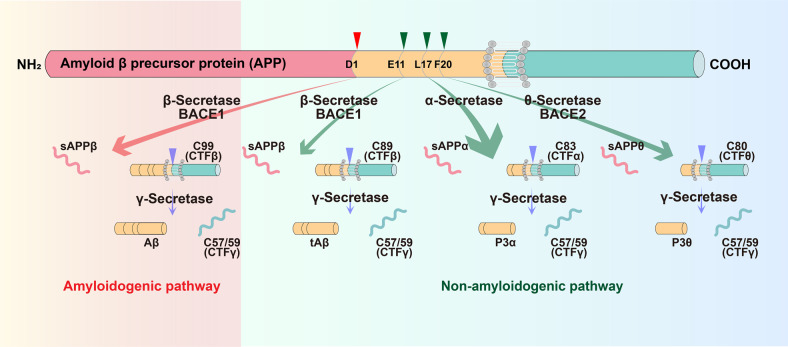
“Both genetic (e.g., ApoE4, TREM2) and non-genetic (e.g. diabetes, obesity, stroke, or physical inactivity) risk factors for late-onset sporadic Alzheimer’s disease (SAD) have also been identified to increase Aβ generation and/or reduce Aβ clearance for its accumulation.4,41–45”
§ Amyloid β-based therapy for Alzheimer’s disease: challenges, successes and future > Introduction
What the sources say
- Partly supportedcites [4] Liu, X. et al. Clusterin transduces Alzheimer-risk signals to amyloidogenesis. Signal Transduct. Target Ther. 7, 325 (2022). sourceExperimental — accuracy not yet measured
The paper’s main text (page unavailable) reports that ageing, type-2-diabetes models and stroke models upregulate CLU, and concludes that CLU inhibits Aβ degradation and promotes Aβ generation. It does not establish that the cited examples ApoE4, TREM2, obesity or physical inactivity act through those mechanisms; its mention of AD-associated CLU variants does not establish the genetic part of the claim. (LLM, conf=0.86)
- Partly supportedcites [41] DeMattos, R. B. et al. ApoE and clusterin cooperatively suppress Abeta levels and deposition: evidence that ApoE regulates extracellular Abeta metabolism in vivo. Neuron 41, 193–202 (2004). sourceExperimental — accuracy not yet measured
The Introduction identifies ApoE ε4 as a genetic risk factor for AD, and the paper reports that apoE affects soluble Aβ metabolism in mice. It does not establish that ApoE4 reduces Aβ clearance, or address TREM2 or the listed non-genetic risk factors. The Introduction also says there was no definitive evidence linking increased Aβ production to late-onset AD. (LLM, conf=0.87)
- Not checked yetcites [42] Ridler, C. Alzheimer Disease: Misfolded diabetes-mellitus peptide seeds amyloid-beta aggregation. Nat. Rev. Neurol. 13, 128 (2017). source
- Not checked yetcites [43] Fewlass, D. C. et al. Obesity-related leptin regulates Alzheimer’s Abeta. FASEB J. 18, 1870–1878 (2004). source
- Not checked yetcites [44] Ashok, A., Rai, N. K., Tripathi, S. & Bandyopadhyay, S. Exposure to As-, Cd-, and Pb-mixture induces Abeta, amyloidogenic APP processing and cognitive impairments via oxidative stress-dependent neuroinflammation in young rats. Toxicol. Sci. 143, 64–80 (2015). source
- Not checked yetcites [45] Brown, B. M. et al. Physical activity and amyloid-beta plasma and brain levels: results from the Australian Imaging, Biomarkers and Lifestyle Study of Ageing. Mol. Psychiatry 18, 875–881 (2013). source
plaindirect- Asserted: passes — The authors put it forward as true.
- Checkable: passes — It can be checked against evidence.
- Load-bearing: passes — The paper’s conclusions depend on it.
- Based: passes — The paper gives a reason why it holds.
- Partly supported
The sources with a verdict support this claim; the rest weren’t checked yet, have no full text we could read, or their verdicts aren’t rated yet.
In the paper
“Down syndrome (DS) patients with trisomy-21 having extra copy of APP gene develop typical Alzheimer’s neuropathology including amyloid plaques and neurofibrillary tangles.35–37”
§ Amyloid β-based therapy for Alzheimer’s disease: challenges, successes and future > Introduction
What the sources say
- Not checked yetcites [35] Glenner, G. G. & Wong, C. W. Alzheimer’s disease and Down’s syndrome: sharing of a unique cerebrovascular amyloid fibril protein. Biochem Biophys. Res Commun. 122, 1131–1135 (1984). source
- Not checked yetcites [36] Burger, P. C. & Vogel, F. S. The development of the pathologic changes of Alzheimer’s disease and senile dementia in patients with Down’s syndrome. Am. J. Pathol. 73, 457–476 (1973).
- Supportedcites [37] Lemere, C. A. et al. Sequence of deposition of heterogeneous amyloid beta-peptides and APO E in Down syndrome: implications for initial events in amyloid plaque formation. Neurobiol. Dis. 3, 16–32 (1996). source
The Introduction states that the APP gene is on chromosome 21 and is overexpressed in trisomy 21. It also says that most Down syndrome patients over 40 develop classical Alzheimer’s neuropathology, including amyloid-bearing plaques and neurofibrillary tangles; this age qualification matters because the changes develop over time. (LLM, conf=0.94)
plaindirect- Asserted: passes — The authors put it forward as true.
- Checkable: passes — It can be checked against evidence.
- Load-bearing: passes — The paper’s conclusions depend on it.
- Based: passes — The paper gives a reason why it holds.
The cited sources support only part of this claim — read each source’s verdict below.
In the paper
“Inhibition of APP changed the expressions of post-synaptic proteins such as GluA1subunit of AMPA receptors, suggesting the involvement of APP in synaptic formation.391”
§ Amyloid β-based therapy for Alzheimer’s disease: challenges, successes and future > The stumbling block of anti-Aβ therapy > Disturbed physiological functions of soluble Aβ
What the sources say
- Partly supportedcites [391] Martinsson, I. et al. APP depletion alters selective pre- and post-synaptic proteins. Mol. Cell Neurosci. 95, 86–95 (2019). sourceExperimental — accuracy not yet measured
The knockdown results report increased GluA1, a post-synaptic AMPA receptor subunit, after APP depletion. The Discussion interprets this as evidence that APP affects synaptic composition, not specifically synaptic formation; the knockdown was deliberately performed after synapses had formed. (LLM, conf=0.88)
hedgeddirect- Asserted: passes — The authors put it forward as true.
- Checkable: passes — It can be checked against evidence.
- Load-bearing: passes — The paper’s conclusions depend on it.
- Based: passes — The paper gives a reason why it holds.
- Partly supported
The cited sources support only part of this claim — read each source’s verdict below.
In the paper
“It has been identified that ATG5-dependent autophagy regulates APP degradation.493”
§ Amyloid β-based therapy for Alzheimer’s disease: challenges, successes and future > Perspective and future direction > Combination therapy and mechanism-based therapy
What the sources say
- Partly supportedcites [493] Cavieres, V. A. et al. Tetrahydrohyperforin inhibits the proteolytic processing of amyloid precursor protein and enhances its degradation by Atg5-dependent autophagy. PLoS One 10, e0136313 (2015). sourceExperimental — accuracy not yet measured
The Results section reports that Atg5-dependent autophagy facilitates degradation of immature APP following IDN5706 treatment. It also says APP was not significantly degraded by autophagy under basal conditions, so the unqualified claim is broader than the finding. (LLM, conf=0.86)
plaindirect- Asserted: passes — The authors put it forward as true.
- Checkable: passes — It can be checked against evidence.
- Load-bearing: unclear — It is unclear whether the paper’s conclusions depend on it.
- Based: passes — The paper gives a reason why it holds.
- Partly supported
Every source the paper cites for this claim was checked and supports it.
In the paper
“A change in CSF Aβ levels can be detected even up to 25 years before a patient begins to show symptoms.478”
§ Amyloid β-based therapy for Alzheimer’s disease: challenges, successes and future > The stumbling block of anti-Aβ therapy > Late application
What the sources say
- Supportedcites [478] McDade, E. et al. Longitudinal cognitive and biomarker changes in dominantly inherited Alzheimer disease. Neurology 91, e1295–e1306 (2018). source
The Results report that Aβ showed detectable change beginning at least 25 years before estimated symptom onset and identify CSF Aβ42 as one of the measures. The Discussion says CSF Aβ42 and PET amyloid began changing at nearly the same time. This timing is an estimate from people with dominantly inherited Alzheimer disease, not an observation of each patient's eventual symptom onset. (LLM, conf=0.90)
plaincorrelational- Asserted: passes — The authors put it forward as true.
- Checkable: passes — It can be checked against evidence.
- Load-bearing: passes — The paper’s conclusions depend on it.
- Based: passes — The paper gives a reason why it holds.
- Supported
The cited sources support only part of this claim — read each source’s verdict below.
In the paper
“Abundant evidence from animal and clinical studies shows a correlation between ocular pathology and AD development.553–555”
§ Amyloid β-based therapy for Alzheimer’s disease: challenges, successes and future > Perspective and future direction > Identification of early Alzheimer’s biomarkers
What the sources say
- Partly supportedcites [553] Tsai, Y. et al. Ocular changes in TgF344-AD rat model of Alzheimer’s disease. Invest Ophthalmol. Vis. Sci. 55, 523–534 (2014). sourceExperimental — accuracy not yet measured
The Abstract describes increasing evidence of retinal changes in AD patients, and the Implications section reports ocular pathology in AD-model rats and choroidal thinning in a limited number of human AD retinas. These passages support an association between ocular pathology and AD, but do not establish a correlation with AD development over time; the authors say further study is needed to relate the ocular changes to changes in the brain. (LLM, conf=0.82)
- Not checked yetcites [554] Chang, L. Y. et al. Alzheimer’s disease in the human eye. Clinical tests that identify ocular and visual information processing deficit as biomarkers. Alzheimers Dement 10, 251–261 (2014). source
- Partly supportedcites [555] Frost, S. et al. Retinal vascular biomarkers for early detection and monitoring of Alzheimer’s disease. Transl. Psychiatry 3, e233 (2013). sourceExperimental — accuracy not yet measured
The Discussion (page not provided) reports retinal vascular abnormalities in people with AD and an association between some retinal abnormalities and brain amyloid plaque burden. This supports a clinical association, but the paper does not present animal-study evidence or establish that ocular pathology tracks AD development over time; it says longitudinal studies are planned. (LLM, conf=0.85)
boostedcorrelational- Asserted: passes — The authors put it forward as true.
- Checkable: passes — It can be checked against evidence.
- Load-bearing: unclear — It is unclear whether the paper’s conclusions depend on it.
- Based: passes — The paper gives a reason why it holds.
- Partly supported
None of the sources cited for this claim have been checked yet.
In the paper
“There is an elevation of Aβ peptides during traumatic brain injury (TBI), indicating that Aβ may belong to the pathological cascade of TBI or be an agent for improving recovery.395,396”
§ Amyloid β-based therapy for Alzheimer’s disease: challenges, successes and future > The stumbling block of anti-Aβ therapy > Disturbed physiological functions of soluble Aβ
What the sources say
- Not checked yetcites [395] Chen, X. H., Johnson, V. E., Uryu, K., Trojanowski, J. Q. & Smith, D. H. A lack of amyloid beta plaques despite persistent accumulation of amyloid beta in axons of long-term survivors of traumatic brain injury. Brain Pathol. 19, 214–223 (2009). source
- Not checked yetcites [396] Pajoohesh-Ganji, A. et al. Inhibition of amyloid precursor protein secretases reduces recovery after spinal cord injury. Brain Res. 1560, 73–82 (2014). source
plaincorrelational- Asserted: passes — The authors put it forward as true.
- Checkable: passes — It can be checked against evidence.
- Load-bearing: unclear — It is unclear whether the paper’s conclusions depend on it.
- Based: passes — The paper gives a reason why it holds.
In the paper
“Animal models with the expression of human Aβ showed stronger resistance to bacterial and viral infections.365”
§ Amyloid β-based therapy for Alzheimer’s disease: challenges, successes and future > The stumbling block of anti-Aβ therapy > Disturbed physiological functions of soluble Aβ
What the sources say
- Not checked yetcites [365] Kumar, D. K. et al. Amyloid-beta peptide protects against microbial infection in mouse and worm models of Alzheimer’s disease. Sci. Transl. Med 8, 340ra372 (2016). source
plaindirect- Asserted: passes — The authors put it forward as true.
- Checkable: passes — It can be checked against evidence.
- Load-bearing: unclear — It is unclear whether the paper’s conclusions depend on it.
- Based: passes — The paper gives a reason why it holds.
In the paper
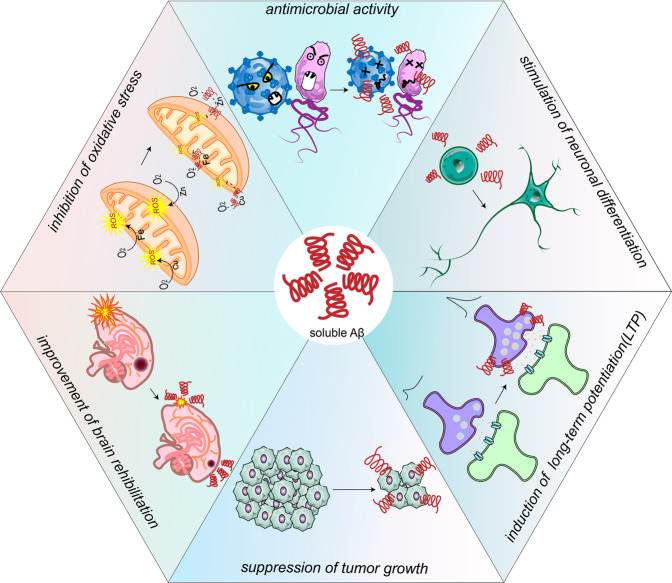
“Aβ40 peptides were intracerebroventricularly injected into TBI-impacted BACE1–/– mice, which significantly improved motor memory deficits in these injured mice, suggesting the protective effect of Aβ.362”
§ Amyloid β-based therapy for Alzheimer’s disease: challenges, successes and future > The stumbling block of anti-Aβ therapy > Disturbed physiological functions of soluble Aβ
What the sources say
- Not checked yetcites [362] Mannix, R. C., Zhang, J., Berglass, J., Qui, J. & Whalen, M. J. Beneficial effect of amyloid beta after controlled cortical impact. Brain Inj. 27, 743–748 (2013). source
plaindirect- Asserted: passes — The authors put it forward as true.
- Checkable: passes — It can be checked against evidence.
- Load-bearing: passes — The paper’s conclusions depend on it.
- Based: passes — The paper gives a reason why it holds.
In the paper
“reduction of endogenous Aβ levels by using γ-secretase inhibitor DAPT or deleting the enzyme BACE1 attenuated the functional recovery in mice with spinal cord injury (SCI).396”
§ Amyloid β-based therapy for Alzheimer’s disease: challenges, successes and future > The stumbling block of anti-Aβ therapy > Disturbed physiological functions of soluble Aβ
What the sources say
- Not checked yetcites [396] Pajoohesh-Ganji, A. et al. Inhibition of amyloid precursor protein secretases reduces recovery after spinal cord injury. Brain Res. 1560, 73–82 (2014). source
plaindirect- Asserted: passes — The authors put it forward as true.
- Checkable: passes — It can be checked against evidence.
- Load-bearing: passes — The paper’s conclusions depend on it.
- Based: passes — The paper gives a reason why it holds.
- It may state two separate claims as one. 79
- Probably not a substantial claim. 16
- The quote only partly states this claim. 1
The cited sources support only part of this claim — read each source’s verdict below.
In the paper
“Besides LY2886721, many other candidates have also reached late stages of clinical trials, including atabecestat (Phase 2/3),305 elenbecestat (Phase 3),306 lanabecestat (Phase 2/3)307,308 and umibecestat (Phase 2/3).309 However, all of them have failed to receive final approval to reach the market.”
§ Amyloid β-based therapy for Alzheimer’s disease: challenges, successes and future > The progression of Anti-Aβ therapy > BACE1 inhibitors
What the sources say
- Not checked yetcites [305] Sperling, R. et al. Findings of efficacy, safety, and biomarker outcomes of atabecestat in preclinical Alzheimer disease: A truncated randomized phase 2b/3 clinical trial. JAMA Neurol. 78, 293–301 (2021). source
- Not checked yetcites [306] Madrasi, K. et al. Systematic in silico analysis of clinically tested drugs for reducing amyloid-beta plaque accumulation in Alzheimer’s disease. Alzheimers Dement 17, 1487–1498 (2021). source
- Not checked yetcites [307] Sakamoto, K. et al. BACE1 inhibitor lanabecestat (AZD3293) in a phase 1 study of healthy Japanese subjects: Pharmacokinetics and effects on plasma and cerebrospinal fluid abeta peptides. J. Clin. Pharm. 57, 1460–1471 (2017). source
- Partly supportedcites [308] Zimmer, J. A. et al. Lanabecestat: Neuroimaging results in early symptomatic Alzheimer’s disease. Alzheimers Dement (N. Y) 7, e12123 (2021). sourceExperimental — accuracy not yet measured
The Background reports that lanabecestat reached Phase 2/3 and Phase 3 trials, which were stopped early for futility. It also reports no clinical benefit, but does not state whether lanabecestat received final regulatory approval or reached the market. The other named drugs are not the part of the sentence attached to this citation. (LLM, conf=0.84)
- Partly supportedcites [309] Neumann, U. et al. The BACE-1 inhibitor CNP520 for prevention trials in Alzheimer’s disease. EMBO Mol. Med. 10, e9316 (2018). sourceExperimental — accuracy not yet measured
The Additional information section (page unavailable) says CNP520 was being tested in two long-term Generation prevention studies, supporting the claim that the candidate had advanced to further clinical trials. The paper does not call CNP520 “umibecestat,” specify that those studies were Phase 2/3, or report a later failure to obtain market approval. The other named candidates have separate citations in the citing sentence and are not assessed against this source. (LLM, conf=0.74)
plain- Asserted: passes — The authors put it forward as true.
- Checkable: passes — It can be checked against evidence.
- Load-bearing: unclear — It is unclear whether the paper’s conclusions depend on it.
- Based: passes — The paper gives a reason why it holds.
It may state two separate claims as one.
In the paper
“Aβ treatment was found to effectively inhibit the production of proinflammatory T helper cells (TH1 and TH17) and the related cytokines including IL-6, IFN-γ and IL-17, which improved motor paralysis in EAE animal models.”
§ Amyloid β-based therapy for Alzheimer’s disease: challenges, successes and future > The stumbling block of anti-Aβ therapy > Disturbed physiological functions of soluble Aβ
What the sources say
- Not checked yetcites [397] Grant, J. L. et al. Reversal of paralysis and reduced inflammation from peripheral administration of beta-amyloid in TH1 and TH17 versions of experimental autoimmune encephalomyelitis. Sci. Transl. Med 4, 145ra105 (2012). source
plaindirect- Asserted: passes — The authors put it forward as true.
- Checkable: passes — It can be checked against evidence.
- Load-bearing: unclear — It is unclear whether the paper’s conclusions depend on it.
- Based: passes — The paper gives a reason why it holds.
It may state two separate claims as one.
In the paper
“Aβ peptides also bound to fungal cells and stimulated the phagocytosis of microglia.408”
§ Amyloid β-based therapy for Alzheimer’s disease: challenges, successes and future > The stumbling block of anti-Aβ therapy > Disturbed physiological functions of soluble Aβ
What the sources say
- Not checked yetcites [408] Wu, Y. et al. Microglia and amyloid precursor protein coordinate control of transient Candida cerebritis with memory deficits. Nat. Commun. 10, 58 (2019). source
plaindirect- Asserted: passes — The authors put it forward as true.
- Checkable: passes — It can be checked against evidence.
- Load-bearing: unclear — It is unclear whether the paper’s conclusions depend on it.
- Based: passes — The paper gives a reason why it holds.
It may state two separate claims as one.
None of the sources cited for this claim have been checked yet.
In the paper
“Aβ42 induced oxidative stress and decreased the expression of X-linked inhibitor of apoptosis (XIAP), which directly inhibited key proteases of the apoptosis pathway including caspase 3, 7 and 9.414,415”
§ Amyloid β-based therapy for Alzheimer’s disease: challenges, successes and future > The stumbling block of anti-Aβ therapy > Disturbed physiological functions of soluble Aβ
What the sources say
- Not checked yetcites [414] Yamamori, H., Tanaka, T., Kudo, T. & Takeda, M. Amyloid-beta down-regulates XIAP expression in human SH-SY5Y neuroblastoma cells. Neuroreport 15, 851–854 (2004). source
- Not checked yetcites [415] Chaudhary, A. K. et al. A potential role of X-linked inhibitor of apoptosis protein in mitochondrial membrane permeabilization and its implication in cancer therapy. Drug Disco. Today 21, 38–47 (2016). source
plaindirect- Asserted: passes — The authors put it forward as true.
- Checkable: passes — It can be checked against evidence.
- Load-bearing: unclear — It is unclear whether the paper’s conclusions depend on it.
- Based: passes — The paper gives a reason why it holds.
It may state two separate claims as one.
In the paper
“brain tissues from AD patients show higher anti-microbial activity than samples from age-matched non-AD individuals, which was correlated with Aβ levels in brain.398”
§ Amyloid β-based therapy for Alzheimer’s disease: challenges, successes and future > The stumbling block of anti-Aβ therapy > Disturbed physiological functions of soluble Aβ
What the sources say
- Not checked yetcites [398] Soscia, S. J. et al. The Alzheimer’s disease-associated amyloid beta-protein is an antimicrobial peptide. PLoS One 5, e9505 (2010). source
plaincorrelational- Asserted: passes — The authors put it forward as true.
- Checkable: passes — It can be checked against evidence.
- Load-bearing: unclear — It is unclear whether the paper’s conclusions depend on it.
- Based: passes — The paper gives a reason why it holds.
It may state two separate claims as one.
In the paper
“Aβ40 mainly drived differentiation of NPCs into neurons, differing from Aβ42, which increased glia markers in NPCs.359”
§ Amyloid β-based therapy for Alzheimer’s disease: challenges, successes and future > The stumbling block of anti-Aβ therapy > Disturbed physiological functions of soluble Aβ
What the sources say
- Not checked yetcites [359] Chen, Y. & Dong, C. Abeta40 promotes neuronal cell fate in neural progenitor cells. Cell Death Differ. 16, 386–394 (2009). source
plaindirect- Asserted: passes — The authors put it forward as true.
- Checkable: passes — It can be checked against evidence.
- Load-bearing: unclear — It is unclear whether the paper’s conclusions depend on it.
- Based: passes — The paper gives a reason why it holds.
It may state two separate claims as one.
In the paper
“verteporfin only bound with the APP transmembrane domain rather than the transmembrane domain of the Notch-1 receptor, indicating its inhibitory effect is in a C99-specific manner.437”
§ Amyloid β-based therapy for Alzheimer’s disease: challenges, successes and future > The stumbling block of anti-Aβ therapy > Insufficient specificity
What the sources say
- Not checked yetcites [437] Castro, M. A. et al. Verteporfin is a substrate-selective gamma-secretase inhibitor that binds the amyloid precursor protein transmembrane domain. J. Biol. Chem. 298, 101792 (2022). source
hedgeddirect- Asserted: passes — The authors put it forward as true.
- Checkable: passes — It can be checked against evidence.
- Load-bearing: passes — The paper’s conclusions depend on it.
- Based: passes — The paper gives a reason why it holds.
It may state two separate claims as one.
None of the sources cited for this claim have been checked yet.
In the paper
“Aβ42 stimulated the expression of Bax, which induced cell apoptosis and was commonly observed in many cancers.416,417”
§ Amyloid β-based therapy for Alzheimer’s disease: challenges, successes and future > The stumbling block of anti-Aβ therapy > Disturbed physiological functions of soluble Aβ
What the sources say
- Not checked yetcites [416] Clementi, M. E. et al. Alzheimer’s amyloid beta-peptide (1–42) induces cell death in human neuroblastoma via bax/bcl-2 ratio increase: an intriguing role for methionine 35. Biochem Biophys. Res. Commun. 342, 206–213 (2006). source
- Not checked yetcites [417] Liu, Z. et al. Direct activation of Bax protein for cancer therapy. Med Res Rev. 36, 313–341 (2016). source
plaindirect- Asserted: passes — The authors put it forward as true.
- Checkable: passes — It can be checked against evidence.
- Load-bearing: unclear — It is unclear whether the paper’s conclusions depend on it.
- Based: passes — The paper gives a reason why it holds.
It may state two separate claims as one.
In the paper
“the damaged host cells released nucleic acids containing Aβ aggregates, which were immunogenic and elicited the secretion of type I interferons (IFNs) by adjacent microglia to accomplish the antiviral response.406”
§ Amyloid β-based therapy for Alzheimer’s disease: challenges, successes and future > The stumbling block of anti-Aβ therapy > Disturbed physiological functions of soluble Aβ
What the sources say
- Not checked yetcites [406] Di Domizio, J. et al. Nucleic acid-containing amyloid fibrils potently induce type I interferon and stimulate systemic autoimmunity. Proc. Natl Acad. Sci. USA 109, 14550–14555 (2012). source
plaindirect- Asserted: passes — The authors put it forward as true.
- Checkable: passes — It can be checked against evidence.
- Load-bearing: unclear — It is unclear whether the paper’s conclusions depend on it.
- Based: passes — The paper gives a reason why it holds.
It may state two separate claims as one.
In the paper
“genetic deletion of CatB significantly increased Aβ42 burden and worsened amyloid deposition in AD mice, whereas overexpression of CatB reduced amyloid plaques.497”
§ Amyloid β-based therapy for Alzheimer’s disease: challenges, successes and future > Perspective and future direction > Combination therapy and mechanism-based therapy
What the sources say
- Not checked yetcites [497] Mueller-Steiner, S. et al. Antiamyloidogenic and neuroprotective functions of cathepsin B: implications for Alzheimer’s disease. Neuron 51, 703–714 (2006). source
boosteddirect- Asserted: passes — The authors put it forward as true.
- Checkable: passes — It can be checked against evidence.
- Load-bearing: passes — The paper’s conclusions depend on it.
- Based: passes — The paper gives a reason why it holds.
It may state two separate claims as one.
None of the sources cited for this claim have been checked yet.
In the paper
“Treatment with rapamycin significantly stimulated autophagy associated with markedly reduced both intracellular Aβ and extracellular amyloid deposition in brains as well as improved cognitive deficits in AD mice.503,504”
§ Amyloid β-based therapy for Alzheimer’s disease: challenges, successes and future > Perspective and future direction > Combination therapy and mechanism-based therapy
What the sources say
- Not checked yetcites [503] Caccamo, A., Majumder, S., Richardson, A., Strong, R. & Oddo, S. Molecular interplay between mammalian target of rapamycin (mTOR), amyloid-beta, and Tau: effects on cognitive impairments. J. Biol. Chem. 285, 13107–13120 (2010). source
- Not checked yetcites [504] Majumder, S., Richardson, A., Strong, R. & Oddo, S. Inducing autophagy by rapamycin before, but not after, the formation of plaques and tangles ameliorates cognitive deficits. PLoS One 6, e25416 (2011). source
plaindirect- Asserted: passes — The authors put it forward as true.
- Checkable: passes — It can be checked against evidence.
- Load-bearing: passes — The paper’s conclusions depend on it.
- Based: passes — The paper gives a reason why it holds.
It may state two separate claims as one.
In the paper
“PET imaging allows us to visualize Aβ fibrils in patients, which accumulate in an Alzheimer’s brain as early as 15 years before the onset of symptoms.477”
§ Amyloid β-based therapy for Alzheimer’s disease: challenges, successes and future > The stumbling block of anti-Aβ therapy > Late application
What the sources say
- Not checked yetcites [477] Benzinger, T. L. et al. Regional variability of imaging biomarkers in autosomal dominant Alzheimer’s disease. Proc. Natl. Acad. Sci. USA 110, E4502–E4509 (2013). source
plaincorrelational- Asserted: passes — The authors put it forward as true.
- Checkable: passes — It can be checked against evidence.
- Load-bearing: passes — The paper’s conclusions depend on it.
- Based: passes — The paper gives a reason why it holds.
It may state two separate claims as one.
In the paper
“Although crenezumab did not significantly improve cognitive impairment in the participants, it showed some favorable effects (Alzheimer’s Association International Conference, 2022).”
§ Amyloid β-based therapy for Alzheimer’s disease: challenges, successes and future > The stumbling block of anti-Aβ therapy > Late application
What the sources say
- Not checked yetcites Alzheimer’s Association International Conference, 2022
plain- Asserted: passes — The authors put it forward as true.
- Checkable: passes — It can be checked against evidence.
- Load-bearing: unclear — It is unclear whether the paper’s conclusions depend on it.
- Based: passes — The paper gives a reason why it holds.
It may state two separate claims as one.
In the paper
“The data showed that gantenerumab had a positive impact on the reduction of cortical amyloid, leading to its further study by an exploratory open-label extension (OLE).338”
§ Amyloid β-based therapy for Alzheimer’s disease: challenges, successes and future > The stumbling block of anti-Aβ therapy > Late application
What the sources say
- Not checked yetcites [338] Salloway, S. et al. A trial of gantenerumab or solanezumab in dominantly inherited Alzheimer’s disease. Nat. Med. 27, 1187–1196 (2021). source
plaindirect- Asserted: passes — The authors put it forward as true.
- Checkable: passes — It can be checked against evidence.
- Load-bearing: unclear — It is unclear whether the paper’s conclusions depend on it.
- Based: passes — The paper gives a reason why it holds.
It may state two separate claims as one.
In the paper
“antibodies with Fc fragment reduced Aβ burden but also induced the engulgment of neuronal synapses by activating complement receptor 3 (CR3) or Fcγ receptor IIB (FcγRIIB), which exacerbates cognitive impairment in AD mice.440”
§ Amyloid β-based therapy for Alzheimer’s disease: challenges, successes and future > The stumbling block of anti-Aβ therapy > Insufficient specificity
What the sources say
- Not checked yetcites [440] Sun, X. Y. et al. Fc effector of anti-Abeta antibody induces synapse loss and cognitive deficits in Alzheimer’s disease-like mouse model. Signal Transduct. Target Ther. 8, 30 (2023). source
plaindirect- Asserted: passes — The authors put it forward as true.
- Checkable: passes — It can be checked against evidence.
- Load-bearing: passes — The paper’s conclusions depend on it.
- Based: passes — The paper gives a reason why it holds.
It may state two separate claims as one.
None of the sources cited for this claim have been checked yet.
In the paper
“AD model mice with ATG7 KO showed deficient autophagy associated with drastically reduced extracellular Aβ plaques and markedly accumulated intraneuronal Aβ, suggesting that Aβ secretion was compromised due to the impaired autophagy.495,496”
§ Amyloid β-based therapy for Alzheimer’s disease: challenges, successes and future > Perspective and future direction > Combination therapy and mechanism-based therapy
What the sources say
- Not checked yetcites [495] Nilsson, P. et al. Abeta secretion and plaque formation depend on autophagy. Cell Rep. 5, 61–69 (2013). source
- Not checked yetcites [496] Nilsson, P. et al. Autophagy-related protein 7 deficiency in amyloid beta (Abeta) precursor protein transgenic mice decreases Abeta in the multivesicular bodies and induces Abeta accumulation in the Golgi. Am. J. Pathol. 185, 305–313 (2015). source
hedgedconditional- Asserted: passes — The authors put it forward as true.
- Checkable: passes — It can be checked against evidence.
- Load-bearing: passes — The paper’s conclusions depend on it.
- Based: passes — The paper gives a reason why it holds.
It may state two separate claims as one.
In the paper
“A recent study also suggests that depressive symptoms in middle-aged individuals correlates with time to onset of cognitive decline, suggesting the role of psychiatric disorders as early markers of Alzheimer’s disease.556”
§ Amyloid β-based therapy for Alzheimer’s disease: challenges, successes and future > Perspective and future direction > Identification of early Alzheimer’s biomarkers
What the sources say
- Not checked yetcites [556] Chan, C. K. et al. Depressive symptoms and CSF Alzheimer’s disease biomarkers in relation to clinical symptom onset of mild cognitive impairment. Alzheimers Dement (Amst.) 12, e12106 (2020).
hedgedcorrelational- Asserted: passes — The authors put it forward as true.
- Checkable: passes — It can be checked against evidence.
- Load-bearing: unclear — It is unclear whether the paper’s conclusions depend on it.
- Based: passes — The paper gives a reason why it holds.
It may state two separate claims as one.
In the paper
“Unlike cell models, AD brain organoids are capable of generating the blood-brain barrier (BBB) as well as connections with other organs.535”
§ Amyloid β-based therapy for Alzheimer’s disease: challenges, successes and future > Perspective and future direction > Patient-based research models
What the sources say
- Not checked yetcites [535] Cazzaniga, A., Fedele, G., Castiglioni, S. & Maier, J. A. The presence of blood-brain barrier modulates the response to magnesium salts in human brain organoids. Int J. Mol. Sci. 23, 5133 (2022). source
plain- Asserted: passes — The authors put it forward as true.
- Checkable: passes — It can be checked against evidence.
- Load-bearing: passes — The paper’s conclusions depend on it.
- Based: passes — The paper gives a reason why it holds.
It may state two separate claims as one.
None of the sources cited for this claim have been checked yet.
In the paper
“Three-dimensional brain organoids derived from human pluripotent stem cells (hPSCs) have shown significant advantages in modeling neurological disorders including autism, microcephaly and Parkinson’s disease.528–530”
§ Amyloid β-based therapy for Alzheimer’s disease: challenges, successes and future > Perspective and future direction > Patient-based research models
What the sources say
- Not checked yetcites [528] Lancaster, M. A. et al. Cerebral organoids model human brain development and microcephaly. Nature 501, 373–379 (2013). source
- Not checked yetcites [529] Chan, W. K., Griffiths, R., Price, D. J. & Mason, J. O. Cerebral organoids as tools to identify the developmental roots of autism. Mol. Autism 11, 58 (2020). source
- Not checked yetcites [530] Smits, L. M. et al. Modeling Parkinson’s disease in midbrain-like organoids. NPJ Parkinsons Dis. 5, 5 (2019). source
plaincorrelational- Asserted: passes — The authors put it forward as true.
- Checkable: passes — It can be checked against evidence.
- Load-bearing: fails — The paper’s conclusions may not depend on it.
- Based: passes — The paper gives a reason why it holds.
Probably not a substantial claim. The paper’s conclusions may not depend on it.
In the paper
“the CSF neurogranin increases exclusively in AD patients and has not been observed in other neurodegenerative disorders, such as frontotemporal dementia or Parkinson’s disease.550”
§ Amyloid β-based therapy for Alzheimer’s disease: challenges, successes and future > Perspective and future direction > Identification of early Alzheimer’s biomarkers
What the sources say
- Not checked yetcites [550] Wellington, H. et al. Increased CSF neurogranin concentration is specific to Alzheimer disease. Neurology 86, 829–835 (2016). source
plaindirect- Asserted: passes — The authors put it forward as true.
- Checkable: passes — It can be checked against evidence.
- Load-bearing: unclear — It is unclear whether the paper’s conclusions depend on it.
- Based: passes — The paper gives a reason why it holds.
It may state two separate claims as one.
In the paper
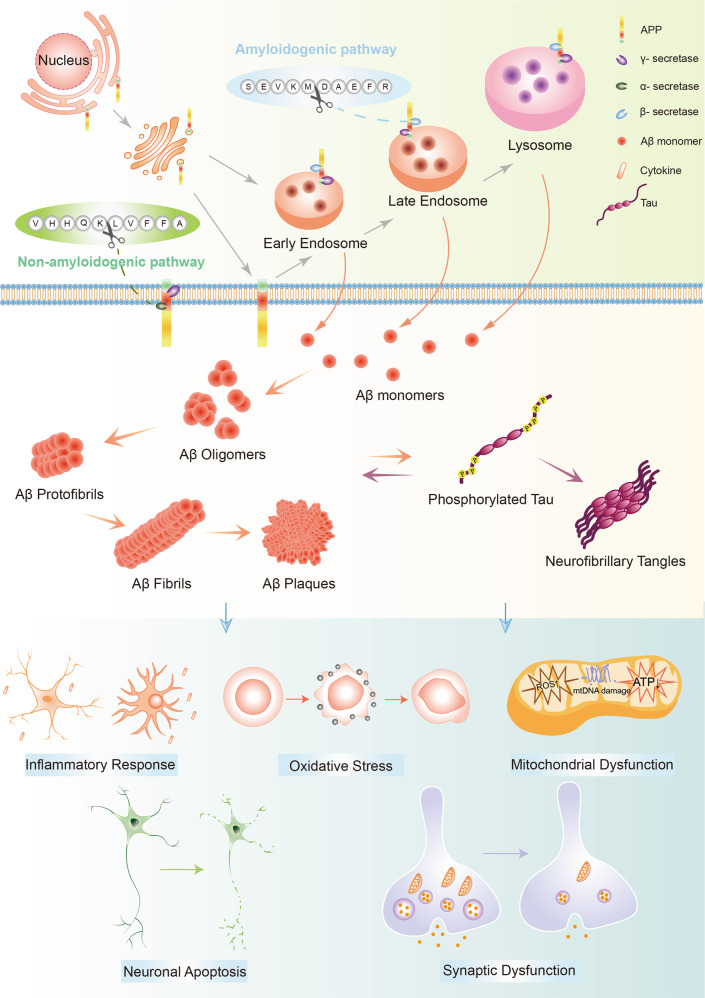
“AβOs directly disturb the activity of NMDARs and impair NMDAR-mediated signaling pathways (e.g. Wnt/β-catenin signaling pathway), leading to synaptic loss and the reduction of spinal density.79”
§ Amyloid β-based therapy for Alzheimer’s disease: challenges, successes and future > The history of amyloid cascade hypothesis (Fig. 2) > Pathological role of Aβ aggregates (Fig. 3)
What the sources say
- Not checked yetcites [79] Magdesian, M. H. et al. Amyloid-beta binds to the extracellular cysteine-rich domain of Frizzled and inhibits Wnt/beta-catenin signaling. J. Biol. Chem. 283, 9359–9368 (2008). source
plaindirect- Asserted: passes — The authors put it forward as true.
- Checkable: passes — It can be checked against evidence.
- Load-bearing: unclear — It is unclear whether the paper’s conclusions depend on it.
- Based: passes — The paper gives a reason why it holds.
It may state two separate claims as one.
None of the sources cited for this claim have been checked yet.
In the paper
“AβOs induce AMPAR ubiquitination and degradation, leading to the loss of AMPARs followed by the suppression of synaptic transmission.85,86”
§ Amyloid β-based therapy for Alzheimer’s disease: challenges, successes and future > The history of amyloid cascade hypothesis (Fig. 2) > Pathological role of Aβ aggregates (Fig. 3)
What the sources say
- Not checked yetcites [85] Hsieh, H. et al. AMPAR removal underlies Abeta-induced synaptic depression and dendritic spine loss. Neuron 52, 831–843 (2006). source
- Not checked yetcites [86] Zhang, Y., Guo, O., Huo, Y., Wang, G. & Man, H. Y. Amyloid-beta Induces AMPA Receptor Ubiquitination and Degradation in Primary Neurons and Human Brains of Alzheimer’s Disease. J. Alzheimers Dis. 62, 1789–1801 (2018). source
plaindirect- Asserted: passes — The authors put it forward as true.
- Checkable: passes — It can be checked against evidence.
- Load-bearing: unclear — It is unclear whether the paper’s conclusions depend on it.
- Based: passes — The paper gives a reason why it holds.
It may state two separate claims as one.
In the paper
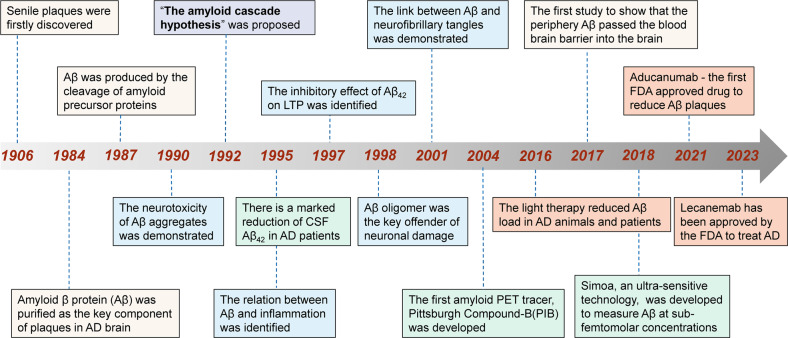
“Hardy and Higgins then proposed “the amyloid cascade hypothesis” in 1992, positing that Aβ deposits in the brain are the initiating event of AD pathogenesis, resulting in subsequent tau tangle formation, neuronal loss and dysfunction as well as cognitive decline.2”
§ Amyloid β-based therapy for Alzheimer’s disease: challenges, successes and future > The history of amyloid cascade hypothesis (Fig. 2)
What the sources say
- Not checked yetcites [2] Hardy, J. A. & Higgins, G. A. Alzheimer’s disease: the amyloid cascade hypothesis. Science 256, 184–185 (1992). source
plaindirect- Asserted: passes — The authors put it forward as true.
- Checkable: passes — It can be checked against evidence.
- Load-bearing: passes — The paper’s conclusions depend on it.
- Based: passes — The paper gives a reason why it holds.
Probably not a substantial claim.
In the paper
“growing evidence supports that the Aβ oligomers exist and exert their neurotoxicity independently of mature fibrils.61”
§ Amyloid β-based therapy for Alzheimer’s disease: challenges, successes and future > The history of amyloid cascade hypothesis (Fig. 2) > Pathological role of Aβ aggregates (Fig. 3)
What the sources say
- Not checked yetcites [61] Lambert, M. P. et al. Diffusible, nonfibrillar ligands derived from Abeta1-42 are potent central nervous system neurotoxins. Proc. Natl Acad. Sci. USA 95, 6448–6453 (1998). source
plaindirect- Asserted: passes — The authors put it forward as true.
- Checkable: passes — It can be checked against evidence.
- Load-bearing: passes — The paper’s conclusions depend on it.
- Based: passes — The paper gives a reason why it holds.
It may state two separate claims as one.
In the paper
“In AD, the structural integrity of the blood-CSF barrier is destroyed, resulting in aberrant Aβ clearance.29”
§ Amyloid β-based therapy for Alzheimer’s disease: challenges, successes and future > Introduction
What the sources say
- Not checked yetcites [29] Silverberg, G. D., Mayo, M., Saul, T., Rubenstein, E. & McGuire, D. Alzheimer’s disease, normal-pressure hydrocephalus, and senescent changes in CSF circulatory physiology: a hypothesis. Lancet Neurol. 2, 506–511 (2003). source
plaindirect- Asserted: passes — The authors put it forward as true.
- Checkable: passes — It can be checked against evidence.
- Load-bearing: unclear — It is unclear whether the paper’s conclusions depend on it.
- Based: passes — The paper gives a reason why it holds.
It may state two separate claims as one.
In the paper
“an APP mutation identified in the Icelandic population reduces Aβ production, leading to protection against cognitive decline in the elderly.40”
§ Amyloid β-based therapy for Alzheimer’s disease: challenges, successes and future > Introduction
What the sources say
- Not checked yetcites [40] Jonsson, T. et al. A mutation in APP protects against Alzheimer’s disease and age-related cognitive decline. Nature 488, 96–99 (2012). source
plaindirect- Asserted: passes — The authors put it forward as true.
- Checkable: passes — It can be checked against evidence.
- Load-bearing: passes — The paper’s conclusions depend on it.
- Based: passes — The paper gives a reason why it holds.
It may state two separate claims as one.
In the paper
“AβOs destroy Glu-recycling at the synapse by increasing glutamate release, reducing glutamate uptake and impairing glutamate transporters, which causes the overactivation of extrasyaptic NMDARs, ultimately leading to LTP suppression, LTD enhancement, and synaptic loss.80”
§ Amyloid β-based therapy for Alzheimer’s disease: challenges, successes and future > The history of amyloid cascade hypothesis (Fig. 2) > Pathological role of Aβ aggregates (Fig. 3)
What the sources say
- Not checked yetcites [80] Li, S. et al. Soluble Abeta oligomers inhibit long-term potentiation through a mechanism involving excessive activation of extrasynaptic NR2B-containing NMDA receptors. J. Neurosci. 31, 6627–6638 (2011). source
plaindirect- Asserted: passes — The authors put it forward as true.
- Checkable: passes — It can be checked against evidence.
- Load-bearing: unclear — It is unclear whether the paper’s conclusions depend on it.
- Based: passes — The paper gives a reason why it holds.
It may state two separate claims as one.
None of the sources cited for this claim have been checked yet.
In the paper
“It has been identified that the expressions of the two blood efflux transporters LRP1 and ABCB1 were reduced during AD, whereas the expression of the blood influx transporter RAGE is elevated.21,25”
§ Amyloid β-based therapy for Alzheimer’s disease: challenges, successes and future > Introduction
What the sources say
- Not checked yetcites [21] Sweeney, M. D., Sagare, A. P. & Zlokovic, B. V. Blood-brain barrier breakdown in Alzheimer disease and other neurodegenerative disorders. Nat. Rev. Neurol. 14, 133–150 (2018). source
- Not checked yetcites [25] Zlokovic, B. V. The blood-brain barrier in health and chronic neurodegenerative disorders. Neuron 57, 178–201 (2008). source
plaincorrelational- Asserted: passes — The authors put it forward as true.
- Checkable: passes — It can be checked against evidence.
- Load-bearing: unclear — It is unclear whether the paper’s conclusions depend on it.
- Based: passes — The paper gives a reason why it holds.
It may state two separate claims as one.
A conclusion the paper draws from its own results — it cites no other source for it, so there is none to check. The quote shows it is in the paper.
In the paper
“This series of positive results offers a fresh hope and indicates that Aβ-based therapy may be indeed the right direction to be followed.”
§ Amyloid β-based therapy for Alzheimer’s disease: challenges, successes and future > Introduction
hedgedconditional- Asserted: passes — The authors put it forward as true.
- Checkable: fails — It may be too vague to check against evidence.
- Load-bearing: passes — The paper’s conclusions depend on it.
- Based: passes — The paper gives a reason why it holds.
Probably not a substantial claim. It may be too vague to check against evidence.
None of the sources cited for this claim have been checked yet.
In the paper
“ANAVEX®2-73 (Blarcamesine), which targets sigma-1 and M1 muscarinic receptors, has also demonstrated its disease-modifying activity in AD transgenic mice (3xTg-AD), including reducing amyloid and tau pathologies as well as improving cognitive deficits.51,52”
§ Amyloid β-based therapy for Alzheimer’s disease: challenges, successes and future > Introduction
What the sources say
- Not checked yetcites [51] Lahmy, V. et al. Blockade of Tau hyperphosphorylation and Abeta(1)(-)(4)(2) generation by the aminotetrahydrofuran derivative ANAVEX2-73, a mixed muscarinic and sigma(1) receptor agonist, in a nontransgenic mouse model of Alzheimer’s disease. Neuropsychopharmacology 38, 1706–1723 (2013). source
- Not checked yetcites [52] Hampel, H. et al. A precision medicine framework using artificial intelligence for the identification and confirmation of genomic biomarkers of response to an Alzheimer’s disease therapy: Analysis of the blarcamesine (ANAVEX2-73) Phase 2a clinical study. Alzheimers Dement (N. Y.) 6, e12013 (2020). source
boosteddirect- Asserted: passes — The authors put it forward as true.
- Checkable: passes — It can be checked against evidence.
- Load-bearing: unclear — It is unclear whether the paper’s conclusions depend on it.
- Based: passes — The paper gives a reason why it holds.
It may state two separate claims as one.
None of the sources cited for this claim have been checked yet.
In the paper
“Aβ aggregates can directly interact with the lipid and cholesterol components of the cell membrane, forming channels and destroying membrane integrity and permeability, which allows Ca2+ entering into the cell, leading to LTP inhibition and neuronal death.62,63”
§ Amyloid β-based therapy for Alzheimer’s disease: challenges, successes and future > The history of amyloid cascade hypothesis (Fig. 2) > Pathological role of Aβ aggregates (Fig. 3)
What the sources say
- Not checked yetcites [62] Bode, D. C., Freeley, M., Nield, J., Palma, M. & Viles, J. H. Amyloid-beta oligomers have a profound detergent-like effect on lipid membrane bilayers, imaged by atomic force and electron microscopy. J. Biol. Chem. 294, 7566–7572 (2019). source
- Not checked yetcites [63] Yasumoto, T. et al. High molecular weight amyloid beta(1-42) oligomers induce neurotoxicity via plasma membrane damage. FASEB J. 33, 9220–9234 (2019). source
plaindirect- Asserted: passes — The authors put it forward as true.
- Checkable: passes — It can be checked against evidence.
- Load-bearing: unclear — It is unclear whether the paper’s conclusions depend on it.
- Based: passes — The paper gives a reason why it holds.
It may state two separate claims as one.
None of the sources cited for this claim have been checked yet.
In the paper
“Partial or completed deletion of TREM2 markedly reduced the number of Aβ-associated macrophages and increased cerebral Aβ plaques in AD model mice.174,175,178”
§ Amyloid β-based therapy for Alzheimer’s disease: challenges, successes and future > The history of amyloid cascade hypothesis (Fig. 2) > Pathological role of Aβ aggregates (Fig. 3)
What the sources say
- Not checked yetcites [174] Jay, T. R. et al. TREM2 deficiency eliminates TREM2+ inflammatory macrophages and ameliorates pathology in Alzheimer’s disease mouse models. J. Exp. Med 212, 287–295 (2015). source
- Not checked yetcites [175] Ulrich, J. D. et al. Altered microglial response to Abeta plaques in APPPS1-21 mice heterozygous for TREM2. Mol. Neurodegener. 9, 20 (2014). source
- Not checked yetcites [178] Jay, T. R. et al. Disease progression-dependent effects of TREM2 deficiency in a mouse model of Alzheimer’s disease. J. Neurosci. 37, 637–647 (2017). source
plaindirect- Asserted: passes — The authors put it forward as true.
- Checkable: passes — It can be checked against evidence.
- Load-bearing: unclear — It is unclear whether the paper’s conclusions depend on it.
- Based: passes — The paper gives a reason why it holds.
It may state two separate claims as one.
None of the sources cited for this claim have been checked yet.
In the paper
“Considering the greater availability of blood sampling, blood-based biomarkers become the primary goal in screening for and diagnosing AD in the population and many studies now focus on examining the role of peripheral Aβ and APP in AD development.267–269”
§ Amyloid β-based therapy for Alzheimer’s disease: challenges, successes and future > The history of amyloid cascade hypothesis (Fig. 2) > Discovery and development of Aβ-based biomarkers
What the sources say
- Not checked yetcites [267] Halle, M. et al. Methods to monitor monocytes-mediated amyloid-beta uptake and phagocytosis in the context of adjuvanted immunotherapies. J. Immunol. Methods 424, 64–79 (2015). source
- Not checked yetcites [268] Frenkel, D. et al. Scara1 deficiency impairs clearance of soluble amyloid-beta by mononuclear phagocytes and accelerates Alzheimer’s-like disease progression. Nat. Commun. 4, 2030 (2013). source
- Not checked yetcites [269] Cheng, Y., Tian, D. Y. & Wang, Y. J. Peripheral clearance of brain-derived Abeta in Alzheimer’s disease: pathophysiology and therapeutic perspectives. Transl. Neurodegener. 9, 16 (2020). source
plaincorrelational- Asserted: passes — The authors put it forward as true.
- Checkable: passes — It can be checked against evidence.
- Load-bearing: passes — The paper’s conclusions depend on it.
- Based: passes — The paper gives a reason why it holds.
It may state two separate claims as one.
In the paper
“Aβ produced by neurons induced the complement protein C3a released by astrocytes via NFκB signaling, which interacted with the receptors (C3aRs) on microglia and neurons to aggravate Aβ aggregate loads and cognitive impairment.191”
§ Amyloid β-based therapy for Alzheimer’s disease: challenges, successes and future > The history of amyloid cascade hypothesis (Fig. 2) > Pathological role of Aβ aggregates (Fig. 3)
What the sources say
- Not checked yetcites [191] Lian, H. et al. Astrocyte-microglia cross talk through complement activation modulates amyloid pathology in mouse models of Alzheimer’s disease. J. Neurosci. 36, 577–589 (2016). source
plaindirect- Asserted: passes — The authors put it forward as true.
- Checkable: passes — It can be checked against evidence.
- Load-bearing: unclear — It is unclear whether the paper’s conclusions depend on it.
- Based: passes — The paper gives a reason why it holds.
It may state two separate claims as one.
None of the sources cited for this claim have been checked yet.
In the paper
“Both biomarkers have been demonstrated to have high diagnostic and prognostic value as they start changing decades before the onset of dementia symptoms.259–266”
§ Amyloid β-based therapy for Alzheimer’s disease: challenges, successes and future > The history of amyloid cascade hypothesis (Fig. 2) > Discovery and development of Aβ-based biomarkers
What the sources say
- Not checked yetcites [259] Jack, C. R. Jr. Advances in Alzheimer’s disease research over the past two decades. Lancet Neurol. 21, 866–869 (2022). source
- Not checked yetcites [260] Pike, K. E. et al. Beta-amyloid imaging and memory in non-demented individuals: evidence for preclinical Alzheimer’s disease. Brain 130, 2837–2844 (2007). source
- Not checked yetcites [261] Rowe, C. C. et al. Predicting Alzheimer disease with beta-amyloid imaging: results from the Australian imaging, biomarkers, and lifestyle study of ageing. Ann. Neurol. 74, 905–913 (2013). source
- Not checked yetcites [262] Blennow, K., Mattsson, N., Scholl, M., Hansson, O. & Zetterberg, H. Amyloid biomarkers in Alzheimer’s disease. Trends Pharm. Sci. 36, 297–309 (2015). source
- Not checked yetcites [263] Shaw, L. M. et al. Qualification of the analytical and clinical performance of CSF biomarker analyses in ADNI. Acta Neuropathol. 121, 597–609 (2011). source
- Not checked yetcites [264] Villemagne, V. L. et al. Amyloid beta deposition, neurodegeneration, and cognitive decline in sporadic Alzheimer’s disease: a prospective cohort study. Lancet Neurol. 12, 357–367 (2013). source
- Not checked yetcites [265] Toledo, J. B., Shaw, L. M. & Trojanowski, J. Q. Plasma amyloid beta measurements - a desired but elusive Alzheimer’s disease biomarker. Alzheimers Res Ther. 5, 8 (2013). source
- Not checked yetcites [266] Jack, C. R. Jr. & Holtzman, D. M. Biomarker modeling of Alzheimer’s disease. Neuron 80, 1347–1358 (2013). source
boostedcorrelational- Asserted: passes — The authors put it forward as true.
- Checkable: passes — It can be checked against evidence.
- Load-bearing: unclear — It is unclear whether the paper’s conclusions depend on it.
- Based: passes — The paper gives a reason why it holds.
It may state two separate claims as one.
In the paper
“Reduced DMN connectivity only occurs in individuals with elevated baseline Aβ-PET indexes, accelerating cortical atrophy.241”
§ Amyloid β-based therapy for Alzheimer’s disease: challenges, successes and future > The history of amyloid cascade hypothesis (Fig. 2) > Pathological role of Aβ aggregates (Fig. 3)
What the sources say
- Not checked yetcites [241] Hampton, O. L. et al. Resting-state functional connectivity and amyloid burden influence longitudinal cortical thinning in the default mode network in preclinical Alzheimer’s disease. Neuroimage Clin. 28, 102407 (2020). source
plaindirect- Asserted: passes — The authors put it forward as true.
- Checkable: passes — It can be checked against evidence.
- Load-bearing: unclear — It is unclear whether the paper’s conclusions depend on it.
- Based: passes — The paper gives a reason why it holds.
It may state two separate claims as one.
None of the sources cited for this claim have been checked yet.
In the paper
“Redox active metal ions, such as Cu and Fe bind to Aβ to produce the ROS, which contributes to the oxidative damage on proteins and lipids leading to impaired membrane integrity, neuronal dysfunction and DNA damage.217–220”
§ Amyloid β-based therapy for Alzheimer’s disease: challenges, successes and future > The history of amyloid cascade hypothesis (Fig. 2) > Pathological role of Aβ aggregates (Fig. 3)
What the sources say
- Not checked yetcites [217] Smith, M. A., Harris, P. L., Sayre, L. M. & Perry, G. Iron accumulation in Alzheimer disease is a source of redox-generated free radicals. Proc. Natl Acad. Sci. USA 94, 9866–9868 (1997). source
- Not checked yetcites [218] Mao, P. & Reddy, P. H. Aging and amyloid beta-induced oxidative DNA damage and mitochondrial dysfunction in Alzheimer’s disease: implications for early intervention and therapeutics. Biochim Biophys. Acta 1812, 1359–1370 (2011). source
- Not checked yetcites [219] Nakamura, M. et al. Three histidine residues of amyloid-beta peptide control the redox activity of copper and iron. Biochemistry 46, 12737–12743 (2007). source
- Not checked yetcites [220] Bousejra-ElGarah, F., Bijani, C., Coppel, Y., Faller, P. & Hureau, C. Iron(II) binding to amyloid-beta, the Alzheimer’s peptide. Inorg. Chem. 50, 9024–9030 (2011). source
plaindirect- Asserted: passes — The authors put it forward as true.
- Checkable: passes — It can be checked against evidence.
- Load-bearing: unclear — It is unclear whether the paper’s conclusions depend on it.
- Based: passes — The paper gives a reason why it holds.
It may state two separate claims as one.
None of the sources cited for this claim have been checked yet.
In the paper
“Aβ aggregates interact with glutamatergic neurotransmission, which impairs excitatory synaptic plasticity, leading to cognitive decline.222–225”
§ Amyloid β-based therapy for Alzheimer’s disease: challenges, successes and future > The history of amyloid cascade hypothesis (Fig. 2) > Pathological role of Aβ aggregates (Fig. 3)
What the sources say
- Not checked yetcites [222] Snyder, E. M. et al. Regulation of NMDA receptor trafficking by amyloid-beta. Nat. Neurosci. 8, 1051–1058 (2005). source
- Not checked yetcites [223] Busche, M. A. et al. Clusters of hyperactive neurons near amyloid plaques in a mouse model of Alzheimer’s disease. Science 321, 1686–1689 (2008). source
- Not checked yetcites [224] Malinow, R. New developments on the role of NMDA receptors in Alzheimer’s disease. Curr. Opin. Neurobiol. 22, 559–563 (2012). source
- Not checked yetcites [225] Brito-Moreira, J. et al. Abeta oligomers induce glutamate release from hippocampal neurons. Curr. Alzheimer Res 8, 552–562 (2011). source
plaindirect- Asserted: passes — The authors put it forward as true.
- Checkable: passes — It can be checked against evidence.
- Load-bearing: passes — The paper’s conclusions depend on it.
- Based: passes — The paper gives a reason why it holds.
It may state two separate claims as one.
None of the sources cited for this claim have been checked yet.
In the paper
“AβOs induce tau hyperphosphorylation and accumulation in dendritic spine, which further lead to synaptic loss and dysfunction.94,95”
§ Amyloid β-based therapy for Alzheimer’s disease: challenges, successes and future > The history of amyloid cascade hypothesis (Fig. 2) > Pathological role of Aβ aggregates (Fig. 3)
What the sources say
- Not checked yetcites [94] Tai, H. C. et al. Frequent and symmetric deposition of misfolded tau oligomers within presynaptic and postsynaptic terminals in Alzheimer’s disease. Acta Neuropathol. Commun. 2, 146 (2014).
- Not checked yetcites [95] Kaniyappan, S., Chandupatla, R. R., Mandelkow, E. M. & Mandelkow, E. Extracellular low-n oligomers of tau cause selective synaptotoxicity without affecting cell viability. Alzheimers Dement 13, 1270–1291 (2017). source
plaindirect- Asserted: passes — The authors put it forward as true.
- Checkable: passes — It can be checked against evidence.
- Load-bearing: unclear — It is unclear whether the paper’s conclusions depend on it.
- Based: passes — The paper gives a reason why it holds.
It may state two separate claims as one.
In the paper
“EVP-0962 is another GSM that was shown to reduce Aβ42 levels and increase Aβ38 levels without affecting Notch signaling in vitro.”
§ Amyloid β-based therapy for Alzheimer’s disease: challenges, successes and future > The progression of Anti-Aβ therapy > γ-secretase inhibitors/modulators
What the sources say
- Not checked yetcites [317] Rogers, K. et al. Modulation of gamma-secretase by EVP-0015962 reduces amyloid deposition and behavioral deficits in Tg2576 mice. Mol. Neurodegener. 7, 61 (2012). source
plaindirect- Asserted: passes — The authors put it forward as true.
- Checkable: passes — It can be checked against evidence.
- Load-bearing: unclear — It is unclear whether the paper’s conclusions depend on it.
- Based: passes — The paper gives a reason why it holds.
It may state two separate claims as one.
In the paper
“Avagacestat is a recently developed arylsulfonamide γ-secretase inhibitor with high selectivity for APP over Notch, which successfully reduces CSF Aβ levels in the animal models without any Notch-related toxicity.314”
§ Amyloid β-based therapy for Alzheimer’s disease: challenges, successes and future > The progression of Anti-Aβ therapy > γ-secretase inhibitors/modulators
What the sources say
- Not checked yetcites [314] Albright, C. F. et al. Pharmacodynamics of selective inhibition of gamma-secretase by avagacestat. J. Pharm. Exp. Ther. 344, 686–695 (2013). source
plaindirect- Asserted: passes — The authors put it forward as true.
- Checkable: passes — It can be checked against evidence.
- Load-bearing: unclear — It is unclear whether the paper’s conclusions depend on it.
- Based: passes — The paper gives a reason why it holds.
It may state two separate claims as one.
In the paper
“Our group has also identified that circulating Aβ could pass the blood brain barrier (BBB) and enter the brain, contributing to the development of AD.”
§ Amyloid β-based therapy for Alzheimer’s disease: challenges, successes and future > The history of amyloid cascade hypothesis (Fig. 2) > Discovery and development of Aβ-based biomarkers
What the sources say
- Not checked yetcites [276] Bu, X. L. et al. Blood-derived amyloid-beta protein induces Alzheimer’s disease pathologies. Mol. Psychiatry 23, 1948–1956 (2018). source
hedgeddirect- Asserted: passes — The authors put it forward as true.
- Checkable: passes — It can be checked against evidence.
- Load-bearing: unclear — It is unclear whether the paper’s conclusions depend on it.
- Based: passes — The paper gives a reason why it holds.
It may state two separate claims as one.
In the paper
“Preclinical data showed that vanutide cridificar induced the generation of N-terminal anti-Aβ antibodies and successfully improved cognitive impairment in AD animal models.”
§ Amyloid β-based therapy for Alzheimer’s disease: challenges, successes and future > The progression of Anti-Aβ therapy > Active and passive immunotherapy
What the sources say
- Not checked yetcites [322] Ryan, J. M. & Grundman, M. Anti-amyloid-beta immunotherapy in Alzheimer’s disease: ACC-001 clinical trials are ongoing. J. Alzheimers Dis. 17, 243 (2009). source
plaindirect- Asserted: passes — The authors put it forward as true.
- Checkable: passes — It can be checked against evidence.
- Load-bearing: unclear — It is unclear whether the paper’s conclusions depend on it.
- Based: passes — The paper gives a reason why it holds.
It may state two separate claims as one.
None of the sources cited for this claim have been checked yet.
In the paper
“there is increasing evidence to support that plasma Aβ acts as an endophenotype of AD, which simultaneously changes with Aβ status in the brain.”
§ Amyloid β-based therapy for Alzheimer’s disease: challenges, successes and future > The history of amyloid cascade hypothesis (Fig. 2) > Discovery and development of Aβ-based biomarkers
What the sources say
- Not checked yetcites [271] Palmqvist, S. et al. Cerebrospinal fluid and plasma biomarker trajectories with increasing amyloid deposition in Alzheimer’s disease. EMBO Mol. Med 11, e11170 (2019). source
- Not checked yetcites [272] Palmqvist, S. et al. Performance of Fully Automated Plasma Assays as Screening Tests for Alzheimer Disease-Related beta-Amyloid Status. JAMA Neurol. 76, 1060–1069 (2019). source
- Not checked yetcites [273] Damotte, V. et al. Plasma amyloid beta levels are driven by genetic variants near APOE, BACE1, APP, PSEN2: A genome-wide association study in over 12,000 non-demented participants. Alzheimers Dement 17, 1663–1674 (2021). source
hedgedcorrelational- Asserted: passes — The authors put it forward as true.
- Checkable: passes — It can be checked against evidence.
- Load-bearing: unclear — It is unclear whether the paper’s conclusions depend on it.
- Based: passes — The paper gives a reason why it holds.
It may state two separate claims as one.
None of the sources cited for this claim have been checked yet.
In the paper
“The blood levels of APP669-711/Aβ42 and Aβ40/Aβ42 ratios, as well as peripheral Aβ-bound extracellular vesicles (EVs), have been shown to predict brain Aβ burden.”
§ Amyloid β-based therapy for Alzheimer’s disease: challenges, successes and future > The history of amyloid cascade hypothesis (Fig. 2) > Discovery and development of Aβ-based biomarkers
What the sources say
- Not checked yetcites [274] Nakamura, A. et al. High performance plasma amyloid-beta biomarkers for Alzheimer’s disease. Nature 554, 249–254 (2018). source
- Not checked yetcites [275] Yuyama, K. et al. Immuno-digital invasive cleavage assay for analyzing Alzheimer’s amyloid ss-bound extracellular vesicles. Alzheimers Res Ther. 14, 140 (2022). source
boostedcorrelational- Asserted: passes — The authors put it forward as true.
- Checkable: passes — It can be checked against evidence.
- Load-bearing: unclear — It is unclear whether the paper’s conclusions depend on it.
- Based: passes — The paper gives a reason why it holds.
It may state two separate claims as one.
In the paper
“According to ALZFORUM (March 2023, www.alzforum.org), 298 AD therapies have been under clinical trials.”
§ Amyloid β-based therapy for Alzheimer’s disease: challenges, successes and future > The progression of Anti-Aβ therapy
What the sources say
- Not checked yetcites ALZFORUM
plain- Asserted: passes — The authors put it forward as true.
- Checkable: passes — It can be checked against evidence.
- Load-bearing: fails — The paper’s conclusions may not depend on it.
- Based: passes — The paper gives a reason why it holds.
Probably not a substantial claim. The paper’s conclusions may not depend on it.
None of the sources cited for this claim have been checked yet.
In the paper
“In contrast, Aβ peptides in the CNS can also move into the circulatory system, where the peptides are phagocytosed by the monocytes or neutrophils, directly degraded by the enzymes, or further transported to the peripheral organs or tissues for degradation or excretion.”
§ Amyloid β-based therapy for Alzheimer’s disease: challenges, successes and future > The history of amyloid cascade hypothesis (Fig. 2) > Discovery and development of Aβ-based biomarkers
What the sources say
- Not checked yetcites [28] Tarasoff-Conway, J. M. et al. Clearance systems in the brain-implications for Alzheimer disease. Nat. Rev. Neurol. 11, 457–470 (2015). source
- Not checked yetcites [277] Wang, J., Gu, B. J., Masters, C. L. & Wang, Y. J. A systemic view of Alzheimer disease - insights from amyloid-beta metabolism beyond the brain. Nat. Rev. Neurol. 13, 612–623 (2017). source
plaindirect- Asserted: passes — The authors put it forward as true.
- Checkable: passes — It can be checked against evidence.
- Load-bearing: unclear — It is unclear whether the paper’s conclusions depend on it.
- Based: passes — The paper gives a reason why it holds.
It may state two separate claims as one.
In the paper
“A recent study found that treatment with one potential candidate, SGSM-36, which successfully reduced the level of toxic Aβ42 peptides, without changing the proteolytic processing of Notch or α- and β-secretase processing of APP.316”
§ Amyloid β-based therapy for Alzheimer’s disease: challenges, successes and future > The progression of Anti-Aβ therapy > γ-secretase inhibitors/modulators
What the sources say
- Not checked yetcites [316] Raven, F. et al. Soluble gamma-secretase modulators attenuate Alzheimer’s beta-amyloid pathology and induce conformational changes in presenilin 1. EBioMedicine 24, 93–101 (2017). source
plaindirect- Asserted: passes — The authors put it forward as true.
- Checkable: passes — It can be checked against evidence.
- Load-bearing: passes — The paper’s conclusions depend on it.
- Based: passes — The paper gives a reason why it holds.
It may state two separate claims as one.
In the paper
“In 2012, Eli Lilly announced that the application of LY2886721 produced the expected results in Phase 1 studies with reduced CSF levels of Aβ40 and Aβ42 as well as increased sAPPα levels (P3-359, Alzheimer’s Association International Conference, 2012).”
§ Amyloid β-based therapy for Alzheimer’s disease: challenges, successes and future > The progression of Anti-Aβ therapy > BACE1 inhibitors
What the sources say
- Not checked yetcites P3-359, Alzheimer’s Association International Conference, 2012
plaindirect- Asserted: passes — The authors put it forward as true.
- Checkable: passes — It can be checked against evidence.
- Load-bearing: unclear — It is unclear whether the paper’s conclusions depend on it.
- Based: passes — The paper gives a reason why it holds.
It may state two separate claims as one.
In the paper
“UB-311 was shown to neutralize Aβ toxicity and enhance plaque clearance in preclinical studies.327”
§ Amyloid β-based therapy for Alzheimer’s disease: challenges, successes and future > The progression of Anti-Aβ therapy > Active and passive immunotherapy
What the sources say
- Not checked yetcites [327] Wang, C. Y. et al. Site-specific UBITh amyloid-beta vaccine for immunotherapy of Alzheimer’s disease. Vaccine 25, 3041–3052 (2007). source
plaindirect- Asserted: passes — The authors put it forward as true.
- Checkable: passes — It can be checked against evidence.
- Load-bearing: unclear — It is unclear whether the paper’s conclusions depend on it.
- Based: passes — The paper gives a reason why it holds.
It may state two separate claims as one.
None of the sources cited for this claim have been checked yet.
In the paper
“Although the aggregates have been considered to be toxic, soluble Aβ at physiological levels have been identified to have biological functions, including enhancement of long-term potentiation (LTP),355–358 stimulation of neuronal differentiation,359 improvement of the brain’s ability to recover from injuries,360–363 inhibition of oxidative stress,364 antimicrobial activity365 and tumor suppression”
§ Amyloid β-based therapy for Alzheimer’s disease: challenges, successes and future > The stumbling block of anti-Aβ therapy > Disturbed physiological functions of soluble Aβ
What the sources say
- Not checked yetcites [355] Cirrito, J. R. et al. Synaptic activity regulates interstitial fluid amyloid-beta levels in vivo. Neuron 48, 913–922 (2005). source
- Not checked yetcites [356] Abramov, E. et al. Amyloid-beta as a positive endogenous regulator of release probability at hippocampal synapses. Nat. Neurosci. 12, 1567–1576 (2009). source
- Not checked yetcites [357] Morley, J. E. et al. A physiological role for amyloid-beta protein:enhancement of learning and memory. J. Alzheimers Dis. 19, 441–449 (2010). source
- Not checked yetcites [358] Dineley, K. T., Bell, K. A., Bui, D. & Sweatt, J. D. beta -Amyloid peptide activates alpha 7 nicotinic acetylcholine receptors expressed in Xenopus oocytes. J. Biol. Chem. 277, 25056–25061 (2002). source
- Not checked yetcites [359] Chen, Y. & Dong, C. Abeta40 promotes neuronal cell fate in neural progenitor cells. Cell Death Differ. 16, 386–394 (2009). source
- Not checked yetcites [360] Scott, G. et al. Amyloid pathology and axonal injury after brain trauma. Neurology 86, 821–828 (2016). source
- Not checked yetcites [361] Bird, S. M. et al. Cerebral amyloid-beta accumulation and deposition following traumatic brain injury-A narrative review and meta-analysis of animal studies. Neurosci. Biobehav Rev. 64, 215–228 (2016). source
- Not checked yetcites [362] Mannix, R. C., Zhang, J., Berglass, J., Qui, J. & Whalen, M. J. Beneficial effect of amyloid beta after controlled cortical impact. Brain Inj. 27, 743–748 (2013). source
- Not checked yetcites [363] Clarke, J. et al. Overexpression of APP provides neuroprotection in the absence of functional benefit following middle cerebral artery occlusion in rats. Eur. J. Neurosci. 26, 1845–1852 (2007). source
- Not checked yetcites [364] Kontush, A. et al. Amyloid-beta is an antioxidant for lipoproteins in cerebrospinal fluid and plasma. Free Radic. Biol. Med 30, 119–128 (2001). source
plaindirect- Asserted: passes — The authors put it forward as true.
- Checkable: passes — It can be checked against evidence.
- Load-bearing: passes — The paper’s conclusions depend on it.
- Based: passes — The paper gives a reason why it holds.
It may state two separate claims as one.
The paper states this without a source or data behind it here, so there is nothing to check it against. The quote shows it is in the paper.
In the paper
“Unfortunately, most of the initial trials including the prevention trial failed to achieve their primary endpoints, and crenezumab is now discontinued.”
§ Amyloid β-based therapy for Alzheimer’s disease: challenges, successes and future > The progression of Anti-Aβ therapy > Active and passive immunotherapy
plain- Asserted: passes — The authors put it forward as true.
- Checkable: passes — It can be checked against evidence.
- Load-bearing: unclear — It is unclear whether the paper’s conclusions depend on it.
- Based: passes — The paper gives a reason why it holds.
It may state two separate claims as one.
In the paper
“In the preclinical studies, ACI-24 was shown to generate high titers of anti-Aβ IgG1 and IgG2b antibodies and improve novel object recognition in AD mice.324”
§ Amyloid β-based therapy for Alzheimer’s disease: challenges, successes and future > The progression of Anti-Aβ therapy > Active and passive immunotherapy
What the sources say
- Not checked yetcites [324] Davtyan, H. et al. Immunogenicity, efficacy, safety, and mechanism of action of epitope vaccine (Lu AF20513) for Alzheimer’s disease: prelude to a clinical trial. J. Neurosci. 33, 4923–4934 (2013). source
plaindirect- Asserted: passes — The authors put it forward as true.
- Checkable: passes — It can be checked against evidence.
- Load-bearing: unclear — It is unclear whether the paper’s conclusions depend on it.
- Based: passes — The paper gives a reason why it holds.
It may state two separate claims as one.
In the paper
“Donanemab is a humanized IgG1 monoclonal antibody targeting the existing amyloid plaques and clearing them from the brain.344”
§ Amyloid β-based therapy for Alzheimer’s disease: challenges, successes and future > The progression of Anti-Aβ therapy > Active and passive immunotherapy
What the sources say
- Not checked yetcites [344] Demattos, R. B. et al. A plaque-specific antibody clears existing beta-amyloid plaques in Alzheimer’s disease mice. Neuron 76, 908–920 (2012). source
plaindirect- Asserted: passes — The authors put it forward as true.
- Checkable: passes — It can be checked against evidence.
- Load-bearing: unclear — It is unclear whether the paper’s conclusions depend on it.
- Based: passes — The paper gives a reason why it holds.
It may state two separate claims as one.
In the paper
“The results were just published and showed that patients with lecanemab treatment had lower brain amyloid levels and reduced cognitive and functional decline as measured by the Clinical Dementia Rating-Sum of Boxes (CDR-SB), which quantifies symptom severity across a range of cognitive and function domains, by 27% compared with placebo.50”
§ Amyloid β-based therapy for Alzheimer’s disease: challenges, successes and future > The progression of Anti-Aβ therapy > Active and passive immunotherapy
What the sources say
- Not checked yetcites [50] van Dyck, C. H. et al. Lecanemab in early Alzheimer’s disease. N. Engl. J. Med. 388, 9–21 (2023). source
plaindirect- Asserted: passes — The authors put it forward as true.
- Checkable: passes — It can be checked against evidence.
- Load-bearing: passes — The paper’s conclusions depend on it.
- Based: passes — The paper gives a reason why it holds.
It may state two separate claims as one.
In the paper
“Later, Biogen announced that the interim futility analysis was wrong and the highest dose of aducanumab treatment significantly improved cognitive deficit in the participants (Oct 2019 news, investors.biogen.com).”
§ Amyloid β-based therapy for Alzheimer’s disease: challenges, successes and future > The progression of Anti-Aβ therapy > Active and passive immunotherapy
What the sources say
- Not checked yetcites Oct 2019 news, investors.biogen.com
plaindirect- Asserted: passes — The authors put it forward as true.
- Checkable: passes — It can be checked against evidence.
- Load-bearing: unclear — It is unclear whether the paper’s conclusions depend on it.
- Based: passes — The paper gives a reason why it holds.
It may state two separate claims as one.
The paper states this without a source or data behind it here, so there is nothing to check it against. The quote shows it is in the paper.
In the paper
“Currently, four vaccines are under the clinical trials, including ALZ-101 (Phase 1), ACI-24 (Phase 2), ABvac 40 (Phase 2) and UB311 (Phase 3).”
§ Amyloid β-based therapy for Alzheimer’s disease: challenges, successes and future > The progression of Anti-Aβ therapy > Active and passive immunotherapy
plain- Asserted: passes — The authors put it forward as true.
- Checkable: passes — It can be checked against evidence.
- Load-bearing: fails — The paper’s conclusions may not depend on it.
- Based: passes — The paper gives a reason why it holds.
Probably not a substantial claim. The paper’s conclusions may not depend on it.
In the paper
“In the preclinical studies, 3D6 binds to monomeric, oligomeric and fibril forms of Aβ, leading to the reduced levels of Aβ and improved cognitive deficits in AD model mice.334”
§ Amyloid β-based therapy for Alzheimer’s disease: challenges, successes and future > The progression of Anti-Aβ therapy > Active and passive immunotherapy
What the sources say
- Not checked yetcites [334] Bard, F. et al. Peripherally administered antibodies against amyloid beta-peptide enter the central nervous system and reduce pathology in a mouse model of Alzheimer disease. Nat. Med. 6, 916–919 (2000). source
plaindirect- Asserted: passes — The authors put it forward as true.
- Checkable: passes — It can be checked against evidence.
- Load-bearing: unclear — It is unclear whether the paper’s conclusions depend on it.
- Based: passes — The paper gives a reason why it holds.
It may state two separate claims as one.
In the paper
“In the Phase 2 trial, it had been identified to successfully reduce brain amyloid and improved cognitive decline in the highest-dose group (twice-monthly 10 mg/kg).351”
§ Amyloid β-based therapy for Alzheimer’s disease: challenges, successes and future > The progression of Anti-Aβ therapy > Active and passive immunotherapy
What the sources say
- Not checked yetcites [351] Swanson, C. J. et al. A randomized, double-blind, phase 2b proof-of-concept clinical trial in early Alzheimer’s disease with lecanemab, an anti-Abeta protofibril antibody. Alzheimers Res Ther. 13, 80 (2021). source
plaindirect- Asserted: passes — The authors put it forward as true.
- Checkable: passes — It can be checked against evidence.
- Load-bearing: unclear — It is unclear whether the paper’s conclusions depend on it.
- Based: passes — The paper gives a reason why it holds.
It may state two separate claims as one.
In the paper
“Gantenerumab treatment significantly reduced the amyloid loads and normalized CSF Aβ42 levels.338”
§ Amyloid β-based therapy for Alzheimer’s disease: challenges, successes and future > The progression of Anti-Aβ therapy > Active and passive immunotherapy
What the sources say
- Not checked yetcites [338] Salloway, S. et al. A trial of gantenerumab or solanezumab in dominantly inherited Alzheimer’s disease. Nat. Med. 27, 1187–1196 (2021). source
plaindirect- Asserted: passes — The authors put it forward as true.
- Checkable: passes — It can be checked against evidence.
- Load-bearing: unclear — It is unclear whether the paper’s conclusions depend on it.
- Based: passes — The paper gives a reason why it holds.
It may state two separate claims as one.
The paper states this without a source or data behind it here, so there is nothing to check it against. The quote shows it is in the paper.
In the paper
“Lecanemab (BAN2401) is the humanized IgG1 version of the mouse mAb158, which specifically binds to large, soluble Aβ protofibrils.”
§ Amyloid β-based therapy for Alzheimer’s disease: challenges, successes and future > The progression of Anti-Aβ therapy > Active and passive immunotherapy
plain- Asserted: passes — The authors put it forward as true.
- Checkable: passes — It can be checked against evidence.
- Load-bearing: unclear — It is unclear whether the paper’s conclusions depend on it.
- Based: passes — The paper gives a reason why it holds.
It may state two separate claims as one.
In the paper
“Humanized antibodies are generated by modifying protein sequences from non-human species to increase their similarity to natural antibody variants produced in humans, which reduce the immunogenicity of the antibodies, enhance human effector functions, and increase the serum half-life of the antibodies in humans.330”
§ Amyloid β-based therapy for Alzheimer’s disease: challenges, successes and future > The progression of Anti-Aβ therapy > Active and passive immunotherapy
What the sources say
- Not checked yetcites [330] Waldmann, H. Human monoclonal antibodies: The benefits of humanization. Methods Mol. Biol. 1904, 1–10 (2019). source
plaindirect- Asserted: passes — The authors put it forward as true.
- Checkable: passes — It can be checked against evidence.
- Load-bearing: fails — The paper’s conclusions may not depend on it.
- Based: passes — The paper gives a reason why it holds.
Probably not a substantial claim. The paper’s conclusions may not depend on it. It may state two separate claims as one.
In the paper
“Another vaccine called ABvac40 targets the C-terminus of Aβ peptides and is also currently being evaluated in Phase 2 clinical studies.326”
§ Amyloid β-based therapy for Alzheimer’s disease: challenges, successes and future > The progression of Anti-Aβ therapy > Active and passive immunotherapy
What the sources say
- Not checked yetcites [326] Lacosta, A. M. et al. Safety, tolerability and immunogenicity of an active anti-Abeta40 vaccine (ABvac40) in patients with Alzheimer’s disease: a randomised, double-blind, placebo-controlled, phase I trial. Alzheimers Res. Ther. 10, 12 (2018). source
plain- Asserted: passes — The authors put it forward as true.
- Checkable: passes — It can be checked against evidence.
- Load-bearing: unclear — It is unclear whether the paper’s conclusions depend on it.
- Based: passes — The paper gives a reason why it holds.
It may state two separate claims as one.
In the paper
“In the Phase 2 studies, UB-311 also showed its safety and generated Aβ antibodies in 96% of the patients with mild AD (14th International Conference on Alzheimer’s and Parkinson’s Disease, 2019).”
§ Amyloid β-based therapy for Alzheimer’s disease: challenges, successes and future > The progression of Anti-Aβ therapy > Active and passive immunotherapy
What the sources say
- Not checked yetcites 14th International Conference on Alzheimer’s and Parkinson’s Disease, 2019
plaindirect- Asserted: passes — The authors put it forward as true.
- Checkable: passes — It can be checked against evidence.
- Load-bearing: unclear — It is unclear whether the paper’s conclusions depend on it.
- Based: passes — The paper gives a reason why it holds.
It may state two separate claims as one.
In the paper
“The antibody was found to be safe and well tolerated during the Phase 1 clinical trials, except that transient amyloid-related imaging abnormalities (ARIA) appeared in some patients given a high dosage.336”
§ Amyloid β-based therapy for Alzheimer’s disease: challenges, successes and future > The progression of Anti-Aβ therapy > Active and passive immunotherapy
What the sources say
- Not checked yetcites [336] Klein, G. et al. Gantenerumab reduces amyloid-beta plaques in patients with prodromal to moderate Alzheimer’s disease: a PET substudy interim analysis. Alzheimers Res Ther. 11, 101 (2019). source
plaindirect- Asserted: passes — The authors put it forward as true.
- Checkable: passes — It can be checked against evidence.
- Load-bearing: unclear — It is unclear whether the paper’s conclusions depend on it.
- Based: passes — The paper gives a reason why it holds.
It may state two separate claims as one.
None of the sources cited for this claim have been checked yet.
In the paper
“Although solanezumab was well tolerated in the participants, it was not able to show the significant therapeutic benefits to AD patients.345,346”
§ Amyloid β-based therapy for Alzheimer’s disease: challenges, successes and future > The progression of Anti-Aβ therapy > Active and passive immunotherapy
What the sources say
- Not checked yetcites [345] Honig, L. S. et al. Trial of solanezumab for mild dementia due to Alzheimer’s disease. N. Engl. J. Med. 378, 321–330 (2018). source
- Not checked yetcites [346] Schwarz, A. J. et al. Magnetic resonance imaging measures of brain atrophy from the EXPEDITION3 trial in mild Alzheimer’s disease. Alzheimers Dement (N. Y.) 5, 328–337 (2019). source
plain- Asserted: passes — The authors put it forward as true.
- Checkable: passes — It can be checked against evidence.
- Load-bearing: passes — The paper’s conclusions depend on it.
- Based: passes — The paper gives a reason why it holds.
It may state two separate claims as one.
In the paper
“ACI-24 is a liposome vaccine based on the Aβ1-15 sequences. It is designed to generate antibodies specifically against the β-sheet folding of Aβ.”
§ Amyloid β-based therapy for Alzheimer’s disease: challenges, successes and future > The progression of Anti-Aβ therapy > Active and passive immunotherapy
What the sources say
- Not checked yetcites [324] Davtyan, H. et al. Immunogenicity, efficacy, safety, and mechanism of action of epitope vaccine (Lu AF20513) for Alzheimer’s disease: prelude to a clinical trial. J. Neurosci. 33, 4923–4934 (2013). source
plain- Asserted: passes — The authors put it forward as true.
- Checkable: passes — It can be checked against evidence.
- Load-bearing: unclear — It is unclear whether the paper’s conclusions depend on it.
- Based: passes — The paper gives a reason why it holds.
It may state two separate claims as one.
The paper states this without a source or data behind it here, so there is nothing to check it against. The quote shows it is in the paper.
In the paper
“Just several months ago (Nov 14, 2022), Roche and Genentech announced that the outcome of the Phase 3 trials were disappointing, in which the drugs failed to slow cognitive impairment.”
§ Amyloid β-based therapy for Alzheimer’s disease: challenges, successes and future > The progression of Anti-Aβ therapy > Active and passive immunotherapy
plain- Asserted: passes — The authors put it forward as true.
- Checkable: passes — It can be checked against evidence.
- Load-bearing: unclear — It is unclear whether the paper’s conclusions depend on it.
- Based: passes — The paper gives a reason why it holds.
The quote only partly states this claim.
In the paper
“genetic deletion of APP significantly aggravated the severity of the disease, suggesting the protective role of Aβ against autoimmune inflammation in CNS.397”
§ Amyloid β-based therapy for Alzheimer’s disease: challenges, successes and future > The stumbling block of anti-Aβ therapy > Disturbed physiological functions of soluble Aβ
What the sources say
- Not checked yetcites [397] Grant, J. L. et al. Reversal of paralysis and reduced inflammation from peripheral administration of beta-amyloid in TH1 and TH17 versions of experimental autoimmune encephalomyelitis. Sci. Transl. Med 4, 145ra105 (2012). source
hedgeddirect- Asserted: passes — The authors put it forward as true.
- Checkable: passes — It can be checked against evidence.
- Load-bearing: unclear — It is unclear whether the paper’s conclusions depend on it.
- Based: passes — The paper gives a reason why it holds.
It may state two separate claims as one.
A conclusion the paper draws from its own results — it cites no other source for it, so there is none to check. The quote shows it is in the paper.
In the paper
“These findings suggest that physiological levels of Aβ monomers are crucial to maintain a normal synaptic function while only Aβ aggregates have the inhibitory and toxic effects.”
§ Amyloid β-based therapy for Alzheimer’s disease: challenges, successes and future > The stumbling block of anti-Aβ therapy > Disturbed physiological functions of soluble Aβ
hedgeddirect- Asserted: passes — The authors put it forward as true.
- Checkable: passes — It can be checked against evidence.
- Load-bearing: passes — The paper’s conclusions depend on it.
- Based: passes — The paper gives a reason why it holds.
It may state two separate claims as one.
None of the sources cited for this claim have been checked yet.
In the paper
“Evidence from patients and animal models also shows rapidly increased Aβ expressions after being injured are beneficial,360–363 indicating the role of Aβ in stimulating the brain to recover from traumatic and ischemic injuries.”
§ Amyloid β-based therapy for Alzheimer’s disease: challenges, successes and future > The stumbling block of anti-Aβ therapy > Disturbed physiological functions of soluble Aβ
What the sources say
- Not checked yetcites [360] Scott, G. et al. Amyloid pathology and axonal injury after brain trauma. Neurology 86, 821–828 (2016). source
- Not checked yetcites [361] Bird, S. M. et al. Cerebral amyloid-beta accumulation and deposition following traumatic brain injury-A narrative review and meta-analysis of animal studies. Neurosci. Biobehav Rev. 64, 215–228 (2016). source
- Not checked yetcites [362] Mannix, R. C., Zhang, J., Berglass, J., Qui, J. & Whalen, M. J. Beneficial effect of amyloid beta after controlled cortical impact. Brain Inj. 27, 743–748 (2013). source
- Not checked yetcites [363] Clarke, J. et al. Overexpression of APP provides neuroprotection in the absence of functional benefit following middle cerebral artery occlusion in rats. Eur. J. Neurosci. 26, 1845–1852 (2007). source
hedgeddirect- Asserted: passes — The authors put it forward as true.
- Checkable: passes — It can be checked against evidence.
- Load-bearing: unclear — It is unclear whether the paper’s conclusions depend on it.
- Based: passes — The paper gives a reason why it holds.
It may state two separate claims as one.
None of the sources cited for this claim have been checked yet.
In the paper
“In the CNS, the nicotinic acetylcholine receptors (nAChRs) are expressed in both neurons and non-neuronal cells.379,380”
§ Amyloid β-based therapy for Alzheimer’s disease: challenges, successes and future > The stumbling block of anti-Aβ therapy > Disturbed physiological functions of soluble Aβ
What the sources say
- Not checked yetcites [379] Sudweeks, S. N. & Yakel, J. L. Functional and molecular characterization of neuronal nicotinic ACh receptors in rat CA1 hippocampal neurons. J. Physiol. 527, 515–528 (2000). source
- Not checked yetcites [380] Papouin, T., Dunphy, J. M., Tolman, M., Dineley, K. T. & Haydon, P. G. Septal cholinergic neuromodulation tunes the astrocyte-dependent gating of hippocampal NMDA receptors to wakefulness. Neuron 94, 840–854.e847 (2017). source
plain- Asserted: passes — The authors put it forward as true.
- Checkable: passes — It can be checked against evidence.
- Load-bearing: fails — The paper’s conclusions may not depend on it.
- Based: passes — The paper gives a reason why it holds.
Probably not a substantial claim. The paper’s conclusions may not depend on it.
None of the sources cited for this claim have been checked yet.
In the paper
“In contrast, removal of endogenous Aβ by injection of anti-Aβ antibodies or genetic manipulation greatly decreased LTP and impaired memory, which could be rescued by the addition of human Aβ42.357,373–376”
§ Amyloid β-based therapy for Alzheimer’s disease: challenges, successes and future > The stumbling block of anti-Aβ therapy > Disturbed physiological functions of soluble Aβ
What the sources say
- Not checked yetcites [357] Morley, J. E. et al. A physiological role for amyloid-beta protein:enhancement of learning and memory. J. Alzheimers Dis. 19, 441–449 (2010). source
- Not checked yetcites [373] Seabrook, G. R. et al. Mechanisms contributing to the deficits in hippocampal synaptic plasticity in mice lacking amyloid precursor protein. Neuropharmacology 38, 349–359 (1999). source
- Not checked yetcites [374] Garcia-Osta, A. & Alberini, C. M. Amyloid beta mediates memory formation. Learn Mem. 16, 267–272 (2009). source
- Not checked yetcites [375] Puzzo, D. et al. Endogenous amyloid-beta is necessary for hippocampal synaptic plasticity and memory. Ann. Neurol. 69, 819–830 (2011). source
- Not checked yetcites [376] Galanis, C. et al. Amyloid-beta mediates homeostatic synaptic plasticity. J. Neurosci. 41, 5157–5172 (2021). source
plaindirect- Asserted: passes — The authors put it forward as true.
- Checkable: passes — It can be checked against evidence.
- Load-bearing: passes — The paper’s conclusions depend on it.
- Based: passes — The paper gives a reason why it holds.
It may state two separate claims as one.
None of the sources cited for this claim have been checked yet.
In the paper
“α7-nAChRs are involved in a variety of biological functions, including neurotransmitter release, synaptic plasticity and neurogenesis.384,385”
§ Amyloid β-based therapy for Alzheimer’s disease: challenges, successes and future > The stumbling block of anti-Aβ therapy > Disturbed physiological functions of soluble Aβ
What the sources say
- Not checked yetcites [384] Letsinger, A. C., Gu, Z. & Yakel, J. L. alpha7 nicotinic acetylcholine receptors in the hippocampal circuit: taming complexity. Trends Neurosci. 45, 145–157 (2022). source
- Not checked yetcites [385] Townsend, M. et al. alpha7-nAChR agonist enhances neural plasticity in the hippocampus via a GABAergic circuit. J. Neurophysiol. 116, 2663–2675 (2016). source
plaincorrelational- Asserted: passes — The authors put it forward as true.
- Checkable: passes — It can be checked against evidence.
- Load-bearing: unclear — It is unclear whether the paper’s conclusions depend on it.
- Based: passes — The paper gives a reason why it holds.
It may state two separate claims as one.
In the paper
“In AD brain, nAChRs have been detected in Aβ42-positive neurons and their reduction is associated with disease progression.386”
§ Amyloid β-based therapy for Alzheimer’s disease: challenges, successes and future > The stumbling block of anti-Aβ therapy > Disturbed physiological functions of soluble Aβ
What the sources say
- Not checked yetcites [386] Nagele, R. G., D’Andrea, M. R., Anderson, W. J. & Wang, H. Y. Intracellular accumulation of beta-amyloid(1-42) in neurons is facilitated by the alpha 7 nicotinic acetylcholine receptor in Alzheimer’s disease. Neuroscience 110, 199–211 (2002). source
plaincorrelational- Asserted: passes — The authors put it forward as true.
- Checkable: passes — It can be checked against evidence.
- Load-bearing: unclear — It is unclear whether the paper’s conclusions depend on it.
- Based: passes — The paper gives a reason why it holds.
It may state two separate claims as one.
In the paper
“Thus, α7-nAChR KO mice at 12-month-old showed Aβ elevation as a compensatory response of α7-nAChRs and exhibited AD-like pathologies.390”
§ Amyloid β-based therapy for Alzheimer’s disease: challenges, successes and future > The stumbling block of anti-Aβ therapy > Disturbed physiological functions of soluble Aβ
What the sources say
- Not checked yetcites [390] Tropea, M. R. et al. Genetic deletion of alpha7 nicotinic acetylcholine receptors induces an age-dependent Alzheimer’s disease-like pathology. Prog. Neurobiol. 206, 102154 (2021). source
plaindirect- Asserted: passes — The authors put it forward as true.
- Checkable: passes — It can be checked against evidence.
- Load-bearing: unclear — It is unclear whether the paper’s conclusions depend on it.
- Based: passes — The paper gives a reason why it holds.
It may state two separate claims as one.
None of the sources cited for this claim have been checked yet.
In the paper
“As ligand-gated ion channels, nAChRs opened in response to the depolarization of the membrane, allowing Na+, K+ and Ca2+ to enter the cells.381,382”
§ Amyloid β-based therapy for Alzheimer’s disease: challenges, successes and future > The stumbling block of anti-Aβ therapy > Disturbed physiological functions of soluble Aβ
What the sources say
- Not checked yetcites [381] Castro, N. G. & Albuquerque, E. X. alpha-Bungarotoxin-sensitive hippocampal nicotinic receptor channel has a high calcium permeability. Biophys. J. 68, 516–524 (1995). source
- Not checked yetcites [382] Unwin, N. Nicotinic acetylcholine receptor and the structural basis of neuromuscular transmission: insights from Torpedo postsynaptic membranes. Q Rev. Biophys. 46, 283–322 (2013). source
plaindirect- Asserted: passes — The authors put it forward as true.
- Checkable: passes — It can be checked against evidence.
- Load-bearing: fails — The paper’s conclusions may not depend on it.
- Based: passes — The paper gives a reason why it holds.
Probably not a substantial claim. The paper’s conclusions may not depend on it. It may state two separate claims as one.
In the paper
“The mechanism behind Aβ-induced α7-nAChR activation could be due to the disruption of intracellular signal transduction to stimulate the calcium influx.383”
§ Amyloid β-based therapy for Alzheimer’s disease: challenges, successes and future > The stumbling block of anti-Aβ therapy > Disturbed physiological functions of soluble Aβ
What the sources say
- Not checked yetcites [383] Dougherty, J. J., Wu, J. & Nichols, R. A. Beta-amyloid regulation of presynaptic nicotinic receptors in rat hippocampus and neocortex. J. Neurosci. 23, 6740–6747 (2003). source
hedgedconditional- Asserted: passes — The authors put it forward as true.
- Checkable: passes — It can be checked against evidence.
- Load-bearing: fails — The paper’s conclusions may not depend on it.
- Based: passes — The paper gives a reason why it holds.
Probably not a substantial claim. The paper’s conclusions may not depend on it.
In the paper
“Aβ42 cannot prevent the replication of non-enveloped human adenovirus, suggesting that it probably interacts with viral coat proteins.404”
§ Amyloid β-based therapy for Alzheimer’s disease: challenges, successes and future > The stumbling block of anti-Aβ therapy > Disturbed physiological functions of soluble Aβ
What the sources say
- Not checked yetcites [404] Bourgade, K. et al. beta-Amyloid peptides display protective activity against the human Alzheimer’s disease-associated herpes simplex virus-1. Biogerontology 16, 85–98 (2015). source
hedgedconditional- Asserted: passes — The authors put it forward as true.
- Checkable: passes — It can be checked against evidence.
- Load-bearing: unclear — It is unclear whether the paper’s conclusions depend on it.
- Based: passes — The paper gives a reason why it holds.
It may state two separate claims as one.
In the paper
“a rapid generation and deposition of Aβ in stroke and after head trauma, which could benefit to maintain the BBB integrity and inhibit the leakage of serum components into the brain, leading to neuroinflammation.436”
§ Amyloid β-based therapy for Alzheimer’s disease: challenges, successes and future > The stumbling block of anti-Aβ therapy > Disturbed physiological functions of soluble Aβ
What the sources say
- Not checked yetcites [436] Roberts, G. W. et al. Beta amyloid protein deposition in the brain after severe head injury: implications for the pathogenesis of Alzheimer’s disease. J. Neurol. Neurosurg. Psychiatry 57, 419–425 (1994). source
hedgedconditional- Asserted: passes — The authors put it forward as true.
- Checkable: passes — It can be checked against evidence.
- Load-bearing: unclear — It is unclear whether the paper’s conclusions depend on it.
- Based: passes — The paper gives a reason why it holds.
It may state two separate claims as one.
None of the sources cited for this claim have been checked yet.
In the paper
“BACE2 is a close homolog of BACE1 but plays a neuroprotective role by inhibiting the amyloidogenic pathway of APP processing7,8,10 and reducing potassium channel Kv2.1-induced neuronal apoptosis.438”
§ Amyloid β-based therapy for Alzheimer’s disease: challenges, successes and future > The stumbling block of anti-Aβ therapy > Insufficient specificity
What the sources say
- Not checked yetcites [7] Deng, Y. et al. Amyloid-beta protein (Abeta) Glu11 is the major beta-secretase site of beta-site amyloid-beta precursor protein-cleaving enzyme 1(BACE1), and shifting the cleavage site to Abeta Asp1 contributes to Alzheimer pathogenesis. Eur. J. Neurosci. 37, 1962–1969 (2013). source
- Not checked yetcites [8] Zhang, S. et al. BACE1 cleavage site selection critical for amyloidogenesis and Alzheimer’s pathogenesis. J. Neurosci. 37, 6915–6925 (2017). source
- Not checked yetcites [10] Sun, X., He, G. & Song, W. BACE2, as a novel APP theta-secretase, is not responsible for the pathogenesis of Alzheimer’s disease in Down syndrome. FASEB J. 20, 1369–1376 (2006). source
plaindirect- Asserted: passes — The authors put it forward as true.
- Checkable: passes — It can be checked against evidence.
- Load-bearing: passes — The paper’s conclusions depend on it.
- Based: passes — The paper gives a reason why it holds.
It may state two separate claims as one.
None of the sources cited for this claim have been checked yet.
In the paper
“Although the human tau gene MAPT mutations per se only cause frontotemporal dementia (FTD) rather than AD,462 tau mediates Aβ toxicity to promote the pathological process of AD.92,137”
§ Amyloid β-based therapy for Alzheimer’s disease: challenges, successes and future > The stumbling block of anti-Aβ therapy > Lack of accurate animal models
What the sources say
- Not checked yetcites [462] D’Souza, I. et al. Missense and silent tau gene mutations cause frontotemporal dementia with parkinsonism-chromosome 17 type, by affecting multiple alternative RNA splicing regulatory elements. Proc. Natl. Acad. Sci. USA 96, 5598–5603 (1999). source
- Not checked yetcites [92] Ittner, L. M. et al. Dendritic function of tau mediates amyloid-beta toxicity in Alzheimer’s disease mouse models. Cell 142, 387–397 (2010). source
- Not checked yetcites [137] Bloom, G. S. Amyloid-beta and tau: the trigger and bullet in Alzheimer disease pathogenesis. JAMA Neurol. 71, 505–508 (2014). source
plaindirect- Asserted: passes — The authors put it forward as true.
- Checkable: passes — It can be checked against evidence.
- Load-bearing: unclear — It is unclear whether the paper’s conclusions depend on it.
- Based: passes — The paper gives a reason why it holds.
It may state two separate claims as one.
None of the sources cited for this claim have been checked yet.
In the paper
“Less than 1% of all AD cases are early-onset with symptoms developed at an age of 50 s and earlier, and caused by gene mutations in APP, PSEN1 or PSEN2.7,38,39”
§ Amyloid β-based therapy for Alzheimer’s disease: challenges, successes and future > The stumbling block of anti-Aβ therapy > Lack of accurate animal models
What the sources say
- Not checked yetcites [7] Deng, Y. et al. Amyloid-beta protein (Abeta) Glu11 is the major beta-secretase site of beta-site amyloid-beta precursor protein-cleaving enzyme 1(BACE1), and shifting the cleavage site to Abeta Asp1 contributes to Alzheimer pathogenesis. Eur. J. Neurosci. 37, 1962–1969 (2013). source
- Not checked yetcites [38] Goate, A. et al. Segregation of a missense mutation in the amyloid precursor protein gene with familial Alzheimer’s disease. Nature 349, 704–706 (1991). source
- Not checked yetcites [39] Zhang, S. et al. A presenilin-1 mutation causes Alzheimer disease without affecting Notch signaling. Mol. Psychiatry 25, 603–613 (2020). source
plaindirect- Asserted: passes — The authors put it forward as true.
- Checkable: passes — It can be checked against evidence.
- Load-bearing: fails — The paper’s conclusions may not depend on it.
- Based: passes — The paper gives a reason why it holds.
Probably not a substantial claim. The paper’s conclusions may not depend on it.
None of the sources cited for this claim have been checked yet.
In the paper
“Growing evidence indicates that Aβ accumulation stimulates tau phosphorylation and fibrillary tangle formation, leading to the process of neurodegeneration.112–114”
§ Amyloid β-based therapy for Alzheimer’s disease: challenges, successes and future > Perspective and future direction > Combination therapy and mechanism-based therapy
What the sources say
- Not checked yetcites [112] Ising, C. et al. NLRP3 inflammasome activation drives tau pathology. Nature 575, 669–673 (2019). source
- Not checked yetcites [113] Zhang, Y., Dong, Z. & Song, W. NLRP3 inflammasome as a novel therapeutic target for Alzheimer’s disease. Signal Transduct. Target Ther. 5, 37 (2020). source
- Not checked yetcites [114] He, Z. et al. Amyloid-beta plaques enhance Alzheimer’s brain tau-seeded pathologies by facilitating neuritic plaque tau aggregation. Nat. Med. 24, 29–38 (2018). source
hedgeddirect- Asserted: passes — The authors put it forward as true.
- Checkable: passes — It can be checked against evidence.
- Load-bearing: passes — The paper’s conclusions depend on it.
- Based: passes — The paper gives a reason why it holds.
It may state two separate claims as one.
In the paper
“More than 99% of AD cases occur at an age >60 years in a sporadic manner, potentiated by various risk factors related to lifestyle.442”
§ Amyloid β-based therapy for Alzheimer’s disease: challenges, successes and future > The stumbling block of anti-Aβ therapy > Lack of accurate animal models
What the sources say
- Not checked yetcites [442] Daviglus, M. L. et al. National Institutes of Health State-of-the-Science Conference statement: preventing alzheimer disease and cognitive decline. Ann. Intern Med 153, 176–181 (2010). source
plaincorrelational- Asserted: passes — The authors put it forward as true.
- Checkable: passes — It can be checked against evidence.
- Load-bearing: fails — The paper’s conclusions may not depend on it.
- Based: passes — The paper gives a reason why it holds.
Probably not a substantial claim. The paper’s conclusions may not depend on it. It may state two separate claims as one.
None of the sources cited for this claim have been checked yet.
In the paper
“APP and Aβ can be imported into mitochondria, where they can interact with mitochondrial components, impair ATP production, and increase oxidative damage.481,482”
§ Amyloid β-based therapy for Alzheimer’s disease: challenges, successes and future > Perspective and future direction > Combination therapy and mechanism-based therapy
What the sources say
- Not checked yetcites [481] Spuch, C., Ortolano, S. & Navarro, C. New insights in the amyloid-Beta interaction with mitochondria. J. Aging Res. 2012, 324968 (2012). source
- Not checked yetcites [482] Wilkins, H. M. Interactions between amyloid, amyloid precursor protein, and mitochondria. Biochem Soc. Trans. 51, 173–182 (2023). source
plaindirect- Asserted: passes — The authors put it forward as true.
- Checkable: passes — It can be checked against evidence.
- Load-bearing: passes — The paper’s conclusions depend on it.
- Based: passes — The paper gives a reason why it holds.
It may state two separate claims as one.
A conclusion the paper draws from its own results — it cites no other source for it, so there is none to check. The quote shows it is in the paper.
In the paper
“Biomarkers are needed for identifying patients with preclinical Alzheimer’s disease so that treatment such as mechanism-based therapy could prevent or slow down the disease.”
§ Amyloid β-based therapy for Alzheimer’s disease: challenges, successes and future > Conclusions
plainconditional- Asserted: passes — The authors put it forward as true.
- Checkable: fails — It may be too vague to check against evidence.
- Load-bearing: passes — The paper’s conclusions depend on it.
- Based: passes — The paper gives a reason why it holds.
Probably not a substantial claim. It may be too vague to check against evidence.
A conclusion the paper draws from its own results — it cites no other source for it, so there is none to check. The quote shows it is in the paper.
In the paper
“Combination therapy that targets different mechanisms and pathologies would be directed by biomarkers and customized to the individual.”
§ Amyloid β-based therapy for Alzheimer’s disease: challenges, successes and future > Conclusions
hedgeddirect- Asserted: passes — The authors put it forward as true.
- Checkable: fails — It may be too vague to check against evidence.
- Load-bearing: passes — The paper’s conclusions depend on it.
- Based: fails — The paper may give no reason why it holds.
Probably not a substantial claim. It may be too vague to check against evidence. The paper may give no reason why it holds.
A conclusion the paper draws from its own results — it cites no other source for it, so there is none to check. The quote shows it is in the paper.
In the paper
“Most Aβ-targeting drug trials have failed as a consequence by lack of sufficient specificity and accurate translational models, loss of Aβ physiological homeostasis, and failure to be administered during the best therapeutic window.”
§ Amyloid β-based therapy for Alzheimer’s disease: challenges, successes and future > Conclusions
plaindirect- Asserted: passes — The authors put it forward as true.
- Checkable: passes — It can be checked against evidence.
- Load-bearing: passes — The paper’s conclusions depend on it.
- Based: passes — The paper gives a reason why it holds.
It may state two separate claims as one.
A conclusion the paper draws from its own results — it cites no other source for it, so there is none to check. The quote shows it is in the paper.
In the paper
“Since Aβ aggregates act as the unique specific pathological hallmark of AD and play a causative role in the disease development, they are believed as a promising target for Alzheimer’s modification.”
§ Amyloid β-based therapy for Alzheimer’s disease: challenges, successes and future > Conclusions
plaindirect- Asserted: passes — The authors put it forward as true.
- Checkable: passes — It can be checked against evidence.
- Load-bearing: passes — The paper’s conclusions depend on it.
- Based: fails — The paper may give no reason why it holds.
Probably not a substantial claim. The paper may give no reason why it holds.
None of the sources cited for this claim have been checked yet.
In the paper
“It has been found that miRNAs are involved in Alzheimer’s pathogenesis and are easily detected in body fluids, including CSF, plasma and serum. Therefore, they become an attractive target for developing AD biomarkers.551,552”
§ Amyloid β-based therapy for Alzheimer’s disease: challenges, successes and future > Perspective and future direction > Identification of early Alzheimer’s biomarkers
What the sources say
- Not checked yetcites [551] Dehghani, R., Rahmani, F. & Rezaei, N. MicroRNA in Alzheimer’s disease revisited: implications for major neuropathological mechanisms. Rev. Neurosci. 29, 161–182 (2018). source
- Not checked yetcites [552] Xia, X. et al. Exosomal miRNAs in central nervous system diseases: biomarkers, pathological mediators, protective factors and therapeutic agents. Prog. Neurobiol. 183, 101694 (2019). source
plaincorrelational- Asserted: passes — The authors put it forward as true.
- Checkable: passes — It can be checked against evidence.
- Load-bearing: passes — The paper’s conclusions depend on it.
- Based: passes — The paper gives a reason why it holds.
It may state two separate claims as one.
The paper states this without a source or data behind it here, so there is nothing to check it against. The quote shows it is in the paper.
In the paper
“Since Aβ aggregates act as the unique specific pathological hallmark of AD and play a causative role in the disease development, they are believed as a promising target for Alzheimer’s modification.”
§ Amyloid β-based therapy for Alzheimer’s disease: challenges, successes and future > Conclusions
plain- Asserted: passes — The authors put it forward as true.
- Checkable: passes — It can be checked against evidence.
- Load-bearing: passes — The paper’s conclusions depend on it.
- Based: fails — The paper may give no reason why it holds.
Probably not a substantial claim. The paper may give no reason why it holds.
A conclusion the paper draws from its own results — it cites no other source for it, so there is none to check. The quote shows it is in the paper.
In the paper
“Translational models and tools to mimic the nature of AD more closely are also required to bridge the gap between basic research and the clinical practice.”
§ Amyloid β-based therapy for Alzheimer’s disease: challenges, successes and future > Conclusions
plain- Asserted: passes — The authors put it forward as true.
- Checkable: fails — It may be too vague to check against evidence.
- Load-bearing: passes — The paper’s conclusions depend on it.
- Based: passes — The paper gives a reason why it holds.
Probably not a substantial claim. It may be too vague to check against evidence.
The paper relies on this without support.
The single molecular assay (Simoa) allows measurement of Aβ40 and Aβ42 levels at sub-femtomolar concentration.
“Recently, the development of single molecular assay (Simoa), an ultra-sensitive immunoassay technology, allows the measurement of Aβ40 and Aβ42 levels at sub-femtomolar concentration.”
The paper relies on this without support.
The currently approved AD drugs can only help alleviate symptoms instead of modifying the disease.
“However, these drugs can only help alleviate the symptoms instead of modifying the disease.”
The paper relies on this without support.
38 of the Aβ-targeting therapies have been discontinued due to ineffectiveness or toxic side effects.
“So far, two antibody-based drugs aducanumab and lecanemab have been approved by the FDA and 38 of them have been discontinued due to ineffectiveness or toxic side effects.”
The paper relies on this without support.
All γ-secretase modulators have been discontinued in clinical trials.
“Unfortunately, all of them have been discontinued in the clinical trials.”
The paper relies on this without support.
The Aβ-mAb complex induces complement-dependent cytotoxicity, resulting in lysis of target cells.
“In addition, the Aβ-mAb complex induces the complement-dependent cytotoxicity, resulting in the lysis of the target cells.”
The paper relies on this without support.
Most traditional Chinese medicine treatments are derived from natural products with multi-target, multi-pathway capacity and mild adverse events.
“Most TCM treatment are derived from natural products with multi-target, multi-pathway capacity and mild adverse events.”
The paper relies on this without support.
Brain organoids can only be cultured within six months; otherwise volume shrinkage and cellular apoptosis occur because oxygen and nutrients cannot reach the innermost organoid regions.
“So far, brain organoids can only be cultured within six months, otherwise volume shrinkage and cellular apoptosis occur as neither the oxygen nor nutrients will be able to reach the innermost organoid regions.”
Claims other papers make about this one
Each is checked against this paper’s own text: does it say what the citing paper says it does?
The source backs part of the claim, not all of it — or backs it for a different population, condition or comparison.
In the citing paper
“However, mounting evidence indicates that soluble oligomers, rather than insoluble fibrils, are the principal neurotoxic species, disrupting synaptic plasticity, impairing long-term potentiation, and triggering downstream inflammatory cascades [29].”
From Toward a Unified Framework in Molecular Neurobiology of Alzheimer’s Disease: Revisiting the Pathophysiological Hypotheses (2026) · cites this paper as [29]
Experimental — accuracy not yet measuredIn the citing paper
“Several clinical investigations focusing on Aβ have produced contradictory findings, casting doubt on the veracity of the amyloid theory in general.”
From Recent Advances in Therapeutics for the Treatment of Alzheimer’s Disease (2024) · cites this paper as [86]
In the citing paper
“While lowering Aβ levels can decrease cognitive deterioration, not all patients will definitely see improved clinical outcomes from this strategy, according to certain research [86,93].”
From Recent Advances in Therapeutics for the Treatment of Alzheimer’s Disease (2024) · cites this paper as [86]
Self-check
Percentages, sums and reported differences re-computed from the paper’s own numbers.
Each contradiction between two passages listed here was confirmed by an independent check.
Rated minor: it would not touch a result — a value no result rests on, a p-value that stays on the same side of the significance level, or a conflict that is clerical, resolved elsewhere in the paper, or outside its own findings.
In the paper
§ Amyloid β-based therapy for Alzheimer’s disease: challenges, successes and future > The progression of Anti-Aβ therapy > Active and passive immunotherapy
“Aducanumab is the first FDA-approved therapy for Alzheimer’s.”
§ Amyloid β-based therapy for Alzheimer’s disease: challenges, successes and future > The progression of Anti-Aβ therapy
“To date, five drugs have been approved for the treatment of AD.”
Rated minor: it would not touch a result — a value no result rests on, a p-value that stays on the same side of the significance level, or a conflict that is clerical, resolved elsewhere in the paper, or outside its own findings.
In the paper
§ Amyloid β-based therapy for Alzheimer’s disease: challenges, successes and future > The progression of Anti-Aβ therapy > Active and passive immunotherapy
“Currently, four vaccines are under the clinical trials, including ALZ-101 (Phase 1), ACI-24 (Phase 2), ABvac 40 (Phase 2) and UB311 (Phase 3).”
§ Amyloid β-based therapy for Alzheimer’s disease: challenges, successes and future > The progression of Anti-Aβ therapy
“AV-1959D | Intradermal injection | A DNA vaccine fuses coding sequences of three copies of Aβ1-11 to 12 to elicit antibodies to Aβ peptides | NCT05642429 (Phase 2)”
Rated minor: it would not touch a result — a value no result rests on, a p-value that stays on the same side of the significance level, or a conflict that is clerical, resolved elsewhere in the paper, or outside its own findings.
In the paper
§ Amyloid β-based therapy for Alzheimer’s disease: challenges, successes and future > The progression of Anti-Aβ therapy
“Targeting Aβ monomers | Targeting Aβ monomers | Targeting Aβ monomers”
§ Amyloid β-based therapy for Alzheimer’s disease: challenges, successes and future > The progression of Anti-Aβ therapy > Active and passive immunotherapy
“Aducanumab is the first FDA-approved therapy for Alzheimer’s.47,48 It is a human IgG1 mAb against a conformational epitope found on the N-terminus of Aβ (residues 3–6), and thus specifically targeting aggregates rather than monomers.”
Rated minor: it would not touch a result — a value no result rests on, a p-value that stays on the same side of the significance level, or a conflict that is clerical, resolved elsewhere in the paper, or outside its own findings.
In the paper
§ Amyloid β-based therapy for Alzheimer’s disease: challenges, successes and future > The progression of Anti-Aβ therapy
“To date, five drugs have been approved for the treatment of AD. Four of these medications are classified as cholinesterase inhibitors (CIs), including tacrine, donepezil, rivastigmine, and galantamine.”
§ Amyloid β-based therapy for Alzheimer’s disease: challenges, successes and future > The progression of Anti-Aβ therapy
“So far, two antibody-based drugs aducanumab and lecanemab have been approved by the FDA”
Citations
Cites
2 retracted
Larson, M. E., Sherman, M. A., Amar, F., Nuvolone, M., Schneider, J. A., Bennett, D. A., Aguzzi, A., & Lesné, S. (2012) · Journal of Neuroscience · doi:10.1523/jneurosci.1858-12.2012 · Cited by 290
RetractedWang, H.-Y., Lee, K.-C., Pei, Z., Khan, A., Bakshi, K. P., & Burns, L. H. (2017) · Neurobiology of Aging · doi:10.1016/j.neurobiolaging.2017.03.016 · Cited by 48
RetractedAmyloid oligomers exacerbate tau pathology in a mouse model of tauopathy
Selenica, M.-L. B., Brownlow, M., Jimenez, J. P., Lee, D. C., Pena, G., Dickey, C. A., Gordon, M. N., & Morgan, D. (2013) · Neurodegenerative Diseases · doi:10.1159/000337230 · Cited by 10,359
Neurotoxic reactive astrocytes are induced by activated microglia
Liddelow, S. A., Guttenplan, K. A., Clarke, L. E., Bennett, F. C., Bohlen, C. J., Schirmer, L., Bennett, M. L., Münch, A. E., Chung, W.-S., Peterson, T. C., et al. (2017) · Nature · doi:10.1038/nature21029 · Cited by 7,971
Alzheimer's disease: the amyloid cascade hypothesis
Hardy, J. A., & Higgins, G. A. (1992) · Science · doi:10.1126/science.1566067 · Cited by 7,484 · cited 2×
“Since then, Aβ has been considered as a driver of Alzheimer’s pathological processes and the “amyloid cascade hypothesis” has become a leading theory of AD pathogenesis.(2) Over the past decades, targeting Aβ has been the main direction of developing AD treatment.”
BackgroundNeurogenesis in the adult human hippocampus
Eriksson, P. S., Perfilieva, E., Björk-Eriksson, T., Alborn, A.-M., Nordborg, C., Peterson, D. A., & Gage, F. H. (1998) · Nature Medicine · doi:10.1038/3305 · Cited by 6,369 · cited 1×
“Adult neurogenesis in humans was first reported in 1998, in which bromodeoxyuridine (BrdU)-positive cells were found in the post-mortem brain tissue of cancer patients.(425) Adult brains contain resident neural stem/progenitor cells (NSPCs), which have multipotency and show great potential for self-renewal.”
BackgroundNotch Signaling: Cell Fate Control and Signal Integration in Development
Artavanis-Tsakonas, S., Rand, M. D., & Lake, R. J. (1999) · Science · doi:10.1126/science.284.5415.770 · Cited by 5,909 · cited 2×
“Particularly notable is toxicity resulting from inhibition of Notch-1 cleavage, which disrupts essential signaling from this receptor.(15,313) Thus, we should discover compounds that act as substrate-selective γsecretase inhibitors, which block the cleavage of C99, the immediate precursor of Aβ, while allowing Notch c…”
BackgroundLecanemab in early Alzheimer's disease
van Dyck, C. H., Swanson, C. J., Aisen, P., Bateman, R. J., Chen, C., Gee, M., Kanekiyo, M., Li, D., Reyderman, L., Cohen, S., et al. (2023) · New England Journal of Medicine · doi:10.1056/nejmoa2212948 · Cited by 5,678 · cited 2×
“The results were just published and showed that patients with lecanemab treatment had lower brain amyloid levels and reduced cognitive and functional decline as measured by the Clinical Dementia Rating-Sum of Boxes (CDR-SB), which quantifies symptom severity across a range of cognitive and function domains, by 27% com…”
ResultGlenner, G. G., & Wong, C. W. (1984) · Biochemical and Biophysical Research Communications · doi:10.1016/s0006-291x(84)80190-4 · Cited by 5,404
Cerebral organoids model human brain development and microcephaly
Lancaster, M. A., Renner, M., Martin, C.-A., Wenzel, D., Bicknell, L. S., Hurles, M. E., Homfray, T., Penninger, J. M., Jackson, A. P., & Knoblich, J. A. (2013) · Nature · doi:10.1038/nature12517 · Cited by 5,372
Research works printed but not linked: 1
- Walker, L. C. Abeta plaques. Free Neuropathol. 1, 31 (2020).
Cited by
Sorted by citations
Items 601–700 of 959
Advancement in the animal model-based therapeutics in neurodegenerative diseases
Pal, D., Das, P., Ghosh, P., Gupta, S., Basak, P., & Nandi, S. K. (2025) · Elsevier eBooks · doi:10.1016/b978-0-443-33877-9.00007-0 · Cited by 1
Yang, M., Hu, H., Gao, J., et al. (2025) · International Journal of Molecular Sciences · doi:10.3390/ijms26178500 · Cited by 1
“Pathologically, AD is defined by extracellular amyloid-beta (A β ) plaques, intra-neuronal neurofibrillary tangles of hyperphosphorylated tau proteins, synaptic degeneration, and cholinergic dysfunction [3,4].”
Maria, Khan, A., Ajaj, R., Rauf, A., Marryum, Shah, Z. A., Ahmad, Z., Hemeg, H. A., & Rashid, U. (2025) · PLoS ONE · doi:10.1371/journal.pone.0331119 · Cited by 1
“However, continued failure of A β - directed clinical trials has cast considerable skepticism on this disease-modifying strategy [23].”
Tandoro, Y., Chiu, H., Shen, Y., Tsou, S., Lin, C., & Wang, C. (2025) · Food Science & Nutrition · doi:10.1002/fsn3.70840 · Cited by 1
Sajimon, M., Wheeler, C. J., Foley, A. R., Chan, K., Griffin, M. N., Dinakarapandian, D. M., Holberton, A. L., Joy, J., Paravastu, A. K., Wood, L. B., et al. (2025) · ACS Chemical Neuroscience · doi:10.1021/acschemneuro.5c00544 · Cited by 2
Centiloid values from deep learning-based CT parcellation: a valid alternative to freesurfer
Yoon, Y. J., Seo, S., Lee, S., Lim, H., Choo, K., Kim, D., Han, H., So, M., Kang, H., Kang, S., et al. (2025) · Alzheimer s Research & Therapy · doi:10.1186/s13195-025-01860-1 · Cited by 1
“The importance of accurately quantifying Aβ burden has become even more pronounced with the emergence of monoclonal antibodies such as lecanemab and donanemab, which target aggregated Aβ to reduce its accumulation in the brain [4, 5].”
Insights into the coaggregation mechanisms of amyloid-α and amyloid-β
Xu, Z., Yan, X., Xia, P., Zhu, Y., Chen, Y., Guo, C., & Li, H. (2025) · International Journal of Biological Macromolecules · doi:10.1016/j.ijbiomac.2025.148086 · Cited by 1
Naeini, S. E., Bhandari, B., Hill, B., Perez-Morales, N., Rogers, H. M., Khodadadi, H., Young, N., Maciel, L. M., Yu, J. C.-K., Hess, D. C., et al. (2025) · eNeuro · doi:10.1523/eneuro.0114-25.2025 · Cited by 1
“…2 , which proposes that immune system dysregulation, rather than amyloid deposition in isolation, plays a central role in the initiation and progression of neurodegenerative processes in AD (Naseri et al., 2019; Rayaprolu et al., 2021; Weaver, 2023; Zhang et al., 2023; Arshavsky, 2024; Behl, 2024).”
Molecular interactions of diabetes medications with alzheimer’s related targets by molecular docking
Kolouei, A., & Barati, M. (2025) · Journal of Diabetes & Metabolic Disorders · doi:10.1007/s40200-025-01747-w · Cited by 1
“These targets therefore represent well-established AD-related pathways that are highly relevant for evaluating poten - tial effects of antidiabetic drugs [16, 17 ].”
Jiang, X., Sun, Y., Yi, X., liu, T., Wang, Y., Shen, R., Yang, A., & Kou, X. (2025) · Journal of Molecular Structure · doi:10.1016/j.molstruc.2025.144390 · Cited by 1
Mongkhoun, E., Amamou, O., Piesse, C., et al. (2025) · Biomacromolecules · doi:10.1021/acs.biomac.5c01251 · Cited by 1
Dong, B., Chang, M., Li, K., et al. (2025) · Brain Research Bulletin · doi:10.1016/j.brainresbull.2025.111591 · Cited by 1
Zinc homeostasis imbalance: Potential therapeutic value in neurodegenerative diseases
Zhang, Z., Deng, W., Hu, L., Hu, Y., Zhang, S., Xiong, Y., Liu, X., Yu, P., Yu, S., Yuan, L., et al. (2025) · Neural Regeneration Research · doi:10.4103/nrr.nrr-d-25-00632 · Cited by 2
“For example, the deposition of amyloid-β (Aβ) protein in Alzheimer’s disease (AD) is thought to play a vital role in the pathological mechanisms underlying the disease (Zhang et al., 2023).”
Role of triterpenoid derivatives from Centella asiatica as quantum chemical calculations
Chockchowwat, W., Hannongbua, S., & Saparpakorn, P. (2025) · Journal of Biomolecular Structure and Dynamics · doi:10.1080/07391102.2025.2578225 · Cited by 1
“However, the existing approved drugs are associated with certain side effects (Zhang et al., 2023).”
Alzheimer's disease model explains Alzheimer’s disease incidences
Chan, J. C.-Y. (2025) · Journal of Alzheimer s Disease Reports · doi:10.1177/25424823251395616 · Cited by 2
Therapeutic efficacy of rehmannioside A on 5×FAD mice in Alzheimer’s disease
Lai, Y., & Zhao, H. (2025) · Scientific Reports · doi:10.1038/s41598-025-23434-9 · Cited by 2
“Contemporary therapeutic models prioritize Aβ-targeted pharmacotherapeutics 22 .”
Bastan, F., Saeedi-Moghaddam, F., Rashidian, M., Mirhosseini, F., & Mozhgani, S. (2025) · BMC Neurology · doi:10.1186/s12883-025-04500-1 · Cited by 2
“The impact of anti-amyloid-beta therapy on Alzheimer’s disease treatment has been the subject of some research [39].”
Ye, M., Kim, J. S., & Shim, I. (2025) · Biomedicine & Pharmacotherapy · doi:10.1016/j.biopha.2025.118818 · Cited by 1
Exploring the human brain: spatial transcriptomics challenges and approaches in post-mortem analysis
Chang, S., Haj, C. E., Mulder, J., Loo, L., & Prasad, A. A. (2025) · Brain · doi:10.1093/brain/awaf452 · Cited by 2
“31 Chen et al .”
Modifying Glucose Metabolism Reverses Memory Defects of Alzheimer's Disease Model at Late Stages
Liu, F., Tang, Y., Zhang, Z., Tan, Y., Lin, S., Wang, N., Li, J., Pan, Z., Li, J., Huang, J., et al. (2025) · Advanced Science · doi:10.1002/advs.202506695 · Cited by 1
Amyloid-beta induces distinct forms of cell death in different neuronal populations
Heron, R., Amato, C., Monteiro-Black, B., Williams, R. J., & Wood, W. (2025) · Cell Death and Differentiation · doi:10.1038/s41418-025-01649-7 · Cited by 1
Haider, S. Z., Iqbal, M. J., Sun, X., Alghamdi, H. A., Yuan, Q., Zhu, D., & Nawaz, M. Z. (2025) · Bioorganic Chemistry · doi:10.1016/j.bioorg.2025.109442 · Cited by 1
Wang, Z., Ranasinghe, J. C., Chan, D. C. Y., Gomm, A., Tanzi, R. E., Zhang, C. M., Zhang, N., & Huang, S. (2025) · ACS Applied Materials & Interfaces · doi:10.1021/acsami.5c22623 · Cited by 1
Recent Advances of the Role of Dl-3-n-Butylphthalide in the Treatment of Alzheimer’s Disease
Huang, H., Wu, J., Fang, Z., Wang, Y., Xie, J., & Guan, Y. (2026) · Molecular Neurobiology · doi:10.1007/s12035-025-05616-8 · Cited by 1
Hwang, H., Park, D., & Kim, J. (2026) · Cell Biochemistry and Biophysics · doi:10.1007/s12013-025-01982-1 · Cited by 1
“Antibody drugs target - ing the amyloid-β aggregate shares the same situation only with few successful examples [3 ].”
InfluentialFrom Orange to Oncology: Anti-Inflammatory and Anti-Cancer Mechanisms of Sinensetin
Kim, D. J., Ahn, S., Xie, X., Seong, Y., & Yi, Y. W. (2026) · Cells · doi:10.3390/cells15020110 · Cited by 2
“Deposition of A β (amyloid β ) peptides is considered to be a major pathological driver of Alzheimer’s disease (AD) [45].”
Mandloi, U., Giri, N., Kumar, S., & Modi, G. P. (2026) · RSC Medicinal Chemistry · doi:10.1039/d5md00713e · Cited by 1
Mechanisms to medicines: navigating drug repurposing strategies in Alzheimer’s disease
Khan, S. A., Raza, K., Tiwari, P., El‐Tanani, M., Rabbani, S. A., & Parvez, S. (2026) · Frontiers in Aging Neuroscience · doi:10.3389/fnagi.2025.1676065 · Cited by 1
“This enhanced probability of success fundamentally alters the risk-reward calculus for pharmaceutical investment in AD therapeutics (Michoel and Zhang, 2023).”
Geremamo, Y. D., Hasan, A., Razzak, S. A., & Uddin, S. (2026) · International Journal of Pharmaceutics · doi:10.1016/j.ijpharm.2026.126604 · Cited by 3
Motamed, Z., Novack, G. V., Heutschi, D., Gaiser, C., Garcia, C., Carmo, S. D., Cuello, A. C., Morelli, L., & Suter‐Dick, L. (2026) · Neurobiology of Aging · doi:10.1016/j.neurobiolaging.2026.01.006 · Cited by 1
Unmasking the hidden catalyst: How infections trigger Alzheimer's disease
Fülöp, T., Cohen, A. A., Frost, E. H., Lévesque, S., Khalil, A., Rodrigues, S., Desroches, M., Alami, M., Berrougui, H., Ramassamy, C., et al. (2026) · Journal of Alzheimer s Disease · doi:10.1177/13872877251415571 · Cited by 2
“26 From the beginning, it was clear that this approach might not succeed, as Dr. Alzheimer and later Dr. Fischer had drawn attention to the possibility that A β is only a consequence and not the cause of the disease.”
Maaser‐Hecker, A., Zellmer, J. C., Kim, M. M., Bakiasi, G., Maiti, A. K., Curtat, M. P. C., Choi, S. H., Prokopenko, D., Tanzi, R. E., & Bhattacharyya, R. (2026) · Science Advances · doi:10.1126/sciadv.adx2127 · Cited by 2
Miya, S., Mallick, T., Karmakar, A., et al. (2026) · The Journal of Physical Chemistry B · doi:10.1021/acs.jpcb.5c07733 · Cited by 1
Huang, S., & Guo, Y. (2026) · Journal of Alzheimer s Disease Reports · doi:10.1177/25424823261422205 · Cited by 1
“36 Furthermore, the reliance on structural MRI and amyloid-PET as primary biomarkers to capture the functional metabolic state of the brain following treatment.”
Li, B., Liu, C., Gu, C., Wei, S., Li, S., Liu, Z., Zhao, D., Tang, Q., Chen, Y., & Chen, Z. (2026) · Biosensors · doi:10.3390/bios16020113 · Cited by 1
Cánovas, R., Fowler, C. J., Feizpour, A., Doré, V., Bourgeat, P., Saad, Z. S., Triana‐Baltzer, G., Kolb, H. C., Vandijck, M. L. J., Kollmorgen, G., et al. (2026) · Alzheimer s & Dementia · doi:10.1002/alz.71145 · Cited by 3
Yue, S., Xing, H., Du, X., Wang, Y., Qin, R., He, J., Yu, J., zhangsun, D., Craik, D. J., McIntosh, J. M., et al. (2026) · International Journal of Biological Macromolecules · doi:10.1016/j.ijbiomac.2026.150933 · Cited by 1
The Dynamic Role of the Golgi Apparatus in Neuronal Function and Alzheimer’s Disease
Fourrière, L., & Gleeson, P. A. (2026) · Sub-cellular biochemistry/Subcellular biochemistry · doi:10.1007/978-3-032-16833-7_18 · Cited by 1
Zhang, Y., Chen, Q., Xie, H., et al. (2026) · Frontiers in Neurology · doi:10.3389/fneur.2026.1759621 · Cited by 1
Self-citationβ-Amyloid: Structure, Properties, and Link with Alzheimer’s Disease
Kuznetsova, E. V., Чистяков, А. П., Kulebyakina, A. I., De, P., & Chvalun, S. N. (2025) · Nanobiotechnology Reports · doi:10.1134/s2635167625601159 · Cited by 2
Uzoechi, S. C., Johnson-Campbell, C., Badeaux, C. J., Kwak, S. S., Kim, D. Y., & Yun, Y. (2026) · Molecular Brain · doi:10.1186/s13041-026-01285-3 · Cited by 2
“Evaluating inflammatory mediators such as TNF-α and IL-1β [58], together with regulators of Aβ handling, including LRP1 and RAGE [59], may provide deeper mechanistic insights.”
PAR-1 in Alzheimer’s Disease: Pathophysiological Insights and Mechanistic Perspectives
Neha, Mandal, S., Sharma, V., Dhindsa, J., & Aran, K. R. (2026) · Current Medical Science · doi:10.1007/s11596-026-00175-y · Cited by 1
Zhou, H., Zhao, X., Li, Y., Wang, Y., Zhang, S., Xu, H., Sui, S., Wang, Q., He, Y., & Gu, J. (2026) · Journal of Alzheimer s Disease · doi:10.1177/13872877261422502 · Cited by 2
Amyloid-β and Mitochondrial Membranes: A Missing Link in Alzheimer’s Pathogenesis
Houfkova, A., & Schmidt, M. (2026) · Molecular Neurobiology · doi:10.1007/s12035-026-05786-z · Cited by 2
Translational Geroscience Strategies for Delaying Multimorbidity
Khanal, P., Chand, J., Patil, V. S., Singh, L., & Bhattacharya, K. (2026) · ACS Pharmacology & Translational Science · doi:10.1021/acsptsci.6c00026 · Cited by 1
Mo, C., Bajgai, J., Rahman, M. H., Ma, H., Pham, T. T., Zhang, H., Cao, B., Jeong, E., Kim, C.-S., & Lee, K. J. (2026) · Antioxidants · doi:10.3390/antiox15030404 · Cited by 2
“Accumulating evidence indicates that OS and neuroinflammation facilitate A β production and aggregation by influencing APP processing, γ -secretase activity, and clearance pathways [60,61].”
Li, H., Wang, X., Xu, Y., Cheng, Z., Li, R., Xiong, J., & Cheng, G. (2026) · Food Bioscience · doi:10.1016/j.fbio.2026.108819 · Cited by 1
Self-citationKim, Y., Cho, M., Woo, Y., Park, J., Lim, J. S., Lee, J. S., & Oh, J. (2026) · Food Science and Biotechnology · doi:10.1007/s10068-026-02124-w · Cited by 1
Rapid Detection of Amyloid β1–42 via PAMAM G4 Supported Molecularly Imprinted Sensor
Uygun, H. D. E., & Demir, M. N. (2026) · ACS Omega · doi:10.1021/acsomega.6c01809 · Cited by 1
Cold Climate and Alzheimer’s Disease: A Narrative Review of Biomedical and Environmental Mechanisms
Abdel-Sater, K. A. (2026) · Acta Neurologica Taiwanica · doi:10.4103/ant.ant-d-25-00060 · Cited by 1
Xiang, J., Xu, J., Zhang, Y. B., & Liu, X. (2026) · Ageing Research Reviews · doi:10.1016/j.arr.2026.103157 · Cited by 2
Self-citationChalcones as neuroprotective and anti-Alzheimer’s disease agents
Shaldam, M. A., Balaha, M. F., Tawfik, H. O., Guglielmi, P., Diomede, F., & Eldehna, W. M. (2026) · Elsevier eBooks · doi:10.1016/b978-0-443-43812-7.00001-0 · Cited by 1
Kumar, S., Kumar, N., Krishnamurthy, S., & Modi, G. (2026) · Bioorganic & Medicinal Chemistry · doi:10.1016/j.bmc.2026.118704 · Cited by 1
TDP-43: a critical amplifier of Alzheimer’s disease beyond amyloid and tau
Roy, A., Chhetry, S., Deka, H., Roy, R., Bhattacharya, P., Patel, B. K., & Borah, A. (2026) · Neuroscience · doi:10.1016/j.neuroscience.2026.05.024 · Cited by 1
Albensi, B. C., & Adlimoghaddam, A. (2026) · Cells · doi:10.3390/cells15100896 · Cited by 1
“Previous research on AD medications and therapeutics has focused on interference with classical hallmarks of AD, such as A β plaques [2,3].”
Characterization of the Anti-Alzheimer Drug Lecanemab by Mass Spectrometry
Sha, J., Geng, Z., Xue, S., Qi, S., Hu, Q., Hu, Q., Cai, M., Chen, Y., Chen, Y., Liu, S., et al. (2026) · ACS Omega · doi:10.1021/acsomega.6c02666 · Cited by 1
ASLAN, D., Alaca, N., Elmas, M. A., Özbeyli, D., Arbak, S., Can, A., & Onat, F. (2026) · Scientific Reports · doi:10.1038/s41598-026-54728-1 · Cited by 1
Yao, M., Liu, A., Song, J., Xing, L., Zi, M., & Li, H. (2026) · Neuroscience · doi:10.1016/j.neuroscience.2026.06.001 · Cited by 2
Nocito, G., Scuderi, V., Turnaturi, R., Sabatino, G., Filice, S., Crispi, S., Trapani, M., Scala, A., Pappalardo, G., Scalese, S., et al. (2026) · International Journal of Biological Macromolecules · doi:10.1016/j.ijbiomac.2026.153002 · Cited by 1
Hasan, M., Abd-Elraouf, K., Moran, S. R., & Lo, C. H. (2026) · International Journal of Molecular Sciences · doi:10.3390/ijms27125467 · Cited by 2
“Besides tau pathology, excessive production and accumulation of beta-amyloid (A β ) also initiate a series of pathological events that drive AD development [19,20].”
Kashif, M., & Majumder, D. (2026) · Molecular Neurobiology · doi:10.1007/s12035-026-06009-1 · Cited by 1
Galizzi, G. (2026) · Marine Drugs · doi:10.3390/md24070224 · Cited by 2
“Amyloid plaques are extracellular deposits of A β peptides that arise from the aberrant proteolytic processing of APP by β - and γ -secretases [104,105].”
Zhang, L., He, K., Zhang, H., Wu, L., Gao, C., Liu, A., Qiu, S., Sun, Q., & Gao, Q. (2026) · Journal of Cerebral Blood Flow & Metabolism · doi:10.1177/0271678x261470064 · Cited by 2
Aktaş, E., Yurt, İ., Cerlet, Y. N., & Hanagasi, H. A. (2026) · Journal of Neurochemistry · doi:10.1111/jnc.70506 · Cited by 1
Kumar, N., khan, I., Singh, J., Kumar, K., Kushwaha, V. K., Ojha, S., Raman, S. K., & Shankar, G. (2026) · Bioorganic Chemistry · doi:10.1016/j.bioorg.2026.110361 · Cited by 2
Bellver‐Sanchís, A., Ralchev, N., Romanska, P. R., Dyakova, N. K., Ivanova, K. I., Griñán‐Ferré, C., & Marchev, A. S. (2026) · International Journal of Molecular Sciences · doi:10.3390/ijms27177833 · Cited by 1
Begum, M. Y., Rajkumar, M., Govindaraj, P., Prathap, N., Sudha, P. N., Hamod, M. A., Alotaibi, H., & Uvarajan, D. (2026) · Inflammopharmacology · doi:10.1007/s10787-026-02381-5 · Cited by 1
Inferring Alzheimer’s Disease Pathologic Traits from Clinical Measures in Living Adults
Yang, J., Liu, X., Oveisgharan, S., Zammit, A. R., Nag, S., Bennett, D. A., & Buchman, A. S. (2024) · Journal of Alzheimer s Disease · doi:10.3233/jad-230639 · Cited by 1
Tomaszewski, M. R., Sukstanskii, A. L., Haley, H., Meng, X., Miller, C. O., & Yablonskiy, D. A. (2024) · NeuroImage · doi:10.1016/j.neuroimage.2024.120794 · Cited by 1
“In addition to efforts of testing anti-amyloid therapy in AD (Zhang et al., 2023), continued development of tau-targeting therapeutics (Congdon et al., 2023) show promise for deceleration of AD-associated neuronal loss, with a potential direct effect on cognition.”
The influence of glycine on β-lactoglobulin amyloid fibril formation – computer simulation study
Jaklin, M., Brudar, S., & Hribar-Lee, B. (2024) · Zeitschrift für Physikalische Chemie · doi:10.1515/zpch-2024-0761 · Cited by 1
Wu, S., Qi, Y., Jiang, C., & Zheng, J. (2024) · Expert Opinion on Drug Safety · doi:10.1080/14740338.2024.2448205 · Cited by 2
“According to the amyloid cascade hypothesis, Aβ deposits in the brain is the initiating event of AD pathogenesis and is also the molecular driver of AD progression [4].”
Imino and Thioureidic Derivatives as New Tools for Alzheimer's Disease: Preliminary Studies
Caruso, A., Tommonaro, G., Vassallo, A., Paris, D., Monné, M., Catalano, A. A., Sinicropi, M. S., & Saturnino, C. (2025) · Chemical Biology & Drug Design · doi:10.1111/cbdd.70049 · Cited by 1
Tammen, H., Pich, A., Hess, R., Lechowicz, U., Janciauskiene, S. M., & Chorostowska‐Wynimko, J. (2025) · Methods · doi:10.1016/j.ymeth.2025.04.004 · Cited by 1
Inaba‐Inoue, S., Sabei, A., Molza, A.-E., Prentiss, M. G., Mikawa, T., Sekiguchi, H., Prévost, C., & Takahashi, M. (2025) · Molecules · doi:10.3390/molecules30081793 · Cited by 1
“Some assemblies are disease-related, such as Tau aggregates and amyloid-β peptides [2,3].”
Rozumna, N. M., Hanzha, V. V., & Lukyanets, O. O. (2025) · Fìzìologìčnij žurnal · doi:10.15407/fz71.02.018 · Cited by 1
Are modifiable risk factors for dementia really modifiable?
Ma’u, E., Cullum, S. J., Röhr, S., & Brayne, C. (2025) · Current Opinion in Psychiatry · doi:10.1097/yco.0000000000001018 · Cited by 2
Waiwut, P., Takomthong, P., Anorach, R., Lomaboot, N., Daodee, S., Chulikhit, Y., Monthakantirat, O., Khamphukdee, C., & Boonyarat, C. (2025) · International Journal of Molecular Sciences · doi:10.3390/ijms26136287 · Cited by 4
“BR contains flavonoids and essential oils that exhibit neuroprotective, anti-inflammatory, and antioxidant actions relevant to neurodegenerative disorders [27,28].”
Campanelli, L., Sendoya, J. M., Brody, S. I., Galeano, P., Carmo, S. D., Cuello, A. C., Castaño, E. M., Gonzalez-Jimenez, A., Verheul, J., Vera, D. M., et al. (2025) · PLoS ONE · doi:10.1371/journal.pone.0330859 · Cited by 1
“…β in the hippocampus and cortex in AD brains remains unclear [7], the favorable results of recent treatments that target A β for patients in the early stages of AD pathology [8] emphasize the necessity to identify molecular alterations and interactions linked to A β -dependent cerebral amyloidosis.”
Akasaka, T., Watanabe, H., & Ono, M. (2025) · ACS Chemical Neuroscience · doi:10.1021/acschemneuro.5c00525 · Cited by 1
Endocannabinoids and Alzheimer's disease
Chen, C. (2025) · Handbook of behavioral neuroscience · doi:10.1016/b978-0-443-13908-6.00026-8 · Cited by 1
Bernardo, A. M., Marcotte, M. D., Wong, K. D., Sharmin, D., Pandey, K. P., Cook, J. M., Sibille, E. L., & Prévot, T. D. (2022) · bioRxiv (Cold Spring Harbor Laboratory) · doi:10.1101/2022.09.30.510361 · Cited by 1
Dharavath, R. N., Bernardo, A. M., Marceau-Linhares, C., Marcotte, M. D., Mezo‐González, C. E., Wong, K. D., Pina‐Leblanc, C., Bouchet, A., Sharmin, D., Pandey, K. P., et al. (2024) · bioRxiv (Cold Spring Harbor Laboratory) · doi:10.1101/2024.09.07.611810 · Cited by 1
Kuznetsov, A. V. (2024) · bioRxiv (Cold Spring Harbor Laboratory) · doi:10.1101/2024.11.03.621770 · Cited by 1
Leow, Y. J., Ismail, Z., Saffari, S. E., Sandhu, G. K., Tanoto, P., Lee, F. P. H. E., Ghildiyal, S., Liew, S. Y., Bhalla, G., Ying, S. X., et al. (2024) · medRxiv · doi:10.1101/2024.12.08.24318690 · Cited by 1
Ai-Driven Discovery of Brain-Penetrant Galectin-3 Inhibitors for Alzheimer's Disease TherapyPreprint
Ye, Z., Liu, X., Xu, J., Zheng, S., Zhong, J., Yang, Y., Xie, Y., Zhang, H., Chen, J., Dai, C., et al. (2025) · SSRN Electronic Journal · doi:10.2139/ssrn.5144196 · Cited by 1
Role of Phages in Past Molecular Biology and Potentially in Future Biomedicine
Serwer, P. (2025) · Encyclopedia · doi:10.3390/encyclopedia5020058 · Cited by 1
Brain Fluidity as a Functional Marker of Tau-Related Neurodegeneration in Alzheimer’s DiseasePreprint
Mazzara, C., Gambino, G., Duma, G. M., Neri, M., Giglia, G., Piccoli, T., Guajana, F., Comelli, A., Tuttolomondo, A., Migliore, M., et al. (2025) · medRxiv · doi:10.1101/2025.07.04.25330744 · Cited by 1
Dimerization and dynamics of angiotensin-I converting enzyme revealed by cryo-EM and MD simulationsPreprint
Mancl, J. M., Wu, X., Zhao, M., & Tang, W. (2025) · eLife · doi:10.7554/elife.106044.2 · Cited by 1
Ramanan, S., & Johnson, G. V. W. (2025) · bioRxiv (Cold Spring Harbor Laboratory) · doi:10.1101/2025.07.18.665492 · Cited by 1
Dimerization and dynamics of angiotensin-I converting enzyme revealed by cryo-EM and MD simulationsPreprint
Mancl, J. M., Wu, X., Zhao, M., & Tang, W. (2025) · eLife · doi:10.7554/elife.106044.3 · Cited by 1
Deng, H., Gong, Y., Zhang, Q., Wu, D., Liu, A., Li, T., Xiao, Z., Li, Y., Haeri, M., Swerdlow, R. H., et al. (2025) · Research Square · doi:10.21203/rs.3.rs-7303622/v1 · Cited by 1
Adeola, H. A., & Robinson, R. A. S. (2025) · ACS Bio & Med Chem Au · doi:10.1021/acsbiomedchemau.5c00074 · Cited by 1
Integrative analysis of pooled CRISPR screens provide functional insights into AD GWAS risk genesPreprint
Wang, R. Y., Wozniak, G. G., Wang, X., Mustafa, M., Khatib, M. E., Kahn, E., Heutink, P., Long, H., Kenkare-Mitra, S., Rosenthal, A., et al. (2025) · bioRxiv (Cold Spring Harbor Laboratory) · doi:10.1101/2025.07.17.660041 · Cited by 1
Biju, A. P., Karim, F., Schafer, D. M., et al. (2026) · bioRxiv (Cold Spring Harbor Laboratory) · doi:10.64898/2026.01.17.700075 · Cited by 1
Shared Genetic Architecture Between Kidney Function and Alzheimer Disease Across AncestriesPreprint
Yang, D., Yang, Y., Ray, N. R., Li, M., Benchek, P. H., Crawford, D. C., O’Toole, J. F., Sedor, J. R., Reitz, C., Lynn, A., et al. (2026) · medRxiv · doi:10.64898/2026.04.04.26350158 · Cited by 1
Shi, Y., Zhang, R., Li, M., Xia, Y., Zhou, M., Cao, R., Zhou, Q., & Zhang, Y. (2026) · Theranostics · doi:10.7150/thno.131311
“These peptides are initially present in the form of soluble monomers, then aggregate to form oligomers and protofibrils, and end up forming insoluble plaques within the brain [3, 4].”
Self-citationCroton hirtus attenuating streptozotocin-induced neuroinflammation in rats
Prakash, R., Rajangam, J., Cheriyan, B. V., & Dharmian, J. P. (2023) · Digital Chinese Medicine · doi:10.1016/j.dcmed.2023.10.005 · Cited by 1
DEMÊNCIA DE ALZHEIMER: DESAFIOS, IMPACTO NOS CUIDADORES INFORMAIS E IMPLICAÇÕES PARA A PRÁTICA
Brito, L., Leite, Â. M. T., & Pereira, M. G. (2023) · Editora Artemis eBooks · doi:10.37572/edart_2911230938 · Cited by 1
Wang, C., Xu, F., Yu, X., Yang, J., Guo, D., & Gan, J. (2023) · Research Square · doi:10.21203/rs.3.rs-3687417/v1
James, L. M., Strickland, Z., Lopez, N. J., Whited, J. L., Maden, M., & Lewis, J. M. (2024) · Genes · doi:10.3390/genes15030310 · Cited by 1
“Although recent breakthroughs targeting amyloid-β are promising, treatments aimed at clearing these pathological aggregates have historically found little success in ameliorating neurological symptoms and combatting neurodegeneration [5,6].”
Background
Metadata
- Authors
- Zhang, Y., Chen, H., Li, R., Sterling, K., & Song, W.
- Affiliations
- Capital Medical University (CN)
- Wenzhou Medical University (CN)
- University of British Columbia (CA)
- Corresponding author
- Zhang, Yun
- Song, Weihong
- Venue
- Signal Transduction and Targeted Therapy
- Published
- 2023-06-30
- Volume
- 8
- Issue
- 1
- Pages
- 248-248
- ISSN
- 2059-3635 (ISSN-L)
- PMC
- PMC10310781
- OpenAlex
- W4382601497
- Cited by
- 988
- References
- 562
- Citations by year
- 2026: 278 · 2025: 422 · 2024: 257 · 2023: 30
- FWCI
- 35.22
- Type
- journal article
- Language
- en
- Open access
- gold
- doi.org
- Locations
- Signal Transduction and Targeted Therapy (publishedVersion, cc-by)
- PubMed Central (publishedVersion, cc-by)
- PubMed (publishedVersion)
- DOAJ (DOAJ: Directory of Open Access Journals) (submittedVersion, cc-by-sa)
- Funders
- National Natural Science Foundation of China (82150710557, 82201576)
- Topics
- Life Sciences › Neuroscience › Cellular and Molecular Neuroscience › Alzheimer's disease research and treatments
- Health Sciences › Medicine › Psychiatry and Mental health › Dementia and Cognitive Impairment Research
- Health Sciences › Medicine › Pharmacology (medical) › Cholinesterase and Neurodegenerative Diseases
- Keywords
- amyloid-beta, Alzheimer's disease, amyloid hypothesis, anti-amyloid therapy, neuritic plaques, Alzheimer's disease prevention, Alzheimer's disease treatment, Alzheimer's disease diagnosis
- MeSH terms
- Alzheimer Disease, Humans, Amyloid beta-Peptides, Plaque, Amyloid
About these checks
Registry, retraction, Cites and statistics results are computed, not judged, with one exception: a printed reference that no index lists is read once by a model before it counts as a citation error. Claims are extracted by a model and kept only when their quote appears verbatim in the text; each cited source is then checked, with a model’s help, for whether it says what the claim relies on. Those verdicts can be wrong — read the claim’s quote and the cited source before relying on one.
A language model drew the claims from the paper on 2026-10-10, under version 3 of the claim definition (model deepseek-v4.1-flash, prompt extract-v3).
A second model labelled each claim on 2026-10-10 (model jev-1.13-20260917, definition revision gold-guideline-v0.2).
Cited sources are checked with a language model’s help (gpt-6-sol).
Statistics and arithmetic are recomputed, not judged.
Confidence bands are shown only for fields calibrated on our annotated test set. None is calibrated yet, so no band is shown.
What counts as a claim ›How we measure confidence ›How we check this ›
Are you an author, or do you see a problem with this page? Request a review
