

The DOI matches its Crossref record, with a small difference in title or year; 7 of the 7 references it cites were found in a registry or an index.
Ancient proteins provide evidence of dairy consumption in eastern Africa
Abstract
Consuming the milk of other species is a unique adaptation of Homo sapiens , with implications for health, birth spacing and evolution. Key questions nonetheless remain regarding the origins of dairying and its relationship to the genetically-determined ability to drink milk into adulthood through lactase persistence (LP). As a major centre of LP diversity, Africa is of significant interest to the evolution of dairying. Here we report proteomic evidence for milk consumption in ancient Africa. Using liquid chromatography tandem mass spectrometry (LC-MS/MS) we identify dairy proteins in human dental calculus from northeastern Africa, directly demonstrating milk consumption at least six millennia ago. Our findings indicate that pastoralist groups were drinking milk as soon as herding spread into eastern Africa, at a time when the genetic adaptation for milk digestion was absent or rare. Our study links LP status in specific ancient individuals with direct evidence for their consumption of dairy products.
Overview
The claims and statistics of this paper haven’t been checked yet.
Run the check — free, no account needed. It reads the open-access text and checks the sources it cites.
Integrity signals
Registry
Cites
Statistics
Figures
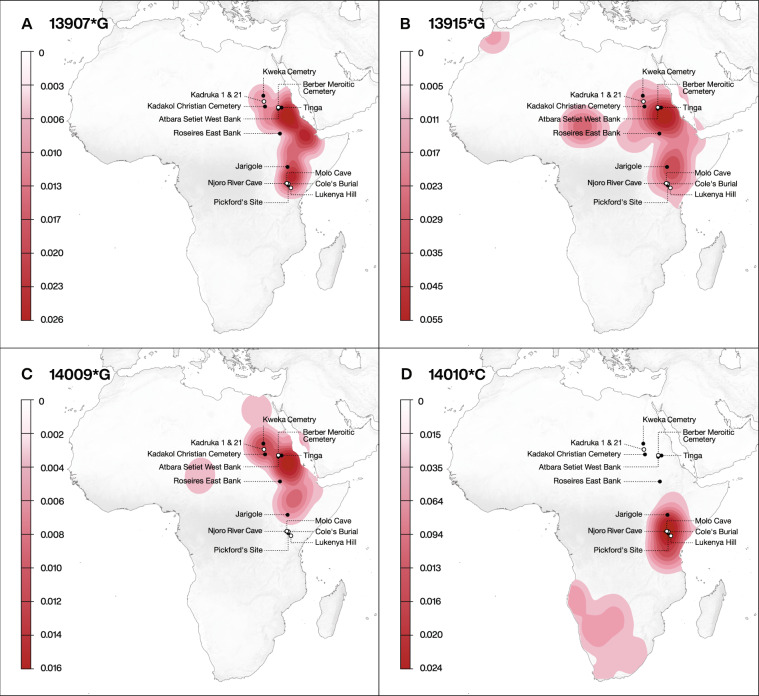
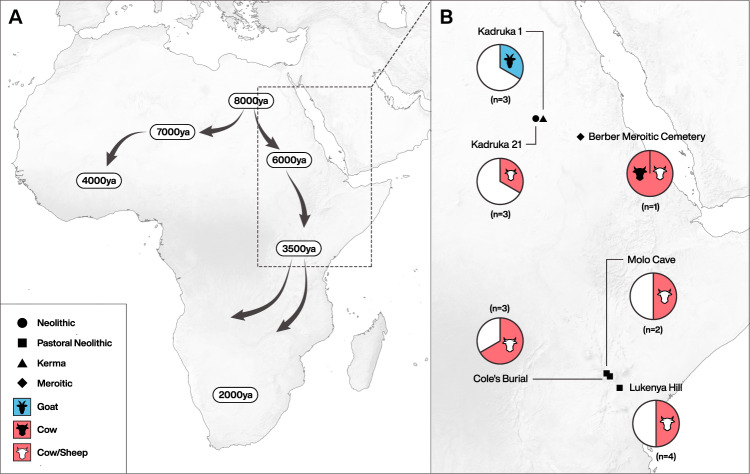
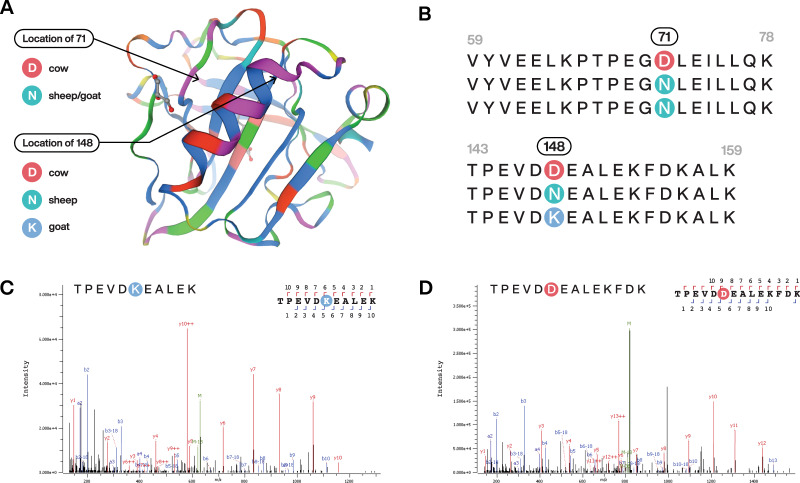
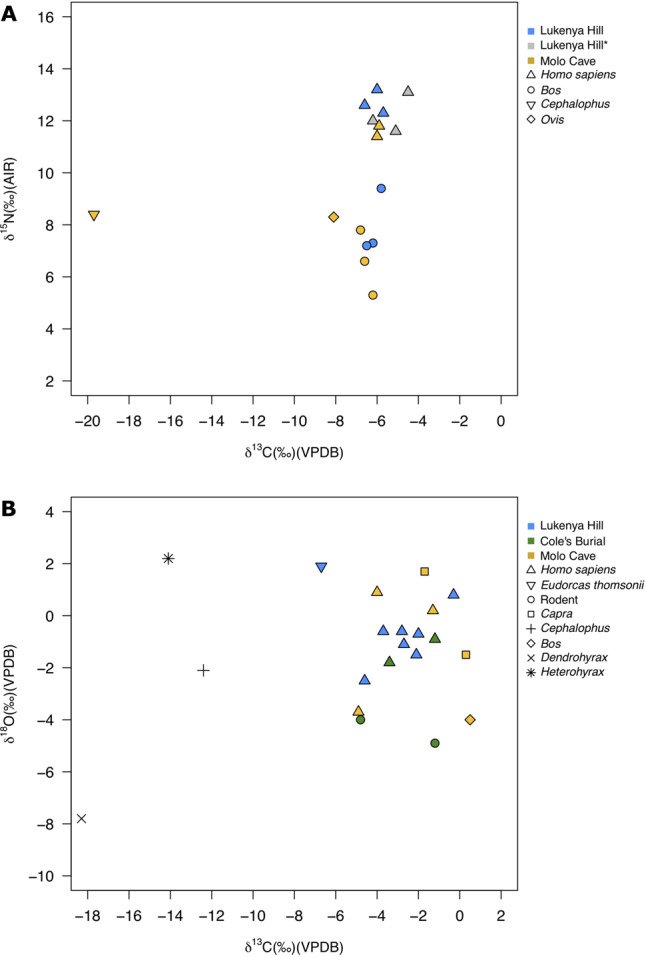
Verification
Claims the paper makes
The claims and statistics of this paper haven’t been checked yet.
Run the check — free, no account needed. It reads the open-access text and checks the sources it cites.
Claims other papers make about this one
Each is checked against this paper’s own text: does it say what the citing paper says it does?
The cited source says what the claim attributes to it.
In the citing paper
“When it comes to analyzing ancient human remains, most studies work with historic dental calculus [11, 15, 22-26], as it is a stable, long-term reservoir of proteins [27].”
From Metaproteomic analysis of King Ghezo tomb wall (Abomey, Benin) confirms 19th century voodoo sacrifices (2024) · cites this paper as [22]
Self-check
Percentages, sums and reported differences re-computed from the paper’s own numbers.
The self-check needs the paper’s full text.
Citations
Cites
Universal sample preparation method for proteome analysis
Wiśniewski, J. R., Zougman, A., Nagaraj, N., & Mann, M. (2009) · Nature Methods · doi:10.1038/nmeth.1322 · Cited by 8,352
Convergent adaptation of human lactase persistence in Africa and Europe
Tishkoff, S. A., Reed, F. A., Ranciaro, A., Voight, B. F., Babbitt, C. C., Silverman, J. S., Powell, K., Mortensen, H. M., Hirbo, J. B., Osman, M., et al. (2007) · Nature Genetics · doi:10.1038/ng1946 · Cited by 1,615
Coevolution: Genes, Culture, and Human Diversity
Durham, W. H. (1991) · doi:10.1515/9781503621534 · Cited by 1,117
Southern African ancient genomes estimate modern human divergence to 350,000 to 260,000 years ago
Schlebusch, C. M., Malmström, H., Günther, T., Sjödin, P., Coutinho, A., Edlund, H., Munters, A. R., Vicente, M., Steyn, M., Soodyall, H., et al. (2017) · Science · doi:10.1126/science.aao6266 · Cited by 519
Cattle Before Crops: The Beginnings of Food Production in Africa
Marshall, F., & Hildebrand, E. (2002) · Journal of World Prehistory · doi:10.1023/a:1019954903395 · Cited by 445
A guide to ancient protein studies
Hendy, J., Welker, F., Demarchi, B., Speller, C., Warinner, C., & Collins, M. J. (2018) · Nature Ecology & Evolution · doi:10.1038/s41559-018-0510-x · Cited by 291
Self-citationSchuenemann, V. J., Peltzer, A., Welte, B., van Pelt, W. P., Molak, M., Wang, C.-C., Furtwängler, A., Urban, C., Reiter, E., Nieselt, K., et al. (2017) · Nature Communications · doi:10.1038/ncomms15694 · Cited by 201
Self-citation
Research works printed but not linked: 78
- Gray, S. Butterfat feeding in early infancy in African populations: new hypotheses. Am. J. Hum. Biol. 10, 163–178 (1998). · DOI
- Buikstra, J. E., Konigsberg, L. W. & Bullington, J. Fertility and the development of agriculture in the prehistoric midwest. Am. Antiq. 51, 528–546 (1986). · DOI
- Bocquet-Appel, J.-P. When the world’s population took off: the springboard of the Neolithic Demographic Transition. Science 333, 560–561 (2011). · DOI
- Ségurel, L. & Bon, C. On the evolution of lactase persistence in humans. Annu. Rev. Genomics Hum. Genet. 18, 297–319 (2017). · DOI
- Liebert, A. et al. World-wide distributions of lactase persistence alleles and the complex effects of recombination and selection. Hum. Genet. 136, 1445–1453 (2017). · DOI
- Beja-Pereira, A. et al. Gene-culture coevolution between cattle milk protein genes and human lactase genes. Nat. Genet. 35, 311–313 (2003). · DOI
- Gerbault, P. et al. Evolution of lactase persistence: an example of human niche construction. Philos. Trans. R. Soc. Lond. B Biol. Sci. 366, 863–877 (2011). · DOI
- Abdelgadir, W. S., Ahmed, T. K. & Dirar, H. A. The traditional fermented milk products of the Sudan. Int. J. Food Microbiol. 44, 1–13 (1998). · DOI
- Yang, Y. et al. Proteomics evidence for kefir dairy in Early Bronze Age China. J. Archaeol. Sci. 45, 178–186 (2014). · DOI · Paper page
- He, T. et al. The role of colonic metabolism in lactose intolerance. Eur. J. Clin. Invest. 38, 541–547 (2008). · DOI
- Burger, J., Kirchner, M., Bramanti, B., Haak, W. & Thomas, M. G. Absence of the lactase-persistence-associated allele in early Neolithic Europeans. Proc. Natl Acad. Sci. USA 104, 3736–3741 (2007). · DOI
- Plantinga, T. S. et al. Low prevalence of lactase persistence in Neolithic South-West Europe. Eur. J. Hum. Genet. 20, 778–782 (2012). · DOI
- Krüttli, A. et al. Ancient DNA analysis reveals high frequency of European lactase persistence allele (T-13910) in medieval central europe. PLoS ONE 9, e86251 (2014). · DOI
- Charlton, S. et al. New insights into Neolithic milk consumption through proteomic analysis of dental calculus. Archaeol. Anthropol. Sci. 11, 6183–6196 (2019). · DOI · Paper page
- Jeong, C. et al. Bronze Age population dynamics and the rise of dairy pastoralism on the eastern Eurasian steppe. Proc. Natl Acad. Sci. USA 115, E11248–E11255 (2018). · DOI · Paper page
- Sellen, D. W. Nutritional status of Sub-Saharan African pastoralists: a review of the literature. Nomadic Peoples 39, 107–134 (1996).
- Ranciaro, A. et al. Genetic origins of lactase persistence and the spread of pastoralism in Africa. Am. J. Hum. Genet. 94, 496–510 (2014). · DOI
- Ingram, C. J. E. et al. A novel polymorphism associated with lactose tolerance in Africa: multiple causes for lactase persistence? Hum. Genet. 120, 779–788 (2007). · DOI
- Ingram, C. J. E. et al. Multiple rare variants as a cause of a common phenotype: several different lactase persistence associated alleles in a single ethnic group. J. Mol. Evol. 69, 579–588 (2009). · DOI
- Holden, C. & Mace, R. Phylogenetic analysis of the evolution of lactose digestion in adults. Hum. Biol. 69, 605–628 (1997).
- Gallego Llorente, M. et al. Ancient Ethiopian genome reveals extensive Eurasian admixture throughout the African continent. Science 350, 820–822 (2015). · DOI
- Skoglund, P. et al. Reconstructing prehistoric African population structure. Cell 171, 59–71.e21 (2017). · DOI
- Rodríguez-Varela, R. et al. Genomic analyses of pre-European conquest human remains from the Canary Islands reveal close Affinity to Modern North Africans. Curr. Biol. 27, 3396–3402.e5 (2017). · DOI
- van de Loosdrecht, M. et al. Pleistocene North African genomes link Near Eastern and sub-Saharan African human populations. Science 360, 548–552 (2018). · DOI
- Fregel, R. et al. Ancient genomes from North Africa evidence prehistoric migrations to the Maghreb from both the Levant and Europe. Proc. Natl Acad. Sci. USA 115, 6774–6779 (2018). · DOI
- Wang, K. et al. Ancient genomes reveal complex patterns of population movement, interaction and replacement in sub-Saharan Africa. Science Adv. 6, eaaz0183 (2020) · DOI
- Prendergast, M. E. et al. Ancient DNA reveals a multistep spread of the first herders into sub-Saharan Africa. Science 365, eaaw6275 (2019). · DOI
- Vicente, M. & Schlebusch, C. M. African population history: an ancient DNA perspective. Curr. Opin. Genet. Dev. 62, 8–15 (2020). · DOI
- Marshall, F. Origins of specialized pastoral production in East Africa. Am. Anthropol. 92, 873–894 (1990). · DOI
- Simoons, F. J. The antiquity of dairying in Asia and Africa. Geogr. Rev. 61, 431–439 (1971). · DOI
- Dunne, J. et al. First dairying in green Saharan Africa in the fifth millennium BC. Nature 486, 390–394 (2012). · DOI · Paper page
- Dunne, J., di Lernia, S., Chłodnicki, M., Kherbouche, F. & Evershed, R. P. Timing and pace of dairying inception and animal husbandry practices across Holocene North Africa. Quat. Int. 471, 147–159 (2018). · DOI
- Tigani El Mahi, A. Zooarchaeology in the Middle Nile Valley: A Study of Four Neolithic Sites Near Khartoum Vol. 418 (BAR, 1988). · DOI
- Grillo, K. M. et al. Molecular and isotopic evidence for milk, meat, and plants in prehistoric eastern African herder food systems. Proc. Natl Acad. Sci. USA 4, 201920309 (2020).
- Hendy, J. et al. Ancient proteins from ceramic vessels at Çatalhöyük West reveal the hidden cuisine of early farmers. Nat. Commun. 9, 4064 (2018). · DOI · Paper page
- Lombard, M. & Parsons, I. Milk not meat: the role of milk amongst the Khoe peoples of southern Africa. J. Afr. Archaeol. 13, 149–166 (2015). · DOI
- Warinner, C. et al. Direct evidence of milk consumption from ancient human dental calculus. Sci. Rep. 4, 7104 (2014). · DOI · Paper page
- Hendy, J. et al. Proteomic evidence of dietary sources in ancient dental calculus. Proc. Biol. Sci. 285, https://doi.org/10.1098/rspb.2018.0977 (2018). · DOI · Paper page
- Wilkin, S. et al. Dairy pastoralism sustained eastern Eurasian steppe populations for 5,000 years. Nat. Ecol. Evol. 4, 346–355 (2020). · DOI · Paper page
- Jersie-Christensen, R. R. et al. Quantitative metaproteomics of medieval dental calculus reveals individual oral health status. Nat. Commun. 9, 4744 (2018). · DOI · Paper page
- Warinner, C. et al. Pathogens and host immunity in the ancient human oral cavity. Nat. Genet. 46, 336–344 (2014). · DOI · Paper page
- Chaix, L. Rapport preliminaire sur la faune du site de Kadruka I, Soudan Nord (Neolithique et Protohistorique). in Archäologie du Nil Moyen (ed. Geus, F.) Vol. 2, 61–62 (1987).
- Chaix, L. & Reinold, J. in Desert and the Nile. Prehistory of the Nile Basin and the Sahara (eds Kabacinski, J. et al.) Vol. 15 233–249 (Poznan Archaeological Museum, 2018).
- Ambrose, S. H. & DeNiro, M. J. Reconstruction of African human diet using bone collagen carbon and nitrogen isotope ratios. Nature 319, 321 (1986). · DOI
- Ambrose, S. H. The Introduction of Pastoral Adaptations to the Highlands of East Africa. in From Hunters to Farmers: The Causes and Consequences of Food Production in Africa, (eds Clark, C. D. & Brandt, S. A.) 212–239 (University of California Press, Berkeley, CA, 1984). · DOI
- Ambrose, S. H. Stable carbon and nitrogen isotope analysis of human and animal diet in Africa. J. Hum. Evol. 15, 707–731 (1987). · DOI
- Janzen, A., Balasse, M. & Ambrose, S. H. Early pastoral mobility and seasonality in Kenya assessed through stable isotope analysis. J. Archaeol. Sci. 117, 105099 (2020). · DOI
- Nathan, M. A., Fratkin, E. M. & Roth, E. A. Sedentism and child health among Rendille pastoralists of northern Kenya. Soc. Sci. Med. 43, 503–515 (1996). · DOI
- Degen, A. A. Sheep and goat milk in pastoral societies. Small Rumin. Res. 68, 7–19 (2007). · DOI
- Hakem, A. M. A. Meroitic Architecture: A Background of an African Civilization (Khartoum University Press, Khartoum, 1988).
- Evans-Pritchard, E. E. The Nuer A Description of the Modes of Livelihood and Political Institutions of a Nilotic People (Oxford Univ Press, 1940).
- Ambrose, S. H. & Sikes, N. E. Soil carbon isotope evidence for holocene habitat change in the Kenya rift valley. Science 253, 1402–1405 (1991). · DOI
- Mackie, M. et al. Preservation of the metaproteome: variability of protein preservation in ancient dental calculus. Sci. Technol. Archaeological Res. 3, 74–86 (2017).
- Kherbouche, F., Dunne, J., Merzoug, S., Hachi, S. & Evershed, R. P. Middle Holocene hunting and herding at Gueldaman Cave, Algeria: an integrated study of the vertebrate fauna and pottery lipid residues. Quat. Int. 410, 50–60 (2016). · DOI
- Copley, M. S. et al. Direct chemical evidence for widespread dairying in prehistoric Britain. Proc. Natl Acad. Sci. USA 100, 1524–1529 (2003). · DOI · Paper page
- Grillo, K. M. Pastoralism and pottery use: an ethnoarchaeological study in Samburu, Kenya. Afr. Archaeol. Rev. 31, 105–130 (2014). · DOI · Paper page
- Dunne, J., Grillo, K. M., Casanova, E., Whelton, H. L. & Evershed, R. P. Pastoralist foodways recorded in organic residues from pottery vessels of modern communities in Samburu, Kenya. J. Archaeol. Method Theory 26, 619–642 (2019). · DOI
- Perry, C. The horseback kitchen of Central Asia. In Food on the Move: Proceedings of the Oxford Symposium on Food and Cookery, 1996 (ed. Walker, H.) 243–249 (Prospect Books, 1997).
- Wiśniewski, J. R. Filter-aided sample preparation: the versatile and efficient method for proteomic analysis. Methods Enzymol. 585, 15–27 (2017). · DOI
- Hughes, C. S. et al. Single-pot, solid-phase-enhanced sample preparation for proteomics experiments. Nat. Protoc. https://doi.org/10.1038/s41596-018-0082-x (2018). · DOI
- Türker, C., Akal, F., Joho, D., Panse, C. & Schlapbach, R. B-Fabric: the Swiss Army Knife for life sciences. In ResearchGate. https://doi.org/10.1145/1739041.1739135 (2010). · DOI
- van Doorn, N. L., Wilson, J., Hollund, H., Soressi, M. & Collins, M. J. Site-specific deamidation of glutamine: a new marker of bone collagen deterioration. Rapid Commun. Mass Spectrom. 26, 2319–2327 (2012). · DOI · Paper page
- Simpson, J. P. et al. The effects of demineralisation and sampling point variability on the measurement of glutamine deamidation in type I collagen extracted from bone. J. Archaeol. Sci. 69, 29–38 (2016). · DOI · Paper page
- Ramsøe, A. et al. DeamiDATE 1.0: site-specific deamidation as a tool to assess authenticity of members of ancient proteomes. J. Archaeol. Sci. 115, 105080 (2020). · DOI · Paper page
- Bern, M., Kil, Y. J. & Becker, C. Byonic: advanced peptide and protein identification software. Current Protocols in Bioinformatics Chapter 13, Unit 13.20 (2012). · DOI · Paper page
- Nesvizhskii, A. I., Keller, A., Kolker, E. & Aebersold, R. A statistical model for identifying proteins by tandem mass spectrometry. Anal. Chem. 75, 4646–4658 (2003). · DOI
- Longin, R. New method of collagen extraction for radiocarbon dating. Nature 230, 241–242 (1971). · DOI · Paper page
- Coplen, T. B. Reporting of stable hydrogen, carbon and oxygen isotopic abundances. Pure Appl. Chem. 66, 273–276 (1994). · DOI
- Balasse, M. & Ambrose, S. H. Distinguishing sheep and goats using dental morphology and stable carbon isotopes in C 4 grassland environments. J. Archaeol. Sci. 32, 691–702 (2005). · DOI
- Zeder, M. A. & Pilaar, S. E. Assessing the reliability of criteria used to identify mandibles and mandibular teeth in sheep, Ovis, and goats, Capra. J. Archaeol. Sci. 37, 225–242 (2010). · DOI
- Welker, F., Soressi, M., Rendu, W. & Hublin, J. J. Using ZooMS to identify fragmentary bone from the late Middle/Early Upper Palaeolithic sequence of Les Cottés, France. J. Archaeol. Sci. 54, 279–286 (2015). · DOI · Paper page
- Buckley, M., Collins, M., Thomas-Oates, J. & Wilson, J. C. Species identification by analysis of bone collagen using matrix-assisted laser desorption/ionisation time-of-flight mass spectrometry. Rapid Commun. Mass Spectrom. 23, 3843–3854 (2009). · DOI · Paper page
- Welker, F. et al. Palaeoproteomic evidence identifies archaic hominins associated with the Châtelperronian at the Grotte du Renne. Proc. Natl Acad. Sci. USA 113, 11162–11167 (2016). · DOI · Paper page
- Desmond, A. et al. ZooMS identification of bone tools from the North African Later Stone Age. J. Archaeol. Sci. 98, 149–157 (2018). · DOI
- Dunbar, E., Cook, G. T., Naysmith, P., Tripney, B. G. & Xu, S. AMS 14C dating at the Scottish Universities Environmental Research Centre (SUERC) Radiocarbon Dating Laboratory. Radiocarbon 58, 9–23 (2016). · DOI
- Dee, M. W. et al. Radiocarbon Dating at Groningen: new and updated chemical pretreatment procedures. Radiocarbon 62, 1–12 (2019). · DOI
- Bronk Ramsey, C. Methods for summarizing radiocarbon datasets. Radiocarbon 59, 1809–1833 (2017). · DOI · Paper page
- Reimer, P. J. et al. IntCal13 and Marine13 radiocarbon age calibration curves 0– 50,000 years cal BP. Radiocarbon 55, 1869–1887 (2013). · DOI · Paper page
Cited by
Sorted by citations
Charlier, P., Bourdin, V., N'Dah, D., Kielbasa, M., Pible, O., & Armengaud, J. (2024) · PROTEOMICS · doi:10.1002/pmic.202400048 · Cited by 8
Metadata
- Authors
- Bleasdale, M., Richter, K. K., Janzen, A., Brown, S., Scott, A., Zech, J., Wilkin, S., Wang, K., Schiffels, S., Desideri, J., Besse, M., Reinold, J., Saad, M., Babiker, H., Power, R. C., Ndiema, E., Ogola, C., Manthi, F. K., Zahir, M., Petraglia, M., Trachsel, C., Nanni, P., Grossmann, J., Hendy, J., Crowther, A., Roberts, P., Goldstein, S. T., & Boivin, N.
- ORCID
- Venue
- Nature Communications
- Published
- 2021-01-27
- Volume
- 12
- Issue
- 1
- ISSN
- 2041-1723
- PMC
- PMC7841170
- Cited by
- 87
- References
- 7
- Language
- en
- Funders
- Max-Planck-Gesellschaft
About these checks
Registry, retraction, Cites and statistics results are computed, not judged, with one exception: a printed reference that no index lists is read once by a model before it counts as a citation error. Claims are extracted by a model and kept only when their quote appears verbatim in the text; each cited source is then checked, with a model’s help, for whether it says what the claim relies on. Those verdicts can be wrong — read the claim’s quote and the cited source before relying on one.
Statistics and arithmetic are recomputed, not judged.
Confidence bands are shown only for fields calibrated on our annotated test set. None is calibrated yet, so no band is shown.
What counts as a claim ›How we measure confidence ›How we check this ›
Are you an author, or do you see a problem with this page? Request a review
