

Intelligence-responsive wettability switch coating on magnesium implants for treating osteoporotic fracture
Open accessThe DOI matches its Crossref record; 64 of the 65 references it cites were found in a registry or an index; 10 of the 30 sources its claims cite were checked for support.
Abstract
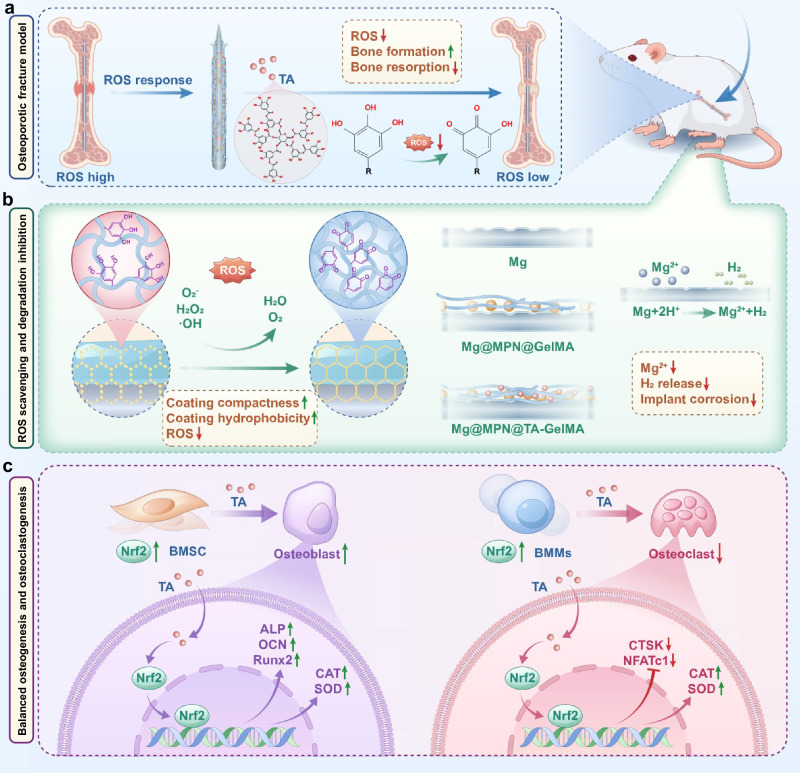
Osteoporotic fracture healing is frequently complicated by elevated levels of reactive oxygen species and disrupted bone homeostasis. Biodegradable magnesium alloys are promising orthopedic implants, but rapid degradation in oxidative, acidic osteoporotic microenvironments limits their clinical application. In this study, we develop a reactive oxygen species-responsive hydrogel coating of tannic acid and gelatin methacryloyl on magnesium implants via a metal-phenolic network. We show that this firmly adhering coating significantly decelerates magnesium degradation while scavenging reactive oxygen species on demand. In osteoporotic rat models, we demonstrate that coated implants effectively reduce oxidative stress and facilitate bone healing. Mechanistically, single-cell transcriptomics reveals that the coating activates the nuclear factor erythroid 2-related factor 2 signaling pathway in bone marrow mesenchymal stromal cells and bone marrow-derived macrophages, enhancing osteogenesis while inhibiting osteoclastogenesis. Consequently, this multifunctional coating provides corrosion protection and a targeted therapeutic approach to enhance osteoporotic fracture healing under oxidative stress. Osteoporotic fractures often heal poorly due to high oxidative stress. Here, the authors develop an intelligent responsive hydrogel coating for magnesium implants that decelerates implant degradation, alleviates oxidative stress, and promotes bone regeneration.
Overview
CoChat Summary
TL;DR
The paper develops a ROS-responsive tannic acid/gelatin methacryloyl hydrogel coating (TA-GelMA) on magnesium implants to slow corrosion and improve healing of osteoporotic fractures. In rat models and mechanistic cell studies, the coating reduced oxidative stress, activated Nrf2 signaling, promoted osteogenesis, and suppressed osteoclastogenesis.
Key findings
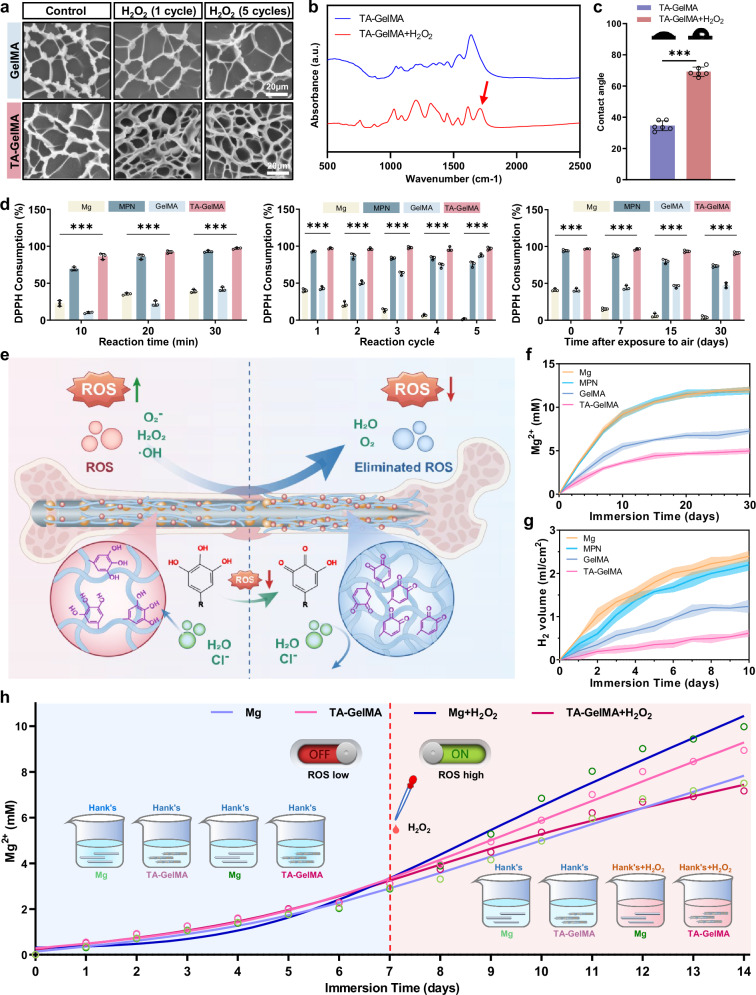
- In vitro, TA-GelMA showed rapid antioxidant activity: it cleared 86% of DPPH radicals in 10 min and 97% by 30 min; after H2O2 treatment it reduced intracellular ROS fluorescence by about 80% in BMSCs and 90% in BMMs.
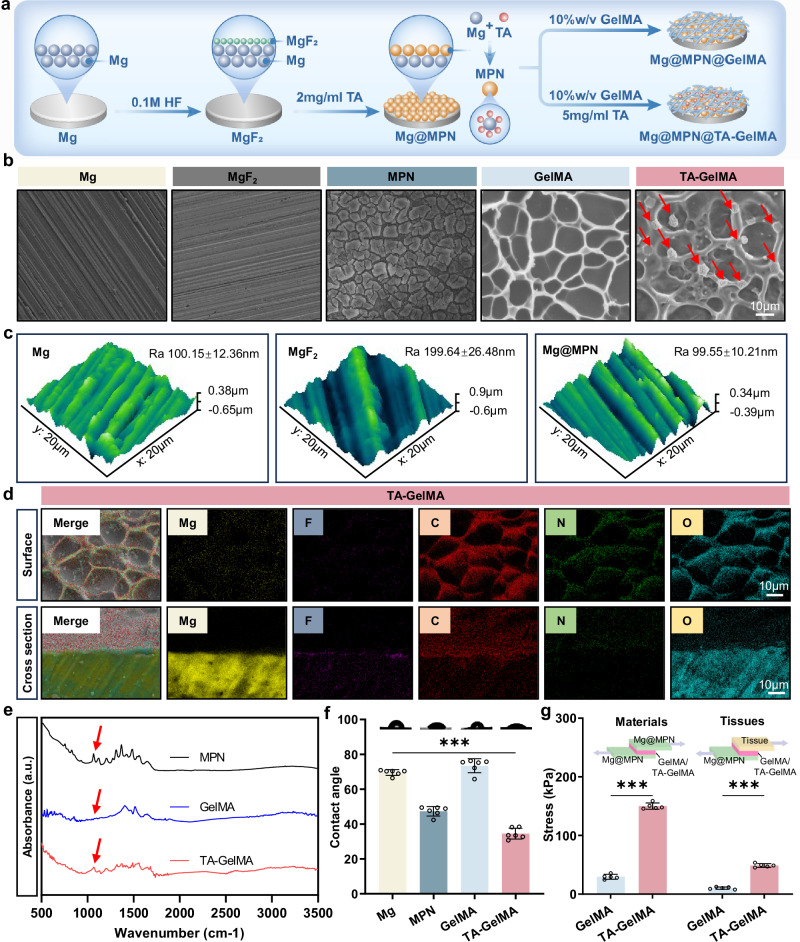
- The coating improved mechanical/adhesive properties: TA-GelMA adhesion strength was 150.02 ± 5.24 kPa to material and 48.89 ± 3.17 kPa to tissue, compared with 29.58 ± 4.08 kPa and 10.24 ± 1.89 kPa for GelMA.
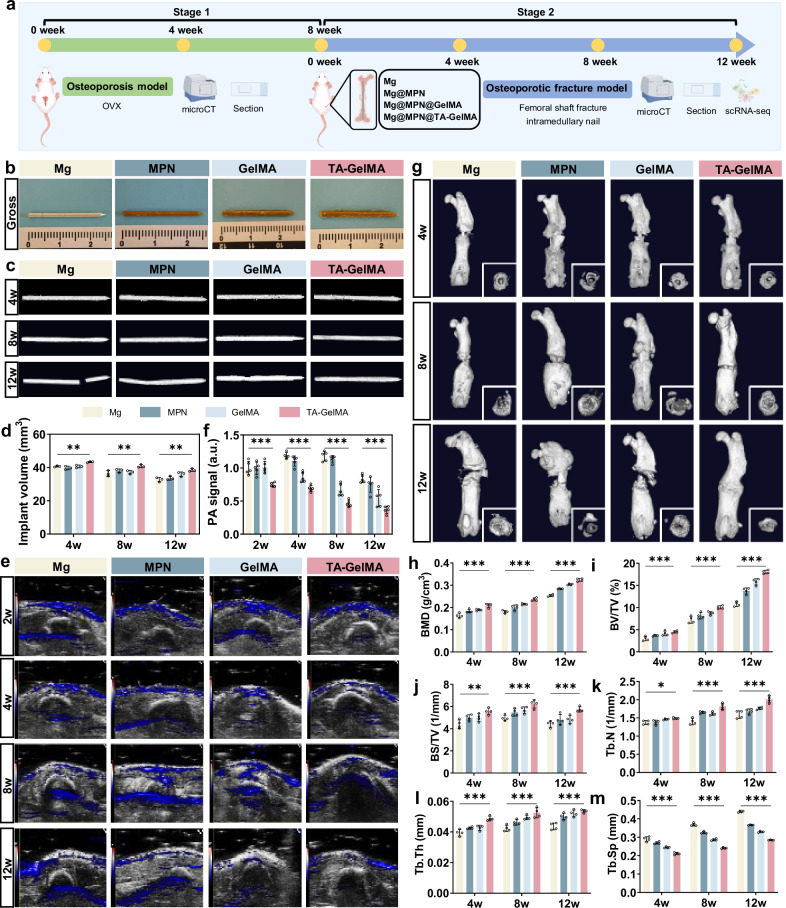
- In osteoporotic rats, TA-GelMA reduced implant corrosion volume to 25% of control at 4 weeks, 43% at 8 weeks, and 50% at 12 weeks; fracture-site ROS signal was also lower, with PA intensity 75% and 58% of control at 2 and 4 weeks, respectively.
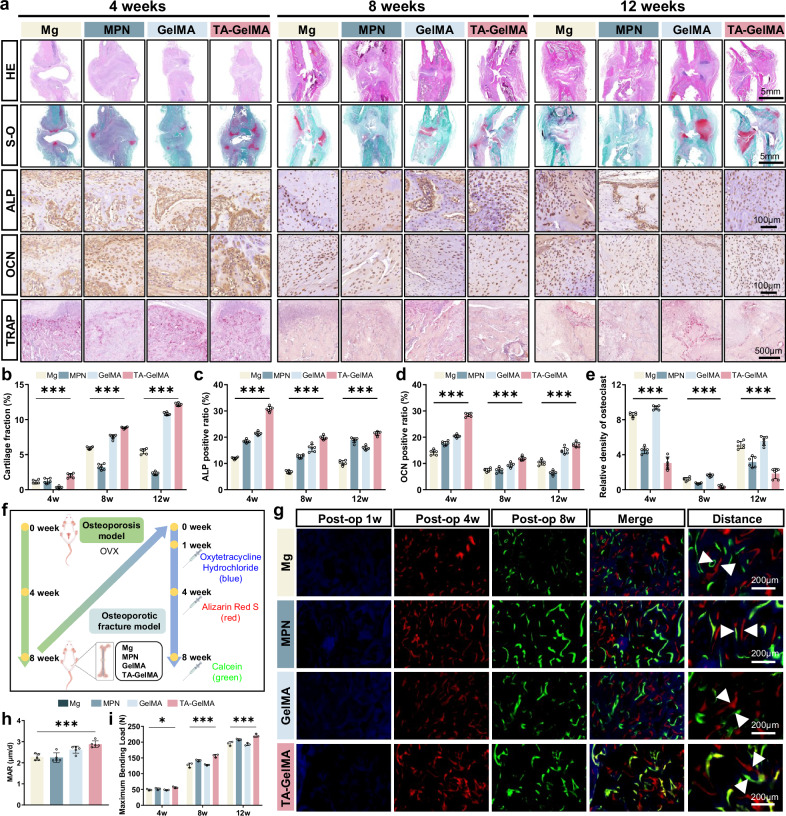
- Healing outcomes improved: the TA-GelMA group had the highest mineral apposition rate, with a 27% increase versus control, and maximum load was 13% higher at 8 and 12 weeks; histology showed an 82% increase in cartilage fraction at 4 weeks and reduced osteoclast formation.
Methods
- Designed a Mg implant surface with an MgF2 layer, a tannic-acid metal-phenolic network (Mg@MPN), and a GelMA hydrogel containing 5 mg/ml TA (Mg@MPN@TA-GelMA); characterized by AFM, SEM/EDS, FTIR, contact angle, and lap shear adhesion tests.
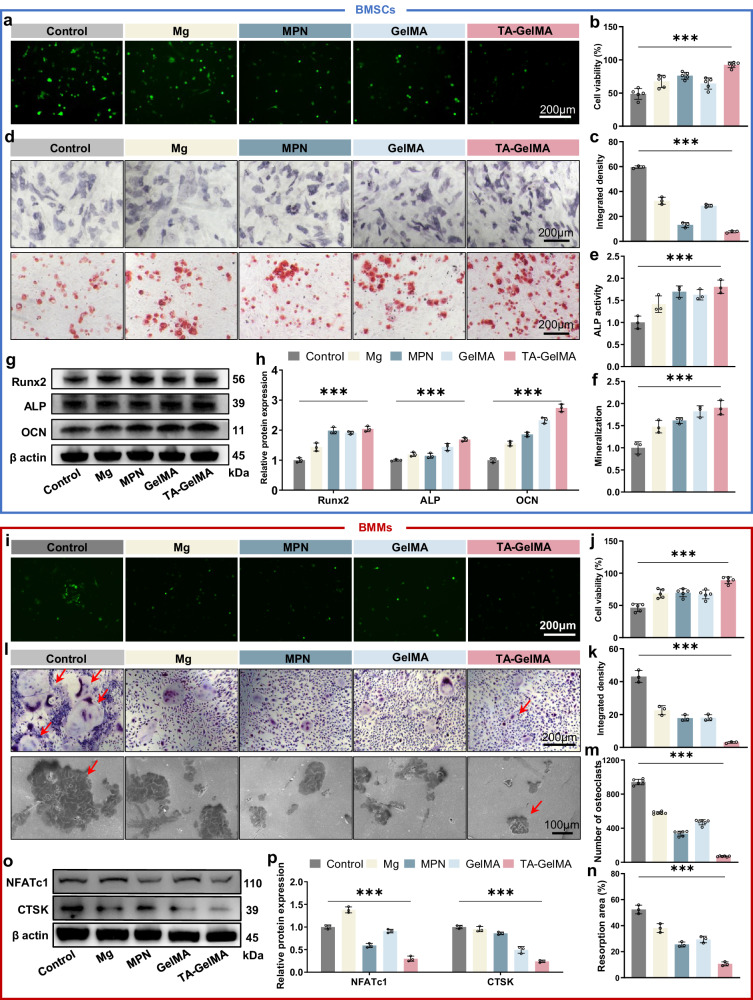
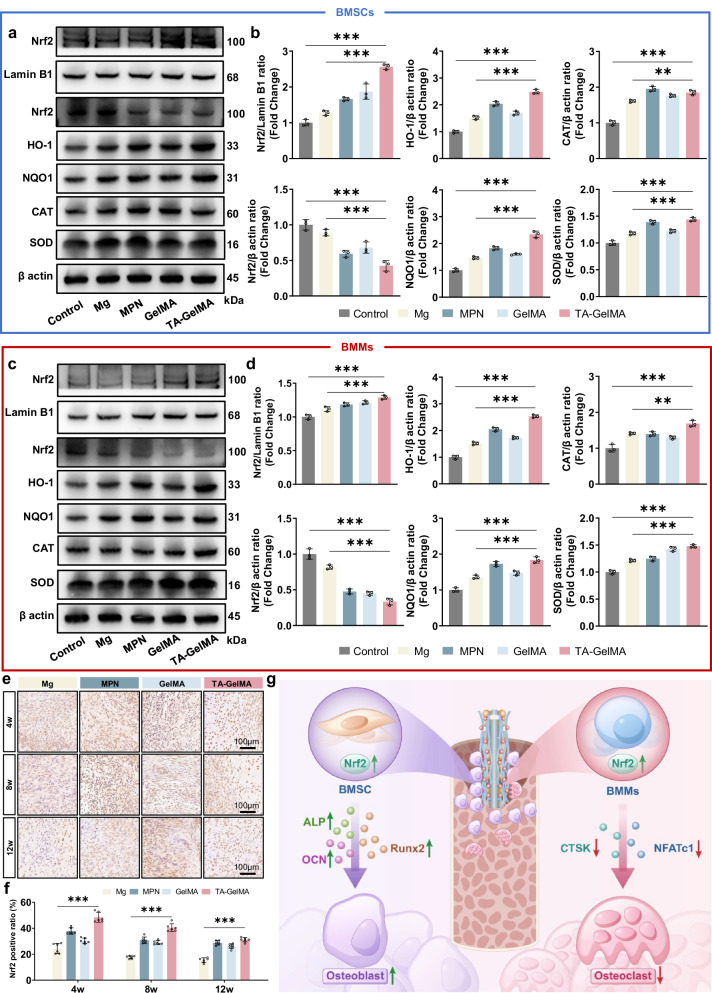
- Used in vitro assays with mouse and rat BMSCs/BMMs under 0.3 mM H2O2 and material extracts to measure viability, ROS, osteogenesis (ALP, ARS, Runx2/ALP/OCN), osteoclastogenesis (TRAP, resorption pits, NFATc1/CTSK), and Nrf2 signaling.
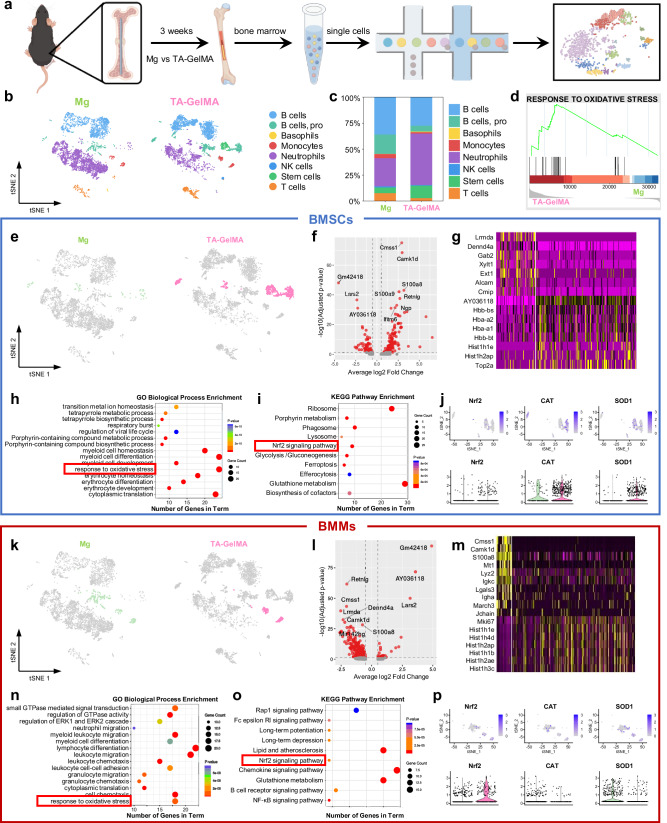
- Tested in osteoporotic fracture models in female Sprague-Dawley rats created by ovariectomy, then femoral shaft fracture and intramedullary nailing; analyzed outcomes with micro-CT, PA imaging of ROS, histology/IHC, triple fluorescent labeling, biomechanical testing, bulk RNA-seq, and scRNA-seq.
Limitations
- Not stated in the paper.
- Evident from the text: the main in vivo efficacy data are from rat models, so human clinical performance is not directly tested.
- Evident from the text: several mechanistic conclusions rely on in vitro extracts, siRNA, and ML385 inhibition rather than direct in vivo pathway perturbation.
Model-written summary. Check it against the paper before relying on it.
Integrity signals
Registry
Cites
Statistics
Figures
Verification
Claims the paper makes
9 Valid · 0 Not valid · 12 Not checked · 65 Own results and interpretations
The cited sources support only part of this claim — read each source’s verdict below.
In the paper
“Elevated ROS levels and the localized acidic microenvironment may further exacerbate the non-uniform corrosion property of Mg implants16.”
§ Intelligence-responsive wettability switch coating on magnesium implants for treating osteoporotic fracture > Introduction
What the sources say
- Partly supportedcites [16] Kwesiga, M. P. et al. Biodegradable magnesium materials regulate ROS-RNS balance in pro-inflammatory macrophage environment. Bioact. Mater. 23, 261–273 (2023). 36439083 PMC9678810 sourceExperimental — accuracy not yet measured
The Conclusions (page not specified) report that pro-inflammatory macrophages caused more localized corrosion of Mg discs. The Discussion, under “The ROS-RNS balance in stimulated RAW264.7 cells incubated with AZ61 and Mg” (page not specified), says ROS-RNS secretion or pH regulation might contribute, but the study did not establish that elevated ROS and a localized acidic microenvironment specifically caused the non-uniform corrosion. (LLM, conf=0.85)
hedgedstates a possible cause- Asserted: passes — The authors put it forward as true.
- Checkable: passes — It can be checked against evidence.
- Load-bearing: passes — The paper’s conclusions depend on it.
- Based: passes — The paper gives a reason why it holds.
- Partly supported
The cited sources support only part of this claim — read each source’s verdict below.
In the paper
“Compared to the systemic administration of Nrf2 agonists, the localized activation strategy provided by TA-GelMA circumvents potential side effects related to systemic Nrf2 activation58,59, thereby enhancing clinical application safety.”
§ Intelligence-responsive wettability switch coating on magnesium implants for treating osteoporotic fracture > Discussion
What the sources say
- Not checked — no full text of the sourcecites [58] Jin, X., Chen, L., Yang, Y., Tan, R. & Jiang, C. Adverse effects of Nrf2 in different organs and the related diseases. Antioxid. Redox Signal. 42, 973–985 (2025). 39723588 source
- Partly supportedcites [59] Cuadrado, A. et al. Health position paper and redox perspectives – Bench to bedside transition for pharmacological regulation of NRF2 in noncommunicable diseases. Redox Biol. 81, 103569 (2025). 40059038 PMC11970334 sourceExperimental — accuracy not yet measured
The Conclusions and future perspective section (page unavailable) reports unwanted effects in patients taking NRF2 activators, supporting the concern about potential side effects. It explicitly says further research is needed to determine whether those effects arise from NRF2 activation or off-target activity. It does not establish that localized TA-GelMA activation avoids them; that comparison is the citing authors’ inference. (LLM, conf=0.84)
plainstates a cause- Asserted: passes — The authors put it forward as true.
- Checkable: passes — It can be checked against evidence.
- Load-bearing: passes — The paper’s conclusions depend on it.
- Based: passes — The paper gives a reason why it holds.
The cited sources support only part of this claim — read each source’s verdict below.
In the paper
“Thirdly, it protects osteoclast precursor cells from apoptosis induced by excessive oxidative stress by upregulating antioxidant enzymes, thereby maintaining a proper balance in osteoclast function57.”
§ Intelligence-responsive wettability switch coating on magnesium implants for treating osteoporotic fracture > Discussion
What the sources say
- Partly supportedcites [57] Chen, Z. et al. Novel inhibitor of Keap1-Nrf2 protein–protein interaction attenuates osteoclastogenesis in vitro and prevents OVX-induced bone loss in vivo. Antioxidants 13, 850 (2024). 39061918 PMC11273523 sourceExperimental — accuracy not yet measured
The Discussion (page not provided) says Nrf2 protects cells from ROS-induced damage and that KCB-F06 increased the antioxidant enzymes HO-1 and NQO1 while reducing ROS during osteoclast differentiation. It does not report that Nrf2 prevents apoptosis of osteoclast precursor cells or maintains osteoclast function through precursor survival; its reported effect is inhibition of excessive osteoclastogenesis. (LLM, conf=0.88)
plainstates a cause- Asserted: passes — The authors put it forward as true.
- Checkable: passes — It can be checked against evidence.
- Load-bearing: passes — The paper’s conclusions depend on it.
- Based: passes — The paper gives a reason why it holds.
- Partly supported
The cited sources support only part of this claim — read each source’s verdict below.
In the paper
“Elevated ROS concentrations not only directly impair mitochondrial function in BMSCs, thereby inhibiting their osteogenic differentiation potential49, but also facilitate osteoclastogenesis by activating NF-κB signaling pathways50.”
§ Intelligence-responsive wettability switch coating on magnesium implants for treating osteoporotic fracture > Discussion
What the sources say
- Partly supportedcites [49] Wang, J. et al. Application of antioxidant compounds in bone defect repair. Antioxidants 13, 789 (2024). 39061858 PMC11273992 sourceExperimental — accuracy not yet measured
Section 3.3 (page not provided) identifies BMSCs as osteoblastic-lineage cells vulnerable to ROS-induced oxidative damage and says oxidative stress inhibits pathways involved in osteoblast differentiation. It does not say that ROS directly impair mitochondrial function in BMSCs or establish mitochondrial impairment as the cause of reduced osteogenic differentiation. (LLM, conf=0.87)
plainstates a cause- Asserted: passes — The authors put it forward as true.
- Checkable: passes — It can be checked against evidence.
- Load-bearing: passes — The paper’s conclusions depend on it.
- Based: passes — The paper gives a reason why it holds.
- Partly supported
The cited sources support only part of this claim — read each source’s verdict below.
In the paper
“Mechanistically, Nrf2 may alleviate the suppression of osteogenic differentiation by inflammatory factors through the inhibition of NF-κB activation38, while concurrently promoting the expression of osteogenic genes by regulating the Wnt/β-catenin signaling pathway54.”
§ Intelligence-responsive wettability switch coating on magnesium implants for treating osteoporotic fracture > Discussion
What the sources say
- Partly supportedcites [54] Wu, M. et al. Bioinspired sandwich-like hybrid surface functionalized scaffold capable of regulating osteogenesis, angiogenesis, and osteoclastogenesis for robust bone regeneration. Mater. Today Bio 17, 100458 (2022). 36278143 PMC9583582 sourceExperimental — accuracy not yet measured
The Results and discussion section (In vitro evaluation of osteogenesis; page unavailable) reports that BML-loaded scaffolds upregulated osteogenesis-related genes and activated Wnt/β-catenin signaling. It does not identify Nrf2 as the regulator of that pathway or link Nrf2 to the increased gene expression; searches for Nrf2 returned no matching passage. (LLM, conf=0.86)
hedgedstates a cause- Asserted: passes — The authors put it forward as true.
- Checkable: passes — It can be checked against evidence.
- Load-bearing: unclear — It is unclear whether the paper’s conclusions depend on it.
- Based: passes — The paper gives a reason why it holds.
- Partly supported
39 more claims
Create a free account to see all 86 claims and to verify the 1 reference still open.
- It may state two separate claims as one. 34
- Probably not a substantial claim. 11
- The quote only partly states this claim. 1
Citations
Cites
Zhang, Y., Xu, J., Ruan, Y. C., Yu, M. K., O'Laughlin, M., Wise, H., Chen, D., Tian, L., Shi, D., Wang, J., et al. (2016) · Nature Medicine · doi:10.1038/nm.4162 · Cited by 1,051 · cited 1×
“The study conducted by Qin et al. demonstrated that Mg implants promoted bone fracture healing by upregulating neuronal calcitonin gene-related peptide 13 .”
Self-citationChen, Q., Liang, C., Sun, X., Chen, J., Yang, Z., Zhao, H., Feng, L., & Liu, Z. (2017) · Proceedings of the National Academy of Sciences · doi:10.1073/pnas.1701976114 · Cited by 535 · cited 1×
“The probe was provided by Soochow University (Suzhou, China) and was prepared according to methods established in previous studies 62 .”
Multifaceted role of phyto-derived polyphenols in nanodrug delivery systems
Chen, Z., Farag, M. A., Zhong, Z., Zhang, C., Yang, Y., Wang, S., & Wang, Y. (2021) · Advanced Drug Delivery Reviews · doi:10.1016/j.addr.2021.113870 · Cited by 169 · cited 1×
“Actually, its functionality and application value canbe enhanced byforming Metal-Phenolic Networks (MPN) through coordination with metal ions 28 and employing hydrogel-based controlled drug delivery platforms 29 .”
Self-citationKiani, F., Wen, C., & Li, Y. (2019) · Acta Biomaterialia · doi:10.1016/j.actbio.2019.12.023 · Cited by 165 · cited 2×
“…degradation rate and non-uniform degradation pattern of Mg alloys present substantial challenges to their clinical application, resulting in the premature loss of mechanical integrity of the implant, localized generation of excessive hydrogen gas, and an elevation in the pH of bodily fl uids 14,15 .”
Singh, N., Batra, U., Kumar, K., Ahuja, N., & Mahapatro, A. (2023) · Bioactive Materials · doi:10.1016/j.bioactmat.2022.05.009 · Cited by 165
Chen, M., Wang, D., Li, M., He, Y., He, T., Chen, M., Hu, Y., Luo, Z. Y., & Cai, K. (2022) · ACS Nano · doi:10.1021/acsnano.2c07200 · Cited by 152
Biological and pharmacological aspects of tannins and potential biotechnological applications
Melo, L. F. M. D., Aquino-Martins, V. G. D. Q., Silva, A. P. D., Oliveira Rocha, H. A., & Scortecci, K. C. (2023) · Food Chemistry · doi:10.1016/j.foodchem.2023.135645 · Cited by 137 · cited 1×
“…between the hydrogel and Mg. Tannic acid (TA), a natural polyphenolic compound, has attracted signi fi cant attention in the biomedical fi eld due to its potent antioxidant and anti-in fl ammatory properties 24,25 , indicating its potential for application in the treatment of osteoporotic fractures.”
Chen, Y., Zhang, Y., Mensaha, A., Li, D., Wang, Q., & Weı, Q. (2020) · Carbohydrate Polymers · doi:10.1016/j.carbpol.2020.117508 · Cited by 126 · cited 1×
“Concurrently, TA within the hydrogel canundergo oxidation to form quinone structures in environments with elevated ROS 30,31 .”
Ye, C., Ebeling, P. R., & Kline, G. A. (2025) · The Lancet · doi:10.1016/s0140-6736(25)01385-6 · Cited by 119
Shan, Z., Xie, X., Wu, X., Zhuang, S., & Zhang, C. (2022) · Journal of Orthopaedic Translation · doi:10.1016/j.jot.2022.09.013 · Cited by 119
Wang, X., Chen, B., Sun, J., Jiang, Y., Zhang, H., Zhang, P., Fei, B., & Xu, Y. (2018) · Metabolism · doi:10.1016/j.metabol.2018.01.005 · Cited by 113 · cited 1×
“Elevated ROS concentrations not only directly impair mitochondrial function in BMSCs, thereby inhibiting their osteogenic differentiation potential 49 , but also facilitate osteoclastogenesis by activating NF-κ B signaling pathways 50 .”
Li, D., Dai, D., Xiong, G., Lan, S., & Zhang, C. (2023) · Advanced Science · doi:10.1002/advs.202300658 · Cited by 101
Supramolecular design and applications of polyphenol-based architecture: A review
Liang, H., Zhou, B., Wu, D., Li, J., & Li, B. (2019) · Advances in Colloid and Interface Science · doi:10.1016/j.cis.2019.102019 · Cited by 98 · cited 1×
“However, the direct application of TA is constrained by limitations such as poor stability and susceptibility to oxidation 26,27 .”
Self-citationWang, Z., Wang, X., Jia, P., Tian, Y., Zhang, J., Jiang, C., Huang, J., Pang, Z., Cao, Y., Wang, X., et al. (2020) · Biomaterials · doi:10.1016/j.biomaterials.2020.119962 · Cited by 93 · cited 1×
“Rat osteoporosis models were established by ovariectomy, and osteoporotic fracture models were established by femoral shaft fracture and intramedullarynailingimplantation,accordingtomethodsreportedin previous studies 61 .”
Self-citationVersatile Assembly of Metal–Phenolic Network Foams Enabled by Tannin–Cellulose Nanofibers
Mattos, B. D., Zhu, Y., Tardy, B. L., Beaumont, M., Ribeiro, A. C. R., Missio, A. L., Otoni, C. G., & Rojas, O. J. (2023) · Advanced Materials · doi:10.1002/adma.202209685 · Cited by 92 · cited 1×
“Actually, its functionality and application value canbe enhanced byforming Metal-Phenolic Networks (MPN) through coordination with metal ions 28 and employing hydrogel-based controlled drug delivery platforms 29 .”
Chen, X., He, Q., Zhai, Q., Tang, H., Li, D., Zhu, X., Zheng, X., Jian, G., Cannon, R. D., Mei, L., et al. (2023) · ACS Nano · doi:10.1021/acsnano.3c08165 · Cited by 78 · cited 1×
“In dental applications, the TA component simultaneously alleviates in fl ammation via ROS scavenging and inhibits oral pathogens 60 , reducing infection risk while promoting bone regeneration.”
Glutathione limits RUNX2 oxidation and degradation to regulate bone formation
Hu, G., Yu, Y., Sharma, D., Pruett‐Miller, S. M., Ren, Y., Zhang, G., & Karner, C. M. (2023) · JCI Insight · doi:10.1172/jci.insight.166888 · Cited by 73 · cited 1×
“marrow mesenchymal stromal cells (BMSCs) and osteoblasts, impairing their capacity for osteogenic differentiation 6 , while also continuously activating pro-in fl ammatory signaling pathways 7 – 9 .”
Recent advances in tannic acid-based gels: Design, properties, and applications
Tang, Z., Chowdhury, I. F., Yang, J., Li, S., Mondal, A. K., & Wu, H. (2025) · Advances in Colloid and Interface Science · doi:10.1016/j.cis.2025.103425 · Cited by 70 · cited 1×
“Additionally, quinone structures are capable of undergoing Michael addition reactions with protein thiols or amino groups, thereby enhancing the integration between the coating and the surrounding tissue 48 .”
Yang, R., Zhang, J., Li, J., Qin, R., Chen, J., Wang, R., Goltzman, D., & Miao, D. (2022) · Free Radical Biology and Medicine · doi:10.1016/j.freeradbiomed.2021.12.010 · Cited by 67 · cited 1×
“Recent discoveries have highlighted the pivotal role of the Nrf2 signaling pathway, a central regulatory system of cellular anti-oxidant defense, in bone metabolism 52,53 .”
Biodegradable Medical Implants: Reshaping Future Medical Practice
Xia, B., Liu, Y., Xing, Y., Shi, Z., & Pan, X. (2025) · Advanced Science · doi:10.1002/advs.202508014 · Cited by 64
Xu, J., Chen, T.-Y., Tai, C.-H., & Hsu, S.-H. (2023) · Biomaterials Research · doi:10.1186/s40824-023-00347-0 · Cited by 57 · cited 1×
“However, the direct application of TA is constrained by limitations such as poor stability and susceptibility to oxidation 26,27 .”
Nrf2 Mitigates RANKL and M-CSF Induced Osteoclast Differentiation via ROS-Dependent Mechanisms
Yang, Y., Liu, Z., Wu, J., Bao, S., Wang, Y., Li, J., Song, T., Sun, Y., & Pi, J. (2023) · Antioxidants · doi:10.3390/antiox12122094 · Cited by 57 · cited 6×
“Nuclear factor of activated T cells c1 (NFATc1) is predominantly expressed during early differentiation, whereas cathepsin K (CTSK) is expressed during mid-to-late differentiation and serves as a characteristic marker of osteoclasts 34 .”
InfluentialSelf-citationWu, M., Chen, F., Liu, H., Wu, P., Yang, Z., Zhang, Z., Su, J., Cai, L., & Zhang, Y. (2022) · Materials Today Bio · doi:10.1016/j.mtbio.2022.100458 · Cited by 55 · cited 1×
“Mechanistically, Nrf2 may alleviate the suppression of osteogenic differentiation by in fl ammatory factors through the inhibition of NF-κ B activation 38 , while concurrently promoting the expression of osteogenic genes by regulating the Wnt/ β -catenin signaling pathway 54 .”
Ghasemian, M., Kazeminava, F., Naseri, A., Mohebzadeh, S., Abbaszadeh, M., Kafil, H. S., & Ahmadian, Z. (2023) · Biomedicine & Pharmacotherapy · doi:10.1016/j.biopha.2023.115328 · Cited by 55 · cited 1×
“…between the hydrogel and Mg. Tannic acid (TA), a natural polyphenolic compound, has attracted signi fi cant attention in the biomedical fi eld due to its potent antioxidant and anti-in fl ammatory properties 24,25 , indicating its potential for application in the treatment of osteoporotic fractures.”
Chen, L., Zhu, J., Ge, N., Liu, Y., Yan, Z., Liu, G., Li, Y., Wang, Y., Wu, G., Qiu, T., et al. (2025) · Biomaterials · doi:10.1016/j.biomaterials.2024.122992 · Cited by 53 · cited 1×
“Mg alloys represent an alternative class of biodegradable metal implant materials, offering the distinct advantage of eliminating the need for secondary removal surgery while enhancing osteogenesis through the release of Mg ions as main degradation products 39 .”
Self-citationInterfacial Chemistry in Functional Hydrogel Coatings
Wan, X., Liu, M., Zhang, F., Xu, L., & Wang, S. (2025) · Angewandte Chemie International Edition · doi:10.1002/anie.202425552 · Cited by 53 · cited 2×
“Compared to previous coatings, hydrogel coating has garnered signi fi cant attention due to its distinctive hydrophilic three-dimensional network structure, excellent biocompatibility, and capacity for functionalization 20,21 .”
Wang, H., He, X., Ma, M., Dou, T., Wei, Y., Rux, D. R., Qin, L., Yang, Y., Zhu, Y., & Yao, L. (2025) · Communications Biology · doi:10.1038/s42003-025-08316-0 · Cited by 52 · cited 1×
“At this stage, ROS levels at the fracture site remain elevated, osteogenesis is highly active, and osteoclasts begin to emerge within the callus, initiating the remodeling process 37 .”
Kim, N., Kim, S.-H., Park, H., Lim, C.-M., Kim, J., Park, J. Y., Jeon, K.-B., Poudel, A., Lee, H. P., Oh, S., et al. (2023) · Phytomedicine · doi:10.1016/j.phymed.2023.154685 · Cited by 49 · cited 1×
“At 4, 8, and 12 weeks post operation, TA-GelMA was observed to enhance Nrf2 expression levels (Fig.”
Minimally Invasive Implantable Biomaterials for Bone Reconstruction
Han, F., Liu, Z., Wei, Q., Ding, L., Li, Y., Wang, J., Wang, H., Zhang, W., Yu, Y., Zhao, Y., et al. (2024) · Engineering · doi:10.1016/j.eng.2024.01.031 · Cited by 48 · cited 1×
“Compared to previous coatings, hydrogel coating has garnered signi fi cant attention due to its distinctive hydrophilic three-dimensional network structure, excellent biocompatibility, and capacity for functionalization 20,21 .”
Self-citationAn, Y., Zhang, H., Zhang, S., Zhang, Y., Zheng, L., Chen, X., Tong, W., Xu, J., & Qin, L. (2024) · Bioactive Materials · doi:10.1016/j.bioactmat.2024.12.020 · Cited by 48
Dong, M., Ming, X., Xiang, T., Feng, N., Zhang, M., Ye, X., He, Y., Zhou, M., & Wu, Q. (2024) · Food & Function · doi:10.1039/d4fo02600d · Cited by 44 · cited 1×
“3b) 32 .”
Wang, W., Zhang, X., Zhang, L., Li, Z., Wang, L., Jiang, X., Wu, J., Zhou, L., Guo, Q., Huang, Y., et al. (2025) · ACS Nano · doi:10.1021/acsnano.5c06549 · Cited by 43 · cited 1×
“One of the primary factors contributing to impaired healing in osteoporotic fractures is the persistent oxidative stress micro-environment at the local site 3 .”
Self-citationAMPK negatively regulates RANKL-induced osteoclast differentiation by controlling oxidative stress
Tanaka, M., Inoue, H., Takahashi, N., & Uehara, M. (2023) · Free Radical Biology and Medicine · doi:10.1016/j.freeradbiomed.2023.05.033 · Cited by 41 · cited 1×
“Firstly, the reduction of ROS levels attenuates the RANKL-induced activation of NF-κ B and MAPK signaling pathways 55 .”
Application of Antioxidant Compounds in Bone Defect Repair
Wang, J., Zhang, Y., Tang, Q., Zhang, Y., Yin, Y., & Chen, L. (2024) · Antioxidants · doi:10.3390/antiox13070789 · Cited by 39
Hossain, M. A., Alam, M. J., Kim, B., Kang, C. W., & Kim, J. (2022) · Phytomedicine · doi:10.1016/j.phymed.2022.154039 · Cited by 35 · cited 1×
“marrow mesenchymal stromal cells (BMSCs) and osteoblasts, impairing their capacity for osteogenic differentiation 6 , while also continuously activating pro-in fl ammatory signaling pathways 7 – 9 .”
Chen, J., Xu, R., Meng, L., Yan, F., Wang, L., Xu, Y., Zhang, Q., Zhai, W., & Pan, C. (2025) · Colloids and Surfaces B: Biointerfaces · doi:10.1016/j.colsurfb.2024.114204 · Cited by 34 · cited 1×
“Nevertheless, hydrogel coatings frequently exhibit inadequate adhesion strength to Mg, which undermines their effectiveness for long-term stable protection 22,23 .”
Wang, L., Xu, R., Meng, L., Zhang, Q., Qian, Z., Chen, J., & Pan, C. (2024) · Biomaterials Advances · doi:10.1016/j.bioadv.2024.213960 · Cited by 32 · cited 1×
“Nevertheless, hydrogel coatings frequently exhibit inadequate adhesion strength to Mg, which undermines their effectiveness for long-term stable protection 22,23 .”
A Shifting Paradigm: Transformation of Cartilage to Bone during Bone Repair
Marcucio, R., Miclau, T., & Bahney, C. S. (2022) · Journal of Dental Research · doi:10.1177/00220345221125401 · Cited by 32 · cited 1×
“Actually, bone regeneration is inherently linked to mineral accumulation 36 .”
Tannic acid-based sustained-release system for protein drugs
Utatsu, K., Motoyama, K., Nakamura, T., Onodera, R., & Higashi, T. (2023) · International Journal of Pharmaceutics · doi:10.1016/j.ijpharm.2023.123229 · Cited by 31
Kovacevic, S., Ali, W., Mandal, T. K., Martínez-Pañeda, E., & LLorca, J. (2025) · Acta Biomaterialia · doi:10.1016/j.actbio.2025.03.034 · Cited by 31 · cited 1×
“This challenge is particularly acute in the treatment of osteoporotic fractures, where the slow healing process necessitates prolonged mechanical support from the implant, while theelevatedlevelsofROSandacidicpHinthelocalmicroenvironment may exacerbate matrix corrosion 40,41 .”
Shu, Y., Tan, Z., Pan, Z., Chen, Y., Wang, J., He, J., Wang, J., & Wang, Y. (2024) · Cell Death and Differentiation · doi:10.1038/s41418-024-01368-5 · Cited by 29
Self-citationCuadrado, A., Cazalla, E., Bach, A., Bathish, B., Naidu, S. D., DeNicola, G. M., Dinkova-Kostova, A. T., Fernández-Ginés, R., Grochot-Przeczek, A., Hayes, J. D., et al. (2025) · Redox Biology · doi:10.1016/j.redox.2025.103569 · Cited by 28 · cited 1×
“Compared to the systemic administration of Nrf2 agonists, the localized activation strategy provided by TA-GelMA circumvents potential side effects related to systemic Nrf2 activation 58,59 , thereby enhancing clinical application safety.”
Kwesiga, M. P., Gillette, A. A., Razaviamri, F., Plank, M. E., Canull, A. L., Alesch, Z., He, W., Lee, B. P., & Guillory, R. J. (2023) · Bioactive Materials · doi:10.1016/j.bioactmat.2022.10.017 · Cited by 25 · cited 1×
“Elevated ROS levels and the localized acidic micro-environment may further exacerbate the non-uniform corrosion property of Mg implants 16 .”
Zheng, K., Ma, Y., Chiu, C., Xue, M., Zhang, C., & Du, D. (2024) · Journal of Orthopaedic Translation · doi:10.1016/j.jot.2024.02.005 · Cited by 24
Wang, Y., Jiang, Z., Deng, L., Zhang, G., Xu, X., Alonge, E., Zhang, H., & Guo, C. (2023) · International Journal of Biological Macromolecules · doi:10.1016/j.ijbiomac.2023.126600 · Cited by 22 · cited 1×
“Recent discoveries have highlighted the pivotal role of the Nrf2 signaling pathway, a central regulatory system of cellular anti-oxidant defense, in bone metabolism 52,53 .”
Self-citationInternal fixation with biodegradable high purity magnesium screws in the treatment of ankle fracture
Zhao, D., Zhang, T., Wang, W.-D., Wang, Z., Wang, F.-Y., Yang, X., Li, R.-H., Cheng, L.-L., Zhang, Y., Wang, H., et al. (2025) · Journal of Orthopaedic Translation · doi:10.1016/j.jot.2025.01.005 · Cited by 22
Self-citationLi, N., Cao, Y. L., Liu, J., Zou, W., Chen, M., Cao, H., Deng, S., Liang, J., Yuan, T., Wang, Q., et al. (2024) · Journal of Materials Chemistry B · doi:10.1039/d4tb01000k · Cited by 21 · cited 1×
“Concurrently, TA within the hydrogel canundergo oxidation to form quinone structures in environments with elevated ROS 30,31 .”
Martinez, D. C., Borkam-Schuster, A., Helmholz, H., Dobkowska, A., Luthringer-Feyerabend, B., Płociński, T., Willumeit-Römer, R., & Święszkowski, W. (2024) · Acta Biomaterialia · doi:10.1016/j.actbio.2024.08.015 · Cited by 21 · cited 1×
“This challenge is particularly acute in the treatment of osteoporotic fractures, where the slow healing process necessitates prolonged mechanical support from the implant, while theelevatedlevelsofROSandacidicpHinthelocalmicroenvironment may exacerbate matrix corrosion 40,41 .”
Shen, X., Zhang, H., Li, X., Li, P., Zhao, Y., Wang, Y., & Wang, J. (2022) · Regenerative Biomaterials · doi:10.1093/rb/rbac068 · Cited by 21 · cited 1×
“This structural modi fi cation is critical for corrosion protection 45,46 , asincreased hydrophobicity reduces the attachment of water molecules to the coating surface, and the densi fi ed network structure effectively blocks the penetration of corrosive ions like Cl ⁻ .”
Self-citationSystemic Complications of Obesity in Operative Acetabular Fractures
Lameka, M., Mabry, S. E., Montgomery, T., Wilson, A. L., Fellows, K. J., McGwin, G., & Spitler, C. A. (2021) · Journal of Orthopaedic Trauma · doi:10.1097/bot.0000000000002253 · Cited by 16
Chen, Z., Yao, H., Encarnacion, A. M., Jeong, J., Choi, Y., Park, S., Lee, S., & Lee, T. (2024) · Antioxidants · doi:10.3390/antiox13070850 · Cited by 16 · cited 1×
“…NFATc1 56 , as evidenced by Western blot analysis showing downregulated expression of NFATc1 and CTSK. Thirdly, it protects osteoclast precursor cells from apop-tosisinducedbyexcessiveoxidativestressbyupregulatingantioxidant enzymes, thereby maintaining a proper balance in osteoclast function 57 .”
Song, Q., Zhang, S., Yu, J., Zhang, Y., Fu, C., Xin, X., Wu, J., Zhu, Y., Chen, W., & Zhang, Y. (2025) · Materials Today Bio · doi:10.1016/j.mtbio.2025.102559 · Cited by 15
Sheng, S.-T., Zhao, H., Liu, L., Chen, D., Wu, X., Liu, C., Ma, X., Xu, J., Ji, J., Han, H., et al. (2025) · Biomaterials · doi:10.1016/j.biomaterials.2025.123353 · Cited by 14 · cited 1×
“marrow mesenchymal stromal cells (BMSCs) and osteoblasts, impairing their capacity for osteogenic differentiation 6 , while also continuously activating pro-in fl ammatory signaling pathways 7 – 9 .”
Liu, X., Ni, G., Chen, G., He, X., Zhang, P., Luo, Y., Fu, Q., Li, J., Tang, S., Ni, G., et al. (2025) · Biomaterials Research · doi:10.34133/bmr.0257 · Cited by 11 · cited 1×
“Recently, surface modi fi cation techniques are considered an ef fi cient method to manage the degradation rate and pattern of Mg implants 17,18 .”
Adverse Effects of Nrf2 in Different Organs and the Related Diseases
Jin, X., Chen, L., Yang, Y., Tan, R., & Jiang, C. (2025) · Antioxidants & Redox Signaling · doi:10.1089/ars.2024.0586 · Cited by 11 · cited 1×
“Compared to the systemic administration of Nrf2 agonists, the localized activation strategy provided by TA-GelMA circumvents potential side effects related to systemic Nrf2 activation 58,59 , thereby enhancing clinical application safety.”
Nrf2 signaling pathway: focus on oxidative stress in osteoporosis
Gu, H.-Y., Liu, N., Lin, F.-X., & Yin, J. (2025) · Osteoporosis International · doi:10.1007/s00198-025-07592-0 · Cited by 10 · cited 2×
“As a key transcription factor, Nrf2 is essential in the cellular defense against oxidative stress, enhancing osteogenic differentiation and suppressing osteoclast activity 38 .”
Ma, T., Zhou, C., Qi, G., Jiang, C., Jiang, Z., Wang, X., An, S., Yu, T., Wang, X., Zhang, Y., et al. (2025) · Rare Metals · doi:10.1007/s12598-025-03282-2 · Cited by 10
Self-citationFailure analysis and design improvement of retrieved plates from revision surgery
Zhang, N.-Z., Shui, Y.-Y., Zhang, Q., Zhang, Y.-T., Su, J., Qin, L., & Cheng, C. (2024) · Journal of Orthopaedic Translation · doi:10.1016/j.jot.2024.08.011 · Cited by 9
Multimodal mechanoregulation strategies towards tissue regeneration
Yu, Q., Duan, Y., Zhu, Z., Ji, W., Zhu, C., & Li, B. (2025) · Mechanobiology in Medicine · doi:10.1016/j.mbm.2025.100159 · Cited by 8
Self-citationMa, H., Gao, T., Wang, L., Mohsin, A., Hao, J., Guo, M., & Wu, J. (2023) · Cell Proliferation · doi:10.1111/cpr.13466 · Cited by 7 · cited 1×
“During the process of osteogenic differentiation, Runx2 is initially expressed, then ALP expression increases from the early to mid-stages, and OCN is highly expressed at the late stage 33 .”
Shi, M., Jin, F., Chen, P., Zhu, B., Sun, L., Ma, Y., Zhang, Y., & Wang, X. (2025) · ACS Applied Materials & Interfaces · doi:10.1021/acsami.4c21489 · Cited by 6 · cited 1×
“Nuclear factor of activated T cells c1 (NFATc1) is predominantly expressed during early differentiation, whereas cathepsin K (CTSK) is expressed during mid-to-late differentiation and serves as a characteristic marker of osteoclasts 34 .”
Fu, R., Zhao, X., Liu, Y., Qiao, A., & Yang, H. (2025) · Annals of Biomedical Engineering · doi:10.1007/s10439-025-03741-y · Cited by 4
Sahoo, S. N., Avula, I., Mandal, S., Pal, S., Balla, V. K., & Roy, M. (2025) · Journal of Materials Chemistry B · doi:10.1039/d5tb00488h · Cited by 3 · cited 1×
“This structural modi fi cation is critical for corrosion protection 45,46 , asincreased hydrophobicity reduces the attachment of water molecules to the coating surface, and the densi fi ed network structure effectively blocks the penetration of corrosive ions like Cl ⁻ .”
Research progress on the role and mechanism of magnesium-containing materials in bone repair.
(2025) · PubMed Central · doi:10.12336/bmt.24.00038 · Cited by 3
Self-citationZhu, Y. et al. Research progress on the role and mechanism of magnesium-containing materials in bone repair. Biomater. Transl. 6, 114–126 (2025).
Zhu, Y. (2025) · Biomater. Transl.
Unresolved
Cited by
Jia, Q., Yang, J., Zhang, N., & Ren, J. (2026) · International Journal of Biological Macromolecules · doi:10.1016/j.ijbiomac.2026.154461
Spatiotemporal surface engineering of biodegradable magnesium for adaptive tissue repair
Qiang, W., & Lei, B. (2026) · Chemical Engineering Journal · doi:10.1016/j.cej.2026.182789
Metadata
- Authors
- Qi, G., Ma, T., Wang, Y., Chen, K., Yan, Y., Li, Z., Deng, N., Tseng, C., Li, B., Zheng, Y., & Wang, Z.
- Affiliations
- Shanghai Sixth People's Hospital (CN)
- Shanghai Jiao Tong University (CN)
- Peking University (CN)
- Xi'an Honghui Hospital (CN)
- Liaoning Cancer Hospital & Institute (CN)
- Soochow University (CN)
- Corresponding author
- Chen, Kai
- Li, Bin
- Zheng, Yufeng
- Wang, Zhe
- ORCID
- Venue
- Nature Communications
- Published
- 2026-05-03
- Volume
- 17
- Issue
- 1
- ISSN
- 2041-1723 (ISSN-L)
- PMC
- PMC13309528
- OpenAlex
- W7159930400
- Cited by
- 2
- References
- 63
- Citations by year
- 2026: 2
- FWCI
- 2.98
- Type
- journal article
- Language
- en
- Open access
- gold
- doi.org
- Licence
- cc-by-nc-nd
- creativecommons.org/licenses/by-nc-nd/4.0 (tdm)
- creativecommons.org/licenses/by-nc-nd/4.0 (vor, 54 d)
- Locations
- Nature Communications (publishedVersion, cc-by-nc-nd)
- PubMed (publishedVersion)
- PubMed Central (publishedVersion, cc-by-nc-nd)
- DOAJ (DOAJ: Directory of Open Access Journals) (submittedVersion)
- Funders
- National Natural Science Foundation of China (52401304, 82102538)
- Topics
- Physical Sciences › Materials Science › Biomaterials › Magnesium Alloys: Properties and Applications
- Physical Sciences › Engineering › Biomedical Engineering › Bone Tissue Engineering Materials
- Health Sciences › Medicine › Orthopedics and Sports Medicine › Bone fractures and treatments
- Keywords
- magnesium implants, biodegradable magnesium alloys, hydrogel coating, tannic acid, gelatin methacryloyl, metal-phenolic networks, osteoporotic fracture healing, NF-κB signaling, mesenchymal stem cells, macrophages, bone formation, osteoclastogenesis, bone regeneration
- MeSH terms
- Alloys, Animals, Female, Gelatin, Humans, Magnesium, Osteogenesis, Tannins, Fracture Healing, Wettability, Rats, Sprague-Dawley, Reactive Oxygen Species, Oxidative Stress, Coated Materials, Biocompatible, Hydrogels, Rats, Osteoporotic Fractures, Mesenchymal Stem Cells
About these checks
Registry, retraction, Cites and statistics results are computed, not judged, with one exception: a printed reference that no index lists is read once by a model before it counts as a citation error. Claims are extracted by a model and kept only when their quote appears verbatim in the text; each cited source is then checked, with a model’s help, for whether it says what the claim relies on. Those verdicts can be wrong — read the claim’s quote and the cited source before relying on one.
The claim verdicts this report counts are experimental: their accuracy is not yet measured.
A language model drew the claims from the paper on 2026-10-09, under version 3 of the claim definition (model deepseek-v4.1-flash, prompt extract-v3).
A second model labelled each claim on 2026-10-09 (model jev-1.13-20260917, definition revision gold-guideline-v0.2).
Cited sources are checked with a language model’s help (gpt-6-sol).
Statistics and arithmetic are recomputed, not judged.
Confidence bands are shown only for fields calibrated on our annotated test set. None is calibrated yet, so no band is shown.
What counts as a claim ›How we measure confidence ›How we check this ›
Are you an author, or do you see a problem with this page? Request a review
Data sources
Bibliographic data: Semantic Scholar, OpenAlex, Crossref.
Contains information from the Semantic Scholar Academic Graph Datasets, made available under the ODC Attribution License (ODC-BY 1.0).
Semantic Scholar’s data is described in: Kinney, R., et al. (2023). The Semantic Scholar Open Data Platform. arXiv:2301.10140.
