

Using social and behavioural science to support COVID-19 pandemic response
Open accessThe DOI matches its Crossref record; 257 of the 259 references it cites were found in a registry or an index; 24 of the 89 sources its claims cite were checked for support.
Abstract
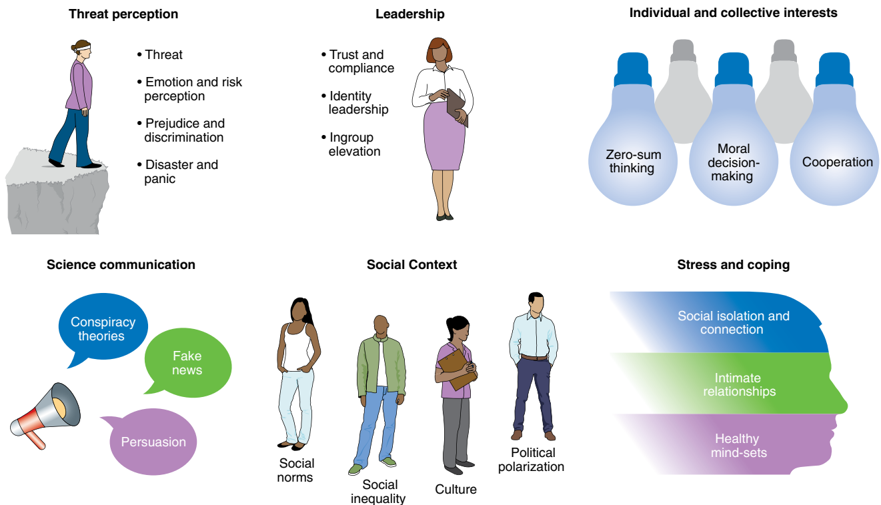
The COVID-19 pandemic represents a massive global health crisis. Because the crisis requires large-scale behaviour change and places significant psychological burdens on individuals, insights from the social and behavioural sciences can be used to help align human behaviour with the recommendations of epidemiologists and public health experts. Here we discuss evidence from a selection of research topics relevant to pandemics, including work on navigating threats, social and cultural influences on behaviour, science communication, moral decision-making, leadership, and stress and coping. In each section, we note the nature and quality of prior research, including uncertainty and unsettled issues. We identify several insights for effective response to the COVID-19 pandemic and highlight important gaps researchers should move quickly to fill in the coming weeks and months.
Overview
CoChat Summary
TL;DR
This perspective argues that social and behavioural science can help align public behaviour with COVID-19 public health recommendations across threat perception, social context, science communication, cooperation, leadership, and stress/coping. It synthesizes prior evidence and policy insights while cautioning that evidence is limited, often drawn from non-pandemic contexts, and in many areas unsettled.
Key findings
- The paper notes the scale of infectious disease threats: the bubonic plague killed approximately 25% of the European population, and by March 2020 COVID-19 had spread to more than 118,000 cases and caused 4,291 deaths in 114 countries. It also notes that 21 countries donated medical supplies to China in February, with China reciprocating widely.
- Fear appeals can change behaviour when people feel capable of dealing with the threat, but produce defensive reactions when people feel helpless; optimism bias can lead people to underestimate personal risk and ignore public health warnings.
- Social norms, inequality, culture, and political polarization shape pandemic behaviour: correcting misperceived norms can help when most people are already doing the desirable behaviour, but descriptive norms can backfire if the behaviour is undesirable unless paired with prescriptive norms.
- Effective communication and leadership may involve credible sources, messages that protect others or align with moral values, prebunking/inoculation against misinformation, accuracy nudges, shared social identity, and leaders modelling prosocial sacrifice; excessive national self-image concerns (“collective narcissism”) can backfire.
Methods
- Design: Perspective/narrative review; no primary data collection or sample. Topics were identified by the corresponding authors as potentially relevant to pandemic response and are explicitly not exhaustive.
- Evidence base: synthesizes prior social and behavioural research on threat perception, social context, science communication, moral decision-making, cooperation, leadership, and stress/coping, drawing on laboratory experiments, correlational studies, field experiments, meta-analyses, and preprints/forthcoming work.
- Analysis: narrative synthesis with policy implications and identified research gaps; no systematic search strategy or quantitative synthesis is reported.
Limitations
- Stated: due to space constraints, the paper provides only a brief summary of each topic; research on these topics is ongoing and in many cases far from settled; there is very little published social science research on the current pandemic, so discussion often draws from different circumstances and evidence quality varies substantially.
- Stated: insights and policy implications should be interpreted with caution.
- Evident: as a perspective rather than a systematic review or empirical study, it does not provide a comprehensive evidence appraisal, and its reliance on preprints and forthcoming sources limits certainty.
Model-written summary. Check it against the paper before relying on it.
Integrity signals
Registry
Cites
Statistics
Figures
Verification
Claims the paper makes
19 Valid · 5 Not valid · 37 Not checked · 13 Own results and interpretations
At least one cited source doesn’t support this claim or points to a different paper, and none confirmed it — see the verdicts below.
In the paper
“For instance, in hypothetical scenarios about deciding whether to go to work while sick, American and British participants reported they would be less willing to stay home when it was uncertain they would infect a co-worker.”
What the sources say
- Disputedcites [176] Kappes, A. et al. Uncertainty about the impact of social decisions increases prosocial behaviour. Nat. Hum. Behav. 2, 573–580 (2018). sourceExperimental — accuracy not yet measured
In the paper’s account of the infectious-disease scenario (Abstract; page not provided), participants facing uncertainty about how severely a co-worker might be affected were more likely to stay home than controls, not less. The paper distinguishes that impact uncertainty from uncertainty about whether a co-worker would be infected. Its Study 6 Methods (page not provided) describe recruitment through AMT, but do not establish the claimed American and British participant groups. (LLM, conf=0.88)
Checked by a reasoning model — may be wrong.
hedgedstates an association- Asserted: passes — The authors put it forward as true.
- Checkable: passes — It can be checked against evidence.
- Load-bearing: passes — The paper’s conclusions depend on it.
- Based: passes — The paper gives a reason why it holds.
- Disputed
The cited sources that could be checked couldn’t confirm or dispute this claim.
In the paper
“Moreover, there is mixed research regarding whether corrections may actually increase belief in the original misinformation 121,124-126 or in other misleading claims that fail to get corrected 127 .”
What the sources say
- Not checked — no full text of the sourcecites [121] Guess, A. & Coppock, A. Does counter-attitudinal information cause backlash? Results from three large survey experiments. Br. J. Polit. Sci. https://doi.org/10.1017/S0007123418000327 (2018). source
- Not matchedcites [124] Wittenberg, C. & Berinsky, A.J. Misinformation and its correction. in Social Media and Democracy: The State of the Field (eds Persily, N. & Tucker, J. A.) (Cambridge University Press, forthcoming).
Its entry has no title and year that we can search by.
- Not checked — no full text of the sourcecites [125] Swire, B. & Ecker, U.K.H. Misinformation and its correction: Cognitive mechanisms and recommendations for mass communication. in Misinformation and Mass Audiences (eds. Southwell, B. G., Thorson, E. A. & Sheble, L.) 195–2011 (University of Texas Press, 2018). source
- Not checked — no full text of the sourcecites [126] Wood, T. & Porter, E. The elusive backfire effect: mass attitudes’ steadfast factual adherence. Polit. Behav. 41, 135–163 (2018). source
- Could not verifycites [127] Pennycook, G., McPhetres, J., Zhang, Y. & Rand, D. Fighting COVID-19 misinformation on social media: Experimental evidence for a scalable accuracy nudge intervention. Preprint at PsyArXiv https://doi.org/10.31234/osf.io/uhbk9 (2020). sourceExperimental — accuracy not yet measured
Citation 127 is attached to the suggestion that corrections may increase belief in other misleading claims that go uncorrected. The Statement of Relevance and Discussion describe an accuracy nudge that improved sharing decisions, not corrections or their effects on belief in uncorrected claims. Searches for correction backfire and uncorrected misinformation found no passage addressing that point; page numbers were unavailable in our copy. (LLM, conf=0.76)
hedgedstates a possible cause- Asserted: passes — The authors put it forward as true.
- Checkable: passes — It can be checked against evidence.
- Load-bearing: passes — The paper’s conclusions depend on it.
- Based: passes — The paper gives a reason why it holds.
The sources with a verdict support this claim; the rest weren’t checked yet, have no full text we could read, or their verdicts aren’t rated yet.
In the paper
“Indeed, laboratory research has found that people prioritize local over global (or international) interests 185,186 .”
What the sources say
- Supportedcites [185] Milinski, M., Hilbe, C., Semmann, D., Sommerfeld, R. & Marotzke, J. Humans choose representatives who enforce cooperation in social dilemmas through extortion. Nat. Commun. 7, 10915 (2016). source
The Results section (‘Voters choose selfish representatives’; page unavailable) reports that participants preferentially re-elected representatives who contributed less to the shared climate account and elected candidates who pledged to contribute less than a fair share. In this simulated international dilemma, that supports the claim that participants favored their own group’s interests over the collective goal; it does not establish that everyone did so. (LLM, conf=0.85)
- Not checked — no full text of the sourcecites [186] Reinders Folmer, C. P. et al. One for all: what representing a group may do to us. J. Exp. Soc. Psychol. 48, 1047–1056 (2012). source
plain- Asserted: passes — The authors put it forward as true.
- Checkable: passes — It can be checked against evidence.
- Load-bearing: passes — The paper’s conclusions depend on it.
- Based: passes — The paper gives a reason why it holds.
- Supported
Every source the paper cites for this claim was checked and supports it.
In the paper
“However, when going to work risked infecting an elderly co-worker who would suffer a serious illness, participants reported they would be more willing to stay home 176 .”
What the sources say
- Supportedcites [176] Kappes, A. et al. Uncertainty about the impact of social decisions increases prosocial behaviour. Nat. Hum. Behav. 2, 573–580 (2018). source
The Study 6 Methods (page not provided) describe a scenario in which going to work could infect an older, vulnerable co-worker who would suffer severely, followed by a rating of willingness to go to work. The reported Study 6 findings (indexed under Abstract; page not provided) say participants given that risk information were significantly more likely to stay home than controls. (LLM, conf=0.92)
hedgedstates a cause- Asserted: passes — The authors put it forward as true.
- Checkable: passes — It can be checked against evidence.
- Load-bearing: passes — The paper’s conclusions depend on it.
- Based: passes — The paper gives a reason why it holds.
- Supported
The sources with a verdict support this claim; the rest weren’t checked yet, have no full text we could read, or their verdicts aren’t rated yet.
In the paper
“Several techniques, such as sanctioning defectors 187 or rewarding cooperators 188 , tend to increase cooperative behaviour in laboratory experiments using economic games.”
What the sources say
- Not checked — no full text of the sourcecites [187] Yamagishi, T. The provision of a sanctioning system as a public good. J. Pers. Soc. Psychol. 51, 110–116 (1986). source
- Supportedcites [188] Rand, D. G., Dreber, A., Ellingsen, T., Fudenberg, D. & Nowak, M. A. Positive interactions promote public cooperation. Science 325, 1272–1275 (2009). source
Citation 188 is attached to rewarding cooperators. The paper’s Abstract reports a laboratory comparison using repeated public goods games and finds that reward maintained public cooperation and, when both reward and punishment were available, increased contributions. (LLM, conf=0.93)
plainstates a cause- Asserted: passes — The authors put it forward as true.
- Checkable: passes — It can be checked against evidence.
- Load-bearing: unclear — It is unclear whether the paper’s conclusions depend on it.
- Based: passes — The paper gives a reason why it holds.
50 more claims · 13 with their cited sources checked
Create a free account to see all 74 claims and to verify the 2 references still open.
- It may state two separate claims as one. 13
- Probably not a substantial claim. 6
Claims other papers make about this one
Each is checked against this paper’s own text: does it say what the citing paper says it does?
The source backs part of the claim, not all of it — or backs it for a different population, condition or comparison.
In the citing paper
“COVID-19 is an international public health crisis, putting substantial burden on medical centers and increasing the psychological toll on health care workers (HCW).”
From Supporting the well-being of health care providers during the COVID-19 pandemic: The CopeColumbia response (2020) · cites this paper as [6]
Experimental — accuracy not yet measuredThe source backs part of the claim, not all of it — or backs it for a different population, condition or comparison.
In the citing paper
“these population-wide measures affected psychological well-being and mental health as well as increased social isolation [68] and loneliness.”
From Psychological correlates of perceived loneliness in college students before and during the COVID-19 stay-at-home period: a longitudinal study (2023) · cites this paper as [68]
Experimental — accuracy not yet measuredThe source backs part of the claim, not all of it — or backs it for a different population, condition or comparison.
In the citing paper
“they may eventually increase the social isolation of students and affect their psychological well-being and mental health [3].”
From Students under lockdown: Comparisons of students’ social networks and mental health before and during the COVID-19 crisis in Switzerland (2020) · cites this paper as [3]
Experimental — accuracy not yet measuredThe source backs part of the claim, not all of it — or backs it for a different population, condition or comparison.
In the citing paper
“effective interventions are hard to scale to a population level (12);”
From Psychological inoculation improves resilience against misinformation on social media (2022) · cites this paper as [12]
Experimental — accuracy not yet measuredThe source backs part of the claim, not all of it — or backs it for a different population, condition or comparison.
In the citing paper
“There is a shortage of studies that test anti-misinformation interventions in an ecologically valid manner, i.e., testing an intervention as consumers would interact with it in online environments (8, 12).”
From Psychological inoculation improves resilience against misinformation on social media (2022) · cites this paper as [12]
Experimental — accuracy not yet measured
6 more claims about this paper
Create a free account to see every claim other papers make about this one.
Citations
Cites
Granovetter, M. S. (1973) · American Journal of Sociology · doi:10.1086/225469 · Cited by 40,491
Zhou, F., Yu, T., Du, R., Fan, G., Liu, Y., Liu, Z., Xiang, J., Wang, Y., Song, B., Gu, X., et al. (2020) · The Lancet · doi:10.1016/s0140-6736(20)30566-3 · Cited by 27,263
The need to belong: Desire for interpersonal attachments as a fundamental human motivation.
Baumeister, R. F., & Leary, M. R. (1995) · Psychological Bulletin · doi:10.1037//0033-2909.117.3.497 · Cited by 23,245
Culture and the self: Implications for cognition, emotion, and motivation.
Markus, H. R., & Kitayama, S. (1991) · Psychological Review · doi:10.1037/0033-295x.98.2.224 · Cited by 21,995
Self-citationThe Psychological Impact of Quarantine and How to Reduce It: Rapid Review of the Evidence
Brooks, S. K., Webster, R. K., Smith, L. E., Woodland, L., Wessely, S., Greenberg, N., & Rubin, G. J. (2020) · doi:10.2139/ssrn.3532534 · Cited by 16,394
The psychological impact of quarantine and how to reduce it: Rapid review of the evidence
Brooks, S. K., Webster, R. K., Smith, L. E., Woodland, L., Wessely, S., Greenberg, N., & Rubin, G. J. (2020) · The Lancet · doi:10.1016/s0140-6736(20)30460-8 · Cited by 16,378
Nudge: improving decisions about health, wealth, and happiness
(2008) · Choice Reviews Online · doi:10.5860/choice.46-0977 · Cited by 11,572
Slovic, P. (1987) · Science · doi:10.1126/science.3563507 · Cited by 9,271
The Elaboration Likelihood Model of Persuasion
Petty, R. E., & Cacioppo, J. T. (1986) · Advances in Experimental Social Psychology · doi:10.1016/s0065-2601(08)60214-2 · Cited by 8,822
Self-citationThe emotional dog and its rational tail: A social intuitionist approach to moral judgment.
Haidt, J. (2001) · Psychological Review · doi:10.1037/0033-295x.108.4.814 · Cited by 8,048
Research works printed but not linked: 3
- Berkowitz, A.D. An overview of the social norms approach. in Changing the Culture of College Drinking: A Socially Situated Health Communication Campaign (eds. Stewart, L. & Lederman, L. C.) 193–214 (Hampton Press, 2005).
- Wittenberg, C. & Berinsky, A.J. Misinformation and its correction. in Social Media and Democracy: The State of the Field (eds Persily, N. & Tucker, J. A.) (Cambridge University Press, forthcoming).
- Ransohoff, K.J. Patients on the Trolley Track: The Moral Cognition of Medical Practitioners and Public Health Professionals. (Harvard Univ. Press, 2011).
Cited by
Items 3,701–3,800 of 5,015
Forcén, F. E., & Freudenreich, O. (2023) · The Journal of Nervous and Mental Disease · doi:10.1097/nmd.0000000000001668 · Cited by 3
Qomariansyah, I. N., Husamah, H., & Miharja, F. J. (2023) · Prisma Sains Jurnal Pengkajian Ilmu dan Pembelajaran Matematika dan IPA IKIP Mataram · doi:10.33394/j-ps.v11i2.7386 · Cited by 1
Susanti, Y., Handoyo, S., Ernawaty, E., & Hendriani, W. (2023) · Journal of Public Health in Africa · doi:10.4081/jphia.2023.2555 · Cited by 3
Harmony Leadership and Personality on Employee Performance at Ganesha University of Education
Billah, A., Suci, N. M., & Suarmanayasa, I. N. (2022) · International Journal of Social Science and Business · doi:10.23887/ijssb.v6i3.45543 · Cited by 1
Tyagi, K. (2023) · Journal of Health Management · doi:10.1177/09720634231167033 · Cited by 1
KORKUNUN PSİKOLOJİK SAĞLAMLIK ÜZERİNDEKİ YORDAYICI ROLÜ: ADİL DÜNYA İNANCI VE SIKINTIYA TOLERANS
Kazancı, D., & Akçınar, B. (2023) · Karadeniz Uluslararası Bilimsel Dergi · doi:10.17498/kdeniz.1280006 · Cited by 1
Jaya, I. G. A. P., Wisnawa, I. M. B., & Arini, N. N. (2023) · Jurnal Ilmiah Hospitality Management · doi:10.22334/jihm.v13i2.251 · Cited by 1
“…yang meningkat, waktu yang terbatas, sikap pemimpin, konflik kerja, kerja sama yang kurang baik antara karyawan satu dengan lainnya, kurangnya alat, dan bahan pekerjaan yang mendukung, sehingga menghambat kelancaran operasional kerja (Bayona-Saez et al., 2017; Soko & Harjanti, 2022; Suseno, 2019).”
BackgroundADAPTASI PENDIDIKAN ERA 4.0: COVID-19 MOMENTUM MENGKONSTRUKSI SISTEM PENDIDIKAN DI INDONESIA
Maharani, A., & Putra, R. H. (2023) · Jurnal Praksis dan Dedikasi Sosial (JPDS) · doi:10.17977/um032v6i1p27-34 · Cited by 4
Suasapha, A. H. (2023) · International Journal of Social Science and Human Research · doi:10.47191/ijsshr/v6-i6-55 · Cited by 1
Alrasheeday, A., Borja, M. V. F., Pasay-an, E. A., & Alshammari, F. (2023) · Makara Journal of Health Research · doi:10.7454/msk.v27i1.1401 · Cited by 3
Impacts of Fake News and Conspiracy Theory
Burns, R. B. (2023) · Springer eBooks · doi:10.1007/978-981-99-1710-5_3 · Cited by 2
Building [dis]trust in COVID discourses
Galkin, K. A., & Парфенова, О. (2023) · Экология человека · doi:10.17816/humeco322845 · Cited by 1
Early Cyberspace Emergency Response by Predicting Social‐Emotional Security
Jiang, S., Fu, Z., Zhang, H., Qi, J., Zhou, Y., & Fang, B. (2022) · Wireless Communications and Mobile Computing · doi:10.1155/2022/5876180 · Cited by 1
COVID-19 impacts on the water quality of aquatic environment in the Indian Ocean Rim region
Wong, L. L., See, M. S., Azra, M. N., Muthumbi, A. W. N., Wang’ondu, V. W., & Kinyunzu, J. (2023) · Regional Studies in Marine Science · doi:10.1016/j.rsma.2023.103186 · Cited by 1
Mishra, D., & Lahby, M. (2023) · Springer optimization and its applications · doi:10.1007/978-3-031-33183-1_13 · Cited by 1
Freire, F. L. P. D. N., de Lima, R. L. F. C., Gomes, N. I. G., Viana, M. A. C. B. M., Callou, K. R. D. A., & Vianna, R. P. D. T. (2023) · Revista de Nutrição · doi:10.1590/1678-9865202336e220218 · Cited by 2
The portrayal of COVID-19 in Ethiopian song lyrics
Kebede, B. D. (2023) · Cogent Arts and Humanities · doi:10.1080/23311983.2023.2259669 · Cited by 1
“This underscores Van Bavel et al. (2020) Is that so?”
BackgroundInfluentialCOVID-19 VE DAVRANIŞSAL İKTİSAT: KÜRESEL BİR PANDEMİ SIRASINDA İNSAN DAVRANIŞINI ANLAMAK
ÇİLHOROZ, İ. A. (2023) · Sağlık ve Sosyal Refah Araştırmaları Dergisi · doi:10.55050/sarad.1301510 · Cited by 1
Mukoma, G., Bosire, E. N., Hardy‐Johnson, P., Barker, M. E., & Norris, S. A. (2023) · Global Public Health · doi:10.1080/17441692.2023.2264968 · Cited by 3
“In contrast, strong fear appeals coupled with low-e ffi cacy messages result in the most defensive responses or avoidance coping strategies, both of which may contribute to a lack of adherence to preventative measures (Bavel et al., 2020).”
BackgroundWall, A., Burton, L., & Perkins, E. (2023) · International Journal of Mental Health Nursing · doi:10.1111/inm.13243 · Cited by 7
Psychometric Evaluation of the Italian Version of the COVID-19 Vaccine Conspiracy Beliefs Scale
Pisanti, R., & Soraci, P. (2023) · European Journal of Psychology Open · doi:10.1024/2673-8627/a000046 · Cited by 1
Keywords on COVID-19 Vaccination: An Application of NLP into Macau Netizens’ Social Media Comments
Chen, X., Wang, V. X., Lim, L., & Huang, C. (2023) · Smart innovation, systems and technologies · doi:10.1007/978-981-99-6702-5_10 · Cited by 1
Chepngeno, J. B., & Anyonje, L. (2023) · African Journal of Empirical Research · doi:10.51867/ajernet.4.2.126 · Cited by 2
“Bavel et al. (2020) argue that opinion leaders influence health behaviour.”
BackgroundLifestyle Changes and COVID-19 Related Perceptions of Turkish Healthcare Workers
Batu, Z., Batu, M., Yanık, A., Oğur, H., Kavcar, S. Y., & Bolat, S. (2023) · SAGE Open · doi:10.1177/21582440231210691 · Cited by 2
“As the number of deaths from the disease increased world-wide, it turned into a major global health crisis requiring large-scale behavioral change (Bavel et al., 2020).”
BackgroundA Failure of Fear: Liabilities of Looseness During COVID-19
Gelfand, M. J., Pan, X., & Landry, A. (2023) · Oxford University Press eBooks · doi:10.1093/oso/9780197615133.003.0035 · Cited by 2
Self-citationXenophobia, Prejudice, Stigma, and the COVID-19 Pandemic
Estrada-Reynolds, V. C., & Esqueda, C. W. (2023) · Oxford University Press eBooks · doi:10.1093/oso/9780197615133.003.0023 · Cited by 1
Investigating laypeople’s short- and long-term forecasts of COVID-19 infection cycles
Koo, M. S., Lee, Y. S., & Seifert, M. (2023) · International Journal of Forecasting · doi:10.1016/j.ijforecast.2023.11.008 · Cited by 1
Regional Variation in Social Norms and Domestic Anti-Immigrant Hostility
Kim, H. H. (2023) · Cross-Cultural Research · doi:10.1177/10693971231223279 · Cited by 1
“Research shows that there are signi fi cant cross-national differences along the TL dimension (Van Bavel et al., 2020).”
BackgroundInfluentialUsing Behavioral Science for Infodemic Preparedness: The Case of Vaccination Misinformation
Schmid, P. (2023) · Policy Insights from the Behavioral and Brain Sciences · doi:10.1177/23727322231219684 · Cited by 4
“Behavioral scientists de fi ne pandemic preparedness not only in terms of illness detection, prevention, and response but also in terms of people ’ s vaccination readiness (Bavel et al., 2020; Habersaat et al., 2020).”
BackgroundCarvalho, L. D. F., Miguel, F. K., Machado, G. M., de Oliveira, C., & Pianowski, G. (2023) · Personality and Mental Health · doi:10.1002/pmh.1601 · Cited by 1
The acceptance and commitment therapy (ACT) reduce stress in patients with type 2 diabetes mellitus
Bistara, D. N., Susanti, S., Pranata, S., & Mustamu, A. C. (2023) · Scripta Medica · doi:10.5937/scriptamed54-45794 · Cited by 5
Covid-19: Challenges on Undergraduate Research Students to an Online Learning Mode
Aziz, N. M., & Jabar, I. L. (2024) · Built Environment Journal · doi:10.24191/bej.v21i1.488 · Cited by 1
Understanding Emotional Disclosure via Diary-keeping in Quarantine on Social Media
Deng, Y., He, C., & Li, B. (2023) · International Symposium of Chinese CHI (Chinese CHI) · doi:10.1145/3629606.3629623 · Cited by 4
Hiraishi, K., Miura, A., Higuchi, M., Fujishima, Y., Nakamura, D., & Suyama, M. (2024) · PeerJ · doi:10.7717/peerj.16763 · Cited by 2
Herrero‐Arias, R., Halbostad, I. V., & Díaz, E. (2024) · Archives of Public Health · doi:10.1186/s13690-024-01237-0 · Cited by 1
Health Behaviour Changes among Malaysian Citizens During Covid-19 Pandemic: a Review
Aimanan, S. N. M., Kassim, R., Panting, A. J., Amirudin, N., KRISHNAN, N. I. M., & Ithnain, N. (2024) · International Journal For Multidisciplinary Research · doi:10.36948/ijfmr.2024.v06i01.12225 · Cited by 2
“This pandemic led to a massive global health crisis that necessitated widespread behavioural modifications that imposed significant physical and psychological burdens on individuals and societies [4].”
BackgroundThe Willingness of Dutch Travelers to Travel Pro-environmentally Post-COVID-19
Isaac, R. K. (2024) · Springer eBooks · doi:10.1007/978-3-031-45866-8_6 · Cited by 2
The role of planfulness for well-being, stress, and goal disruption during COVID-19
Ameden, W. C., Tricomi, E. M., & Heintzelman, S. J. (2024) · Frontiers in Psychology · doi:10.3389/fpsyg.2024.1224451 · Cited by 1
Huang, Y. (2024) · Interdisciplinary Humanities and Communication Studies · doi:10.61173/2cq5vh11 · Cited by 2
“Ongoing communication, unwavering transparency, and responsiveness to citizens’ concerns were the pillars of this trust (Van Bavel et al., 2020).”
Background“Kuna Corona fake na Og”: The Role of Postcolonial Laughter during the COVID-19 Outbreak in Tanzania
Mnenuka, A. (2024) · The African Review · doi:10.1163/1821889x-bja10075 · Cited by 2
Prosociality predicts changes in leisure activities during the COVID-19 pandemic
Konishi, N., Kimura, M., & Takeda, Y. (2024) · Frontiers in Psychology · doi:10.3389/fpsyg.2024.1320885 · Cited by 1
COVID-19: ¿La pandemia nos vino como anillo al dedo?
López, J. A. P., Grijalva, F. T., & Garcia, L. (2024) · Revista Panamericana de Comunicación · doi:10.21555/rpc.v6i1.2957 · Cited by 3
The Impact of COVID-19 Pandemic Linguistic Landscapes on Lifestyle, Health Awareness and Behavior
Alhazmi, A. A. (2024) · World Journal of English Language · doi:10.5430/wjel.v14n3p359 · Cited by 1
Açıkel, A., & Ay, H. (2024) · Üniversite Araştırmaları Dergisi · doi:10.32329/uad.1334249 · Cited by 2
Momenpour, Y., & Choobchian, S. (2024) · International Journal of Disaster Risk Reduction · doi:10.1016/j.ijdrr.2024.104415 · Cited by 2
A study on the impact of COVID-19 on the mental health of undergraduate students
Vaidya, H., Agarwal, N., Kotipalli, S., Anand, A. A., & Vara Lakshmi, S. (2024) · Asian Journal of Management and Commerce · doi:10.22271/27084515.2024.v5.i1d.264 · Cited by 2
Skrip, L., Weller, M. B., Dukuly, S., Candy, N., Harmon-Gray, W.-M., Clarke, A., & Dahn, B. T. (2024) · BMC Global and Public Health · doi:10.1186/s44263-024-00054-5 · Cited by 1
Persepsi Warga Tua Terhadap Komplikasi Kesihatan Selepas Pengambilan Vaksin COVID-19 di Malaysia
Malaysia, U. K., Ismail, N. I., Salleh, S. M., & Malaysia, U. K. (2024) · Jurnal Komunikasi Malaysian Journal of Communication · doi:10.17576/jkmjc-2024-4001-13
Buvár, Á., Balogh, E., Dobai, A. M., & Tessényi, J. (2024) · Journal of Interactive Advertising · doi:10.1080/15252019.2024.2329134 · Cited by 1
“Thus, disseminating accurate health information can positively affect the adaptation of these behaviors (Bavel et al. 2020).”
BackgroundLiu, C., Holme, P., Lehmann, S., Yang, W., & Lu, X. B. (2024) · JMIR Formative Research · doi:10.2196/55013 · Cited by 7
Implications of COVID-19 for Mental Health among Different Sections of the Society
Ahmed, M., & Khan, S. T. (2022) · Molecular Medicine Communications · doi:10.55627/mmc.002.002.0135 · Cited by 1
Omer, Z., Khalid, Y., Zakaria, G., Sabir, S., & Abdallah, A. M. (2024) · Annals of Medicine and Surgery · doi:10.1097/ms9.0000000000002056 · Cited by 1
“Many factors have contributed to this mindset, including age, history of the disease among the family or close relatives, faith in international media coverage, and con fi dence in the vaccine ’ s ef fi cacy, leading to negative attitudes and risky behaviours [4,12,17] .”
BackgroundTransboundary COVID-19 response on health communication in Botswana, South Africa and Zimbabwe
Nyandoro, M., Mduluza, T., & Nyandoro, L. (2024) · The Journal for Transdisciplinary Research in Southern Africa · doi:10.4102/td.v20i1.1394 · Cited by 1
Examining the effects of the COVID-19 pandemic on technology-enabled social interactions
Nawaz, S., Linden, T., Mitchell, M., & Bhowmik, J. (2023) · Australian Conference on Computer-Human Interaction (OzCHI) · doi:10.1145/3638380.3638444 · Cited by 5
“During the COVID-19 pandemic, most Australians experienced significant changes to their study, work, and social interactions during the pandemic [4, 11].”
BackgroundQuadra, M. R., Schäfer, A. A., Maciel, E. B., Vargas, B. L., Schlemper, L. A. S., Petry, S. G., & Meller, F. D. O. (2024) · Journal of Communications In Healthcare · doi:10.1080/17538068.2024.2352982 · Cited by 1
Government popularity in the UK during the COVID‐19 pandemic
Castro, V., & Martins, R. (2024) · Economics and Politics · doi:10.1111/ecpo.12292 · Cited by 2
Politización del discurso de alcaldes de Colombia durante la pandemia del COVID-19 en Twitter
Barreto, I., Revelo, D. R., Velandia-Morales, A., Pardo, D. R. A., Garzón‐Velandia, D. C., Carvajal-Builes, J. C., Carrillo, A., & Cameselle, J. M. S. (2024) · Revista Latina de Comunicación Social · doi:10.4185/rlcs-2025-2307 · Cited by 3
Pellegrin, K. L., Hales, S., O'Neil, P. M., Wongwiwatthananukit, S., Jongrungruangchok, S., Songsak, T., Lozano, A. J., Miller, K., Mnatzaganian, C. L., Fricovsky, E. S., et al. (2024) · Public Health in Practice · doi:10.1016/j.puhip.2024.100512 · Cited by 1
“Research on social context and culture is needed, including on adaptation of interventions to local community cultures to ensure efficacy and avoid adverse effects [7 – 9].”
BackgroundLyu, X., Yang, T., Wang, Y., & Fu, C. (2024) · Current Psychology · doi:10.1007/s12144-024-06142-x · Cited by 1
“Specifically, normative information functions as a heuristic (Lisciandra et al., 2014; Van Bavel et al., 2020), enabling individuals to deduce the safety and efficacy of vaccines by observing the choices of other group members.”
Nyinondi, O. S. (2024) · EAST AFRICAN JOURNAL OF EDUCATION AND SOCIAL SCIENCES · doi:10.46606/eajess2024v05i01.0353 · Cited by 1
The Use of Crowd Models for Risk Analysis During the Covid-19 Pandemic
Ronchi, E., Lovreglio, R., Scozzari, R., & Fronterrè, M. (2024) · Modeling and simulation in science, engineering & technology · doi:10.1007/978-3-031-56794-0_3 · Cited by 1
Kurniawati, E. M., & Rahmawati, N. A. (2024) · F1000Research · doi:10.12688/f1000research.122237.4 · Cited by 1
Development and validation of the Environmental Confinement Stressors Scale (ECSS-20)
Santibáñez-Palma, J. F., Ferrer‐Urbina, R., Sepúlveda-Páez, G. L., de la Fuente, J. B., & Alarcón-Castillo, K. (2024) · Frontiers in Psychology · doi:10.3389/fpsyg.2024.1386235 · Cited by 1
Can Democrats and Republicans like each other? Depends on how you define “American”
Toprakkiran, S., Gordils, J., & Jamieson, J. P. (2024) · Frontiers in Social Psychology · doi:10.3389/frsps.2024.1338515 · Cited by 3
The Politicization of the COVID‐19 Pandemic
Kirbiš, A., & Lubej, M. (2024) · Advances in experimental medicine and biology · doi:10.1007/978-3-031-61943-4_9 · Cited by 3
Institutional quarantine and economic preferences: Experimental evidence from China
Zhang, Y., Li, J., Cao, Q., & Niu, X. (2024) · China Economic Review · doi:10.1016/j.chieco.2024.102251 · Cited by 1
Measuring vulnerability index for managing COVID-19 behaviour in Ghana
Amidu, M., Akakpo, A. A., & Kwakye, T. O. (2024) · Cogent Business & Management · doi:10.1080/23311975.2024.2391247 · Cited by 1
“…hand, can influence the spread of infectious diseases (acuña-Zegarra et al., 2020; clark et al., 2020; hussain et al., 2020; Michie & West, 2021; Bavel et al., 2020). it is asserted that human behaviour played a crucial role in causing cOViD-19 (Michie & West, 2021). the success stories of many…”
Mental Health and (Online) Behaviors during the COVID-19 Pandemic in Spain: A Network-Based Approach
Macías, M. I. S., & Álvarez‐Gálvez, J. (2024) · Behavioral Sciences · doi:10.3390/bs14090735 · Cited by 1
“However, behavioral change strategies have also been used to fight the pandemic [20].”
MethodYifeng, F., & Yaacob, H. (2024) · South Asian Journal of Social Sciences and Humanities · doi:10.48165/sajssh.2024.5408 · Cited by 1
“Such a huge growth of ceramic products in China also gives an idea about customers’ perceptions and trends toward ceramic products (Bavel et al., 2020; Blank-Libra, 2016; Dearing, 2016; Dirks & McLean Parks, 2003).”
BackgroundDo individual differences in perceived vulnerability to disease shape employees' work engagement?
Shi, J., Cook, A. S., van Vugt, M., & Bakker, A. B. (2024) · Personality and Individual Differences · doi:10.1016/j.paid.2024.112863 · Cited by 4
Refueling a Quiet Fire: Old Truthers and New Discontent in the Wake of COVID-19
Beccari, G., Giaccherini, M., Kopinska, J. A., & Rovigatti, G. (2024) · Demography · doi:10.1215/00703370-11587755 · Cited by 4
ten Hoor, G. A., Ruiter, R. A. C., & Kok, G. (2024) · Discover Social Science and Health · doi:10.1007/s44155-024-00111-2 · Cited by 2
Kang, X., & Stamolampros, P. (2024) · BMC Public Health · doi:10.1186/s12889-024-20160-1 · Cited by 3
“With the exponentially increasing number of relevant tweets and other social media posts, fake news was widely spread online, generating unnecessary unrest among the public [8] and triggering people’s negative emotions [9].”
BackgroundCrisis geographies from above and below: Constructing globality during the COVID‐19 pandemic
Uyheng, J., Montiel, C. J., & Sibayan, E. (2024) · British Journal of Social Psychology · doi:10.1111/bjso.12820 · Cited by 2
Predictors of preventative behavior in the restaurant industry: learning from the COVID-19 pandemic
Lu, C. Y., Marek, M. W., & Chen, B. T. (2024) · Journal of Foodservice Business Research · doi:10.1080/15378020.2024.2423106 · Cited by 1
“As the number of COVID-19 deaths worldwide increased, there was a growing need to understand risk perceptions (Van Bavel et al., 2020).”
Tonkaboni, N. D., Bagheri, M., Gholamnia-Shirvani, Z., Mirzaei, H., & Mahdizadeh, M. (2024) · Scientific Reports · doi:10.1038/s41598-024-79075-x · Cited by 1
Fu, S., Ren, Z., Yang, Z., Li, Z., Wang, J., Zhao, T., & Huang, X. (2024) · BMC Psychology · doi:10.1186/s40359-024-02165-y · Cited by 2
Ageng, K., & Inthiran, A. (2024) · JMIR Pediatrics and Parenting · doi:10.2196/58482 · Cited by 1
“The observed practices resonate with the broader social and cultural norms that emphasize the value of communal support and shared experiences in navigating significant life events [74].”
Yang, X. Y., Yang, T., Tingzhong, Y., & Rockett, I. R. H. (2024) · Disaster Medicine and Public Health Preparedness · doi:10.1017/dmp.2024.292 · Cited by 11
“” 29 “ Rigid ” cultures, such as those of Singa-pore, Japan, and China, have strict social norms and punishment for deviance, whereas “ porous ” cultures, such as those characterizing the U.S., Italy, and Brazil, reflect weaker social norms and greater permissiveness.”
THE MODERATING INFLUENCE OF DOMESTIC TRAVELER PERCEIVED RISK IN FAMILY TOURISM
Abdullah, N. H., Jamal, S. A., Amir, A. F., et al. (2024) · PLANNING MALAYSIA · doi:10.21837/pm.v22i34.1638 · Cited by 1
“Research indicates that crises impact tourists' attitudes and travel choices (Karl, 2018), with the pandemic intensifying psychological stress and altering risk perception and responses (Bavel et al., 2020).”
A simple message and two framings to enhance protective behaviours adoption in a pandemic
Braut, B., & Migheli, M. (2024) · International Review of Economics · doi:10.1007/s12232-024-00482-7 · Cited by 1
“Crucially, research in the field may also help to develop new patterns of behaviour in preparation for future pandemics (West et al. 2020; Van Bavel et al. 2020; Habersaat et al. 2020).”
Li, Y. K. (2024) · International Conference on Behavioral, Economic, and Socio-Cultural Computing · doi:10.1109/besc64747.2024.10780513 · Cited by 1
“In contrast, in Western countries with a strong emphasis on individual autonomy and personal freedom, people might be less inclined to follow government restrictions or organizational guidelines during the pandemic [25].”
Halabi, S., Noor, M., & Dovidio, J. F. (2024) · Journal of Applied Social Psychology · doi:10.1111/jasp.13078 · Cited by 1
Advances and Challenges in Public Health and the SDGs: a Critical Review of Emerging Trends
Paucar, G. V. C., Paucar, E. W. C., Paucar, H. Z. C., Paucar, D. R. C., & Sotelo, C. G. M. (2024) · Journal of Lifestyle and SDGs Review · doi:10.47172/2965-730x.sdgsreview.v5.n01.pe04087 · Cited by 1
Rahman, S. U., Shah, S. F. A., & Samad, A. U. (2024) · Journal for social science archives · doi:10.59075/jssa.v2i2.84 · Cited by 1
“Which ultimately affect the mental health and PsyW of frontline workers in the healthcare sector (Van Bavel et al., 2020).”
Evolution of Well-Being and Associated Factors during the COVID-19 Pandemic
Mondéjar, E. M., Romero, M. F., Rodríguez‐Blázquez, C., Romay‐Barja, M., Forjaz, M. J., Fernández-López, L., & Monteagudo-Piqueras, O. (2025) · Actas Españolas de Psiquiatría · doi:10.62641/aep.v53i1.1783 · Cited by 1
Health Emergency Challenges and Support Strategies: A Qualitative Study on Healthcare Workers
Yadav, M., & Sharma, V. R. (2025) · Journal of Health Management · doi:10.1177/09720634241305063 · Cited by 1
Trust and the COVID-19 Pandemic
Rudisill, C., & Harrison, S. E. (2024) · Cambridge University Press eBooks · doi:10.1017/9781009438438.024 · Cited by 1
Dudziński, Ł., Kubiak, T., Czyżewski, Ł., et al. (2025) · Zeszyty Naukowe SGSP · doi:10.5604/01.3001.0054.9901 · Cited by 1
Hu, X., Zhu, W., Zhou, B., & Liang, L. (2025) · Journal of Contingencies and Crisis Management · doi:10.1111/1468-5973.70030 · Cited by 1
More pressing matters: Can priority reorientation beat online misinformation?
Reda, A. A., & Alkhonin, A. (2025) · Journal of Computational Social Science · doi:10.1007/s42001-024-00333-z · Cited by 2
“For instance, Bavel et al. discuss how collective action during COVID-19 can enhance social cohesion and reduce prejudice [51].”
Perceptions of Pandemic Messaging Across 36 Weeks: A Repeated Cross-Section Design With U.S. Adults
Jensen, J. D., Barbour, J. B., Lillie, H. M., Ratcliff, C. L., Pokharel, M., & King, A. J. (2025) · Science Communication · doi:10.1177/10755470251318199 · Cited by 2
“Unfortunately, the obstacles to pandemic communication can undermine public health efforts (Bavel et al., 2020; Malecki et al., 2021).”
Liu, M., & Liu, L. (2025) · Chinese Public Administration Review · doi:10.1177/15396754251331221 · Cited by 4
“Bavel et al. (2020) point out that individuals need to align with collective interests during such events, and individual behaviors in society are regulated by collective values.”
Adherence to COVID-19 Public Health and Social Measures in Estonia
Tulviste, J., Havik, M., Murd, C., & Konstabel, K. (2025) · European Journal of Psychology Open · doi:10.1024/2673-8627/a000078 · Cited by 1
Savani, M. M., Banerjee, S., Hunter, A., et al. (2025) · Health Psychology and Behavioral Medicine · doi:10.1080/21642850.2025.2490550 · Cited by 1
“Behavioural scientists hoped that insights from their research would encourage higher vaccine uptake while minimising restrictions and reducing backlash (Bavel et al., 2020).”
Fan, H., Zhou, Z., Liu, G., Shen, C., & Zhang, Q. (2025) · International Journal of Public Health · doi:10.3389/ijph.2025.1608162 · Cited by 2
“As Biden assumed of fi ce, heightened hostility toward Democrats among Republicans may have further motivated vaccine hesitancy among Republicans, deepening the partisan divide in public health compliance [27].”
Political Orientation and Policy Compliance: Evidence from COVID-19 Mobility Patterns in Korea
Kim, S., & Yang, H.-S. (2025) · The B E Journal of Economic Analysis & Policy · doi:10.1515/bejeap-2024-0079 · Cited by 1
Prather, J. F., McCoy, D., Heaney, A., Smith, L. A., Grimes, E., Bloomston, N. A., & Courtney, N. (2025) · PLoS ONE · doi:10.1371/journal.pone.0324832 · Cited by 3
“The COVID-19 pandemic led to the enforcement of social distancing requirements [30–32].”
Yuan, J., Dong, M., Lam, W., & Liao, Q. (2025) · British Journal of Health Psychology · doi:10.1111/bjhp.12808
“Our study suggests that positive framing, as opposed to fear or threat appeal, holds promise for mitigating negative emotions and addressing vaccine hesitancy during a pandemic when people have already suffered from multiple stressors (Bavel et al., 2020).”
Policy performance in crisis: evaluating federalism and multi-party governance
Shafi, S., & Mallinson, D. J. (2025) · Journal of European Public Policy · doi:10.1080/13501763.2025.2514826 · Cited by 3
Metadata
- Authors
- Bavel, J. J. V., Baicker, K., Boggio, P. S., Capraro, V., Cichocka, A., Cikara, M., Crockett, M. J., Crum, A. J., Douglas, K. M., Druckman, J. N., Drury, J., Dube, O., Ellemers, N., Finkel, E. J., Fowler, J. H., Gelfand, M., Han, S., Haslam, S. A., Jetten, J., Kitayama, S., Mobbs, D., Napper, L. E., Packer, D. J., Pennycook, G., Peters, E., Petty, R. E., Rand, D. G., Reicher, S. D., Schnall, S., Shariff, A., Skitka, L. J., Smith, S. S., Sunstein, C. R., Tabri, N., Tucker, J. A., Linden, S. V. D., Lange, P. V., Weeden, K. A., Wohl, M. J. A., Zaki, J., Zion, S. R., & Willer, R.
- Affiliations
- New York University (US)
- Universidade Presbiteriana Mackenzie (BR)
- Middlesex University London (GB)
- University of Kent (GB)
- Harvard University (US)
- Yale University (US)
- Stanford University (US)
- Northwestern University (US)
- University of Sussex (GB)
- University of Chicago (US)
- Utrecht University (NL)
- University of California San Diego (US)
- University of Maryland, College Park (US)
- Peking University (CN)
- The University of Queensland (AU)
- University of Michigan (US)
- California Institute of Technology (US)
- Lehigh University (US)
- University of Regina (CA)
- University of Oregon (US)
- The Ohio State University (US)
- Massachusetts Institute of Technology (US)
- University of St Andrews (GB)
- University of Cambridge (GB)
- University of British Columbia (CA)
- University of Illinois Chicago (US)
- University of California, Berkeley (US)
- Carleton University (CA)
- Cornell University (US)
- Corresponding author
- Bavel, Jay J. Van
- Willer, Robb
- ORCID
- Bavel, Jay J. Van
- Baicker, Katherine
- Boggio, Paulo S.
- Capraro, Valerio
- Cichocka, Aleksandra
- Cikara, Mina
- Crockett, Molly J.
- Crum, Alia J.
- Douglas, Karen M.
- Druckman, James N.
- Drury, John
- Ellemers, Naomi
- Finkel, Eli J.
- Fowler, James H.
- Gelfand, Michele
- Han, Shihui
- Haslam, S. Alexander
- Jetten, Jolanda
- Kitayama, Shinobu
- Mobbs, Dean
- Napper, Lucy E.
- Packer, Dominic J.
- Pennycook, Gordon
- Peters, Ellen
- Petty, Richard E.
- Rand, David G.
- Reicher, Stephen D.
- Schnall, Simone
- Shariff, Azim
- Skitka, Linda J.
- Sunstein, Cass R.
- Tabri, Nassim
- Tucker, Joshua A.
- Linden, Sander van der
- Weeden, Kim A.
- Wohl, Michael J. A.
- Zaki, Jamil
- Zion, Sean R.
- Willer, Robb
- Venue
- Nature Human Behaviour
- Published
- 2020-04-30
- Volume
- 4
- Issue
- 5
- Pages
- 460-471
- ISSN
- 2397-3374 (ISSN-L)
- OpenAlex
- W3016902371
- Semantic Scholar
- d81abcd7f053b136423f1e7f57928524e8b0e1a0
- Cited by
- 4,964
- References
- 259
- Citations by year
- 2026: 177 · 2025: 288 · 2024: 483 · 2023: 741 · 2022: 1094 · 2021: 1474 · 2020: 702
- FWCI
- 175.81
- Type
- journal article
- Language
- en
- Open access
- bronze
- doi.org
- Licence
- www.springernature.com/gp/researchers/text-and-data-mining (tdm)
- www.springernature.com/gp/researchers/text-and-data-mining (vor)
- Locations
- Nature Human Behaviour (publishedVersion)
- PubMed (publishedVersion)
- Middlesex University Research Repository (Middlesex University Of London) (acceptedVersion)
- Kent Academic Repository (University of Kent) (acceptedVersion)
- DSpace@MIT (Massachusetts Institute of Technology) (submittedVersion, cc-by-nc-sa)
- Sussex Research Online (University of Sussex) (submittedVersion)
- CaltechAUTHORS (California Institute of Technology) (submittedVersion)
- RePEc: Research Papers in Economics (submittedVersion)
- BOA (University of Milano-Bicocca) (submittedVersion)
- Carleton University's Institutional Repository (MacOdrum Library, Carleton University) (submittedVersion, other-oa)
- Utrecht University Repository (Utrecht University) (submittedVersion)
- Figshare (submittedVersion)
- VU Research Portal (submittedVersion, other-oa)
- Utrecht University Repository (Utrecht University) (submittedVersion, other-oa)
- Data Archiving and Networked Services (DANS) (submittedVersion, other-oa)
- Funders
- U.S. Department of Health and Human Services (2P50 MH094258)
- National Institute of Mental Health (P50MH094258)
- Topics
- Social Sciences › Sociology and Political Science › COVID-19 Prevention and Impact
- Social Sciences › Communication › Communication and COVID-19 Impact
- Physical Sciences › Mathematics › Modeling and Simulation › COVID-19 epidemiological studies
- Keywords
- COVID-19 pandemic, pandemic response, behavior change, science communication, ethical decision-making, leadership, stress coping, psychological burden, public health recommendations
- MeSH terms
- Betacoronavirus, COVID-19, SARS-CoV-2, Adaptation, Psychological, Communicable Disease Control, Decision Making, Humans, Human Activities, Health Knowledge, Attitudes, Practice, Leadership, Pneumonia, Viral, Public Health, Quarantine, Stress, Psychological, Global Health, Coronavirus, Coronavirus Infections, Pandemics, Social Media, Epidemiological Monitoring
About these checks
Registry, retraction, Cites and statistics results are computed, not judged, with one exception: a printed reference that no index lists is read once by a model before it counts as a citation error. Claims are extracted by a model and kept only when their quote appears verbatim in the text; each cited source is then checked, with a model’s help, for whether it says what the claim relies on. Those verdicts can be wrong — read the claim’s quote and the cited source before relying on one.
The claim verdicts this report counts are experimental: their accuracy is not yet measured.
A language model drew the claims from the paper on 2026-10-10, under version 3 of the claim definition (model deepseek-v4.1-flash, prompt extract-v3).
A second model labelled each claim on 2026-10-10 (model jev-1.13-20260917, definition revision gold-guideline-v0.2).
Cited sources are checked with a language model’s help (gpt-6-sol).
Statistics and arithmetic are recomputed, not judged.
Confidence bands are shown only for fields calibrated on our annotated test set. None is calibrated yet, so no band is shown.
What counts as a claim ›How we measure confidence ›How we check this ›
Are you an author, or do you see a problem with this page? Request a review
Data sources
Bibliographic data: Semantic Scholar, OpenAlex, Crossref.
Contains information from the Semantic Scholar Academic Graph Datasets, made available under the ODC Attribution License (ODC-BY 1.0).
Semantic Scholar’s data is described in: Kinney, R., et al. (2023). The Semantic Scholar Open Data Platform. arXiv:2301.10140.
