

The International Scientific Association for Probiotics and Prebiotics (ISAPP) consensus statement on the definition and scope of synbiotics
Open accessThe DOI matches its Crossref record; 303 of the 307 references it cites were found in a registry or an index.
Abstract
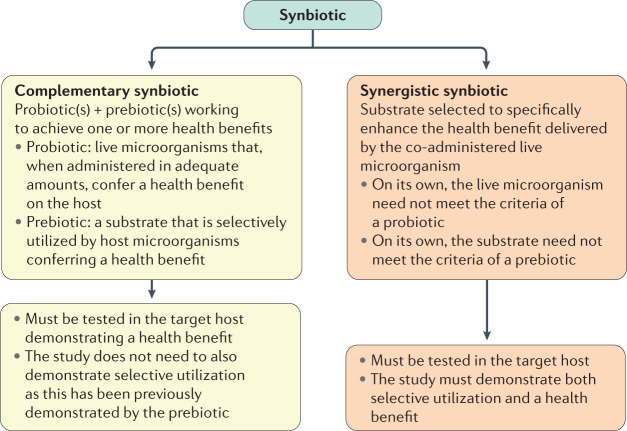
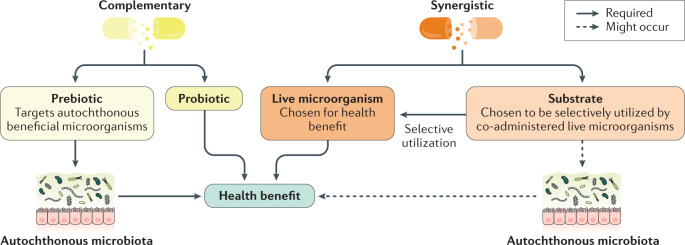
In May 2019, the International Scientific Association for Probiotics and Prebiotics (ISAPP) convened a panel of nutritionists, physiologists and microbiologists to review the definition and scope of synbiotics. The panel updated the definition of a synbiotic to “a mixture comprising live microorganisms and substrate(s) selectively utilized by host microorganisms that confers a health benefit on the host”. The panel concluded that defining synbiotics as simply a mixture of probiotics and prebiotics could suppress the innovation of synbiotics that are designed to function cooperatively. Requiring that each component must meet the evidence and dose requirements for probiotics and prebiotics individually could also present an obstacle. Rather, the panel clarified that a complementary synbiotic, which has not been designed so that its component parts function cooperatively, must be composed of a probiotic plus a prebiotic, whereas a synergistic synbiotic does not need to be so. A synergistic synbiotic is a synbiotic for which the substrate is designed to be selectively utilized by the co-administered microorganisms. This Consensus Statement further explores the levels of evidence (existing and required), safety, effects upon targets and implications for stakeholders of the synbiotic concept.
Overview
The claims and statistics of this paper haven’t been checked yet.
Free: it reads the open-access text and checks the first 5 claims that cite a source we can check. Create a free account to check every claim.
Integrity signals
Registry
Cites
Statistics
Figures
Verification
Claims the paper makes
The claims and statistics of this paper haven’t been checked yet.
Free: it reads the open-access text and checks the first 5 claims that cite a source we can check. Create a free account to check every claim.
Claims other papers make about this one
Each is checked against this paper’s own text: does it say what the citing paper says it does?
The source backs part of the claim, not all of it — or backs it for a different population, condition or comparison.
In the citing paper
“A way to enhance probiotic effectiveness is the combination of probiotics and prebiotic compounds, under the concept of ‘synbiotic’ [69].”
From Psychobiotic effects on anxiety are modulated by lifestyle behaviors: a randomized placebo-controlled trial on healthy adults (2023) · cites this paper as [69]
Experimental — accuracy not yet measuredIn the citing paper
“Third, the minimum fiber concentration suggested for a functional synbiotic [63] was used in the study, that in theory could be sufficient to stimulate the cognate gut microorganisms.”
Self-check
Percentages, sums and reported differences re-computed from the paper’s own numbers.
The self-check needs the paper’s full text.
Citations
Cites
1 retracted
Asemi, Z., Khorrami-Rad, A., Alizadeh, S.-A., Shakeri, H., & Esmaillzadeh, A. (2014) · Clinical Nutrition · doi:10.1016/j.clnu.2013.05.015 · Cited by 190
RetractedDiet rapidly and reproducibly alters the human gut microbiome
David, L. A., Maurice, C. F., Carmody, R. N., Gootenberg, D. B., Button, J. E., Wolfe, B. E., Ling, A. V., Devlin, A. S., Varma, Y., Fischbach, M. A., et al. (2014) · Nature · doi:10.1038/nature12820 · Cited by 10,100
Hill (2014) · doi:10.1038/nrgastro.2014.66 · Cited by 9,592
Moher, D., Hopewell, S., Schulz, K. F., Montori, V., Gotzsche, P. C., Devereaux, P. J., Elbourne, D., Egger, M., & Altman, D. G. (2010) · BMJ · doi:10.1136/bmj.c869 · Cited by 8,883
Dietary Modulation of the Human Colonic Microbiota: Introducing the Concept of Prebiotics
Gibson, G. R., & Roberfroid, M. B. (1995) · The Journal of Nutrition · doi:10.1093/jn/125.6.1401 · Cited by 7,667
Self-citationGibson, G. R., Hutkins, R., Sanders, M. E., Prescott, S. L., Reimer, R. A., Salminen, S. J., Scott, K., Stanton, C., Swanson, K. S., Cani, P. D., et al. (2017) · Nature Reviews Gastroenterology & Hepatology · doi:10.1038/nrgastro.2017.75 · Cited by 5,634
Self-citationDiversity, stability and resilience of the human gut microbiota
Lozupone, C. A., Stombaugh, J. I., Gordon, J. I., Jansson, J. K., & Knight, R. (2012) · Nature · doi:10.1038/nature11550 · Cited by 5,533
Zheng, J., Wittouck, S., Salvetti, E., Franz, C. M. A. P., Harris, H. M. B., Mattarelli, P., O’Toole, P. W., Pot, B., Vandamme, P., Walter, J., et al. (2020) · International Journal of Systematic and Evolutionary Microbiology · doi:10.1099/ijsem.0.004107 · Cited by 3,313
The ecology of the microbiome: Networks, competition, and stability
Coyte, K. Z., Schluter, J., & Foster, K. R. (2015) · Science · doi:10.1126/science.aad2602 · Cited by 2,748
Dethlefsen, L., & Relman, D. A. (2011) · Proceedings of the National Academy of Sciences · doi:10.1073/pnas.1000087107 · Cited by 2,421
Cited by
Items 901–1,000 of 1,001
Lim, E. C. N., & Lim, C. E. D. (2025) · Acta Microbiologica Hellenica · doi:10.3390/amh70030036 · Cited by 21
“However, current research is constrained by heterogeneous study designs and the absence of standardised protocols and outcome measures [15].”
Fajardo-Cavazos, P., & Nicholson, W. L. (2021) · Frontiers in Microbiology · doi:10.3389/fmicb.2021.748950 · Cited by 19
Xu, D., Fu, L., Pan, D., Chu, Y., Feng, M., Lü, Y., Yang, C., Wang, Y., Xia, J., & Sun, G. (2022) · Critical Reviews in Food Science and Nutrition · doi:10.1080/10408398.2022.2117783 · Cited by 20
“While synbiotics refers to a mixture comprising live microorganisms and substrate(s) selectively utilized by host microorganisms that confers a health benefit on the host (Swanson et al. 2020).”
BackgroundZhang, H., Wang, Y., Li, M., Cao, K., Qi, Z., Zhu, L., Zhang, Z., & Hou, L. (2022) · Asian Journal of Pharmaceutical Sciences · doi:10.1016/j.ajps.2022.09.003 · Cited by 19
Dong, W., Zheng, J., Huang, Y., Tan, H., Yang, S.-B., Zhang, Z., Liang, X., Liu, H., Zeng, G., Xu, H., et al. (2022) · Frontiers in Cellular and Infection Microbiology · doi:10.3389/fcimb.2022.1037279 · Cited by 20
Saha, S., Chopra, A., Kamath, S. U., & Kashyap, N. N. (2023) · Odontology · doi:10.1007/s10266-023-00804-1 · Cited by 22
“According to 2012 National Health Interview Survey [NHIS], around four million US adults and 300,000 children consumed probiotics in one month [2, 3].”
BackgroundChaney, W. E., McBride, H., & Girgis, G. (2023) · Animals · doi:10.3390/ani13071186 · Cited by 22
Niu, X., Yin, X., Wu, X., Zhang, Q., Jiang, Y., He, J., Zhao, Y., Zhang, C., Ren, Y., Lai, M., et al. (2023) · Foods · doi:10.3390/foods12102049 · Cited by 22
Shintani, T., Shintani, H., Sato, M., & Ashida, H. (2023) · GeroScience · doi:10.1007/s11357-023-00851-0 · Cited by 21
“A symbiotic is defined as “a mixture comprising live microorganisms and substrates selectively utilized by host microorganisms that confer a benefit on the host” [128].”
BackgroundSato, S., Arai, S., Iwabuchi, N., Tanaka, M., Hase, R., & Sakane, N. (2023) · Nutrients · doi:10.3390/nu15153450 · Cited by 19
Schropp, N., Stanislas, V., Michels, K. B., & Thriene, K. (2023) · International Journal of Molecular Sciences · doi:10.3390/ijms241612796 · Cited by 23
“Furthermore, the variation of strains in vivo may change rapidly depending on mutation rates, generation time, horizontal gene transfer, selection pressure, or host diet [31].”
Larke, J. A., Heiss, B. E., Ehrlich, A. M., Taft, D. H., Raybould, H. E., Mills, D. A., & Slupsky, C. M. (2023) · Microbiome · doi:10.1186/s40168-023-01624-9 · Cited by 19
“However, synergistic synbiotics comprised of prebiotics selectively utilized by a co-administered probiotic may act to enhance colonization and functionality in the gut [24].”
BackgroundPostbiotics as Potential Detoxification Tools for Mitigation of Pesticides
Khani, N., Noorkhajavi, G., Raziabad, R. H., Rad, A. H., & Ziavand, M. (2023) · Probiotics and Antimicrobial Proteins · doi:10.1007/s12602-023-10184-1 · Cited by 26
Hernández‐Contreras, Á., Teles, A., Salas‐Leiva, J. S., Chaves-Pozo, E., & Tovar‐Ramírez, D. (2023) · Springer eBooks · doi:10.1007/978-3-031-42855-5_28 · Cited by 27
The History and Prediction of Prebiotics and Postbiotics: A Patent Analysis
Zang, T., Han, L., Lu, Z., Tan, L., Liang, D., Shen, X., Liao, X., Liu, Y., Ren, H., & Sun, J. G. (2024) · Nutrients · doi:10.3390/nu16030380 · Cited by 21
Erfanian, N., Safarpour, H., Tavakoli, T., Mahdiabadi, M. A., Nasseri, S., & Namaei, M. H. (2024) · Iranian Journal of Microbiology · doi:10.18502/ijm.v16i1.14873 · Cited by 33
Li, Z., Peng, C., Sun, Y., Zhang, T., Feng, C., Zhang, W., Huang, T., Yao, G., Zhang, H., & He, Q. (2024) · Microbiology Spectrum · doi:10.1128/spectrum.03509-23 · Cited by 22
Genome mining of Lactiplantibacillus plantarum PA21: insights into its antimicrobial potential
Isaac, S. L., Malek, A. Z. A., Hazif, N. S., Roslan, F. S., Hashim, A. M., Song, A. A., Rahim, R. A., & Ismah, W. A. K. W. N. (2024) · BMC Genomics · doi:10.1186/s12864-024-10451-7 · Cited by 22
Sheikhi, S., Esfandiari, Z., Rostamabadi, H., Noori, S. M. A., Sabahi, S., & Nasab, M. S. (2025) · Scientific Reports · doi:10.1038/s41598-024-82810-z · Cited by 20
Gut microbiota in cancer initiation, development and therapy
Zhang, R., Zhang, X., Lau, H. C.-H., & Yu, J. Q. (2024) · Science China Life Sciences · doi:10.1007/s11427-024-2831-x · Cited by 19
Zhao, Y., Xie, W., Duan, J., & Li, F. (2025) · Probiotics and Antimicrobial Proteins · doi:10.1007/s12602-025-10464-y · Cited by 20
“New evidence points to the fact that it is the metabolites that contribute to the health-promoting effects of probiotics [19].”
Júnior, P. C. D. C., de Oliveira, L. D. S., Gouvêa, L. D. P., de Alcântara, M., Rosenthal, A., & Ferreira, E. H. D. R. (2020) · Ciência Rural · doi:10.1590/0103-8478cr20200361 · Cited by 19
Wang, Z.-K., Huang, C.-X., Zhong, J., Wang, Y., Tang, L.-R., Li, B., Sheng, J.-J., Chen, L., Sun, S.-L., & Shen, X. (2021) · Biotechnology for Biofuels · doi:10.1186/s13068-021-02076-9 · Cited by 18
Ghavami, A., Khorvash, F., Khalesi, S., Heidari, Z., & Askari, G. (2021) · Journal of Functional Foods · doi:10.1016/j.jff.2021.104738 · Cited by 23
Zheng, S., Song, J., Qin, X., Yang, K., Liu, M., Yang, C., & Nyachoti, C. M. (2021) · AMB Express · doi:10.1186/s13568-021-01303-8 · Cited by 21
Sugimoto, T., Atobe, S., Kado, Y., Takahashi, A., Motoori, M., Sugimura, K., Miyata, H., Yano, M., Tanaka, K., Doki, Y., et al. (2023) · Journal of Medical Microbiology · doi:10.1099/jmm.0.001723 · Cited by 19
Tseng, Y.-C., Liao, K., Lin, W., Li, C., Chang, C.-B., Hsu, J.-W., Chan, C.-P., Chen, C., Wang, H.-P., Chien, H.-C., et al. (2025) · npj Biofilms and Microbiomes · doi:10.1038/s41522-025-00654-5 · Cited by 19
Critical Care Nutrition from a Metabolic Point of View: A Narrative Review
Oami, T., Yamamoto, A., Ishida, S., Kondo, K., Hata, N., & Oshima, T. (2025) · Nutrients · doi:10.3390/nu17081352 · Cited by 19
“Prebiotics, non-digestible fibers or compounds that serve as food for beneficial gut bacteria, can enhance the production of beneficial metabolites such as SCFAs by selectively stimulating the growth of commensal bacteria [75].”
Probiotics in inflammatory bowel diseases: emphasis on mechanisms and clinical application
Zhang, J., Zhang, X., Cheng, X., Wang, S., Lv, Y., Xu, Z., & Wu, G. (2025) · Frontiers in Medicine · doi:10.3389/fmed.2025.1620079 · Cited by 23
Zhang, J., Zhu, L., Meng, Q., Wang, Z., & Zhu, H. (2025) · BMC Psychiatry · doi:10.1186/s12888-025-07644-z · Cited by 24
“In detail, probiotics are live microorganisms, prebiotics are substrates selectively utilized by host microorganisms, and synbiotics are a combination of live microorganisms and substrates that confer health benefits to the host [9–11].”
Han, D., Yan, Q., Liu, J., Jiang, Z., & Yang, S. (2021) · Frontiers in Microbiology · doi:10.3389/fmicb.2021.736411 · Cited by 18
“Moreover, the combination between beneficial bacteria (probiotic) and fermentable non-digestible dietary carbohydrate (prebiotic) could manifest synergistic health improvement effects, thus has been attracted much attention in novel functional food manufacturing (Swanson et al., 2020).”
BackgroundGąsiorowska, A., Romanowski, M., Walecka‐Kapica, E., Kaczka, A., Chojnacki, C. J., Padysz, M., Siedlecka, M., Bierła, J. B., Steinert, R. E., & Cukrowská, B. (2022) · Journal of Clinical Medicine · doi:10.3390/jcm11216587 · Cited by 19
Postbiotics Implication in the Microbiota-Host Intestinal Epithelial Cells Mutualism
Kaur, H., Kaur, G., & Ali, S. A. (2023) · Probiotics and Antimicrobial Proteins · doi:10.1007/s12602-023-10062-w · Cited by 20
Exercise training modifies xenometabolites in gut and circulation of lean and obese adults
Kasperek, M. C., Mailing, L. J., Piccolo, B. D., Moody, B., Lan, R. S.-L., Gao, X., Hernández‐Saavedra, D., Woods, J. A., Adams, S. H., & Allen, J. M. (2023) · Physiological Reports · doi:10.14814/phy2.15638 · Cited by 20
Majeed, M., Nagabhushanam, K., Paulose, S., Rajalakshmi, H., & Mundkur, L. (2023) · Clinical, Cosmetic and Investigational Dermatology · doi:10.2147/ccid.s403418 · Cited by 18
The Role of Biotics as a Therapeutic Strategy for Oral Mucositis - A Systematic Review
Frey‐Furtado, L., Magalhães, I., Azevedo, M. J., & Sampaio‐Maia, B. (2023) · Probiotics and Antimicrobial Proteins · doi:10.1007/s12602-023-10116-z · Cited by 18
A Current Review on the Role of Prebiotics in Colorectal Cancer
Shrifteylik, A., Maiolini, M., Dufault, M. E., Austin, D. L., Subhadra, B. G., Lamichhane, P., & Deshmukh, R. R. (2023) · Biologics · doi:10.3390/biologics3030012 · Cited by 22
“The combination of prebiotics and probiotics is termed synbiotics [17], and the latest definition of synbiotics is described as “a mixture comprising live microorganisms and substrate(s) selectively utilized by host microorganisms that confers a health benefit on the host” [18].”
Pal, P., & Shastry, R. P. (2023) · Folia Microbiologica · doi:10.1007/s12223-023-01085-5 · Cited by 21
“Synbiotics refers to fusion food products comprised of both probiotics and prebiotics with potential health benefits (Swanson et al. 2020).”
BackgroundTran, T. T., Phung, T. T. B., Tran, D. M., Bui, H. T., Nguyen, P. T. T., Vu, T. T., Ngo, N. T. P., Nguyen, M. T., Nguyen, A. H., & Nguyen, A. T. V. (2023) · Scientific Reports · doi:10.1038/s41598-023-41763-5 · Cited by 22
Dias, J. V. B., da Costa, W. K. A., Melo, D. D. S., de Oliveira, K. Á. R., Batista, A. U. D., de Souza, E. L., Schwan, R. F., Pimentel, T. C., & Magnani, M. (2023) · Food Bioscience · doi:10.1016/j.fbio.2023.103144 · Cited by 18
Zhu, J., Liu, W., Bian, Z., Ma, Y., Kang, Z., Jin, J., Li, X., Ge, S., Hao, Y., Zhang, H., et al. (2023) · Nutrients · doi:10.3390/nu15214512 · Cited by 22
Gao, Z., Zhou, M. C., Lin, J., Lu, Y., & Liu, S. (2024) · Food Chemistry X · doi:10.1016/j.fochx.2024.101178 · Cited by 26
Piloquet, H., Vrignaud, B., Gillaizeau, F., Capronnier, O., Berding, K., Günther, J., Hecht, C., & Regimbart, C. (2024) · American Journal of Clinical Nutrition · doi:10.1016/j.ajcnut.2024.03.005 · Cited by 21
Zhang, Y., Cao, T., Wang, Y., Yang, R., Han, Y., Li, S., Liu, D., Yue, Y., Cao, Y., Li, B., et al. (2024) · Foods · doi:10.3390/foods13060958 · Cited by 19
Santana, G. B., Quelemes, P. V., Neta, E. R. D. S., de Lima, S. G., & Vale, G. C. (2024) · Microorganisms · doi:10.3390/microorganisms12050843 · Cited by 19
Harahap, I. A., SCHMIDT, M. T., Pruszyńska‐Oszmałek, E., Sassek, M., & Suliburska, J. (2024) · Nutrients · doi:10.3390/nu16152524 · Cited by 19
Advantages of the Use of Postbiotics in Poultry Production: A New Concept
Waqas, M. K., Nastoh, N. A., Çinar, A., Farooq, M. Z., & Salman, M. (2024) · Brazilian Journal of Poultry Science · doi:10.1590/1806-9061-2024-1939 · Cited by 22
Ranisavljev, M., Štajer, V., Todorović, N., Ostojic, J. N., Cvejić, J., Steinert, R. E., & Ostojić, S. M. (2024) · European Journal of Nutrition · doi:10.1007/s00394-024-03546-0 · Cited by 21
“To date, no human studies have evaluated the efficacy and safety of synbiotics—a combination of live microorganisms and substrates selectively utilized by host microorganisms to confer health benefits [9]—within this clinical context.”
Leaky Gut Syndrome: An Interplay Between Nutrients and Dysbiosis
Marcari, A. B., Paiva, A. D., Simon, C. R., & dos Santos, M. E. S. M. (2025) · Current Nutrition Reports · doi:10.1007/s13668-025-00614-7 · Cited by 18
Kuerman, M., Bao, Y., Guo, Y., & Guo, M. (2019) · LWT · doi:10.1016/j.lwt.2019.108703 · Cited by 19
Postbiotics Enhance NK Cell Activation in Stress-Induced Mice through Gut Microbiome Regulation
Jung, Y., Kim, H., Jaygal, G., Cho, H.-R., Lee, K. B., Song, I.-B., Kim, J., Kwak, M., Han, K.-H., Bae, M., et al. (2022) · Journal of Microbiology and Biotechnology · doi:10.4014/jmb.2111.11027 · Cited by 19
Zhou, P., Zhang, W., Liao, Y., Zhai, Z., Lu, S., Jiang, S., Hu, W., & Gong, W. (2025) · International Journal of Surgery · doi:10.1097/js9.0000000000002573 · Cited by 18
Ghamari, M., Sabzi, S., Rajabi, E., Khodadadi, G., Navidifar, T., Sadeghi, Z., & Bostanghadiri, N. (2025) · Probiotics and Antimicrobial Proteins · doi:10.1007/s12602-025-10636-w · Cited by 22
The emerging role of the gut microbiome in depression: implications for precision medicine
Liu, L., Wang, H., Guo, S., Liu, S., Du, Y., Wang, L. Y., He, D., Mo, X., Zhang, H., Cheng, Q., et al. (2025) · Molecular Psychiatry · doi:10.1038/s41380-025-03191-x · Cited by 22
“…A mixture comprising live microorganisms and substrate(s) selectively utilized by host microorganisms that confers a health bene fi t on the host [136] Postbiotics A preparation of inanimate microorganisms and/or their components that confers a health bene fi t on the host [139] International…”
Synbiotics Containing Nanoprebiotics: A Novel Therapeutic Strategy to Restore Gut Dysbiosis
Liang, H., Lee, S., Kim, W.-S., Choi, Y., Oh, S.-H., Li, Y., Choi, S. H., Chung, D. H., Jung, E., Kang, S., et al. (2021) · Frontiers in Microbiology · doi:10.3389/fmicb.2021.715241 · Cited by 18
“According to the World Health Organization, the Food Agriculture Organization, and the International Scientific Association for Probiotics and Prebiotics, probiotics are live microorganisms that provide health benefits to the host when adequate amounts are administered (Akour, 2020; Swanson et al., 2020).”
BackgroundDu, X. Y., Rodriguez, J., & Wee, J. (2022) · Foods · doi:10.3390/foods11060877 · Cited by 18
Jiang, Z., Su, W., Yang, M., Li, W., Gong, T., Zhang, Y., Wen, C., Wang, X., Wang, Y., Jin, M., et al. (2022) · Microorganisms · doi:10.3390/microorganisms10102056 · Cited by 17
Wu, X., Chen, Z., Dong, X.-L., Zhao, Q.-P., & Cai, J. (2023) · Nutrients · doi:10.3390/nu15040956 · Cited by 20
“In response, the International Scientific Association of Probiotics and Prebiotics defined a symbiotic as a combination of living microorganisms and substrate(s) selectively used by host microorganisms that benefits the host’s health [21].”
BackgroundMontero, C. G., Fraile‐Μartinez, O., Rodriguez-Martín, S., Saz, J. V., Rodríguez, R. A., Moreno, J. M. P., Ruiz-Labarta, J., García‐Honduvilla, N., Álvarez‐Mon, M., Bravo, C., et al. (2023) · Foods · doi:10.3390/foods12061148 · Cited by 18
“In 2019, the ISAPP updated its definition to “a mixture comprising live microorganisms and substrate(s) selectively utilized by host microorganisms that confers a health benefit on the host” [13].”
BackgroundKoziol, S. A., Oba, P. M., Soto‐Díaz, K., Steelman, A. J., Suchodolski, J. S., Eckhardt, E. R. M., & Swanson, K. S. (2023) · Journal of Animal Science · doi:10.1093/jas/skad160 · Cited by 22
Self-citationHuuskonen, L., Anglenius, H., Ahonen, I., & Tiihonen, K. (2023) · Microorganisms · doi:10.3390/microorganisms11061465 · Cited by 17
Tavaniello, S., Marzo, D. D., Bednarczyk, M. F., Palazzo, M., Zejnelhoxha, S., Wu, M., Peng, M., Stadnicka, K., & Maiorano, G. (2023) · Foods · doi:10.3390/foods12132470 · Cited by 17
“The current scientific definition of a synbiotic is a mixture comprising live microorganisms and substrate(s) selectively utilized by host microorganisms that confers a health benefit on the host [2].”
BackgroundFactors Influencing Microbiota in Modulating Vaccine Immune Response: A Long Way to Go
Ponziani, F. R., Coppola, G., Rio, P., Caldarelli, M., Borriello, R., Gambassi, G., Gasbarrini, A., & Cianci, R. (2023) · Vaccines · doi:10.3390/vaccines11101609 · Cited by 20
Microbiota-Gut-Brain Axis and Antidepressant Treatment
Lachmansingh, D. A., Lavelle, A., Cryan, J. F., & Clarke, G. A. (2023) · Current topics in behavioral neurosciences · doi:10.1007/7854_2023_449 · Cited by 18
Gut Microbiota and Obesity: The Chicken or the Egg?
Tassoni, D. S., Macedo, R. C. O., Delpino, F. M., & Santos, H. O. (2023) · Obesities · doi:10.3390/obesities3040024 · Cited by 19
Baba, Y., Saito, Y., Kadowaki, M., Azuma, N., & Tsuge, D. (2023) · Nutrients · doi:10.3390/nu15245025 · Cited by 18
“The combination of probiotics and prebiotics is called synbiotics [26], and it has been reported that intake of synbiotics increases gut bifidobacteria [27,28]; even in subjects with low probiotic strain growth, total bifidobacteria counts increased due to an increase in endogenous bifidobacteria [29].”
BackgroundPanya, M., Kaewraemruaen, C., Saenwang, P., & Pimboon, P. (2024) · Foods · doi:10.3390/foods13020287 · Cited by 17
Cruz, Y., Aguilar-Ponce, L., Romo‐Araiza, A., Chávez-Guerra, A., Martiñón, S., Ibarra-García, A. P., Arias-Santiago, S., Gálvez-Susano, V., & Ibarra, A. (2024) · Biomedicines · doi:10.3390/biomedicines12010209 · Cited by 17
“In addition, Enterococcus faecium and agave inulin individually have been shown to possess anti-inflammatory characteristics [11,14].”
BackgroundHerman, K. E., Brough, H. A., Pier, J., Venter, C., & Järvinen, K. M. (2024) · The Journal of Allergy and Clinical Immunology In Practice · doi:10.1016/j.jaip.2024.04.029 · Cited by 17
Gao, M., Han, X., Yang, W., Sun, H., Zhang, L., & Xu, H. (2024) · Industrial Crops and Products · doi:10.1016/j.indcrop.2024.119187 · Cited by 17
Kleerebezem, M., & Führen, J. (2024) · Microbiome Research Reports · doi:10.20517/mrr.2024.48 · Cited by 19
Daisley, B. A., & Allen‐Vercoe, E. (2024) · Annals of the New York Academy of Sciences · doi:10.1111/nyas.15237 · Cited by 20
Microbes in Health and Disease: Human Gut Microbiota
Hu, C., & Shen, H. (2024) · Applied Sciences · doi:10.3390/app142311354 · Cited by 20
López-Palestino, A., Gómez-Vargas, R., Suárez-Quiroz, M. L., González-Ríos, Ó., Hernández‐Estrada, Z. J., Castellanos-Onorio, O. P., Alonso-Villegas, R., Estrada-Beltrán, A. E., & Figueroa-Hernández, C. Y. (2025) · Fermentation · doi:10.3390/fermentation11020095 · Cited by 18
“…Host microorganisms include autochthonous (resident or colonizing) and allochthonous (externally incorporated, such as probiotics) microorganisms [34]. microorganisms include autochthonous (resident or colonizing) and allochthonous (externally incorporated, such as probiotics) microorganisms [34].”
Wu, H., Guan, Z., Zhang, K., Zhou, L., Cao, L., Mou, X., Cui, W., Tian, B., & Zhang, G. (2025) · PeerJ · doi:10.7717/peerj.18874 · Cited by 17
“Probiotics and synbiotics have emerged as potential protective agents against postoperative infections ( Swanson et al., 2020 ).”
Dietary Intake and Gut Microbiome in CKD
Kemp, J. A., Ribeiro, M. M., Borges, N. A., Cardozo, L., Fouque, D. P., & Mafra, D. (2025) · Clinical Journal of the American Society of Nephrology · doi:10.2215/cjn.0000000705 · Cited by 20
Teparak, C., Uriyapongson, J., Phoemsapthawee, J., Tunkamnerdthai, O., Aneknan, P., Tong-un, T., Panthongviriyakul, C., Leelayuwat, N., & AlKhatib, A. H. (2025) · Nutrients · doi:10.3390/nu17071098 · Cited by 17
“Such synergy of “synbiotics” is a matter of recent research debate and may work differently in different patient groups [50].”
Dias, S., Vergílio, D. D. S., Pereira, A. M., Klososki, S. J., Marcolino, V. A., da Cruz, R. M. S., Costa, G. N., Barão, C. E., & Pimentel, T. C. (2021) · Journal of Dairy Research · doi:10.1017/s0022029921000121 · Cited by 17
“Prebiotics, such as inulin, polydextrose and some modified starches, are non-viable food components that confer potential health benefits on the host associated with the modulation of the microbiota (Gibson et al., 2017).”
BackgroundNon-pharmacologic strategies for the management of intestinal inflammation
Maioli, T. U., Trindade, L. M., Souza, A., Torres, L., Andrade, M. E. R., Cardoso, V. N., & Generoso, S. D. V. (2021) · Biomedicine & Pharmacotherapy · doi:10.1016/j.biopha.2021.112414 · Cited by 19
Clinical Trials of Probiotics in Patients With Irritable Bowel Syndrome: Some Points to Consider
Quigley, E. M. M. (2022) · Journal of Neurogastroenterology and Motility · doi:10.5056/jnm22012 · Cited by 17
Gan, D., Chen, J., Tang, X., Xiao, L., Martoni, C., Leyer, G. J., Huang, G., & Li, W. (2022) · Frontiers in Microbiology · doi:10.3389/fmicb.2022.985308 · Cited by 18
Fagnant, H. S., Isidean, S. D., Wilson, L., Bukhari, A. S., Allen, J. T., Agans, R., Lee, D. M., Hatch‐McChesney, A., Whitney, C. C., Sullo, E., et al. (2023) · Advances in Nutrition · doi:10.1016/j.advnut.2023.02.002 · Cited by 22
The role of the microbiome in liver disease
Schöler, D., & Schnabl, B. (2024) · Current Opinion in Gastroenterology · doi:10.1097/mog.0000000000001013 · Cited by 16
El‐Saadony, M. T., Saad, A. M., Sitohy, M. Z., Alkafaas, S. S., Dladla, M., Ghosh, S., Mohammed, D. M., Ibrahim, E. H., Fahmy, M. A., Elkelish, A., et al. (2026) · Frontiers in Immunology · doi:10.3389/fimmu.2025.1713426 · Cited by 23
Probiotics and urogenital health
Nader-Macías, M. E., & Gregorio, P. R. D. (2022) · Elsevier eBooks · doi:10.1016/b978-0-323-85170-1.00016-6 · Cited by 17
Anorexia nervosa and gut microbiome: implications for weight change and novel treatments
Wei, Y., Peng, S., Lian, C., Kang, Q., & Chen, J. (2022) · Expert Review of Gastroenterology & Hepatology · doi:10.1080/17474124.2022.2056017 · Cited by 18
Tan, J., Zhou, H., Deng, J., Sun, J., Zhou, X., Tang, Y. P., & Qin, W. (2022) · Frontiers in Nutrition · doi:10.3389/fnut.2022.850014 · Cited by 16
“Synbiotics are a combination of probiotics and prebiotics (6).”
BackgroundMicrobial network signatures of early colonizers in infants with eczema
Huang, L., Pan, G., Feng, Y., Fan, Z., Ma, K., Wang, R., Wang, G., Huang, G., Huang, S., Hou, Y., et al. (2023) · iMeta · doi:10.1002/imt2.90 · Cited by 18
Zhang, L., Xiao, H., Zhao, L., Liu, Z., Chen, L., & Liu, C. (2023) · Nutrients · doi:10.3390/nu15051158 · Cited by 21
“Synbiotics are primarily composed of probiotics and prebiotics, which can bring health benefits to the host, such as modulating gut microbiota [13], alleviating gastrointestinal symptoms [14], enhancing immunity [15], reducing inflammation and oxidative stress [16], and improving blood lipids [17].”
BackgroundInterventional strategies for ischemic stroke based on the modulation of the gut microbiota
Wang, J., Liu, X., & Li, Q. (2023) · Frontiers in Neuroscience · doi:10.3389/fnins.2023.1158057 · Cited by 20
“Therefore, to better apply the synergistic and beneficial effects of probiotics and prebiotics on therapy, “synbiotics,” which is a mixture of active microorganisms (probiotics) and a matrix (prebiotics), was developed (Swanson et al., 2020).”
BackgroundProbiotics and novel probiotic delivery systems
Wala, S. J., Ragan, M. V., Sajankila, N., Volpe, S. G., Purayil, N., Dumbauld, Z., & Besner, G. E. (2023) · Seminars in Pediatric Surgery · doi:10.1016/j.sempedsurg.2023.151307 · Cited by 16
Huang, C.-L., Chu, H.-F., Wu, C.-C., Deng, F.-S., Wen, P.-J., Chien, S.-P., Chao, C., Chen, Y.-T., Lu, M., & Tsai, Y.-C. (2023) · Frontiers in Microbiology · doi:10.3389/fmicb.2023.1209067 · Cited by 16
Guo, M., Wu, J., Hung, W., Sun, Z., Zhao, W. H., Lan, H., Zhao, Z., Wuri, G., Fang, B., Zhao, L., et al. (2023) · Nutrients · doi:10.3390/nu15153316 · Cited by 19
Postbiotics: emerging therapeutic approach in diabetic retinopathy
Chen, Q., Li, X., Xie, W., Su, Z., Qin, G., & Yu, C.-H. (2024) · Frontiers in Microbiology · doi:10.3389/fmicb.2024.1359949 · Cited by 22
Allouche, R., Hafeez, Z., Dary, A., Genay, M., & Miclo, L. (2024) · Molecules · doi:10.3390/molecules29071552 · Cited by 16
Alba, C., Carrera, M., Álvarez-Calatayud, G., Arroyo, R., Fernández, L., & Rodríguez, J. M. (2024) · Nutrients · doi:10.3390/nu16081134 · Cited by 17
“The addition of prebiotic substances may be directed to support specific members of the autochthonous microbiota of the host (complementary synbiotic) or to promote the growth, persistence, or activities of the specific strain(s) included in the formula (complementary synbiotic) [77].”
BackgroundNondigestible carbohydrates and gut microbiota: A dynamic duo in host defense
Zong, X., Luo, S., Liu, S., Deehan, E. C., Wang, Y., & Jin, M. (2024) · Animal Nutriomics · doi:10.1017/anr.2024.8 · Cited by 17
Raval, S. D., & Archana, G. (2024) · Archives of Microbiology · doi:10.1007/s00203-024-04030-3 · Cited by 18
“According to Swanson et al. ( 2020 ) for designing synergistic synbiotic combinations as per ISAPP, the choice of the prebiotic and probiotic is challenging because of the lack of demonstrated synergism in laboratory-level experiments.”
D’ambrosio, S., Dabous, A., Sadiq, S., Casillo, A., Schiraldi, C., Cassese, E., Bedini, E., Corsaro, M. M., & Cimini, D. (2024) · Frontiers in Bioengineering and Biotechnology · doi:10.3389/fbioe.2024.1379574 · Cited by 17
Wang, Y., Xie, Z., Li, H., Zhang, G., Liu, R., Han, J., & Zhang, L. (2024) · Food Chemistry X · doi:10.1016/j.fochx.2024.101756 · Cited by 19
Metadata
- Authors
- Swanson, K. S., Gibson, G. R., Hutkins, R., Reimer, R. A., Reid, G., Verbeke, K., Scott, K. P., Holscher, H. D., Azad, M. B., Delzenne, N. M., & Sanders, M. E.
- Affiliations
- University of Illinois Urbana-Champaign (US)
- University of Reading (GB)
- University of Nebraska–Lincoln (US)
- University of Calgary (CA)
- Western University (CA)
- KU Leuven (BE)
- University of Aberdeen (GB)
- Children's Hospital Research Institute of Manitoba (CA)
- UCLouvain (BE)
- Corresponding author
- Swanson, Kelly S.
- ORCID
- Venue
- Nature Reviews Gastroenterology & Hepatology
- Published
- 2020-08-21
- Volume
- 17
- Issue
- 11
- Pages
- 687-701
- ISSN
- 1759-5045 (ISSN-L)
- 1759-5053
- PMC
- PMC7581511
- OpenAlex
- W2694487218
- Cited by
- 2,196
- References
- 307
- Citations by year
- 2026: 285 · 2025: 363 · 2024: 446 · 2023: 400 · 2022: 373 · 2021: 225 · 2020: 44
- FWCI
- 22.02
- Type
- journal article
- Language
- en
- Open access
- hybrid
- doi.org
- Licence
- cc-by
- creativecommons.org/licenses/by/4.0 (tdm)
- creativecommons.org/licenses/by/4.0 (vor)
- Locations
- Nature Reviews Gastroenterology & Hepatology (publishedVersion, cc-by)
- PubMed Central (publishedVersion, cc-by)
- PubMed (publishedVersion)
- Aberdeen University Research Archive (Aberdeen University) (submittedVersion)
- Lincoln (University of Nebraska) (submittedVersion)
- Digital Access to Libraries (Université catholique de Louvain (UCL), l'Université de Namur (UNamur) and the Université Saint-Louis (USL-B)) (submittedVersion, other-oa)
- Scholarship@Western (Western University) (submittedVersion)
- Lirias (KU Leuven) (submittedVersion, cc-by)
- Funders
- GlaxoSmithKline
- PepsiCo
- General Mills
- Mead Johnson Nutrition
- Pharmavite
- Danone
- Rural and Environment Science and Analytical Services Division
- Scottish Government
- Medela
- Topics
- Life Sciences › Agricultural and Biological Sciences › Food Science › Probiotics and Fermented Foods
- Health Sciences › Nursing › Nutrition and Dietetics › Microbial Metabolites in Food Biotechnology
- Health Sciences › Nursing › Nutrition and Dietetics › Infant Nutrition and Health
- Keywords
- postbiotics, synbiotics, probiotics, prebiotics, health benefits, mechanism of action, safety, regulation, microbial metabolites
- MeSH terms
- Humans, Probiotics, Prebiotics, Synbiotics
About these checks
Registry, retraction, Cites and statistics results are computed, not judged, with one exception: a printed reference that no index lists is read once by a model before it counts as a citation error. Claims are extracted by a model and kept only when their quote appears verbatim in the text; each cited source is then checked, with a model’s help, for whether it says what the claim relies on. Those verdicts can be wrong — read the claim’s quote and the cited source before relying on one.
Statistics and arithmetic are recomputed, not judged.
Confidence bands are shown only for fields calibrated on our annotated test set. None is calibrated yet, so no band is shown.
What counts as a claim ›How we measure confidence ›How we check this ›
Are you an author, or do you see a problem with this page? Request a review
Data sources
Bibliographic data: Semantic Scholar, OpenAlex, Crossref.
Contains information from the Semantic Scholar Academic Graph Datasets, made available under the ODC Attribution License (ODC-BY 1.0).
Semantic Scholar’s data is described in: Kinney, R., et al. (2023). The Semantic Scholar Open Data Platform. arXiv:2301.10140.
